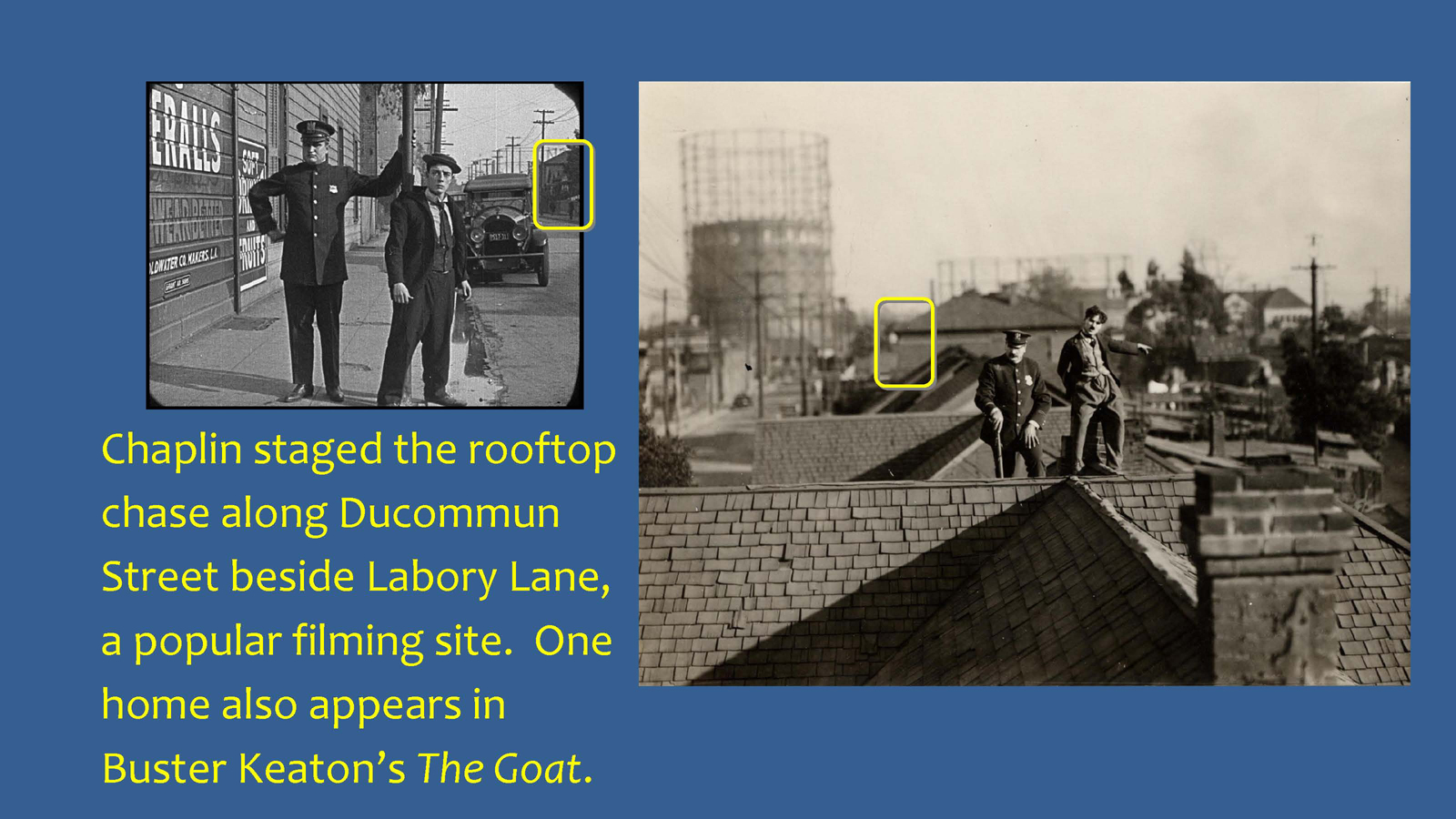
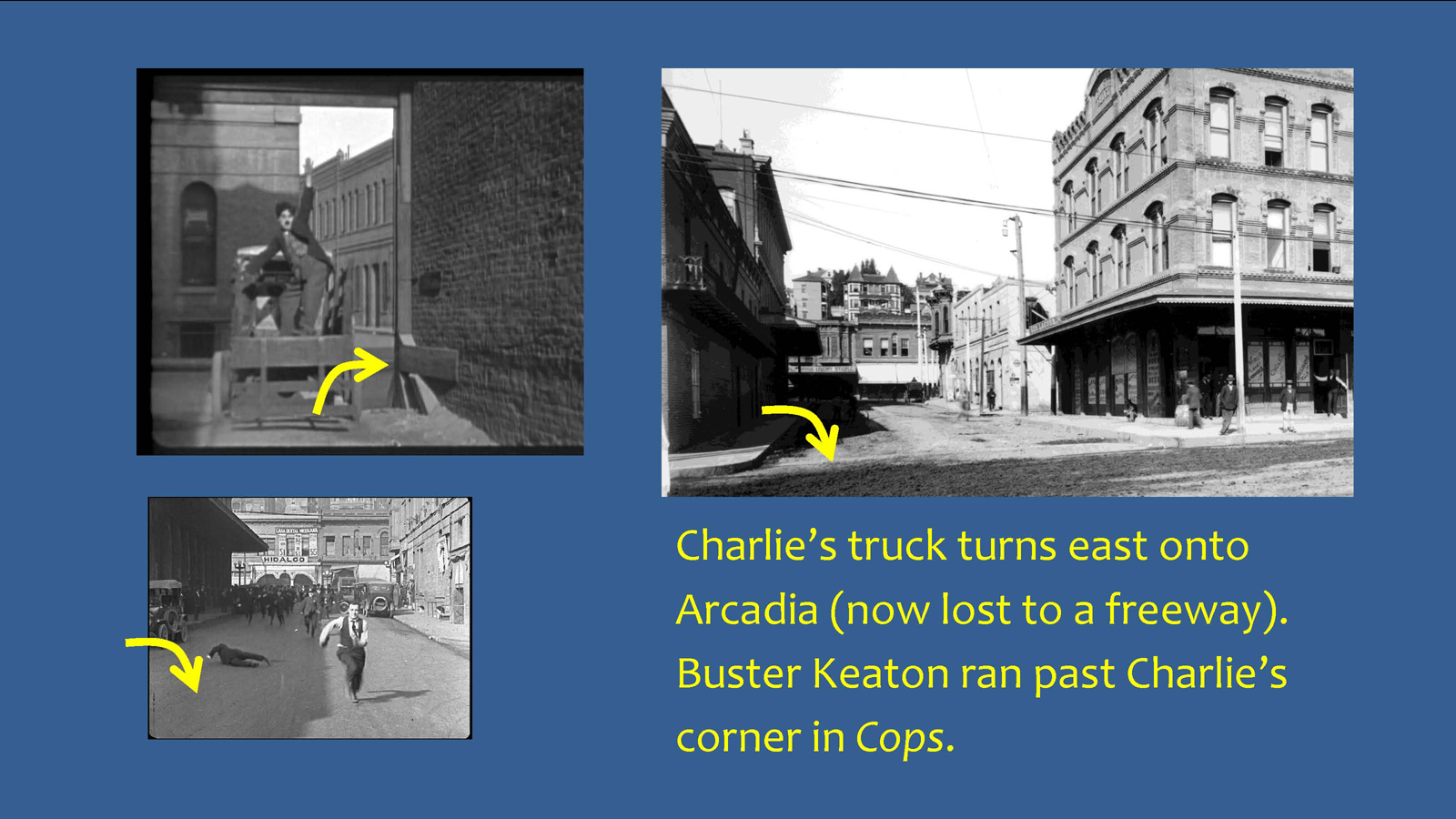
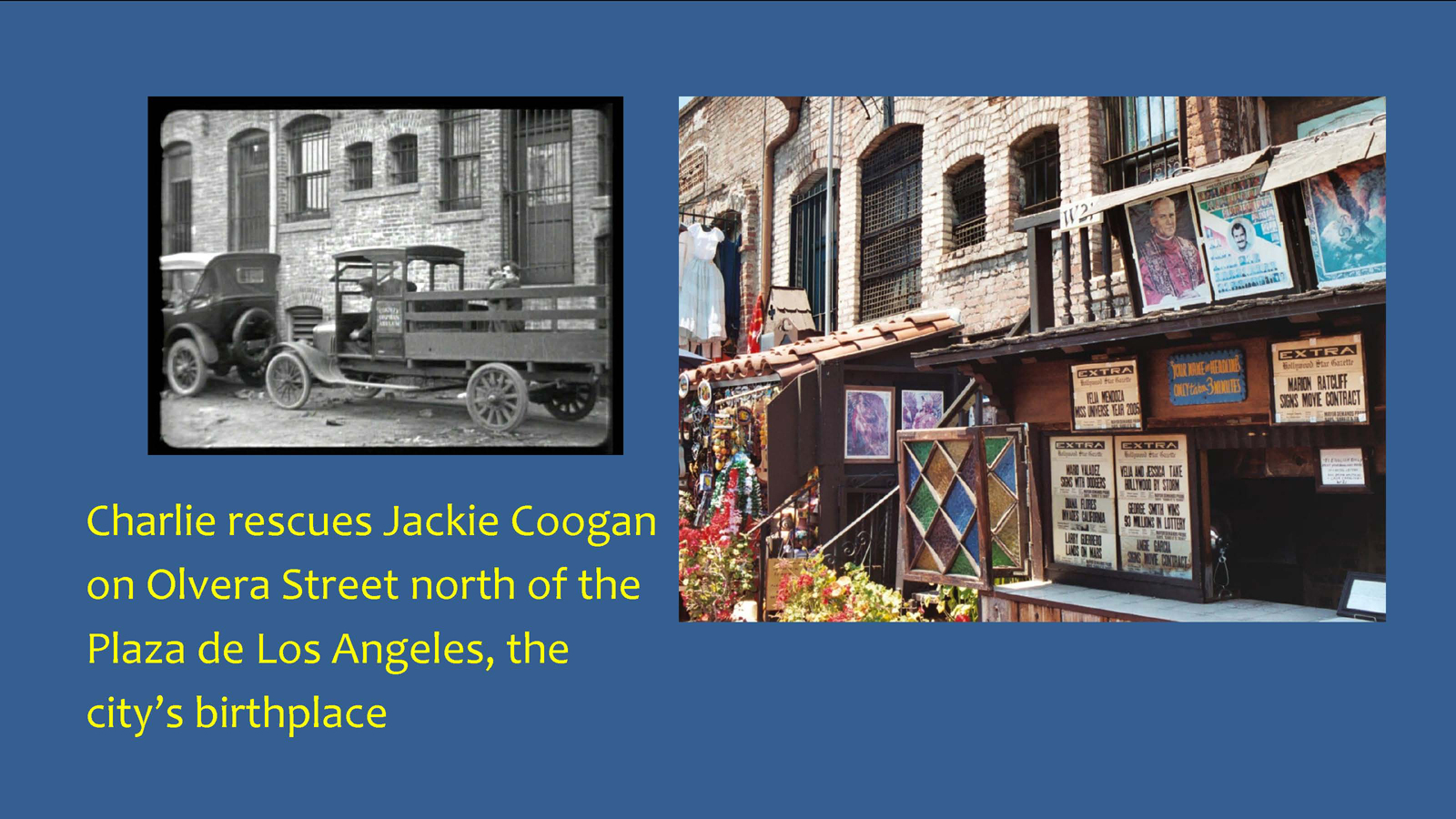
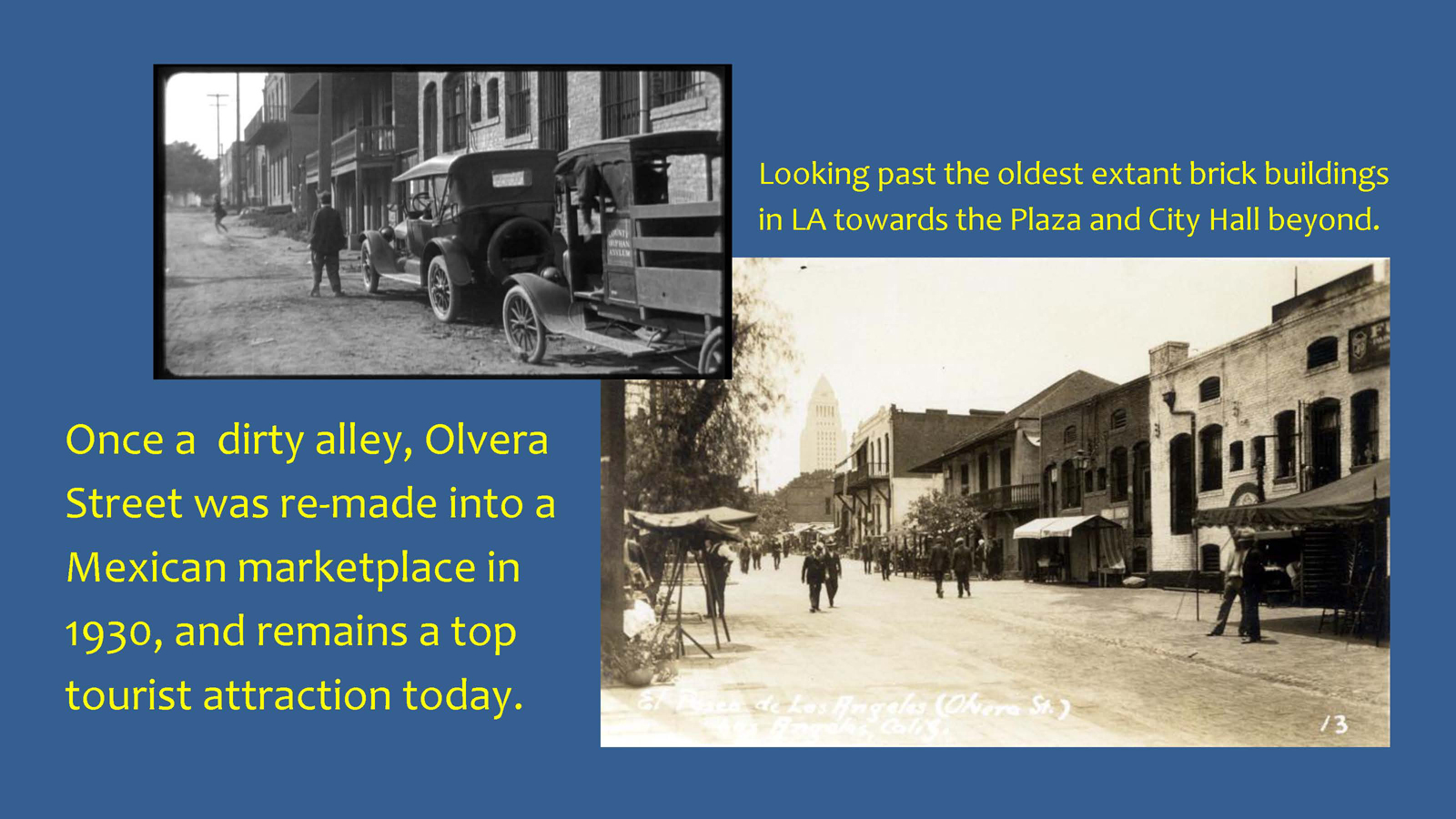
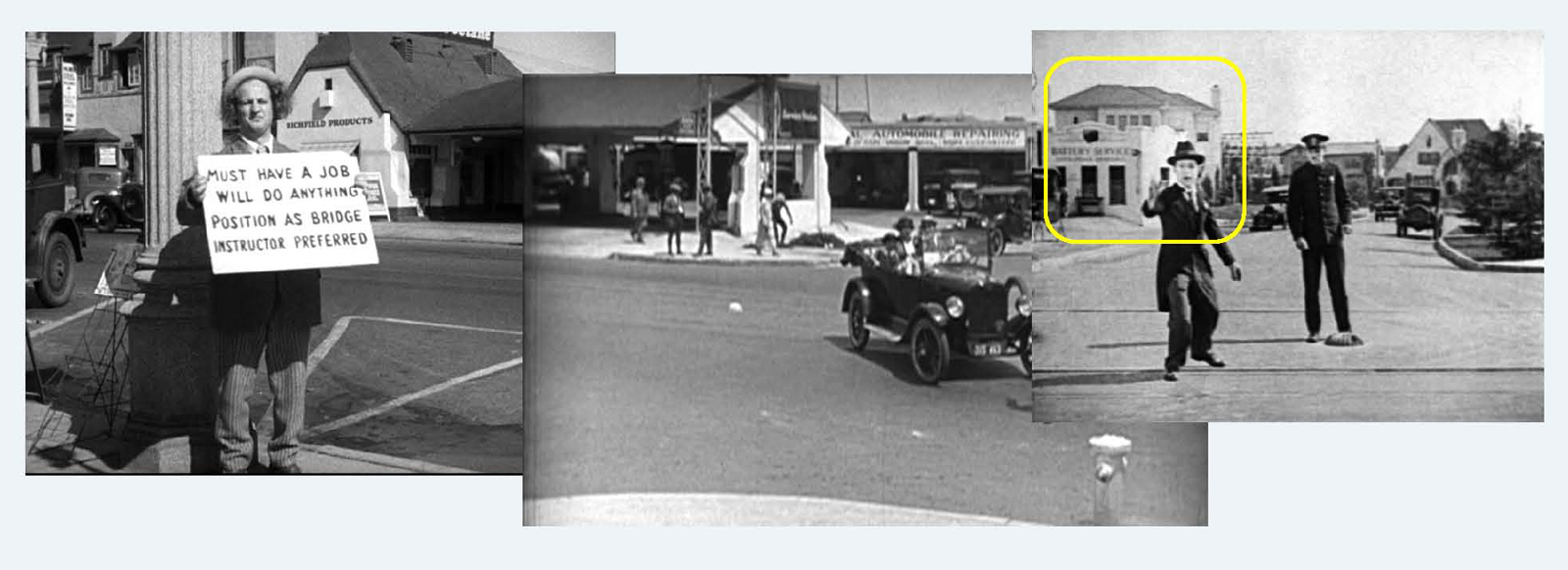
Chaplin – Keaton Studio Connections – The Fireman and Convict 13

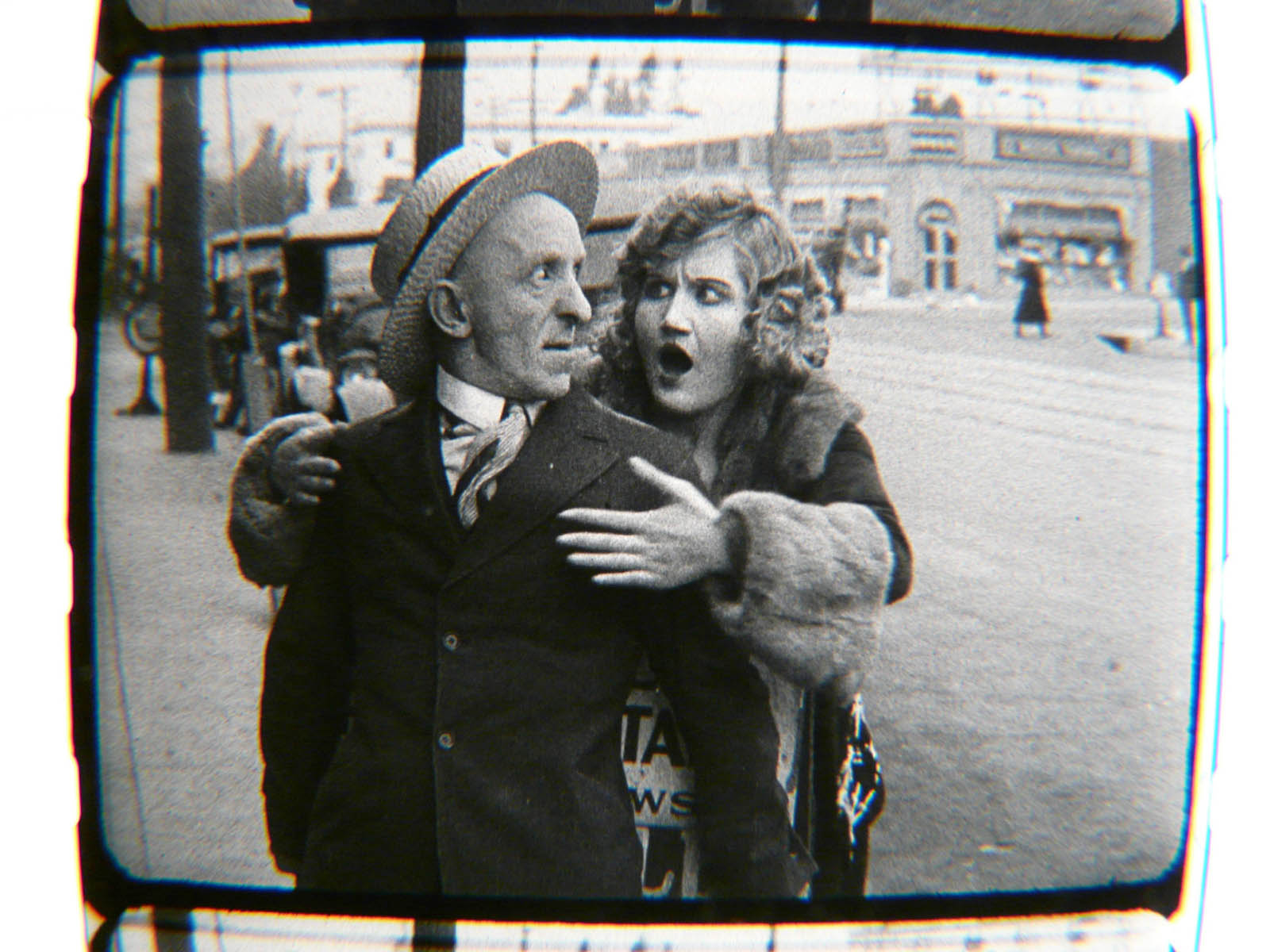
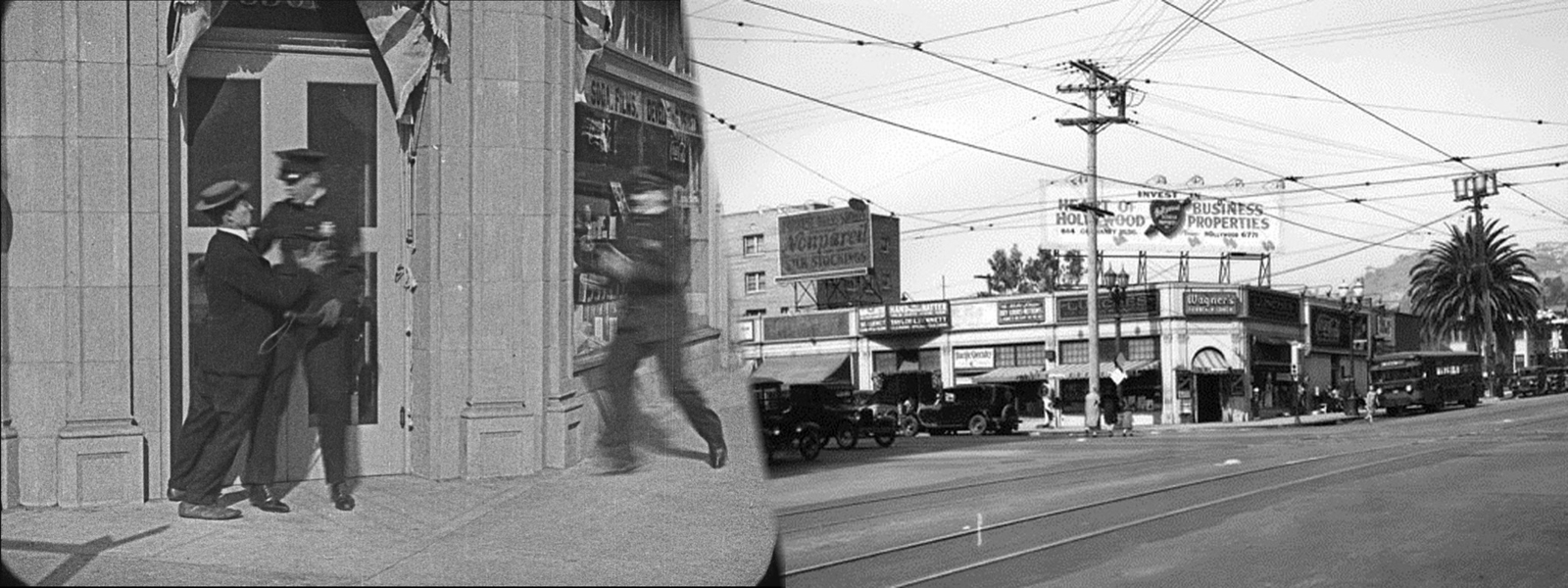
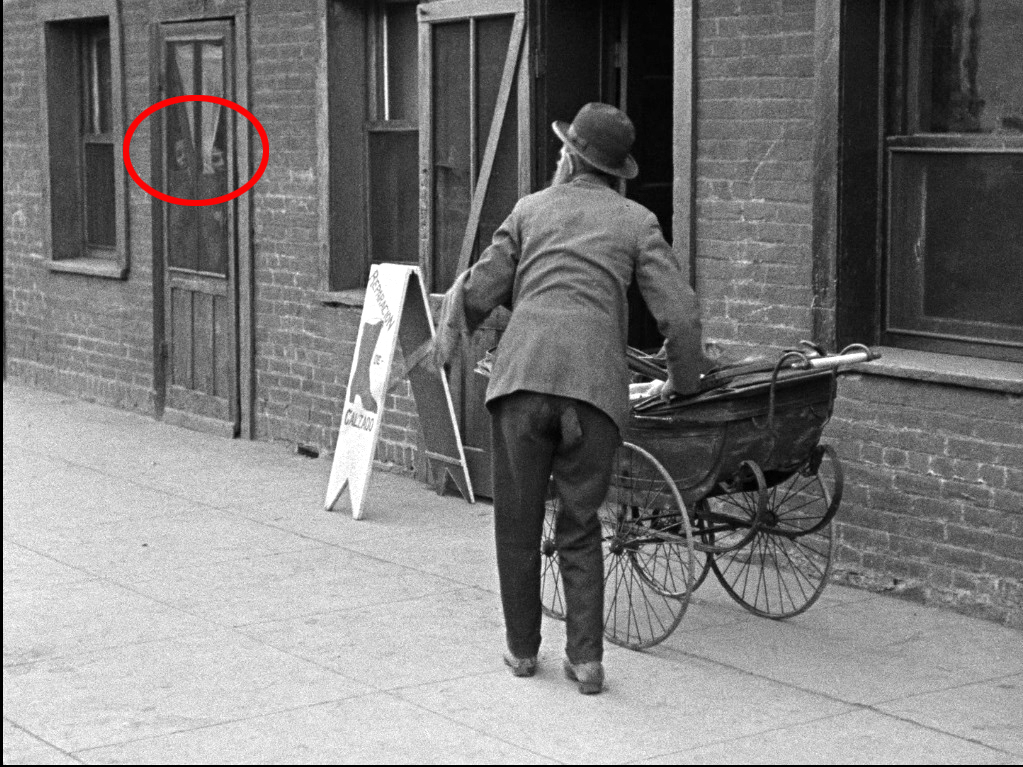
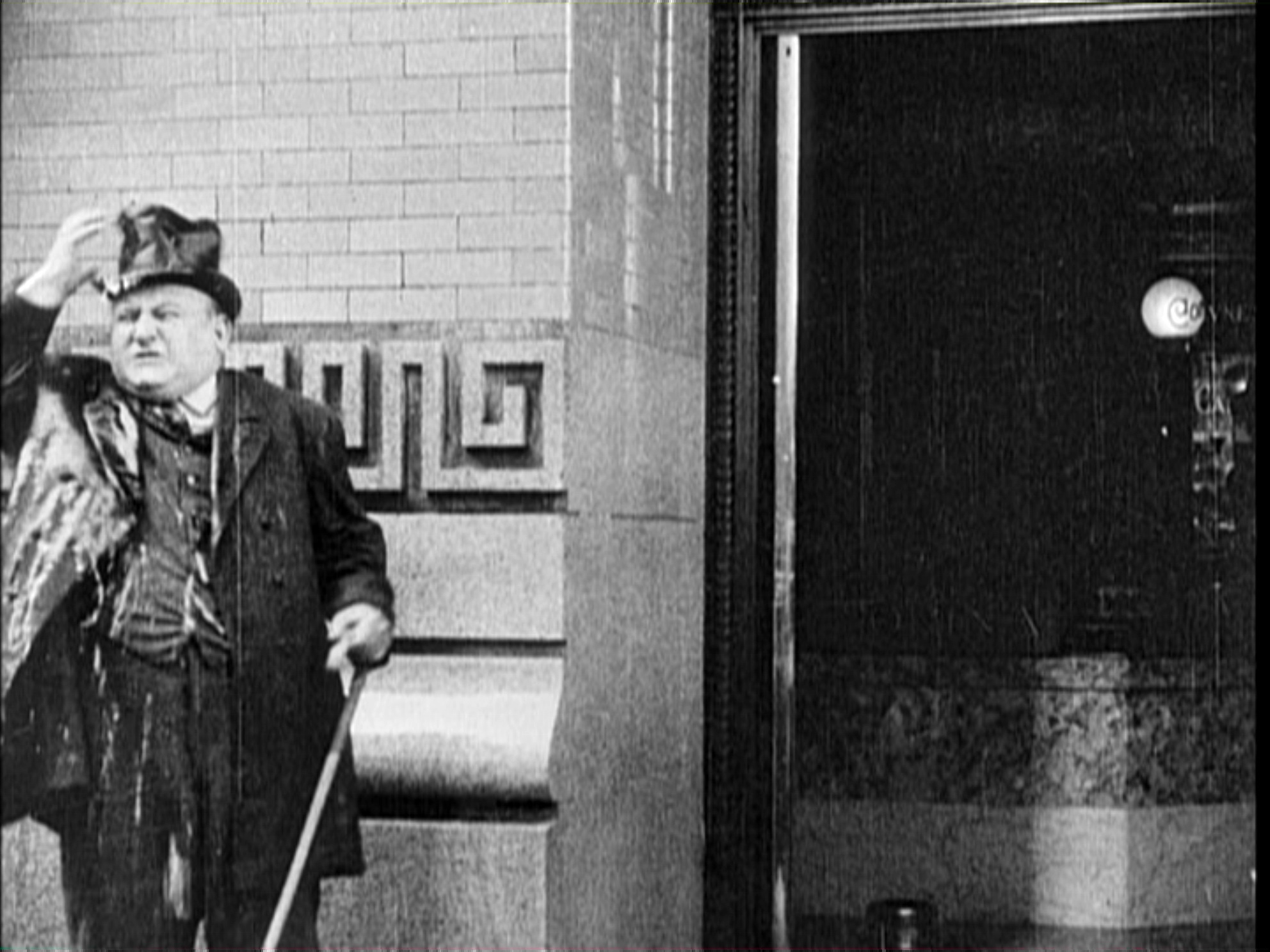
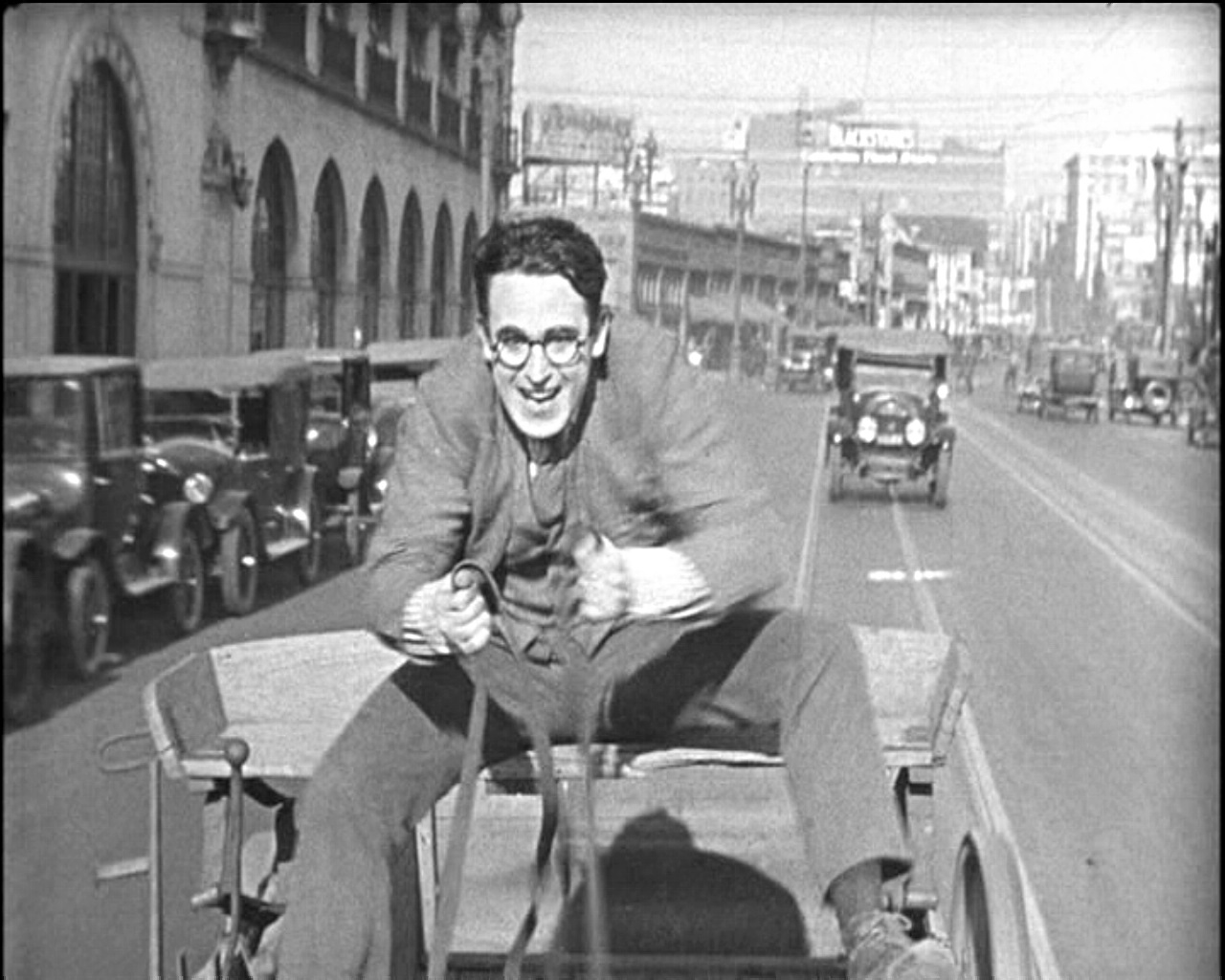
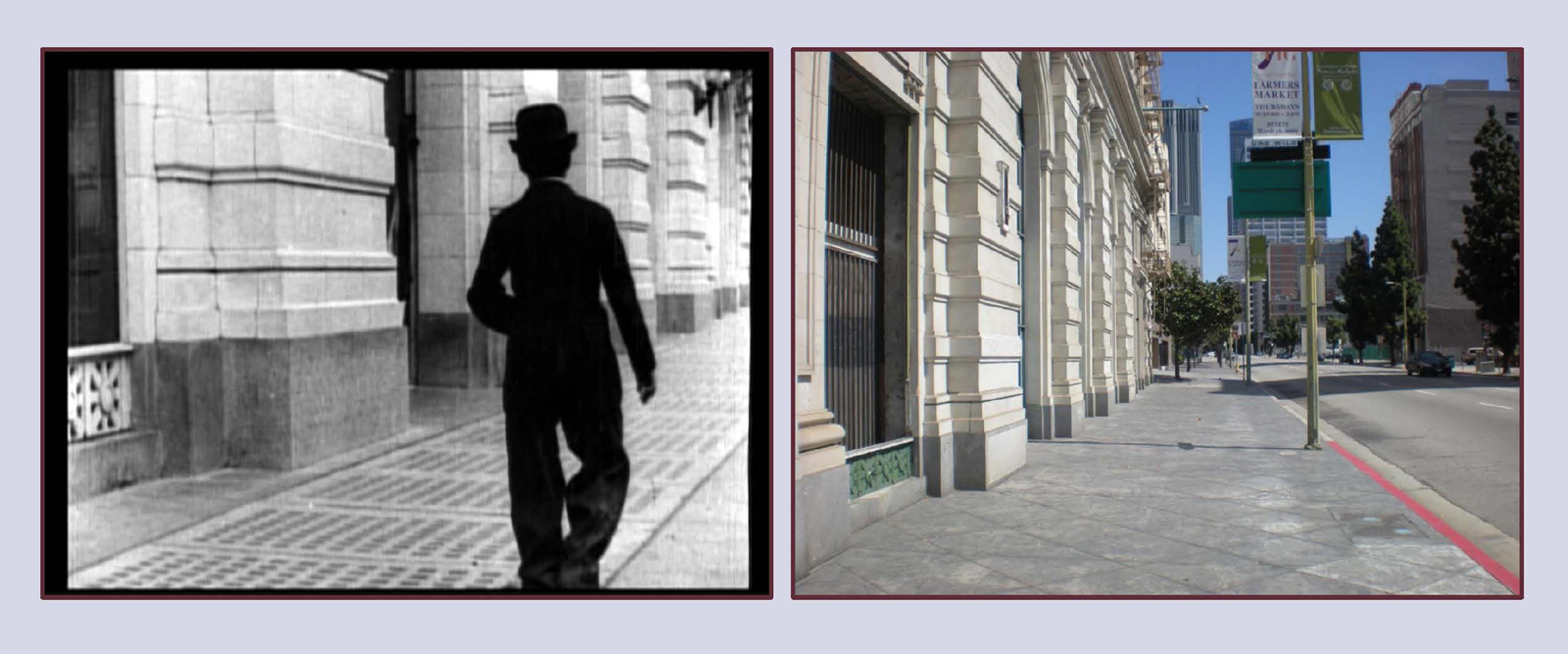
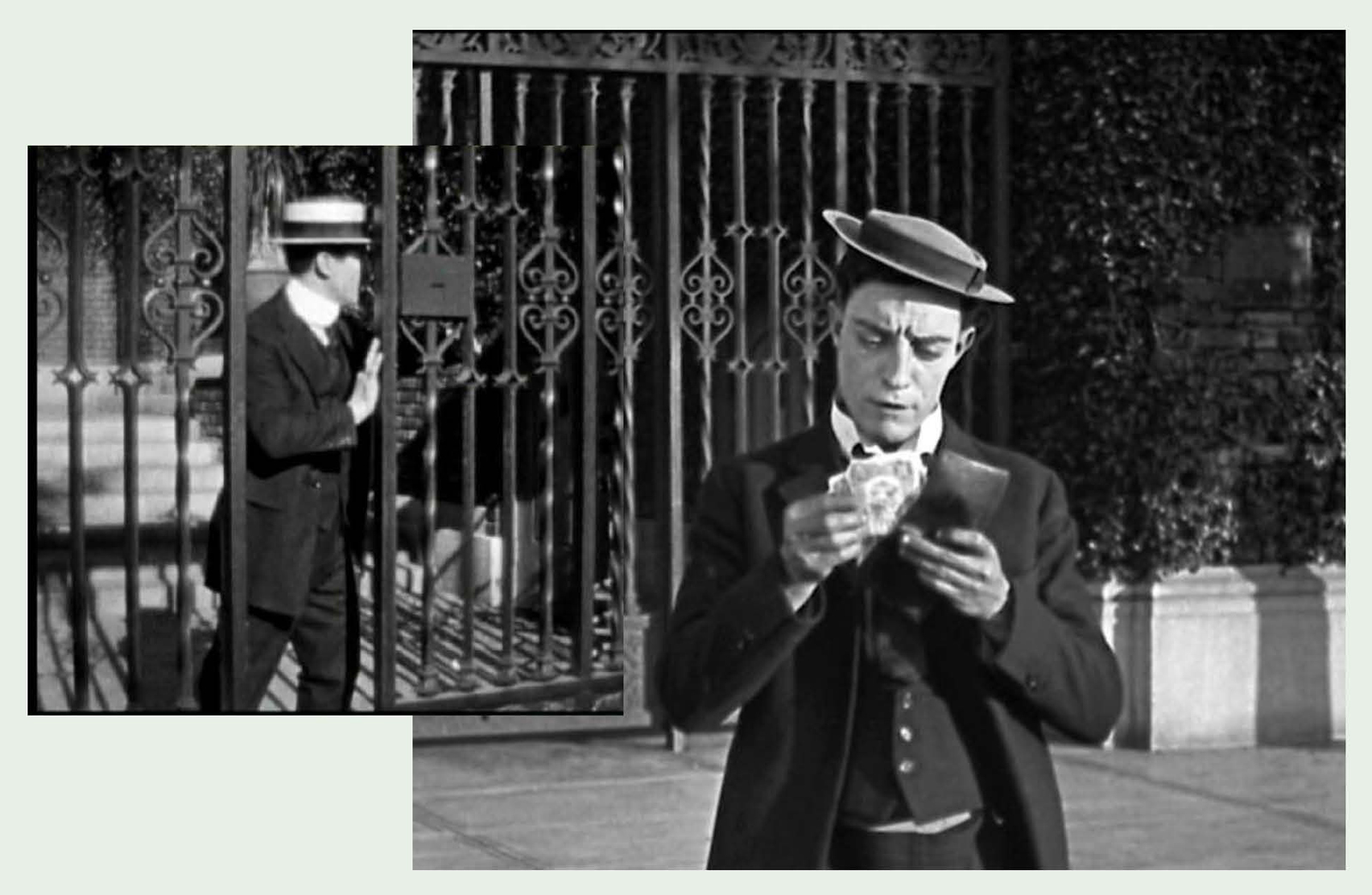
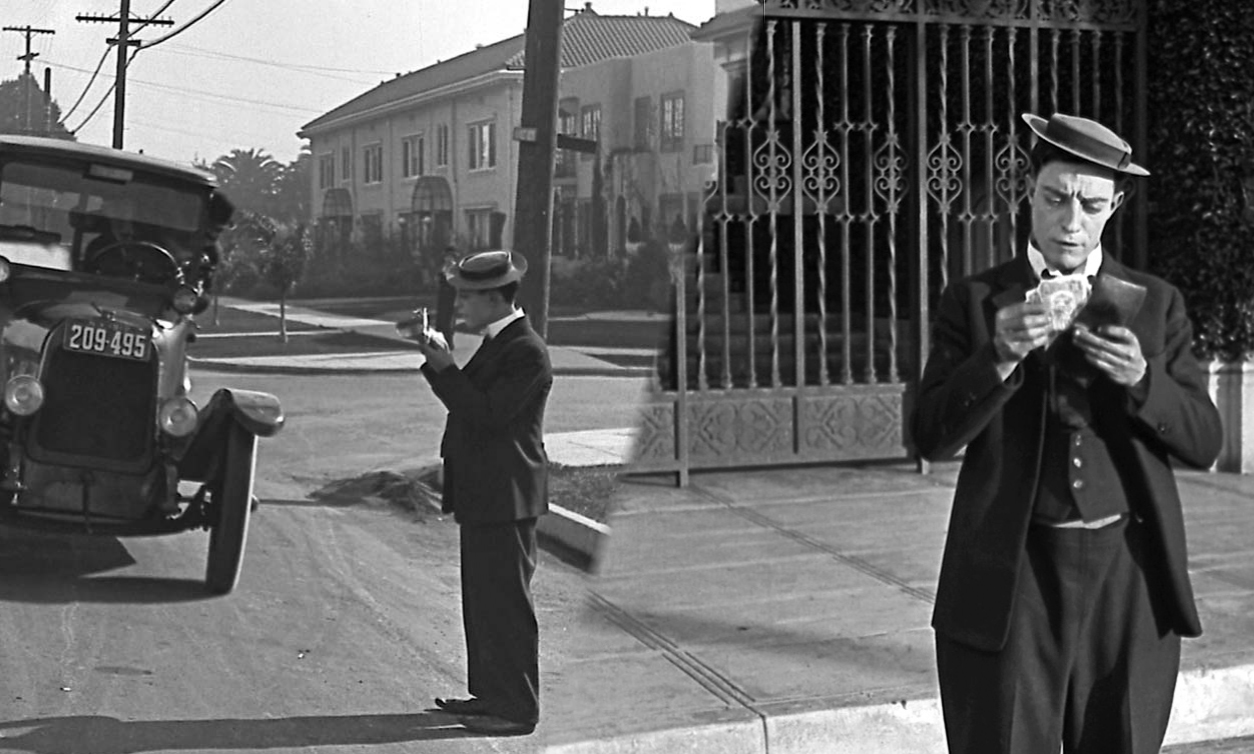
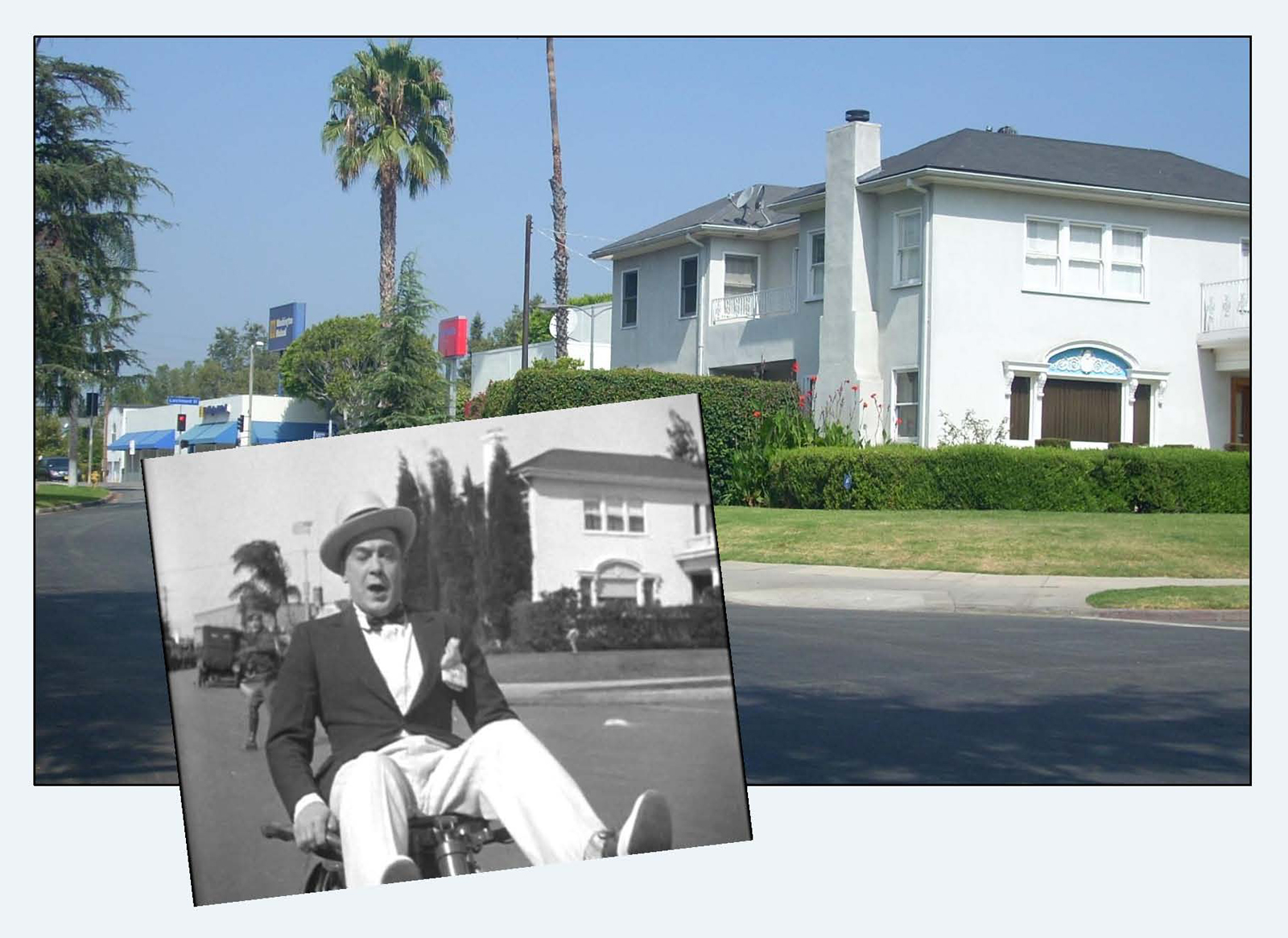
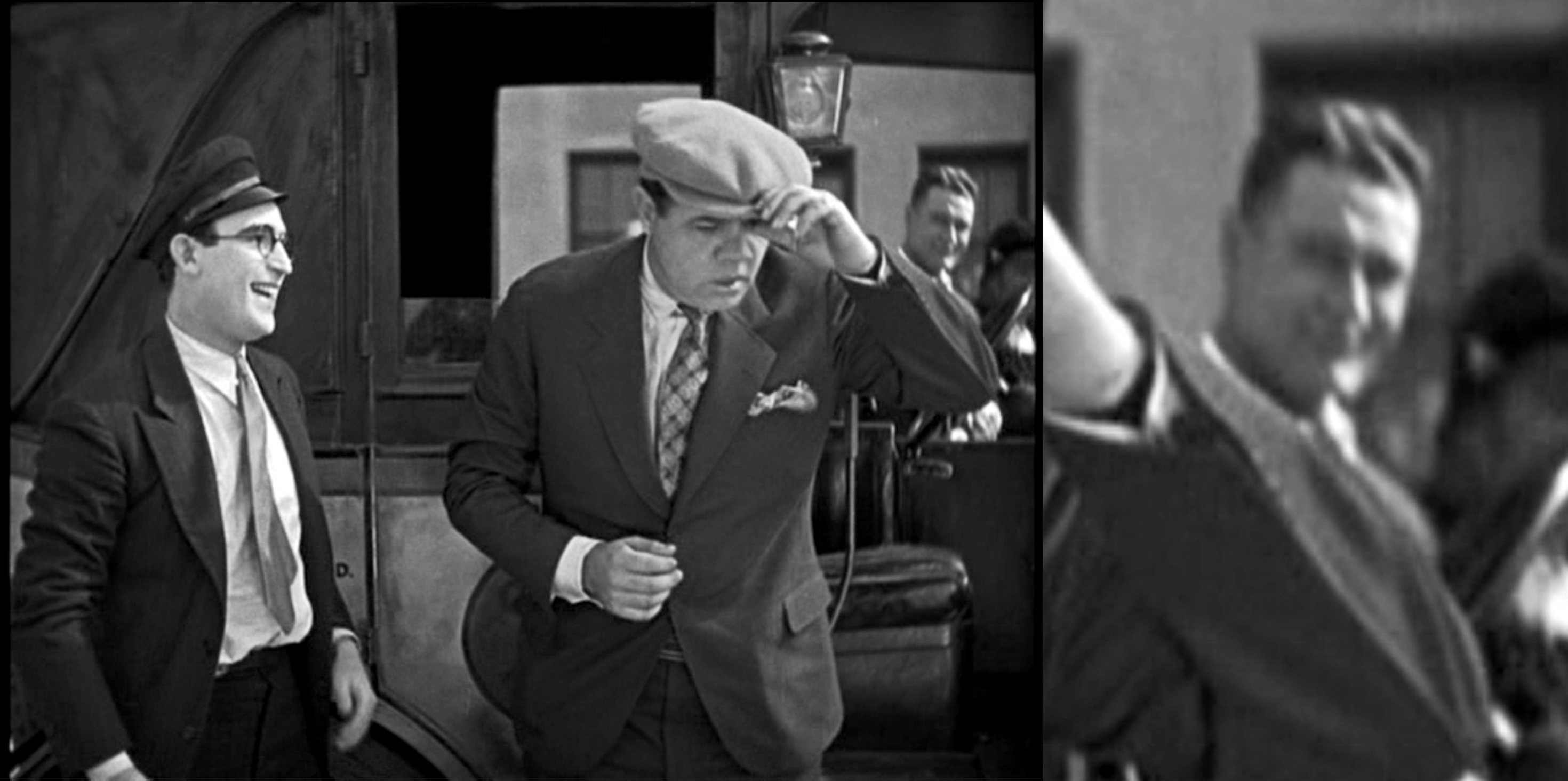
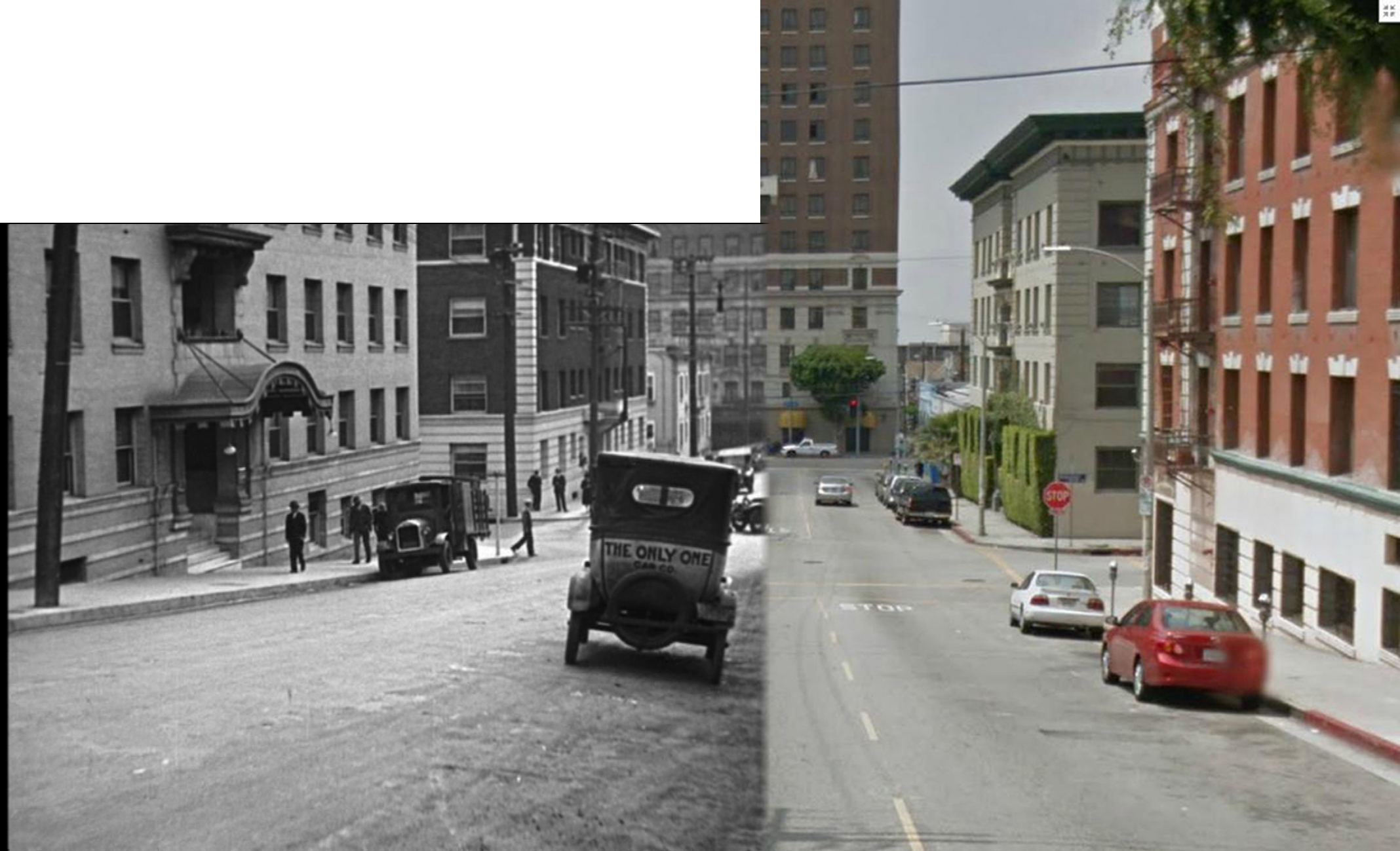
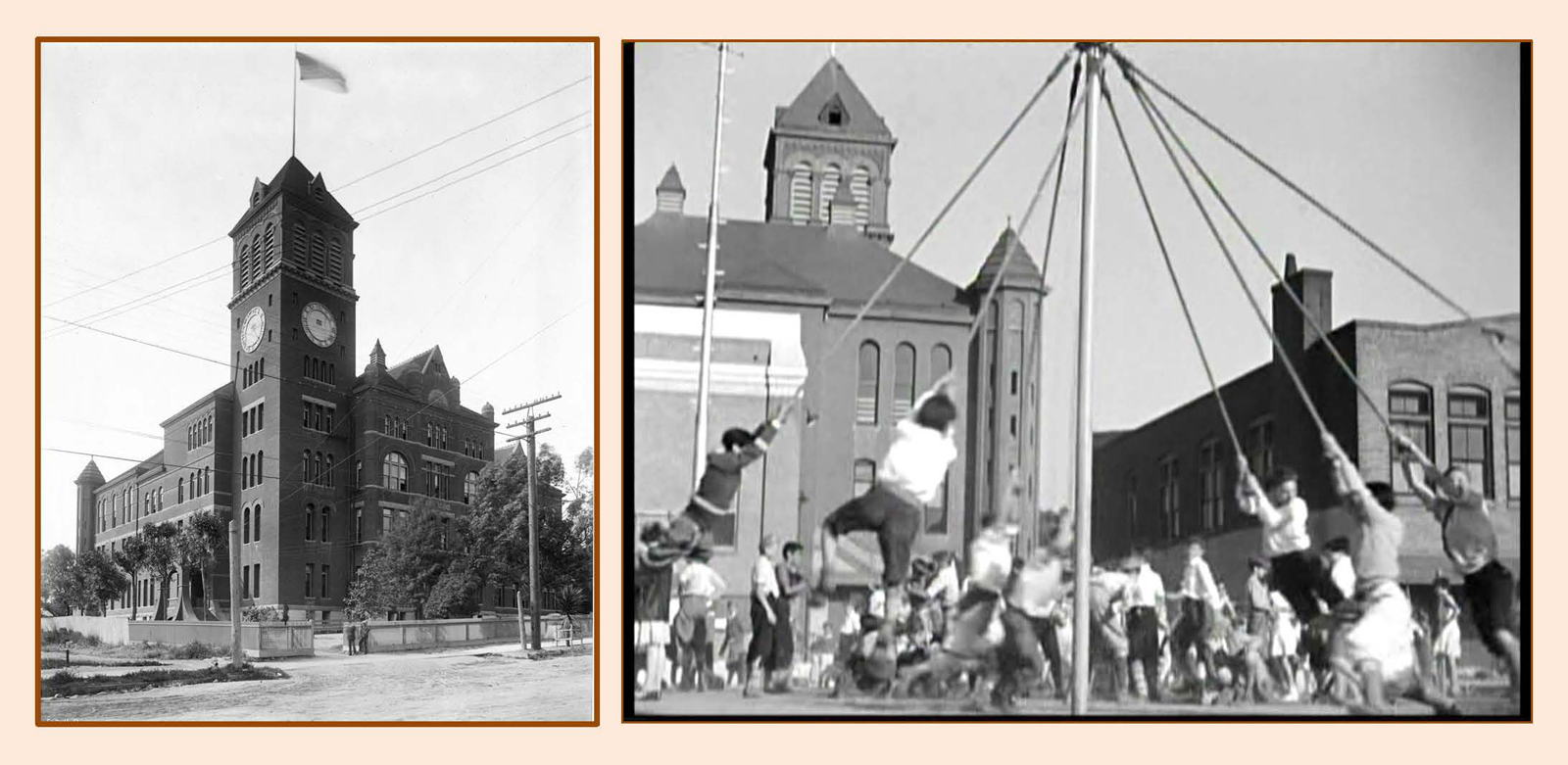
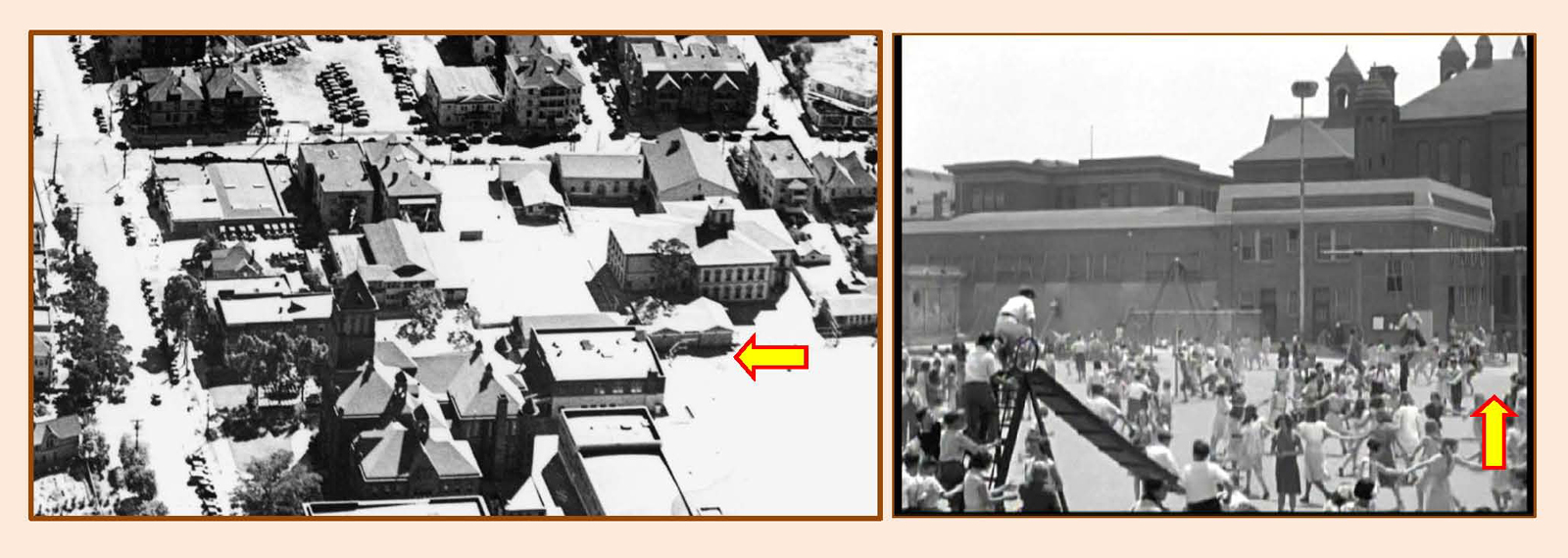
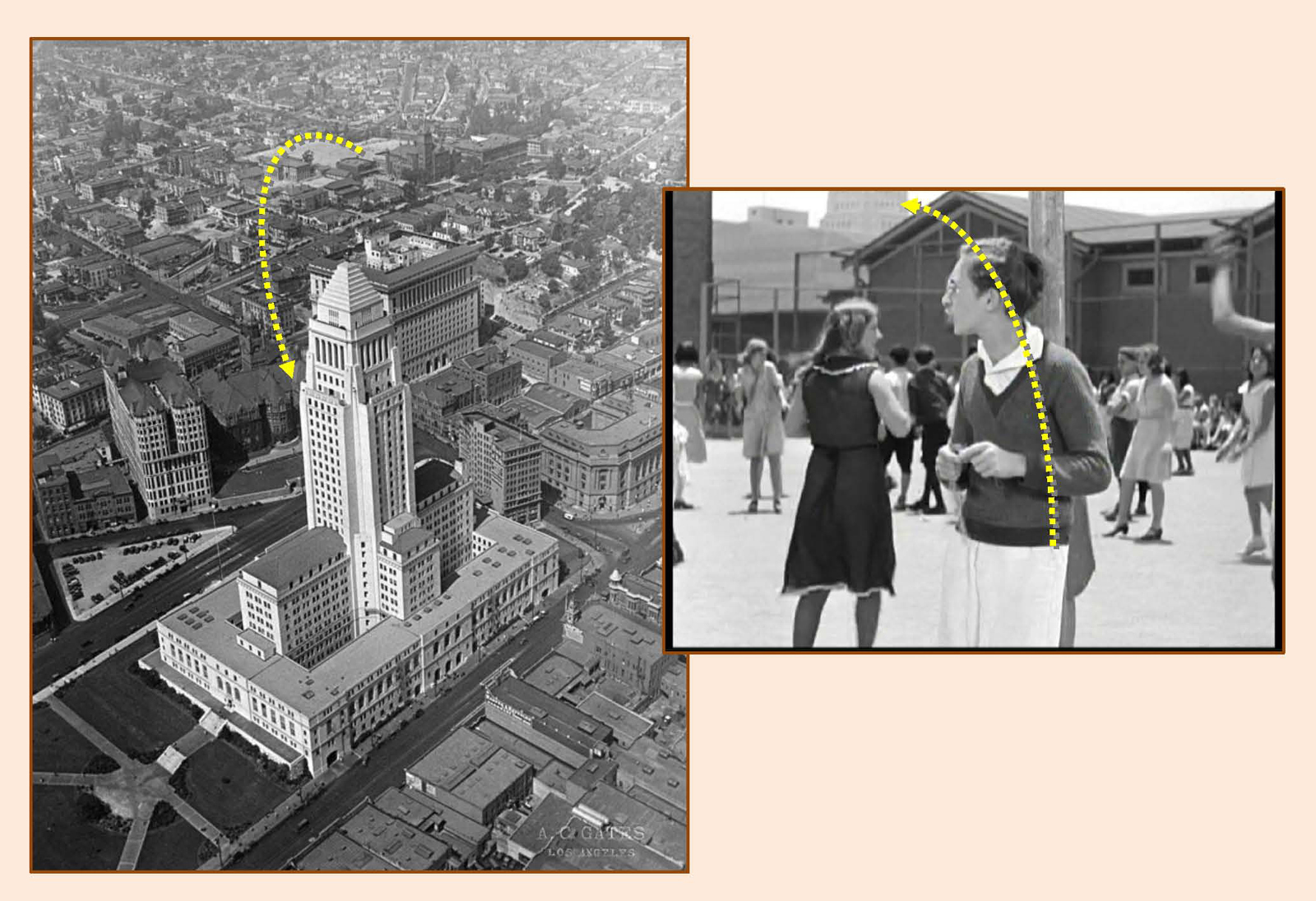
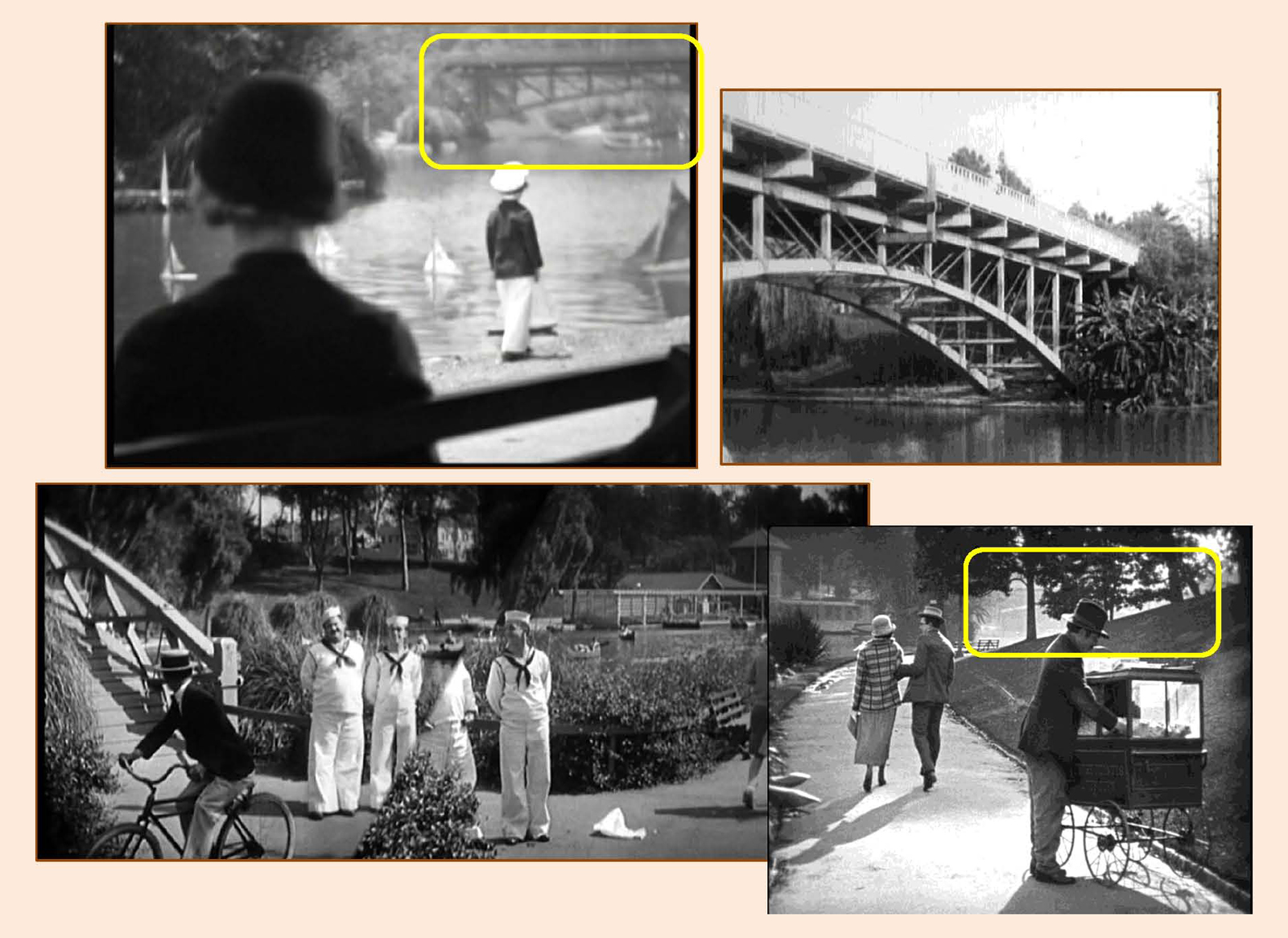
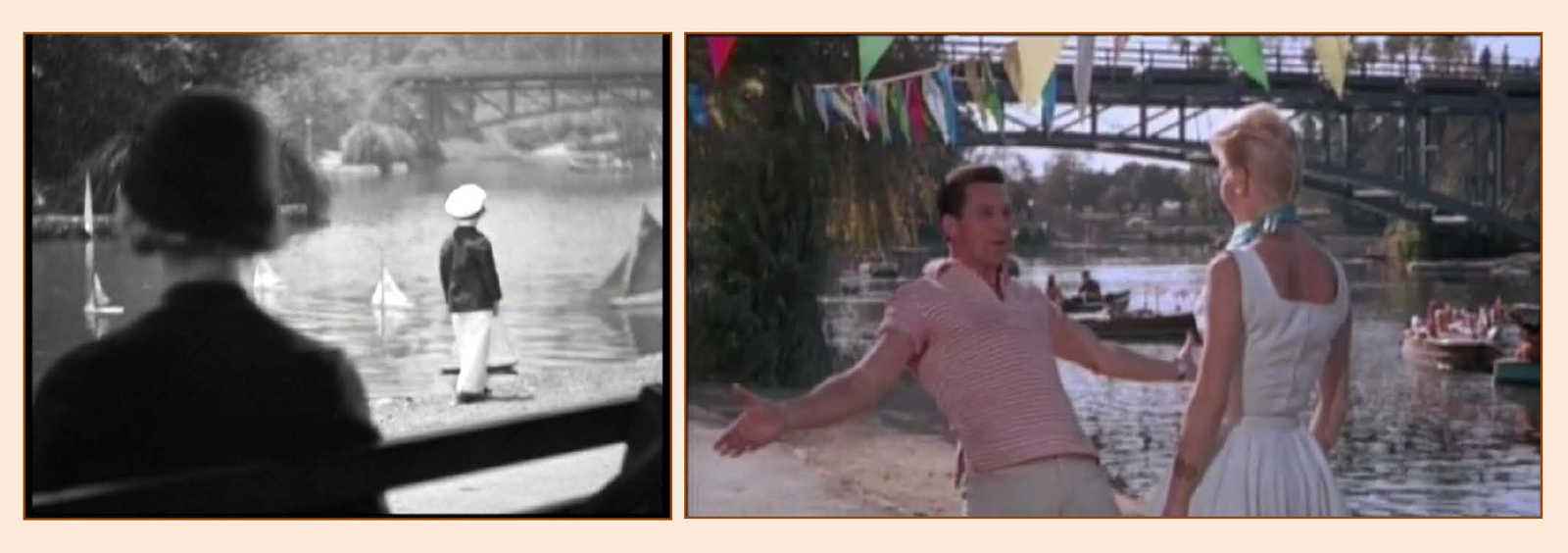
Looking south down Lillian Way from Eleanor - Chaplin in The Fireman and Keaton (inset) eight years later in Sherlock Jr.

Looking south down Lillian Way from Eleanor towards the Vine Street Elementary School – Chaplin in The Fireman and Keaton (inset) in the same spot eight years later in Sherlock Jr. Their common studio stands off camera to the right.
Cleveland Public Library

Cleveland Public Library

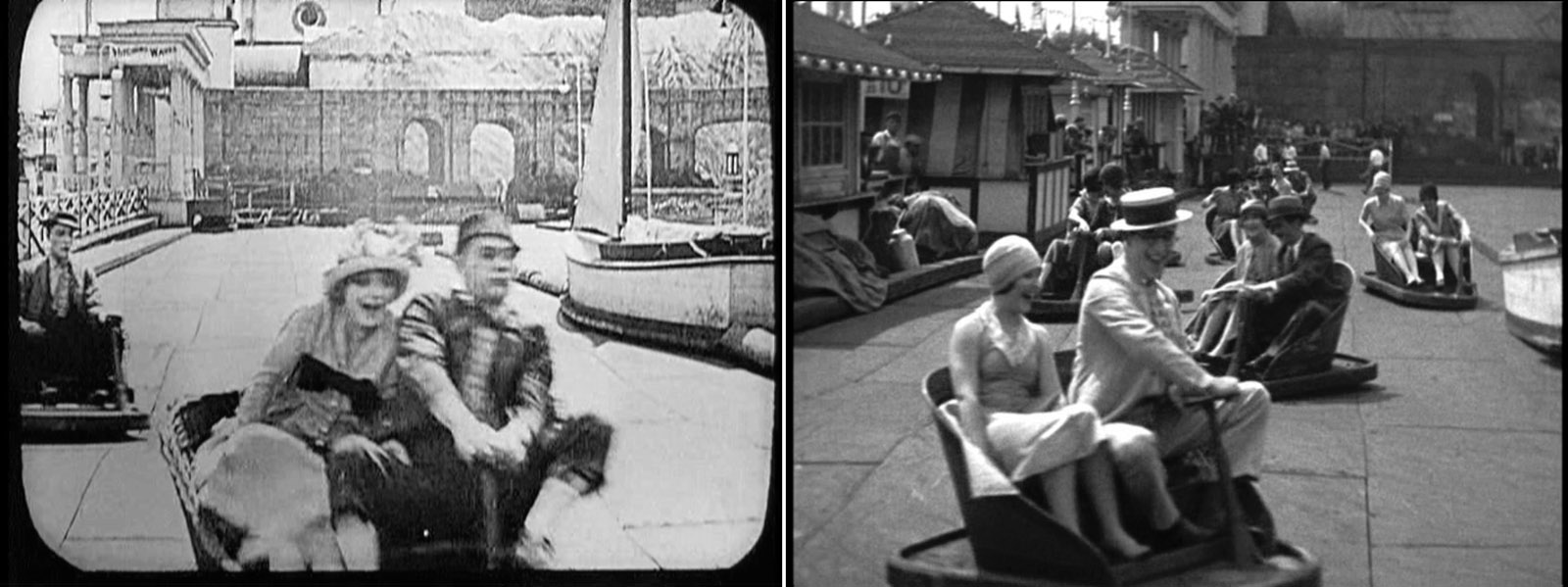
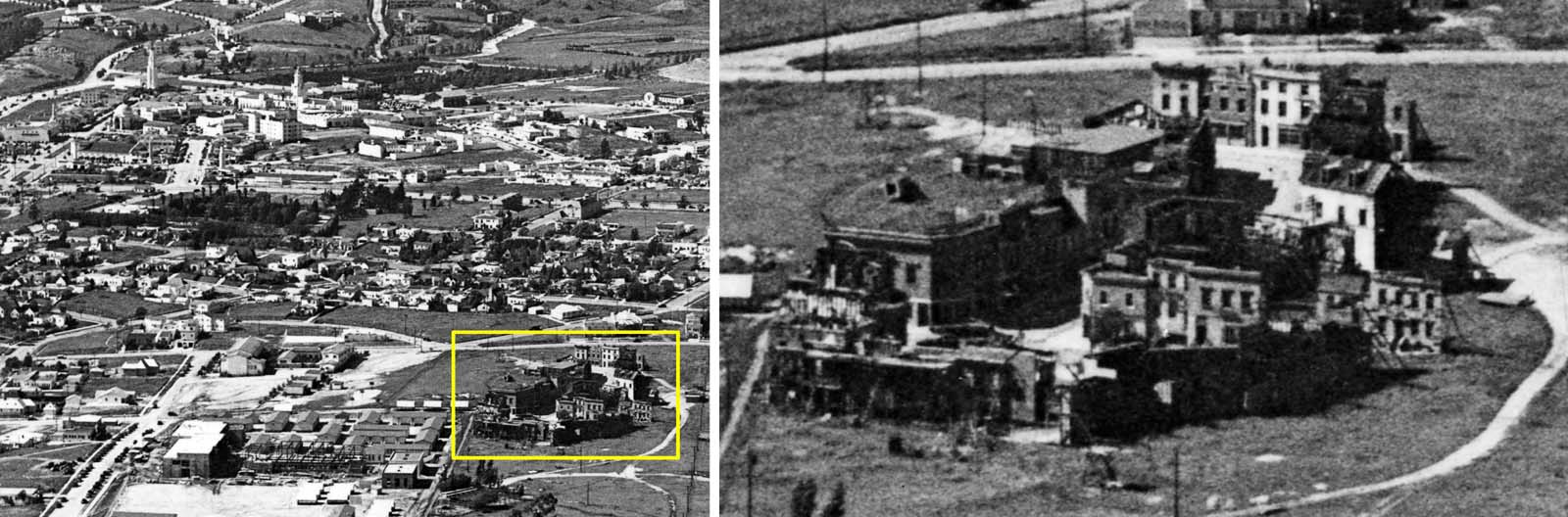
Because Charlie Chaplin filmed his Mutual comedy shorts (1916-17) at the same small studio where Buster Keaton later filmed his independent shorts and features (1920-28), many common locations and settings appear in their films (see above).  I explain this in great detail in my books, and in other posts, in part by deconstructing vintage aerial photographs looking south towards the studio that once stood at 1025 Lillian Way in Hollywood at the SW corner of Eleanor.
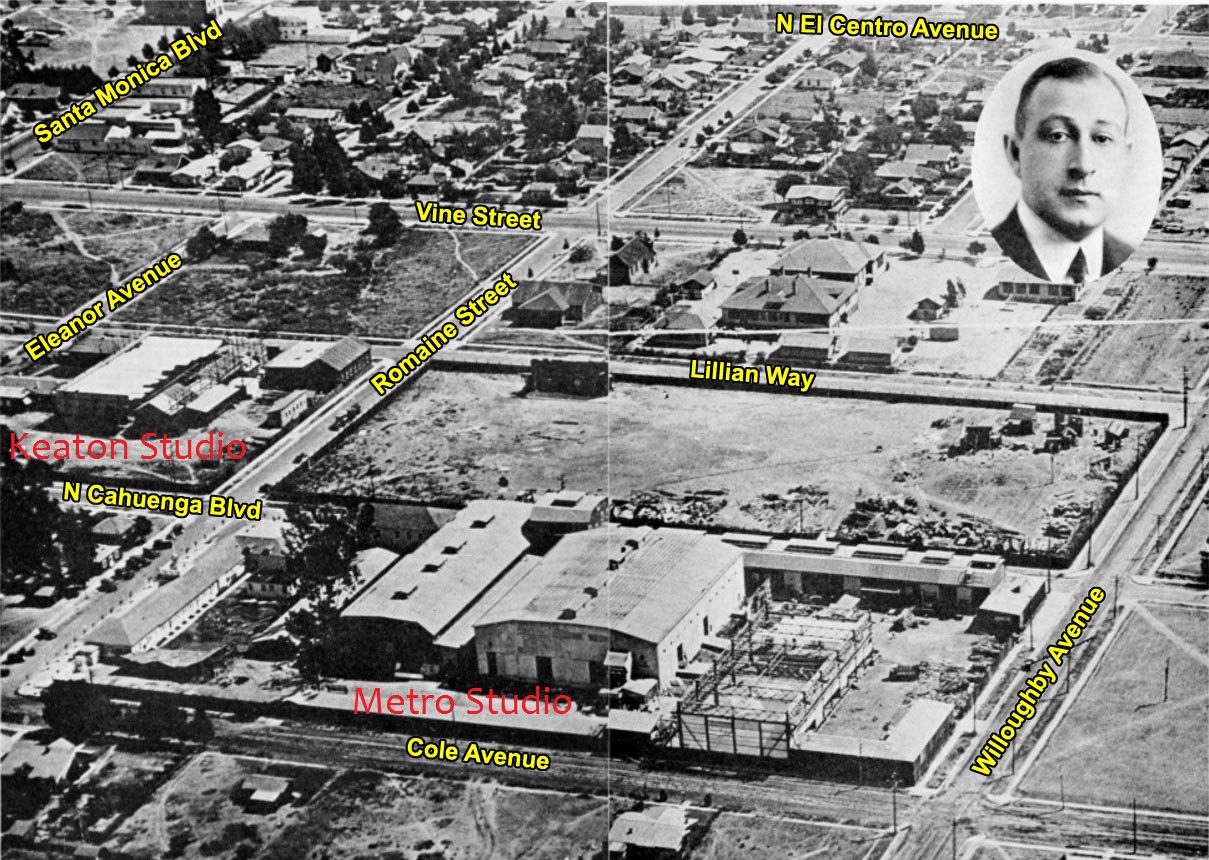
1920 view east of Metro Studio

A 1920 view east of the Keaton and Metro Studios with Joseph W. Engel, Metro Studio General Manager (inset).
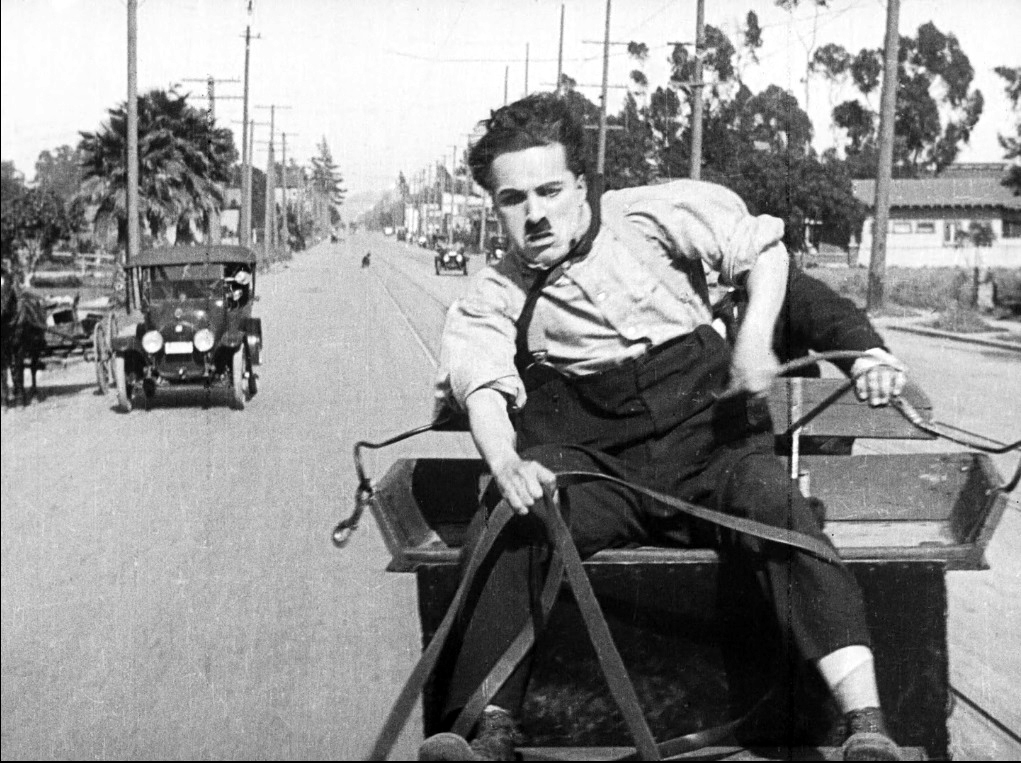
Looking east down Santa Monica Blvd. past Cole.

Looking east down Santa Monica Blvd. past Cole. From here Chaplin’s small studio stood one block back and to the south.

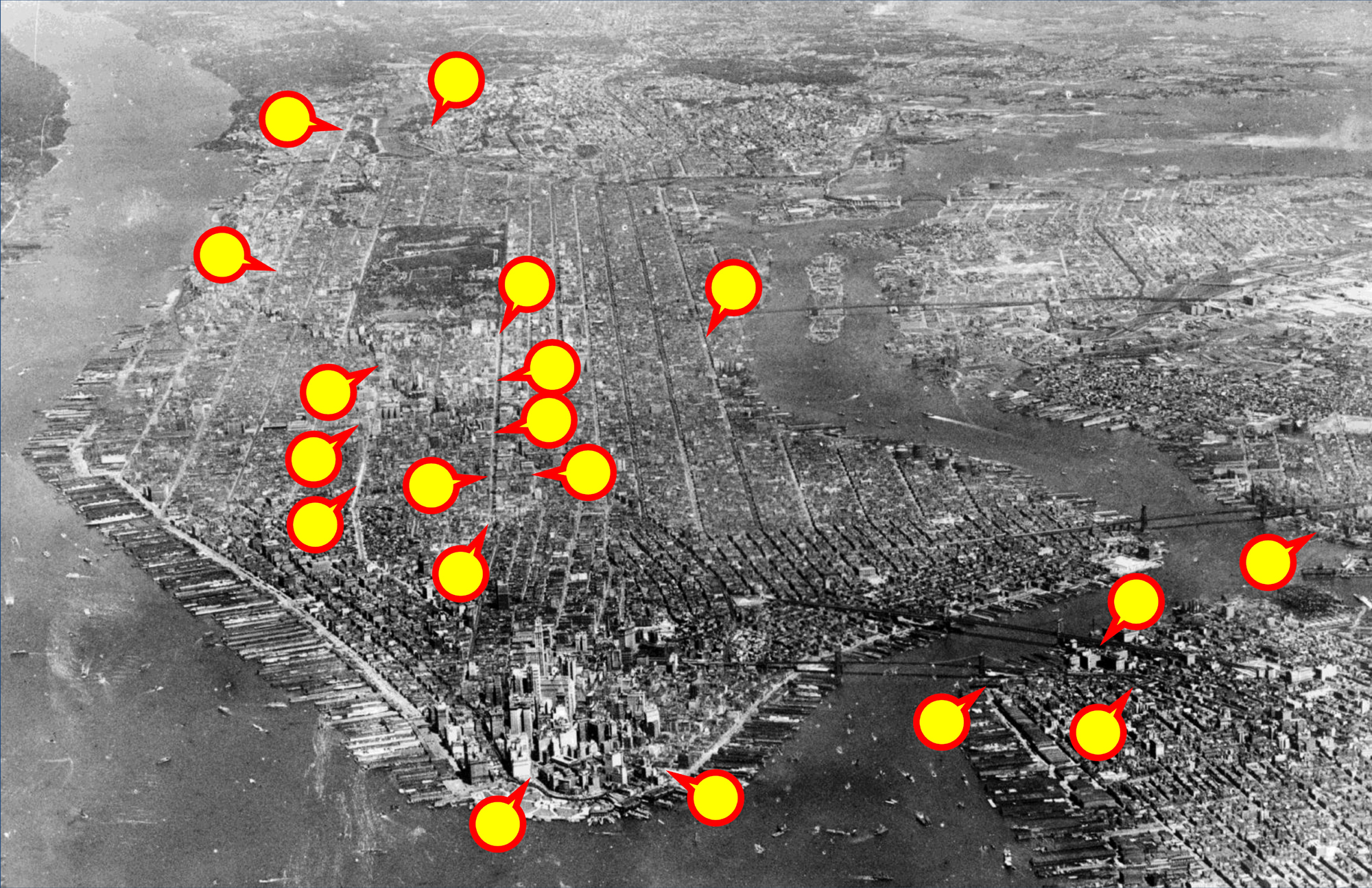
Chaplin’s The Fireman (1916) is particularly interesting, as he filmed a racing fire engine on many streets adjacent to the studio, some identified in my book, while others remained elusive, until now. A 1920 Hollywood publicity manual, Who’s Who On The Screen, ed. by Charles Donald Fox and Milton L. Silver, contains at pages 152-153 a rare eastern (not southern) aerial view of the studio, providing a novel vantage point that confirms not only several locations from The Fireman, but from Keaton’s early short comedies Convict 13 (1920), The Scarecrow (1920), and The Playhouse (1921) as well. The HathiTrust uploaded the 1920 manual, containing hundreds of Hollywood star portraits and profiles, which may be viewed directly HERE. With the above overall aerial view looking east as a guide, this post reveals seven new Chaplin and Keaton locations. Click each image to enlarge it for a closer look.
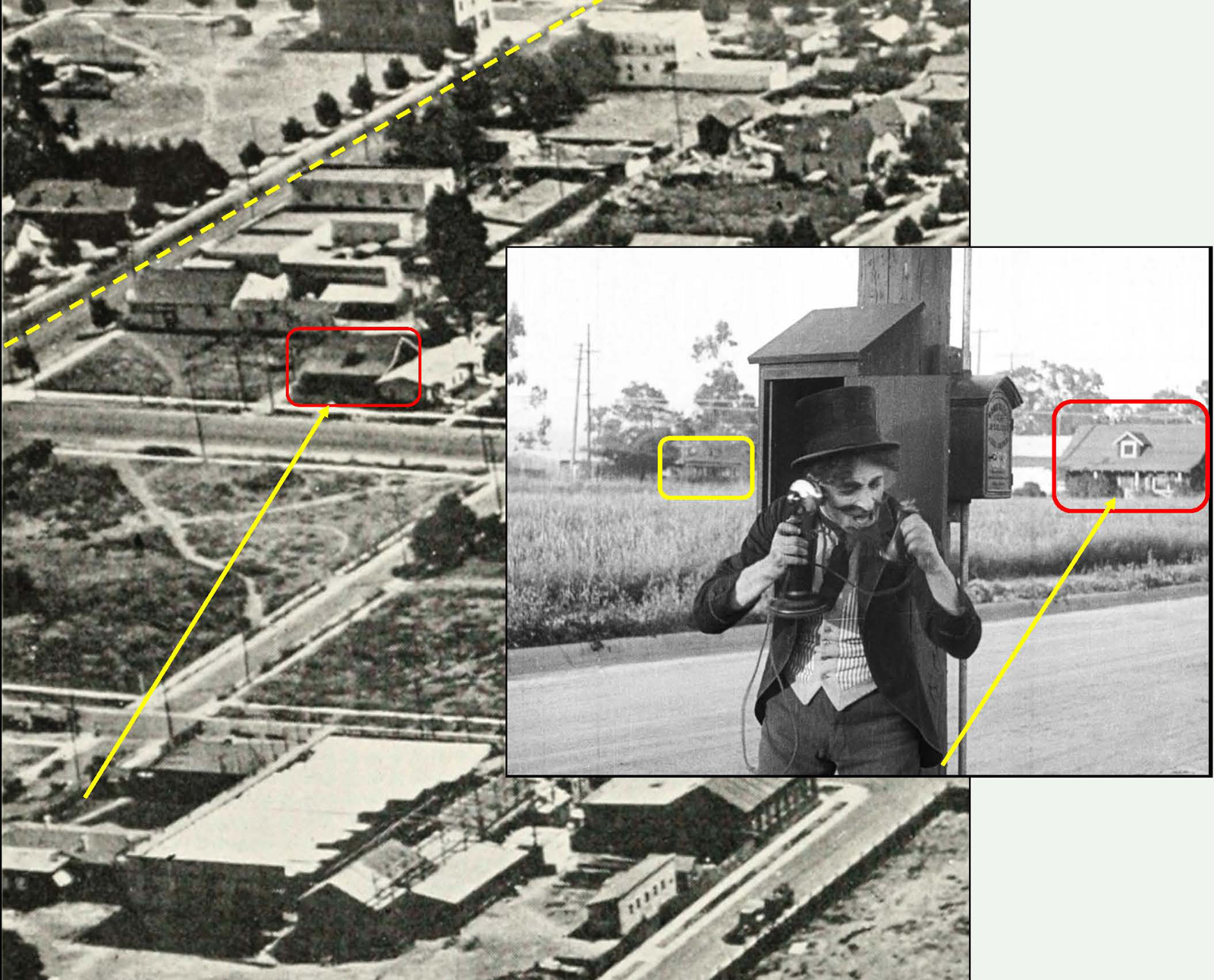
Leo White frantically telephones the fire department standing on Eleanor mid-way between Cahuenga and Lillian Way. A trolley (yellow box) runs east along Santa Monica Blvd., while the distinctive single dormer home at 1062 Vine Street (red box) appears at back

In Chaplin’s The Fireman Leo White frantically telephones the fire department while standing on Eleanor mid-way between Cahuenga and Lillian Way. A trolley (yellow box) runs east along Santa Monica Blvd. (dotted line), while the distinctive single dormer home at 1062 Vine Street (red box) appears at back.

This same general view above also matches scenes from Keaton’s Convict 13, The Scarecrow, and The Playhouse.

The 'rural' cabin Buster and Big Joe Roberts share in The Scarecrow was built on this vacant lot kitty corner from the studio.

The ‘rural’ cabin Buster and Big Joe Roberts share in The Scarecrow was built on this vacant lot kitty corner from the studio. The distinctive single dormer home at 1062 Vine Street again appears at back.

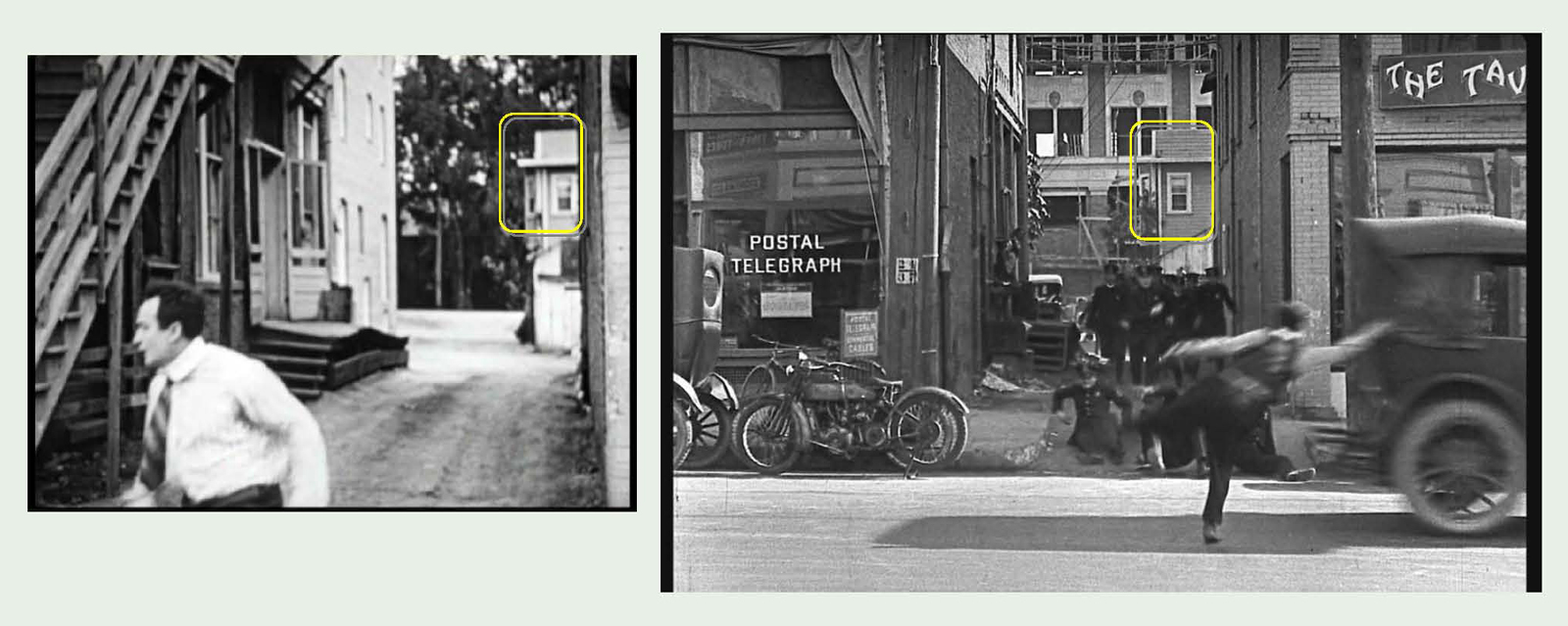
A closer view of 1062 Vine Street appearing in two films; Keaton's The Scarecrow and Chaplin's The Fireman.

A closer view of 1062 Vine Street appearing in two films; Keaton’s The Scarecrow and Chaplin’s The Fireman.

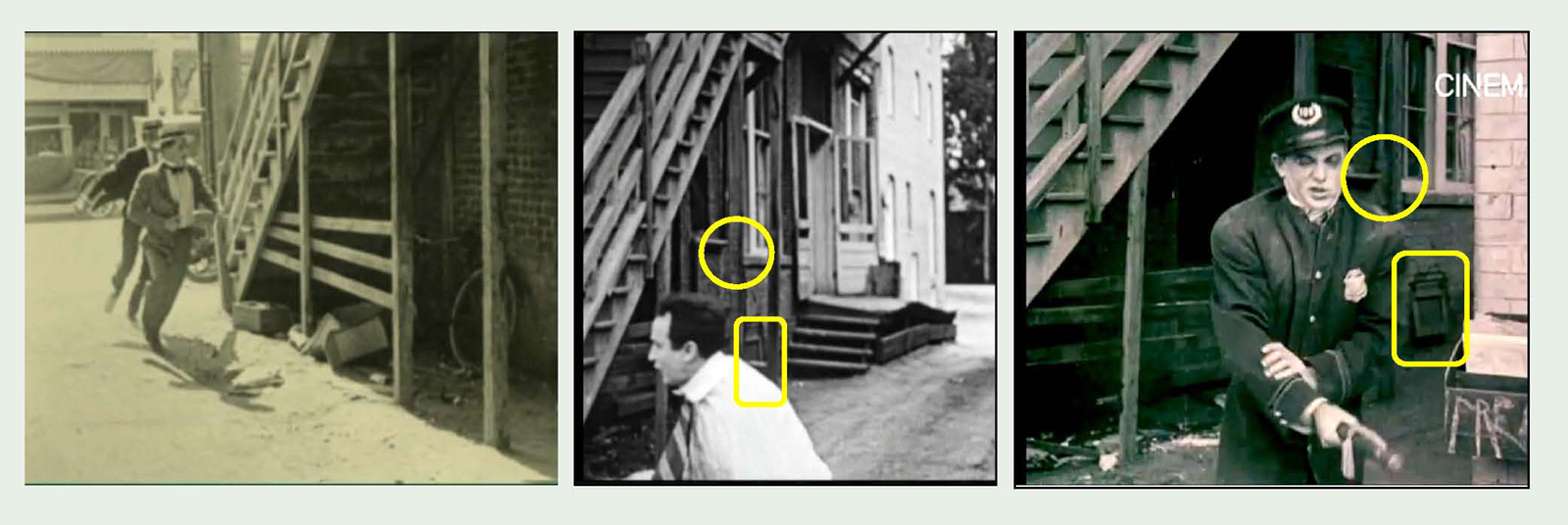
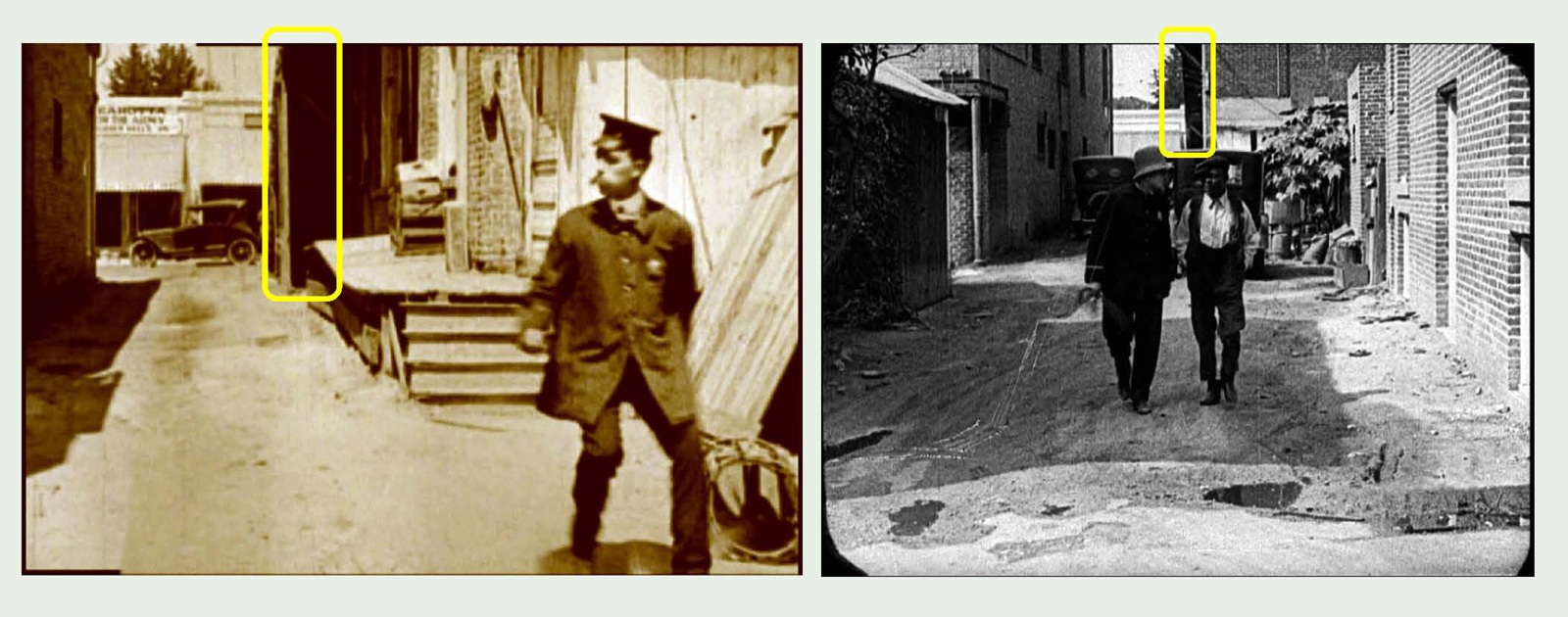
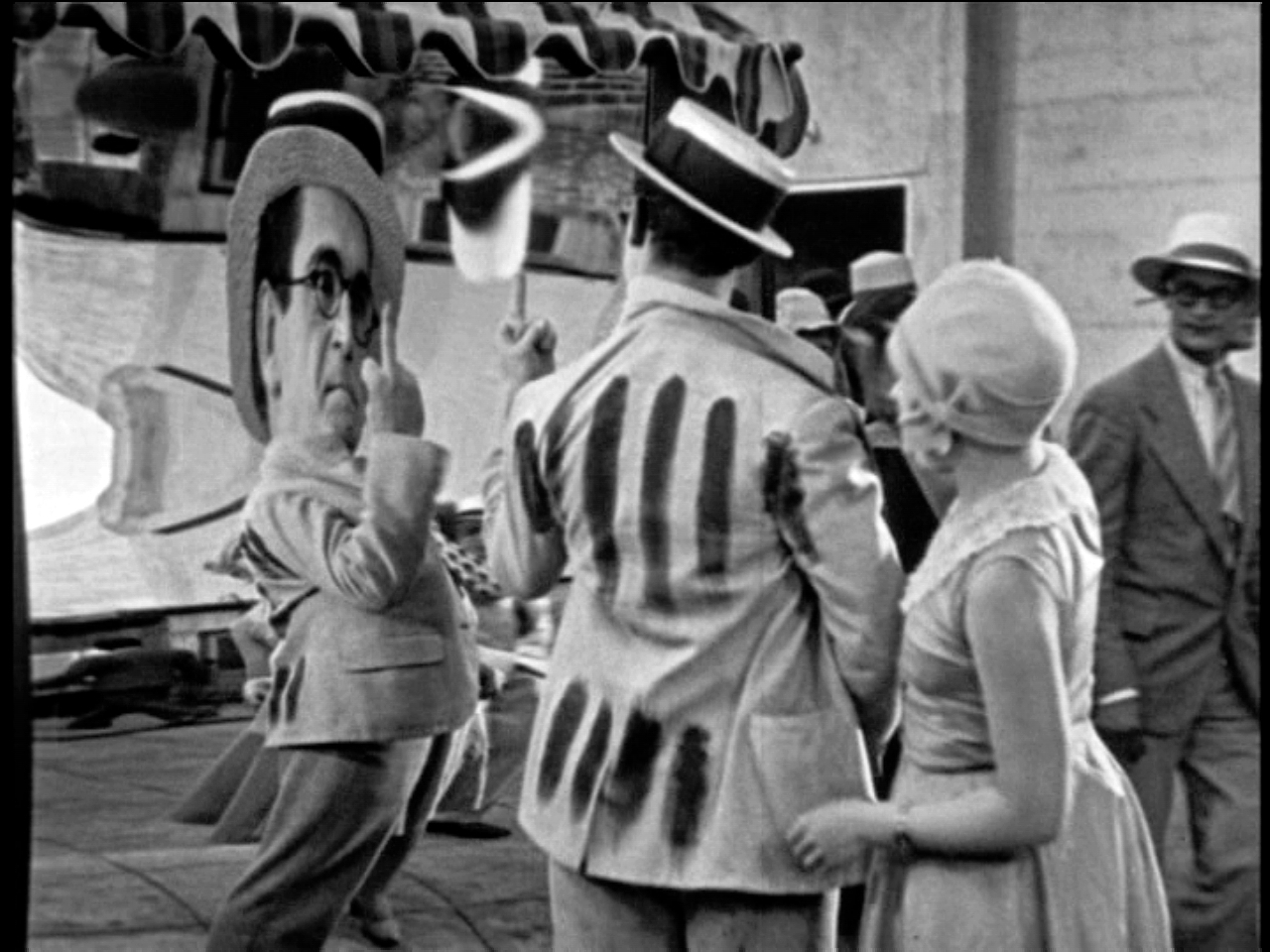
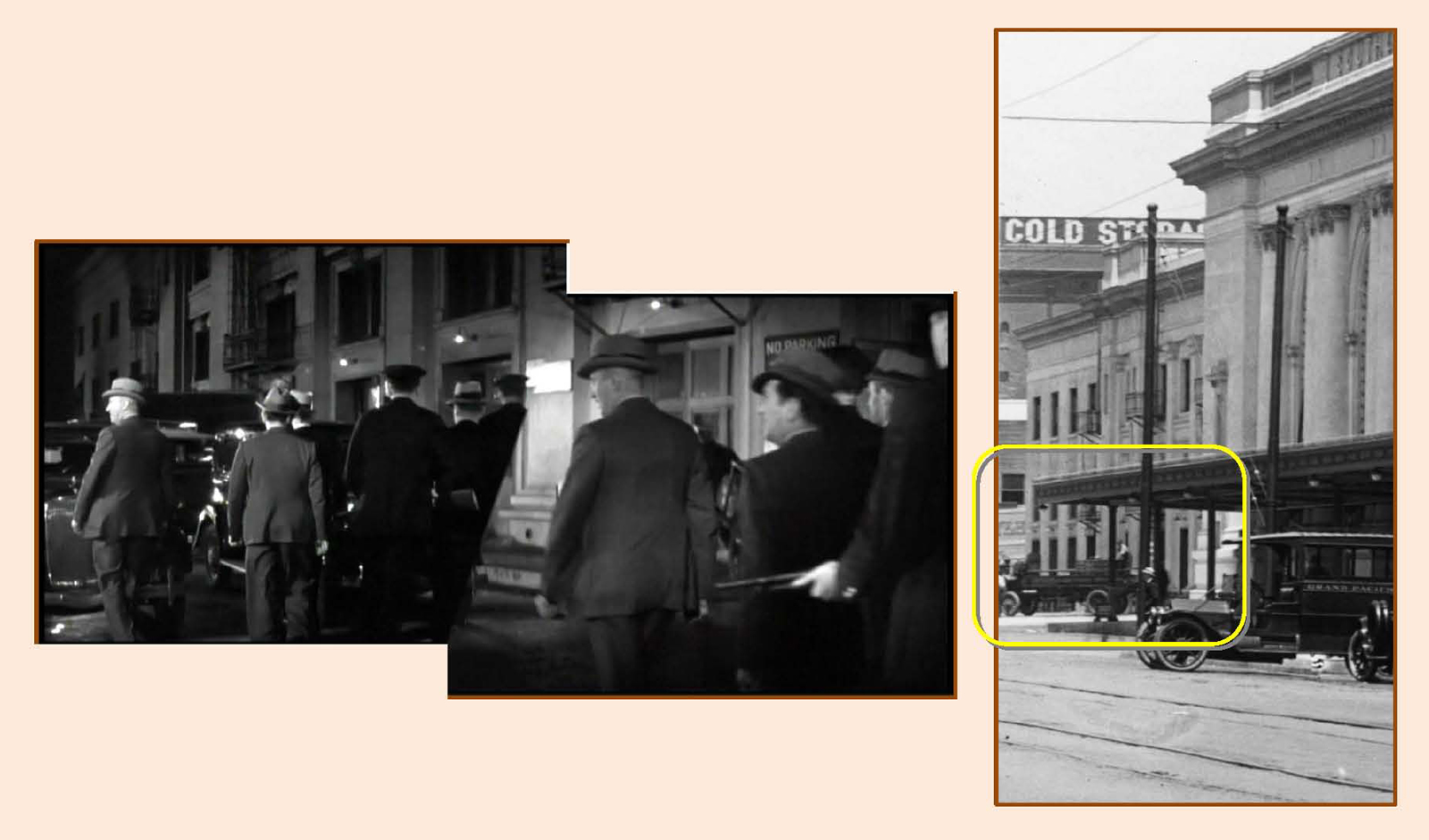
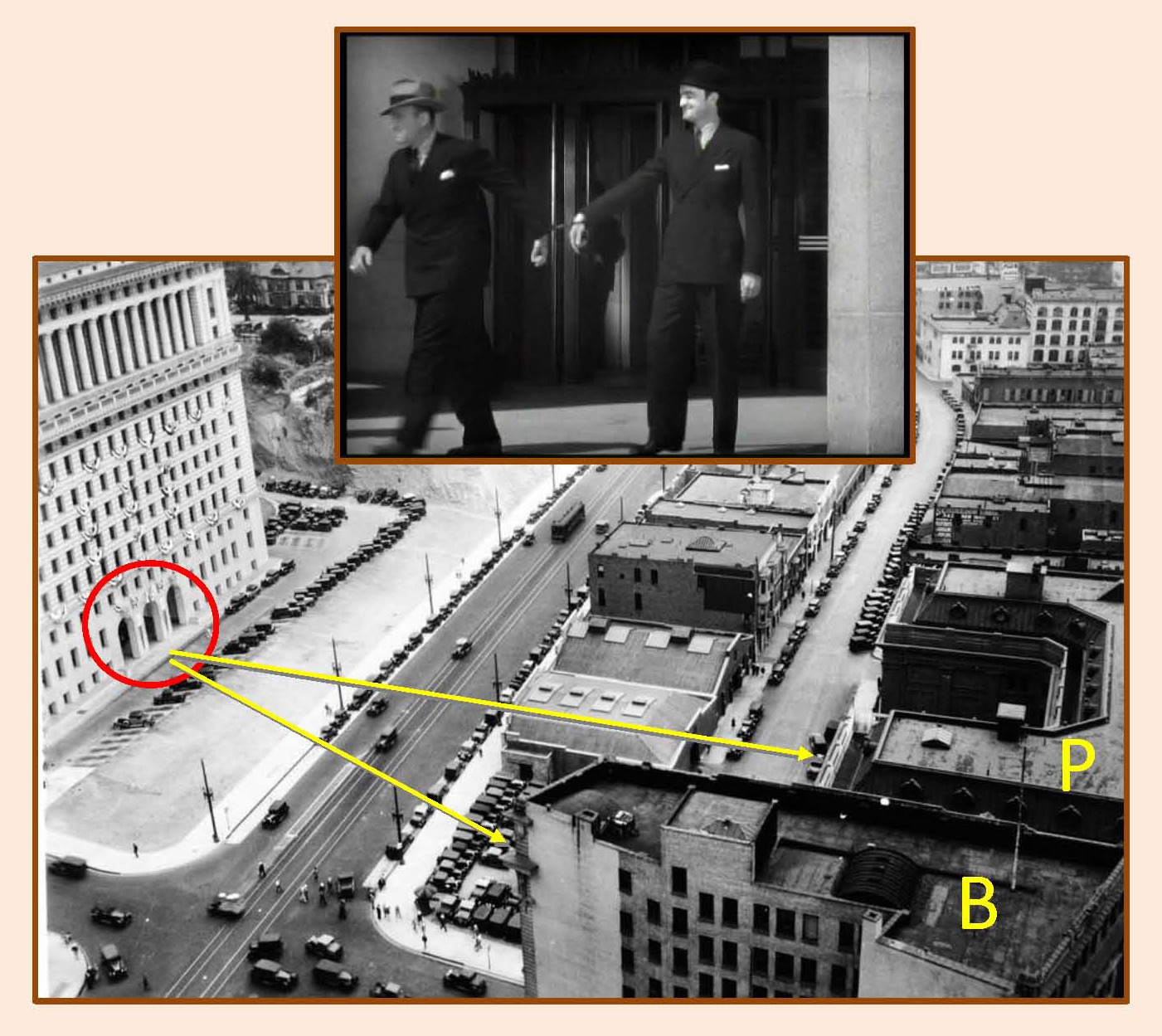
In Keaton's Convict 13 the police question a painter about his paint-striped clothes at the gated entryway into the studio grounds. The back of the market at Santa Monica, east of Vine, appears through the entrance.

In Keaton’s Convict 13 the police question a painter about his paint-striped clothes at the gated entryway into the studio grounds. The back of the market at 6248 Santa Monica, east of Vine (yellow box), appears through the entrance.
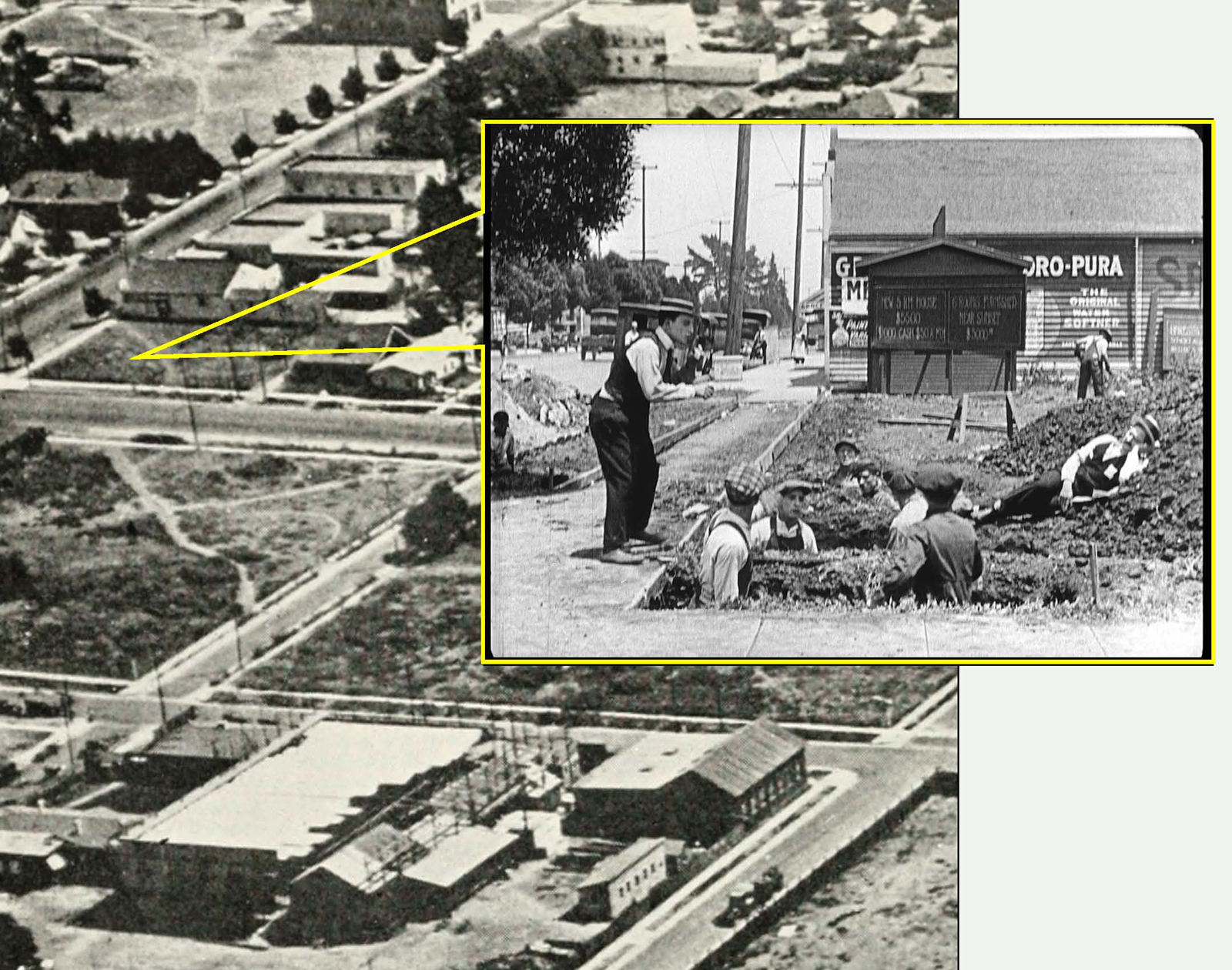
In Keaton's The Playhouse Buster invites a group of ditch-diggers to join his vaudeville show, while the market at 6248 Santa Monica Blvd. stands at back - barely two blocks from the studio.

In Keaton’s The Playhouse Buster invites a group of ditch-diggers to join his vaudeville show, while the market at 6248 Santa Monica Blvd. stands at back – barely a block from the studio in the foreground.
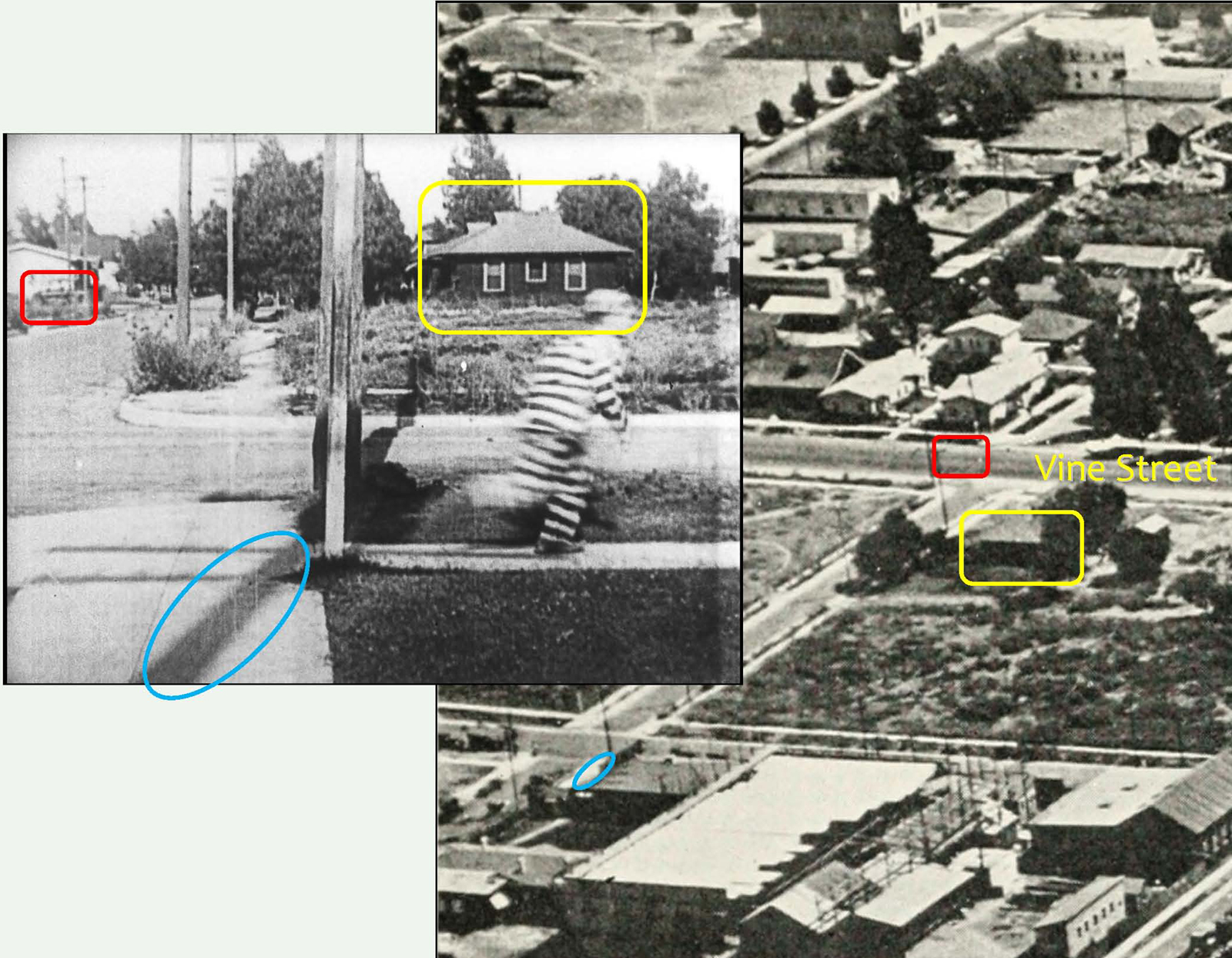
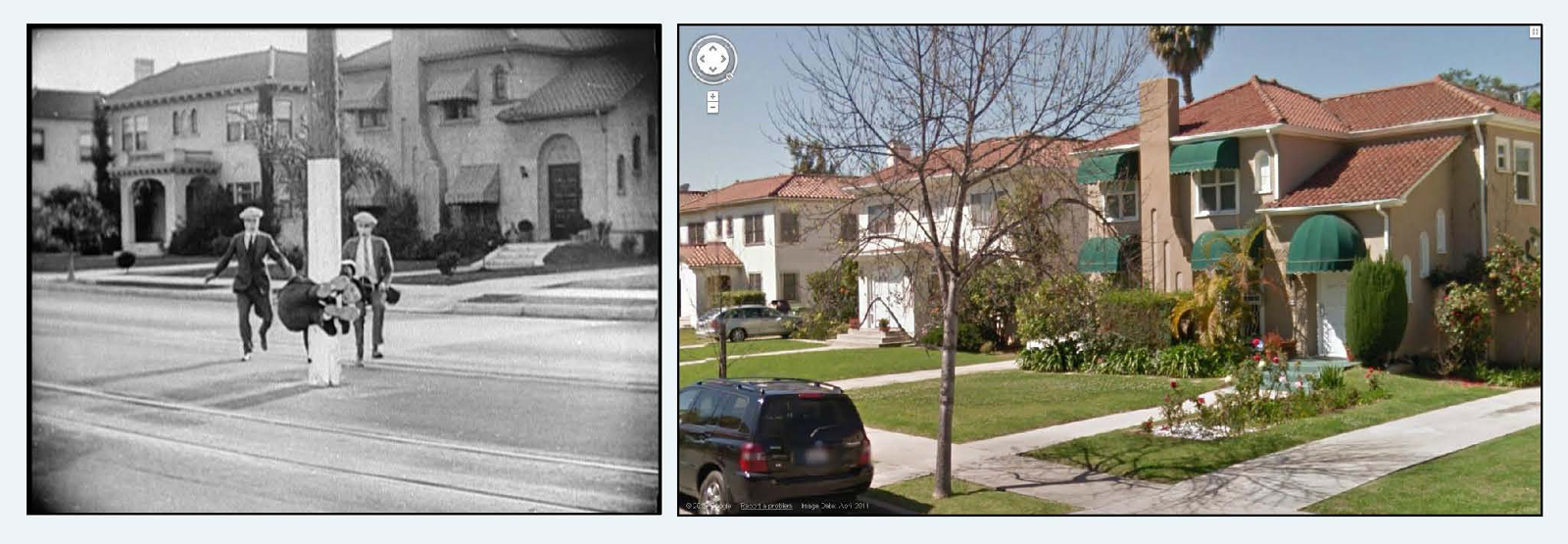
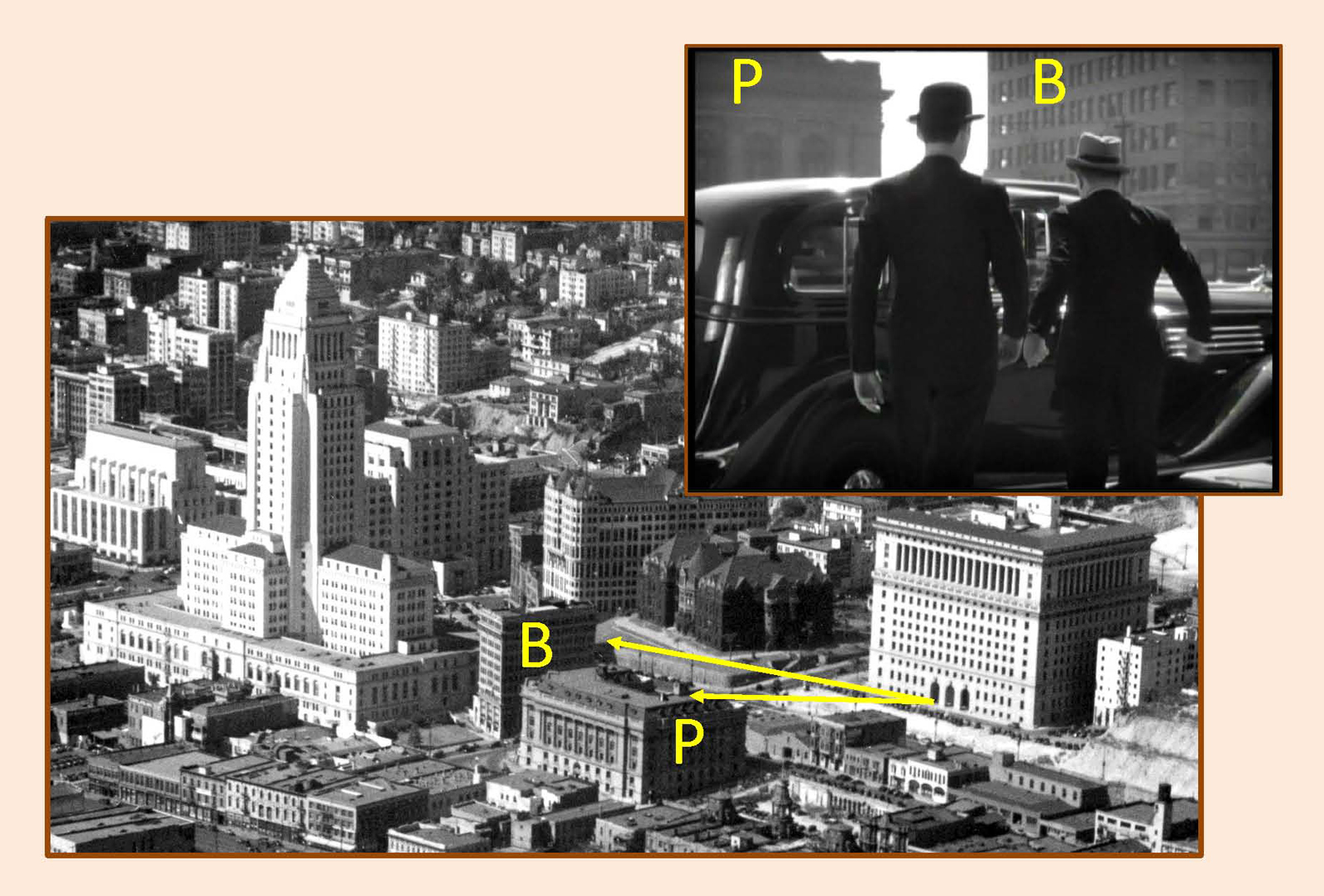
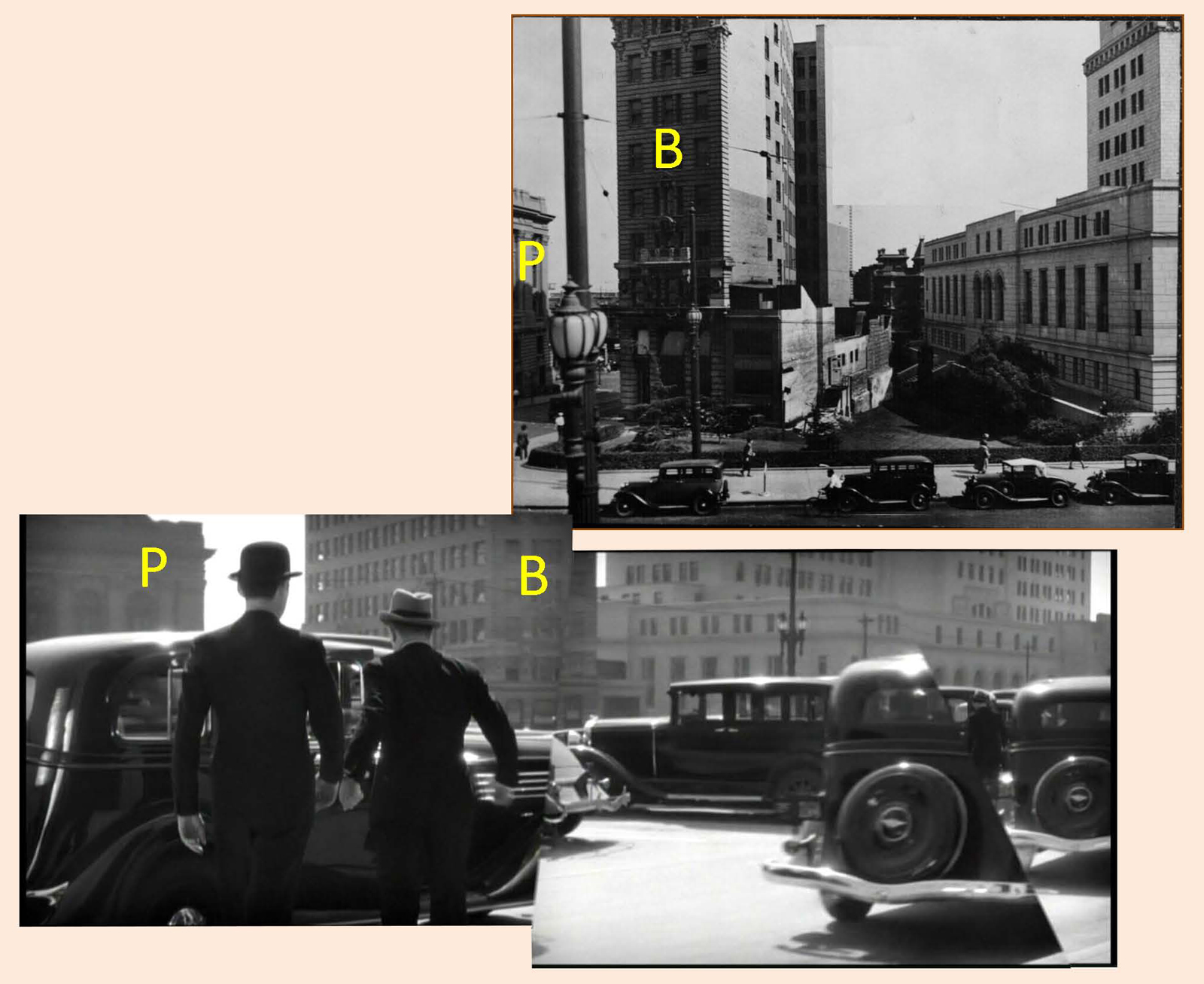
Returning to Convict 13, Buster runs down Lillian Way, with the shadow of Leo White's telephone pole (blue), a car driving north up Vine (red box), and the homes at 6200 and 6206 Eleanor (yellow box) at back.

Returning to Convict 13, Buster runs south down Lillian Way by the studio office, with the shadow of Leo White’s telephone pole (blue), a car driving north up Vine (red box), and the homes at 6200 and 6206 Eleanor (yellow box) at back.

My book Silent Traces shows Chaplin filmed fire engine scenes near the studio on Lillian Way coming north towards Eleanor (see top of post), and going south down Cole from Willoughby, while filming other scenes at former Fire Station No. 29 at 158 S. Western Ave. Thanks to the ‘new’ aerial view looking east, and the clarity of the Blu-ray release of Chaplin’s Mutual Comedies, two further fire engine scenes are now evident.
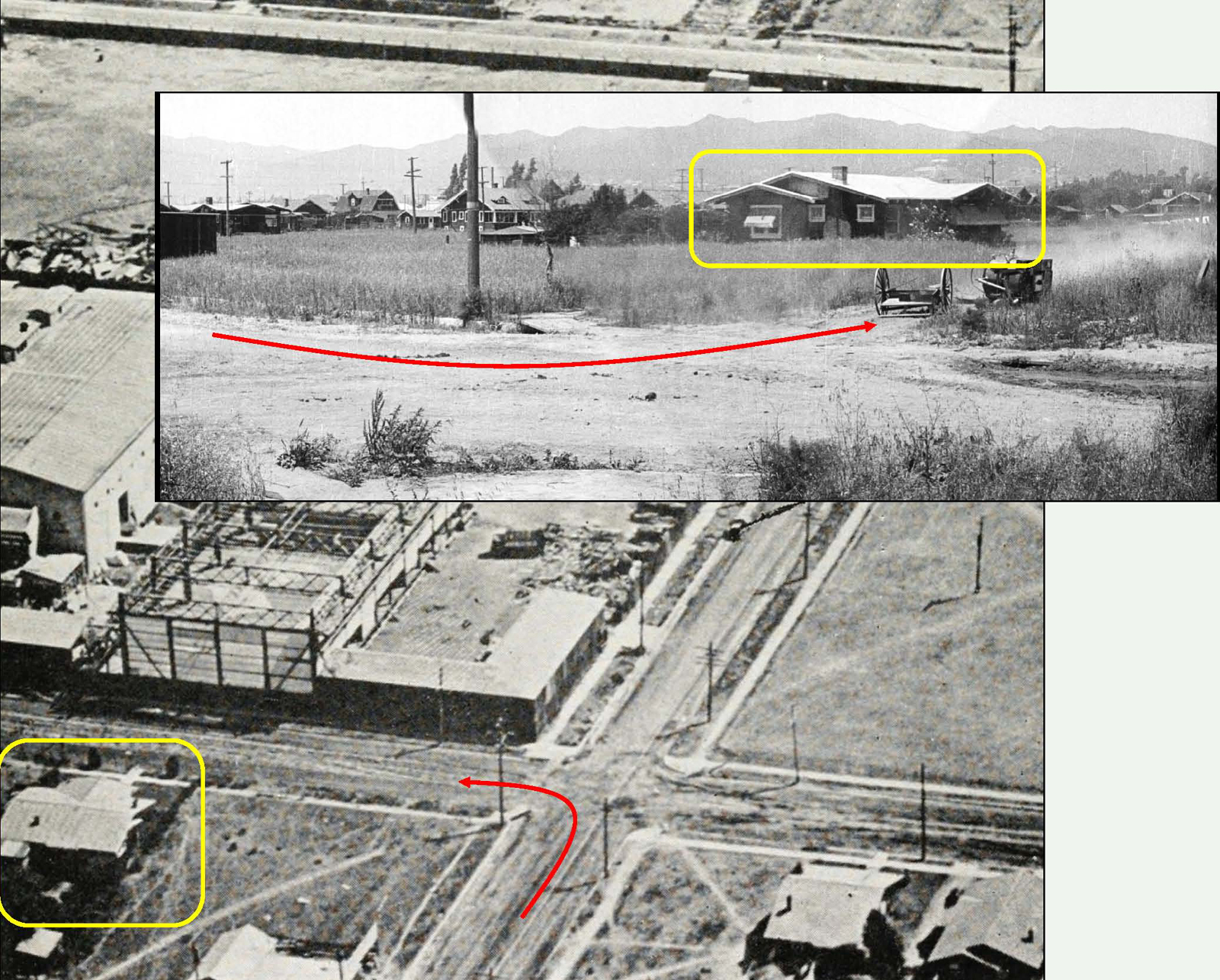
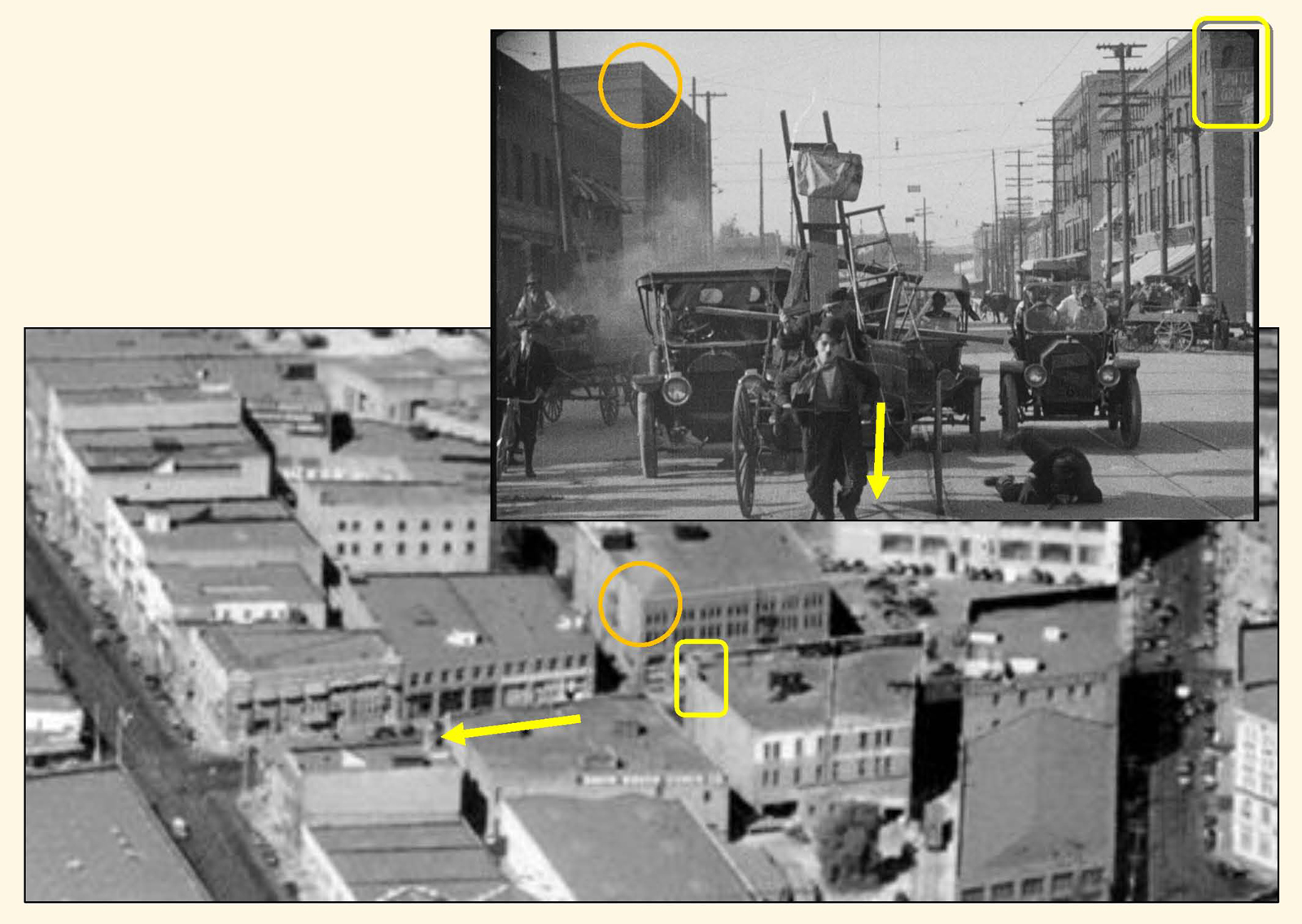
In The Fireman, filmed in 1916, the wagon turns sharply from east on Willoughby to north on Cole (arrow), with 911 Cole (yellow box) standing watch.

In The Fireman, filmed in 1916, the wagon turns sharply from east on Willoughby to north on Cole (arrow), with 911 Cole (yellow box) standing watch.

Looking north at the corner of Willoughby and Cole, towards 911 Cole (right box), and 917 Wilcox (left box), the only structure in this image to survive, apart from Yamashiro's high on the hill at back.

Looking NW at the corner of Willoughby and Cole, with 917 Wilcox (left box), the only structure in this image to survive, apart from Yamashiro’s (inset) high on the hill at back.

917 Wilcox - then and now.

917 Wilcox – now and then – the chimney has been removed. (C) 2016 Google.

A final fire engine scene, this time looking east down Willoughby towards Cahuenga.
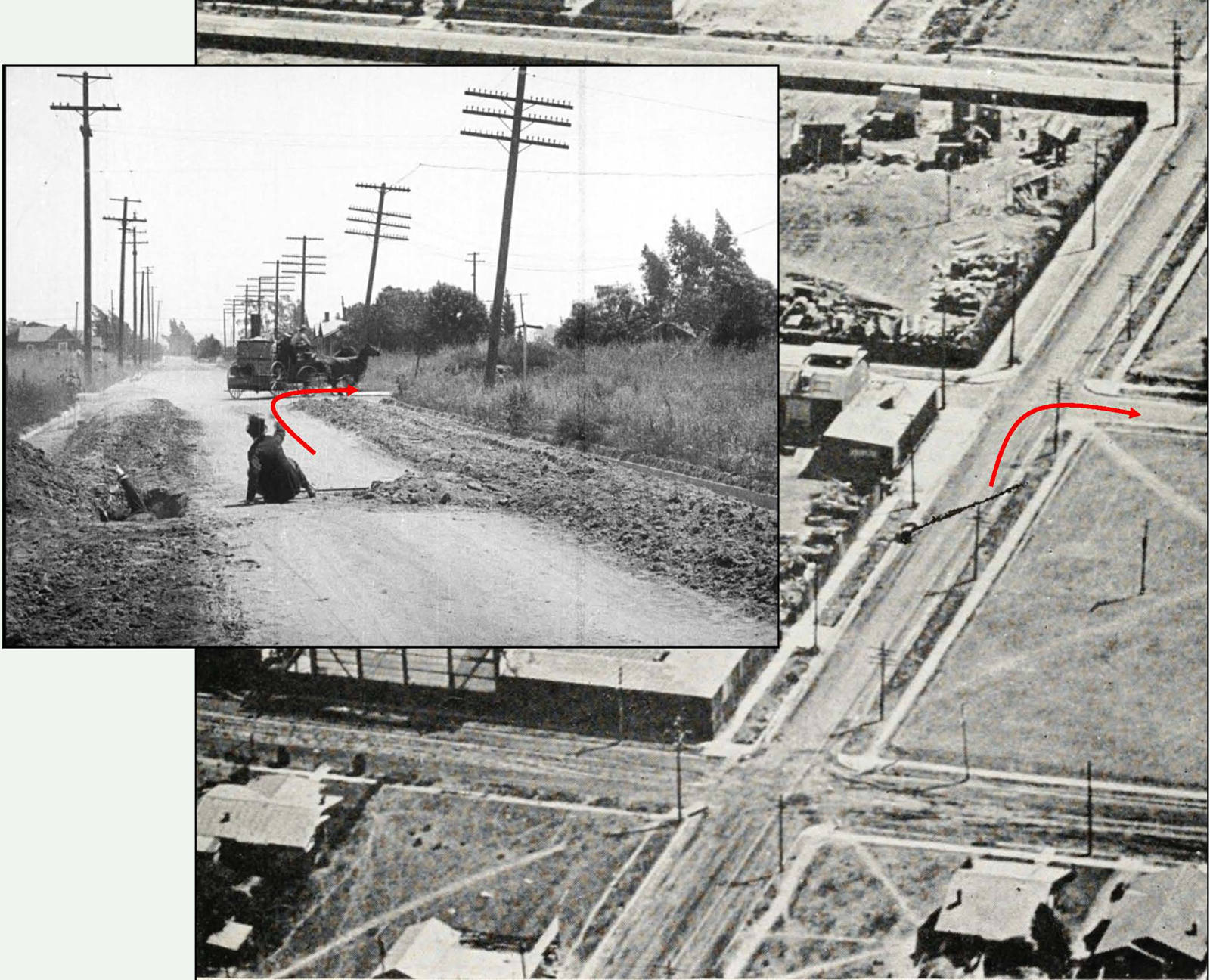
Filmed in 1916, this view looks east down Willoughby towards Cahuenga.

Filmed in 1916, this view looks east down Willoughby as the wagon turns south on Cahuenga.
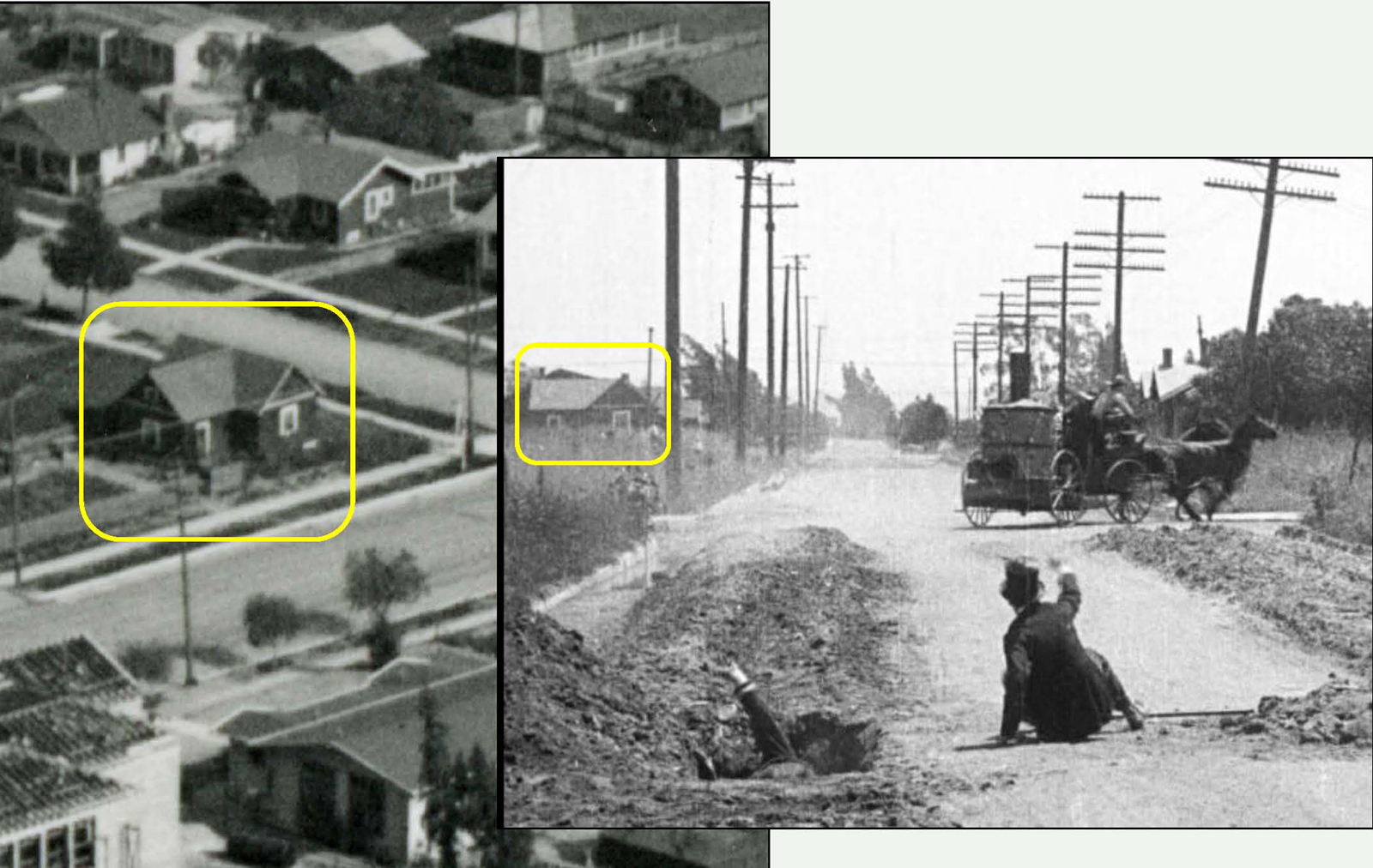
This detailed view matches a 1922 aerial photo with the 1916 movie frame - Vine (red box) stands at back.

This detailed view matches a 1922 aerial photo with the 1916 movie frame – 900 Vine Street (yellow box) stands at back.

I first became aware of the 1920 eastern view aerial photo on the Noirish Los Angeles Skyscraper forum, a remarkable resource for finding vintage images of Los Angeles. The forum not only highlights vintage photos from the Los Angeles Public Library, and the USC Digital Library, but also rare photos posted on eBay and other obscure sources. My thanks to Noirish forum posters ‘GaylordWilshire’ and ‘HossC’ for their assistance with this article.

Looking SW towards the corner of Lillian Way and Eleanor, site of the former Chaplin and Keaton Studios. A sidewalk plaque honoring Keaton, but neglecting to mention Chaplin, stands across the street on the near corner.

Posted in Buster Keaton, Chaplin Studio, Charlie Chaplin, Convict 13, Keaton Studio | Tagged , , , , , , , , , , , , , | 12 Comments

How Mabel Normand filmed her Safety Last! Moment (Before Harold Lloyd Did)

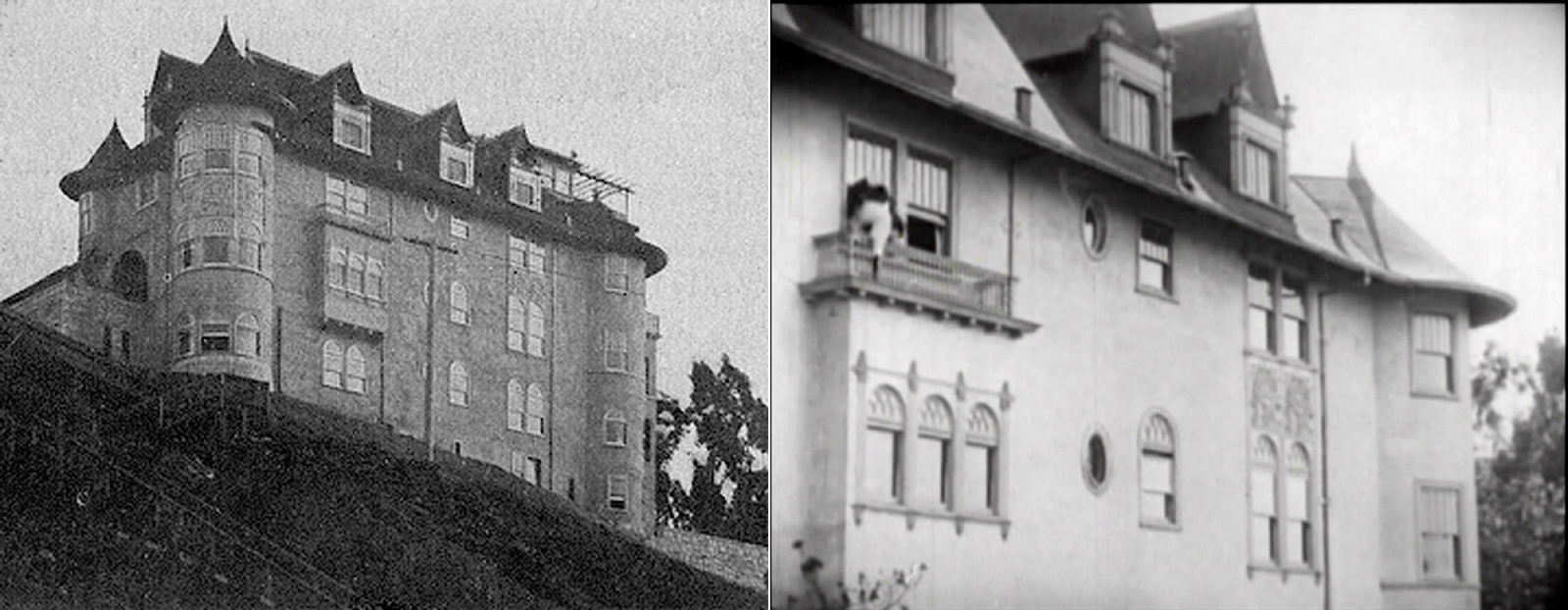
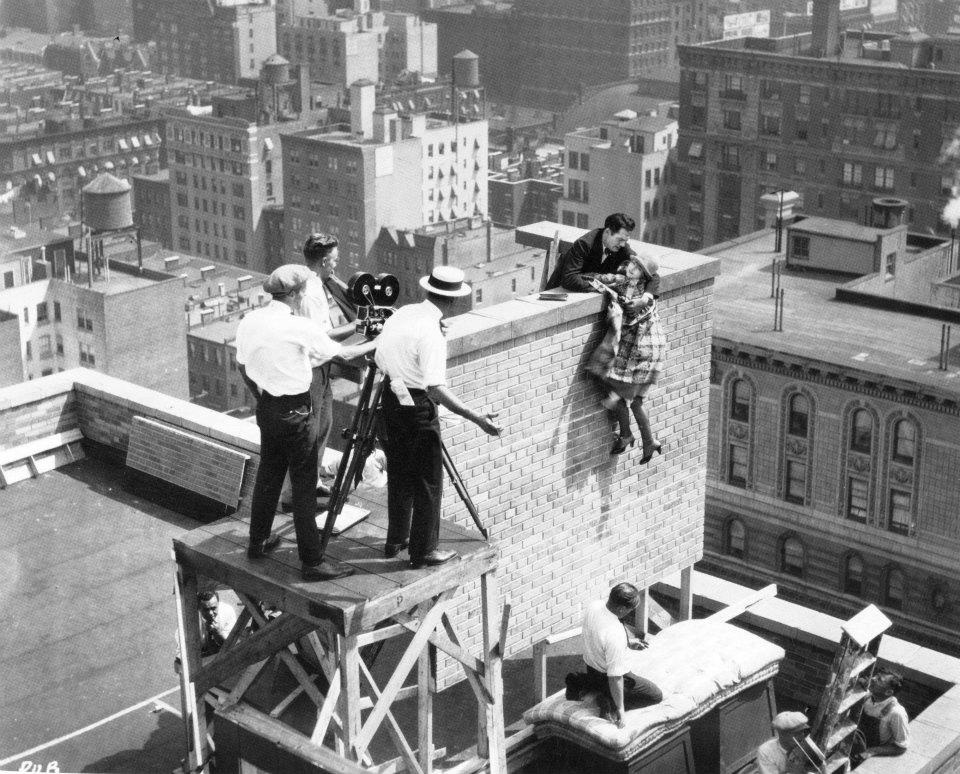
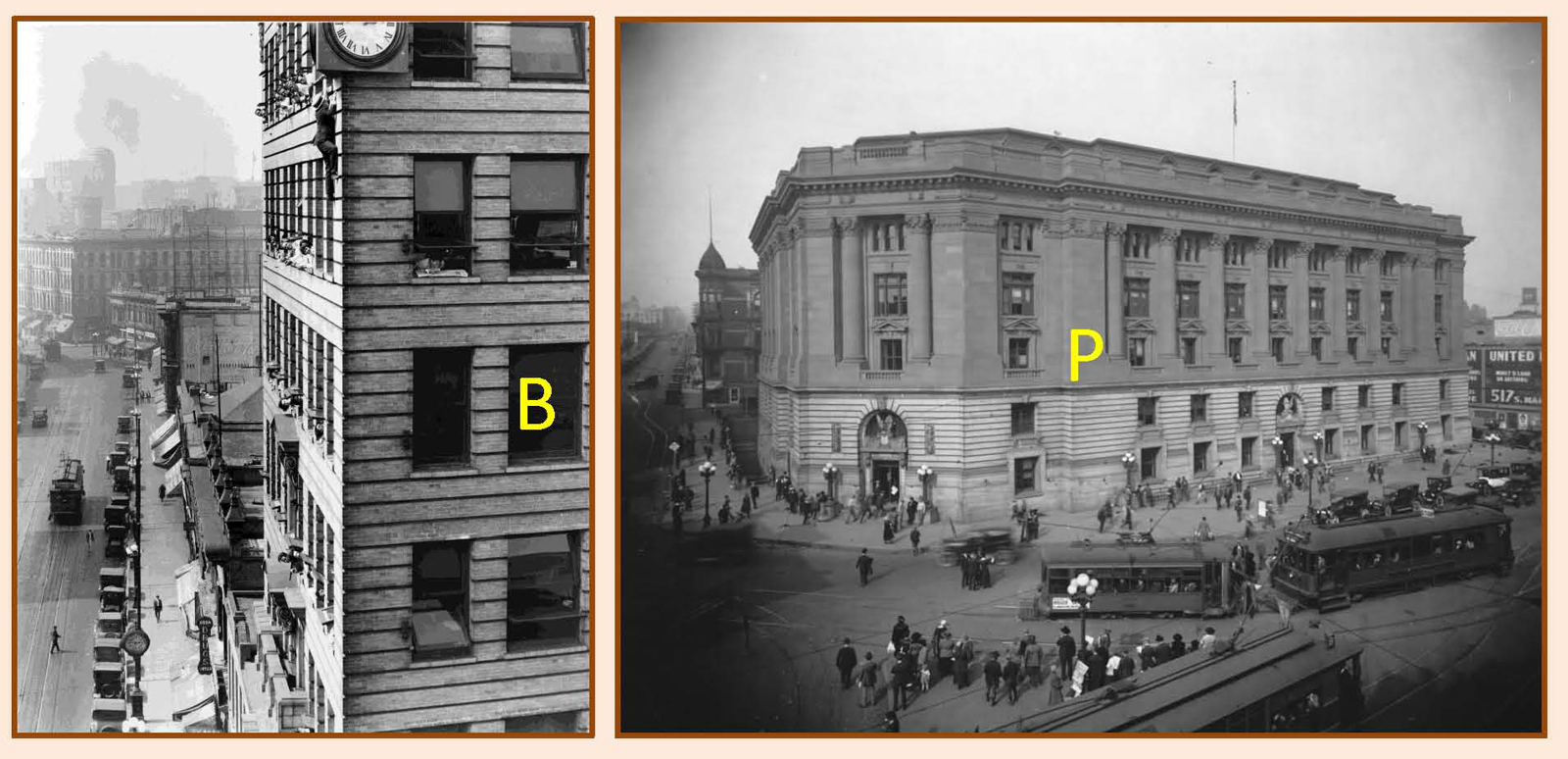
Mable Normand clings to the roof of the Castle Towers Apartment in Mickey.

Hold on – Mabel Normand clings to the roof of the Castle Towers Apartments in Mickey.

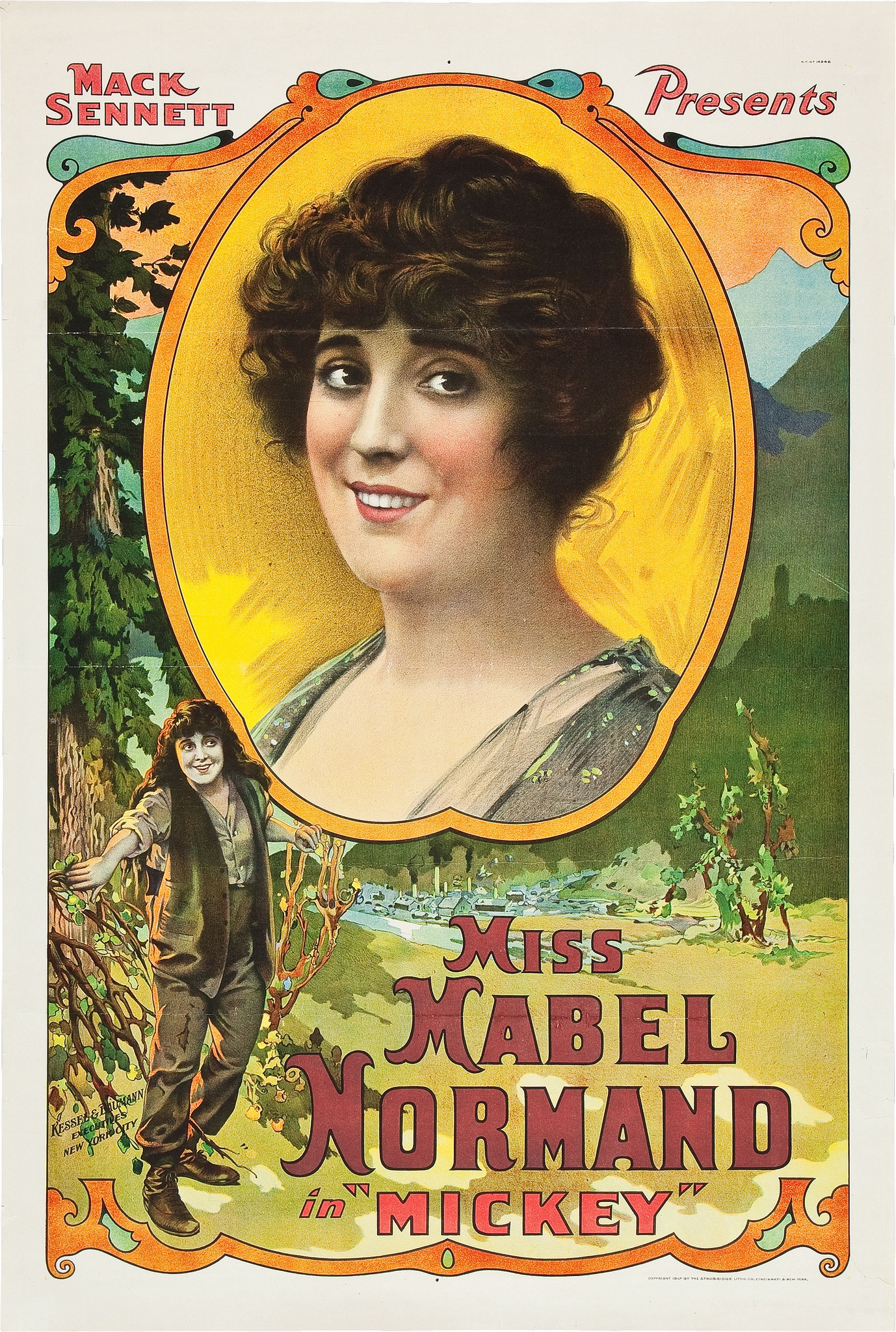
Mickey_PosterMabel Normand’s wildly popular 1918 feature Mickey climaxes with a thrilling roof-top rescue staged years before Harold Lloyd stunned audiences with his high-rise climb in Safety Last! (1923). Reportedly the highest grossing film of the year, Mickey was the only film produced by Mabel’s independent studio set up for her by Mack Sennett. As shown in a prior post, Mabel’s early co-star Roscoe Arbuckle also beat Lloyd to the punch filming downtown rooftop stunts.

Mabel plays the lead, Mickey, a nature-loving tomboy forced to live with her cruel, aristocratic aunt. The movie brims with real locations, including the aunt’s formal gardens, filmed at 4 Berkeley Square (Hal Roach’s neighbor), where Lloyd and other Roach Studio stars would film posh garden scenes for later comedies, and the equestrian race track that once stood at Exposition Park (years before the Coliseum opened in 1923). I hope some day to post several more stories about Mickey.

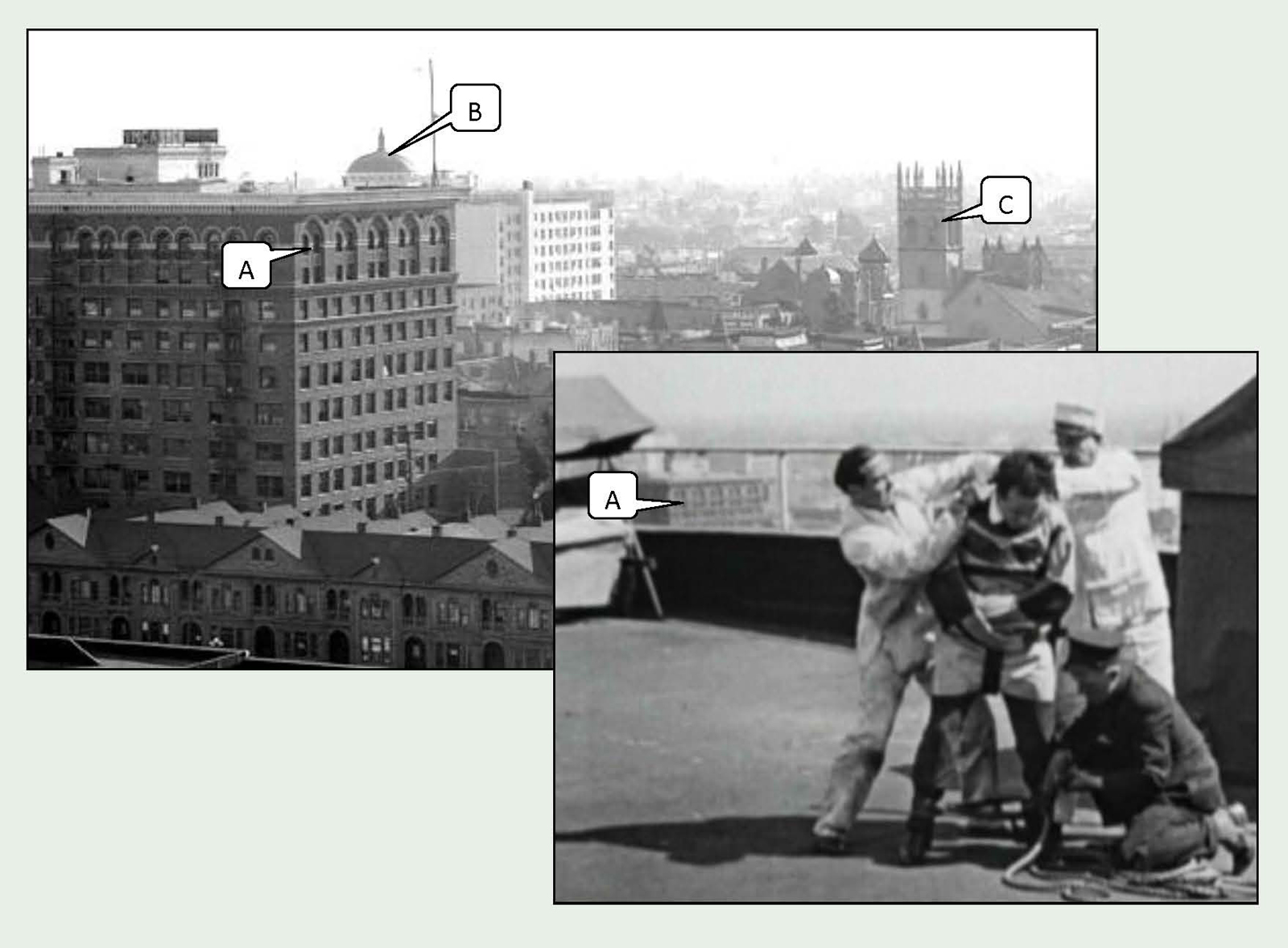
Looks can be deceiving – a seemingly matching wide and close view of Mabel’s rooftop climb?

Looks can be deceiving – seemingly matching wide and close views of Mabel’s rooftop climb?

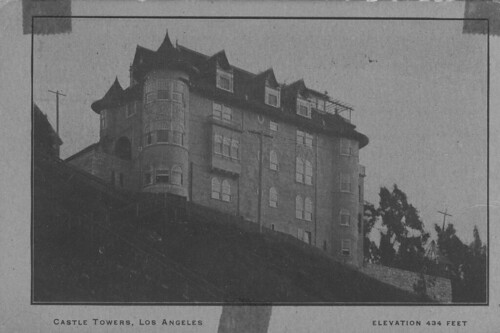
This rooftop scene fascinated me, but I had no idea where it was located. Seeking help, I posted the above movie frames to share on Flickr, and within minutes Los Angeles historian and OnBunkerHill.org blogger Nathan Marsak contacted me to identify the setting as the former Castle Towers Apartments, once standing atop Bunker Hill at 750 W. 4th Street, on a bluff running parallel to Flower Street.

Mabel filmed using the Castle Towers.

Mabel filmed using the Castle Towers. OnBunkerHill.org. Christina Rice.

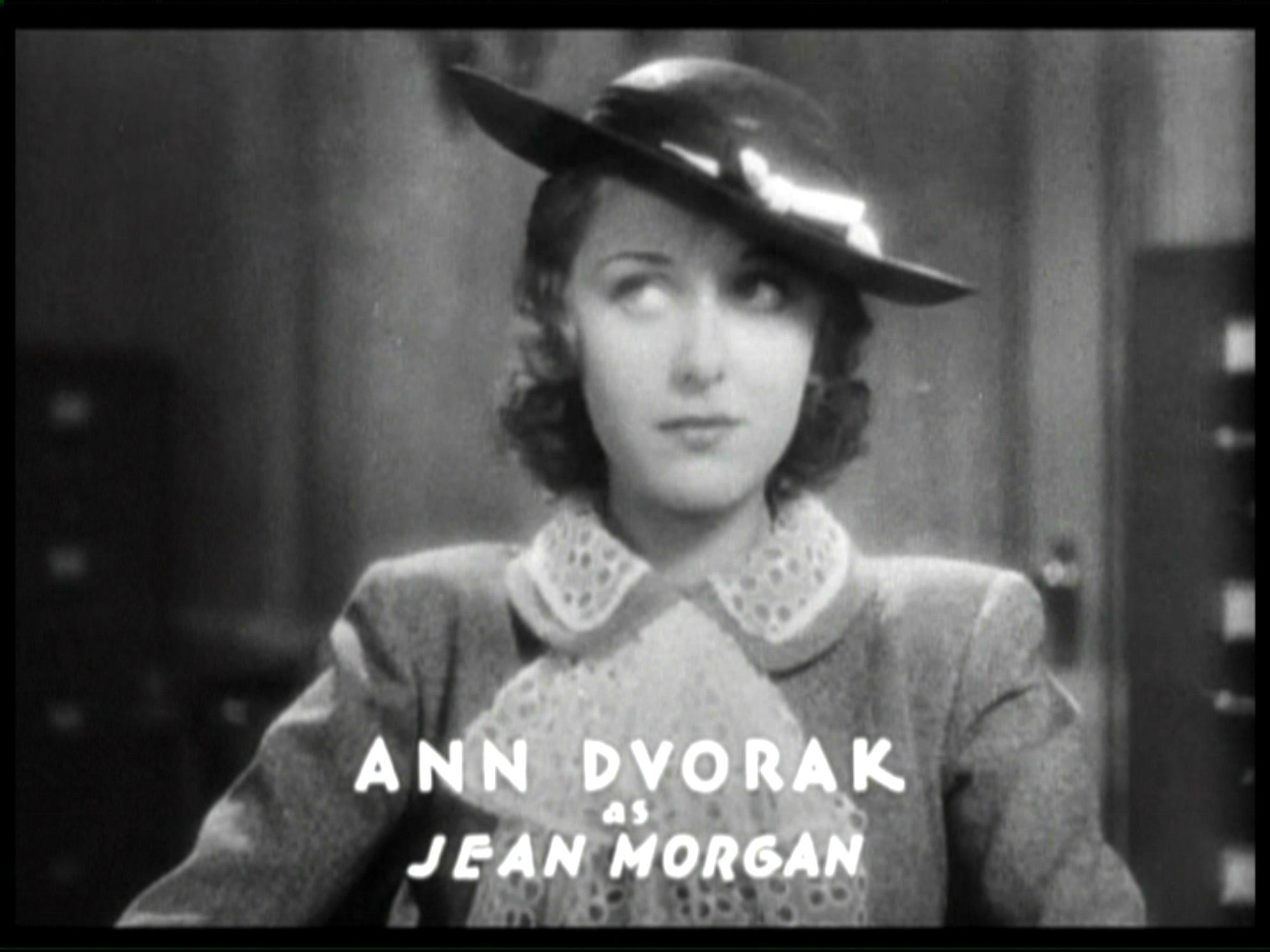
Christina Rice, Los Angeles Public Library Senior Librarian, biographer of Ann Dvorak, and fellow OnBunkerHill.org blogger, wrote about the building’s incredible story (see more below), once belonging to prominent resident Mira Hershey. The chocolate family heiress and one-time owner of the famed Hollywood Hotel is perhaps best remembered as the benefactor of UCLA’s first on-campus dormitory Hershey Hall, that still bears her name.

whit-neh-71421

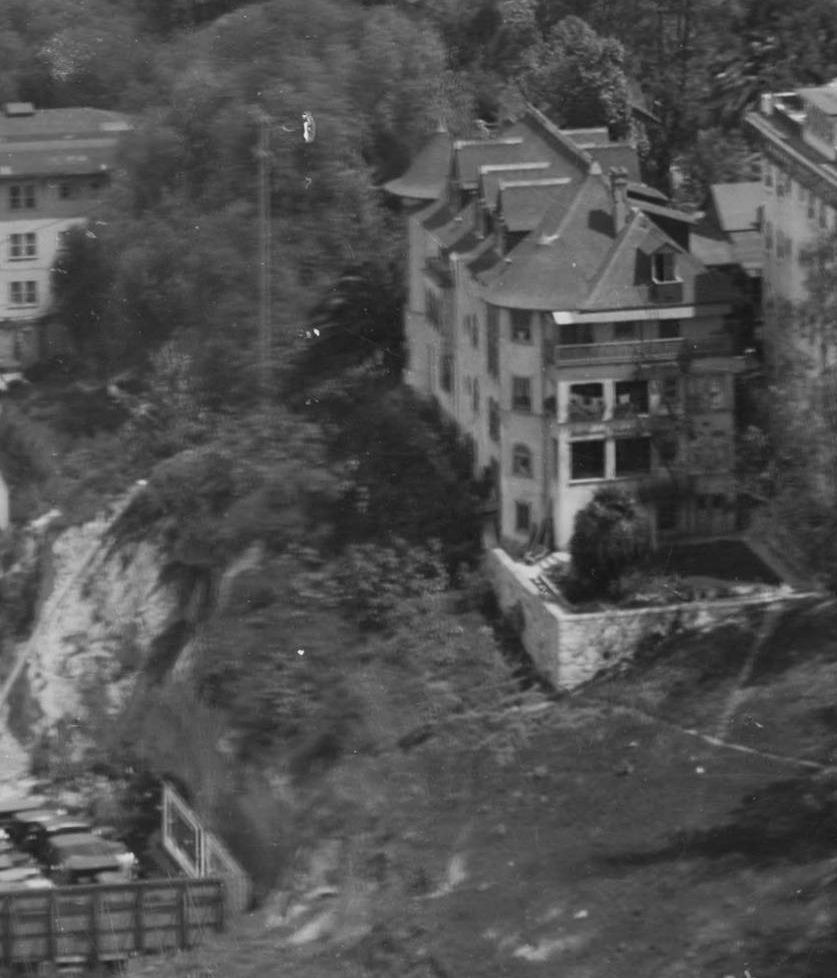
The back of the Castle Towers which faced 4th Street where it ended at a bluff overlooking Flower Street. This detailed image is but a tiny portion of a giant sweeping panoramic image taken in 1930. USC Digital Library whit-neh-71421.

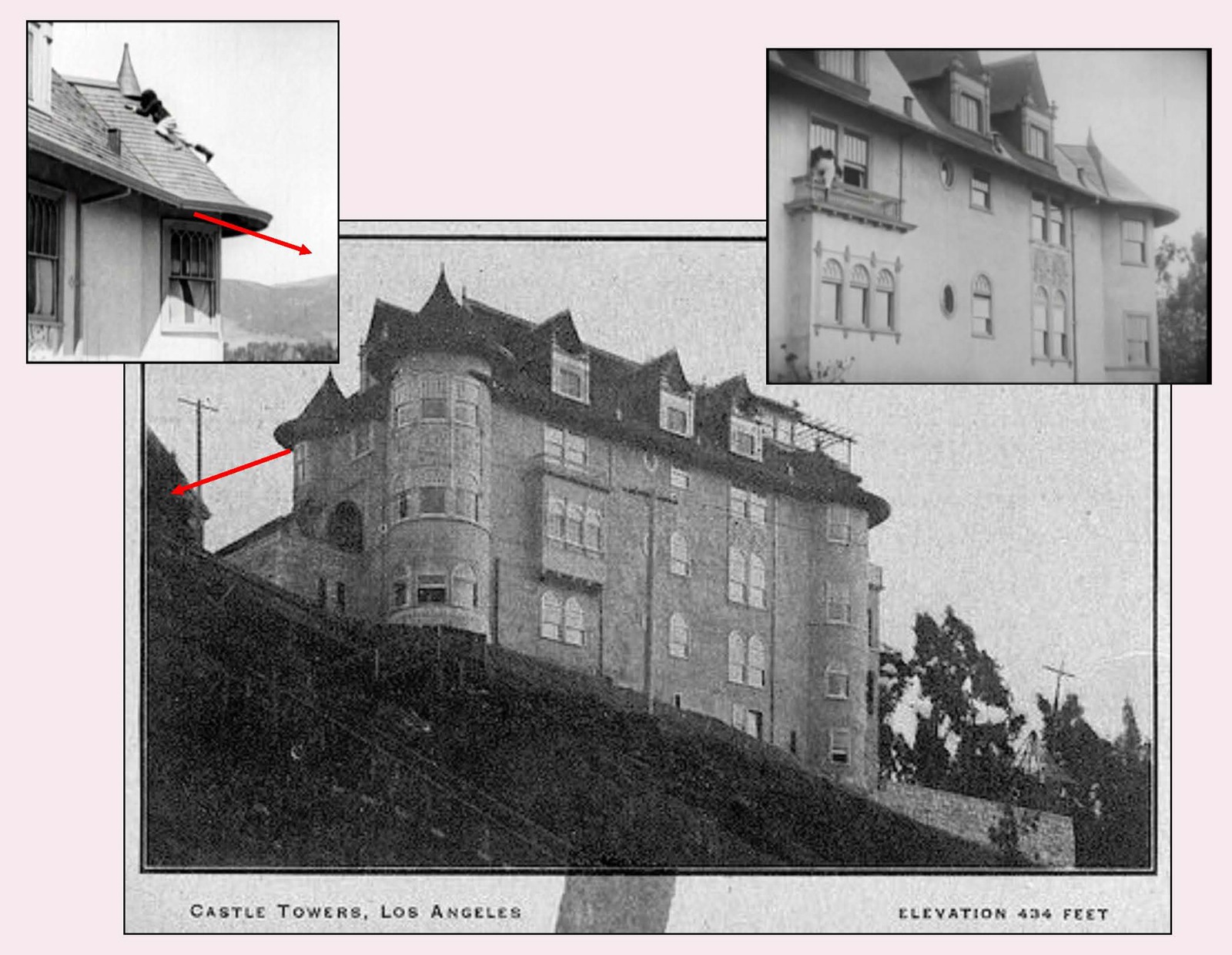
Given the off-kilter orientation of downtown (the streets run NW-SE and NE-SW, 45 degrees from true north), the orientation of the building along the Flower Street bluff means that the wide view (right below) runs SE towards the flat area of the LA basin. Since the wide view and close-up view of Mabel seem to match, the close-up view should also look to the SE where it is flat. Yet the close-up shot seems to look north to the Hollywood hills instead – how could this be?

caption.

I wondered – if the opposite corners of the building were identical, Mabel could have filmed her wide view to the right, and her close-up at the safer position to the left.

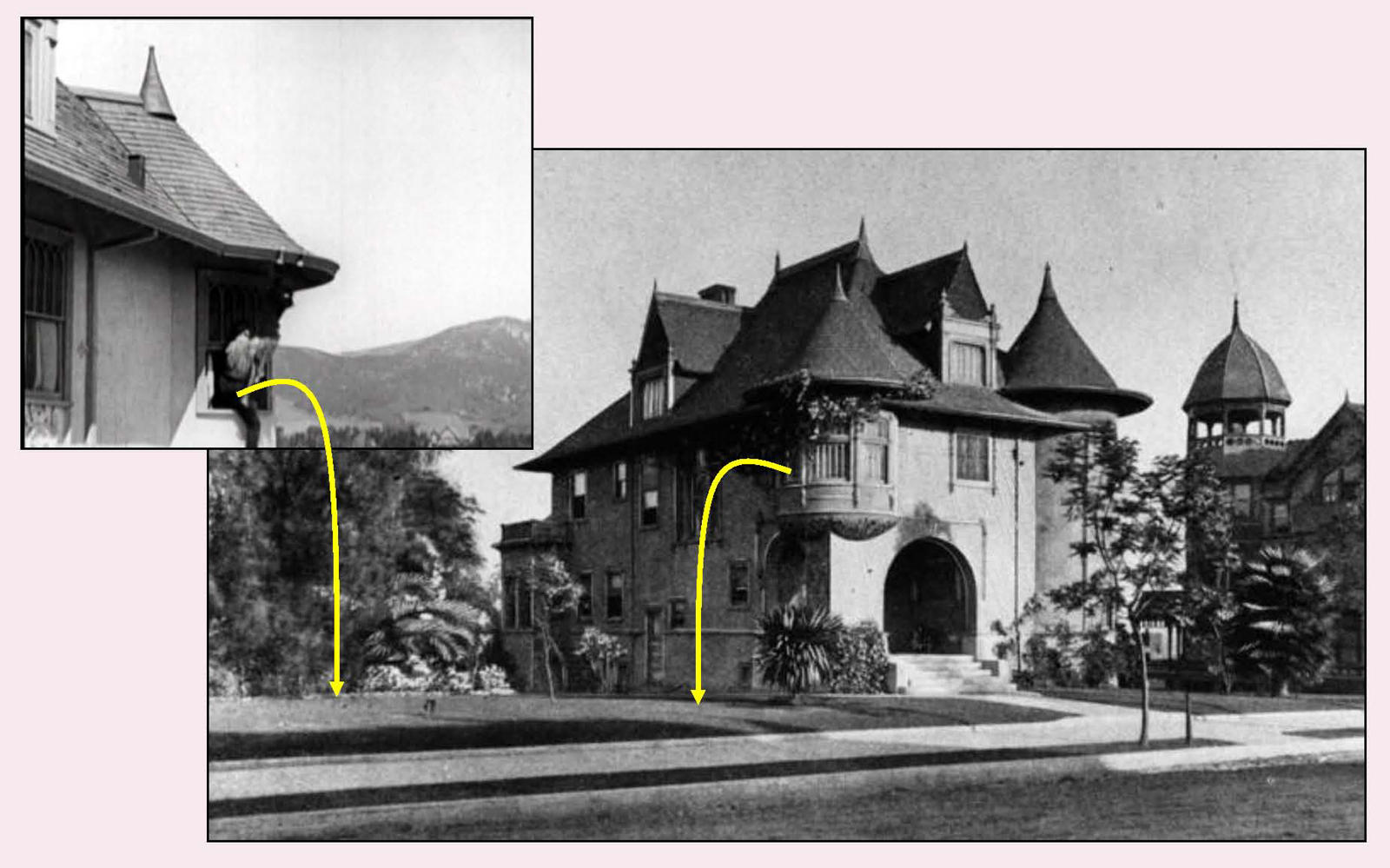
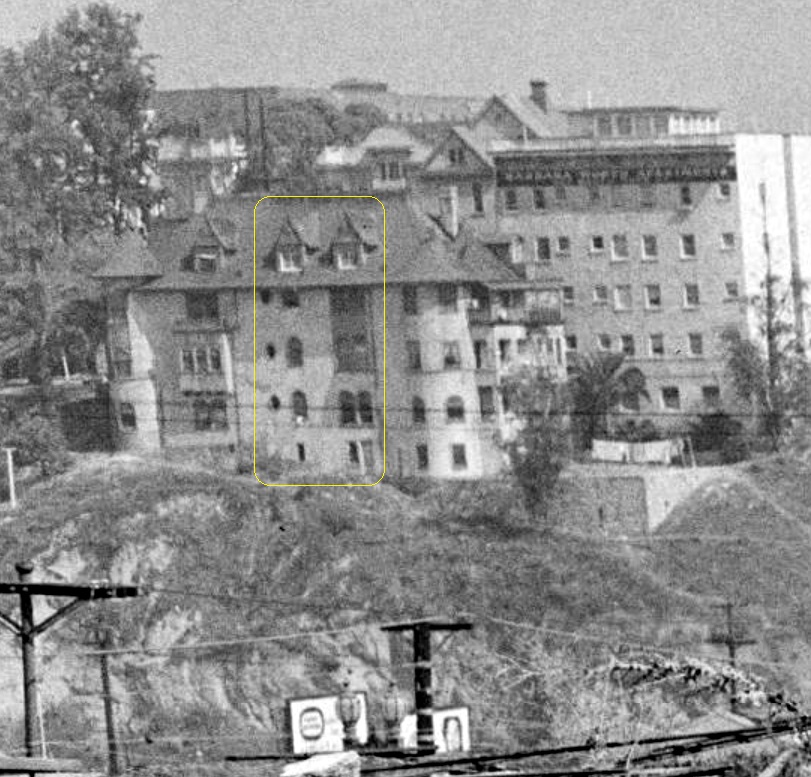
As Christina reports, the Castle Towers was originally the private home of Mira Hershey, facing Grand at the NE corner of 4th Street as shown below.  Incredibly, in order to transform her home into an apartment building, Ms. Hershey had the home cut in two, rotated clockwise 90 degrees, moved two blocks west along 4th Street to beside the dead-end bluff above Flower Street, and extended by adding a new middle section with two further dormers along each side. At its new location and orientation, a view of its front left corner would look nearly due north towards Hollywood.

So what does this all mean? The answer is elegantly simple. As shown below, Mabel found a building with identical, opposite corner towers, one strikingly high off the ground, the other low to the ground, and presented the two towers as one and the same. In this way Mabel convincingly presented herself as in great danger while filming in relative safety.

The drop from the front left window was only one story. LAPL.

When Mabel climbed from the roof to the window, she filmed at the front left corner that was only one story above the ground. This view shows the Hershey home at its original location at 4th and Grand before it was cut in half, moved two blocks, and expanded with two further dormers along each side. LAPL.

This rare side view of the apartment was taken in 1951 during the construction of the Harbor Freeway towards downtown. After the house was sliced in two sections, rotated, and moved to this location, it was converted into an apartment house with a new, extended middle section, marked by the yellow box. Behind it stands the former Barbara Worth Apartments.

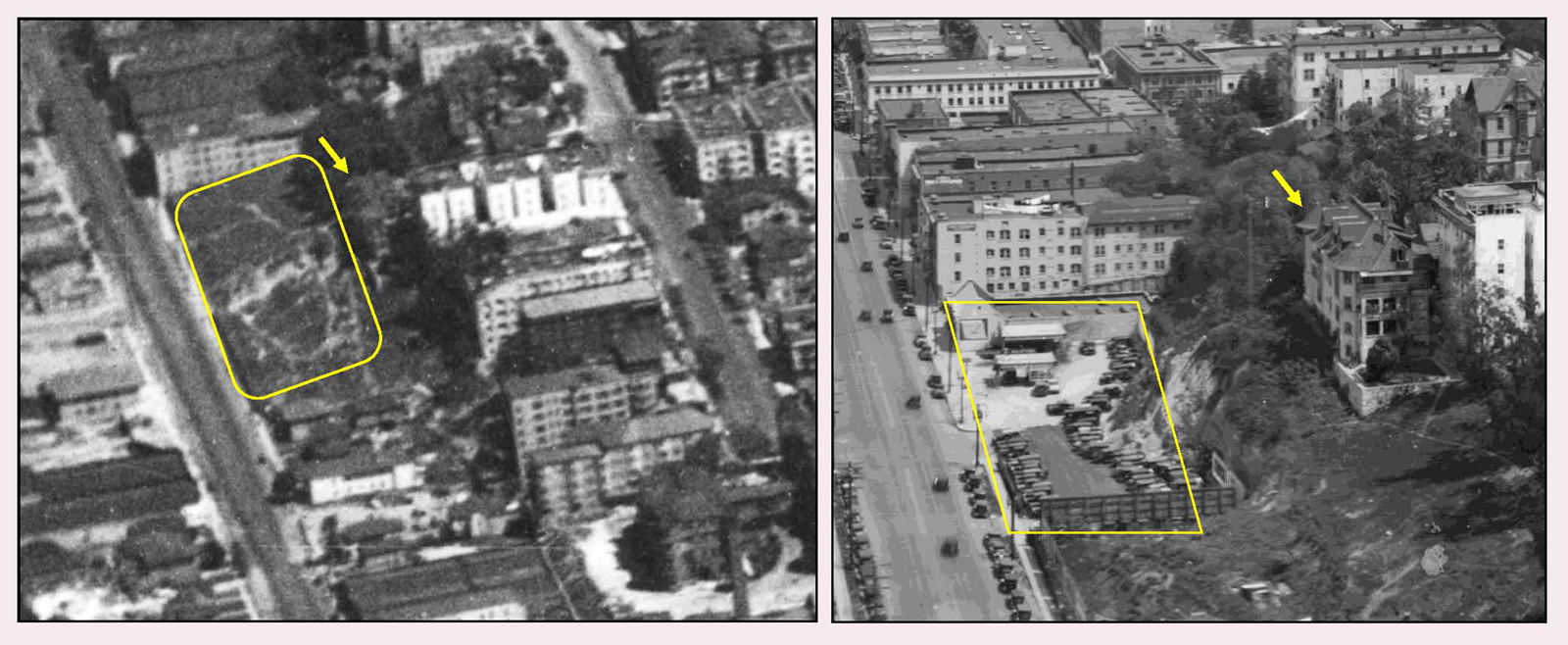
The left image was taken in 1923. A portion of the hillside along Flower Street was excavated, making way for a new building, gas station, and parking lot. LAPL.

Comparing a 1923 image of the hillside (left) – LAPL – to the 1930 photo, showing how the hillside along Flower Street was excavated, making way for a new building, gas station, and parking lot.

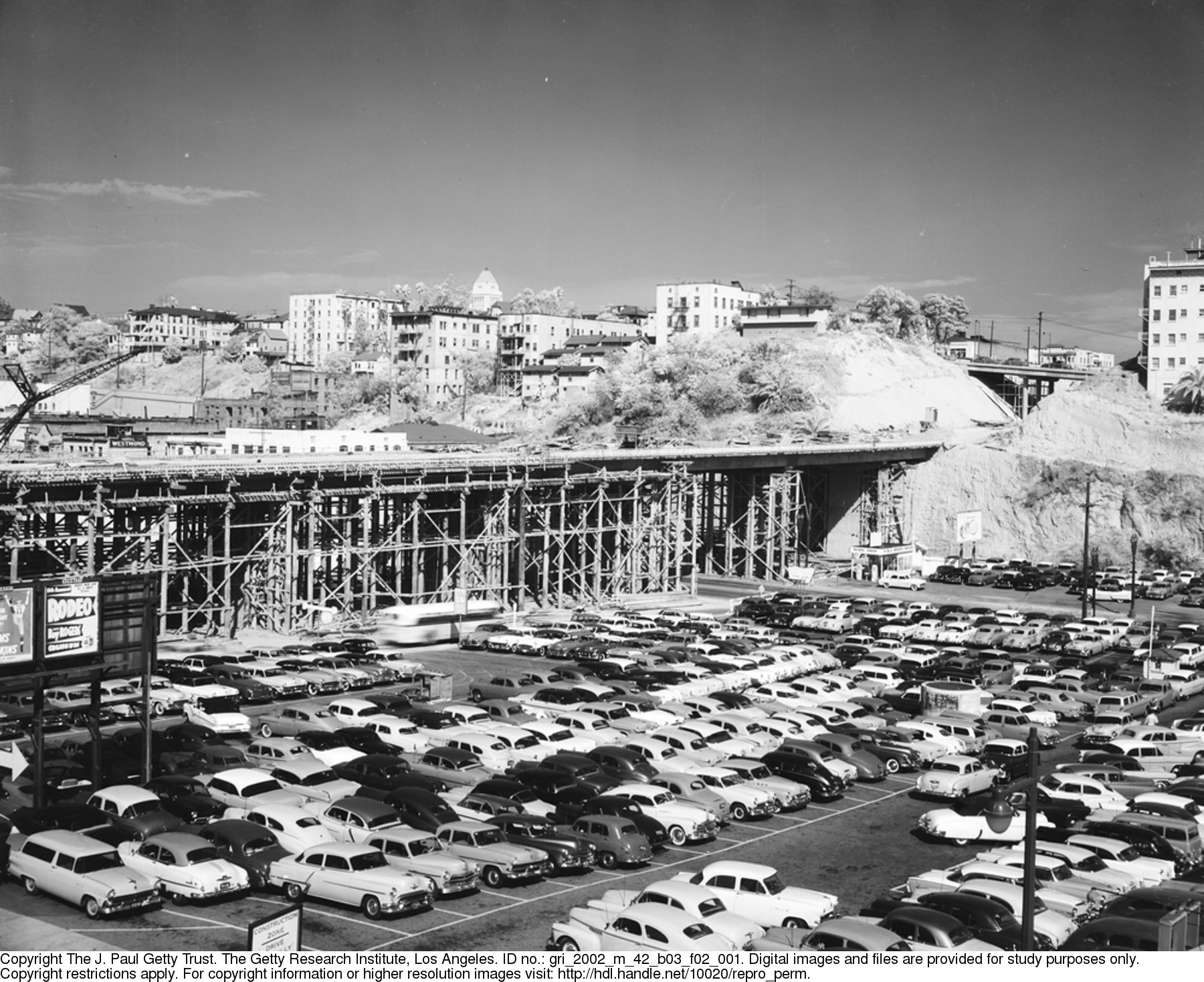
As part of the Bunker Hill redevelopment, a ramp along W 4th Street was built in 1955, swooping up from Figueroa, across Flower, excavated to pass below grade beneath Hope Street, and reaching the top of the hill at Grand, finally making W 4th Street a through street. By this point the Castle Towers was lost, but its neighbor, the Barbara Worth Apartments building (far right below), is still standing.

The history of Los Angeles and of the movies are inexorably intertwined.  Thanks to Mabel, we now have further views of a Bunker Hill landmark to enjoy, while thanks to the archivists who make historic photos available, we can appreciate nearly 100 years later how remarkably clever Mabel and the other early filmmakers were. We are also indebted to Paul Gierucki, Brittany Valente, and CineMuseum, LLC for restoring Mickey, and to TCM for broadcasting it for eager viewers to enjoy.

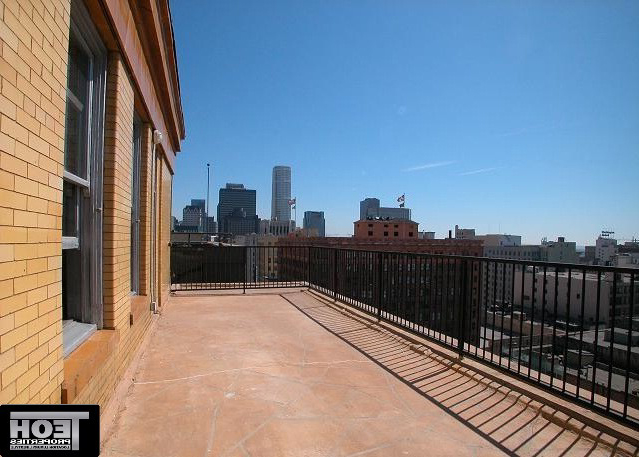
A modern view looking up from Flower Street towards the former site of the Castle Towers Apartments, with the 4th Street ramp flying up the hill to Hope Street at back.

Posted in Bunker Hill, Mabel Normand | Tagged , , , , , , , , , , | 3 Comments

Mostly Lost – Keaton Found (Stan Laurel too) at Hollywood and Western

The Goat.

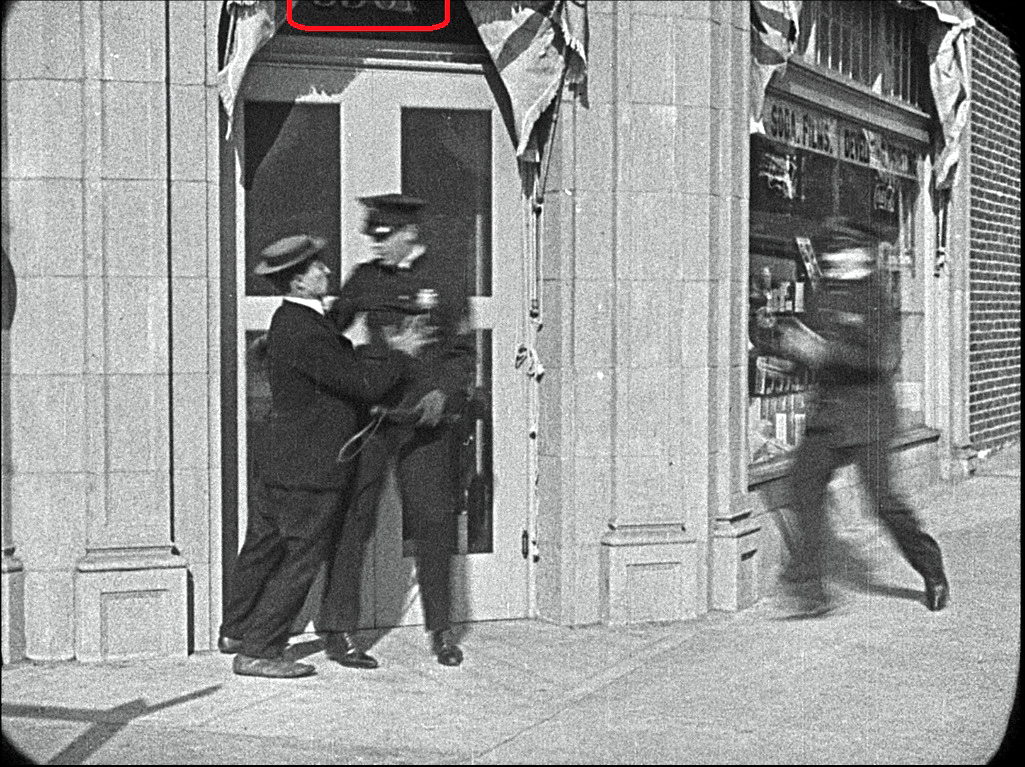
From The Goat – Buster is about to push one cop to flatten another. Can you make out the number over the doorway? Neither could I. It’s 5501.

This fun discovery from Buster Keaton’s The Goat (1921) was made possible thanks to Mostly Lost, the Library of Congress crowd-sourcing workshop to screen and identify orphan silent and early sound films, held at the Packard Campus in Culpeper Virginia. Each year cinema experts from around the world gather to view rare film clips and pool

The friendly crowd of experts attending Mostly Lost 3.

The friendly film experts at Mostly Lost 3.

their expertise with the hope of identifying them. The Goat, obviously, is an identified film, but the setting for the above scene, where Buster rounds a corner chased by one cop, and pushes another cop into his path, had eluded me for years.  When released on Blu-ray, I was delighted (and frustrated) to see the hint of the numbers above the doorway where Buster stood. They were still undecipherable, but the four digit address meant it was likely filmed in Hollywood, and the sun implied it was a NW corner.
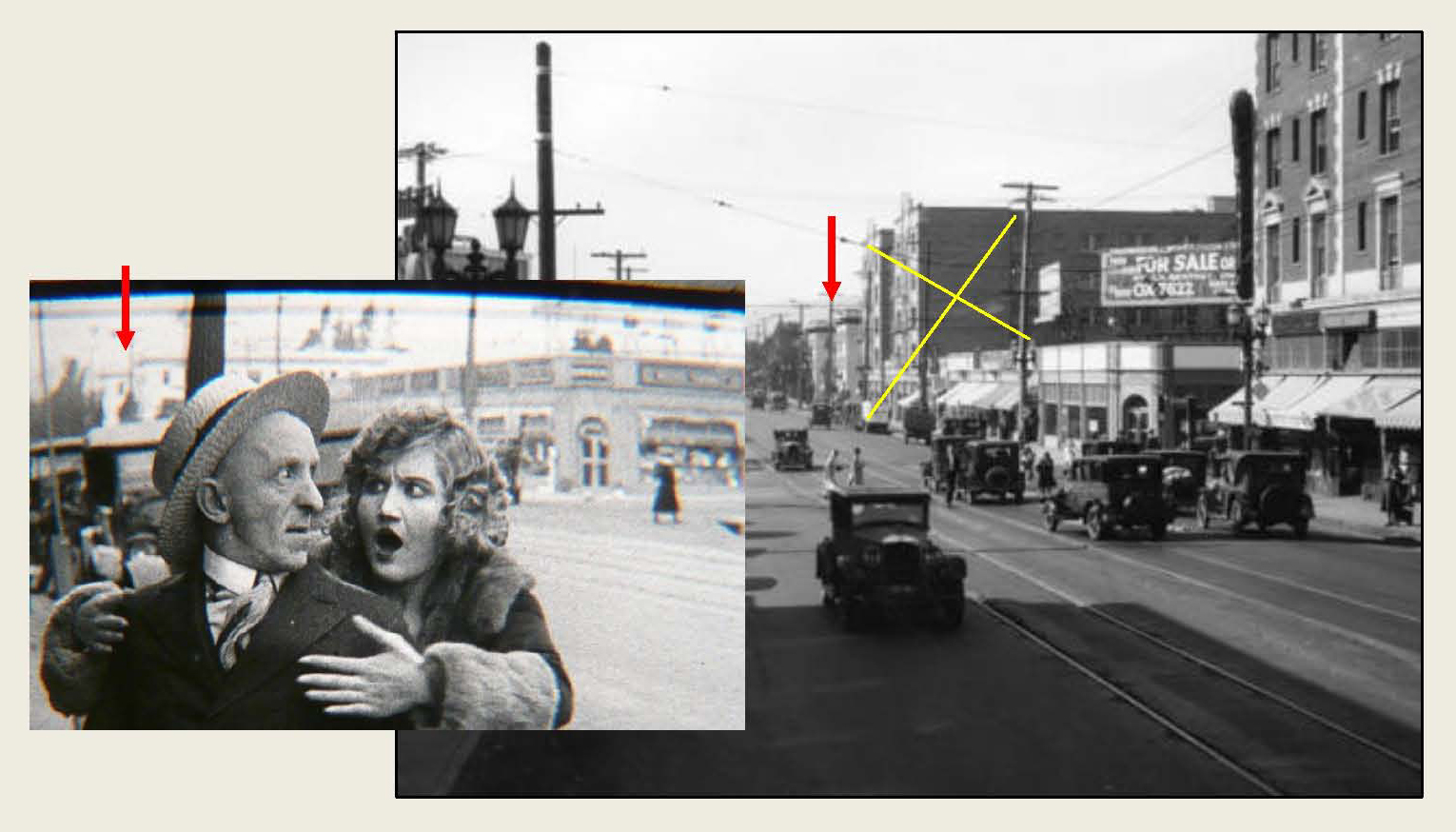
Buster and Stan at Hollywood and Western_Page_1For some reason, when glancing through the Mostly Lost Nitrate Film Interest Group on Flickr, I came upon the above image of Bynunski Hymen and Ethlyn Gibson (identified by film author Steve Massa) from a Billy West comedy. While the film remains unidentified, I noticed the background corner doorway looked suspiciously like Buster’s (see inset). The image provided two essential clues – the corner was on a trolley line and stood east of a white three-story building.

NW brick corners on Hollywood Blvd.

At right the NW corner of Hollywood and Western.

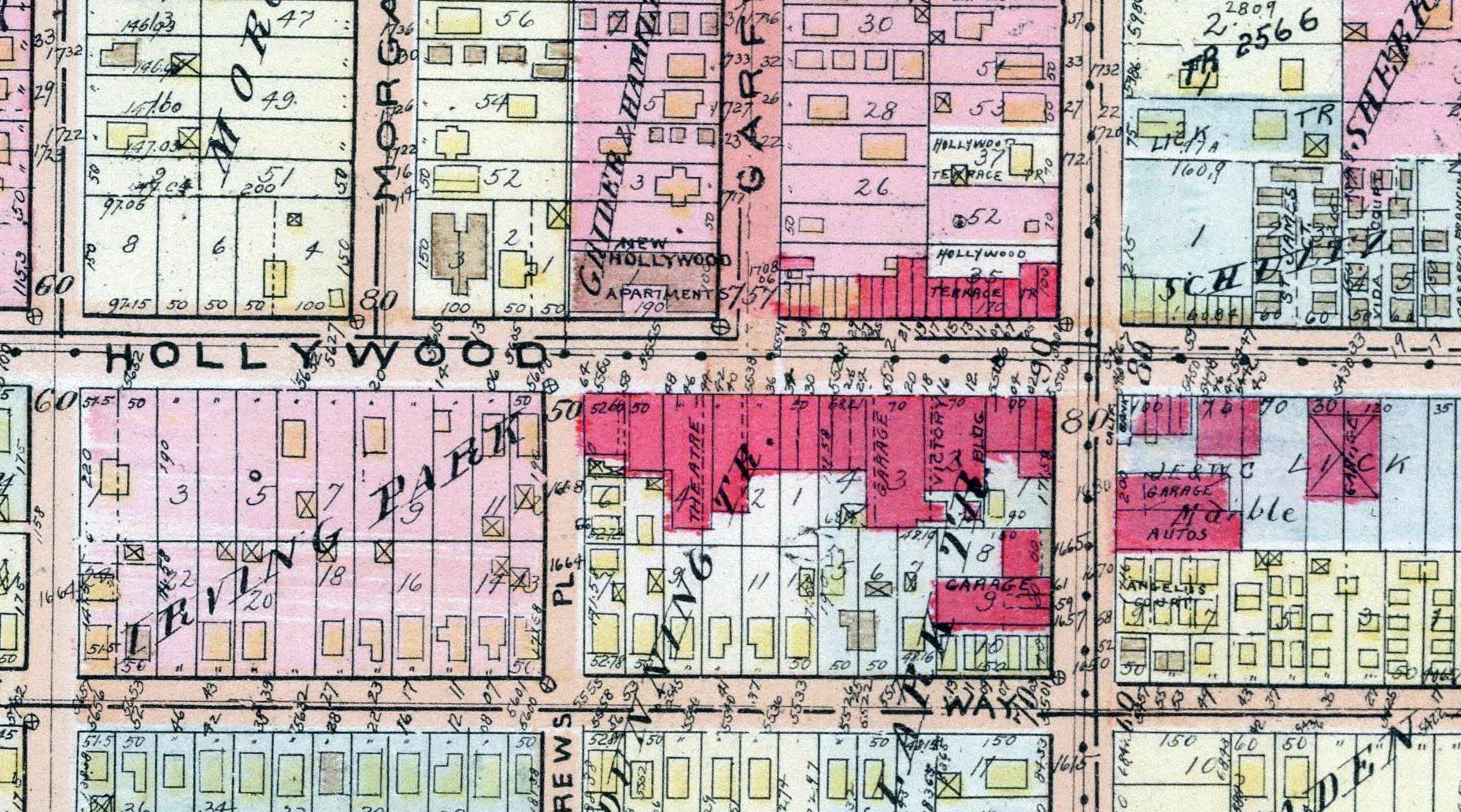
I studied many NW corners along trolley car lines but grew tired and had no luck. My breakthrough came when I realized the 1921 Baist color atlas for Los Angeles identified brick buildings in red and wooden structures in yellow. I traced the trolley lines along such maps looking only for red NW corners, and finding a limited number of candidates soon had my match.

LAPL.

Click to enlarge – looking west down Hollywood Blvd towards the corner of Western. LAPL.

When Buster filmed at the NW corner of Hollywood and Western, the New Hollywood Apartments, a white three story unit built in 1913 stood to the west (red arrow above), now replaced by a modern building. The five story building (crossed out in yellow, above), not present in the movie frame, was built in 1926 and still stands at 5531 Hollywood Blvd. Below, a closer look at the NW corner at 5501.

Looking north up Western towards 5501 Hollywood Blvd. LAPL.

Click to enlarge – looking north up Western towards 5501 Hollywood Blvd. LAPL.

While Buster had his NW corner, it turns out Stan Laurel filmed the SE corner here in 1923 for one of his early Hal Roach Studios solo comedies, Mother’s Joy, looking east down Hollywood Blvd. from Western. The intersecting trolley tracks below, a rarity in Hollywood, helped to solve this location. The distinctive buildings behind Stan appear at the left edge of this matching photo looking west down Hollywood Blvd.

Looking east down Hollywood Blvd. from Western. Stan Laurel in Mother's Joy. LAPL.

Looking east down Hollywood Blvd. from Western. Stan Laurel in Mother’s Joy. LAPL.

For better or worse, the intersection of Hollywood and Western has been completely redeveloped, so nothing remains today from Buster and Stan’s films. But thanks to Mostly Lost they are ‘somewhat’ found.

A Google maps view of Buster’s NW corner on Western.


A Google Maps view of Stan’s SE corner on Western.

Posted in Buster Keaton, Stan Laurel, The Goat | Tagged , , , , , , , , , , , , , , , | 5 Comments

The Kid – Charlie Chaplin’s Onscreen Fans

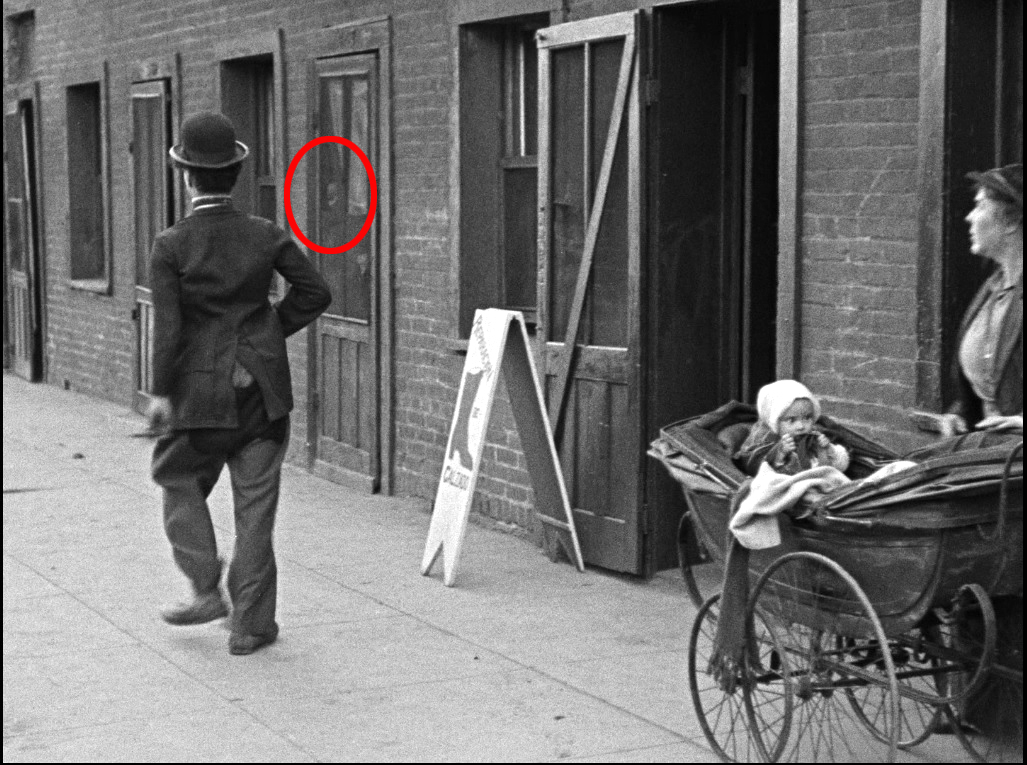
Click to enlarge. A delighted girl peeks through a screen door during The Kid.

Click to enlarge. A delighted girl peeks through a screen door during The Kid.

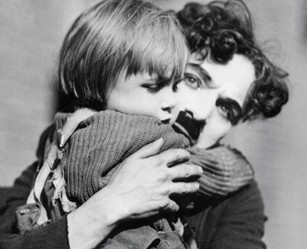
[Update: I found where this scene with the girl was filmed – read HERE] While Chaplin fans packed theaters worldwide to watch his onscreen antics, during several scenes in The Kid you can see fans watching him onscreen as well.  Here are several surprise fan cameos, thanks to the remarkable image quality of the new Criterion Collection Blu-ray release of The Kid. My recent post HERE shows how Chaplin made The Kid, which I explain in full detail in my book Silent Traces.

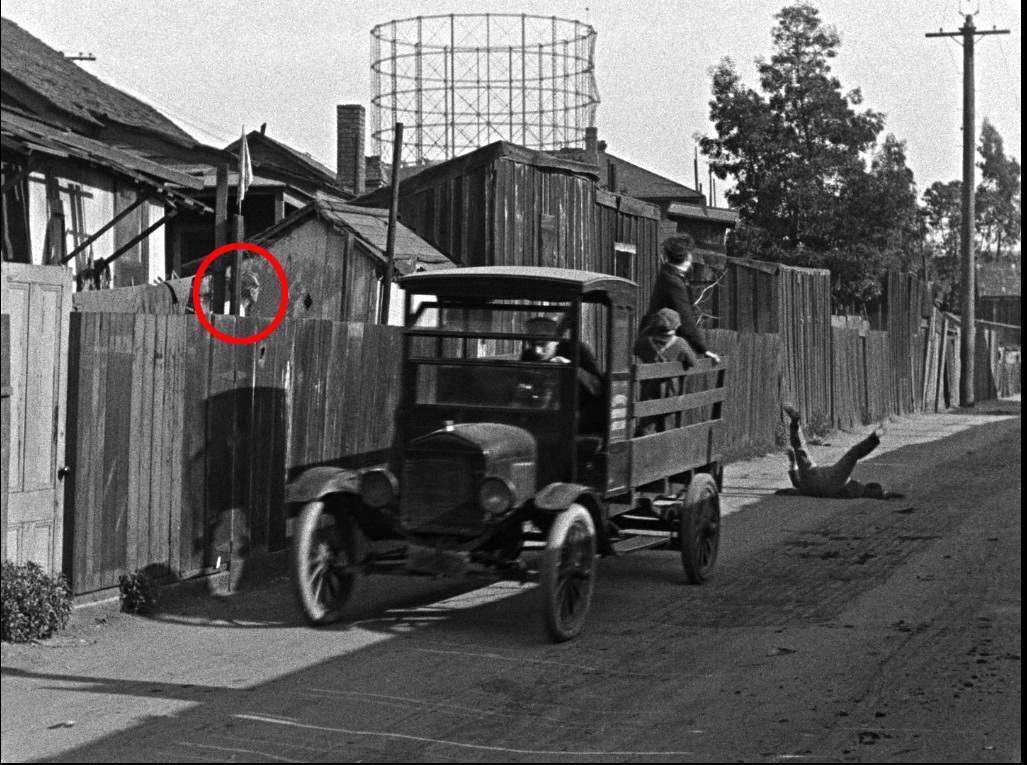
This neighbor suddenly peeks over the fence as the orphanage truck travels west down Labory Lane.

This neighbor suddenly peeks over the fence as the orphanage truck travels west down Labory Lane.

This real-like waif watches Jackie Coogan in the orphanage truck as it turns from the east end of Labory Lane onto Hewitt.

Shielding his eyes from the sun, this real-life waif watches Jackie Coogan in the orphanage truck as it turns from the east end of Labory Lane onto Hewitt.

Two girls are seen here as Dan Dillon returns the foundling baby to Minnie Stearns' stroller.
Two girls are seen here as Dan Dillon returns the foundling baby to Minnie Stearns’ stroller.
Fans made cameos in other early Chaplin films.  Thanks to the Blu-ray quality of the Flicker Alley release of Chaplin’s Essanay comedies, here below you can see a bystander through the window (notice his hat) during the opening scene from The Bank (1915), and further below a seaside crowd from By The Sea (1915).
We're watching Charlie, and so is the man in the hat, watching him through the window in The Bank.

We’re watching Charlie, and so is the man in the hat, watching him through the window in The Bank.

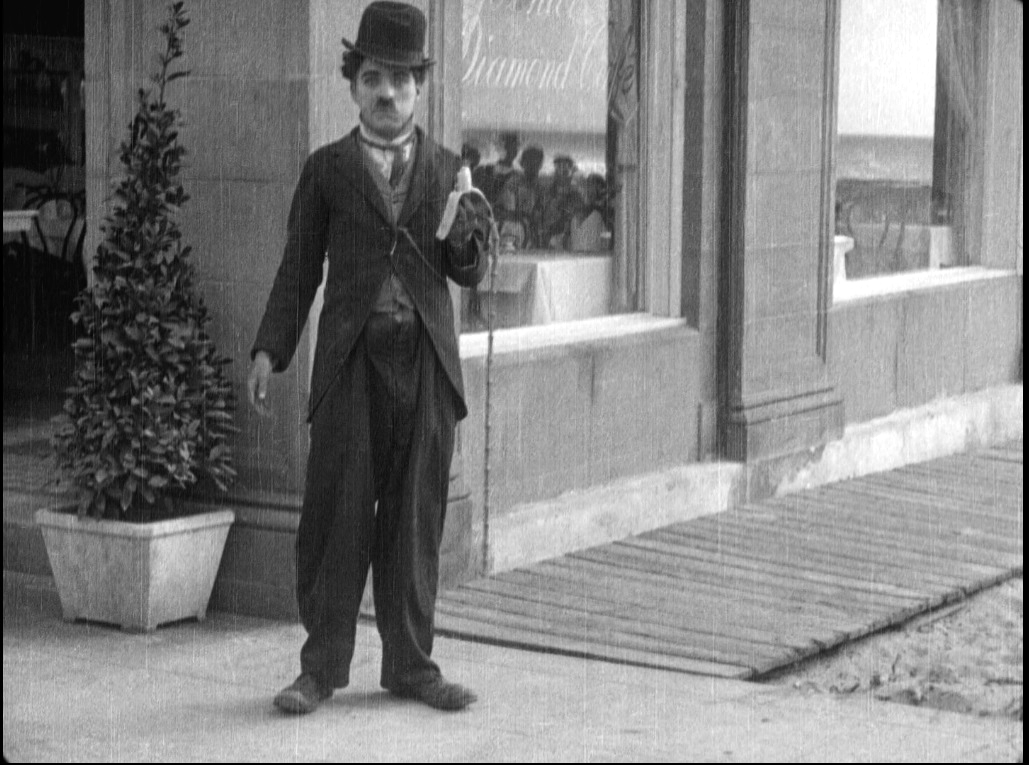
A large crowd gathers to watch Charlie - anticipating what will happen with the banana in By The Sea (1915). Filmed in Venice

A large crowd gathers to watch Charlie – anticipating what will happen with the banana in By The Sea. Filmed beside the Venice Diamond Cafe at the north corner of the former Venice Plunge (indoor pool).

Posted in Charlie Chaplin, The Kid | Tagged , , , , , , , | 17 Comments

Chaplin on South Central – Making It Work

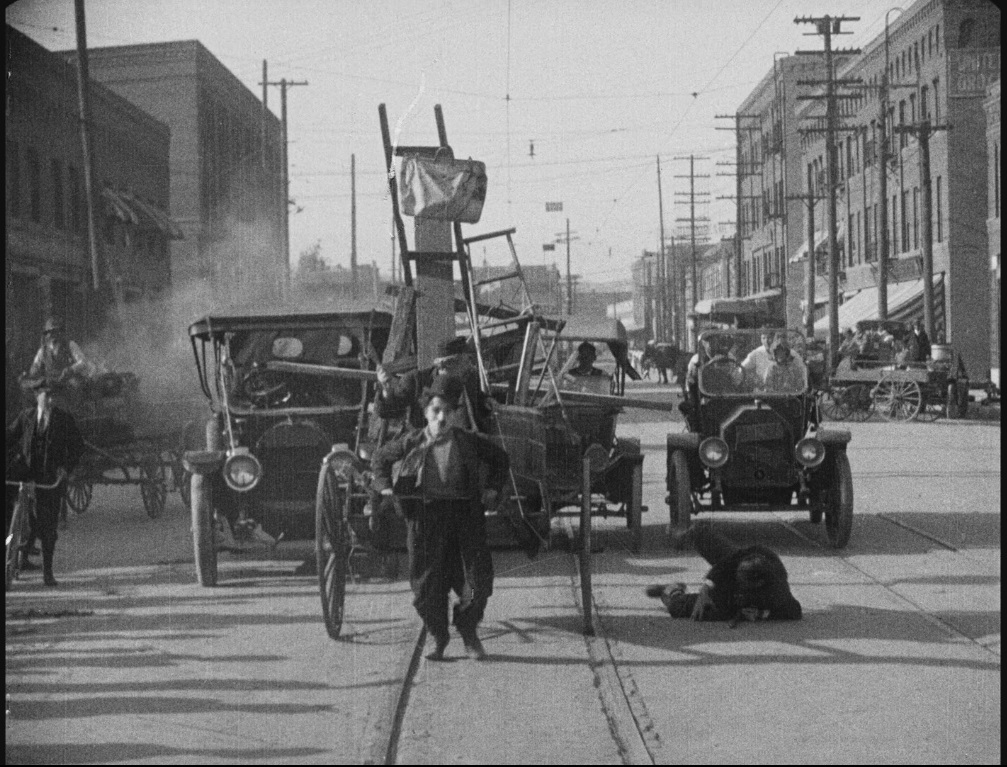
Charlie Chaplin in Work (1915).

Charlie Chaplin on South Central Avenue in Work (1915).

This image of Charlie Chaplin struggling with a cart load of tools and supplies in a Dickensian warehouse district is one of the most visually arresting of his entire career. Surrounded by horse-drawn wagons and early automobiles, the Little Tramp seems stuck in some chronological limbo, straddling the Victorian era and the impending Jazz Age. Taken over 100 years ago for the movie Work, the gritty street image always fascinated me, but it seemed beyond reach, never to be understood. But thanks to the clarity of the wonderful restored Blu-ray release of Chaplin’s Essanay comedies from Flicker Alley, this elusive setting quickly revealed itself.
ca

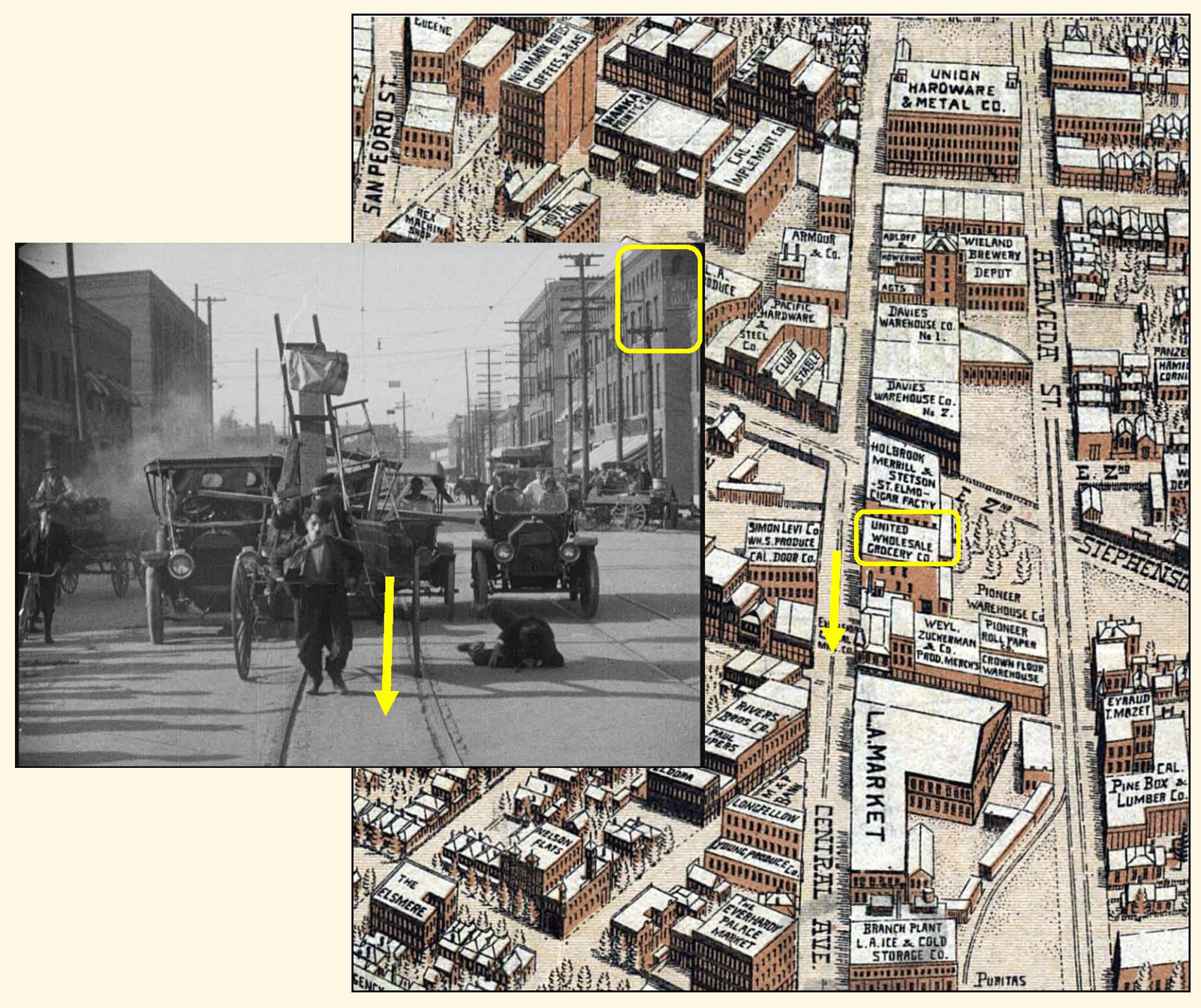
Charlie’s path in 1915 past the United Wholesale Grocery Co. as shown on this 1908 “bird’s eye” view map of downtown Los Angeles. The tall building to the left behind Chaplin was built after 1908 and thus does not appear on this map.

As Charlie moves down the street, we can briefly glimpse a painted wall sign at back that says “UNITED W– GROC–” By checking the Los Angeles City Directories available online at the Los Angeles Public Library, out popped the likely candidate, the United Wholesale Grocery Co. that once stood at 216 S Central Avenue. While not the most photographed part of town, comparing the site with vintage maps and a long-range aerial view confirms Charlie filmed walking south down Central from 2nd towards 3rd.

A matching aerial view of the block. The gap between the buildings in a rail spur crossing the avenue. LAPL.

Click to enlarge. A matching aerial view of the block – Central running left-right between 3rd St at left and 2nd St at right. The gap between the buildings is due to a rail spur crossing the avenue. LAPL.

The orange oval above marks 219-227 S Central, once home to the Ducommun Corporation, the yellow box marks the United Wholesale Grocery Co. The gap between the buildings accommodates a rail spur line that once crossed Central in the middle of the block.  The brick warehouses were all demolished in the late 1970s.

The Bradbury Mansion studio on Court Hill, upper left, and the filming site, lower right.

The Bradbury Mansion studio on Court Hill, upper left, and the filming site, lower right.  This 1908 map shows only one bore for the Hill Street Tunnel under Court Hill – the second bore, for automobiles, was completed in 1913.

On the steps of the Bradbury Mansion

On the steps of the Bradbury Mansion

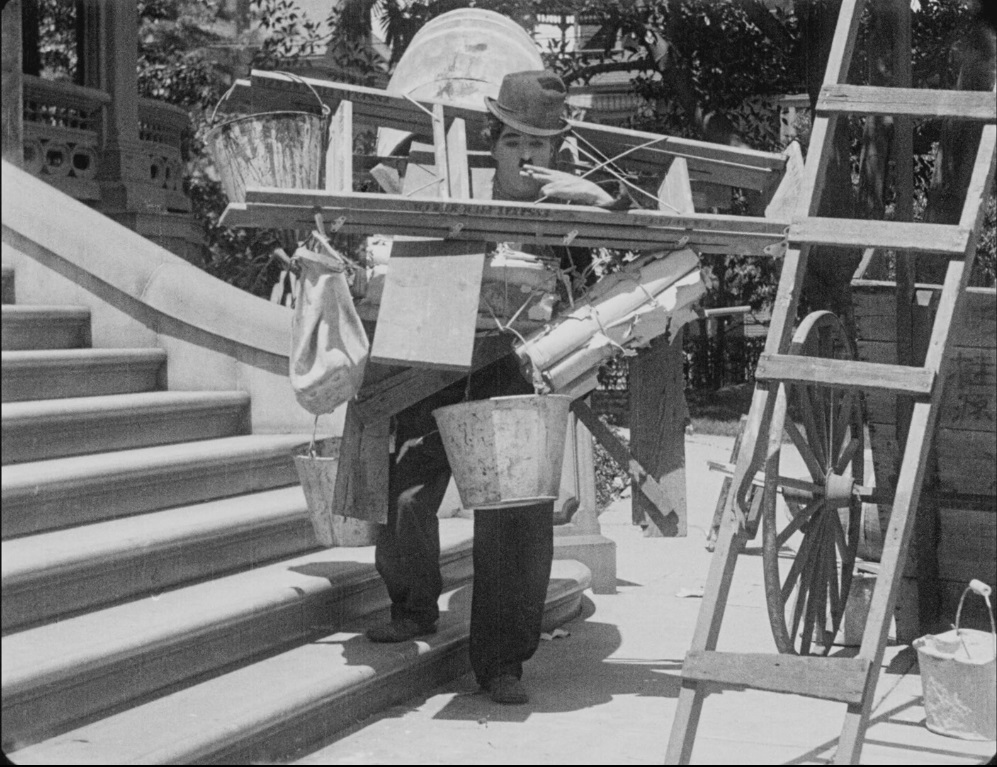
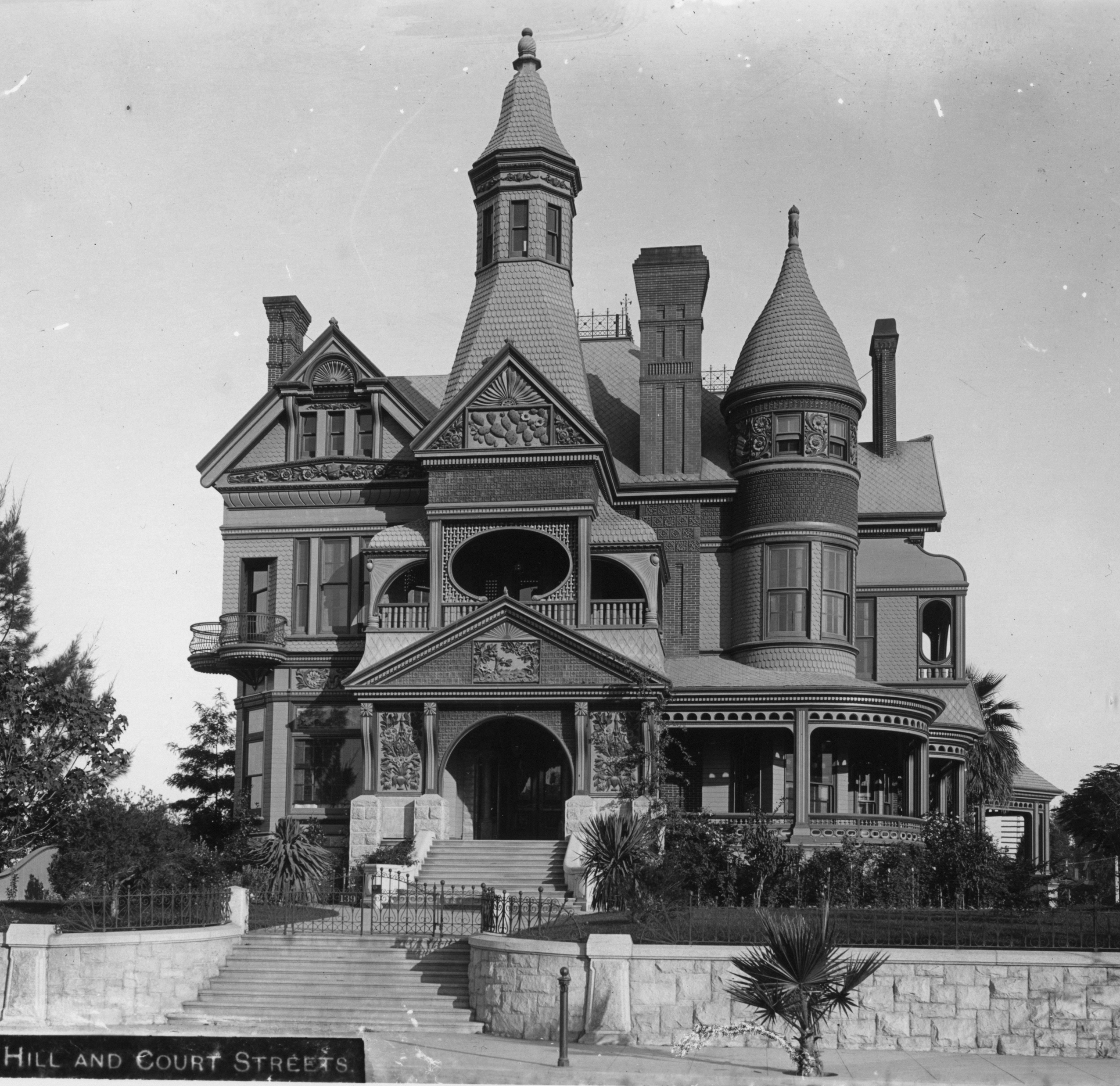
As discussed in my book Silent Traces, and in other posts, Chaplin filmed Work at the Bradbury Mansion studio atop Court Hill, the same studio where Harold Lloyd and producer Hal Roach started their careers at about the same time. The Bradbury Mansion front steps, and the Hopperstead house

At back the Hopperstead home.

At back the Hopperstead home.

standing on the opposing corner from the mansion, both appear during Chaplin’s film. The warehouse street setting stood less than a mile away, quickly reached by taking 1st Street from Court Hill a few blocks east to Central, and turning south for two blocks.

The Bradbury Mansion. USC Digital Library.

The Bradbury Mansion. USC Digital Library.

Thanks to preservationists David Shepard of Film Preservation Associates, Serge Bromberg of Lobster Films, and Cineteca di Bologna, all 15 of Chaplin’s Essanay short comedies from 1915 are now beautifully restored, available as a 5 disc Blu-ray/DVD box set from Flicker Alley.

Special Contents of Chaplin’s Essanay Comedies (C) 2015 by Lobster Films for the Chaplin Project. Work Blu-ray Publication and Design (C) 2015 Flicker Alley, LLC.

All images from Chaplin films made from 1918 onwards, copyright © Roy Export Company Establishment. CHARLES CHAPLIN, CHAPLIN, and the LITTLE TRAMP, photographs from and the names of Mr. Chaplin’s films are trademarks and/or service marks of Bubbles Incorporated SA and/or Roy Export Company Establishment. Used with permission.
A matching view looking north up S Central today – nothing remains.

Posted in Charlie Chaplin, Court Hill, Los Angeles Historic Core | Tagged , , , , , , , , , , | 7 Comments

How Charlie Chaplin filmed The Kid

On Olvera Street

Coogan and Chaplin on Olvera Street

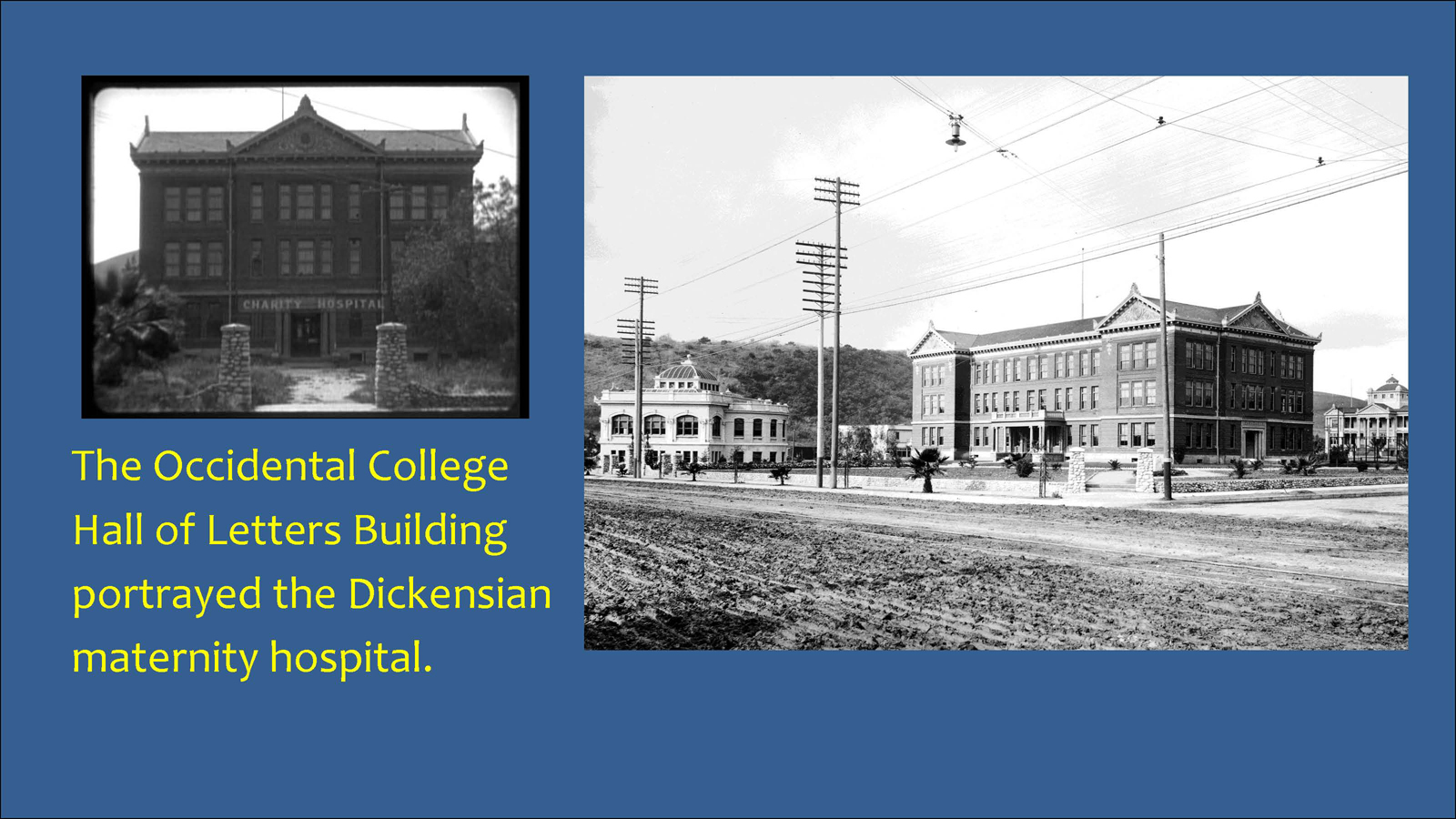
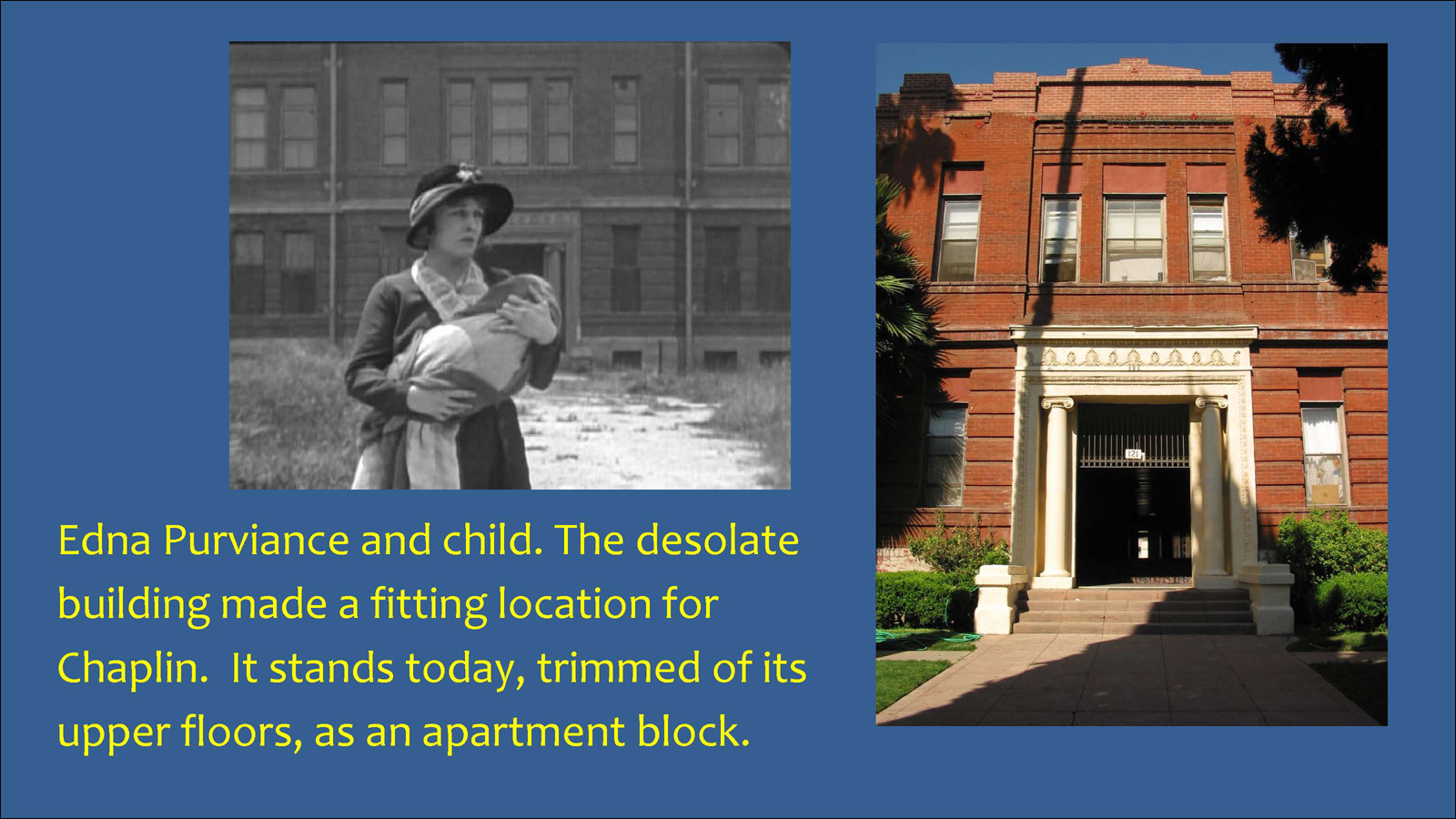
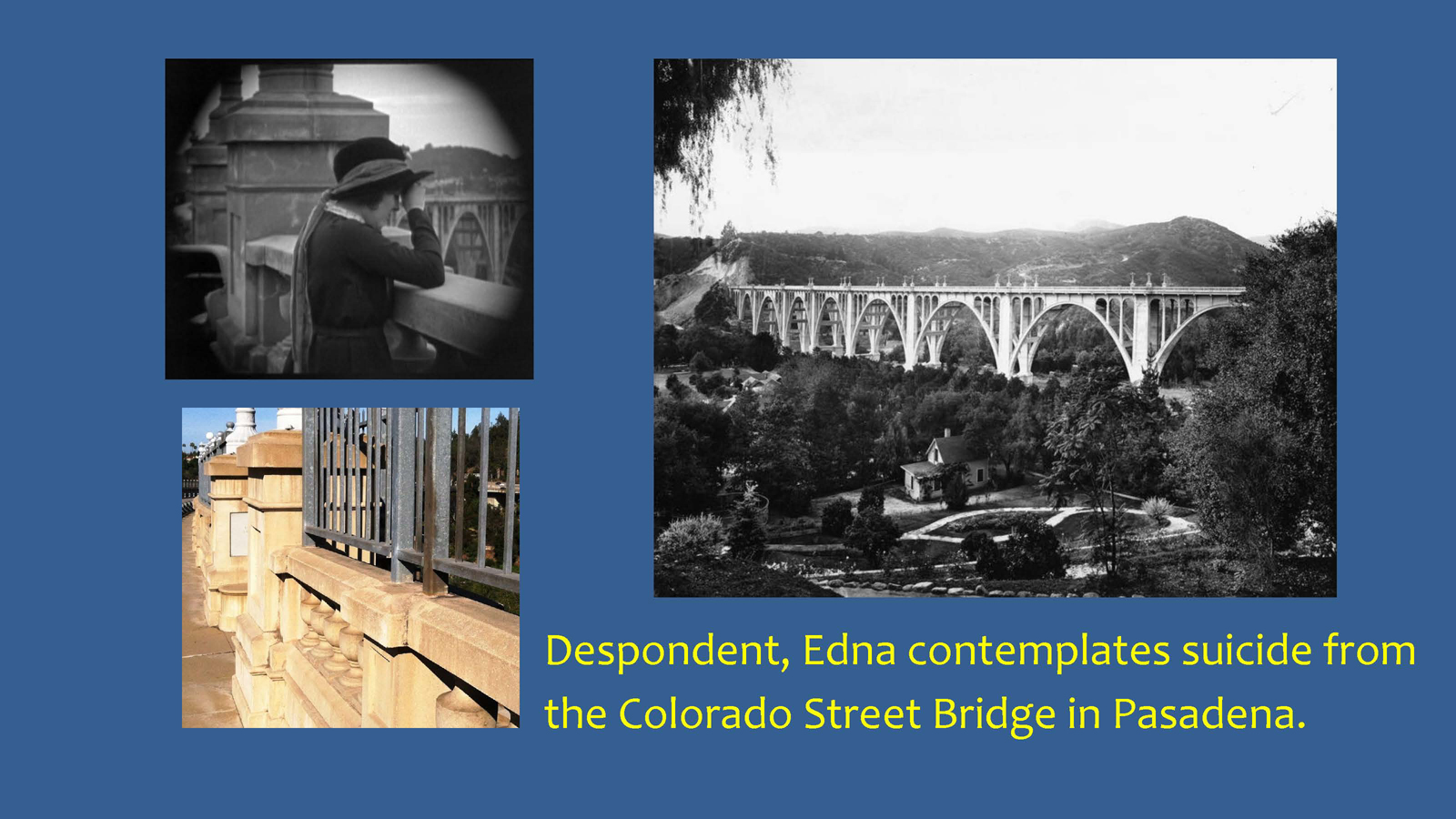
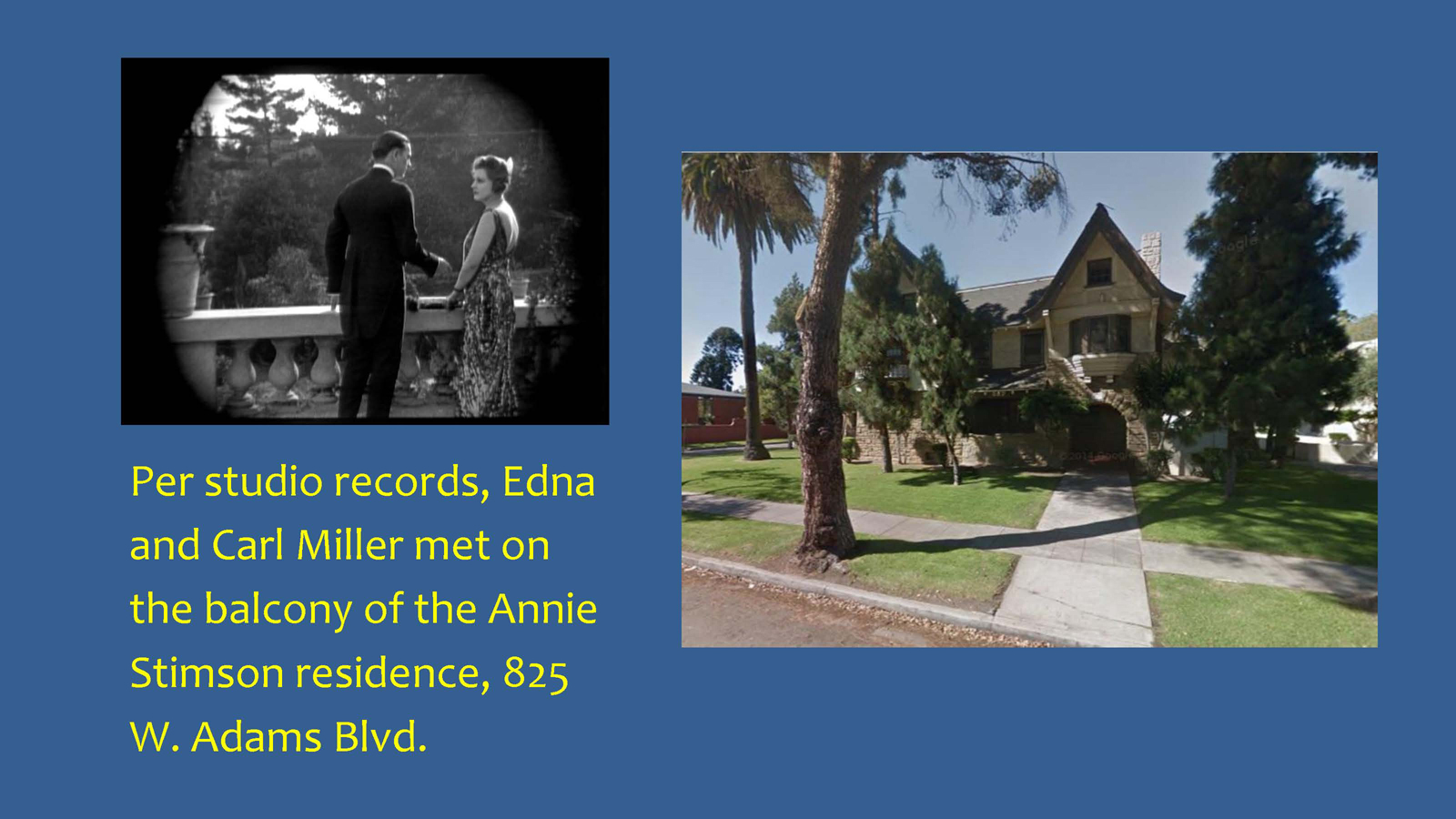
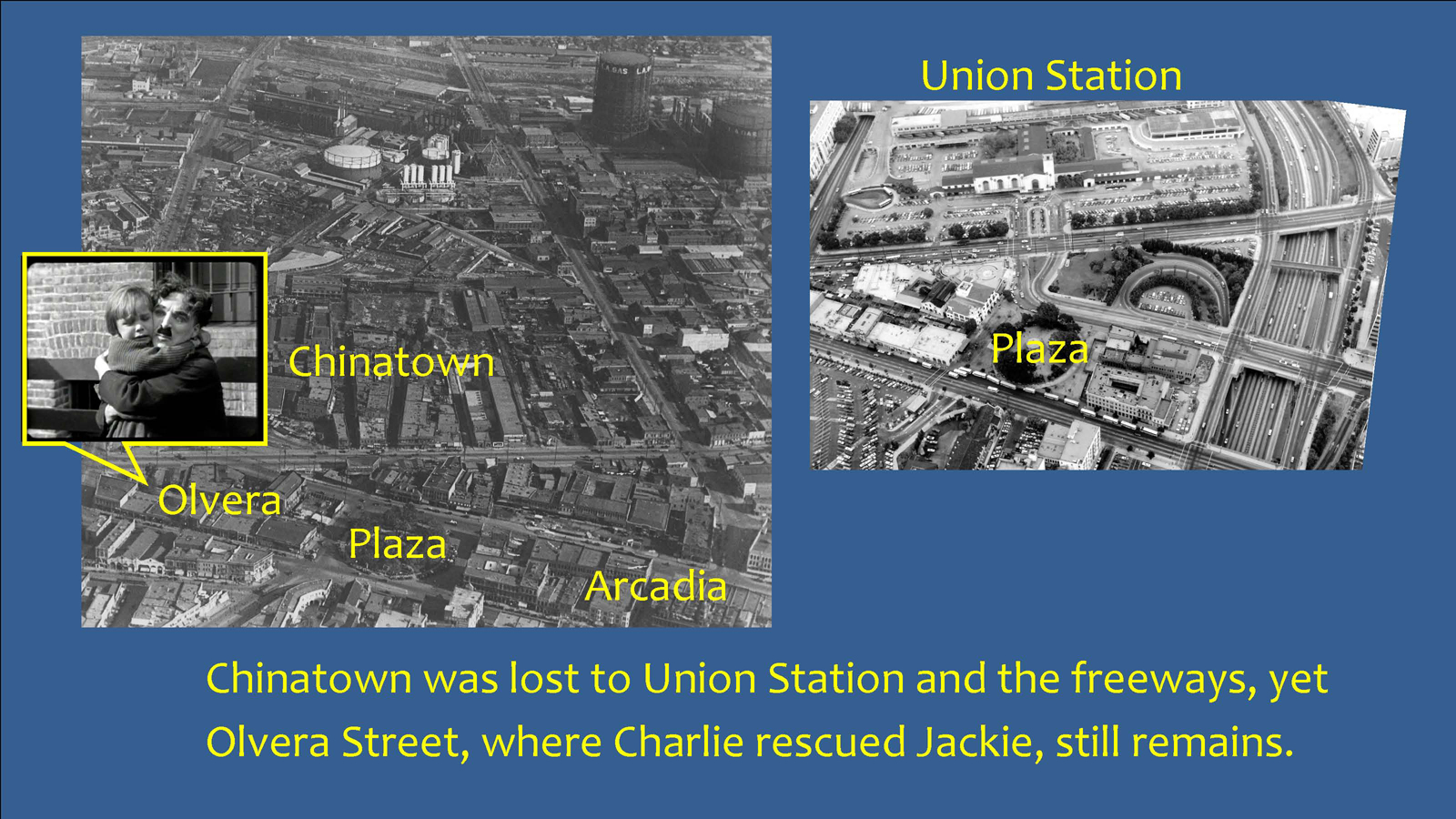
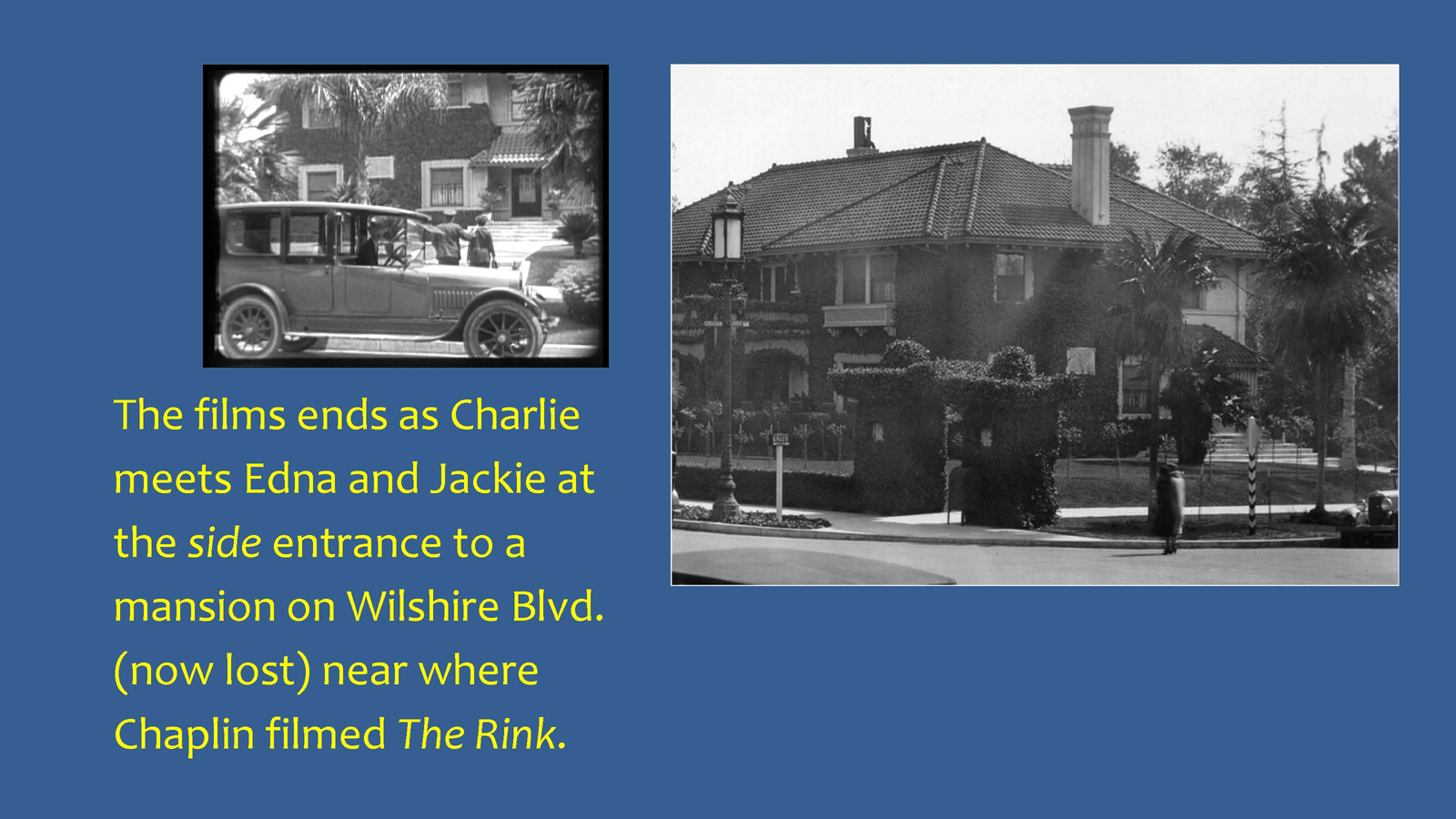
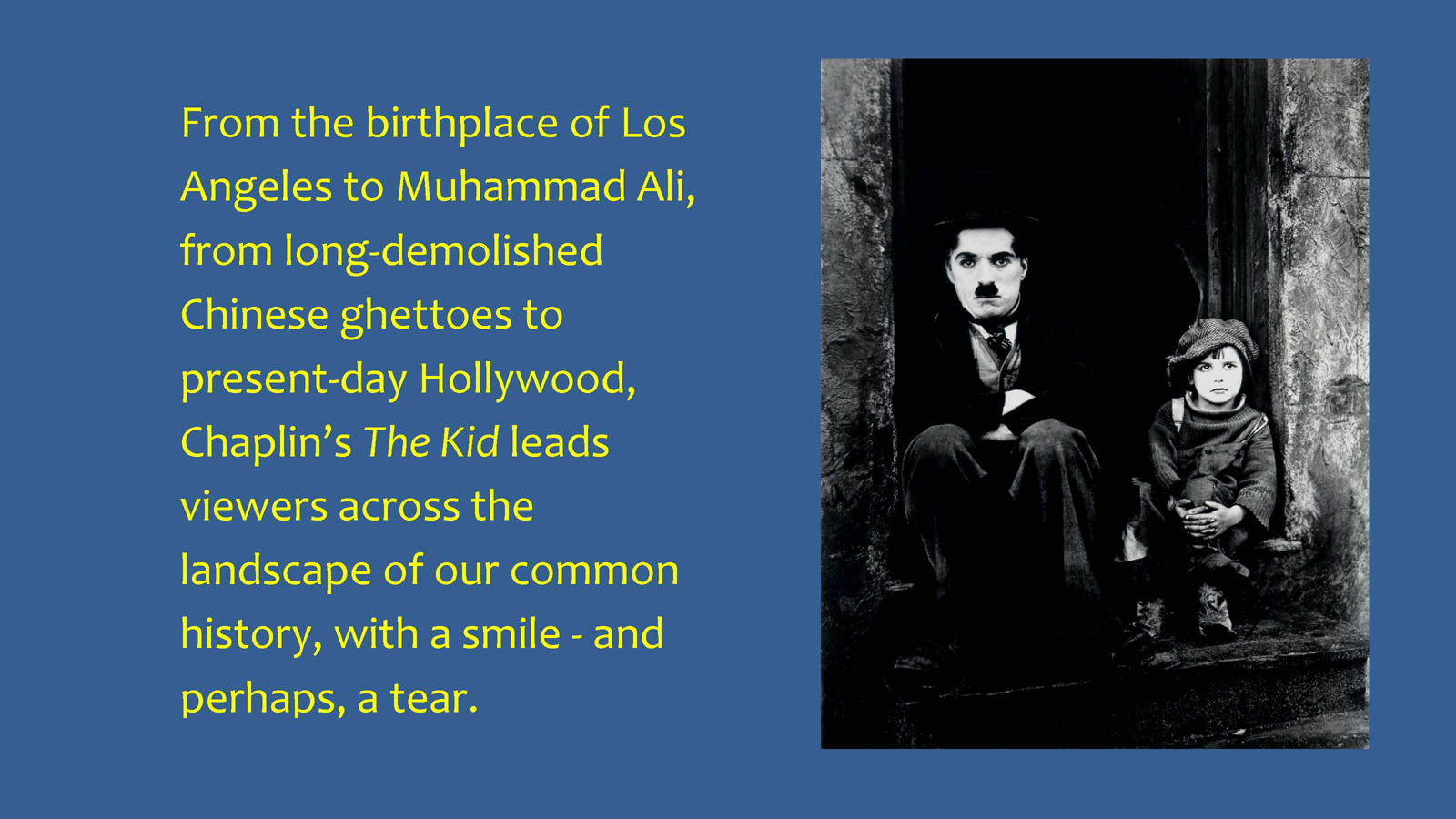
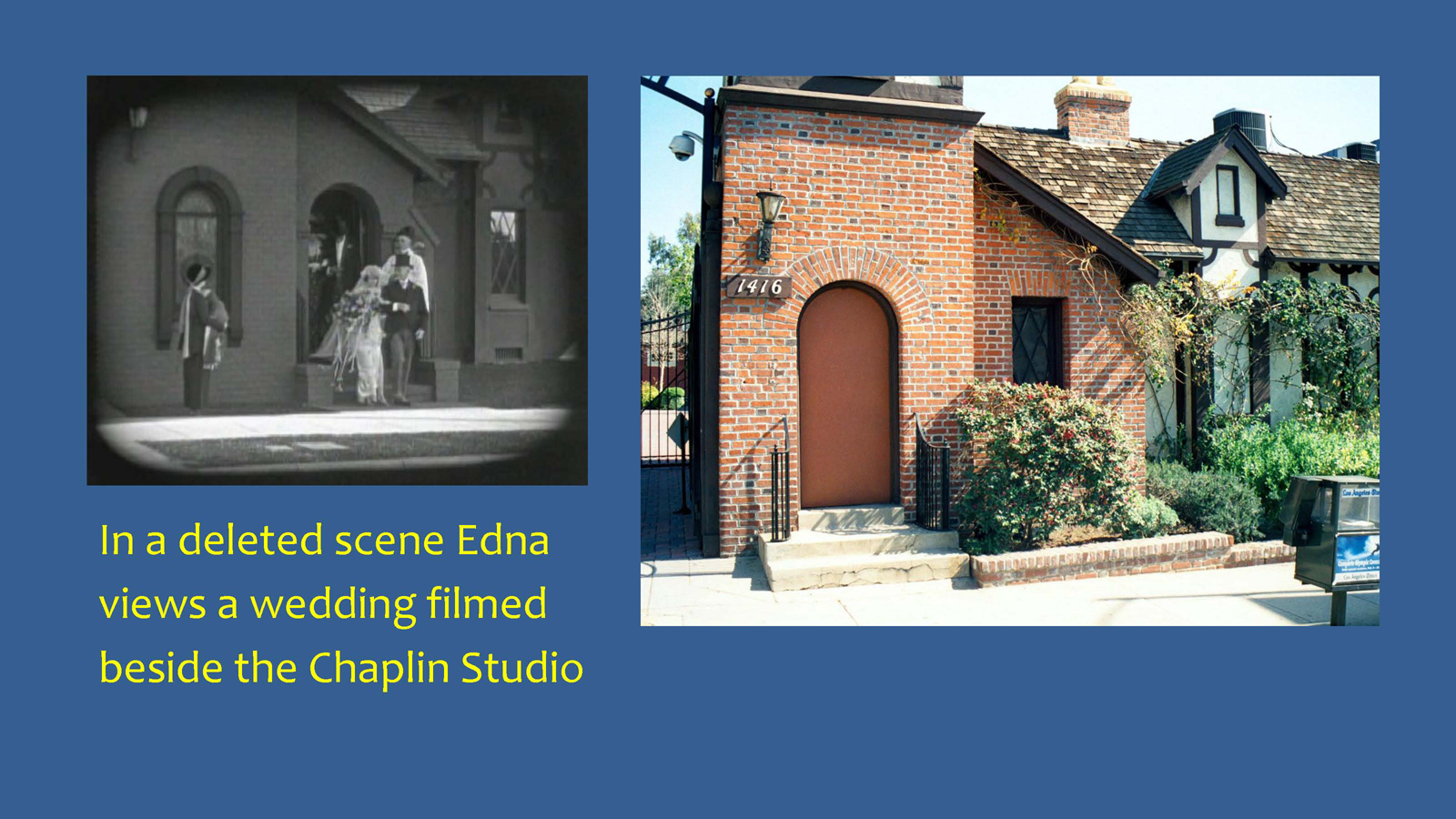
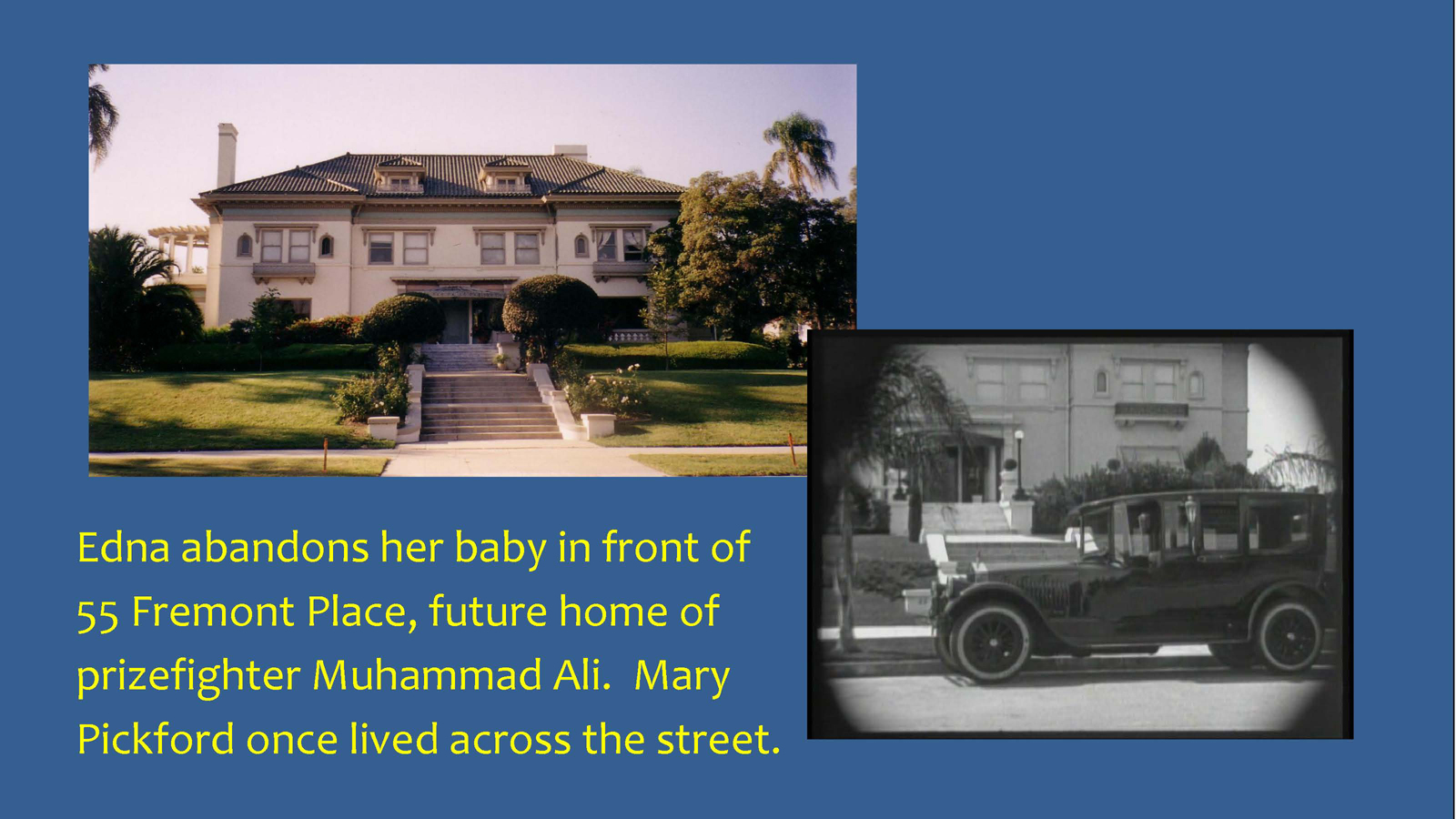
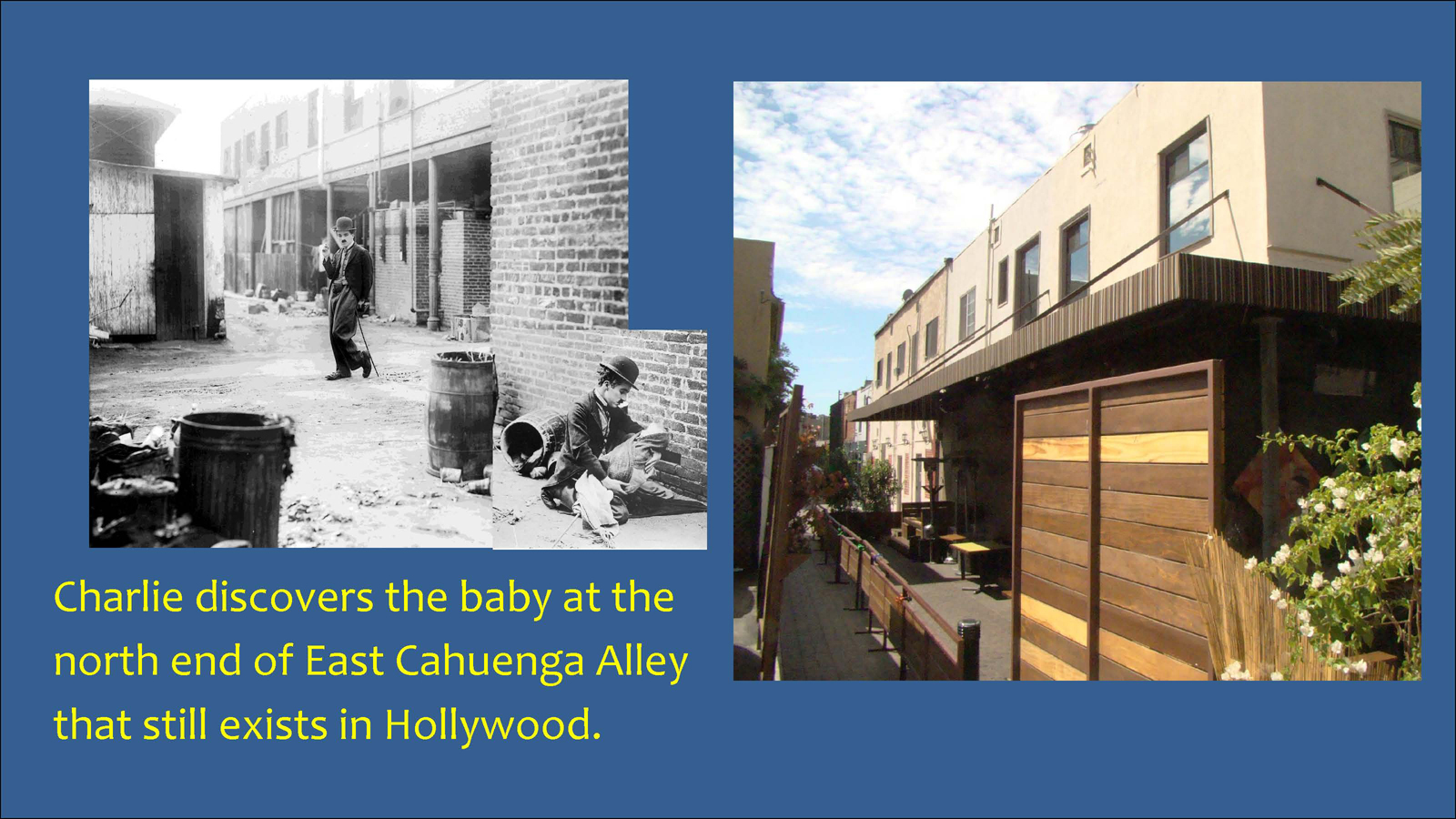
Filmed mostly in 1920, The Kid utilizes more historic settings and extant locations than any other Chaplin film. A century later you can still visit Edna Purviance’s Dickensian maternity ward, the mansion (later owned by Muhammad Ali) where she abandons her baby, and the Hollywood alley where Charlie first encounters the abandoned child. To celebrate the Criterion Collection’s Blu-ray release of  The Kid, this post provides a broad overview of the film, covered more fully in my book Silent Traces.

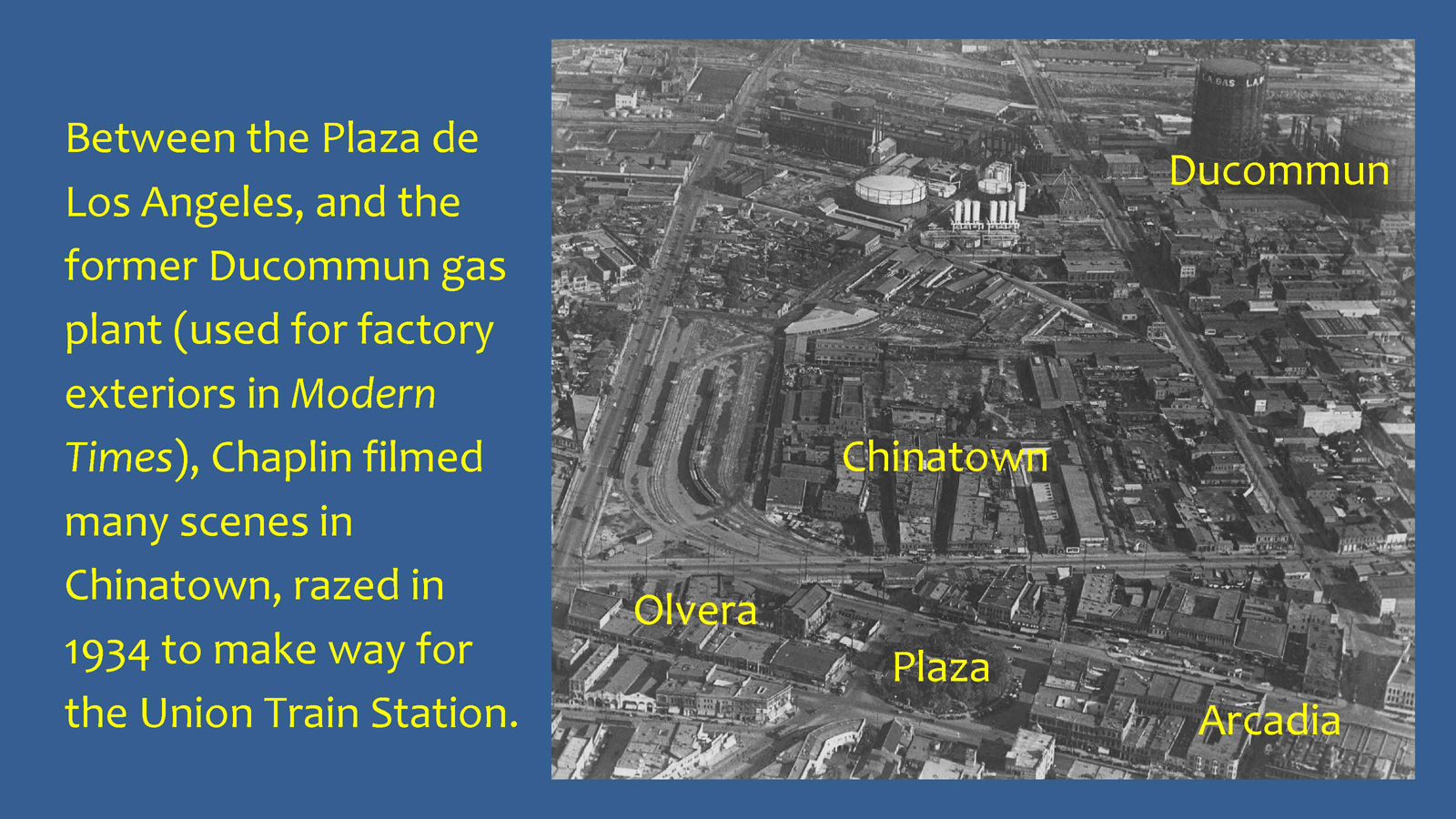
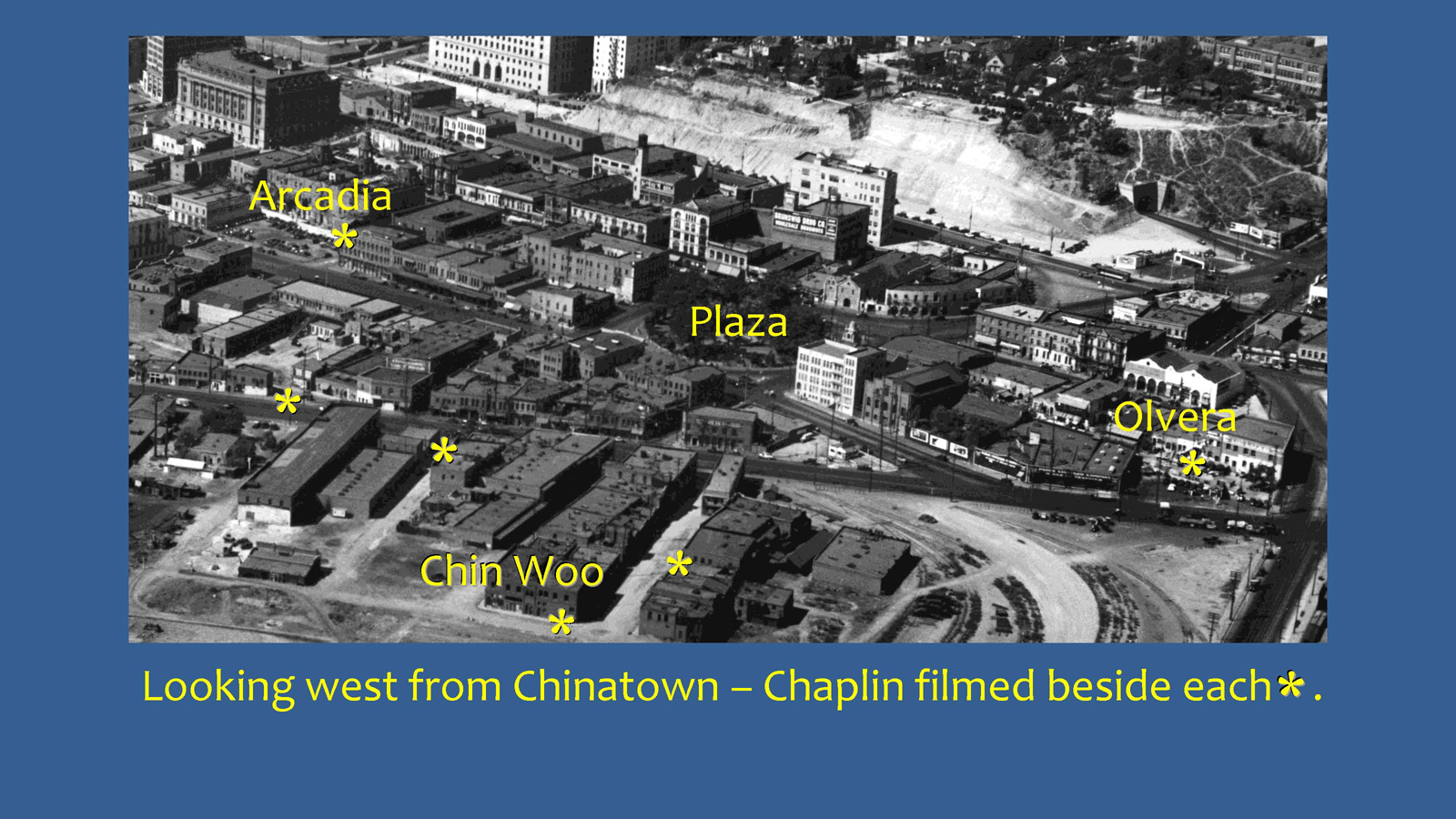
Tour with still images below – but check out these new YouTube videos showing how Edna lost and Charlie found the baby who would become the Kid, and how Charlie and Jackie made The Kid filming around the Plaza de Los Angeles and its neighboring working class streets.

Here is the still image tour

Criterion The Kid - Lustgarten - Bengtson_Page_01aCriterion The Kid - Lustgarten - Bengtson_Page_02Criterion The Kid - Lustgarten - Bengtson_Page_03Criterion The Kid - Lustgarten - Bengtson_Page_04Criterion The Kid - Lustgarten - Bengtson_Page_18Criterion The Kid - Lustgarten - Bengtson_Page_05Criterion The Kid - Lustgarten - Bengtson_Page_06Criterion The Kid - Lustgarten - Bengtson_Page_07Criterion The Kid - Lustgarten - Bengtson_Page_08Criterion The Kid - Lustgarten - Bengtson_Page_09Criterion The Kid - Lustgarten - Bengtson_Page_09aCriterion The Kid - Lustgarten - Bengtson_Page_20Criterion The Kid - Lustgarten - Bengtson_Page_11Criterion The Kid - Lustgarten - Bengtson_Page_12Criterion The Kid - Lustgarten - Bengtson_Page_13Criterion The Kid - Lustgarten - Bengtson_Page_14Criterion The Kid - Lustgarten - Bengtson_Page_15Criterion The Kid - Lustgarten - Bengtson_Page_16Criterion The Kid - Lustgarten - Bengtson_Page_17Criterion The Kid - Lustgarten - Bengtson_Page_19

00The Kid remains my favorite film – it best harmonizes Chaplin’s themes with real-life settings – at the downtown plaza, where Hispanic descendants from California’s former ruling class found themselves ostracized in their own home, and in nearby Chinatown, where restrictive laws and immigration policies kept descendants of Chinese railroad laborers from owning property or sending home for family members. Alienation and adversity echo from the very bricks and stones where Chaplin chose to shoot. That many of these places still exist after 95 years is a small miracle.  You can read much more about these and many other settings from the film in my Chaplin book Silent Traces. There are also many related posts on my blog.

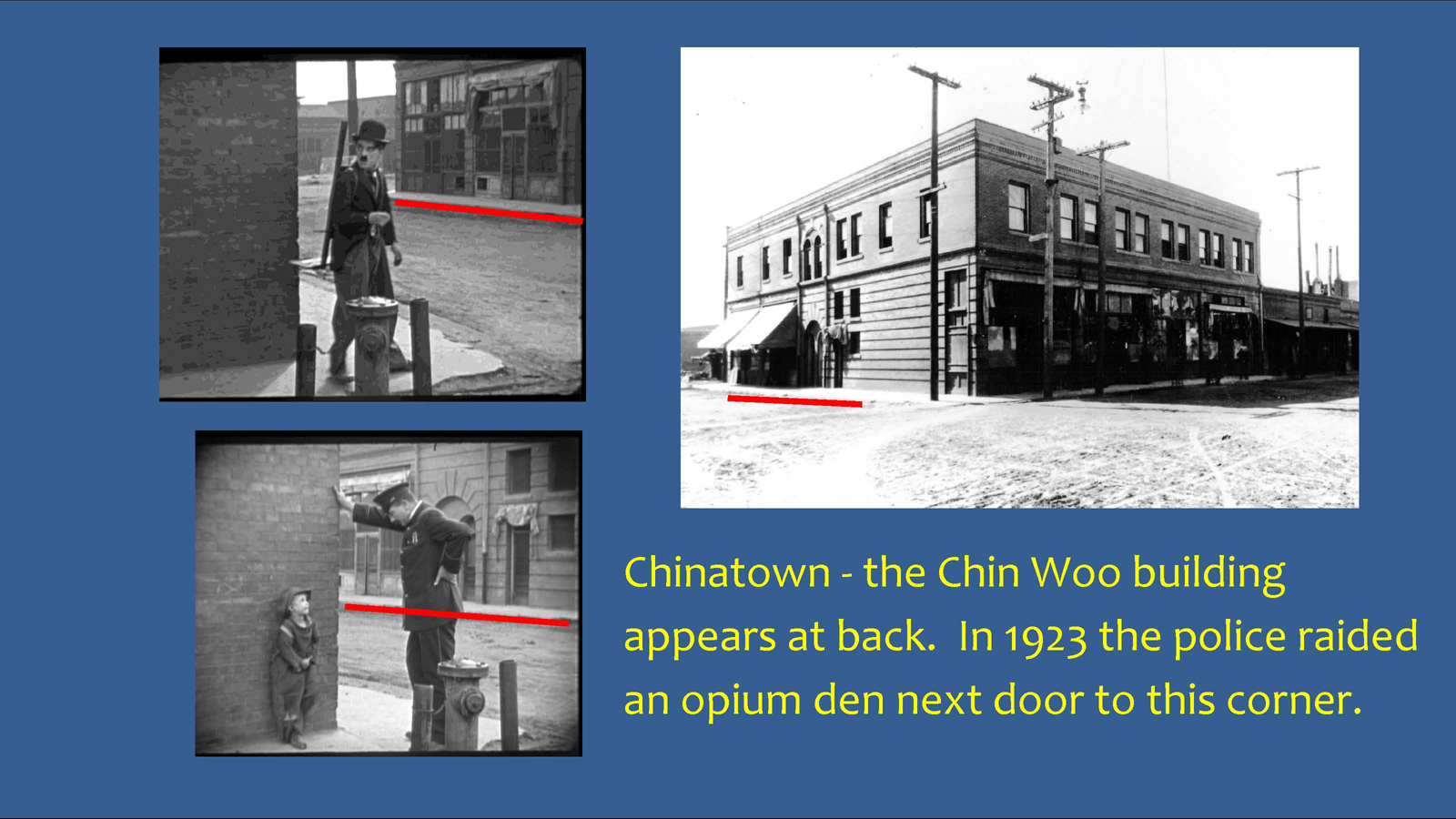
Above left, looking west down Apablasa, Huntington Digital Library, with a composite image of Charlie being picked up by the cops towards the end of the movie. Charlie’s view looks south from the corner of Cayetano, across Apablasa, towards a narrow alley visible in the photo. This setting is marked with an asterisk (*) to the right of the words “Chin Woo” in the west view aerial photo a few images above.

All images from Chaplin films made from 1918 onwards, copyright © Roy Export Company Establishment. CHARLES CHAPLIN, CHAPLIN, and the LITTLE TRAMP, photographs from and the names of Mr. Chaplin’s films are trademarks and/or service marks of Bubbles Incorporated SA and/or Roy Export Company Establishment. Used with permission.

Chaplin-Keaton-Lloyd-sign

Please help support naming the Chaplin Keaton Lloyd alley in Hollywood by posting a review on Google Maps. Prototype alley sign design by noted Dutch graphic artist – Piet Schreuders. Download a 4-page brochure about the alley HERE. This video further explains the alley – if you can, please leave a thumbs up and share it with others.

The filming site on Olvera Street.

Posted in Charlie Chaplin, The Kid | Tagged , , , , , , , | 21 Comments

How Roscoe Arbuckle Filmed His Safety Last! Moment (Before Harold Lloyd Did)

vq

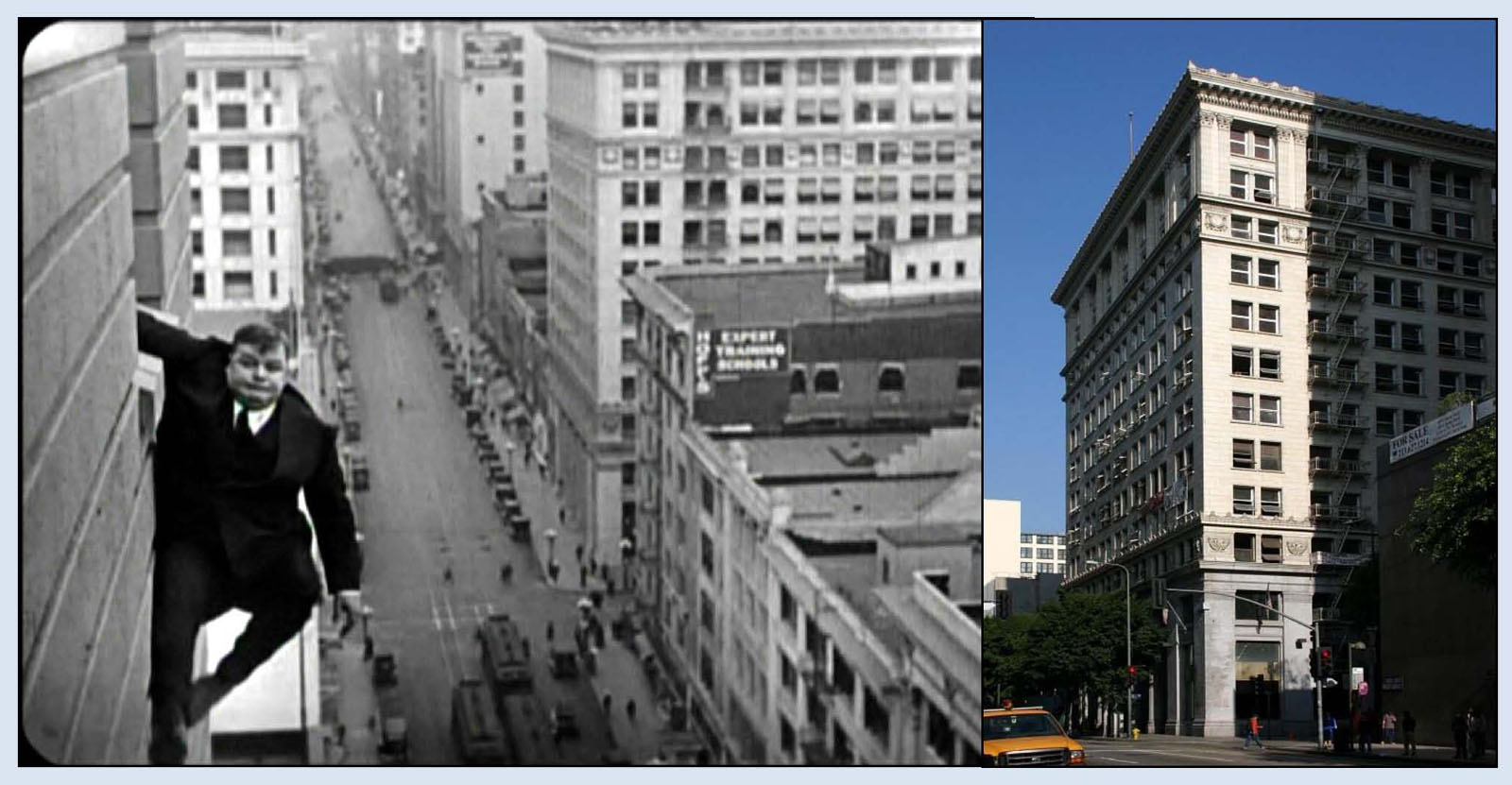
Looking up Spring Street, Roscoe Arbuckle hangs from the Bartlett Building rooftop in The Life of the Party.  At back, the Merchants National Bank Building at the NE corner of 5th.  You-Are-Here.Com

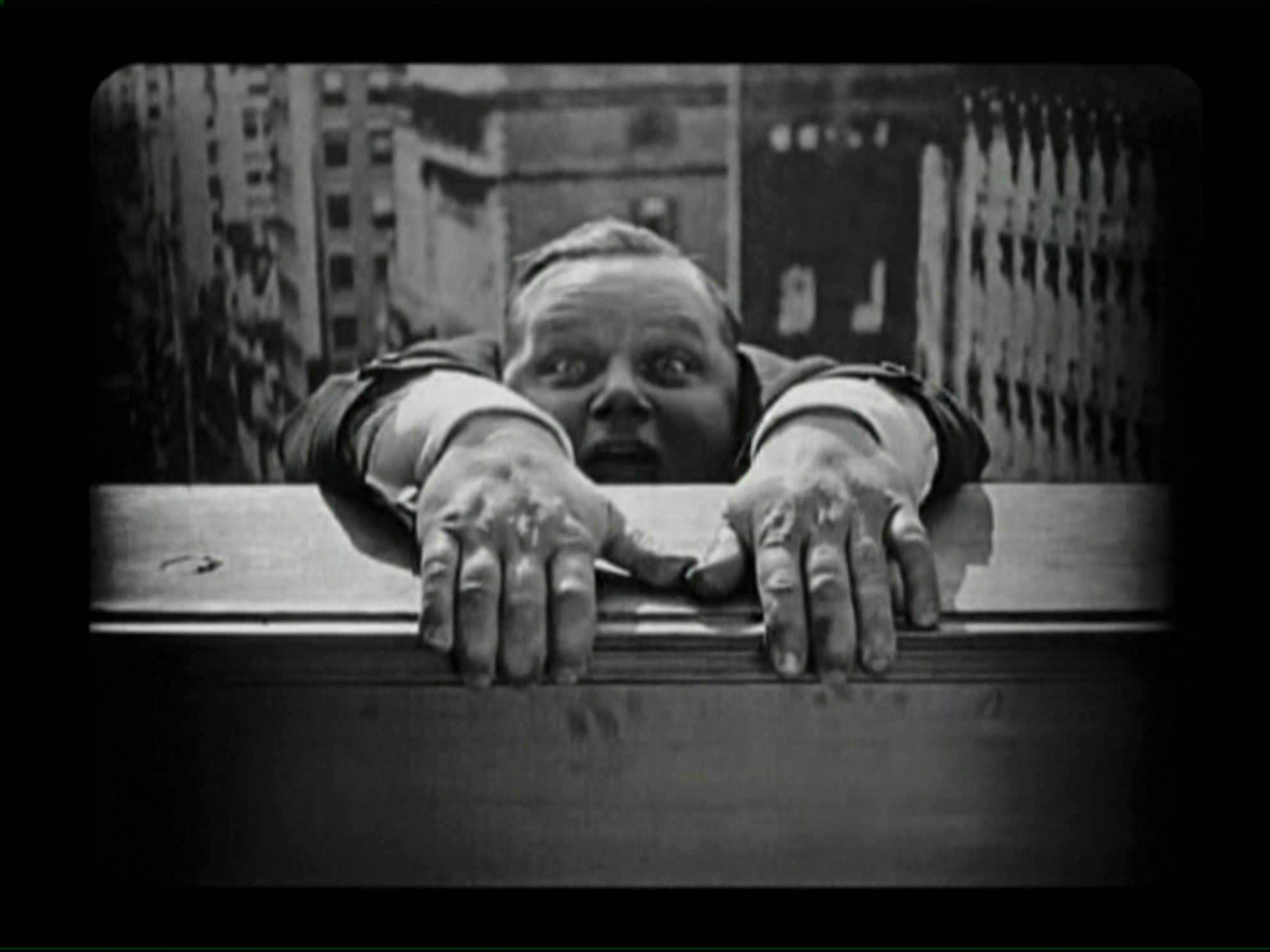
Life of the Party 02Early in Roscoe Arbuckle’s charming feature comedy The Life of the Party (1920), his character, instantly smitten by a female visitor to his high-rise law offices, stumbles Life of the Party 08backward through an open window, and hangs precipitously several stories in the air. Though not integral to the plot, Roscoe’s brief scene presages Harold Lloyd’s later stunt climbing work in downtown Los Angeles, and has a direct connection with Lloyd’s masterpiece Safety Last! (1923).

CA

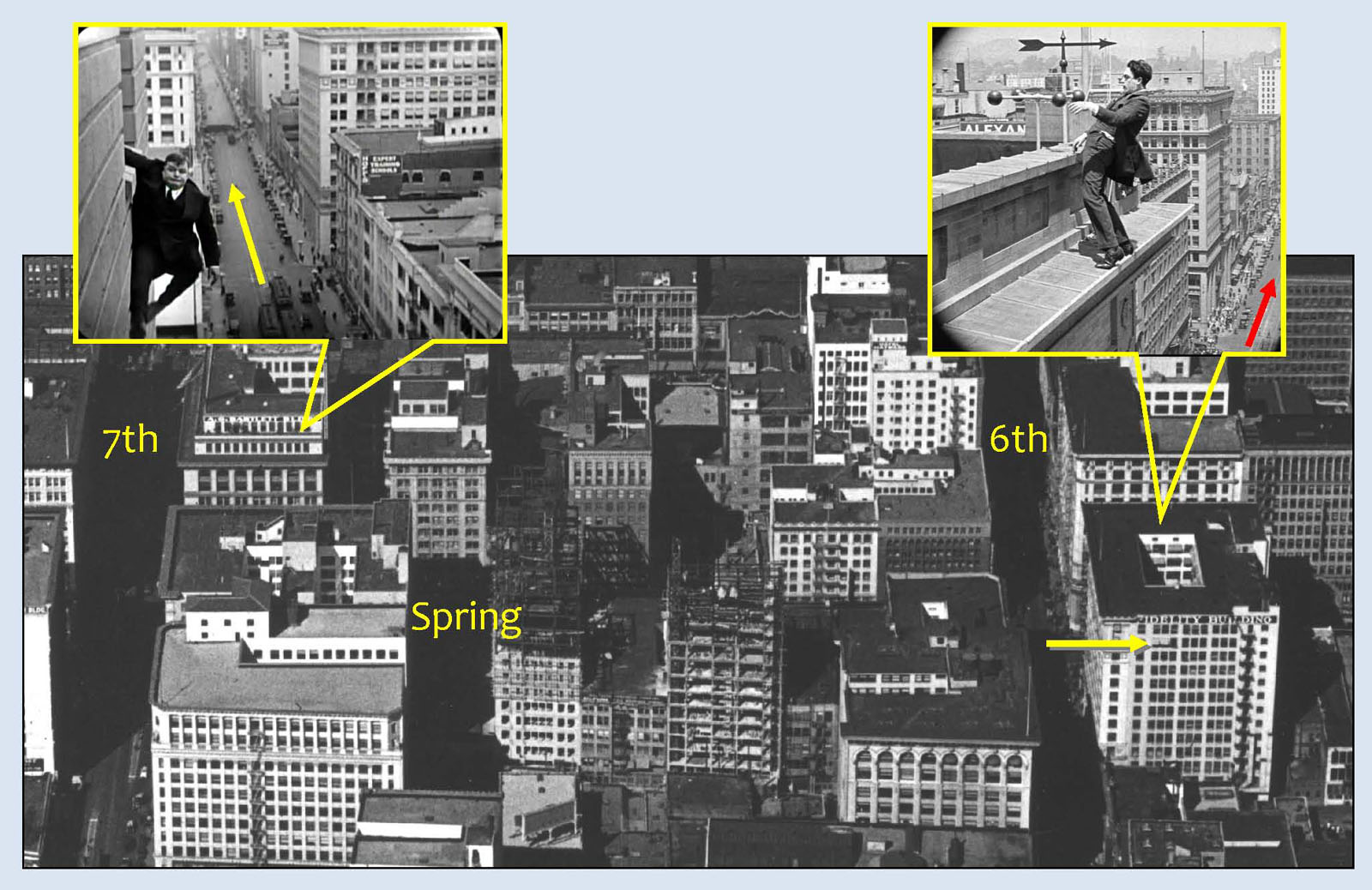
Click to enlarge – Roscoe in TLOTP  and Harold in Safety Last! one block further up the street atop the Merchants National Bank Building, prominent in Roscoe’s frame (Lloyd’s approximate location is marked by the gray box). Both views show the side building signs for the Alexandria Hotel (yellow box) and the Security Trust and Savings Bank (red box).

Roscoe filmed his stunt atop the stepped-back terraced roof of the extant Bartlett Building, built in 1911 at 215 W. 7th Street, in the heart of the Los Angeles historic core, converted now to condos and lofts. Behind Roscoe, visible up the street, stands the extant Merchants National Bank Building (now also condos and lofts) at 548 S. Spring Street. Harold Lloyd built a set atop the Merchants Bank to stage the final (and highest) segment of his climb up a skyscraper in Safety Last!

ca

Click to enlarge – looking west at Spring Street between 7th and 6th. The yellow arrows point up Spring from 6th, the red arrow points up Spring from 5th.

Lloyd filmed a total of five stunt climbing comedies: Look Out Below (1919), High and Dizzy (1919), Never Weaken (1921), Safety Last!, and Feet First (1930). The first three were filmed using sets overlooking the Hill Street Tunnel (see post HERE), while Never Weaken went further, staging scenes filmed atop the extant Ville de Paris Department Store building at the SE corner of 7th and Olive. Thus, when Roscoe filmed TLOTP during April 15 – May 22 of 1920, he filmed in downtown, on a real building, more than a year before Harold did.  You can read a list of the 17 real buildings (14 are still standing) that appear in Harold’s stunt films at this PDF link.

ca

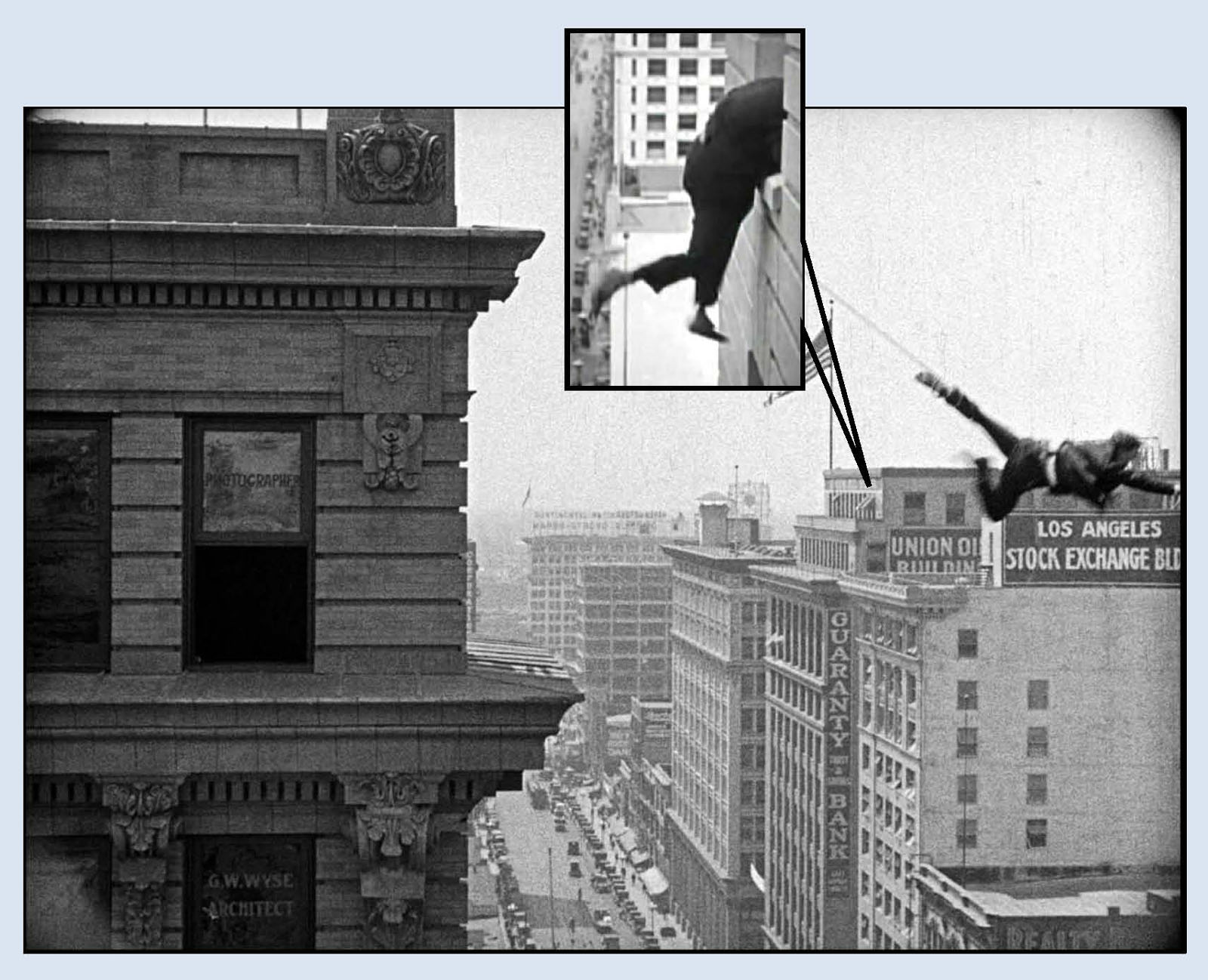
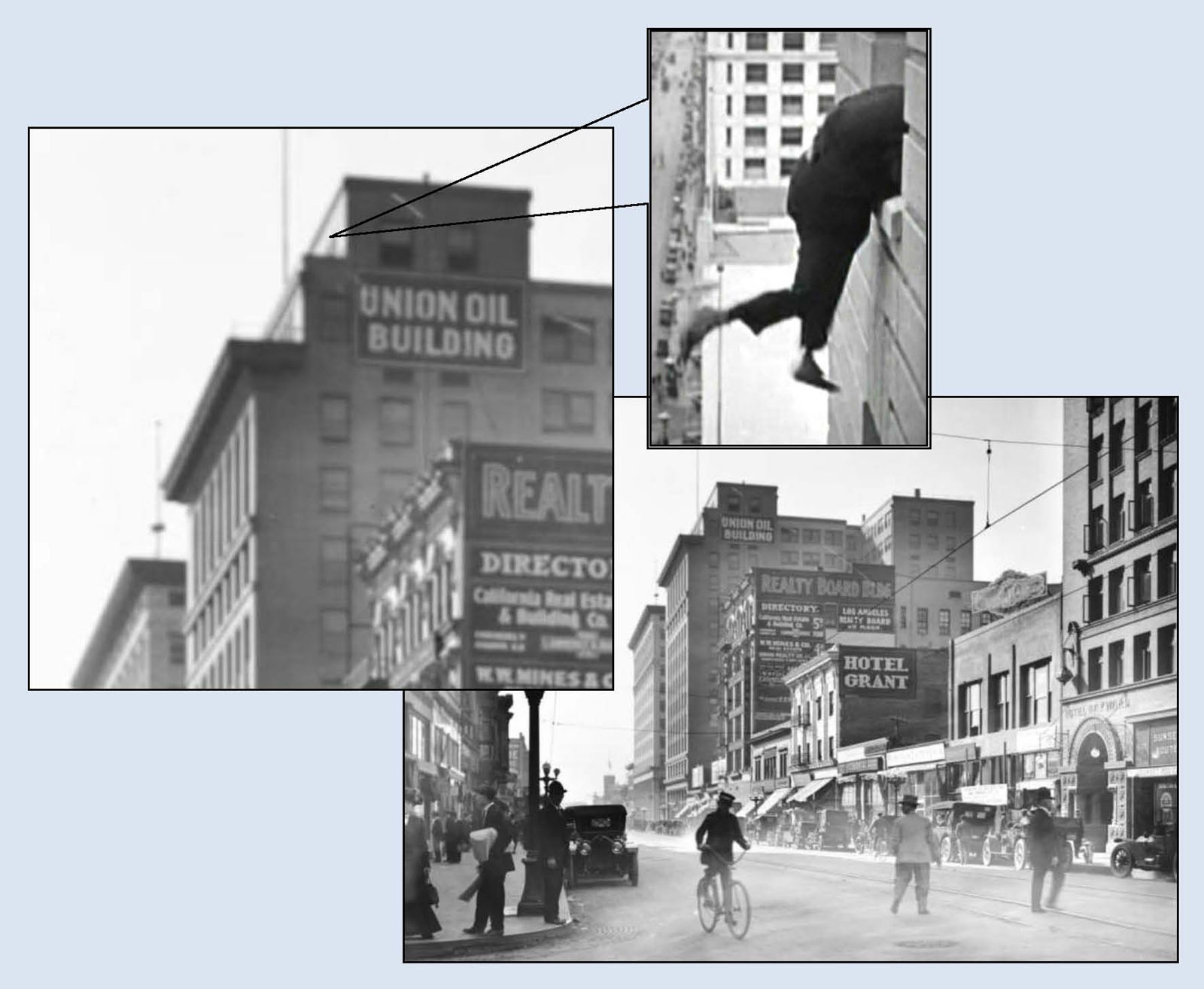
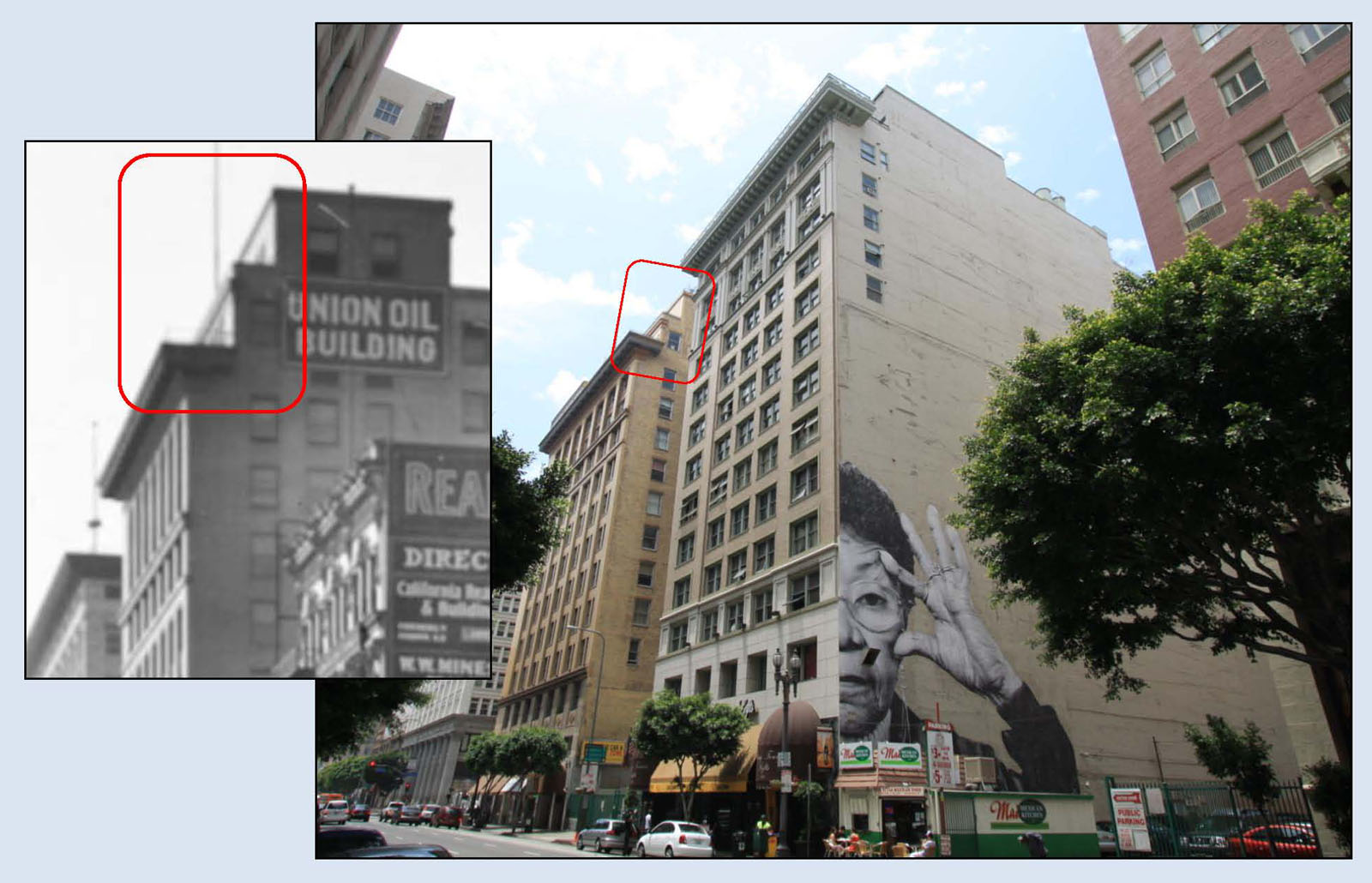
Click to enlarge – this view from the finale to Safety Last! looks south down Spring from 6th towards the Bartlett Building (Union Oil) terrace where Roscoe filmed (inset – his frame is reversed to aid comparison).  The tall Los Angeles Stock Exchange Building began construction in 1921, after TLOTP had finished shooting – hence, it does not appear in Roscoe’s shot.

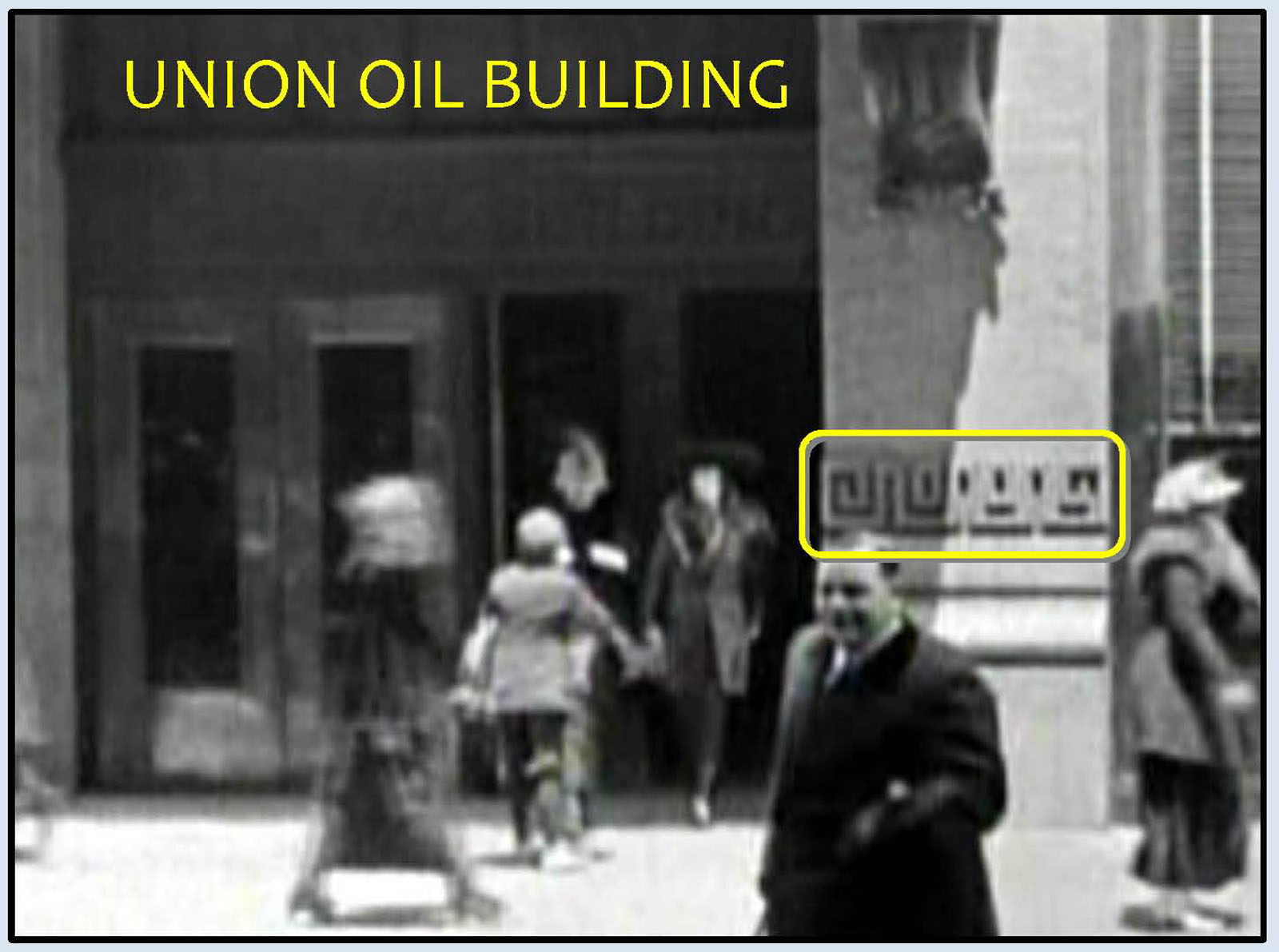
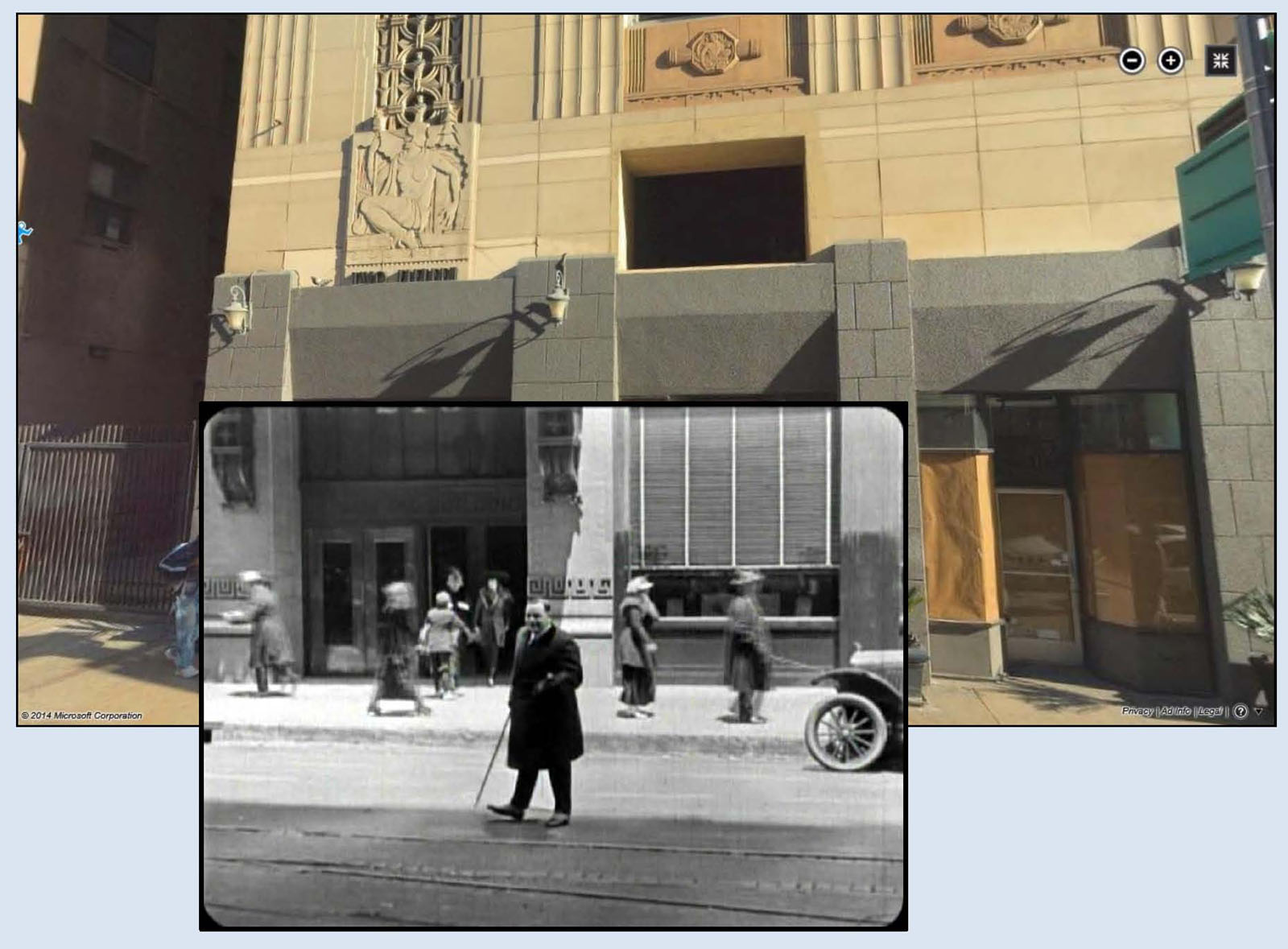
The Life of the Party_Page_09The establishing shot of Roscoe was filmed at the 7th Street entrance to the Bartlett Building, also known at the time as the Union Oil Building, its primary tenant. You can barely read “Union Oil Building” over the door, as well as the bottom edges of the numerals “215” (see below).

Click to enlarge - details of the Bartlett Building (Union Oil) entrance at 215 W. 7th Street. USC Digital Library here and here.

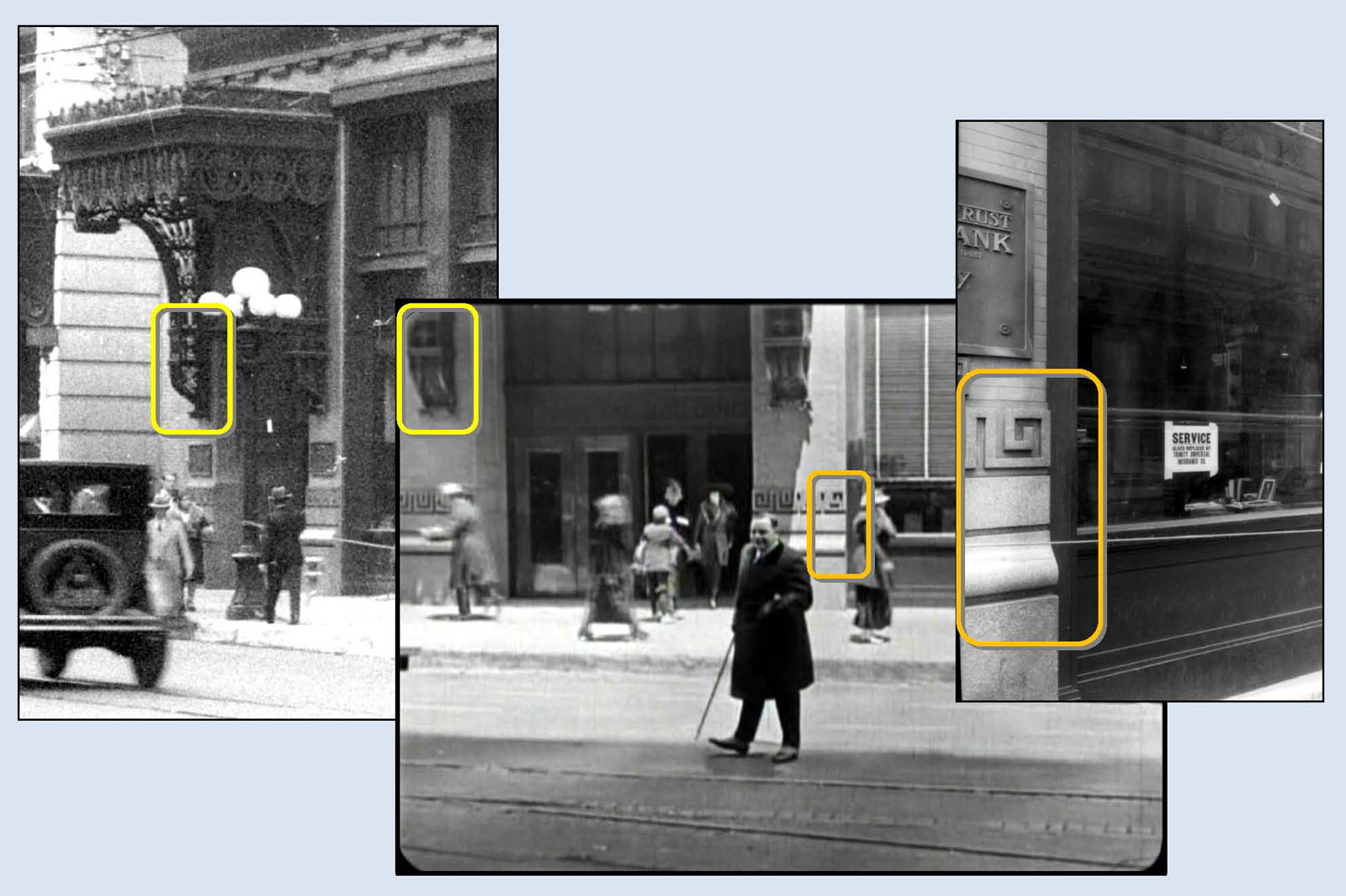
Click to enlarge – matching details of the Bartlett Building (Union Oil) entrance at 215 W. 7th Street compared to 1933 photos of what was then the entrance to the Security-First National Bank. USC Digital Library.

The same entrance to the bank appears during this scene from Charlie Chaplin's The New Janitor (1914).

Jess Dandy is soaked with a bucket of water beside the same entrance to the Bartlett Building during this scene from Charlie Chaplin’s The New Janitor (1914).

mm

The lower floors of the Bartlett Building were given an Art Deco upgrade in 1937.  This Bing Maps view shows the entrance today – the Art Deco facade now has a further “upgrade.”

Looking south down Spring from 6th towards the Bartlett Building (Union Oil). USC Digital Library.

Looking south down Spring from 6th towards the Bartlett Building (Union Oil) rooftop filming site. This view more closely matches the street at the time of filming, taken before the tall Los Angeles Stock Exchange Building was completed in 1921 to the right of the Bartlett. USC Digital Library.

A modern view of the Bartlett Building and the Stock Exchange Building next door to the right. Jeffrey Castel De Oro.

A modern view south down Spring towards the Bartlett Building filming site and the Stock Exchange Building next door to the right. Jeffrey Castel De Oro.

nn

This simple setup is all it takes to convincingly portray a person in peril at great height, without using CGI.

Roscoe’s stunt scene could be easily recreated today from the same rooftop. I often wonder why this simple and highly effective shooting technique, more convincing than CGI, is not used in modern films.

We are all indebted to Paul Gierucki, Brittany Valente, and CineMuseum, LLC for restoring The Life of the Party

View from the Bartlett deck (reversed for comparison)

View from the Bartlett deck (reversed for comparison)

so beautifully, and to TCM for broadcasting it for eager viewers to enjoy.

I have many other posts about Safety Last! you can view here.  HAROLD LLOYD images and the names of Mr. Lloyd’s films are all trademarks and/or service marks of Harold Lloyd Entertainment Inc. Images and movie frame images reproduced courtesy of The Harold Lloyd Trust and Harold Lloyd Entertainment Inc.

The Bartlett Building today, at the NW corner of 7th and Spring.

Posted in Harold Lloyd, Los Angeles Historic Core, Roscoe Arbuckle, Safety Last! | Tagged , , , , , , , , , , , , | 3 Comments

Houdini – The Grim Game – More Hollywood Connections

ca

Click to enlarge. The site of The Grim Game plane crash was the staged at the Famous Players – Lasky Studio backlot. Shown here moments before the crash, the house to the left in the movie frame (left) has a chimney on each end, while the central house has three dormer windows, matching the backlot sets (box). Bison Archives.

Houdini triumphantly survives the crash

Houdini triumphantly survives the crash

The climax to Harry Houdini’s debut feature film The Grim Game (1919) involved the real-life mid-air collision of two airplanes captured on film (discussed in my prior post HERE).  The extraordinary footage was worked into the story by filming the supposed crash landing of each plane, created by dropping prop planes, suspended nose down out of camera range, onto the ground. I had no idea where this sequence was filmed, until I happened to glance at a large aerial photo of the Famous Players – Lasky Studio, that once stood on Selma and Vine. I noticed that two homes on the studio Grim Game 01backlot photograph looked familiar, then suddenly remembered that Lasky had produced Houdini’s film. A quick check with the movie confirmed the unsurprising fact that the crash was staged at the backlot of the same studio that produced the film.

This revelation solved another mystery.  In my first post about The Grim Game I reported that Houdini filmed a brief scene at a Hollywood alley that Buster Keaton would use a few years later in Cops (see below).  Why was Houdini’s simple scene filmed at this spot?  The answer lies with the Famous Players – Lasky Studio.

Houdini also filmed a brief scene at the Cahuenga alley just south of Hollywood Blvd. where Buster filmed this famous stunt from Cops. The tall Palmer Building, undergoing construction behind Buster, still stands on Cosmo Street.

Houdini filmed a brief scene at the Cahuenga alley just south of Hollywood Blvd. where Buster filmed this famous stunt from Cops. The tall Palmer Building, undergoing construction behind Buster, still stands on Cosmo Street. This alley was used so frequently because it was both convenient and rare.

As shown below, the plane crash site at the studio backlot was barely two blocks east of the alley on Cahuenga!  In 1919 this alley was both close by, but also rather unique, as there were few other commercial buildings in town at the time.  Following Houdini’s lead, Buster Keaton (Neighbors, Cops), Charlie Chaplin (The Kid), and Harold Lloyd (Never Weaken, Safety Last!), would all later film at this convenient alley.

The backlot plane crash site stood barely two blocks from the alley on Cahuenga (arrow). This photo was taken in 1922. In 1919 only the buildings within the red box were standing. Bison Archives.

The backlot plane crash site stood barely two blocks from the alley on Cahuenga where Houdini filmed (arrow). This photo was taken in 1922. At the time Houdini filmed in 1919 many buildings outside of the red box were not built yet, and the alley configuration was fairly unique. Bison Archives.

This earlier 1919 view (below) looks west from the backlot plane crash site towards the Cahuenga alley just south of Hollywood Boulevard. Most of Cahuenga (running left-right at the top of the photo) is still undeveloped.

Looking west.  Most of Cahuenga (red box) is still empty lots. HollywoodPhotographs.com

A reverse view looking west, Selma running up the middle. Only the north end of Cahuenga (red box) is developed – the rest of the street, from Sunset Blvd (left of Selma) towards Hollywood Blvd (right) is lined with empty lots.  HollywoodPhotographs.com

This closer view of the studio (below) shows the backlot homes (box), and “The Barn” standing on the corner of Selma and Vine.

The backlot at top, and "The Barn" standing at Vine and Selma, now home to the Hollywood Heritage Museum.

The backlot at top, and “The Barn” standing at Vine and Selma, now home to the Hollywood Heritage MuseumBison Archives.

The Barn Today - Hollywood Heritage.

The Barn Today – Hollywood Heritage.

Built in 1901, the Lasky – De Mille Barn that stood at Vine and Selma became home to the Jesse L. Lasky Feature Play Co. in 1913, where the company’s first feature film The Squaw Man was co-directed by Cecile B. De Mille in 1914. Lasky merged with Adolph Zukor’s Famous Players Film Co., creating the Famous Players – Lasky Studio, that would later become Paramount Pictures Corporation.  When Paramount relocated to its present site on Melrose Avenue, “The Barn” was relocated there too, where it served for many years as a gymnasium and location set.  The Barn was donated to the Hollywood Heritage Museum, and now sits at 2100 N. Highland Avenue in the parking lot across from the Hollywood Bowl.  In 2014 the Lasky-DeMille Barn was listed on the National Register of Historic Places.

Posted in Cops, Harry Houdini, The Grim Game | Tagged , , , , , , , | 6 Comments

Houdini – The Grim Game’s historic LA landmarks

THE GRIM GAME, Harry Houdini on lobbycard, 1919.

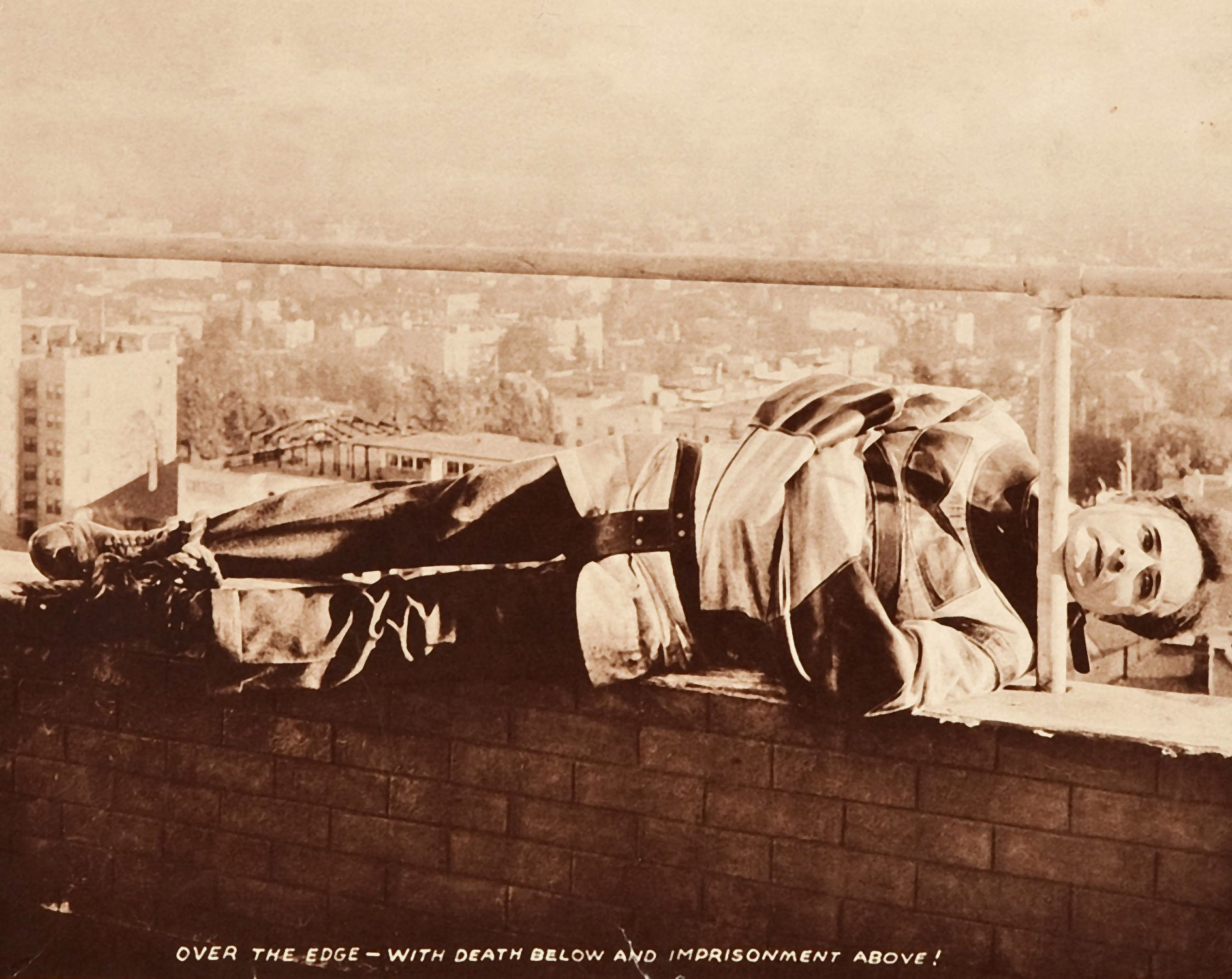
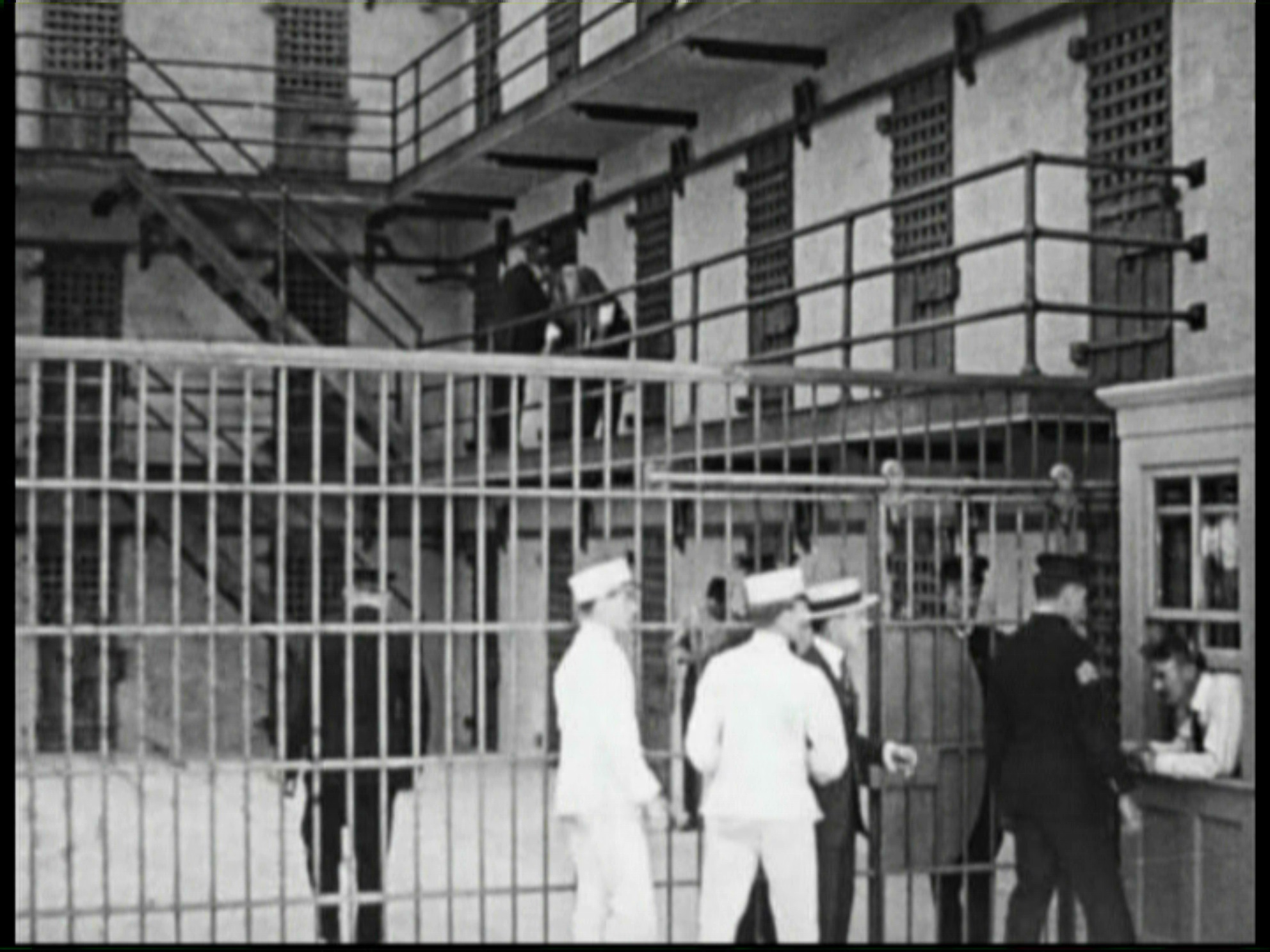
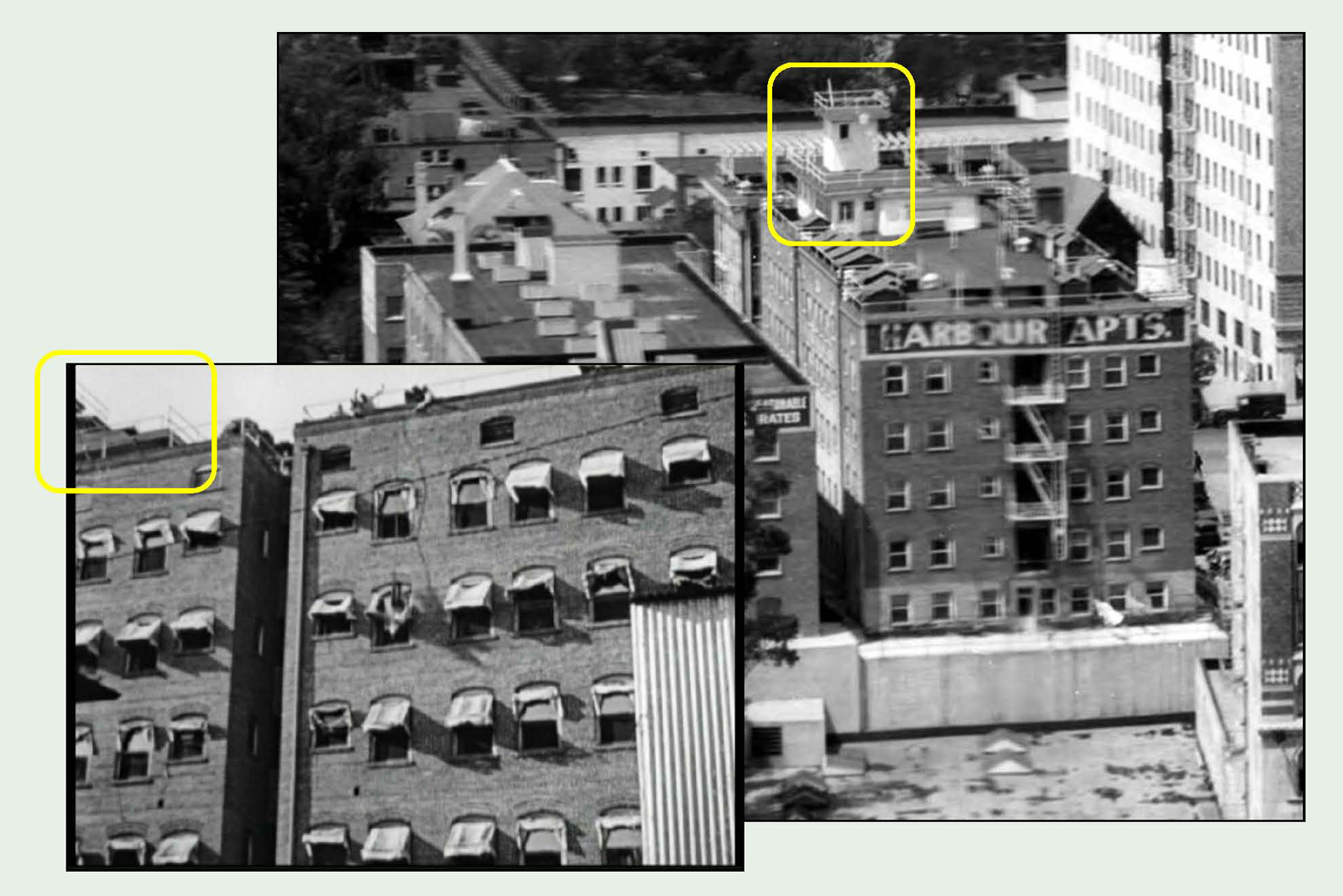
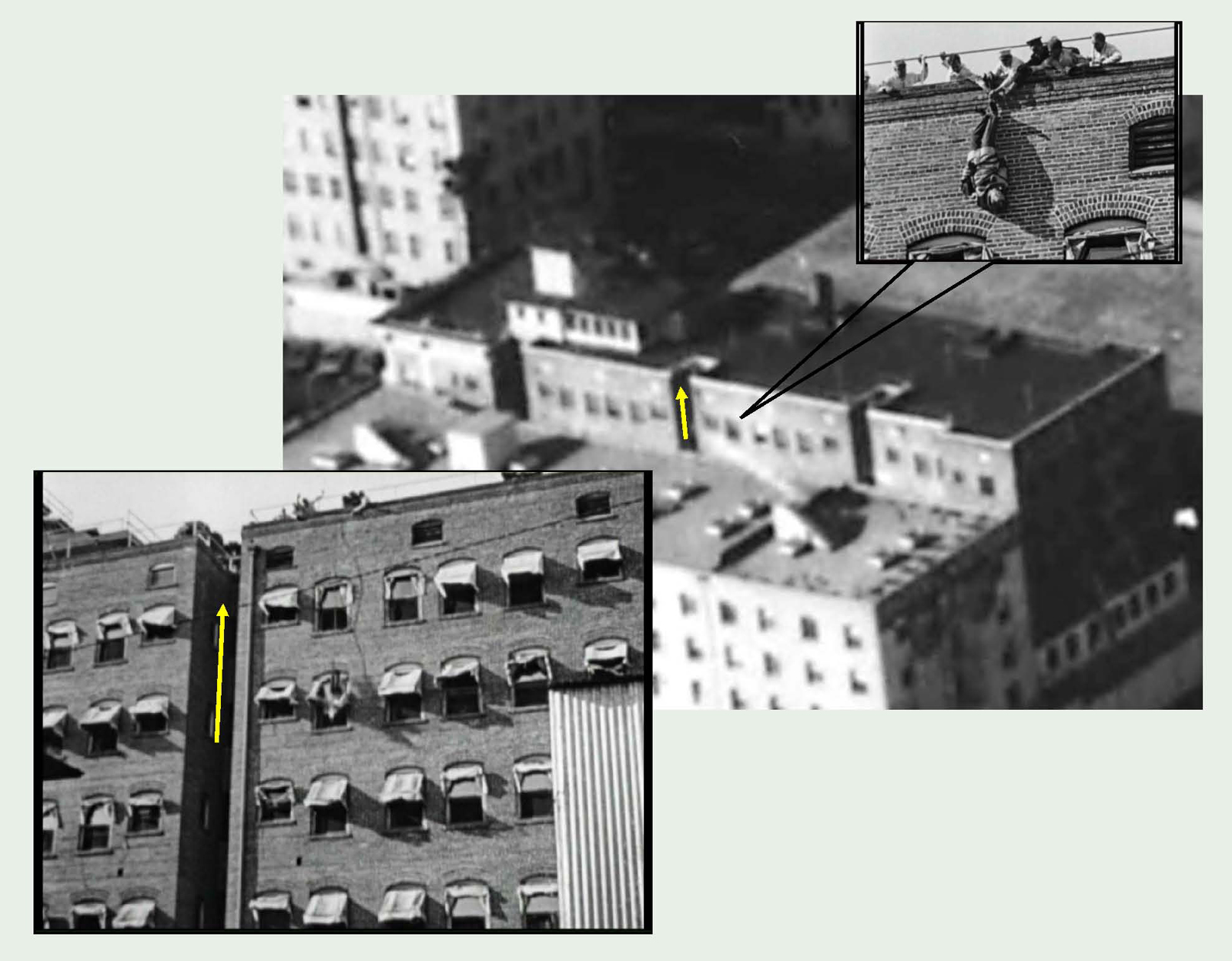
Over the edge – with death below and imprisonment above! Harry Houdini in The Grim Game (1919), taken on the roof of the former Habour Apartments, discussed below.

Grim Game 56After shooting a 15-part serial The Master Mystery, world famous magician and escape artist Harry Houdini made his feature film debut in 1919 with The Grim Game, screening at the San Francisco Silent Film Festival’s special A Day of Silents held at the Castro Theater this December 5.

Billed as a stirring story of love, mystery, and dare-devil adventure, The Grim Game was scripted to maximize opportunities for Houdini to escape from various traps and shackles on screen.

Cops A 03As discussed in my previous post, Buster Keaton dedicated his most famous short film Cops (1922) to Houdini, while crediting Houdini in his autobiography for giving Keaton his first name. Remarkably (could it be just a coincidence?) Keaton staged three scenes from Cops at places where Houdini had filmed previously.  See Houdini – Keaton – The Grim GameCops.

Grim Game 61While The Grim Game is noteworthy in part for a real-life plane crash caught on film (no one was hurt, see my prior post), Houdini’s roof-top escape from a straight-jacket (above) may be the most thrilling moment in the picture. The stunt was GG stuntpreceded by his escape from what appears to be the interior of the Los Angeles County Jail.  (I’ve never seen images inside the jail, Grim Game 62but since they filmed exterior scenes beside the jail (below), and Houdini commonly performed escapes at real jails, it’s reasonable to assume they filmed inside the jail too – a fine example of how cinema often preserves history in real life.  The jail interior (upper right) also looks too elaborate to be merely a set). At left, this view (John Cox) shows Houdini hanging from a studio jail set for a different stunt.

ca

The LA County Jail as it appears in The Grim Game.  Once part of the Civic Center, the jail appears during D. W. Griffith’s Intolerance (1916) and in many other early films (see link here), and stood on Temple across from the former LA County Court House where Houdini posed for publicity photos covered in my prior post.  Photo from Harold Lloyd estate.

Grim Game 66Following his jail escape, the villains next imprison Harry in a mental institution.  There, breaking free and

Harbour Apartments - A Visit to Old Los Angeles.

Harbour Apartments – A Visit to Old Los Angeles.

chased onto the roof, Houdini is re-captured and trussed in a straight-jacket, his ankles tied with rope. Breaking free again, Houdini falls over the edge of the roof, suspended upside down, but escapes the jacket and his captors before the rope breaks.

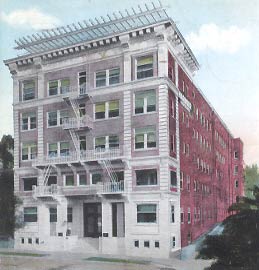
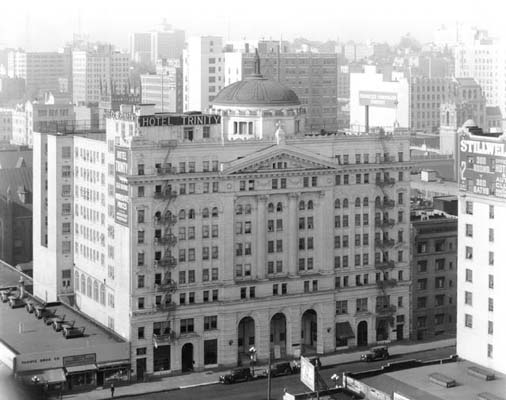
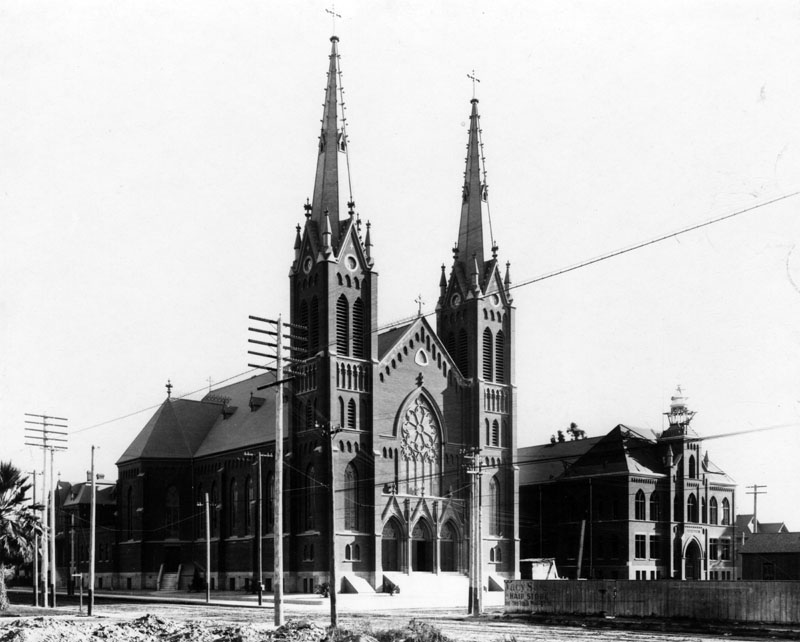
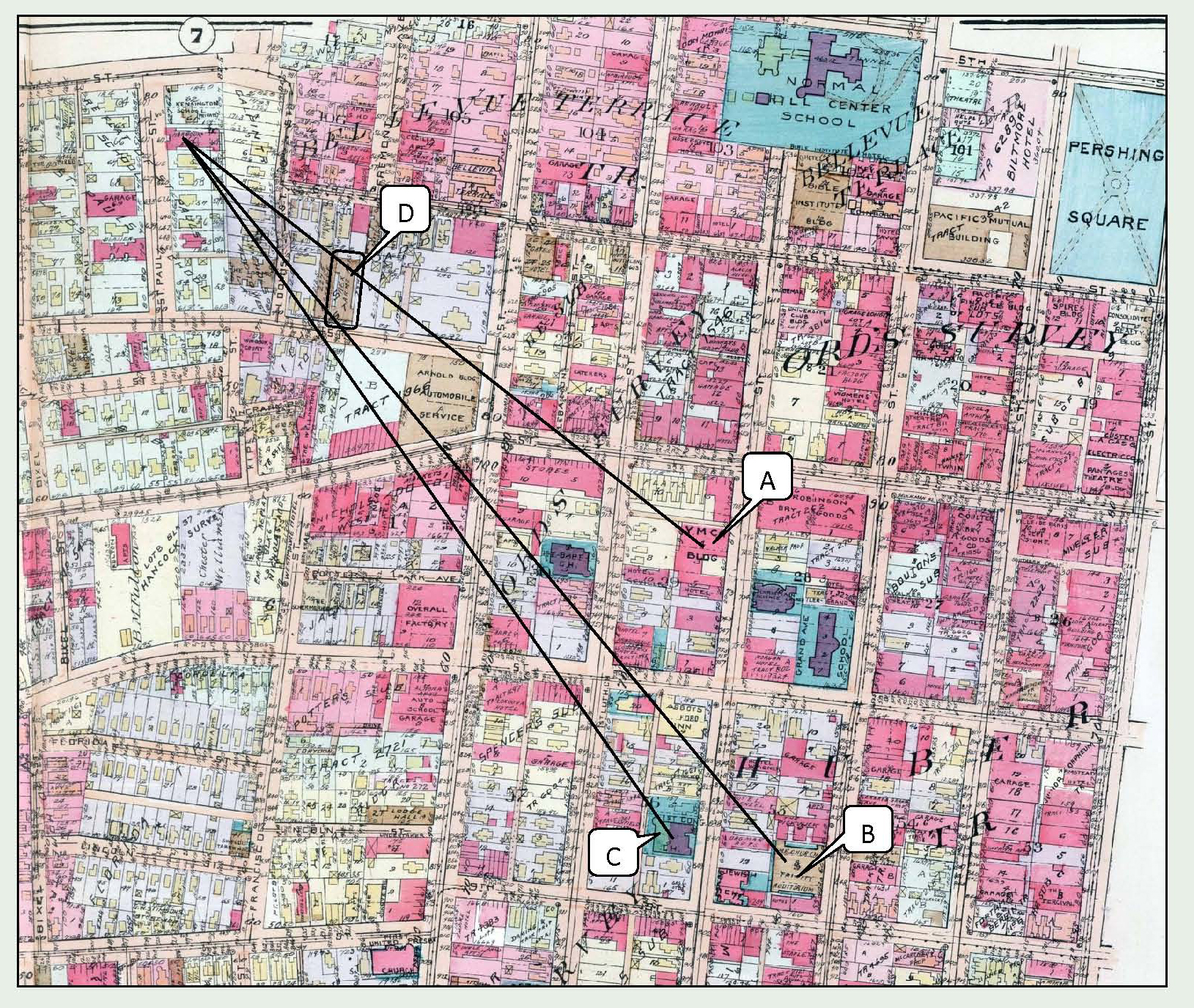
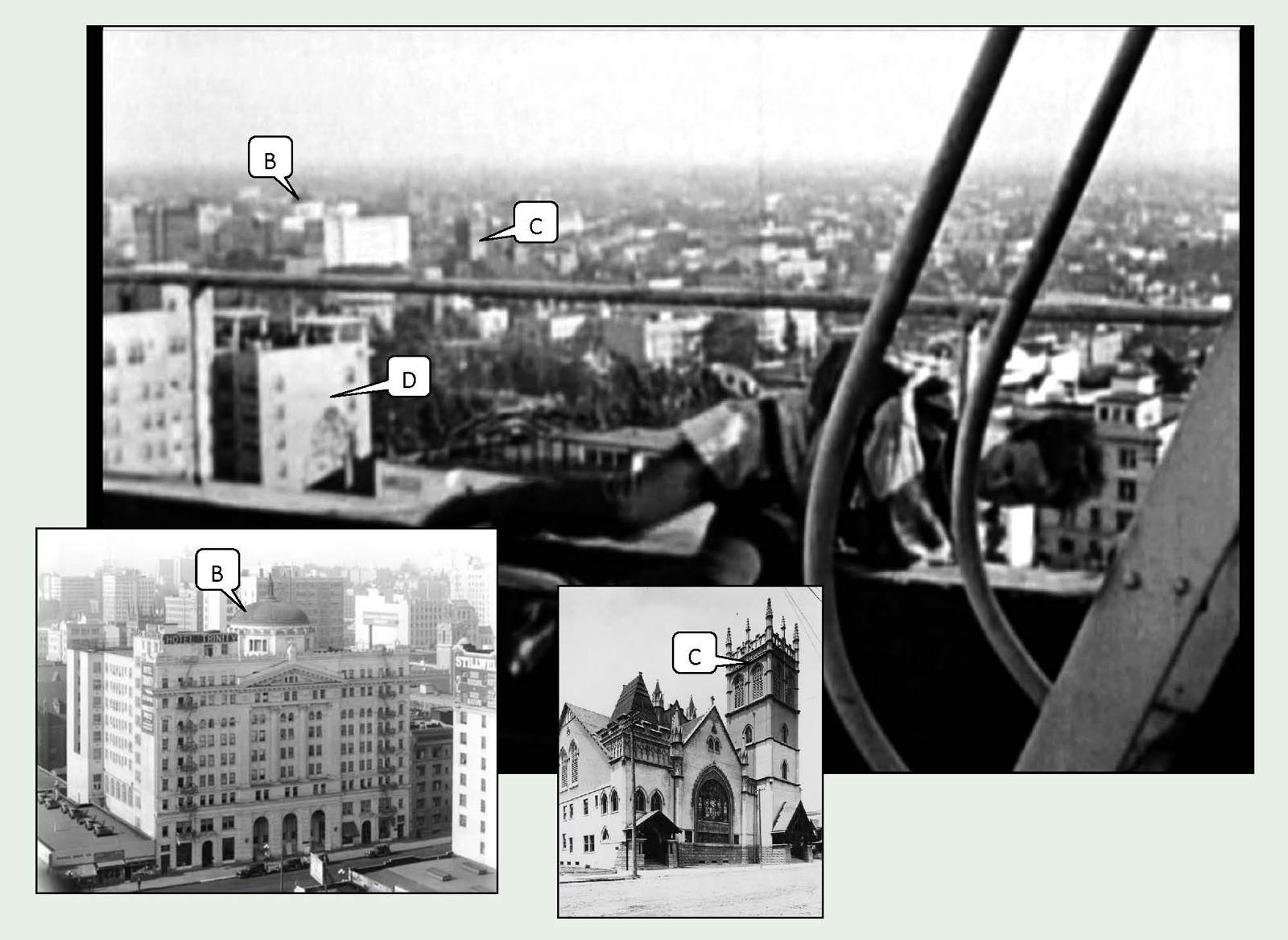
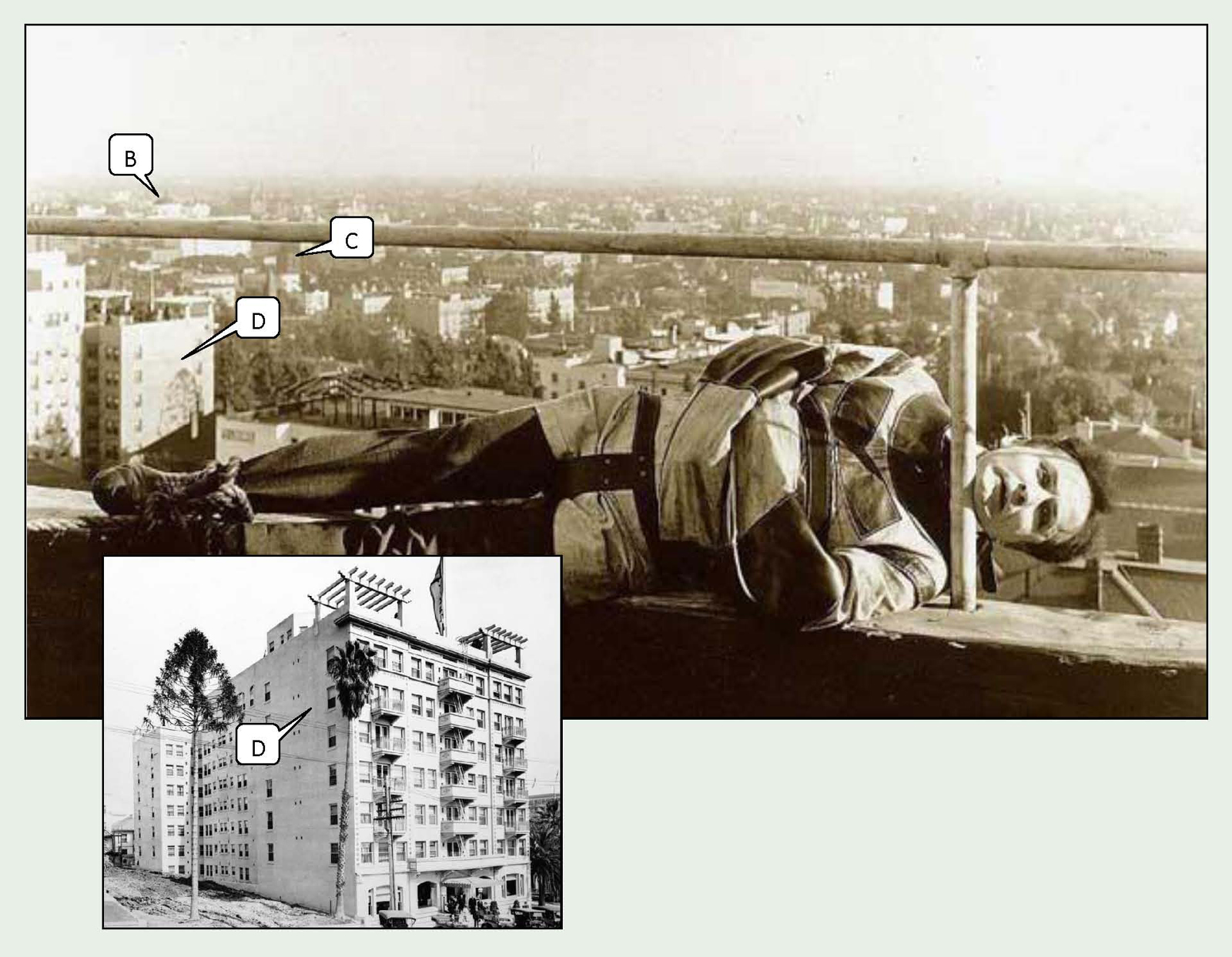
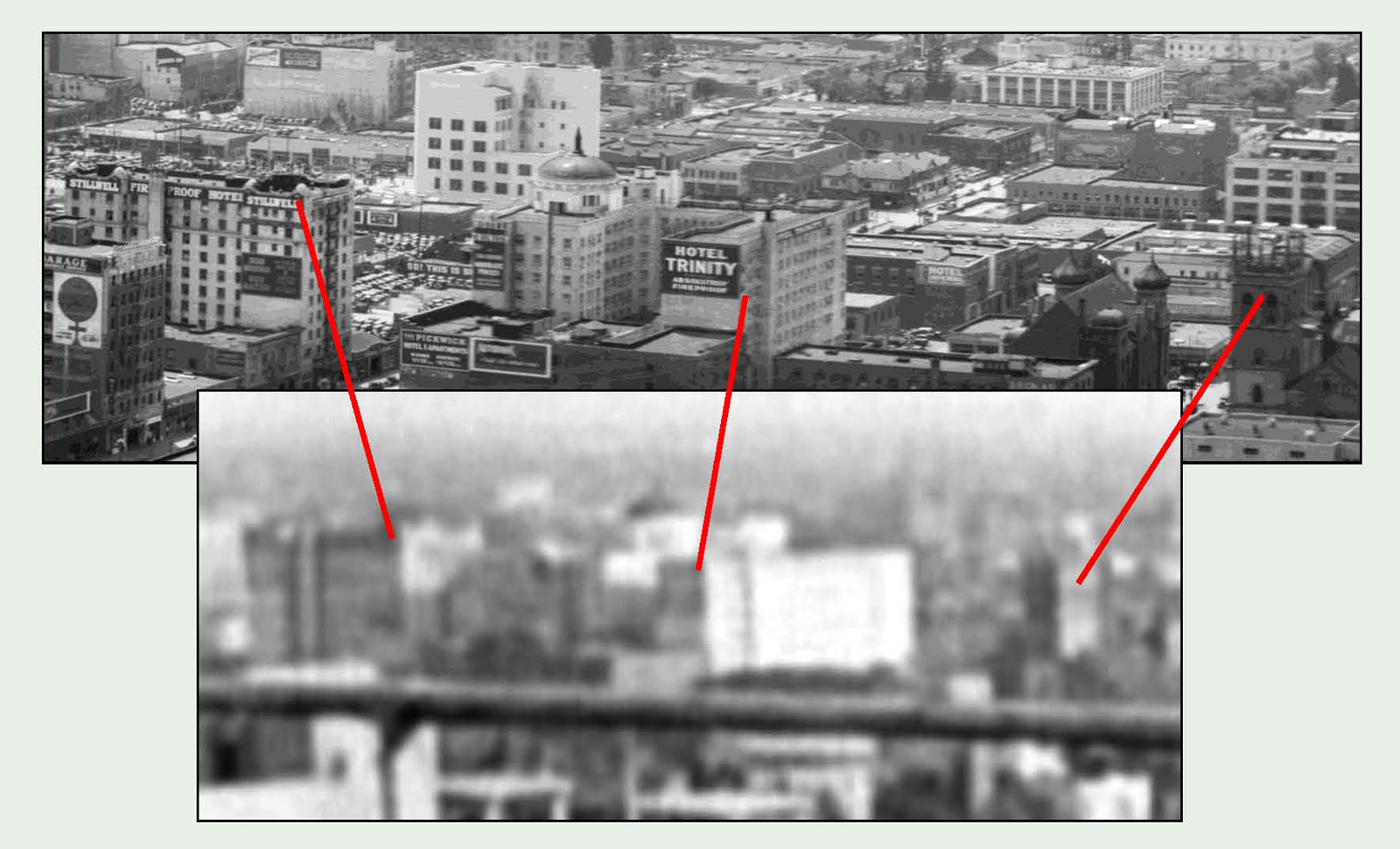
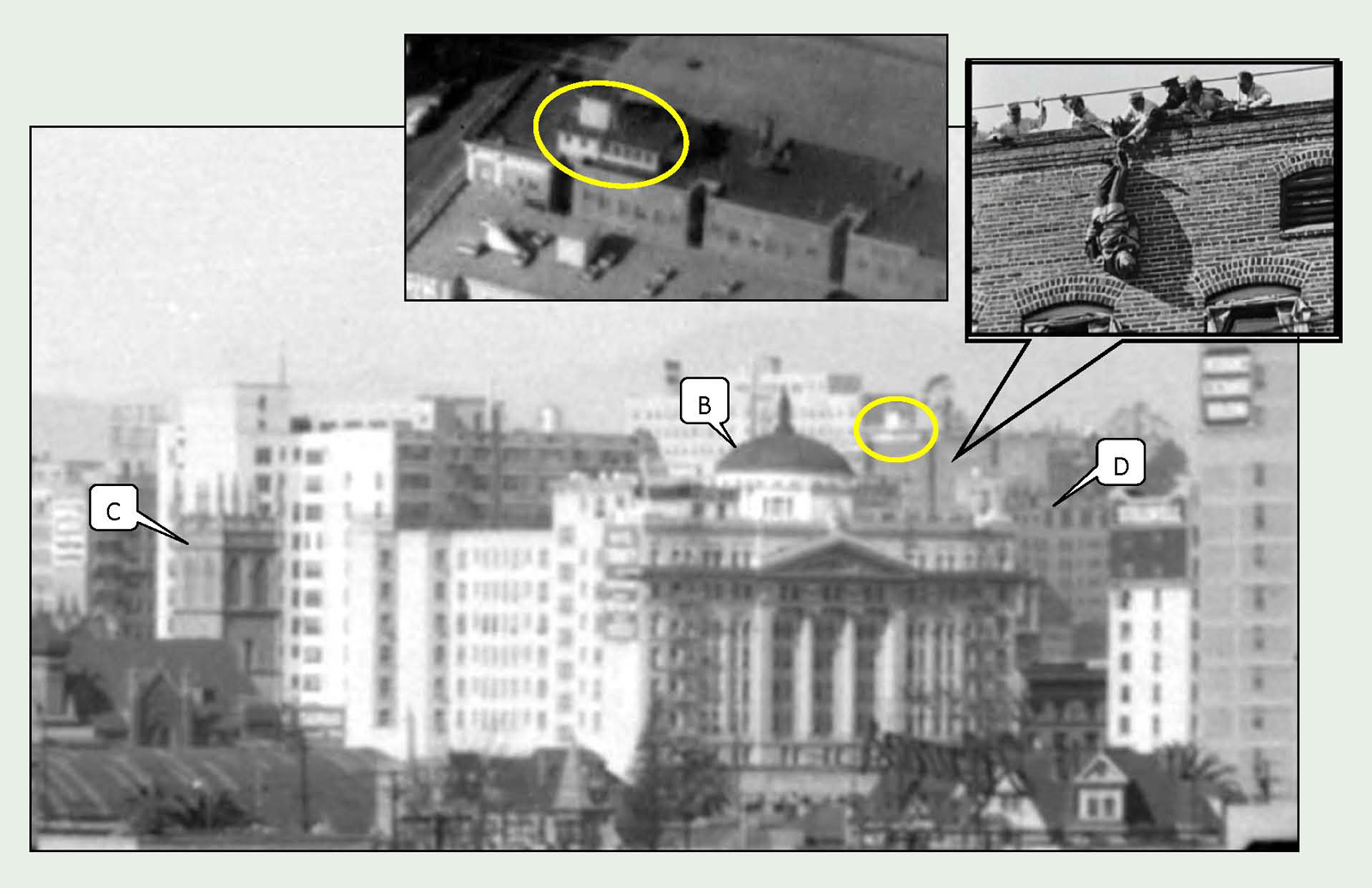
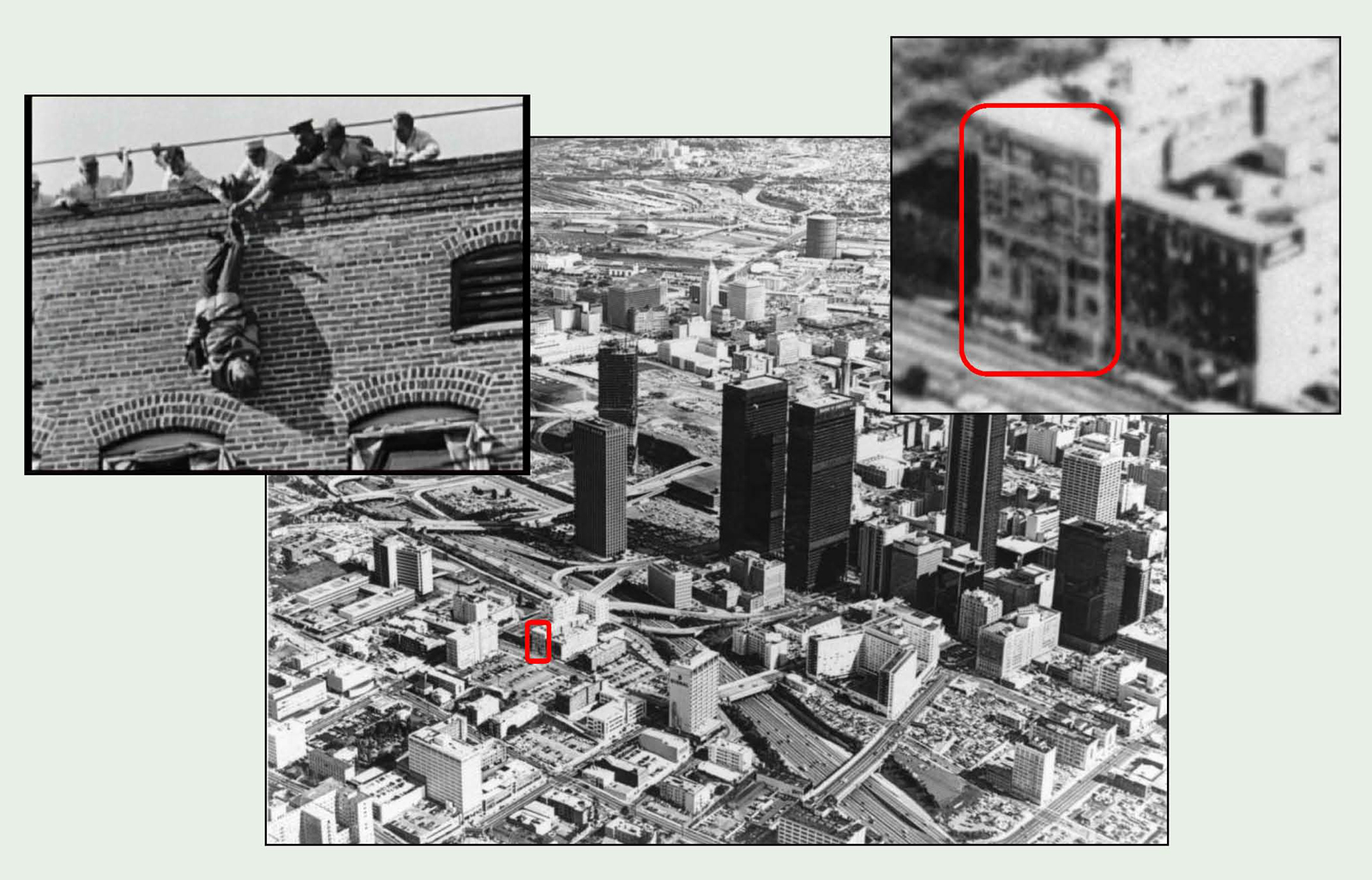
00017448This sequence was filmed on the roof of the now lost Harbour Apartments at 612 St. Paul Street. While the image quality could be better, during the scene I immediately spotted two landmarks nearly aligned with each other, the squat 00076330‘chocolate drop’ dome tower of the extant Hotel Trinity and Auditorium at 851 S. Grand (left, LAPL), and the distinctive twin steeples, now lost, of St. Joseph’s Church at 1200 S. Los Angeles Street (LAPL). By reversing my orientation, and tracing a path The Grim Game and Cops_Page_11NW from the church through the The Grim Game and Cops_Page_14auditorium, I ended up with a narrow range of candidate apartment houses, and quickly spotted the Harbour Apartments in a panoramic photo – USC Digital Library, while also identifying other landmarks (A-D) appearing in the film.Cityscape_Los_Angeles_CA_ca1929

The Harbour Apartments south neighbor was built in 1924, after Houdini filmed. USC Digital Library.

Houdini clings to life over the edge of the Harbour Apartments at 612 St. Paul Street – its southern neighbor, the Hotel Victor at 616 St. Paul, was built in 1924 long after Houdini filmed there. USC Digital Library.

ca

Looking SE this detailed view shows the Trinity Hotel and Auditorium (B) and the lost First Congregational Church (C) once standing at 841 S. Hope Street. LAPL. (D) marks the lost Rex Arms Apartments.

The Rex Arms - now lost. USC Digital Library. Charlie Chaplin and Roscoe Arbuckle filmed The Rounders (1914) in front of this building. See post HERE.

Both images show the west side of the Rex Arms (D) at 945 Orange (later Wilshire) – now lost. USC Digital Library. Charlie Chaplin and Roscoe Arbuckle filmed The Rounders there in 1914 as reported HERE.

Ca

This view shows (A) the YMCA Building, built in 1908, now lost, at 719 S. Hope, along with the Trinity (B) and First Congregational Church (C). USC Digital Library see page 11.

This final SE view reveals at left the north side of the extant Hotel Stillwell. USC Digital Library.

This final SE view reveals, to the left, the north side of the extant Hotel Stillwell that still stands on Grand Ave. across from the extant Trinity, center. The right line leads to the lost First Congregational Church. USC Digital Library.

Ca.

This view looking NW from the extant Graphic Arts Building at 417 E. Pico clearly reveals the Harbour Apartments at back behind the noted landmarks (C), (B), and (D). Huntington Digital Library. The full view of this panoramic photo shows the back of the St. Joseph Church steeples to the left as well.

ca

The face of the Harbour Apartments on St. Paul Street.  Both it and the Hotel Victor next door were demolished in the 1980s.  USC Digital Library.

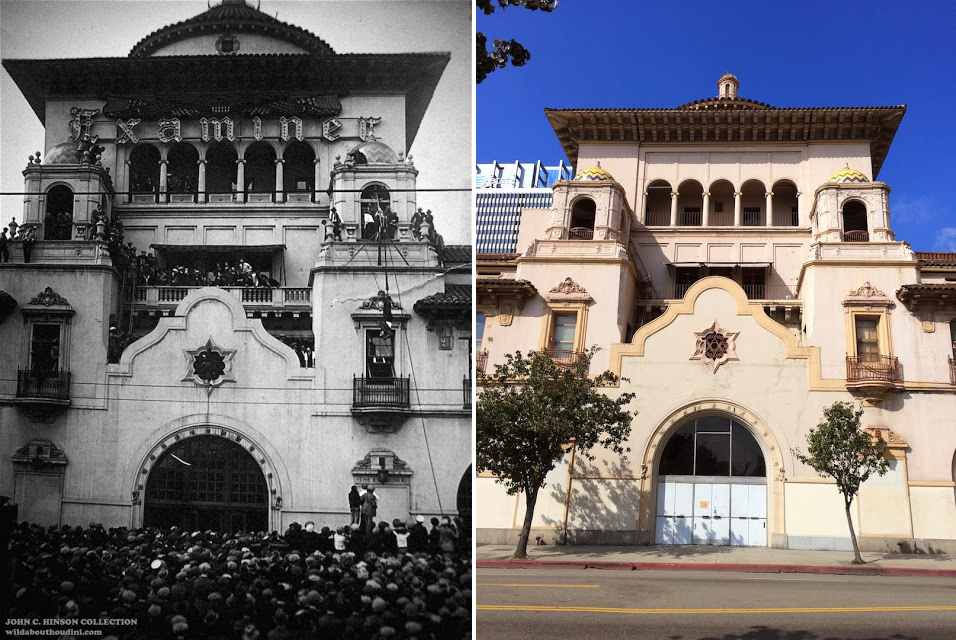
Girl ShyWhile the filming of Houdini’s straight-jacket escape was not likely publicized to avoid crowds of onlookers during the shoot, Houdini staged a similar stunt (where else to maximize publicity?) at the front offices of the Los Angeles Herald Examiner newspaper at Broadway and 11th as shown below. At left, Harold Lloyd raced past these offices during his frantic dash to the altar in Girl Shy (1924).  John Cox reports in his amazing Houdini site that Harry performed his downtown straight-jacket escape below on April 5, 1923.  You can read more about it at John’s story HERE.

The film’s restorer Rick Schmidlin will introduce The Grim Game at The San Francisco Silent Film Festival’s A Day of Silents this coming December 5 at 3:00 p.m. at the Castro Theater, to be accompanied on the piano by Donald Sosin.

The Trinity Hotel appears during Charlie Chaplin’s The Bank (1915) and in Harold Lloyd’s 1919 shorts Bumping Into Broadway and High and Dizzy.  You can read about them filming at the Trinity HERE.

Chaplin beside the Trinity in The Bank.

Chaplin beside the Trinity in The Bank.

For a more complete account about The Grim Game, check out Mary Mallory’s post on the Daily Mirror blogsite.

Looking north up Grand at two surviving buildings visible during The Grime Game, the Trinity Hotel at left, and the Hotel Stillwell.


Posted in Harry Houdini, Los Angeles Historic Core, The Grim Game | Tagged , , , , , , , , , , , | 8 Comments

Houdini – Keaton – The Grim Game – Cops

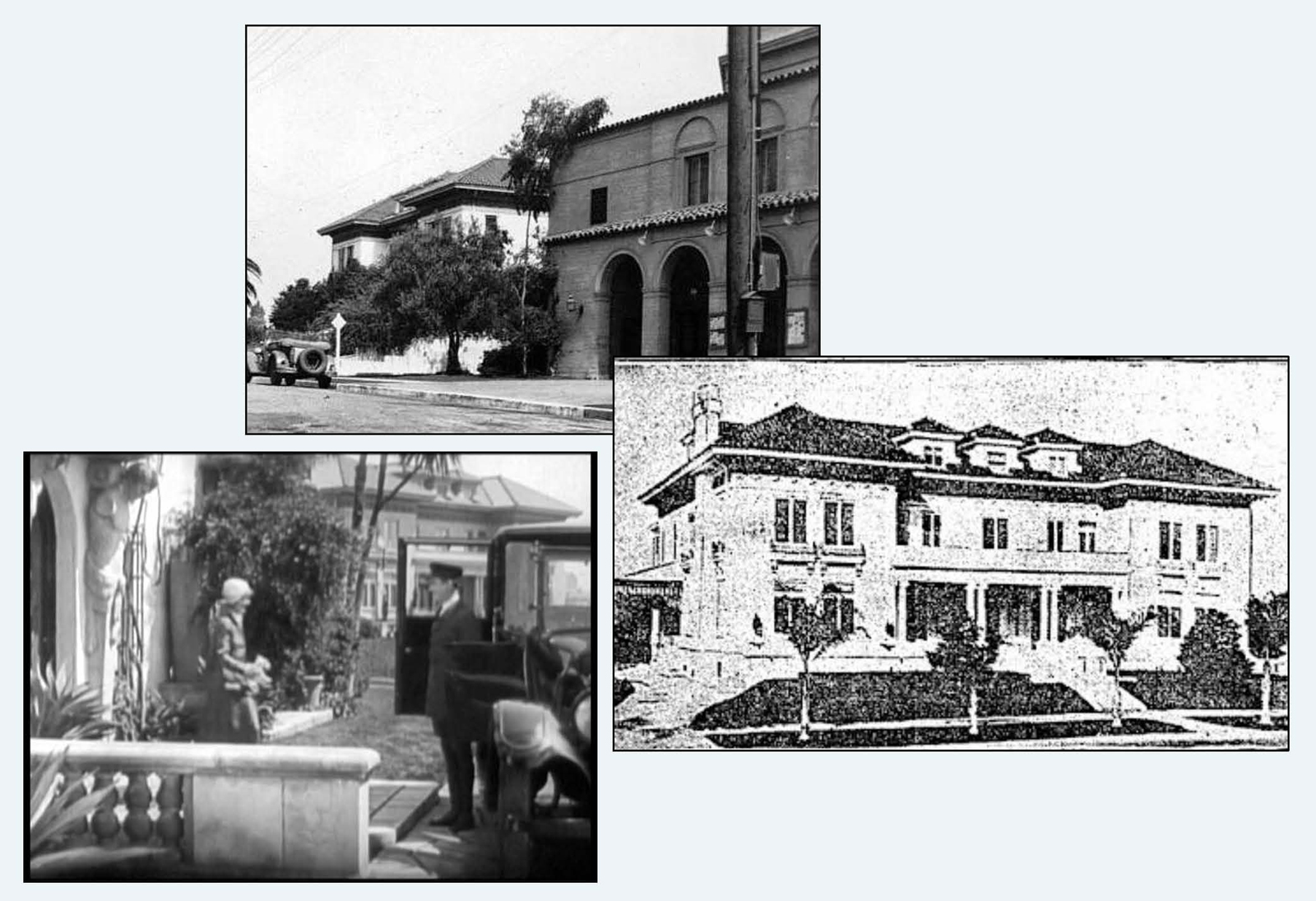
During Cops (1922) Buster spies Big Joe Roberts' dropped wallet in front of the towering Bergstrom estate, once standing at 590 N. Vermont, featured in Harry Houdini's The Grim Game (1919).

During Cops (1922) Buster spies Big Joe Roberts’ dropped wallet in front of the towering Bergstrom estate, once standing at 590 N. Vermont, featured in Harry Houdini’s The Grim Game (1919). You can view a TCM clip of the gate HERE and HERE.

12188894_1060939907263762_1995987923795623768_nBuster Keaton writes in his autobiography that famed magician and escape artist Harry Houdini gave him his nickname after witnessing 6-month old Keaton tumble unhurt down a flight of stairs. While likely more myth than fact,* Harry and Bess Houdini did travel with Buster’s parents during their early medicine show days, and Harry’s daring stunts and escapes certainly echo in Buster’s films. Moreover, Keaton pays homage to Houdini in the opening credits of Buster’s most famous short film, Cops, the only movie in Keaton’s oeuvre to begin with an Cops A 03attributed quote. By remarkable coincidence (or by design?) Keaton’s Cops crossed cinematic paths with Houdini’s debut (non-serialized) feature film, The Grim Game, screening at the San Francisco Silent Film Festival’s special A Day of Silents held at the Castro Theater this December 5.  You can see movie clips featuring the Houdini/Keaton gate at the TCM Website, HERE and HERE.

Houdini and Keaton at the same Bergstrom estate gate at the SE corner of Vermont and Clinton.

Houdini and Keaton at the same Bergstrom estate gate at the SE corner of Vermont and Clinton.

Fresh Paint 19Billed as a stirring story of love, mystery, and dare-devil adventure, The Grim Game was scripted to maximize opportunities for Houdini to escape from various traps and shackles on screen. Many scenes were filmed at the home of noted architect Edwin Bergstrom, later home to theater magnate Alexander Cops pan 02Pantages, before it was razed in 1951 to build a Jewish community center, now home to West Coast University.  Above, Houdini filmed many scenes by the estate’s motorized sliding gate (a comic foil that also trapped Snub Pollard during the early Hal Roach Studio comedy Fresh Paint (1920) upper right).  Buster staged the opening scenes from Cops, where he appropriates Big Joe Roberts’ wallet, by inter-cutting shots filmed beside the estate gate AND at the corner of Sunset and Detroit, over 4 miles away (click to enlarge blended frames at left).  I describe the Sunset filming spot from Cops HERE.

Grim Game 21After searching years for photos of the estate prior to its destruction, The Grim Game supplies priceless views of this lost landmark, placing it in context, while even allowing us (at right) to see inside the gate where Buster filmed.

Houdini also filmed a brief scene at the Cahuenga alley just south of Hollywood Blvd. where Buster filmed this famous stunt from Cops. The tall Palmer Building, undergoing construction behind Buster, still stands on Cosmo Street.

Houdini also filmed a brief scene at the Cahuenga alley just south of Hollywood Blvd. where Buster filmed this famous stunt from Cops. The tall Palmer Building, undergoing construction behind Buster, still stands on Cosmo Street.

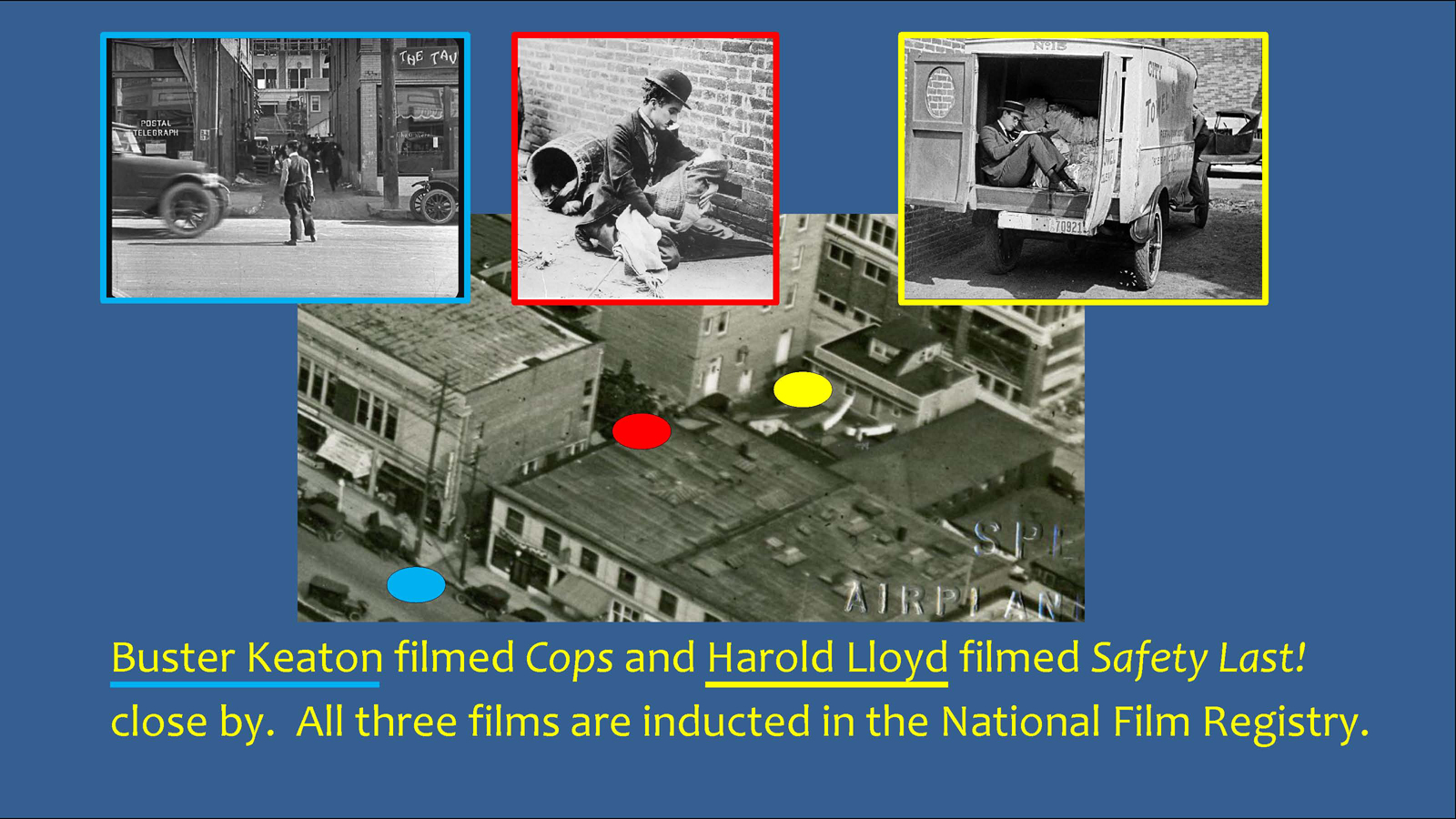
After documenting how Charlie Chaplin filmed The Kid (1921), Buster Keaton filmed Cops, and Harold Lloyd filmed Safety Last! (1923) all at the same East-Cahuenga alley that you can still visit in Hollywood today, I was floored to see that Harry filmed a brief scene there too.  As shown above, Houdini filmed there first!

The Grim Game shows the rickety stairway that once stood at the west alley entrance on Cahuenga, also seen in these Christie comedies All Jazzed Up (1920) at left, and Hubby's Night Out (1917) Cinematek.

The Grim Game shows the rickety stairway that once stood at the west alley entrance on Cahuenga, also seen in these Christie comedies All Jazzed Up (1920) at left, and Hubby’s Night Out (1917) Cinematek.

Looking west towards Cahuenga, these views from Gale Henry's Gaumont Co. short The Detectress (1919) and Keaton's Neighbors (1920) show the back of the rickety stairway, removed before Buster returned to film Cops.

Looking west towards Cahuenga, these views from Gale Henry’s Gaumont Co. short The Detectress (1919) and Keaton’s Neighbors (1920) show the back of the rickety stairway, removed before Buster returned to film Cops.

ca

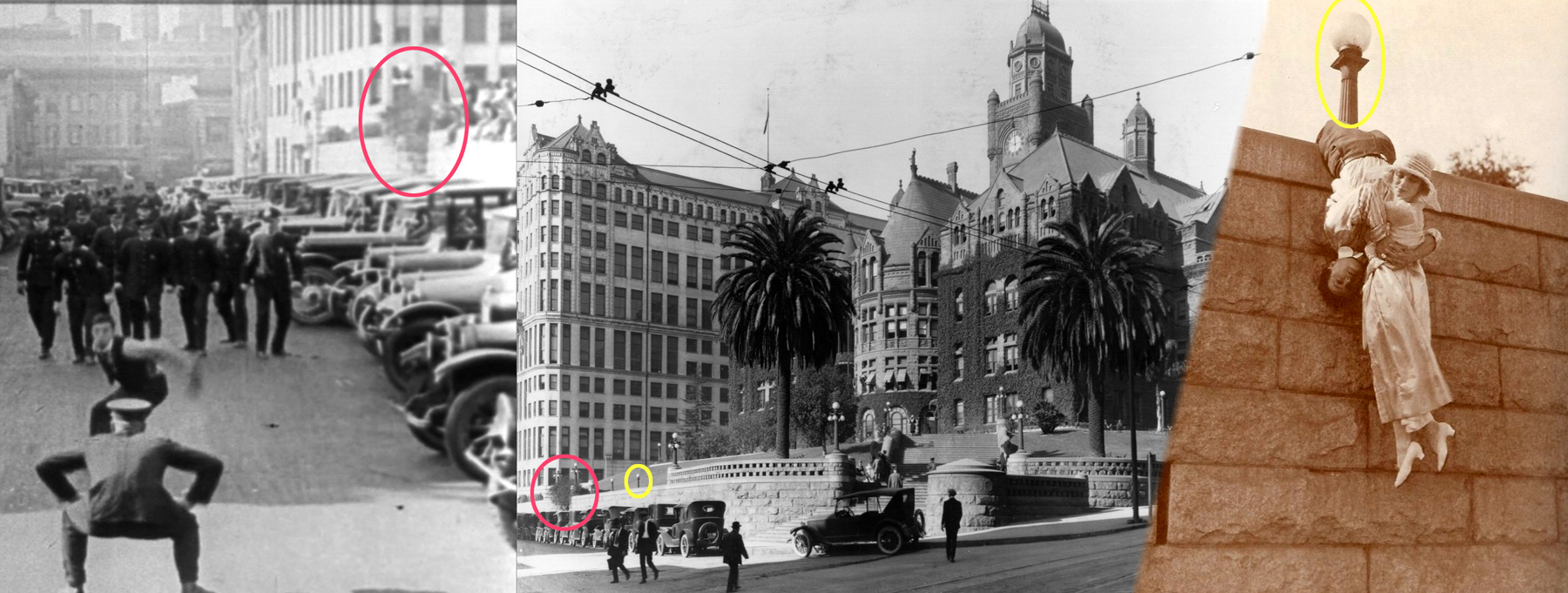
Click to enlarge. Buster filming Cops on New High Street beside the retaining wall of the former LA County Court House, where Houdini posed for stunt photos. LAPL. John Cox.

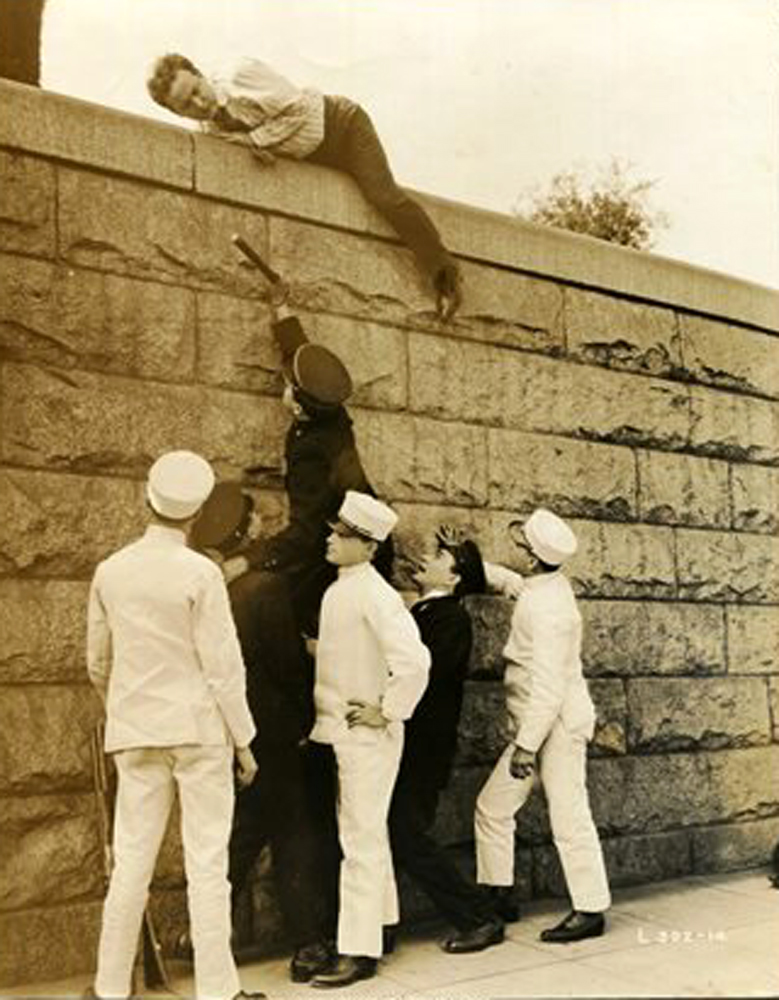
32266666_1_x[Update] Thanks to John Cox, and his wonderfully detailed and entertaining Wild About Houdini blogpost, we now know there was a THIRD filming connection between Keaton’s Cops and Houdini.  Although these scenes do not appear in the surviving cut of The Grim Game, John provided me with publicity photos of Houdini staged along the New High Street retaining wall of the former Los Angeles County Courthouse – the same street where a gang of cops sneak up behind Buster in Cops.  (As I explain in my next post, Houdini filmed at the LA County Jail, on Temple Street across from the court.) The red oval above marks the street level tunnel entrance to the court house, Doug on wallframed by vegetation, while Houdini posed with co-star Ann Forest along the wall beside one of the decorative lamps (yellow oval above).  At right, Doug Fairbanks filmed a scene from The Matrimaniac (1916) atop this same distinctive retaining wall.

Houdini’s production received tremendous advance publicity when two airplanes crashed mid-flight while a stunt man was filmed transferring between the planes. Fortunately no one was hurt, but the accident, captured on camera, was a publicist’s dream, and Houdini himself was later touted as being the stuntman who survived the crash.

The much publicized mid-air transfer from The Grim Game. LAPL.

The much publicized mid-air transfer from The Grim Game. LAPL.

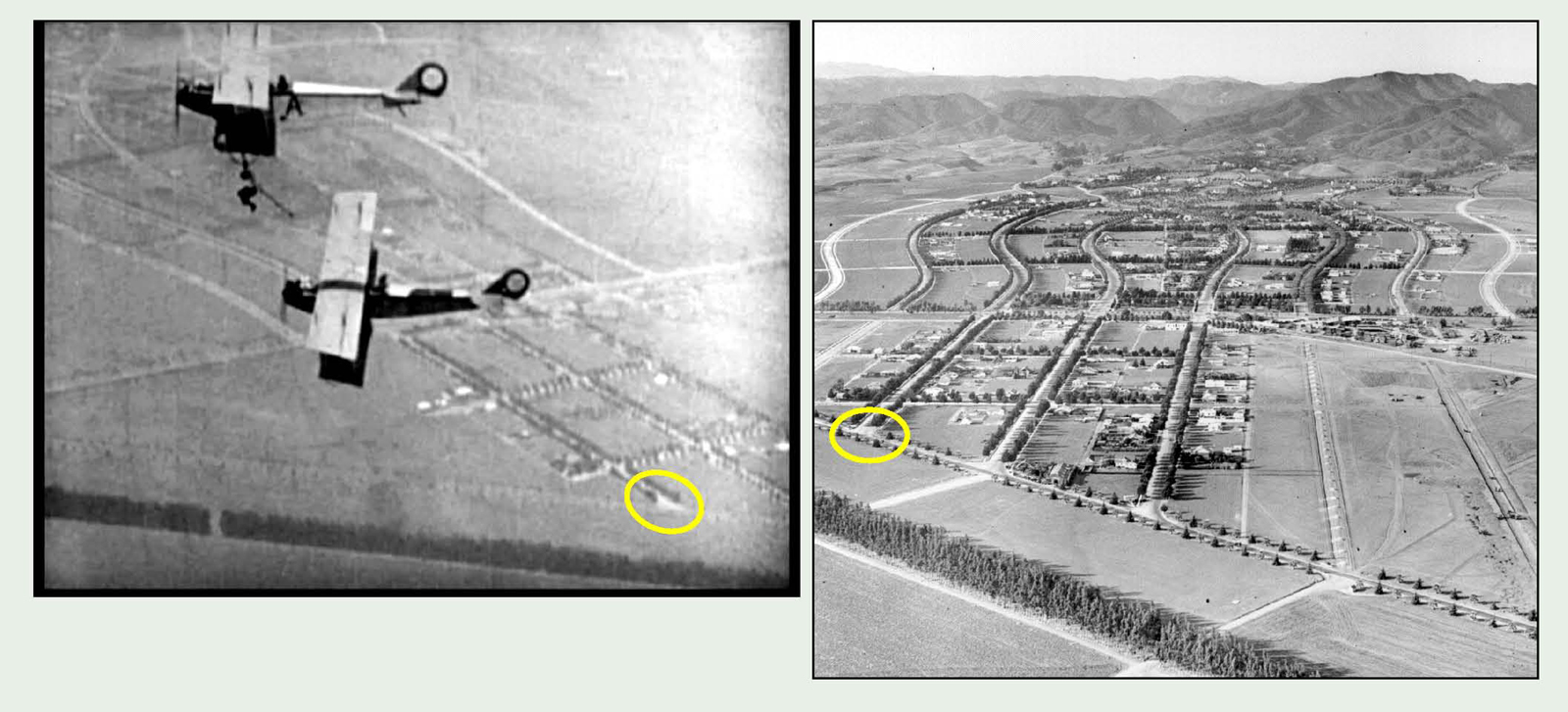
Scarecrow 009Much of Los Angeles between Hollywood and the coast was undeveloped in 1919 during the time of filming. The above shot of the mid-air transfer reveals early Beverly Hills in the background, the oval marks the corner of Wilshire and Rodeo Drive.  Buster filmed this scene (left) from The Scarecrow (1920) at 618 Beverly Drive towards the middle of the aerial photo above.

81422fbe1521e4270b9e9d2312ef743a

Harry visits the Comique Studio – with Roscoe Arbuckle, Al St. John, and Buster.

The Grim Game was nearly lost forever, but thanks to the restoration efforts of Rick Schmidlin, in association the New York University Libraries, as sponsored by the Turner Classic Movie Channel, we can witness once again the magic of Houdini on film this coming December 5 at 3:00 p.m. at the Castro Theater. Mr. Schmidlin will introduce the screening, to be accompanied by Donald Sosin.

My following post shows the Los Angeles Historic Core buildings appearing in The Grim Game, including Houdini’s thrilling straight-jacket escape from the roof of the former Harbour Apartments.

*Keaton biographer Marion Meade writes contemporary newspaper accounts show actor and family friend George Pardey was credited in 1904 with giving Buster the name, and that references to Houdini as the source did not appear until years later. The Houdinis and Buster’s parents Myra and Joe were friends – Meade writes Joe treated Harry as a younger brother, affectionately calling him “Boots.”

For a more complete account about The Grim Game, check out Mary Mallory’s post on the Daily Mirror blogsite.

The TCM website has two clips showing the former Houdini/Keaton gate at 590 N. Vermont.   You can access them HERE and HERE.

590 N. Vermont, former site of the Bergstrom estate.


Posted in Buster Keaton, Cops, Harry Houdini, The Grim Game | Tagged , , , , , , , , , , , | 21 Comments

Keaton – Langdon – Lloyd on Larchmont – Ebell Club Author Talk

Larry Fine in Hoi Poloi (1935), Harold Lloyd and family in Hot Water (1924), and Harry Langdon in His Marriage Wow (1926), a panorama at 1st and Larchmont. The home at back still stands, see further appearance below.

Larry Fine in Pop Goes the Easel (1935), Harold Lloyd and family in Hot Water (1924), and Harry Langdon in His Marriage Wow (1925), a panorama at 1st and Larchmont. The home at back still stands, see directly below.

Poodles Hanneford in Better Behave (1928) at 1st and Gower.

Poodles Hanneford in Better Behave (1928) at 1st and Gower.

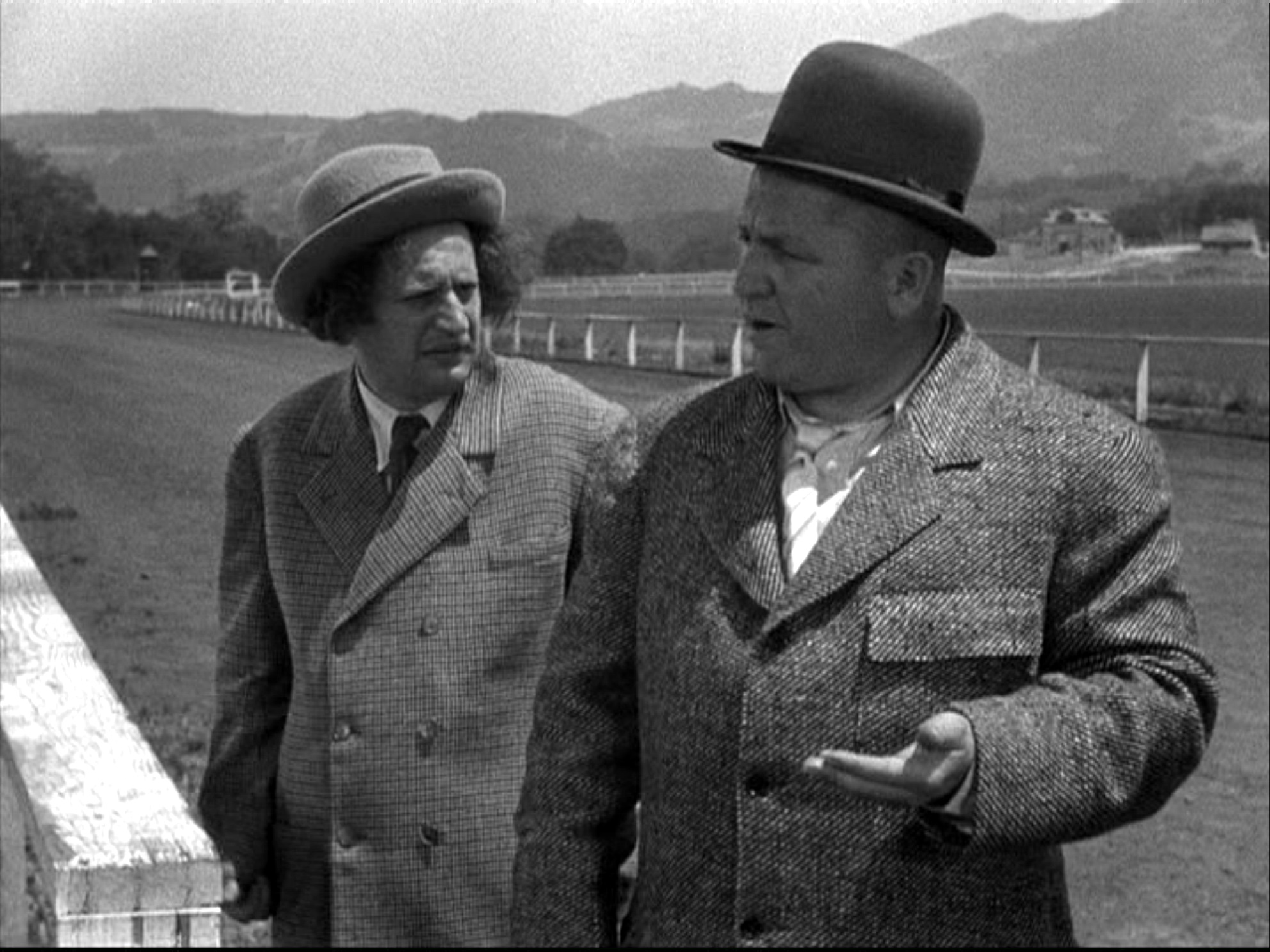
Developed along a street car line (always ripe for slapstick antics), Larchmont Boulevard has been a popular movie location for nearly 100 years.  Harold Lloyd filmed there as early as 1917.  During my luncheon talk at the Ebell Club on Monday, November 16, I will provide a multi-media tour of how the great silent comedians filmed their classic movies on the streets of Hollywood, focusing both on Larchmont where Buster Keaton, Harry Langdon, and even the Three Stooges once filmed, and Fremont Place, where Charlie Chaplin and others filmed just steps from the Ebell Club itself.

Harry Langdon in Saturday Afternoon (1926) at 221 S. Larchmont.

Harry Langdon in Saturday Afternoon (1926) at 221 S. Larchmont. (C) Google.

The “yellow car” Los Angeles Railway Line No. 3 ran from Melrose at Larchmont to downtown.  Since Larchmont was quite wide, the trolley power line poles were perilously installed down the middle of the street, a tempting target for comedians.  Above, Harry Langdon survives crashing sideways into one of these poles.

Harold Lloyd and Snub Pollard in Lonesome Luke Messenger (1917).

Click to enlarge – Harold Lloyd and Snub Pollard in Lonesome Luke Messenger (1917).

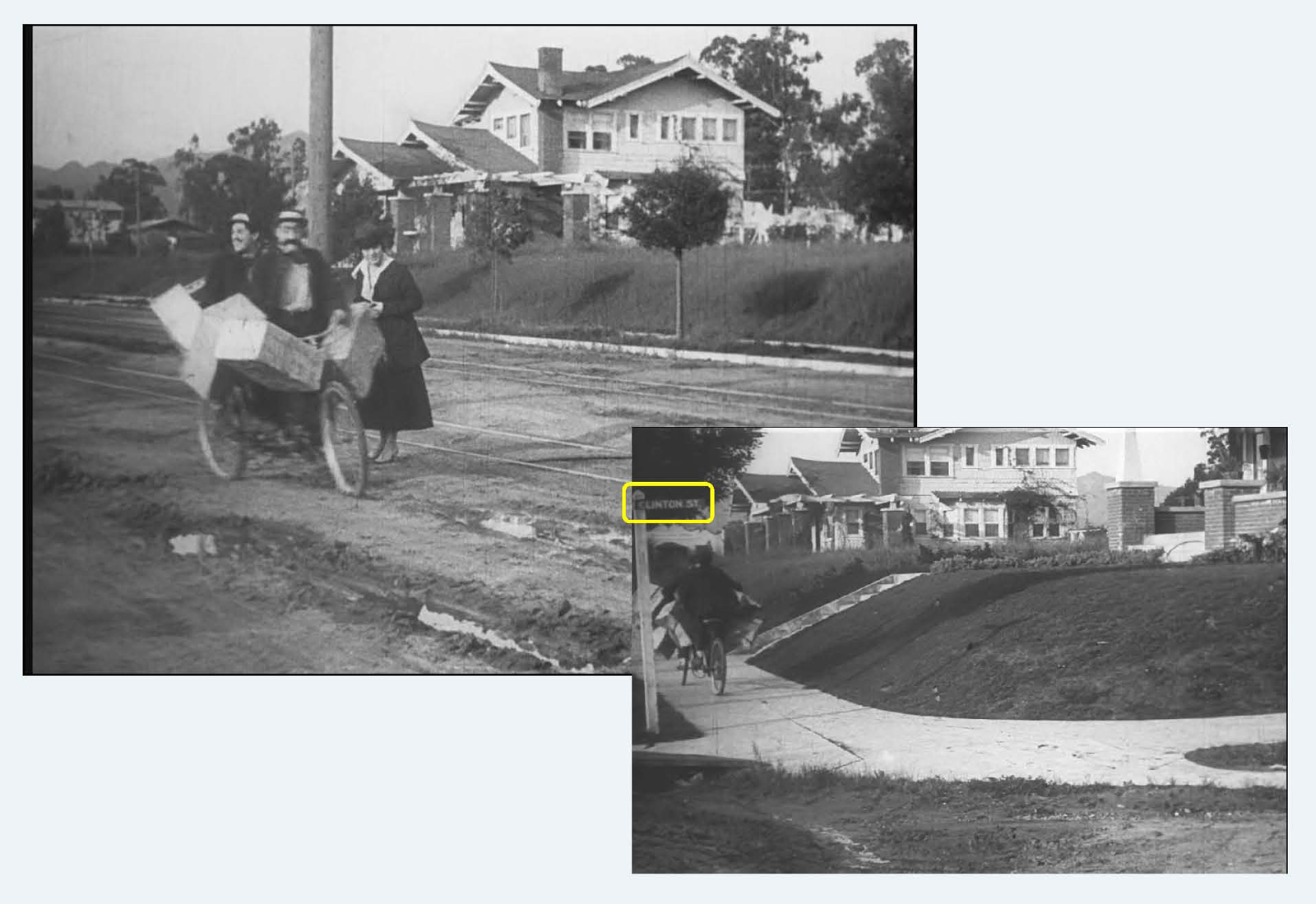
The Larchmont commercial block between Beverly and 1st was an attractive setting for early movies.  Yet, as shown above, Harold Lloyd filmed long before commercial development began in 1921. This scene from February or March of 1917 shows the homes at the NE corner of Clinton and Larchmont (see street sign), a block south of Melrose.  The corner today is unrecognizable.

From The Red Kimona, this view from the porch of 28 Fremont Place, still standing, shows the former home at 31 Fremont Place, once adjacent to the Ebell.

From The Red Kimona (1925), looking east from the porch of 53 Fremont Place, still standing, towards the Aronson mansion at 31 Fremont Place, now lost, once adjacent to the Ebell.  The upper image looks west along 8th Street from the Ebell towards the former Aronson home. Fremont Place blogspot.

Above, one of several early movies filmed at Fremont Place, adjacent to the Ebell Club on Wilshire.  Several grand mansions, now lost, are preserved in early cinema.  Below, Harold returned to Larchmont nine years later to film For Heaven’s Sake on the main commercial block.  Buster Keaton and Harry Langdon filmed here as well.

For Heaven's Sake (1926).

Harold herds a group of drunks onto a double-decker bus in For Heaven’s Sake (1926) at 113 N. Larchmont.

Buster at 148 N. Larchmont

Buster at 148 N. Larchmont

If you live in the Los Angeles area, I hope you’ll consider attending my talk and book-signing at the Ebell of Los Angeles this coming Monday November 16.

Ebell of Los Angeles: 743 South Lucerne Boulevard, Los Angeles 90005 323-931-1277.

HAROLD LLOYD images and the names of Mr. Lloyd’s films are all trademarks and/or service marks of Harold Lloyd Entertainment Inc. Images and movie frame images reproduced courtesy of The Harold Lloyd Trust and Harold Lloyd Entertainment Inc.

A prior post about Harry Langdon on Larchmont

Bobby Cress’s Dear Old Hollywood Blogspot showing how Larchmont appeared in Bob Hope’s 1967 movie Eight on the Lam.

Posted in Harold Lloyd, Harry Langdon | Tagged , , , , , , , , , , , , , , , , , , , | 1 Comment

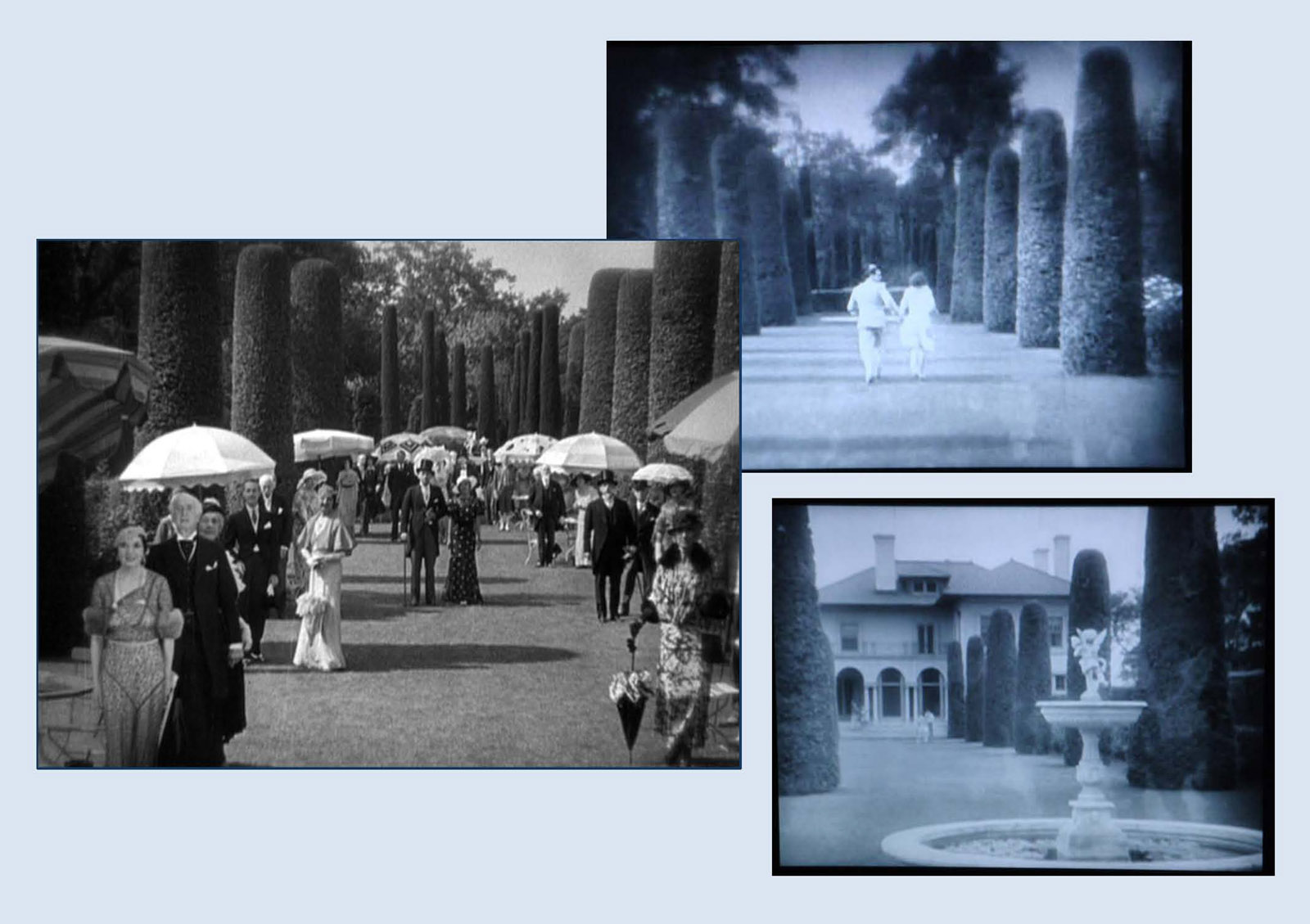
Ginger, Buster, and Groucho, Lon Chaney and Loretta Young, all at the Jewett Estate

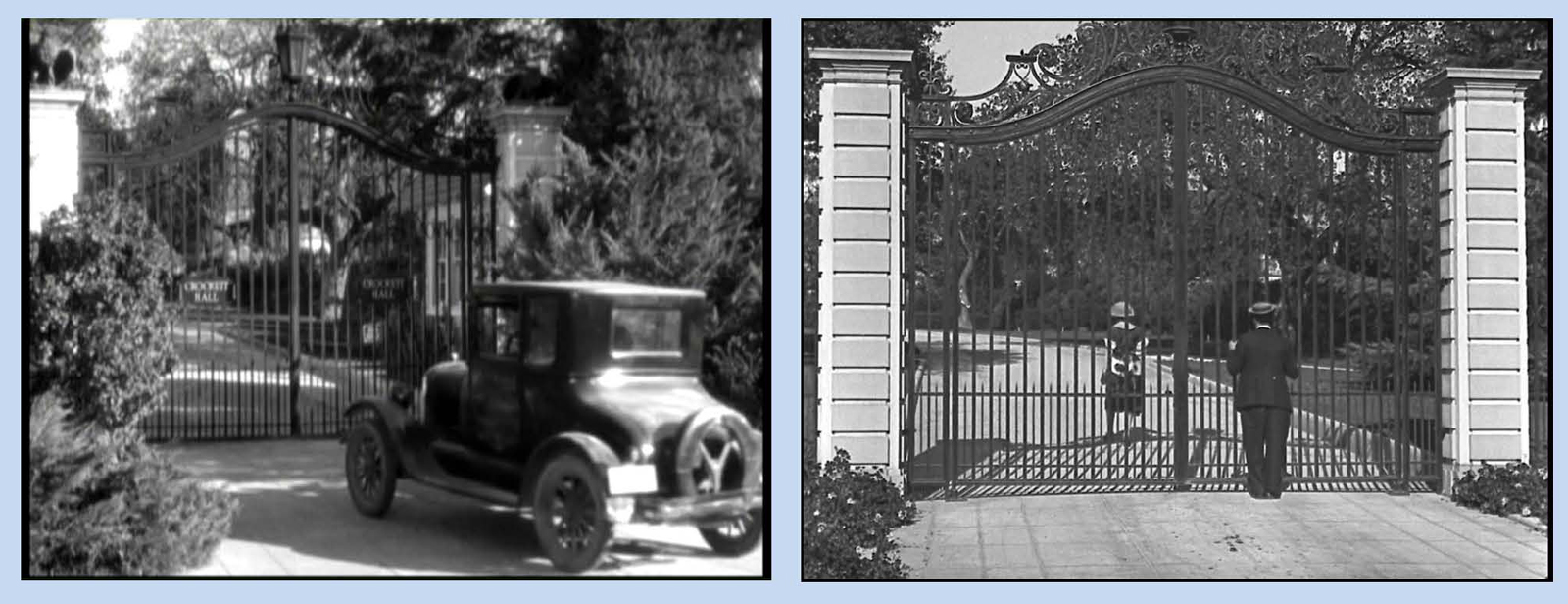
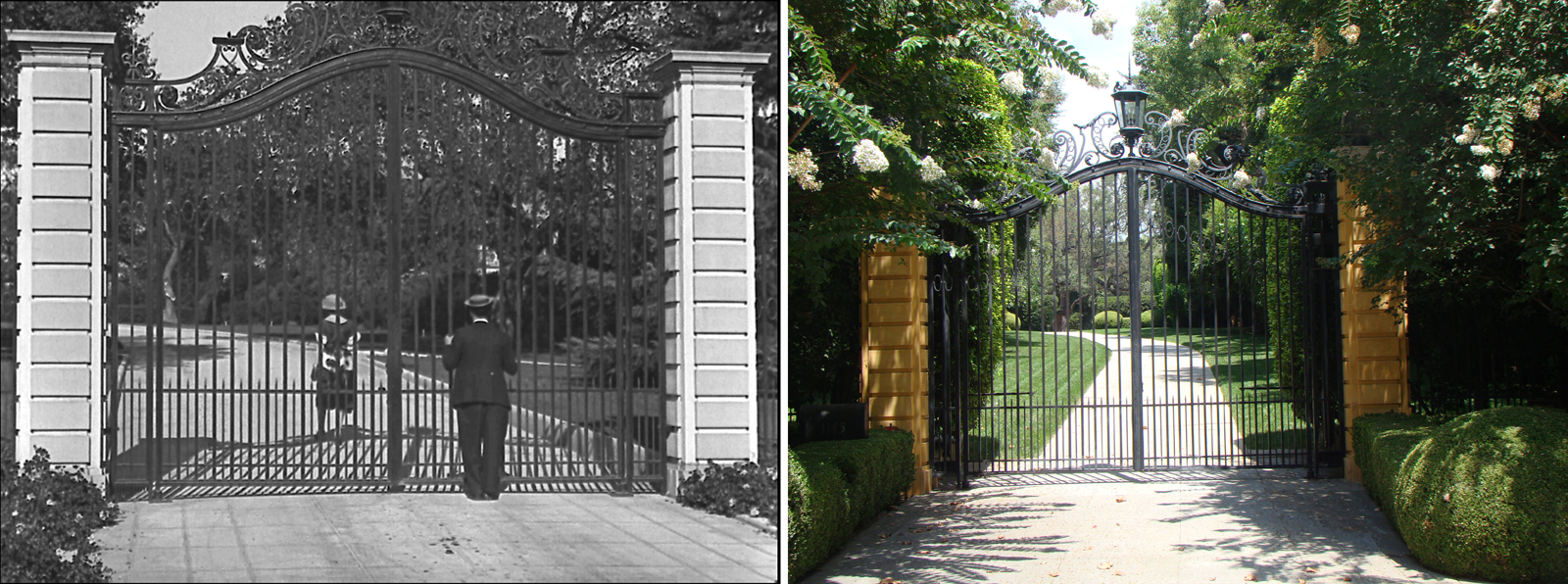
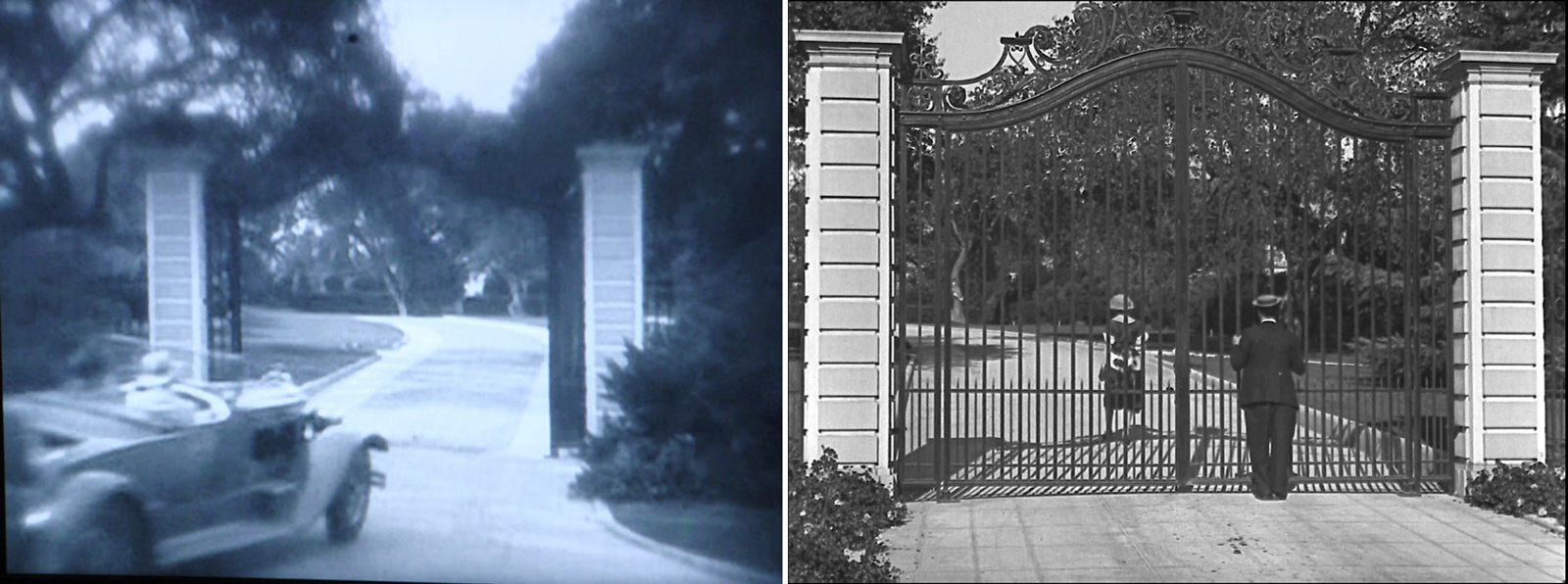
Matching gates of the Jewett Estate in Finishing School and Cops

Matching views of the Jewett Estate gate in Finishing School and Cops

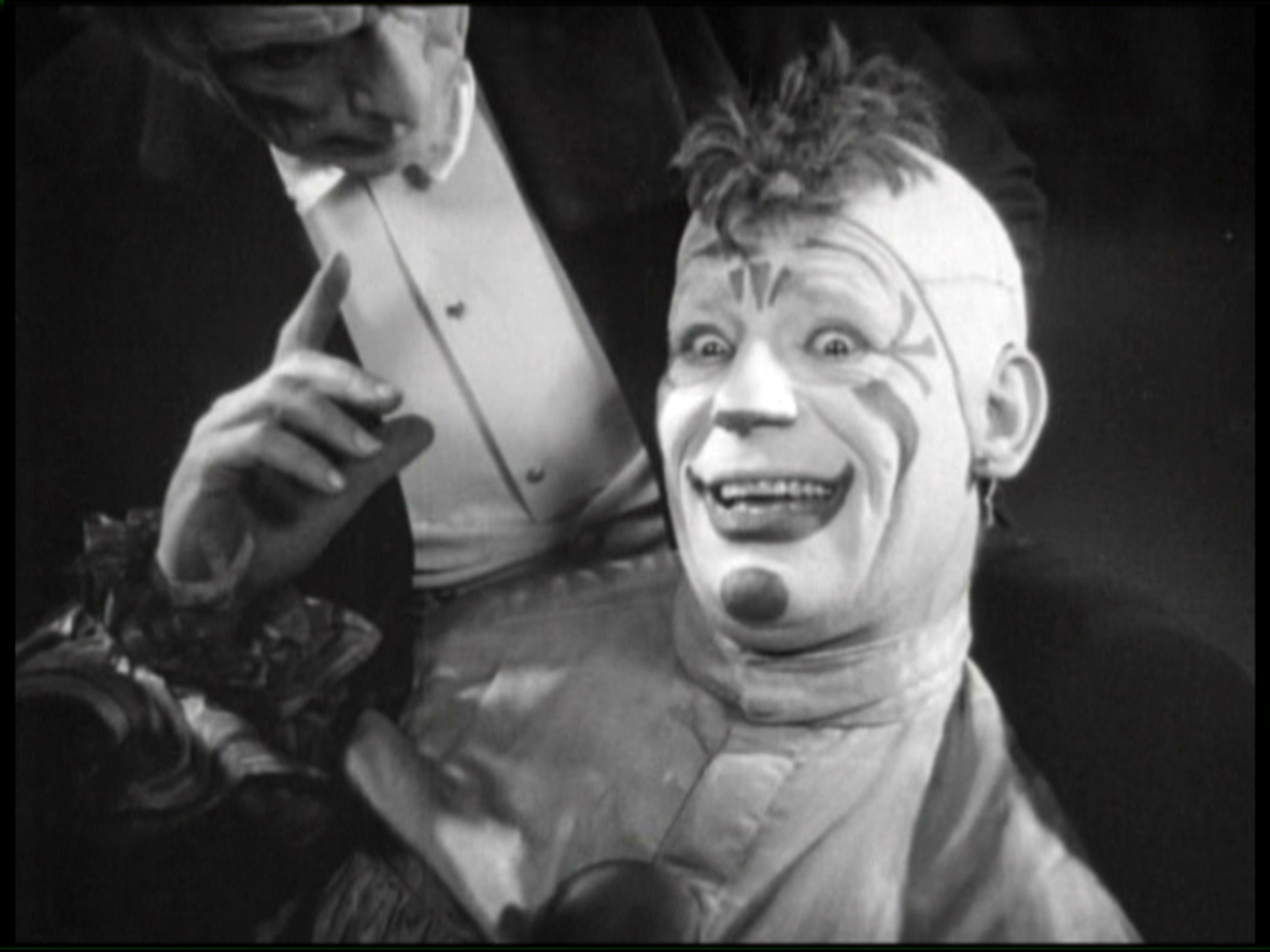
The great Lon Chaney

The great Lon Chaney

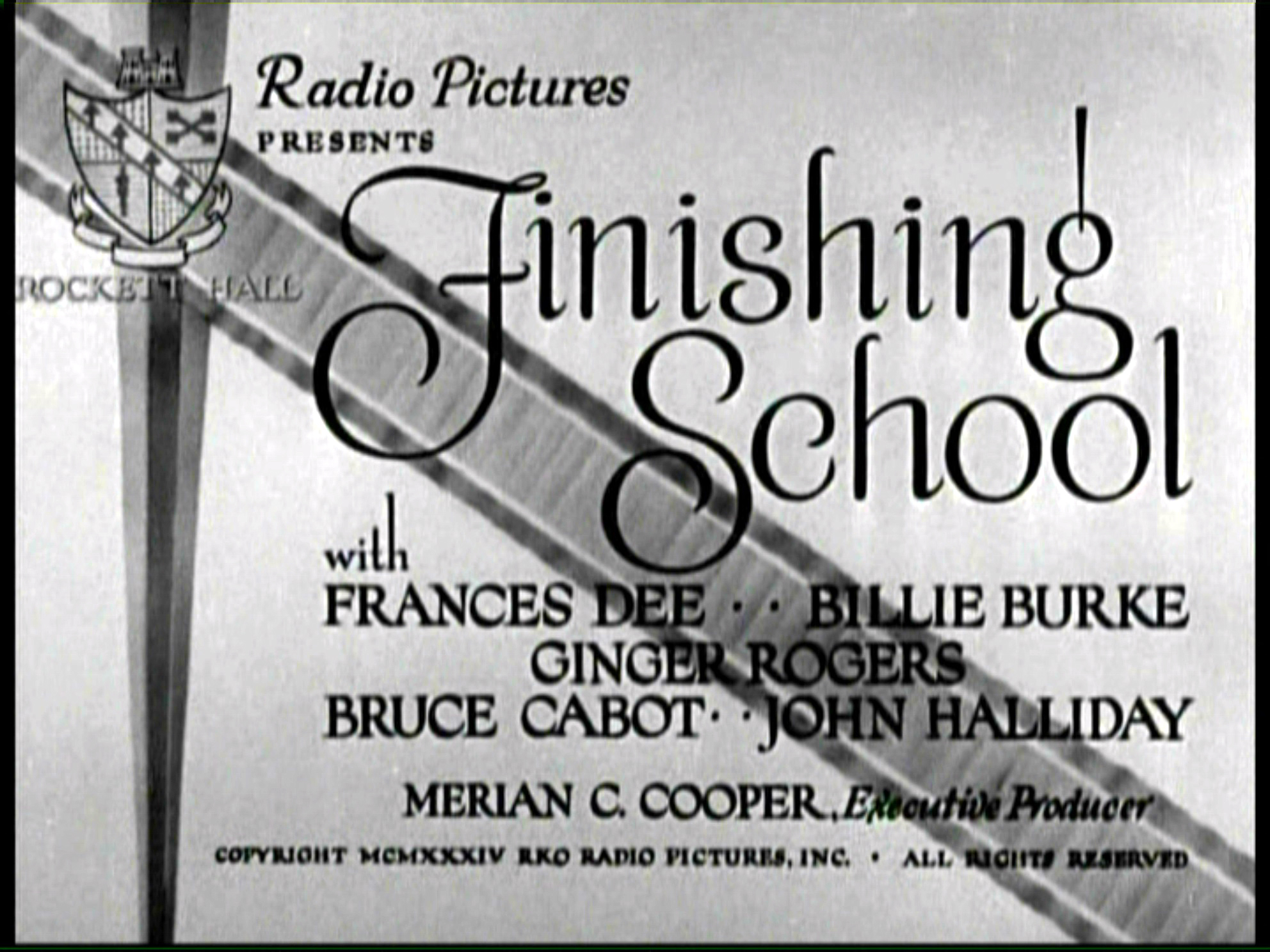
As reported in a recent post, Buster Keaton in Cops, Harpo and Groucho Marx in Duck Soup, and the 1947 murder noir classic Born to Kill, and the 1980s soap opera Dynasty (see YouTube at end of post), all filmed scenes at the Jewett Estate in Pasadena. We can now add Lon Chaney (vicariously) and 14 year old Loretta Young in Laugh, Clown, Laugh (1928 ), and Ginger Rogers in Finishing School (1934) to the mix.  As more classic films become available for study, the long list of productions staged at the Jewett Estate will continue to grow.

In Laugh, Clown, Laugh, Loretta Young plays an abandoned child found by clown Lon Chaney, who raises her in the circus. Early in the film, Loretta climbs a fence into the Jewett Estate looking to pick a rose, where she meets a wealthy count, played by Nils Asther, who is instantly smitten.

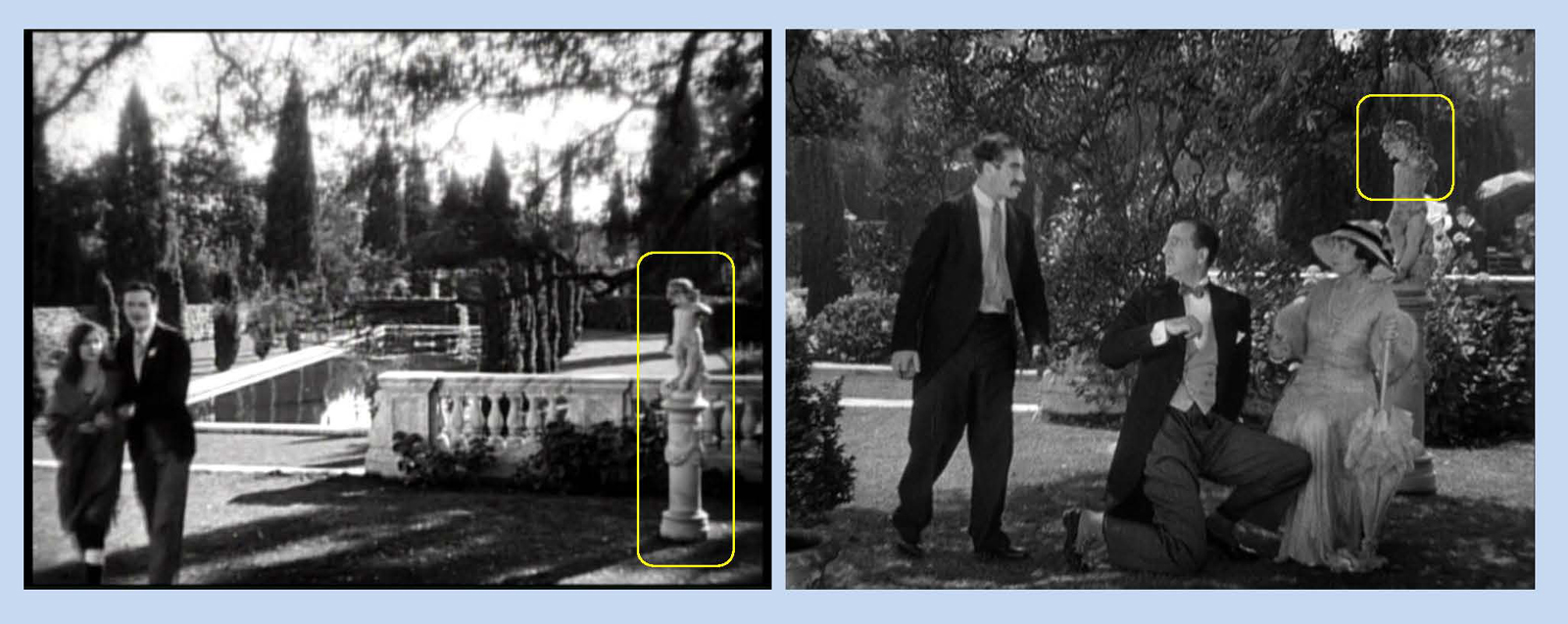
Nils leads Loretta north from the Jewett Estate lily pond.

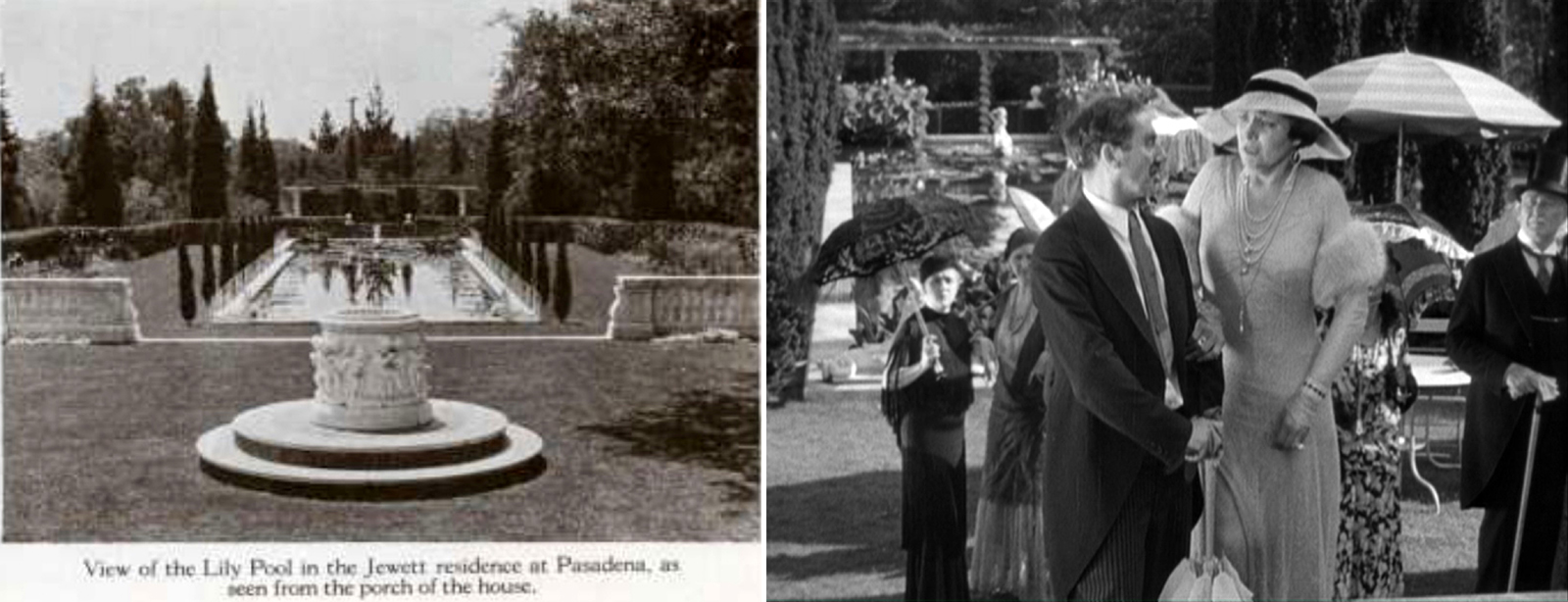
Laugh, Clown, Laugh – Nils leads Loretta north from the Jewett Estate Lily Pool, matching this view of Groucho, Louis Calhern, and Margaret Dumont in Duck Soup (1933).

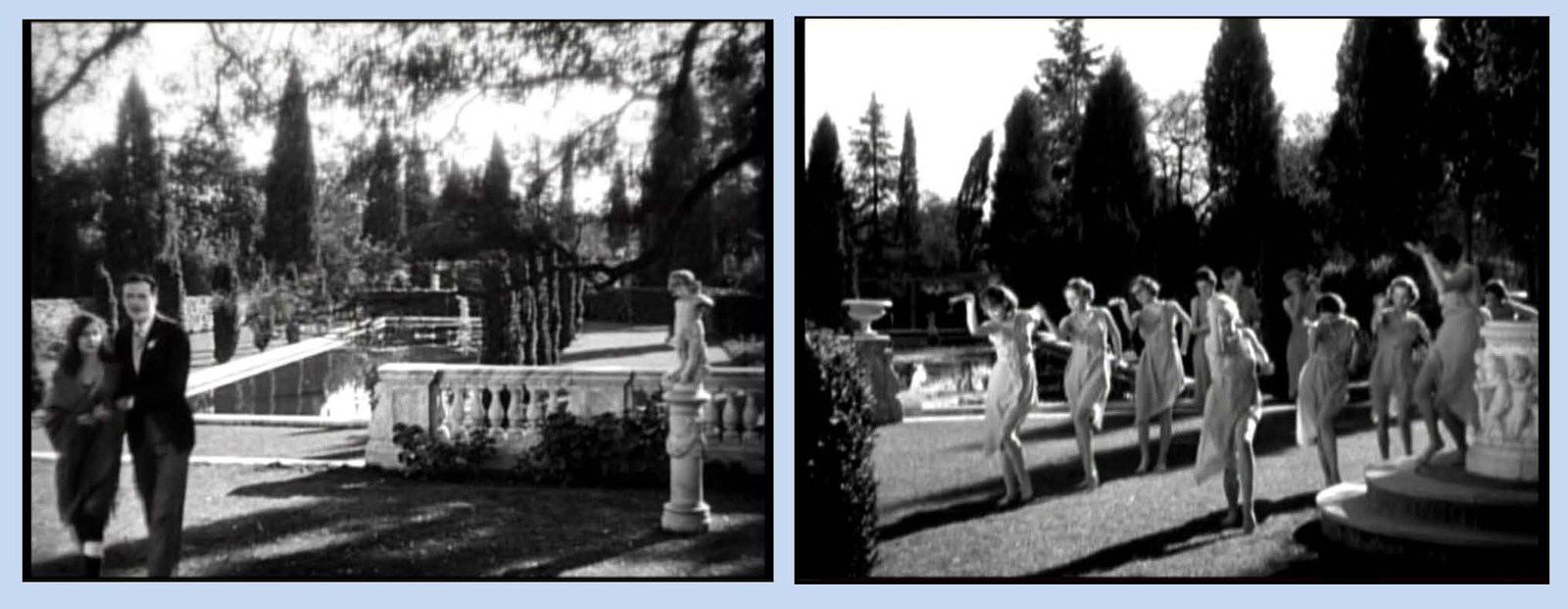
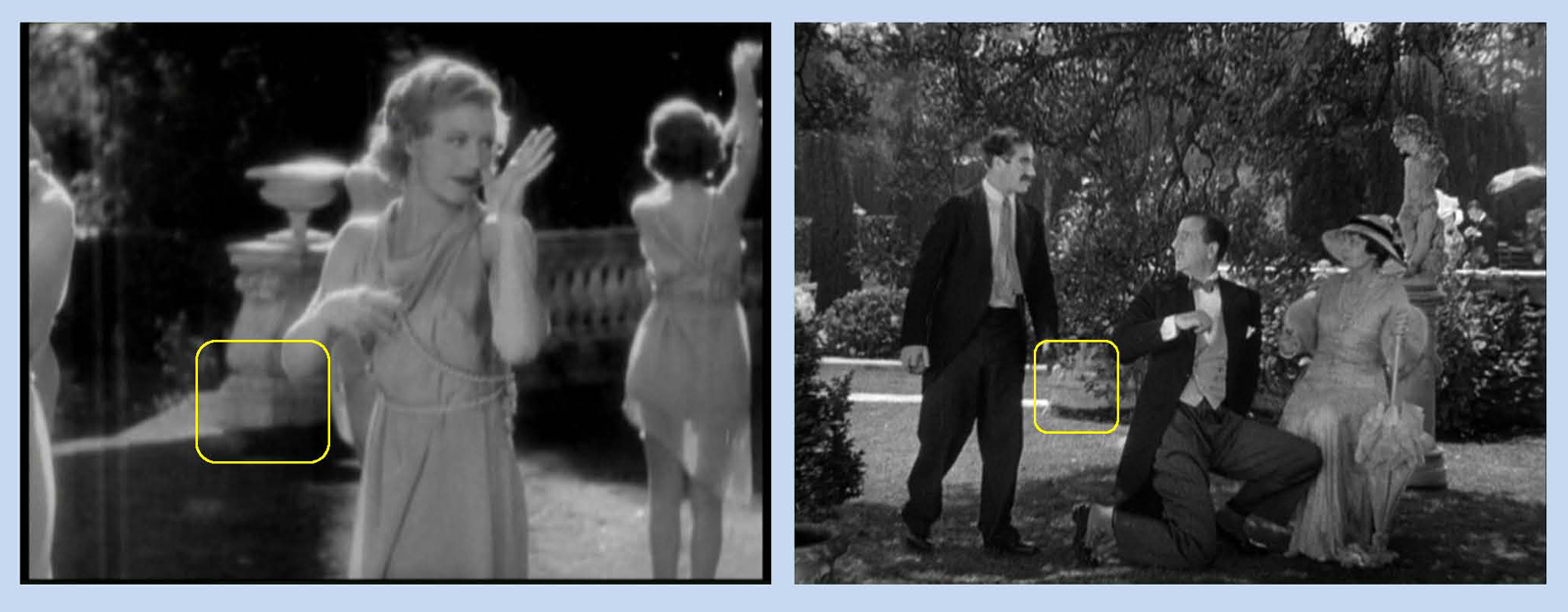
Finishing School 01The same garden view, looking south from the Jewett mansion towards the formal Lily Pool, appears during this calisthenic class scene from Finishing School (below), where the estate portrays Crockett Hall, an exclusive boarding school.

Morning exercise class from Finishing School at right.

Morning exercise class from Finishing School at right.

During this closeup of Ginger Rogers mocking her dance instructor, we see the same portion of a garden balustrade appearing with Groucho in Duck Soup.

Ginger and Groucho

Ginger and Groucho

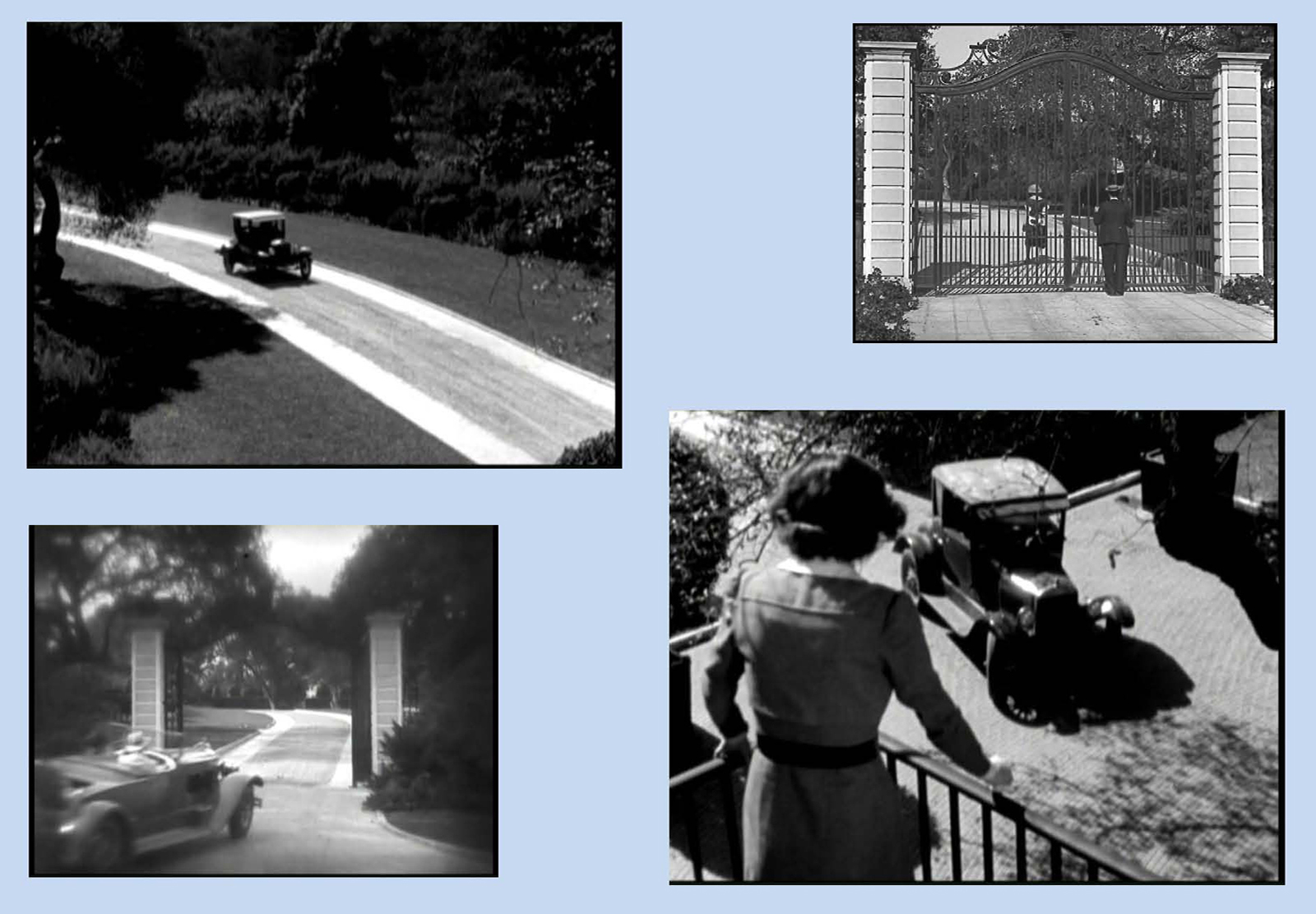
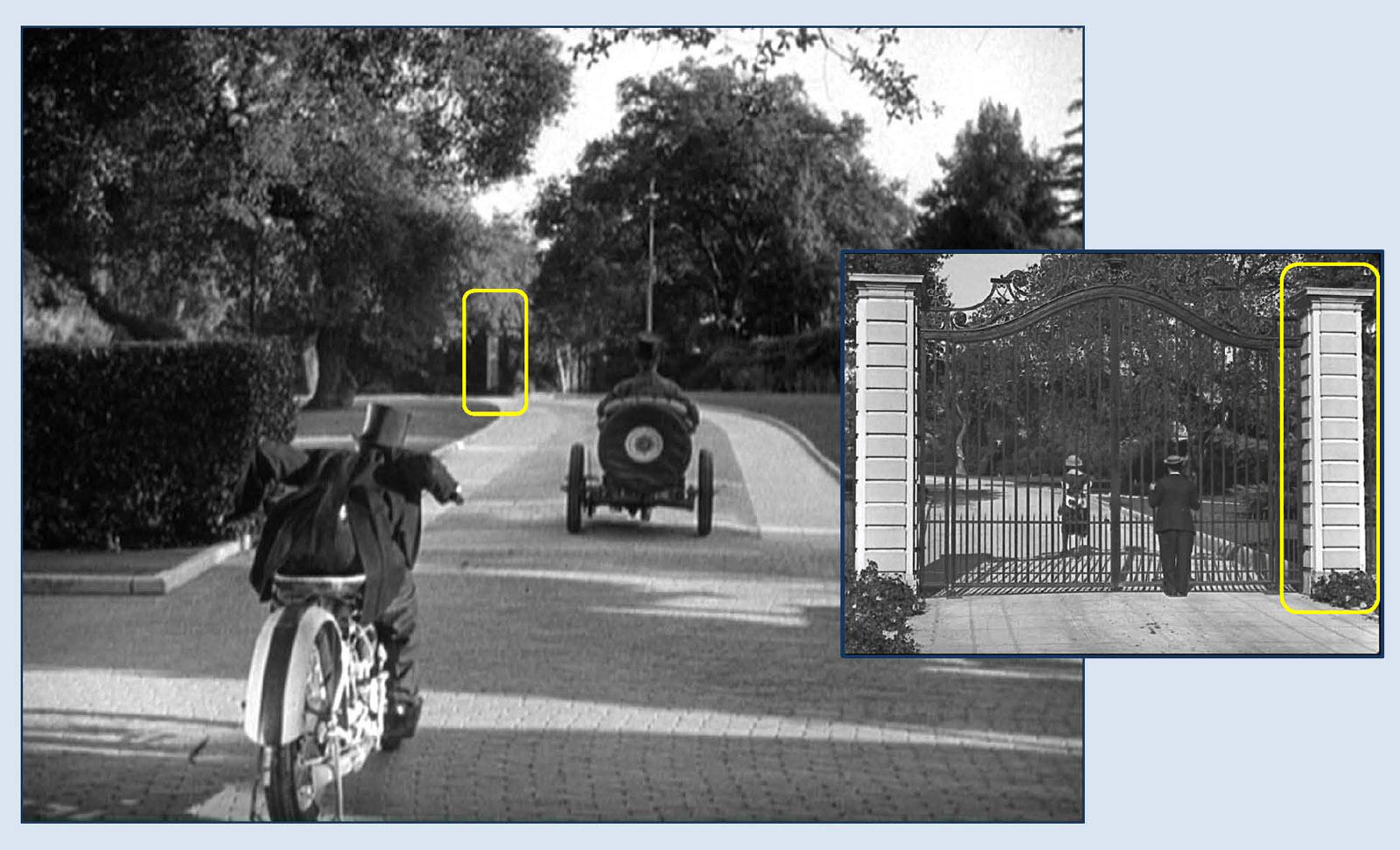
Finishing School also provides a “behind the scenes” view of the long driveway leading north to the mansion from the south facing gate Buster Keaton used in Cops (1922),  and in the William Haines – Joan Crawford comedy-romance Spring Fever (1927).

The upper left and lower right images from Finishing School suggest the full length of the driveway, which appears from the gate in Cops, upper right, and in the William Haines comedy-romance Spring Fever (1927), lower left.

The upper left and lower right images from Finishing School suggest the full length of the driveway, which leads north from the gate on Arden Road appearing in Cops, upper right, and in Spring Fever, lower left.

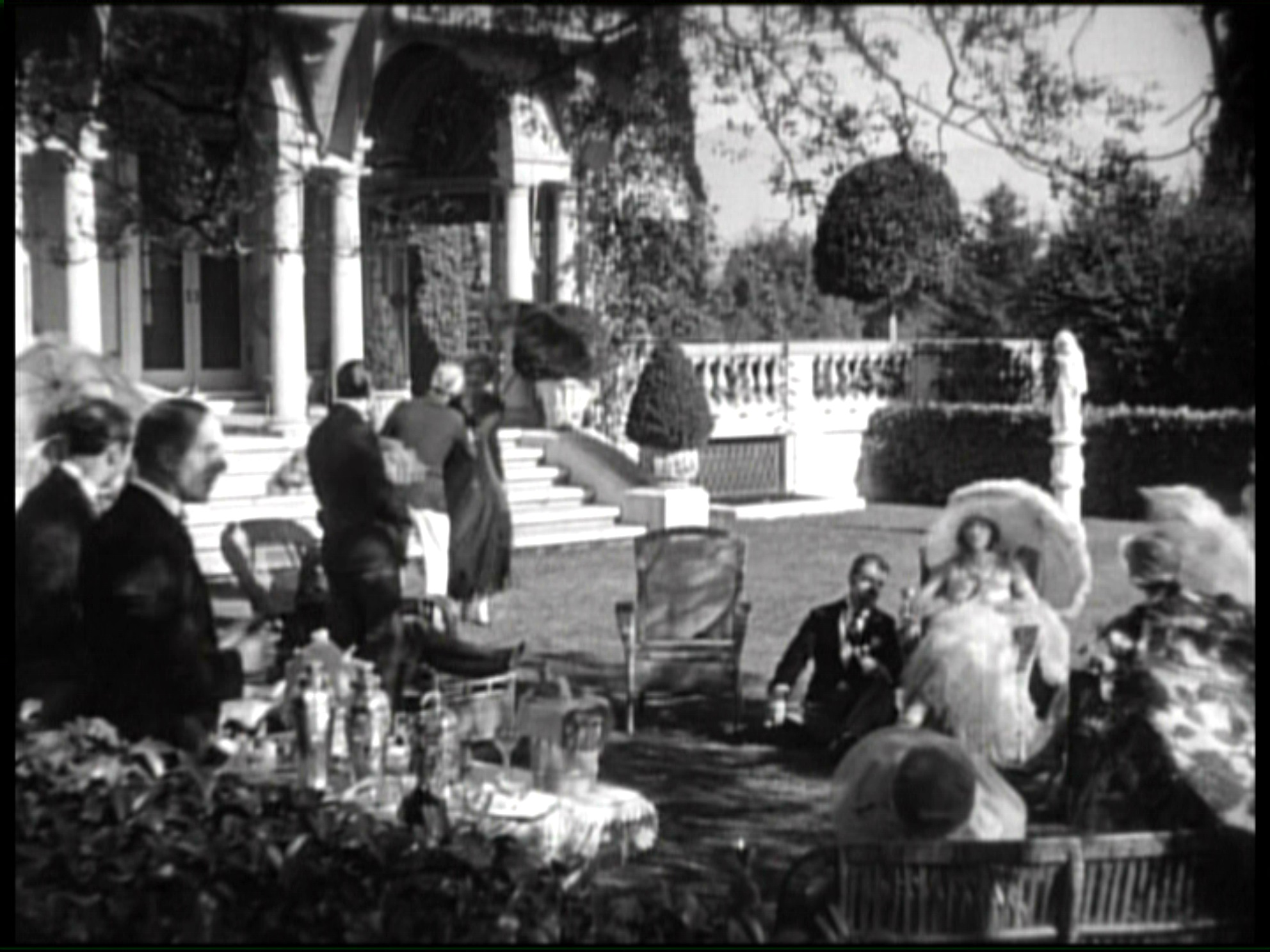
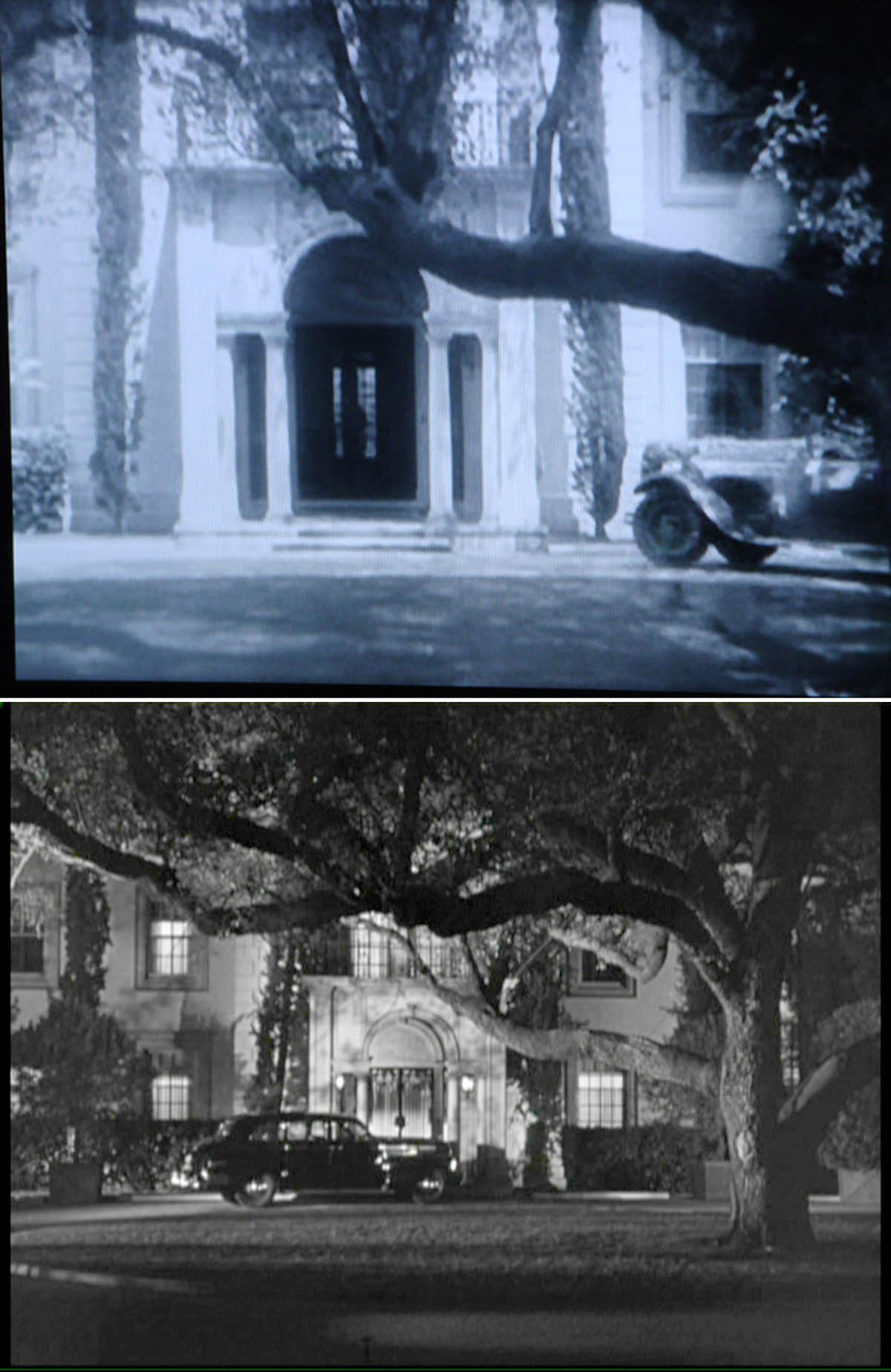
Looking towards the south face of the estate from Laugh, Clown, Laugh

Looking towards the south face of the estate from Laugh, Clown, Laugh

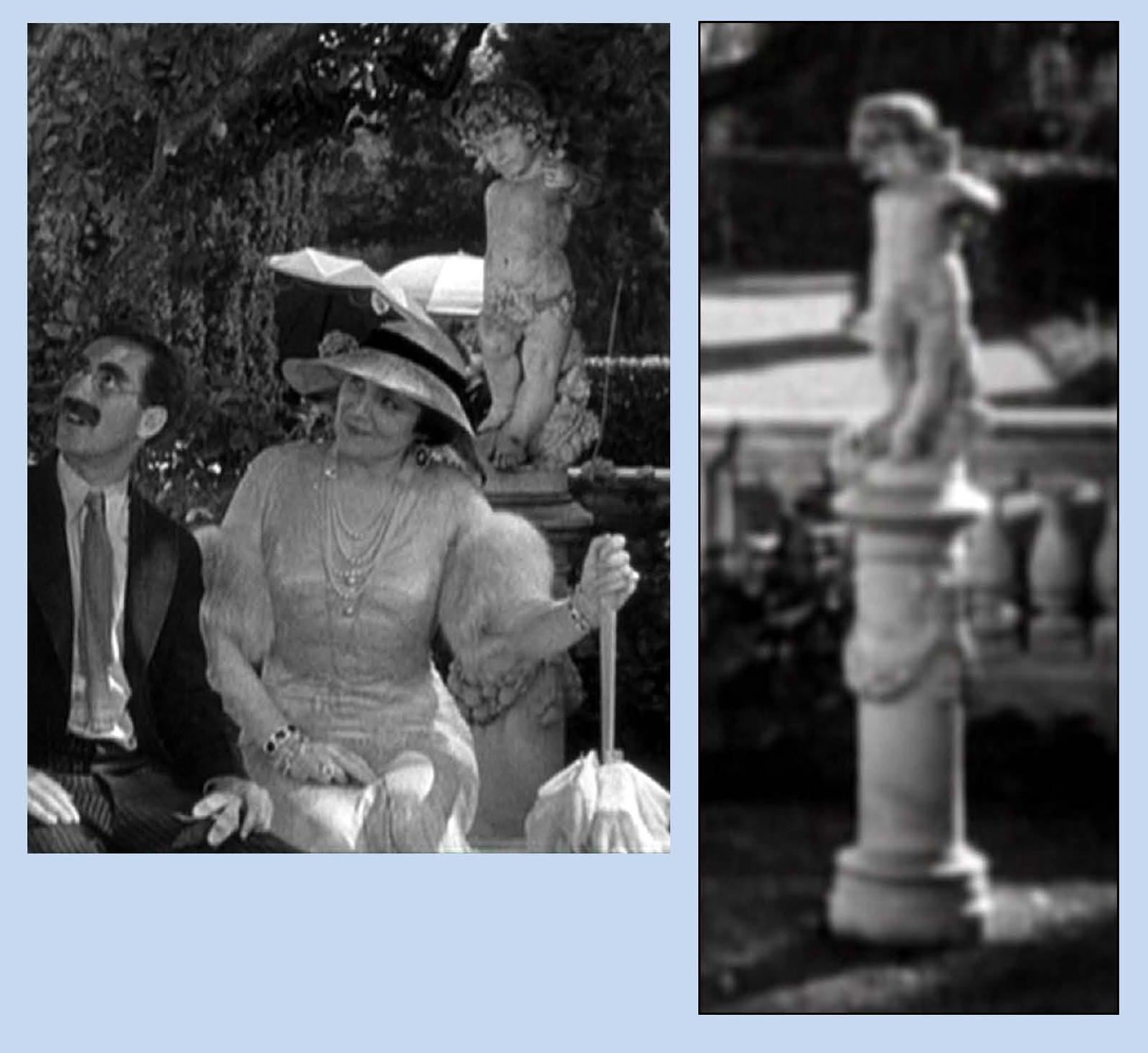
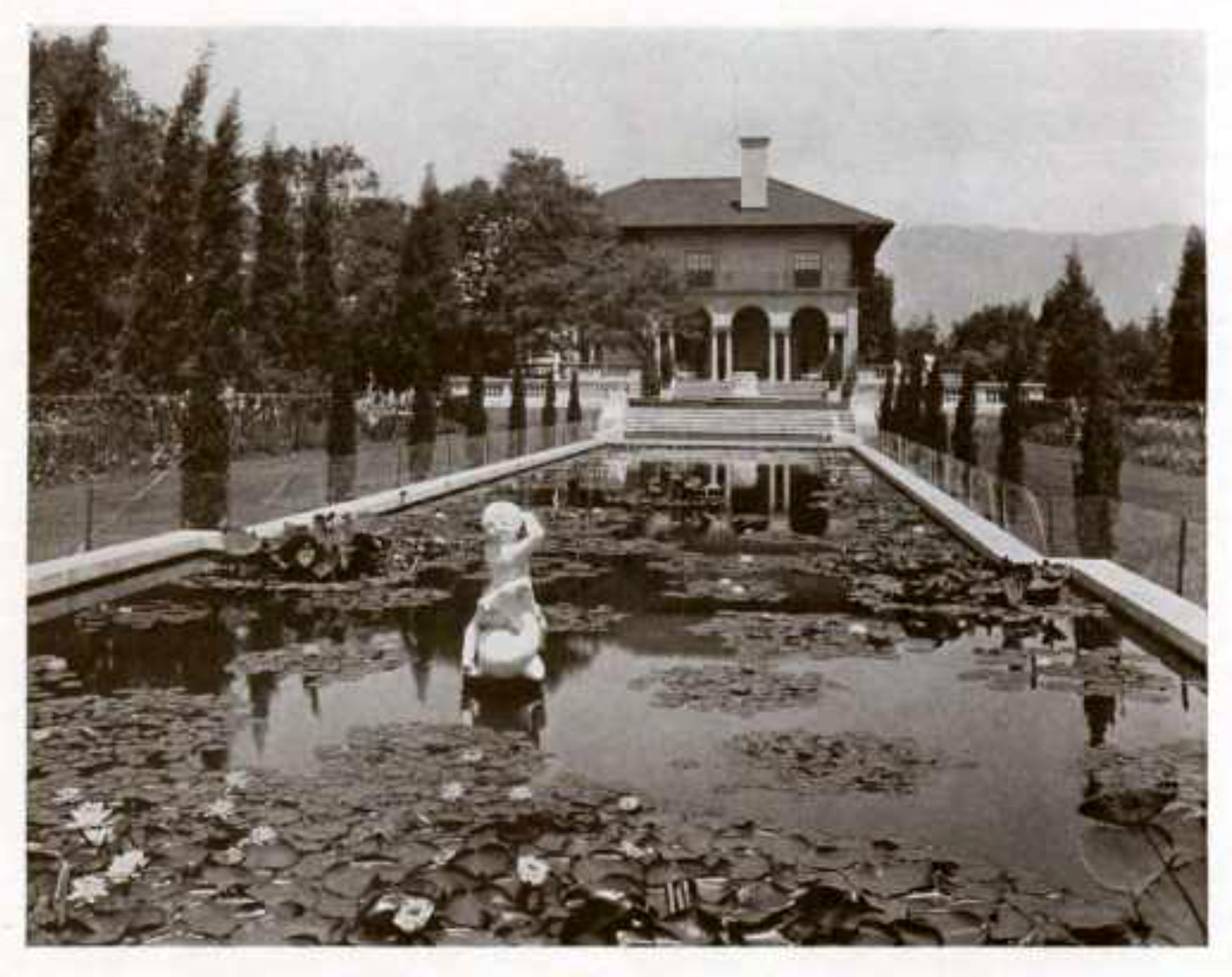
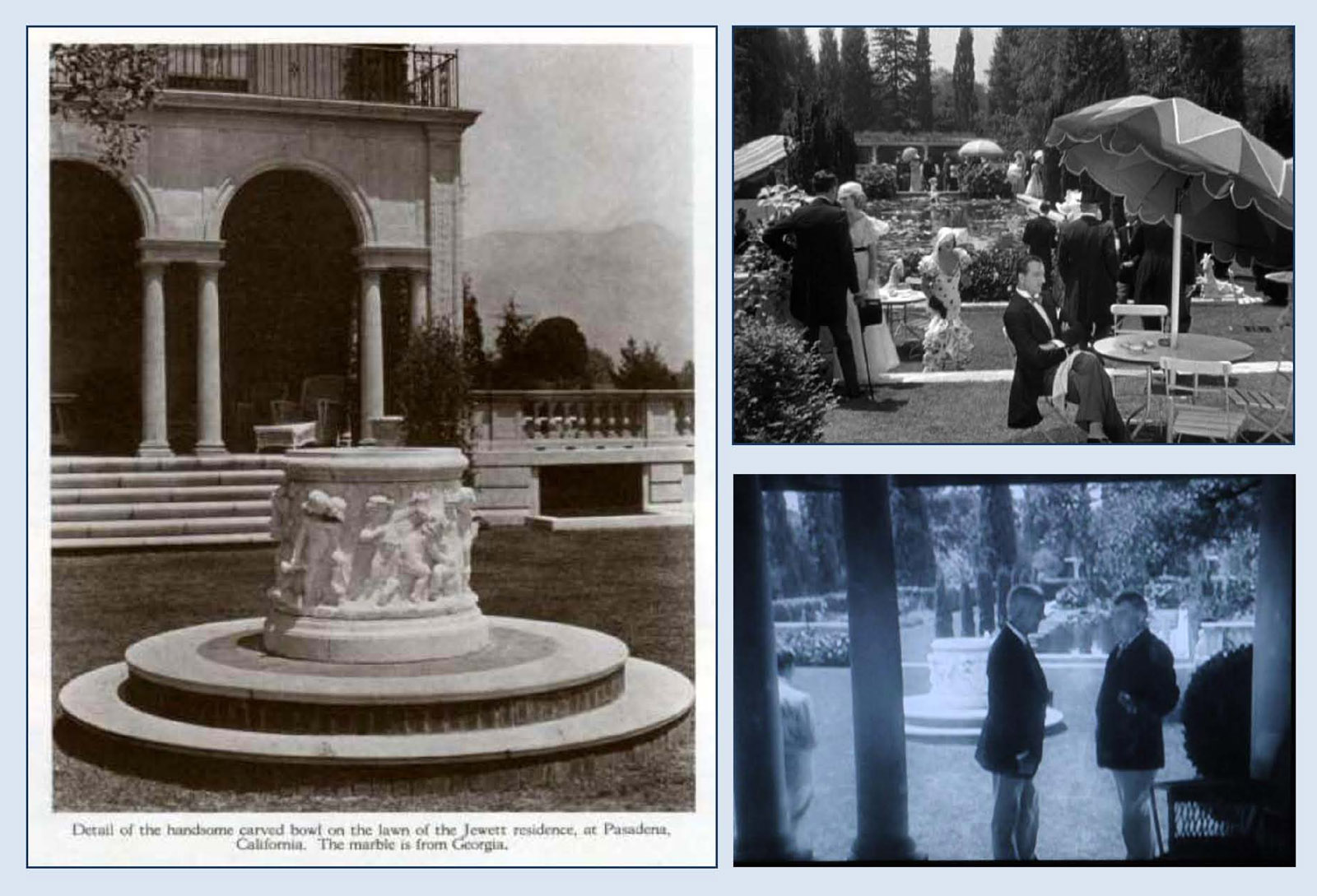
The lavish Jewett estate, located at 1145 Arden Road in Pasadena, has portrayed cinematic wealth and grandeur for nearly a century. Completed in 1915, the Palladian-style villa was once set amidst vast gardens adorned with Italian sculptures and fountains.  Below are matching details of the same figure appearing in Laugh, Clown, Laugh and in Duck Soup.

Duck Soup - left, and Laugh, Clown, Laugh

Duck Soup – left, and Laugh, Clown, Laugh

The Jewett Estate would later become famous as a primary filming location for the 1980’s prime time soap opera Dynasty.  This YouTube link shows the same Lily Pool as the setting for the iconic catfight between Krystle and Alexis.

For more complete information about of the Jewett Estate, and many more photos, please see my previous post HERE.

Posted in Buster Keaton, Cops, Duck Soup, Jewett Estate | Tagged , , , , , , , , , , , , , , , , , , | 1 Comment

San Francisco’s Silent Echoes – Presidio Officers’ Club Talk

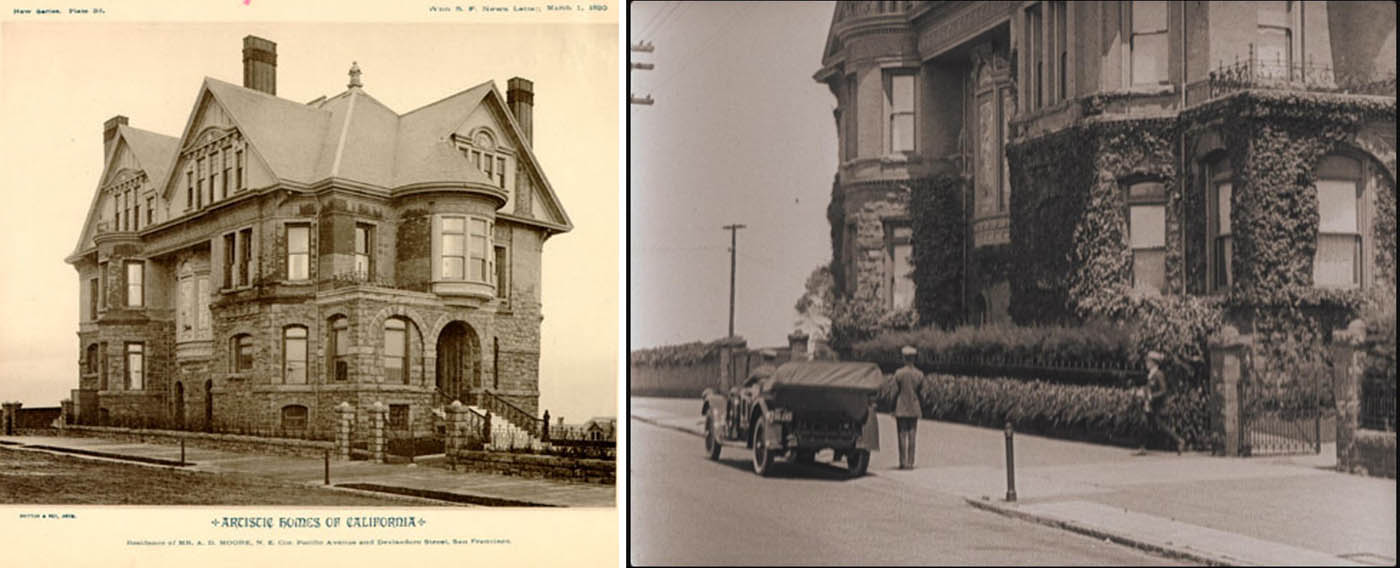
Buster Keaton in The Navigator (1924) beside the former A.D. Moore mansion on Divisadero at Pacific.

Buster Keaton in The Navigator (1924) beside the former A.D. Moore mansion on Divisadero at Pacific.

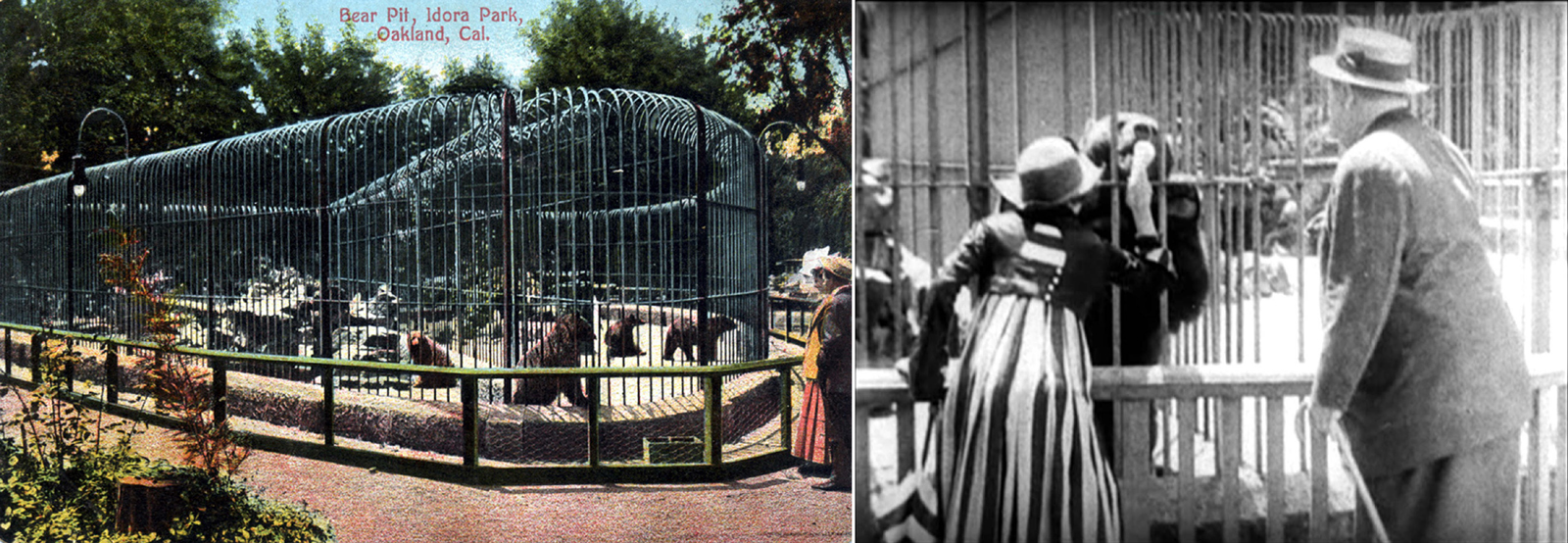
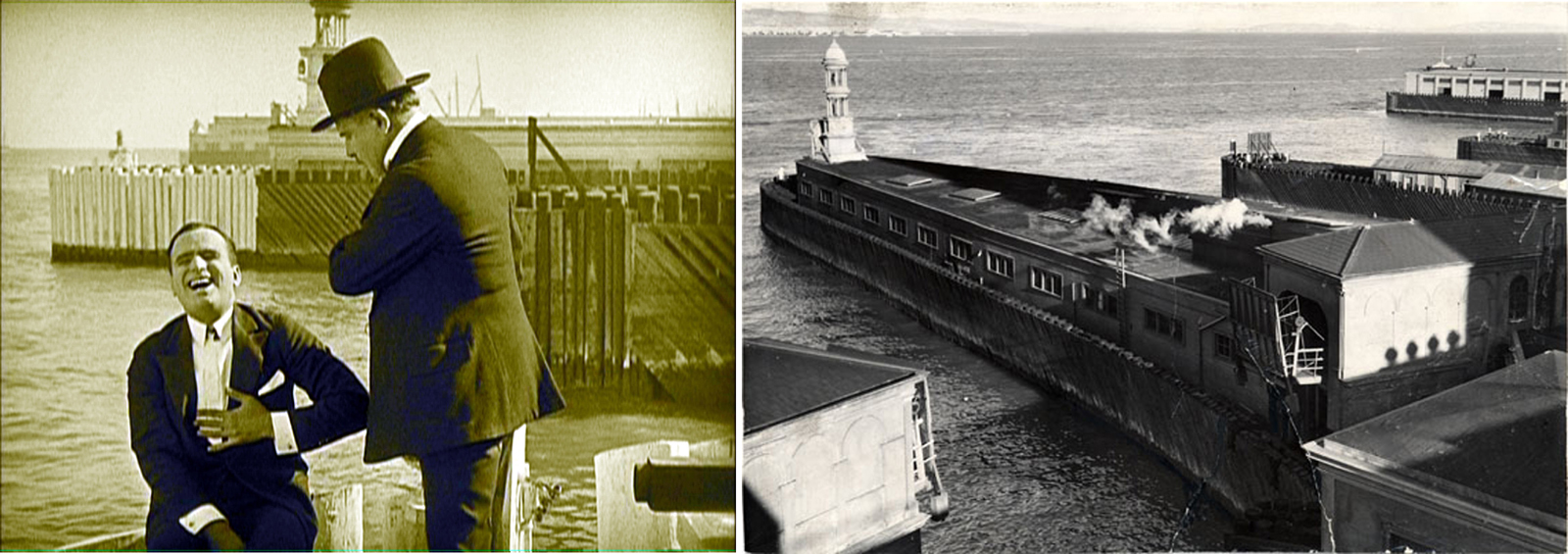
Buster Keaton in Pacific Heights? Charlie Chaplin at Fisherman’s Wharf? Harold Lloyd at UC Berkeley? The great silent comedians did not limit themselves to filming in Hollywood, as I will discuss during my San Francisco’s Silent Echoes presentation this Thursday, September 17, 7:00 p.m. at the Presidio Officers’ Club. Presented in association with The San Francisco Silent Film Festival, the event is free, although advance registration is required. Of particular interest to history buffs, my talk will cover both lost local landmarks, such as Oakland’s Idora Park (1903-1929) featured in the Mabel Normand/Roscoe Arbuckle Keystone comedy Mabel’s Willful Way (1915), and settings that remain remarkably unchanged more than 90 years later.

Mabel Normand and Roscoe Arbuckle feed the bears at the former Idora Park in Oakland.

Mabel Normand and Roscoe Arbuckle feed the bears at the former Idora Park in Oakland.

Douglas Fairbanks in front of the Ferry Building (standing in for New York) in When The Clouds Roll By (1917).

Douglas Fairbanks in front of the Ferry Building (standing in for New York) in When The Clouds Roll By (1919).

This link below will download a PDF tour of where Buster Keaton filmed scenes in San Francisco.

San Francisco’s Silent Echoes Buster Keaton

Posted in San Francisco | Tagged , , , , , , , , , , | Leave a comment

New Chaplin Discovery – Cinecon Talk and Guided Tour

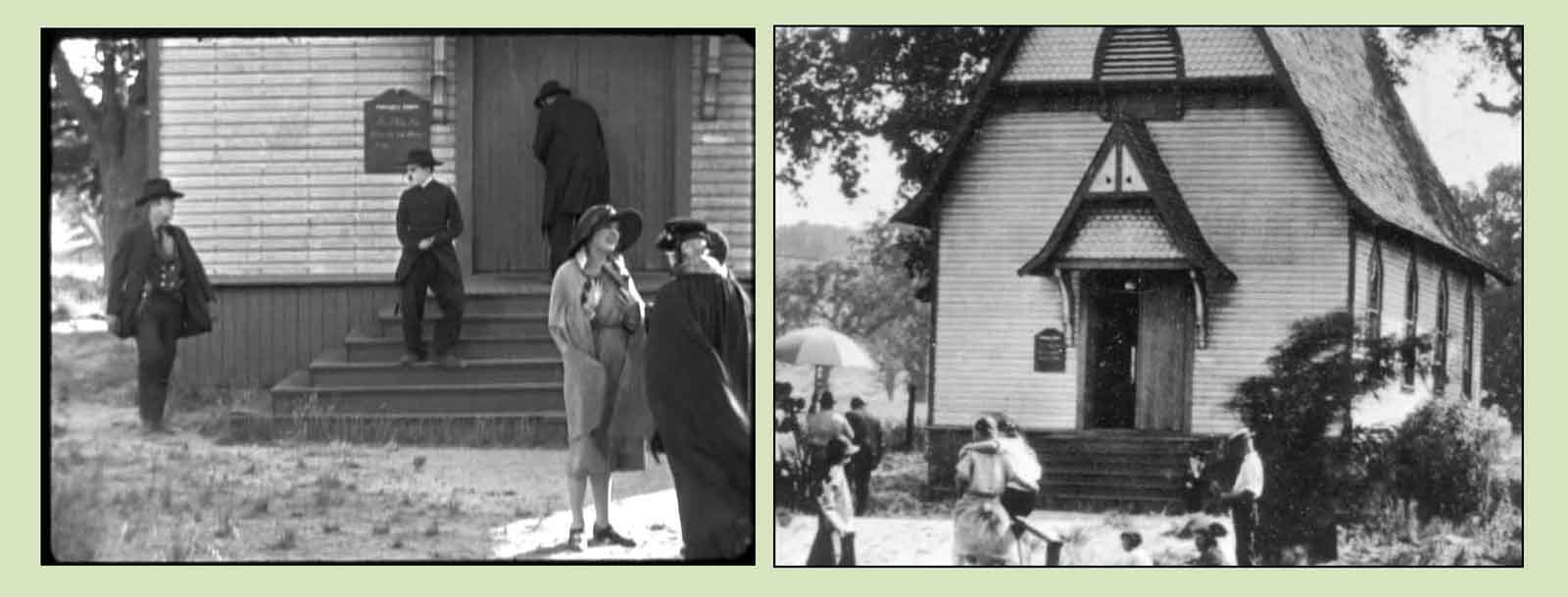
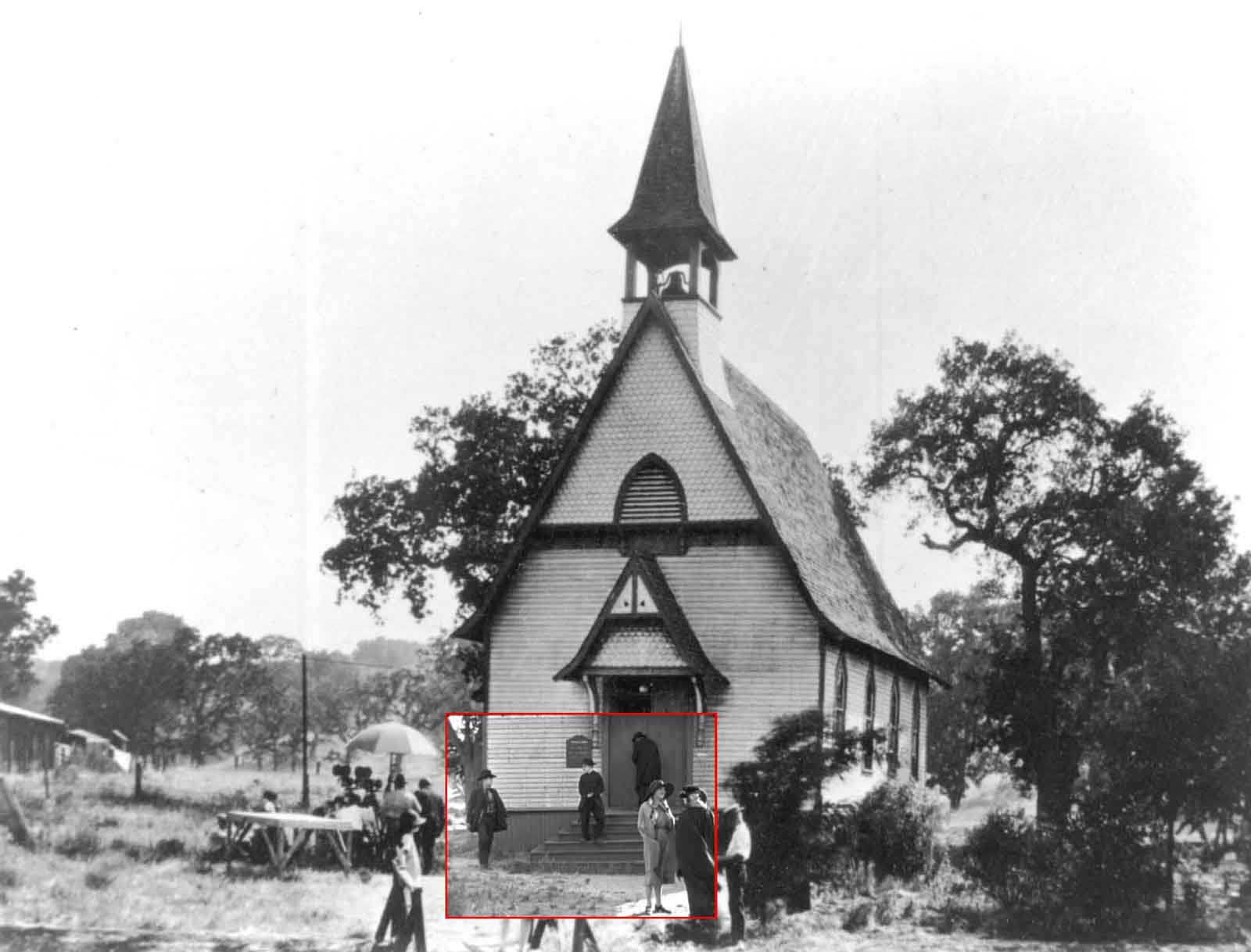
Chaplin filming The Pilgrim in Newhall (now part of Santa Clarita).

Chaplin filming The Pilgrim in Newhall (now part of Santa Clarita). SCVhistory.com.

While preparing my upcoming talk for Cinecon 51 I just realized that Chaplin filmed this rustic church scene from The Pilgrim (1923) in Newhall, near where friend Douglas Fairbanks filmed much of Wild and Woolly in 1917, beside the original Presbyterian Church, built in 1891, that once stood at the west end of Market Street at Newhall Avenue. You can read about the connections between Chaplin’s The Pilgrim and Frank Sinatra’s assassination/kidnap drama Suddenly (1954) in my prior post, and download a written tour at the end of this post.

titlecard50_2cover-slide-blueI will discuss Wild and Woolly, and Harold Lloyd’s masterpiece The Kid Brother (1927), two wonderful films highlighted at the 2015 Cinecon Classic Film Festival, as part of the “Hollywood’s Silent Echoes” presentation I will be giving Labor Day Monday, September 7, 2015, at 11:05 a.m. at the Egyptian Theater, 6712 Hollywood Boulevard. Entirely new, my talk will be filled with many fun surprises about the great silent comedians, and the historic elements captured in their films.

Following my talk and book signing I will again lead a walking tour during the lunch break along Cahuenga Boulevard where Chaplin, Keaton, and Lloyd filmed so frequently.

The church was built in 1891 and replaced with a modern stucco structure in 1923, the same year Chaplin filmed The Pilgrim.

Click to enlarge – the two camera angles are almost a perfect match. The church was built in 1891 and replaced with a modern stucco structure in 1923, the same year Chaplin filmed The PilgrimSCVhistory.com.

The link below is an updated written tour to over 50 Hollywood filming locations and historic sites associated with Charlie Chaplin, Buster Keaton, Harold Lloyd, Douglas Fairbanks, Mary Pickford, Stan Laurel, and Harry Langdon. This latest edition includes many new discoveries not found in my books or previously posted tours.

Hollywood’s Silent Echoes Tour – Cinecon 2015 – John Bengtson

For those who live in LA, even if you have plans for an afternoon BBQ, I hope you’ll consider spending Labor Day morning at the Egyptian Theater discovering some fun new insights about early Hollywood.

All images from Chaplin films made from 1918 onwards, copyright © Roy Export Company Establishment. CHARLES CHAPLIN, CHAPLIN, and the LITTLE TRAMP, photographs from and the names of Mr. Chaplin’s films are trademarks and/or service marks of Bubbles Incorporated SA and/or Roy Export Company Establishment. Used with permission.

Posted in Charlie Chaplin, The Pilgrim | Tagged , , , , , , , | 2 Comments

Chaplin, Sinatra, The Pilgrim and Noir

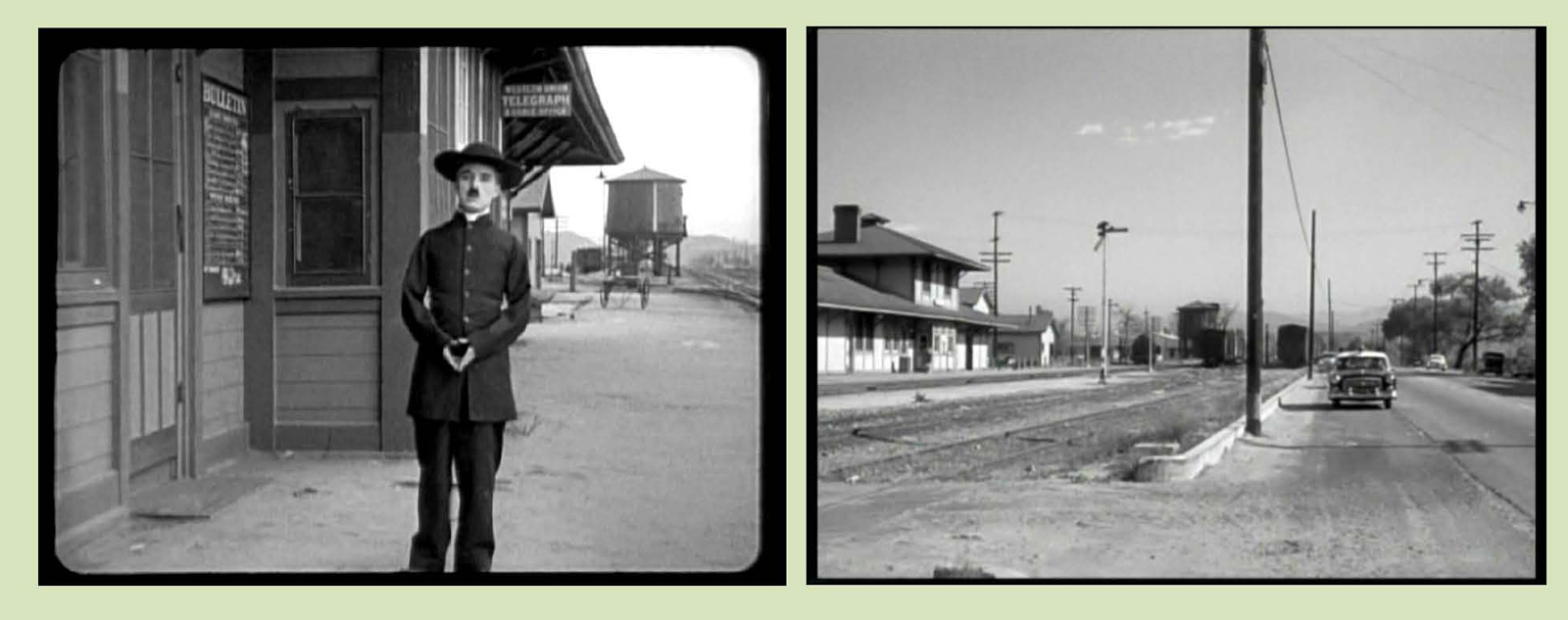
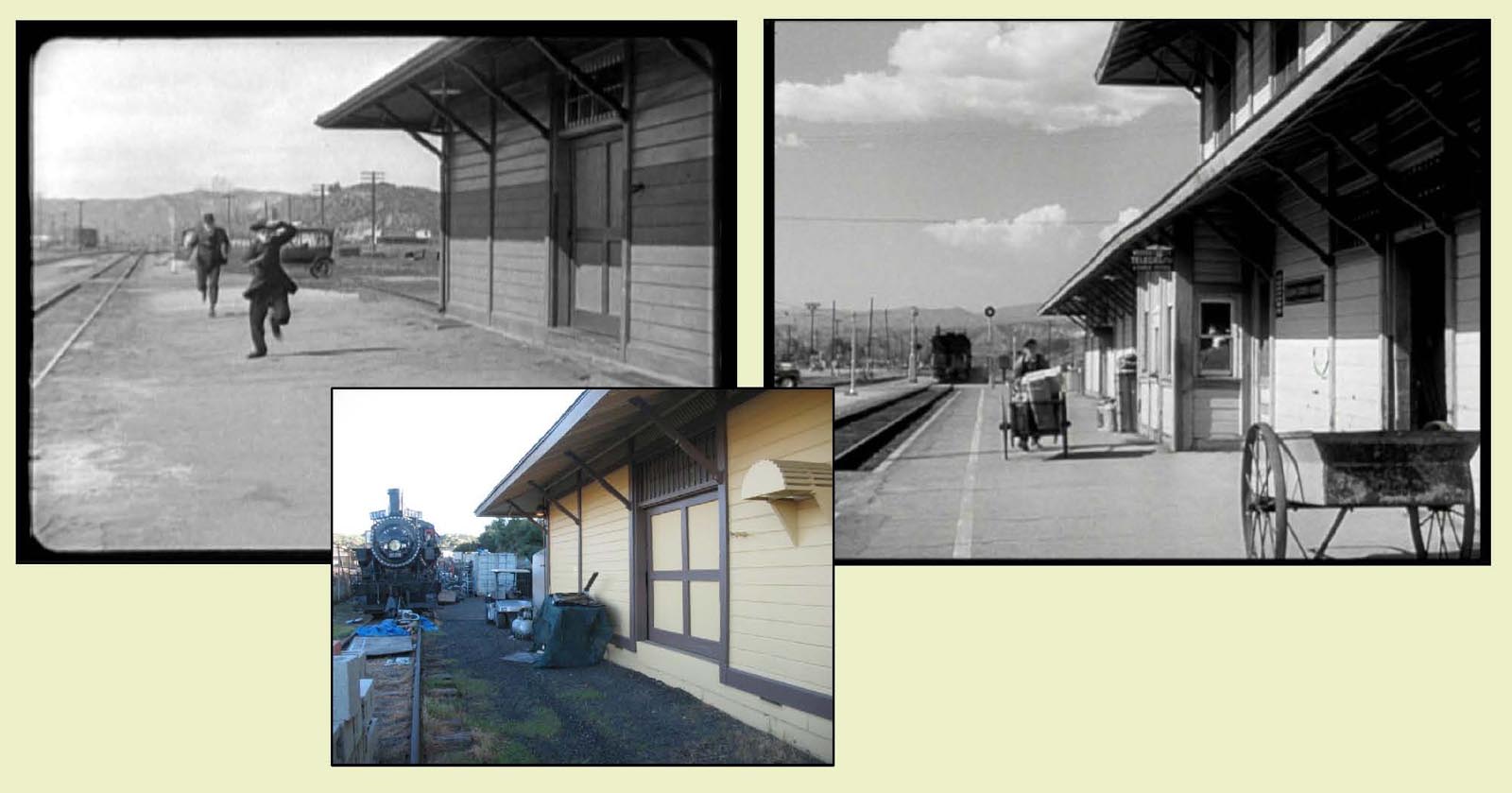
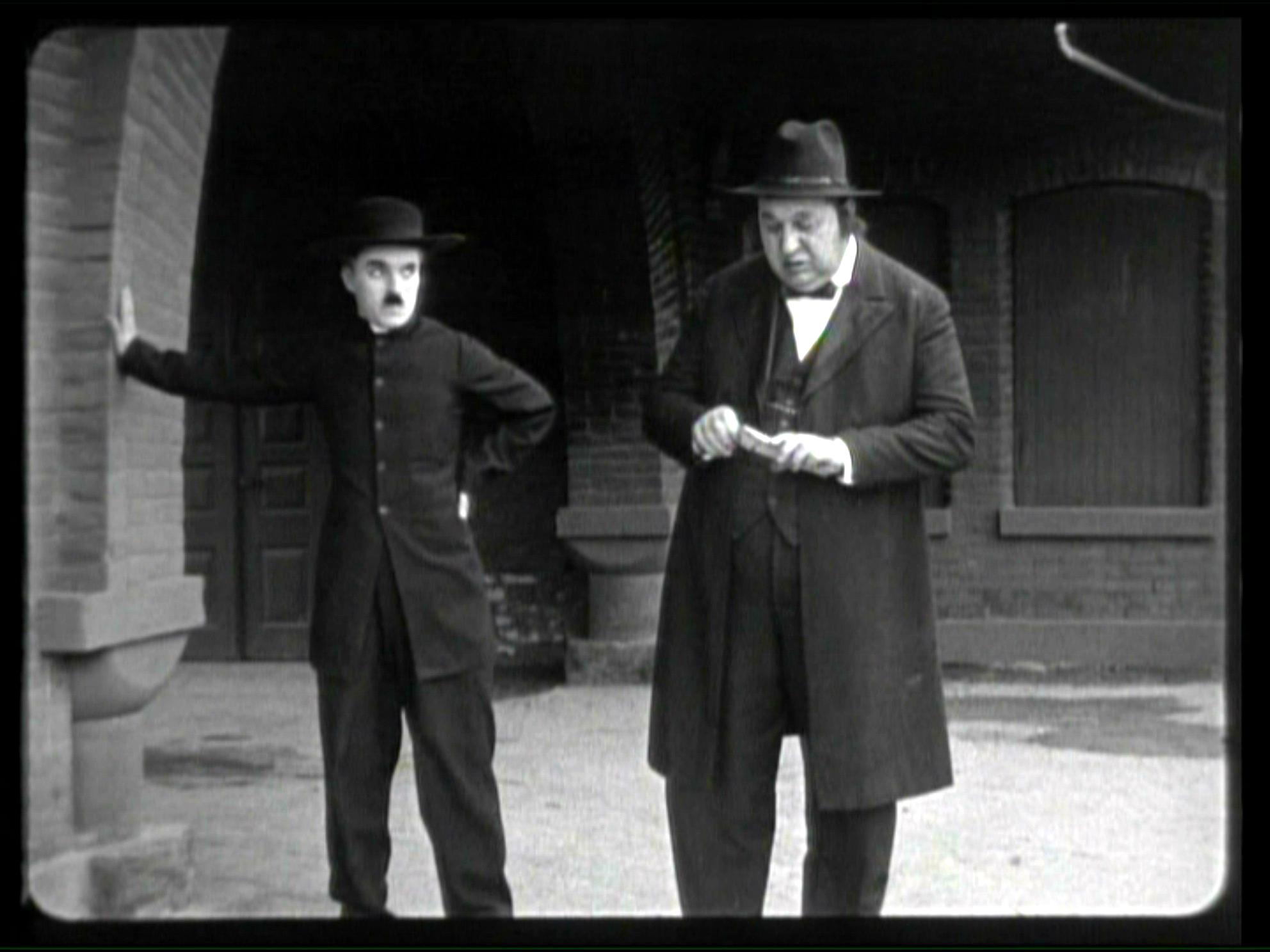
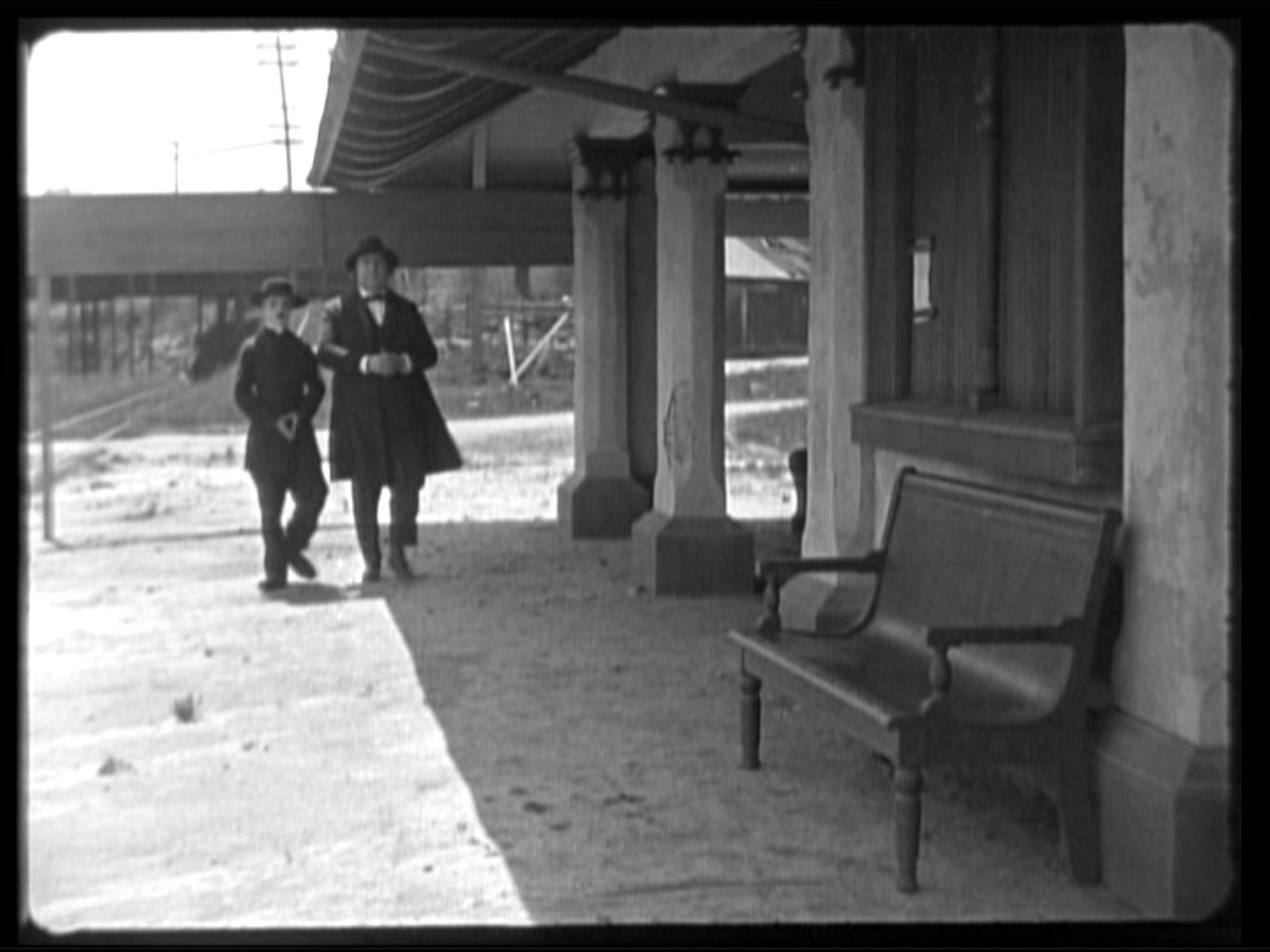
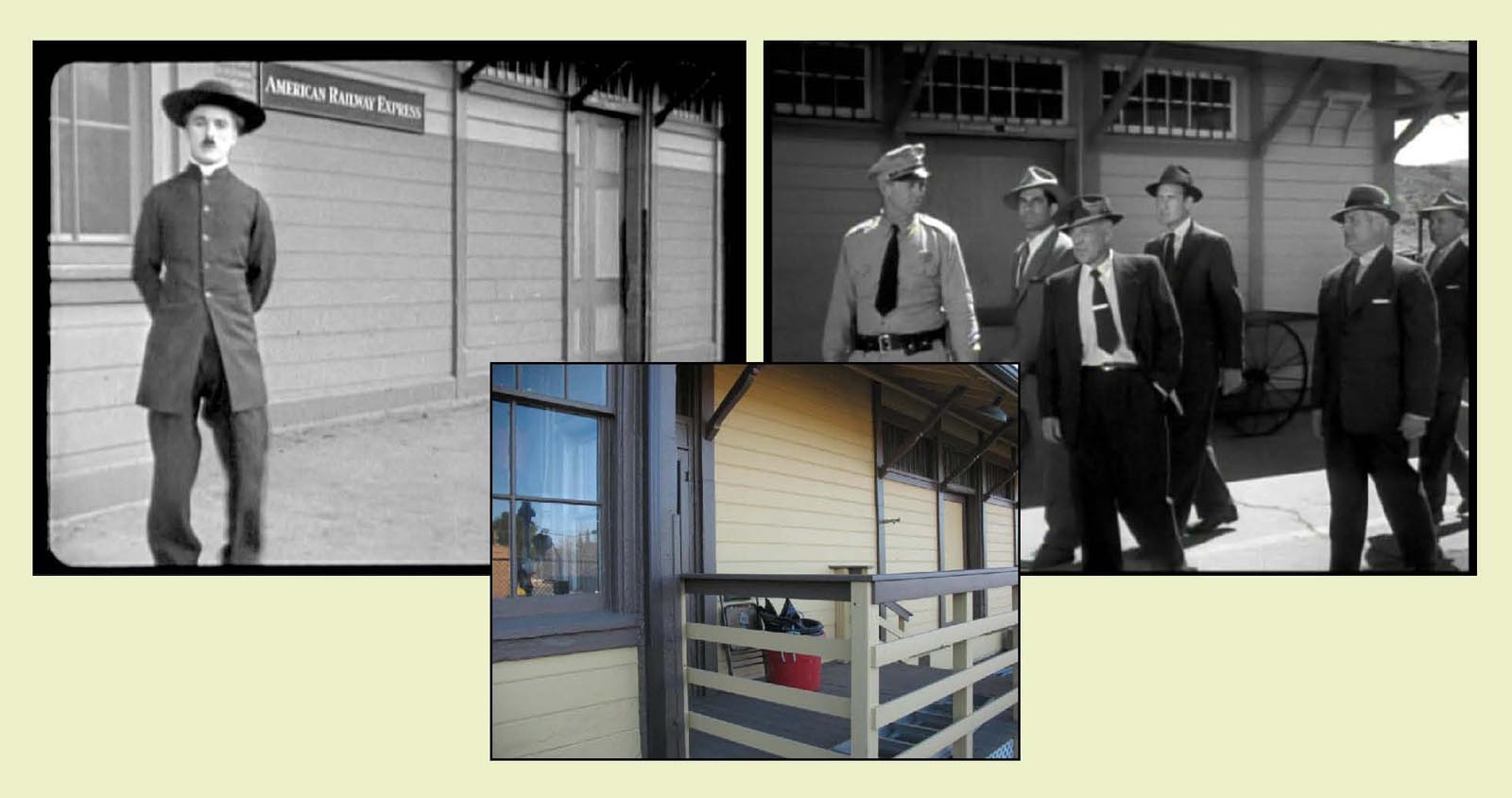
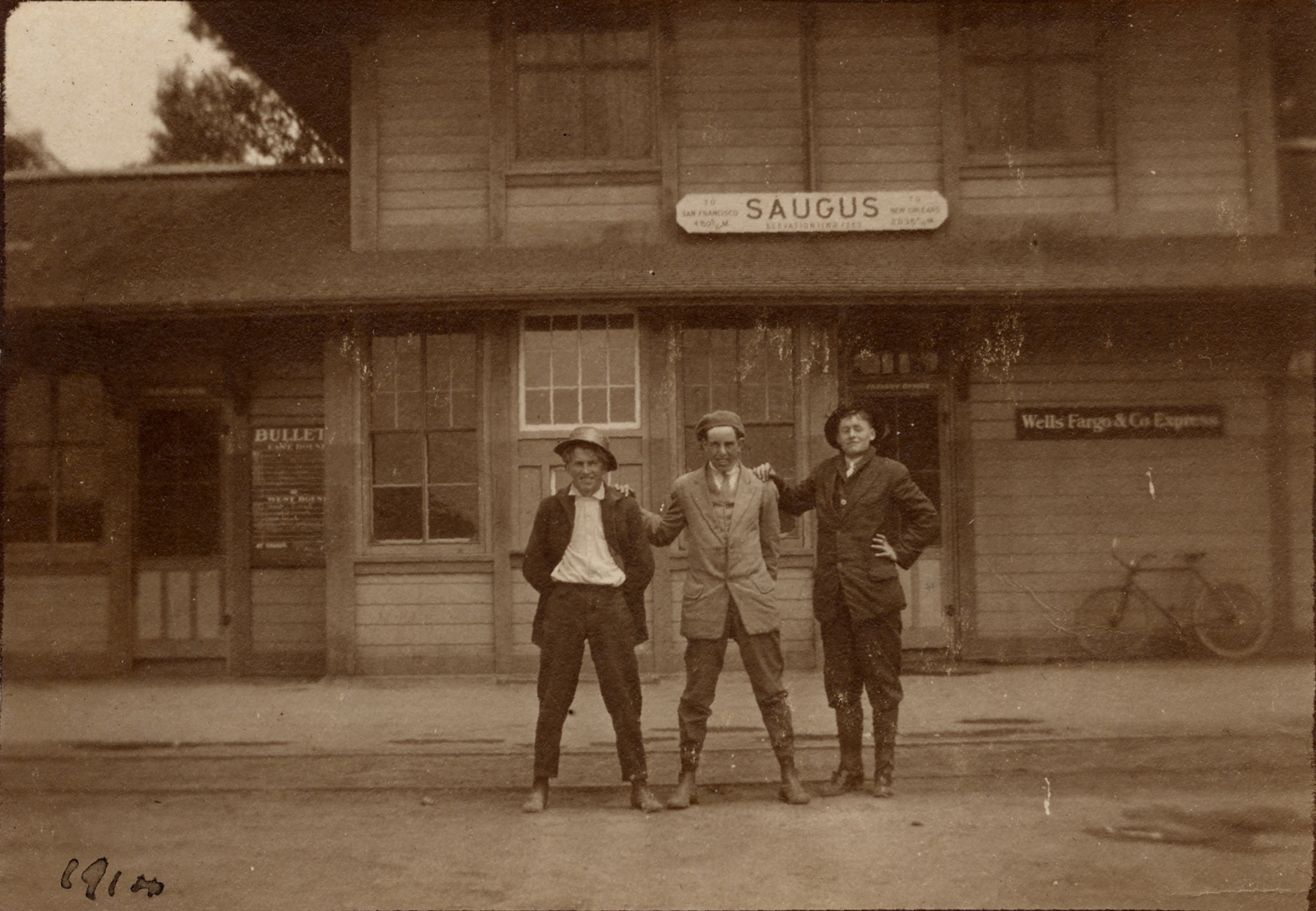
Charlie beside the Saugus station in The Pilgrim and as it appears in Suddenly.

Charlie beside the Saugus station in The Pilgrim and as it appears in Suddenly. The unusual movie title refers to the fictional town “Suddenly” in which that movie takes place.

Suddenly 03Classic movies filmed on location provide historic views of the past. Moreover, later films shot at a popular location also provide fresh perspectives of earlier movies filmed at the same spot. A case in point is the Saugus train station appearing both in Charlie Chaplin’s The Pilgrim (1923), and later in the 1954 Frank Sinatra hostage-sniper drama Suddenly. Although the station still exists (relocated to a nearby park a few miles away), it was difficult finding vintage photos of the station in its original setting at the time I was writing about The Pilgrim for my Chaplin book. Thus, seeing the station documented so vividly in the Sinatra film was a revelation for visualizing how Charlie had used the same setting thirty years before Frank.

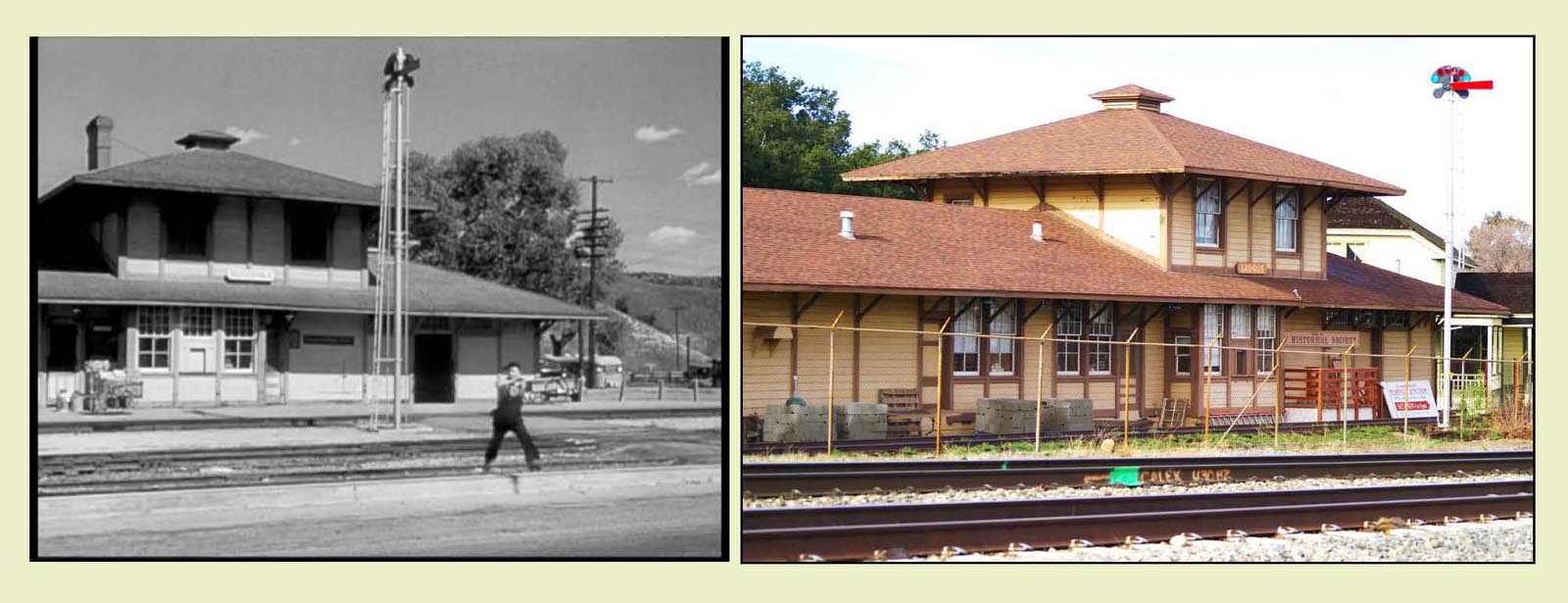
Chaplin beside the Saugus station, fully revealed in the Suddenly frame, and as it appears today at its new location. Color images by E. J. Stephens.

Charlie (left) runs beside the Saugus station, more fully revealed in the Suddenly frame, and as it appears today at its new location. Color images by E. J. Stephens.

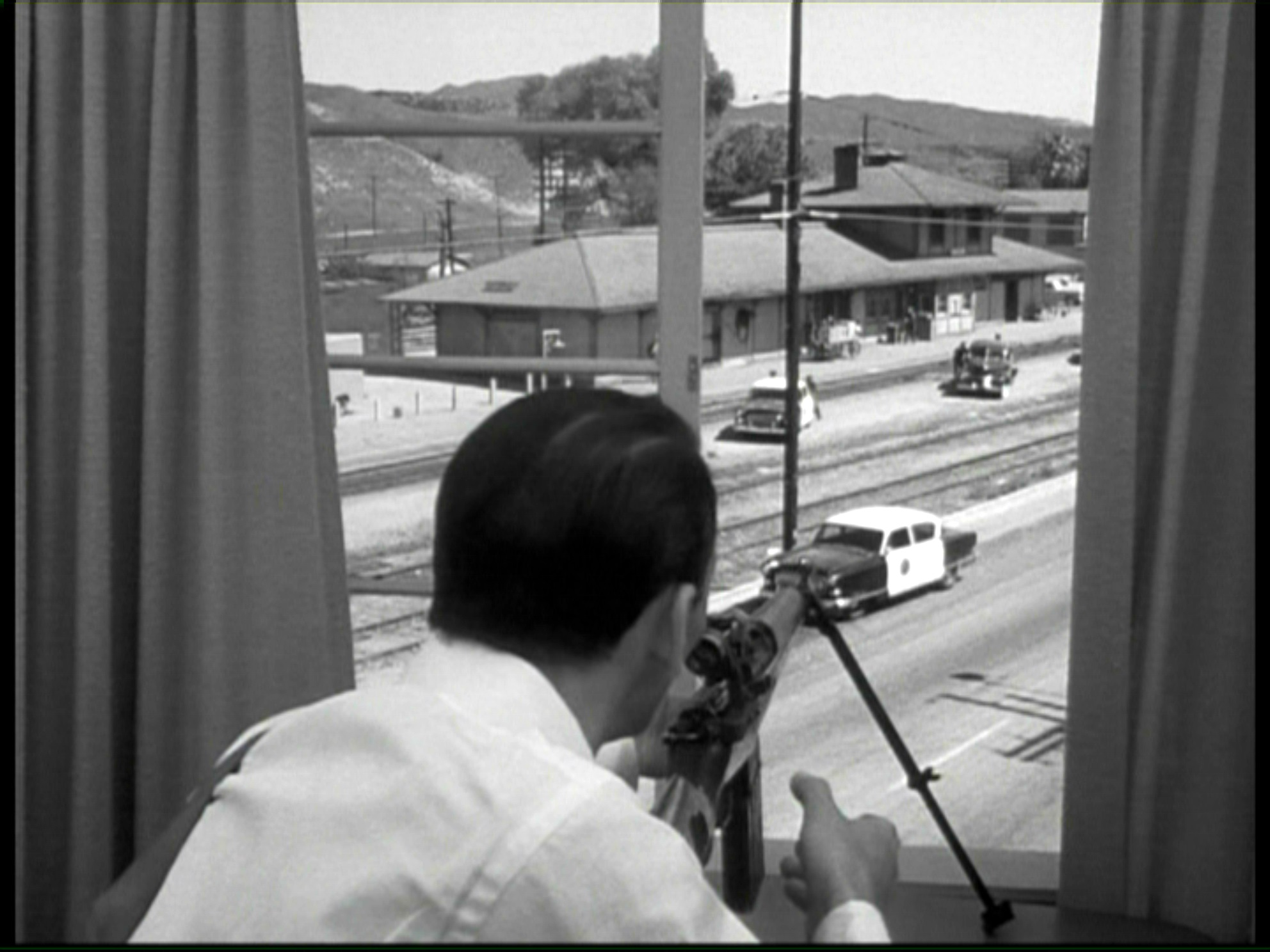
Sniper Sinatra takes aim

Sniper Sinatra takes aim

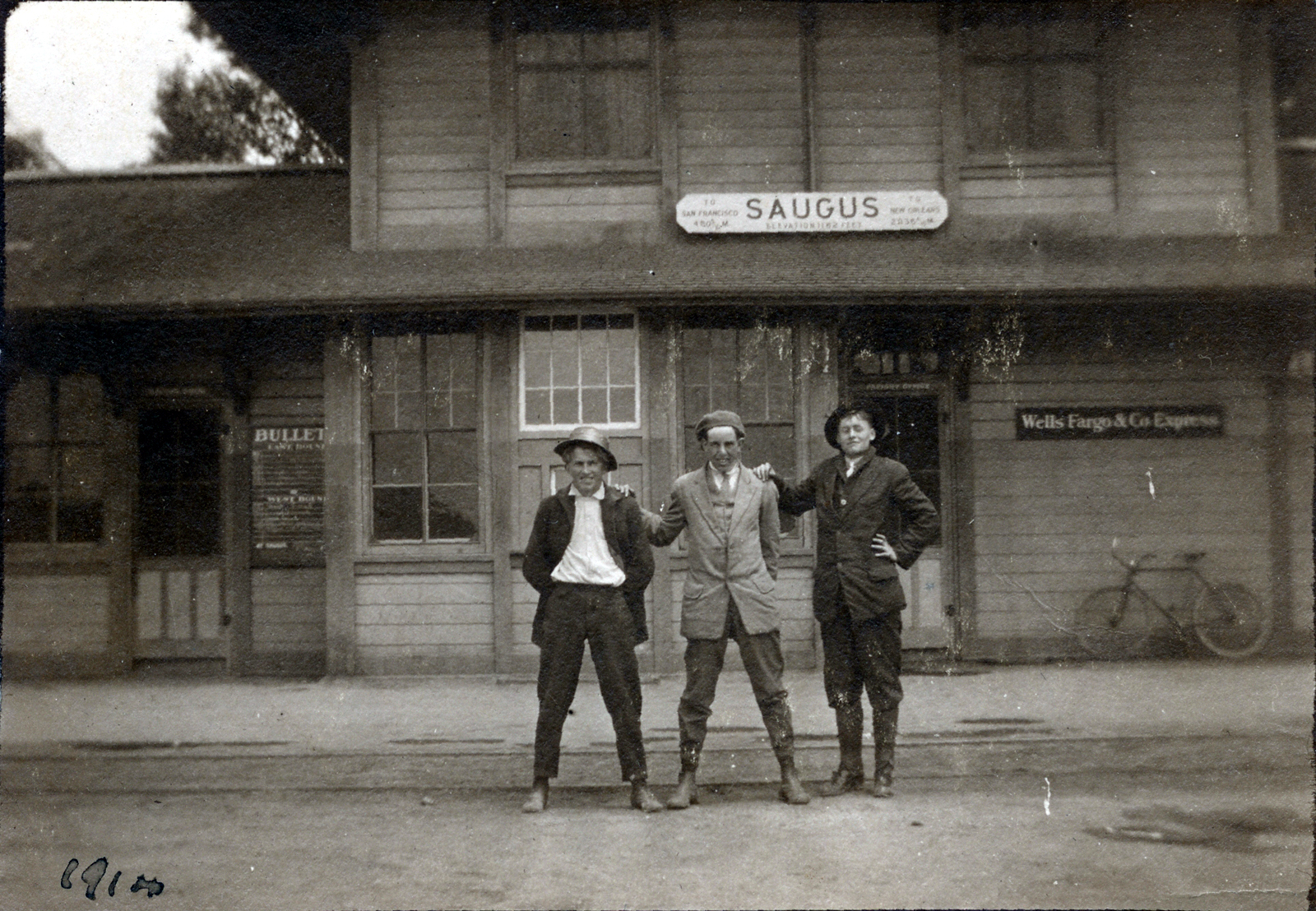
The Southern Pacific Saugus Train Station was originally located on the east side of San Fernando Road, just south of Drayton Street in what is now called Santa Clarita, a few miles east of the Six Flags Magic Mountain amusement park, about 40 miles from downtown Los Angeles. Henry Newhall named the station after the Massachusetts town “Saugus” where his father was born. The station was dedicated by California Governor Washington Bartlett and Southern Pacific president David D. Colton.  I write in my book that the dedication took place September 1, 1887, while historian John Sweetser posts at the Santa Clarita Valley history site SVCHistory.com that the opening was reported in the June 22, 1888 Los Angeles Daily Herald.

The station as it appears in Suddenly and at its new home. E. J. Stephens.

The station as it appears in Suddenly and at its new home. E. J. Stephens.

The depot was saved from demolition in 1980 when it was relocated three miles south to the Heritage Junction Historic Park, operated by the Santa Clarita Valley Historical Society, at 24107 San Fernando Road in Newhall. The park sits adjacent to the William S. Hart Regional Park, containing the former ranch and mansion of the famed silent film cowboy and movie director. The Saugus station (at its new setting) appeared more recently in The Grifters (1989) starring Angelica Huston, Annette Bening, and John Cusack. The station’s placement in its new setting now makes the “front” of the station less accessible than the back.

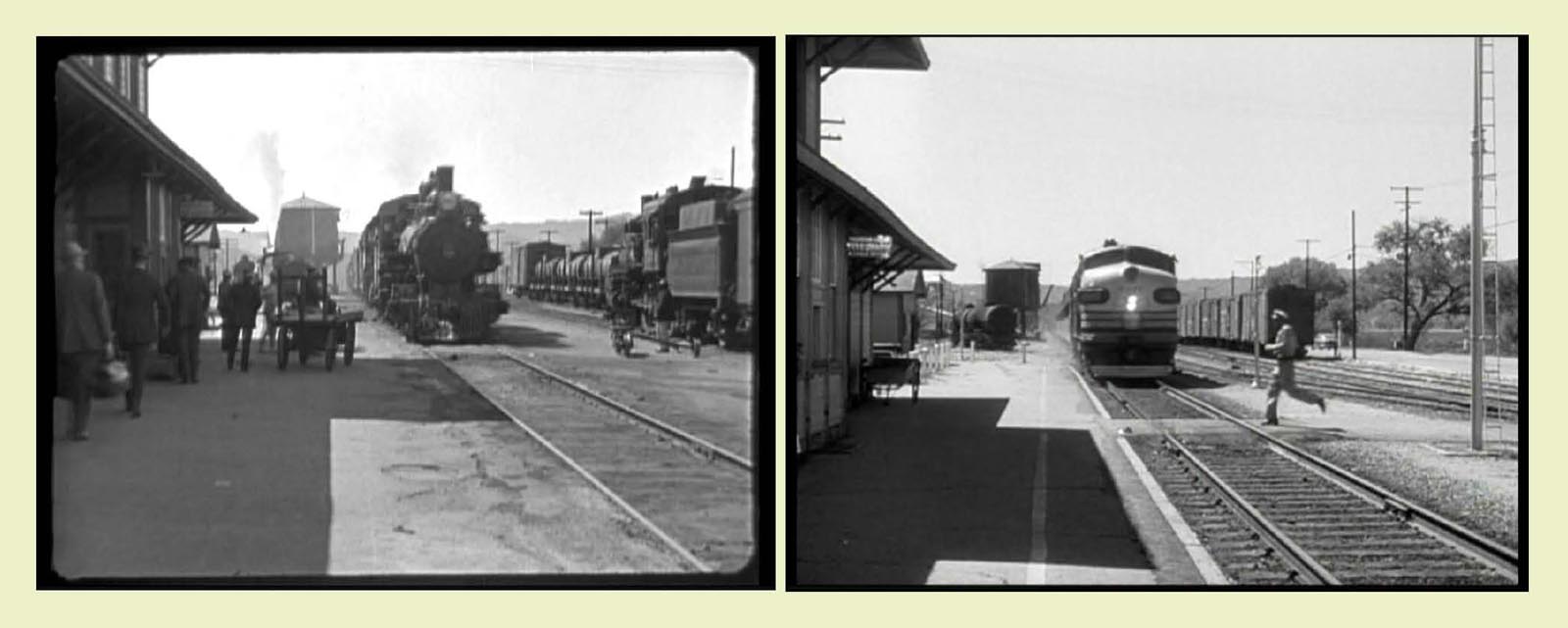
Arriving trains - 1923 and 1954

Arriving trains – 1923 and 1954

Pilgrim 16aaaAs I explain in my book, Chaplin continued filming The Pilgrim in Pasadena, using both the Raymond Station (left), and the Raymond depot – part of the Raymond Hotel (right), both lost to history. You can Pilgrim 14read more about the filming of Suddenly in Saugus in Robby Cress’s entertaining and remarkably broad-ranged movie and television location blog Dear Old Hollywood.

Charlie cools his heels near where Sterling Hayden converses with a group of Secret Service agents.

Charlie cools his heels near where Sterling Hayden converses with a group of Secret Service agents.

My thanks to E. J. Stephens, noted Hollywood historian, author, lecturer and tour guide, and co-host, with Bill West, of the SCVTV movie series “SCV In the Movies,” for providing the color photos.  You can find E. J.’s books about early Warner Bros, early Paramount Studios, and Griffith Park, at this link.

All images from Chaplin films made from 1918 onwards, copyright © Roy Export Company Establishment. CHARLES CHAPLIN, CHAPLIN, and the LITTLE TRAMP, photographs from and the names of Mr. Chaplin’s films are trademarks and/or service marks of Bubbles Incorporated SA and/or Roy Export Company Establishment. Used with permission.  Suddenly (C) 1954 Libra Productions, Inc.

The Saugus station at its new home, 24107 San Fernando Road in Newhall.

Posted in Charlie Chaplin, Film Noir, The Pilgrim | Tagged , , , , , , , , , , , , , | 2 Comments

Groucho, Buster, and Noir – at the Pasadena Jewett Estate

Buster Keaton beside the Jewett Estate gate in Cops.

Buster Keaton beside the Jewett estate gate in Cops (1922).

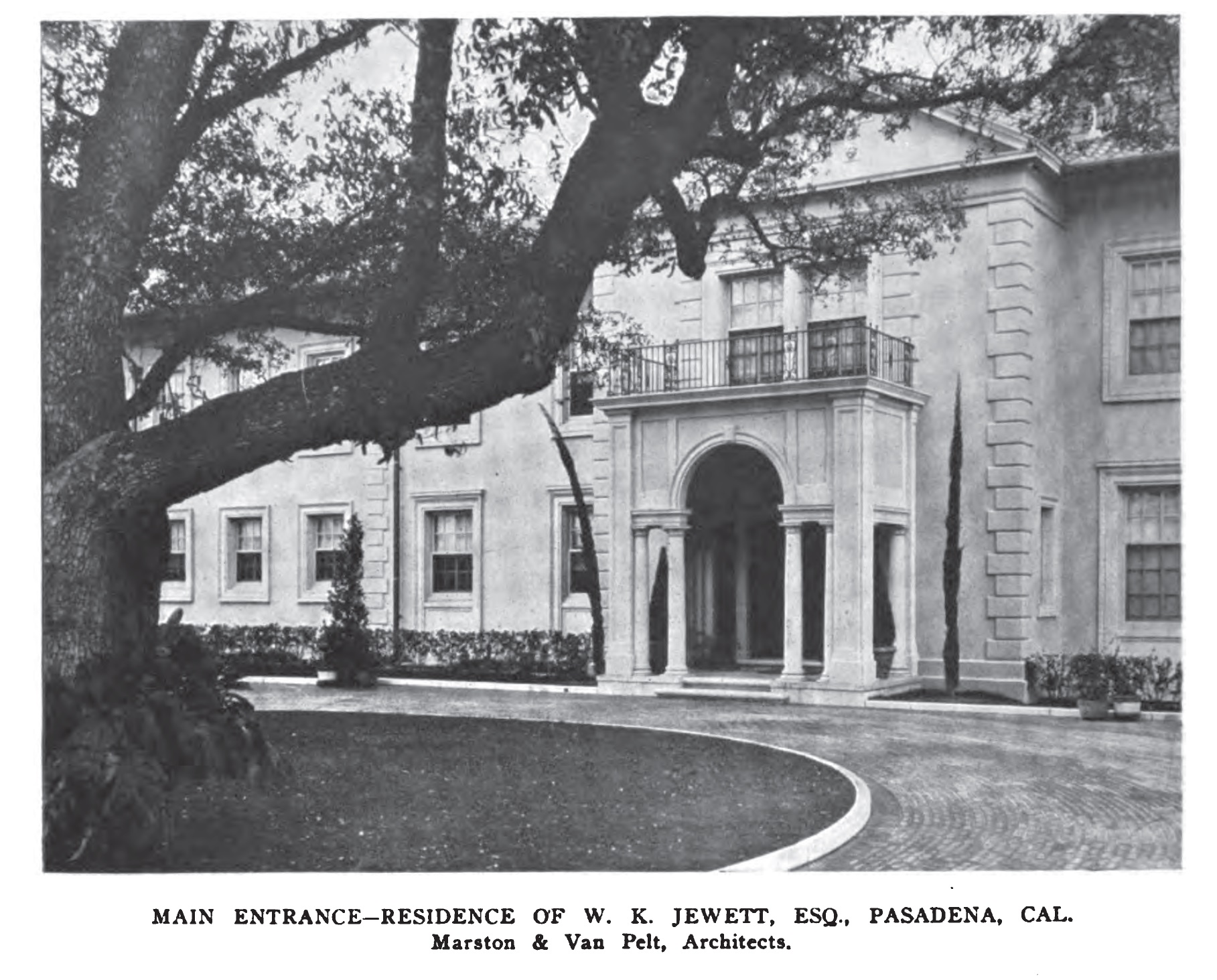
1145 Arden Road 03From Buster Keaton and the Marx Brothers, to noir classics and the 1980s soap opera Dynasty, the lavish Jewett estate located at 1145 Arden Road (originally 1201) in Pasadena has portrayed cinematic wealth and grandeur for nearly a century. Designed by architects Sylvanus Marston & Garrett Van Pelt, and completed in 1915, the Palladian-style villa was once set amidst vast gardens adorned with Italian sculptures and fountains, and remains accessed from a gated entry along a 100-foot-long driveway.

ca

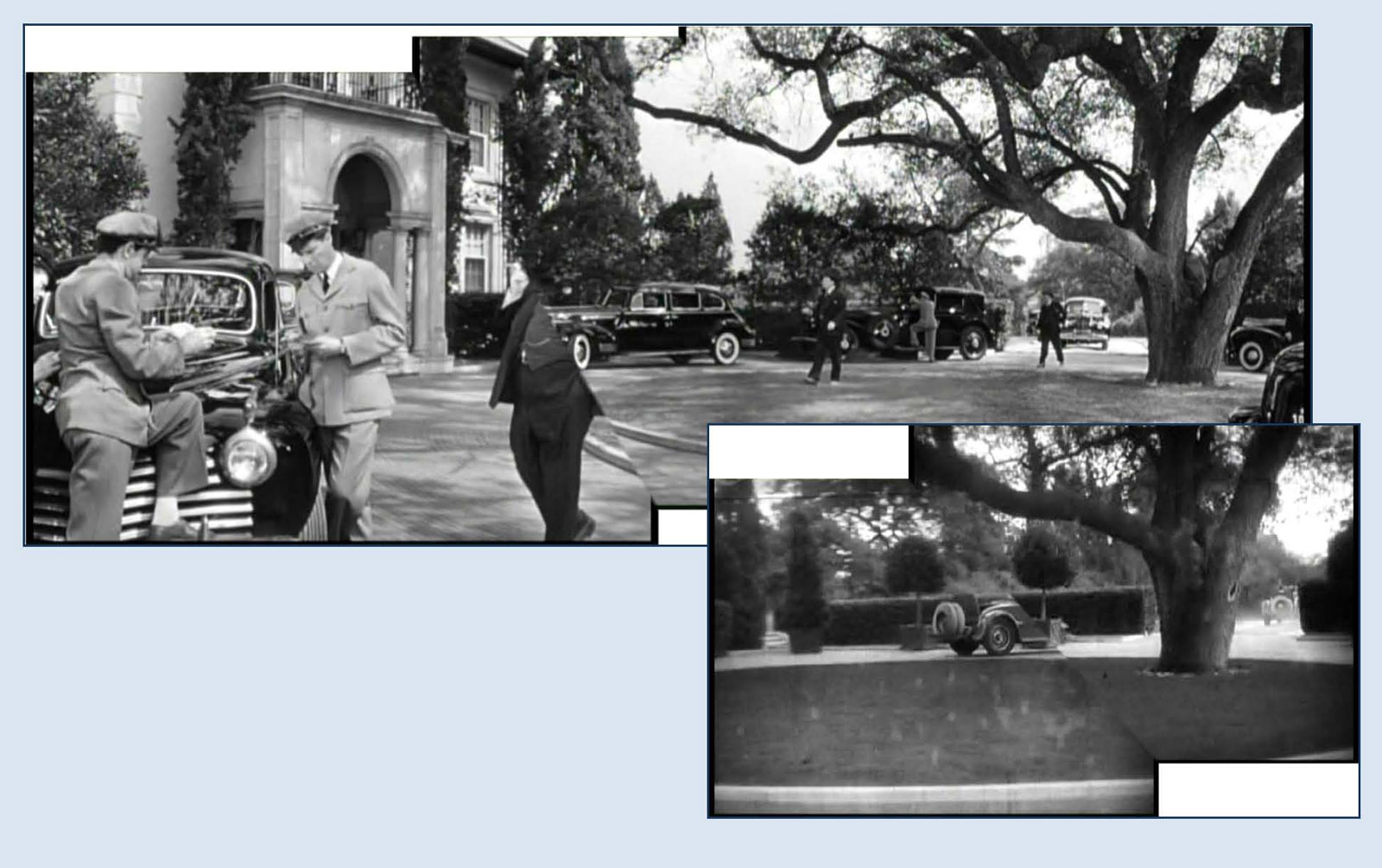
Matching views of the main entrance and driveway turnaround in the twisted film noir murder classic Born to Kill (1947), starring Claire Trevor and Lawrence Tierney (top), and in the William Haines – Joan Crawford 1927 comedy-romance Spring Fever. Notice the tree stands towards the south edge of the turnaround.

The estate’s imposing formal gate, appearing during the opening scenes of Buster Keaton’s most famous short film Cops (see above and below), was one of the first location discoveries I ever made. The thrill of visiting that spot in person, and appreciating, beyond the narrow view captured on film, the full 360 degree environment Keaton and his crew experienced when shooting the scene, inspired me to delve more deeply into Buster’s work, and ultimately lead to my first book.

ca

The gate on Arden Road appearing in Spring Fever (left) compared with Buster in Cops. Shown below, visual clues from Spring Fever help identify scenes from the Marx Brothers in Duck Soup.

Duck Soup 23I first read the Marx Brothers’ political satire Duck Soup (1933) was filmed at the estate in Leon Smith’s film location book Hollywood Goes On Location (1993). The estate lost many formal gardens north of the house when the property was Jewett Estate Through the Ages Magazine Vol 4 No 3 July 1926 pp 22-29 01subdivided (including its original 1201 address), but two popular filming spots appearing with Groucho, the long formal lily pond south of the home (see view, left, looking north towards the home), and the driveway turnaround beside the home entrance, anchored by a massive oak tree, shown above, remain prominent features of the estate.

Groucho and Margaret Dumont, looking south along the lily pond.

From Duck Soup, Groucho and Margaret Dumont, looking south along the formal Lily Pool.

ca

These detailed views reveal the elaborate circular arbor that stood behind Groucho at the south end of the Lily Pool.  The arbor seems to have been lost to subdivision.

ca

A modern swimming pool has been installed immediately south of the home where this carved circular lawn ornament once stood.  The view left looks north towards the home, the views to the right, Duck Soup above, and Spring Fever below, look south down the extant Lily Pool.

ca

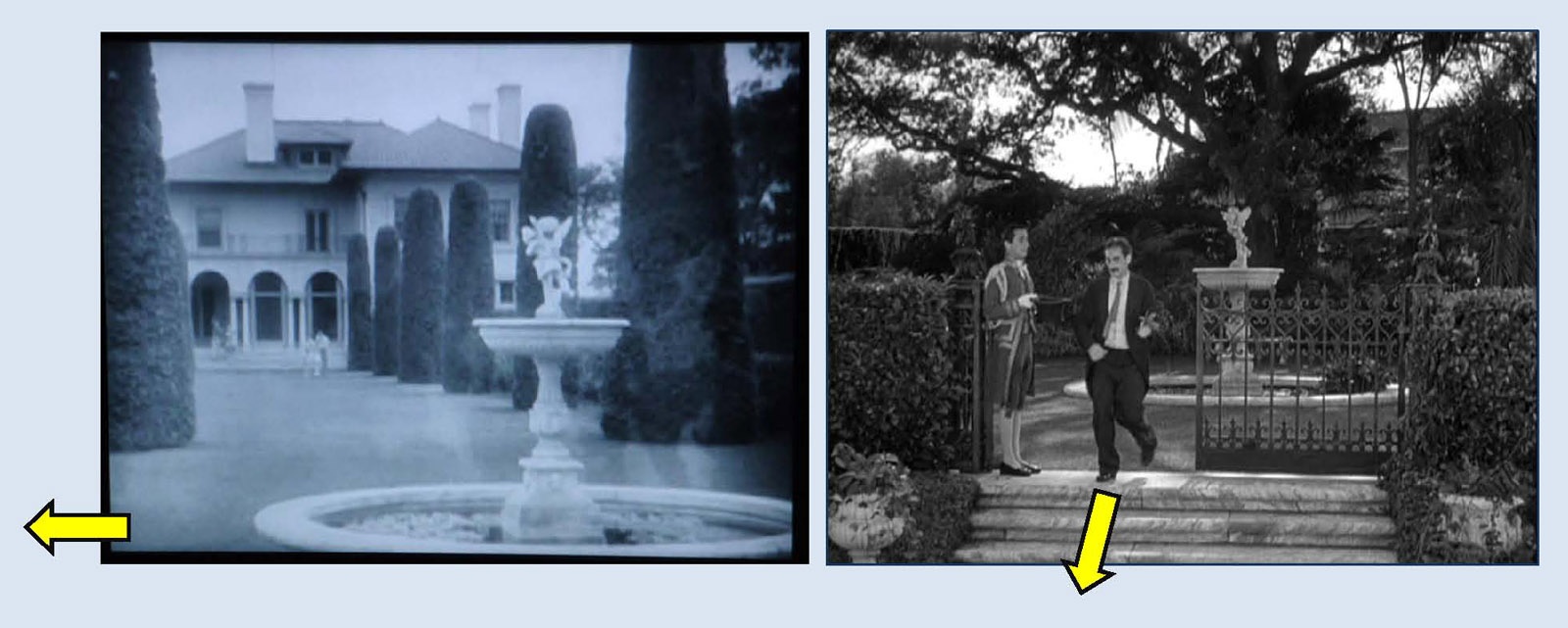
From Duck Soup, left, the assembled guests stand at attention awaiting the entrance of Freedonia President Rufus T. Firefly (Groucho), filmed looking north along the formal row of trees that once stood north of the home. The images from Spring Fever, at right, show a similar view (top), and an opposing view looking south from the north garden towards the north end of the home.  Note the Cupid fountain in the lower right.

CA

Groucho surprises the awaiting guests by making his entrance from the side. The fountain behind him appears in the Spring Fever frame (left). Through the trees to the right behind Groucho is the two-story guest house still standing at what was the north end of the estate. The estate’s north gardens were lost when the property was subdivided.

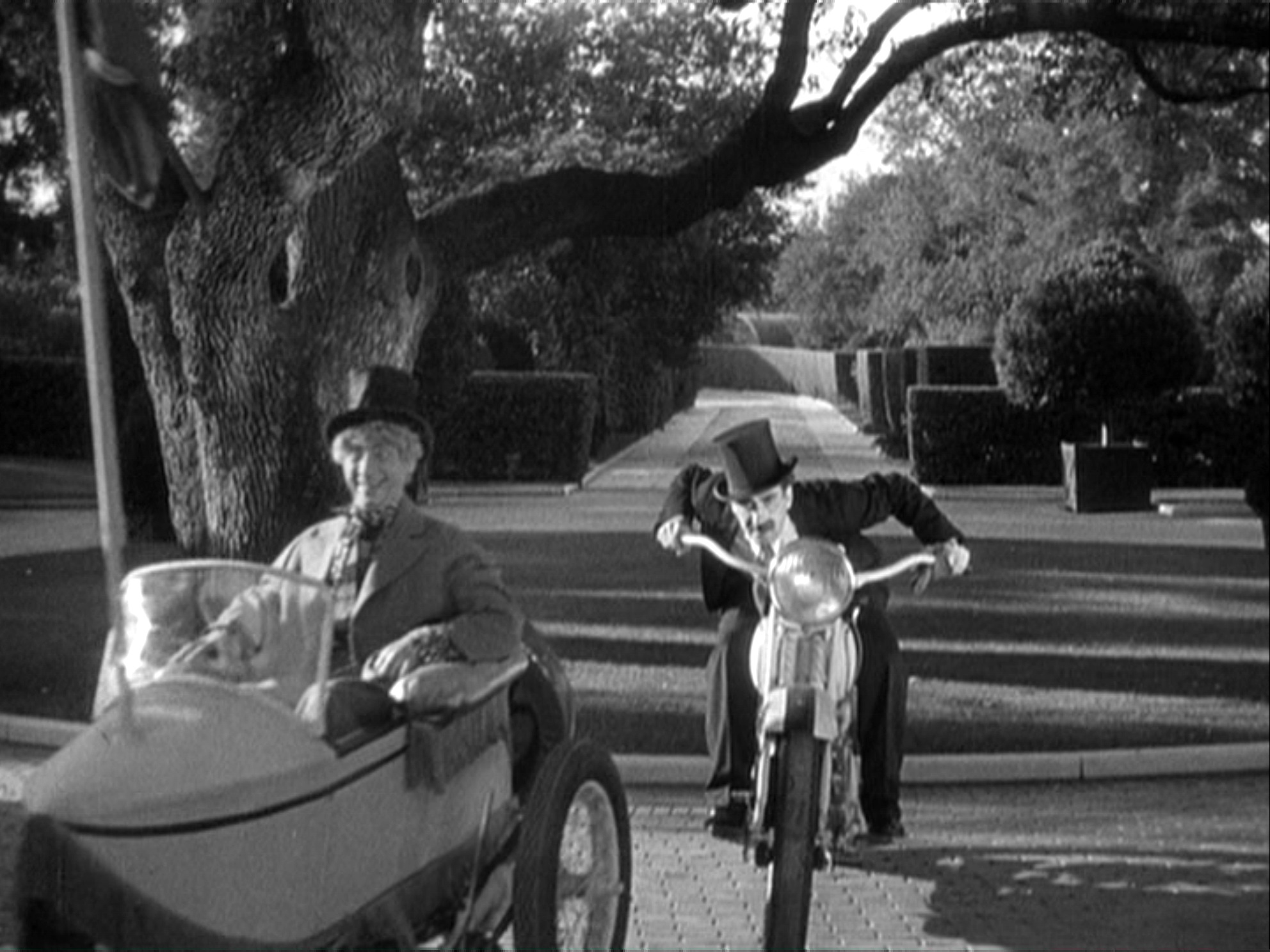
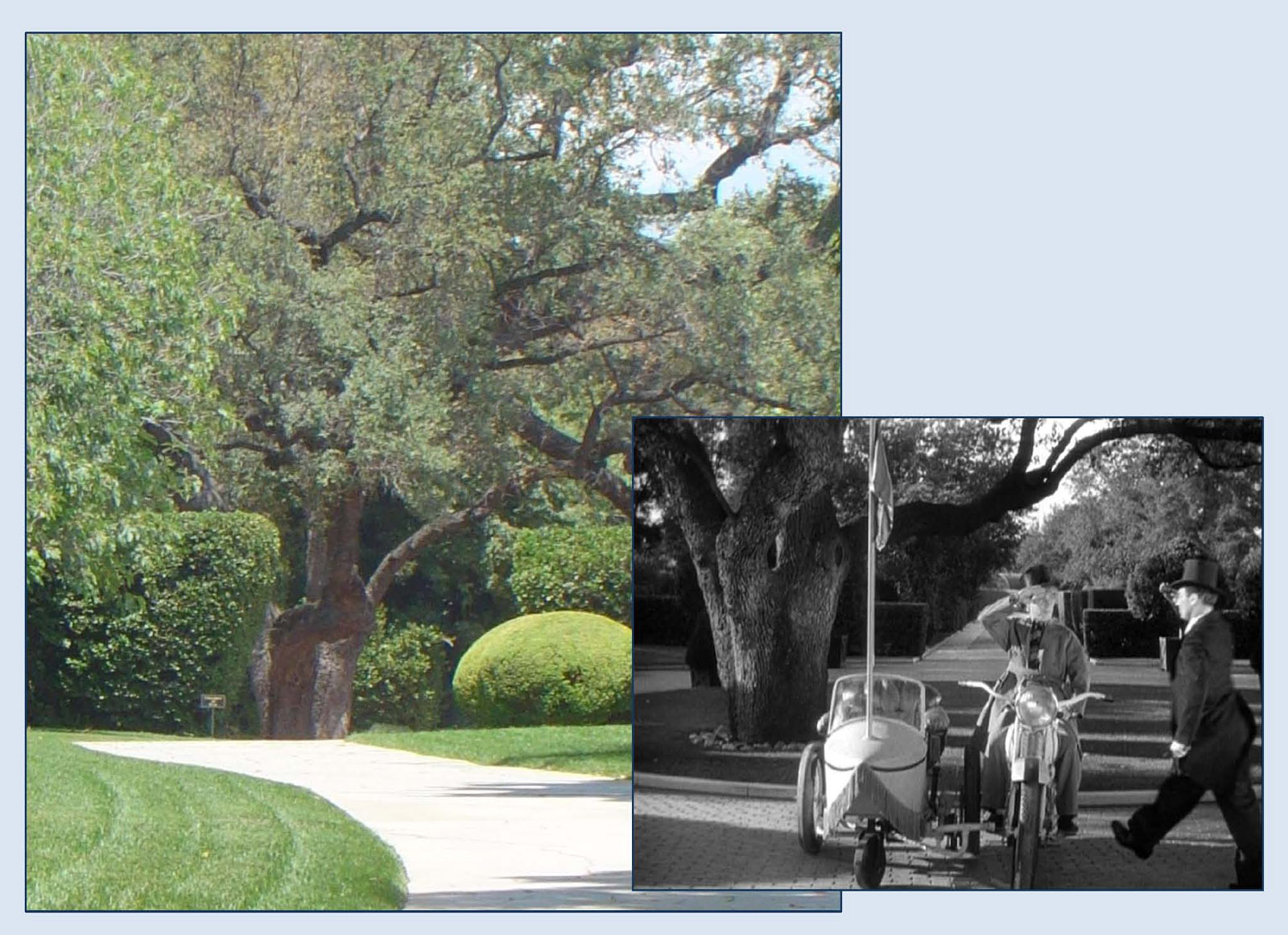
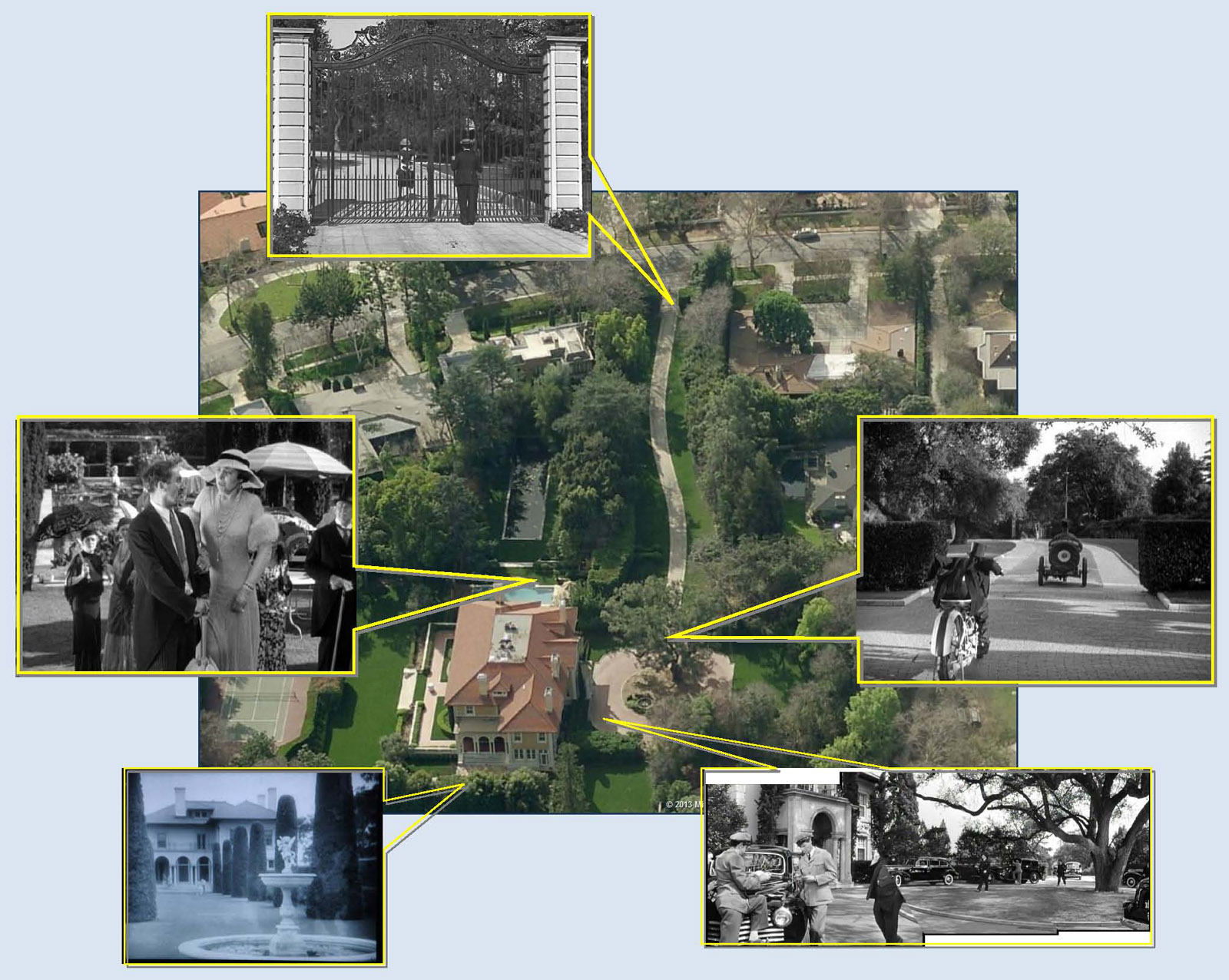
Duck Soup 15During one running gag in Duck Soup Groucho is left behind each time Harpo picks him up with a motorcycle sidecar.  For this version of the joke Groucho attempts to outsmart Harpo by sitting on the motorbike instead, Born to Kill 01but even then Harpo prevails, as this time the sidecar drives away, once again leaving Groucho stranded. We know from movies such as Born to Kill and Spring Fever (and confirmed by modern aerial views) that the massive oak tree standing in the driveway turnaround is sf01situated off center, near the south end of the turnaround.  Thus, this view of Harpo fleeing Groucho (left) was filmed at the turnaround looking north.  This landmark tree still guards the home, and is visible from the front gate (see below).

ca

Matching views looking north towards the driveway turnaround oak tree still standing today.

ca

As Groucho watches Harpo drive away, looking south along the driveway from the turnaround behind Groucho, a gate tower (box) appears in the distance, matching the gate tower from Cops (inset).

ca

Spring Fever/Born To Kill

According to the Los Angeles Times, the original owner William Kennon Jewett was heir to a railroad fortune in Ohio and struck it rich as head of a gold mine in Colorado.  In 2005 the Times reported the 13,498-square-foot house, with nine bedrooms, seven bathrooms, nine fireplaces, and an elevator, was listed for sale at $14.5 million.  The estate appears in many early films, including Ann Harding’s Paris Bound (1929) and the sole Amos ‘n Andy feature film Check and Double Check (1930).  As reported in the LA Times, the Mae West feature Goin’ To Town (1935), the long-running prime time soap opera Dynasty, and recent televisions shows such as CSI: Miami, and major films such as Gods and Monsters (1998) and Terms of Endearment (1983), were also filmed at the estate.

ca

Click to enlarge – looking south at the Jewett estate today, with Cops at top, Duck Soup middle left and right, Spring Fever lower left, and Born to Kill lower right.  All views are oriented properly to the aerial photo, except for the Cops gate which was filmed from the street looking towards the home. The north garden in the Spring Fever frame has been lost to subdivision at the bottom edge. (C) 2015 Microsoft Corporation Pictometry Bird’s Eye (C) 2015 Pictometry International Corp.

The Jewett estate was one of thousands of stately homes, churches, and country clubs, ranging from Burlingame to San Diego, listed in the 1920s-1950s with the Assistance League Film Location Bureau, a charitable organization founded by Mrs. Hancock Banning that rented lavish locations for use by movie studios.  The participating owners allowed filming on their property in exchange for rental fees paid by the studios, that were in turn donated to the Assistance League’s charitable causes.  The win-win arrangement allowed the wealthy to support charity without spending a dime, while saving the studios the tremendous cost of building sets in lieu of filming at true locations.  Mrs. Lee Fay Turner ran the bureau from at least 1929 to 1951.  While further details about this group’s history await discovery, apparently the bureau assisted, for example, with renting locations used for the 1937 production of A Star is Born.

While Buster would later work with the Marx Brothers as a gag writer for M-G-M, I wonder if they ever realized they had both filmed at the Jewett Estate.

While Buster would later work with the Marx Brothers as a gag writer at M-G-M, I wonder if they ever realized they had both once filmed at the Jewett Estate.

Vintage photos Architectural Record Vol. 52, page 34, 1922, and Through the Ages Magazine, Vol. 4, No. 3 July 1926, pp. 22-29.

Posted in Buster Keaton, Duck Soup, Film Noir, Jewett Estate, Marx Brothers | Tagged , , , , , , , , , , , , , , , , | 16 Comments

Charlie Chaplin City Lights Tour – Author Presentation

2013-09-20_05-39-29-PMCityLightsAs part of the Los Angeles Conservancy Last Remaining Seats film series, on June 13, 2015 I will be introducing Charlie Chaplin’s masterpiece City Lights at the spectacular Los Angeles Theater where the film premiered January 30, 1931.  Although the show is now sold out, I have prepared the attached self-guided written tour (see link below) to the many downtown and Wilshire Boulevard film locations appearing during the film that I will cover as part of my presentation.

Albert Einstein and Chaplin at the premiere

Albert Einstein and Chaplin at the premiere

The tour starts at the Los Angeles Theater at 615 S. Broadway, and covers many locations within steps of the theater before heading west along Wilshire Boulevard.  Unlike the gritty locations appearing during The Kid (1921), Chaplin sought out modern and urbane settings for City Lights.  Yet another example of how the varied streets of Los Angeles were used to set the right character and tone for the movies.  After the screening I will be signing copies of my Chaplin book Silent Traces.

Charlie Chaplin City Lights Film Location Tour – John Bengtson

You can read more new discoveries about City Lights and the Los Angeles Theater HERE.

All images from Chaplin films made from 1918 onwards, copyright © Roy Export Company Establishment. CHARLES CHAPLIN, CHAPLIN, and the LITTLE TRAMP, photographs from and the names of Mr. Chaplin’s films are trademarks and/or service marks of Bubbles Incorporated SA and/or Roy Export Company Establishment. Used with permission.

Posted in Chaplin Tour, Charlie Chaplin, City Lights, Los Angeles Historic Core | Tagged , , , , , , , , | 1 Comment

Harold Lloyd’s Speedy – Five Fun Facts

Poster - Speedy_01This Saturday morning, May 30, Harold Lloyd’s granddaughter Suzanne Lloyd and I will be introducing Lloyd’s final silent comedy Speedy (1928) at the Castro Theater as part of the San Francisco Silent Film Festival’s 20th anniversary program. Live musical accompaniment will be provided by Rodney Sauer’s Mont Alto Motion Picture Orchestra.  Here are five fun facts about the movie.

While most

While most “New York” based films contain only a few stock footage establishing shots, Lloyd filmed ALL OVER – from Hamilton Heights north, to the tip of Bowling Green south, as well as in the Bronx, Brooklyn, and Coney Island.

ca

Lou Gehrig has a cameo DURING Babe Ruth’s cameo.  You can read more about Gehrig’s appearance HERE.

Speed (1928) looking south down Witmer towards the Mayfair Hotel (C) 2011 Google

Throughout the film Speedy cuts back and forth between scenes shot in New York and Los Angeles.  This view looks south down Witmer in Los Angeles towards the Mayfair Hotel.  This hotel appears in the 1950 film noir Edge of Doom and in the television series The Office.  (C) 2011 Google.

Buster Keaton (far left) and Al St. John rode the same Witching Waves ride during their short comedy Coney Island (1917) that Harold and Ann Christy rode ten years later filming Speedy

Buster Keaton (far left) and Al St. John rode the same Witching Waves ride at Luna Park during their Roscoe Arbuckle short comedy Coney Island (1917) that Harold and Ann Christy rode ten years later filming Speedy.

Lloyd built a huge New York backlot near Westwood (at back).  The lot stood adjacent to the Westwood Village Memorial Park, where many notables, including Marilyn Monroe, are buried.  A large Mormon temple was built in the backlot site in 1956.

Lloyd built a huge New York backlot (box) near Westwood Village (at back). The lot stood not far from the Westwood Village Memorial Park (dark vegetation left of center), where many notables, including Marilyn Monroe, are buried. A middle school and a large Mormon temple were built on the backlot site.

I’ve posted many other stories about Speedy (see the list HERE), and cover it thoroughly in my Harold Lloyd film locations book Silent Visions.  Here’s also a link to an online article I prepared for the Museum of the Moving Image in New York when I spoke there in 2011.  I’ll be available all this weekend to sign books at the festival.

227 - S2 the birdIn closing, here’s something you don’t see every day – Harold extending the “digitus impudicus.”

Posted in Harold Lloyd, New York, Speedy | Tagged , , , , , , , | 4 Comments

The Three On A Match – ‘G’ Men – Ann Dvorak connection

ca

The second Los Angeles High School, located on Fort Moore Hill, appearing in Three On A MatchUSC Digital Library.

Ann in 'G' Men

Ann in ‘G’ Men

This post comes with a shout-out to Christina Rice, Senior Librarian overseeing the invaluable Los Angeles Public Library Photo Collection, and author of Ann Dvorak: Hollywood’s Forgotten Rebel, the wonderful biography about the spirited actress who played many standout roles during the early 30s at Warner Bros.  Although Ann does not grace any of the locations revealed here with her presence, her sympathetic portrayal of doomed characters in Three On A Match and ‘G’ Men provides the dramatic focus for both films. For more information about Ann visit Christina’s site http://www.anndvorak.com/.

ca

The playground scenes opening Three On A Match were filmed behind the second Los Angeles High School. The original wooden Los Angeles High School (standing in the left image directly above the arrow) was completed in 1873, and survived until it was demolished to make way for the Hollywood freeway.

Recently completed City Hall looms in the background during this playground scene from Three On A Match.  LAPL

Recently completed City Hall looms in the foreground (left) and in background (right) during this playground scene from Three On A Match. LAPL

ca

Three On A Match – Lyle Talbot abducts Ann’s son beside the famous arched bridge at Hollenbeck Park.

Ann’s character in Three On A Match abandons her son and husband for a wild life of booze and drugs with a petty gambler.  Ann’s friend, played by Bette Davis, take Ann’s son to the park, where Ann’s boyfriend kidnaps the child hoping to raise emergency cash to pay off his gambling debts. The harrowing scene was filmed at Hollenbeck Park, where many classic comedy films were staged, including Harold Lloyd’s Haunted Spooks and Girl Shy, Snub Pollard’s It’s A Gift, and the Laurel and Hardy favorite Men O’ War. Years later, the park hosted an elaborate song and dance number for the 1957 Doris Day musical The Pajama Game.

Bette Davis watches over Ann's son as the former 6th Street Bridge straddling Hollenbeck Park appears at back.  Below, a panoramic view of the park, looking south towards the bridge, from Laurel & Hardy's Men O' War and Harold Lloyd's Girl Shy.

Bette Davis watches over Ann’s son as the former 6th Street Bridge spanning Hollenbeck Park appears at back. Below, a panoramic view of the park, looking south towards the bridge, from Laurel & Hardy’s Men O’ War and Harold Lloyd’s Girl Shy.

Views of the former 6th Street Bridge from Three On A Match and The Pajama Game.

Views of the former 6th Street Bridge from Three On A Match and The Pajama Game (Doris Day at far right).

Ann holds her own with James Cagney in 'G' Men.

Ann holds her own with James Cagney in ‘G’ Men.

I’ve already covered many film connections between Ann’s next film ‘G’ Men and Buster Keaton’s One Week (see post describing the machine gun car chases staged in Inglewood HERE). But ‘G’ Men contains several other classic locations as well.

'G' Men night scene staged at the former Southern Pacific depot at 5th and Central. USC Digital Library.

‘G’ Men night scene staged at the former Southern Pacific depot at 5th and Central. USC Digital Library.

During ‘G’ Men thugs rescue gangster Danny Leggett (portrayed by Edward Pawley) by staging a dramatic nighttime gun battle with the authorities in front of the former Southern Pacific depot. (A prior post devoted solely to the depot shows how Douglas Fairbanks, Harold Lloyd, and Stan Laurel all filmed early silent comedies at this spot.)

Views of the depot lobby. USC Digital Library.

‘G’ Men – Edward Pawley is led in handcuffs from the Southern Pacific depot lobby – interior view at right. USC Digital Library.

This view below shows Edward Pawley’s train arriving at the back of the Southern Pacific Depot.  The many awnings depicted here obstruct the view – so some films, such as Harold Lloyd’s Girl Shy, would show trains arriving behind the Santa Fe depot, and yet show the passengers leaving from the front of the Southern Pacific depot a few blocks away!

USC Digital Library.

Views from behind the Southern Pacific depot – at night during ‘G’ Men, in daylight from Our Modern Maidens (1929). USC Digital Library.

The 'G' Men gunfight was staged north of the depot lobby. USC Digital Library.

The ‘G’ Men gunfight was staged on Central Avenue north of the depot lobby. USC Digital Library.

Later in ‘G’ Men, Edward Pawley is led out from the south entrance to the Hall of Justice, providing a remarkable vintage view of the one-time downtown cityscape.  To the left stands the former Federal Building and Post Office (P) at Temple and Main, while the right reveals the side of the former International Bank Building (B).

The view from the Hall of Justice appearing in 'G' Men. Marc Wanamaker - Bison Archives.

The view from the Hall of Justice appearing in ‘G’ Men. Marc Wanamaker – Bison Archives.

Below, another view showing where Edward Pawley is led from the Hall of Justice during ‘G’ Men.

Looking east toward the Hall of Justice south entrance, and the former post office (P) and bank (B).  USC Digital Library.

Looking east toward the Hall of Justice south entrance, and the former Federal Building and Post Office (P) and bank (B). USC Digital Library.

Matching views looking south from the Hall of Justice towards the post office (P), the International Bank Building (B), and City Hall. USC Digital Library.

Matching views looking south from the Hall of Justice towards the Federal Building and Post Office (P), the International Bank Building (B), and to the right, City Hall. USC Digital Library.

A closing comparison shot of the International Bank Building (B) as it appeared during Bill Strother's real-life climb staged for Safety Last!, and a view looking up Temple at the former Post Office building.  USC Digital Library.

Closer comparison views of the International Bank Building (B) looking west from Temple as it appeared during Bill Strother’s real-life climb staged for Safety Last!, and a view looking up Temple from Main Street at the former Federal Building and Post Office (P). USC Digital Library.

Three On A Match and ‘G’ Men copyright Warner Bros.

The restored and recently re-opened Hall of Justice.

Posted in Los Angeles Historic Core, Pre-Code | Tagged , , , , , , , , , | 1 Comment

The Three Stooges, Birth of a Nation, Forest Lawn Trees

BOAN tree study_Page_12

Looking east from Warner Bros. towards the Lasky Ranch. LAPL.

Click to enlarge. Looking east from Warner Bros. towards the Lasky Ranch. LAPL.

The former Lasky Ranch, bordering Griffith Park near Burbank, and future site of the Forest Lawn Hollywood Hills Memorial Park which opened in 1952, is steeped in movie history.  Once part of the Spanish-era Rancho Providencia, the Lasky Ranch was used for more than three decades as a filming location for scores of Hollywood productions.  As documented in my book Silent Visions, Harold Lloyd filmed his “rural” comedy The Kid Brother there in 1926, while Rudolph Valentino filmed exteriors for both Four Horsemen of the Apocalypse (1921) and Blood and Sand (1922) at the ranch (see below).

Playing the Ponies 09As shown here, the ranch also appears in an unlikely pair of films, D.W. Griffith’s monumental yet incredibly racist Civil War epic The Birth of A Nation (1915), and the Three Stooges comedy short Playing The Ponies (1937).  Several massive ancient oak trees that witnessed both productions are still standing today.

Looking east at the battle field from The Birth of A Nation. John Hillman.

Looking east at the battle field from The Birth of A Nation.  Trees N1 and 3 above are still standing. John Hillman SilentCinema.com.

It is well-documented that Griffith staged the Civil War battlefield sequences from The Birth of A Nation at the Lasky Ranch.  Above, by stitching together a production still from the movie, and test footage of the battlefield, both looking east, a prominent group of trees (the BOAN group) appears to the south (right) side of the field, consisting of a near tree (N1), a far tree immediately behind it (F2), a small tree standing where the two images overlap (S), and tree 3 and tree 4.  Also visible are two hills, H1 and H2, and a path running between them.

Click to enlarge. Marc Wanamaker - Bison Archives.

Click to enlarge.  Notice the BOAN group of trees (yellow oval), and the distinctive trio of trees (orange oval) . Marc Wanamaker – Bison Archives.

This circa 1922 view above looks east, showing the field of view (yellow lines) of the BOAN battlefield images above, and the dirt path between hills H1 and H2. The blue line marks the Los Angeles River.  Beyond the hills lies a clever bullring set from Rudolph Valentino’s Blood and Sand (see below).

The bullring set from Blood and Sand.

The bullring set from Blood and Sand. Only a 1/16th slice was needed to capture the shots.

The aerial image below, looking south at the Lasky Ranch, references the Three Stooges in Playing The Ponies.

Marc Wanamaker - Bison Archives.

Click to enlarge. Looking south at the Lasky Ranch. The yellow oval marks the BOAN tree group; the orange oval marks the nearby trio.  Marc Wanamaker – Bison Archives.

The aerial view above looks south towards the Lasky Ranch horse race track and the same path and hills H1 and H2 discussed above.  The inset image of Curly, Larry, and Moe reveals trees 4 and 3, part of the BOAN tree group (yellow oval).

Looking west, as Curly's stunt double runs beside the BOAN group of trees (yellow) and the trio (orange).

Looking west, as Curly’s stunt double runs past the BOAN tree group (yellow) and the trio (orange).

Looking east at the rack track, and the BOAN group of trees (yellow) and trio (orange). USC Digital Library.

Looking east at the rack track, and the BOAN tree group (yellow) and trio (orange). USC Digital Library.

Below, more views looking west at trees 4 and 3, part of the BOAN tree group.

Two views west towards trees 4 and 3, part of the BOAN group.

Two views west towards trees 4 and 3, part of the BOAN tree group.

If you’re not overloaded yet, the following steps in my analysis are even more technical, so hold on, or you can just take my word and skip to the end.  🙂   To begin, let’s take another look at the BOAN tree group (below).

This image from Playing The Ponies provides a rare view west at the BOAN tree group.

This image from Playing The Ponies provides a rare view west at the BOAN tree group.  We’ll return to this image later.

Next, the image below shows how the Lasky Ranch was heavily graded while being converted into a cemetery, removing or changing many landmarks.  Hills H1 and H2 were lowered (to accommodate more burial plots), and the battlefield was scraped flat.

Marc Wanamaker - Bison Archives.

Looking south. The battle field area from The Birth of A Nation was heavily graded (wavy lines) to provide for more burial plots. Marc Wanamaker – Bison Archives.

Trees F2 and S from the BOAN tree group were lost during the Forest Lawn conversion.  Hundreds of pine trees, now 60 years old, were later planted among the sturdy native oaks to complete the landscaping.

CA.

Detail from above. Due to the grading of the battlefield site, trees F2 and S of the BOAN group (yellow) were removed. The trio (orange) was left alone.

ca.

Click to enlarge – trees N1 and 3.

There remain today at Forest Lawn several massive oak trees, standing among smaller second and third generation oaks, and dozens of pine trees, now 60 years old, that were planted in the 1950s as part of the cemetery landscaping.  These massive oak trees must include those that appear during The Birth of A Nation, and Playing The Ponies – but how can we be sure which is which? By using logic, aerial views from Google Maps, and studying the candidate trees in person, I am convinced that trees N1 and 3, appearing in both films, are the two trees identified at left.

How do we know which tree is which?

How can we know the answer? By accounting for each tree. (C) Google.

By visiting Forest Lawn in person, it quickly became evident which tree is which.  First, many trees in the above aerial view are pine trees, planted 60 years ago, and thus were not present during the filming.  Next, there are a few scattered, small oak trees that represent second or third generation young growth. Then there are three massive oak trees that line up in position with the original trio of trees (orange oval).  Likewise, we know trees F2 and S of the BOAN group were lost during the conversion.  If we assume that the smaller tree 4, which stood away from the BOAN group, was sacrificed to make way for more burial plots, then the two massive trees standing south of the trio must be the surviving trees N1 and 3.  Since there are no other massive oak tree candidates from which to choose, these two trees must be the ones to appear in The Birth of A Nation.

ca.

This reverse detail from Playing The Ponies shows that tree N1 has many trunks, and tree 3 is more “Y” shaped.

As further collaboration, the black and white image above comes from that detailed west-looking image appearing in Playing the Ponies.  While the original view looks west, to aid with comparison I flipped the image to approximate how it would appear when looking east.  With this visual approximation, we would expect tree N1 to have many dense trunks, and would expect tree 3 to be somewhat “Y” shaped.  When viewed in person, trees N1 and 3 are both consistent with this expectation.

The vintage trees plotted in Photoshop over a modern view.

My friend “Skip” plotted the tree positions from the vintage photo as circles in Photoshop over a modern view.

Then and Now - 100 years apart.

Then and Now – 100 years apart.

Trees N1 and 3 were already massive and old during the production of The Birth of A Nation one hundred years ago.  Today they stand as silent witnesses to a century of movie history.

A final view from 1939 - Warner Bros to the left, the trio of trees (orange) and Birth of a Nation trees (yellow).  UCSB

A final view from 1939 – Warner Bros to the left, the trio of trees (orange) and Birth of a Nation trees (yellow). UC Santa Barbara Library

Playing The Ponies Copyright 1937 Columbia Pictures Corporation of Cal. Ltd.

View of the BOAN trees at Forest Lawn.

Posted in Three Stooges | Tagged , , , , , , , , , , , , , , , , | 34 Comments