Buster Keaton’s masterpiece Cops (1922) is one of his seven films inducted into the Library of Congress National Film Registry as a work of “enduring importance to American culture.” Cops is his only independently produced film with no interior scenes. Every scene was filmed outdoors at true locations, or on the backlots of Buster’s small studio, and the Goldwyn, Metro, and Brunton (United) Studios. The location for every scene has been identified.
As highlighted in this new, stand-alone segment of my blog (see banner at top and link below), each scene is time-referenced in sequential order. This lengthy timeline is divided into 9 pages with links at the bottom of each page. Most locations and even streets such as Arcadia and New High no longer exist, except in vintage photos, maps, and aerial views. Los Angeles and Hollywood looked different a century ago, now lost to history, but we can use Cops as a window into the past. Buster filmed Cops everywhere, from Culver City to Pasadena, from Hollywood to USC to south of downtown LA. Buster’s effort, planning, and production values are beyond amazing. From A to Z, from beginning to end, you can now travel with Buster every step of the way during his journey filming Cops.
Aside from sharing new discoveries, this Year Two program is especially gratifying because recent health issues make it difficult for me to speak. But using audio narration files from prior bonus programs, I created an AI clone of my voice (!), which narrates the program for me. It is my voice, it sounds like me even to me. But I did not speak a single word, the clone narrates the entire show.
Among the Year Two newly reported locations, the video documents the traffic jam road scenes along Centinella appearing in Two Tars, also highlighted in this post HERE.
This post examines Buster Keaton’s ‘failed’ rooftop leap between buildings during his first feature comedy Three Ages (1923), one of the most remarkable stunts of his career. The movie tells three tales of love, set in the Stone Age, the Roman Age, and the Present Age (i.e. 1923), where against all odds underdog Buster wins the girl played by Margaret Leahy by defeating villainous Wallace Beery.
To begin, Buster, didn’t use a stunt double leaping between the buildings, but used a body double for another scene (!) This production still shows Margaret lying on a dolly, a handle hidden in her hair, straddled by the wheels of a camera car. Keaton, directing the scene, is wearing his “working man” costume – notice the vest and the slap shoes. Next to him is a man of similar stature wearing fur shoes and a fur costume over his regular clothes. Clearly this man, and not Buster, is the person dragging Margaret by the hair in the above scene. Given Ms. Leahy’s limited acting skills, perhaps Keaton switched places to supervise the scene more closely.
The movie ends with three postscript finales – caveman Buster and wife, and their 10 caveman kids exit their cave one-by-one. Next, elegant Roman Age Buster and wife and 5 children, all wearing graceful togas, exit their formal columned home. For the final shot, Present Age Buster and wife exit their Hollywood bungalow, along with … one tiny dog! As reported in this recent post HERE, their Hollywood bungalow still stands, at 1425 El Centro near the corner of Leland Way. See below for my Kino-Lorber bonus program showing locations from the film.
What do you see? Buster leaping with absolute certainty he will easily grab the ledge and climb to the roof, or Buster leaping to touch the ledge so that he may deliberately fall into a net? An accident or an “accident”?
The story goes Buster accidentally missed the second building, which necessitated devising him falling through window awnings and swinging on rainspouts to salvage the failed scene.
Considering Buster’s skill and precision, I always believed his “accidental” fall was planned that way all along. Would Keaton’s brilliant technical director Fred Gabourie have failed to calibrate the correct distance for the jump in advance? To my eye the ledge was too far away for Buster to plausibly claim he was certain of success when making the leap. But Keaton scholars recount a 1956 interview where Buster reports it was a true accident, where he explains afterward “I had to go home and stay in bed for about three days.” But in the same interview he misstates where the scene was filmed (!) Knowing Buster was publicity savvy, who sometimes embellished promotional interviews, and my sense Buster really did plan for this fall, I drafted a lengthy article ‘proving’ the fall was planned all along, while dissecting Buster’s at least partially inaccurate interview describing the famous scene.
Buster swung on a hinged rainspout during The High Sign and swung from awning to awning during My Wife’s Relations. It’s easy to imagine Buster eagerly recreated these stunts on a large scale for his first feature film.
Thankfully eagle-eyed Keaton aficionado Richard Warner offered a tantalizing deeper theory: (A) the fall we see onscreen could have been planned, but (B) Buster was also telling the truth about having an accident. (A) and (B) are not mutually exclusive! Perhaps the sequence we see was truly planned, but also inspired by a true accident, the original footage of which is now presumably lost. This duality allowed me to focus on what we know and see onscreen, and leave speculation about Buster’s interview alone.
Click to enlarge – does Buster’s body language indicate the startled shock and panic of a three-days-in-bed accident victim desperately grabbing for the ledge? Or someone calmly falling into a net as planned?
We’ll likely never know the full truth, but if you care to read why I believe Buster’s ‘accidental’ fall was truly planned that way all along, with further thoughts and images, and a full transcript of his error-prone interview, please download as a 4MB PDF file below, my story appearing in the Spring 2025 issue of The Keaton Chronicle, published by The International Buster Keaton Society, the Damfinos.
My bonus program for the prior Kino-Lorber Blu-ray of Three Ages is now out of print, but available below on my YouTube channel. See Buster’s bathtub rock, the Garden of the Gods, the Coliseum, the Hill Street Tunnel, the Hollywood Fire/Police Station, the First Methodist Church in Glendale, and more. Please like and subscribe.
One of the most iconic moments in Buster Keaton’s Cops (1922), in all of cinematic history for that matter, is Buster chased back and forth down an empty city street by a mob of angry policemen.
The giant buildings at back, and what I call Buster’s arch, were obviously a backlot set, and it was thrilling to see, thanks to author-historian Steve Bingen, that it once stood on the Goldwyn lot in Culver City, before later transforming into M-G-M.
Above, looking east at Buster’s arch (photo David L. Synder). I had long wondered, for what feature film were these sets originally built? Well, eagle-eyed Dave Barnes tells us – they appeared in the 1919 drama The World And Its Woman (TWAIW). Dave shares his amazing collection of classic Hollywood backlot photos on the Facebook group Studio Backlots and Ranches.
Above, looking west, Dave’s March 23, 2025 Facebook post shares this stunning image of the giant arch set being constructed. Considering most silent films are now lost, I was even more amazed to learn TWAIW still survives, and can be viewed online on YouTube. TWAIW is a Russian war drama depicting the forbidden love between a peasant girl turned opera star, portrayed by real-life opera star Geraldine Farrar, and a Russian prince, portrayed by Geraldine’s real-life husband Lou Tellegen.
I skimmed through the film, set entirely in Russia, and was surprised to see these grand sets only appear on camera during a few scenes at about 54 minutes into the film. YouTube link HERE. It’s remarkable they would build such huge sets for such limited screen time. Above, TWAIW to the left and Cops to the right.
Count ‘Em, this July 26, 1919 publicity piece touts the film’s Fifteen Hundred Extras. Note the matching view through the arch. Megaphone in hand, Frank Lloyd was the director.
Click to enlarge – looking east at the Goldwyn backlot and Buster’s arch in 1919. That’s Culver Blvd. to the right. USC Digital Library.
Above, front and back views of Buster’s arch – click to enlarge. Interestingly, while TWAIW is set in Russia, the front of the columned building in the right photo reads C”OTTON EXCHANGE,” which suggests the set was repurposed for something else, perhaps a movie set in the US south.
Dave has more surprises. In the same March 23, 2025 Facebook post, his photo of a nearby Goldwyn set shows where Buster fooled an army of cops by hiding in a street sweeper trash can. Lon Chaney filmed a scene here as well, upper right inset, for the 1921 Goldwyn drama The Ace of Hearts.
As reported HERE, Cops is Buster’s only independently produced film with no interior scenes. Every scene was either filmed on location or on a studio backlot. At the time Buster’s open air shooting stage was being enclosed. It’s fun to imagine Cops was deliberately structured without interior scenes to provide the studio carpenters sufficient leeway to complete their work.
Buster not only filmed Cops on the Goldwyn backlot, but on the Metro backlot due south of his studio.
Above, the crowd drenched while viewing the policemen’s parade, and the angry mayor yelling at his chief of police. These views look east.
Buster filmed other scenes on the Metro backlot, here looking west – read more HERE.
Wrapping up, Buster filmed the pawn shop (at back) and the teeter-totter fence from Cops at the Brunton Studios (later United Studios, now the site of Paramount Studios) a few blocks east from his studio. (He also filmed many scenes here for Day Dreams, and the waterfall rescue and related scenes for Our Hospitality). Read more HERE and HERE.
Every location from Cops has been identified, although this scene above hasn’t been posted before. Here, a cop pounds his baton on the ground to summon help, looking west down Market Street from Alameda toward San Pedro.
Every scene has been identified, well … , except for the closing scene below. I appeal once again to readers for help.
Buster locks the army of cops inside a police station, but when rejected by his girl, he turns himself in. The late afternoon sun casting shadows in the foreground suggests we are looking east. The Goldwyn scenes had far more cops. Since this scene has fewer extras, and a slightly more modest set design, I wonder if this was also filmed on the Metro backlot. I lack an aerial photo confirming this is true, but aerial photos of the Goldwyn backlot, Brunton (United) backlot, and Metro backlot, suggest it would have fit most easily on the Metro lot. Conceivably this set could have been built at Buster’s small studio itself, but it would have been one of the largest sets he ever built there, and photos taken later in 1922 do not show remnants of this set. Any thoughts?
For me Cops is an endlessly fascinating time machine. Thanks to Dave Barnes we can now dive deeper into the past to witness and understand how Buster made this incredible film.
Check out my Kino-Lorber bonus program for College.
Check out my Kino-Lorber bonus program for Three Ages.
Short and sweet, just a few examples of silent film locations making repeat appearances. Sadly, all are long since demolished. The good news, more rare and previously unavailable silent films become accessible on YouTube every day. These YouTube links below should take you to the captured moments.
When Dawn Came (1920) starring Colleen Moore at 03:06 @DavidEickemeyer, filmed at Alameda and Marchesault, where Buster Keaton filmed a scene from Day Dreams (1922).
Replaced by the Union Station, the corner of Alameda in the former Chinatown stood near the Plaza de Los Angeles.
Chicken a la King (1919) at 03:24 @josephblough4403. Another Lyons & Moran comedy, this time filmed inside the gate to Castle San Souci, where Charlie Chaplin and Marie Dressler filmed Tillie’s Punctured Romance (1914).
Lige Conley in Fast and Furious (1924) at 17:36 @josephblough4403, filming at the Inglewood train station, where Buster Keaton filmed the closing scenes from One Week (1920).
Charlie Chaplin’s 1916 film One A.M. begins with him portraying a wealthy drunk struggling to exit a taxicab. Filmed on location, this setting has been a mystery for over a century, until Sarah Lagrillière, a brilliant film preservationist and avid visual historian from Finland (!), solved the puzzle. Incredibly, the scene was staged along Hollywood Blvd, almost due north from where Chaplin would later build his studio across a lemon grove less than 2 years later.
Click to enlarge – first, this composite photo looks south along Hollywood Blvd west of Sycamore. One movie frame shows where Charlie exits the taxi, the other movie frame matches perfectly with the back of the homes facing south along Hawthorne Ave, while the arrow leads from the filming site to the future Chaplin studio site at 1416 N La Brea. USC Digital Library. The home with the rooftop gable appearing beside the two images of Albert Austin at top was 7071 Hawthorne.
Chaplin filmed One A.M. at the Lone Star Studio, located at Eleanor and Lillian Way. Buster Keaton began his independent productions filming at the same small studio in 1920. The studio site where Chaplin AND Keaton both filmed has been honored with a commemorative plaque installed by the Damfinos, The International Buster Keaton Society.
Look closely and you’ll notice a trolley passes Charlie as he struggles exiting the taxi. The Lone Star Studio stood a short block south of the Santa Monica Blvd trolley line, and at the time the area was sparsely developed. It would have been efficient to film the scene on Santa Monica near the studio, but they didn’t. Analyzing vintage photos and historic maps show the details just don’t match.
The first big break came when Michael Aus released his wonderful Lyons and Moran DVD of early Universal comedy films. One featured short Waiting at the Church (1919) starring Eddie Lyons and Lee Moran (see post Time Travel to 1919 Hollywood HERE) is one of the most visually consequential silent films I’ve ever seen, with scenes filmed all around early La Brea, Highland, and nascent Hollywood Boulevard.
Click to enlarge – One A.M. at left, note trolley tracks, matching homes from Waiting at the Church at right.
As reported three years ago in a post pleading for help solving this One A.M. mystery, background details confirm Charlie, and Lyons and Moran filmed scenes at the same location. The location block pattern was clear – a vacant front lot along a trolley line, then an alley, then a back lot lined with small garages facing the alley and taller homes facing the adjacent street.
Matching details with One A.M. top and Waiting at the Church below
Further, given the angle of the light, I “assumed” the view looked east (HUGE MISTAKE). After scrutinizing vintage maps and aerial photos for candidate blocks east of trolley lines, one block along Highland Ave jumped out. The pieces all seemed to fit, no other block fit as well, and as further “proof” Lyons and Moran had filmed other scenes on McCadden Place just a block away. This had to be the correct site, but the aerial photos were too distant to say for certain.
But Waiting at the Church provided another big clue. Wider views of our location revealed a curved irrigation ditch running below the street with the trolley line, guarded by a metal safety railing (above) to protect people from falling into the ditch. Charlie must have exited his taxi near this railing. All we needed to prove this Highland block was correct was to track down some early adjacent drainage or irrigation channel.
Three years ago I pleaded for help, and Al Donnelly came aboard. A Hollywood area native, now retired in Oregon, Al is an expert historian, focusing on railroads and infrastructure. Al sent numerous vintage maps, construction plans, diagrams, and early photos that we dissected trying to find some tangible clue placing a canal or ditch adjacent to Highland. One remarkable document, Al shared this 1888 irrigation map showing Colegrove, and where Hollywood would later be developed, covered with a grid of canals and ditches. But again, these records were just too broad to confirm a single ditch at a single spot. David Rumsey Historical Map Collection.
Then, out of the blue three years later, Sarah Lagrillière emailed the answer from Finland, the Chaplin One A.M. mystery was finally solved! Sarah is brilliant, and did several brilliant things. First, she didn’t fall for my assumption the view looked east (it looks south). She allowed herself to consider all possibilities. Next, she didn’t focus on some canal or ditch, she focused on the distinctive homes appearing at back. Studying vintage photos, some presented in my post about early Hollywood, before the Chaplin Studio was built, the corner of Hollywood and Sycamore stood out to her. Plain as day, she saw what I had overlooked. I am so happy she shared this with us.
Charlie’s choice of location is puzzling. The mundane background does not suggest the urban nightclub life, and why would he travel two miles for such a generic shot on Hollywood Blvd when a comparable bland background was available right at his Mutual studio? Further, the spot was just steps to the west from the fabulous (now lost) Garden Court luxury apartments. One A.M. was released August 7, 1916, and a Hollywood historian reports the Garden Court was built in 1916. At left, the Garden Court appears in the 1922 promotional film Night Life in Hollywood hosted on YouTube by Joseph Blough.
It seems unlikely, but if, if, the completed building and the movie filming overlapped, perhaps Charlie originally filmed at the Garden Court. Charlie portrays a wealthy drunk, so what if they decided to film at one of the few fancy buildings in town? Again, this is speculation, not likely, but imagine Charlie then realized this lavish building in the background would distract from him getting out of the cab, so he simply moved just down the street instead. What do you think? Does some theory explain why Charlie filmed this scene two miles from his studio?
Click to enlarge – more context, Sarah suggests the arrow seems to point toward the same tree in both this 1919 Watson Family Archive aerial photo and in this 1919 Waiting at the Church frame. Notice the large white Garden Court Apartments near the center. Note: the tip of the triangular traffic island in the aerial photo is where Buster Keaton built his private safe doorway set in Sherlock Jr. (1924).
Click to enlarge – this 1918 Charlie Chaplin Archive photo looking north shows the Chaplin Studio lower right, with the above-ground backlot “trench” set built for Shoulder Arms. I decided not to annotate this photo, but hopefully you can clearly see the Garden Court, Sycamore, Hawthorne, and the One A.M. vacant lot filming site near the top.
Click to enlarge – for comparison, this circa 1906 photo looking south shows Sycamore, with a few homes on Hawthorne facing the camera. USC Digital Library.
Thanks again to Sarah Lagrillière, Al Donnelly, Michael Aus, and the others who offered suggestions over the years, for uncovering a tantalizing glimpse of early Hollywood history.
Then and now – 7060 Hollywood Blvd west of Sycamore
Charlie’s studio on La Brea was once a lemon grove. This YouTube video shows more of Charlie’s studio neighborhood.
They did it again! Flicker Alley is now hosting Laurel & Hardy: Year Two, a beautifully presented 2-disc Blu-ray set of Stan and Ollie’s 1928 films, their second year (Year Two) working as a duo. These all-new restorations were assembled from archives and collectors from around the world, and once again I was honored to present a bonus video essay providing a detailed overview of the locations appearing in such films as Leave ‘Em Laughing, The Finishing Touch, You’re Darn Tootin’, Their Purple Moment, Should Married Men Go Home?, Two Tars, and We Faw Down.
Many of these 1928 locations were discovered long ago by Robert Satterfield and other devoted location fans, as documented in Pratfall, the 1985 Way Out West Tent filming location guide. That said, while researching the visual essay I came upon several new locations that do not appear to have been previously reported. To see them all check out the new Year Two locations program. This post focuses on Two Tars, famous for its slow-motion demolition derby among frustrated drivers stuck in a rural traffic jam.
Hal Roach Studio carpenter and prop man Thomas Benton Roberts (who built the many collapsing cars, see his cameo at left) reported the traffic jam was staged along Centinella Avenue, as does the 1928 Studio Date Book. Newly reported here, convincing photographic evidence seems to confirm it was staged along Centinella a block or two south of the Clover Airfield, the corner of National Blvd, and the Santa Monica Golf Course (see map above, more details to follow). While a nearby street has been proposed as the location instead, vintage aerial photos and maps show this street was not constructed until after the movie was made.
A quick example, more details below – the crest of the hill and the trees marked red and orange in the aerial view at right (looking north up Centinella) stand at the corner of National Blvd, and seem to match these trees in the film.
The film begins with Stan and Ollie, two sailors on shore leave, driving a rental car north up Main Street in (where else?) Culver City, a few blocks west from the Roach Studio.
Enjoying their automotive freedom, Stan mindlessly drives straight toward a telephone pole on the Roach Studio backlot, barely missing it.
After scolding Stan to always keep his eyes straight ahead, Ollie takes the wheel, driving past the entrance to “The Pink Pup,” appearing in Their Purple Moment (right), before smashing into a corner lamp post. (Full disclosure – the above images are correct, but the bonus program marks the wrong corner for “The Pink Pup.” In my partial defense, I did not realize the “Pink Pup” sign was moved among different sets, read more below.)
Click to enlarge – looking south, this aerial view of the former Roach Studio backlot, once standing at 8822 W Washington Blvd. in Culver City, highlights the corner where Ollie hits the lamp post, then the first “The Pink Pup” entrance, as appearing in Putting Pants on Phillip, and then next door, the second “The Pink Pup” entrance, as appearing in Their Purple Moment. The corner with the telephone pole, here standing before the car, is blocked from view. Roach Studio backlot expert Jim Dallape confirmed “The Pink Pup” sign has appeared on at least three different sets during Roach films. Visit Jim’s remarkable Hal Roach Studios Backlot Tour HERE. Marc Wanamaker – Bison Archives.
Further scenes were filmed back on Main Street, including then and now views of the Boys stopping to flirt with Thelma Hill and Ruby Blaine. Their car faces south, with 3838-3840 Main behind them. Photo Bob Borgen.
Now looking north – notice the prominent “PLUMBING” sign painted on the wall of 3808 Main Street, then standing beside a vacant lot.
Three views looking north up Main toward the corner of Venice Blvd. with the once exposed “PLUMBING” sign highlighted. Photo Bob Borgen. The gumball scenes with the girls and Charlie Hall were filmed on the backlot. The matching details show Charlie’s store had portrayed the ABC Restaurant before in You’re Darn Tootin’. Click to enlarge – do Stan’s hands seem to be somewhat occupied?
Click to enlarge – looking east, this 1928 aerial view of Centinela, running north-south (left-right) toward the corner of National, seems to match the traffic jam road. Notice the isolated home (yellow) standing west of Centinela. FrameFinder c-300_j-286
The bluffs of Playa del Rey at back (orange) confirm the traffic jam road looks south. The traffic jam home in the movie (yellow) appears to match perfectly with the isolated home west of Centinela (inset) identified in the prior aerial photo. Both square homes have peaked pyramid roofs, small side awnings to the left, and narrow wings along the back. These matching homes, other consistent details, and the lack of other credible, alternative candidate locations, convinces me this is the correct spot.
Robert Satterfield reports in Pratfall the Centinela filming centered around what is now Rose Ave. The maps and aerials seem to confirm this is generally correct. Of course the cars stretched for blocks, and I would place the Boys a bit further north. Since today Centinela is completely built over and unrecognizable, the precise spots are now lost to history. See 3245 S. Centinela on Google Maps at the end of this post. Photos Bob Borgen.
The film ends near the Santa Monica Pier, a popular amusement park now for over 100 years.
The Loof Carousel-Hippodrome, still standing (color inset), appears at right. The popular “merry-go-round” carousel played important scenes during 1973’s “Best Picture” The Sting. Notice the wooden framed tunnel and wooden stairs to the left. Huntington Digital Library.
Pursued by angry motorists, the Boys hide inside a train tunnel. Near the pier, this tunnel ran beneath Colorado Avenue and once served early trolley and rail lines running north along the coast. Huntington Digital Library.
The Boys survive the outgoing train, but if you look closely their powerless, non-motorized auto, built for them by Thomas Benton Roberts, is towed from the tunnel by wires. Huntington Digital Library.
The closing shot, ending our Two Tars tour. This once simple tunnel now leads traffic from the Santa Monica Freeway north onto the Pacific Coast Highway.
Click to enlarge – as mentioned, the Year Two bonus program highlights many other 1928 locations, such as these newly reported views from The Finishing Touch …
… and these views from Should Married Men Go Home?
Be sure to order Flicker Alley’s Laurel & Hardy: Year Two – I hope you’ll enjoy the new Year Two bonus program. I want to thank Flicker for once again inviting me to prepare a program, the Flicker editors Nate Sutton and Silas Lesnick for their hard work, and my friend Bob Borgen for taking and sharing so many color photos. Also, check out Jim Dallape’s guest blog post showing how TV’s 1970s crime shows Starsky & Hutch and Charlie’s Angelsfilmed in the same places as Laurel & Hardy and other Roach stars!
My YouTube channel hosts my latest video – the many new discoveries about how Buster Keaton filmed Go West.
Thanks to the brilliant research by frequent guest bloggerJeffrey Castel de Oro, and the beautiful remote Arizona desert photos shared by dedicated EPA attorney and devoted Keaton fan Marie Muller, we can ‘visit’ online today essentially all of the locations from Buster Keaton’s self-directed film Go West (1925), far more than as reported in my book Silent Echoes and in recent posts Go West blog index. You’ll see a few new discoveries below, but all of these many new discoveries are clearly presented in my visual essay for the Eureka Entertainment Masters of Cinema Blu-ray release of Go West.
Above, the very spot where Buster was inspired to ‘Go West,’ still stands behind 861 Traction Avenue in downtown LA – as reported in Jeff’s guest blog HERE.
Never before posted, the closing scenes featured the Union Stock Yard just five miles southeast from downtown. The dome of the livestock sales pavilion appears at back.
To lure the cattle Buster puts on a red devil costume, but his trademark porkpie hat won’t fit over the horns. What to do? As Buster ponders his dilemma, pacing back and forth, contemporary audiences would have instantly recognized he was mimicking Felix the Cat, then a popular animated star. This was the final scene Buster’s character wore his porkpie hat during Keaton’s independent films. (During Steamboat Bill, Jr. (1928), as Buster tries on various hats in front of a mirror, a frustrated salesman slams a porkpie hat on his head that Buster quickly removes.)
Click to enlarge – another new discovery (there are many more, please watch) as Buster flees the cattle running west along Hollywood Blvd. you can first see his camera car reflected in the window, and then the reflection of the curved stairway entrance to the lost Garden Court Apartments that once stood at 7030 Hollywood Blvd. at the corner of N. Sycamore.
Check out the many Chaplin, Keaton, and Lloyd videos hosted on my Silent Locations YouTube channel. Below, my new video for Charlie Chaplin’s The Circus (1928), with new discoveries about its dramatic closing finale as Charlie walks away alone.
You can access all the other Go West blog posts here Go West blog index. Go West also has ties to Clark Gable and Carole Lombard, Route 66, Riverside, and Safety Last! Enjoy the show to learn how. Eureka Entertainment Masters of Cinema Blu-ray release of Go West.
Below, near Tap Duncan’s Valley Ranch, where Buster meets Brown Eyes.
Buster Keaton – “The Great Stoneface” – the child vaudeville performer who famously never smiled on stage, the silent comedy star who promoted his deadpan persona on film. Yet working with friend and mentor Roscoe Arbuckle, Buster started his film career in 1917 with a very different vibe, laughing and smiling with joy and glee.
Studying his Arbuckle films closely – spoiler ahead – I was stunned to discover Buster smiles to some degree in EVERY ONE of their films (granted, catching Buster smiling during Back Stage is a close call). Buster engages in other non-deadpan antics as well.
Was Buster simply following director Arbuckle’s instructions? Was Buster experimenting, finding his way, rebelling against his father Joe’s strict onstage rules “Face! Face! Freeze the puss!”? Or, being happy and free, on his own for the first time in his young adult life, was he simply having too much fun, getting it out of his system, intuitively knowing he’d resume the deadpan later for his solo career?
Keaton fans are familiar with Buster’s debut appearance on film in The Butcher Boy. A chance meeting on an New York street, an intriguing invitation, and so Buster visits Roscoe Arbuckle’s studio to give film a try. But look at what the movie reveals.
To begin, Buster smiles at Roscoe during their very first onscreen encounter, when Buster ‘remembers’ he left the coins to pay for his molasses in the bottom of the bucket. That didn’t take long – Buster broke his deadpan rule his first time at bat.
Moments later, reentering the store, Buster smiles gesturing to another customer “hey, I forgot my hat.”
Back inside, Buster is famously knocked to the floor by a sack of flour, his debut cinematic pratfall. Buster relates Roscoe told him it’s hard not to flinch when you’re expecting to get hit, so look the over way, and when Roscoe says “turn,” turn, and the flour sack will be there. The trick works, and as Buster liked to recall, “it put my feet where my head had been.” But then what does Buster do?
Buster retaliates by throwing a pie! Left-handed as well, so he won’t block view of the action with his body as he flings the pastry stage left. This is the first of only two pies tossed during his entire silent film career (the second was in The Garage), and it’s literally his first day on camera. Since pie-throwing had become somewhat passé by 1917, blogger Lea Stans of Silent-ology fame wonders whether this might have even been a bit of an inside joke — Buster demanding with mock indignation, “What, give up my stage career for some two-bit flicker? I refuse unless you let me toss a pie!”
Struck by the pie (see further above), Arbuckle’s co-star and nephew Al St. John returns fire with another bag of flour, missing Buster, and striking that other customer in the face. Buster’s response is to double over laughing at the man’s misfortune.
Reel two of The Butcher Boy takes place at a girl’s boarding school, where Roscoe’s sweetheart portrayed by Josephine Stevens is exiled. When Roscoe gains entry disguised as a girl, Buster assists Al to gain entry with a similar female disguise. Here, Buster delights at Al’s ridiculous costume.
Later, as intruders held at gunpoint by the school headmistress, Buster smiles to reassure her they aren’t really a threat. In all, a fan familiar with Keaton’s stage work, eager to witness his first onscreen appearance, might very well have wondered “this is frozen-faced Buster?”
In The Rough House (above) Buster plays both a bearded gardener and a delivery boy. While barely a glimmer of a smile escapes Buster’s lips as he assists Roscoe with the garden hose, his unique makeup alone deserves mention.
Next, delivery boy Buster flirts with Josephine Stevens, displaying a more subtle, close-mouthed grin.
Next, Buster returns to his more characteristic smile, laughing in derision at Al’s calamity.
The cops break up Al and Buster’s fight and drag them to jail. When offered positions on the police force in lieu of imprisonment, Buster and Al’s mutual smile seal their accord.
During His Wedding Night, Buster delivers a wedding dress to Roscoe’s fiancé portrayed by Alice Mann. Buster’s reward for winking suggestively to Roscoe, thanks to a large speck of dust lodged in his eye, is a hearty glass of ale that puts Buster in a visibly happier mood.
Unaware Buster is modeling the wedding dress for Alice’s prior visual inspection, Al mistakenly kidnaps the fully veiled Buster (not Alice) from the store in a forced elopement. Remarkably, this two story set (above), replete with a horse carriage and dirt road, was an interior set contained within the upper floor glass shooting stage of the Biograph Studio in the Bronx, several stories above the street.
After being forcibly married to Al, while still shrouded incognito, and then recovering from a blow to the head, Buster, now unveiled, seems quite pleased with his marital status.
During Oh Doctor!, Buster portrays Roscoe’s bratty son. While Buster receives parental abuse from Dad, Buster in turn ridicules Dad with showers of mocking laughter over his misfortune betting on losing horses. Oh Doctor! ranks among Buster’s least ‘stoneface-ish’ performances. First the laughter –
– then the tears. You can still visit that street corner on the left today, at the NW corner of W 246th and Fieldston in the Bronx.
Many more Keaton smiles will be covered in later posts. If you can’t wait, you may access a 13MB pdf file outlining each Arbuckle-Keaton smile from a two-part series of stories I contributed to Comique Magazine, edited by Paul E. Gierucki, David B. Pearson, and Eryn Merwart. Click to download the full two-part storyHERE. You can also read the two stories online.
In closing, Buster even smiled once during The Cameraman, the closing moment from my latest YouTube video about the many locations where Buster made the film.
My new YouTube video compiles these posts and even more discoveries into a single show.
Click above to watch the video – score by Jon C. Mirsalis. Not just all the locations, moving to M-G-M, and Buster’s rented bungalow right outside, hidden details reveal how filming at long-familiar locales, and near where he had once worked happily with mentor/best friend Roscoe Arbuckle, must have given Keaton some comfort during this difficult transition in his life. Click to enlarge each image.
A few of the many “New York” scenes filmed at the M-G-M backlot, just two blocks west of the bungalow on 10132 Grant Ave. Buster rented as a dressing room outside the studio.
Buster and Marceline Day filmed their date bathing at the Venice Plunge, then sought a ride back home at the pier in Santa Monica, where Buster is caught in the rain. Fun fact – the automobile rain scenes were staged as if this was filmed on a real street. We never see the ocean or the edge of the pier during the movie, that’s why it took so long to discover.
Running to Marceline’s apartment, Buster turned west on West 58th from 5th Ave. past Bergdorf-Goodman. This was geographically correct – it turns out her home exterior on 35 West 58th was just down the street.
Buster had already made four movies at Newport Beach, so returning here must have been familiar and reassuring during the challenges of losing his studio and becoming a cog in the M-G-M machine. Vintage aerial views show how different things looked at the time.
To film a closing scene from The Cameraman, Buster drove from his bungalow along Motor Ave. past where he filmed scenes from The Garage (1919) with Roscoe Arbuckle.
Spoiler – the video ends with a happy final moment caught on film.
Criterion’s The Cameraman Blu-ray is loaded with extras, including Oscar-nominated Daniel Raim’s 2020 documentary Time Travelers: Uncovering Old LA in Keaton Comedies, revealing newly discovered connections between Keaton’s MGM debut and the earliest films of his career, featuring your truly and legendary Hollywood historian Marc Wanamaker. The Criterion Blu-ray is wonderful – I encourage every Keaton fan to purchase a copy. I hope too you will check out my Caught on Film – The Cameraman video, and the nearly twenty other videos on my YouTube Channel.
Imagine a “lost” silent film providing detailed views of where Laurel & Hardy, Roscoe Arbuckle, Buster Keaton, Harold Lloyd, and Charlie Chaplin once filmed. This time it’s the 1918 Mack Swain L-KO comedy Adventurous Ambrose, a beautiful scanned print from the Library of Congress hosted on Joseph Blough’s wonderful YouTube channel.
Click to enlarge all the images. The fun begins when farmer Mack learns he has inherited a beach-side hotel. Hilarity ensues when guests with similar names create slapstick mistaken identity chaos. Above left, a husband catches the Venice Short Line trolley, on Venice Blvd. looking east at the SE corner of Main St. in Culver City, leaving his wife behind to catch the next train. A decade later Stan Laurel and Oliver Hardy would flee the police at the same corner during The Second Hundred Years (1927), above right.
You can see the planters that once ran down the center of Main, both directly above, and in the above left movie frame. UCLA Library Digital Collections.
Working from the Lehrman (Lehrman Knock Out Comedies (L-KO) Studio, Roscoe Arbuckle and Buster Keaton filmed The Garage (1919) at the same corner, only running north. Notice the matching lamppost and fire hydrant. You can read How Roscoe and Buster Filmed in Culver City Before Stan and Ollie HERE.
Click to enlarge – next, Mack and his daughter drive their goat-powered wagon south down Ocean Ave. beside Palisades Park in Santa Monica where Charlie Chaplin flirted with Edna Purviance in the 1915 comedy By The Sea. Seen here, Charlie, Edna, and Bud Jamison likely filmed beside the open spot visible in front of Mack.
A view of the rustic wooden fence that once lined Palisades Park, inset with Buster Keaton in The Love Nest (1923) and Harold Lloyd in A Sailor-Made Man (1921). USC Digital Library.
Above, the wife waits for the next train. This was likely filmed at the Santa Monica trolley stop along Ocean Ave., pictured above. Huntington Digital Library.
Click to enlarge – the “BATH HOUSE” appearing with Mack lines up with this Bath House below the palisade, which also bears an identical “BATH HOUSE” sign on the front. The wife’s likely trolley station also appears (inset upper right). Huntington Digital Library.
As they continue south, they drive by the entrance to the Santa Monica Pier. What a time travel moment, a “live” motion picture driving by more than a century ago.
Above, Mack inset with a matching view of the Pier and the prominent Looff Carousel building – notice the front corner lampposts lower right. The carousel would play a prominent role in the 1973 “Best Picture” The Sting. Huntington Digital Library.
More than 100 years later the Looff Carousel is still a popular tourist attraction.
The second reel of Mack’s film is still missing, but toward the end of reel one Mack frolics with some non-Keystone bathing beauties beside the same distinctive rocks where Charlie Chaplin filmed The Adventurer in 1917 – read more How Charlie Made The Adventurer HERE.
The distinctive rocks beside Mack and Charlie appear near the center, with towering Haystack Rock, now demolished, at the left. USC Digital Library.
In closing, Buster Keaton filmed scenes for The Cameraman (1928) on the Santa Monica Pier, when Harold Goodwin drives Marceline Day and Buster home after their date. Buster has to sit in the outside rumble seat, and gets drenched in the pouring rain.
You can also see how Buster filmed at the Santa Monica Pier in my YouTube video Caught On Film – Buster Keaton’s The Cameraman, showing not just the locations, Buster’s move to M-G-M and his rented bungalow right outside, but hidden details reveal Buster filmed at long-familiar locales, and near where he had once worked happily with mentor/best friend Roscoe Arbuckle, which must have given Keaton some comfort during this difficult transition in life. Score by Jon C. Mirsalis.
Below, a view of the entrance to the Santa Monica Pier
Cheerful, dapper, always smiling, winking, performing pratfalls and dangerous stunts tirelessly in dozens of films, silent comedian/director Monty Banks is a revelation. Born Mario Bianchi in Italy in 1897, he started in films in 1916, before Buster Keaton, and made more feature silent comedy films than Harry Langdon. And he filmed everywhere, all across soon to be widely-known Hollywood and LA locations, often before other silent film stars filmed there too. While perhaps more silly fun than high art, his movies are thrilling and enjoyable. David Wyatt (sadly now deceased) and David Glass have released a truly splendid Blu-ray Kickstarter set of Monty’s rare and restored films, for which I was honored to contribute several location bonus programs. So expect more blogs about Monty in the weeks to come.
Above the Third St Tunnel – a typical Monty stunt climbing scene Paging Love (1923)
But here’s what I find most amazing about Monty. Pick any film and it is bound to be loaded with locations and early visual history. This post studies fragments of but a single film, Monty’s 1921 comedy Peaceful Alley, which remarkably was presented as part of a (1990s ?) Czech television tribute “The Alphabet of Humor- Monty Banks the Comedian and his World” hosted on YouTube – starting at 01:14 link HERE. In just this one single film Monty crosses paths with Mary Pickford, Buster Keaton, Harold Lloyd, D. W. Griffith, and others, and provides unique points of view for scenes from Charlie Chaplin’s The Kid.
To begin, looking south, Monty filmed this scene from Peaceful Alley at the urban “Y” shaped intersection backlot set at the Brunton (later United, then Paramount) Studio.
Above left, now looking NW, Monty flees the police toward the main branch of the “Y” intersection, matching Buster’s ladder stunt scene from Cops (1922). Monty is running past the “Money To Loan” pawn shop (visible in the Cops frame – click to enlarge) where Buster mistakenly “purchased” a horse and wagon for $5.00.
Next during Peaceful Alley, Monty runs past a distinctive narrow street corner.
Above left, looking west, reveals the now lost corner of Alameda (left) and Los Angeles St (right). Here Harold Lloyd joins the fun. Harold filmed at least three comedies here, That’s Him in 1918, and the 1919 comedies Off the Trolley, and above right From Hand to Mouth.
Above, left and right, Snub Pollard filmed Fifteen Minutes here in 1921, while Larry Semon (center) filmed Frauds and Frenzies (1918) at the same spot. Visually distinctive street corners, allowing the audience to see cops and comedians on the opposite sides, unaware of each other before slamming into each other, were very popular gags. You can read all about this frequently filmed location here Silent Comedy’s Crazy Corner. Early in my research it felt like a lucky coincidence if more than one comedian used the same location. But having documented at least seven comedies filmed at this corner (likely many more), it’s increasingly clear such locations were commonly known and shared within the small, tightly-knit film community
Now a few blocks south from the Los Angeles St corner, Monty filmed scenes looking east beside the now lost 412 Ducommun Street triangle building near the corner of Alameda. Monty is peeking down Labory Lane to the right, the towering Ducommun gas plant holding tank appears at left.
Above, two views of the 412 Ducommun Street triangle building from Cops with an inset from an 1897 photo!
More views of this once very popular filming site before it was demolished around 1923. Above left, Robert Harron in D.W. Griffith’s Intolerance (1916), and another appearance with Monty jumping between moving vehicles in Derby Day (1922). This triangle building appeared in many other films – you can read more here The Kid, Cops, Intolerance revealed in a 125 year old photo.
This view from Peaceful Alley looks east down Labory Lane toward the Amelia Street Public School at back, now all lost.
Charlie Chaplin now joins the action. Above, during The Kid (1921) Charlie filmed scenes rescuing Jackie Coogan from the orphanage truck looking east down Labory Lane, with the Ducommun gas holding tank and Amelia Street school at back.
Above – Peaceful Alley, Monty plots to retrieve collected rent money stolen by William Blaisdell – Marc Wanamaker Bison Archives.
The Peaceful Alley scene above (left) shows the other side of the brick wall where Albert Austin and A. Thalasso discover the abandoned baby in their stolen car during The Kid (right). Both scenes were filmed beside a rail spur branching off from the main rail line along Alameda, next to a crumbling brick wall, in back of the former Rescue Mission, all now lost.
These views from Peaceful Alley (left) and The Kid (right) show matching views of the same crumbling brick wall from both sides. An earlier post reveals wide vintage photos of this location – read more at Chaplin falls for The Kid – every scene now identified.
Above, two views of the former Hollenbeck Park arched bridge appearing in Hindoos and Hazards, as Larry escapes one pursuer by tricking him to dive at him, only to miss and fall off the bridge.
So much of early LA is lost, demolished, built over. But as more and more silent movies become available on home video releases and on YouTube, the interplay between such films grows stronger. As seen in this post, Monty Banks filmed Peaceful Alley everywhere, and with just one single movie has provided overlapping images of once commonly used locations, while providing a deeper and wider window into the past.
Check out my new YouTube video Caught On Film – Buster Keaton’s The Cameraman. Not just the locations, moving to M-G-M, and Buster’s rented bungalow right outside, but hidden details reveal how filming at long-familiar locales, and near where he had once worked happily with mentor/best friend Roscoe Arbuckle, must have given Keaton some comfort during this difficult transition in life. Score by Jon C. Mirsalis.
The graceful arch bridge that once spanned the narrow lake in Hollenbeck Park has appeared in numerous silent films. USC Digital Library.
Perhaps its most celebrated appearance is with Stan Laurel and Oliver Hardy during their early talkie short Men ‘O War (1929), when the bridge appears at back while they flirt with Gloria Greer and Anne Cornwall.
Years earlier, in 1920 Harold Lloyd attempted to end it all by leaping from the bridge during Haunted Spooks (above left, looking north), and returned in 1924 to film this scene from Girl Shy (above right), looking south toward the bridge.
Harold also posed beside the arched bridge for this early 1915 Lonesome Luke comedy Great While It Lasted.
Hollenbeck Park appears in splendid detail throughout the 1920 Snub Pollard comedy Run ‘Em Ragged, hosted on YouTube by Leeweegie1960, including views of the bridge starting at 15:14 HERE.
During the 1916 comedy Picture Pirates, Ben Turpin (center in above left image) and his cohorts flee the police. Some cops lose their trail by running over the bridge instead, the earliest footage I’ve seen of the bridge from this angle. Once again hosted by Joseph Blough’s wonderful YouTube channel, you can watch the scene starting at 06:07 HERE. Looking west from the lake’s east side, this scene was filmed in the morning. (Filming on the west side of the lake looking east is more common as it provides for a longer shooting day). Scientists may prove me wrong, but to my eye morning scenes in silent films appear bright and cool (see above), while afternoon scenes appear warm. Flawed science or not, based on whether a scene looks cool or warm, morning or afternoon, and therefore west or east, has provided accurate geographic clues from which I have discovered many locations.
Final views of the arched bridge, this time in the 1920 Kewpie Morgan comedy The Heart Snatcher, above left. Hosted by the Eye Filmmuseum YouTube channel you can watch the scene, beginning at 08:45 HERE. Above right, Snub Pollard in The Butterfly Hunter, hosted by Extreme Mysteries YouTube channel, the scene starting at 0:58 HERE.
Further south, the 6th Street bridge for automobiles that once spanned the park and the lake below, also appears in numerous films. Whenever a hero or a comedian leaps from a bridge during a silent movie it was likely filmed here. The bridge was the optimal height for the leap to appear thrilling on screen without inconveniently killing the performer. USC Digital Library.
To begin, look who’s back. That’s Ben Turpin (above left, on the right) once again in Picture Pirates, leaping off the bridge to escape the police. (I can’t say whether someone doubled for Ben during the jump or not). You can watch the scene starting at 06:28 HERE.
Another thrilling stunt, from the Looser Than Loose DVD set Larry Semon: An Underrated Genius, during Scamps and Scandals (1919) Larry Semon (or perhaps his double) dives from the 6th Street Bridge. Notice Larry beside the same telephone pole next to Ben Turpin above. Just for fun they installed a platform on the pole to make the dive that much higher. While the image could be more clear, the dive really took place, ending with a convincing splash in the water. Larry also filmed No Wedding Bells (1923) here.
Next, during the Our Gang 1928 comedy The Ol’ Gray Hoss, the dismissive big kids tell young Wheezer to go jump in a lake, which he promptly obeys by falling from the 6th Street Bridge.
The terrified big kids, who dive after Wheezer, safely but embarrassingly land head first in a deep pool of mud. Wheezer, an the other hand, catches his suspenders on a post and is retrieved safe, clean, and dry. The Ol’ Gray Hoss is hosted on YouTube by Leeweegie1960, with bridge scene starting at 24:36 HERE.
Just for fun, the 1957 Doris Day movie musical The Pajama Game was also filmed at Hollenbeck, with views looking south toward the 6th Street bridge.
Wrapping up, the narrow north end of the lake once had a much smaller arched bridge, near the bandstand gazebo. This bridge was torn down long ago, and rarely appears in archival photos.
The bridge and the gazebo appear with Roscoe Arbuckle and Mabel Normand during their 1915 comedy Fatty, Mabel and the Law, hosted on YouTube by the Al St. John Official YouTube Channel with the bridge scene starting at 3:20 HERE. The low bridge was likely demolished well before 1924, but the bandstand gazebo, also now demolished, appears in the 1929 film Men ‘O War, above right.
New Update – the recent three-disc Kino-Lorber Vitagraph Comedies Blu-ray release, featuring over 40 Vitagraph Studio comedies filmed between 1907-1922, includes a segment from the 1918 Larry Semon comedy Hindoos and Hazards featured below.
Above, two views of the former Hollenbeck Park arched bridge appearing in Hindoos and Hazards, as Larry escapes one pursuer by tricking him to dive at him, only to miss and fall off the bridge.
This post provides merely an overview of early silent movies filmed beside the now lost Hollenbeck Park bridges. Now that you know what to look for, you will likely recognize these distinctive bridges in other silent films. Giant institutional buildings such as the Hollenbeck Home For Aged People, and the Santa Fe Coast Lines Hospital, stood across from the park, and appear in the background of other films too.
Check out my latest YouTube video – Caught on Film, How Buster Keaton Made The Cameraman, with a score by Jon Mirsalis. Hidden details throughout the film reveal Buster’s journey, leaving his studio behind, visiting familiar locations, and crossing paths with his friend and mentor Roscoe Arbuckle. Please also check the many other Keaton, Charlie Chaplin, and Harold Lloyd videos posted on my YouTube Channel.
Below, an aerial view looking north at Hollenbeck Park, now hemmed in on the west by the Golden State Freeway.
Hollywood was a small, undeveloped community during the early years of cinema. Cahuenga Blvd, now a major thoroughfare, once ran south for two blocks from Hollywood Blvd past Selma to where it ended at Sunset Blvd. Through traffic would then zig-zag, turning left on Sunset and continuing right, south along Townsend, now Ivar, a half block further east. In these early years, and early stages of their careers, future flapper superstar Colleen Moore and stone-faced Buster Keaton filmed matching scenes at the former “T” intersection of Cahuenga and Sunset. As shown below, Stan Laurel filmed an early solo comedy there as well.
During A Roman Scandal (1919) leading man Earl Rodney wishes to marry stage-struck Colleen, a wannabe actress who defers his marriage proposal to pursue her thespian dreams. You can view a beautiful scan of the entire film at Joseph Blough’s wonderful YouTube channel.
Out for a stroll, starting at 04:17 HERE, Earl and Colleen notice a publicity billboard (inset) for a live stage production of The Fall of Rome. Notice “MORGAN HARDWARE,” 1503 Cahuenga, at back. Colleen and Earl attend the show, and when the lead actors go on strike, they are hired to replace them.
Above, twin views of Morgan Hardware – a production still from an unidentified comedy, and a modern view with a palm tree standing where “MORGAN” could once be seen.
Above, Stan Laurel (at the corner disguised in a giant dog costume) flees (fleas?) the police in The Pest (1922). You can clearly see the SUNSET BLVD sign and barely make out MORGAN HARDWARE between the ladders.
More views of Morgan Hardware. Above left, during a scene from Day Dreams (1922), presented as if filmed on a cable car in San Francisco, Buster rides east along Sunset looking north past the corner of Cahuenga. The word “HARDWARE” appears left of the cop’s elbow. As explained at 03:04 of my YouTube video about Buster Keaton’s San Francisco Footsteps, Sunset did not have a trolley line, so Buster is filming on a prop trolley being towed close to the south curb, not on a real trolley on tracks moving down the center of the street. That’s why the same-direction auto traffic passes behind Buster during the scene. Above right, an unidentified comedy presented by the Library of Congress Mostly Lost Film Festival, looking SW to Morgan Hardware and the corner of Sunset.
Above, during One Week (1920), newly-wed Buster grabs a policeman’s hat and whistle to rescue his bride from a car driven by his rival. This view to the right also looks SW – notice the matching warehouse air vents in both images.
Above left, impersonating the cop, Buster orders his rival’s car to stop. Above right, Earl and Colleen admire the billboard for the play. Both views look west from the NE corner of Cahuenga toward the Sunset Roofing Company.
Matching views then and now SW along Sunset from Cahuenga, once a “T” intersection. Click to enlarge the One Week frame and you can barely read “The Sunset Roofing Co.” at back.
Click to enlarge – this view looks west down Sunset past Cahuenga, toward the towering Hollywood Athletic Club building on the corner of Schrader at back, and where Earl and Colleen stood on the corner beside the former Hollywood Laundry facility. LAPL.
This closer view shows where the billboard was placed beside the former Hollywood Laundry.
Traveling east along Sunset in Day Dreams, before reaching the corner of Cahuenga above, Buster first passes the circular arched entrance along the side of the building.
As explained in my book Silent Echoes, and in Buster’s San Francisco Footsteps YouTube video, the initial clues for identifying Buster’s traveling shot were the bottom half of the letters “HOLL” “OOD” “LAU” painted on the background wall. Not surprisingly, San Francisco did not have a Hollywood Laundry, but guess who did!
Now looking south, here’s an early panoramic view along Sunset forming the back end of the “T” intersection with Cahuenga. The road continues south past the corner of Townsend to the left. Notice the P.F. Pursel & Son Sunset Stable, also appearing below. HollywoodPhotographs.com.
Above left, a frame from the 1915 (!) Lyons & Moran comedy Pruning The Movies, looking south down Cahuenga toward the “T” intersection at Sunset and P.F. Pursel & Son. Above right, looking east down Sunset with Pursel at center, the 1919 Billie Rhodes comedy A Two-Cylinder Courtship. This 1919 movie also contained scenes that identified matching locales appearing in Keaton’s 1921 shorts The Play House and The Goat – see post Solved! Buster Keaton’s Mystery Colegrove Building.
Then and Now – Buster and his rescued bride Sybil Seely reclaim their car in One Week looking east down Sunset Blvd from the corner of Ivar, a short half-block east from Cahuenga. The Muller Bros. Auto Supplies at 6380 Sunset, pictured on the corner, was ultimately replaced by the Cinerama Dome Theatre.
Click to enlarge – a final view SW at Sunset (red) and the 1500 block of Cahuenga (orange) south of Selma. The image of Buster in The Goat running by the Toribuchi Grocery at 1546 Cahuenga (green), led to one of my all-time favorite discoveries – that at a time when few ethnic Japanese lived anywhere in Los Angeles, the 1500 block was once home to a small, seemingly forgotten Japanese enclave, with stores, lodging, a bath, a school, and a small church. Read all about it here – Silent Hollywood’s Japanese Enclave.
As explained in numerous posts, the 1600 block of Cahuenga between Hollywood Blvd and Selma was likely the most widely used filming location in early silent films. Mary Pickford, Douglas Fairbanks, Colleen Moore, Stan Laurel, Harry Langdon, Our Gang, Dorothy Devore, Oliver Hardy, and many more filmed there, and it was the favorite block in Hollywood for Charlie Chaplin, Buster Keaton, and Harold Lloyd to film. But as seen here, the 1500 block, now with its lost “T” intersection, has its own rich silent film history.
The TCM Classic Film Festival will screen Buster Keaton’s Sherlock Jr. (1924) together with The Goat at the beautifully restored Egyptian Theatre this Sunday April 21 at 7:30 pm. This YouTube video shows how Buster staged Sherlock Jr. all across Southern California, including new discoveries.
Here’s more Hollywood history appearing in another little-known film, this time from a Columbia Studios Screen Snapshots newsreel.
Above, Screen Snapshots captured pioneer Hollywood stunt pilot/actor Frank Clarke flying an airplane from the roof of the Los Angeles Railroad Building downtown, beginning at 01:35 on YouTube HERE. Seen here under construction, before a later building would block the full view, it still stands at 1060 S Broadway at the NE corner of Broadway and 11th.
Looking north up Broadway, if the Blackstone Building at back seems familiar, it’s because it appears behind Harold Lloyd during SafetyLast! – 1923, still standing at Broadway and 9th.
Here are matching views from the movie, left, and one of many images of Frank Clarke available through the San Diego Air & Space Museum archival Flickr account. You can read part of the “BLACKSTONE” building sign in both images.
A news account of Frank’s stunt. At back, to the right, stand 950 and 908 S Broadway, the buildings where Harold would build rooftop sets for his climbing stunts in Feet First – 1930 and Safety Last!
For visual context, here’s a side view of where Frank flew from the roof of the Railway Building (unfinished at the time), near the three-story triangular building, now lost, at the former intersection of Broadway and Broadway Place, where Harold built sets for his initial climbing scenes from Safety Last! (left) and Feet First (middle). USC Digital Library.
Using Frank’s photo for reference, we see up the street the 950 and 908 S Broadway rooftops where Harold would later build stunt sets for the next stage of his climb in Safety Last! and Feet First.
Dorothy Devore made stunt comedies matching Harold’s skill and production techniques. Above, a frame from Hold Your Breath – 1924, notice the Blackstone Building behind her. Dorothy screen captures courtesy the Retroformat Vault – https://www.patreon.com/retroformatsilents.
Above, looking again at the Railway Building paired with a promotional still from Hold Your Breath. Dorothy appears to be at great height, but she is in fact hanging on from the side of the one-story rooftop building far away from the main edge of the roof. Historian Richard W. Bann pointed out that when Harold works at the De Vore Department Store during Safety Last! (right) he is paying indirect tribute to Dorothy.
Dorothy filmed earlier stunts atop the roof of 908 S Broadway, the same rooftop where Harold filmed the clock scenes from Safety Last! The facade of Harold’s set faced away from the street, while Dorothy’s facade faced toward the street. The large white building at back is the Hamburger’s Department Store still standing at Broadway and 8th.
This building facade and safety net were built for another movie filmed years later atop the LA Railway Building (several late-1920s buildings, including LA City Hall, appear at back), but this simulated composite view shows how Dorothy safely filmed her stunt climbing scenes here. Marc Wanamaker – Bison Archives.
Above, photos by George Watson from the Delmar Watson Archives. Frank took flight with little clearance to spare.
Above, looking north up Broadway at Frank’s lift-off – the completed Railway Building now boasts a prominent “Western Auto Supply Co” sign. The Blackstone Building appears at back. USC Digital Library.
I knew nothing about Frank Clark (later Clarke) before starting this post. He led quite a life, born in 1898, he was one of the original Hollywood stunt pilots, transferring between moving airplanes, landing a plane atop a moving train, and doubling for actors such as James Cagney. The 6′ 2″ actor is credited with over a dozen roles and stunts on IMDb. Frank served as a major in the Air Force during WWII, training young pilots. Biographer and LA Times staff writer Cecilia Rasmussen explains Frank died in 1948 when a practical joke went wrong. He had planned to dive bomb a friend’s rural cabin with bags of cow manure, but during the steep descent the bags became lodged behind the control stick, causing his plane to crash. Cecilia reports Frank’s rooftop stunt discussed here was filmed for the Katherine MacDonald Pictures Corp. movie titled It Could Happen, released in 1921 as Stranger Than Fiction. Publicity for the film boasts about “A take-off from the roof of a skyscraper.”
I hope you will check out Buster Keaton’s San Francisco footsteps, a true window into the past. Please also check the many other Keaton, Charlie Chaplin, and Harold Lloyd videos posted on my YouTube Channel, including How Harold Filmed Safety Last!
Below, the LA Railway Building at Broadway and 11th.
This post presents bits and pieces of Hollywood history appearing in an assortment of little-known films, many unavailable for decades.
I closely follow Dave Glass’s invaluable YouTube channel. You never know what brief scene from an obscure film will reveal more Hollywood history. To begin, check out these scenes from the 1924 Billy Bevan comedy Bright Lights, starting at 05:25 HERE and again at 06:05 HERE. Do they look familiar?
Next, a recent post showed how Douglas Fairbanks and Buster Keaton filmed along all sides of the former Hollywood Fire-Police Station, leading a virtual tour around the now lost site, read more HERE. It was fun to show in this post how the adorable early silent film comedienne Gale Henry frequently filmed here too.
Well, thanks to Joseph Blough’s wonderful YouTube channel, we see more views of Gale Henry filming in back of the fire station during her 1919 film Pants – watch video HERE. A key plot device, a seemingly insurmountable brick wall separates a “boy’s college” from a “girl’s seminary,” leading to mischief, mayhem, and true love. Above, it’s love at first sight as the college handy-man encounters Gale, the seminary cook.
A wider view during Pants, left, reveals the free-standing wooden car parking enclosure behind the wall, fully visible to the right during a brief clip of the Sid Smith and Harry McCoy Hallroom Boys comedy Put and Take (1921), right, hosted by the Eye Filmmuseum at their Bits & Pieces YouTube channel series, Nr. 631, visible at 01:35 HERE.
Gale’s brick wall appears throughout the Douglas Fairbanks 1916 comedy Flirting With Fate, above left, looking south, above right looking NW (click to enlarge), the arrow marking Doug’s pathway relative to Gale and the wooden car parking enclosure in the corner. HollywoodPhotographs.com.
Next, responding to growing, widely criticized Hollywood scandals, the film community produced self-promotional movies reassuring middle America that the folks in Hollywood were, gosh darn it, just good, honest, friendly folks like everyone else. One of my favorite posts dissects such a film, Hollywood Snapshots, in great detail, and its treasure trove of historic, often unique images of early Hollywood. From that film, above, rare street level views in 1922, of the 7200 Santa Monica Blvd. entrance to the Pickford Fairbanks Studio (left – note Doug’s castle set for Robin Hood) and the 1520 Vine St. entrance to the Famous-Players Lasky Studios (right). Can you imagine just walking along the street and seeing a castle?
Once again with gratitude to Joseph Blough, we can study another visually stunning historic 1922 self-promotional film Night Life in Hollywood. I hope to do a lengthy detailed post about this film, which features views of the Will Rogers’ early home in Beverly Hills, the Hollywood homes of Jack Kerrigan, Wallace Reid, and Theo Roberts, and numerous Hollywood Blvd. locales, including the once open fields further west of town. Until then, above, country boy Joe Frank Glendon decides to check out Hollywood for himself, where his new friend leads him into the 6642 Santa Monica Blvd. entrance to the Hollywood Metropolitan Studios – click to enlarge. HollywoodPhotographs.com.
Above, following her brother Joe to town, and convinced her alluring cinematic charms must be shared with the world, country gal Gale Henry (yes, her again, another fun performance), attempts to sneak into the studio for an audition. The arrow above marks her position by the front office. At left, Gale grabs a taxi beside the lost Southern Pacific depot – the homes at back once stood on Central Ave. across the street. The Hollywood Metropolitan Studios shown above, completely reconfigured but still operating at the same locale today as the Sunset Las Palmas Studios, is where Harold Lloyd would later create his independently produced films after leaving the Hal Roach Studios.
Once again from Night Life in Hollywood, noted Japanese actor Sessue Hayakawa and his wife Tsuro Aoki greet country boy Joe and his friend at their home once located at 1904 Argyle on the NE corner of Franklin. It is here in the movie Joe realizes “the fact that the Hollywood motion picture colony is no sensual Babylon that the home town papers painted it.” Known as Castle Glengarry, the incredible mansion was built by Hollywood promoter Dr. Schloesser (Dr. Castles), whose next, bigger, larger mansion just up the street, Castle Sans Souci, appeared in many early films, including Charlie Chaplin’s Tillie’s Punctured Romance (1914). Read my post about Castle Sans Souci HERE. USC Digital Library.
Above, a view of the rear of the house, a point of view of this once landmark home that may be truly unique, as I have never seen the back of this lost home in a photo before. Also, how cute is that? Sessue and Tsuro’s pet dog had his own Castle Glengarry dog house!
I have identified dozens of random locations from dozens of random obscure films that don’t easily fit within a certain theme or category, so I hope to post more “potpourri” articles such as this to help document Hollywood’s vast unclaimed visual history. Remember too, the remarkable street level views of early Hollywood reported in this post, many of which are unique, were captured from the films presented on YouTube for our enjoyment and study by Hollywood heroes Dave Glass and Joseph Blough. Please visit their YouTube channels – Dave Glass YouTube – Joseph Blough YouTube.
I hope you will check out my latest YouTube video Buster Keaton’s San Francisco footsteps, and the many other Keaton, Charlie Chaplin, and Harold Lloyd videos posted on my YouTube Channel.
Love triumphs over all. Buster Keaton’s first feature comedy Three Ages (1923) tells three tales of love, set in the Stone Age, the Roman Age, and the Present Age (i.e. 1923), where against all odds underdog Buster wins the girl played by Margaret Leahy by defeating villainous Wallace Beery.
The movie ends with brief postscript finales – caveman Buster and wife, and their 10 caveman kids exit their cave one-by-one. Next, elegant Roman Age Buster and wife and 5 children, all wearing graceful togas, exit their formal columned home. For the final shot in the movie, Present Age Buster and wife exit their Hollywood bungalow, along with … one tiny dog! What a perfect, purely visual joke to end the film.
The Roman home was a backlot set, and as reported years ago in my book Silent Echoes, the domestic cave was filmed at the Iverson Ranch (details below). But I’ve sought out the Present Age bungalows for over 25 years. Then once again, suddenly, a clue from another silent film revealed this location, and more remarkably, the home is still standing unchanged. Below, does this view look familiar?
I closely follow Joseph Blough’s wonderful YouTube channel, as he regularly posts rare and seldom seen silent and classic-era films, often sourced from the Library of Congress Archives. Joseph posted a beautifully clear 7-minute fragment from a Buster Brown silent comedy short Buster’s Bustup (1925), starring Arthur Trimble as Buster and Pete the Dog as Tige. Sitting on a steel girder at a construction site, Buster and Pete find themselves rising high up in the air. Buster and Pete remain relatively calm and nimble, so the fun is in watching them cleverly overcome their obstacles, rather than trembling in fear, while getting the best of a cranky construction foreman.
Click to enlarge – as Buster and Pete rise in the air, at 2:19 the first point of view shot looking down clearly matches Buster’s Three Ages bungalow! Buster’s doorway is the sunlit doorway closest to the corner.
Click to enlarge – studying the Buster Brown frame revealed the landmark St. George Court Apartments in the background (above), still standing to the south at 1245 Vine Street. USC Digital Library.
Click to enlarge – other views revealed the Taft Building to the north at Hollywood and Vine. Triangulating from these north and south landmarks, I quickly fixed the SW corner of El Centro and Leland as Buster’s home location. HollywoodPhotographs.com.
More remarkable, whereas many/most little Hollywood homes have been replaced by giant modern apartment blocks, Buster’s bungalow is still there! The arrow marks Buster’s path from his front entrance at 1425 El Centro. The tiny palm trees planted in the wide sidewalk median visible during the scene are now perhaps 100 feet tall.
Click to enlarge – these matching views looking SW show the corner of El Centro and Leland in the foreground stands only a few blocks from Buster’s former studio at Lillian Way and Eleanor (yellow oval) above. The storage building clock tower still stands on the corner of Santa Monica Blvd. and Cahuenga. The storage building was featured in two recent posts, how Buster and W.C. Fields crossed paths filming near Buster’s studio (HERE), and how Stan Laurel also crossed paths with W.C. Fields near Buster’s studio (HERE). The Greek-style building to the left of the curve in both images was the former Hollywood Methodist Episcopal Church, once standing at 1201 Vine at the corner of Lexington. The aerial view above was taken in 1924, before St. George Court was built up the street from the church. HollywoodPhotographs.com.
Another fun discovery – Buster in 3D! Different Blu-ray releases of Three Ages are presented from either the A or B camera negative. (Silent movies were commonly filmed with two cameras placed side-by-side. The A camera negative would generate prints for American theaters, while the B camera negative would be sent to Europe to create prints locally.) The parallax offset between two adjacently photographed images creates a 3D effect. It may not be easy, but if you can focus looking forward, beyond these twin images, and cross your eyes a bit, the right image as seen by your left eye will overlap with the left image as seen by your right eye, yielding a 3D image in the center. Richard Simonton, who personally rescued and restored several of Harold Lloyd’s films, and who manages Harold’s photo archives, including thousands of Harold’s 3D images, cropped and aligned these twin images. He reports the images yield a modest effect when viewed with a cardboard 3D viewer.
Switching gears, Keaton filmed the Stone Age scenes at the Iverson Movie Ranch in Chatsworth, about 25 miles north of Hollywood, beside the unusual rock formations called the Garden of the Gods. I cover more than a dozen caveman scenes in my book. Above, just for fun, here’s 25 year old photo of me sitting beside Buster’s Stone Age bathtub, along with a shot from the 1926 Fox film Silver Treasure. The two prominent rocks at back, perhaps the most famous in the Garden of the Gods, are called the Tower Rock at left, and The Sphinx at right. As reported by Hollywood and Chatsworth film historian and “Iverson Movie Ranch Blog” host Dennis, these landmark rocks and other spots at the Iverson appear in the earliest days of film, and in hundreds of major Hollywood productions, “B” westerns, and television shows, and is still used even today. Here’s the link to his phenomenal, vast, and extensively researched Iverson Movie Ranch Blog.
Buster’s closing scene was filmed beyond the south end of what is now the community pool for the Indian Hills Mobile Home Village near the Iverson Movie Ranch. The giant cleft rock is obscured by trees. While I report this spot in my book, I have never visited the site in person, and Dennis patiently explained to me precisely where Buster’s now relatively inaccessible setting was located.
With a color photo and common details provided by Dennis, a closer view of the back corner of the community pool shows the entrance to Buster’s “cave” was actually an open space between these two rocks.
Of particular interest, one of Dennis’s posts explains the fake rock house Buster used in Three Ages appeared in earlier films! Here it is, to the left of Tower Rock and The Sphinx. Read more HERE. Dennis also writes about Buster filming The Paleface at the Iverson HERE, and filming an episode of the television show Route 66HERE.
For a great overview of Dennis’s incredible work, and to see for yourself how the Garden of the Gods appeared not only in Three Ages, but in Man-Woman-Marriage (1921), Richard the Lion Hearted (1923), and Tell It To The Marines (1926), download his amazing 43 page PDF program hosted by the Chatsworth Historical Society.
Dennis also wanted to share the earliest known filming at the Iverson was the 1913 lost film Everyman, starring Linda Arvidson (estranged wife at the time of D.W. Griffith), read his post HERE, while his post HERE about the 1917 William S. Hart Western The Silent Man mentions other lost silent movies and filming at the Iverson Ranch by Thomas Ince.
Remember, Dennis also covers classic-era films, “B” westerns, and vintage to present-day television appearances filmed at the Iverson – the early silent era is but one field of many covered at his blog http://iversonmovieranch.blogspot.com/.
In closing, Dennis and I owe a huge debt of gratitude to Ben Burtt, one of the premiere Iverson historians, for introducing us to this hallowed filming location. It was Ben who first discovered nearly all of the Three Ages rock locations, including the bathtub rock. The multi-talented writer, director, editor, and film-maker is perhaps best known as the 4-time Academy Award-winning sound designer and editor for such films as Stars Wars, ET, and Indiana Jones.
The recent Eureka Entertainment Blu-ray release of Three Ages includes the video essay about Three Ages I prepared for Kino-Lorber a few years ago. The essay includes later discoveries not reported in my book. The Kino-Lorber Blu-ray is now out of print, but my essay is available below on my YouTube channel. See Buster’s bathtub rock, the Garden of the Gods, the Coliseum, the Hill Street Tunnel, the Hollywood Fire/Police Station, the First Methodist Church in Glendale, and more. Please like and subscribe.
Below, Buster’s bungalow at 1425 El Centro in Hollywood. Look at those towering palm trees!
Buster filmed scenes from Day Dreams (1922) and The Navigator (1924) across San Francisco. Most locations look remarkably unchanged a century later. My latest YouTube video reveals every SF locale with then and now views, intercut with scenes where sneaky Buster actually filmed in Hollywood and Oakland instead.
The video quickly identifies every scene (as does this printed PDF tour you can download), and highlights a fun fact – Buster filmed near three famous SF landmarks BEFORE they were built. This post highlights these “prenatal” landmarks by diving deep into vintage aerial photos.
Click to enlarge – to begin, this 1922 aerial photo of the SF North Beach neighborhood reveals four Day Dream scenes; filmed looking west from Lombard at Taylor (red), looking east from Bay at Taylor (orange), east from Lombard at Columbus (yellow), and south from Lombard at Columbus (green). Notice how Buster filmed efficiently on flat streets relatively close together. David Rumsey Map Collection.
Three SF landmarks, the Lombard Street hairpin turns, Coit Tower, and Saints Peter and Paul Church on Washington Square, are absent in the above image. They would have appeared in the background of Buster’s scenes, but they hadn’t been built yet! The images below shows their future locations. OpenSFHistory.org – Lombard – Coit Tower – Saints Peter and Paul.
Click to enlarge, the same circa 1922 photo as above, shows the future sites of the three SF landmarks Buster missed because they weren’t built yet. The red and yellow patches in the movie frames above show where the landmarks would have appeared in Buster’s scenes. The church’s missing appearance is explained further below.
A closer view west up Lombard from Taylor, the first silent movie location I ever discovered, back in 1996. The block farthest up the hill would later become famous as “the crookedest street in the world.” Construction plans for the eight hairpin turns were approved June 9, 1922, around the time Buster filmed. The brick street was quickly torn up, but work halted all summer awaiting one homeowner’s approval. The nearly completed construction photo is dated December 14, 1922, so Buster missed capturing this future landmark by only a few months. On the other hand, Buster was ten years too soon for Coit Tower. The landmark honoring the City’s firefighters was built in 1932-1933. OpenSFHistory.org.
Later in the film, further south, Buster rides a cable car turning the corner from Washington onto Powell, blissfully unaware of the cops who reverse course to chase after him. Looking north, the setting is nearly unchanged, except today for the twin spires of Saints Peter and Paul Church now appearing at back. This beautiful church, facing Washington Square nearby (see aerial view above), played a major role in Cecil B. DeMille’s The Ten Commandments (1923), where it appears under construction (left). Once again Buster was too soon.
Vertigo – Day Dreams, same NE corner of Washington and Powell. Keaton (oval) sits in the cable car.
There’s more. Buster’s Day Dreams intersects with Alfred Hitchcock’s masterpiece Vertigo (1958). When Scottie (James Stewart) traces Madeleine (Kim Novak) by car back to his own apartment, they cross paths twice with Buster. Note matching window (red box). Read more HERE.
Matching views from Day Dreams and Bullitt.
Buster and ‘King of Cool’ actor Steve McQueen also crossed paths filming stunts. McQueen’s celebrated car chase in Bullitt (1968) matched views from Day Dreams looking SE down Columbus Avenue, with the same prominent apartment block at Mason and Greenwich at back. Read more HERE.
Click to enlarge – more views from Day Dreams, Washington at Powell, view north red, view west orange, and Second at Minna, view east green and view west yellow. David Rumsey Map Collection.
In closing, a scene above from The Navigator staged at 2505 Divisadero.
I hope you will check out Buster Keaton’s San Francisco footsteps, a true window into the past. It also contains many Day Dreams scenes filmed in Oakland and in Hollywood, as well as scenes from The Navigator. Please also check the many other Keaton, Charlie Chaplin, and Harold Lloyd videos posted on my YouTube Channel.
Expanding on the previous post, Stan Laurel also crossed paths with W.C. Fields, at the Metro Studios south of Buster Keaton’s studio, with the same landmark storage building still standing appearing at back. The scenes further below appear in Stan’s 1925 film Twins, made with producer Joe Rock after Stan was dropped by the Hal Roach Studio as a solo performer.
The same storage building appears in The Balloonatic, Twins, and If I Had A Million
Stan’s lesser known film Twins was kindly brought to my attention by Dave Heath, who runs the vast and wonderfully encyclopedic Hal Roach Studio films blog Another Nice Mess. Comedy mayhem ensues when husband Stan leaves town on business the same time his identical twin brother bachelor Stan arrives unannounced, confounding husband Stan’s unaware wife when bachelor Stan begins dating her best friend.
Stan filmed a scene bumping into an actor portraying his twin, knocking each other down, beside a former Metro Studios property storage building on the NW corner of Cahuenga and Willoughby a block south of Keaton’s studio.
Click to enlarge – the same Metro Studio corner, looking to the NW at left, and to the SE at right, with Buster’s studio in the foreground for reference. HollywoodPhotographs.com
Click to enlarge – a closer view of the same corner of Cahuenga at Willoughby.
Click to enlarge – again, closer views of Cahuenga and Willoughby, now both looking to the NW. HollywoodPhotographs.com
Click to enlarge – here one of the angry women chases husband Stan or bachelor Stan (I forget which) up Cahuenga from Willoughby past the property storage buildings and scene docks on the Metro Studio lot. Notice also that some type of underground pipe or trench is being installed along Cahuenga.
Remarkably, Stan and W.C. Fields filmed at the same NW corner of Cahuenga and Willoughby, creating a continuous panoramic view of its corner cement curb. The Metro building appearing with Stan in 1925 was completely demolished when Bill filmed a scene from If I Had A Million here in 1932, just seven years later. You can read many more details and locations about Bill’s film in the prior post HERE.
A closing shot above, the same six-story storage facility, built in 1922, still standing at 6372 Santa Monica Blvd. on the SE corner of Cahuenga (at left), appears two blocks up the street behind Stan and W.C. As I explain in the prior post, the building was expanded around 1925, now twice as large, but obviously the work was completed after Stan had filmed Twins.
A much earlier post shows Stan filming the same joke, same locale, as Buster, read more HERE.
Please check out my YouTube channel, including new visual discoveries showing how Buster Keaton made The General. I wrote its musical score, the Paddlewheel Rag, back in 1975, and employed the Musescore app to record it for the video.
Buster Keaton filmed The Chemist (1936) and W.C. Fields filmed Running Wild (1927) beside the same apartment building still standing across the street from the Astoria studios where both movies were made in Queens, New York. (Links to detailed posts HERE and HERE).
Click to enlarge – Keaton – The Chemist and Fields – Running Wild beside the SW corner of 35th Ave. and 35th St. in Queens. The Astoria studios where they both worked stands across the street.
Yet another landmark building, still standing in Hollywood, also appears in their films. Further, these movies shed light on the history of the Keaton Studio itself.
A scene from The Balloonatic (1923) filmed due east of the Keaton Studio (above) reveals a six-story storage facility, built in 1922, standing at 6372 Santa Monica Blvd. on the SE corner of Cahuenga. Notice the extant clock tower – click to enlarge. The building is larger in the color view because a six-story expansion was added around 1925. Looking north from Romaine east of Lillian Way, this scene also reveals the Keaton Studio dressing room windows, and the back of the studio sign (see front of sign inset).
The fully expanded warehouse appears next during a scene in Keaton’s 1925 feature Go West as firemen prepare to hose down a cattle stampede running amok on city streets. The view looks east down Santa Monica Blvd. In the movie frame you can read most of the Cahuenga street sign and part of the facility’s “Hollywood 3569” phone number.
Jumping now to W.C. Fields, the 1932 anthology film If I Had A Million (now on Blu-ray) depicts how people’s lives change when a stranger gifts them $1M out of the blue. Some stories are comedic, some uplifting, and some tragic. For comedy Fields and his partner Alison Skipworth use the money to take revenge on road hogs. They purchase a fleet of cheap used cars, and hire a team of drivers to follow with them driving in formation. Whenever some road hog cuts Bill off, Bill runs the offender off the road, ruining both of their cars. Bill then hops into the next car in their fleet, vigilant for the next road hog victim. Bill and Allison spend a perfect day ruining about a dozen cars in all. They arrive at the Jack Frost Ford dealer at 750 S La Brea (left, now lost), with the dwellings and two-car garage along 5282 W 8th Street appearing behind them (above). Other scenes were staged near Silver Lake Blvd. and Bellevue, filmed from different angles, and a block further north along Vendome at Marathon, just a block south from the steps where Laurel & Hardy filmed The Music Box (1932). Perhaps we’ll cover these in a later post.
Here’s where Buster fits in. This frame with Bill and Alison being cut off looks north up Cahuenga from Willoughby (notice the street sign) toward the same storage building on the corner of Santa Monica Blvd. What’s striking is the Keaton Studio is already demolished, replaced in part by the white KMTR radio station building (now also demolished), while the pitched roof of the old Metro Studio headquarters stands behind a “VOC” billboard. Buster recorded an interview at this station many years later.
Click to enlarge – matching the 1932 movie frame annotated with a 1938 aerial view both looking north. The Keaton Studio stood between Cahuenga and Lillian Way (blue lines) and Eleanor and Romaine. KMTR sits on the west side of the studio site, the east side is a vacant lot. The former headquarters building for the Metro Studios below Keaton’s studio, which shut down in 1924 to join M-G-M in Culver City, is still standing in 1938.
It wasn’t feasible to upgrade Buster’s small studio to make talking pictures, so after Keaton moved to M-G-M in 1928 his studio sat vacant until it was demolished in 1931. For comparison this photo above also looks north at the storage building clock tower (upper left) and the pitched roof of the back of the former Metro headquarters before KMTR was built. The large, dark, barn-like structure near the center is the Keaton Studio enclosed filming stage, shortly before it was demolished. HollywoodPhotographs.com.
Here’s a 1938 view of KMTR where Buster’s studio once stood. The photo archive misidentifies the address as “La Brea”, but you can see the storage building to the left, and the series of buildings here match the profile in the 1938 aerial view above. LAPL.
Studying vintage movie exteriors always reveals new surprises. A recent post about Keaton’s Seven Chances (1924) shows Buster fled from a mob of angry jilted brides by running north up Vine Street, revealing the front corner of his studio in the background (above) as he crosses Eleanor (link to detailed post HERE).
This circa 1930 aerial view above looking NW shows Buster’s path up Vine crossing Eleanor (arrow) and the Keaton Studio between Cahuenga and Lillian Way (blue lines). Notice the large barn-like filming stage, and the clock tower of the storage building. See Seven Chances post HERE for more details.
Compare this similar view, circa 1931, also showing Buster’s path north up Vine (arrow), and the corner of Willoughby and Cahuenga where Fields filmed (X). The Keaton Studio and large filming stage once standing between the blue lines are fully demolished, with the small KMTR buildings now standing on the west side of the lot.
Another startling view, this 1923 photo looking SE shows the Keaton Studio between the blue lines, and Bill’s car on the corner of Willoughby (X). Not only was the Keaton Studio demolished when Fields filmed in 1932, but all of the Metro Studio buildings and exterior sets between the red lines were demolished as well. HollywoodPhotographs.com.
Taken from the storage building, a modern view south of the Keaton Studio site between the blue lines running north from Romaine to Eleanor, and Bill’s corner of Willoughby and Cahuenga (X).
Please check out my YouTube channel, including new visual discoveries showing how Buster Keaton made The General. I wrote its musical score, the Paddlewheel Rag, back in 1975, and employed the Musescore app to record it for the video.
Accolades aside, Chaplin’s masterpiece The Kid preserves a treasure trove of visual history, including Olvera Street near the Plaza de Los Angeles, and the Chaplin-Keaton-Lloyd Alley in Hollywood. It’s complicated (more below), but The Kid also captures the precise spot where Chaplin filmed scenes from Police (1916), Buster Keaton filmed scenes from Neighbors (1920), and Jackie Coogan filmed scenes from My Boy (1921), all south of the Plaza along Sanchez Street behind the Garnier Building.
As explained in my Chaplin book Silent Traces, in other posts on this blog, and in my new YouTube videoThe Kid – Part Two, when Charlie rescues Jackie Coogan from an orphanage truck, the south end of Sanchez appears in the background as they turn right onto Arcadia Street (above left – click to enlarge). Likewise, during Neighbors a cop drags Buster by the hand around the corner from Arcadia onto Sanchez, straight into a cement lamp post. With the aid of a movie frame from The Kid, this post shows how scenes from Police,Neighbors, and My Boy were all filmed behind the Garnier Building, part of which survives today as the Chinese American Museum https://camla.org/.
Above, a closer view of Sanchez and the Garnier Building, the aerial view looking east, as Jackie Coogan hides from a suspicious cop by strolling north from Arcadia in front of a washerwoman. As you can see, Sanchez was just one block long, wedged between the Plaza and Arcadia. With little through traffic and few pedestrians to redirect, this colorful “urban” alley was easy to shut down for filming, and became a popular movie location.
To begin, these frames show Charlie and Jackie turning right through a loading dock gate onto Arcadia. Click to enlarge – you can read “ARCADIA ST.” on the corner sign at back. The right frame looks north up Sanchez, revealing the back doorways and windows of the Garnier Building (more below).
As seen here, during Police Charlie slyly picks the pocket of the thief robbing him (left), matched with an enlarged frame from The Kid (at right). The red frame outlines the Police frame filmed on Sanchez. Unique clues from Neighbors and My Boy confirm Charlie stood beside the back door to store 6 (below).
Built in 1890, the Garnier Building provided eight long, narrow, ground floor retail spaces for Chinese merchants, each storefront facing Los Angeles Street. Left and right rear windows flanked the central back door of each store along Sanchez, creating a repeating pattern of window-door-window eight times over along the back of the building. (Notice the “Opium Joint” identified on this 1906 map next to the first store.) The bottom ledges for each pair of windows in the back were of equal height, but since Sanchez gradually sloped uphill toward the Plaza, certain right window ledges were higher than their neighboring left window ledges. Further, the left window of store 7 was expanded into a narrow doorway, breaking the window-door-window pattern.
Click to enlarge – above, in a later tracking shot during Neighbors, as Buster wipes paint from his face, a cop leads Buster north up Sanchez behind the Garnier Building past the four stores between the red lines. Everything to the right of the yellow line was later demolished, including Garnier stores 6, 7, and 8.
Above, distorting the view of Sanchez from The Kid matches three of the stores Buster passes during Neighbors. The repeating window-door-window pattern for each store is clearly evident, except the left “window” for store 7 was extended into a narrow doorway (yellow), breaking the pattern.Above, as confirmed by the matching two-board, single-board window gap enclosures (red), Buster walked right past the same spot as Charlie during Police. The doors to store 5 and store 6 appear in both images.
The same two-board, single board window gap enclosures (red) appear with Jackie during My Boy. Notice the right window of store 4 (yellow) is higher than the neighboring left window of store 5.
Once again, the view of Sanchez from The Kid (right) confirms the high right window-low left window ledges (yellow) appearing in My Boy. The red box marks the My Boy frame.
And now for the glass-half-full payoff. You can visit Sanchez today and stand in the very same spot as Jackie, Charlie, and Buster. But there’s a catch. By 1956 the Santa Ana Freeway plowed through downtown LA, demolishing Arcadia Street and the south end of Sanchez, including three of the eight Garnier storefronts. While the five north storefronts more or less survive, store 6 appearing prominently during Police is lost. The back windows and door for store 4 have been remodeled, and store 5 has been reconfigured to create a “corner” from what was once the middle of the original building. The back windows and door to store 5 are now an open arch.
Then and now views of Sanchez, both photographed from atop LA City Hall. The pink roof in both images marks the remaining five-eights portion of the Garnier Building. All vintage buildings in the foreground were demolished. USC Digital Library.
Some film sites remain. As Jackie looks back at the cop chasing him during My Boy you can read the corner “Plaza-Sanchez” street signs above him. The north end of Sanchez facing the Plaza has been preserved.
What does this mean? Prior scenes from My Boy appeared in a 1921 Chaplin movie and this scene appears in a 2023 “Jake from State Farm” commercial!
Thanks to the Eye Filmmuseum for posting Jackie’s My Boy on YouTube which you can watch HERE.
My blog has several other posts about silent filming along Sanchez and Arcadia. This post explores more about Jackie Coogan filming My Boy, and later The Rag Man (1925) at this historic, now lost, downtown intersection.
My latest YouTube video shows how Charlie and Jackie made The Kid filming around the Plaza de Los Angeles and its neighboring working class streets.
So much of early LA has been lost, but intriguing glimpses remain hidden in the background of silent film, and in State Farm commercials! You’ll never know where another silent film site might appear. Below, looking north up Sanchez toward the filming site. “Arcadia” is now an access road parallel to the freeway. Rotate the view to see the freeway and downtown behind.


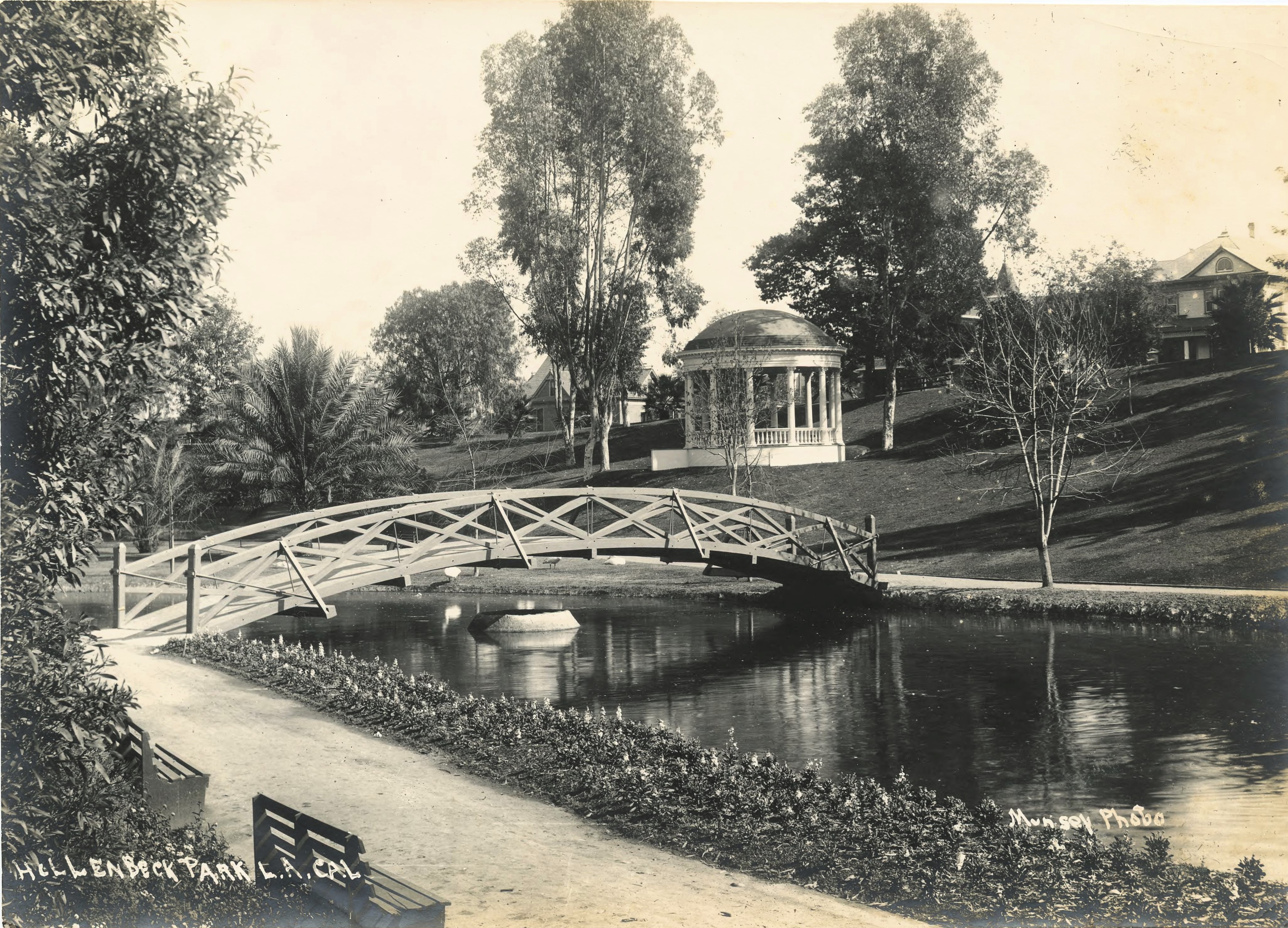


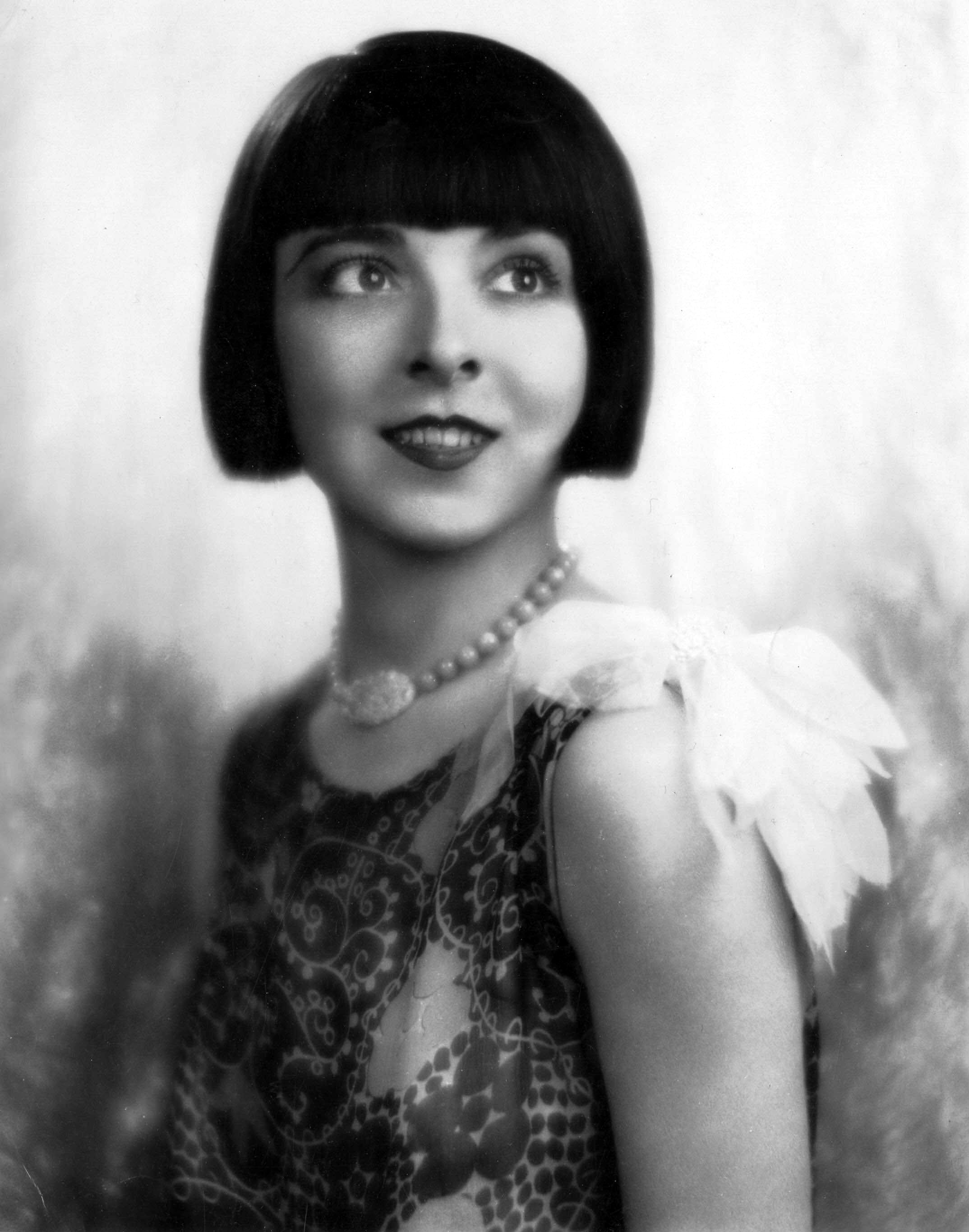


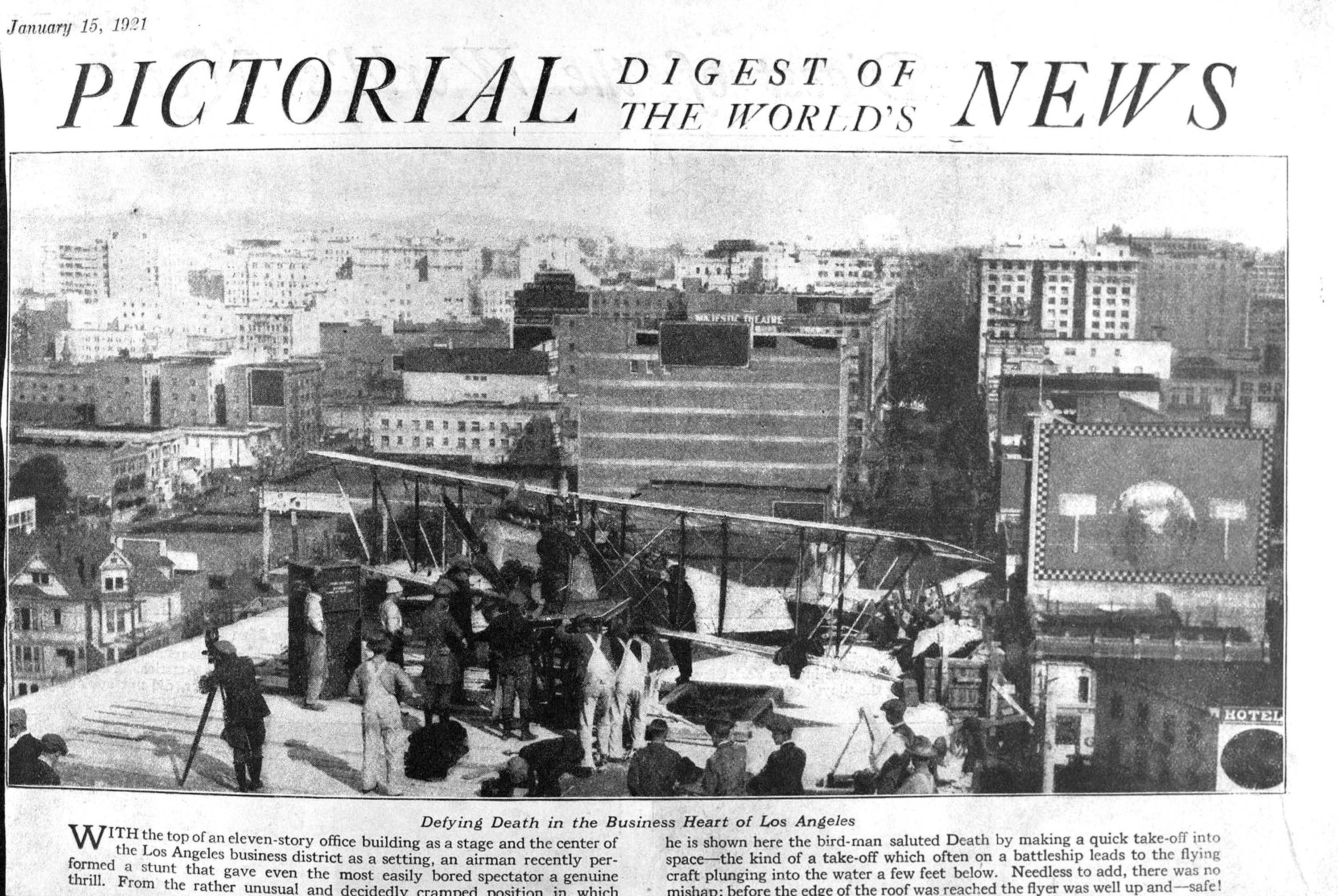
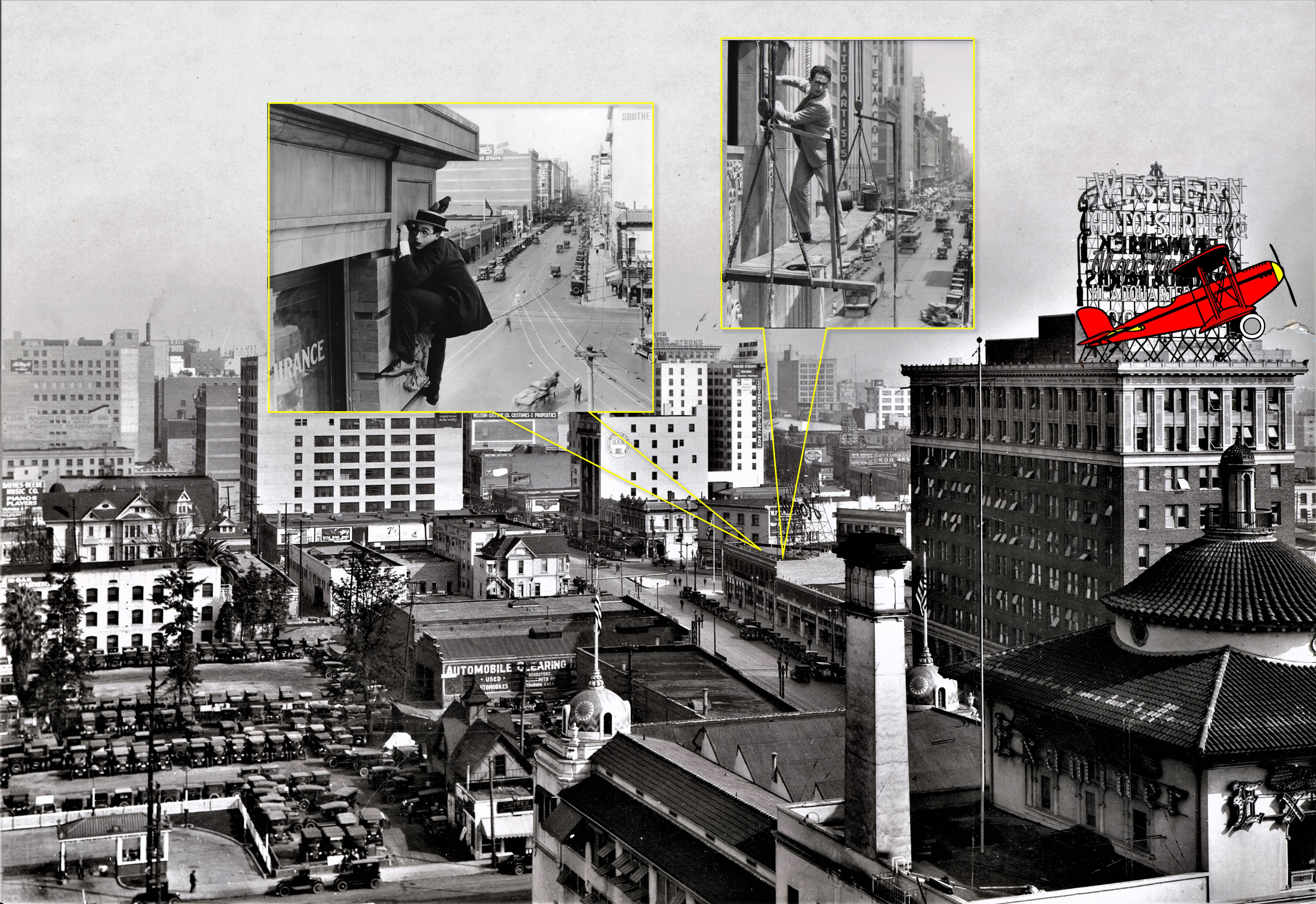


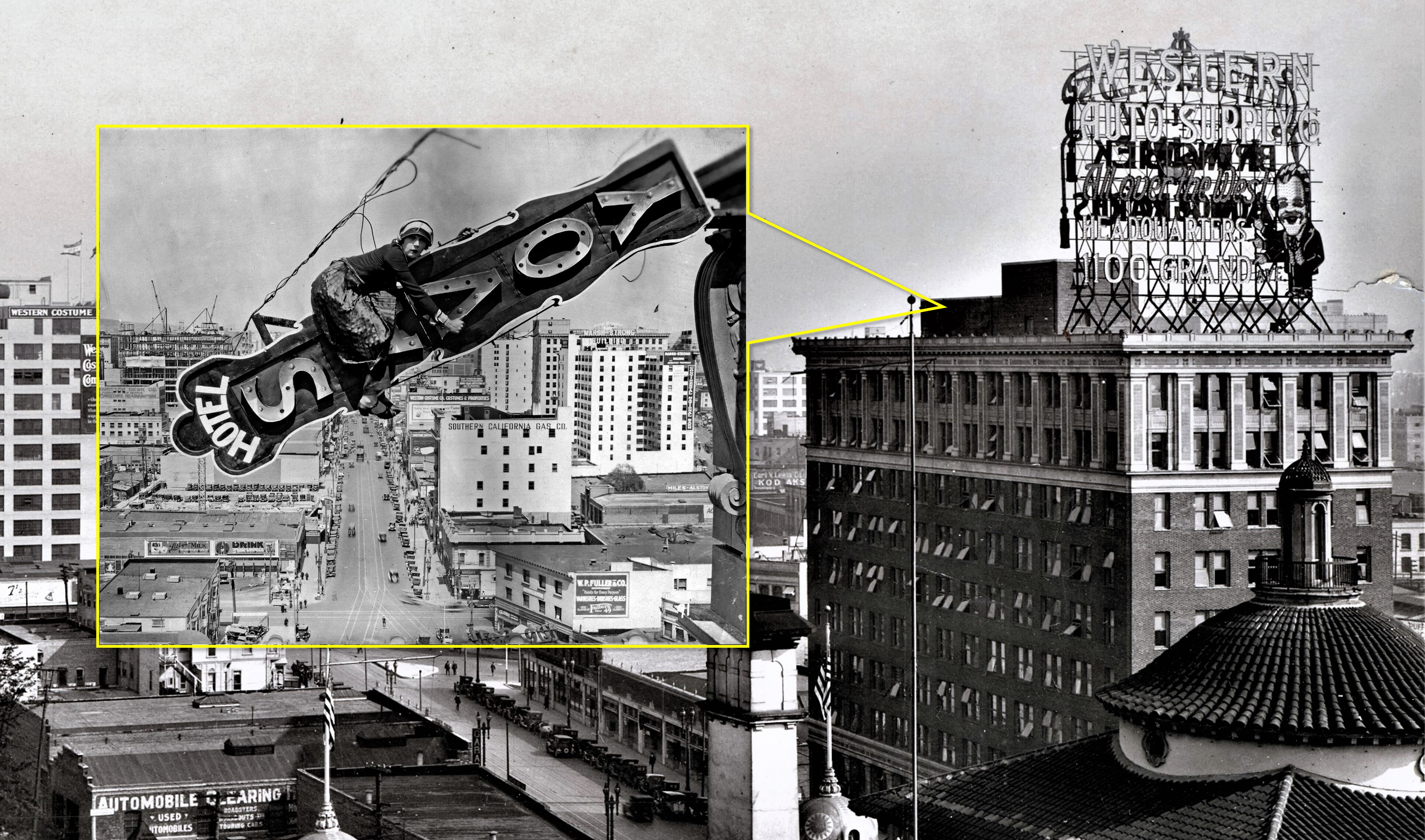

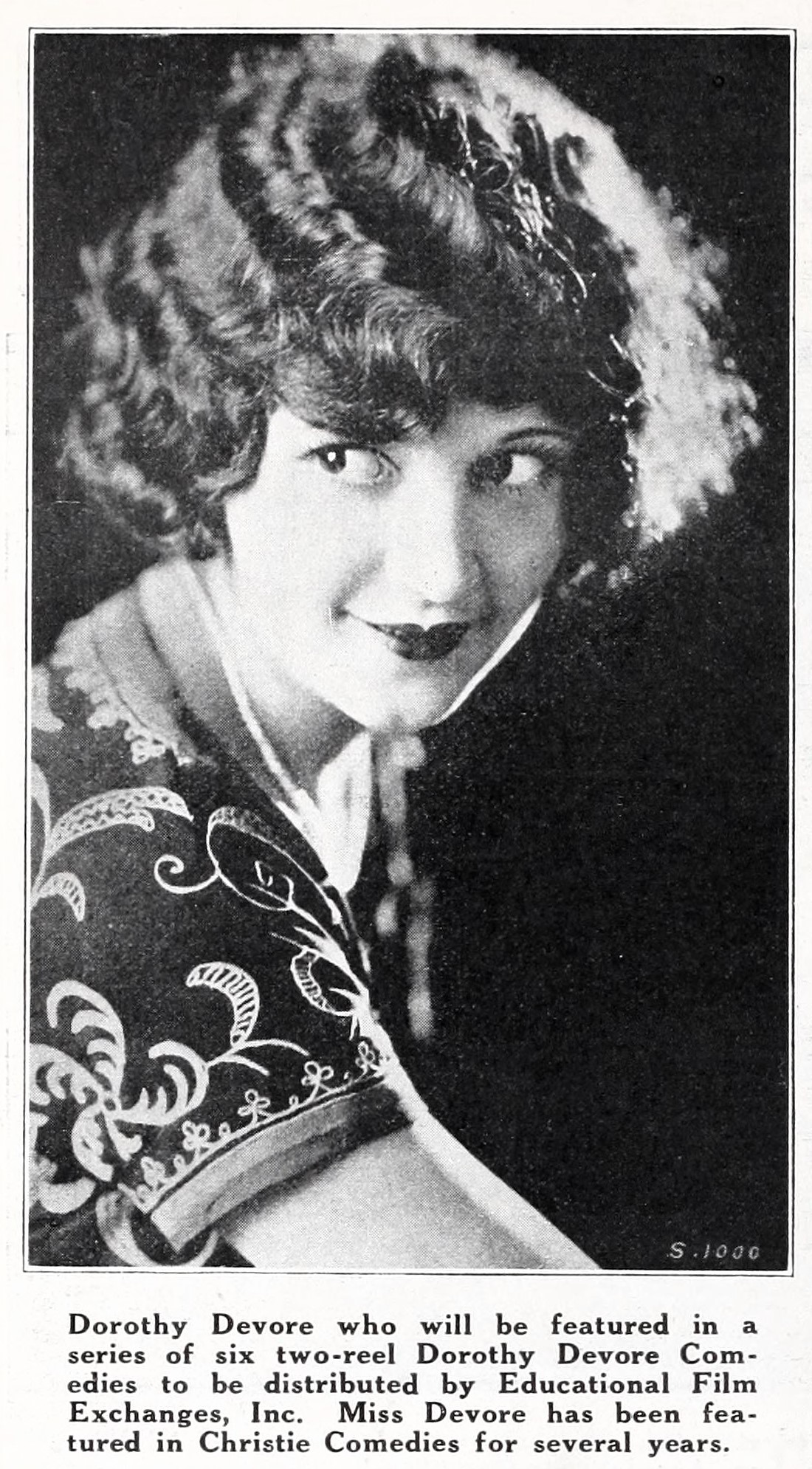


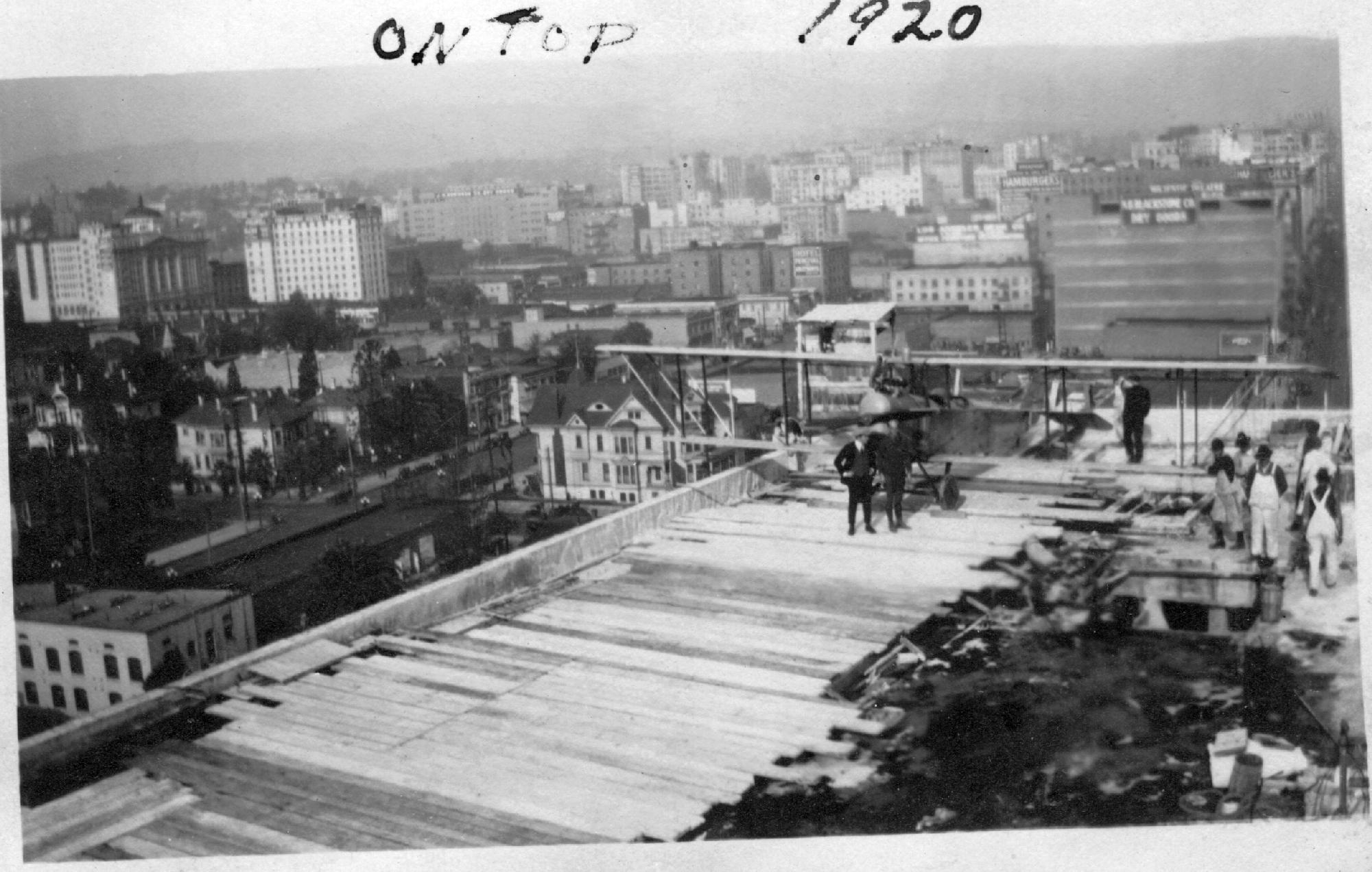
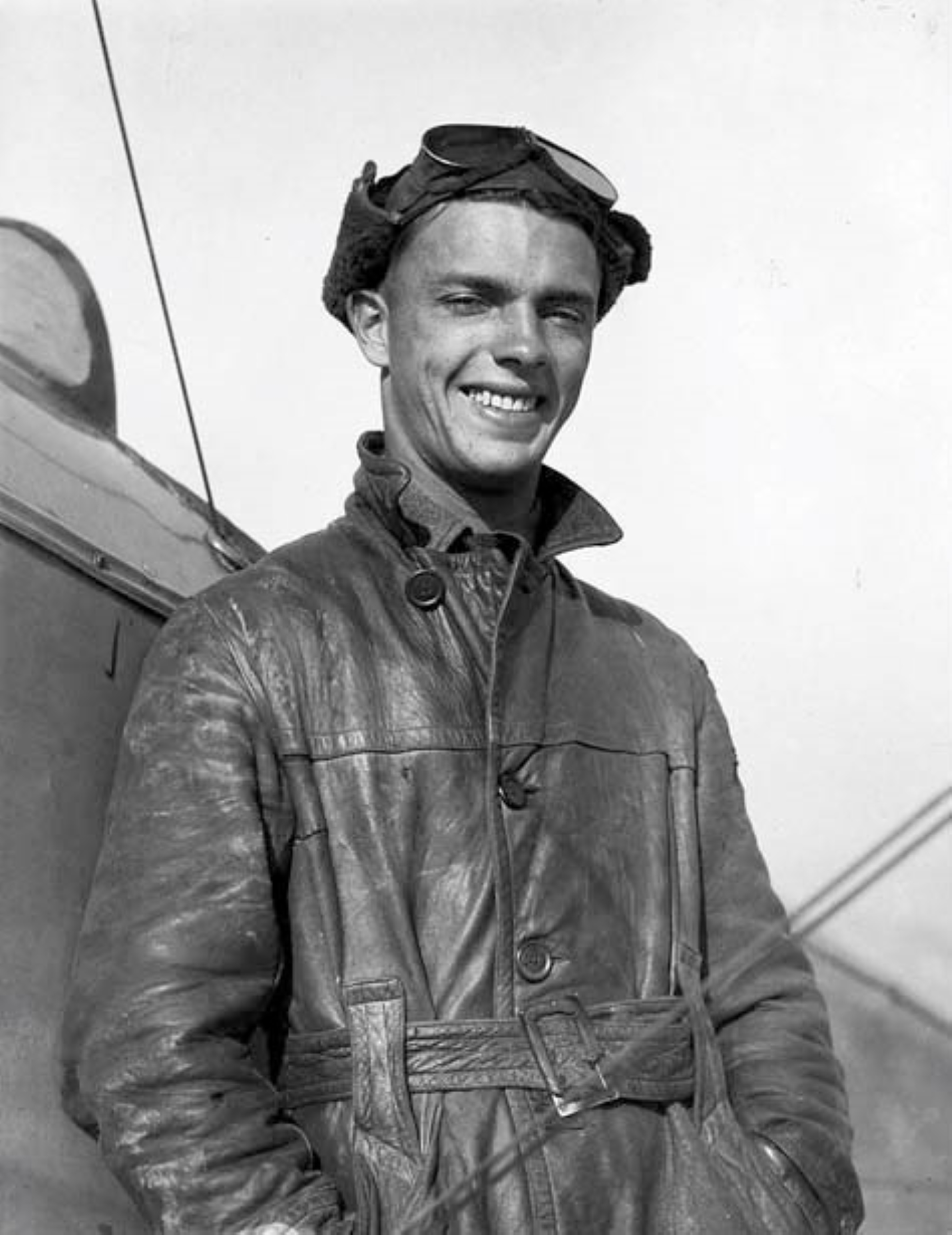
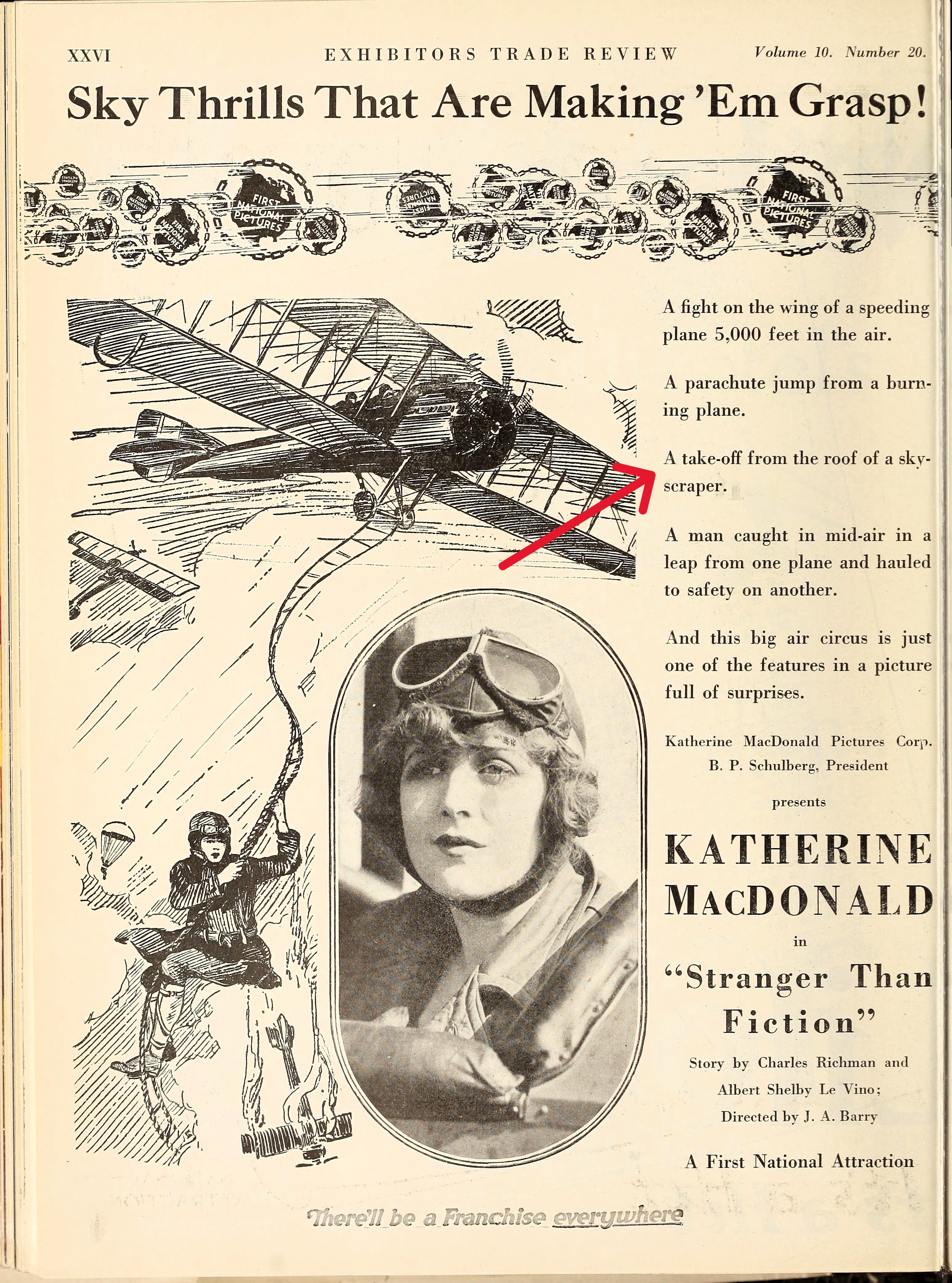


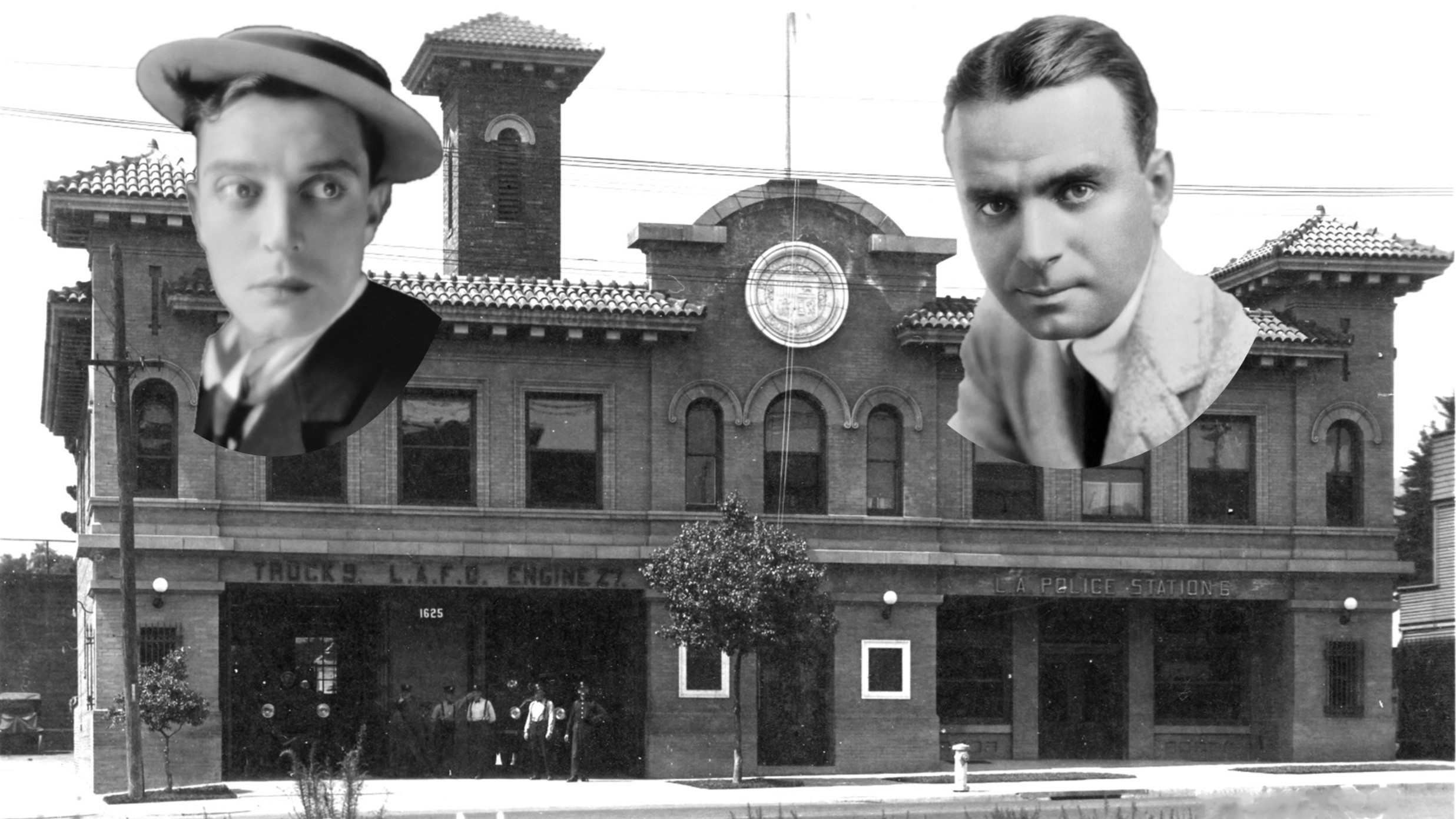


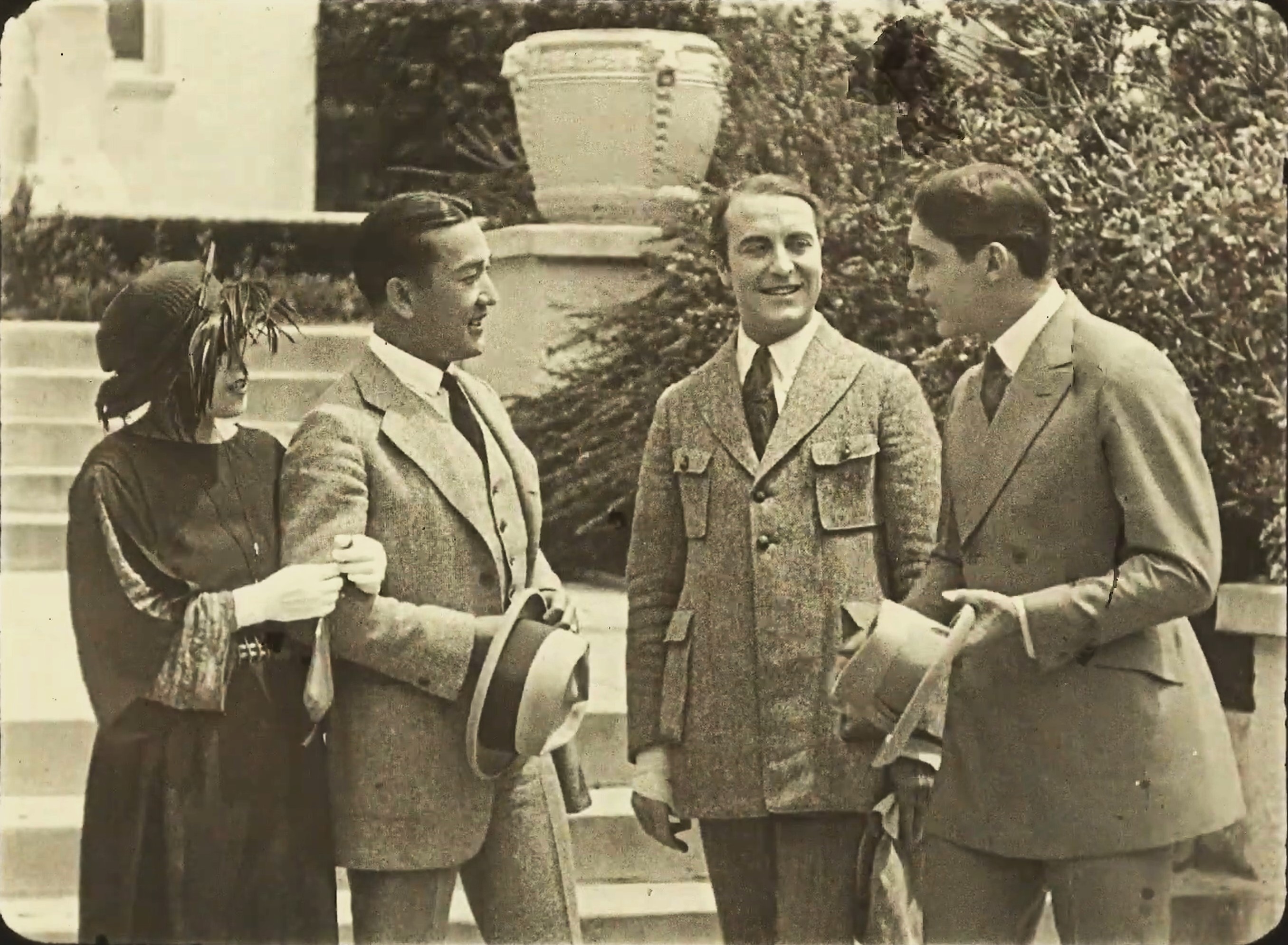


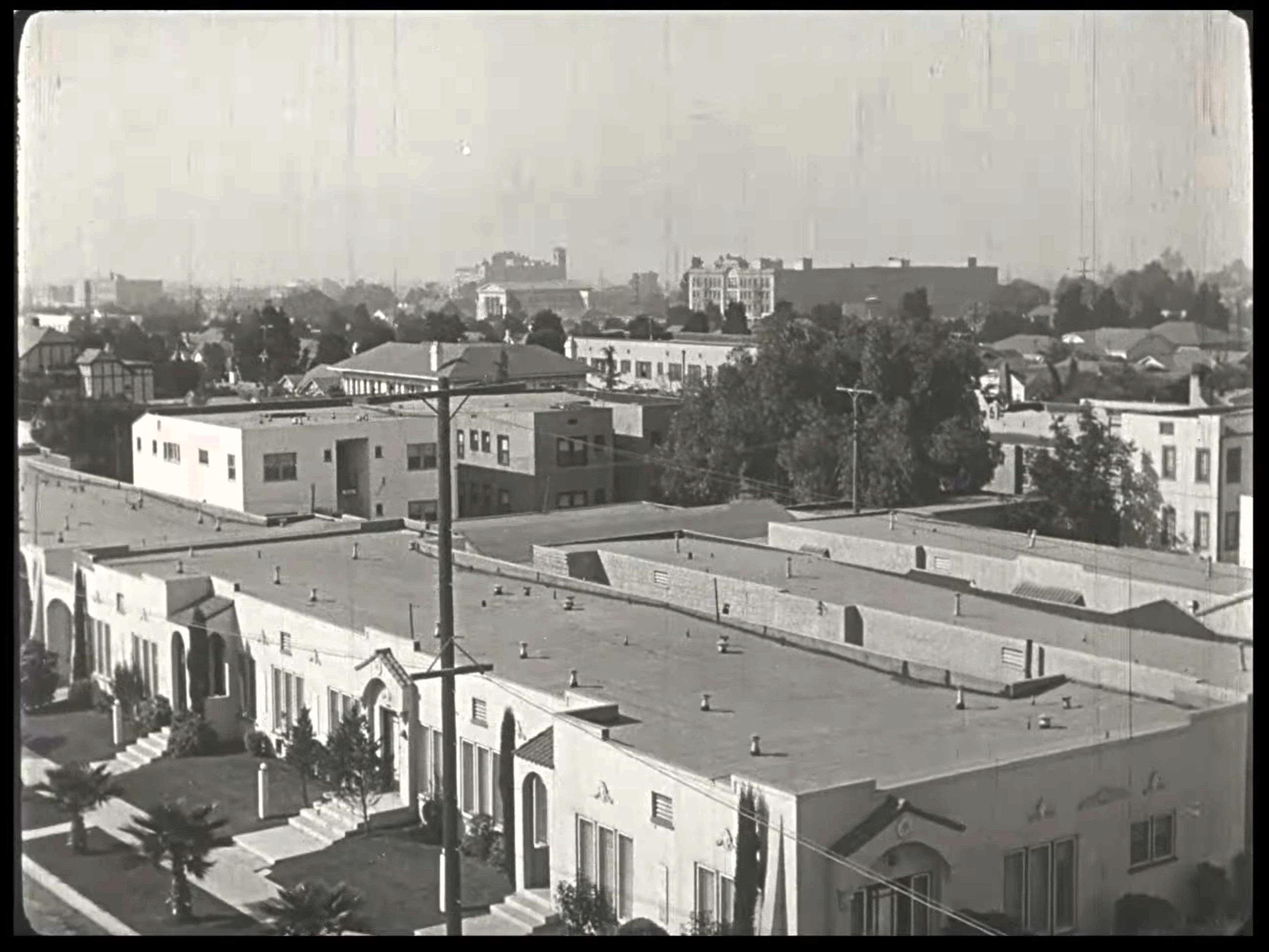


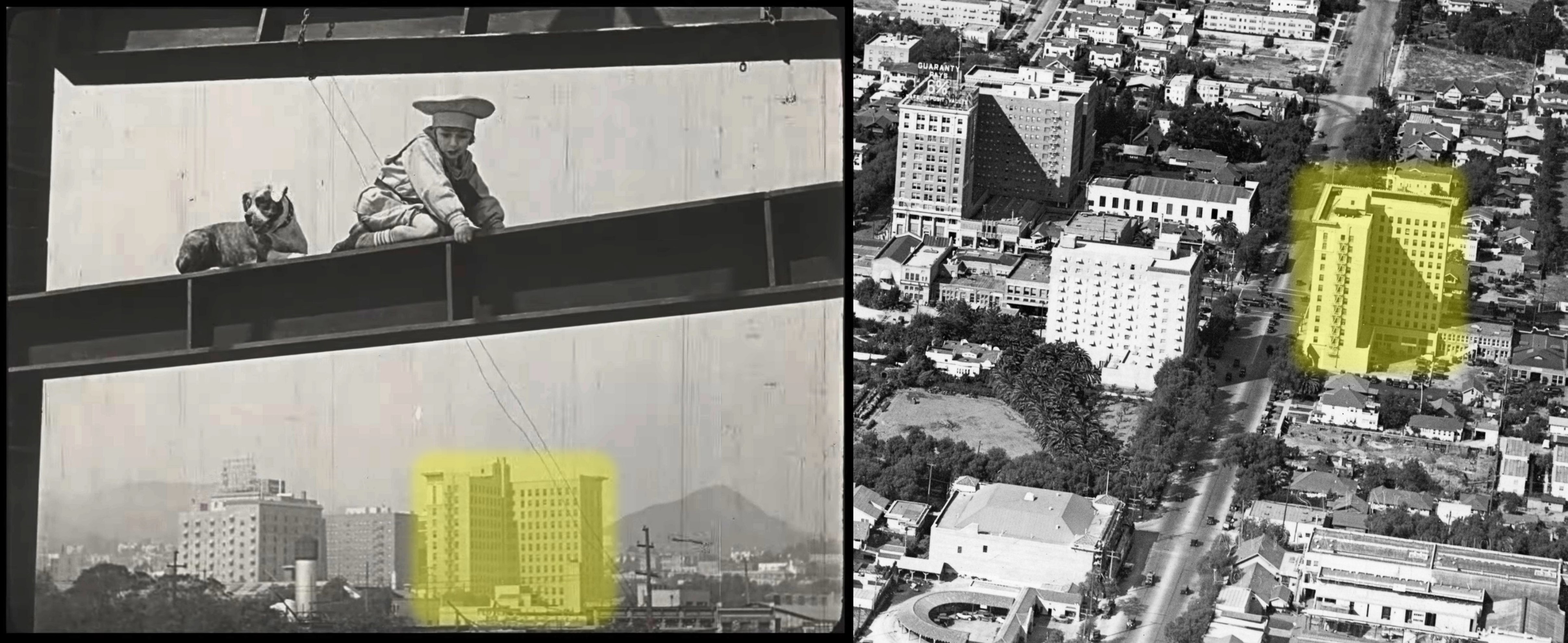


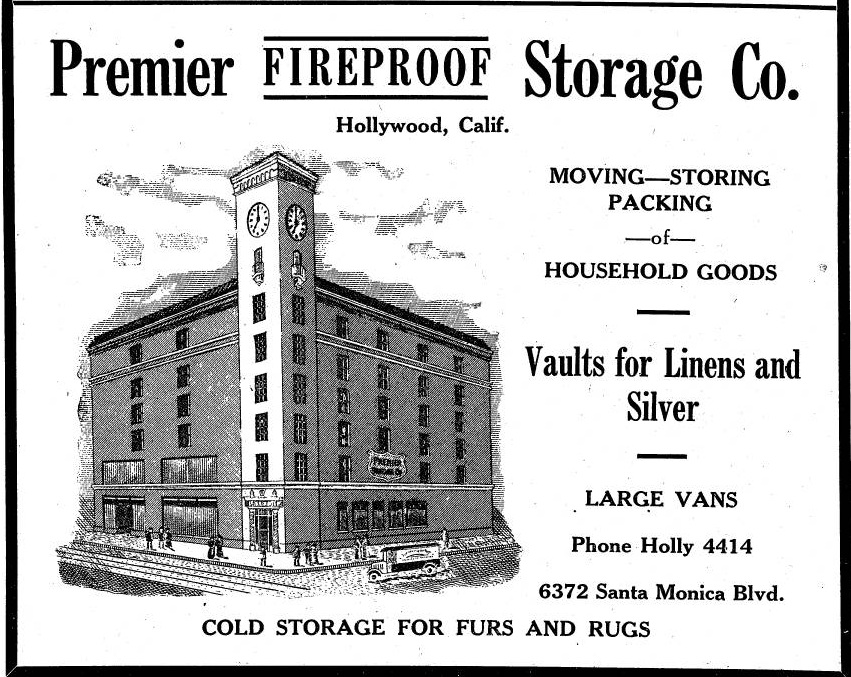


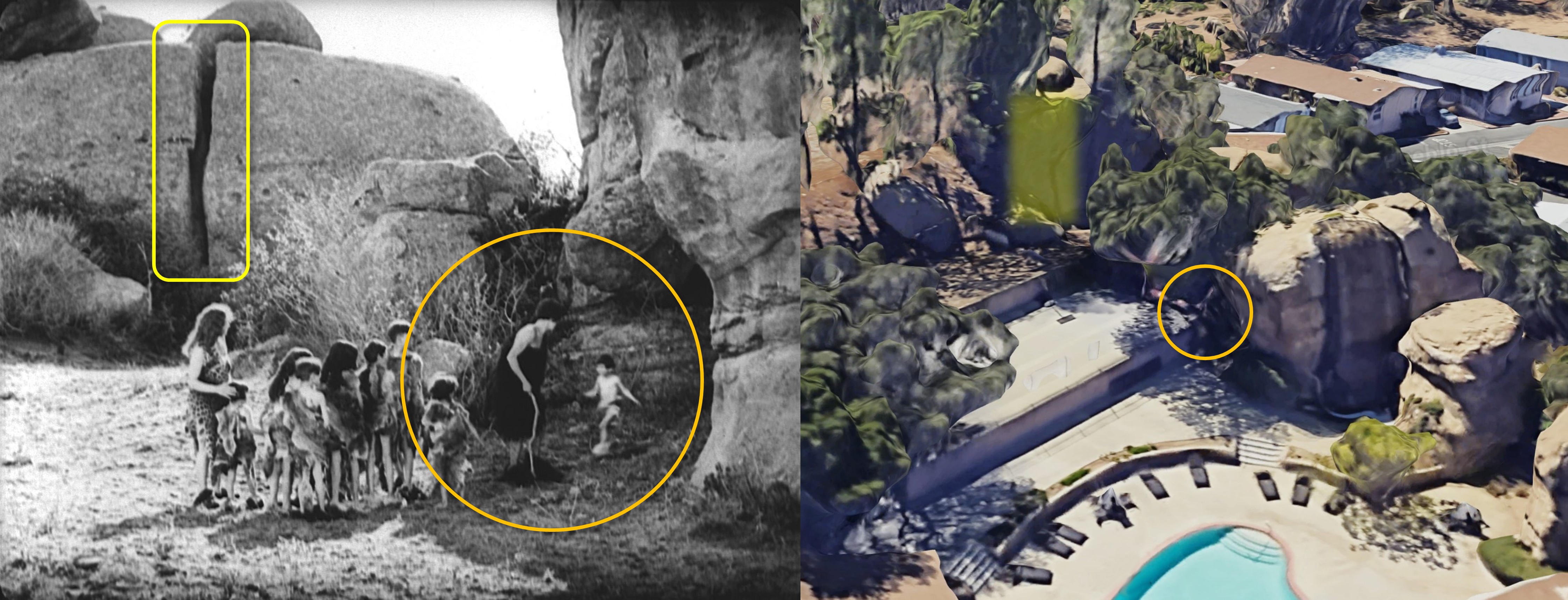


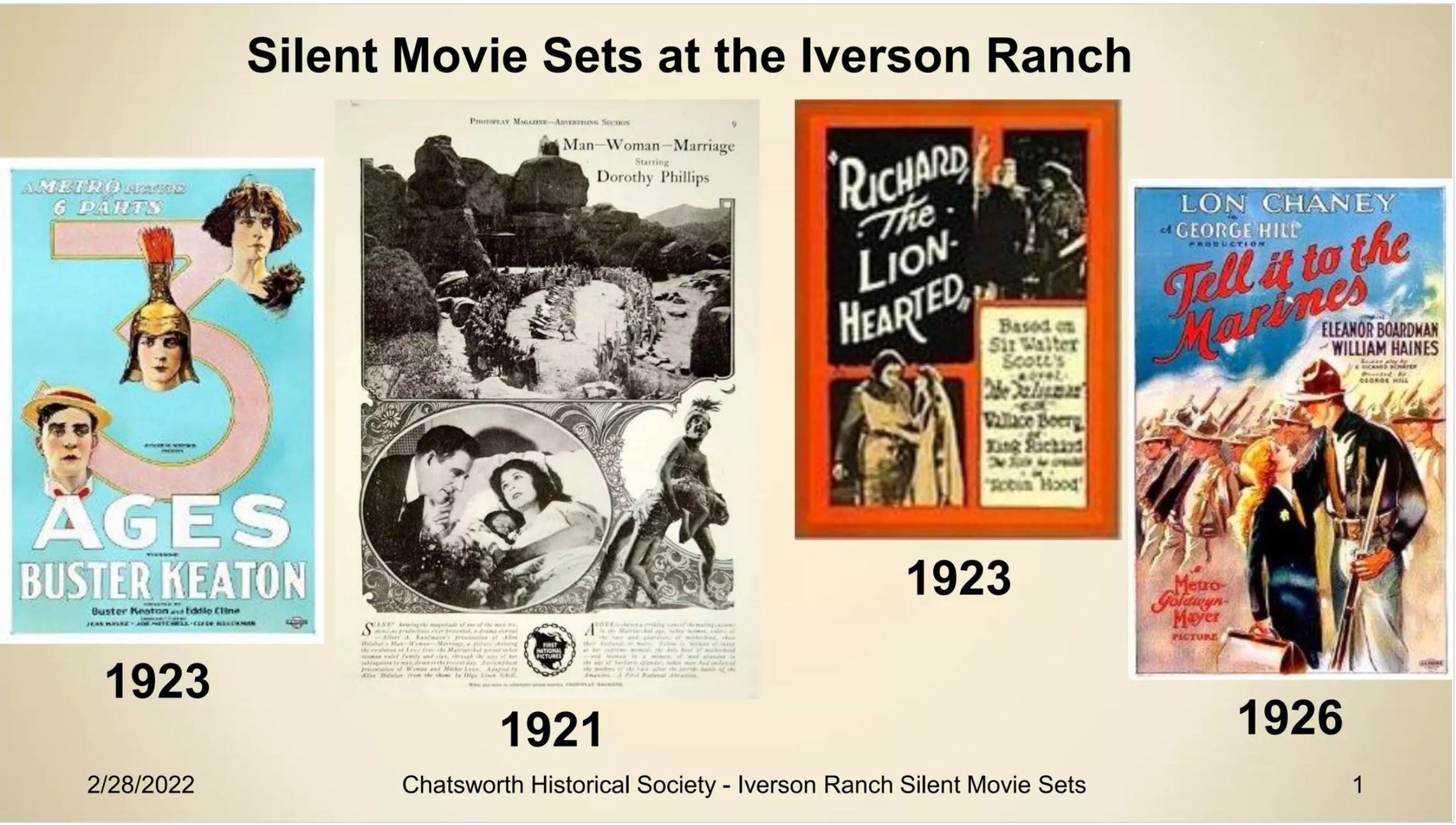
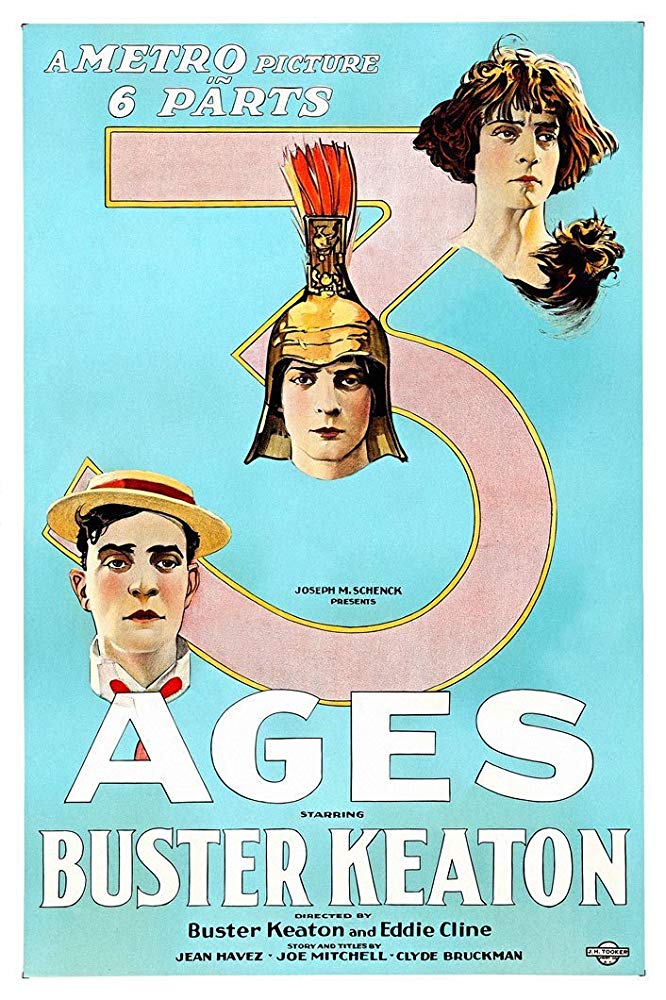


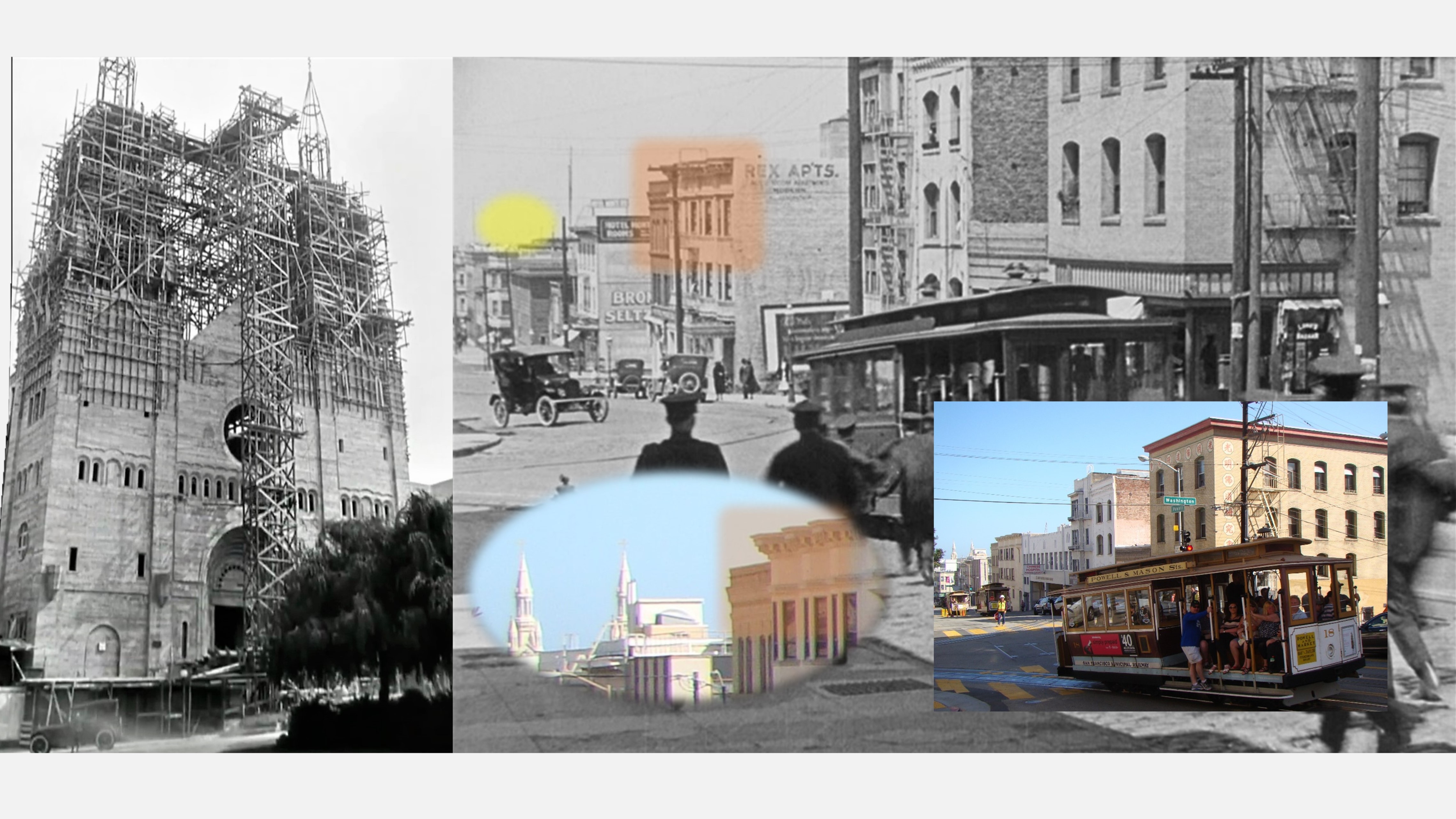


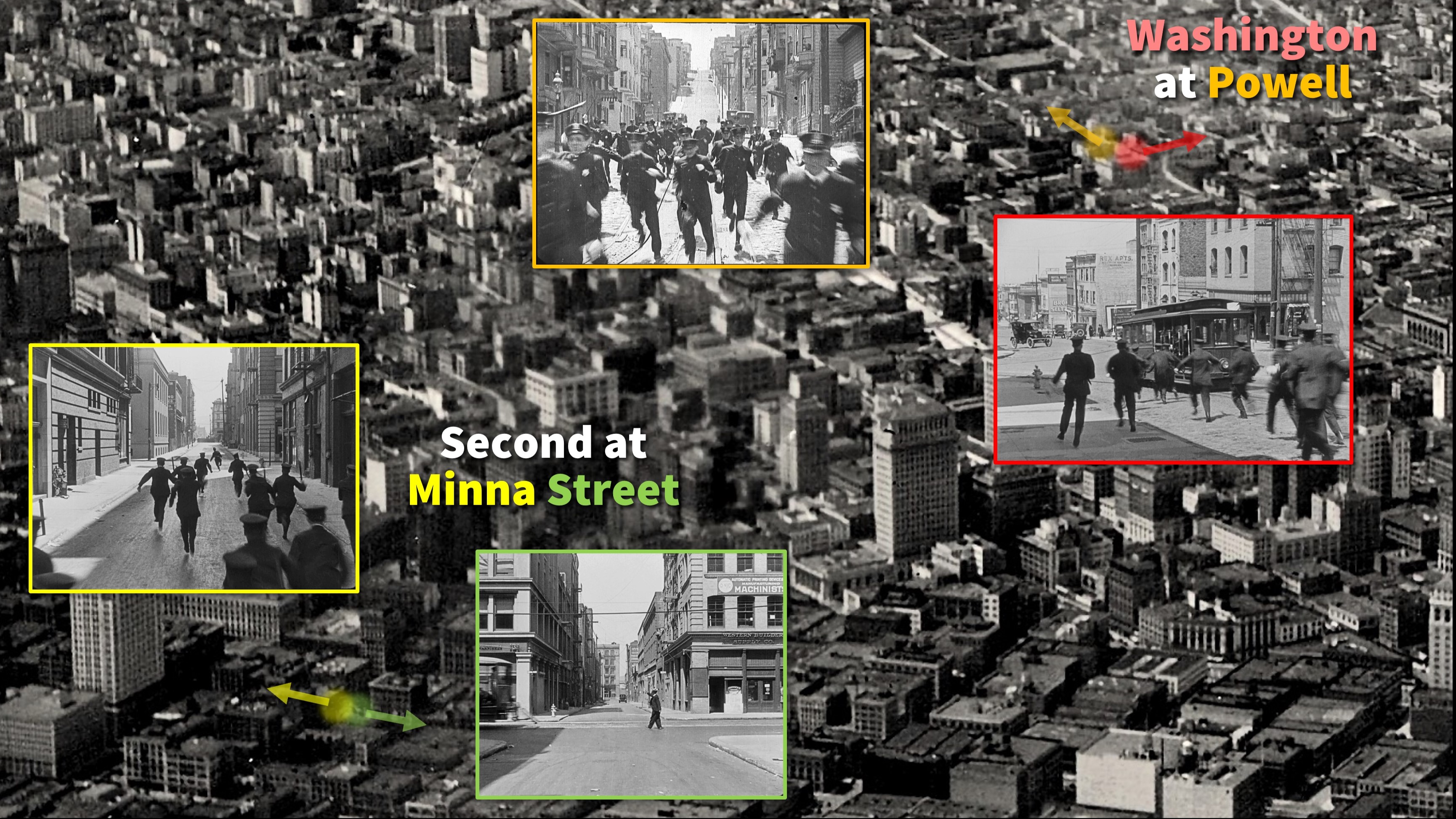

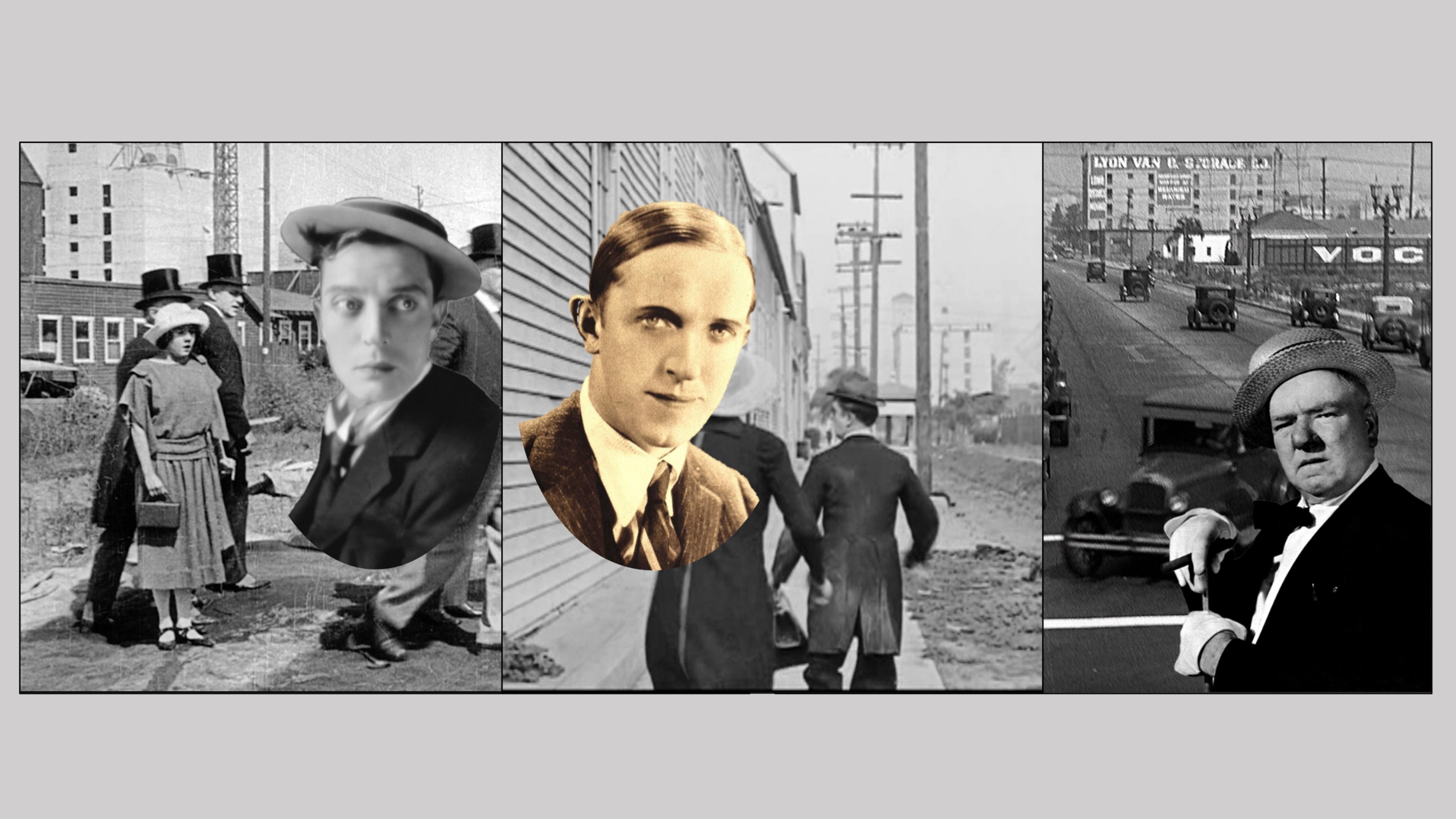


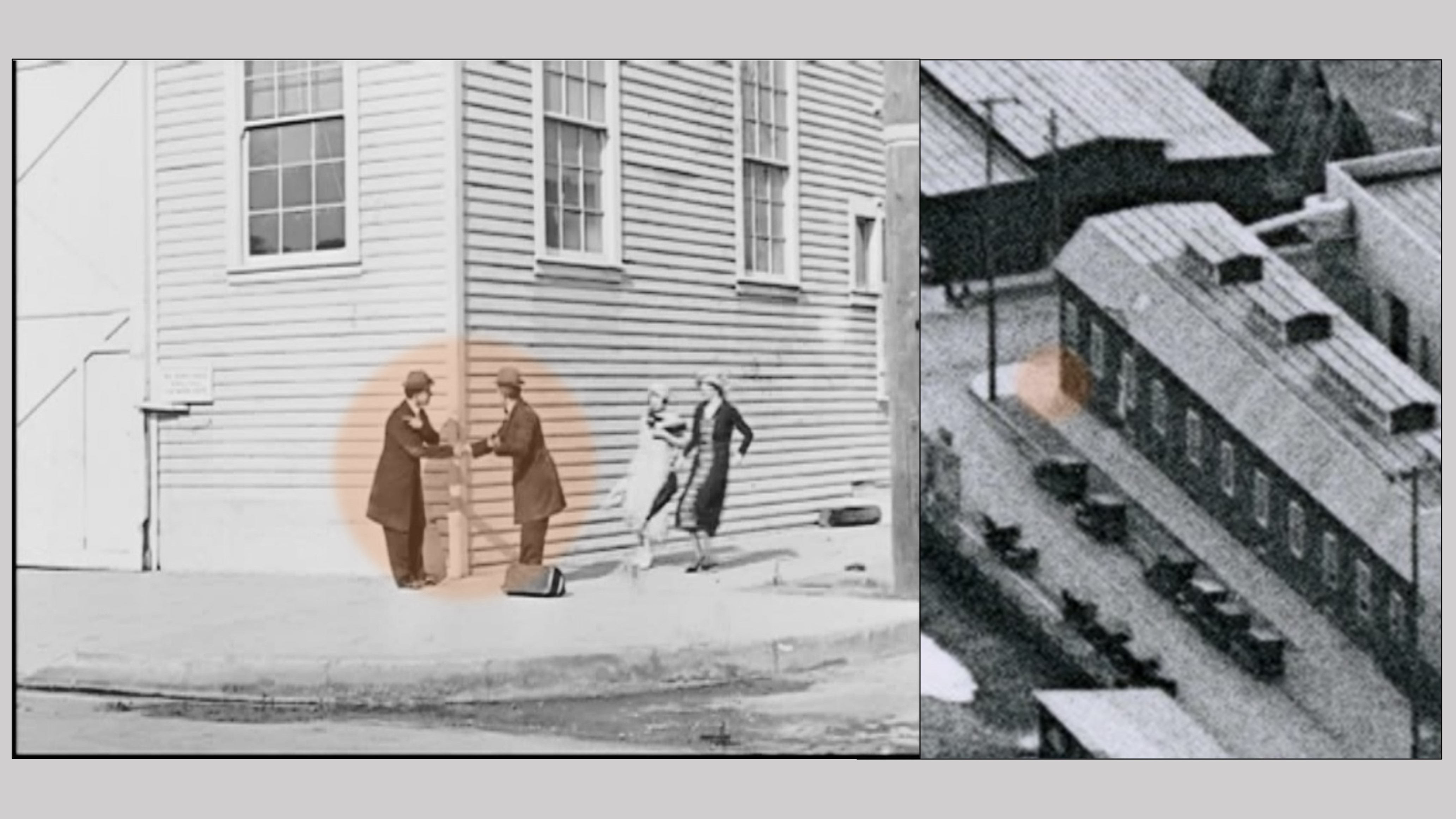
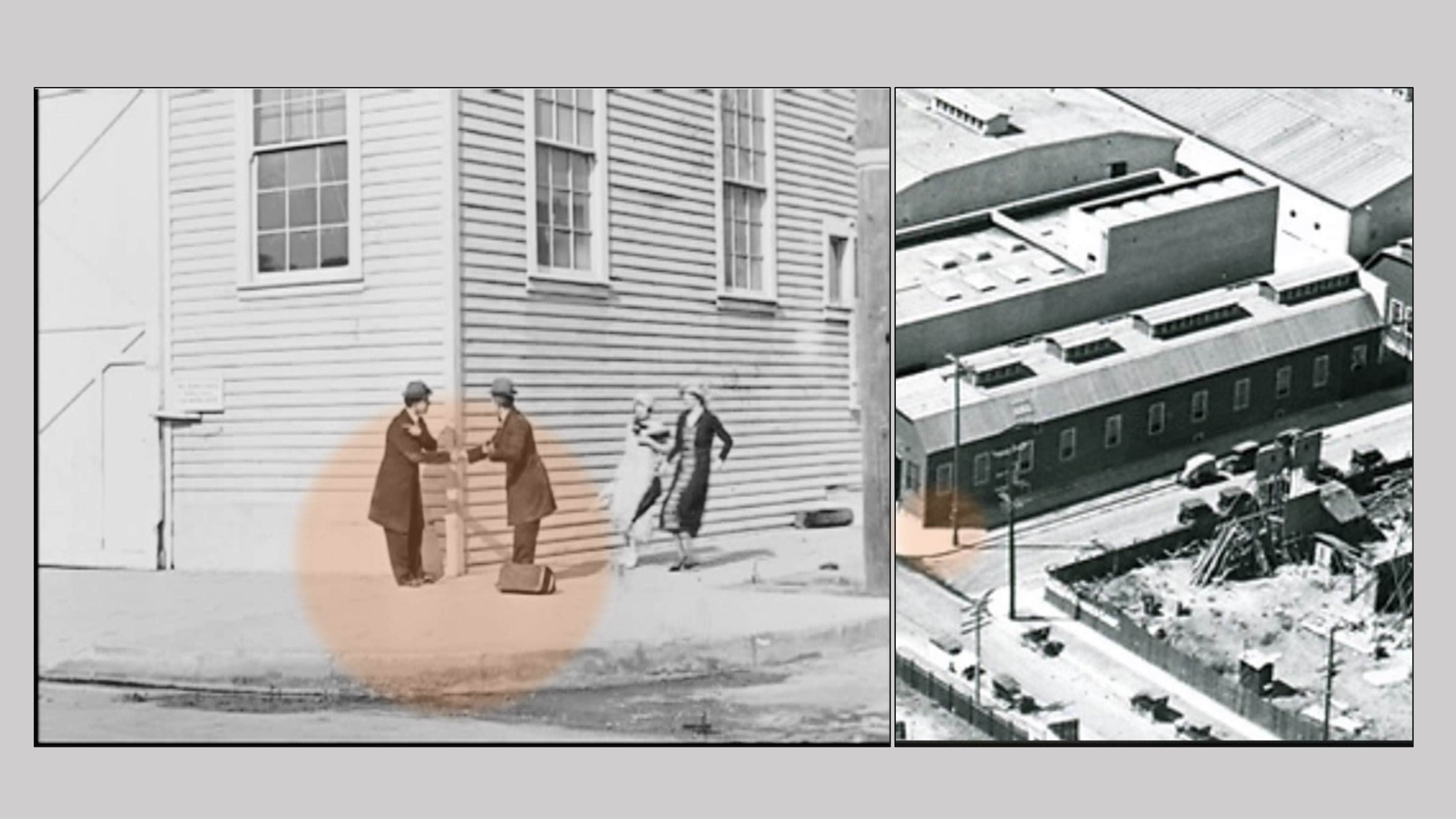


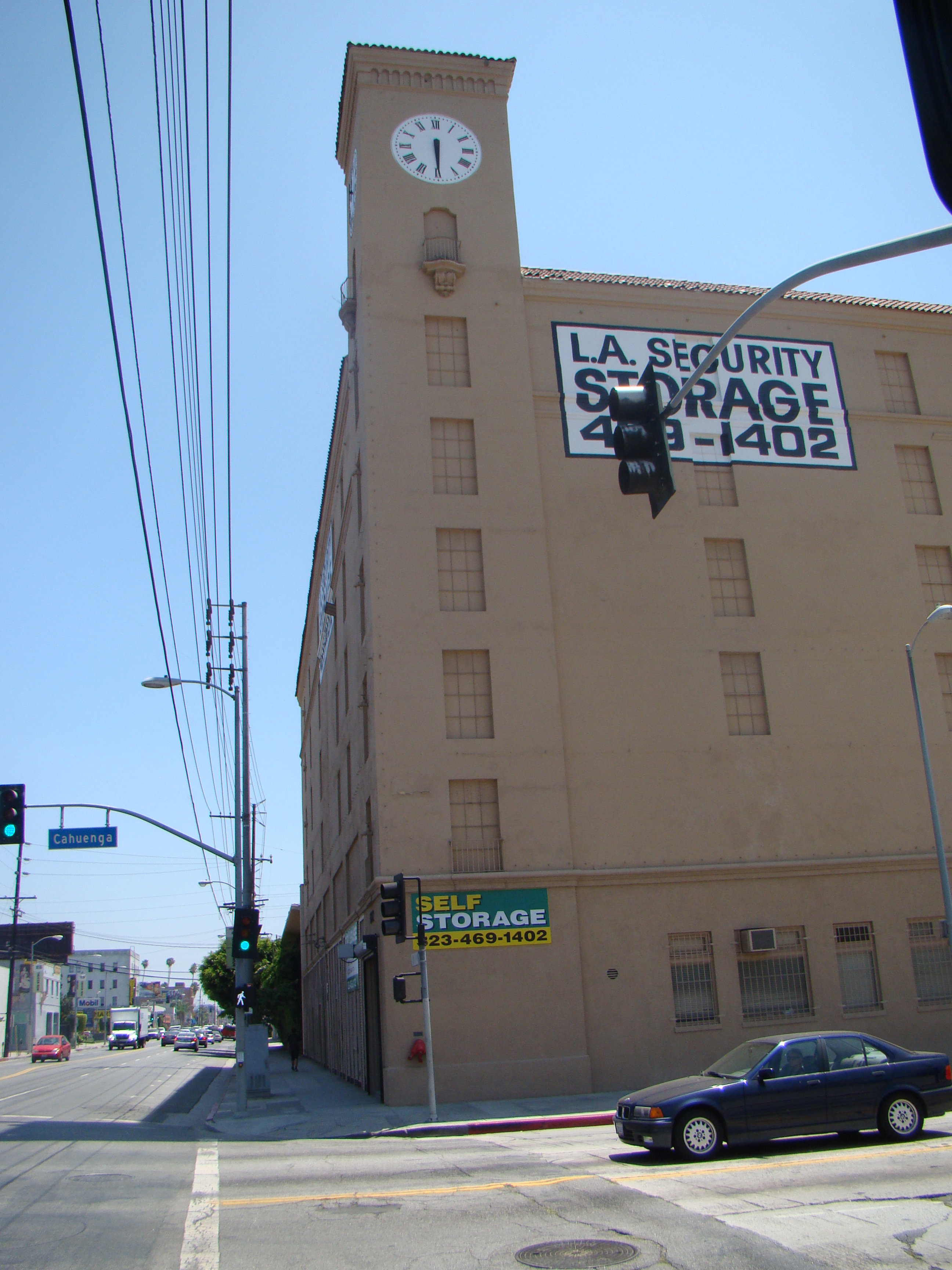


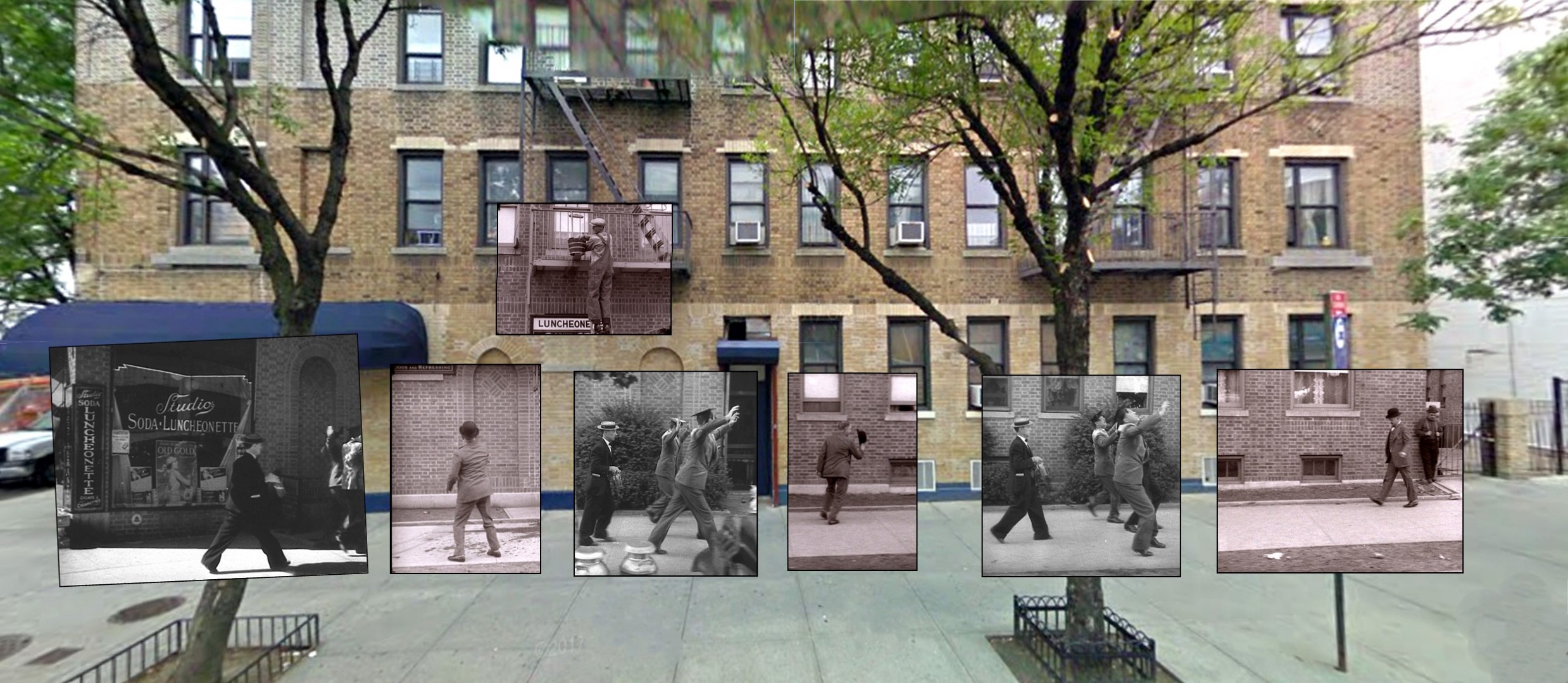
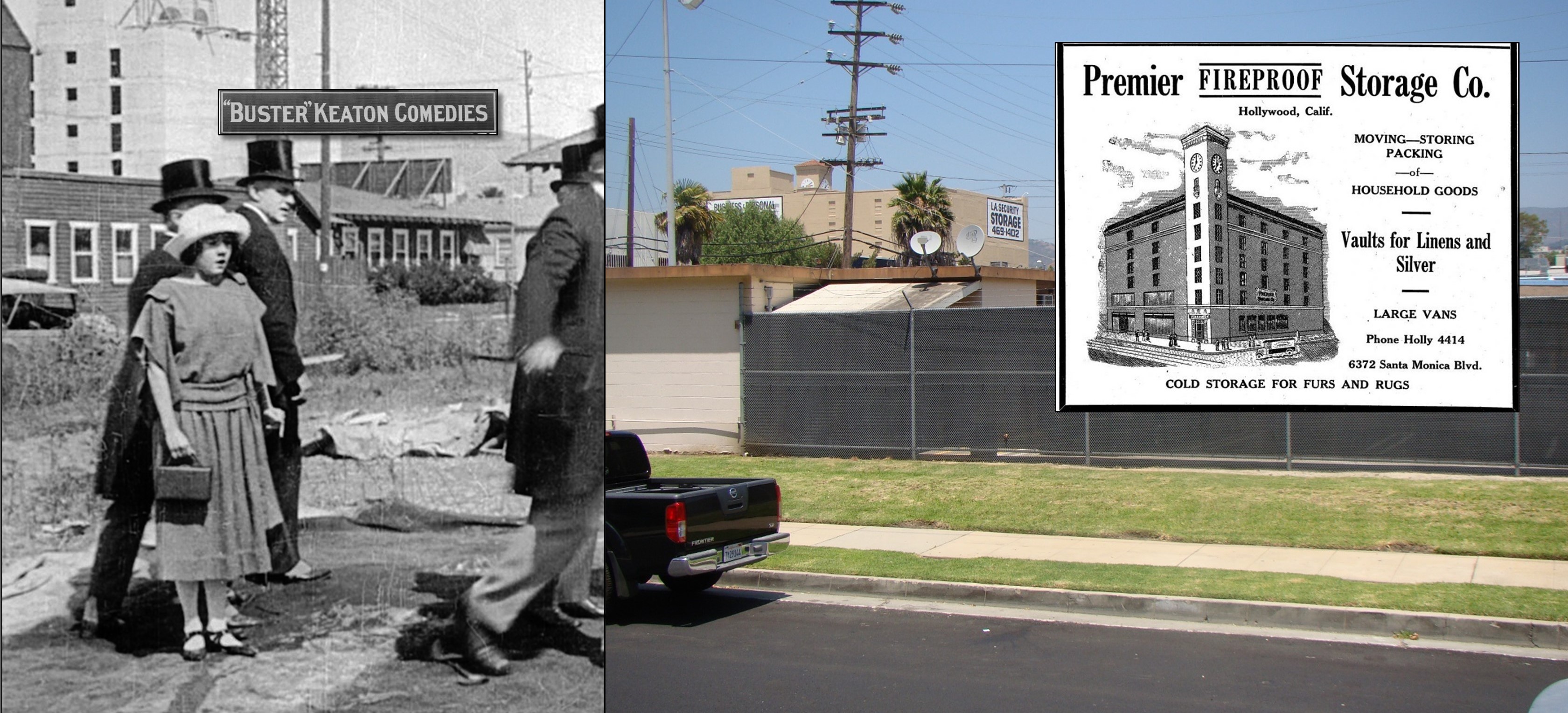


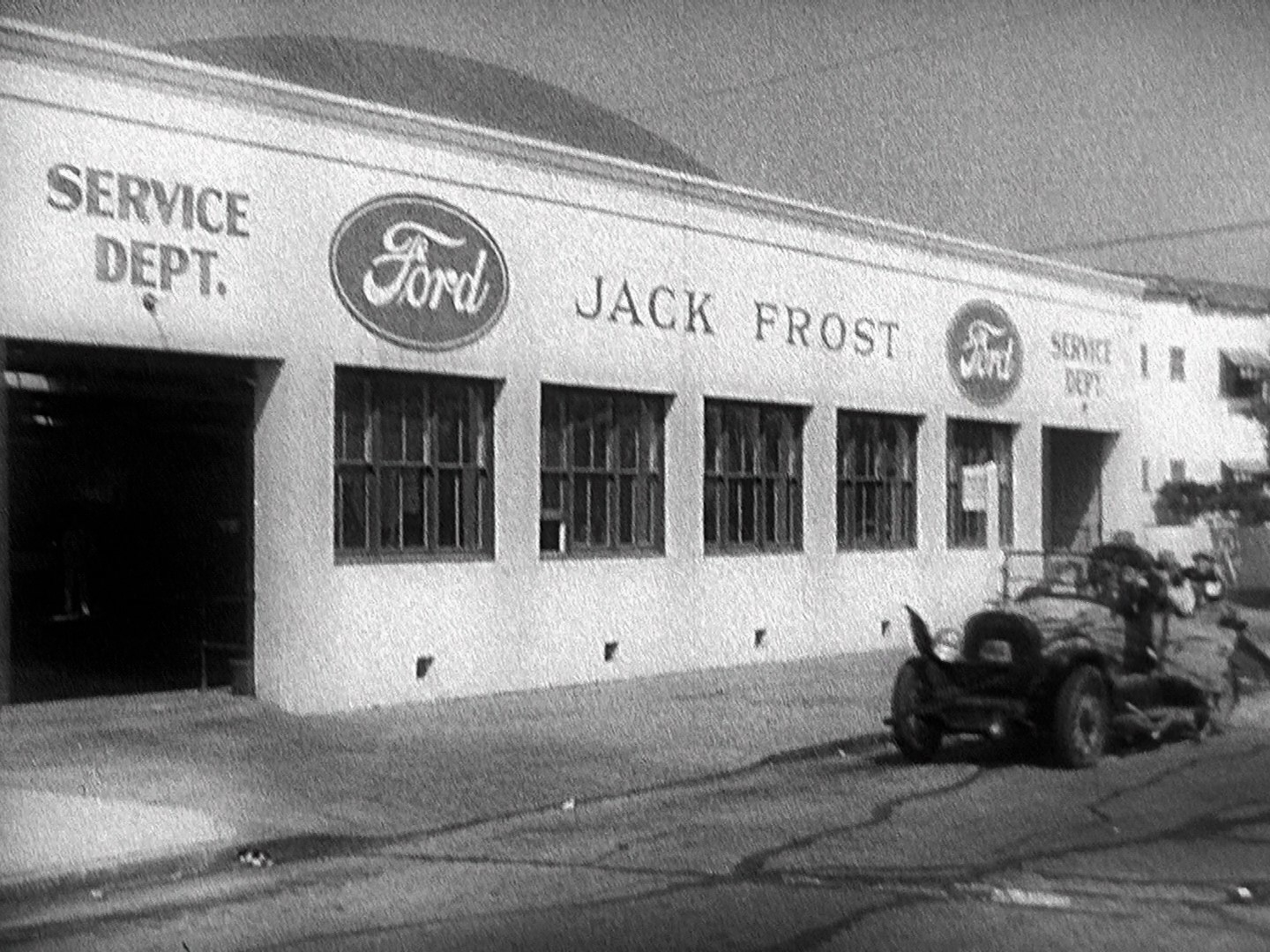
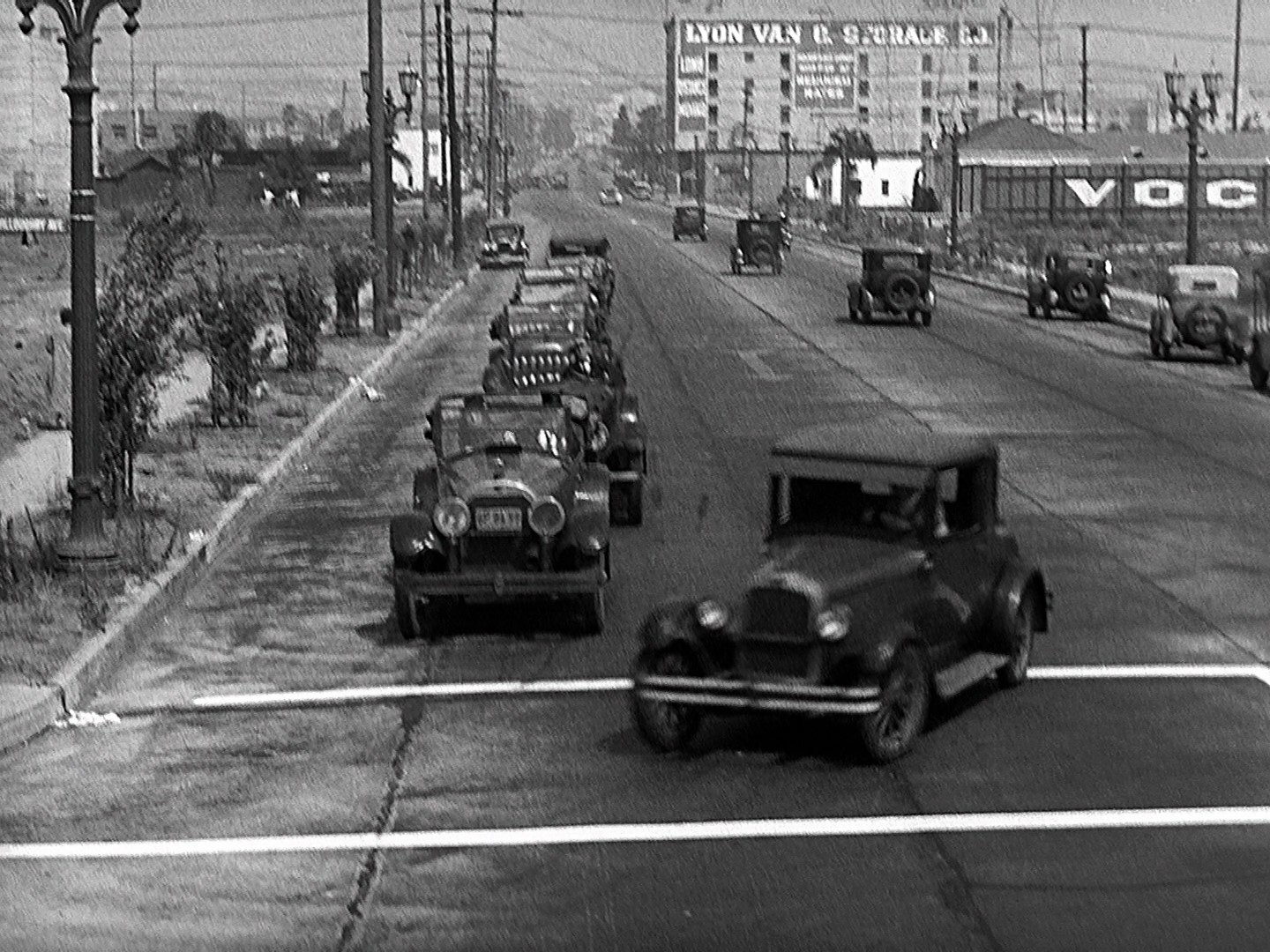
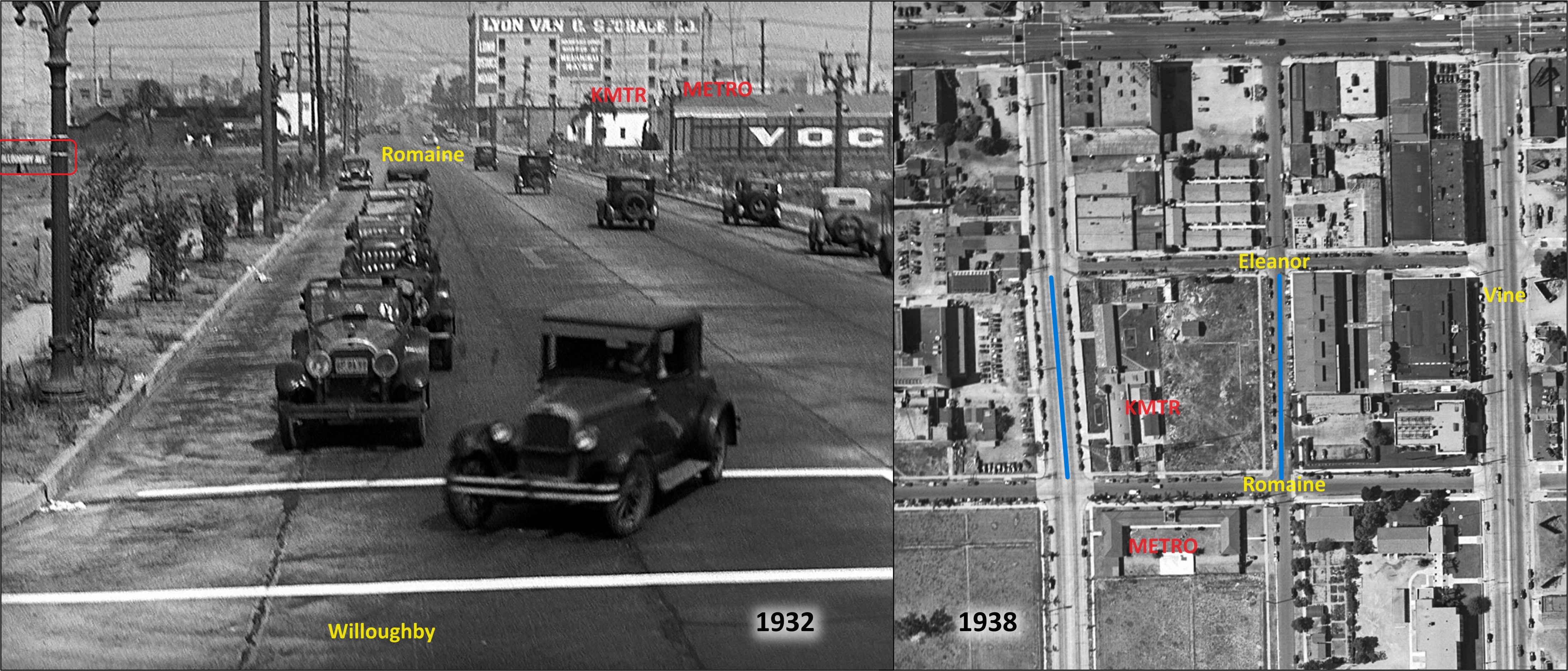


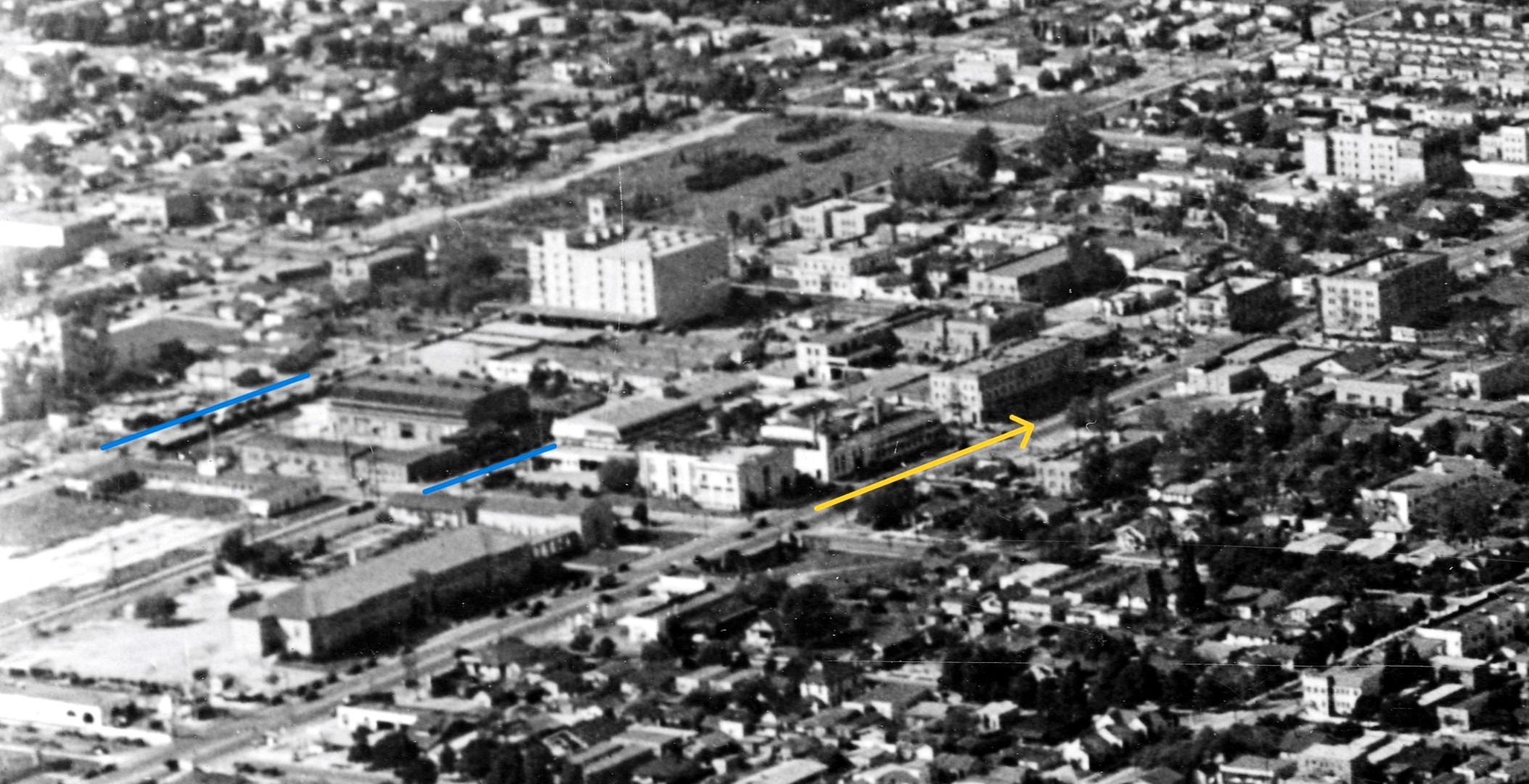
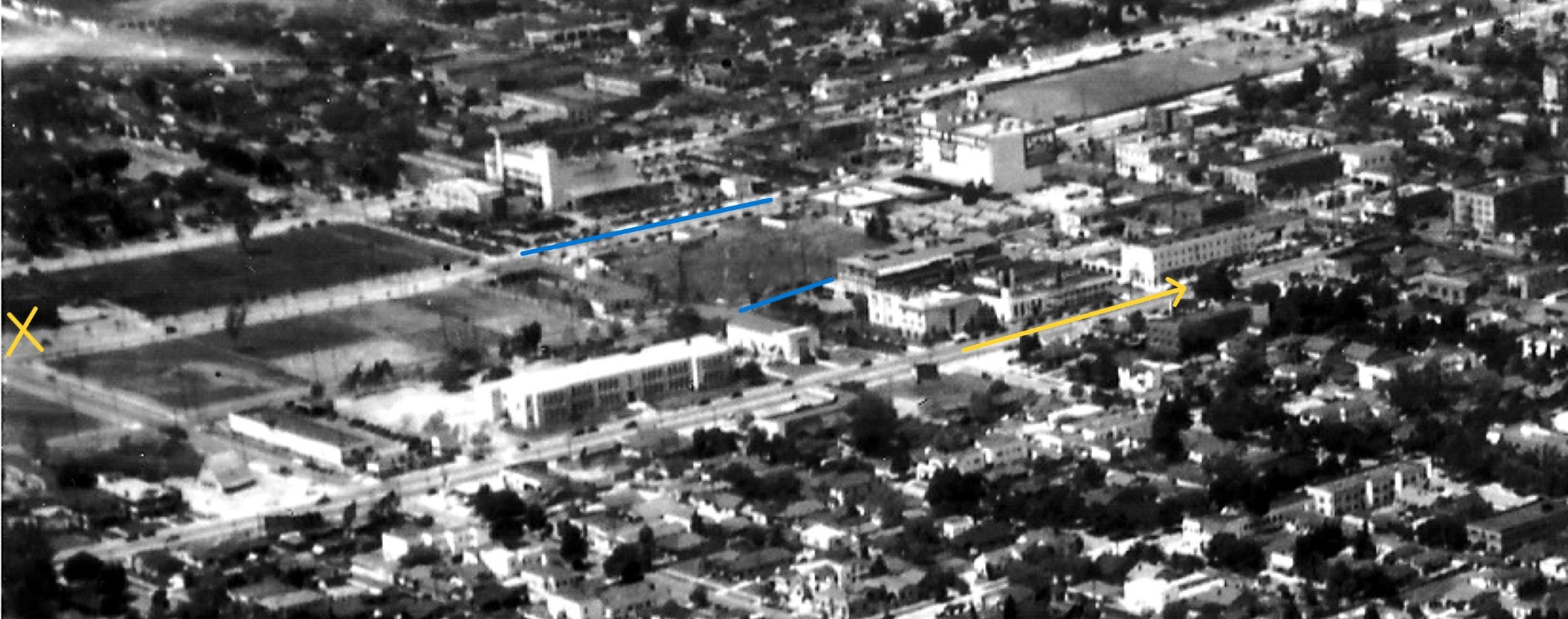
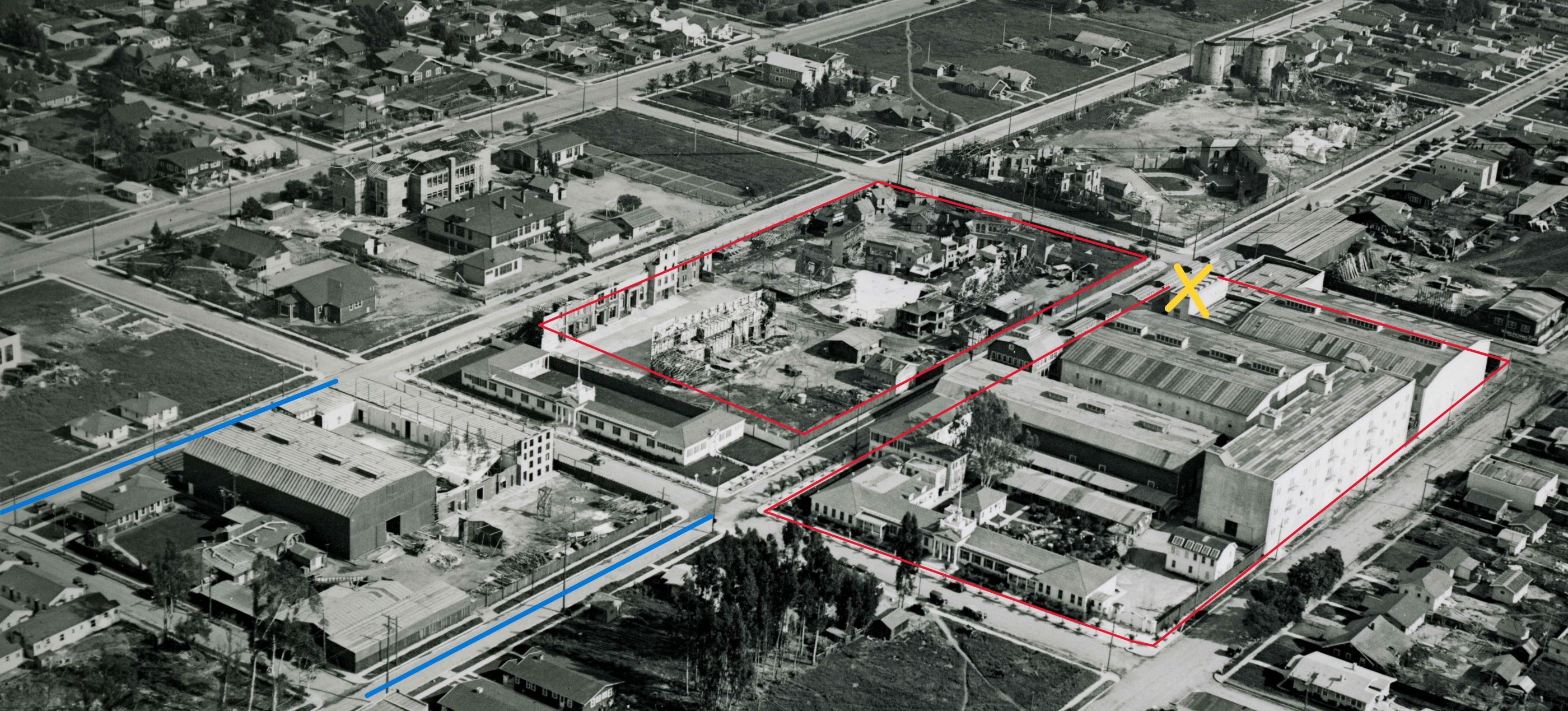
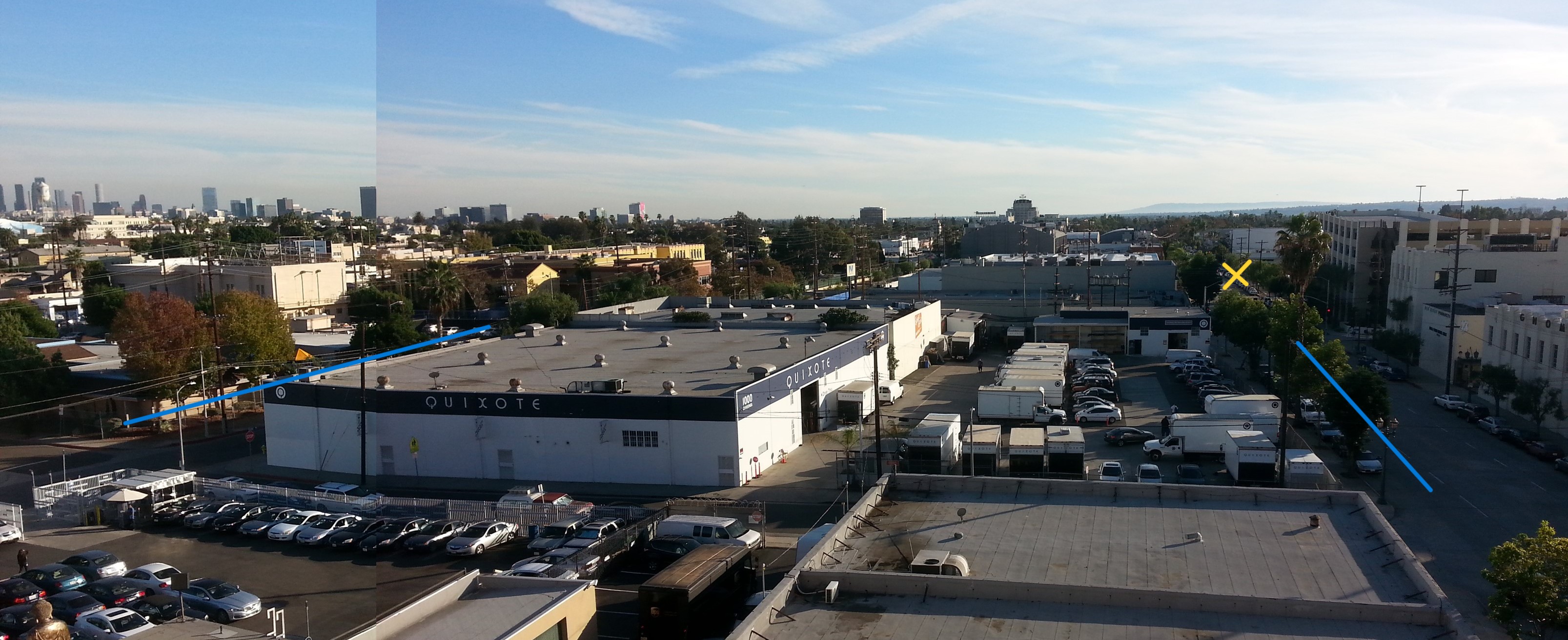
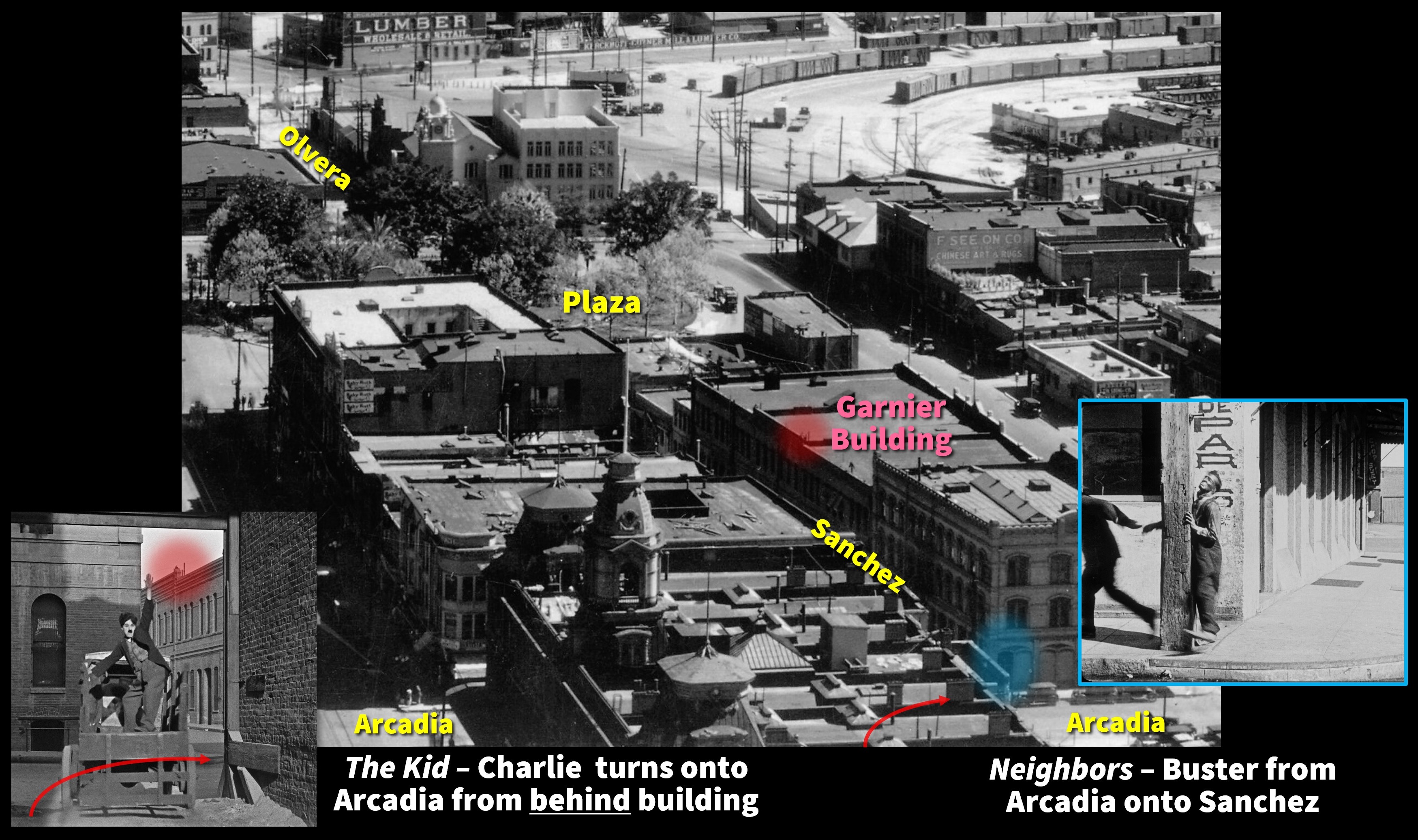


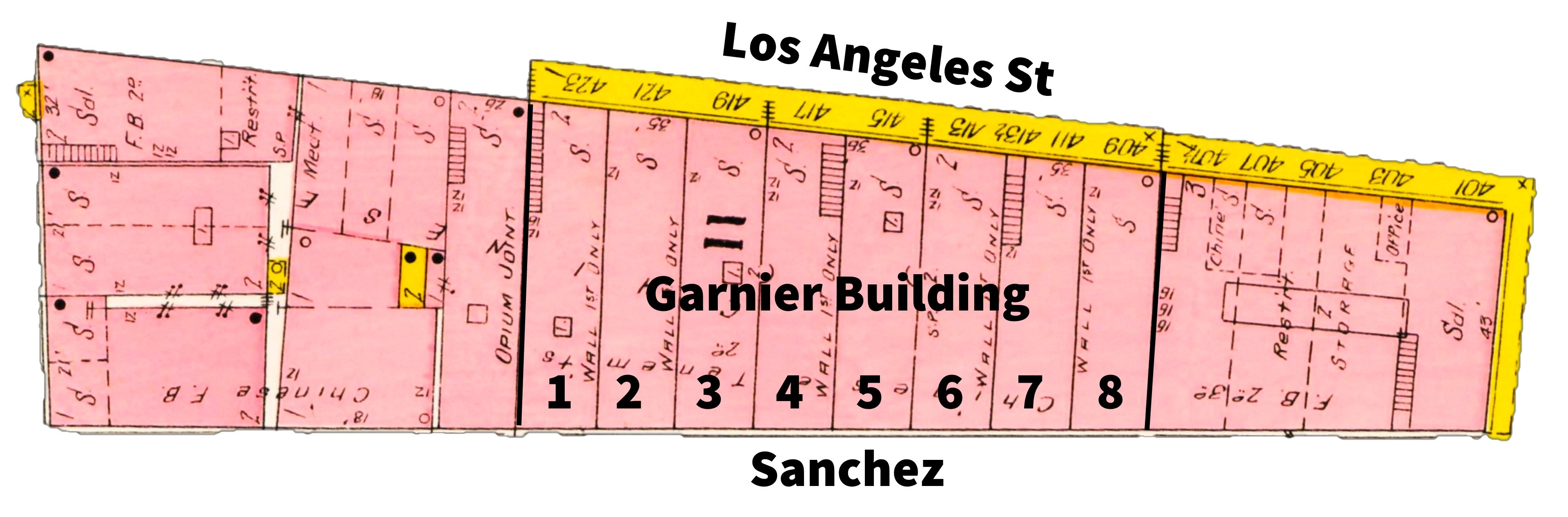
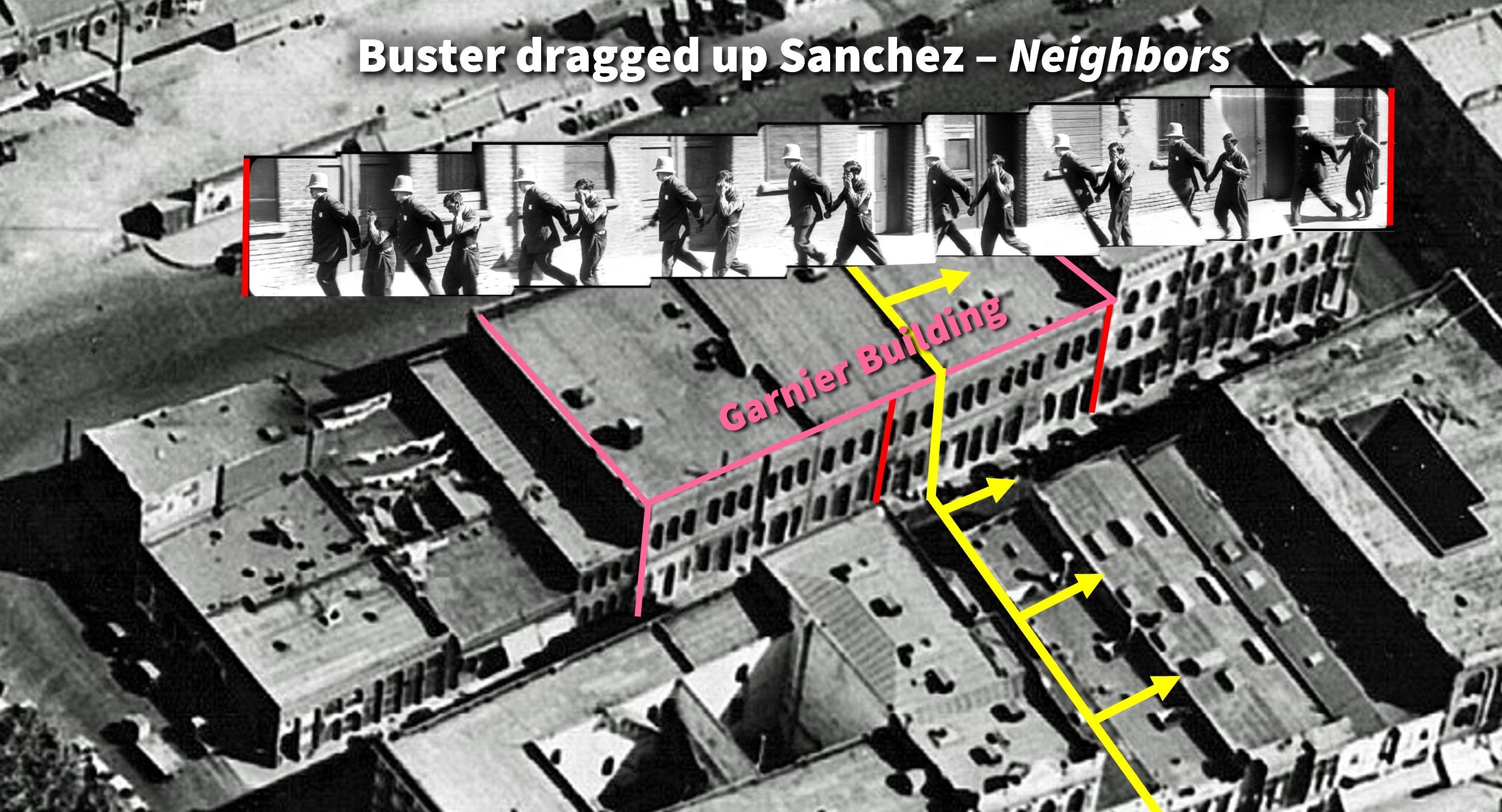
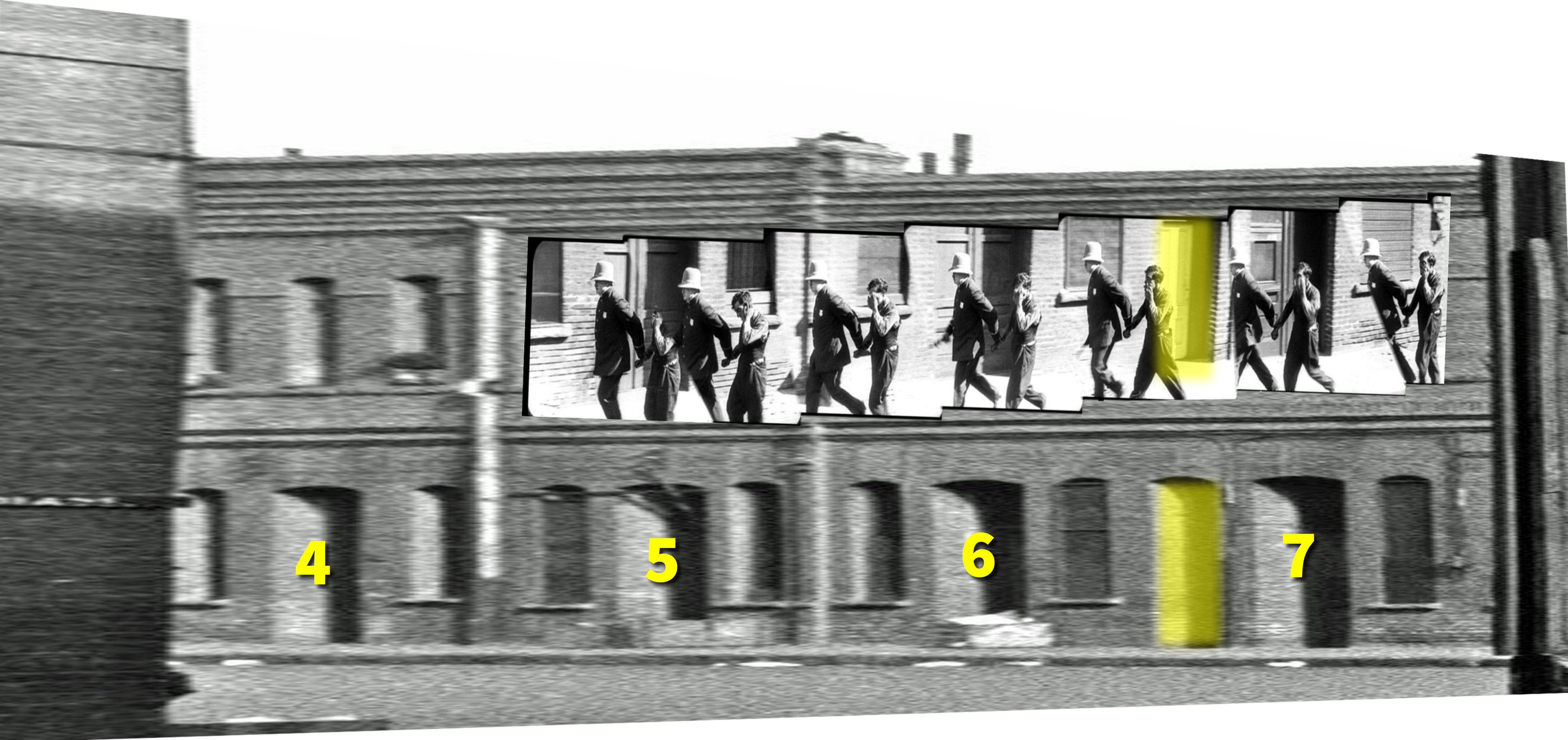
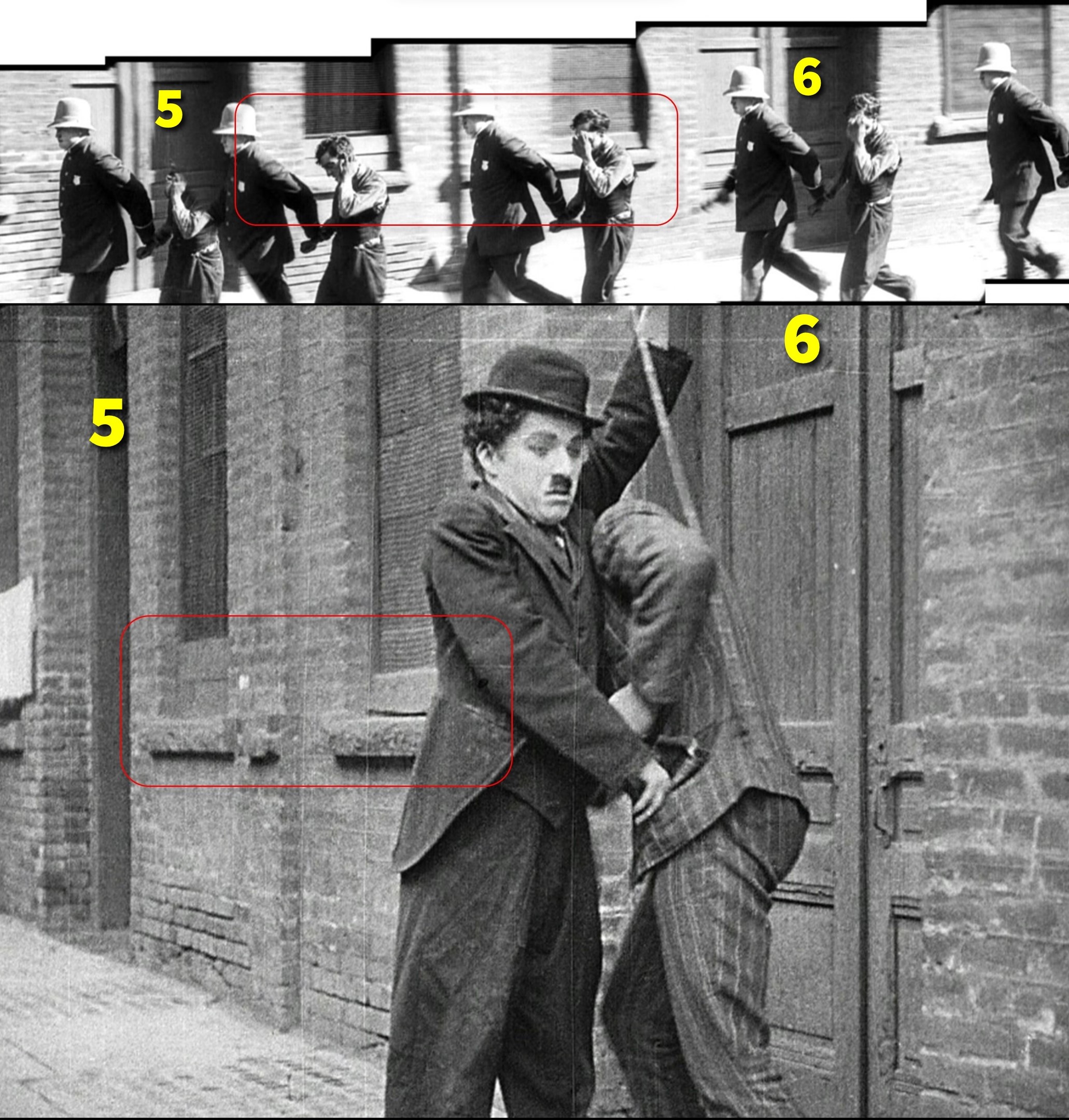
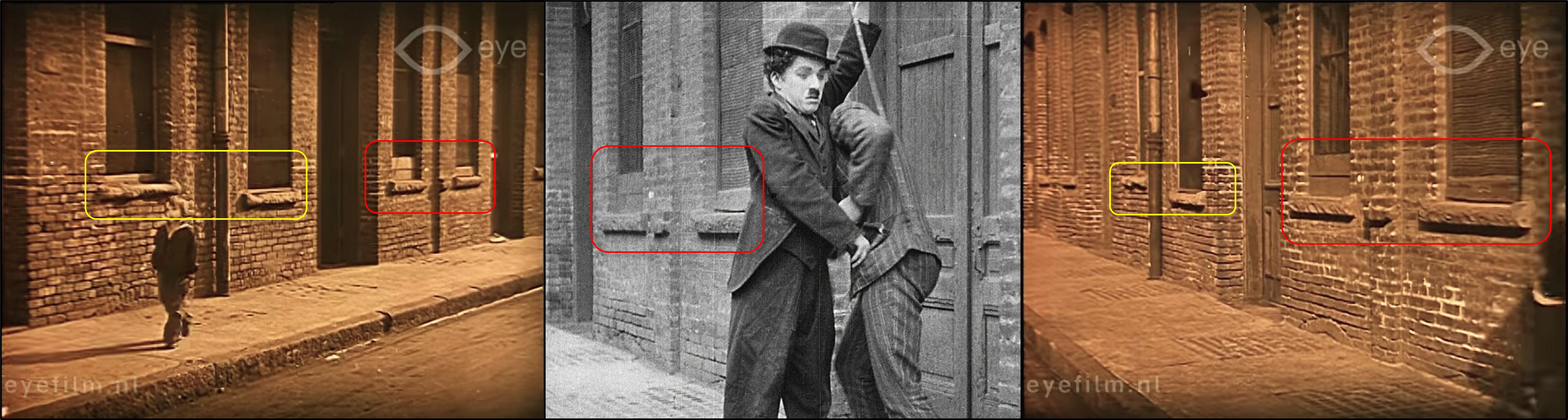


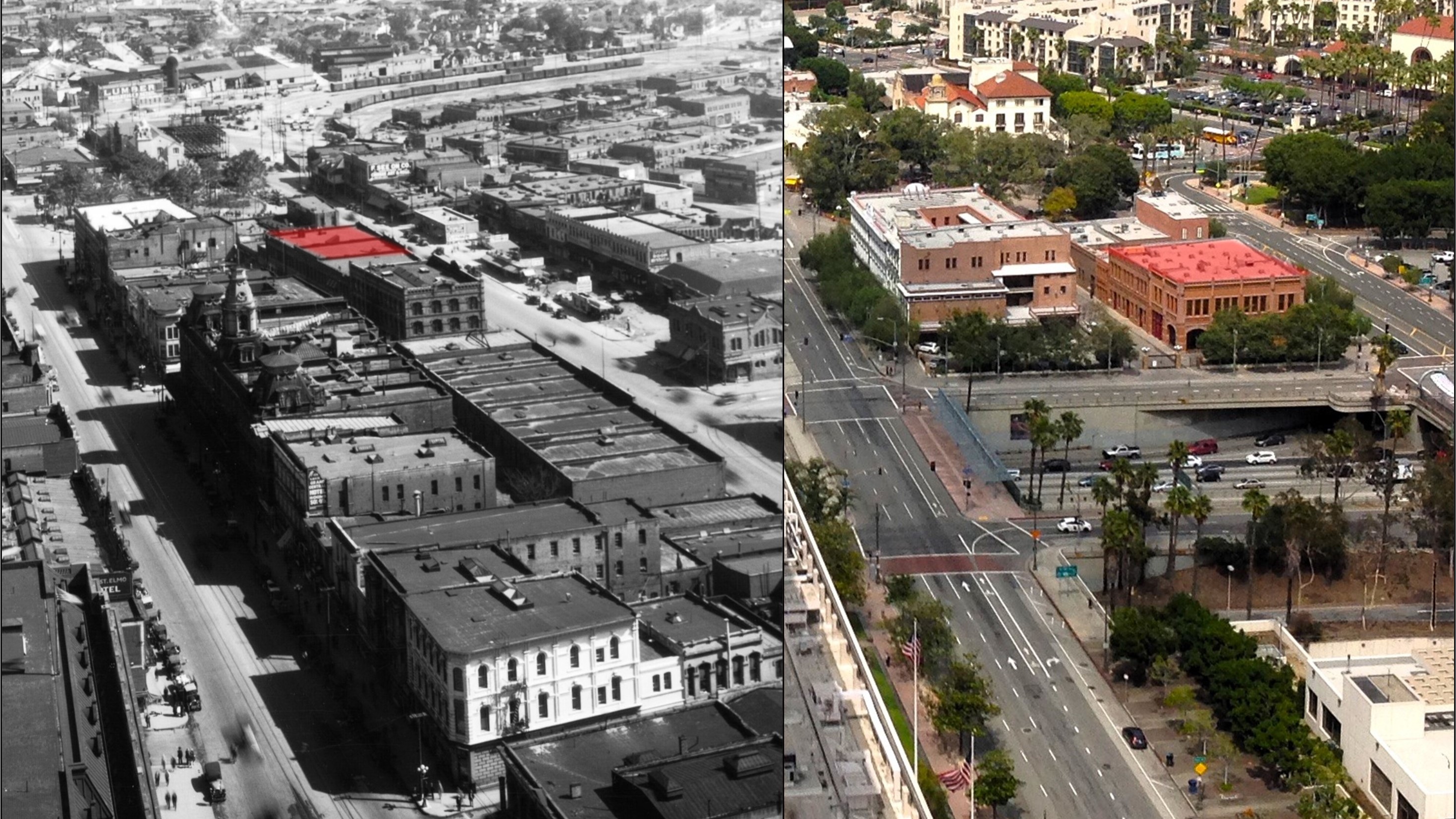

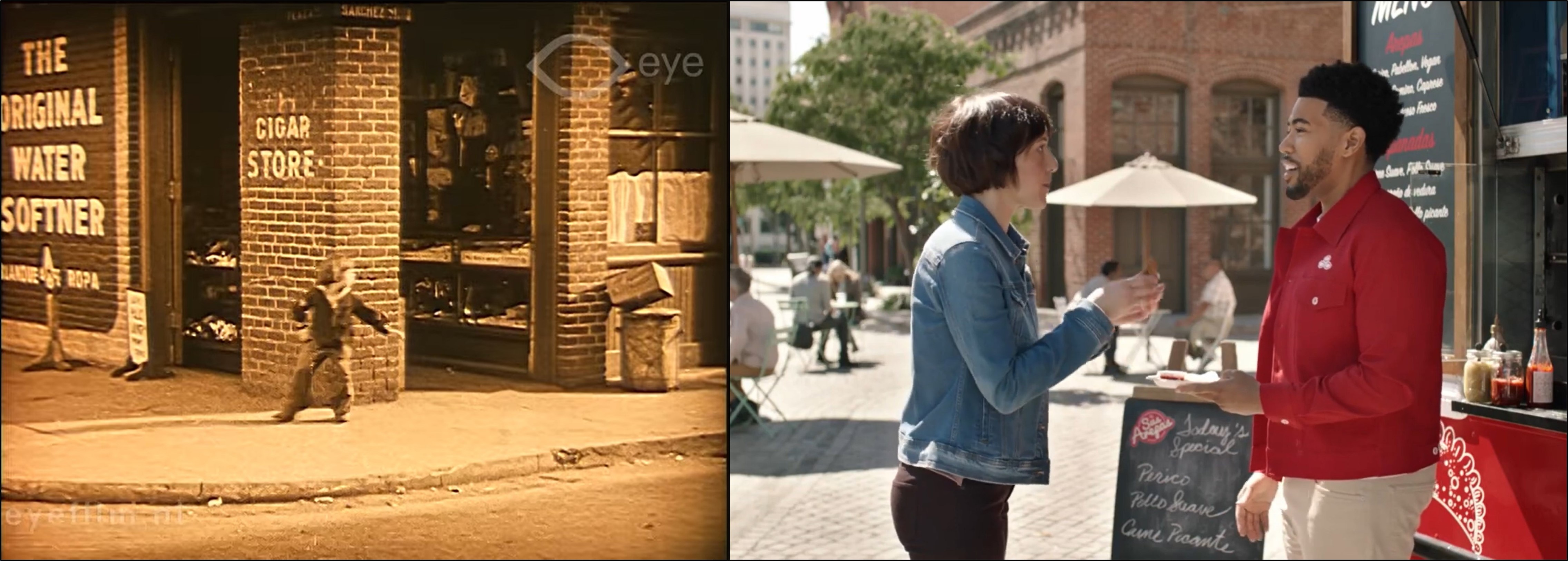


 Chaplin-Keaton-Lloyd film locations (and more)