Buster’s Trains – One Week to Speak Easily

In honor of Buster Keaton’s birthday today, October 4, 1895, Turner Classic Movies is hosting a Buster Keaton celebration by playing a large selection of his films throughout October.  Watching Keaton’s penultimate MGM feature Speak Easily (1932) for the first time, I was surprised to see that the movie employs the same train stations where Keaton filmed some of his greatest silent film triumphs.

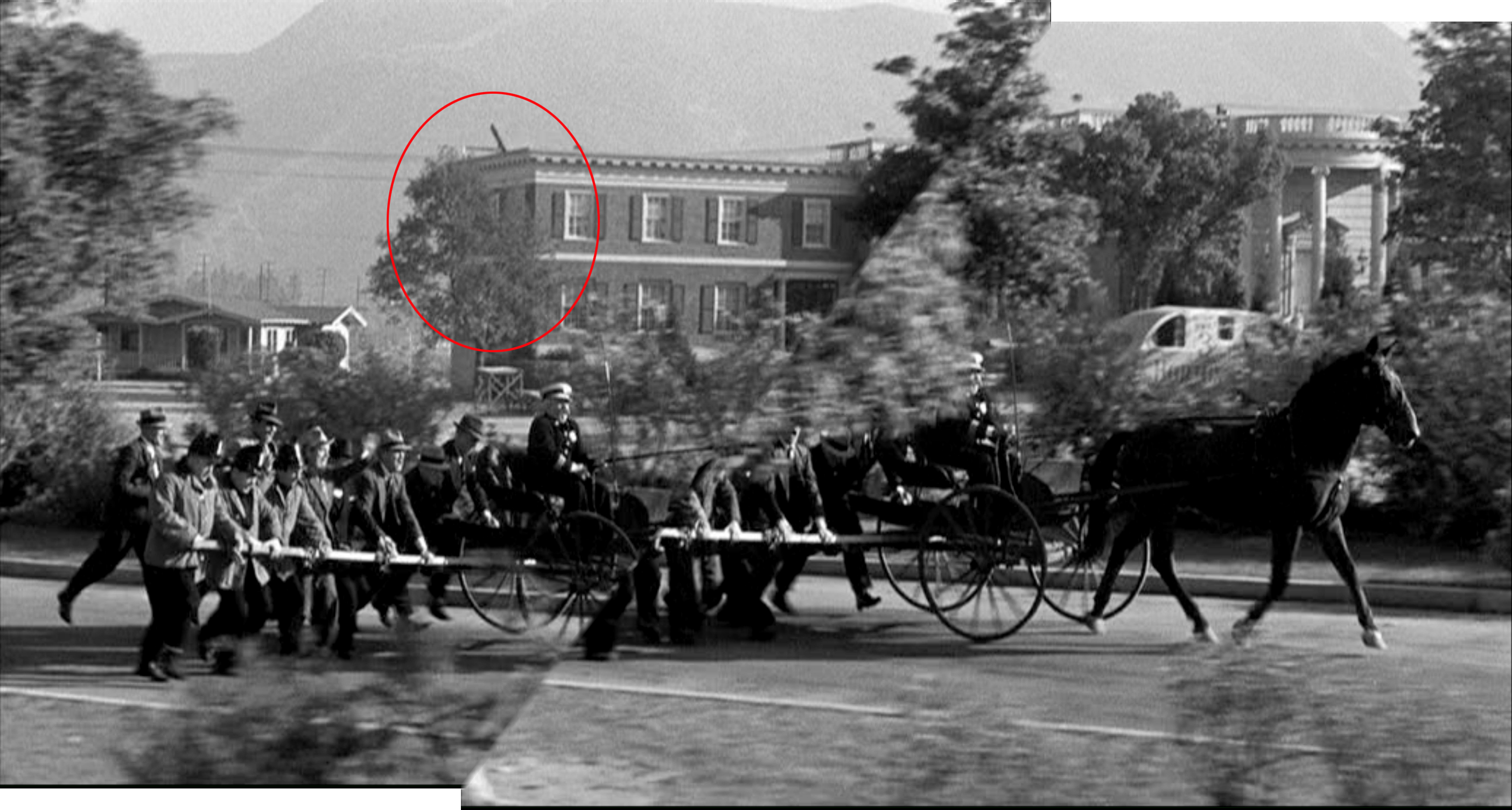
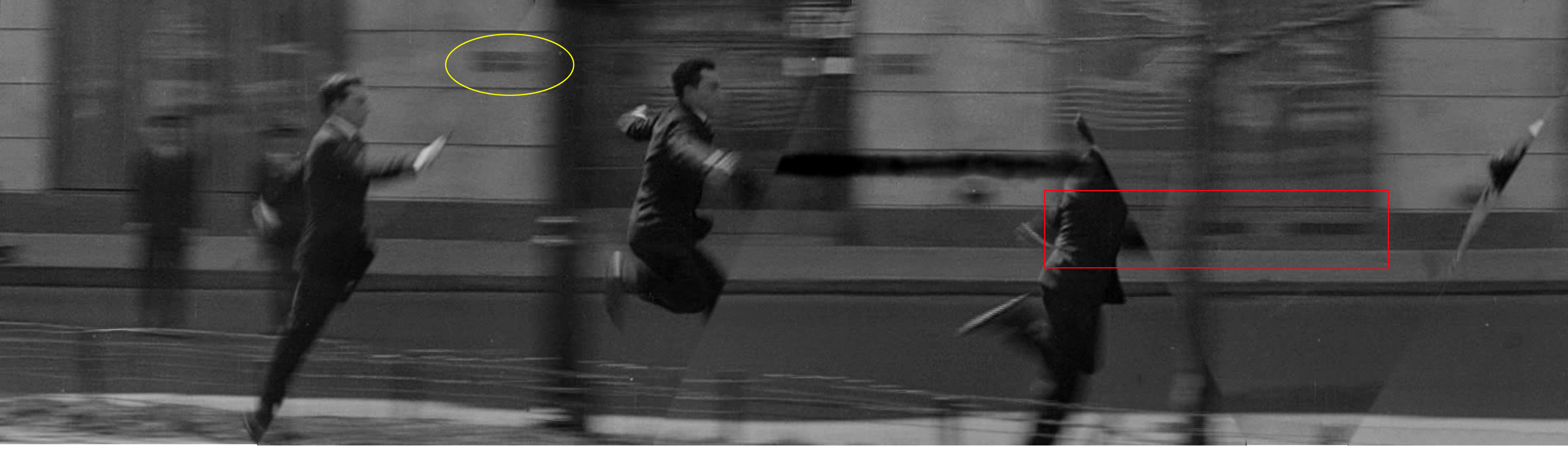
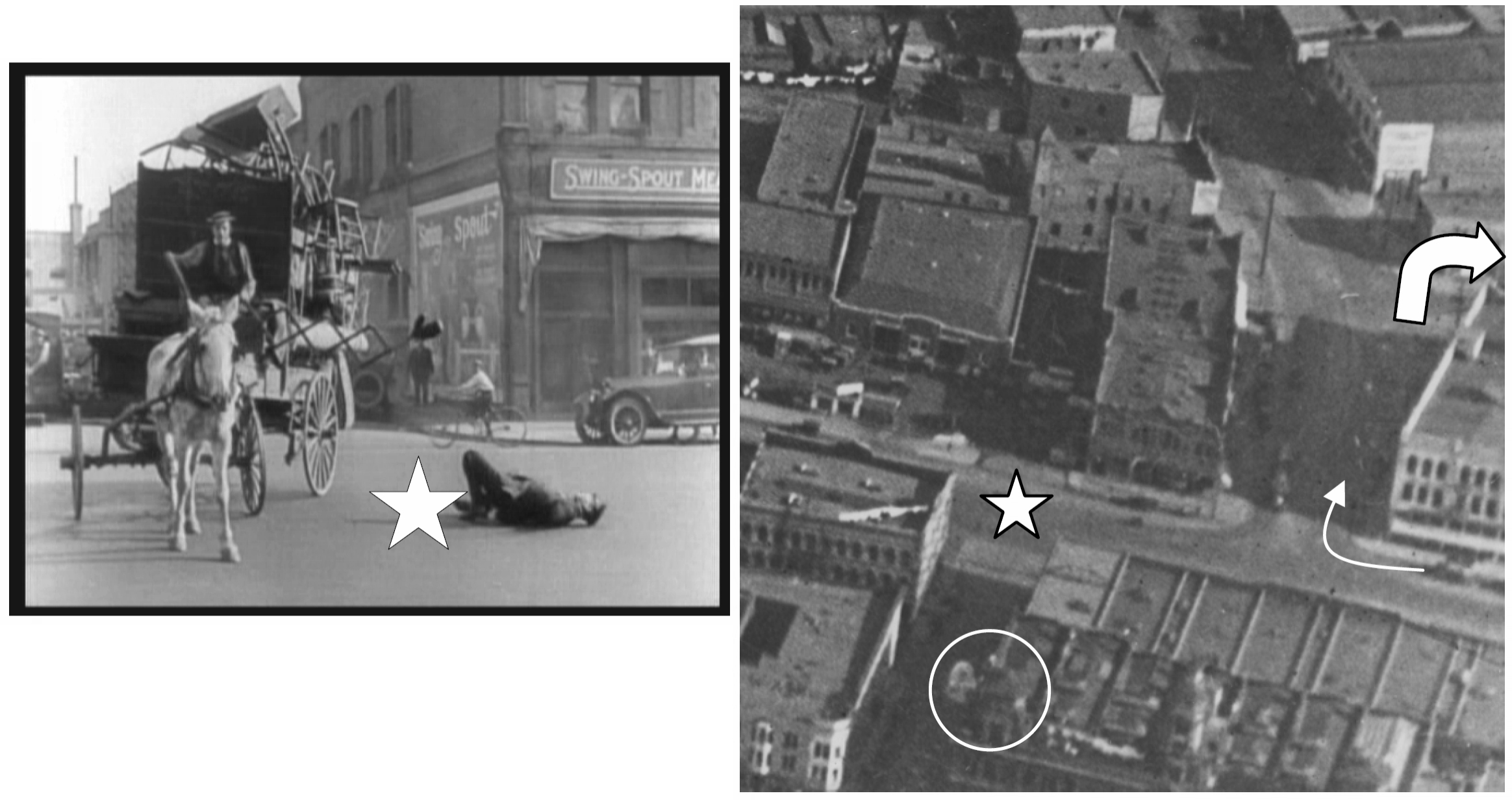
Click to enlarge. In One Week (1920), Buster travels up N. Eucalyptus Ave. in Inglewood near the town train station and the C. Ganahl Lumber Co.

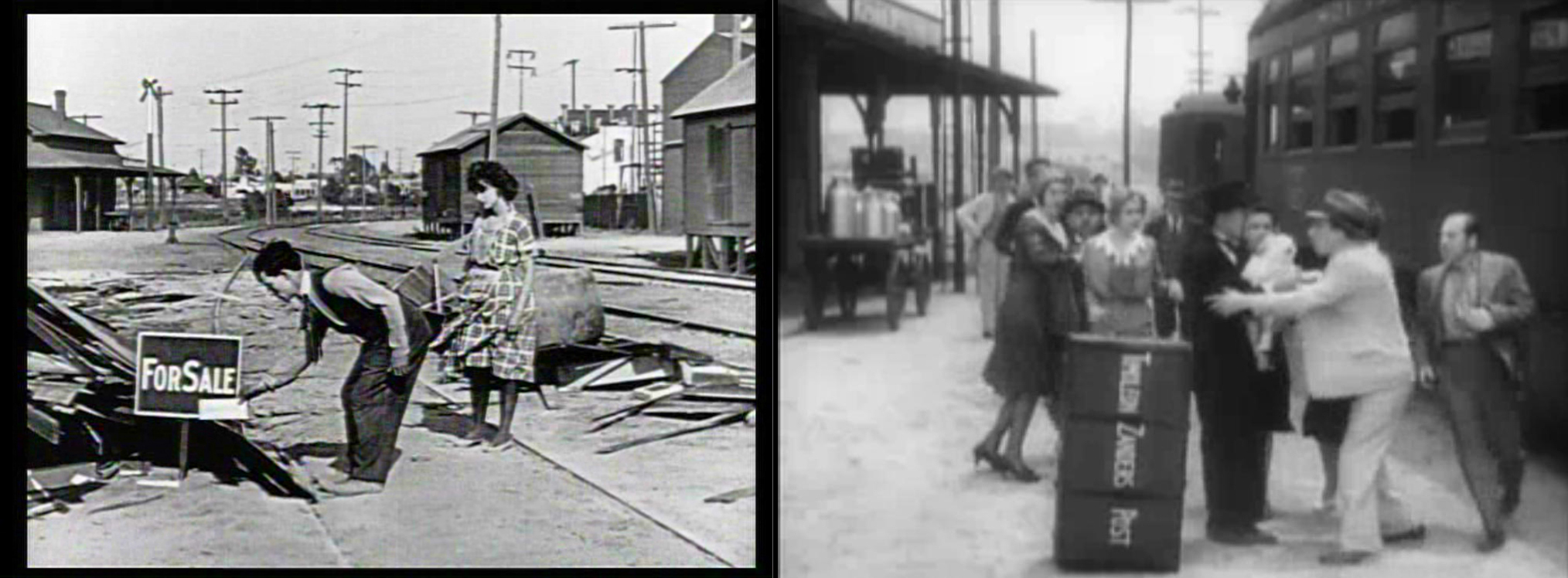
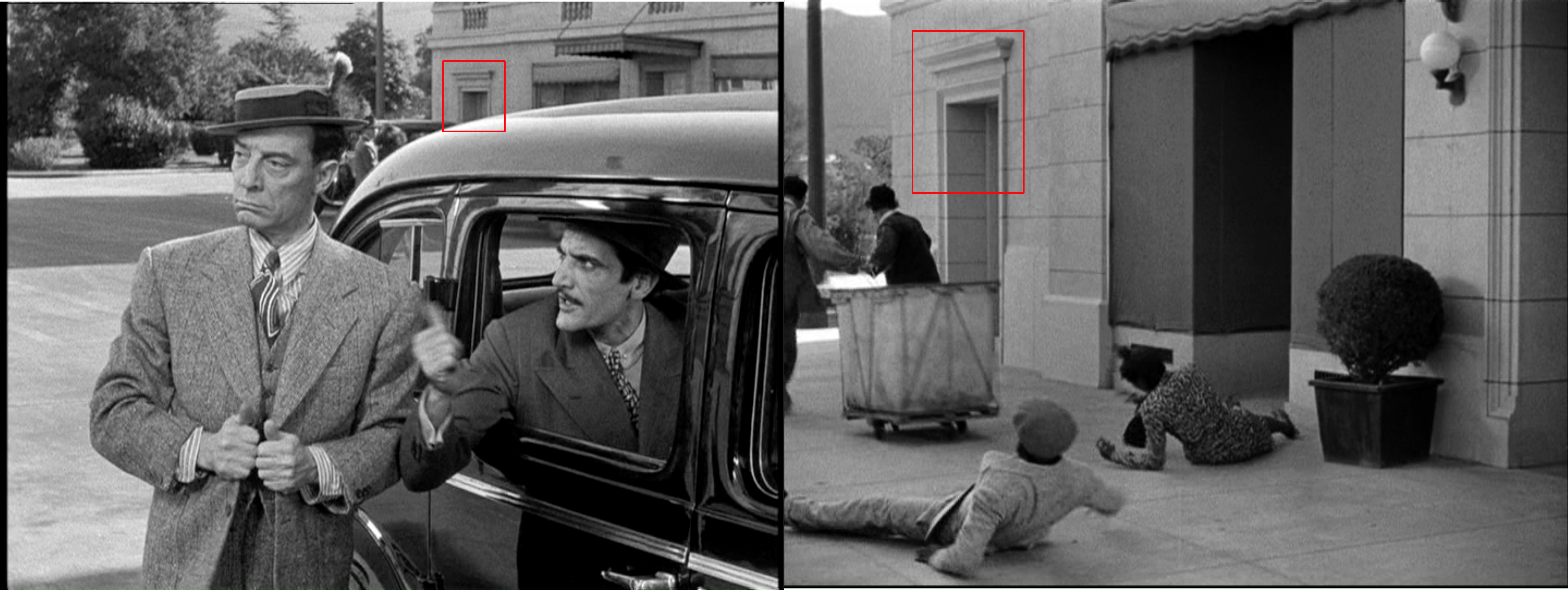
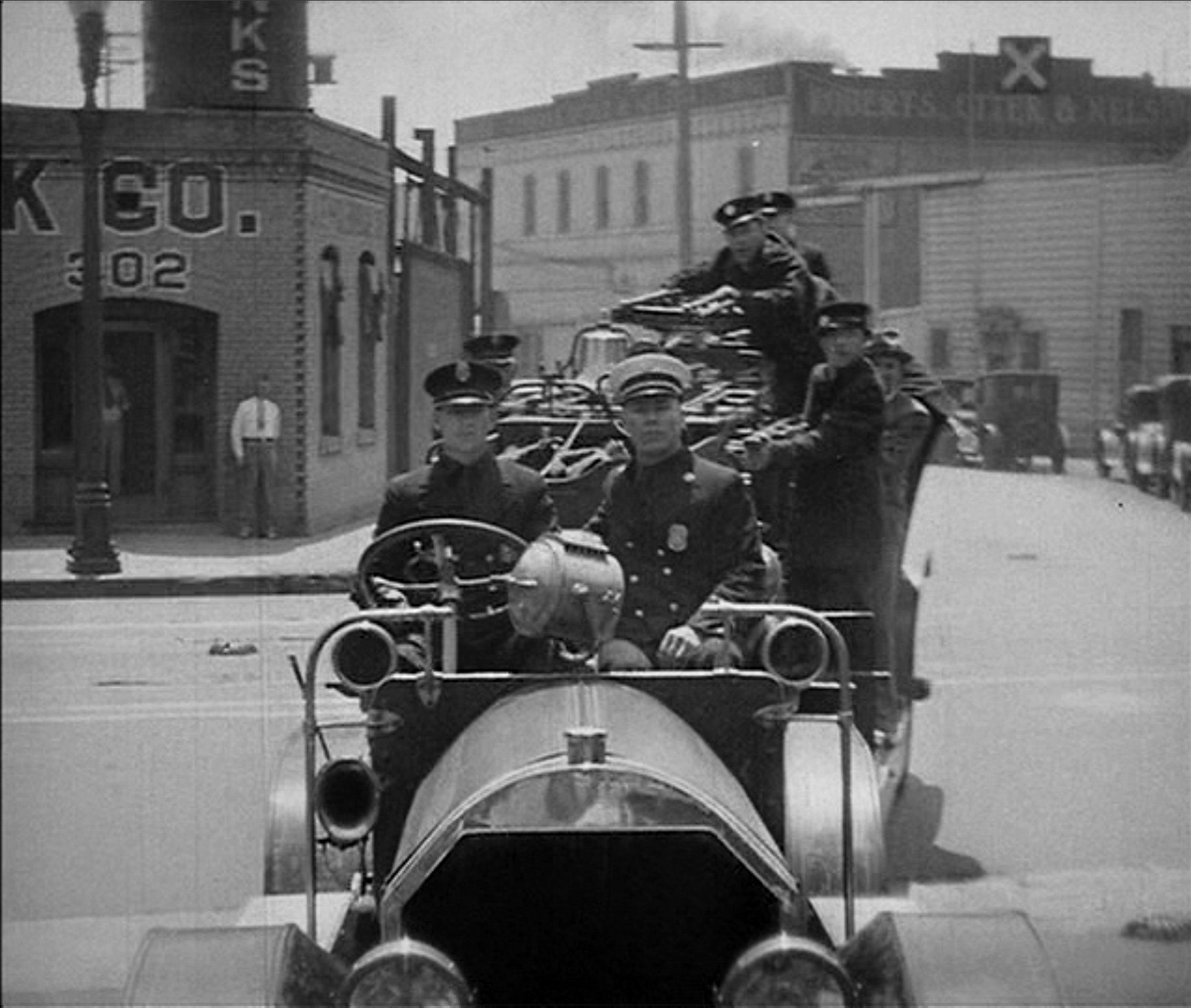
In Speak Easily Buster plays a timid classical Greek literature professor who befriends a struggling stage troupe.  Buster first meets them beside the Inglewood train station, best known as the setting for the climax of Keaton’s debut silent short One Week (1920), where Buster’s house is demolished by an oncoming train.

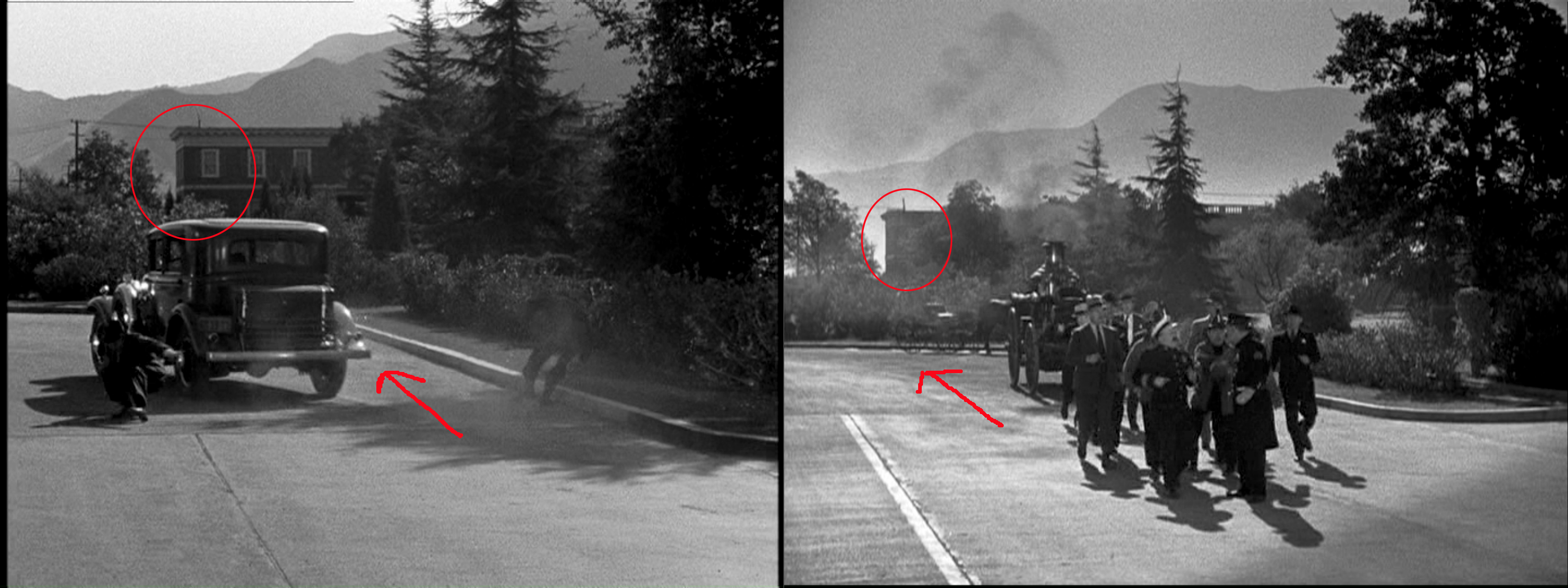
Click to enlarge. The Inglewood train station as it appears in One Week, left, and in Speak Easily, right.

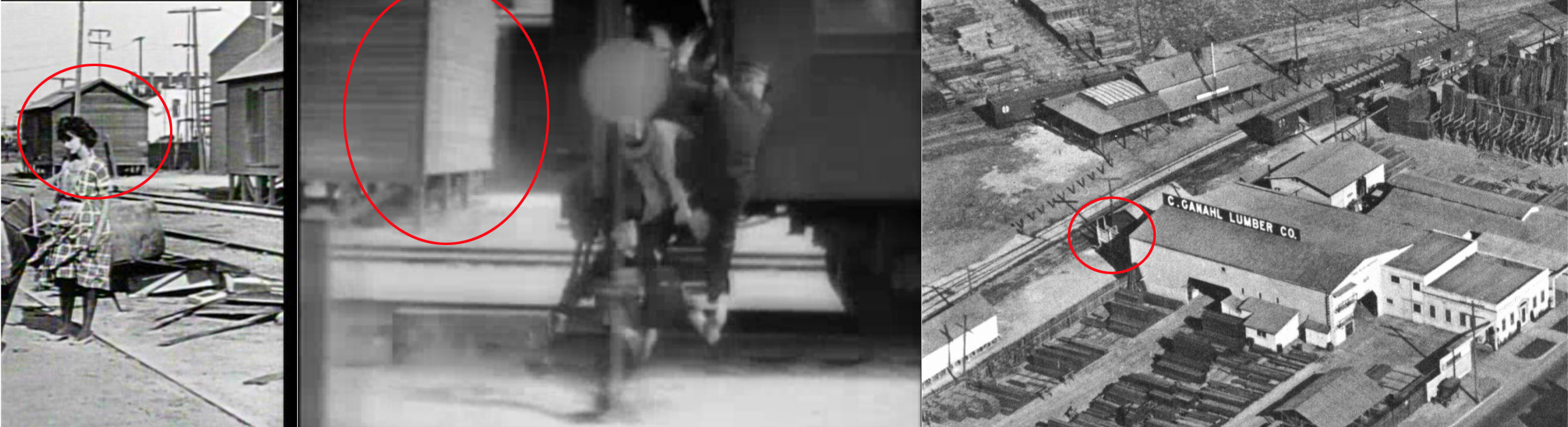
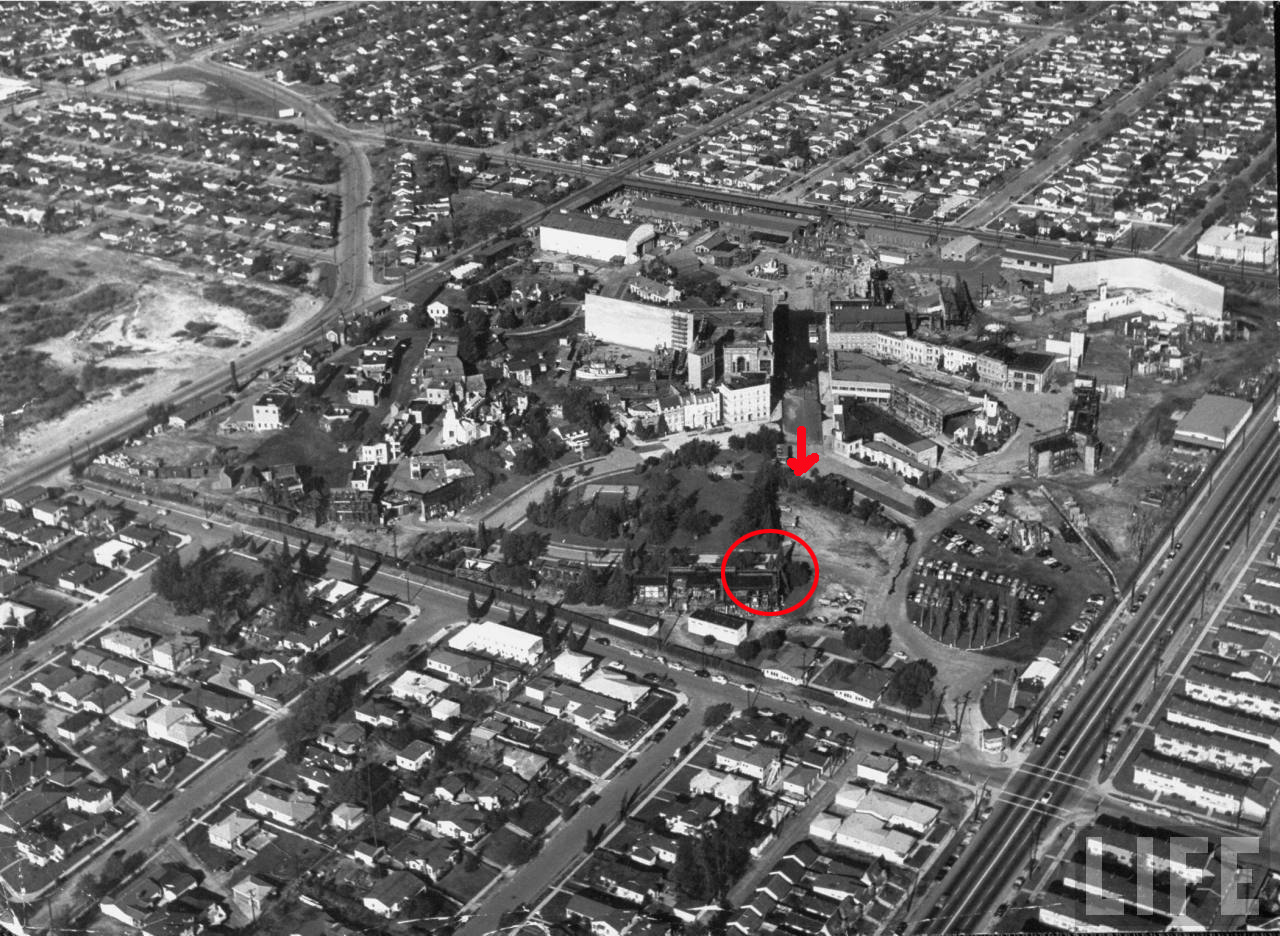
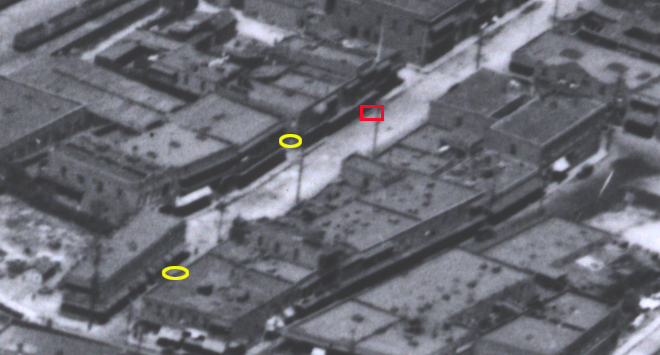
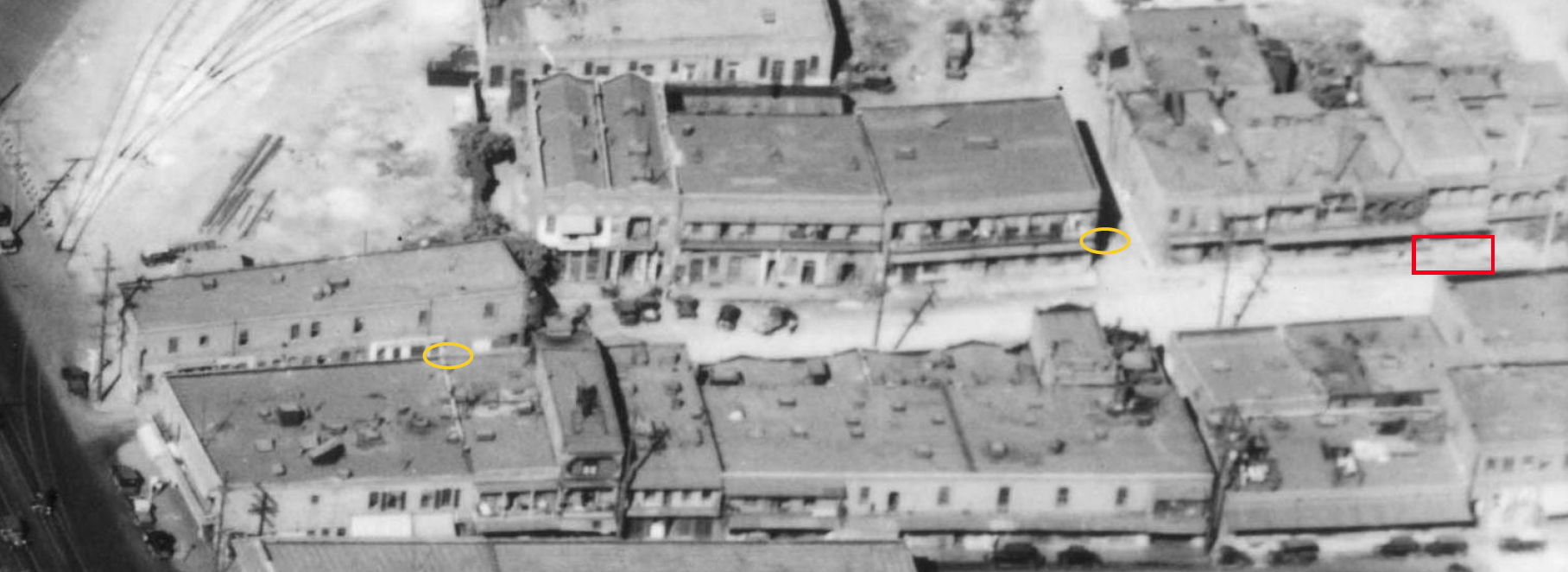
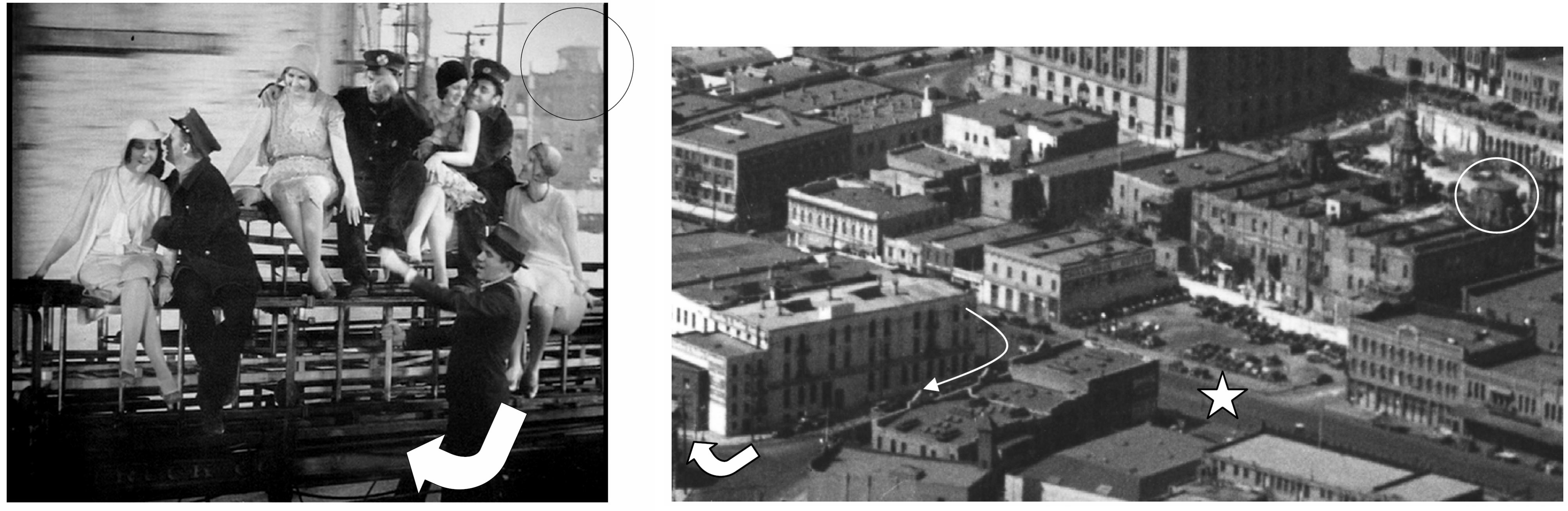
A lumber yard shed appears in One Week, left, in Speak Easily, center, as Buster is being dragged aboard a moving train, and in this vintage aerial view, right.

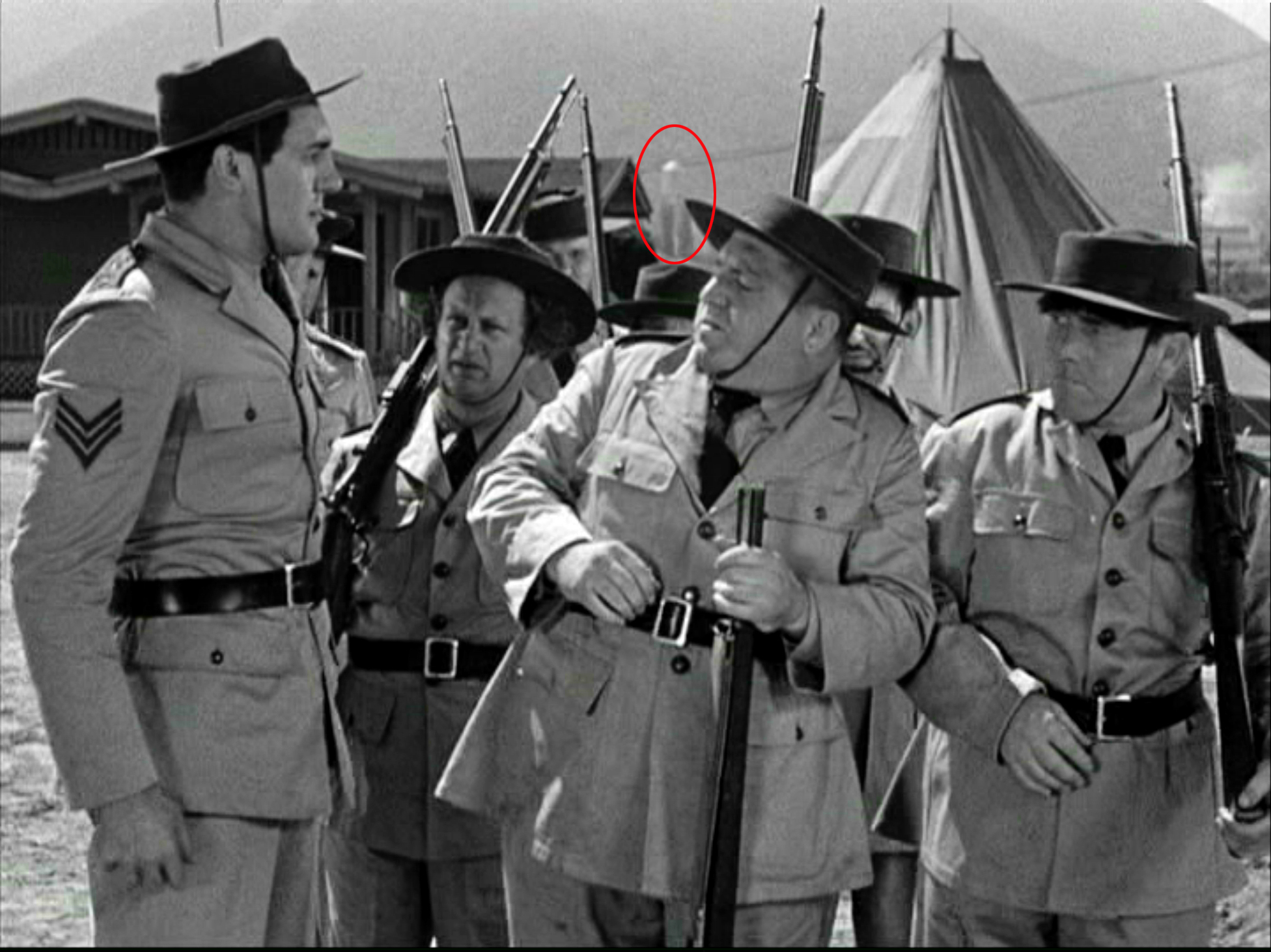
As Buster is dragged aboard a departing Inglewood train in Speak Easily (above), you can see a distinctive shed that stood nearby during the filming of One Week.

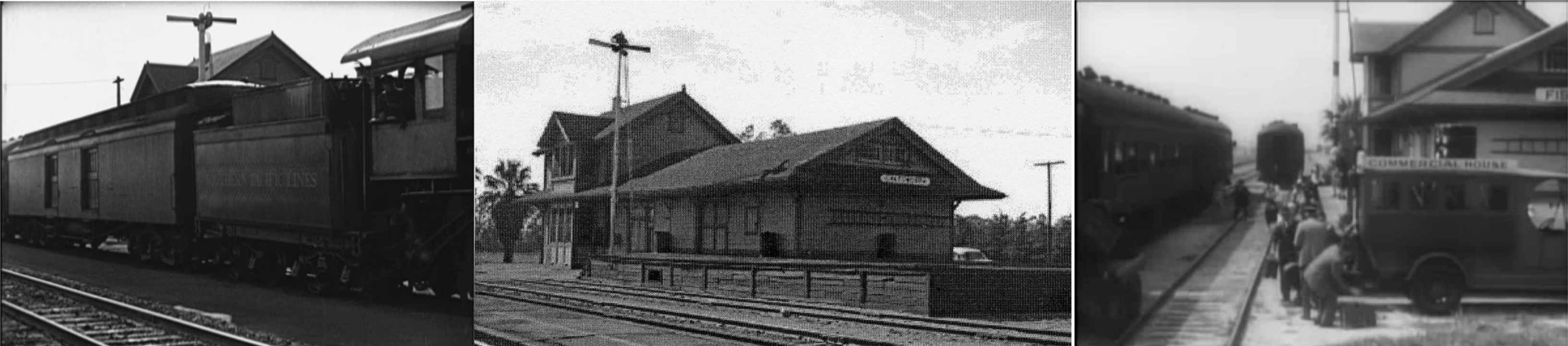
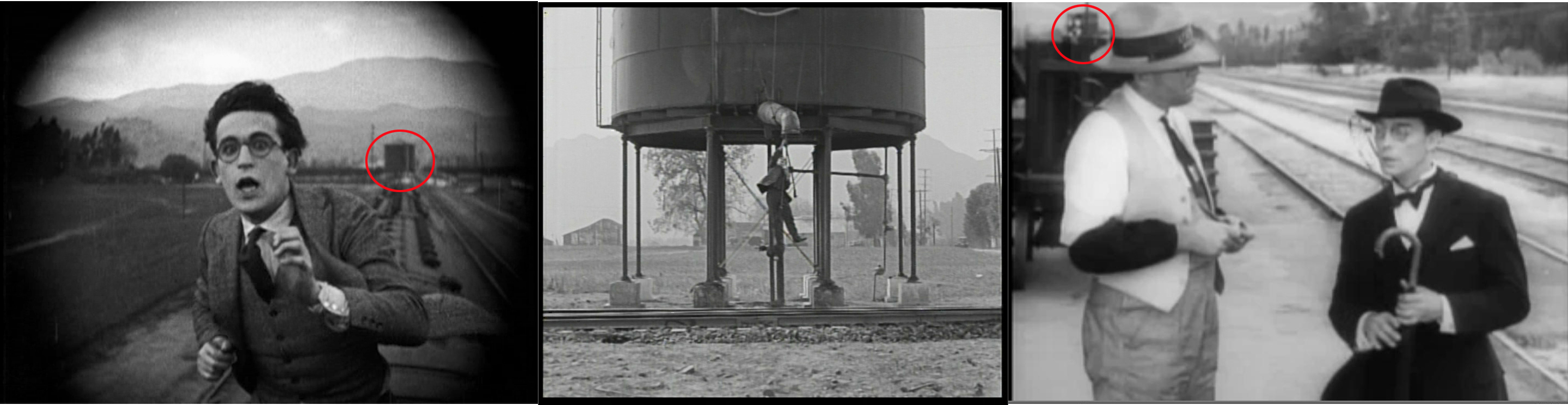
Harold Lloyd's Now or Never (1921) left, the Chatsworth station center, and Speak Easily, right.

Later in Speak Easily, Buster and the troupe arrive at the Chatsworth station, and momentarily go their separate ways.  As shown below, the Chatsworth train station appears briefly in Sherlock Jr. (1924), and due north of the station is the water tank in Sherlock Jr. where Buster unknowingly broke his neck filming a stunt lowering himself to the ground from the tank water spout.

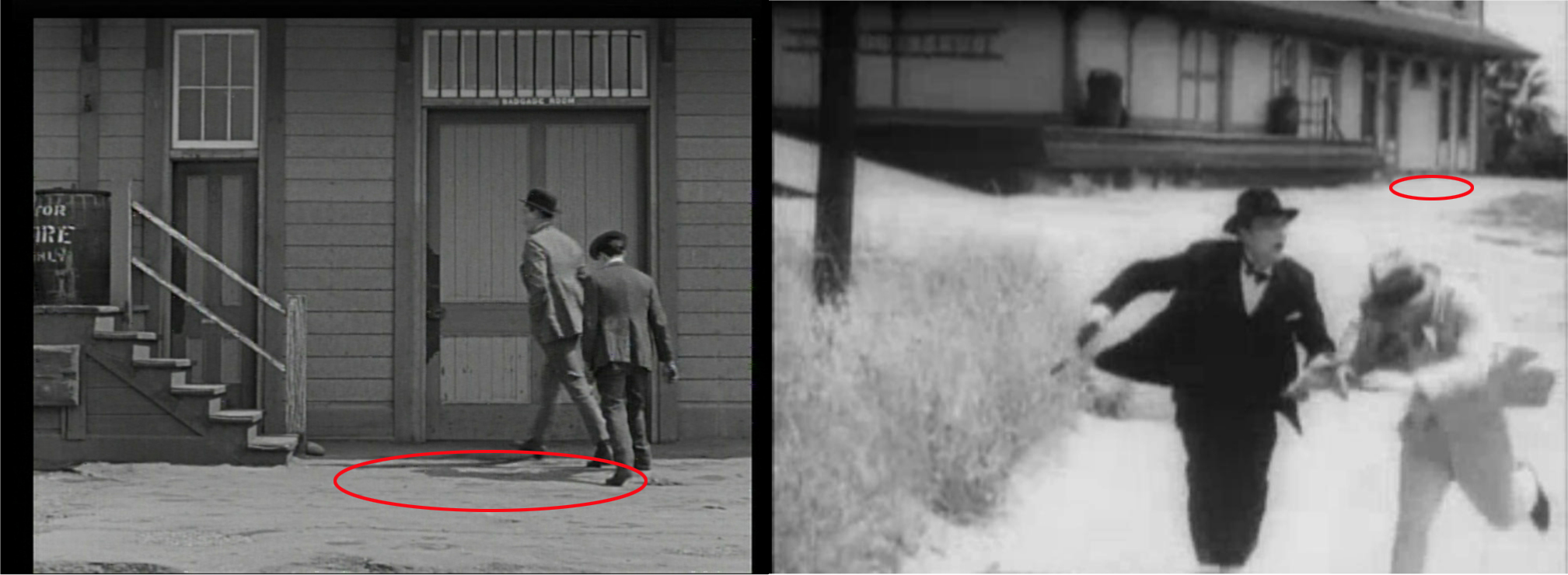
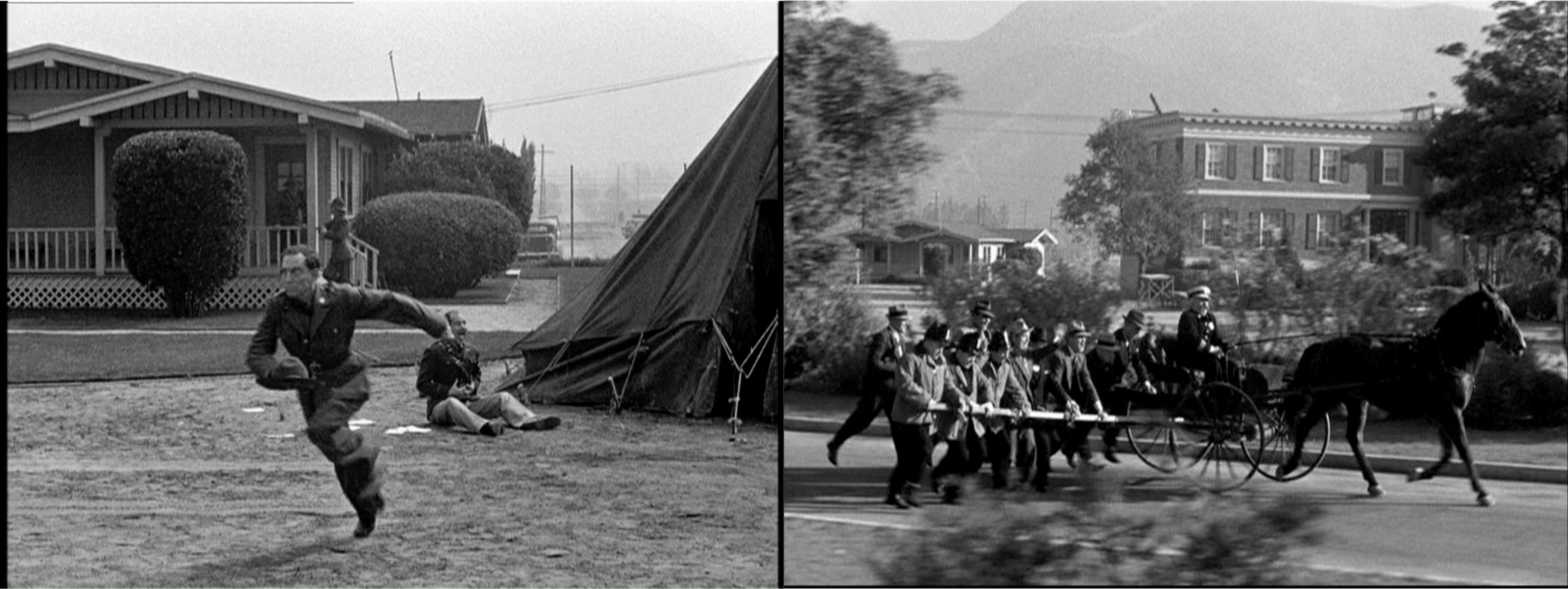
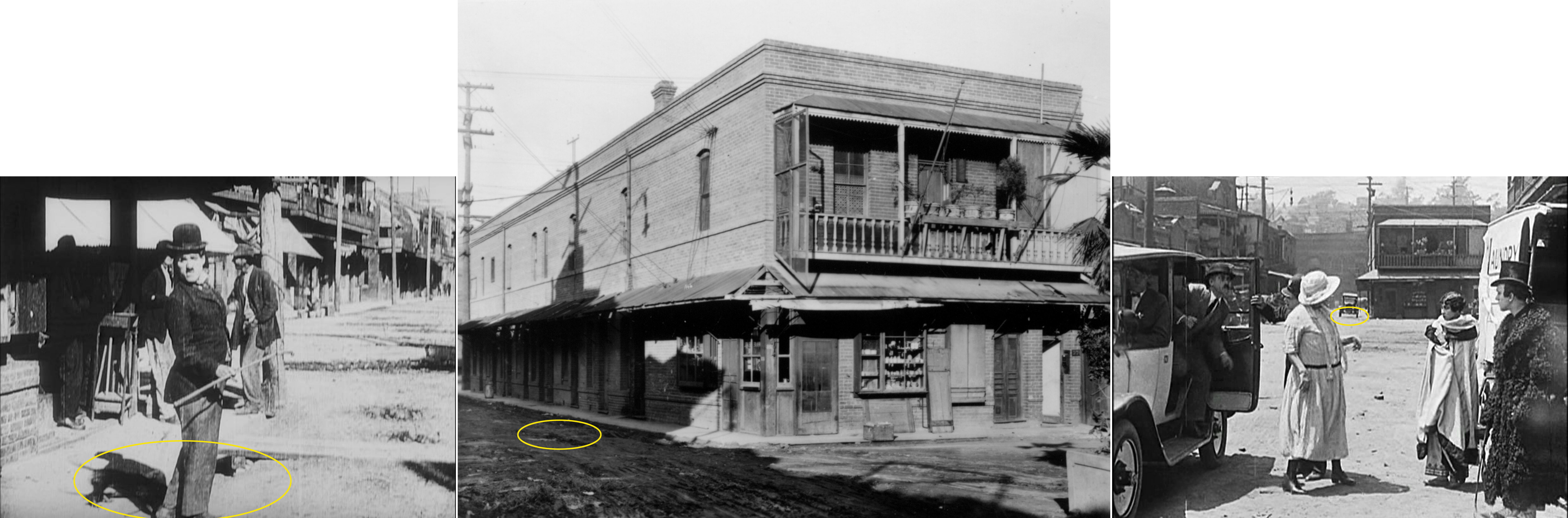
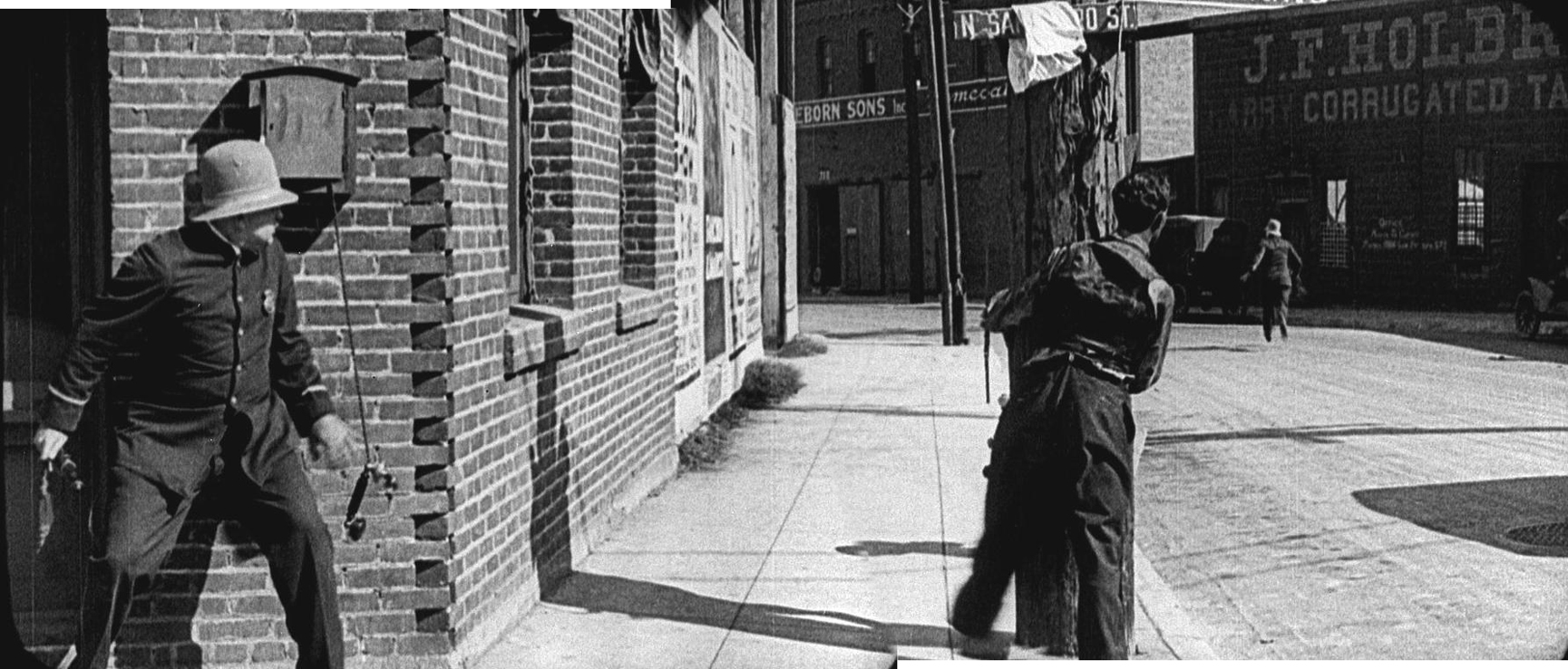
Click to enlarge. In Sherlock Jr, left, Buster shadows his rival behind the Chatsworth train staion. The back of the station appears in Speak Easily, as Buster and Jimmy Durante rush to catch a moving bus. The oval marks the same spot of ground.

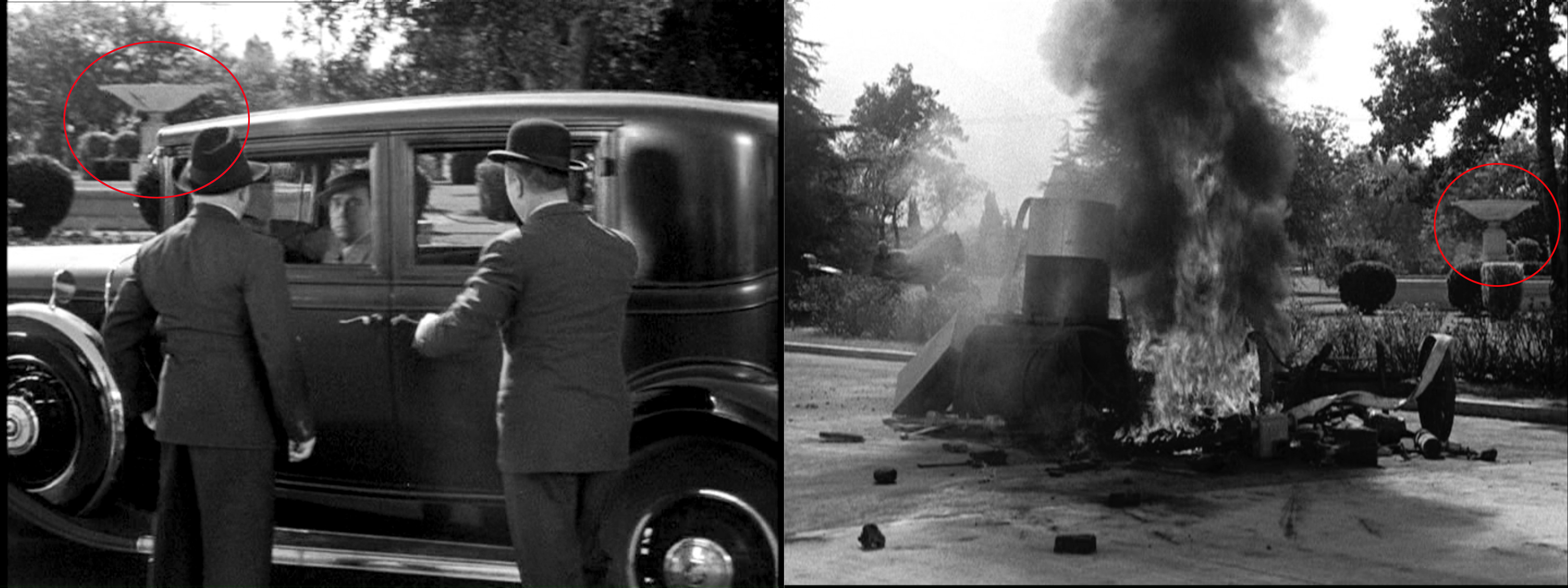
The same water tank appears in Harold Lloyd's Now or Newer, left, in Sherlock Jr. , center, and in Speak Easily.

Buster made only one more feature for MGM after Speak Easily before he was fired.  Given Buster’s struggles at MGM, and his despair over losing creative control of his films, you have to wonder what Buster might have been thinking when he re-visited these stations where he had created screen magic a decade earlier.  Both the Inglewood and Chatsworth stations are lost to history, but both appear frequently in early film.

Speak Easily is available for instant viewing on the Internet Archive.  The train station scenes begin at 6:30 and17:00 into the film.

I explain One Week in full detail in my book Silent Echoes.  This map below shows where Buster’s house crossed the still-active rail line at the end of the film.  The former Chatsworth station was located on the west side of the tracks, across from the current Chatsworth Amtrak station.

Posted in Buster Keaton, One Week, Sherlock Jr. | Tagged , , , , , , , , , | 17 Comments

Buster Keaton and Film Noir? – It’s Also True

It’s now Buster Keaton’s turn, after Harold Lloyd and Charlie Chaplin (see prior posts), to brush shoulders with film noir.

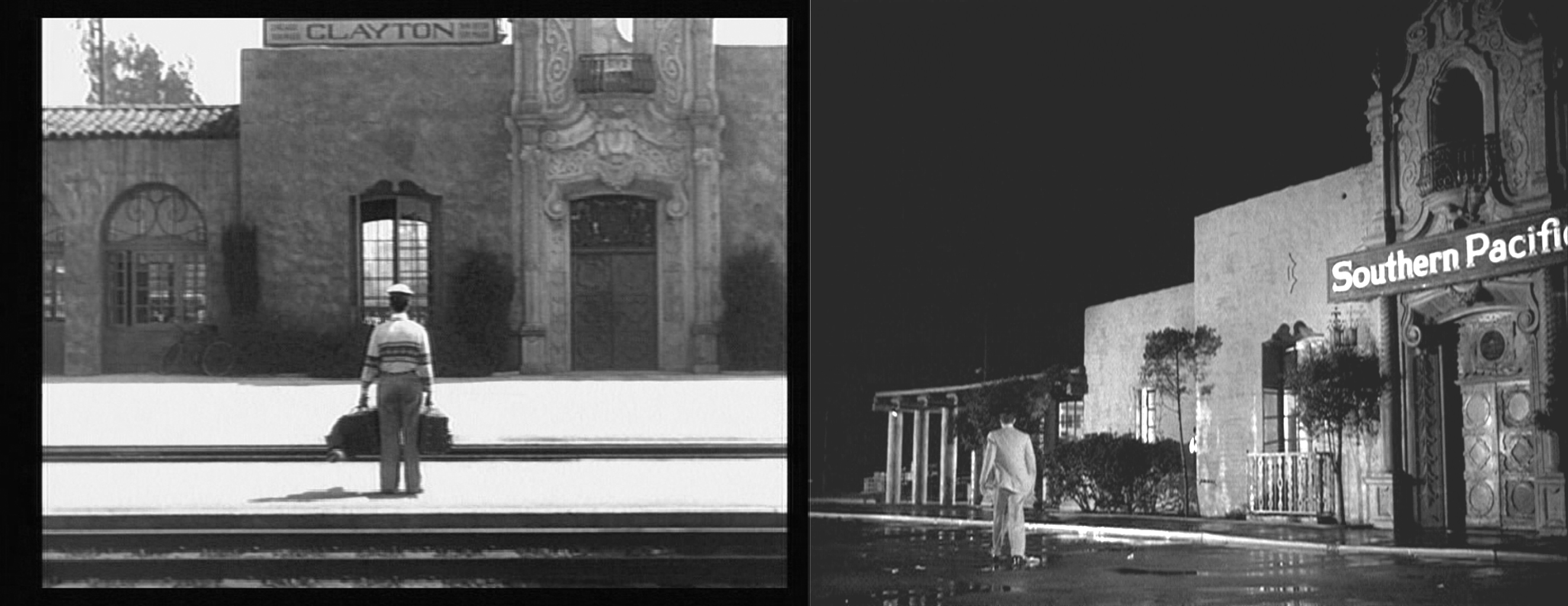
Buster Keaton in College (1927) to the left, and Van Heflin in Act of Violence (1948) right.

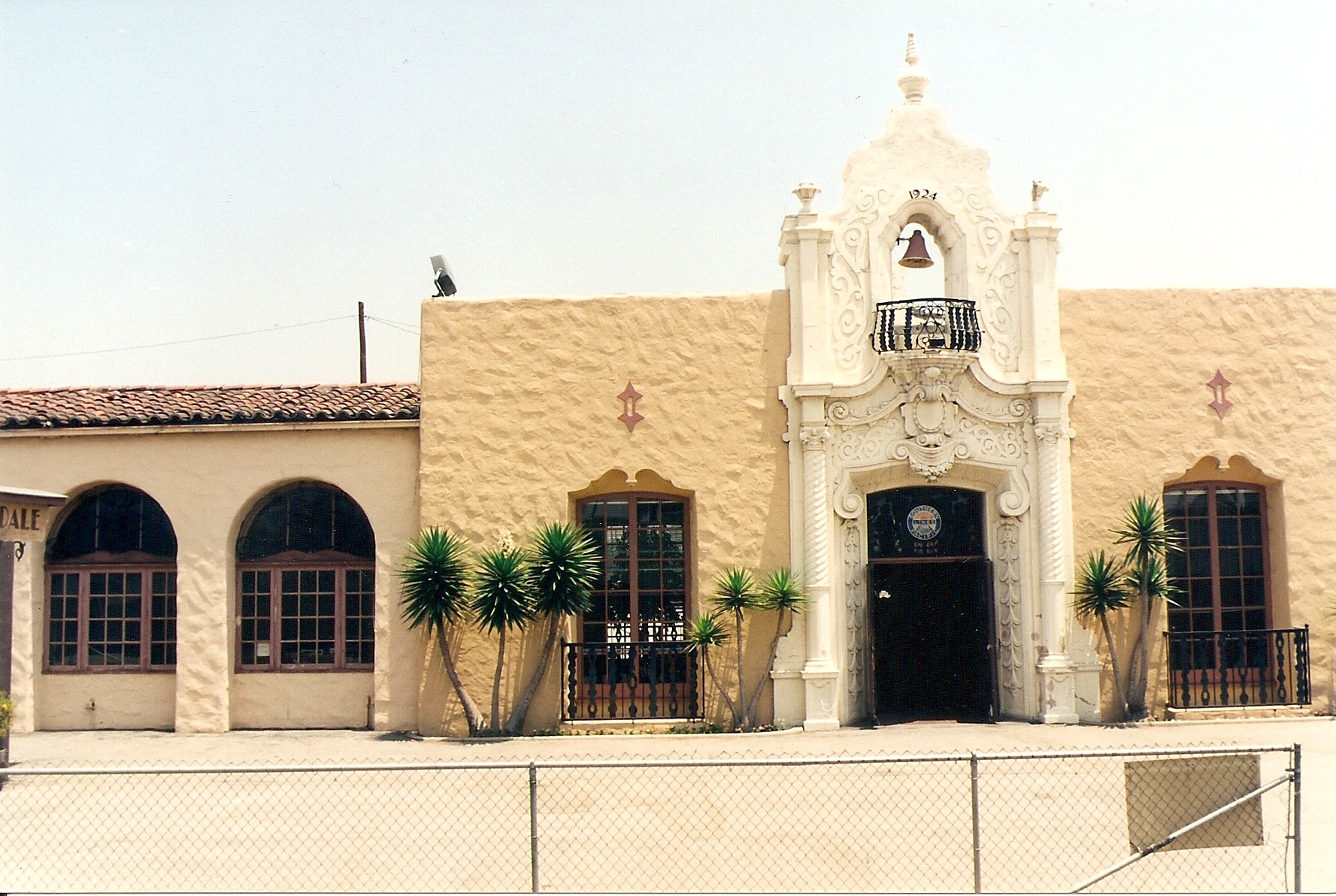
The station is now the Glendale Amtrak Station.

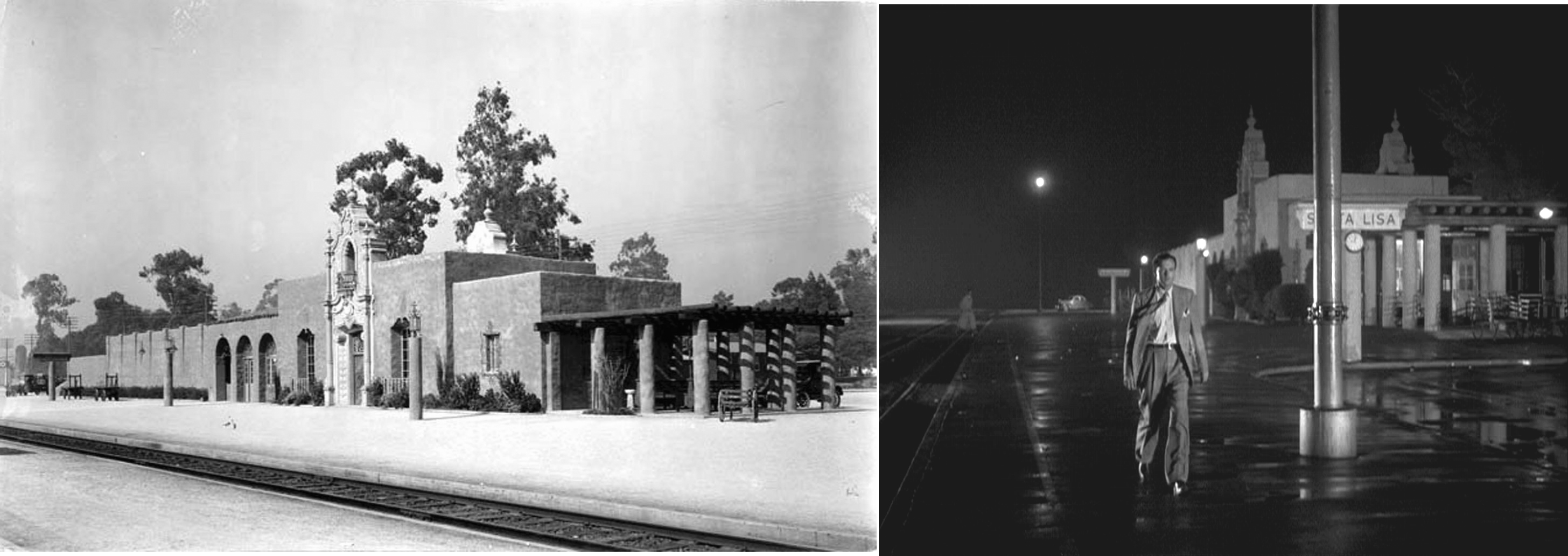
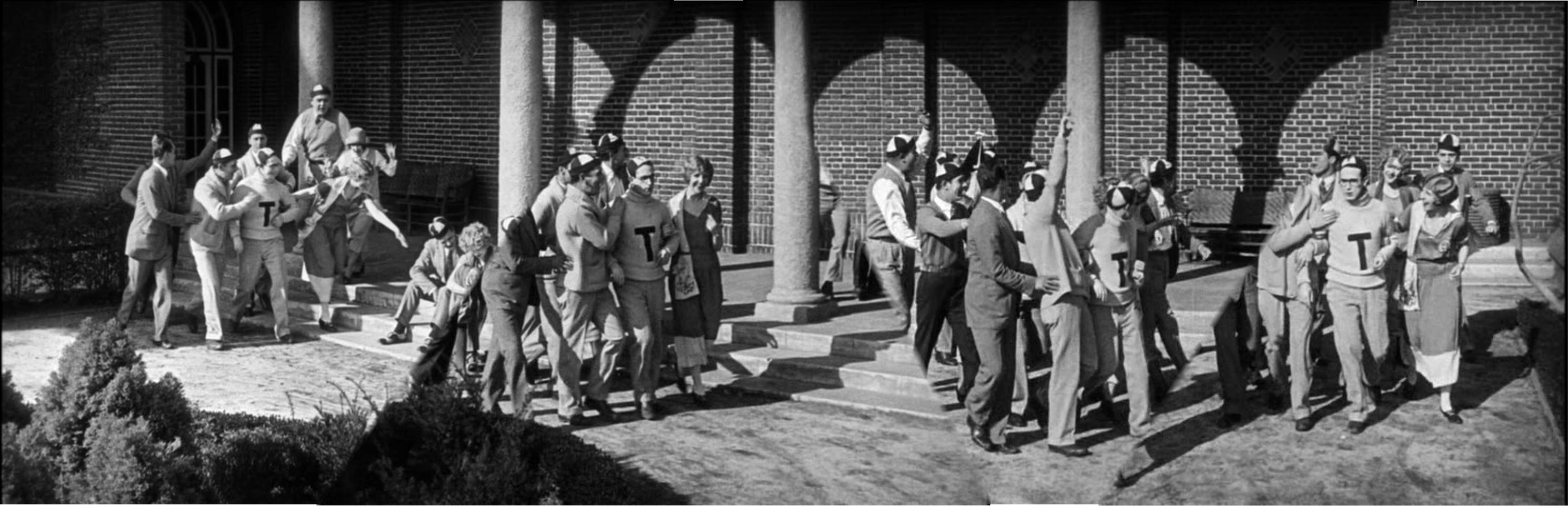
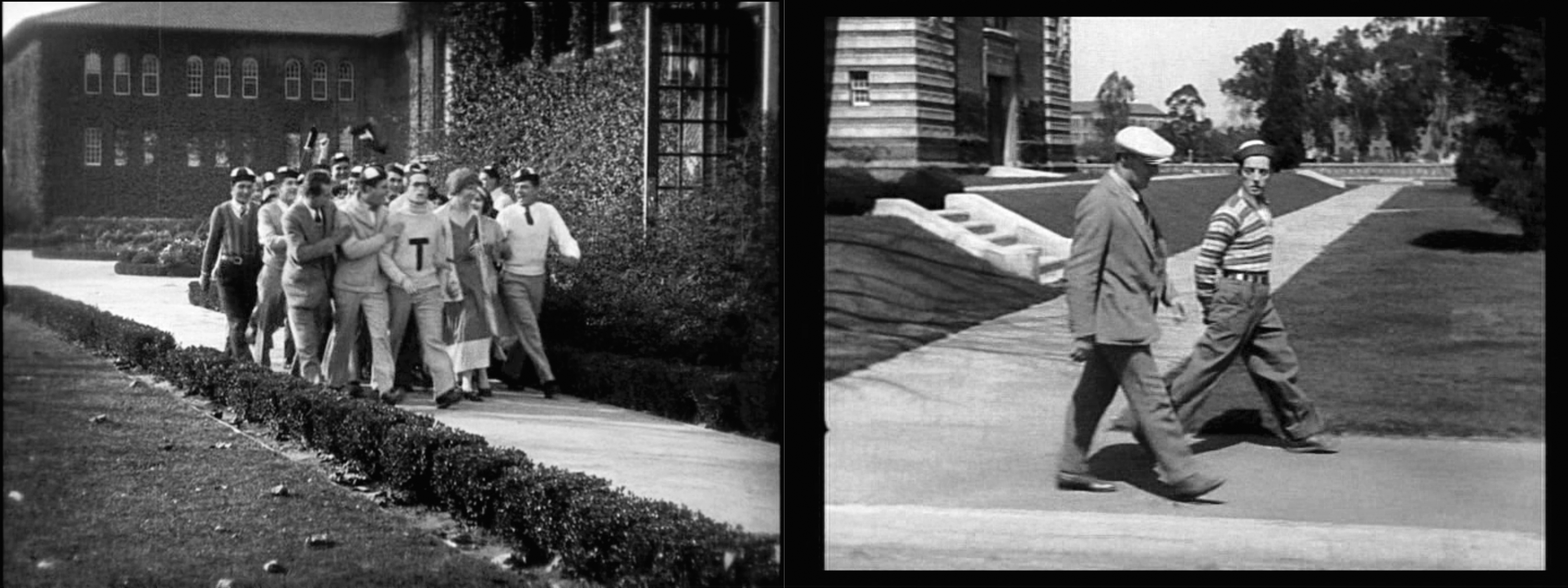
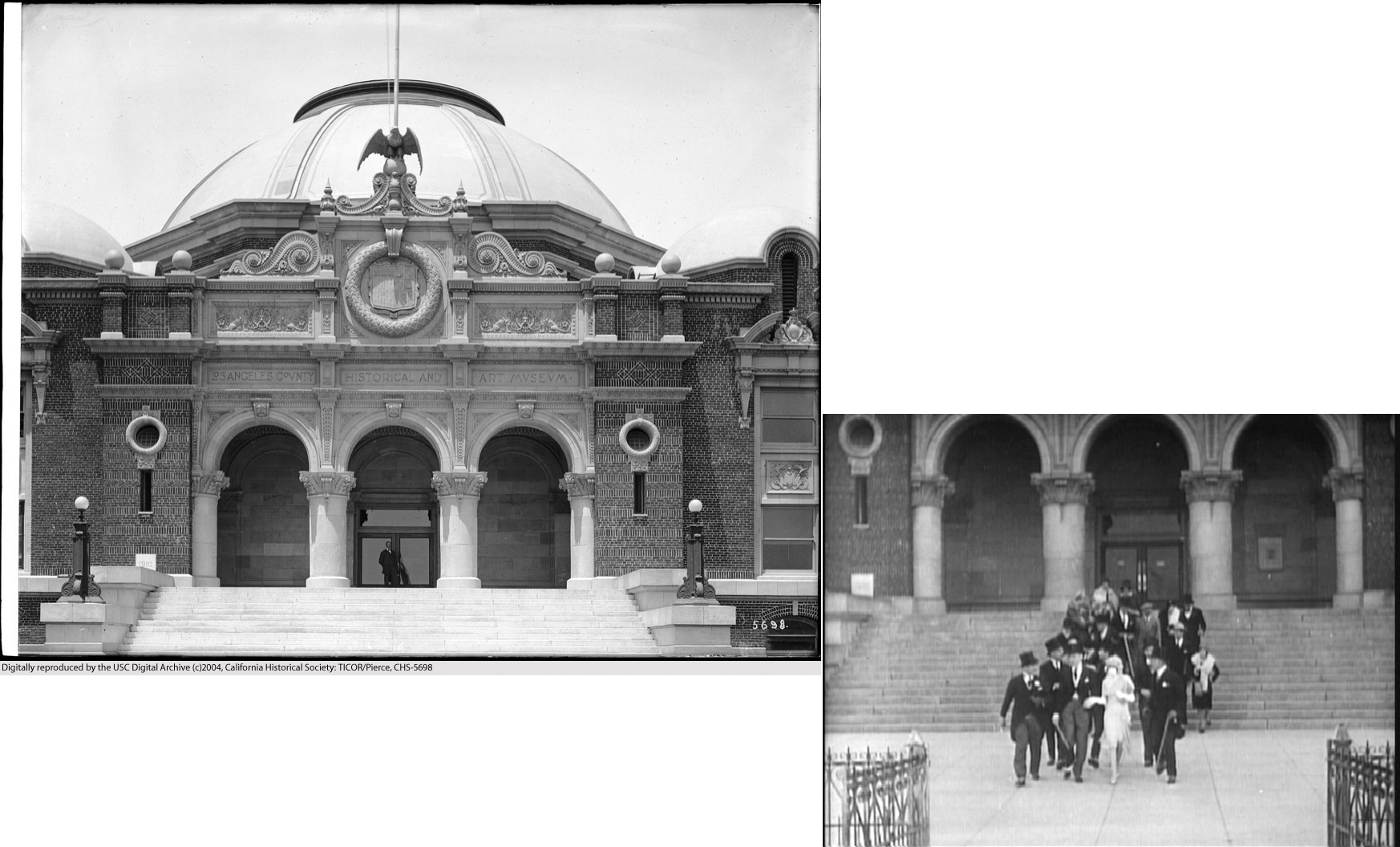
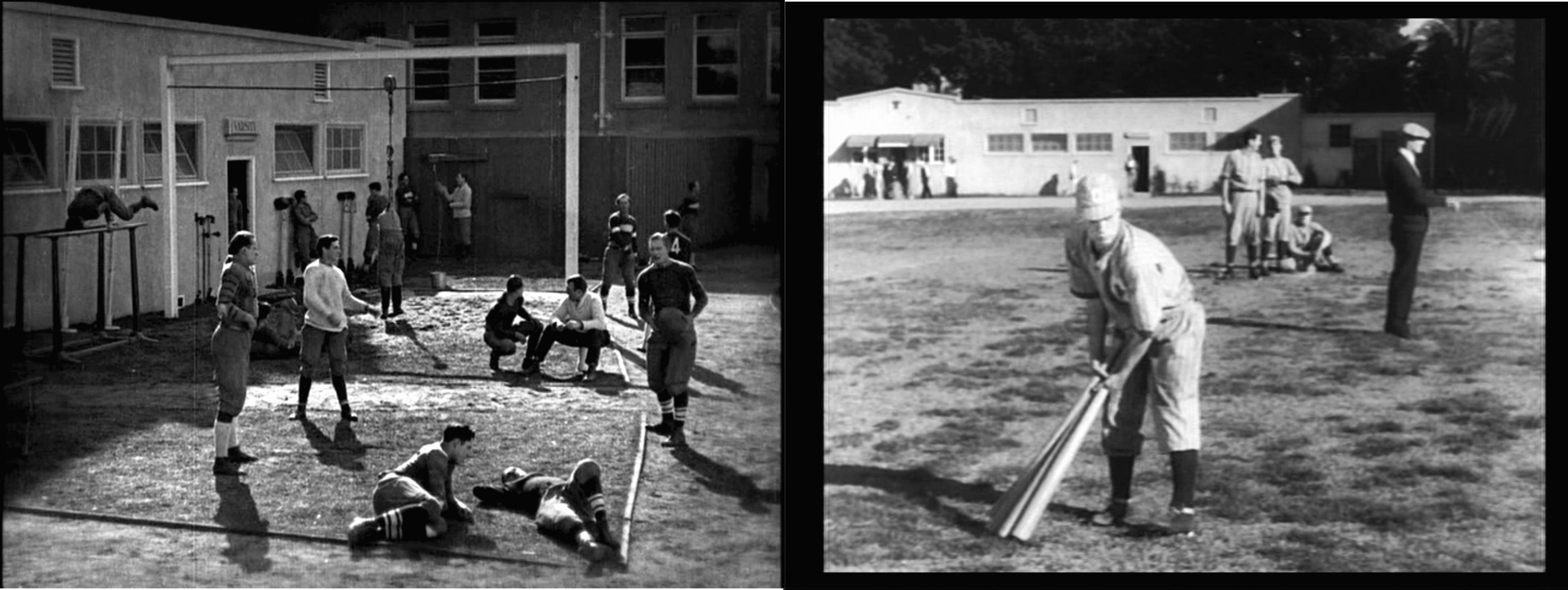
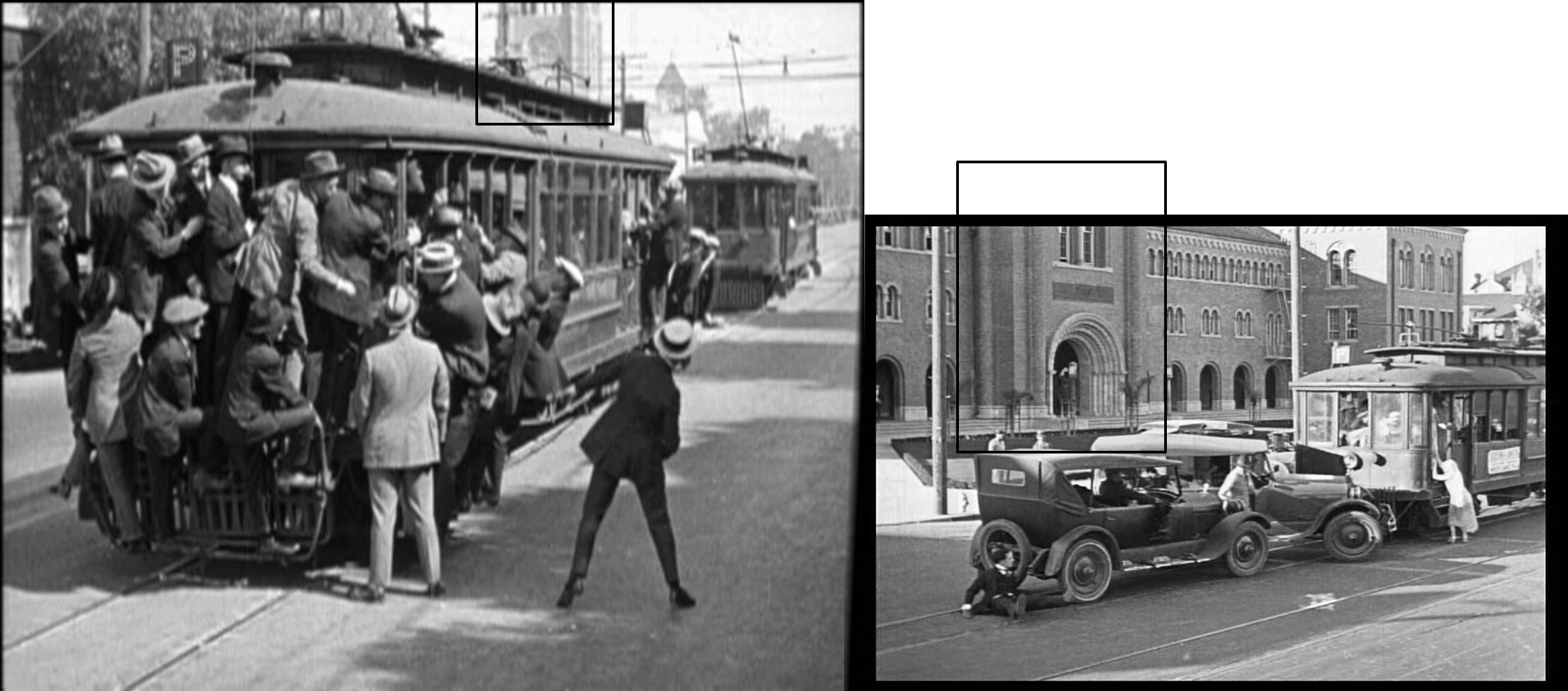
The Glendale Southern Pacific station was barely three years old when Buster Keaton used it to portray the station for Clayton, the fictitious college town where Buster’s character pursues higher learning in the 1927 comedy College. Above to the right, the station was also the setting for the climax to Act of Violence, a 1948 noir drama starring Van Heflin and Robert Ryan, who portray re-united army veterans who were once imprisoned together in a German POW camp during WWII.  Act of Violence contains several scenes filmed on Court Hill, near the Hill Street Tunnel, and on Bunker Hill, near Angels Flight.  Unfortunately, these nighttime scenes are darkly lit, and tightly framed, so there is not much to see.

Matching views looking north.  Glendale is re-named Santa Lisa for the Act of Violence shot. California History Room, California State Library, Sacramento, California.

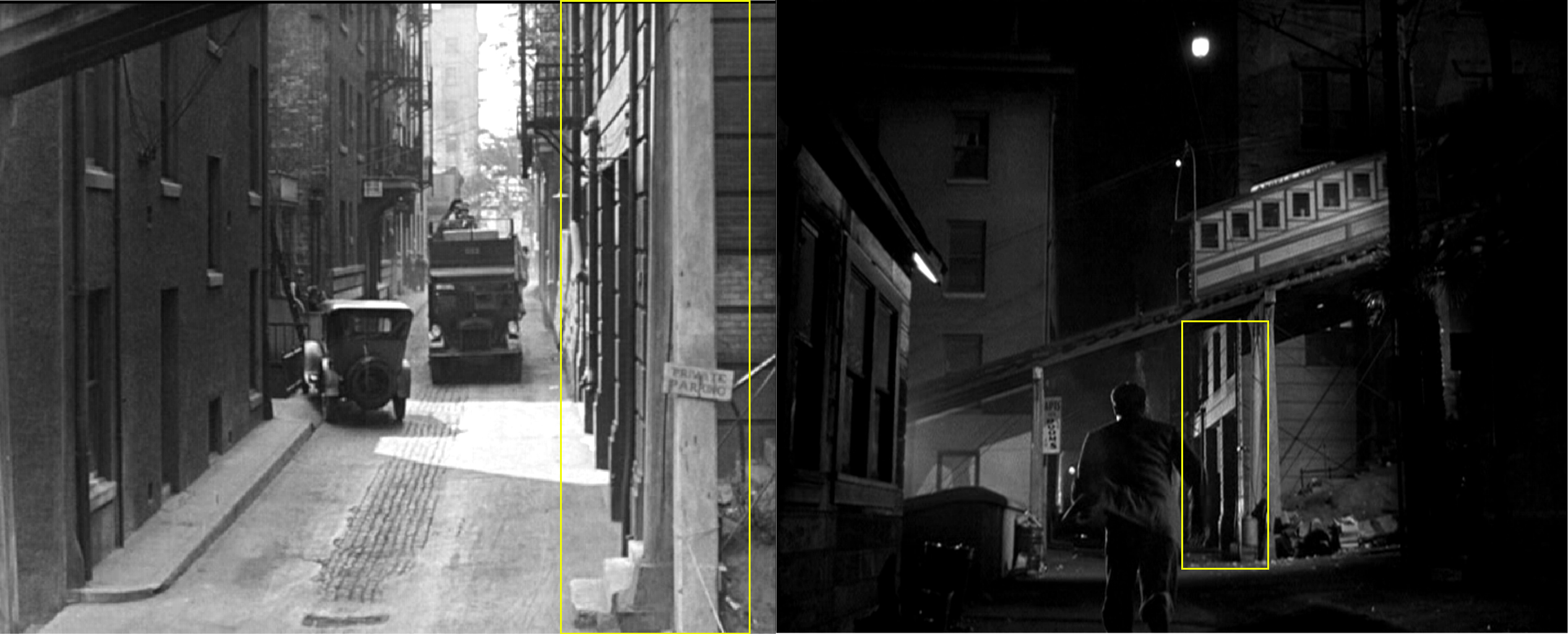
Act of Violence does contain a nice view of Clay Street, the narrow alley running between and parallel to Hill Street and Olive Street, and underneath the mid-way point of the Angels Flight elevated tracks.  As shown below, Harold Lloyd filmed a runaway bus stunt on Clay Street for his 1926 comedy feature For Heaven’s Sake.

Earlier during Act of Violence, Van Heflin runs south down Clay Street towards Angles Flight.   The same Clay Street setting appears during the wild double-decker bus chase in Harold Lloyd’s 1926 comedy For Heaven’s Sake, above left.  The same area of Clay Street is marked with a yellow box in each image.

Harold Lloyd filmed many other movies on Bunker Hill, and I will explore more Lloyd/noir connections in further posts.

College frame images reproduced courtesy of The Douris Corporation, David Shepard, Film Preservation Associates, and Kino International Corporation.

HAROLD LLOYD images and the names of Mr. Lloyd’s films are all trademarks and/or service marks of Harold Lloyd Entertainment Inc. Images and movie frame images reproduced courtesy of The Harold Lloyd Trust and Harold Lloyd Entertainment Inc.

Act of Violence copyright 1948 Loew’s Incorporated.

Posted in Angels Flight, Bunker Hill, Buster Keaton, College, Film Noir, For Heaven's Sake, Harold Lloyd, Los Angeles Historic Core | Tagged , , , , , , , , , | 8 Comments

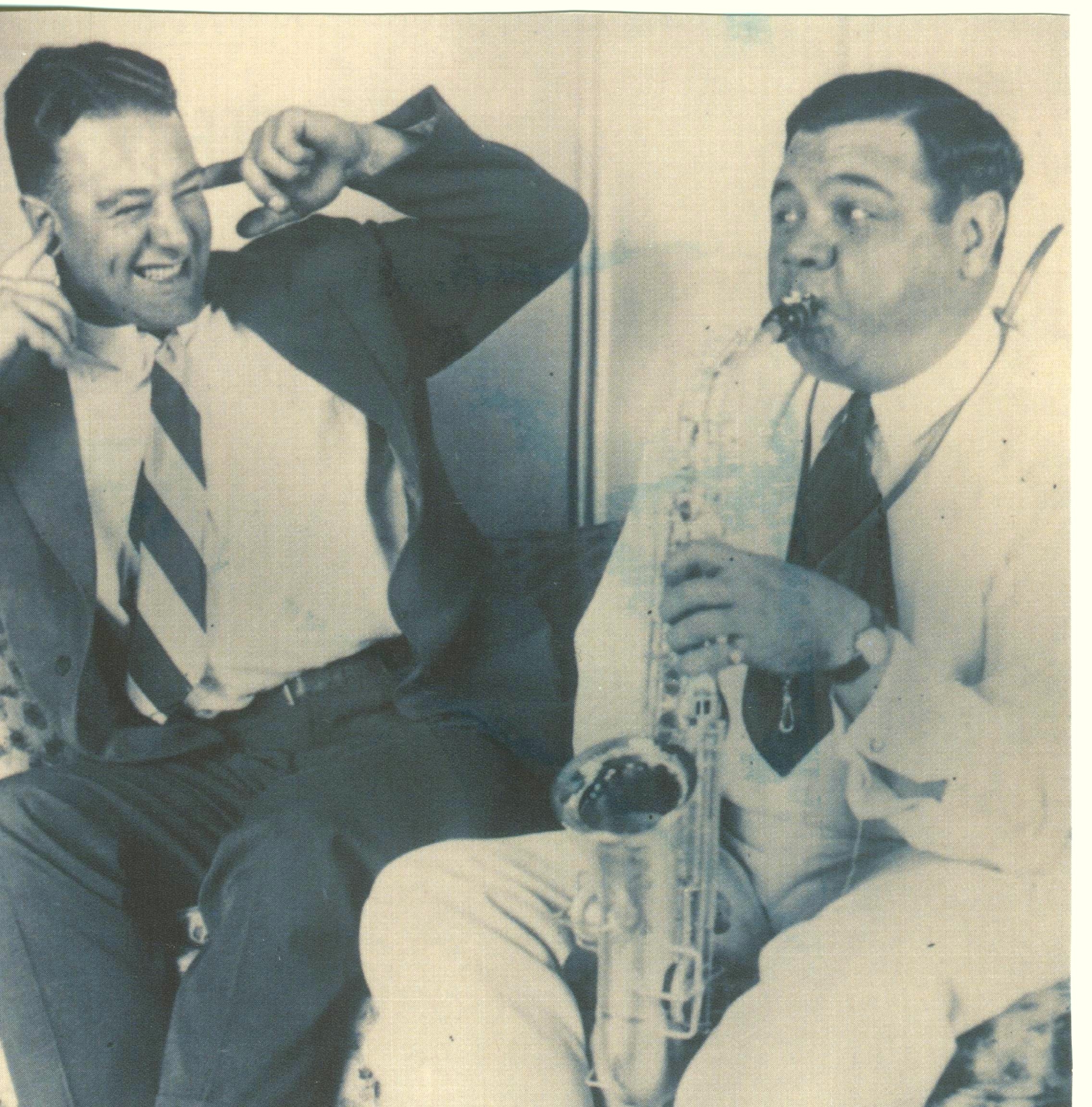
Cameo Squared – Lou Gehrig in Ruth’s Speedy Cameo

Eagle-eyed reader Kevin Dale not only recognized the setting of the very first shot of Charlie Chaplin’s career (see prior post), he also notified me of this amazing discovery.

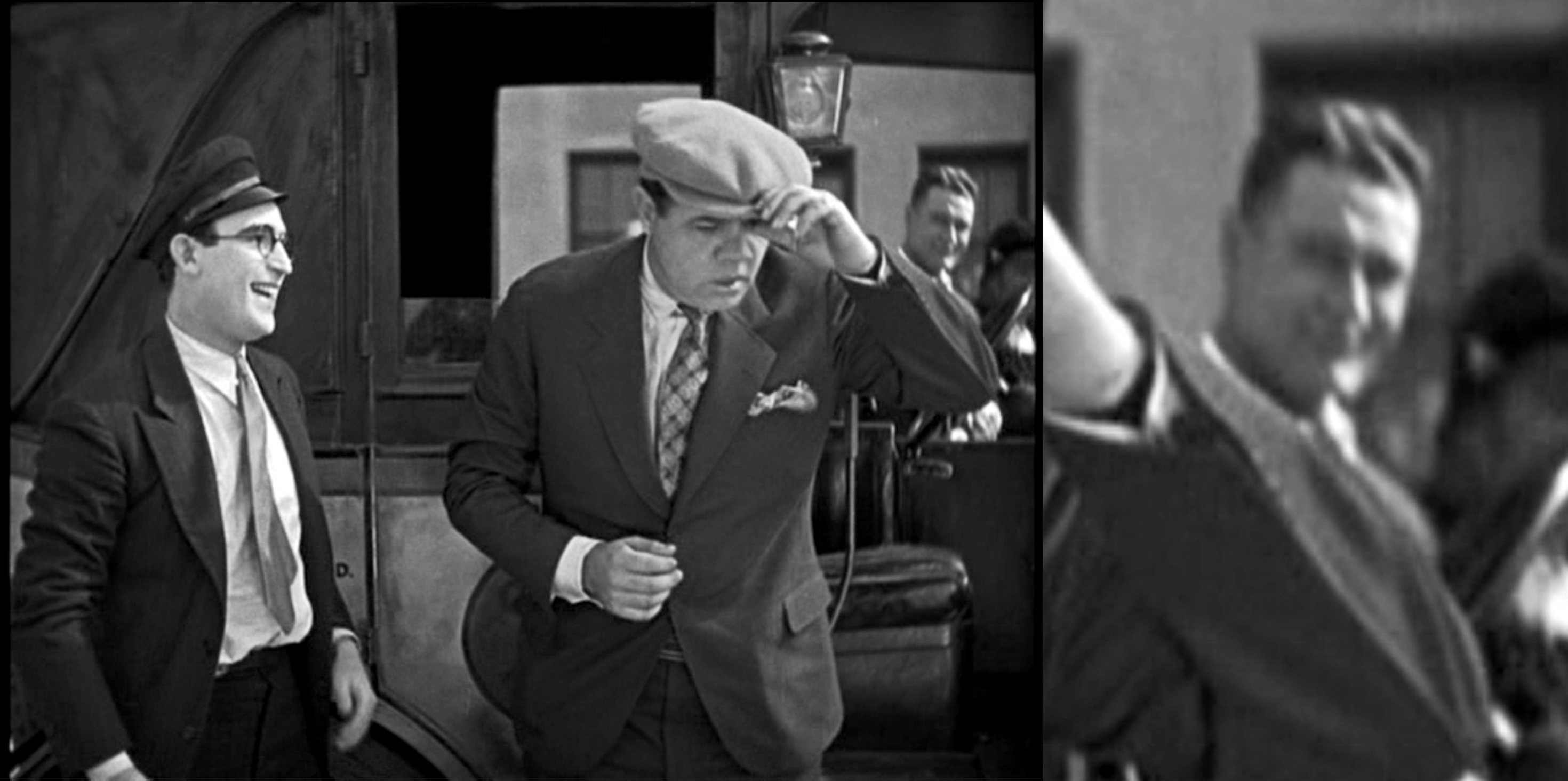
New York cabbie Harold Lloyd delivers Babe Ruth to Yankee Stadium in time for the game during this scene from Speedy.  At back, the man who followed Ruth in the batting line-up, Yankee first baseman Lou Gehrig.

During the concluding scenes from Babe Ruth’s cameo appearance in Speedy (1928), who should appear in the background but the Iron Horse himself, Lou Gehrig!  Gehrig, who spent much of his career in Babe Ruth’s shadow, plays a cameo during Ruth’s cameo.  This scene was likely filmed September 15, 1927, as Gehrig was completing one of the greatest seasons overall by any batter in history, including 47 home runs, though his accomplishments were eclipsed by Ruth’s record-breaking 60 home runs that same year.

Lou Gehrig at Grand Central Station, before heading out west.

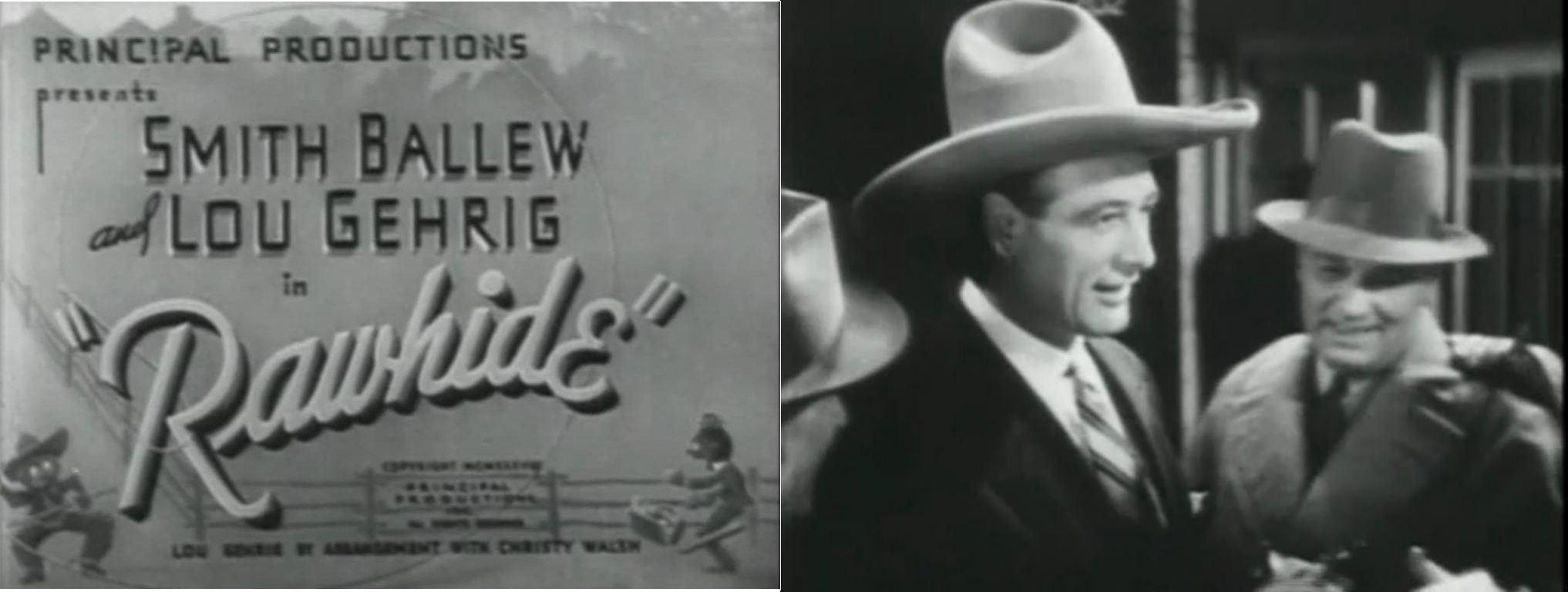
Improbable singing cowboys Smith Ballew and Lou Gehrig

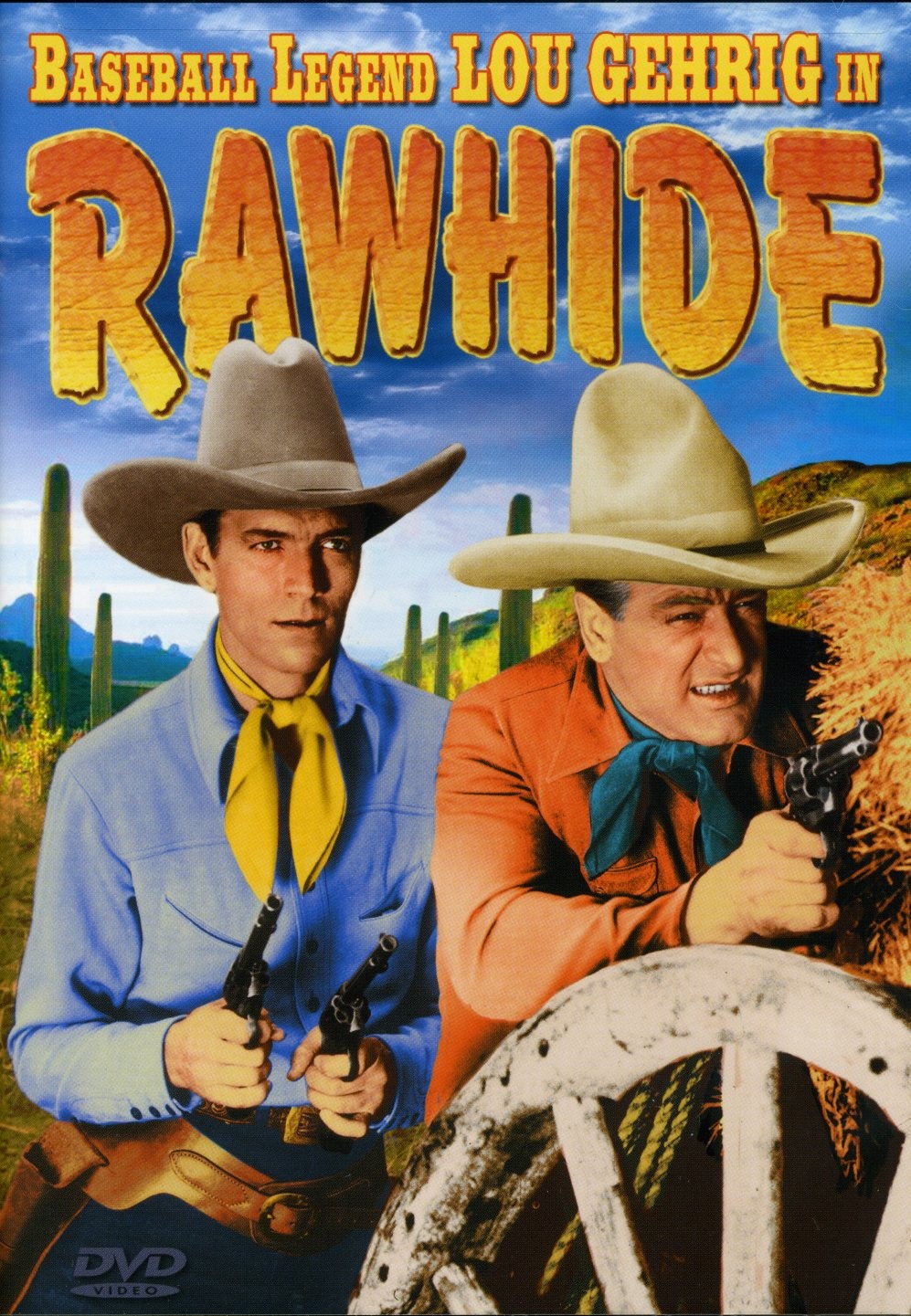
Ruth was no stranger to film, having played himself in the 1920 fictitious biopic Headin’ Home, and several others productions, including the 1942 Gehrig biopic Pride of the Yankees starring Gary Cooper.  But I was astonished to learn that Gehrig starred in a feature film as well, a B western called Rawhide (1938). Playing “himself,” Gehrig trades in his bat and glove to become a singing cowboy on his sister’s ranch out west.  Shooting began in late January 1938, and the completed film premiered just two months later, preceding what would prove to be Gehrig’s final season playing ball.  The following year, Gehrig was formally diagnosed with amyotrophic lateral sclerosis (ALS) on his 36th birthday, and would succumb to the disease in 1941.

During happier times, from HistoryoftheYankees.com

I will be presenting Harold Lloyd’s final silent comedy Speedy (1928) at 3:10 pm on Sunday, October 21, 2012, and at 7:30 pm on Monday, October 22,  at Film Forum, 209 West Houston Street, New York, NY 10014, based on the discoveries in my new Lloyd book Silent Visions.  Using animated slides I will lead viewers to dozens of landmarks and forgotten byways across town, in what is the first comprehensive study of New York’s most prominent role in a major silent film.

You can access a tour of Lloyd’s Brooklyn locations in this prior post.

HAROLD LLOYD images and the names of Mr. Lloyd’s films are all trademarks and/or service marks of Harold Lloyd Entertainment Inc. Images and movie frame images reproduced courtesy of The Harold Lloyd Trust and Harold Lloyd Entertainment Inc.

Posted in Harold Lloyd, Manhattan, New York, Speedy | Tagged , , , , , , , , | 3 Comments

Silent Era New York – Harold Lloyd’s Speedy – Part 1

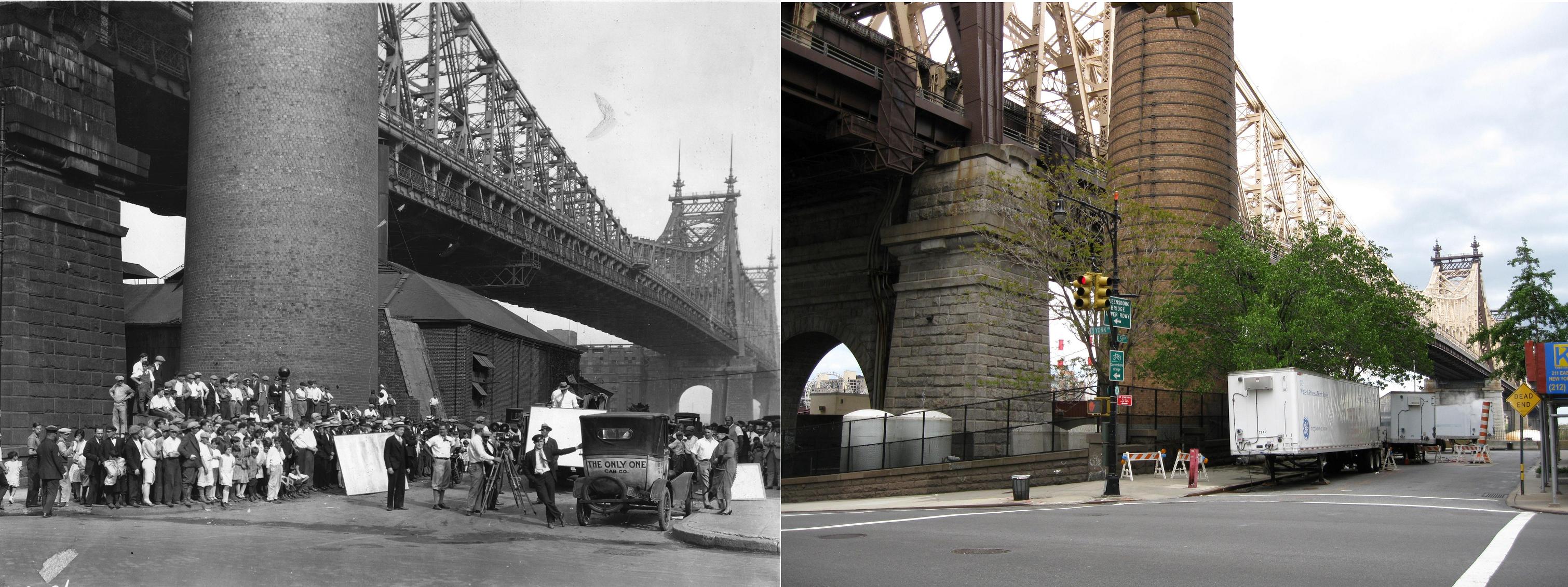
Click to enlarge – Harold and friends by the Queensboro Bridge


I will be presenting Harold Lloyd’s final silent comedy Speedy (1928) at 3:10 pm on Sunday, October 21, 2012, and at 7:30 pm on Monday, October 22,  at Film Forum, 209 West Houston Street, New York, NY 10014, based on the discoveries in my new Lloyd book Silent Visions.  Using animated slides I will lead viewers to dozens of landmarks and forgotten byways across town, in what is the first comprehensive study of New York’s most prominent role in a major silent film.

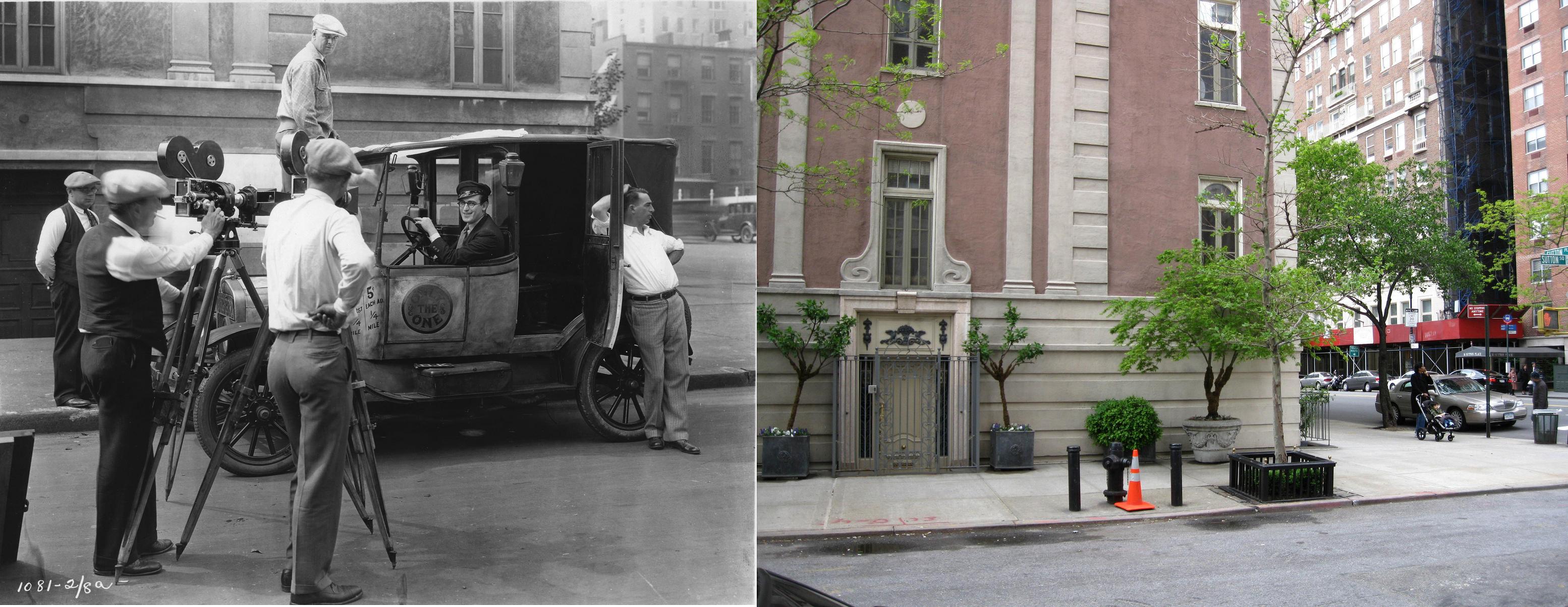
click to enlarge – Relaxing between takes at Sutton Place and E. 58th Street

Instead of relying on stock footage of Manhattan settings, as commonly used in Hollywood productions purporting to take place in New York, Lloyd and company arrived in town in mid-August 1927 for an intended four-week shoot, and ended up filming for twelve weeks instead.  With three separate chase sequences appearing in the film, and lengthy scenes staged at Coney Island and Yankee Stadium, the resulting movie presents the Big Apple from top to bottom in loving detail, and captures some of the best photographic documentation of silent-era New York ever recorded.

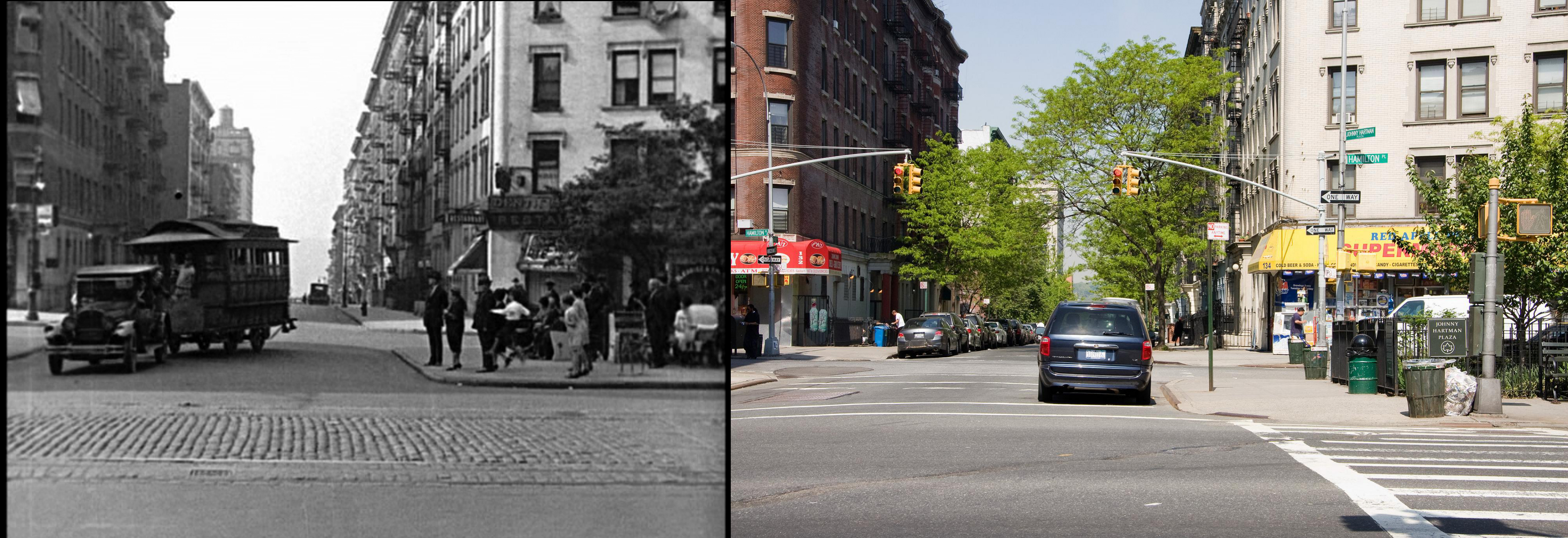
Alexander Hamilton Square

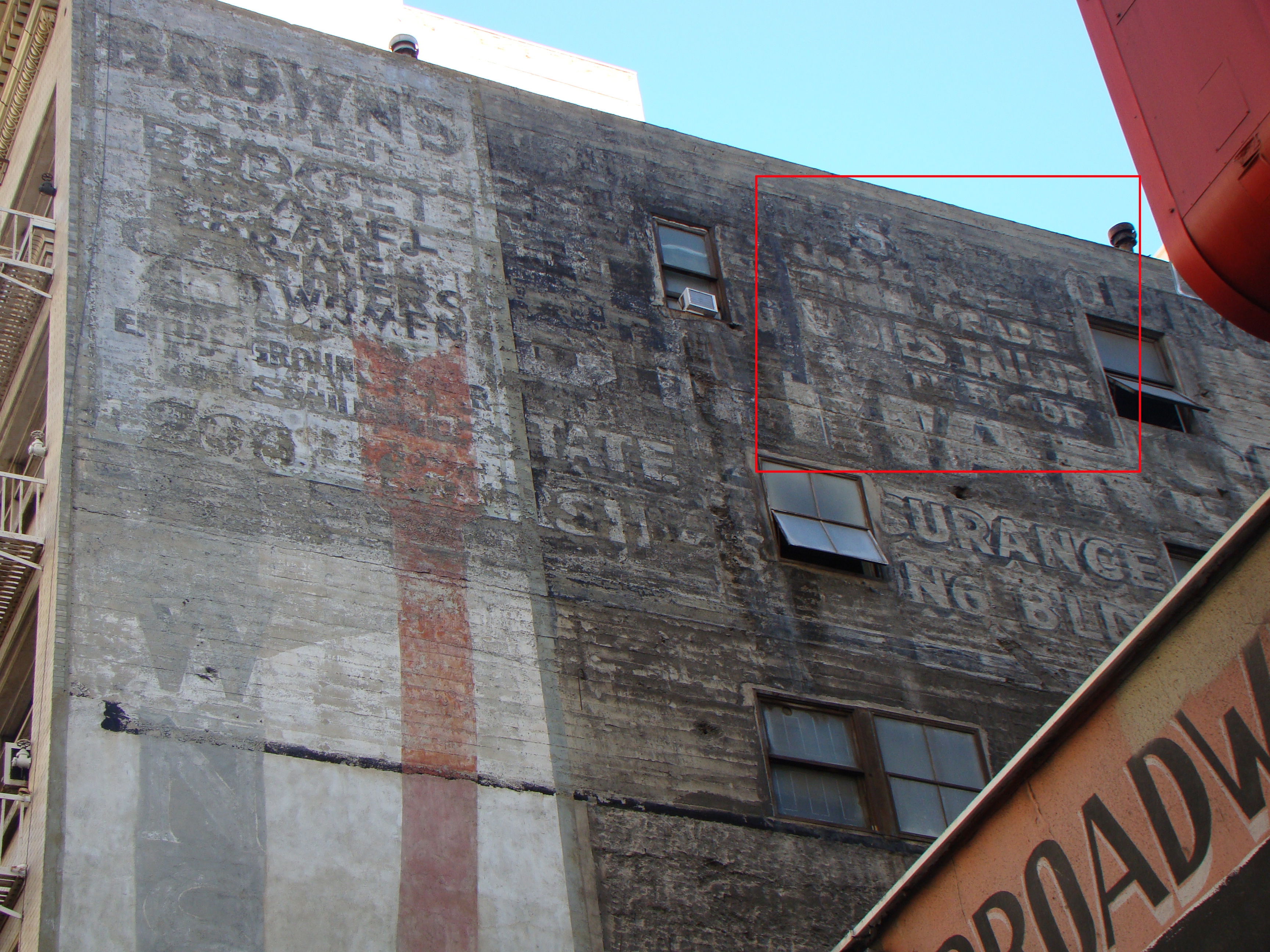
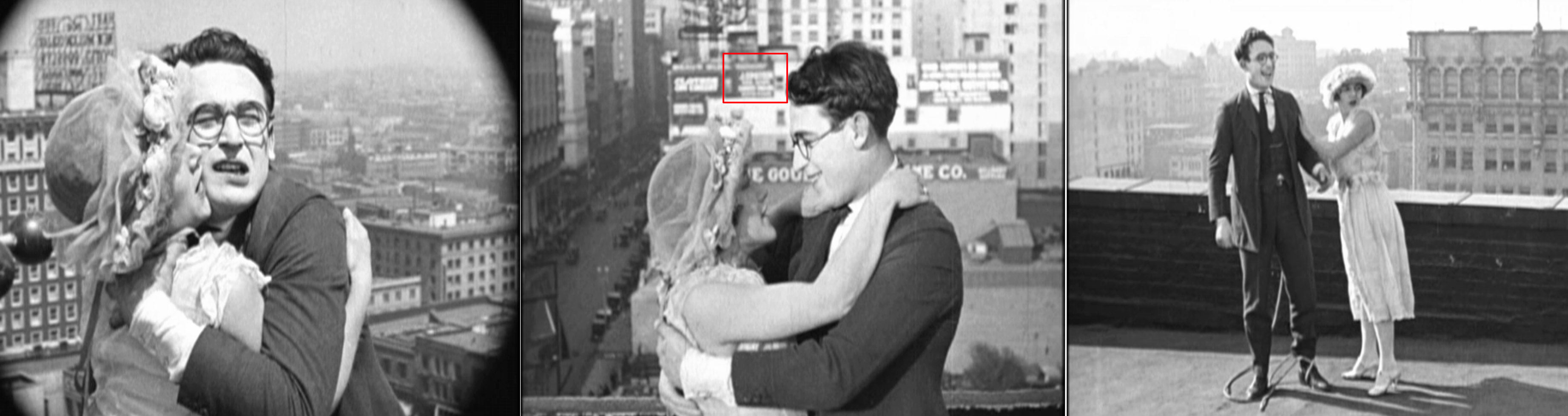
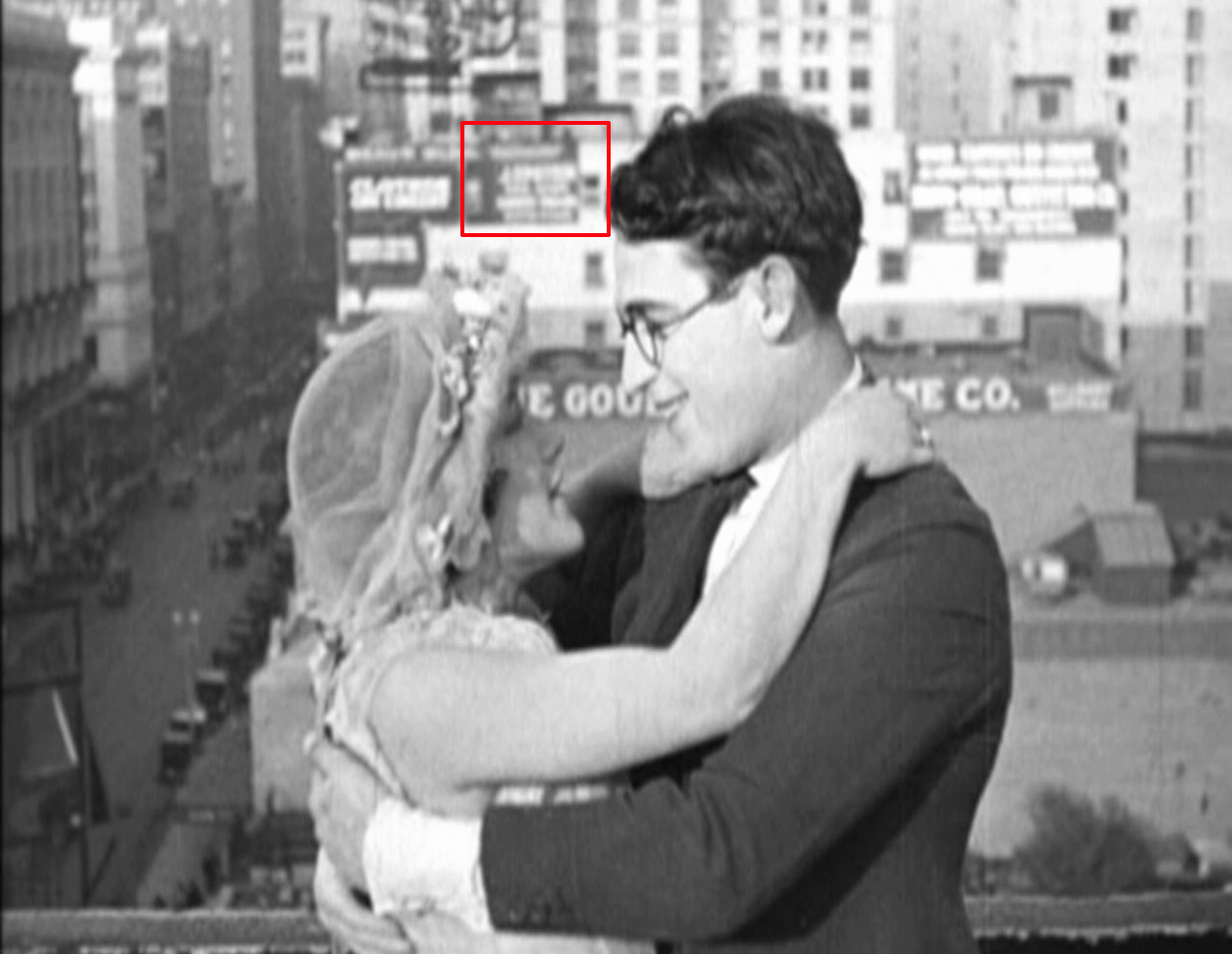
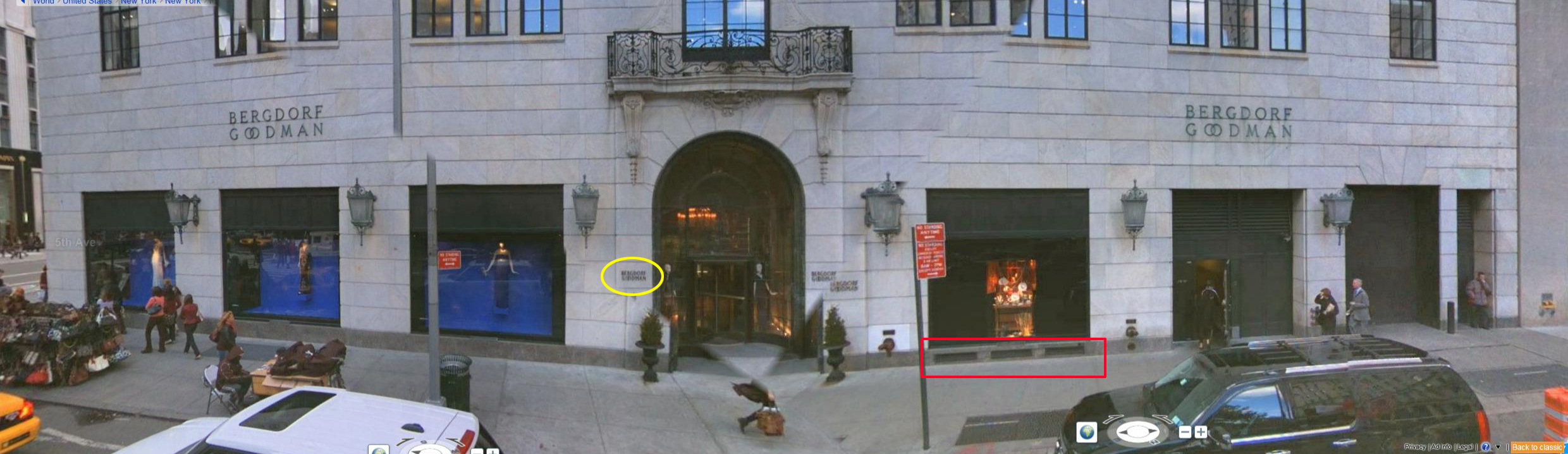
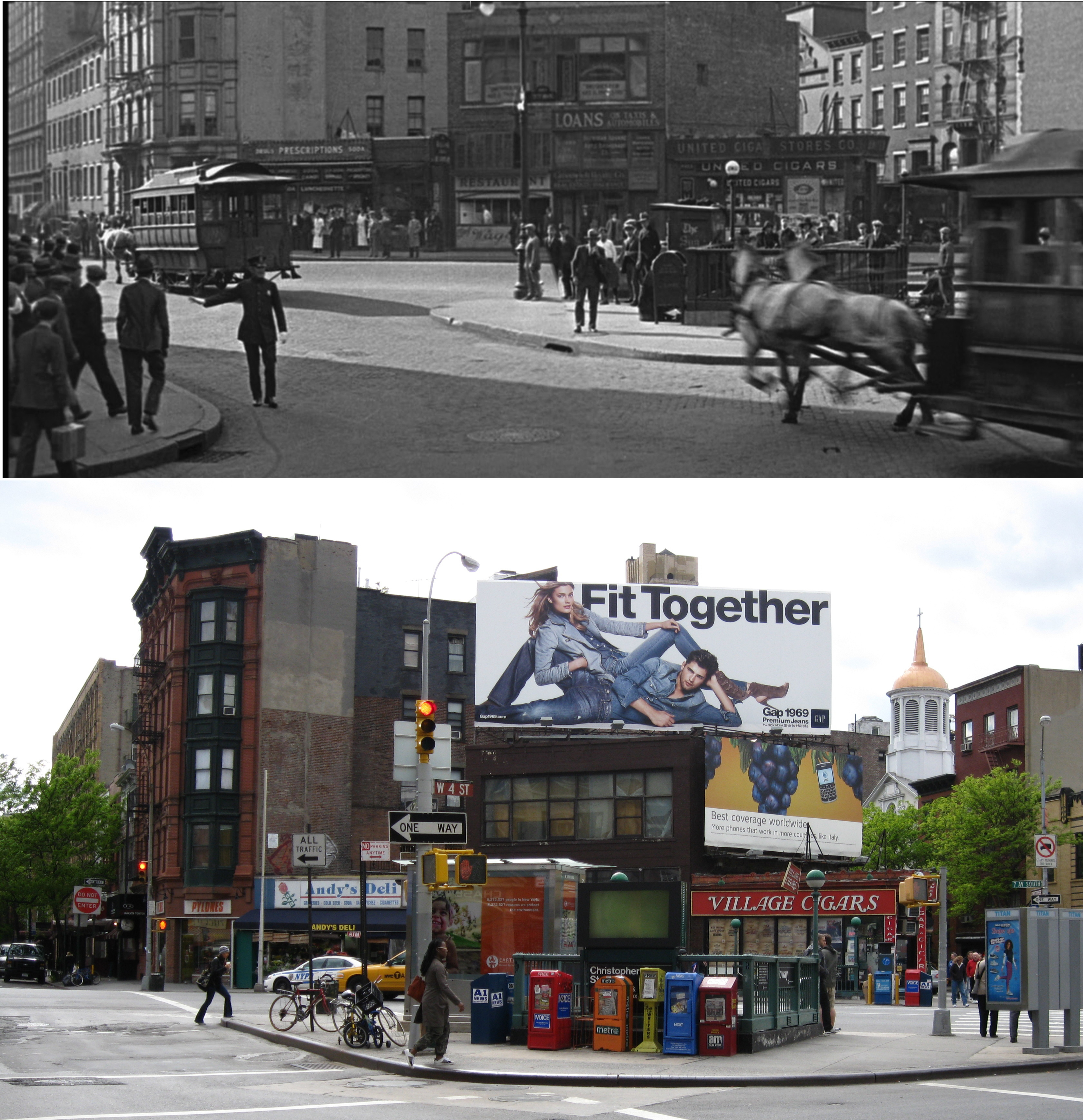
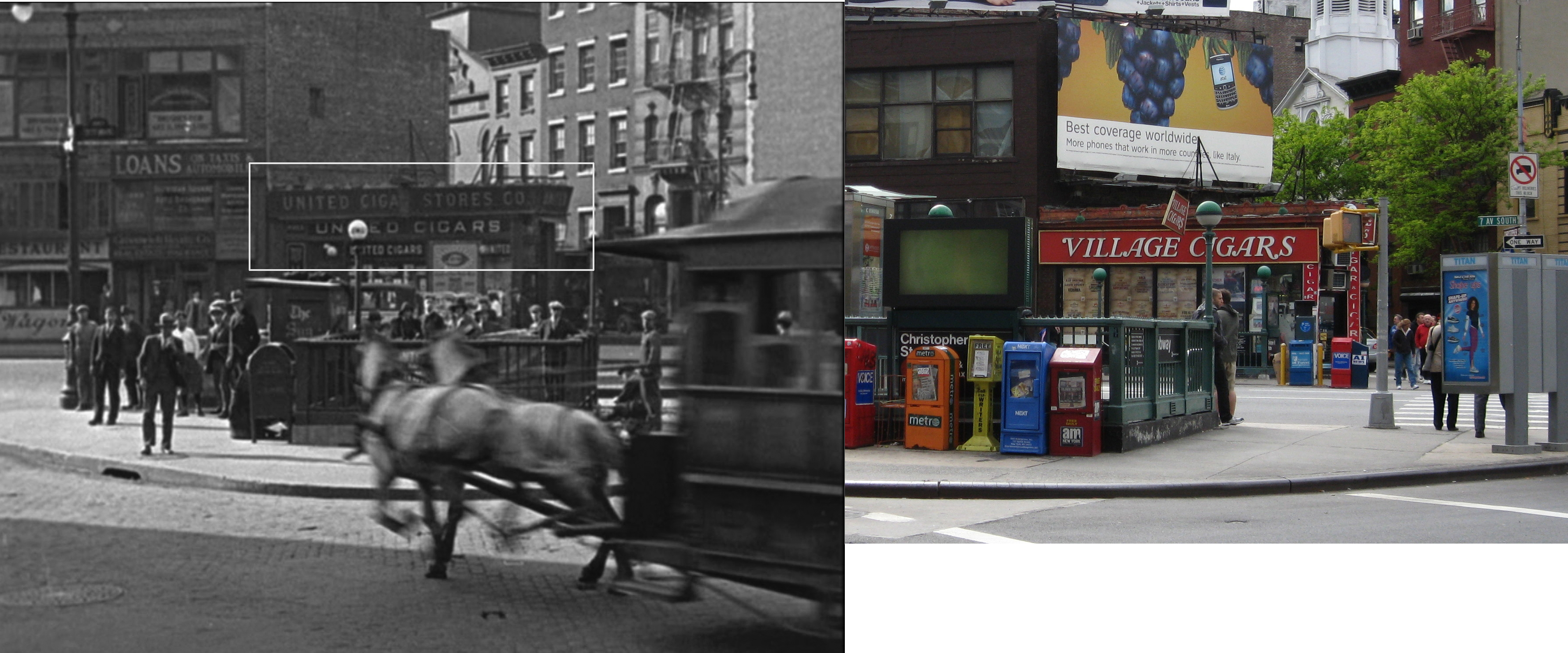
As we would expect, Times Square and other classic New York landmarks make their requisite appearances, but what gives Speedy such wonderful historical value are the many charming neighborhoods also captured on film.  Above, Harold races by Alexander Hamilton Square, on Amsterdam Avenue way up north on W. 143rd Street.   In prior posts I discuss the longevity of a Sheridan Square cigar store also appearing in the film, and how Bergdorf Goodman appears both in Speedy and in Buster Keaton’s The Cameraman (1928).  There is also a Brooklyn tour here.

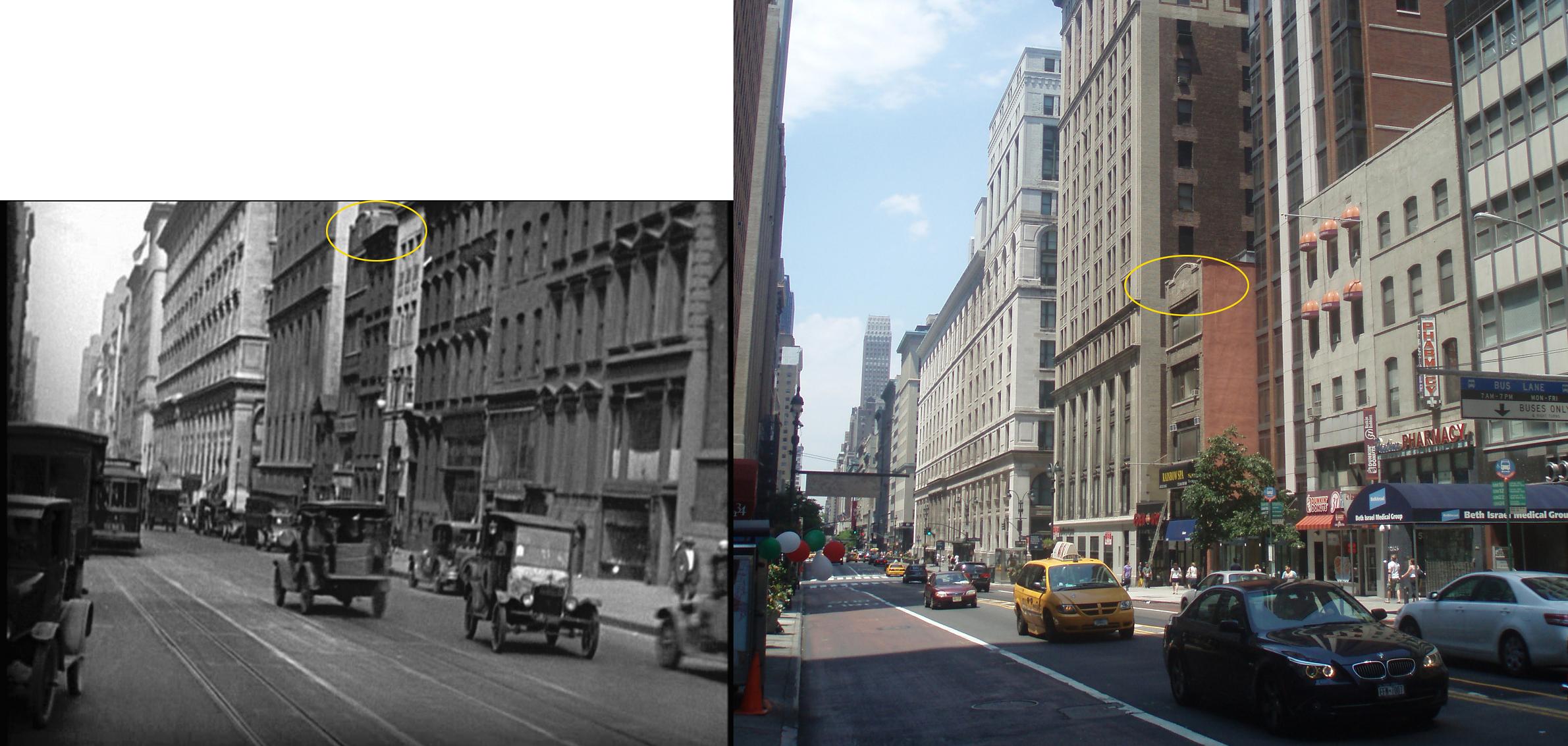
click to enlarge – Looking west towards 45 E. 34th Street (ovals).

Bustling city streets also appear on film.  Here, above, Harold races east down E 34th Street from near Madison Avenue towards Park Avenue. The prominent light colored building, running the entire length of the block between 5th and Madison, was the former Altman Department Store, which now houses the City University of New York (CUNY) Graduate Center and a branch of the New York Public Library. The parapet roof at 45 E. 34th Street evident in the movie frame still appears today (ovals).

If you glance at these Google maps below, you can begin to appreciate the extent of Lloyd’s effort to capture New York on film.  I have marked nearly 50 unique settings appearing in the movie.  I may some day annotate each spot on the map with photos and text, but for now just gaze at the breadth and scope of Lloyd’s efforts.  Lloyd’s valedictory silent film Speedy is one of the most remarkably vivid depictions of early New York ever recorded.

You can access a tour of Lloyd’s Brooklyn locations shown above in this prior post.

HAROLD LLOYD images and the names of Mr. Lloyd’s films are all trademarks and/or service marks of Harold Lloyd Entertainment Inc. Images and movie frame images reproduced courtesy of The Harold Lloyd Trust and Harold Lloyd Entertainment Inc.

Marc Wanamaker – Bison Archives, Beth Goffe, Hooman Mehran, Nick Rumaczyk.

Posted in Brooklyn, Harold Lloyd, Lloyd Tour, Manhattan, New York, Speedy | Tagged , , , , , , , | 10 Comments

Stan, Ollie, and Harold – a Drive Through Bunker Hill

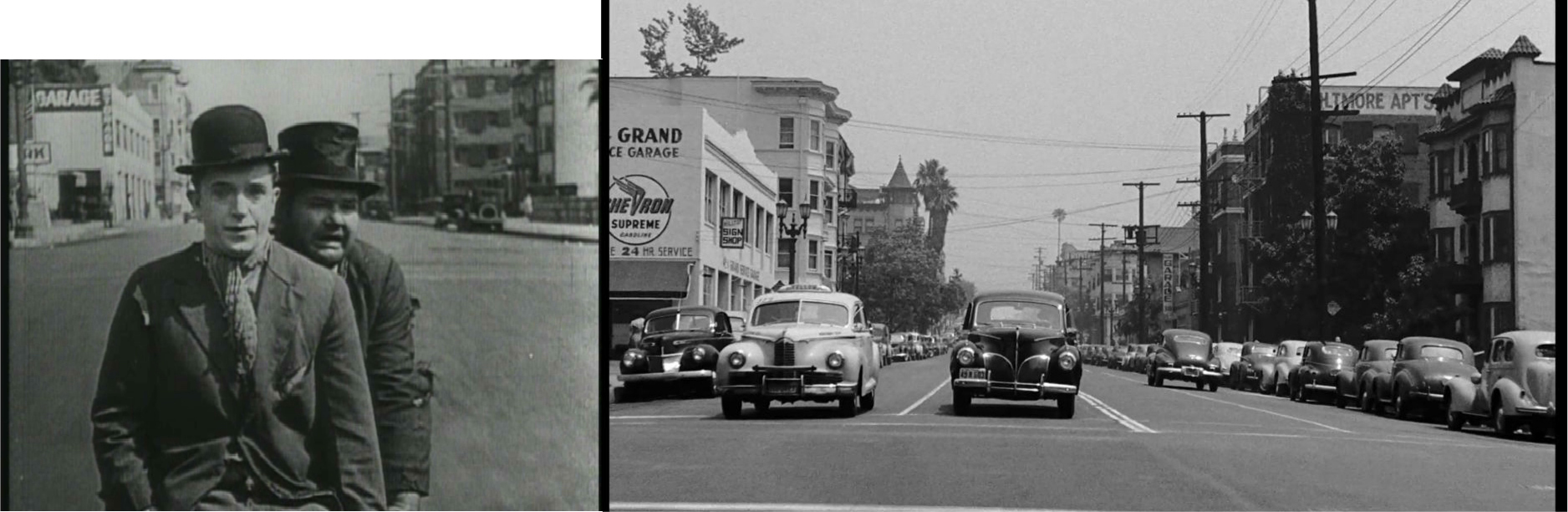
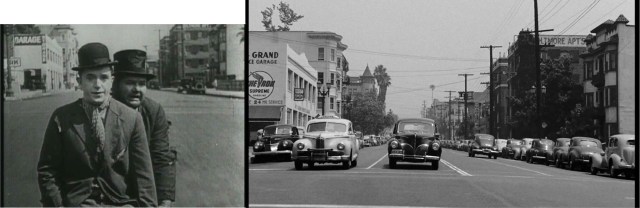
Click to enlarge. Stan Laurel and Oliver Hardy in Duck Soup (1927) and matching footage at 1:36

The Prelinger Archives has just posted some amazingly sharp movie footage of Bunker Hill and downtown Los Angeles taken in the late 1940s.  The stock footage was intended to be projected behind actors filming a traveling car scene within an indoor studio, but apparently was never used.  The footage not only provides a wonderful glimpse of post-WWII Bunker Hill, now lost to civic redevelopment, but illuminates Los Angeles during the silent film era as well.  You can access the video here.  [UPDATE – Jim Dawson reports that this footage appears briefly during Shockproof, the 1949 Columbia Pictures release, in a scene where Cornel Wilde picks up Patricia Knight at her place at 507 Second Street (the Koster house)]. [UPDATE – you can download a PowerPoint Presentation showing how Harold Lloyd filmed Girl Shy on Bunker Hill at this newer post].

As I explain in my book Silent Visions, Harold Lloyd filmed scenes for seven different movies at the intersection of 3rd and Grand, on Bunker Hill, more scenes than at any other location in Los Angeles.  As we will see, it was a popular place for Laurel and Hardy, and other Hal Roach Studio stars to film as well.  The Prelinger film drives twice by Lloyd’s intersection of 3rd and Grand, providing razor sharp images of where Lloyd and other silent stars filmed.
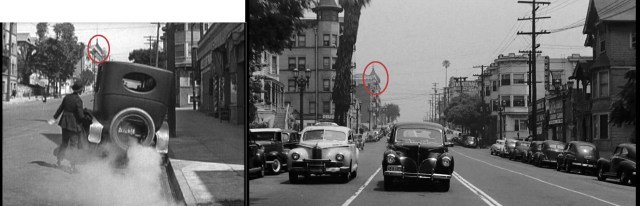
Harold Lloyd’s An Eastern Westerner (1921) and frame 1:21
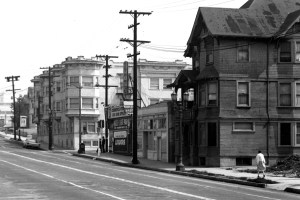
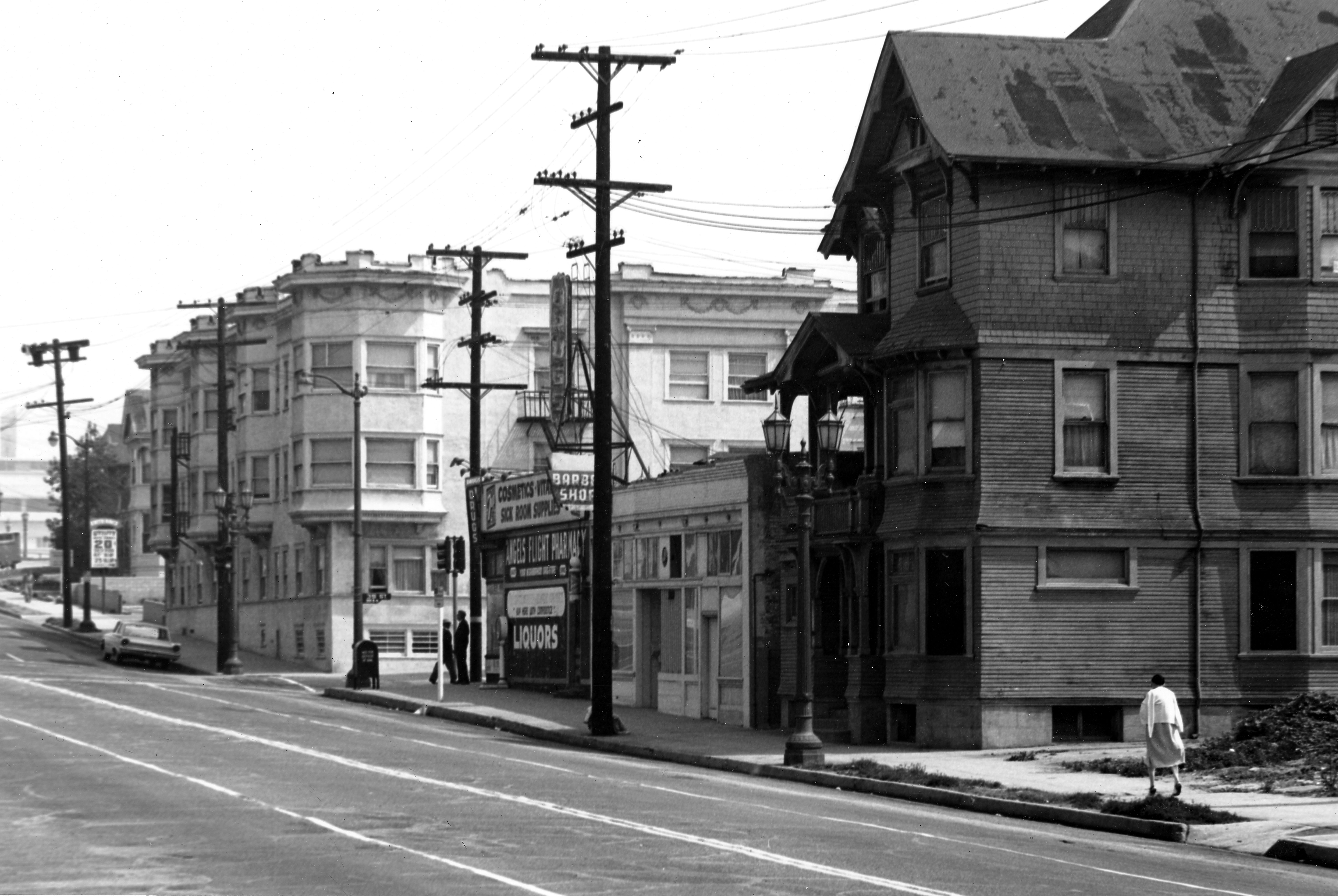
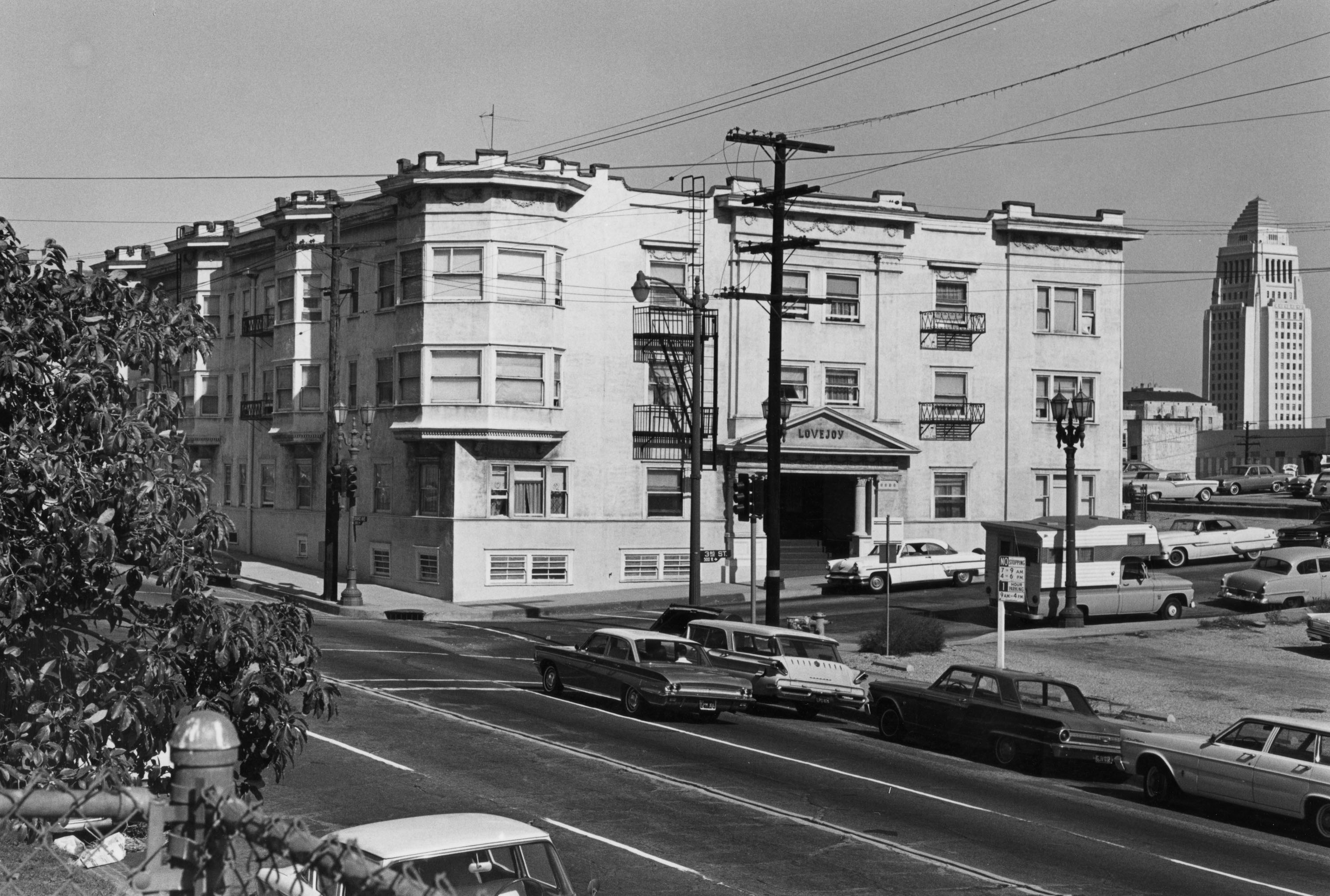
The corner of 3rd and Grand – the Angels Flight Pharmacy at the near corner, the Lovejoy Apartments at the far corner.

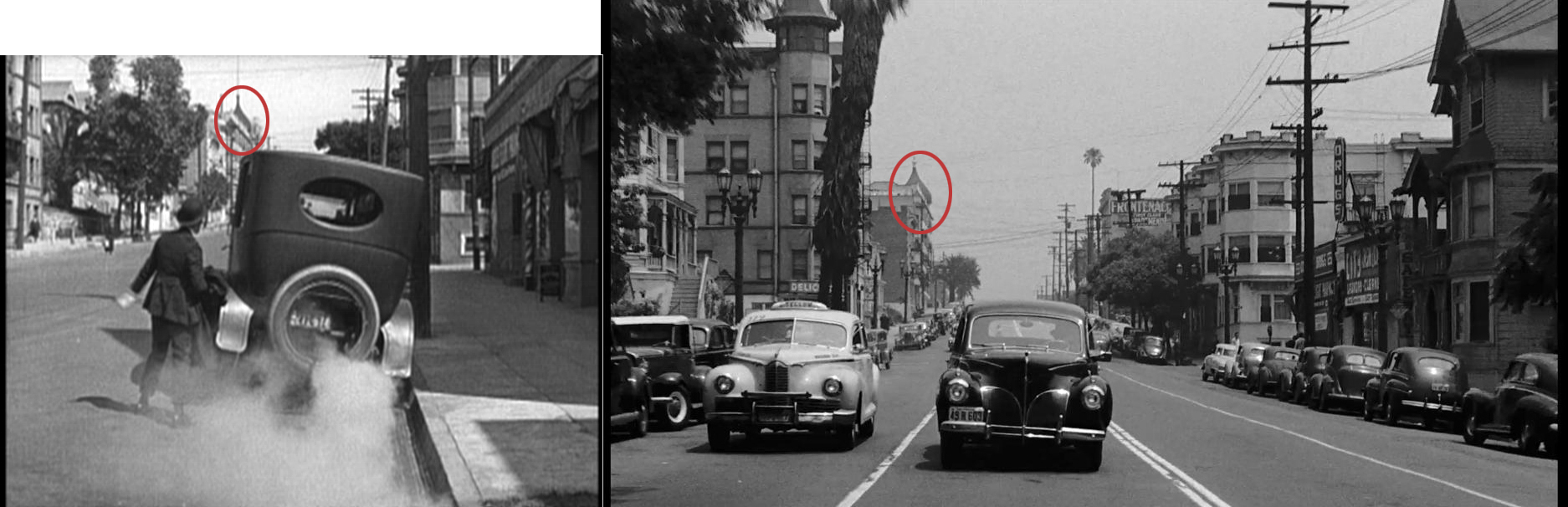
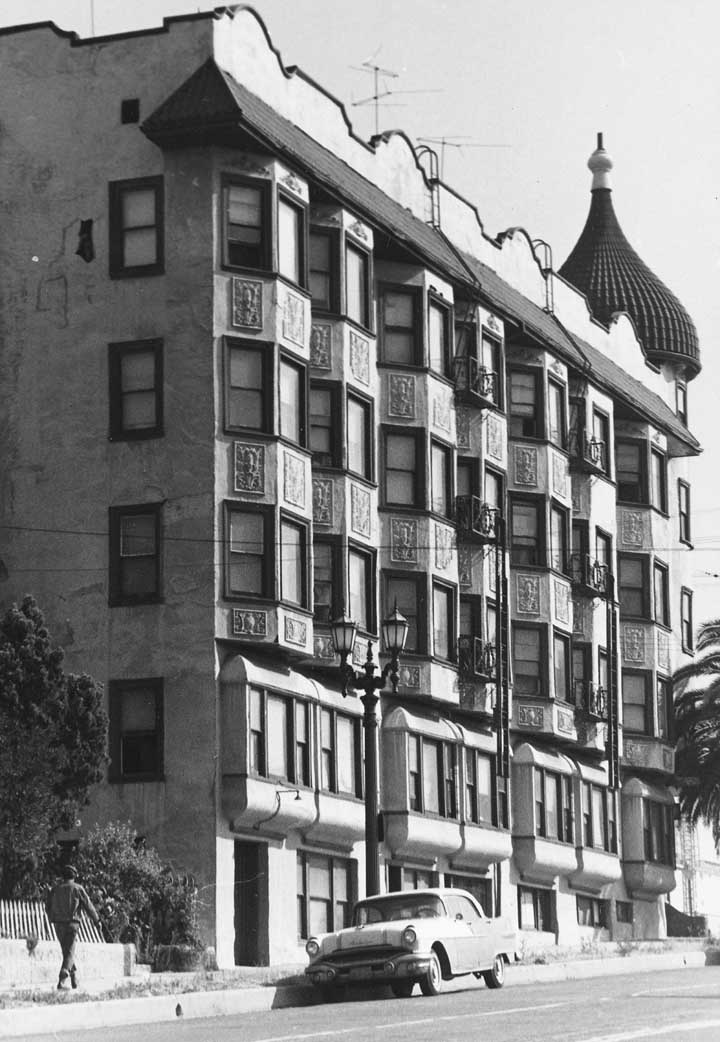
This brief scene from Harold Lloyd’s An Eastern Westerner (1921) (above) looks up Grand, past the Angels Flight Pharmacy on the near right corner of 3rd, and the Lovejoy Apartments on the far corner of 3rd, way back to the onion dome of the Winnewaska Apartments on the corner of 2nd and Grand. (oval, above).

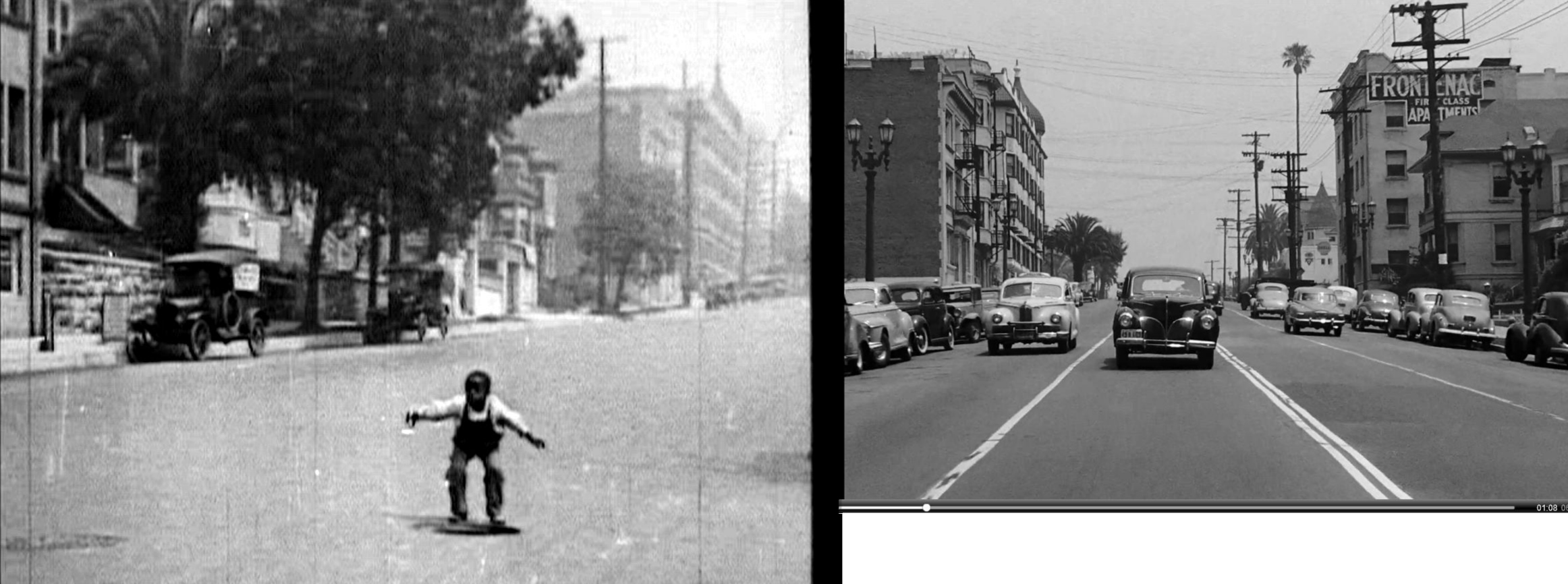
The Non-Skid Kid (1922) and frame 1:08

The Winnewaska Apartment on the corner of 2nd and Grand

Ernie “Sunshine Sammy” Morrison appears in this scene from Hal Roach production The Non-Skid Kid (1922).  Ernie is standing on Grand north of the 3rd Street intersection, and the onion dome of the Winnewaska Apartments on Second and Grand appears behind him up the street.

Captivated by the youth’s charm and mega-watt smile, Hal Roach signed Ernie to a two-year contract in 1919, before he had turned seven, making him reportedly the first black performer in history to be awarded a long-term Hollywood contract.  Ernie appeared in three Lloyd pictures and numerous other Roach productions before becoming the first cast member of the original Our Gang.
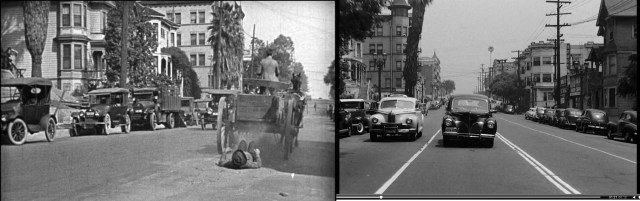
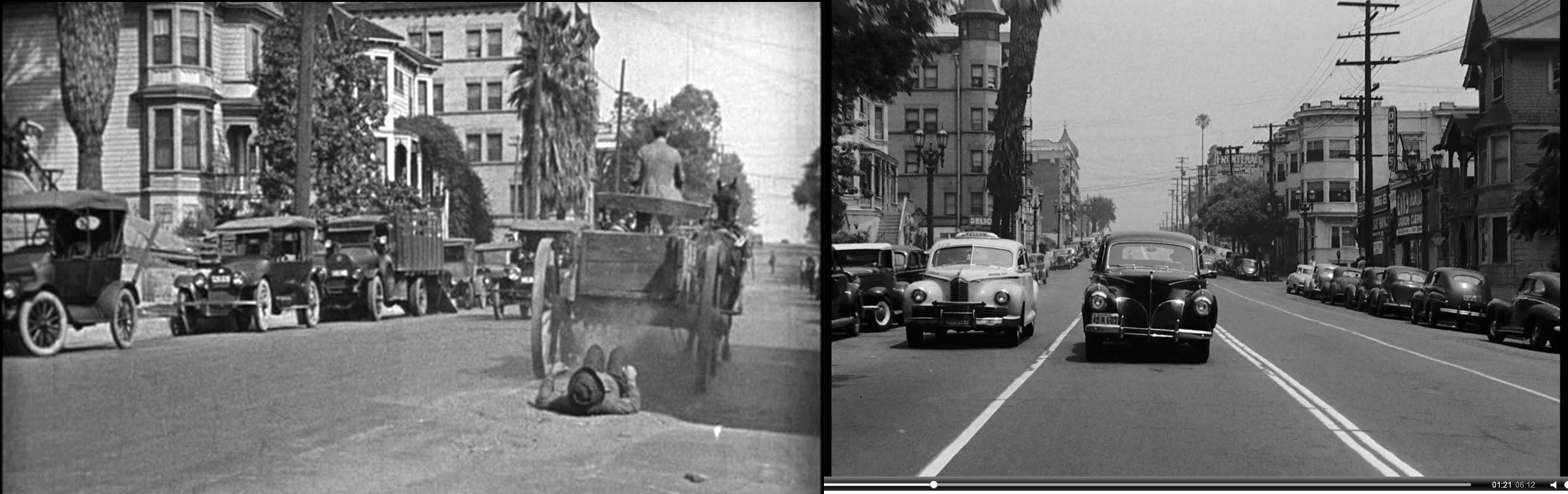
Harold Lloyd’s Girl Shy (1924) and frame 1:21
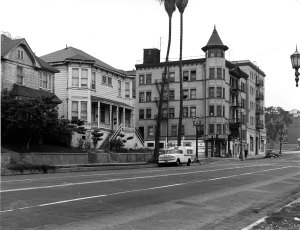
North up Grand towards 3rd.

Harold returned to 3rd and Grand to film several scenes for his first independently produced feature film Girl Shy (1924).  Above, Harold is racing a commandeered horse wagon north up Grand towards 3rd.
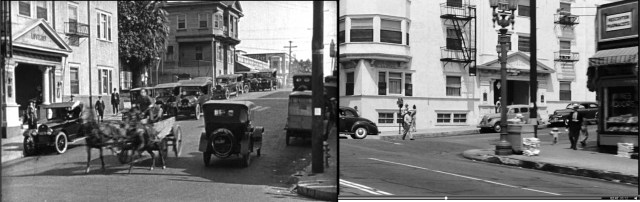
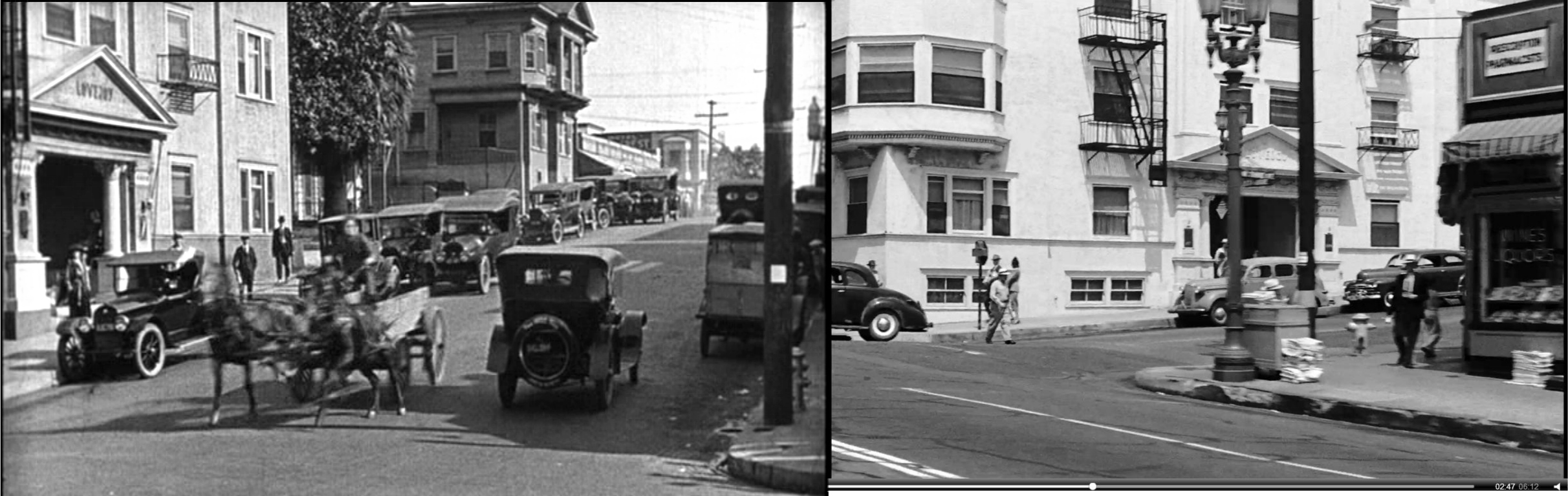
Girl Shy and frame 2:47

The Lovejoy Apartments

Later in Girl Shy, Harold races his wagon west down 3rd towards the corner of Grand, past the Lovejoy Apartments.   The same corner apartment building appears in the Prelinger film at 2:47 into the film.

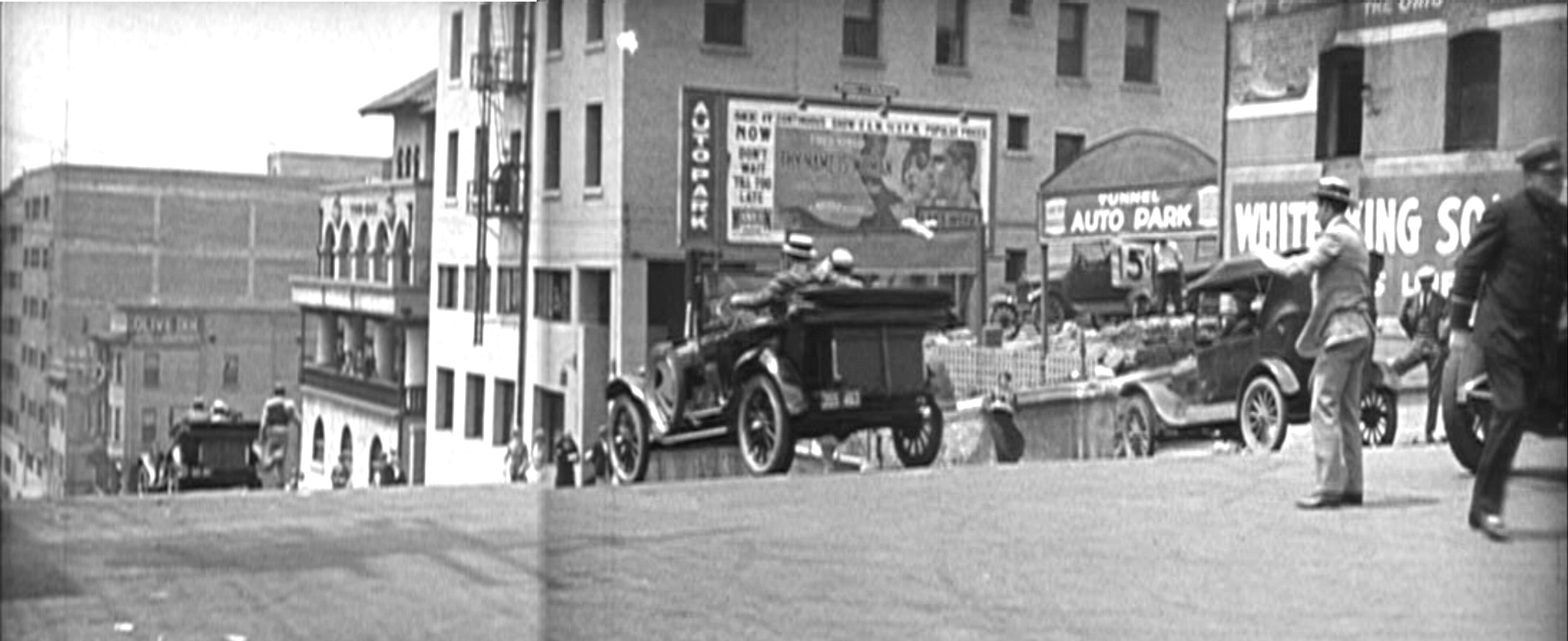
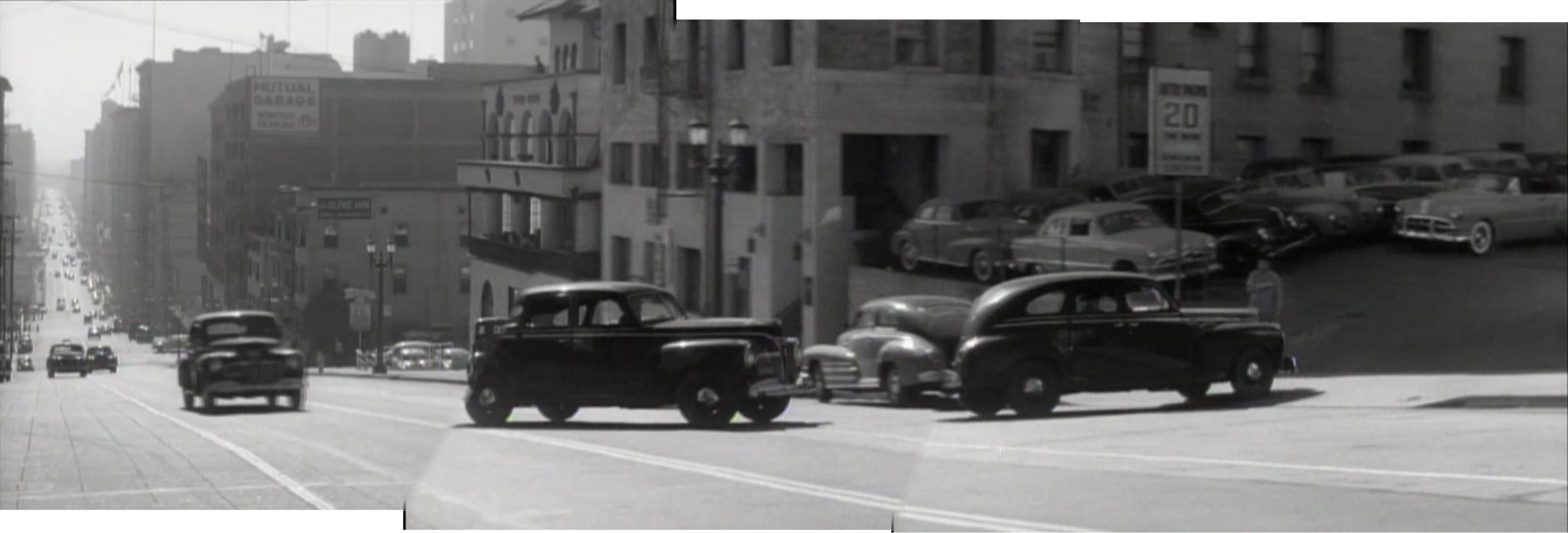
Harold Lloyd’s For Heaven’s Sake (1926) and frame 1:36.  The fire escape of the Zelda Apartments (discussed below) appears to the left between the lamppost and the vertical garage sign.

During Harold Lloyd’s later feature comedy For Heaven’s Sake (1926), a double-decker bus commandeered by a quintet of drunken groomsmen races up Grand from the corner of 4th Street towards the 4th and Grand Service Garage, identified with a red oval on the sidewalk.  In the Prelinger film, looking the opposite direction north up Grand, the garage appears to the left, also marked with a red oval.
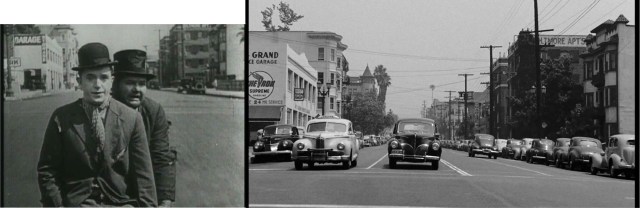
Stan Laurel and Oliver Hardy in Duck Soup (1927) and frame 1:36

Although Stan Laurel and Oliver Hardy had briefly appeared together years earlier in The Lucky Dog (cir. 1919), the short film Duck Soup (1927) marks the first time the two comedic actors worked together at the Hal Roach Studios, though not yet paired as a “team.”  During the film Oliver gives Stan a ride on his bicycle, including several scenes of them traveling south down Grand Avenue.  During these scenes the camera either points north up Grand, so that we can see the actors, or down Grand, providing the audience with a point of view shot of the duo’s downhill ride.  Above, Stan and Ollie ride south down Grand past the corner of 4th, with the 4th and Grand Service Garage visible behind them to the left.

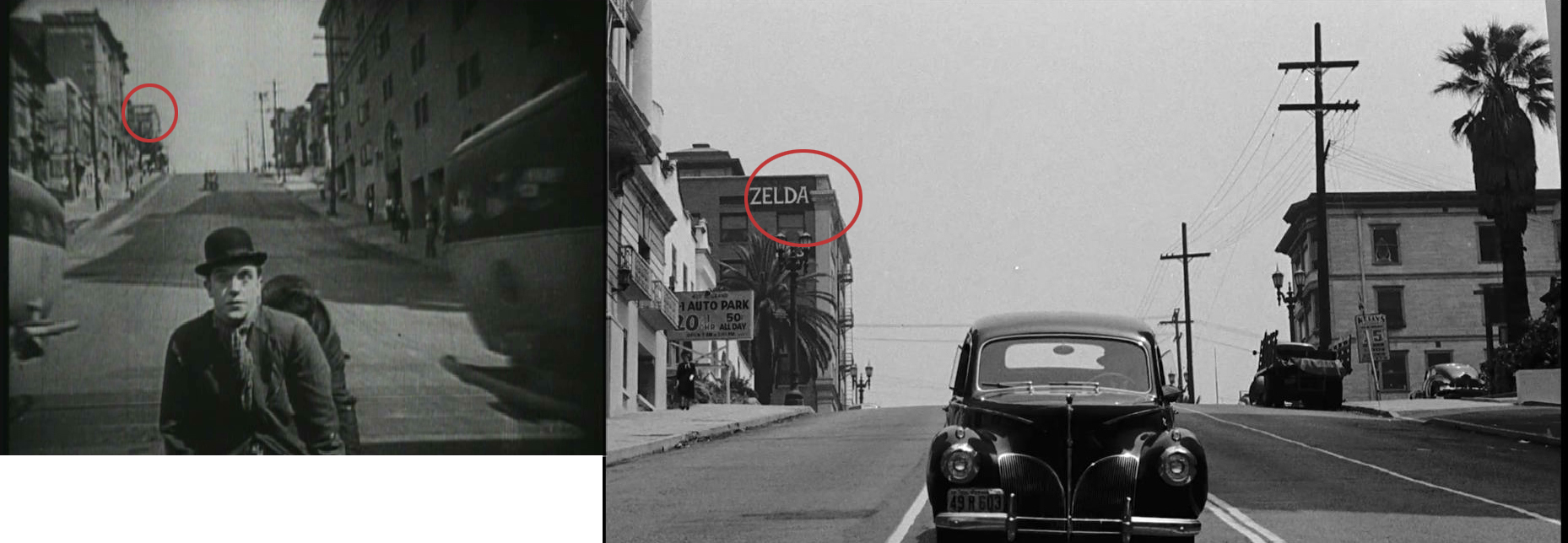
Duck Soup and frame 2:00 showing the Zelda Apartments on the SW corner of 4th and Grand.

A bit further during Stan and Ollie’s ride down Grand from 4th Street, we can see the Zelda Apartments (red oval) in both the movie, and at frame 2:00 during the Prelinger film.
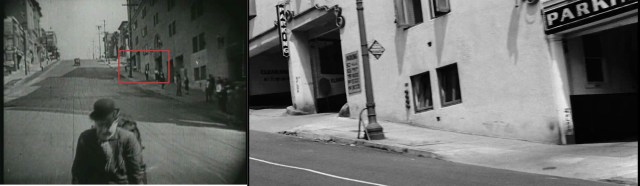
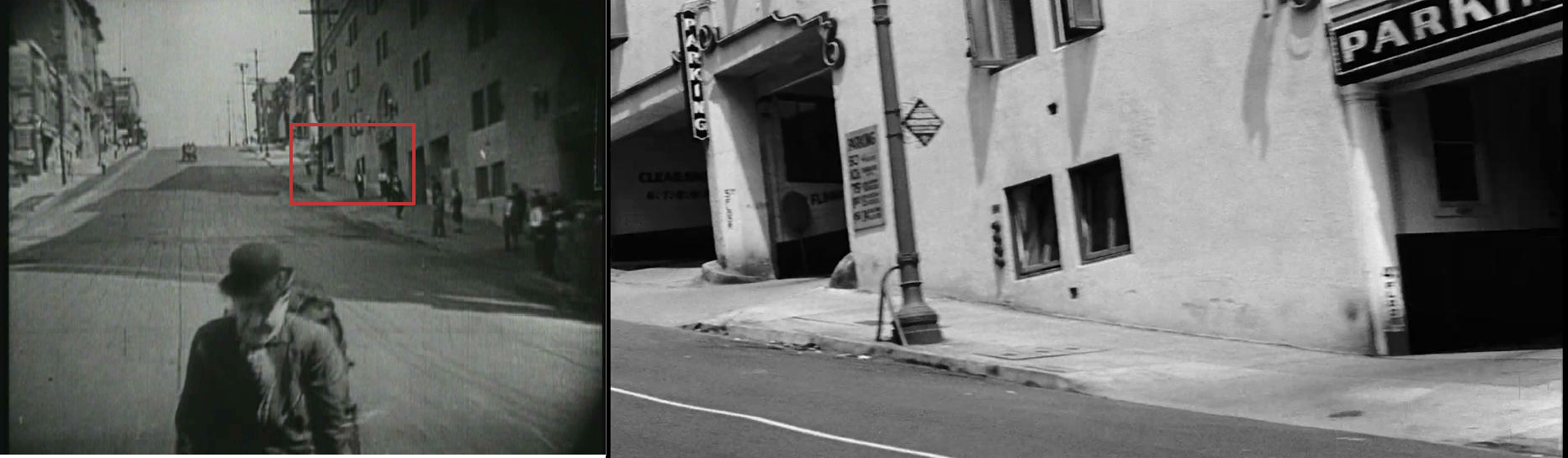
Duck Soup and frame 3:32, showing the Biltmore Garage.

As Stan and Ollie continue down Grand from 4th, they pass by the Biltmore Garage on the SE corner of 5th and Grand.  The red box above matches the doors and windows in the Prelinger frame.

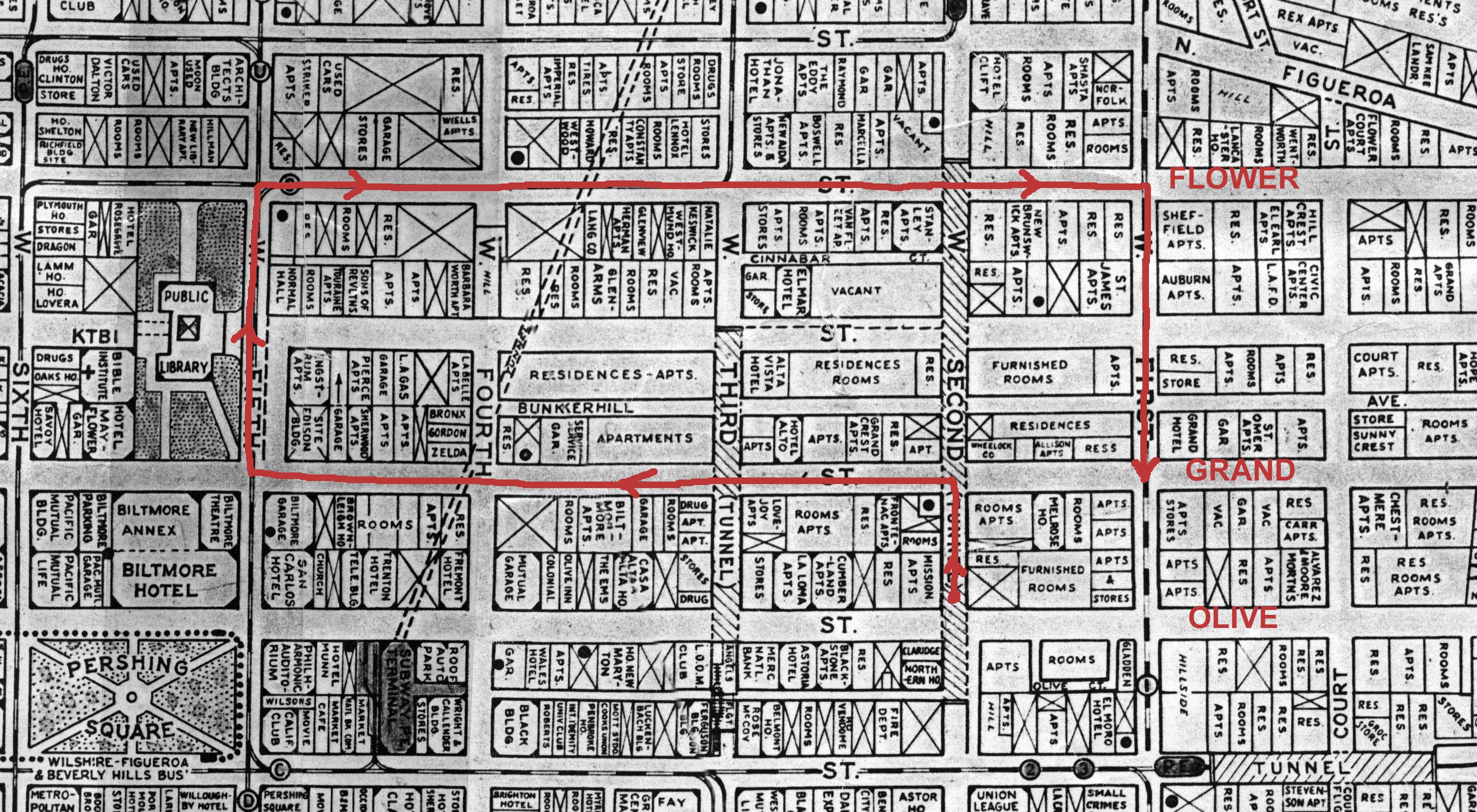
The Prelinger film continues south down Grand, turning right (west) at 5th, past the Biltmore Theater, the Biltmore Hotel, and the Los Angeles Public Library, then turning right (north) at Flower, and continuing north to 1st Street, where it turns right (east) onto 1st Street, where the film ends.  [Note: some blogs regarding the Prelinger film incorrectly state that the last turn of the film is onto 2nd Street, forgetting that the drop-off of the west end of the 2nd Street tunnel would appear in the background during the turn if this was correct.]
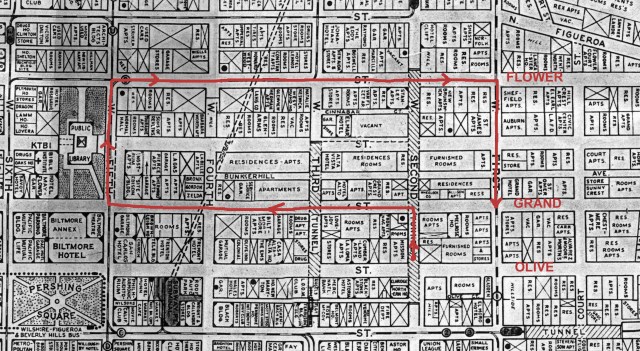
Route in Prelinger Bunker Hill Stock Footage

Stock footage – The Internet Archive – Rick Prelinger, Prelinger Archives.

HAROLD LLOYD images and the names of Mr. Lloyd’s films are all trademarks and/or service marks of Harold Lloyd Entertainment Inc. Images and movie frame images reproduced courtesy of The Harold Lloyd Trust and Harold Lloyd Entertainment Inc.

California History Room, California State Library, Sacramento, California; Security Pacific National Bank Photograph Collection/Los Angeles Public Library.

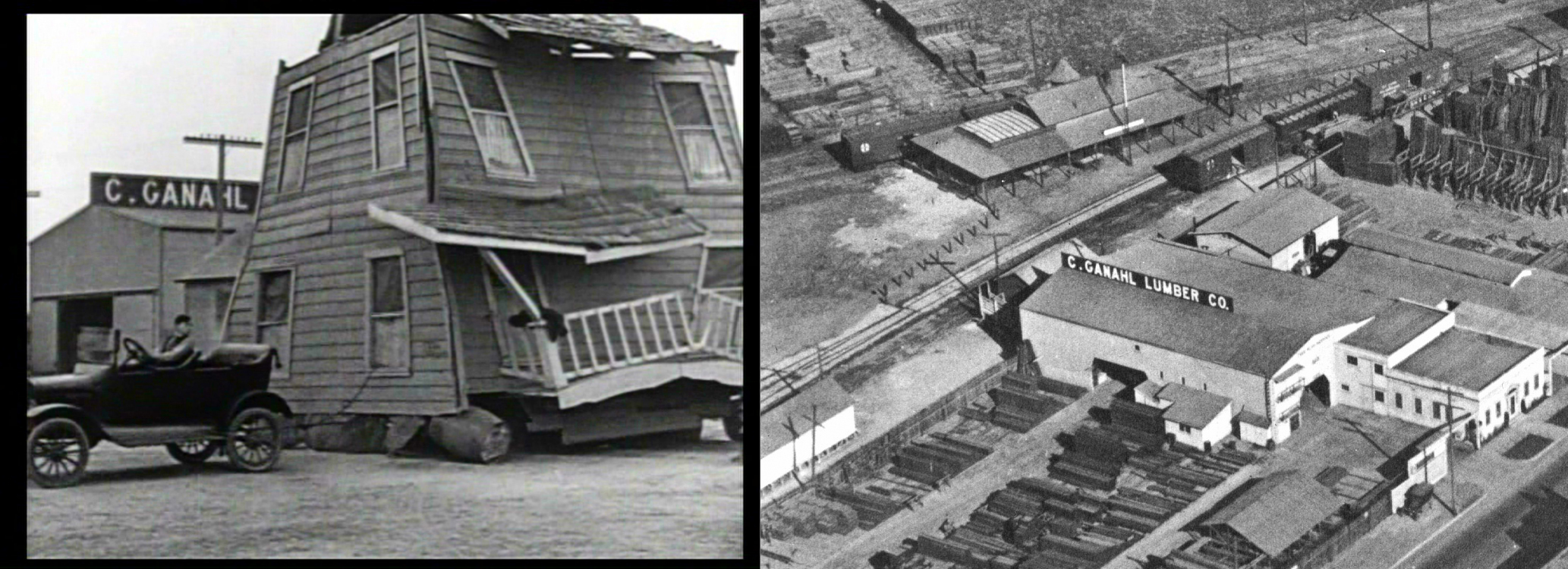
Posted in Bunker Hill, Duck Soup, Film Noir, For Heaven's Sake, Girl Shy, Hal Roach Studios, Harold Lloyd, Laurel and Hardy, Lloyd Studio, Los Angeles Historic Core, Oliver Hardy, Stan Laurel | Tagged , , , , , , , , , , , , | 25 Comments

Charlie Chaplin and Film Noir? – It’s Also True

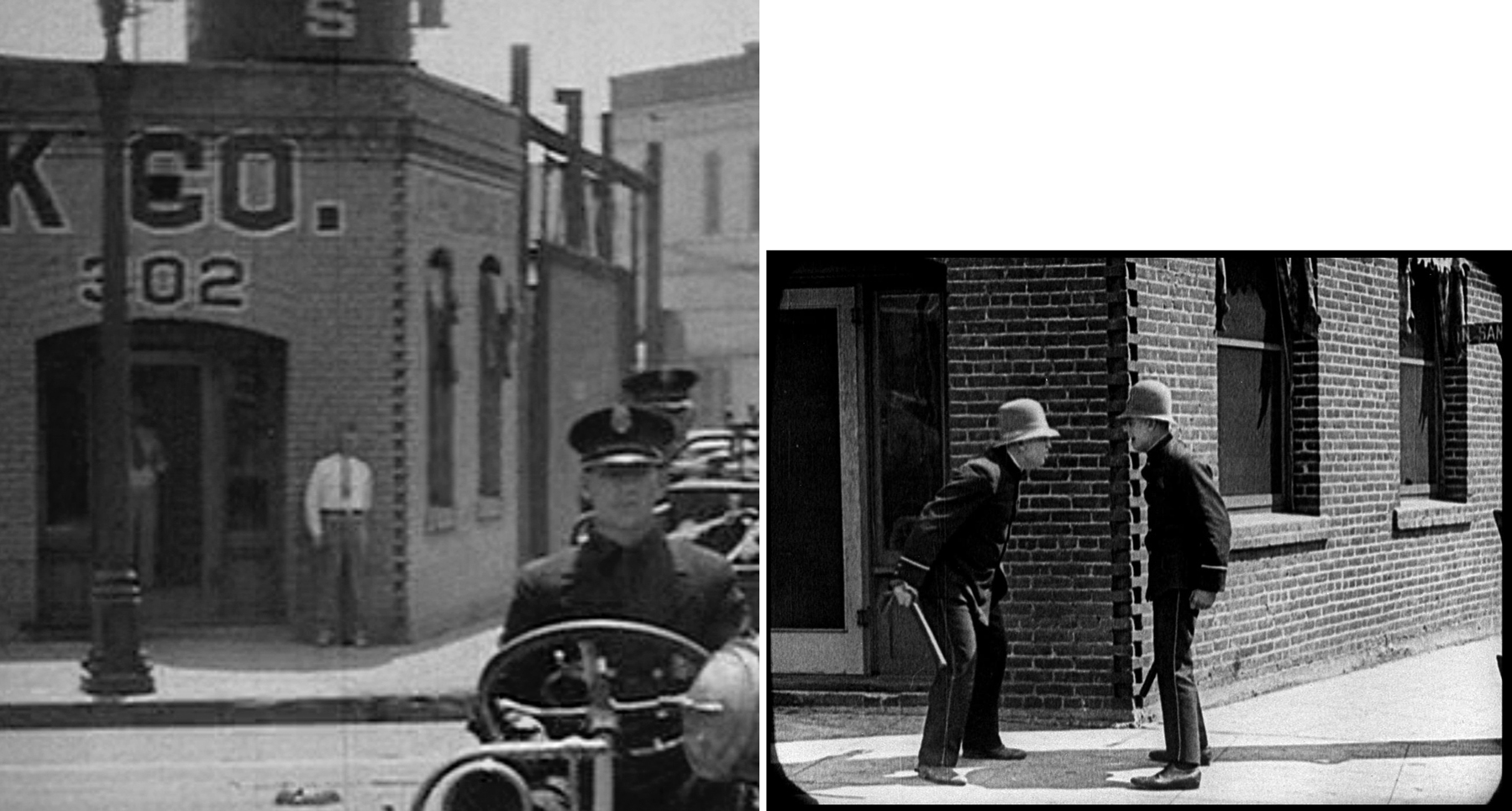
In Modern Times (1936) a policeman chases Charlie around the NE corner of Center Street (left) onto Jackson Street (right).

Charlie Chaplin and and film noir?  It’s also true.  As with my prior post about Harold Lloyd, Chaplin also has a connection to The Turning Point (1952), a noir crime drama where William Holden plays a cynical reporter investigating a corrupt cop.  And given how the great silent comedians often crossed paths, Harold make a cameo appearance here too.

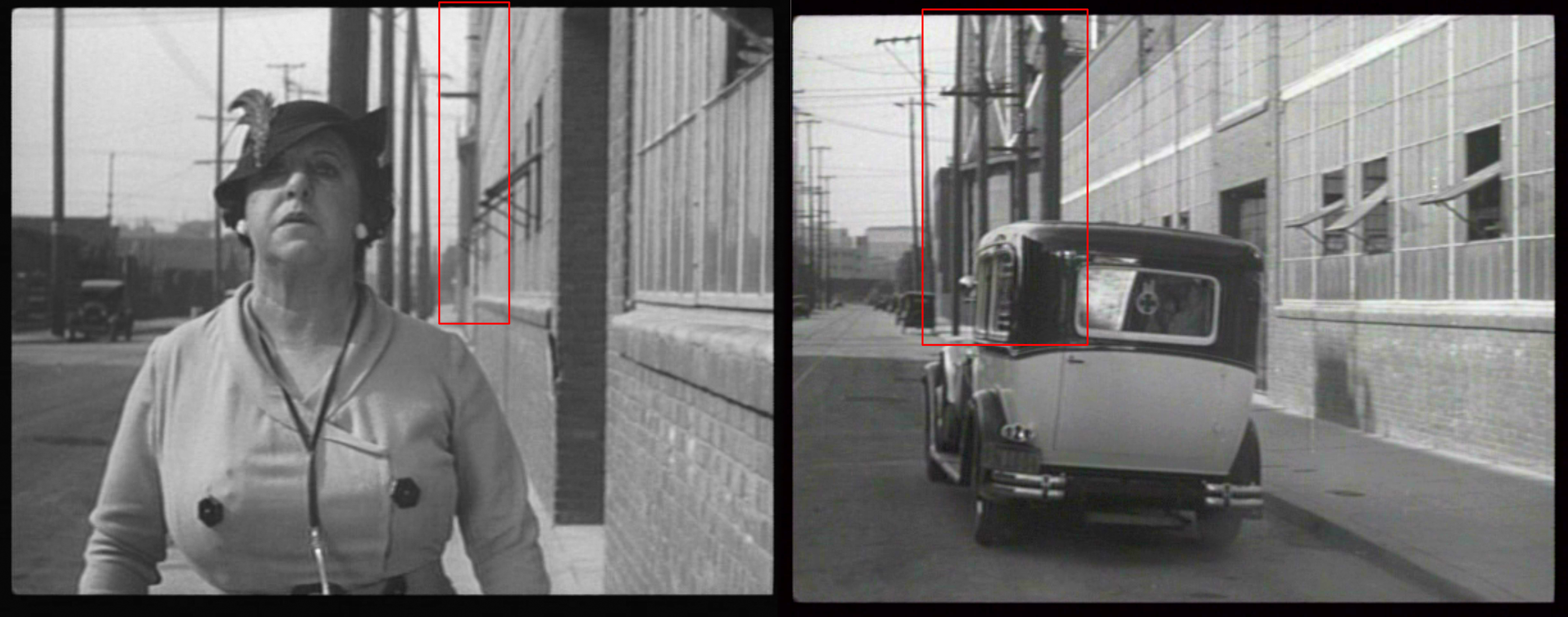
In Modern Times (1936), factory worker Charlie tightens bolts on an ever-accelerating assembly line, eventually suffering a nervous breakdown.  After attempting to tighten the buttons on this matron’s dress (below left), he is carted off to a sanatorium (below right).  These scenes were filmed on Jackson Street beside the Southern California Gas Company gas manufacturing plant.

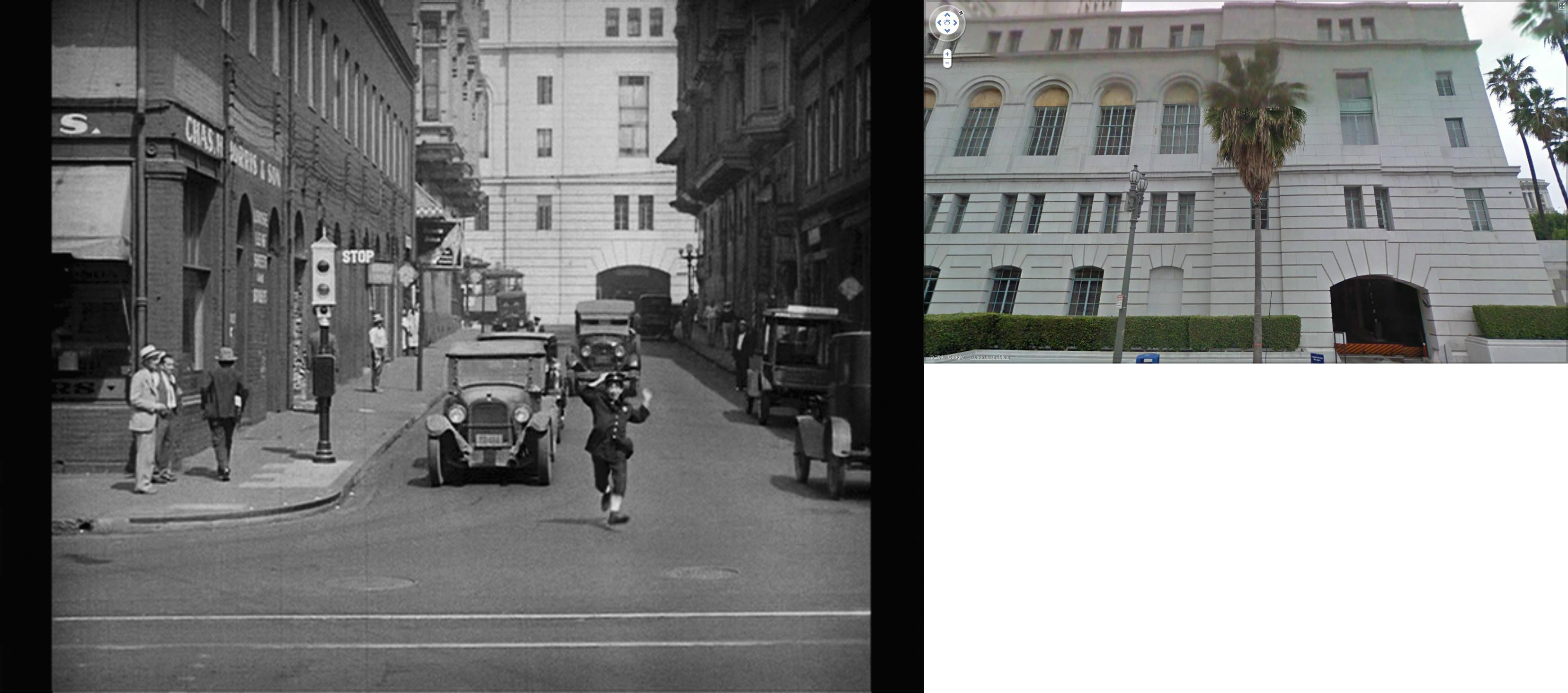
This view from Harold Lloyd’s feature For Heaven’s Sake (1926) also looks west down Jackson towards the same gas tank appearing in the Modern Times frames above.

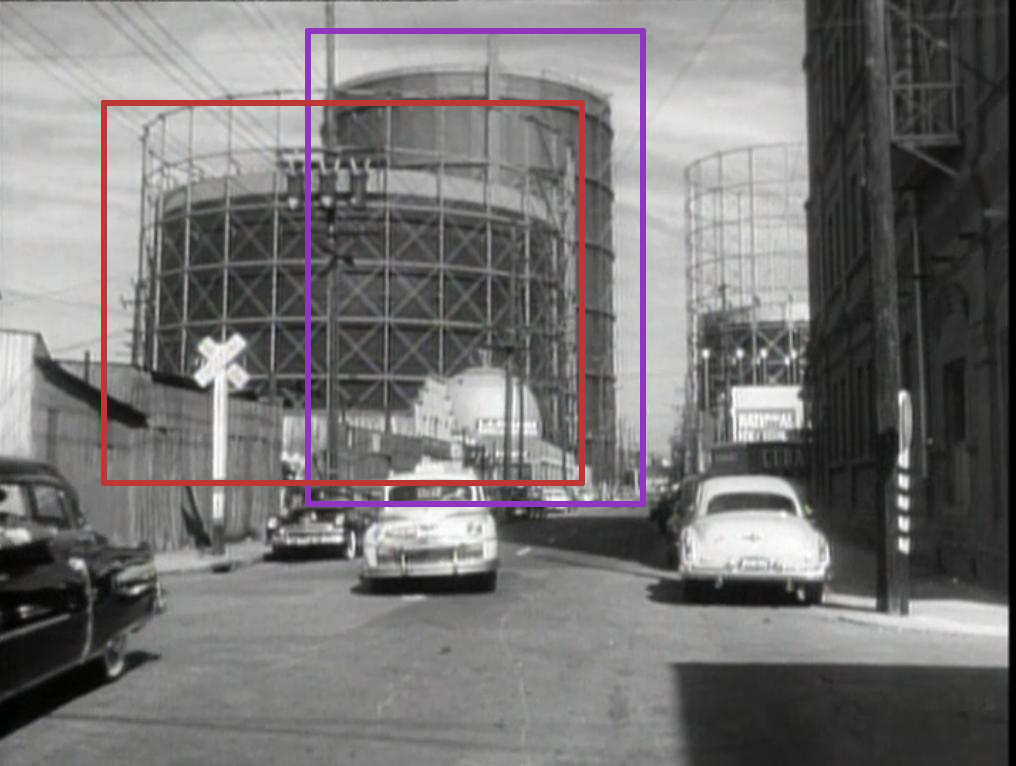
Looking north up Center Street, the red box marks the gas tank appearing in Modern Times above, while the purple box marks the tallest gas tank, on Ducommon Street and Center, appearing in The Kid, below.  The taxi is turning east on to Banning.

Before pipeline technology allowed for the importation of natural gas over long distances, these plants manufactured gas locally by burning coal, and storing the resulting gas in large holding tanks.  These tanks once stood east of City Hall.  At 378 feet, the tallest of the three tanks stood more than twice as tall as the 150 height restriction for downtown commercial buildings.

In The Turning Point, reporter William Holden arrives by taxi (at left) to pay a visit to the mob boss played by Ed Begley, who runs a trucking company.  The trucking company building stood at the NE corner of Center and Banning Streets.  The gas storage tanks appearing in the movie frame once stood on blocks to the NW, NE, and SW of the intersection of Center and Ducommun Streets.  The tallest of the three tanks (marked with a purple box) appears prominently during scenes from Chaplin’s early masterpiece The Kid (1921).
Looking east down Ducommon to the left, this view from The Kid shows the tallest gas storage tank (purple box) located on Center and Ducommon Streets.  The school at the right horizon appears below closer up.

My book Silent Traces has an entire chapter devoted to Charlie Chaplin filming the factory sequences from Modern Times at the two gas plants located just east of City Hall.  Look for future posts of Charlie filming at classic noir settings.

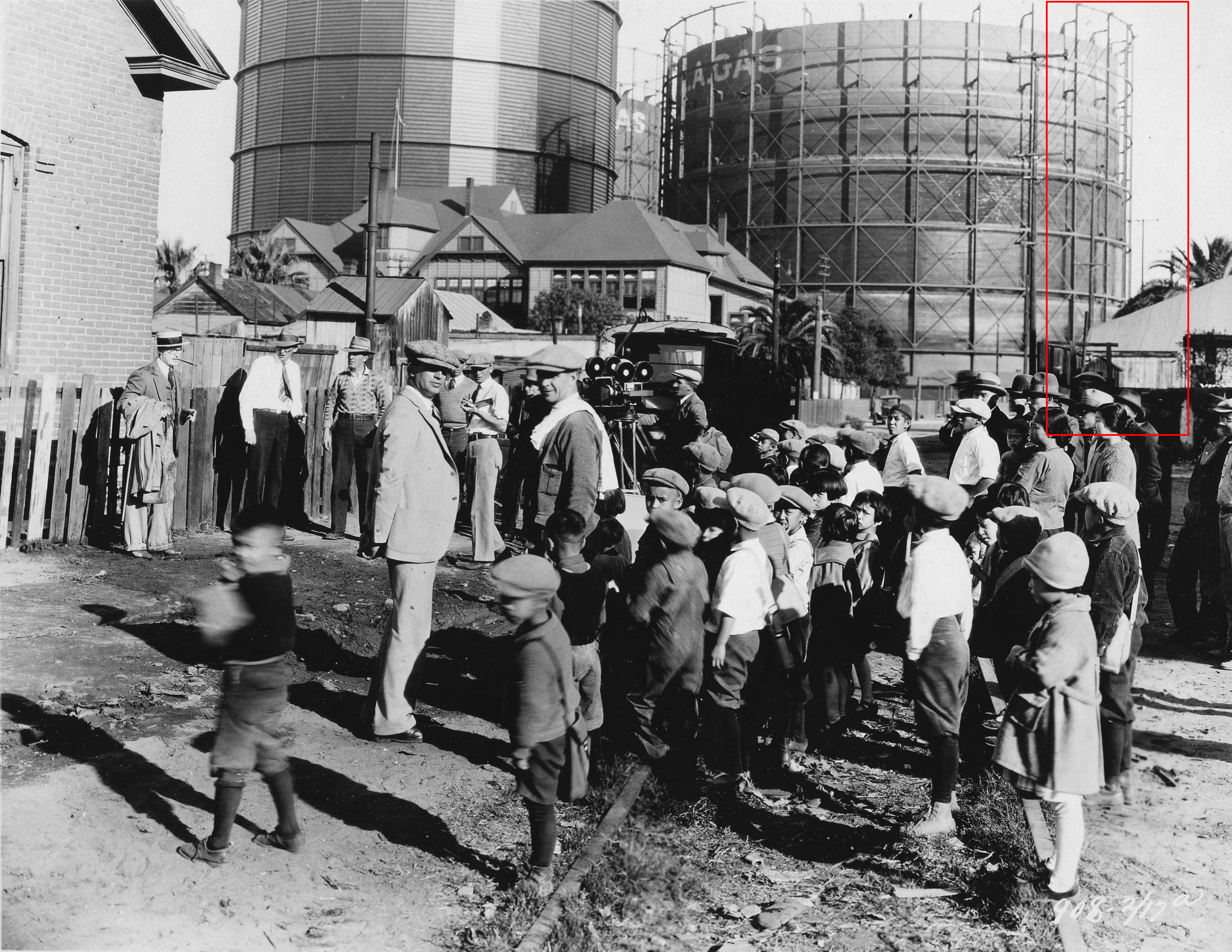
Click to enlarge.  Looking east down (or near) Jackson Street, this production shot of a deleted scene from Harold Lloyd’s feature comedy For Heaven’s Sake shows the same three gas tanks.  The red box marks the tank appearing above in Modern Times and in The Turning Point.

All images from Chaplin films made from 1918 onwards, copyright © Roy Export Company Establishment. CHARLES CHAPLIN, CHAPLIN, and the LITTLE TRAMP, photographs from and the names of Mr. Chaplin’s films are trademarks and/or service marks of Bubbles Incorporated SA and/or Roy Export Company Establishment. Used with permission.

HAROLD LLOYD images and the names of Mr. Lloyd’s films are all trademarks and/or service marks of Harold Lloyd Entertainment Inc. Images and movie frame images reproduced courtesy of The Harold Lloyd Trust and Harold Lloyd Entertainment Inc.

The Turning Point (C) Paramount Pictures Corporation.

Vintage aerial (C) Google.