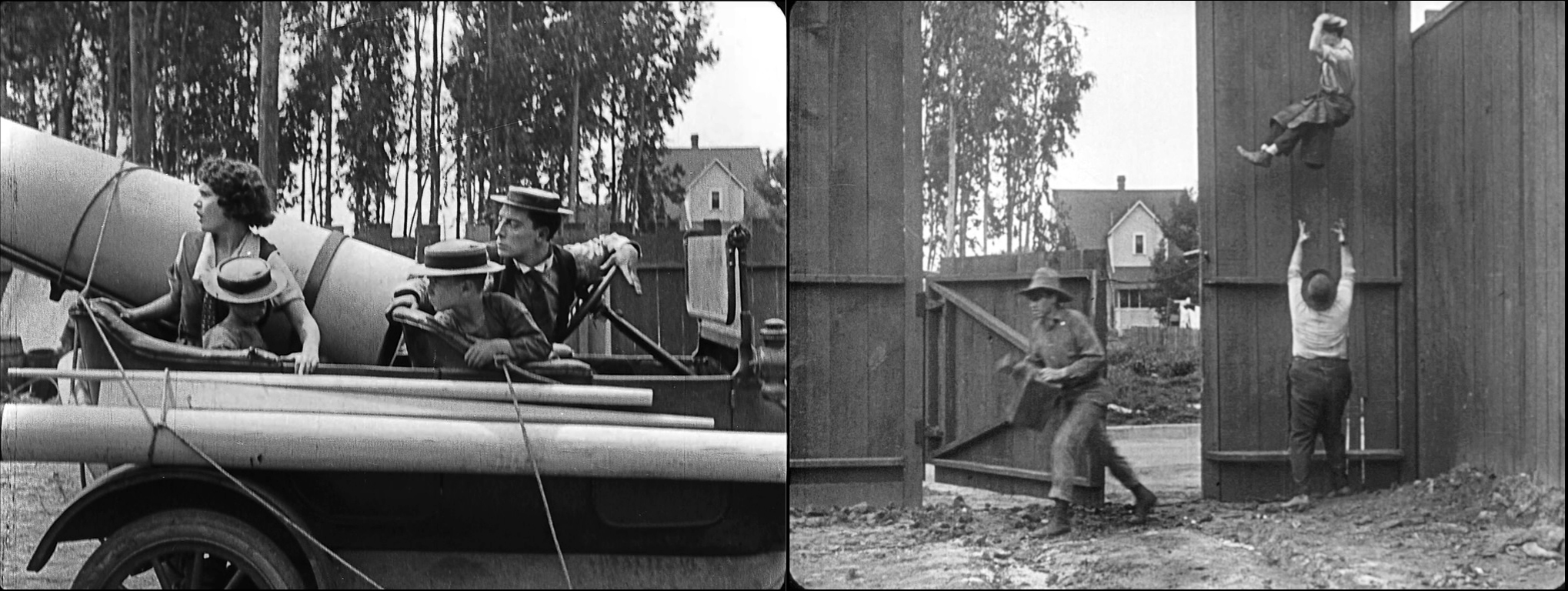
Keaton and Orson Welles – A High Sign Touch of Evil

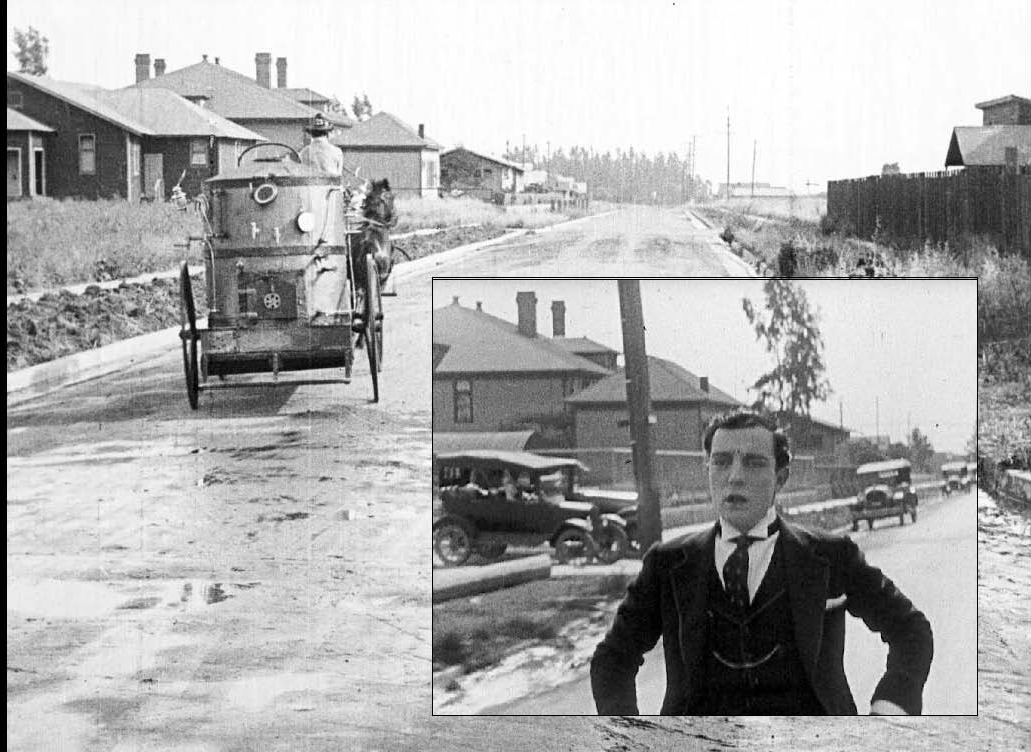
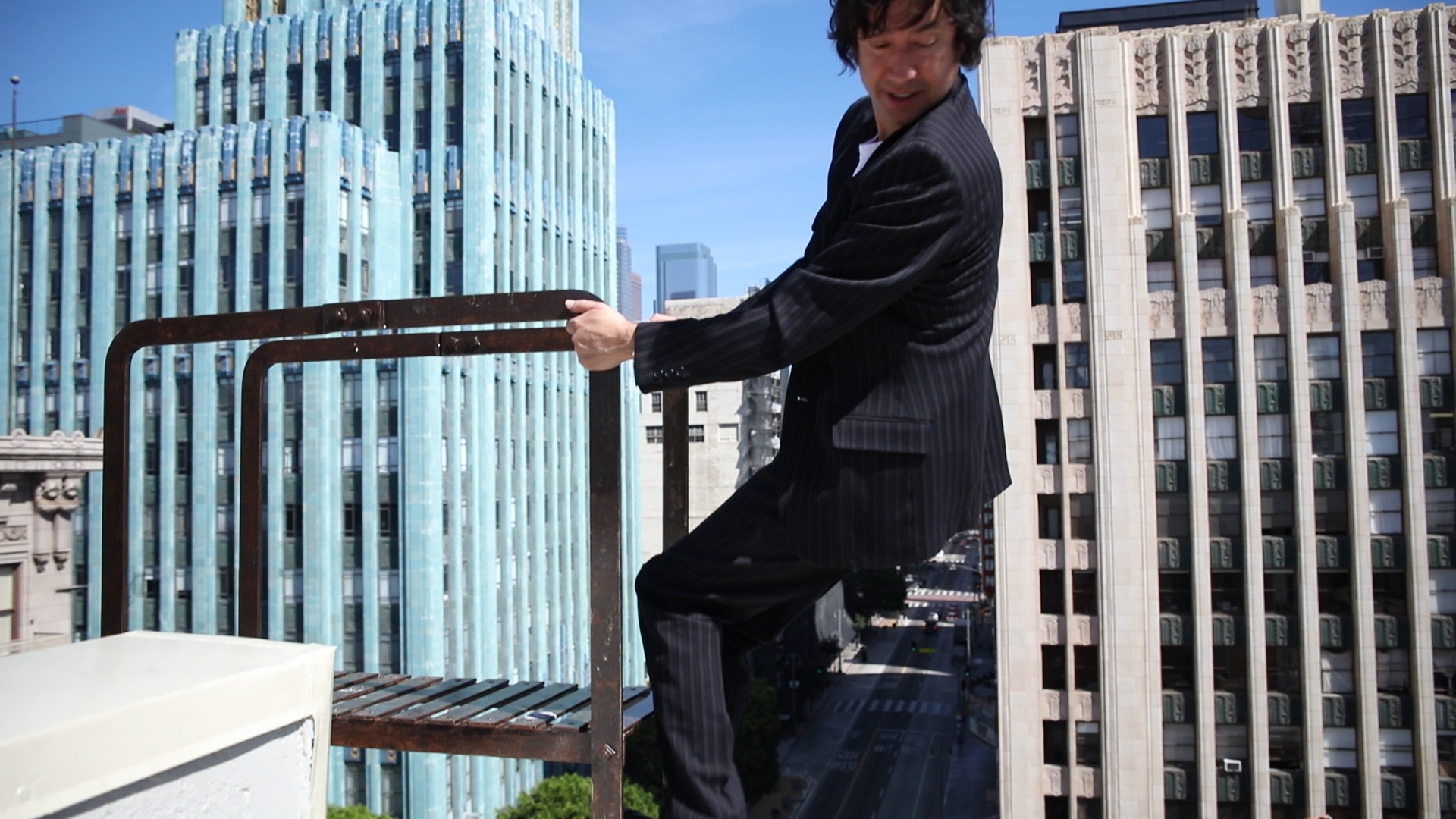
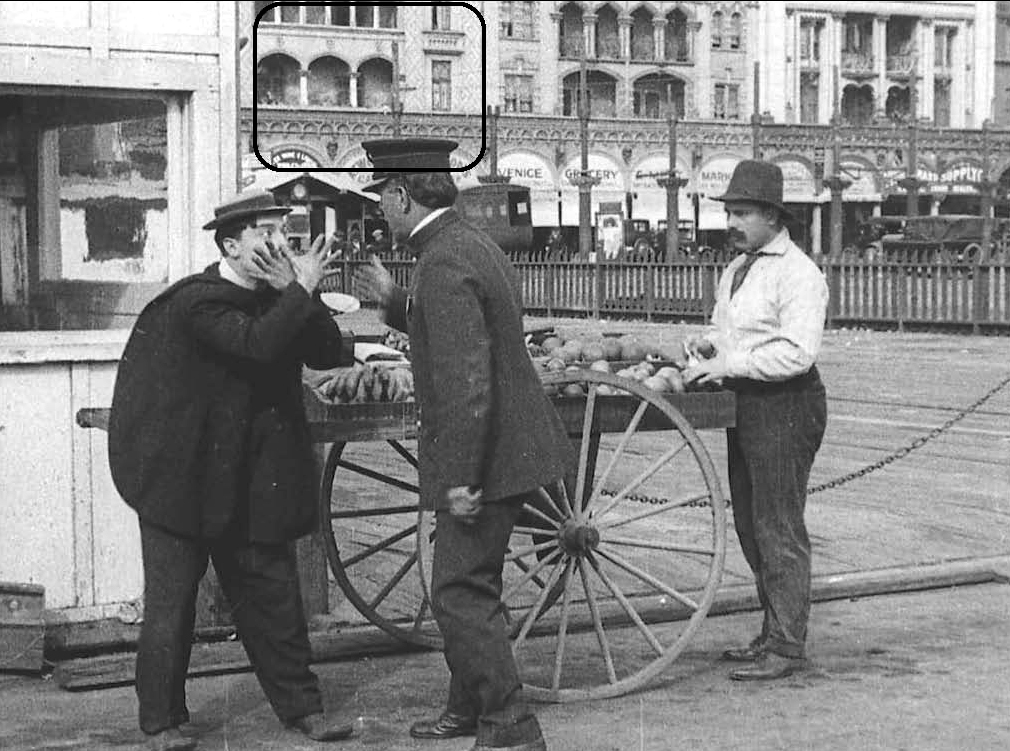
Buster flashes ‘the High Sign.’

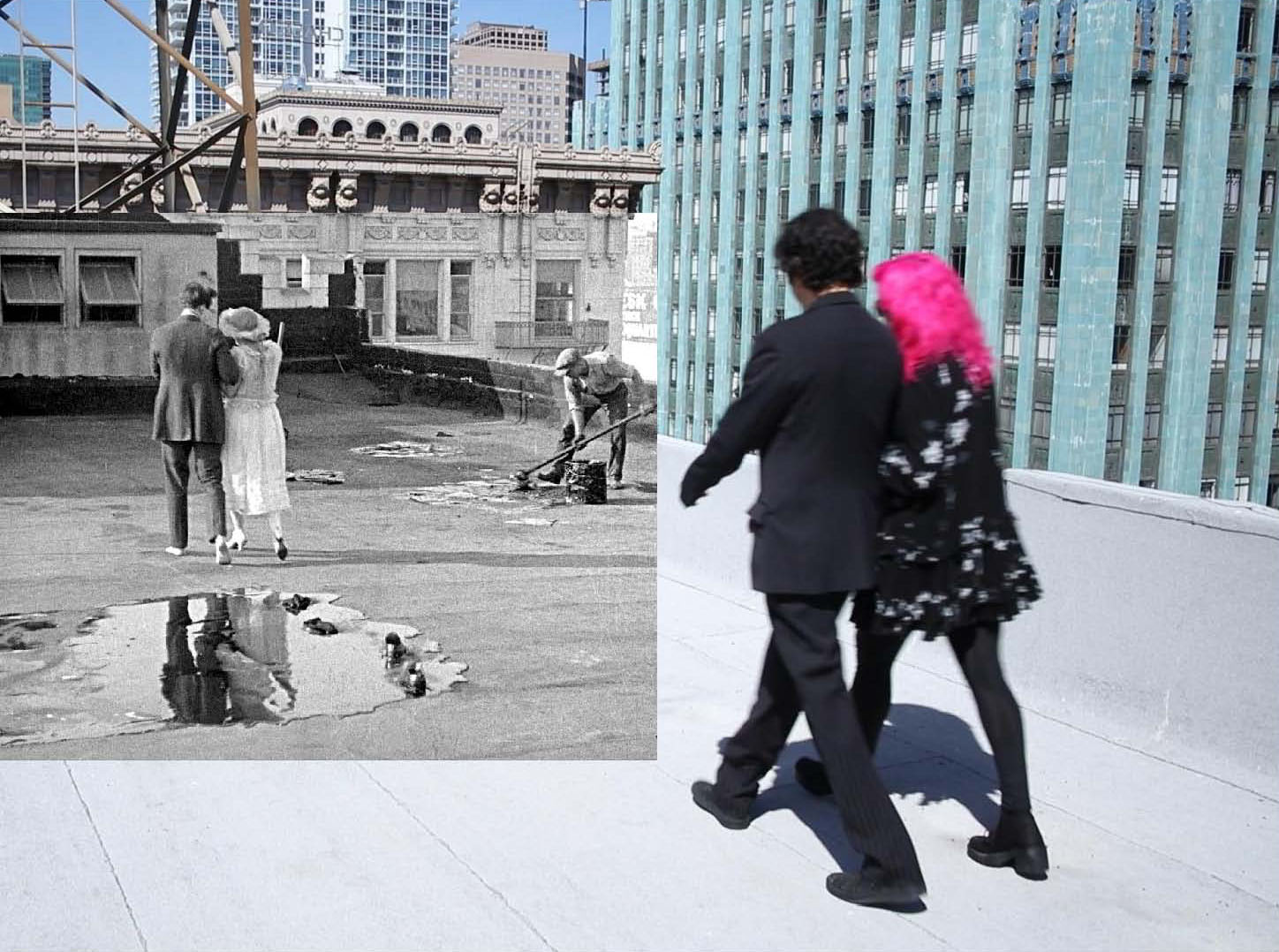
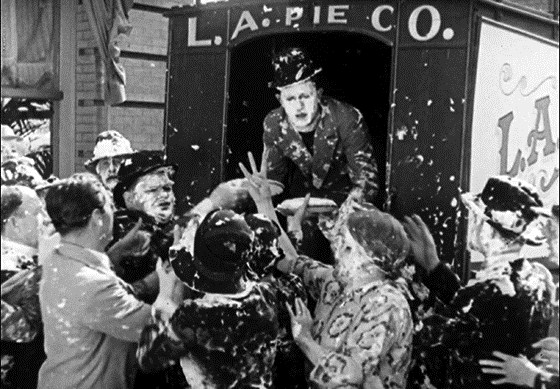
Prior posts discuss Orson Welles and Chaplin (Citizen Kane – Modern Times), and Keaton and Alfred Hitchcock (Day Dreams and Vertigo), so how about Keaton and Orson Welles? Their paths crossed too, filming in Venice, California. As I explain in my books, and in several posts, Venice was a very popular place to film; Chaplin, Keaton and Lloyd all filmed there frequently. In fact, Chaplin’s public debut of his Little Tramp character was even filmed in Venice, during the Kid Auto Races (what were they? – read HERE).
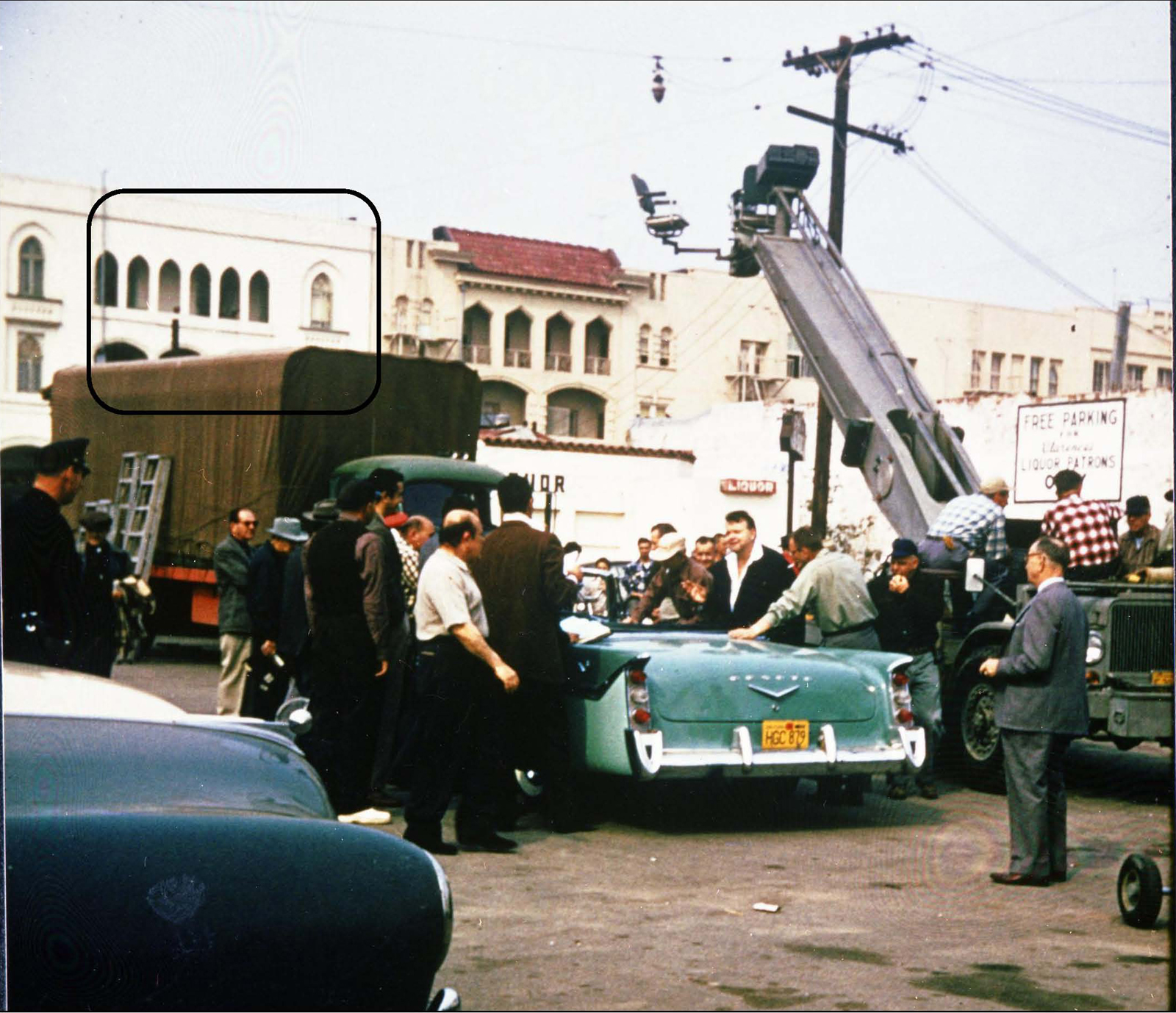
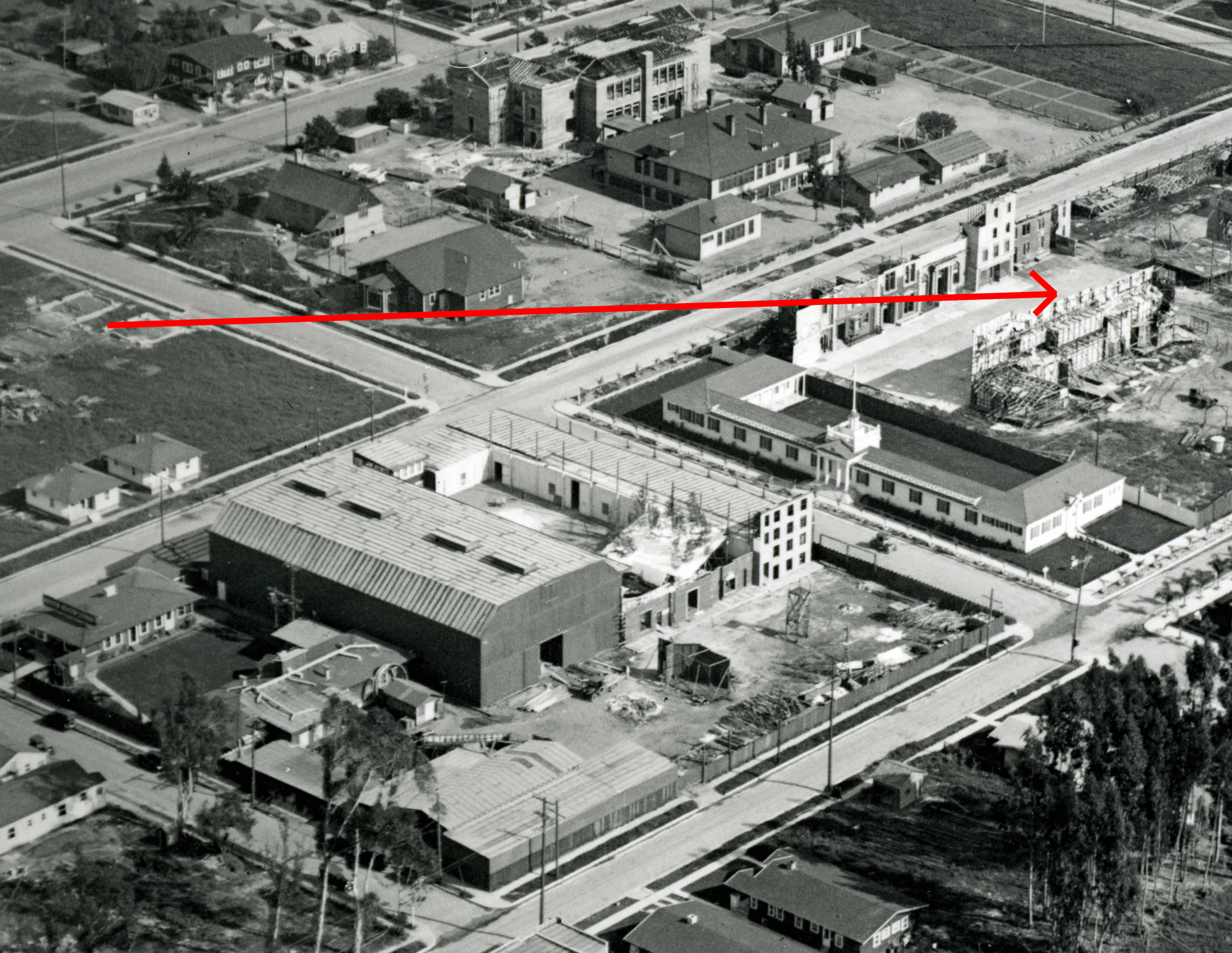
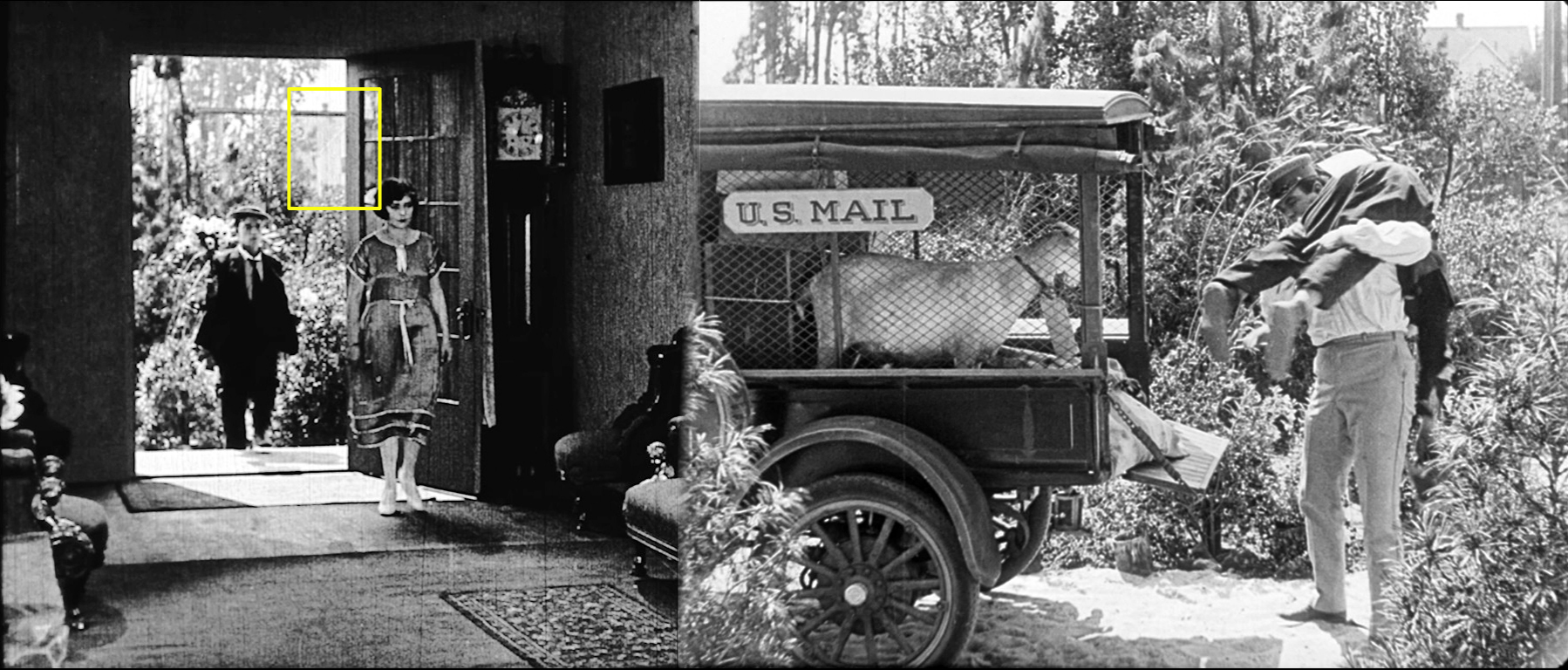
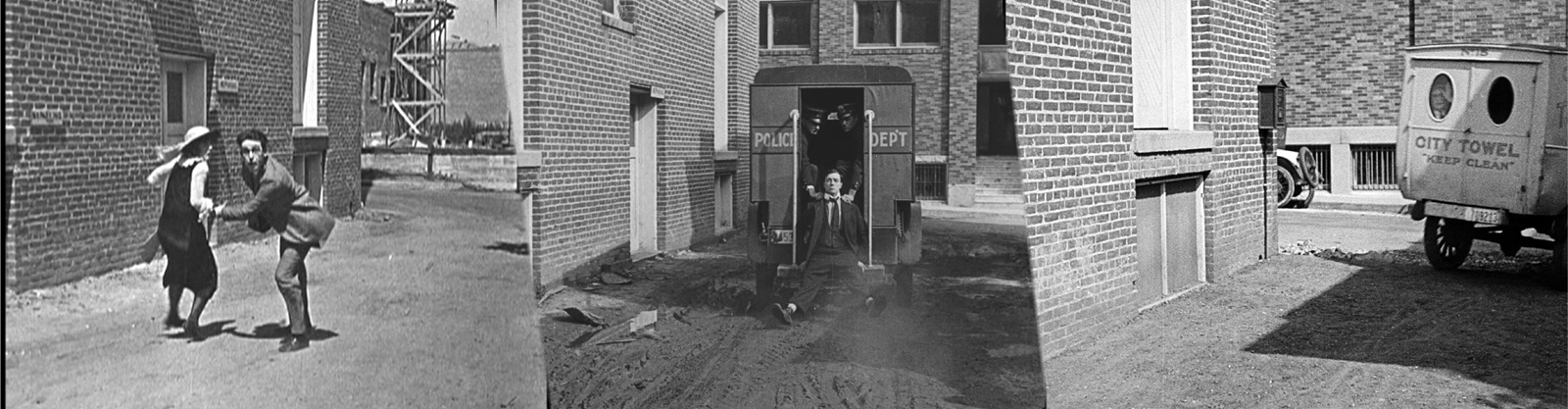
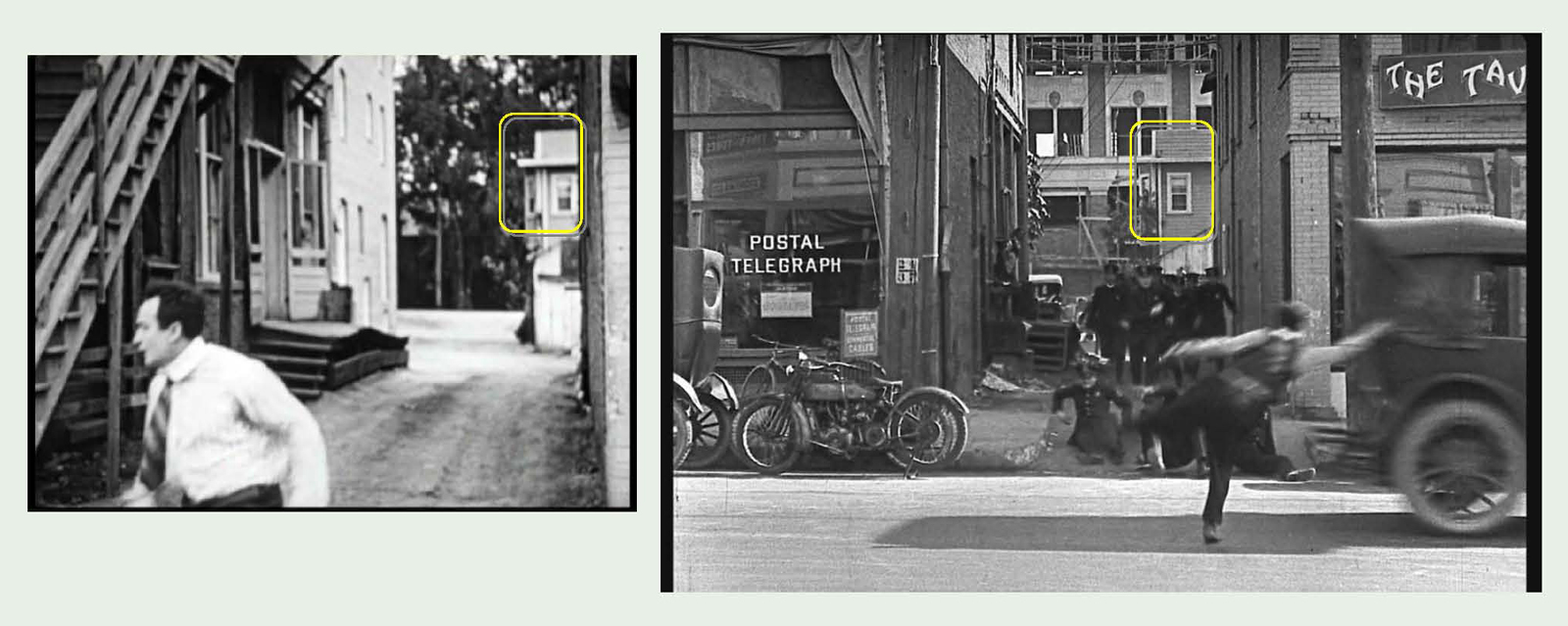
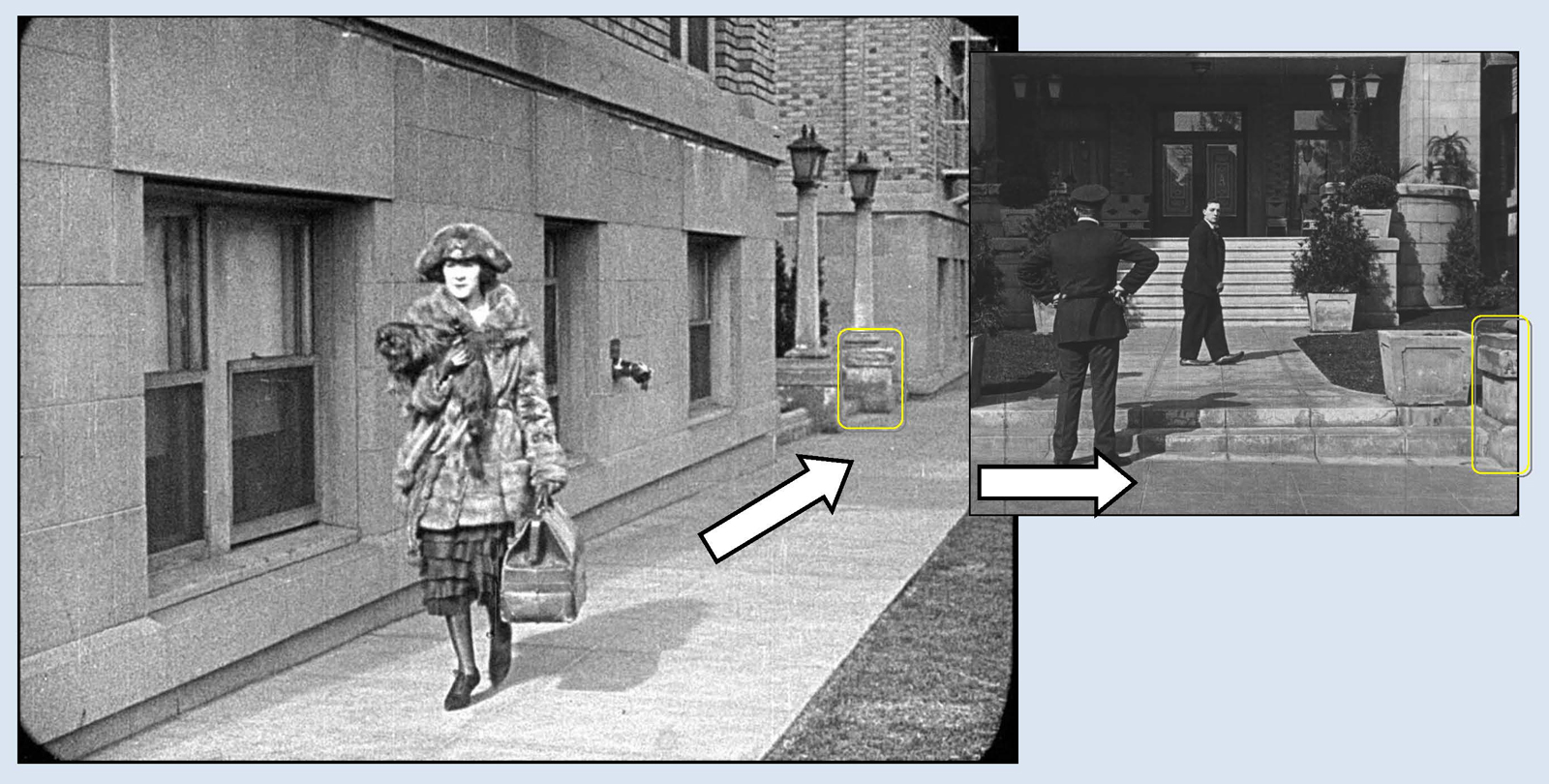
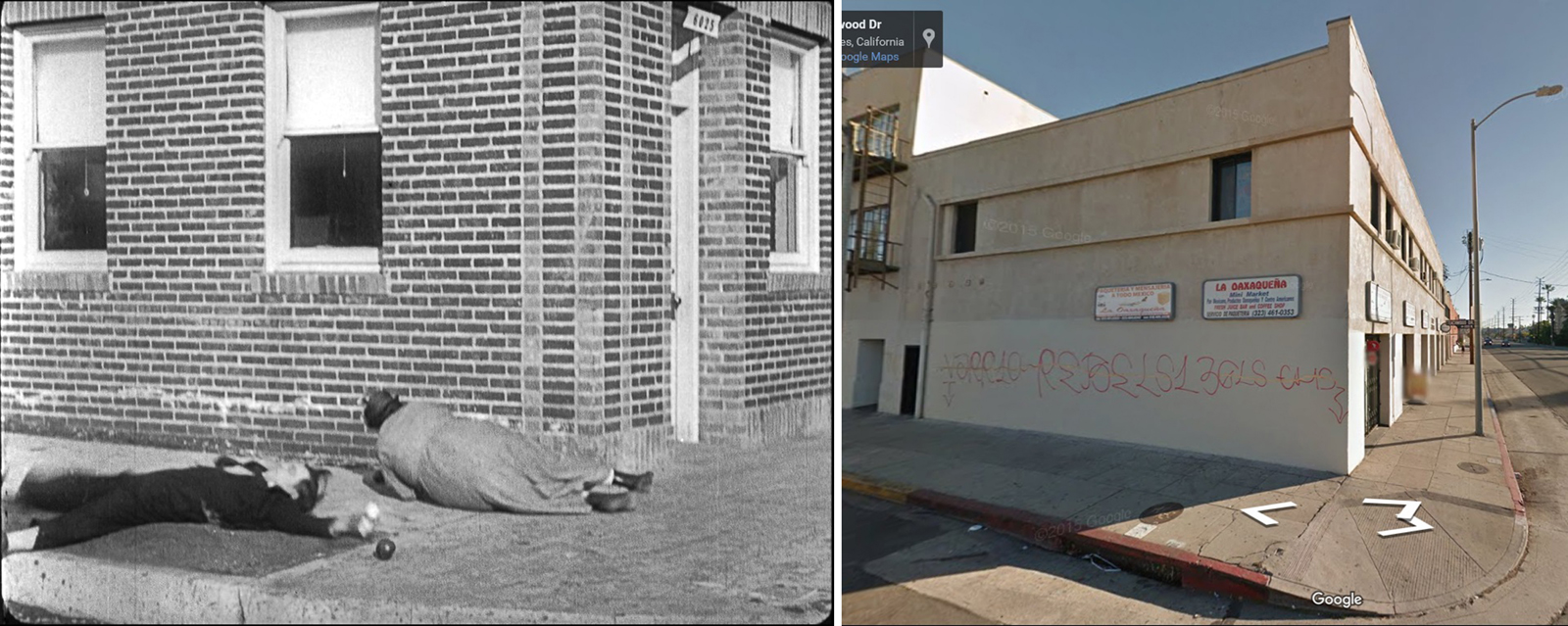
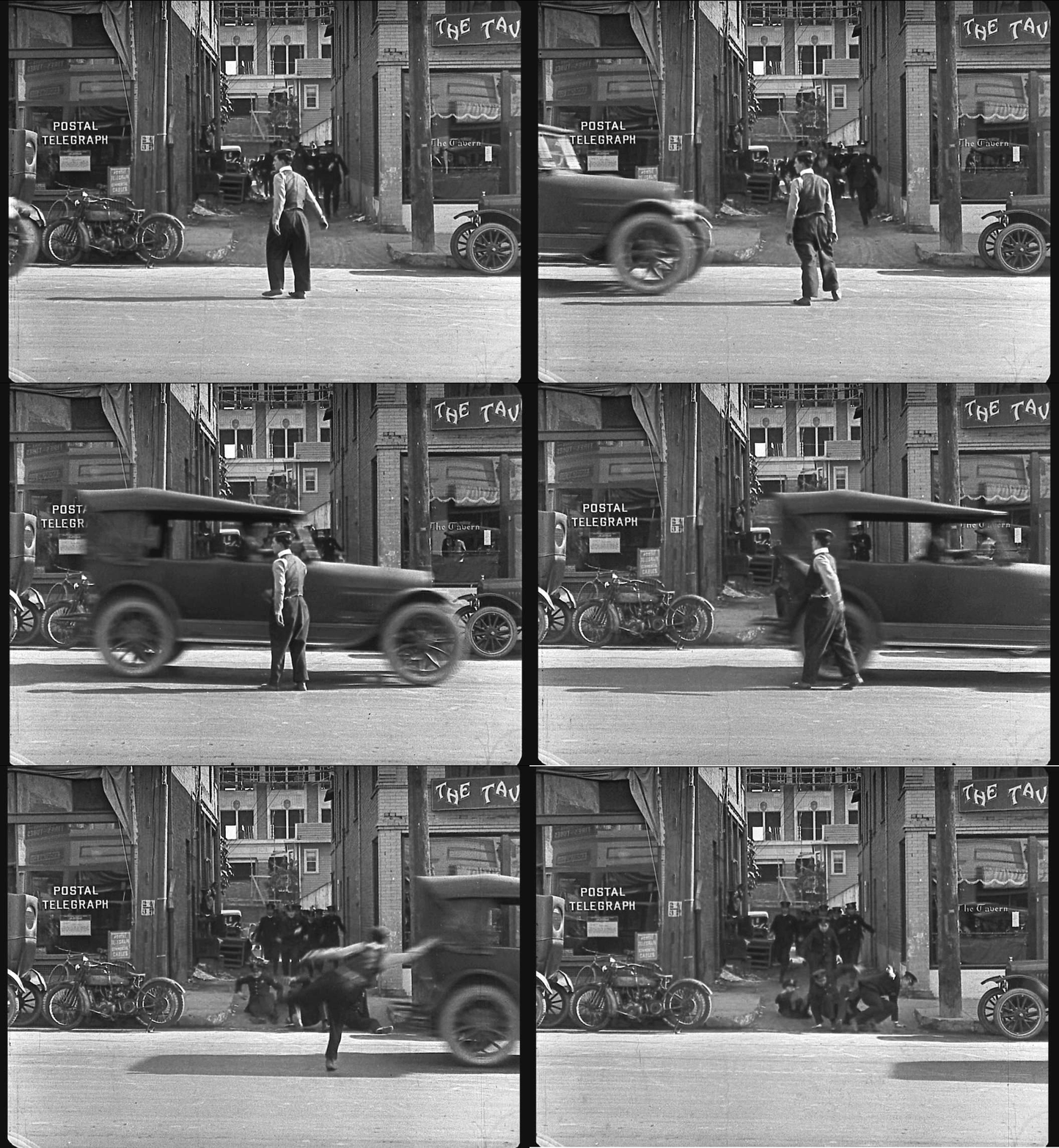
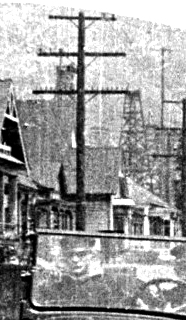
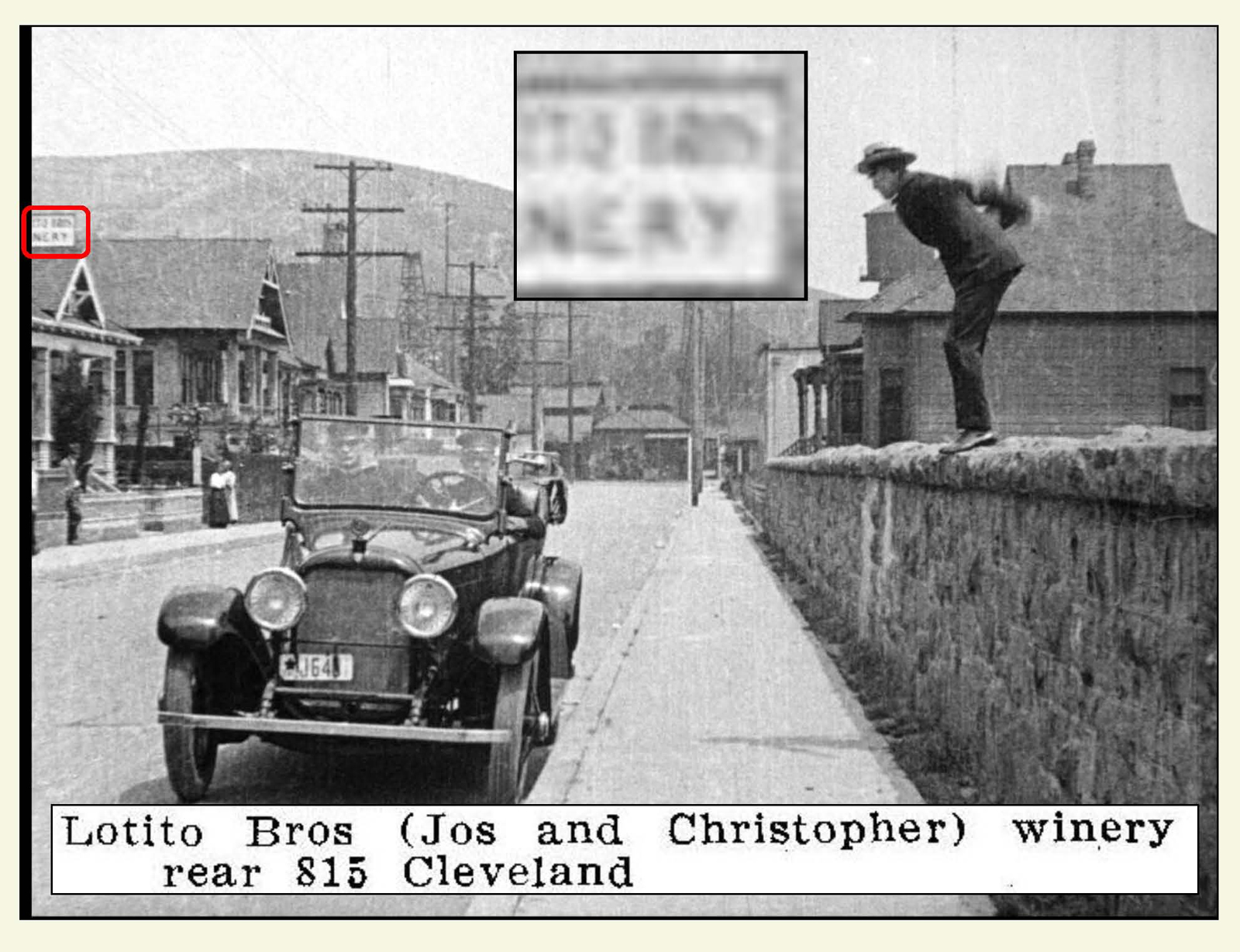
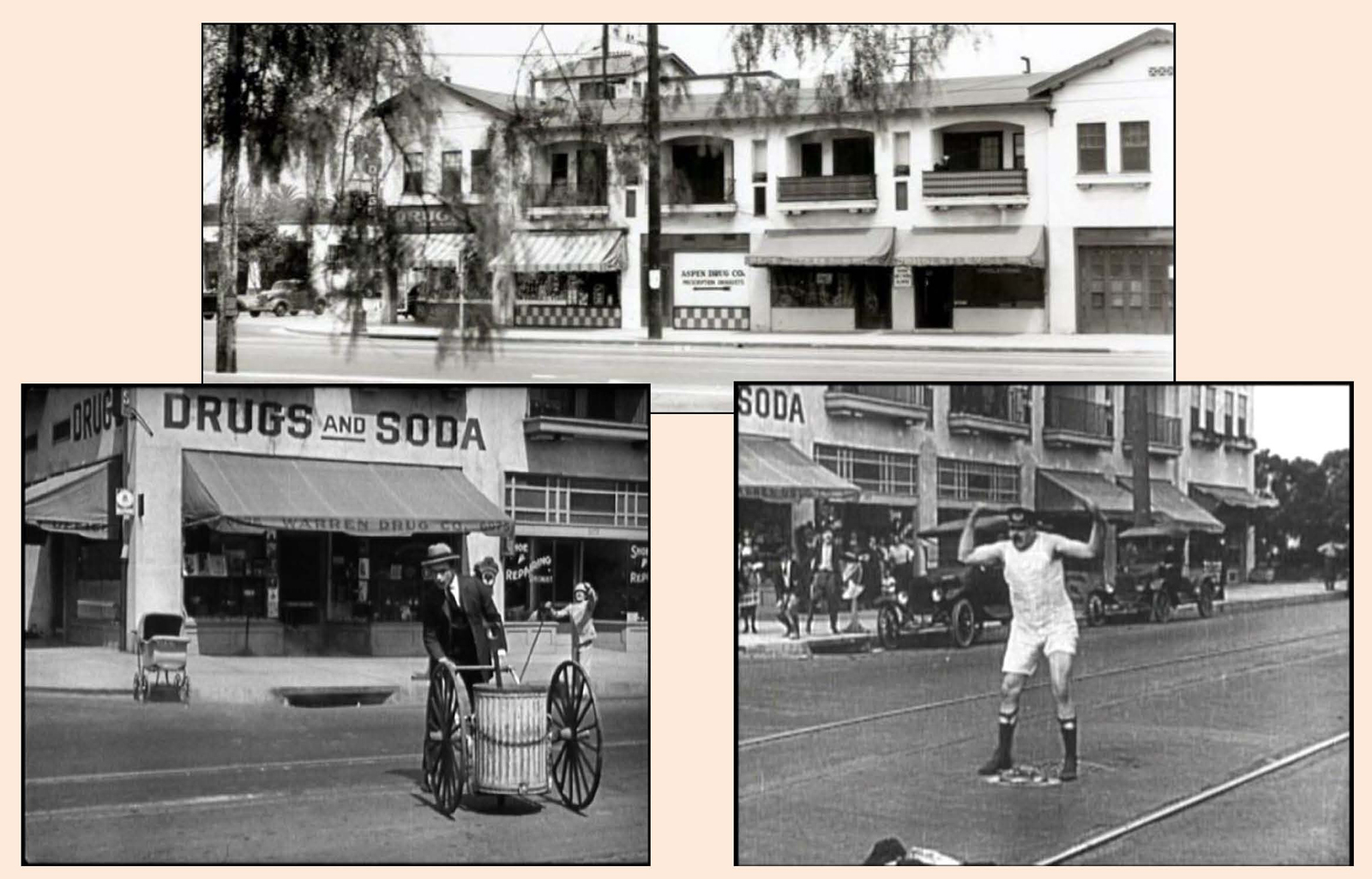
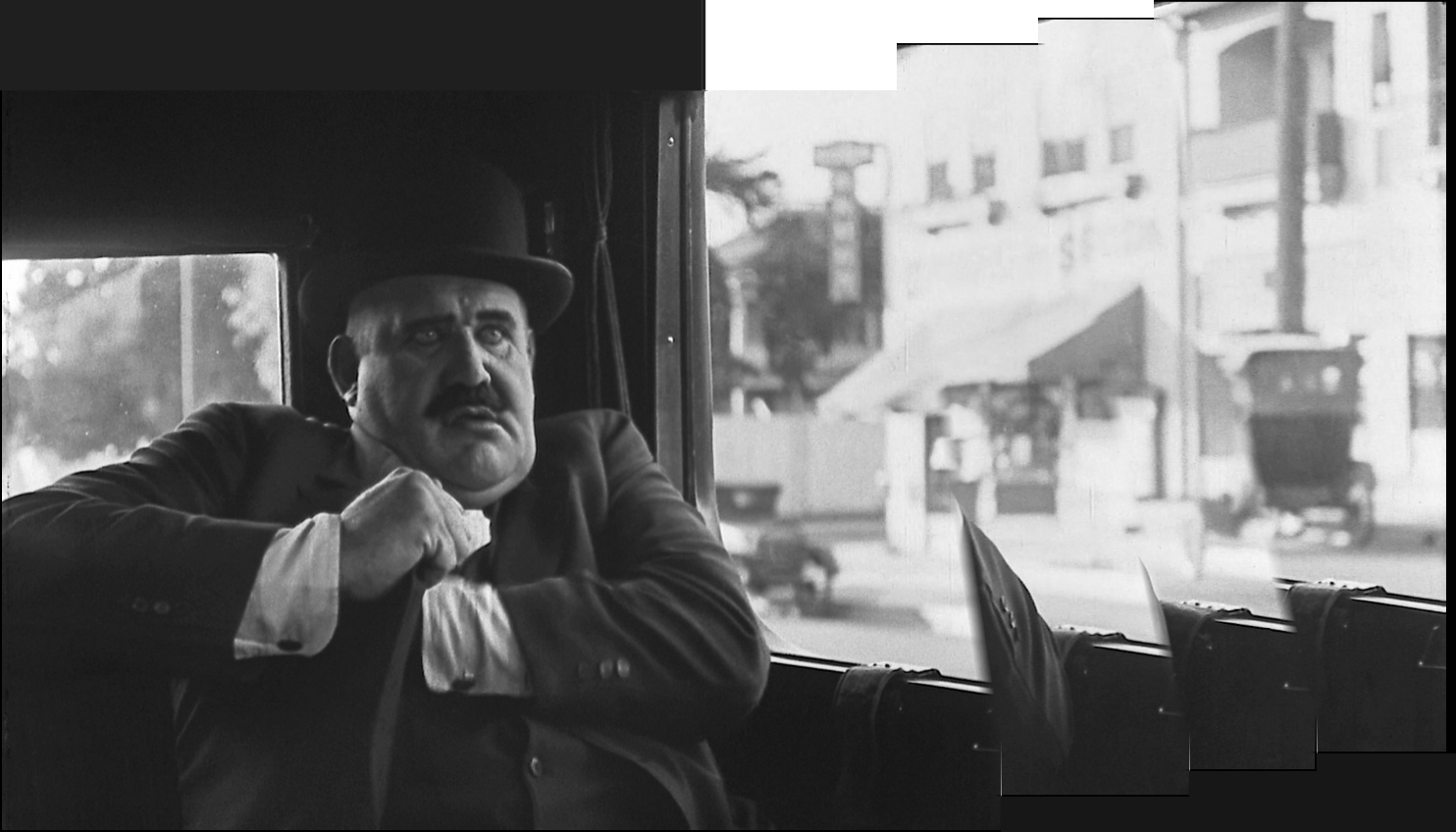
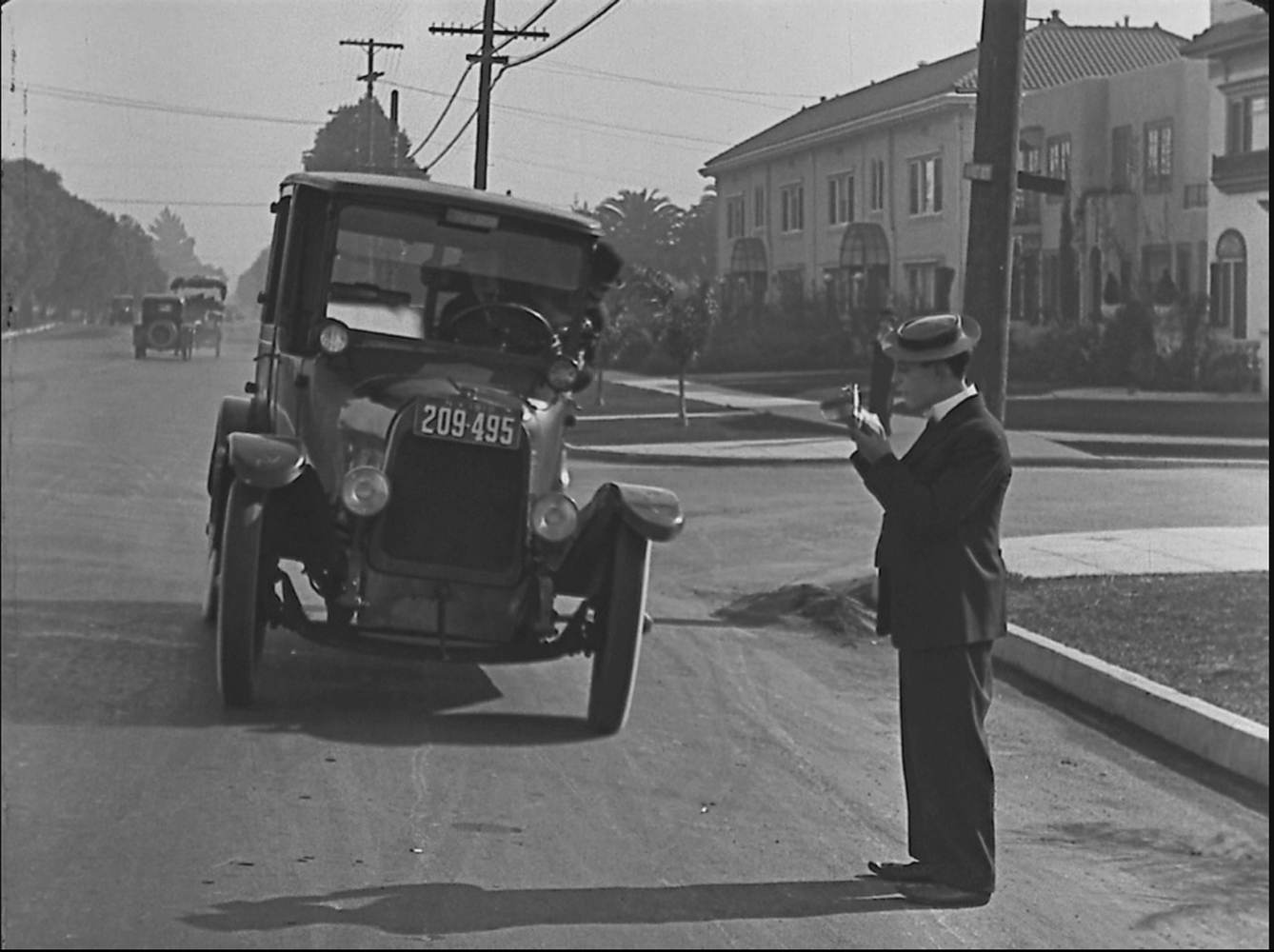
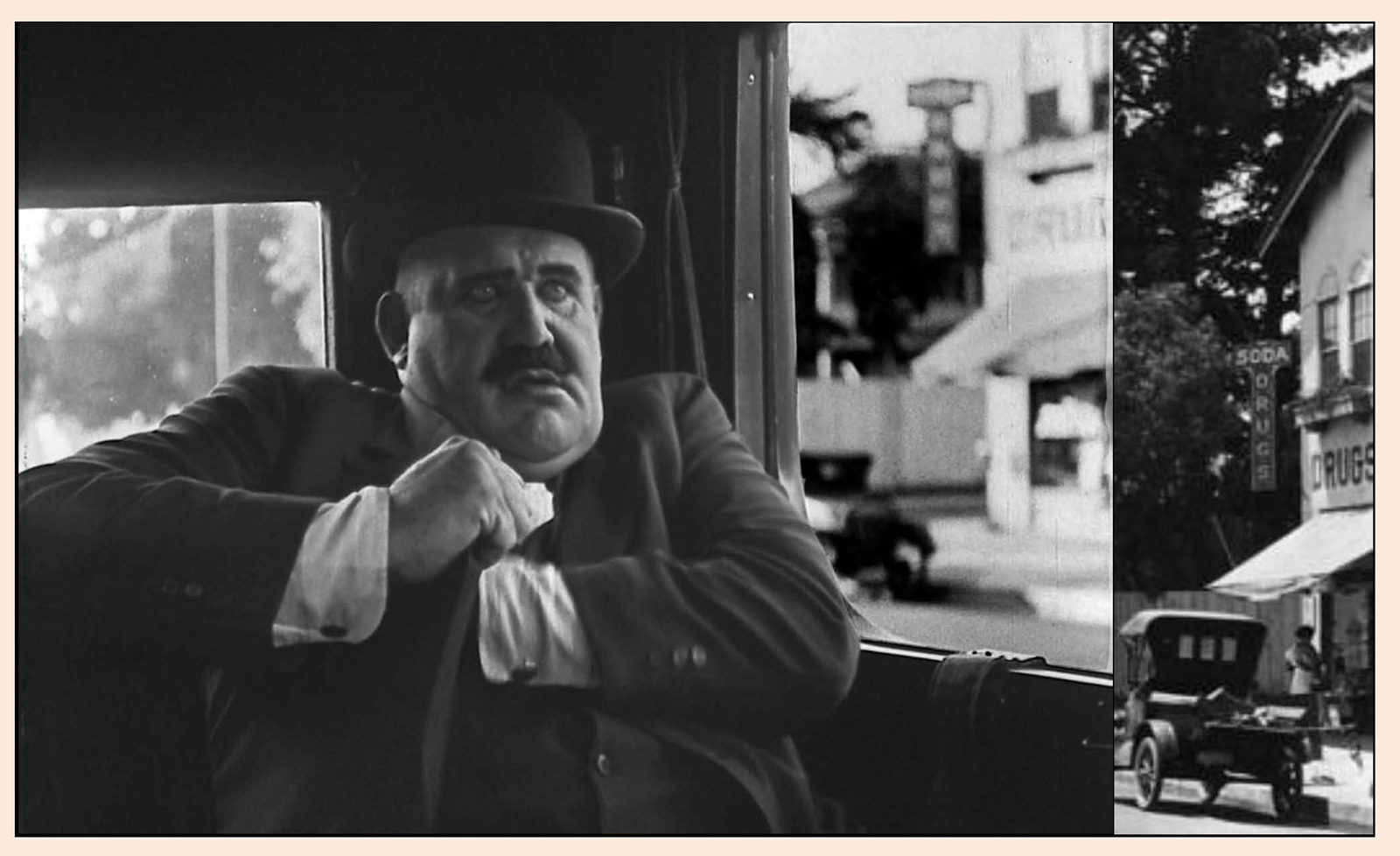
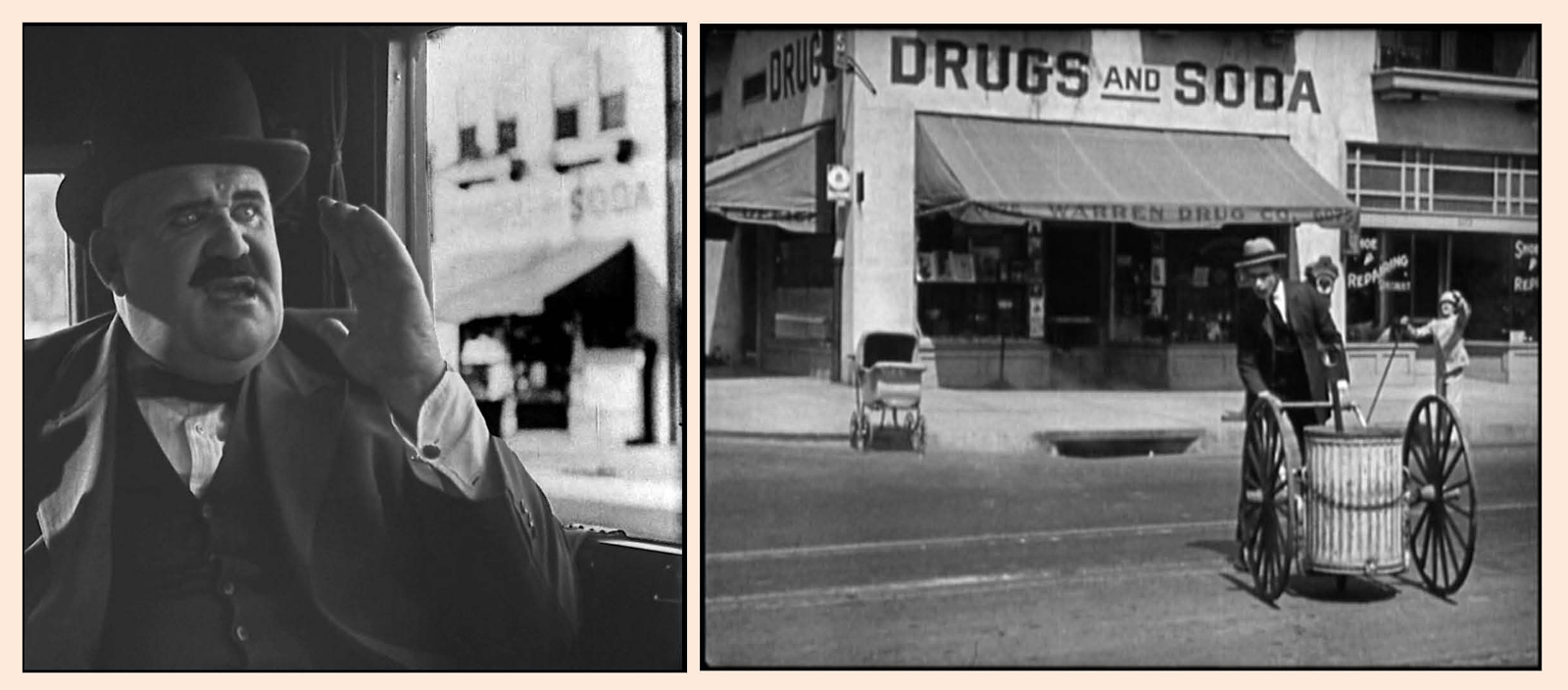
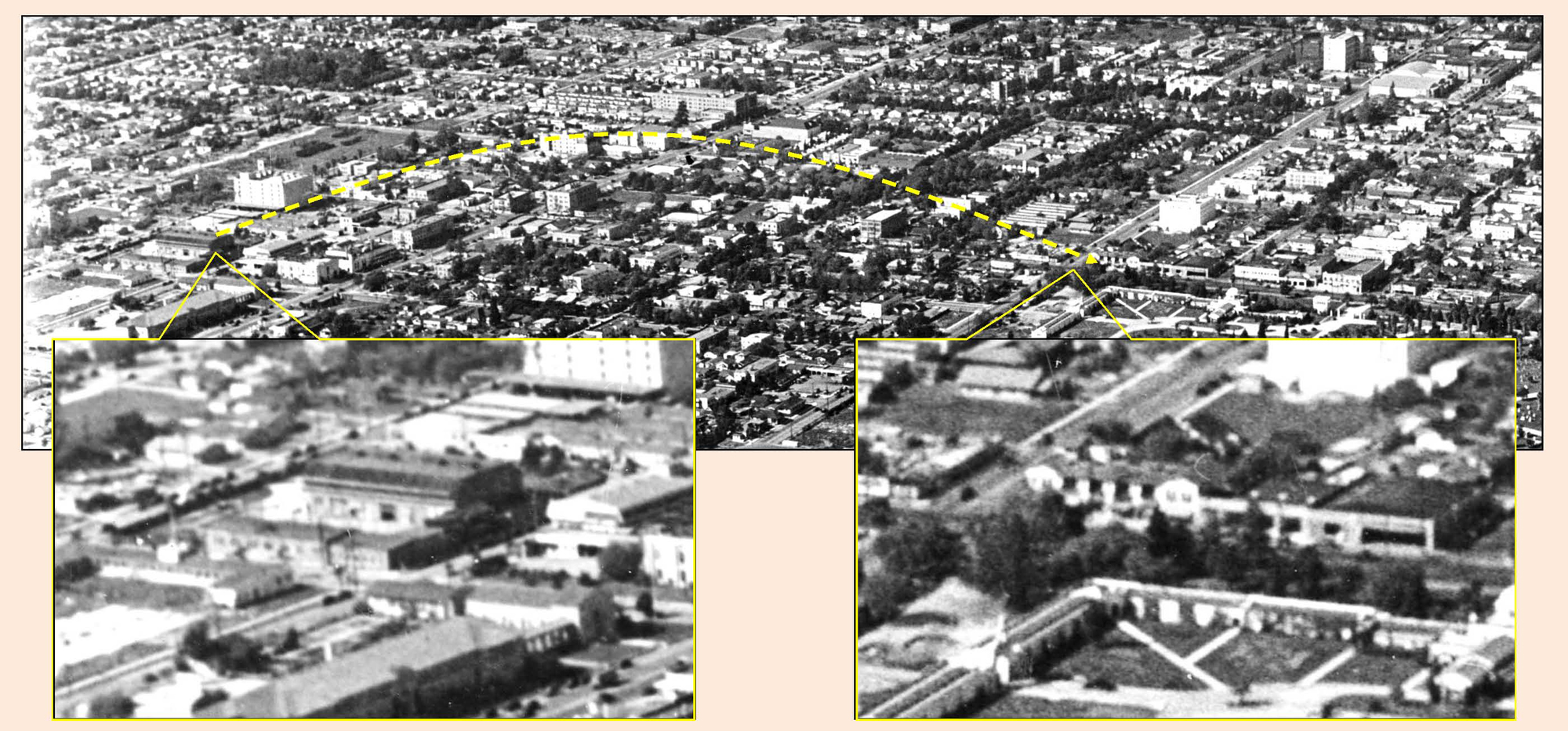
As was so often the case, the benign silent movie locations from the 1910s-1920s would become, after decades of accumulated grime and neglect, the stark and seedy landscapes perfect for noir dramas and crime stories. Thus, the beautiful Venice-inspired seaside resort appearing in Keaton’s 1920 produced short The High Sign would portray a corrupt Mexican border town in Touch of Evil (1958). As shown here, the building at the NE corner of Windward Avenue and Speedway (now one of the few remaining original structures), appears in both productions (see matching boxes above).
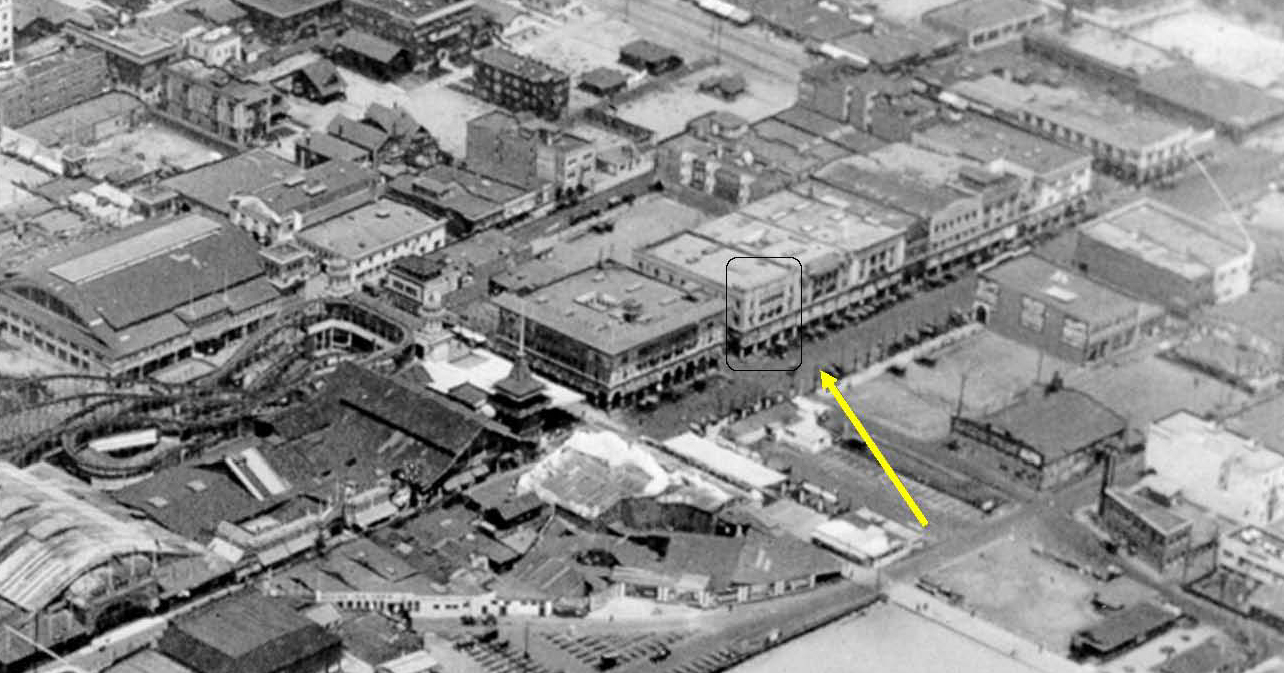
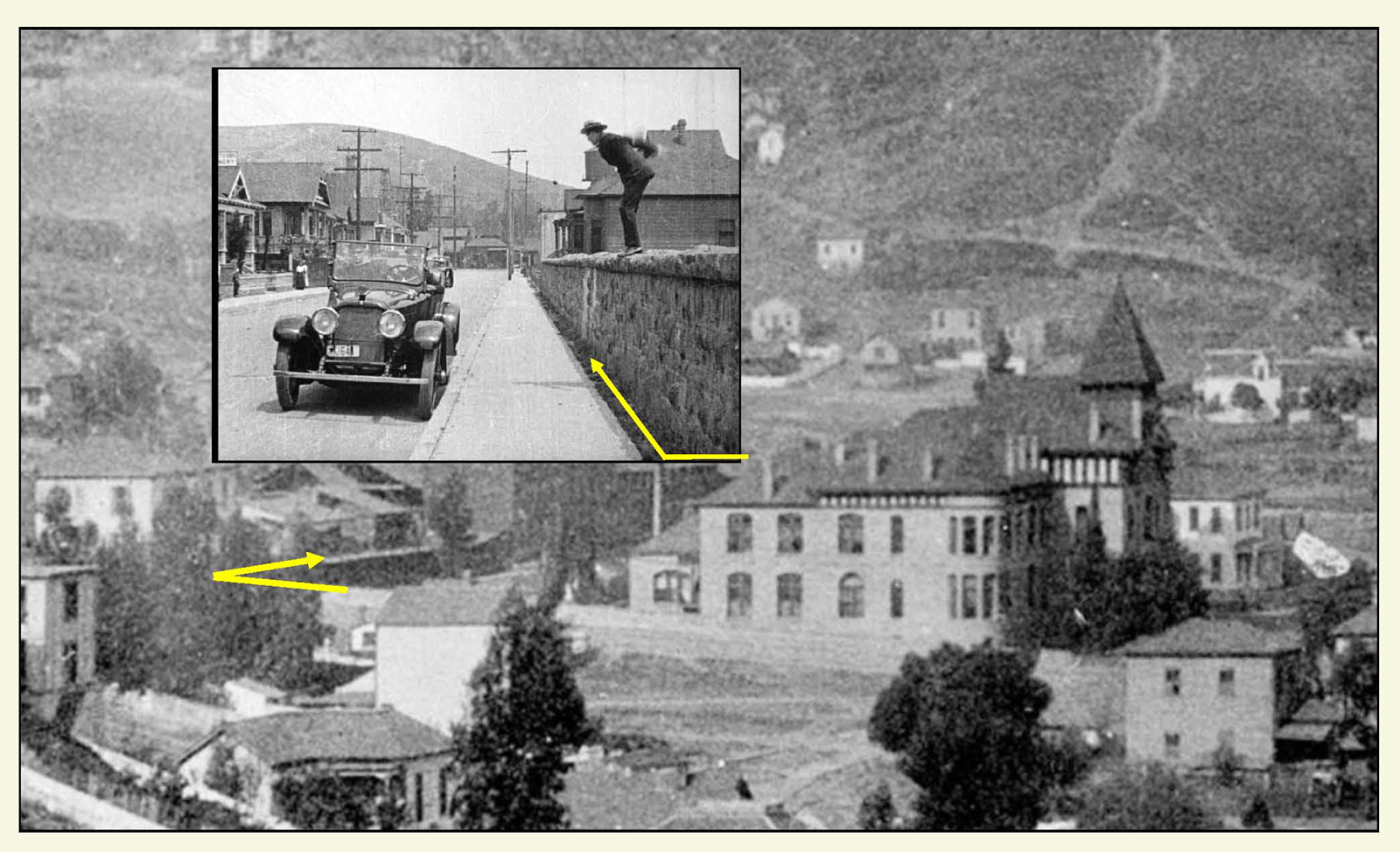
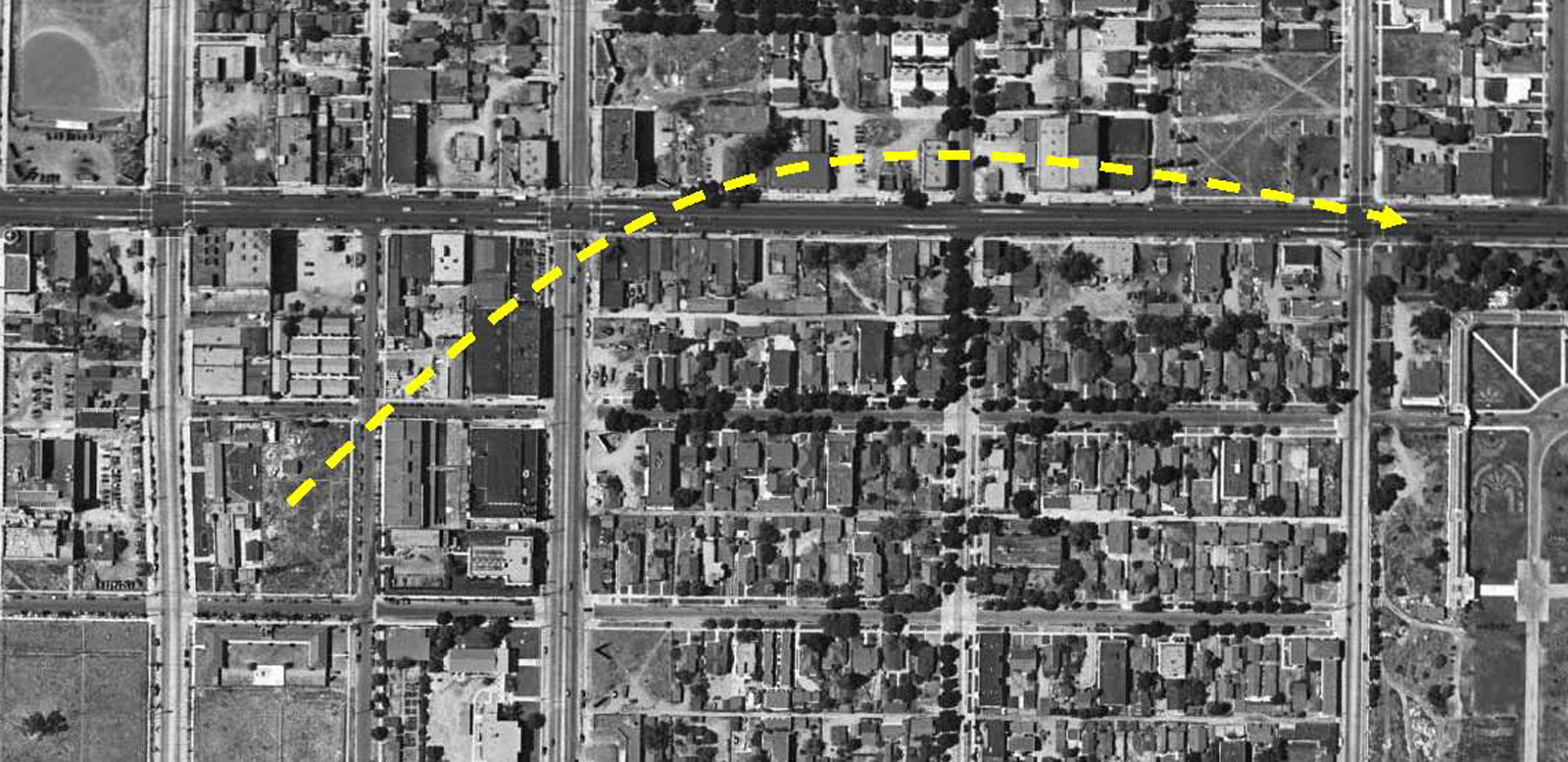
A view north, 1920, with part of the Abbott Kinney amusement pier at the left, and the corner of Windward and Speedway (box), with the arrow matching the points of view shown above. LAPL

Welles greatly respected and admired Buster Keaton.  During his introduction of The General for the Paul Killiam television series The Silent Years, Welles recalled working with Buster at the old Stage Door Canteen during WWII, describing Buster as “a lovely person, and a supreme artist, and I think one of the most beautiful people that was ever photographed.” He continued that Buster was “as we’re now beginning to realize, the greatest of all the clowns in the history of the cinema.”  Of The General, Welles rated it “one of the great films of all times, one of my favorites.” Welles further stated “in fact, I think it’s THE Civil War movie, nothing ever came near it. Not only for beauty but for the curious feeling of authenticity. … It’s one hundred times more stunning visually than Gone With The Wind.”

Knowing this, it’s fun to imagine what Welles would have thought had he learned his celebrated continuous tracking shot opening Touch of Evil was staged in Venice at the same spot where Buster had filmed his very first independently produced movie.

Filmed at Venice; Chaplin – Kid Auto Races in Venice, By the Sea, The Adventurer, and The Circus, Keaton – The High Sign, The Balloonatic, and The Cameraman, Lloyd – Young Mr. Jazz, By the Sad Sea Waves, Number Please?, Why Pick on Me?, and Speedy.
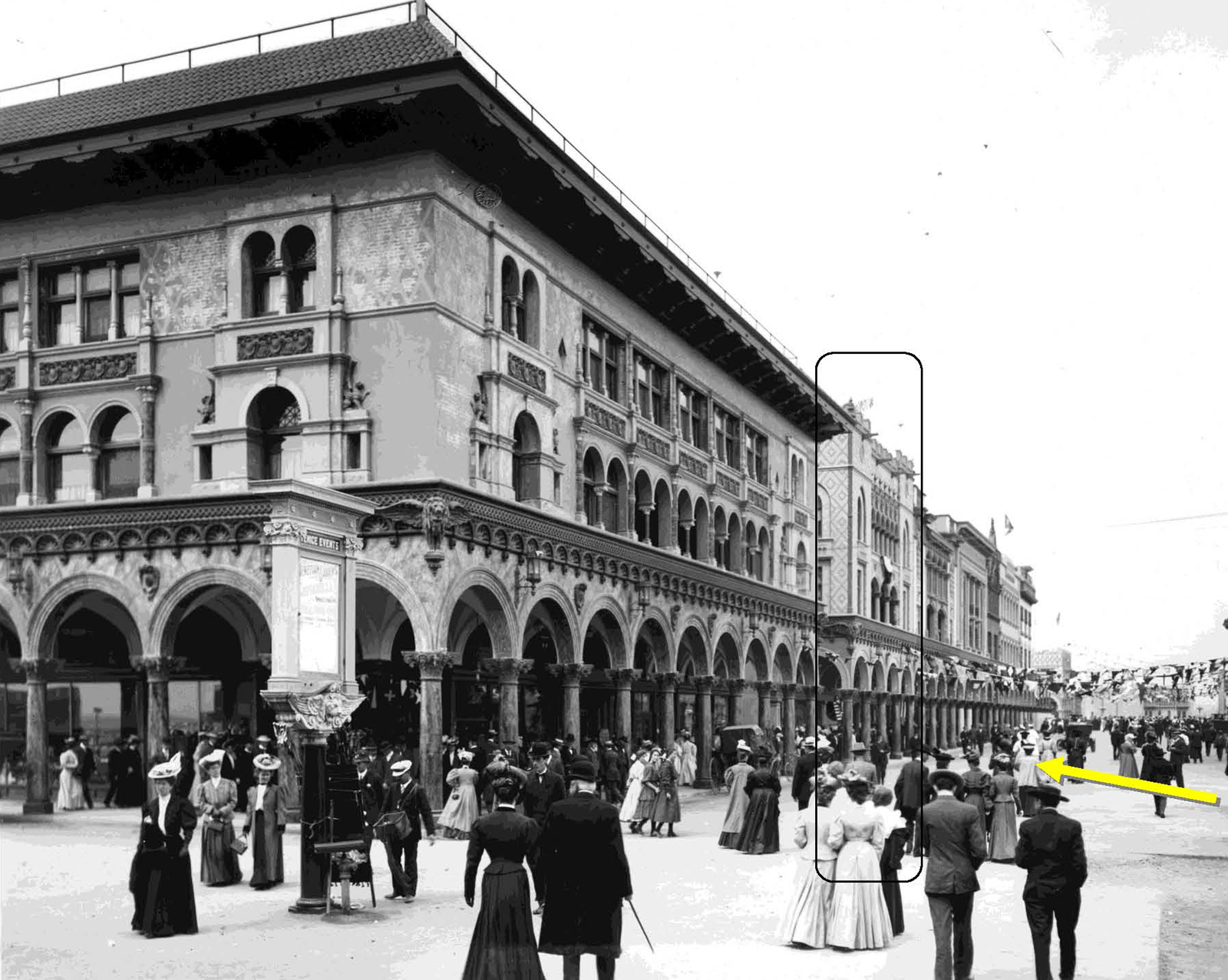
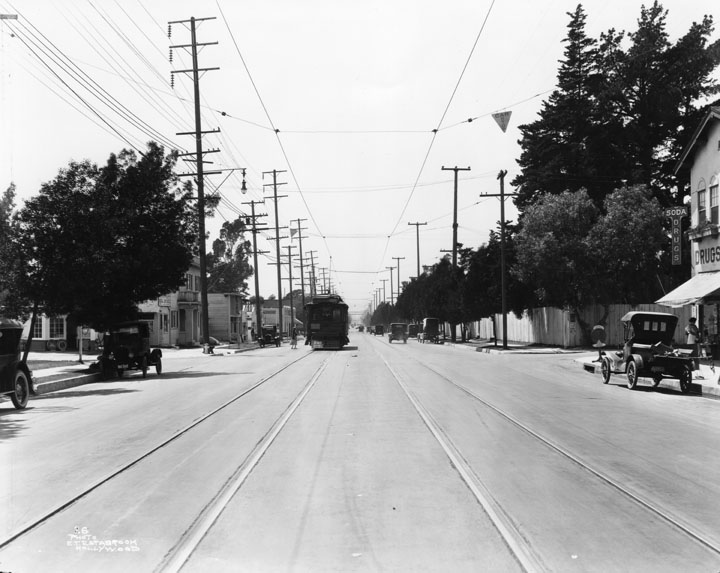
A view east down Windward Avenue in Venice. Bison Archives – Marc Wanamaker

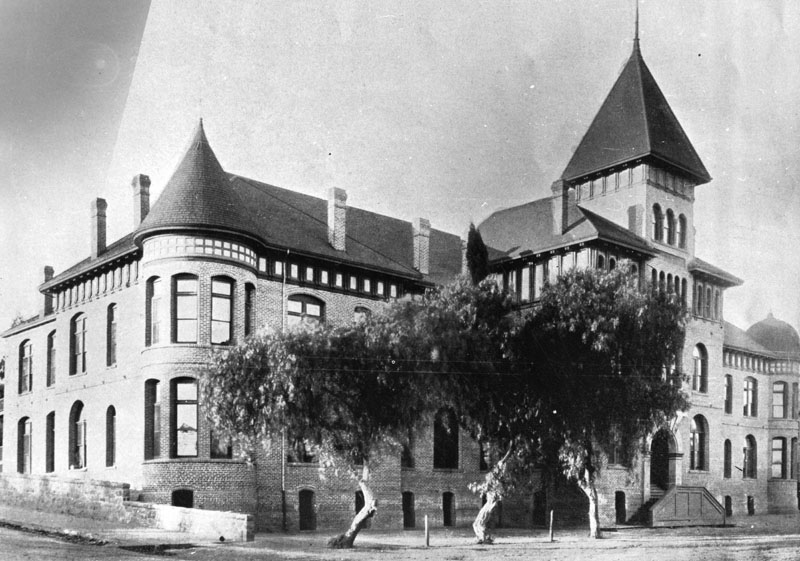
Below, a 2011 view of the NE corner of Windward and Speedway appearing in The High Sign and A Touch of Evil. The two center windows on the top floor were once shaded by six narrow Gothic arches that have since been removed.
Posted in Buster Keaton, Orson Welles, Venice | Tagged , , , , , , , , , | 4 Comments

Keaton and Hitchcock’s Vertigo Day Dreams

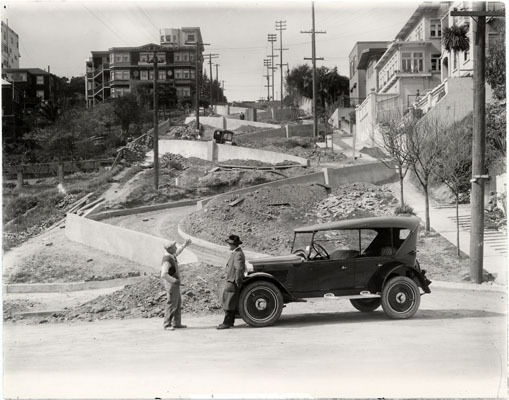
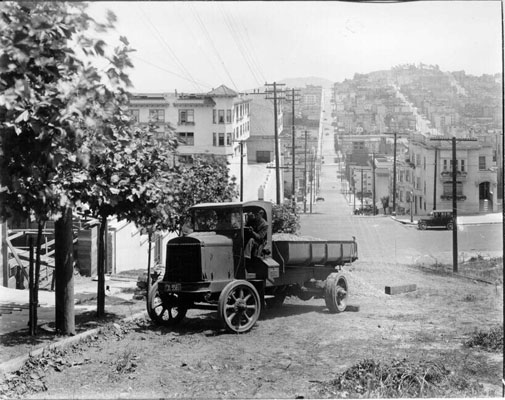
Filmed on location in San Francisco, Alfred Hitchcock’s masterpiece Vertigo (1958) provides tantalizing mid-century glimpses of the City in sparkling VistaVision color. Remarkably, when Scottie (James Stewart) traces Madeleine (Kim Novak) by car back to his own apartment, they cross paths twice with Buster Keaton. It turns out Keaton filmed many scenes from Day Dreams (1922) (inset left) and a key scene from The Navigator (1924) in San Francisco. (You can download a Keaton – San Francisco PDF tour HERE). Why Keaton chose to film here remains a tantalizing mystery. Perhaps it was simply a fun way to combine work with pleasure, justifying trips from Hollywood.

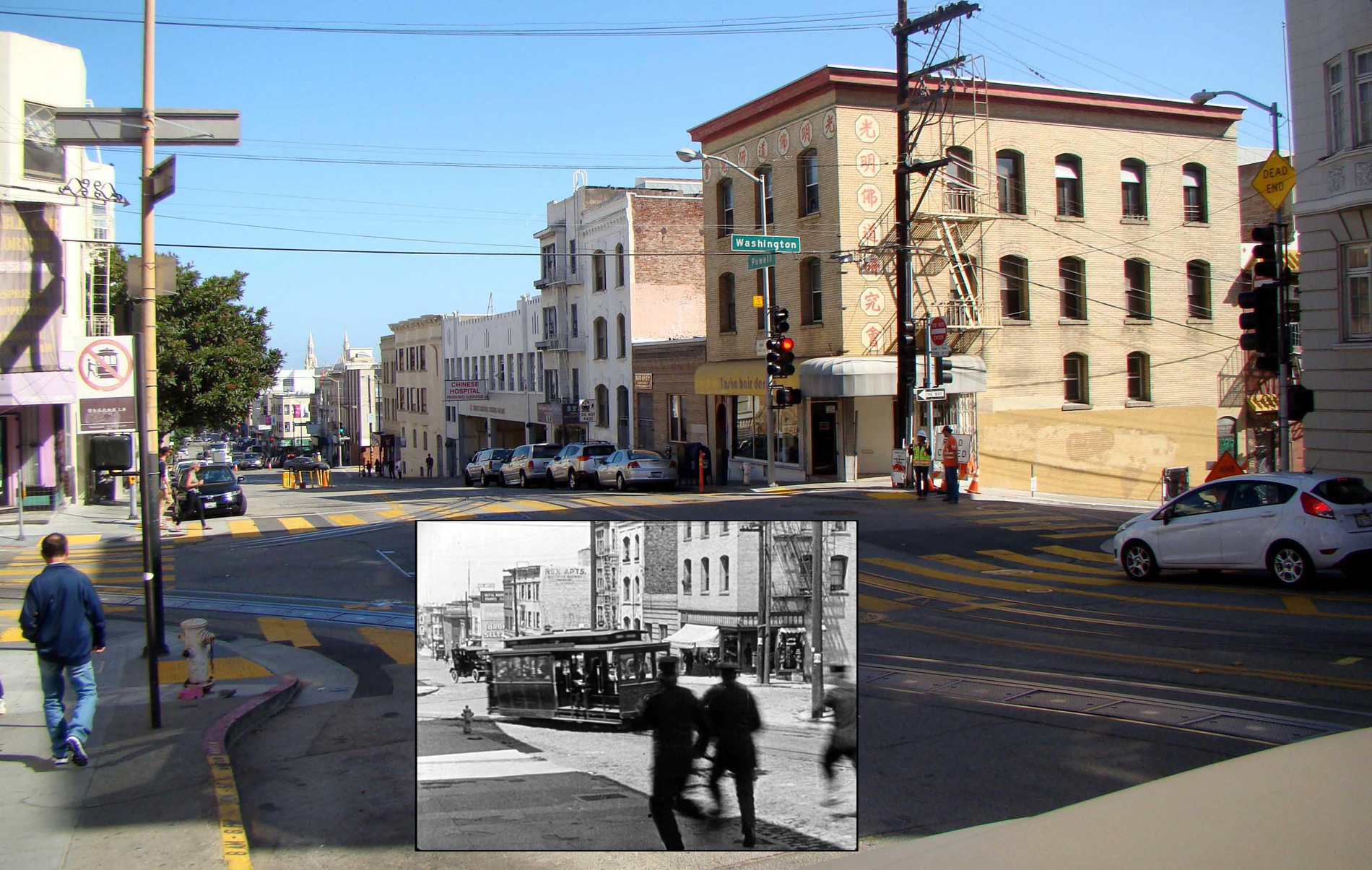
Madeleine and Scottie in Vertigo, and Buster in Day Dreams, all traveled east along Washington, with Madeleine and Scottie turning left (north) onto Powell, while Buster, traveling by cable car, turned right (south). The same building on the NE corner (red box below) appears in both shots, and remains unchanged today.

VertigoDay Dreams, the same NE corner of Washington and Powell. Keaton (oval) sits in the cable car.

Washington and Powell today – nothing is missing, an Art Deco parking structure fills the vacant lot.

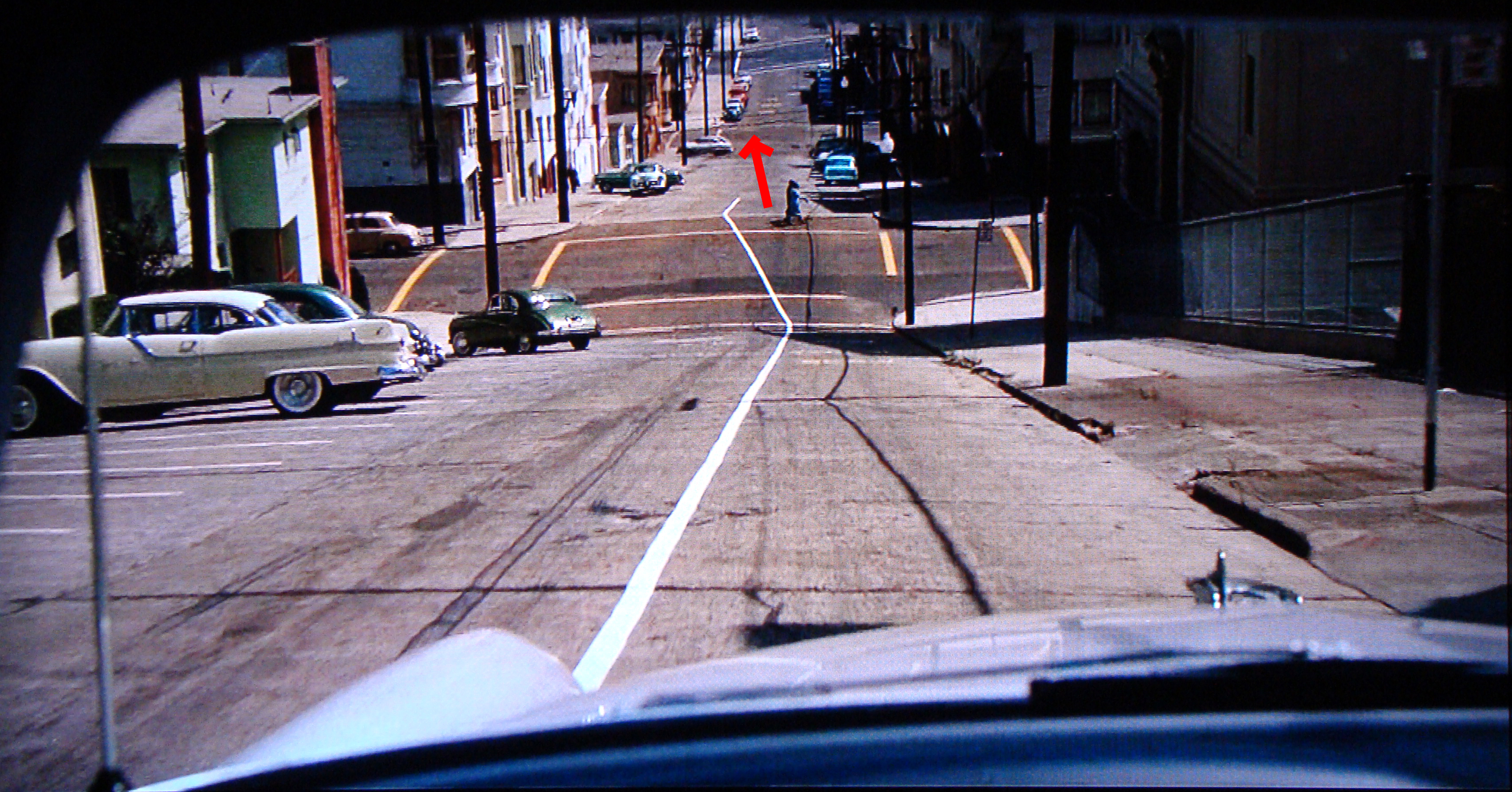
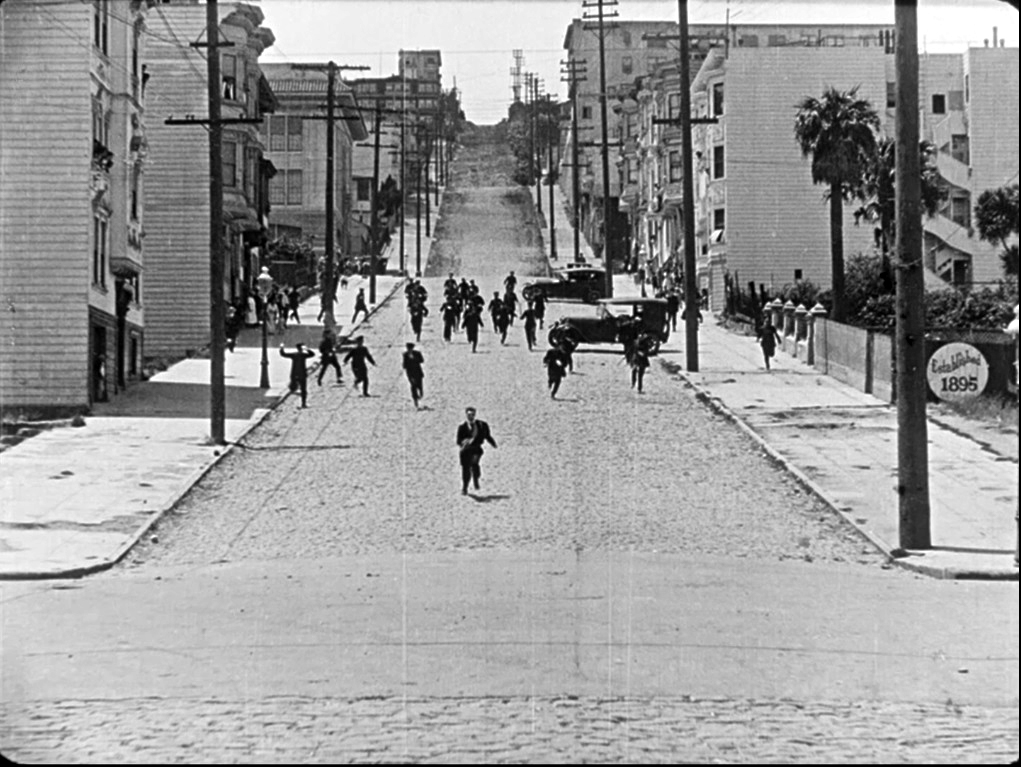
More remarkably, Scottie’s apartment on 900 Lombard overlooked a nightmarish chase scene from Day Dreams, as Buster flees an army of cops east down Lombard from Jones. To begin, as Scottie, dumbfounded, realizes he has followed Madeleine towards his own apartment, his point-of view through the car windshield (below) shows the block of Lombard where Buster fled the police.

From Scottie’s car we see Madeleine’s green Jaguar parked beside his corner apartment with red chimney at left, and a clear view down the block Buster fled (arrow) in Day Dreams.

Below, you can even see the corner site of Scottie’s yet to be constructed apartment at Lombard and Jones (yellow) during Buster’s chase, while a Hyde Street cable car (red) passes by along the crest of the hill.

Click to enlarge – view west from Taylor and Lombard – Scottie’s apartment will be built on the yellow corner of Jones. Notice the second floor witnesses to the far left, and the gleeful kids running along to the right. Were the famous twists and turns already constructed, or is the road above the red line (Leavenworth) simply torn up?

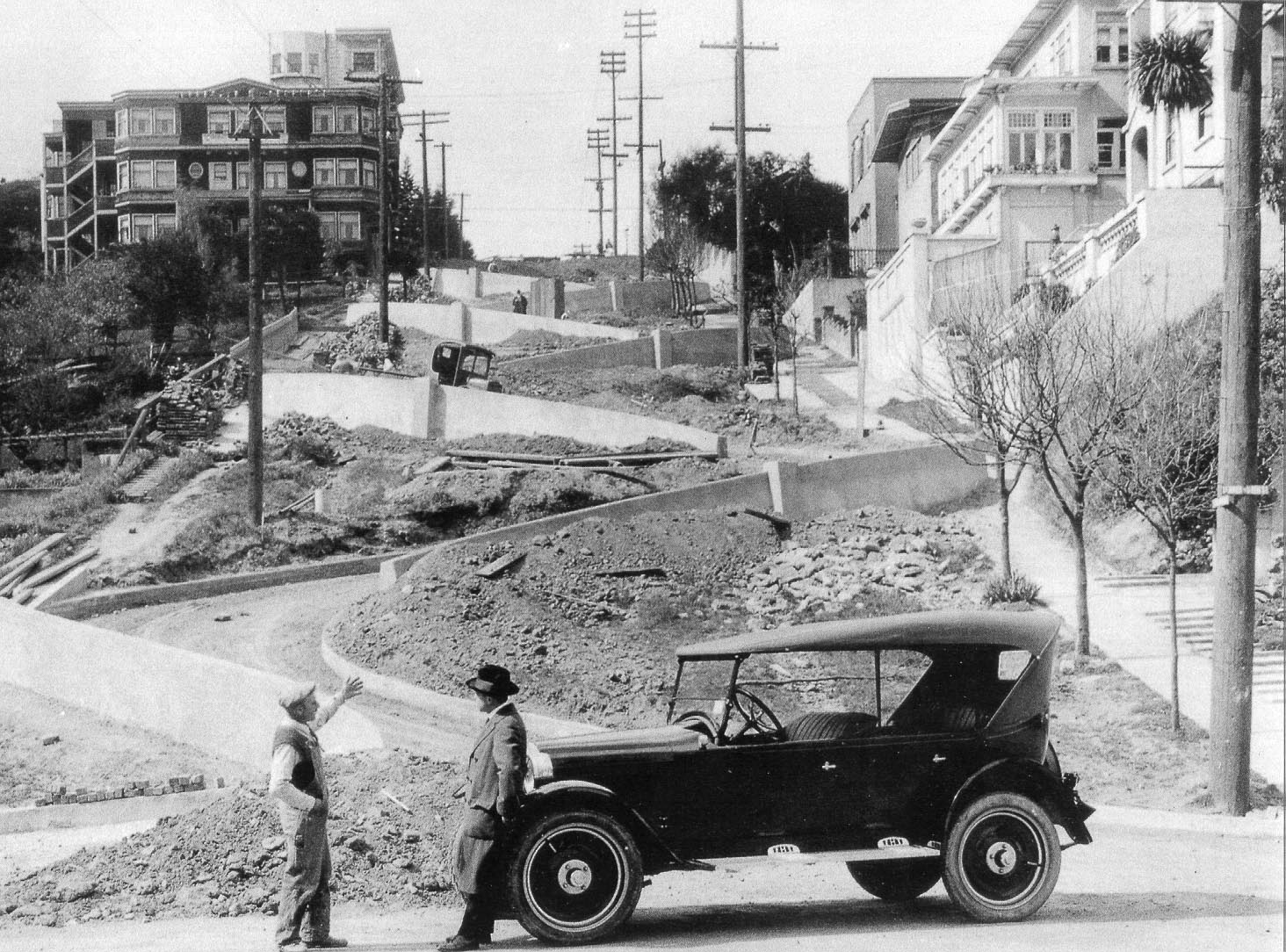
The shot above also reveals further at back the block of Lombard now world-famous for all the twists and turns. To my eye the roadway for the block west of Leavenworth (red line) looks torn up, but before the prominent curved cement retaining walls were installed. I’ve tried to pin down when exactly the twists and turns were built, and when Buster was here filming, but the answers are elusive.
At the time the Lombard street improvement was hardly newsworthy, affecting only the handful of residents living on the block. An August 1, 1922 letter to the editor in the San Francisco Chronicle reports construction plans were presented to the homeowners for approval, and that by mid-June the cobblestones lining the street were dug up. However, complains the letter-writer, the serpentine project was halted because one of the owners was in Europe and wasn’t ready to give his consent, forcing his neighbors to live with the dust, inconvenience, and delay. “Fourteen American property owners and the city’s engineer’s office halted upon orders from Europe – wealth and political influence! Some of us have had our first lesson in what makes a Bolshevik” seethes the letter-writer, signing off anonymously as “FAIR PLAY.”

View east of torn up road – SF Public Library

The initial plans for the project are dated June 6, 1922, and a further plan, apparently the “as-built” plan is dated December 11, 1922, showing a November 5, 1923 revision regarding the stairways along the street. So the project was likely completed well after August 1, but before the December rainy season. My best guess is Buster filmed here some time during the summer, after the road was torn up in mid-June, but before the major construction commenced. PS – apparently this section of Lombard was two-way until 1939! Can you imagine driving up this street?
Lombard looking west – this setting was the very first Keaton location I would identify.
Bonus – during the thrilling car chase in Bullitt, Steve McQueen drives south down Jones towards Scottie’s corner apartment on Lombard (box).

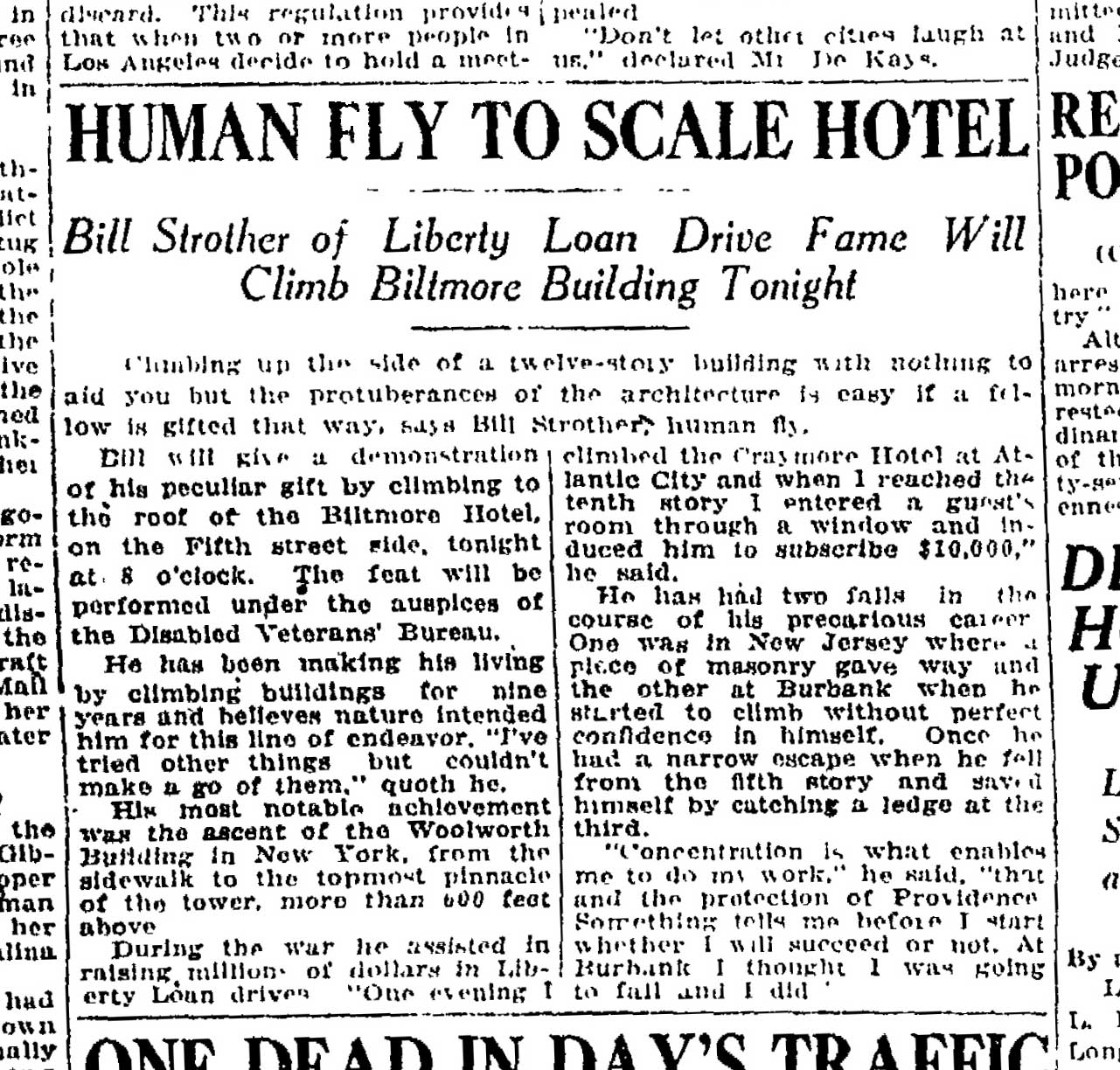
UPDATE – intrepid reader ‘Skip,’ who solved the Safety Last! mystery building (the Dresden Apartments, 1919 W 7th Street, the still standing 4 story building human spider Bill Strother climbs early in the movie – read HERE), followed a hunch that the Steve McQueen car chase in Bullitt (1968) must somehow cross paths with Keaton and Hitchcock, and he was right! During the chase, SMQ drives south down Jones towards the corner of Lombard, with Scottie’s apartment (red box above) on the right.

Hitchcock filmed Vertigo in San Francisco in part because its dizzying streets and hills create a mood of imbalance and uncertainty. 36 years before him, Buster recorded his fever-pitched Day Dreams of persecution and pursuit on those very same streets. To see all of the Vertigo filming locations, check out Reel SF. I highly recommend this entertaining and meticulous classic-era San Francisco movie location blog.

Vertigo (C) 1958 Paramount Pictures. Day Dreams from Buster Keaton: The Shorts Collection 1917 – 1923 (C) 2016 Kino-Lorber, Lobster Films.

Looking east down Lombard towards Scottie’s apartment, in 2011, before it was remodeled.

Posted in Buster Keaton, Daydreams, San Francisco | Tagged , , , , , , , , , , , | 16 Comments

Keaton’s Cops and Go West – Peeking Over the School Fence

Fireman Sherlock

Two appearances – the school in The Fireman and Sherlock Jr.

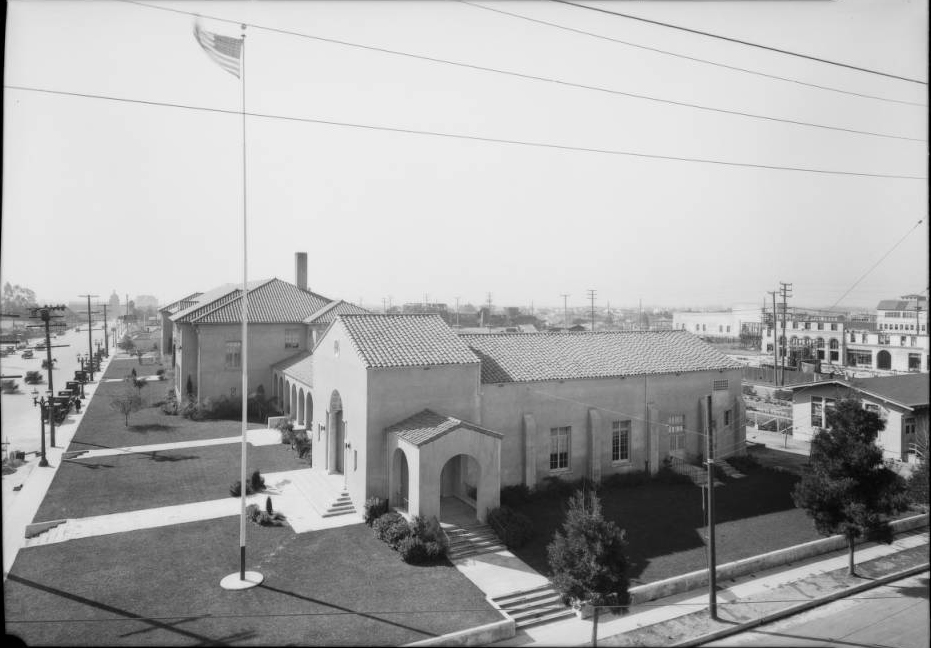
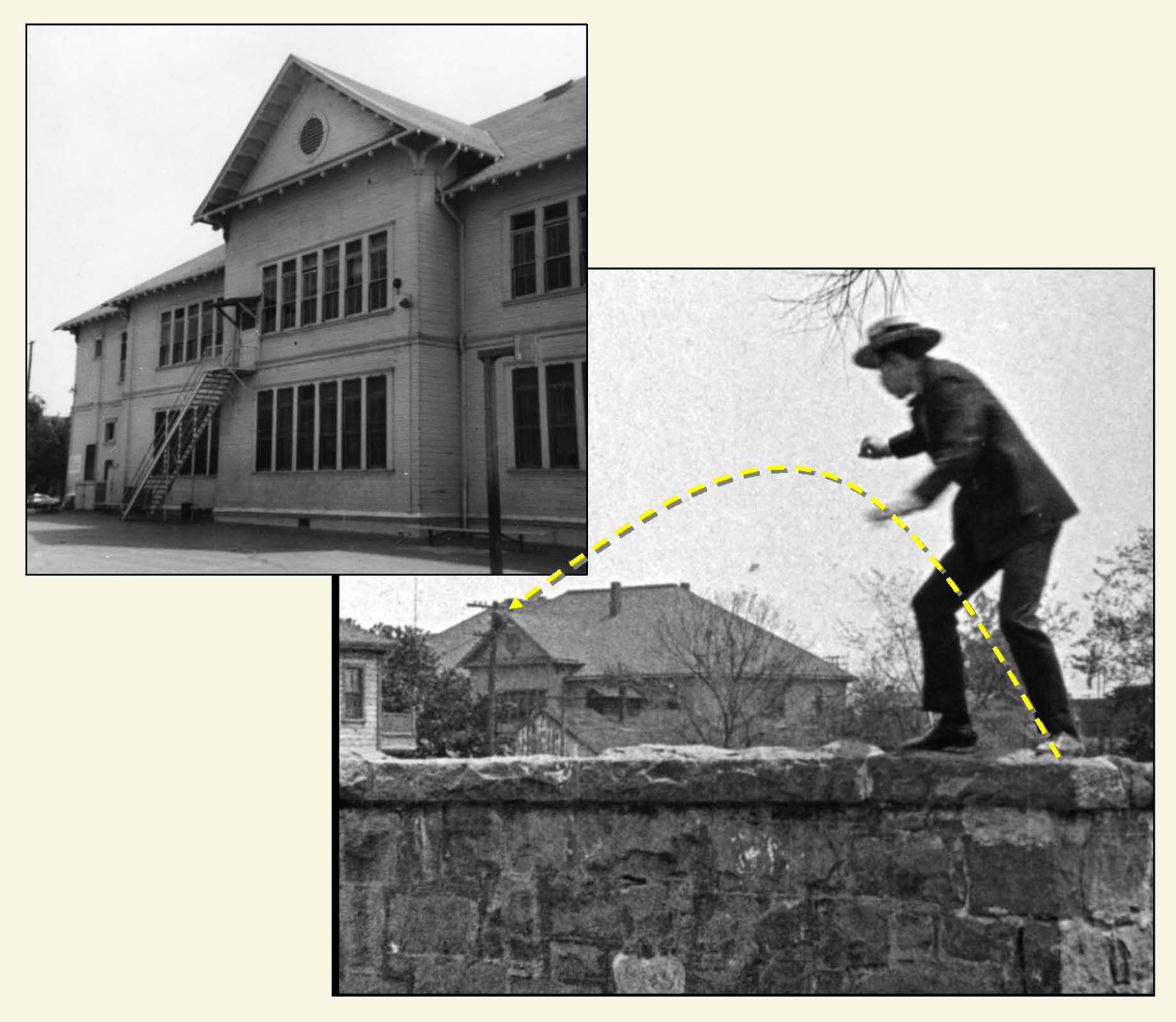
Rebuilt over the years, but pre-dating 1912, the Vine Street (Colgrove) Elementary School still stands between Romaine and Willoughby, kitty-corner from the site of the former Keaton Studio block in Hollywood. The back of the school, with its distinctive series of chimneys, appears during scenes filmed looking south down Lillian Way both in Charlie Chaplin’s The Fireman (1916) and in Buster Keaton’s Sherlock Jr. (1924). The school also appears (far left, below) during Buster’s race to the rescue in College (1926), as he turns north from Lillian Way onto west along Romaine, fleeing past the abandoned Metro Studio offices standing across the street from his studio.
college-pan

The current school campus was built in 1922, 1926, and re-built in 1936.  Reportedly Mrs. Eleanor Keaton attended kindergarten here at the time Buster was filming Sherlock Jr.

USC Digital Library

Looking south from Romaine down Vine along the school, notice the sets at right – 1928. USC Digital Library

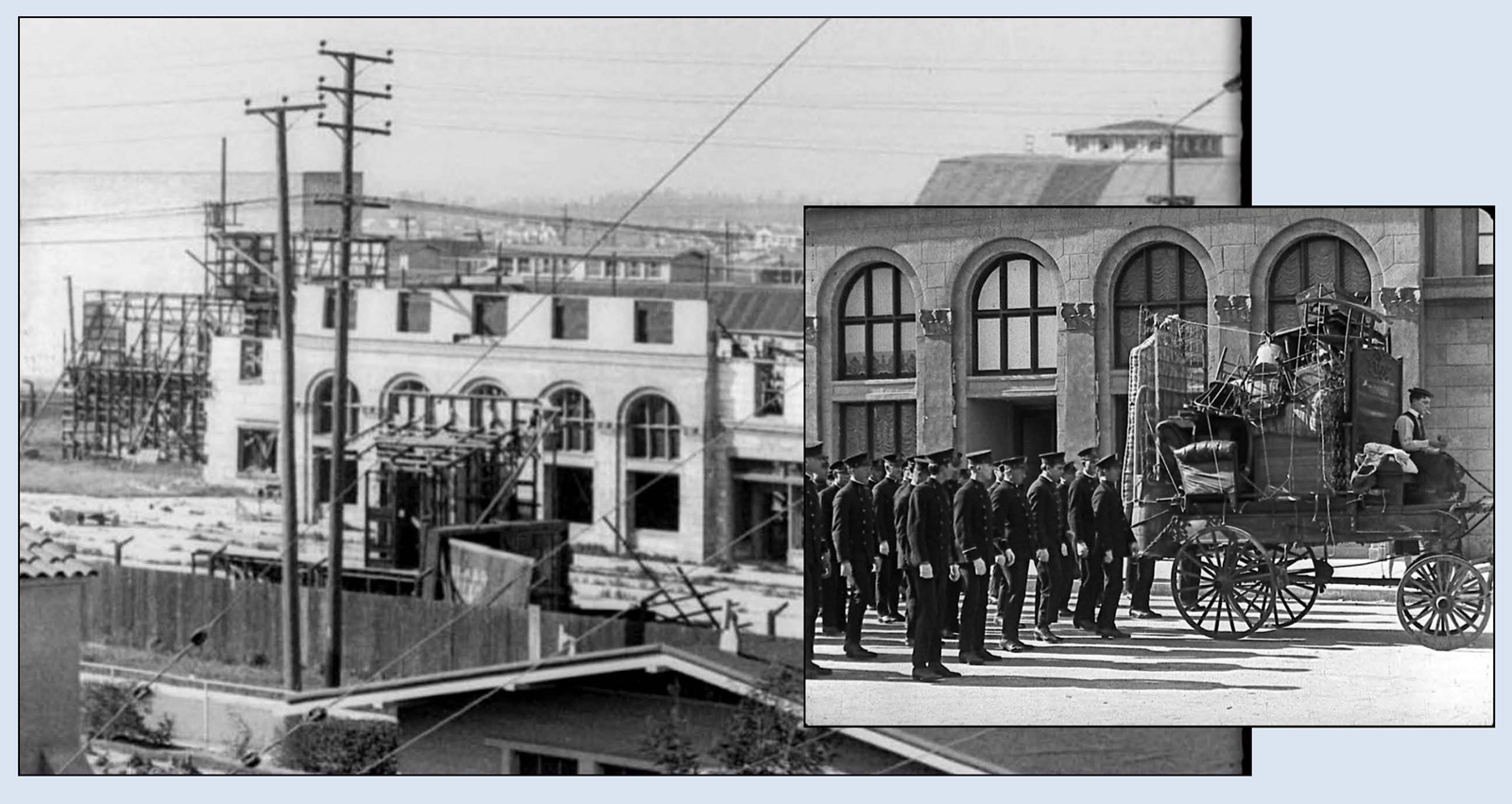
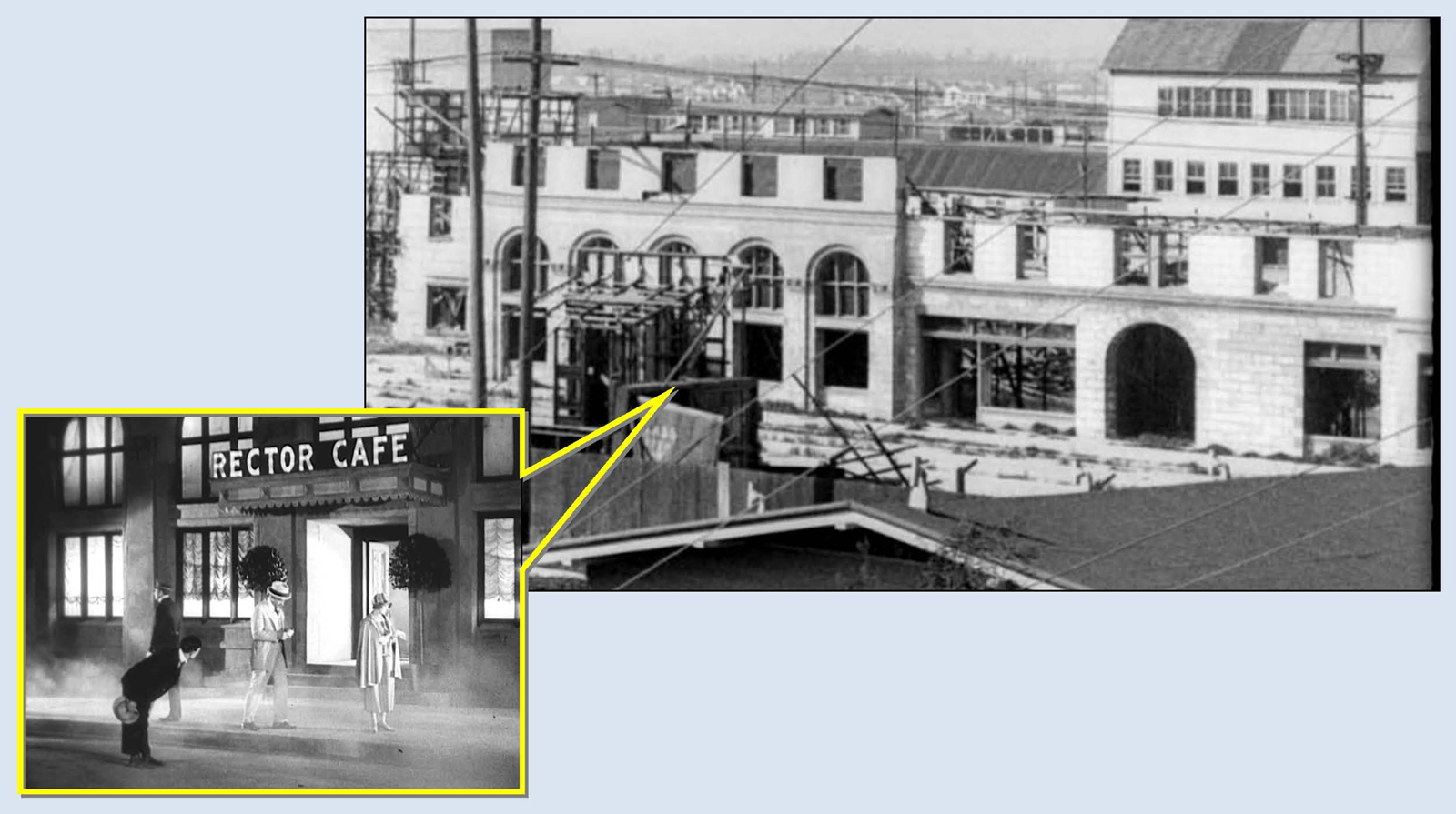
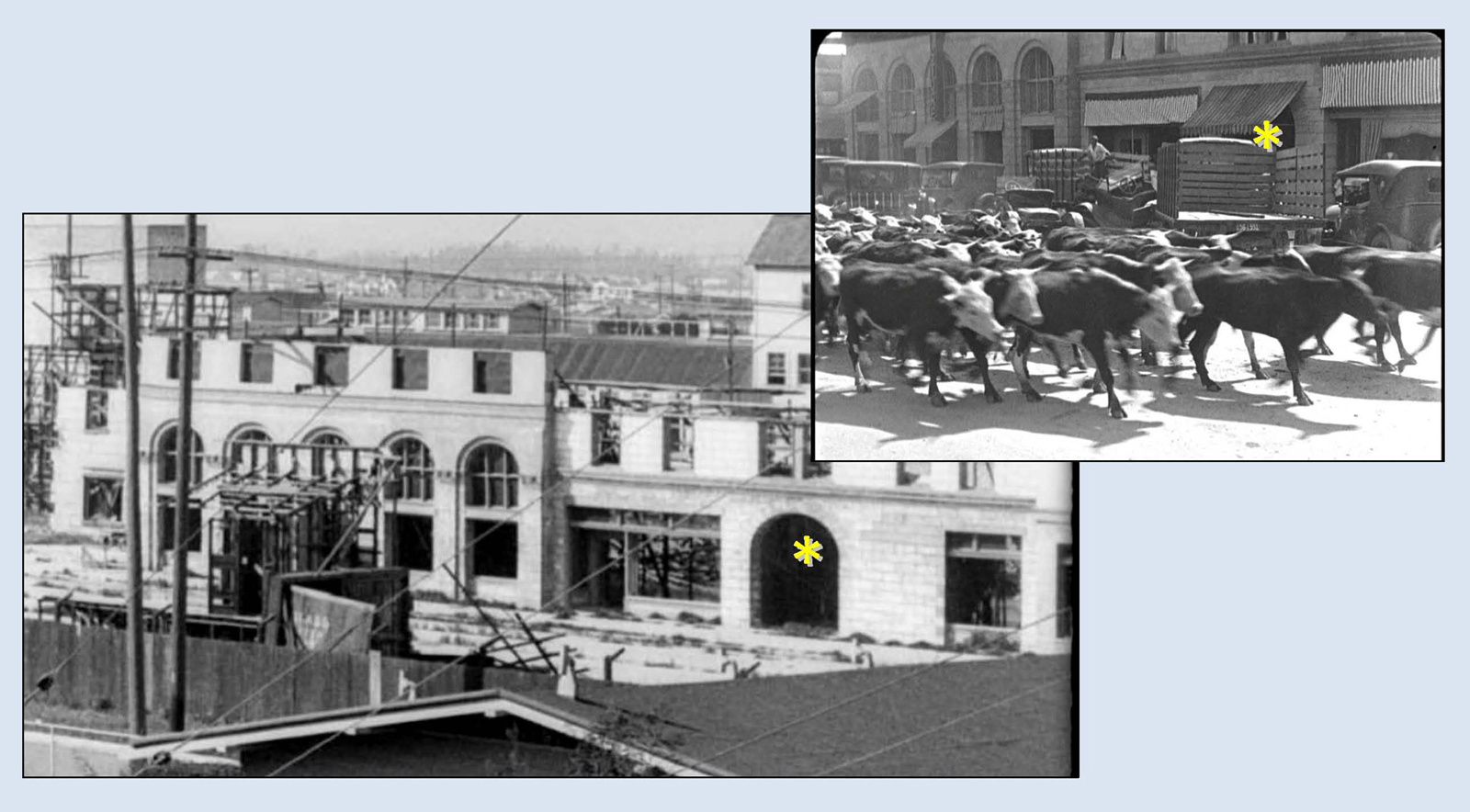
Remarkably, the far right background of this 1928 photo of the school (above) provides a sneak peek over the Metro Studio fence (due south of the Keaton Studio), to reveal a conspicuous 5-arch backlot set appearing in Cops (1922), Three Ages (1923), and Go West (1925). Although the Hollywood Metro Studio closed in 1924 to join M-G-M in Culver City, Keaton continued to make use of the abandoned studio’s backlot, particularly when filming the many cattle stampede scenes from Go West.

The five arch Metro backlot set as it appears in Cops.

The five arch Metro backlot set as it appears in Cops.

The Rector Cafe nightclub from Three Ages.

The Rector Cafe nightclub from Three Ages.

A full view of the 5-arch set and neighboring central arch set appearing with Buster's cattle in Go West.

A full view of the 5-arch set and neighboring central arch set (*) appearing with Buster’s cattle in Go West.

CA

This 1922 photo shows ongoing school construction at top, the Keaton Studio in the foreground, and the Metro Studio at right. The arrow marks the point of view of the 1928 photo above towards the Metro backlot. HollywoodPhotographs.com

I’ve always been fascinated imagining what it would have been like to wander around Buster Keaton’s studio. I’ve written several posts analyzing vintage aerial photos of the studio, taken in 1921 and 1922, available from HollywoodPhotographs.com. But as shown here, you’ll never know where other images of the studio might pop up, even over an old school fence.

The Romaine Street view of the school.

Posted in Buster Keaton, Cops, Keaton Studio | Tagged , , , , , , , , | 5 Comments

Chaplin – Inside “The Kid” Maternity Hospital

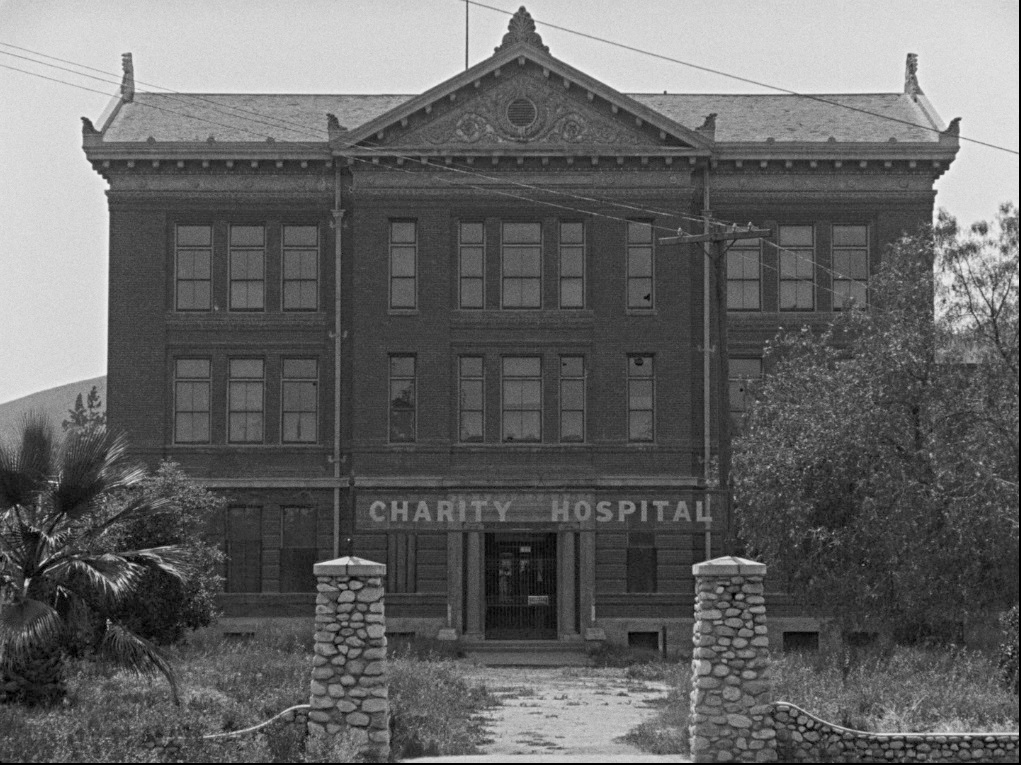
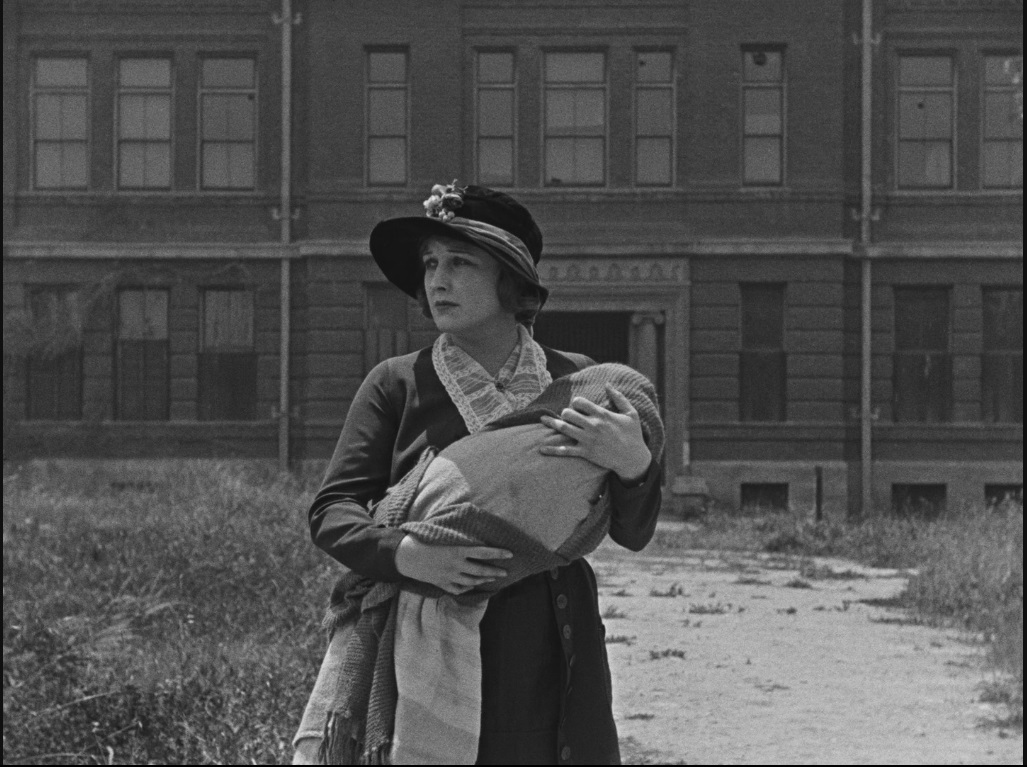
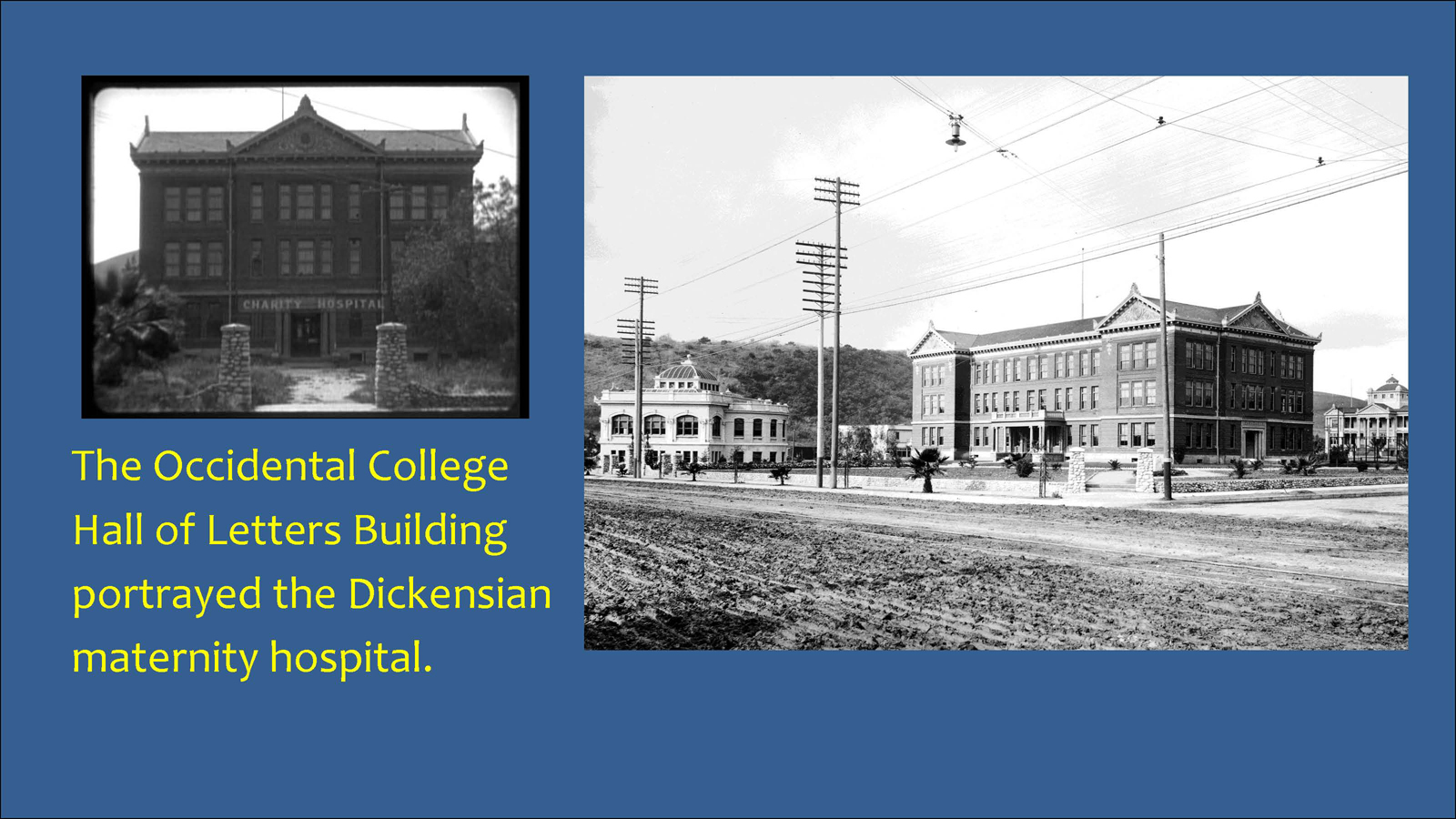
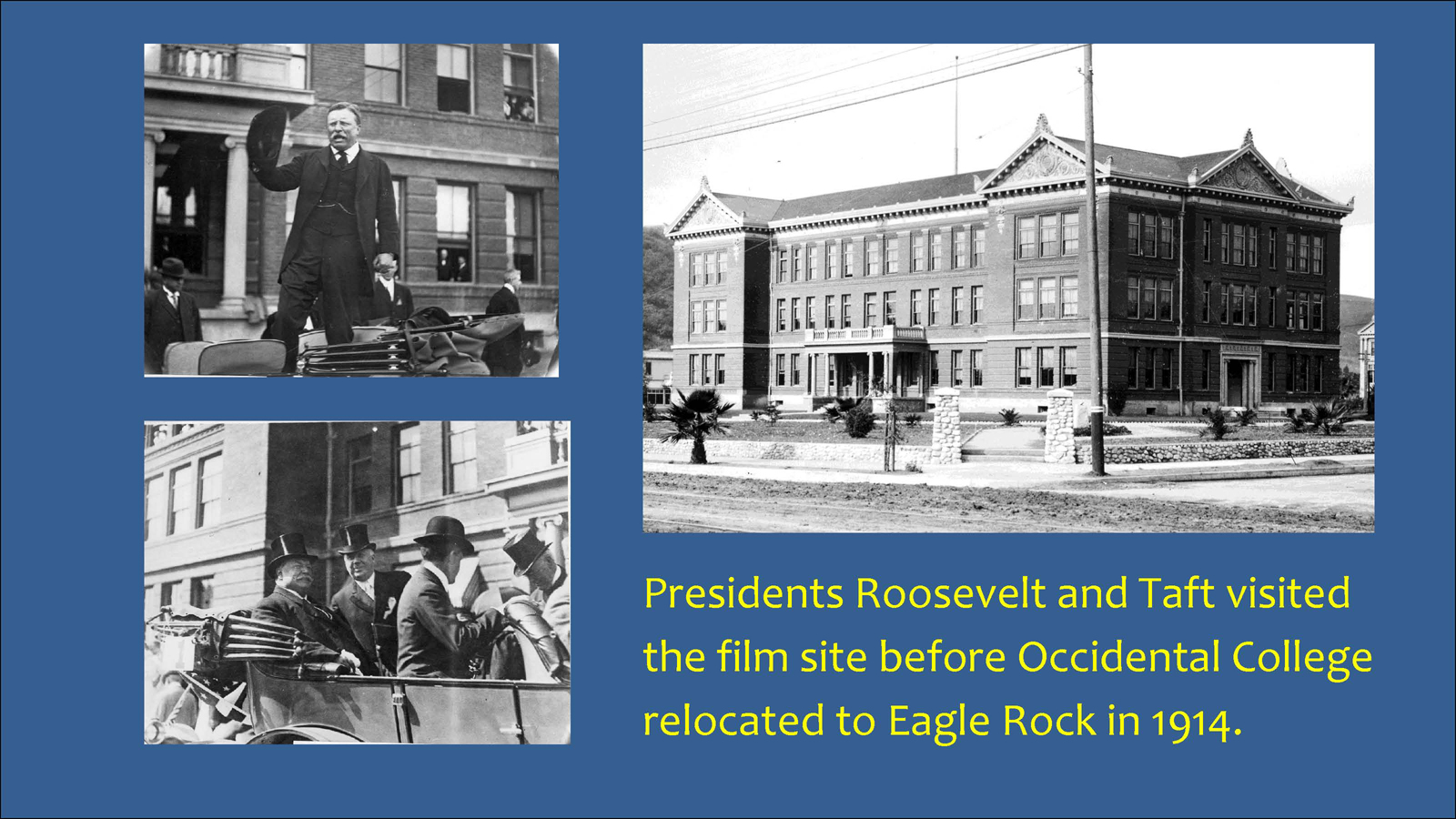
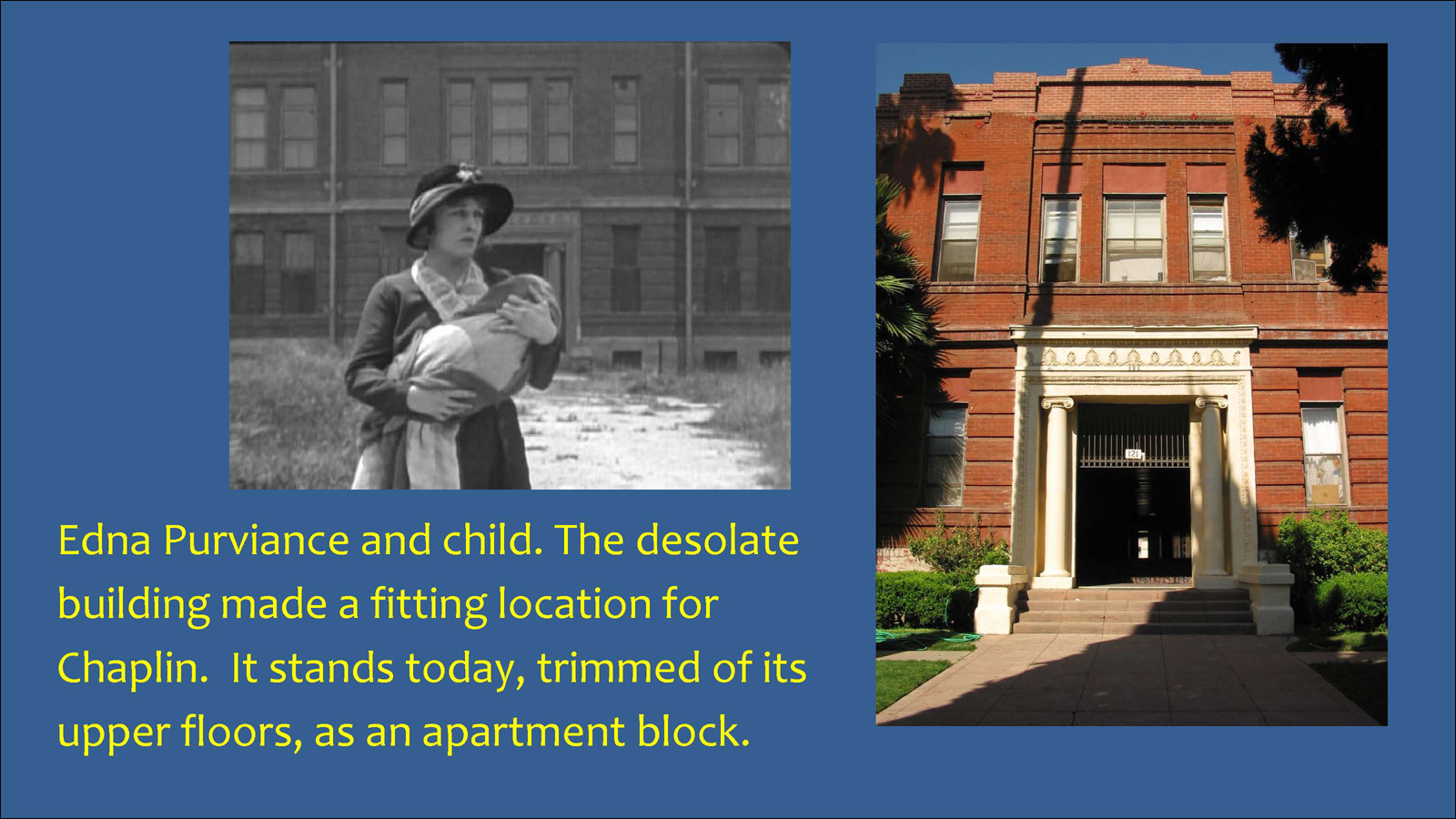
the-kid-blu-ray-31In a prior post, How Charlie Chaplin Filmed The Kid, I explain that the former Occidental College Hall of Letters building, once visited by Presidents Taft and Teddy Roosevelt, portrays the Dickensian maternity hospital where single mother the-kid-blu-ray-35Edna Purviance is cast into the cold, cruel world. Astonishingly this building, trimmed of its upper floor and roof, is still standing, now a modest apartment block in Highland Park. (The original campus building was abandoned when the new, larger Occidental campus opened in nearby Eagle Rock in 1914).

Chaplin scholar Brad Alexander (who is researching the connections between Chaplin and Albert Einstein) visited the site recently, and sent me some remarkable photos from both outside and inside the building. (Having discovered this spot using the Internet, and living in the Bay Area, I have yet to visit the site in person).

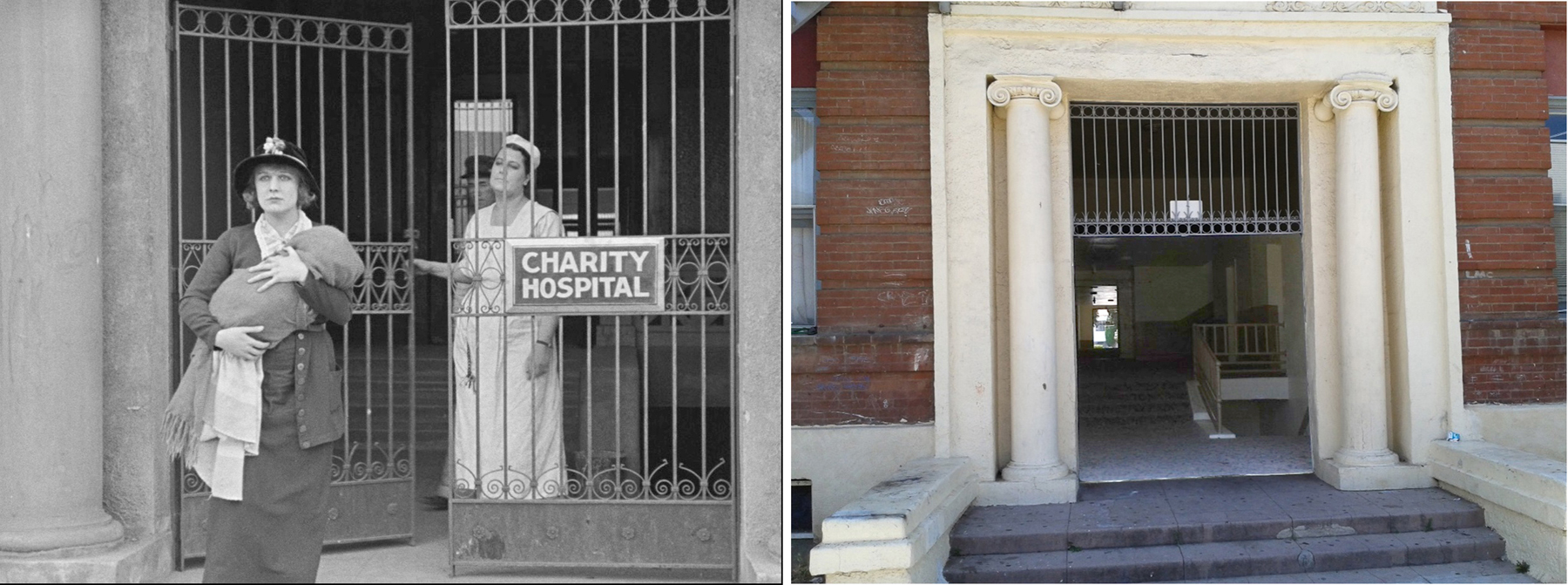
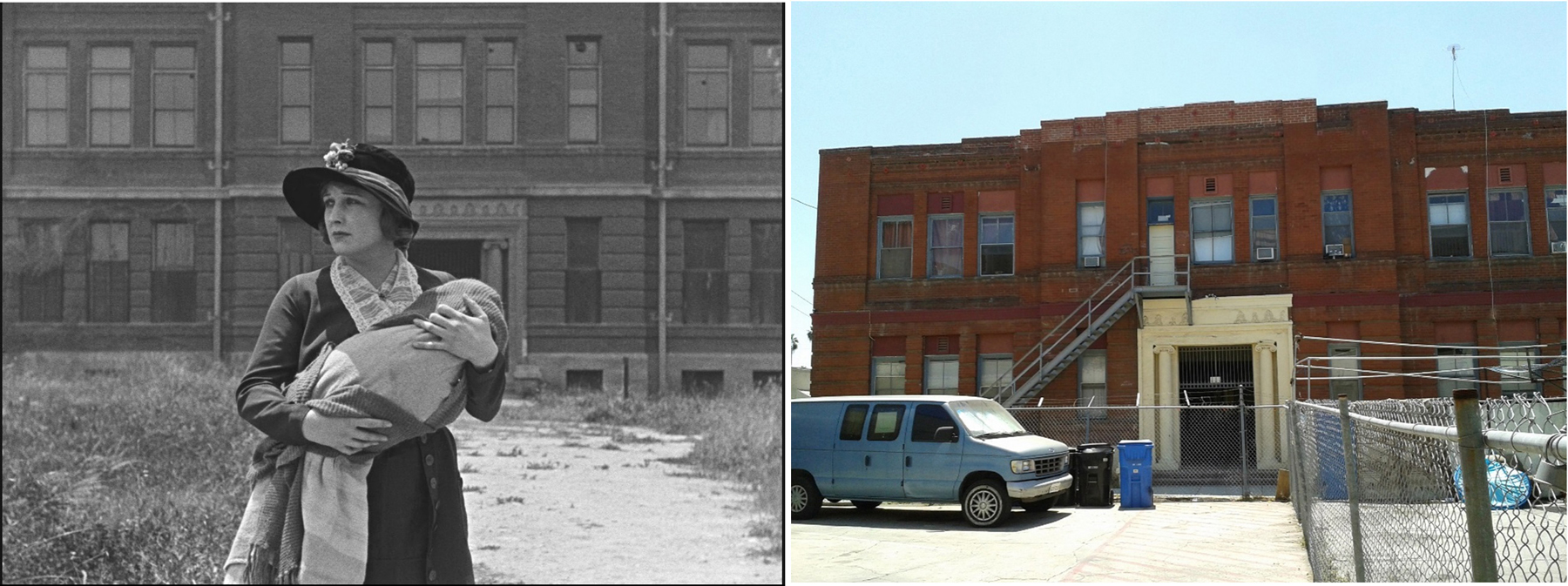
The east entrance appearing in the film. Brad Alexander.

Click to enlarge- the east entrance appearing in the film. Brad Alexander.

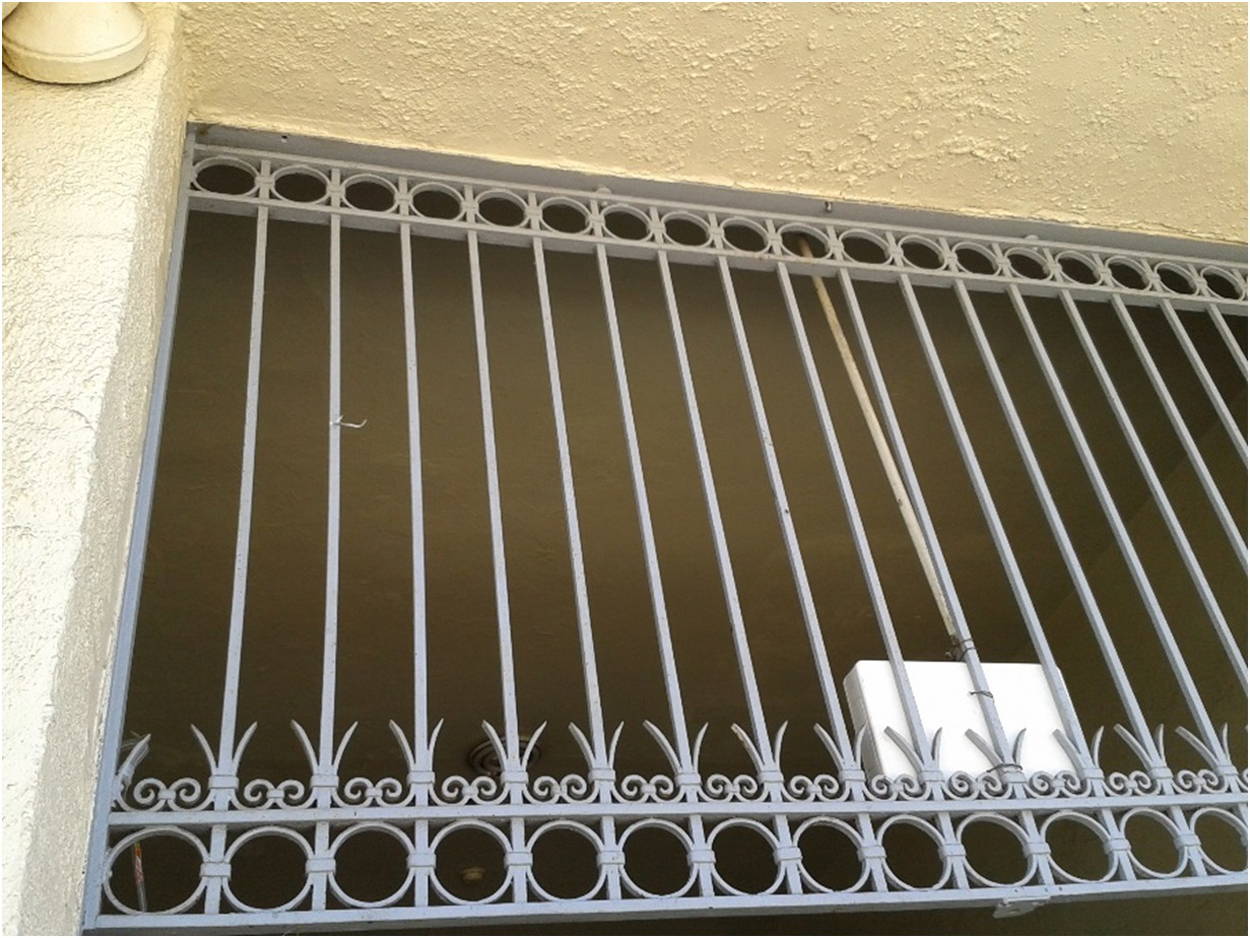
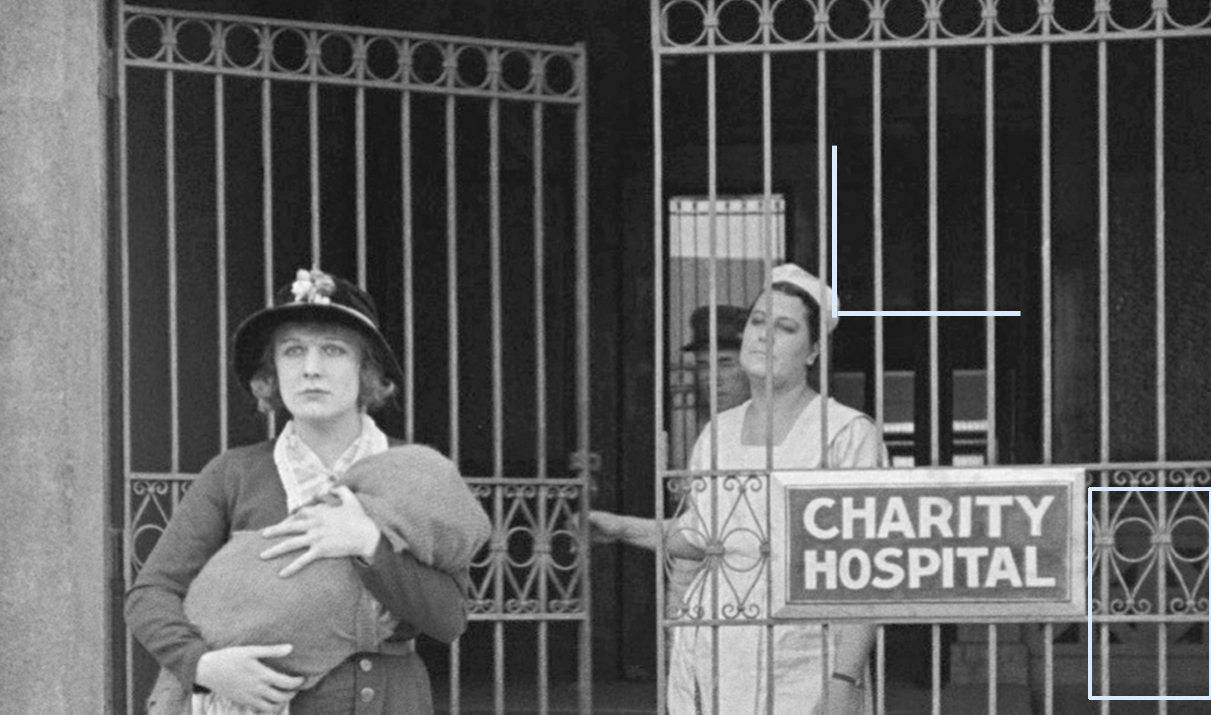
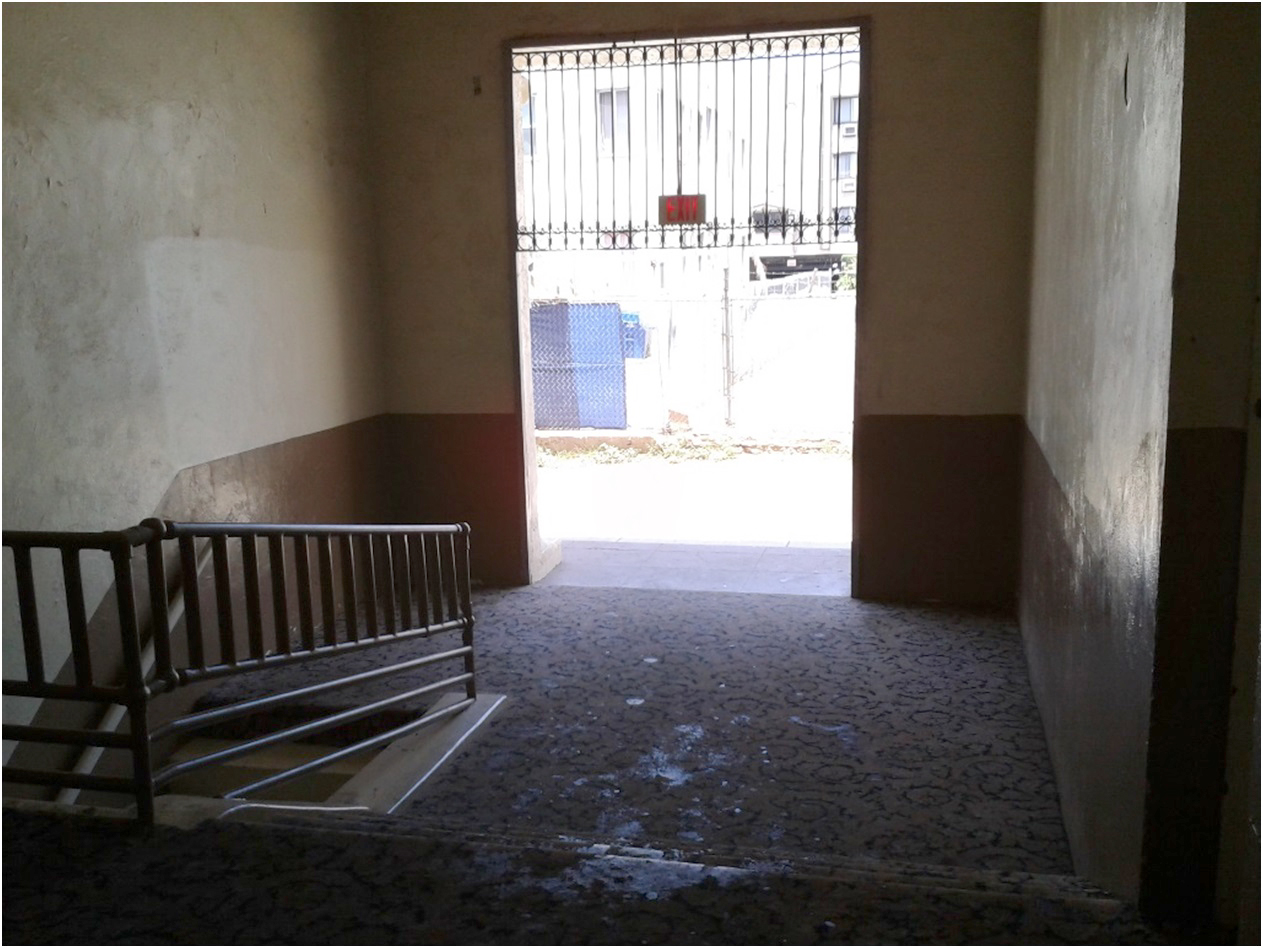
brad-alexander-east-door-grillNow that The Kid is released on Blu-ray, I continue to be amazed at the striking details apparent in the film. If you click the above then and now image, you can clearly see the interior steps leading down from the main hallway that Edna strode as she departed the building. The stairs are still there, and now you can see them in the movie too. At the left you can see that the upper grill details that once stood above the gate still remain.

Click to enlarge - the grill work above the gate entrance is still in place. Brad reports that the 'pleasant' nurse was portrayed by Chaplin's personal secretary Nellie Bly Baker.

Click to enlarge – three sets of interior doors along the hallway can be seen. Brad reports that the nurse was portrayed by Chaplin’s personal secretary Nellie Bly Baker.

Thanks to Brad’s visit, and the Blu-ray detail, I also now understand the interior layout of the hall. There were three sets of doors. First, an interior pair of glass entrance doors stood just up the stairs from the gate, the reflecting left glass door is closed (see vertical line above). Next, a pair of doors further into the building closed off a section of the hallway (see horizontal line above). All the way down the hall, just above the CHARITY sign, you can see part of the glass entrance doors on the other side of the building. Note that the elegant marble balustrade (see box above) is no longer present.

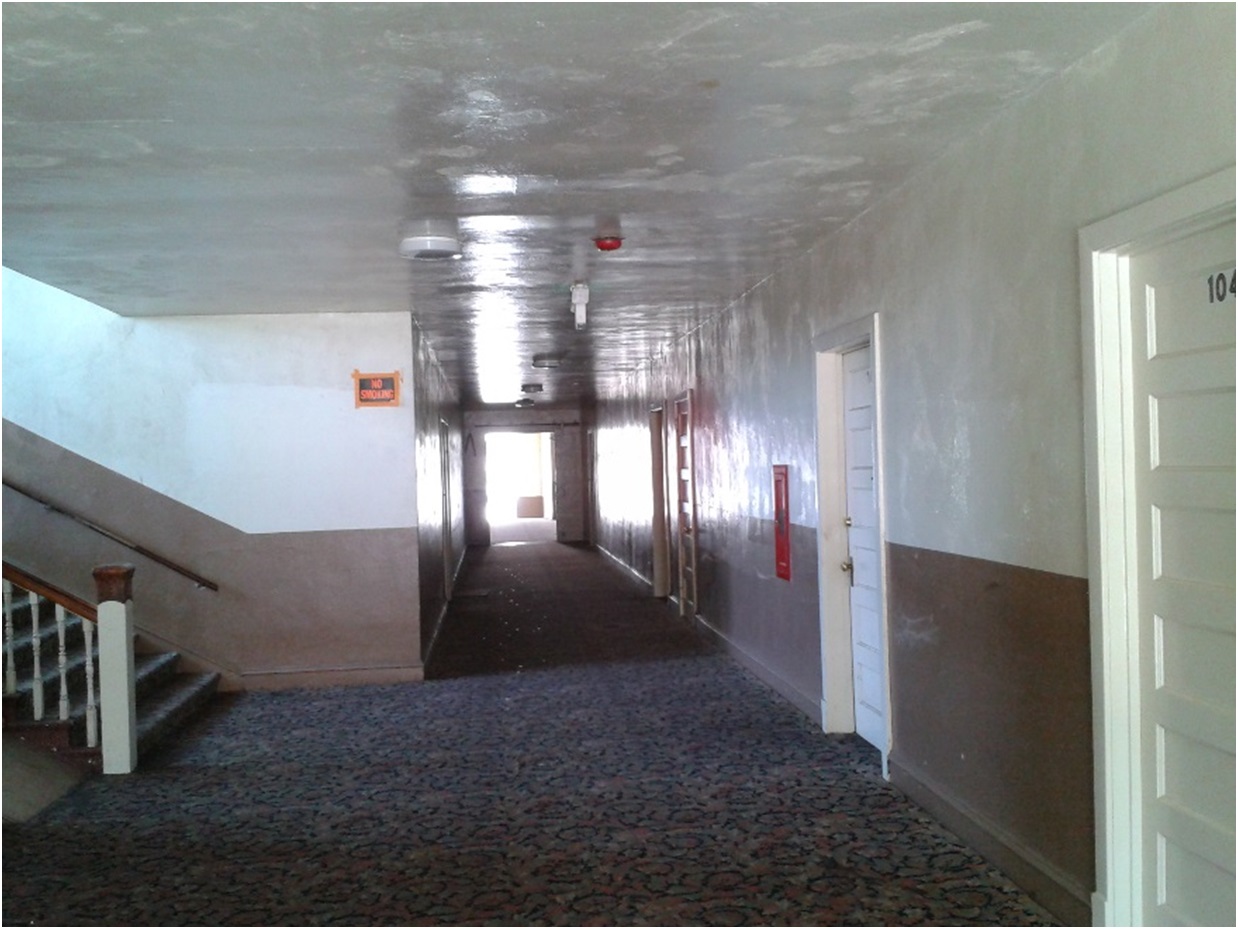
brad-alexander-east-door-interiorThis view (left) matches Edna’s view as she walked down the stairs to the entrance gate. The glass doors at the top of these stairs are no longer in place. Notice that the carved marble balustrade that once stood to the left has been replaced with metal railings. brad-alexander-east-hall

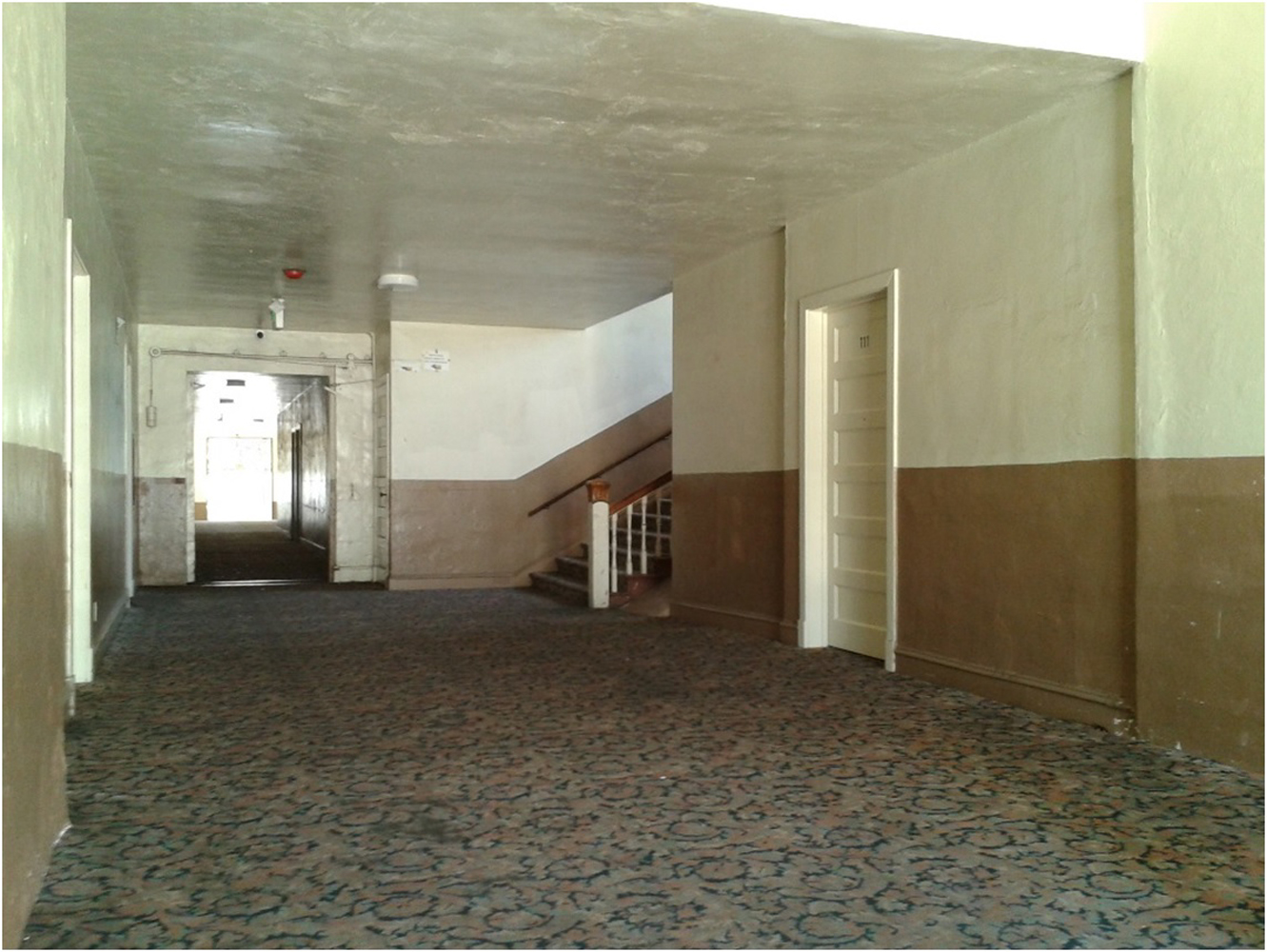
From the same spot, where the glass entrance doors once stood, this view (below, right) looks in the other direction, west from the top of the stairs, towards the brad-alexander-west-halldeep interior doorway that can close off a section of the hallway. This doorway is highlighted with the blue horizontal line in the detailed view of Edna above.

This view (below left), looks east, from inside the other entrance of the building, down the length of the hallway towards Edna’s exit at the far end of the hall.

Matching views of the east side of the building.

Matching views of the east side of the building.

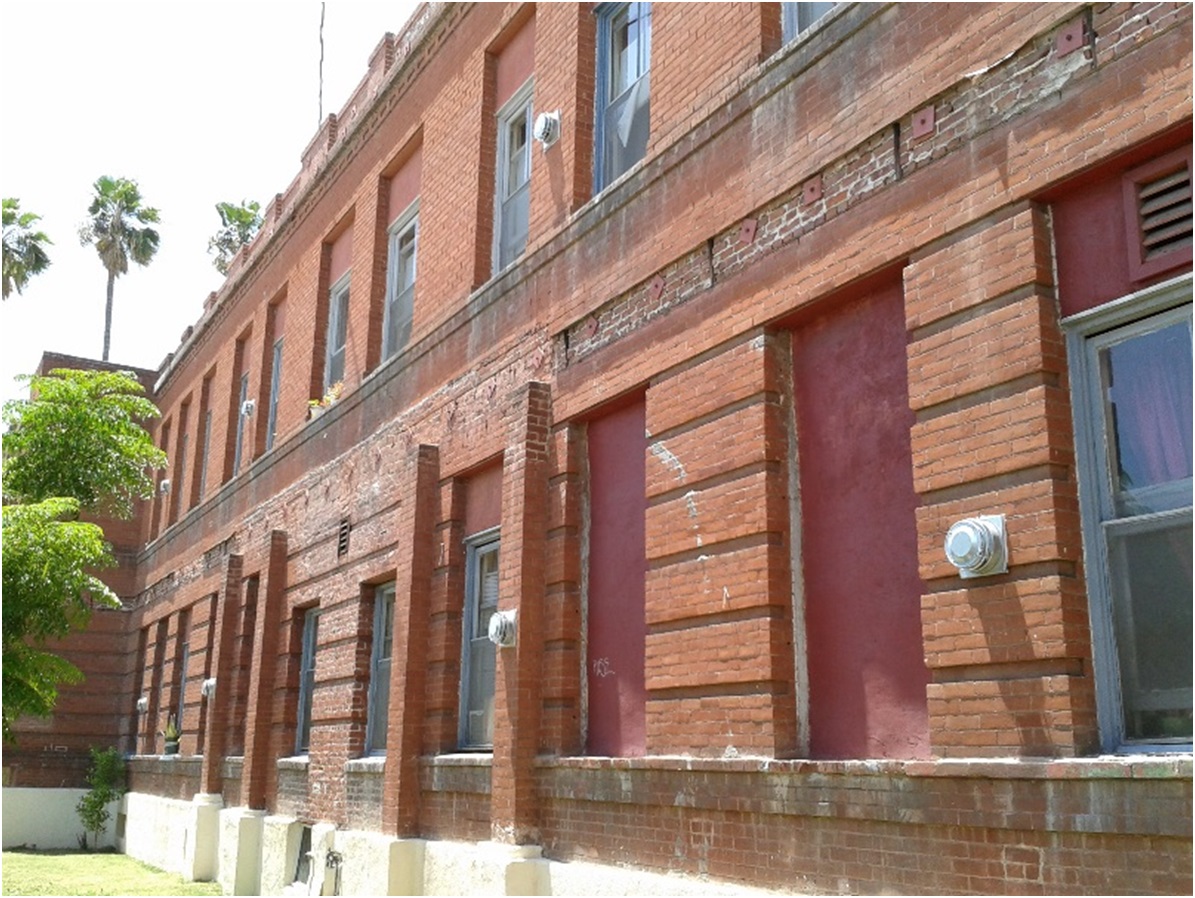
The south side of the building, where Presidents Taft and Roosevelt once spoke.

The south side of the building, where Presidents Taft and Roosevelt once spoke (see below).

I wonder if the people living here have any idea that two Presidents of the United States, and Charlie Chaplin, all once came here to visit. You can read all about how Charlie filmed The Kid in my Chaplin book Silent Traces. I want to thank once again Brad Alexander for sharing these photos. I would also like to thank my friend Jeffrey Castel De Oro for taking all of the photos of this building originally appearing in my book.

Criterion The Kid - Lustgarten - Bengtson_Page_02

Criterion The Kid - Lustgarten - Bengtson_Page_03

Criterion The Kid - Lustgarten - Bengtson_Page_04

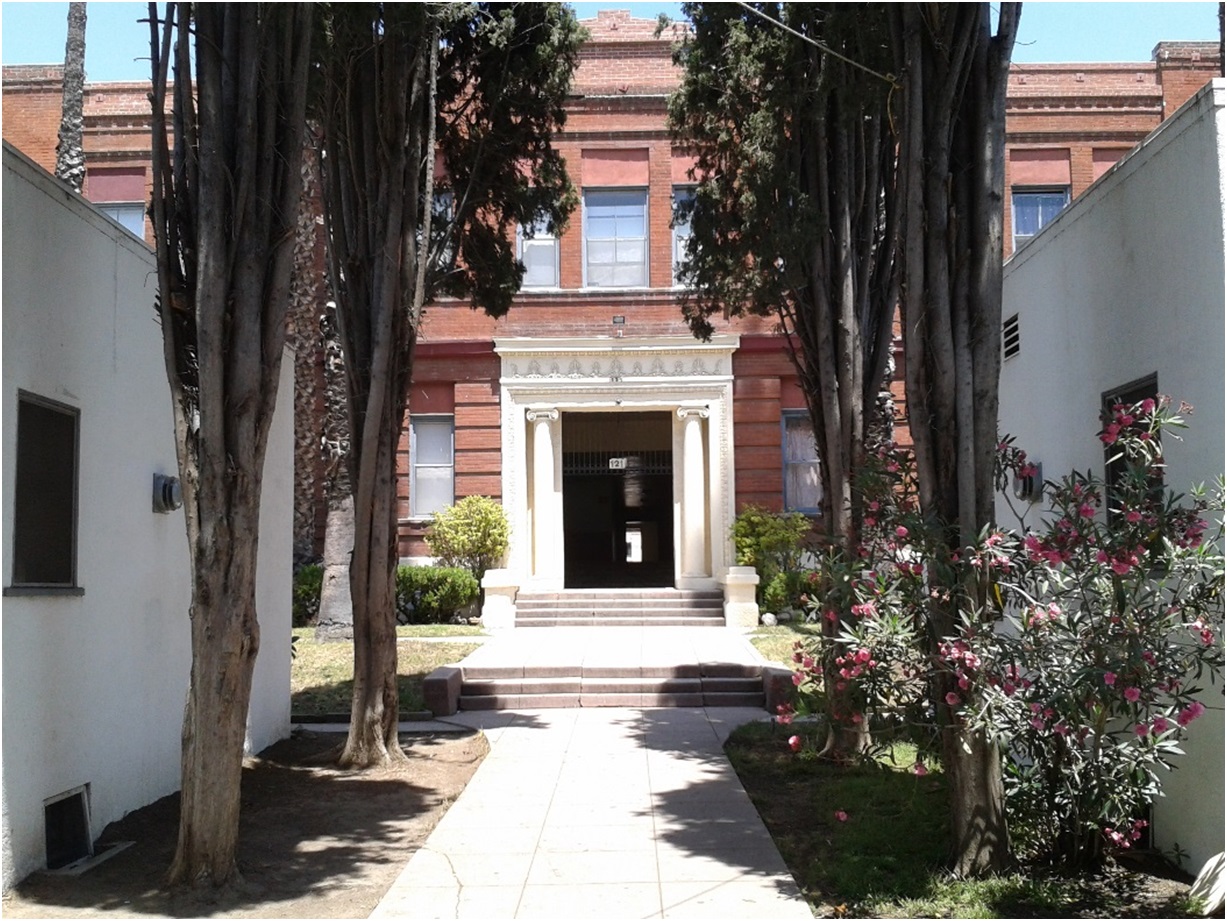
brad-alexander-west-doorAt left, and below, the west entrance to the building (the side not appearing in the movie), partially blocked from view, is reached by walking between the row of bungalows at 121 N. Avenue 50, in Highland Park.

Posted in Charlie Chaplin, The Kid | Tagged , , , , , , , | 10 Comments

Where Roscoe Arbuckle Filmed His Brooklyn Vitaphone Shorts

(C) 2017 Google.

Looking south, the recently demolished Vitaphone Studios (yellow outline) in relation to many of Roscoe’s filming sites. The landmark Vitagraph smokestack, for the moment still standing, appears at bottom due right of the “North” marker. (C) 2017 Google.

Starting at page 2 below, this multi-page post reveals more than two dozen Brooklyn movie locations filmed over 85 years ago. Click each image for a larger view.

The Silent Clowns - MoMA

Arbuckle filming Hey Pop at 3rd Ave and 80th in Bay Ridge – see page 7 below.

The recently demolished Vitagraph (Vitaphone) Studio, once standing at E 14th between Chestnut and Locust in the Midwood community of Brooklyn, holds a giant place in cinema history. One of the earliest and most prolific studios, it was acquired by Warner Bros. in 1925, where it became instrumental in the widespread production of talking pictures.

ca

The Chestnut Ave side of the studio – Brooklyn Public Library

The Vitaphone process, the first commercially viable sound film technology, involved recording audio tracks on 16 inch shellac discs that played synchronously with moving images. The smash Vitaphone presentation of Al Jolson’s The Jazz Singer in 1927 spelled the eventual doom for silent pictures. Capitalizing on local talent, the Brooklyn Vitaphone studio produced hundreds of short ‘sound’ films capturing unusual vaudeville acts, and Broadway singing stars and comedians.

Ron Hutchinson

Now demolished – Ron Hutchinson

Vitaphone’s brief triumph ended quickly once optical soundtrack technology became standard. Suddenly obsolete, the surviving Vitaphone audio discs were often misplaced or separated from their films. In 1991 a group of record collectors and film archivists led by Ron Hutchinson founded The Vitaphone Project, dedicated to reuniting orphan Vitaphone discs with their mute films, and restoring them on new 35mm sound-on-film prints for modern projection. Nearly 150 short films and many features have since been restored; two recent triumphs include flapper star Colleen Moore’s Synthetic Sin (1929) and Why Be Good? (1929), both once thought to be lost.

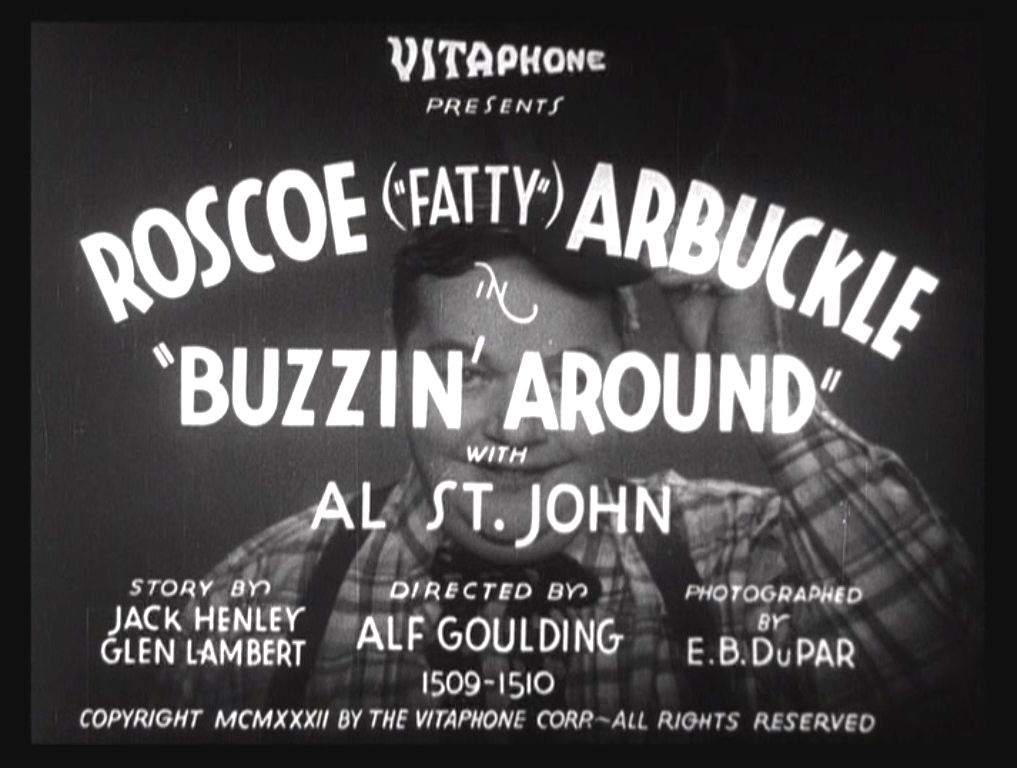
hey-pop-01These charming, quirky, and sometimes downright strange Vitaphone entertainment shorts have become crowd favorites at classic film festivals. When Ron hosted a full evening of Vitaphone shorts recently on TCM, it reminded me to pull out my Vitaphone Comedy Collection: Volume One DVD, which captivated me with the dozens of street scenes depicted on film. Though the studio building itself is now demolished, the films it once produced continue to preserve priceless moments of everyday Brooklyn life from more than 85 years ago. The two films analyzed in this post, Hey Pop (1932) and Buzzin’ Around (1932), were both starring vehicles for pioneering film comedian Roscoe “Fatty” Arbuckle.

hey-pop-01Arbuckle began his long career in 1913, with Mabel Normand and Charlie Chaplin among his early co-stars. By 1917 Arbuckle led a series of comedy shorts co-starring  Al St. John (his nephew) and Roscoe’s protégé Buster Keaton. When Arbuckle began making a series of feature comedies for Paramount in 1920, earning him millions, Buster took over his small production company, launching Keaton’s solo career.

buzzin-around-01Arbuckle is remembered mostly today for his involvement with the death of actress Virginia Rappe following a booze-filled Labor Day weekend party he hosted at the St. Francis Hotel in San Francisco in 1921. Charged with manslaughter, after two mistrials Arbuckle was fully acquitted, receiving a rare public apology from the jury for his ordeal. Despite this, the scandal became a lightning rod for pious America’s backlash against “loose” Hollywood morals, ending his onscreen career. With the help of Buster and others, Roscoe spent the next decade writing and directing, often under the pseudonym “William Goodrich,” while also touring in live shows.

buzzin-around-49Roscoe never lost his public appeal. By 1932 Warner Bros. correctly decided audiences would welcome his return to the screen, signing Arbuckle to shoot six two-reel comedies at the Vitaphone Studio in Brooklyn, two of which are studied here. In a tragic confluence of events, on June 29, 1933, his first-year wedding anniversary with actress Addie McPhail, and the day after completing the sixth short, Roscoe signed a long-term contract with Warners sealing his comeback, only to die that evening of a heart attack in his sleep. He was 46.

(C) 2017 Google.

Roscoe used nearly every available corner and apartment. I can’t think of any Hollywood production so densely situated. (C) 2017 Google.

Page 2 covers (1), (2), (3), (4), and (12) above. Page 3 covers (5), (6), (7), and (8), Page 4 covers (9), (10), (11), and (15). Page 5 covers (13), (14), (16), (17), (18), and (19). Page 6 covers Ave M between E 18th and E 19th. Page 7 covers Bay Ridge and Shemp Howard filming at (8) and (9).

Posted in Brooklyn, New York, Roscoe Arbuckle | Tagged , , , , , , , , , , , , , , , , , , , , | 13 Comments

Marc Wanamaker and Bruce Torrence – Hollywood’s Photo History Heroes

Marc Wanamaker of Bison Archives, and Bruce Torrence of HollywoodPhotographs.com, both accomplished authors, photo archivists, and historians, are two behind the scenes giants of Hollywood history. Wanamaker, a foremost authority on all things Hollywood, especially its movie studios, has supplied material for hundreds of books, and has appeared onscreen in numerous documentaries. Marc has written more than a dozen books on topics including Paramount Studios, the Culver City Studios, Beverly Hills, Warner Bros., and Hollywood itself (see more Amazon links HERE).

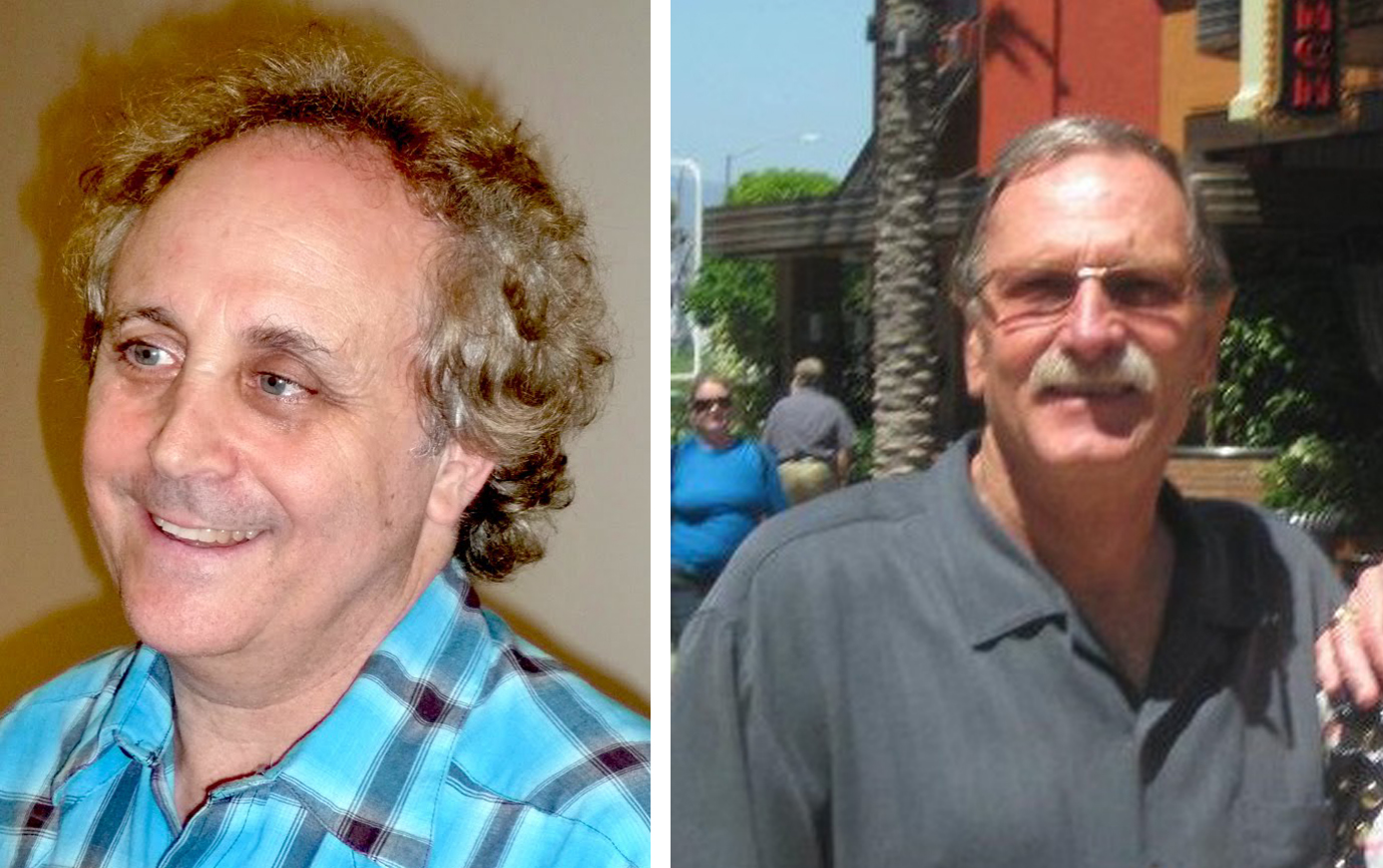
Marc Wanamaker (left) - Bruce Torrence (right)

Marc Wanamaker (left) – Bruce Torrence (right)

Torrence has Hollywood in his DNA. His grandfather, noted developer C.E. Toberman, built dozens of Hollywood subdivisions and commercial buildings, including the Egyptian and Chinese Theaters, while his other grandfather, towering actor Ernest Torrence, was an early screen star, playing roles such as Captain Hook in Peter Pan (1924) and Buster Keaton’s father in Steamboat Bill, Jr. (1928). Bruce’s 1979 groundbreaking account “Hollywood: the First 100 Years” was an instant classic, and his recent “The Hollywood Canteen” documents Hollywood’s morale boosting efforts during WWII. Bruce also writes The Hollywood Photographs blog, with dozens of articles about Hollywood landmarks and history.

Aside from their informative books, Marc and Bruce both manage incredible photo archives that allow us priceless views of Hollywood’s past, and have generously assisted countless other authors and historians. I am personally indebted to Marc and Bruce who have been remarkably kind and supportive to me over the years. This post revisits a few fun location discoveries that would have been impossible to solve without access to their extraordinary photos.

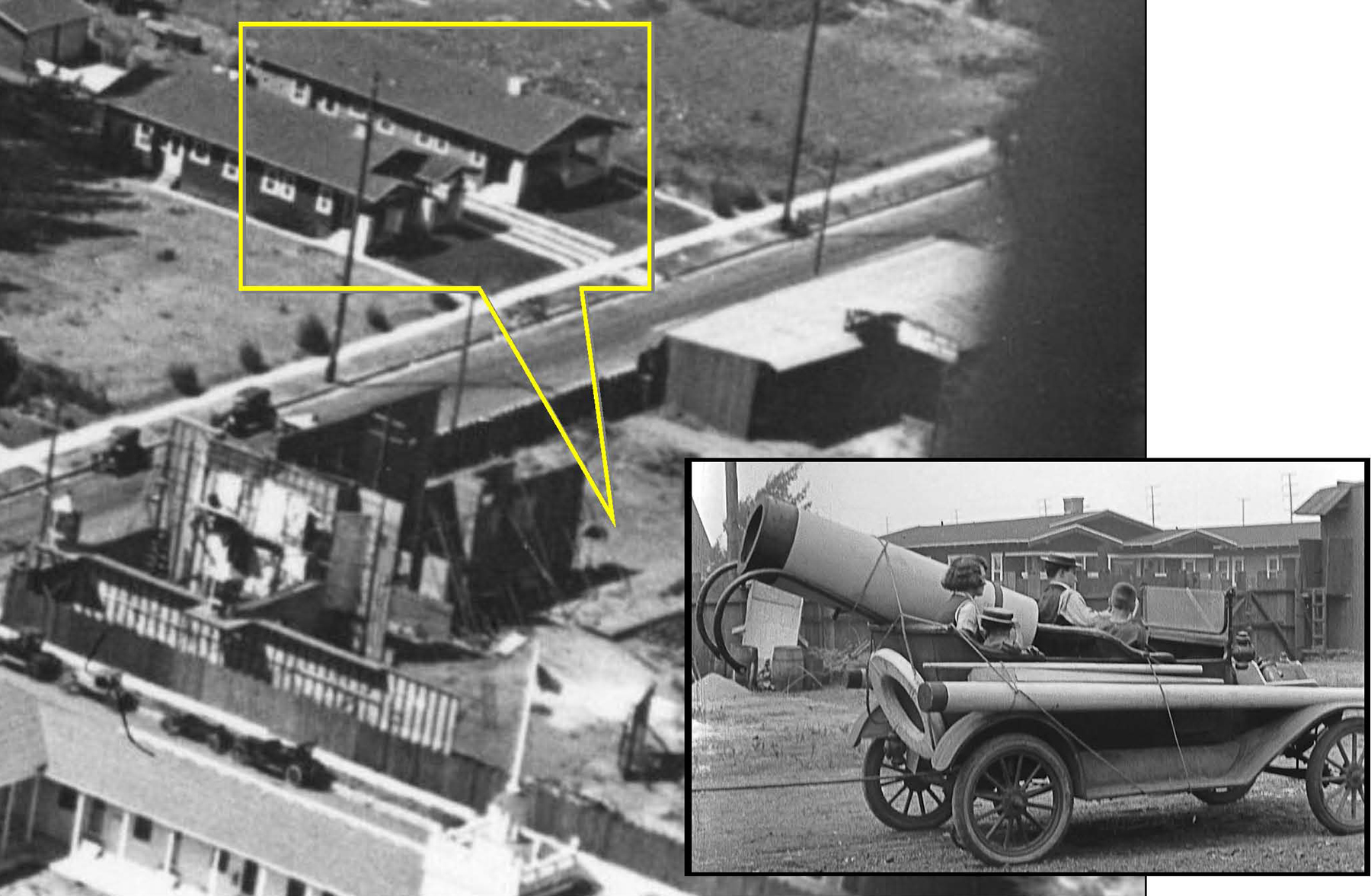
You can easily see the My Wife's Relations stunt set in this aerial view of Buster's studio. Buster used the set later that year for a scene with some police in Day Dreams. These sets appear in other filmed described in my Mr. Keaton's Neighborhood post.

The newly discovered stunt scene from Keaton’s My Wife’s Relations was filmed on this set at Buster’s studio. Buster later used the set for a scene with some police in Day Dreams (inset). Read the full post HERE. HollywoodPhotographs.com.

Click to enlarge. Marc Wanamaker - Bison Archives.

Using several of Marc’s photos I was able to prove that a few trees appearing in the battle scenes from The Birth of a Nation (1915) are still standing at Forest Lawn. They appeared with the Three Stooges too. Read the full post HERE. Marc Wanamaker – Bison Archives.

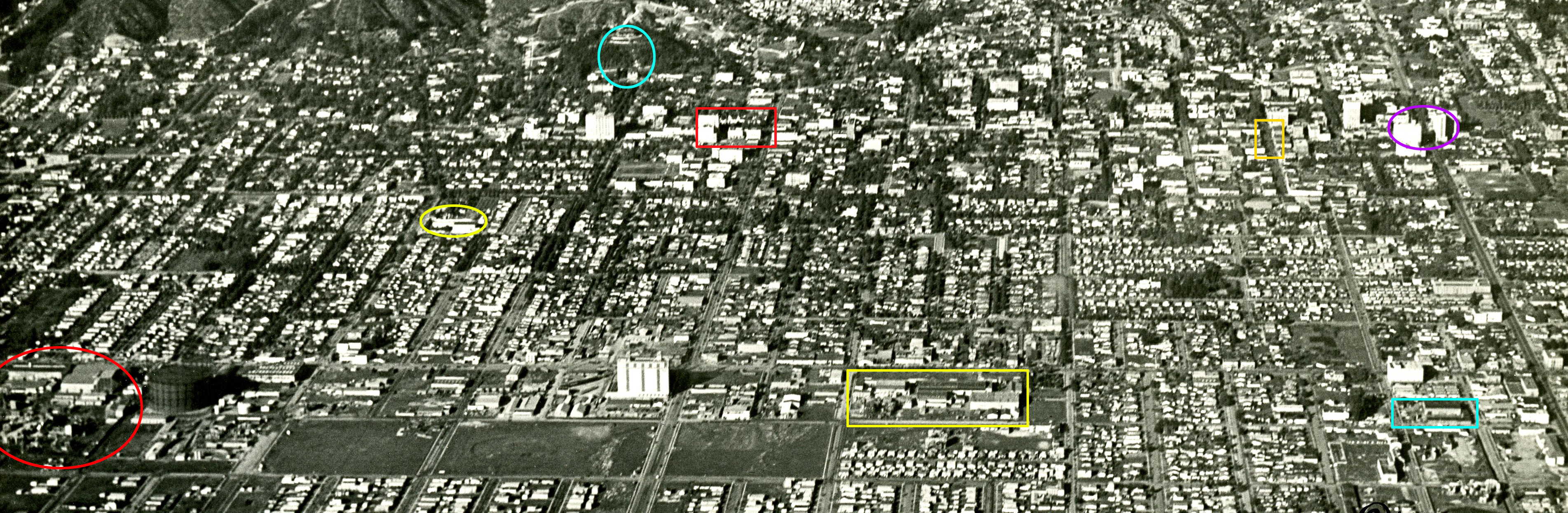
Click to enlarge. From left to right: the Pickford-Fairbanks Studio (red oval), the Chaplin Studio (yellow oval), the Bernheimer Estate and future Magic Castle (teal oval), the Hollywood Hotel (red box), the Harold Lloyd (Hollywood Metropolitan) Studios (yellow box), the Keaton Studio (teal box), the block of Cahuenga south of Hollywood Boulevard where Keaton and Lloyd frequently filmed (orange box), and the intersection of Hollywood and Vine (purple oval). HollywoodPhotographs.com.

Click to enlarge. In this post I examine the major Hollywood landmarks appearing in a single 1926 photo. From left to right: the Pickford-Fairbanks Studio (red oval), the Chaplin Studio (yellow oval), the Bernheimer Estate and future Magic Castle (teal oval), the Hollywood Hotel (red box), the Harold Lloyd (Hollywood Metropolitan) Studios (yellow box), the Keaton Studio (teal box), the block of Cahuenga south of Hollywood Boulevard where Keaton and Lloyd frequently filmed (orange box), and the intersection of Hollywood and Vine (purple oval). HollywoodPhotographs.com.

ca

This ‘rural’ barn scene closing the new version of Buster Keaton’s The Blacksmith stood near Melrose and La Brea, in this view looking SW from Harold Lloyd’s Hollywood Studio on Santa Monica Boulevard. You can read several posts about the ‘new’ The Blacksmith HERE. Marc Wanamaker – Bison Archives.

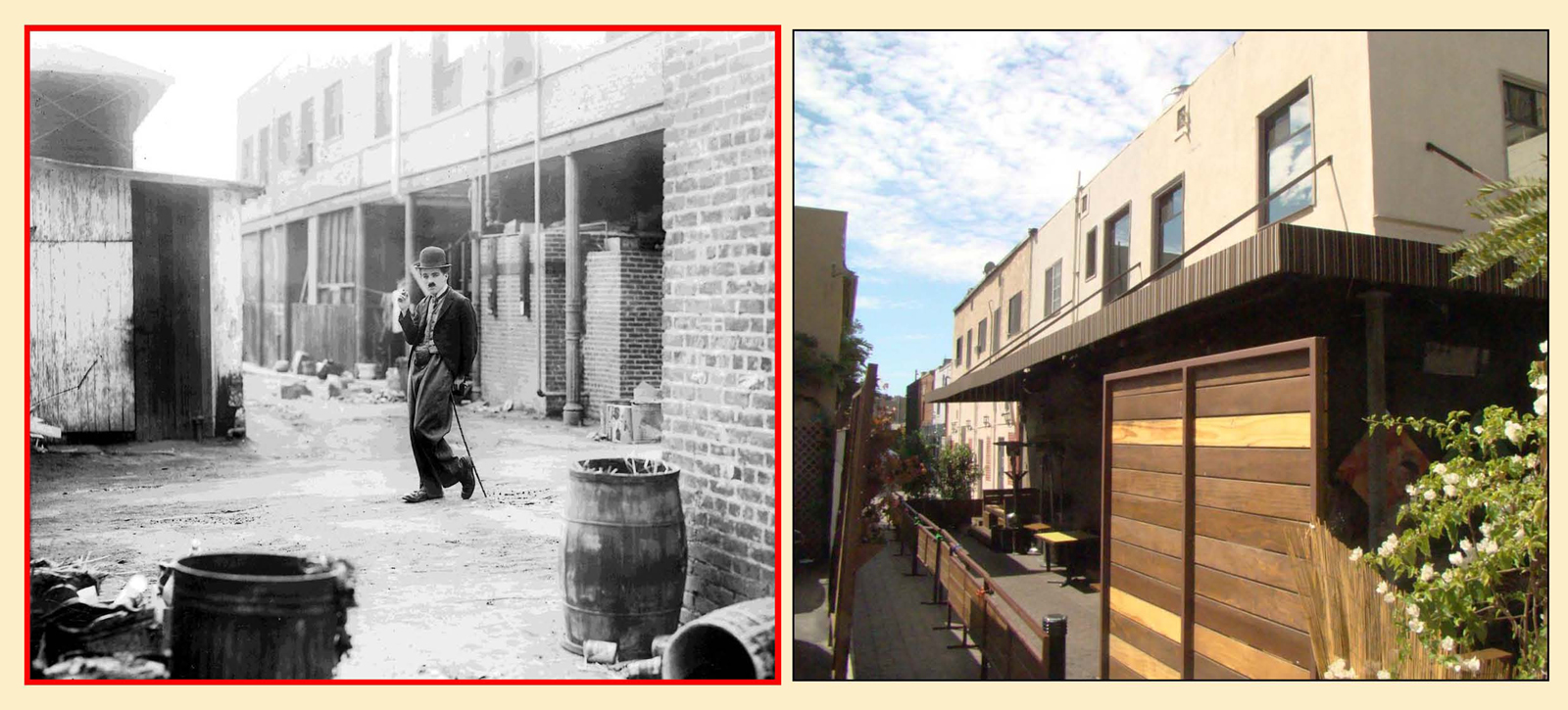
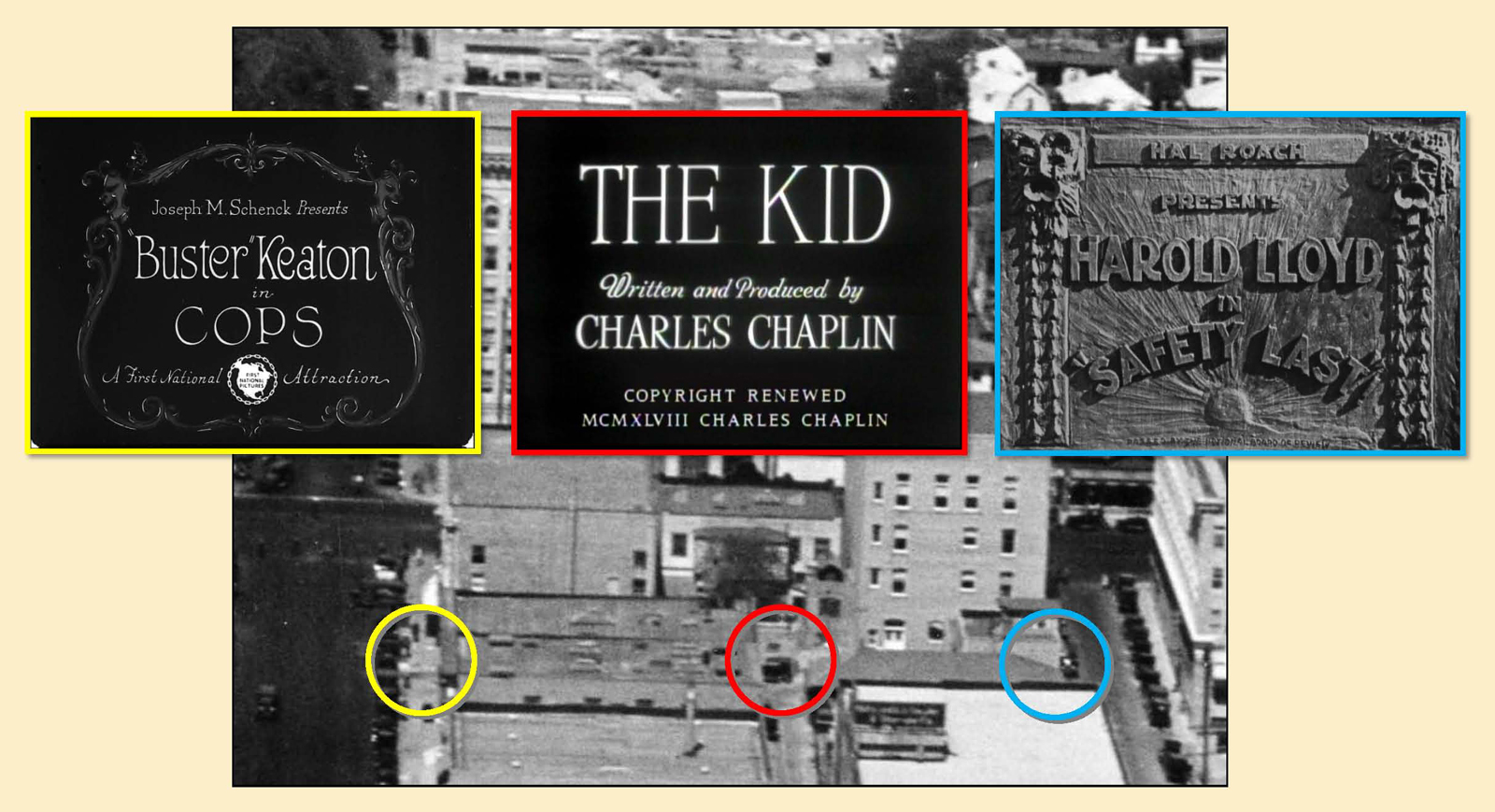
My favorite discovery, made possible only by examining many photos each from both Marc’s and Bruce’s archives, is that Charlie Chaplin filmed The Kid, Buster Keaton filmed Cops, and Harold Lloyd filmed Safety Last! at the same small Hollywood alley you can still visit today.

jklk

Click to enlarge – looking NE at the alley running from Cahuenga (left) to Cosmo (right). You can read the full post HERE and HERE. HollywoodPhotographs.com.

I would like to thank Marc and Bruce for all they have done to preserve, document, and share Hollywood’s rich history.

Bison Archives  –   HollywoodPhotographs.com   –  Hollywood Photographs Blog

Posted in Uncategorized | 11 Comments

Buster Keaton, Seven Chances, and Warren Beatty?

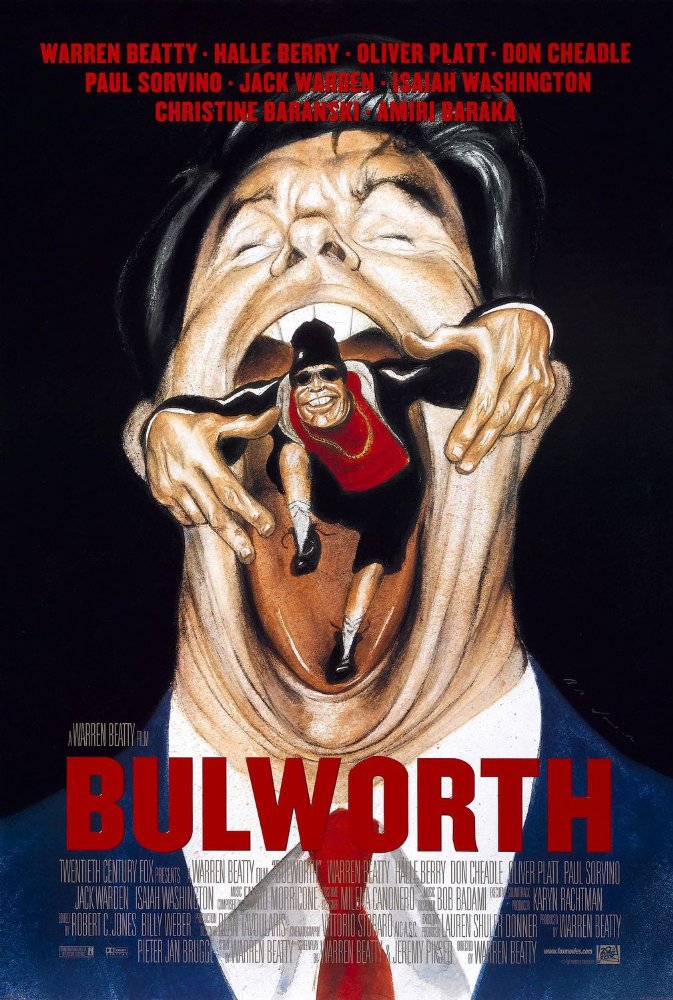
mv5bmty2ntm5njiyov5bml5banbnxkftztgwmzuwnzc3nje-_v1_sy1000_cr006731000_al_Warren Beatty’s audacious and scarily prescient political satire Bulworth (1998) depicts Beatty as a California Senator seeking reelection who’s become so disillusioned with the ineffectiveness of politics that he hires a hit man to finish him off. Suddenly liberated to speak his mind, Bulworth’s unfiltered remarks spark a media storm and groundswell of popular support (sound familiar?)

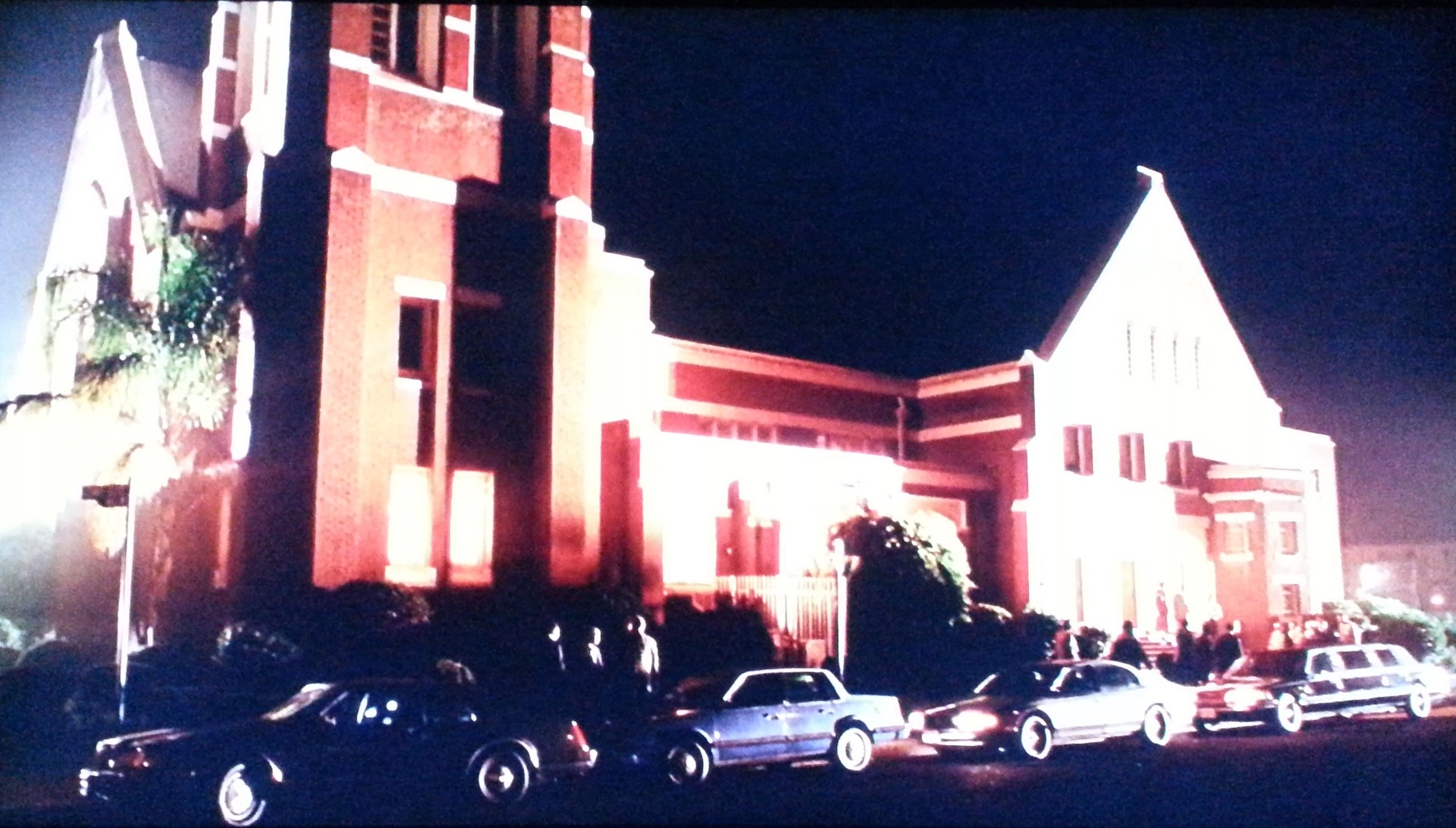
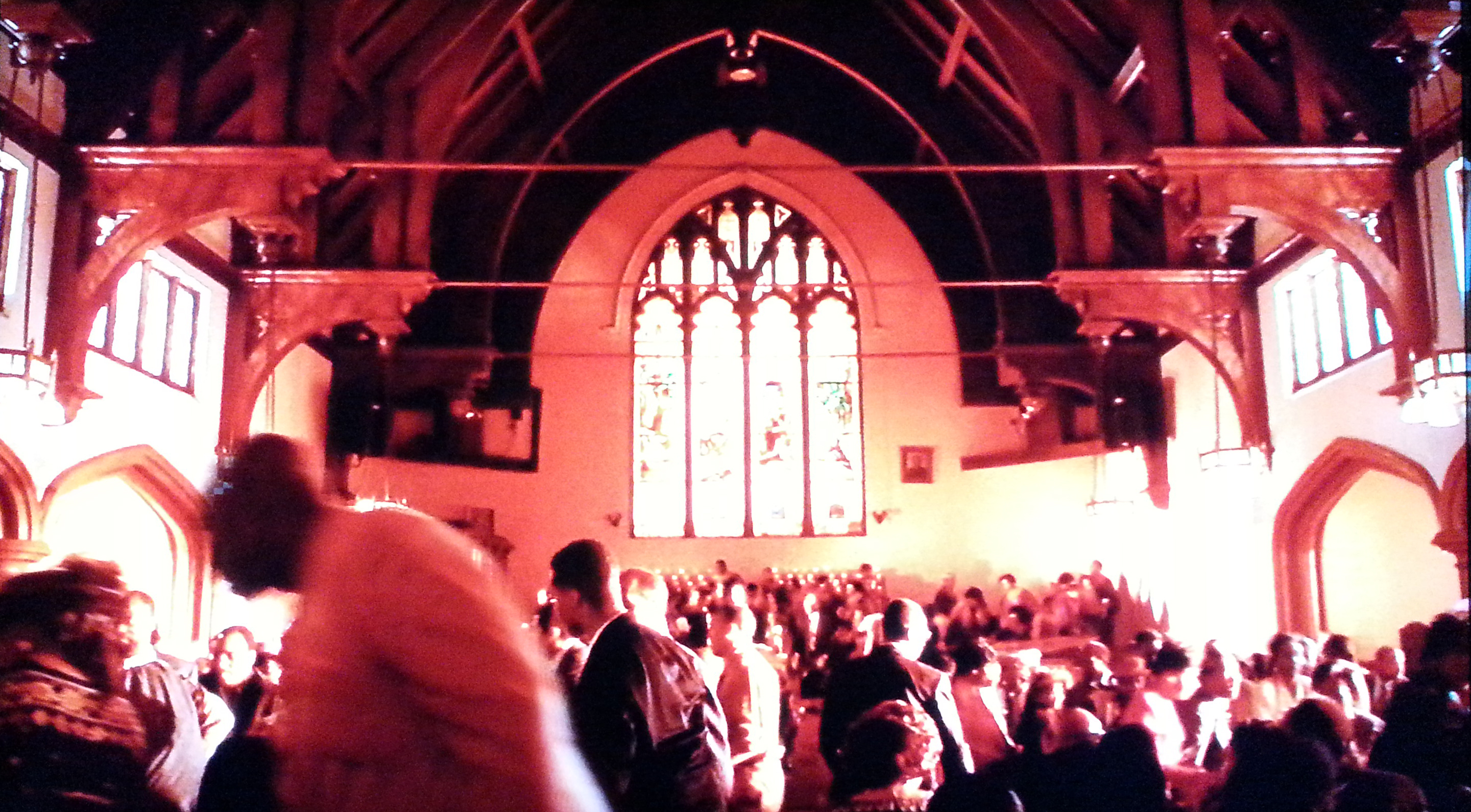
Early on Bulworth chastises a black congregation to wake up, confessing that neither party serves their community because politicians only respond to well-funded lobbyists and huge donations. Bulworth’s terrified campaign manager ends the debacle by pulling the fire alarm and hustling Bulworth out of the church.

The Greater Page Temple - 2610 La Salle Avenue

Senator Bulworth arrives at the Greater Page Temple – 2610 S. La Salle Avenue

church-5

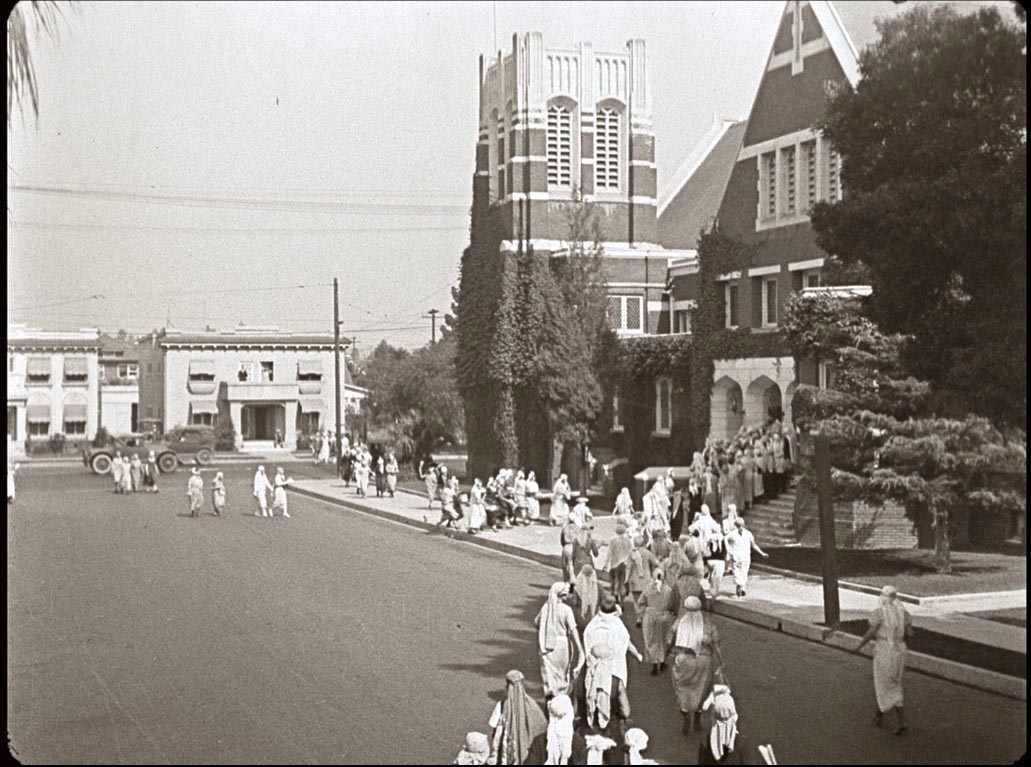
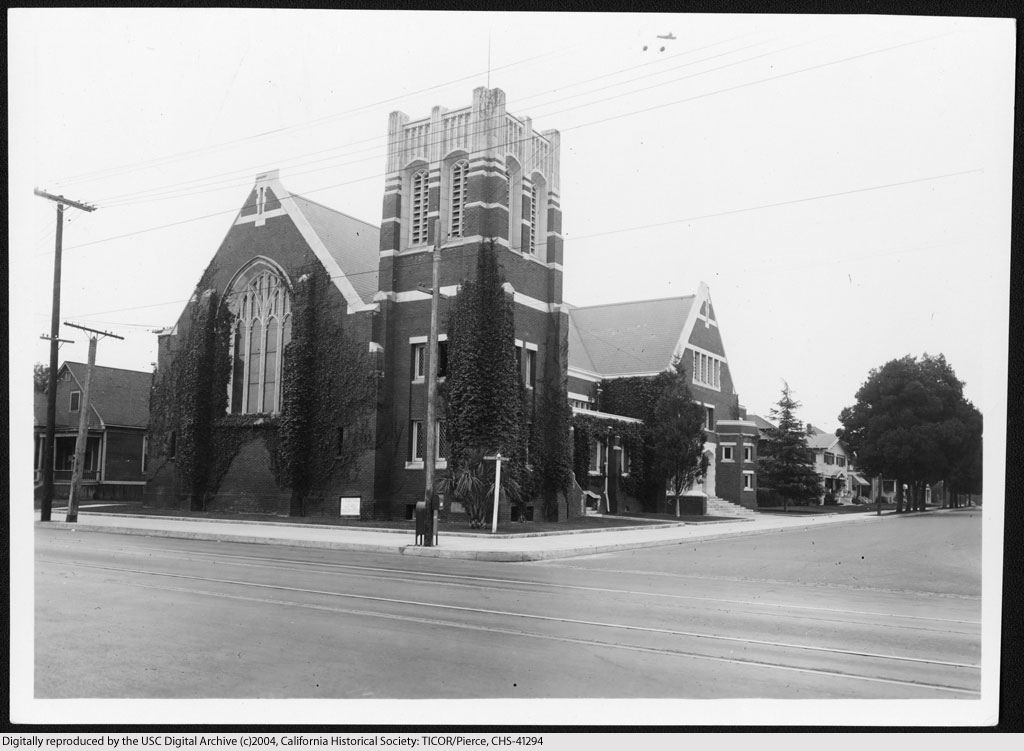
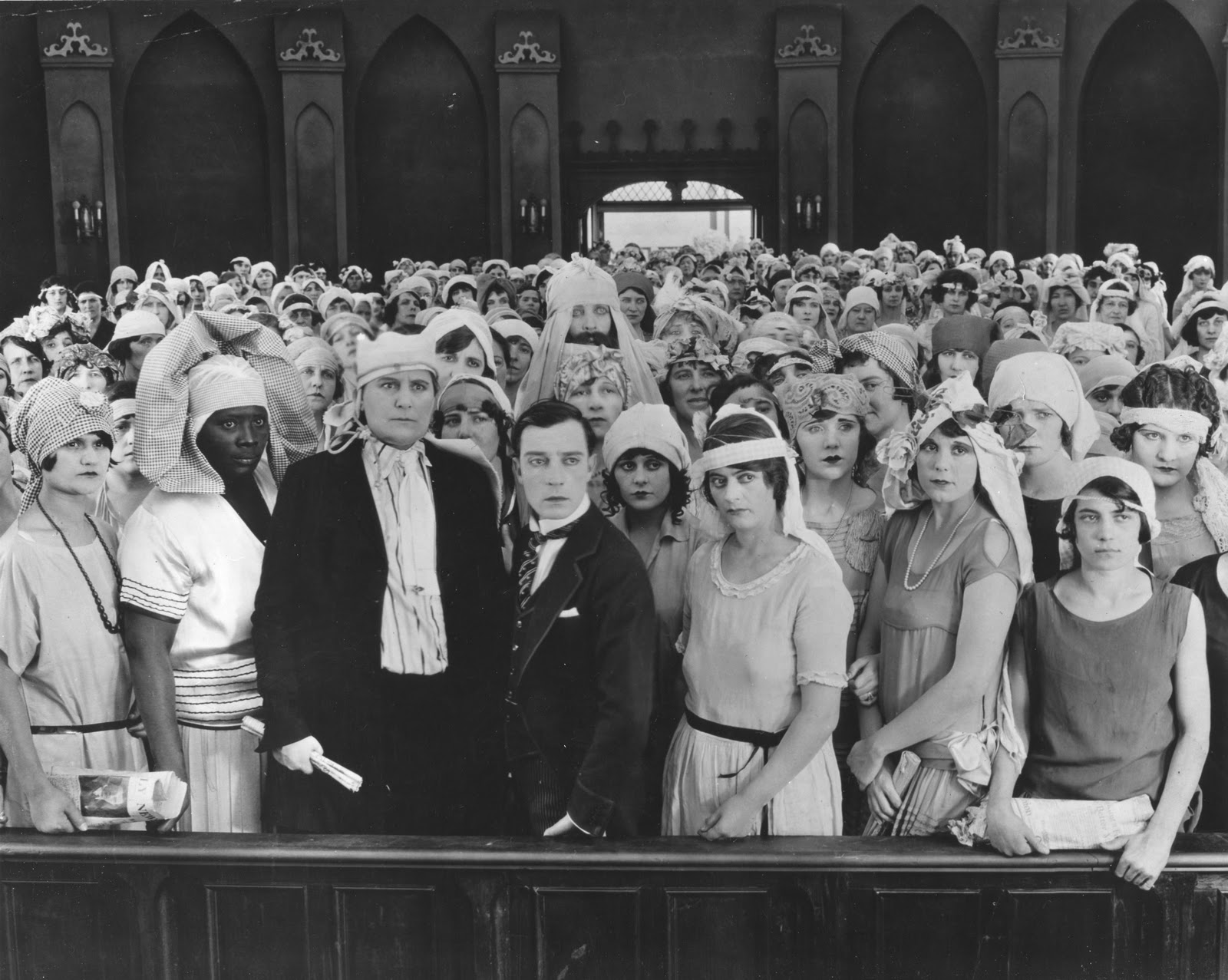
The church presented in the film is the same church Buster Keaton used seven decades earlier for his pre-marital comedy Seven Chances (1925). In that film Keaton must marry by 7:00 p.m. in order to inherit a fortune, and after bungling a proposal to his long-time girlfriend, resorts to placing a front page notice in the newspaper, prompting hundreds of would-be brides to appear at the church. Built in 1906, the former West Adams Methodist Church, now the Greater Page Temple, stands proudly as ever at 2610 La Salle Avenue.

USC Digital Library - CHS-41294

USC Digital Library – CHS-41294

20161209_193209While Bulworth staged a lengthy sequence inside the beautiful church, Buster filmed his church interiors on a roofless set draped overhead with muslin cloth to diffuse the bright sunlight.

Buster in a set - it had no roof.

Buster in a specially built church interior set – it had no roof.

The late Mrs. Eleanor Keaton on the steps of the Seven Chances church. She joked that whereas hundreds of women before her had failed, she was the one woman to capture Buster.

The late Mrs. Eleanor Keaton on the steps of the Seven Chances church. She joked that whereas hundreds before her had failed, she was the one woman to actually marry Buster.

I write extensively about the locations appearing in Seven Chances in my book Silent Echoes, and prepared a visual essay about it as a bonus feature to the Kino-Lorber Blu-ray release of the film. This post shows other locations, and this post shows how Buster filmed a scene close to his studio.

Posted in Buster Keaton, Seven Chances | Tagged , , , , , , , | 2 Comments

Buster Keaton, The General, and Animal House?

General_Slideshow-1_Page_06As shown in this previous post describing how Buster Keaton filmed The General in Cottage Grove, Oregon, Buster and crew stayed at the Bartell Hotel during the production, staged the summer of 1926. The hotel stands just a block or two west from where most the filming took place.

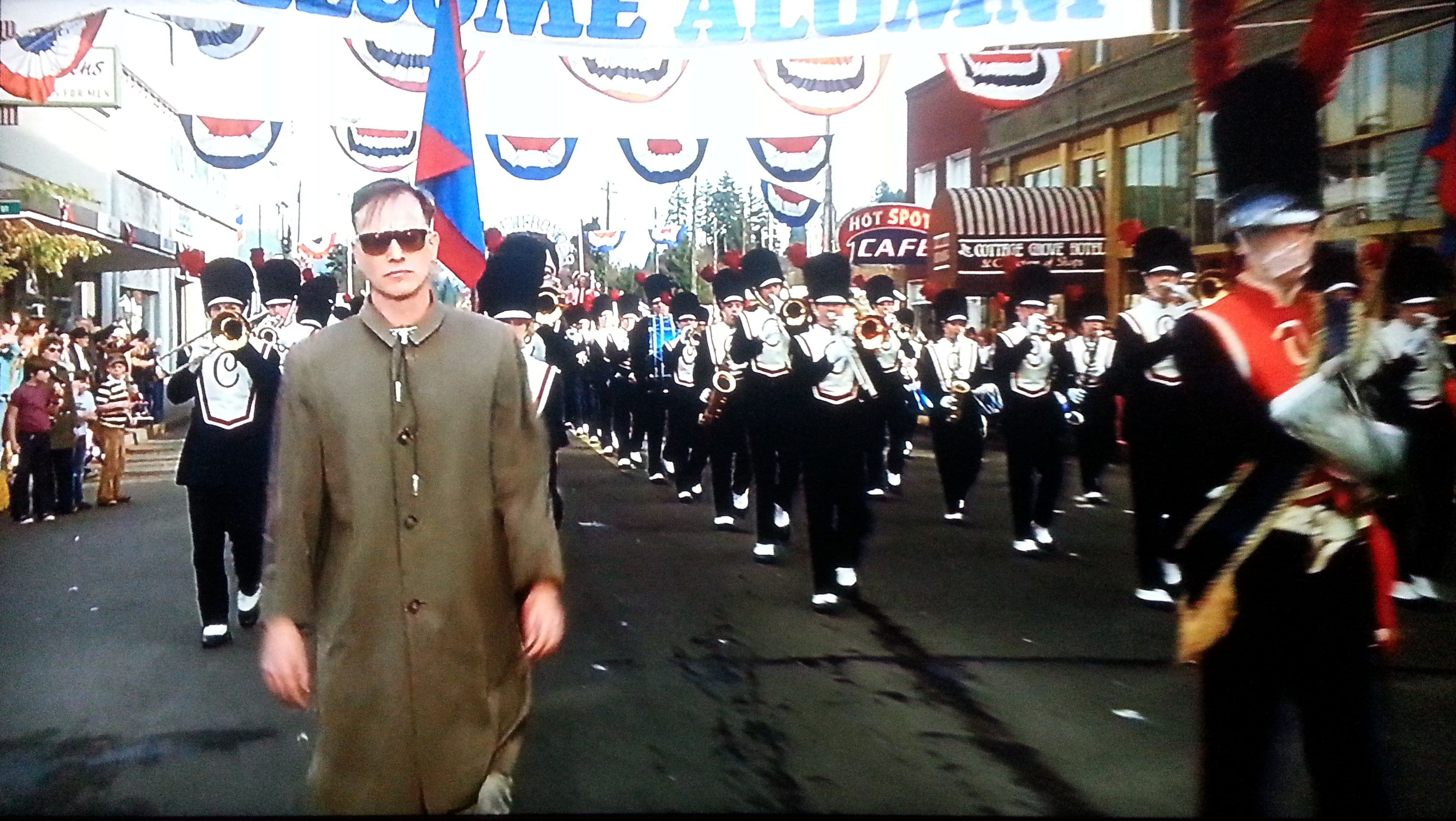
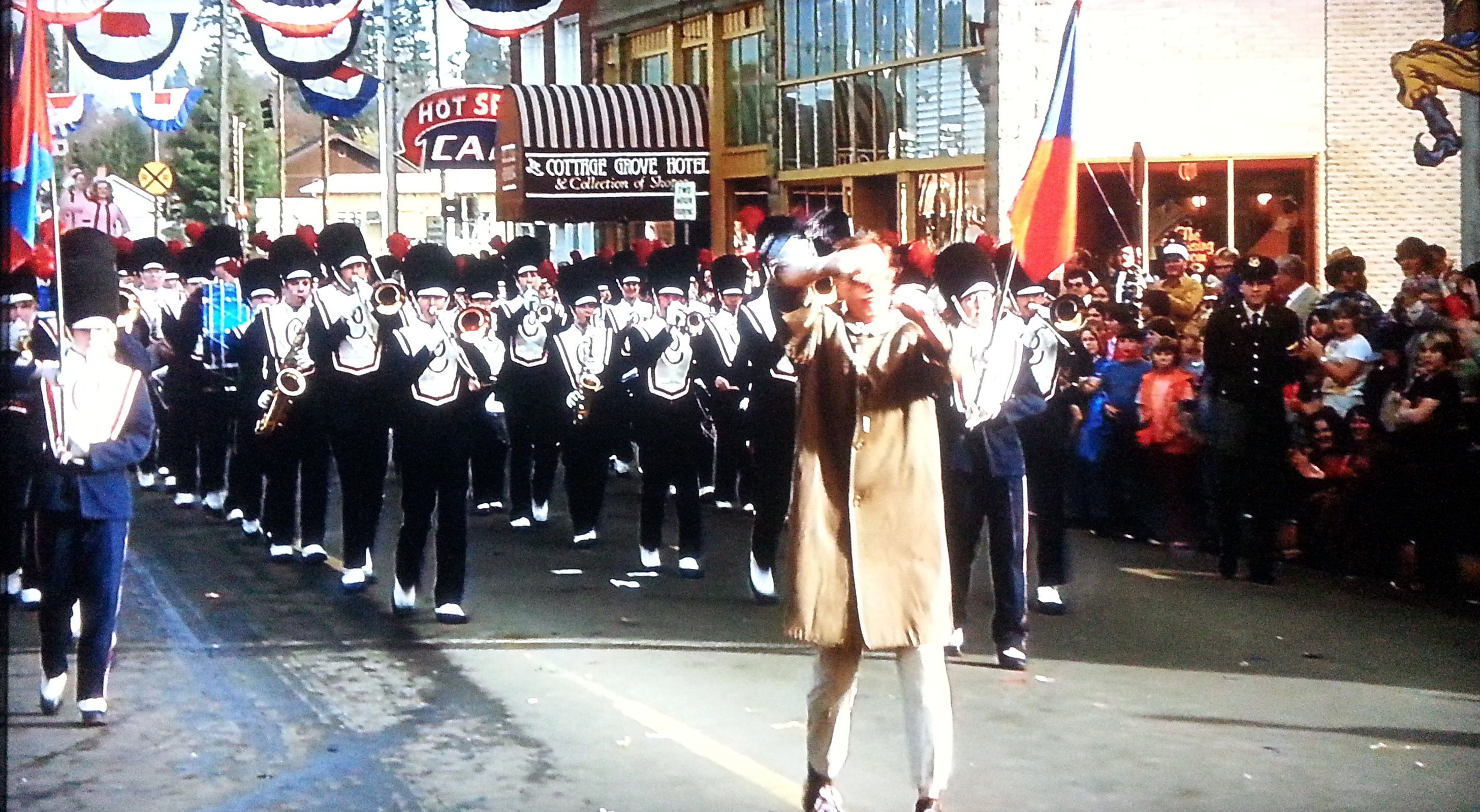
But the hotel, later re-named the Cottage Grove Hotel, has another claim to classic comedy fame. The hotel appears during the homecoming parade finale to the 1978 comedy Animal House. When “Stork” (played by the film’s co-screenwriter Douglas Kenney) diverts the marching band into a dead-end alley before the Delta House wrecks havoc on the parade, you can clearly see the Cottage Grove Hotel awning in the background.

Looking east down Main Street towards the Cottage Grove Hotel.

Click to enlarge – looking east down Main Street towards the Cottage Grove Hotel.

Click to enlarge - Stork begins to divert the band.

Click to enlarge – Stork begins to divert the band.

Both The General and Animal House have been inducted into the National Film Registry of the Library of Congress as works of enduring importance to American culture; Buster in 1989, and The National Lampoon comedy in 2001.

This brief video hosted by A.M.P.A.S. from a talk I gave in 2011 further explains how Buster filmed The General in Cottage Grove.  You can read all about filming The General in my Keaton film locations book Silent Echoes.

Posted in Buster Keaton, The General | Tagged , , , , , , , , | 7 Comments

How Chaplin Filmed The Champion – on Location in Niles

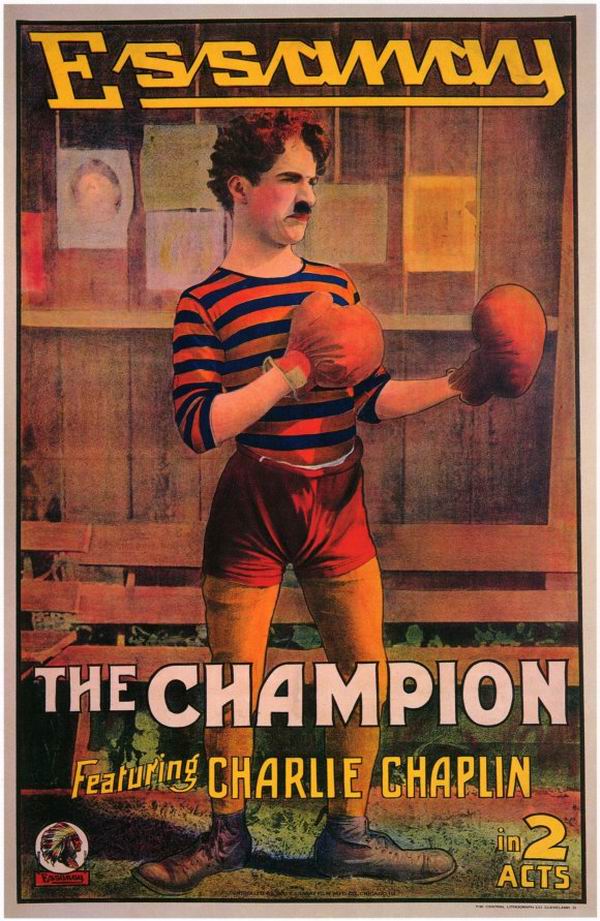
the-champion-1915The upcoming San Francisco Silent Film Festival’s Day of Silents winter program this December 3 at the Castro Theater offers something for everyone, from Ernst Lubitsch’s 1926 Jazz Age gem So This is Paris, to the Oscar’s first ever Best Actor performance, Emil Janning’s portrayal of an exiled Russian general turned Hollywood extra in The Last Command (1928). The morning program leads off with three beautifully restored shorts Charlie Chaplin filmed for the Essanay Film Company in 1915, and co-presented by the Niles Essanay Silent Film Museum. The films will be introduced by preservationist David Shepard, whose Blackhawk Films Collection was the source for many of the restorations. In addition to His New Job, filmed at the Essanay Studio in Chicago, and A Night in the Show, where Chaplin plays dual roles, we’ll be seeing The Champion, a boxing comedy filmed entirely on location in Niles, the second of five films Chaplin made for Essanay during his brief stay in the Bay Area before returning to Los Angeles to finish out his one-year contract with the studio.
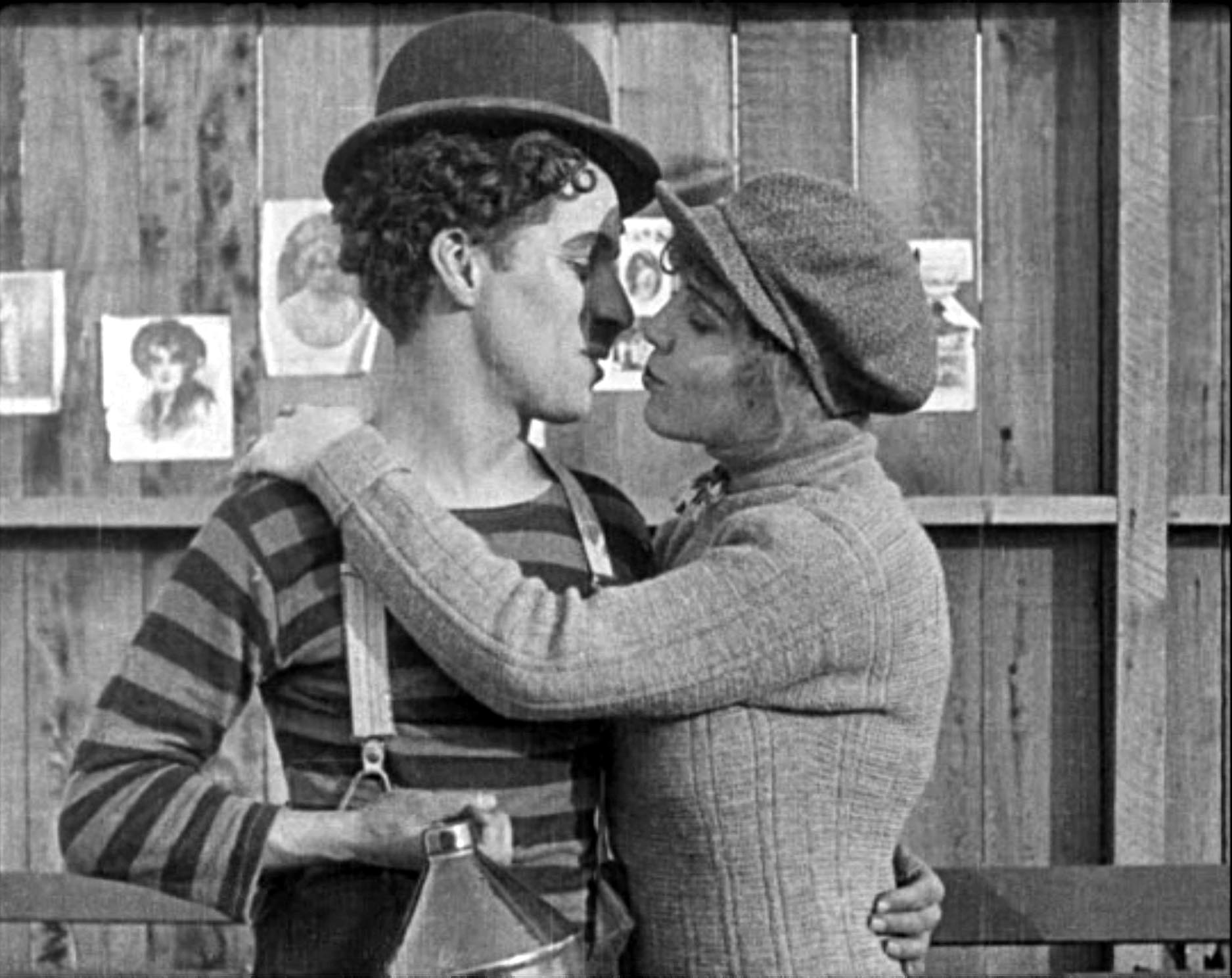
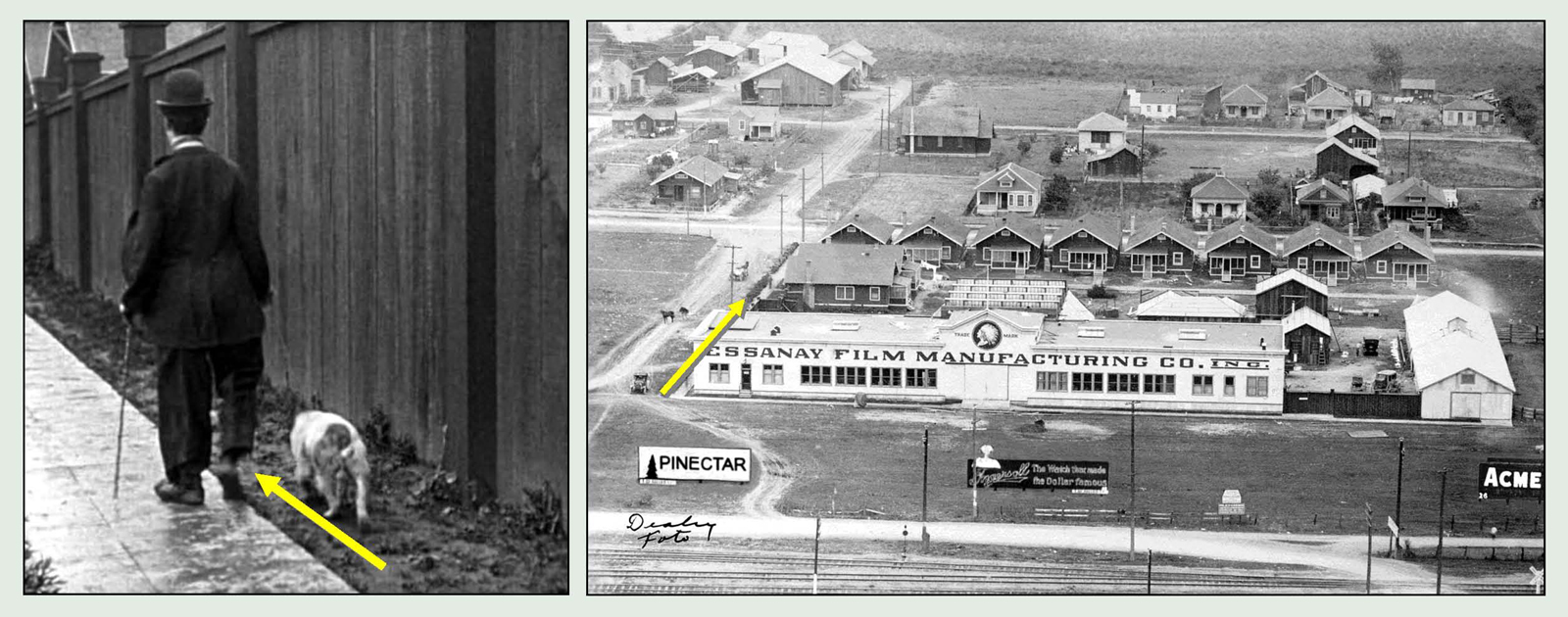
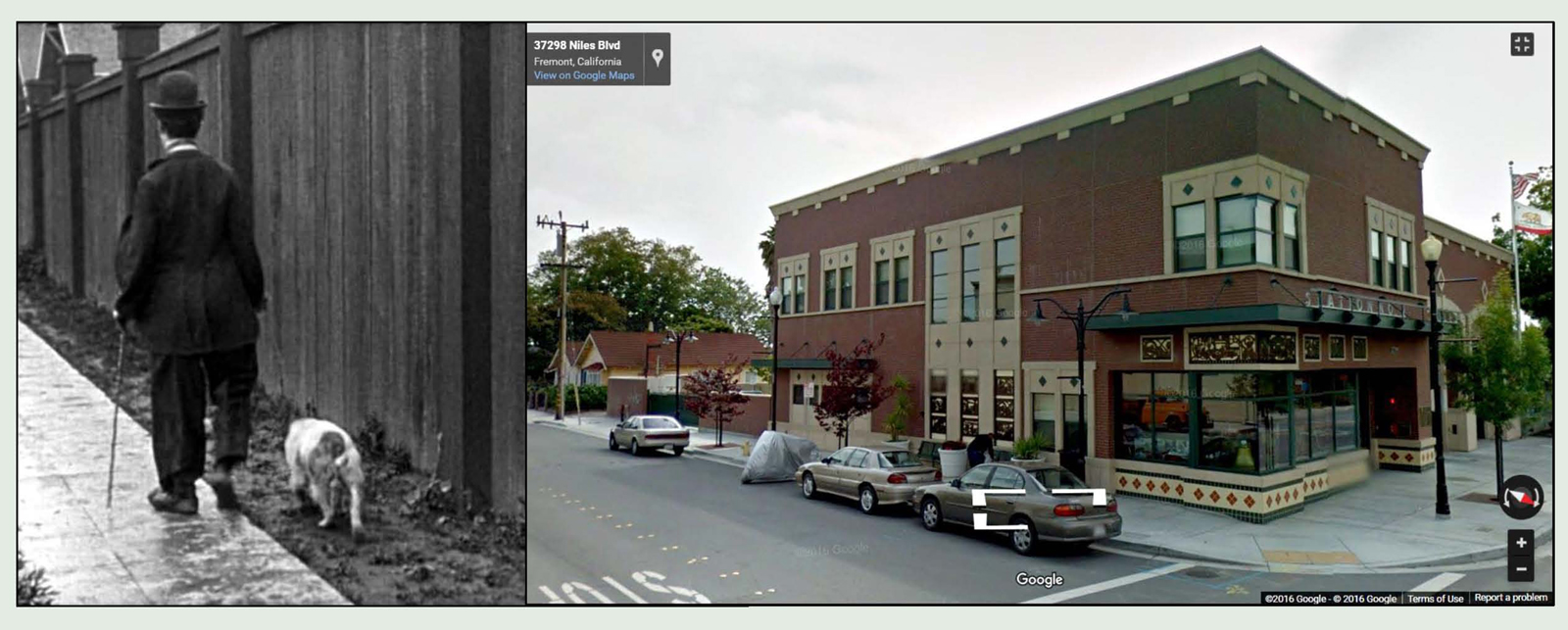
During this early scene, Charlie and his little pal walk south down G Street in Niles towards studio bungalows that still stand today.

During this early scene Charlie and his little pal, a champion bulldog named Quapaw Lord Orry, walk south down G Street in Niles, beside the Essanay Studio fence, towards studio bungalows that still stand today.

champion-11As reported here, The Champion provides charming views of early Niles, including the former Essanay Studio facility that once stood at the corner of Niles Boulevard and G Street. During the film, Charlie’s hungry tramp character signs up to be a boxing sparring partner, only to end up winning the championship and Edna Purviance’s affections. Chaplin was an avid boxing fan, and by the time of filming had started on off-screen romance with Purviance, whom he had only recently hired to be his first leading lady.

Looking south at the Essanay facility, built in 1913, and Charlie's path down G Street.

Looking south at Chaplin’s path down G Street beside the Essanay Studio, built in 1913.

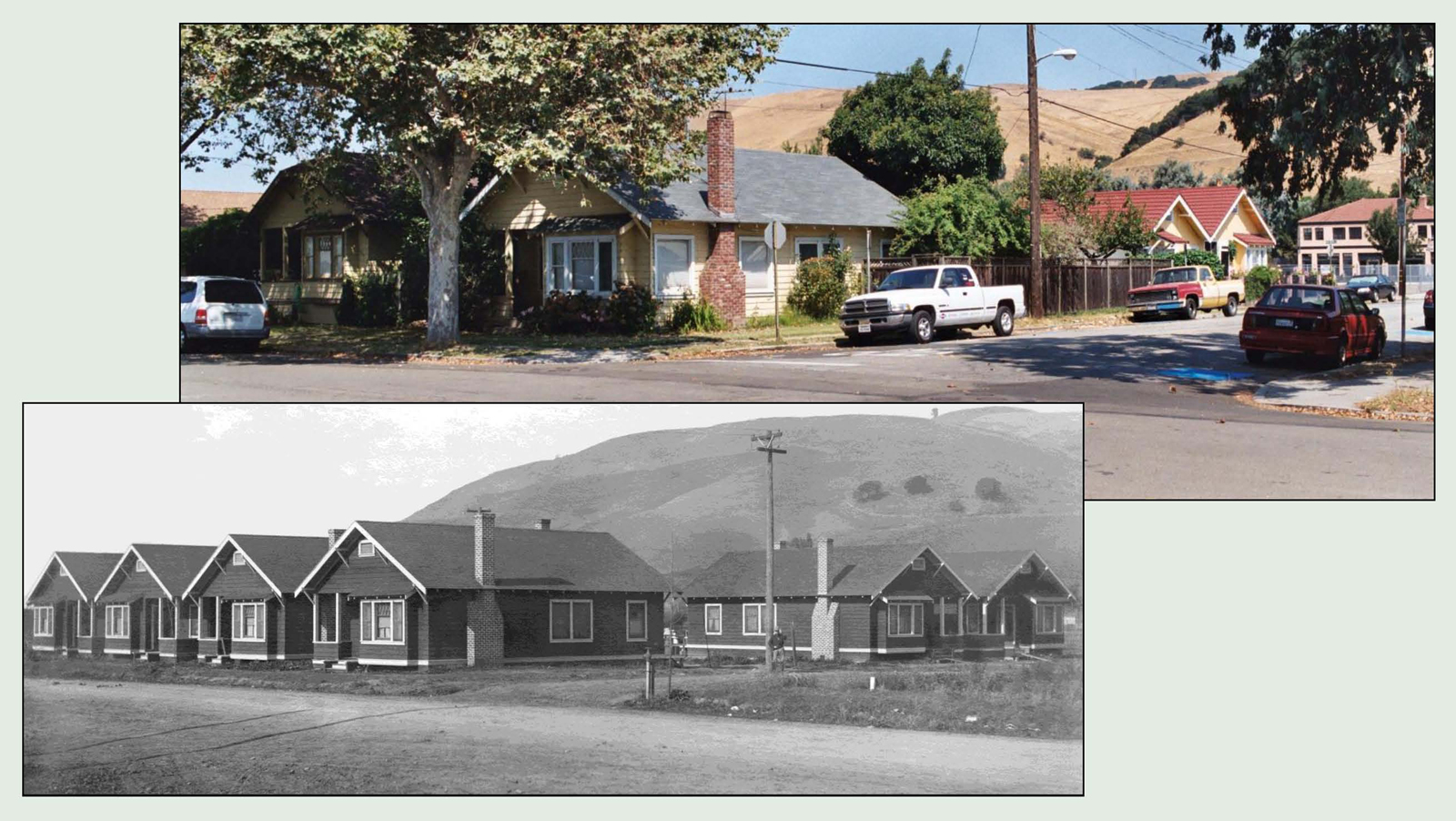
Looking north - Essanay built these bungalows for studio employees. To the far right is the home appearing with Charlie above.

Looking NW at G Street and 2nd – Essanay built these bungalows for studio employees. To the far right is the home appearing with Charlie in the fence scene above.

ca

A modern fire station with retro design now stands on the corner where the Essanay facility stood from 1913 to 1933 – the bungalows appear to the left. (C) Google Street View.

Looking west at the side of the Essanay studio. The same house appears in the Chaplin image - the gate in the studio fence appears right.

Looking west at the side of the Essanay Studio. The house at left appears in the Chaplin frame. At right, Charlie chases a boxer through the gate in the studio fence. Notice the enclosed glass shooting stage appearing behind Charlie’s head.

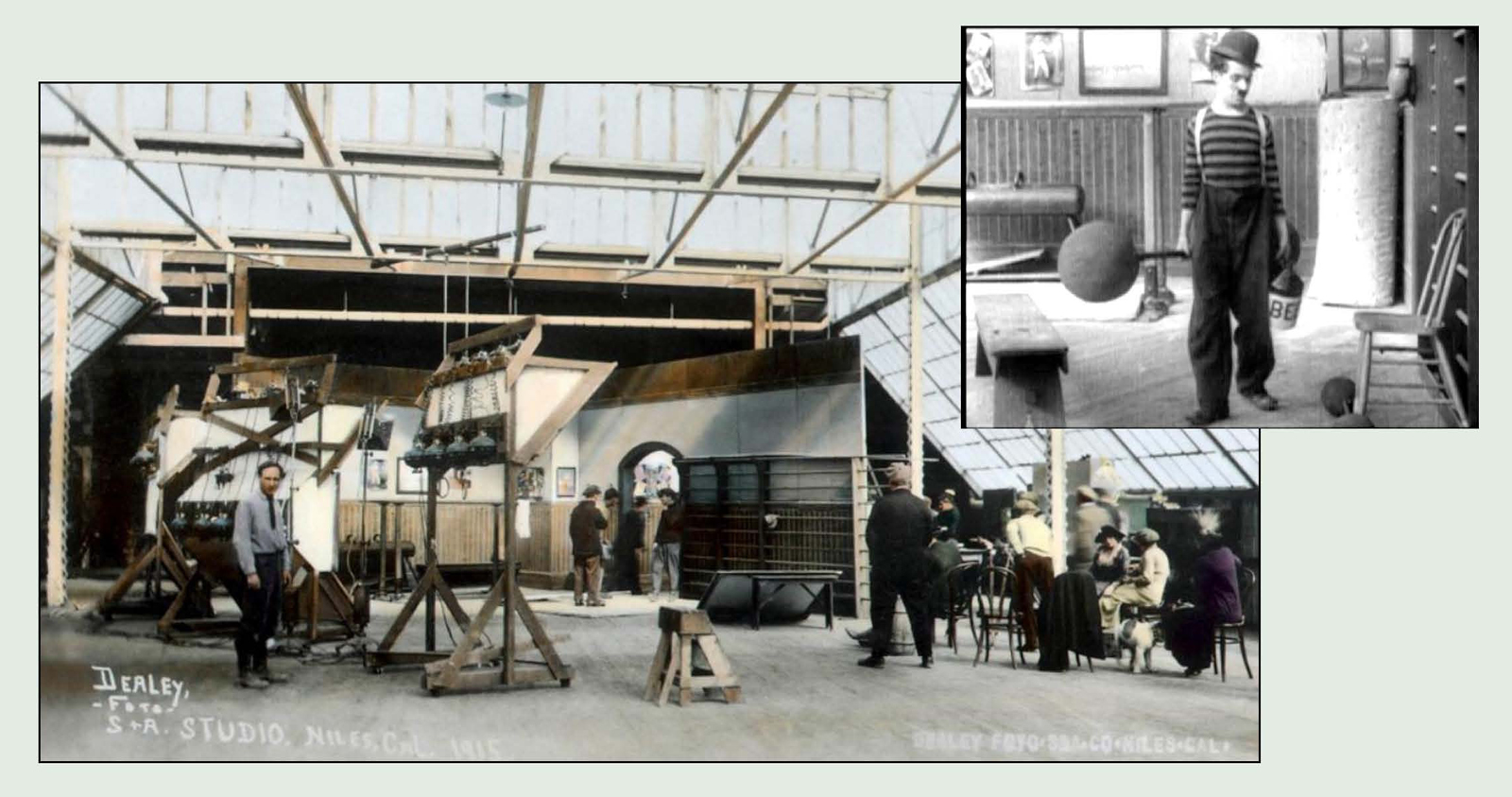
Looking north within the glass shooting stage, visible behind Charlie in the prior scene.

Looking north – filming The Champion within the glass shooting stage, visible behind Charlie in the prior scene.

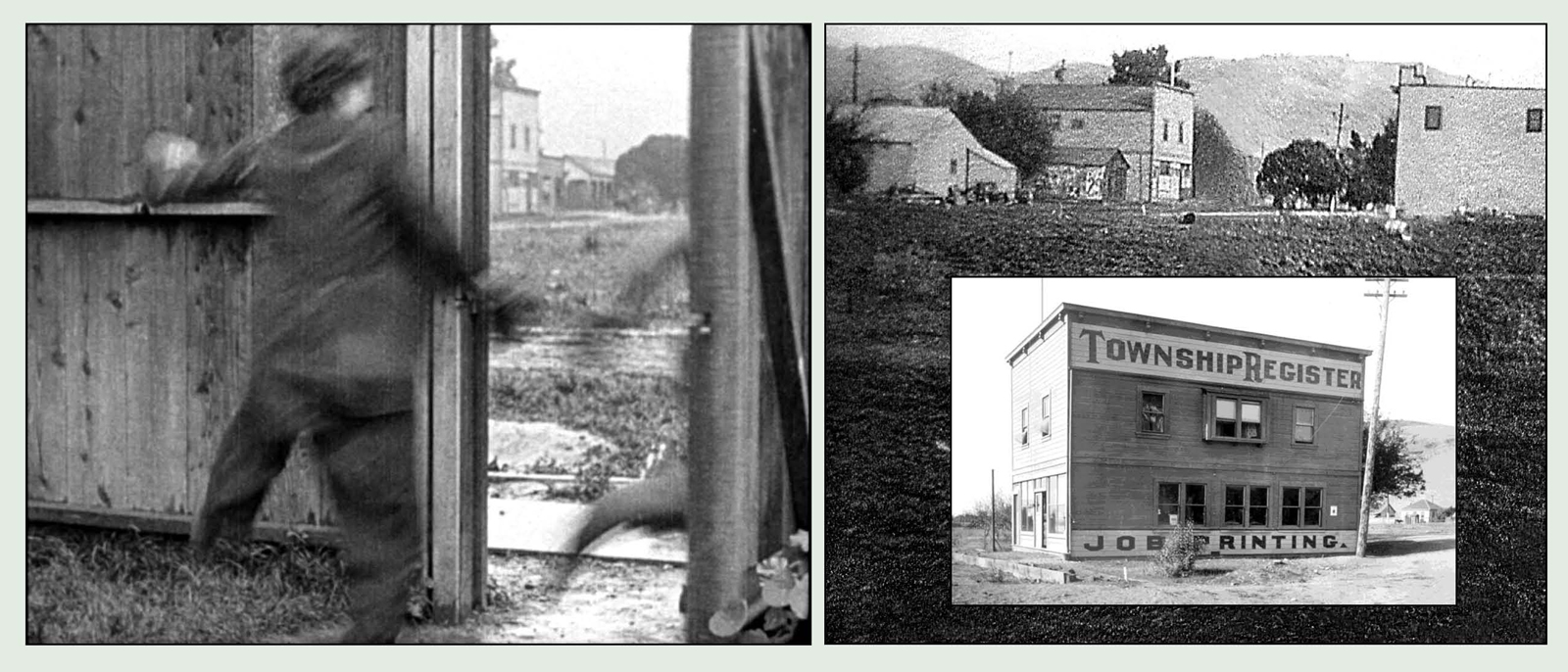
Looking east - when Charlie chases a boxer out of the studio gate, the southern face of the Township Register newspaper building appears at back.

Looking east – when Charlie chases a boxer out of the studio fence gate, the southern face of the Township Register newspaper building appears at back. The inset shows the other side of the building.

Charlie struts and performs calisthenics within the fenced in studio ground. He walked with his dog along the other side of this fence. Looking east, the top of the extant Edison Theater peaks over the fence. The color view shows the side of the theater today, now home to the Niles Essanay Silent Film Museum.
Looking east, Charlie struts and performs calisthenics within the fenced-in studio grounds. Above is a similar view east taken in Niles before the studio was built in 1913. The top of the extant Edison Theater (box) peeks over the fence, while the color view shows the side of the theater today, now home to the Niles Essanay Silent Film Museum. Charlie walked his dog from left to right along the outside of this fence. (C) Google Street View.
Looking to the SW, this shows Charlie's gate and the corner of the studio at G Street.

Looking SW at the corner of the studio at G Street, and the studio fence gate (arrow). Notice the glass stage behind Charlie.

Charlie captures the attention of a policeman in this view looking west along the front of the studio. The bleachers for the adjacent Sullivan Park baseball field (box) appears in the upper right corner.

Click to enlarge – Charlie captures the attention of a policeman in this view looking west along the front of the studio. The bleachers for the adjacent Sullivan Park baseball field (box) appear in the upper right corner (see below).

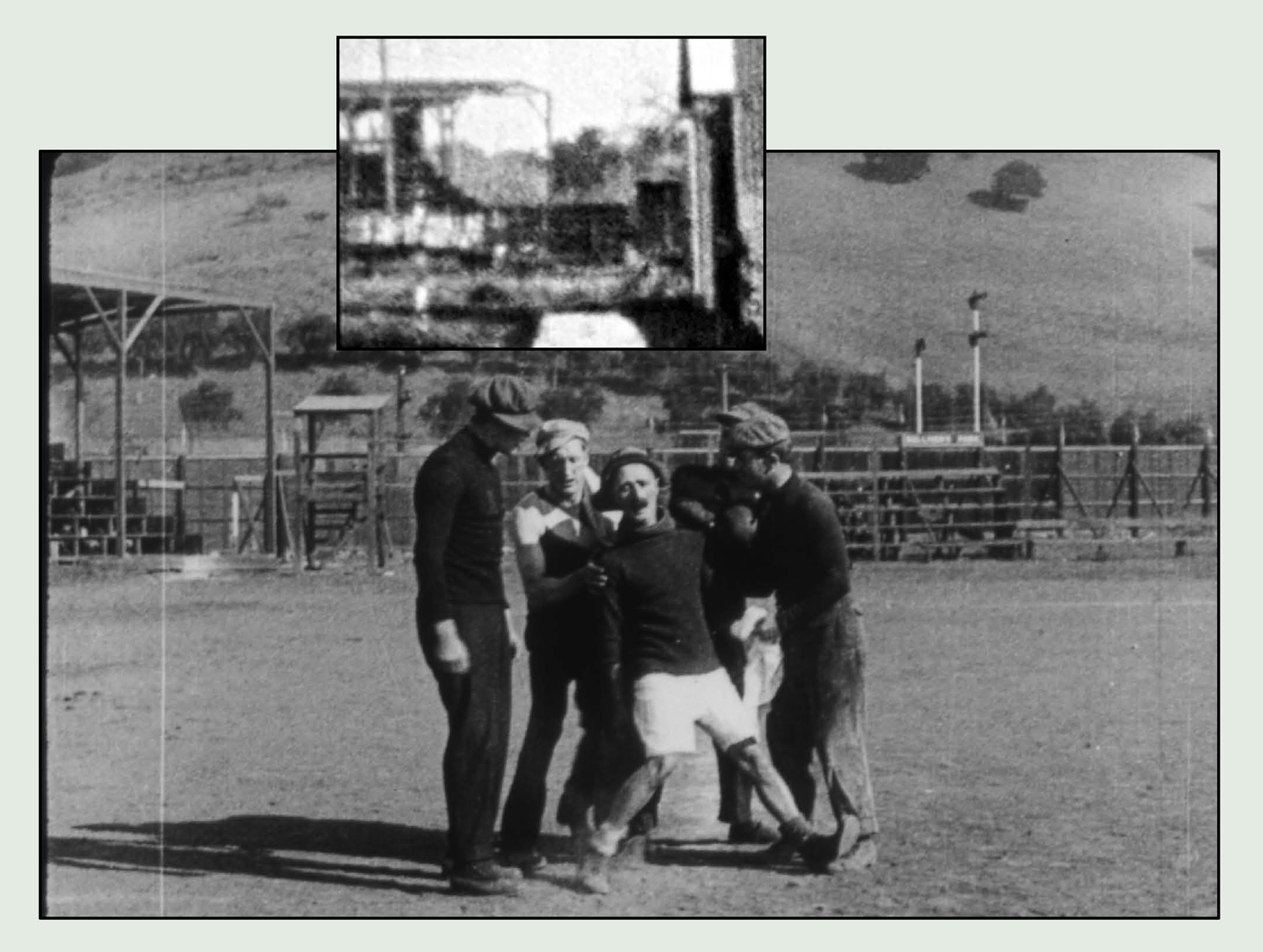
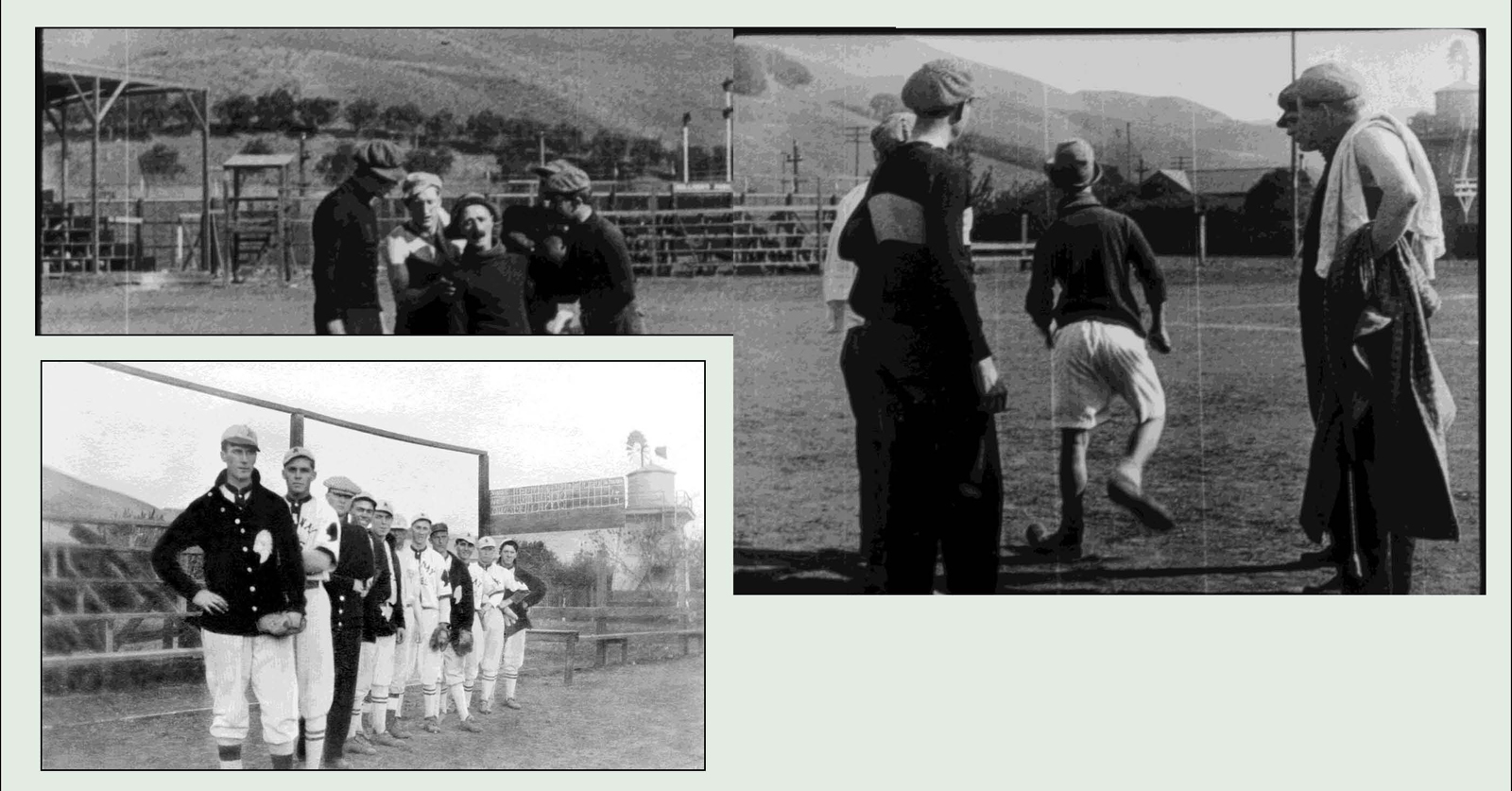
Looking north, this frame from Ben Turpin's 1913 comedy shows the Sullivan Park baseball field, due west of the studio. The inset, reversed for comparison, comes from Charlie's scene.

Click to enlarge – looking north, this frame from Ben Turpin’s 1915 comedy Snakeville’s Champion shows the Sullivan Park baseball field, due west of the studio. The inset from Charlie’s scene in The Champion, reversed here for comparison, shows the park’s shaded bleachers. Turpin and Chaplin made two films together for Essanay, His New Job filmed in Chicago, and A Night Out filmed in Niles and Oakland.

Looking north, this panoramic view of the ball park combines frames from Ben Turpin's film. The inset shows the Essanay Studio baseball team in 1913. Second from the right stands Rollie Totheroh, Chaplin's cameraman for 26 years.

Click to enlarge – looking NE, this panoramic view of the ball park combines frames from Ben Turpin’s film. The inset shows the Essanay Studio baseball team in 1913. Second from the right stands Rollie Totheroh, who would become Chaplin’s cameraman in 1916, working with him until Rollie retired in 1954. This ball field stood due west of the studio. Historian David Kiehn writes that Chaplin did not necessarily endear himself to the townspeople during his brief stay. Notorious for his huge salary and signing bonus with Essanay, widely publicized at the time, Chaplin reportedly didn’t tip local waitresses, pay for his rounds at the bar, and mooched walnuts at the general store. “He was a shy person off-camera, and I think he tried to make up for it by pretending to be outgoing,” says Kiehn. “There are stories that at baseball games he would go under the bleachers and pinch the bottoms of women.” Presumably any bottom-pinching in Niles would have taken place here.

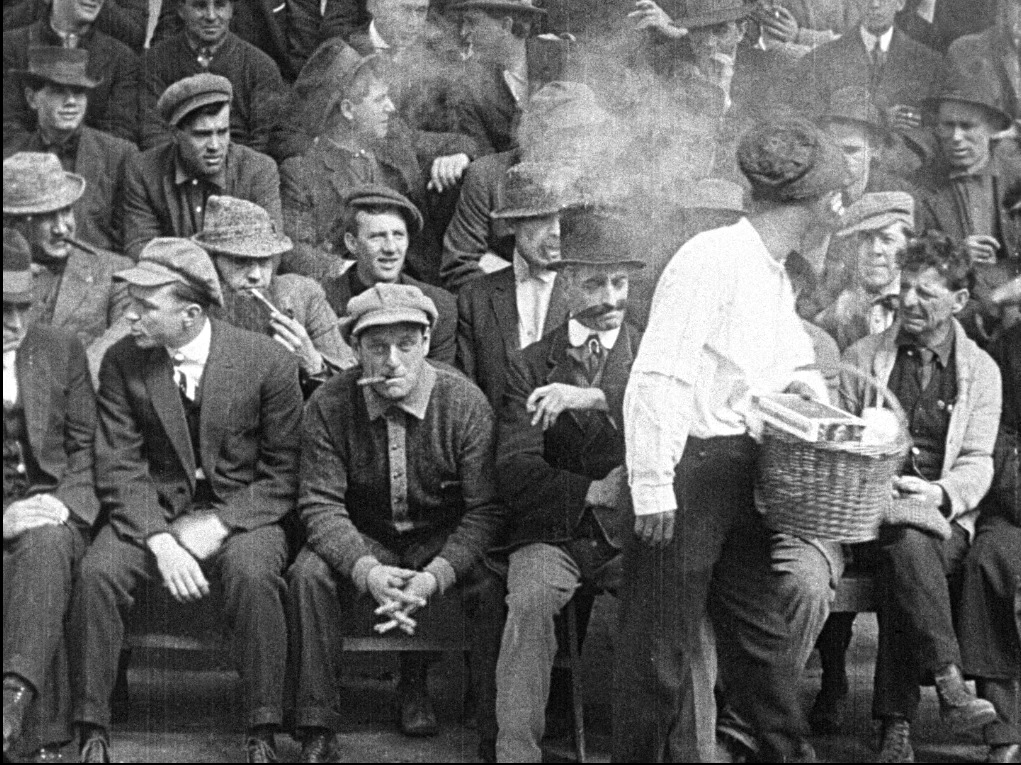
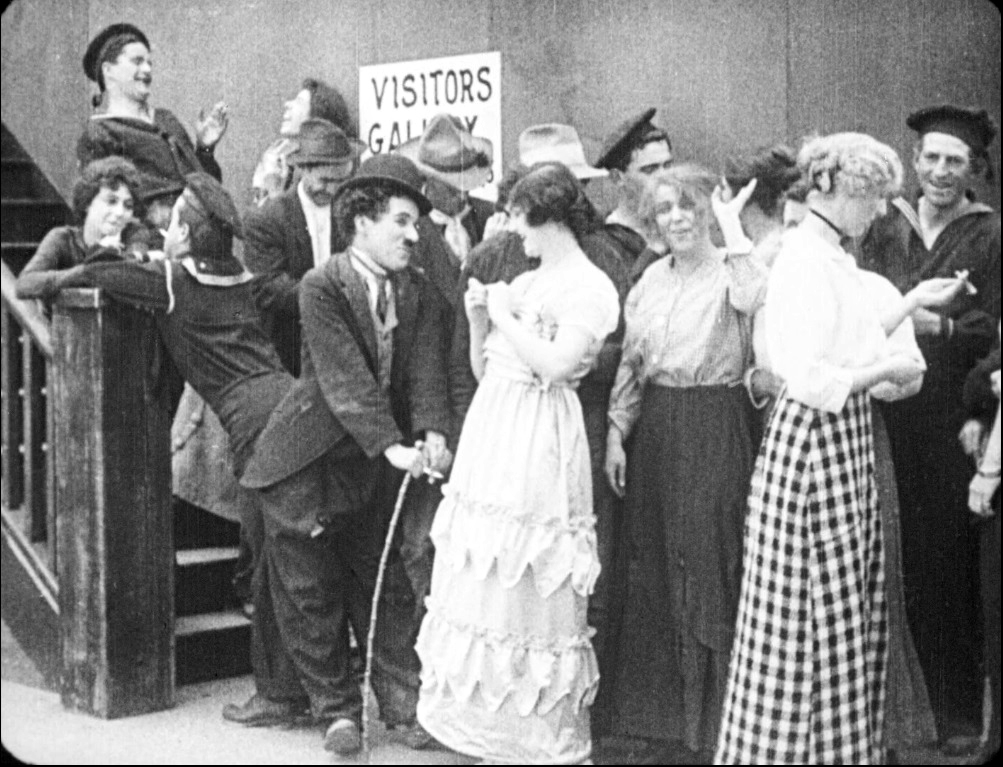
tramp-14Chaplin’s boss and Essanay co-founder Gilbert M. “Broncho Billy” Anderson, cinema’s first cowboy star, had been making films at Niles for a couple of years before Charlie arrived there in late January 1915. This recent post explains how Chaplin filmed the iconic shot of his Little Tramp traipsing down a country road, the concluding scene from The Tramp, at the same spot where Anderson had previously filmed action scenes for his cowboy films. The Tramp was Chaplin’s final champion-17production during his 10-week stint in Niles before heading to Los Angeles. Anderson and Chaplin became friends working together in Niles. At the right, Anderson plays a cameo in The Champion, seen here staring into the camera, as an extra watching Charlie’s boxing match. You can purchase a newly released two DVD set containing 16 Anderson Broncho Billy films, shot mostly at Niles, HERE.

All vintage images courtesy of David Kiehn, historian for the Niles Essanay Silent Film Museum, and author of the wonderful history of the studio, Broncho Billy and the Essanay Film Company. You can read more about Chaplin filming The Champion in my book Silent Traces.

1915-the-champion-2Preservationist Serge Bromberg of Lobster Films, and Cineteca di Bologna, have restored all 15 of Chaplin’s 1915 Essanay short comedies, available as a 5 disc Blu-ray/DVD box set from Flicker Alley. The restoration of The Champion was made possible thanks to the generous support of the Niles Essanay Silent Film Museum.
All images from Chaplin films made from 1918 onwards, copyright © Roy Export Company Establishment. CHARLES CHAPLIN, CHAPLIN, and the LITTLE TRAMP, photographs from and the names of Mr. Chaplin’s films are trademarks and/or service marks of Bubbles Incorporated SA and/or Roy Export Company Establishment. Used with permission.
Posted in Charlie Chaplin | Tagged , , , , , , , , , | 5 Comments

The Chaplin – Keaton – Lloyd Hollywood Alley

Hollywood Heritage celebrated the Chaplin-Keaton-Lloyd Alley on 9-29-2021, National Silent Movie Day, by dedicating a special plaque (see below).

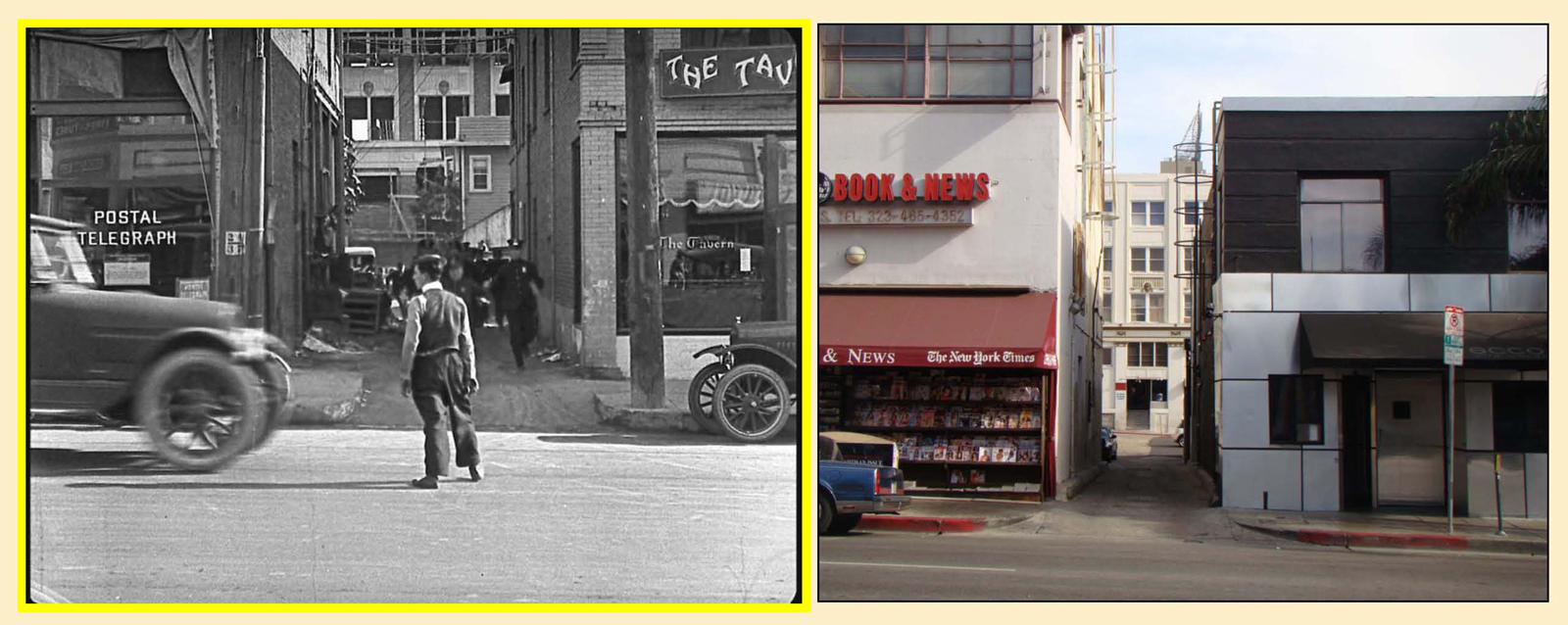
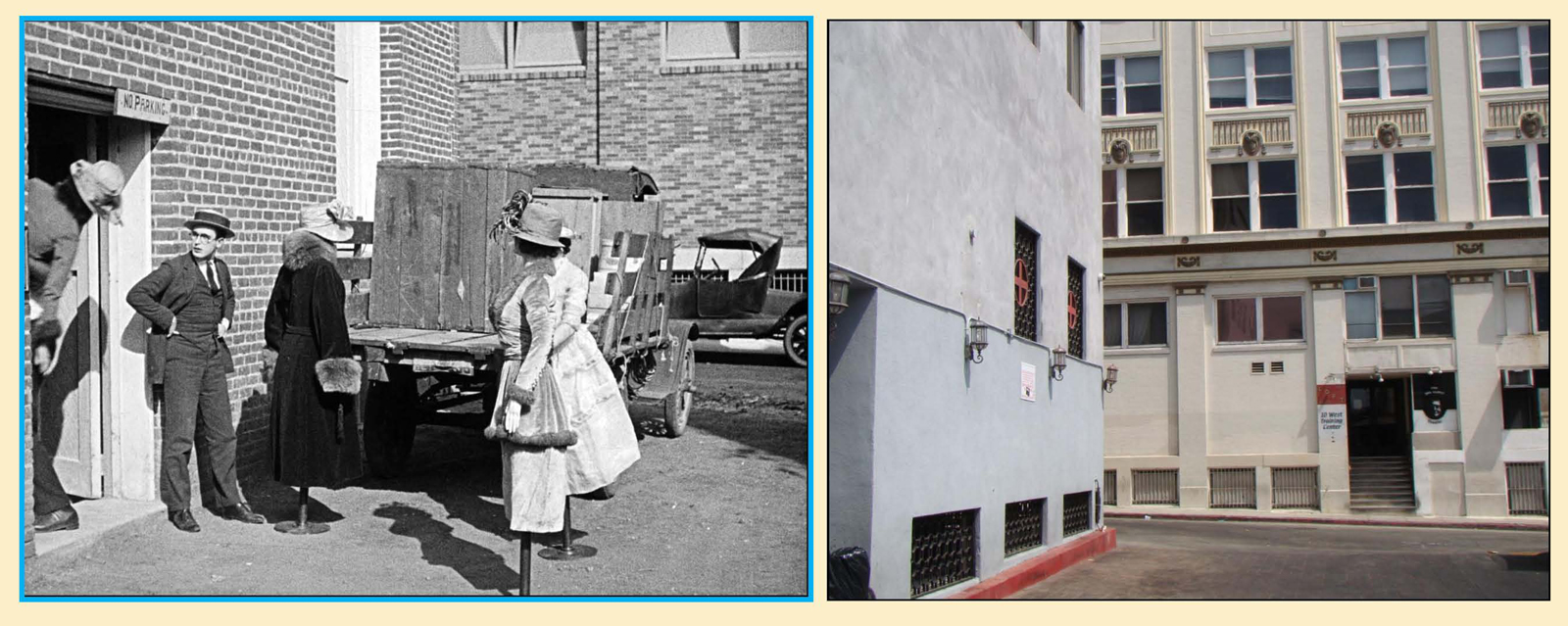
Three of the greatest comedies of all time, Charlie Chaplin’s The Kid (1921), Buster Keaton’s Cops (1922), and Harold Lloyd’s Safety Last! (1923), were filmed in the Heart of Hollywood at the unnamed alley running just south of Hollywood Boulevard from Cahuenga to Cosmo. Each film has been inducted into the National Film Registry of the Library of Congress as a work of enduring importance to American culture. This humble spot honors three of Hollywood’s brightest stars in three of their most famous movies – a 6-in-1 constellation absolutely unique in Hollywood history. See stories in The Hollywood Reporter HERE, in London’s The Guardian HERE, in Atlas Obscura HERE, and in The Los Angeles Times HERE.

Above, step by silent footstep, clues from a dozen silent films collectively reveal the century old secret that is the Chaplin-Keaton-Lloyd Alley, with a beautiful score composed and performed by Jon C. Mirsalis.

the-chaplin-keaton-lloyd-hollywood-alley-blog_page_10

Looking south, Charlie Chaplin in The Kid.

the-kid-blu-ray-41It was here Charlie’s Little Tramp discovers the abandoned infant he will raise as his son (portrayed as a child by Jackie Coogan) during the opening scenes from The Kid. This main view looks south, where a patio dining area blocks some of the view today. A reverse view (right) shows Charlie running north towards the same spot. As posted HERE, Charlie and Jackie Coogan reunite emotionally later in the film at Olvera Street downtown.

the-chaplin-keaton-lloyd-hollywood-alley-blog_page_12

Looking east from Cahuenga, Buster Keaton in Cops.

the-chaplin-keaton-lloyd-hollywood-alley-blog_page_05The west end of the alley on Cahuenga appears in Keaton’s most famous short film Cops. Chased by a mob of angry police, Buster stops in the street and grabs a passing car one-handed that whisks him out of frame to safety (left – click to enlarge). At back appears the extant Palmer Building on Cosmo, still under construction at the time, that would become the future home of the now defunct Hollywood Citizen newspaper.  The art deco building on Cahuenga now standing to the left of the alley was completed in 1935 (designed by noted LA architects Morgan, Walls & Clements), making the alley slightly more narrow today.

the-chaplin-keaton-lloyd-hollywood-alley-blog_page_11

Looking east towards Cosmo, Harold Lloyd in Safety Last!

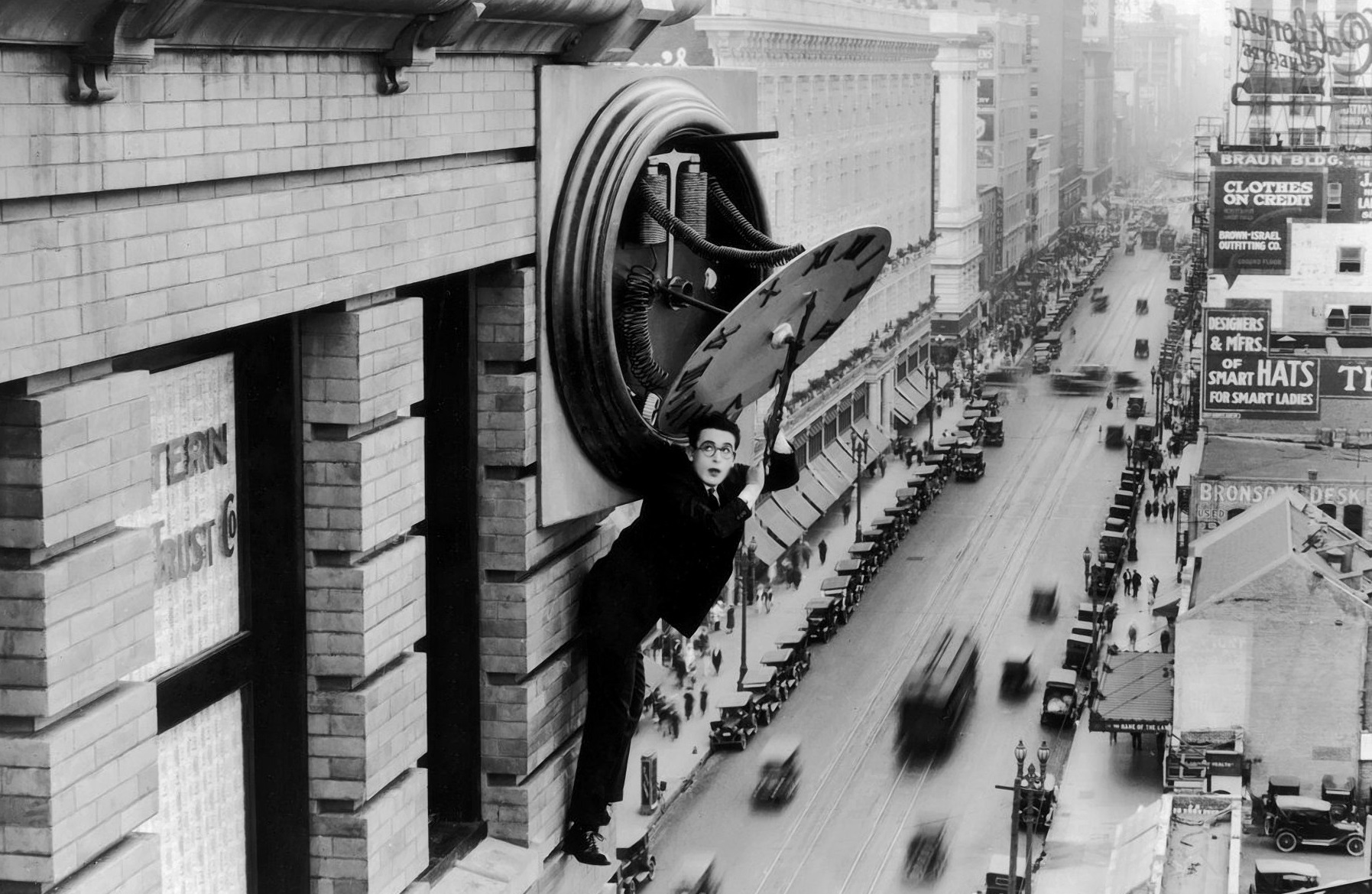
sl-cropLloyd is best remembered for hanging from a skyscraper clock in the stunt climbing thrill comedy Safety Last! Harold plays a department store salesman in this film, shown above calculating how to sneak in late to work. The east end of the alley portrayed the back of Harold’s store, where Lloyd filmed many scenes, with the Palmer Building on Cosmo forming a backdrop.

ca

Click to enlarge – looking NE at the alley running from Cahuenga (left) to Cosmo (right). HollywoodPhotographs.com

Several other posts expand the history of this alley. Further details about Chaplin, Keaton, and Lloyd filming at the alley HERE. Pioneering female director Lois Weber filmed Where Are My Children (1916) HERE. Pioneering women filmmakers Grace Cunnard, Cleo Madison, and Gale Henry also filmed HERE. Harry Houdini staged his 1919 feature The Grim Game HERE. The site appears in the 1994 Johnny Depp/Tim Burton movie Ed Wood HERE. The alley appears in newly discovered footage from Keaton’s 1922 short My Wife’s Relations HERE.

the-chaplin-keaton-lloyd-hollywood-alley-blog_page_06All images from Chaplin films made from 1918 onwards, copyright © Roy Export Company Establishment. CHARLES CHAPLIN, CHAPLIN, and the LITTLE TRAMP, photographs from and the names of Mr. Chaplin’s films are trademarks and/or service marks of Bubbles Incorporated SA and/or Roy Export Company Establishment. Used with permission.

Another appearance, in My Wife's Relations.

Another alley appearance, Buster in My Wife’s Relations.

Cops (1922) licensed by Douris UK, Ltd.  HAROLD LLOYD images and the names of Mr. Lloyd’s films are all trademarks and/or service marks of Harold Lloyd Entertainment Inc. Images and movie frame images reproduced courtesy of The Harold Lloyd Trust and Harold Lloyd Entertainment Inc. Hollywood map detail © 1938 Thomas Bros. – David Rumsey Map Collection. Aerial photos courtesy HollywoodPhotographs.com and Marc Wanamaker – Bison Archives.

This link provides a comprehensive PDF tour of Cahuenga, where more silent movies were filmed by more stars than at any other spot in town. Chaplin-Keaton-Lloyd Alley Celebration and Cahuenga Tour.

This link provides a comprehensive PDF tour of over 50 silent movie locations across Hollywood.  Hollywood’s Silent Echoes Tour – Cinecon 2016 – John Bengtson.

Chaplin-Keaton-Lloyd-sign

Please Cheers to Hollywood Heritage – a California nonprofit public benefit 501(c)(3) corporation, for celebrating the Chaplin-Keaton-Lloyd Alley. If you want to honor a favorite star, or to recognize Hollywood’s origins and hidden history, please consider making a tax-deductible donation to this wonderful organization.

Please help support the Chaplin Keaton Lloyd alley by posting a review on Google maps below. Prototype sign design – Piet Schreuders. Download a 4-page brochure HERE. If you can, please share these videos and leave a thumbs up.

Posted in Buster Keaton, Chaplin - Keaton - Lloyd Alley, Charlie Chaplin, Cops, Harold Lloyd, Hollywood Tour, Safety Last!, The Kid | Tagged , , , , , , , , , , , , , , , | 26 Comments

Chaplin’s The Tramp – ‘New’ Views of One of Cinema’s Most Iconic Scenes

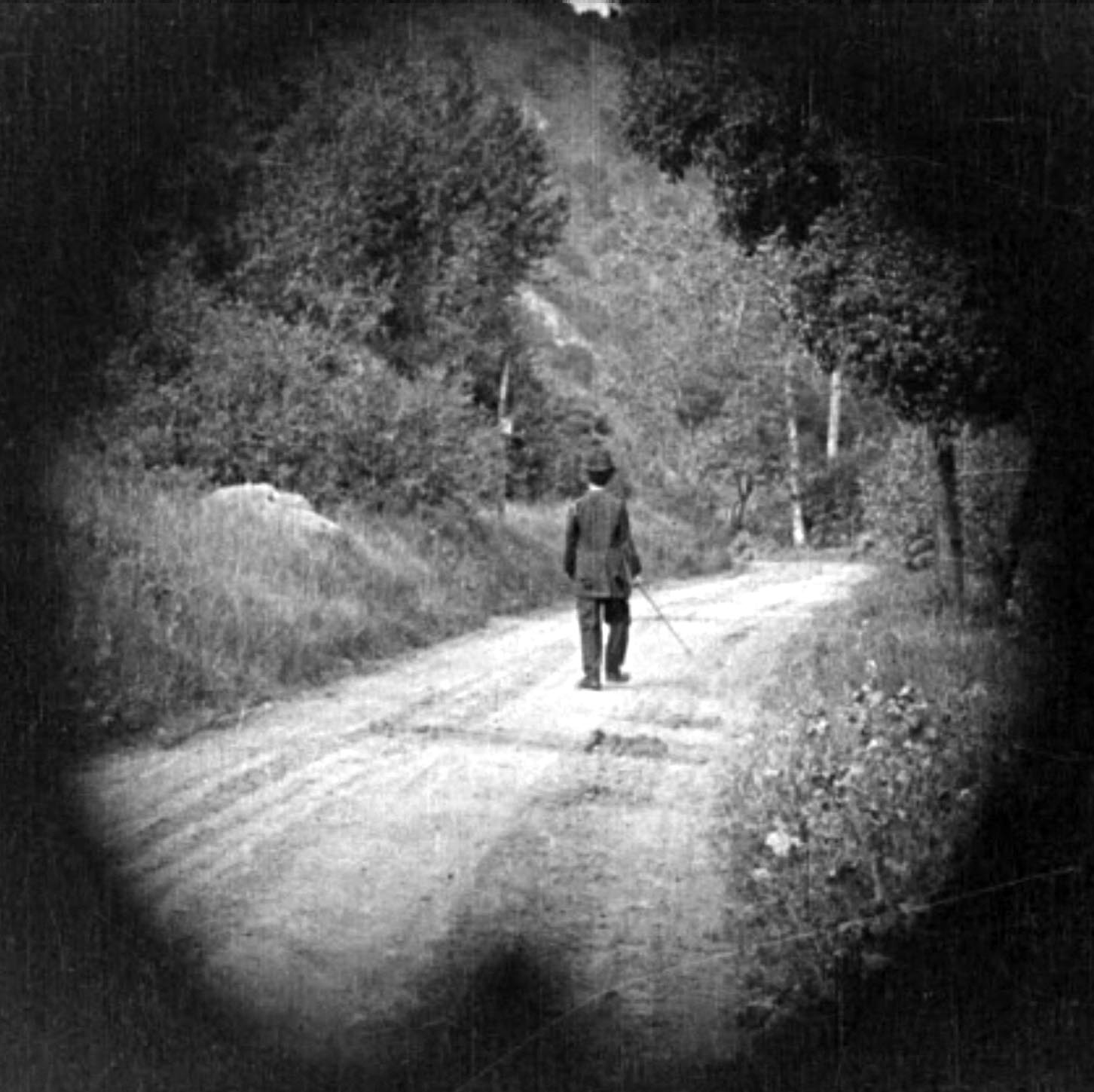
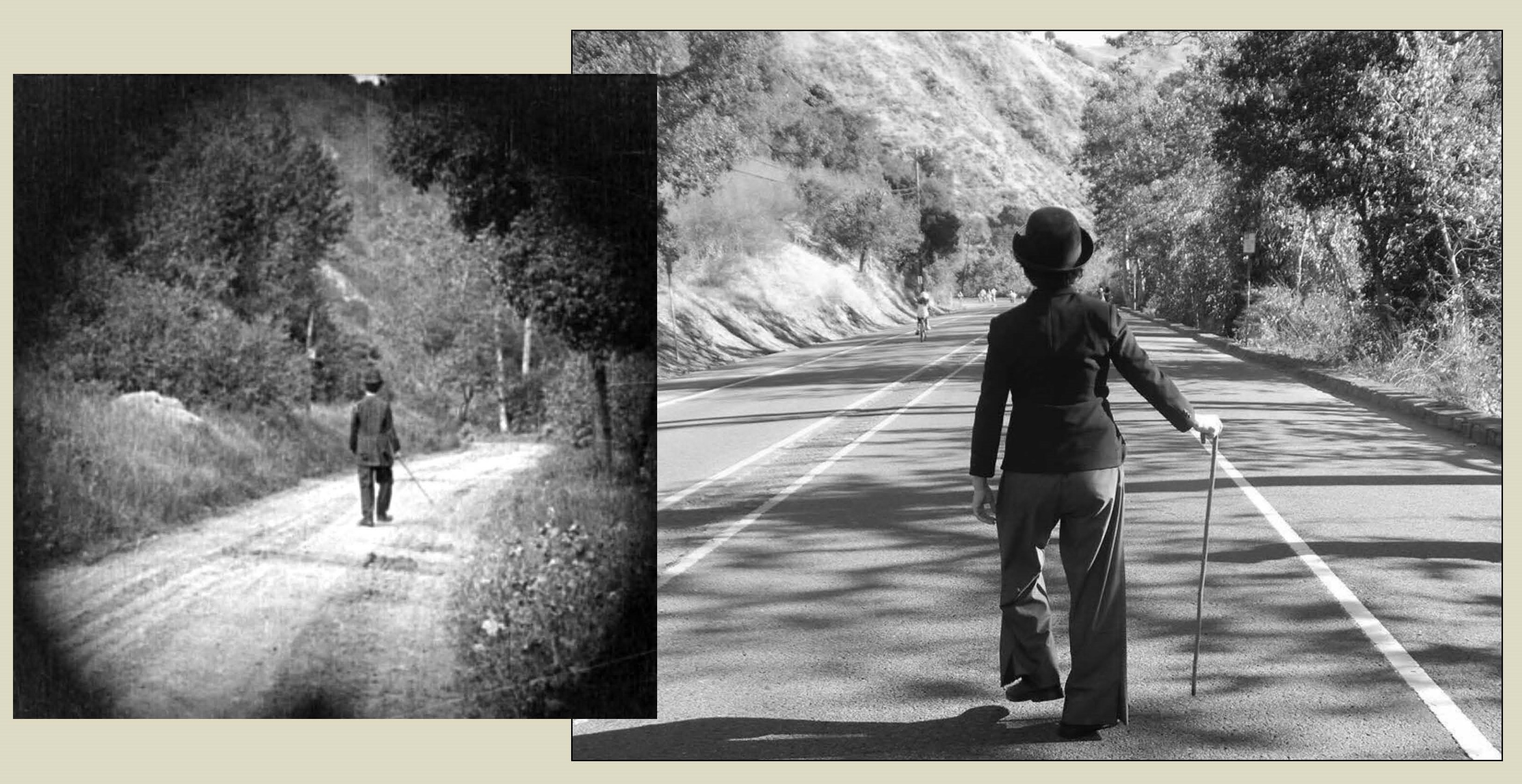
The final scene from The Tramp (1915) recreated in 2016.

The iconic final scene from The Tramp (1915) (left) recreated in 2016 by Alani Taira (photo by Rena Azevedo Kiehn) – the opening scene below.

tramp-03Forever known as “the Little Tramp,” Charlie Chaplin filmed his eponymous short film The Tramp for the Essanay company over 100 years ago in Niles, California. When Chaplin arrived at the Bay Area studio early in 1915, the small rural facility had already produced dozens of comedies and westerns, many starring Chaplin’s boss and Essanay co-founder Gilbert M. “Broncho Billy” Anderson, cinema’s first cowboy star.

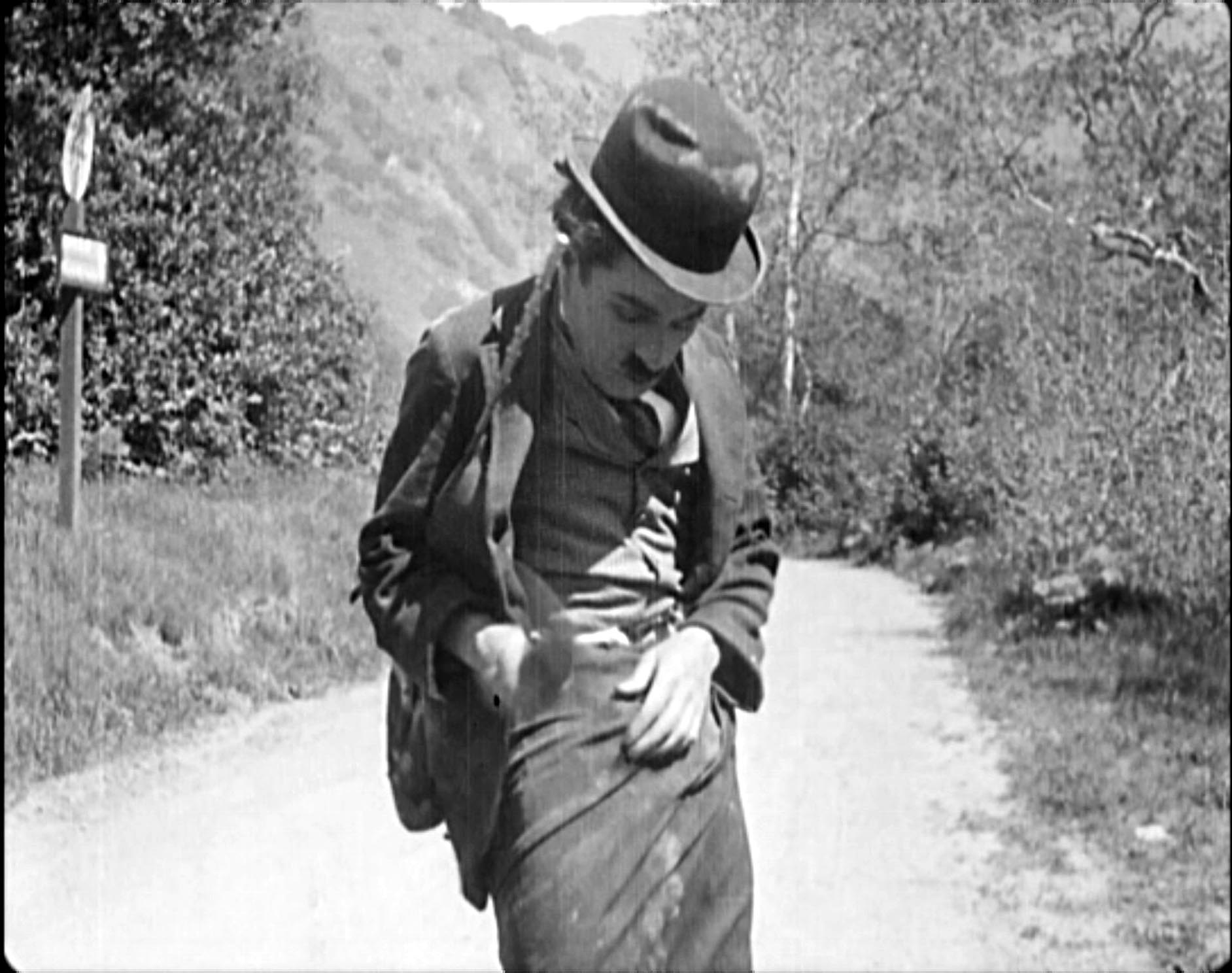
During The Tramp, Charlie falls for a kind-hearted farm girl played by Edna Purviance, but when he learns that she has a sweetheart, Charlie sadly returns to the open road. The comedy’s bittersweet ending was novel for its time, and provides one of the most poignant and enduring images in cinema history – the Little Tramp, traipsing down a lonesome road, his back to the audience, downtrodden, but suddenly straightening up, ready for a new adventure, as the camera irises in for the final fade out.

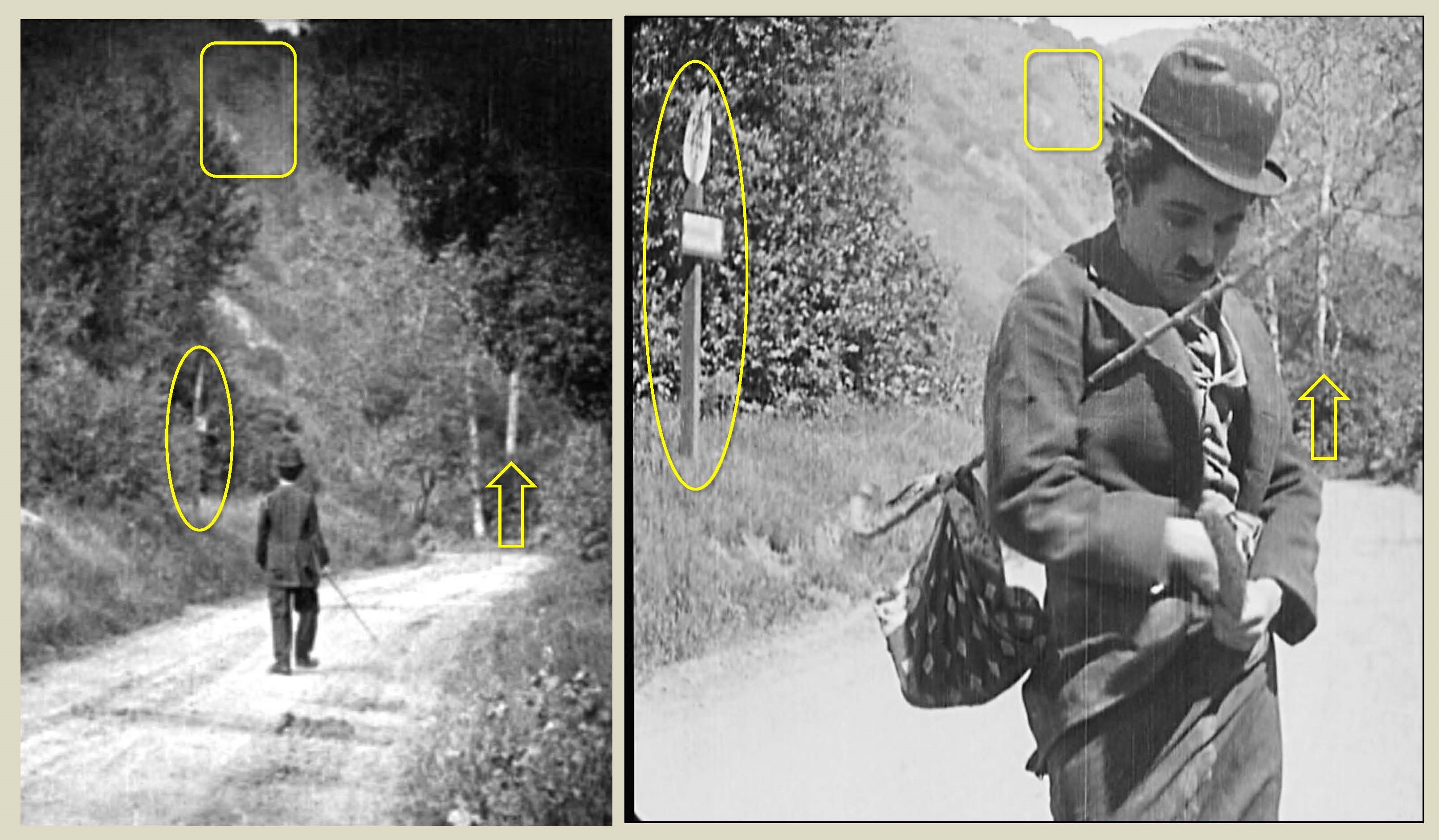
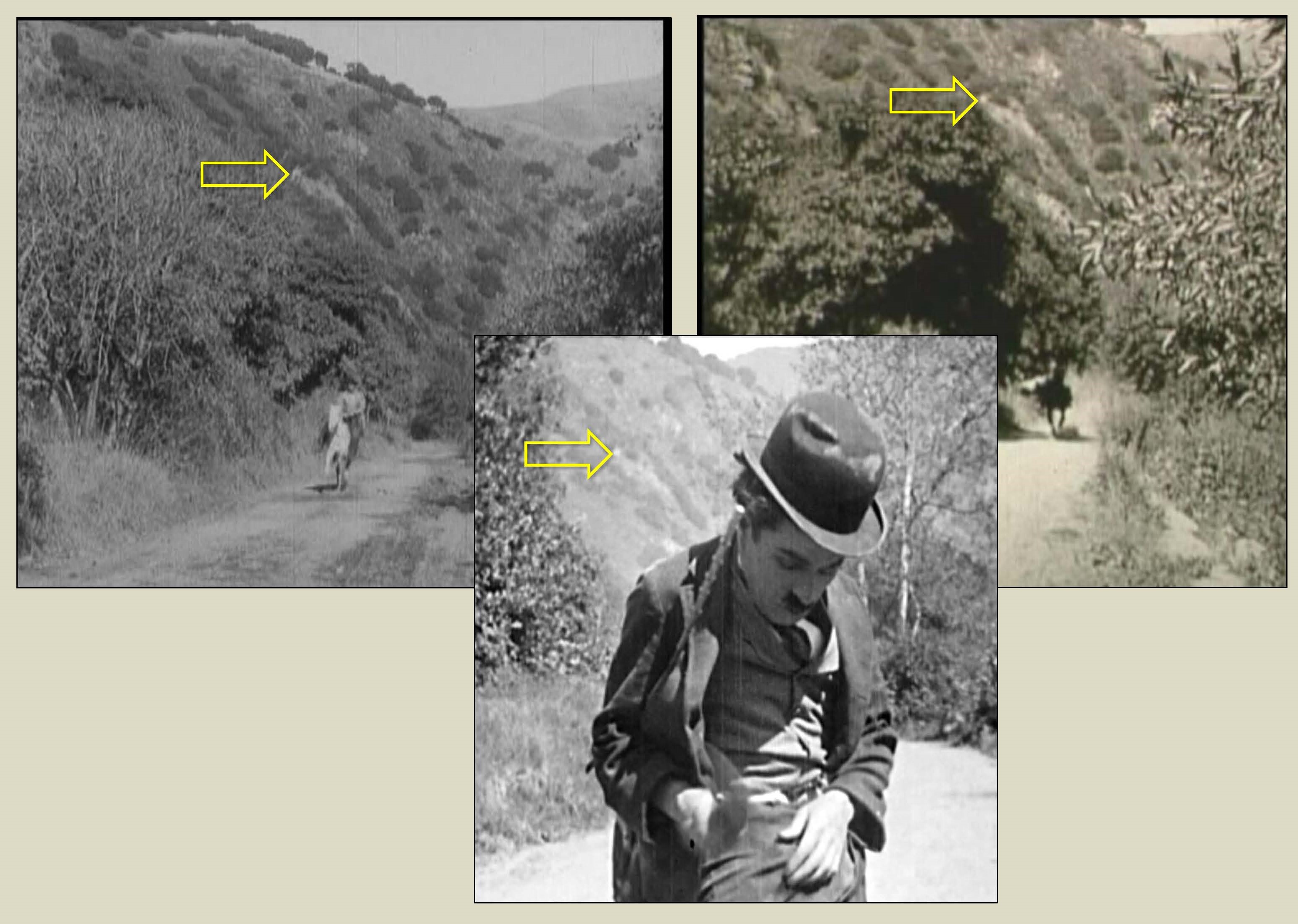
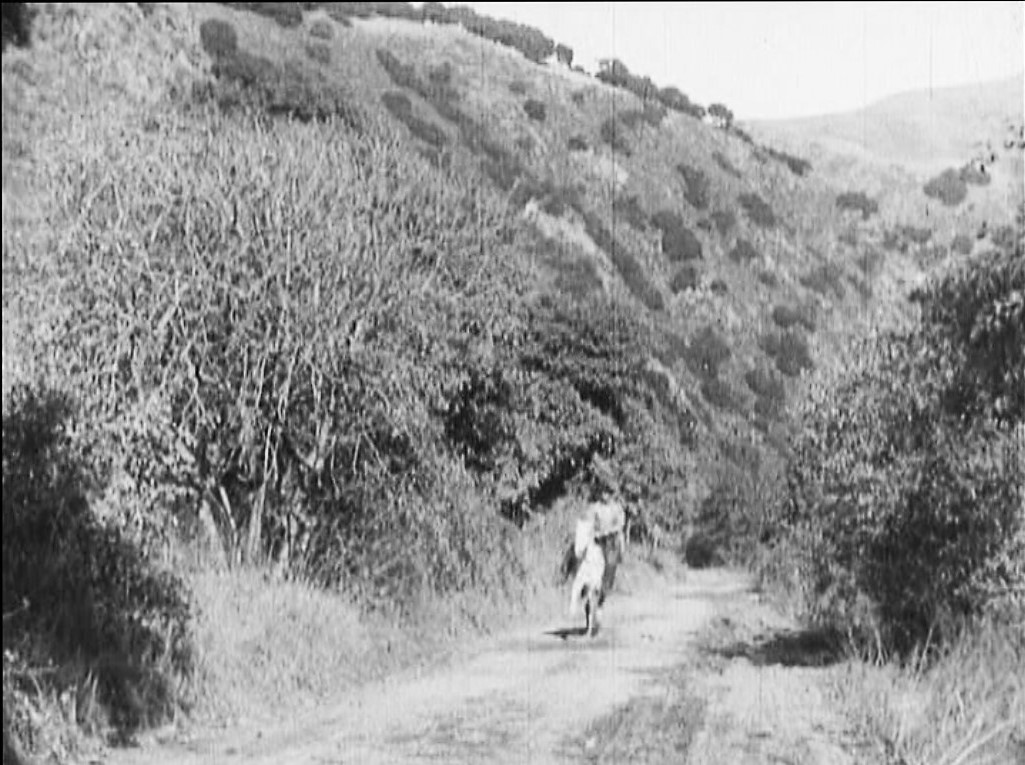
The same road sign, trees, and hillside features appear in the closing (left) and opening (right) scenes.

The same road sign, trees, and hillside features appear in the closing (left) and opening (right) scenes.

As I report in my book Silent Traces, Chaplin film location expert Gerald Smith made the incredible discovery that this lonely stretch of road can still be visited today along Niles Canyon. As shown above, it turns out that Charlie’s opening scene, dodging speeding cars, was filmed just a bit further west of the same spot as the closing scene.

CA

Click to enlarge. The Escape of Broncho Billy (1915) (left) and Broncho Billy’s Sentence (1915) (right), with matching hillside features as The Tramp (arrow), all filmed on Niles Canyon Road.

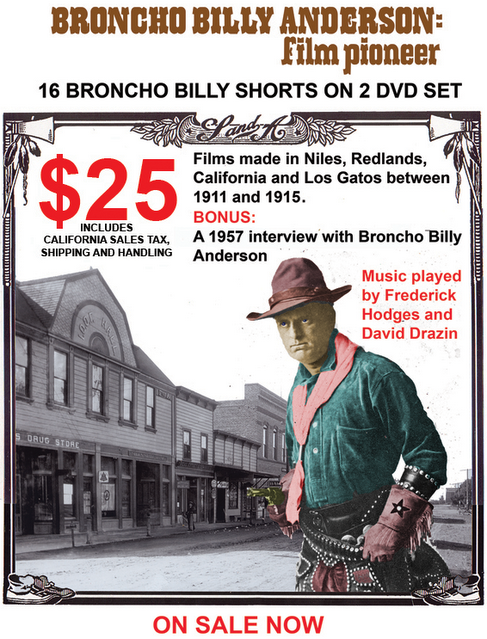
imgviewBut we now have even a broader perspective of this iconic setting. Thanks to the tireless efforts of Larry Telles, who funded and oversaw the project, the Niles Essanay Silent Film Museum has just released a wonderful two DVD set featuring 16 early Broncho Billy westerns, filmed mostly at Niles from between 1912 to 1915, and ably accompanied by talented musicians Frederick Hodges and David Drazin; Broncho Billy Anderson: Film Pioneer. This DVD marks the first time these 16 films have been available on home video, and nearly every title was transferred from a beautiful, clear print. At just $25 including tax and shipping, this fascinating two disc set offers a priceless view of early cinema, and helps support the museum’s worthy cause.

the-escape-of-broncho-billy-03Having filmed in the Niles area for years, Anderson had ample time to find his favorite places to shoot; a twist in the road here, a gully there, as clearly evidenced in these 16 films. So when it turns out that Chaplin’s iconic filming spot for The Tramp appears tramp-03in Anderson’s films as well, it’s easy to imagine why. Perhaps during a lunch break, or over drinks after work at the nearby Hotel Wesley, Charlie likely mentioned to Anderson that he needed a certain setting for his latest film, and Anderson gladly obliged by recommending ‘his’ spot to Charlie.

Although a busy two-lane highway today, Chaplin and Anderson’s filming spot still stands, a bit west of the blue emergency phone sign AL-84-125, along Niles Canyon Road east of town.

You can purchase the new Broncho Billy DVD HERE. To learn more about Broncho Billy, and the Essanay studio at Niles, be sure to check out historian David Kiehn’s invaluable book Broncho Billy and the Essanay Film Company.

Anderson and Chaplin were friends and appeared together. Here Anderson looks straight in the camera during Chaplin's boxing match in The Champion (1915).

Anderson and Chaplin were friends. He appears here looking straight at the camera during Charlie’s boxing match in The Champion (1915).

In turn, Charlie appears in Anderson's His Regeneration (1915).

In turn, Charlie appears in Anderson’s His Regeneration (1915).

Thanks to preservationist Serge Bromberg of Lobster Films, and Cineteca di Bologna, all 15 of Chaplin’s Essanay short comedies from 1915 have been beautifully restored, available as a 5 disc Blu-ray/DVD box set from Flicker Alley. All images from Chaplin films made from 1918 onwards, copyright © Roy Export Company Establishment. CHARLES CHAPLIN, CHAPLIN, and the LITTLE TRAMP, photographs from and the names of Mr. Chaplin’s films are trademarks and/or service marks of Bubbles Incorporated SA and/or Roy Export Company Establishment. Used with permission.

Where Charlie AND Broncho Billy once filmed.

Posted in Charlie Chaplin | Tagged , , , , , , , , , , , | 7 Comments

Silent Witness – the House that Watched Over Chaplin and Keaton

looms at back as Chaplin surveys construction of the department store set for his first Mutual production The Floorwalker (1916).

1022 Cole Avenue looms at back as Chaplin surveys construction of the department store set for his first Mutual production The Floorwalker (1916). Marc Wanamaker – Bison Archives.

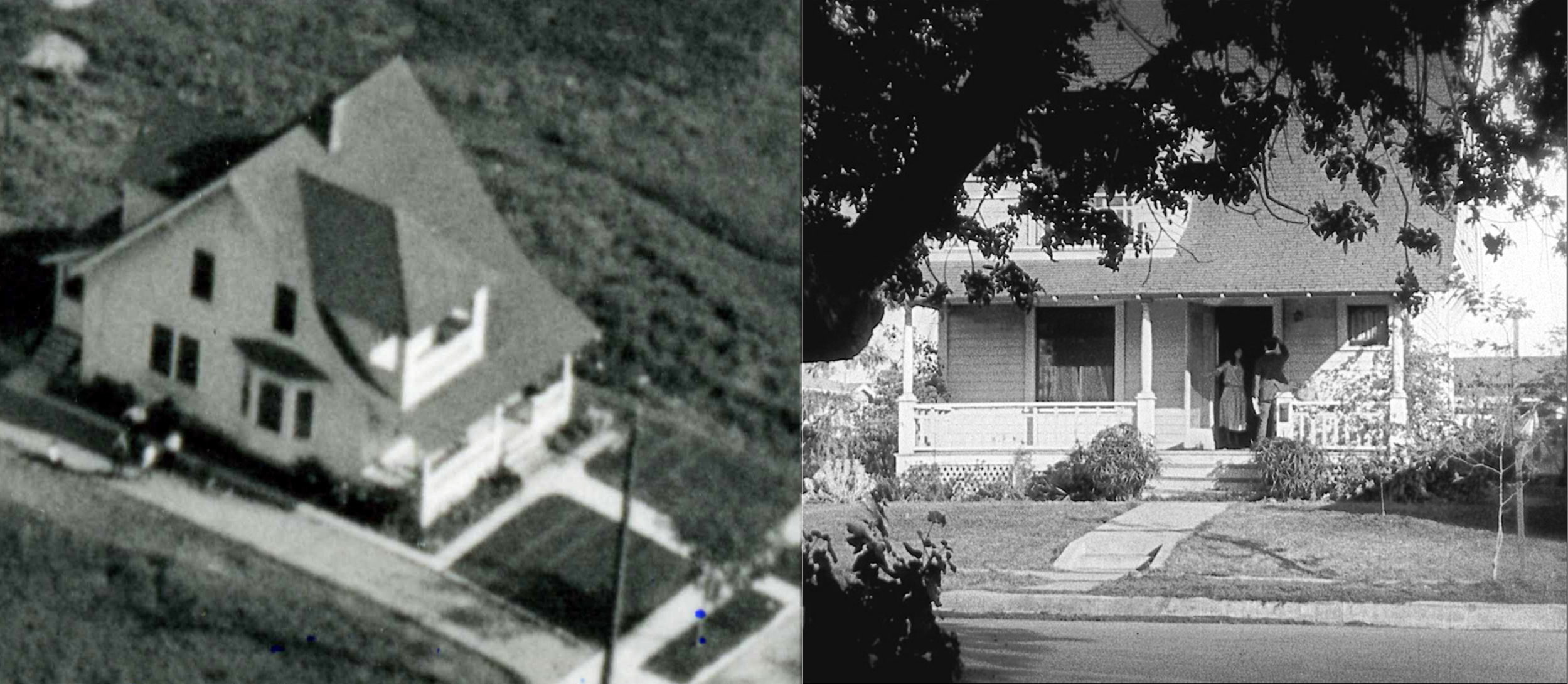
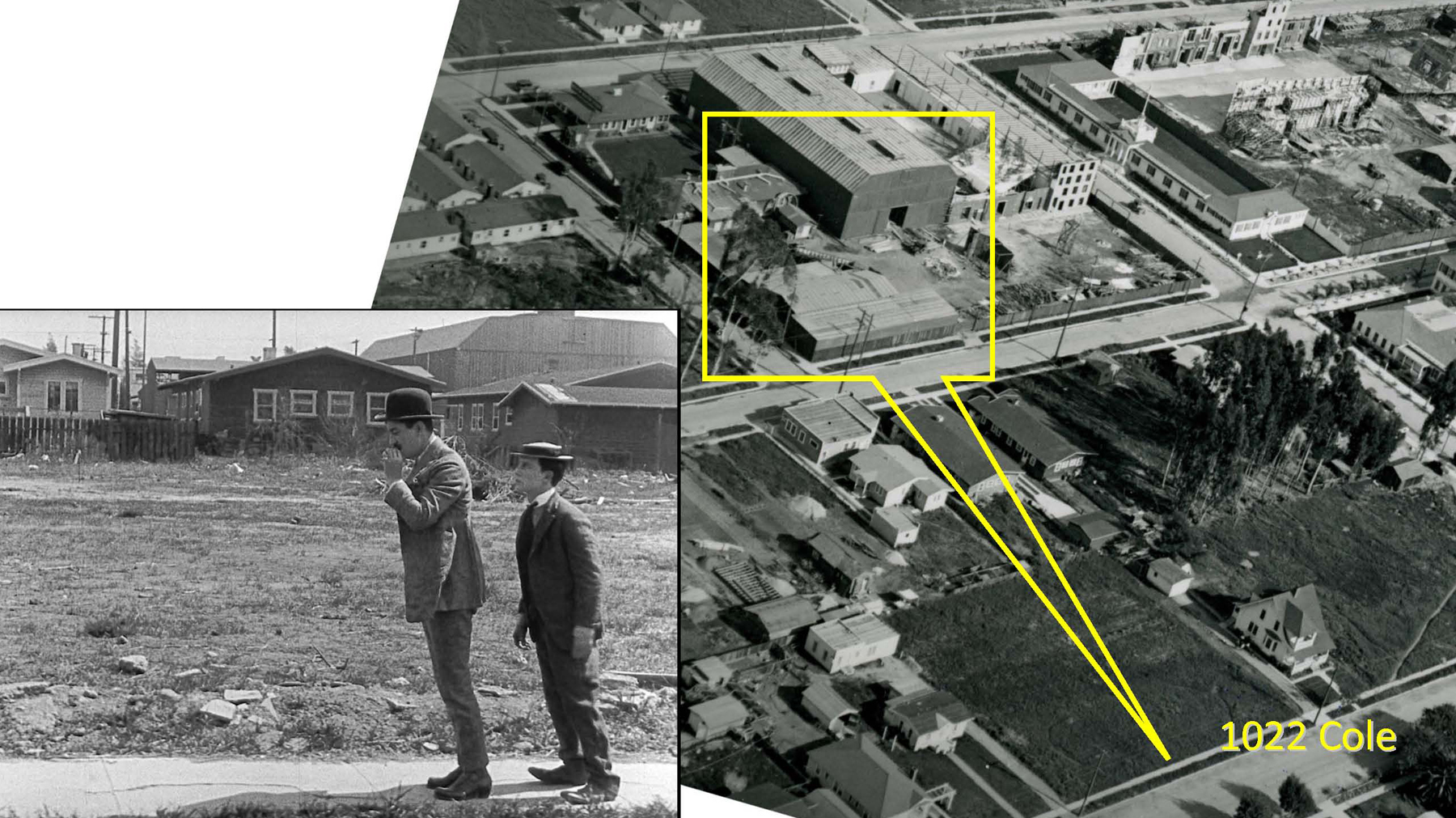
The sturdy two-story home once located at 1022 Cole Avenue had a front row seat to some of the most remarkable scenes in early Hollywood history. Its rear dormer window looked down on the humble open air stage where Charlie Chaplin filmed his 12 Mutual comedy short films in 1916-1917, and where Buster Keaton later made his independently produced short and feature films (1920-1928). Moreover, the home appears peeking over the studio fence in many early scenes. One can only imagine the cinematic activity this home witnessed before it was demolished in 1929 to make way for the Technicolor Building, itself a landmark of Hollywood history, and now a Gold’s Gym.

This aerial view, taken in 1921 during Keaton’s production of The Goat, shows the home relative to the open air stage that Keaton would close over later that year.

This aerial view, likely taken March 7, 1921, shows the home relative to the open air stage that Keaton would close over later that year. Remnants of the Convict 13 prison guard tower set, discussed further below, can be seen in the far corner. The white wall near the prison set is Buster’s ‘WANTED’ poster appearing in The Goat. The Metro Studio front office buildings appear at top. HollywoodPhotographs.com.

The Boat - newly restored from The Blacksmith.

1022 Cole, similar views – The Boat (left) – newly restored from The Blacksmith (right).

Since Buster filmed more frequently than Charlie on the studio backlot, the home makes several cameo appearances in Keaton’s early short films. Above the home stands watch over The Boat (1921), as Buster and family realize that towing a boat through a too-narrow basement doorway has just destroyed their domicile. The Cole home also appears in some of the remarkably restored Lobster Films blacksmith-new-28footage from The Blacksmith (1922) newly released by Kino-Lorber. The home first appears over the fence in these scenes with Buster and Big Joe Roberts filmed inside the studio gate on Cahuenga, above and at left.

ca

Click to enlarge – 1022 Cole (box) and upper right during the opening and closing scenes from Day Dreams.

Although fairly obscured by a fake garden fence, the home also appears during the opening and closing scenes from Day Dreams (1922) shown above, purportedly looking from Reneé Adorée’s front porch, as Buster dodges a car when first greeting her, and again during his return home, via parcel post, following his failure to strike it rich in the big city.

The open area of the studio backlot faced 1022 Cole. HollywoodPhotographs.com.

The arrow in this circa 1920 photo marks where Renee’s house would later be built for Day Dreams in 1922, facing a small vacant lot across the street, behind which stood 1022 Cole. HollywoodPhotographs.com.

1022 at right

The Blacksmith – 1022 Cole at right

Chaplin and Keaton built their biggest sets in the empty backlot corner at Romaine and Cahuenga pictured at right above. Chaplin built the “T”-shaped tenement set for Easy Street (1917) at this corner, and likely built the fountain and spa exterior set from The Cure (1917) there as well. As explained further below, the above view shows both the prison set from Buster’s Convict 13 (1920), and Buster’s similarly configured tenement set from Neighbors (1920). Buster also used the small vacant lot across the blacksmith-new-04street from the studio (shown above) for many films including College (1927), where he built a dormitory set on the vacant lot. This vacant lot appears in many restored scenes from The Blacksmith (left), where in one shot (above) 1022 Cole appears again at back to the right.

A closer view of the small corner backlot shows where Buster filmed this scene from The Boat.

A closer view of the small corner backlot shows where Buster filmed this scene from The Boat.

This even closer view shows the Convict 13 prison set, and the Neighbors tenement set.

This even closer view shows the Convict 13 prison set, and the Neighbors tenement set.

Note the 1022 address by the door.

Note the 1022 address by the door.

While Day Dreams marked the final onscreen appearance for the back of the Cole Avenue home, Buster saved the best for last when filming Sherlock Jr. (1924), where the front of 1022 Cole portrays his fiancé’s family home. The home appears in full view when Buster pays Kathryn McGuire a visit, and again in closer view when Buster, an amateur detective, ponders whether to shadow his rival up the street. The 1022 address appears clearly visible beside the door, and in faded numbers on the front step.

1022 Cole, in both real and "reel" life. HollywoodPhotographs.com.

Click to enlarge – 1022 Cole in real life (left) and in “reel” life from Sherlock Jr. HollywoodPhotographs.com.

Geographically consistent, the following scene of Buster closely tracking Ward Crane’s every step and gesture was filmed looking east as they walk north from the home up Cole, providing a clear view of the Keaton Studio enclosed stage and corner barn, perhaps the only extant movie footage in which this historic studio appears.

Looking east from Cole towards the Keaton Studio barn and enclosed shooting stage. HollywoodPhotographs.com.

Looking east from Cole towards the Keaton Studio barn and enclosed shooting stage. HollywoodPhotographs.com.

On a human note, I checked the city directories online at the LA Public Library, and found that Allen J. Henderson, a salesman, lived at 1022 Cole in 1916, while Edgar C. Beach, a ‘pumper’ lived there in 1917. Juanita D. Caplinger resided there in 1920, Louis J. Ramirez, a truck foreman, later salesman, lived there the longest, during 1921-1923, while Taylor E. Duncan, photographer lived there in 1924. Robert wrote to me that the 1920 census shows Juanita was the sister in law, along with several members of the Gilman family, all living at 1022 Cole. One of them, Frederick Gilman, is listed in the census as occupation “Actor,” and appears to be the gent listed here at IMDB.

Frame images from Buster Keaton: The Shorts Collection 1917 – 1923 (C) 2016 Kino-Lorber, Lobster Films.

1022 Cole Avenue today.

Posted in Buster Keaton, Charlie Chaplin, Convict 13, Daydreams, Sherlock Jr., The Blacksmith, The Boat | Tagged , , , , , , , , , , , , | 8 Comments

The Modern Times – Citizen Kane – Humphrey Bogart Factory Gate

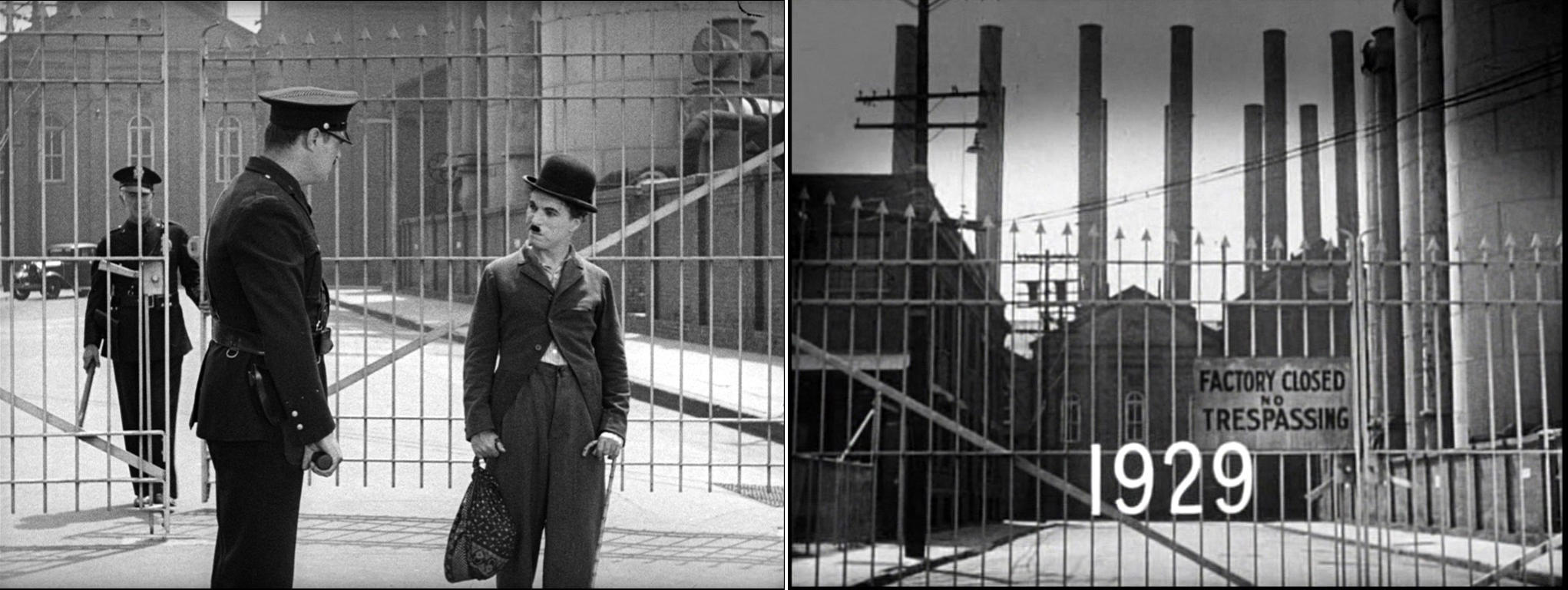
Matching views from Modern Times and Citizen Kane.

Charlie again out of work – tough times for Charles Foster Kane – matching views from Modern Times and Citizen Kane.

modern-times-02I recently watched Citizen Kane (1941) for the first time in years, broadcast on TCM, and enjoyed it thoroughly. Having seen it many times before, the scenes and the dialog were all familiar, but still powerful and engaging. But now that I’m afflicted with ‘location-itis’ I couldn’t help but notice a common setting appearing in the Orson Welles classic with a scene from Charlie Chaplin’s Modern Times (1936) (see above and right).

The closed factory gate depicting Charles Foster Kane reeling from the 1929 crash during the mock newsreel of his life at the outset of Citizen Kane is the same factory gate Chaplin used for the factory scenes late in Modern Times where Charlie and other workers recently re-hired after a long shutdown must suddenly go on strike, leaving Charlie once again out of work. You can read more about this Modern Times setting in my book Silent Traces.

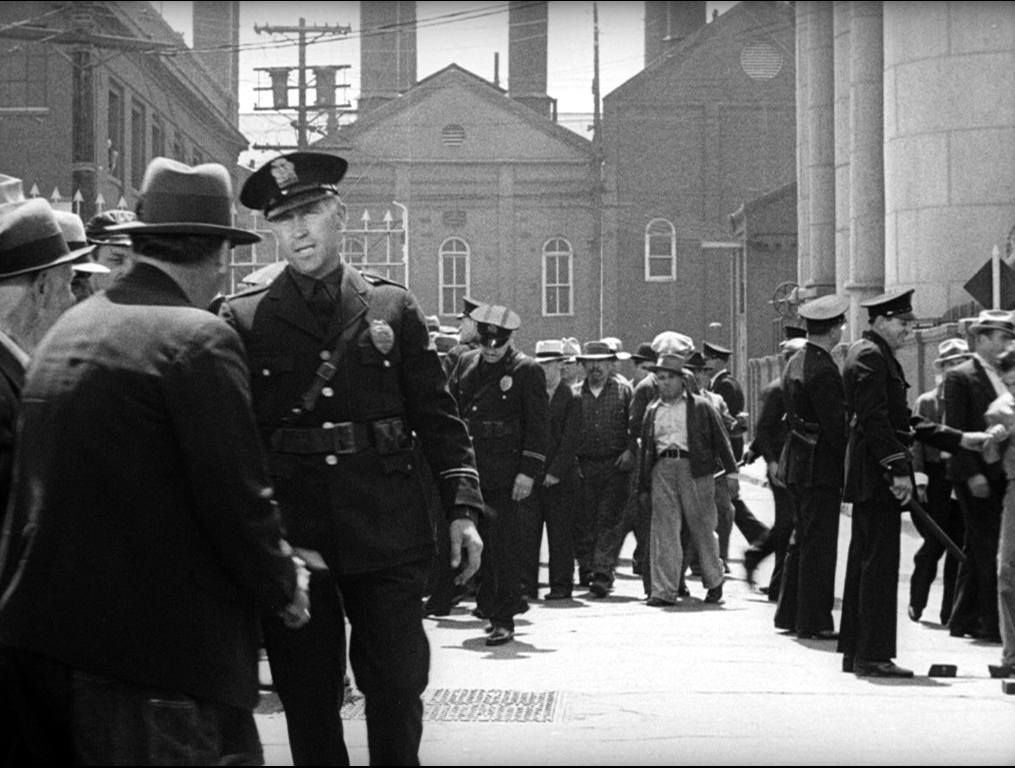
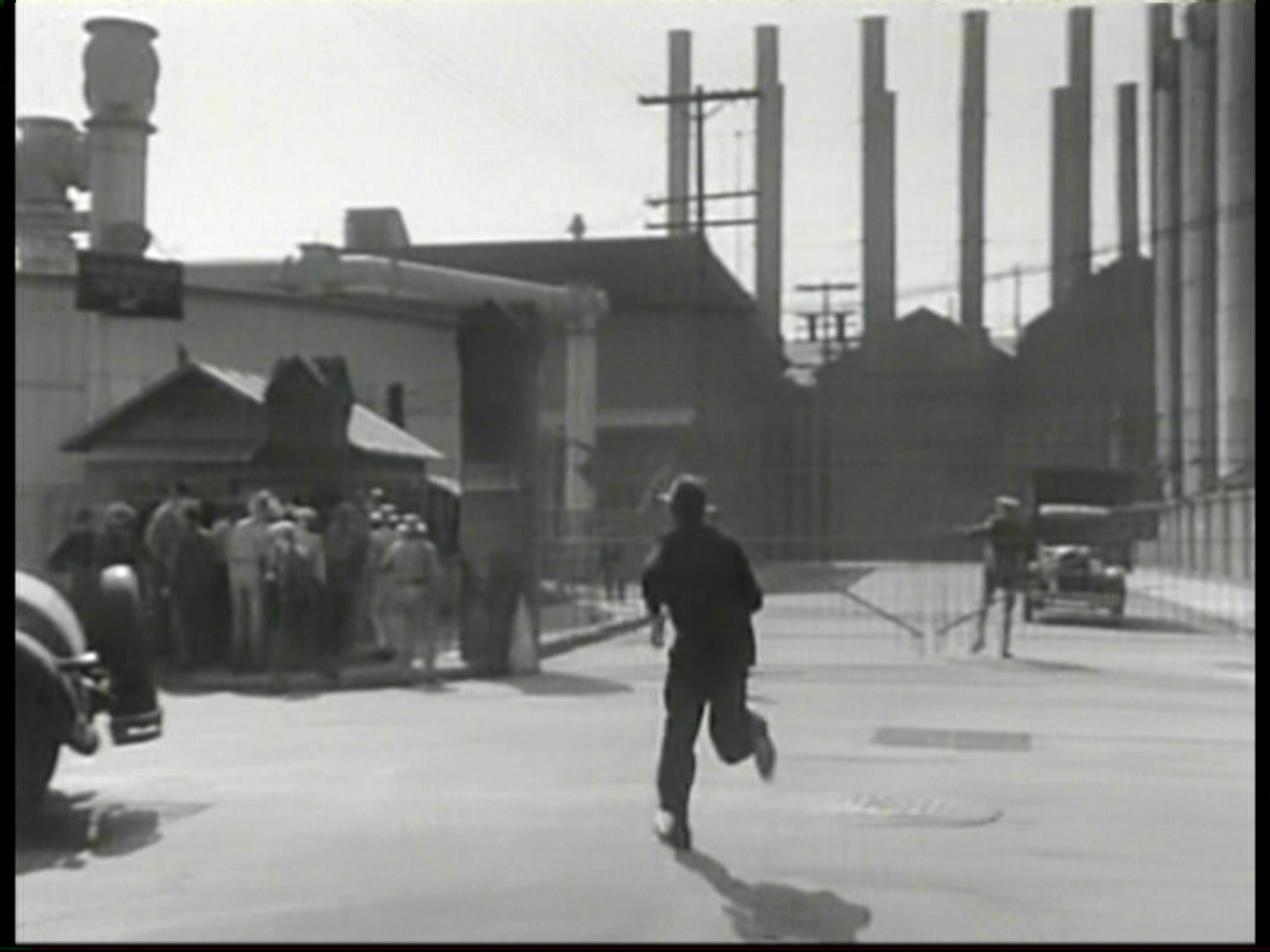
The Great O'Malley

Humphrey Bogart runs to save his job in The Great O’Malley (1937).

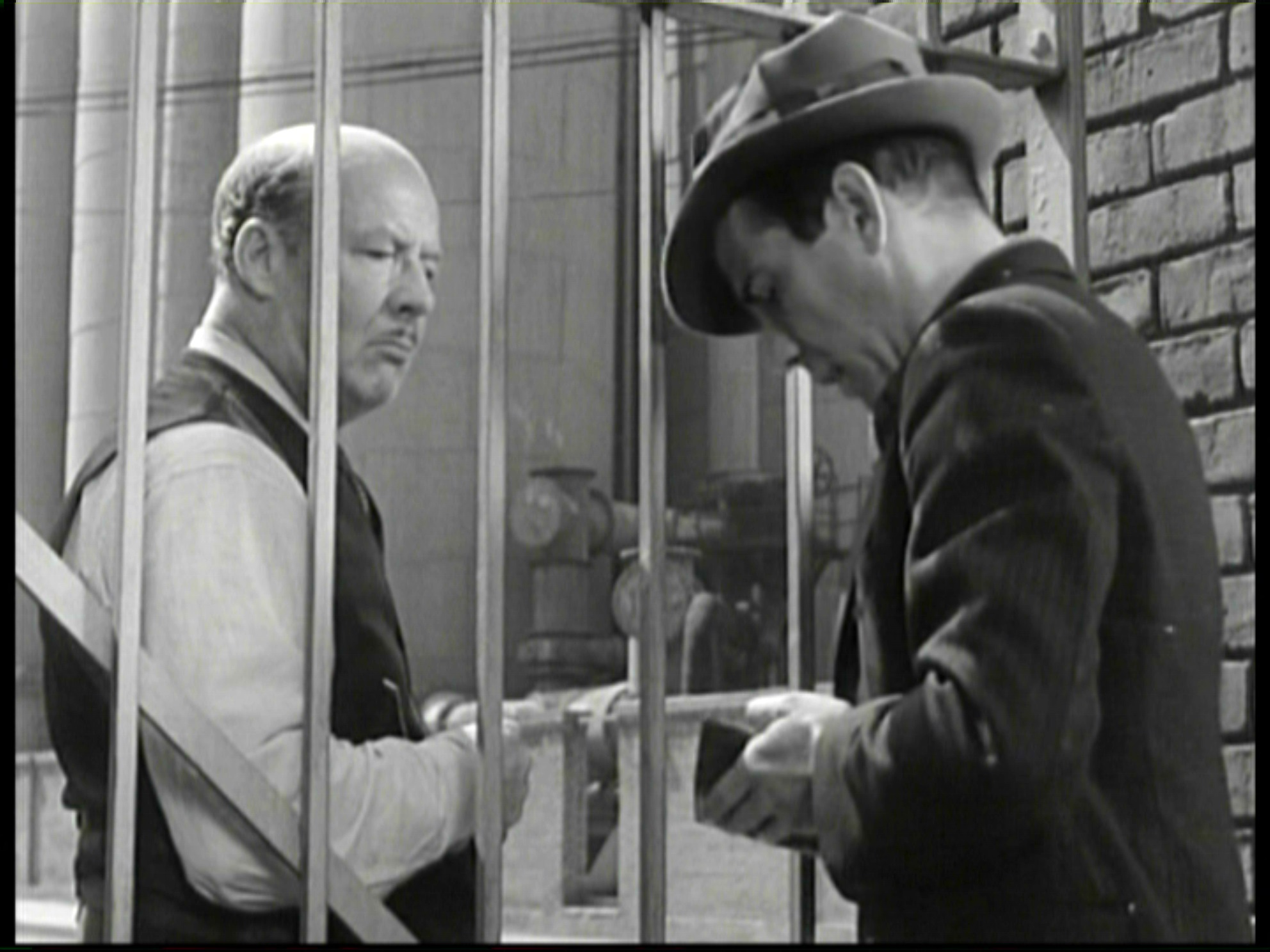
Bogie, down on his luck.

Bogie, down on his luck.

The year following Modern Times the factory gate appeared again during The Great O’Malley (1937), a Warner Bros. melodrama with Pat O’Brien in the lead. When by-the-book policeman O’Brien stops Humphrey Bogart for a minor traffic infraction, a loud muffler on his car, it causes Bogie to be late, losing his chance for a factory job. Unable to support his family, Bogart commits a petty crime and is sent to jail. O’Brien eventually learns compassion, and secretly helps Bogie’s family, and helps

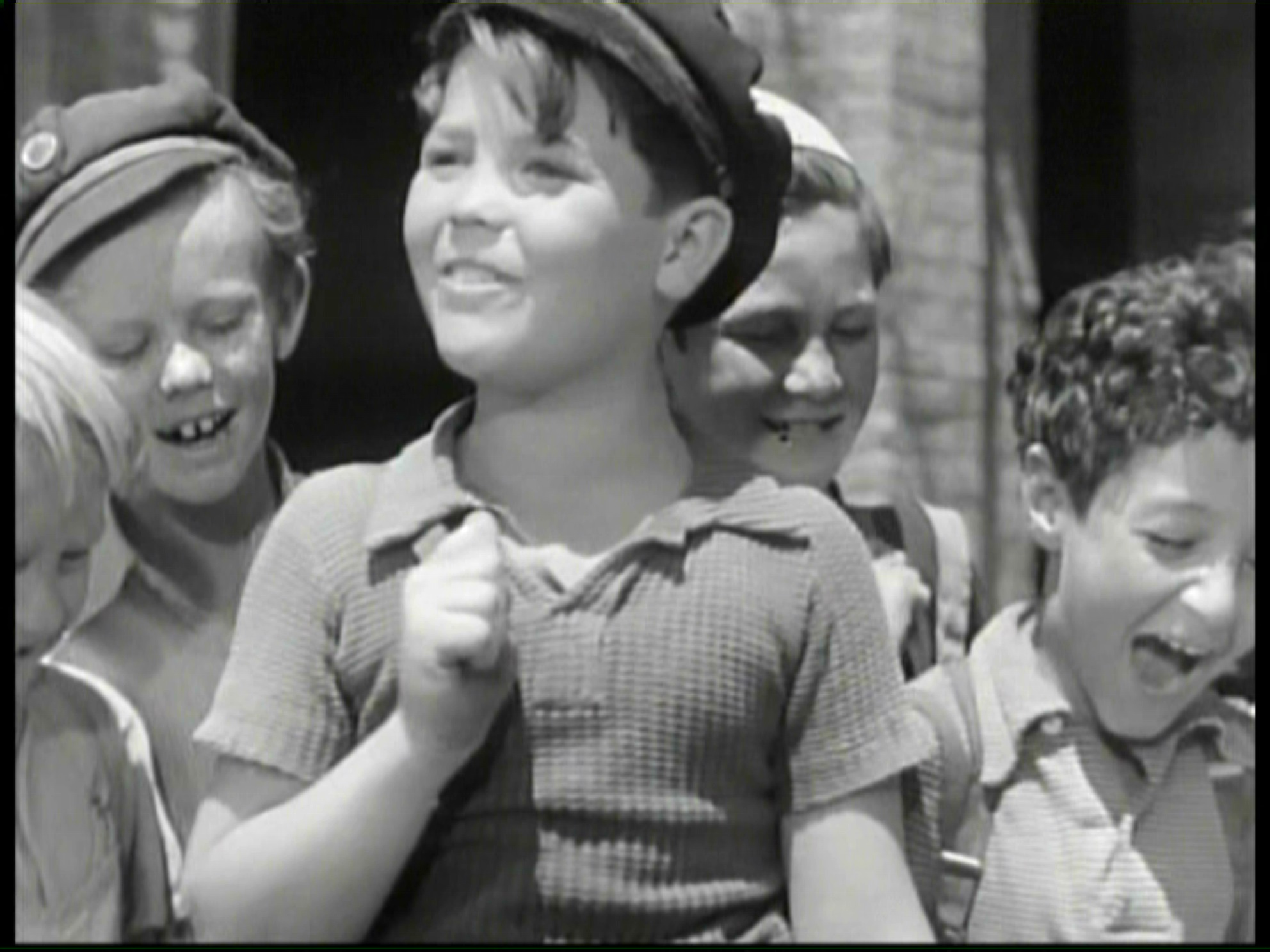
Delmar Watson

Delmar Watson

arrange for his early parole. Delmar Watson appears with a credited role. The nine Watson family children, “The First Family of Hollywood,” appeared collectively in nearly 1,000 silent and classic-era films, and are honored with a star on Hollywood Boulevard. Their father Coy Watson Sr. was a Hollywood cowboy and special effects man who among other projects rigged the flying carpet for Douglas Fairbanks in The Thief of Bagdad (1924).

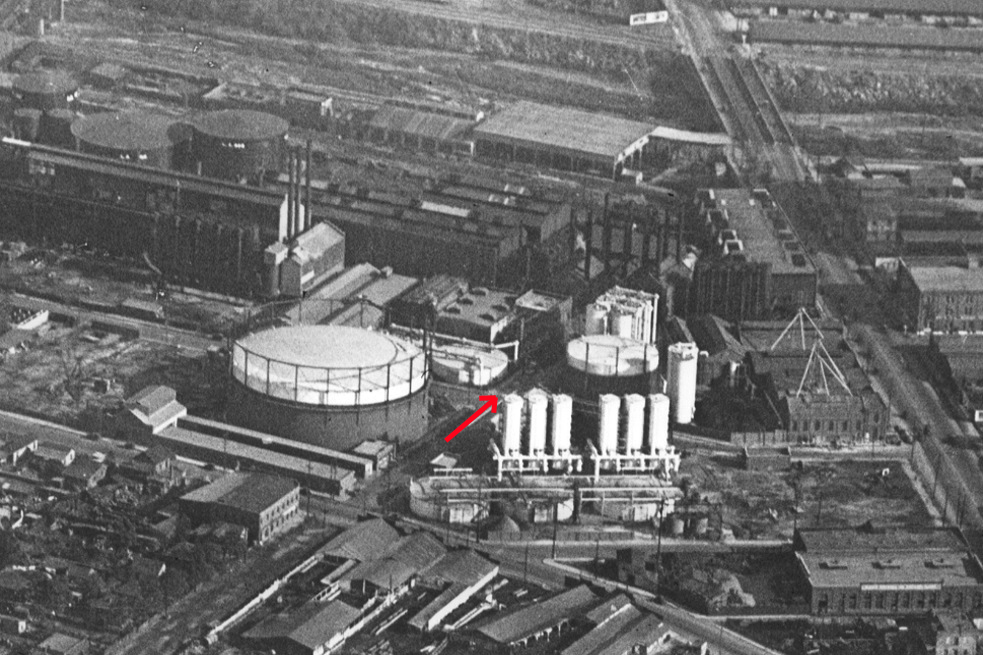
The gate stood at Ramirez (arrow). LAPL.

Click to enlarge. The factory gate stood at Ramirez and Howard (arrow) east of the former Chinatown. LAPL.

The Chaplin crew at work filming Modern Times near the corner of Ramirez and Howard (note the street sign at back).

The Chaplin crew at work filming Modern Times near the corner of Ramirez and Howard (note the street sign at back).

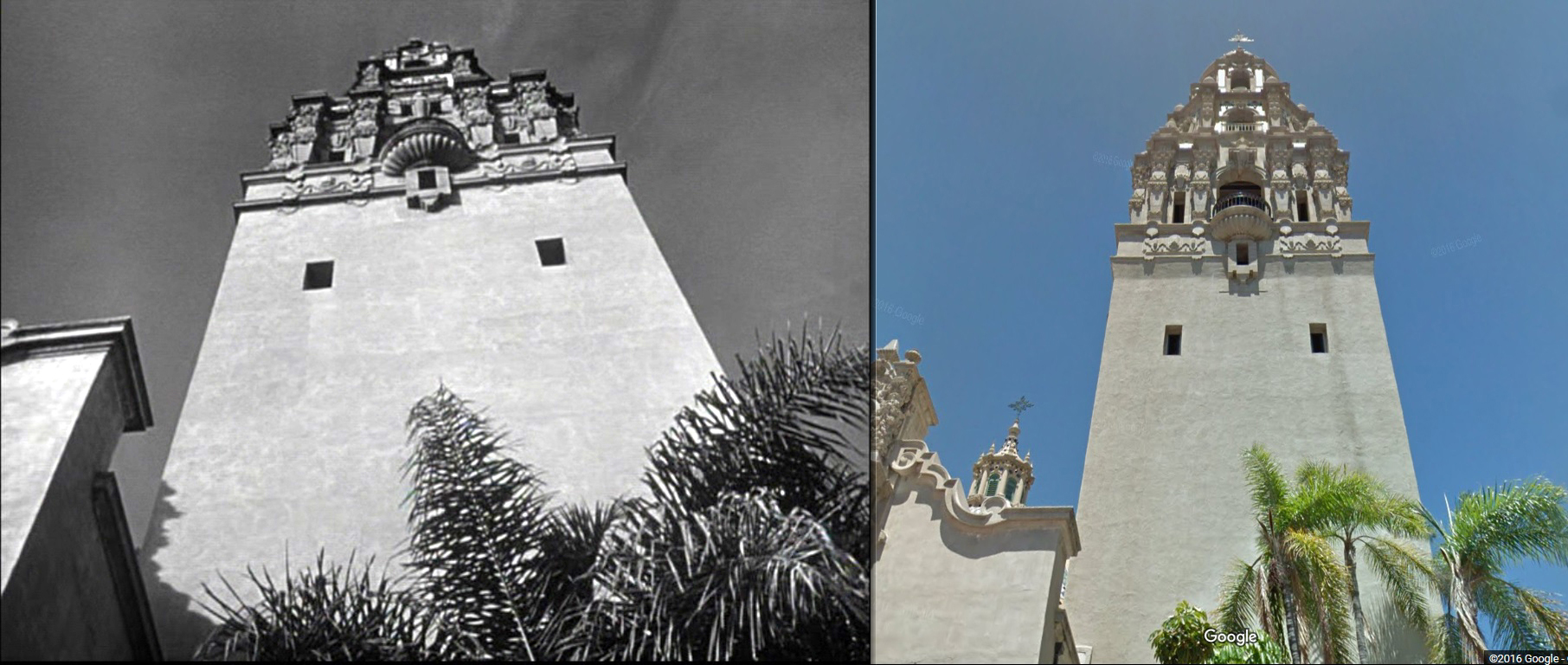
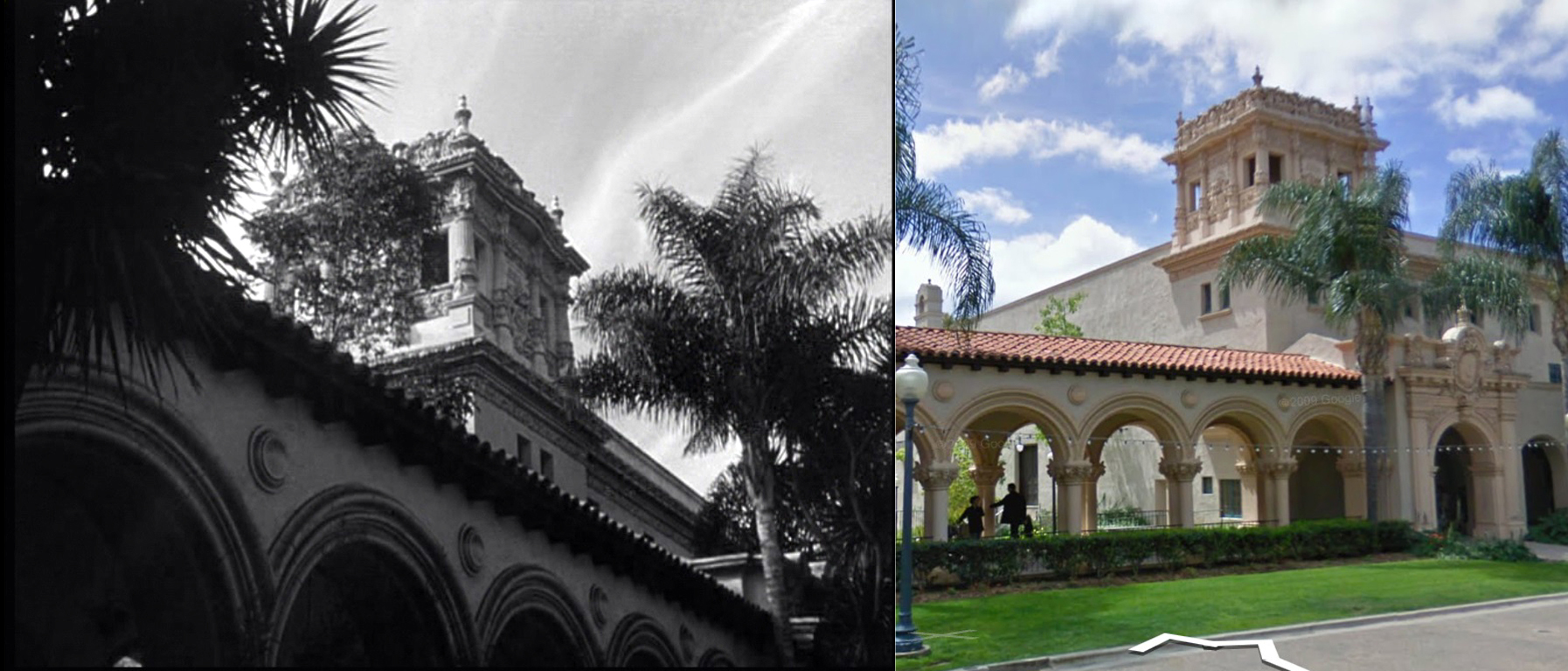
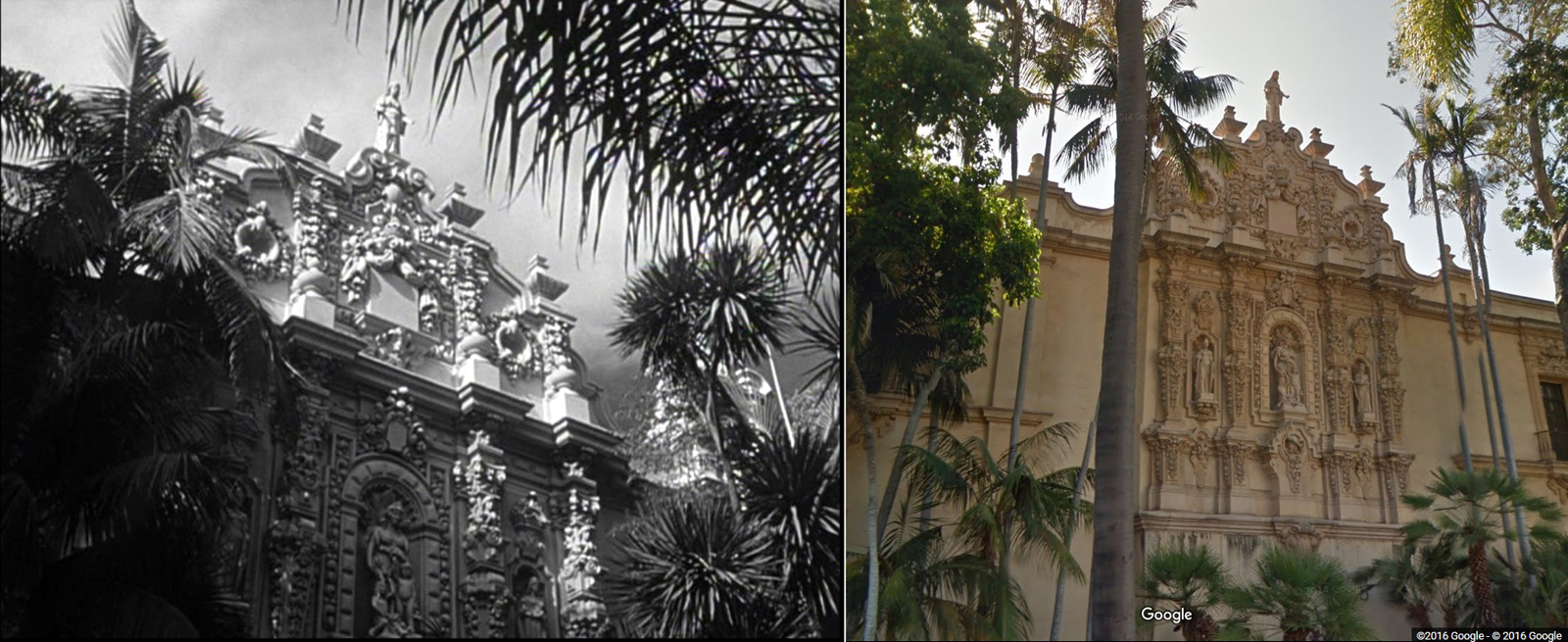
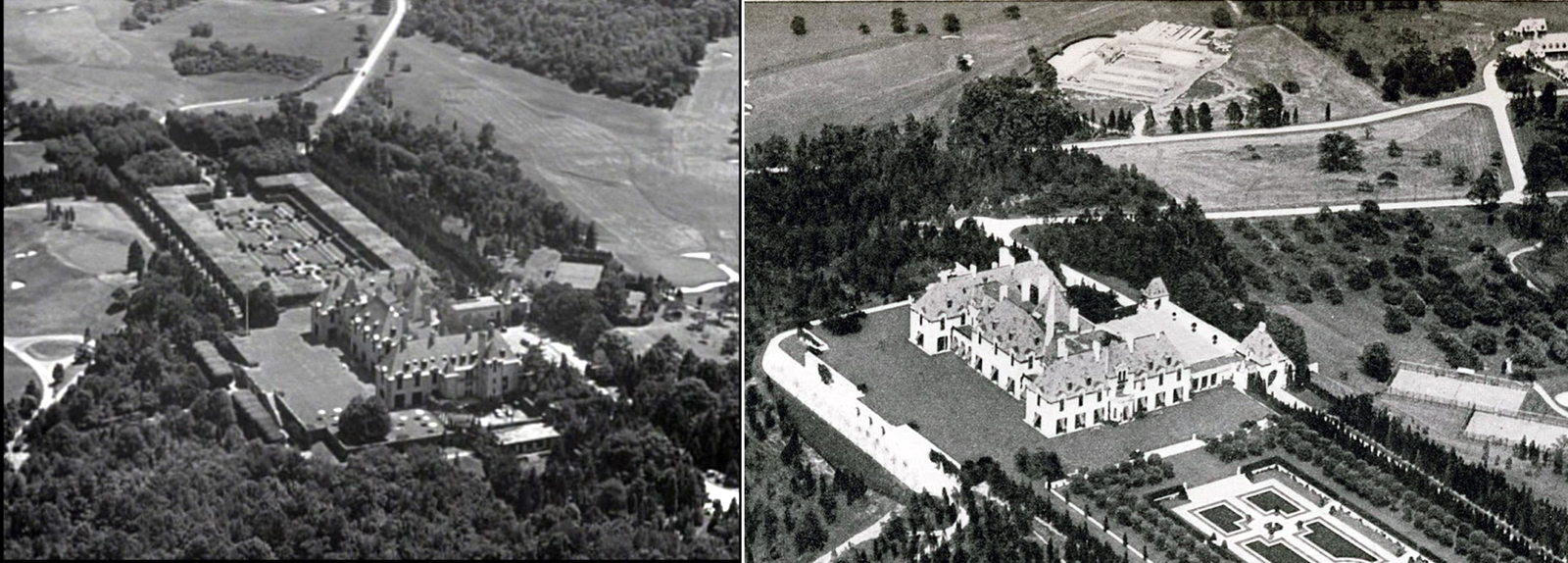
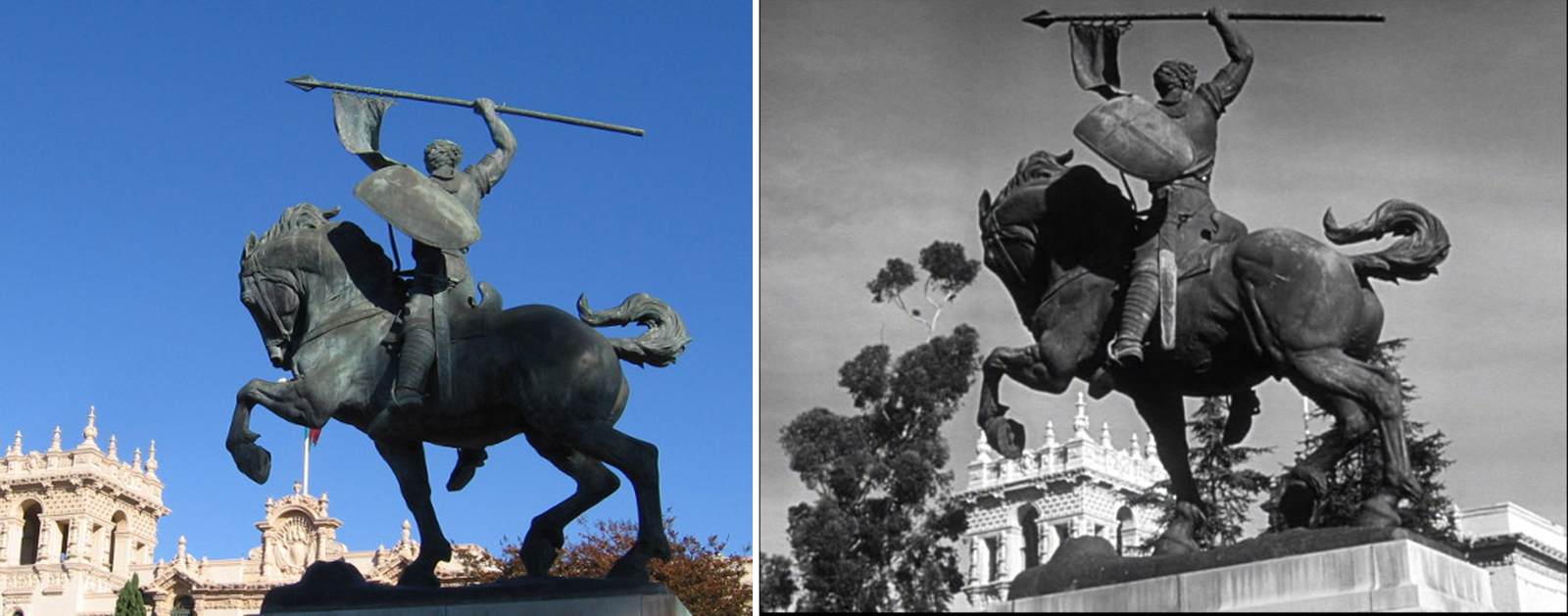
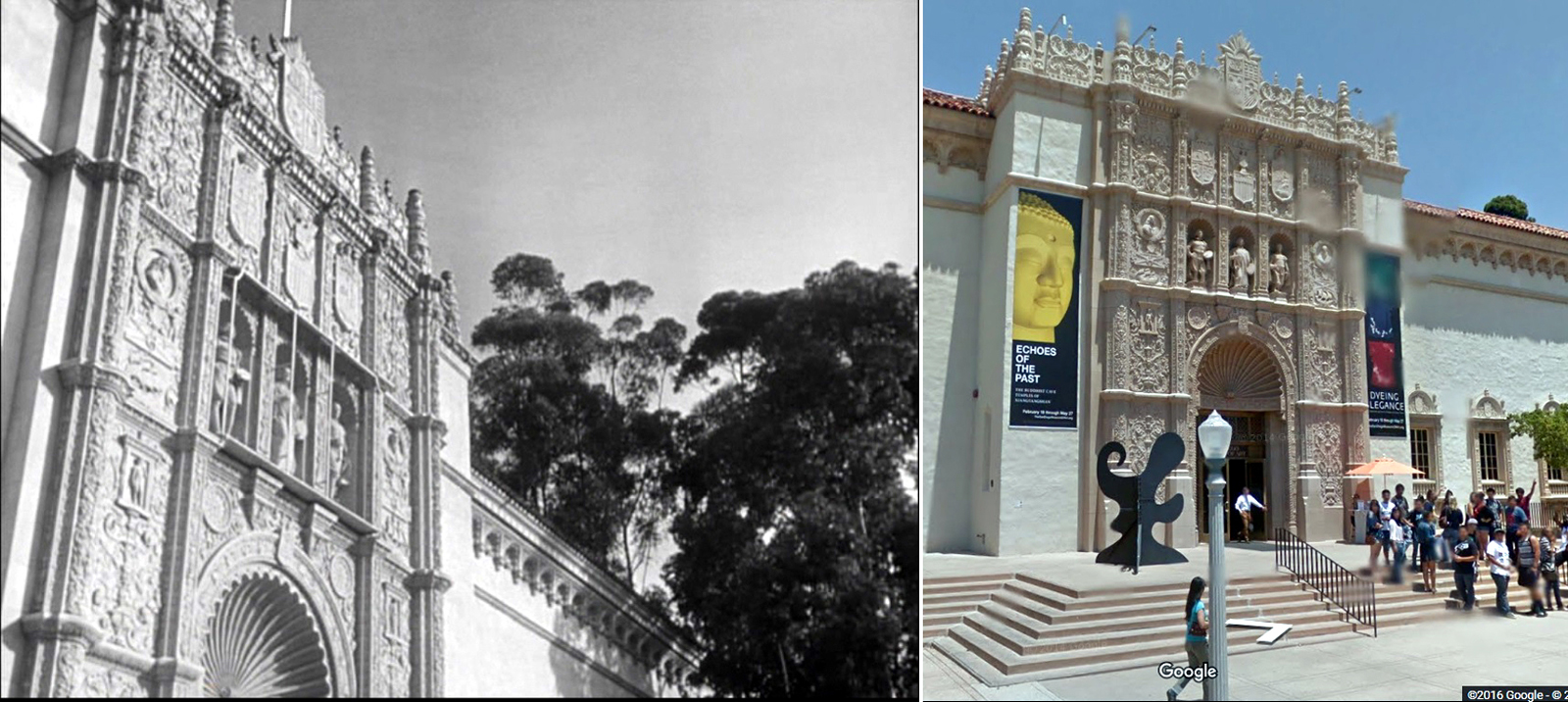
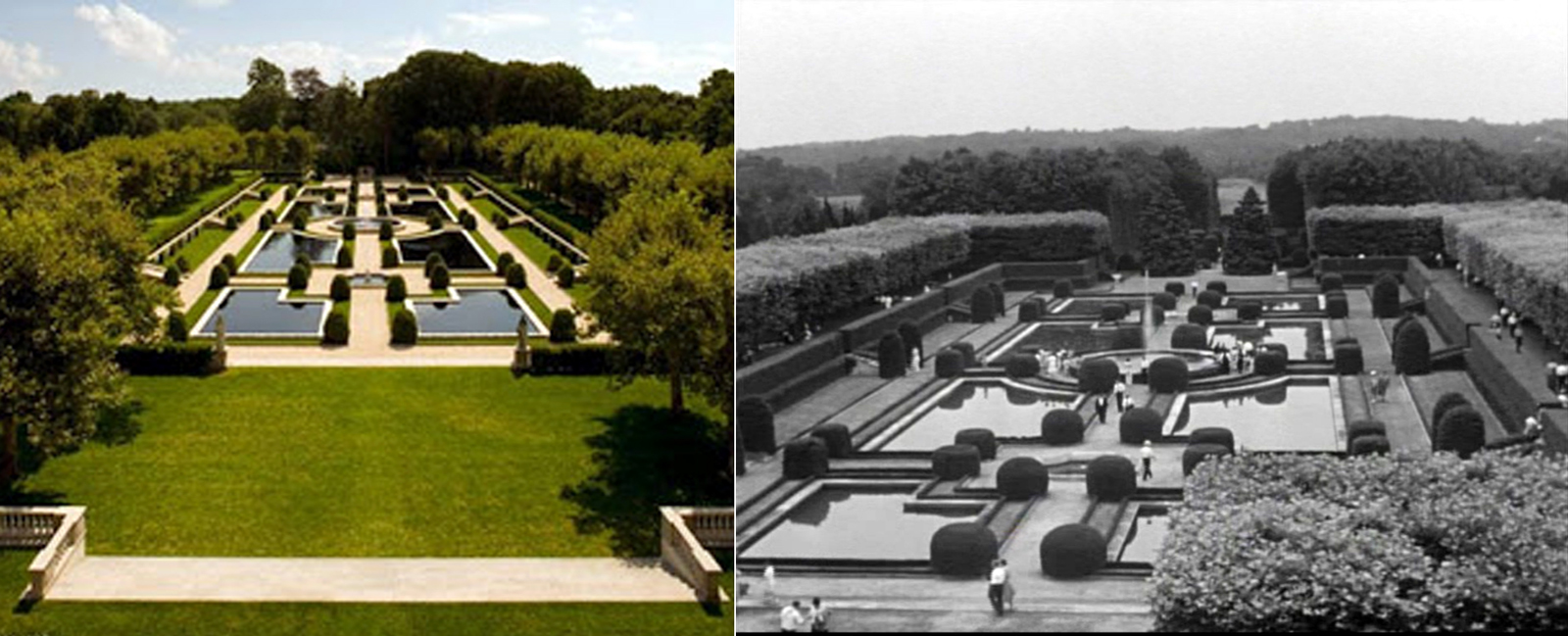
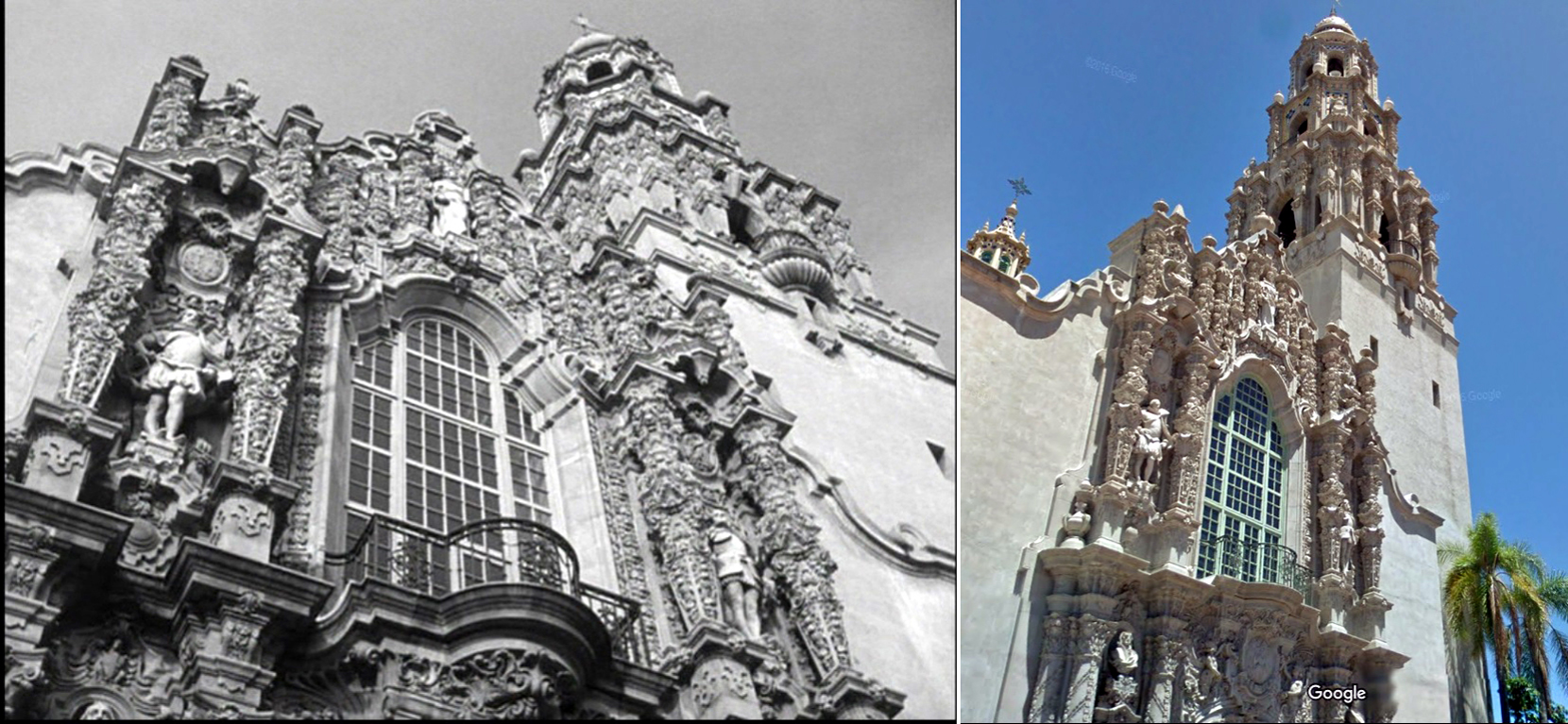
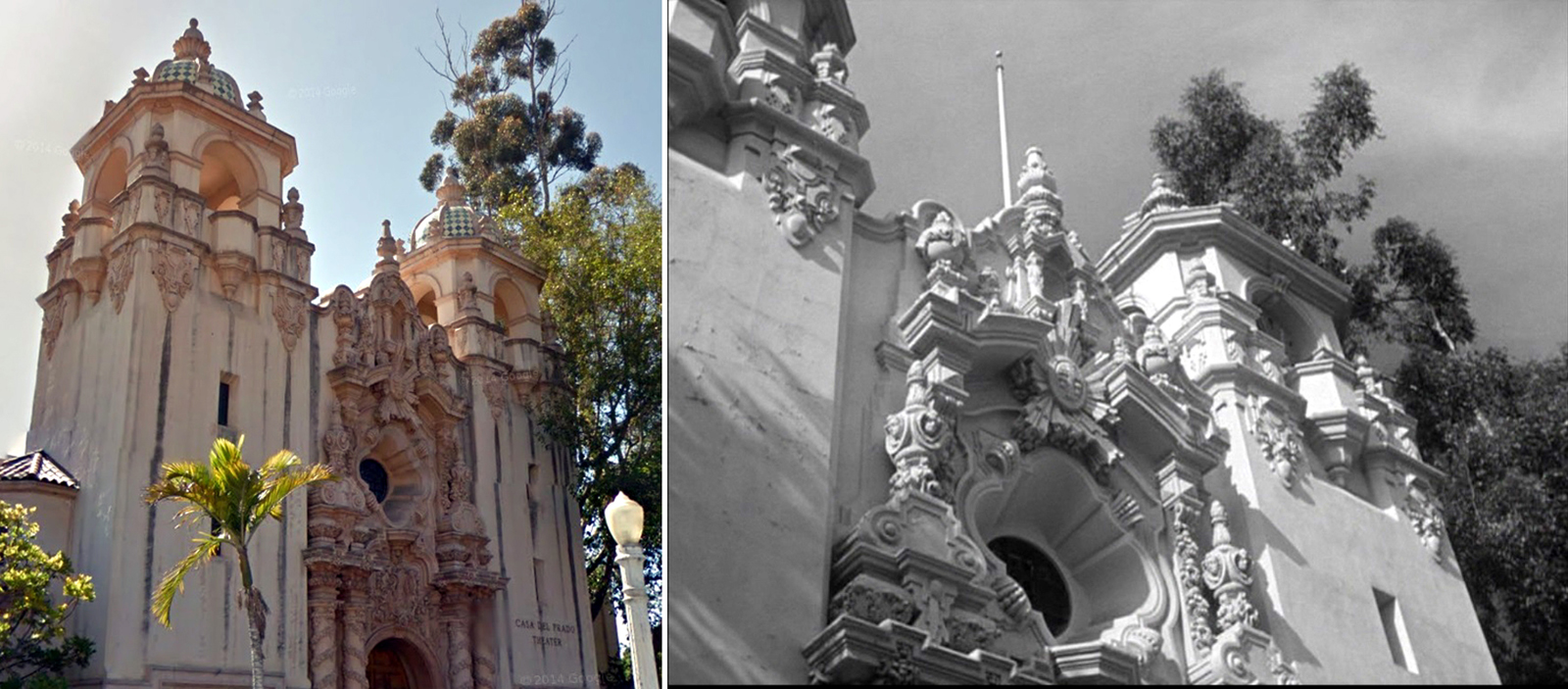
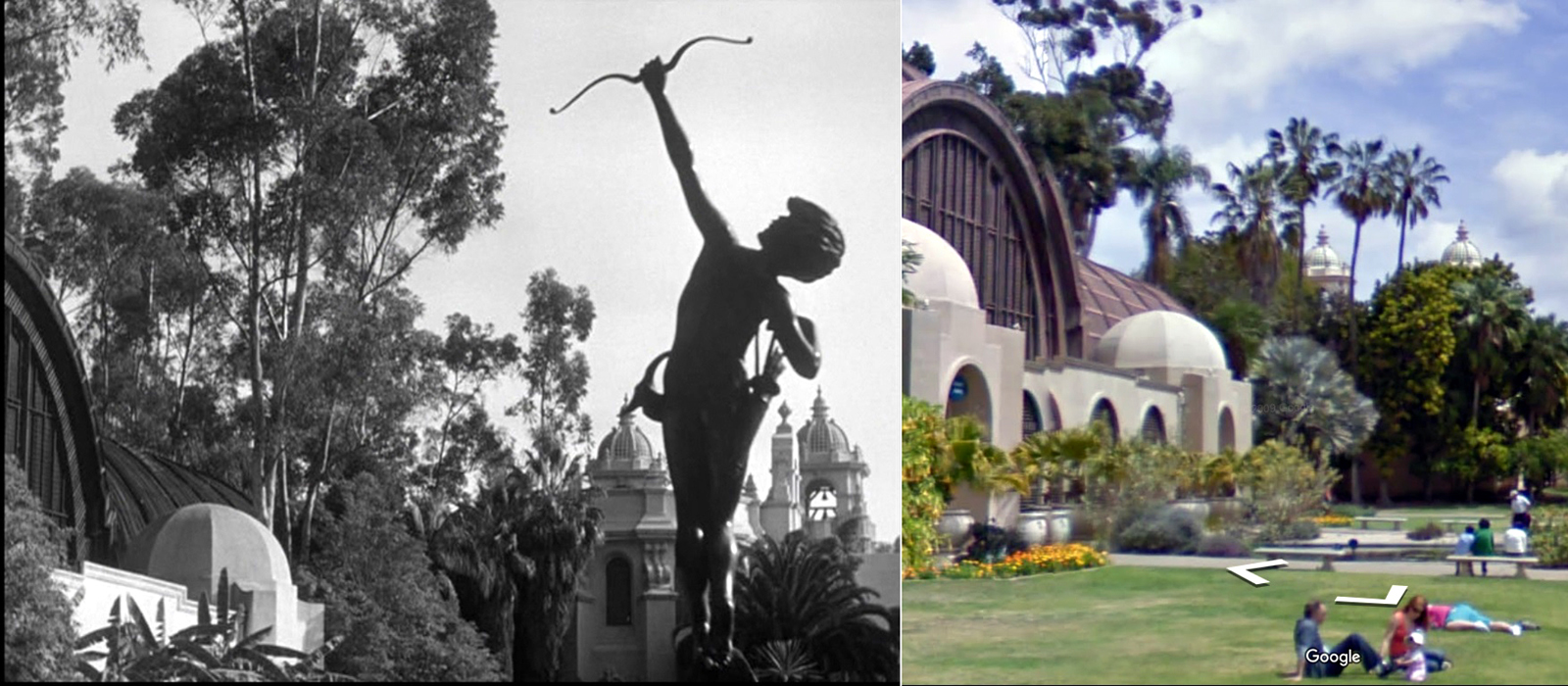
When I read correctly online that Balboa Park in San Diego, and Oheka Castle, the enormous Long Island estate of magnate Otto Kahn, were used to depict Xanadu during the mock newsreel footage from Citizen Kane, I couldn’t help myself, and created these ‘then and now’ images, presented below without further elaboration. Color images (C) Google.

kane-pan-01 kane-pan-02 kane-pan-03 kane-pan-04 kane-pan-05 kane-pan-06 kane-pan-07 kane-pan-08 kane-pan-09 kane-pan-10

Posted in Charlie Chaplin, Chinatown, Modern Times, Orson Welles | Tagged , , , , , , , , , , | 8 Comments

Cinecon 2016 Silent Echoes Hollywood Walking Tours

Similar views from Never Weaken, My Wife's Relations, and Safety Last!, both before and after the Palmer Building was completed at back.

Harold, Buster, and Harold – sites from Never Weaken, a newly discovered scene from My Wife’s Relations, and Safety Last! that we’ll visit on the Cinecon 2016 walking tour.

The block of Cahuenga south of Hollywood Boulevard was the setting for more silent movie filming than any other spot in town. I’ll be leading walking tours of this historic site at the upcoming Cinecon 52 Classic Film Festival during the Saturday and Sunday lunch breaks, September 3 and 4.  You can meet us at the Egyptian Theater, 6712 Hollywood Boulevard, on Saturday at about 12:05, and on Sunday at about 12:40, or join us when the tour kicks in to high gear at 6410 Hollywood Boulevard near the SW corner of Cahuenga, at about 12:15 on Saturday, and about 12:50 on Sunday. The tours are free.  For those walking from the theater the round trip will be about 1.2 miles. A highlight of the tour will be visiting the site of a newly discovered scene from Buster Keaton’s 1922 comedy My Wife’s Relations (center above), discussed in my prior post HERE.

Houdini also filmed a brief scene at the Cahuenga alley just south of Hollywood Blvd. where Buster filmed this famous stunt from Cops. The tall Palmer Building, undergoing construction behind Buster, still stands on Cosmo Street.

Visit where Harry Houdini filmed The Grim Game (1919) and Buster Keaton filmed Cops (1922).

You can download a comprehensive PDF tour of Hollywood silent movie filming locations at this link.  Hollywood’s Silent Echoes Tour – Cinecon 2016 – John Bengtson.

My Wife Hollywood Alley Pan 02

A newly discovered scene! Buster at the Hollywood alley.

You can read other posts highlighting some of the locations we’ll see HERE and HERE.

Click to enlarge. Clockwise from the bottom, Harold Lloyd in Why Worry? (1923); Mabel Normand, Charlie Chaplin, and Marie Dressler in Tillie’s Punctured Romance; Buster Keaton in Cops; Douglas Fairbanks in Flirting With Fate; and Mary Pickford in 100% American.

Click to enlarge. The corner of Hollywood and Cahuenga. Clockwise from the bottom, Harold Lloyd in Why Worry?; Mabel Normand, Charlie Chaplin, and Marie Dressler in Tillie’s Punctured Romance; Buster Keaton in Cops; Douglas Fairbanks in Flirting With Fate; and Mary Pickford in 100% American.

Posted in Hollywood Tour | Tagged , , , , , , , , , | 6 Comments

Amazing New Keaton Discoveries – My Wife’s Relations

ca

Click to enlarge – newly discovered footage from My Wife’s Relations at the Alvarado Arms.

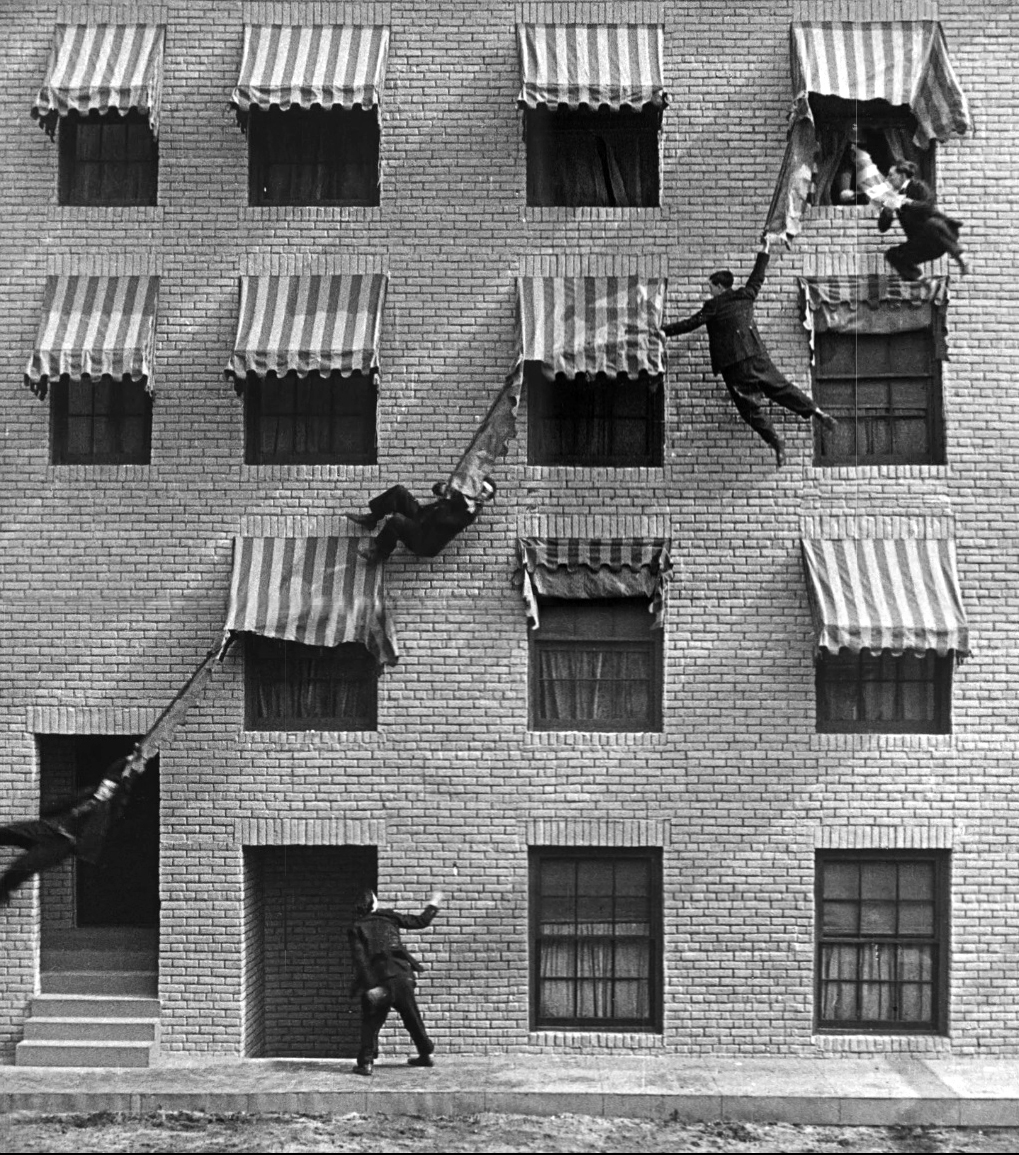
An entirely original stunt - how is it we've never seen this before?

Click to enlarge – an entirely new stunt – who knew this was awaiting discovery for 95 years?

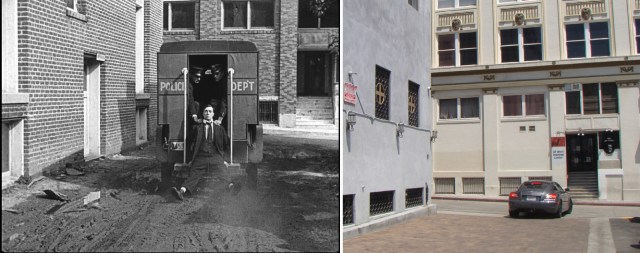
An astonishing new Keaton stunt, Buster’s return visit to a classic apartment house, and yet another surprise appearance of the Cops – The Kid – Safety Last! Hollywood alley – the Lobster Films restoration of My Wife’s Relations (1922), with over a minute of restored footage unseen for decades, is a cornucopia of new discoveries and delights.

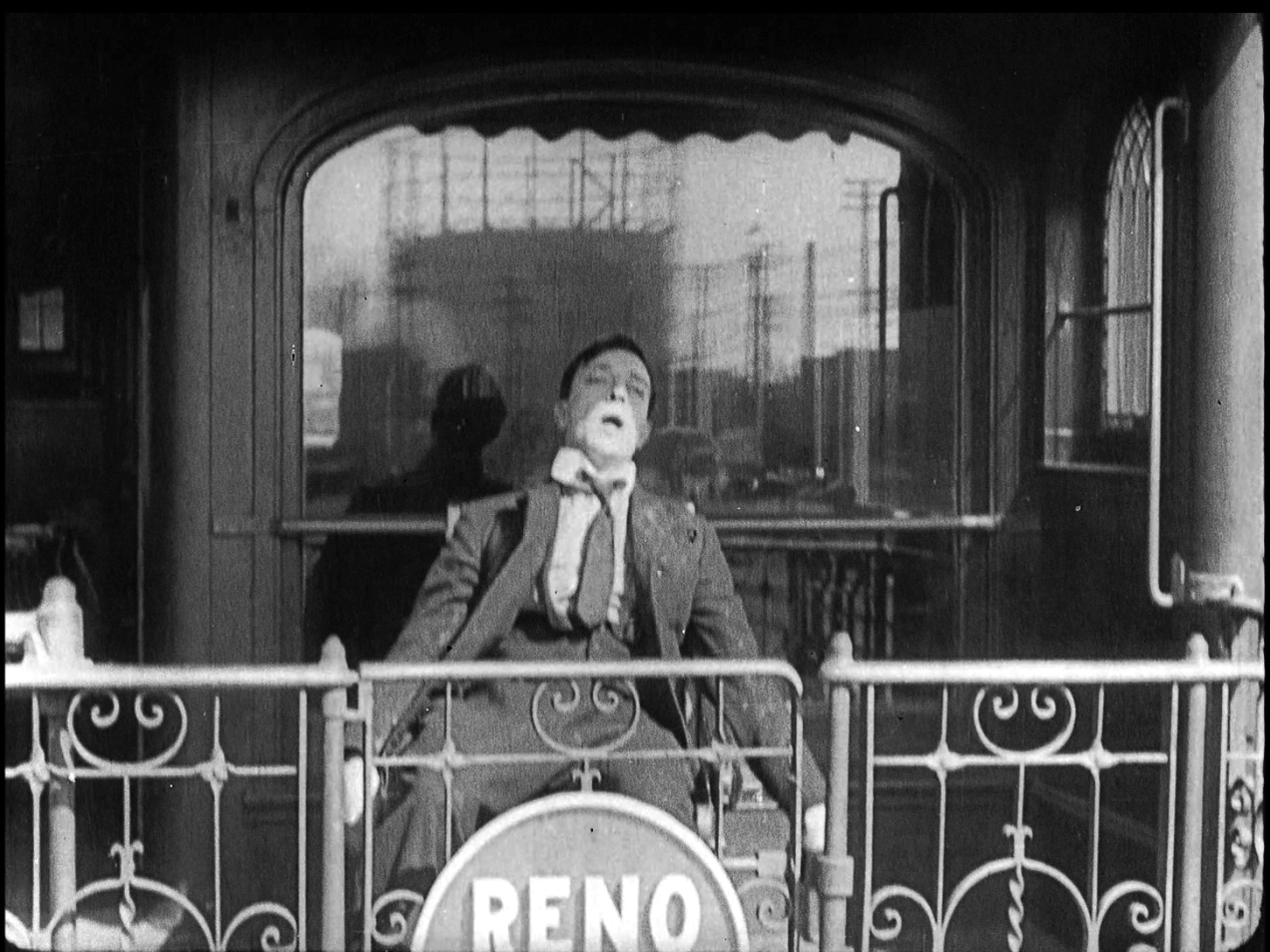
On screen Buster is mistakenly married to a harridan, moves in with her caveman brothers, and after a climatic family brawl, the film concludes (in the version we’ve been accustomed to seeing) as Buster flees for a Reno-bound train. In the Lobster restoration, Buster flees the family apartment, is chased back inside by the cops, only to escape from the top apartment floor by swinging diagonally from upper window awning wife 02to lower window awning. Dropping safely to street level, Buster’s triumph is short-lived, as he is hauled into the back of a police wagon (where? – at that Hollywood alley, see below). But when the wagon hits a pothole, Buster escapes in time for the final fadeout, presumably headed for that Reno train.

Buster at the Hollywood alley.

Buster at “the” Hollywood alley. Buster had already filmed here for Neighbors (1920) and Cops (1922), while Chaplin filmed here for The Kid (1921), and Lloyd filmed here for Never Weaken (1921) and Safety Last! (1923). See more below.

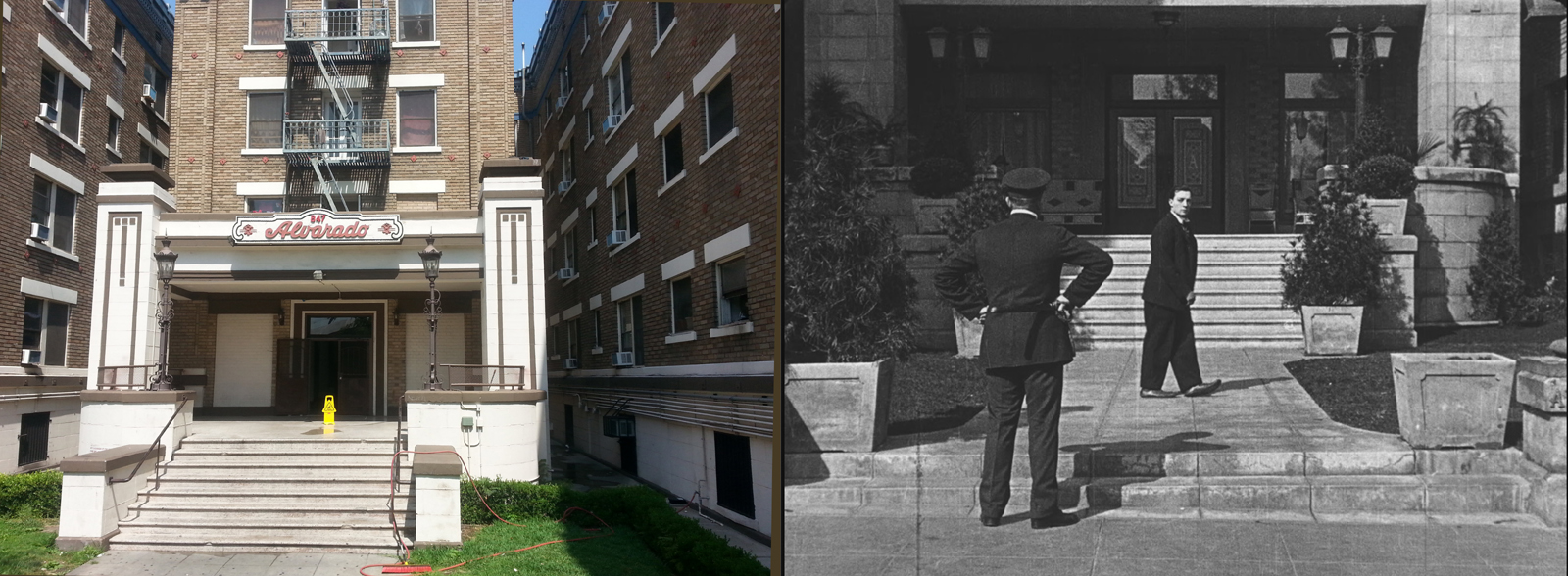
The Alvarado Arms stands behind Buster.

The Alvarado Arms stands behind Buster.

Buster appears in the courtyard of the Alvarado Arms apartments, at 847 S. Alvarado (you can see the “A” initials in the doorway and on the sidewalk post, at top). This was familiar territory, as Buster filmed here the year before for an introductory shot of Virginia Fox (below) walking beside the apartment complex during The Goat (1921). You can also see the twin wings of the Alvarado Arms behind Buster’s head in this publicity shot from The Goat (right), staged in front of the extant Weymouth Apartments, 914 S. Alvarado, that portrayed Virginia’s home during that film.

ca

Deja vu – Virginia Fox appearing in The Goat with the courtyard entrance of the Alvarado Arms behind her.

Although I like to think I would have eventually solved this location mystery, I ‘discovered’ it by what is the most satisfying coincidence I have ever experienced. I viewed this ‘new’ apartment scene for the first time on a Wednesday at my home in the bay area. By that Saturday I had traveled to LA to introduce Safety Last! for the Los Angeles Conservancy’s Last Remaining Seats. Due to downtown crowds, I ended up eating breakfast that day at Langer’s Delicatessen at Alvarado and 7th, and because of where I had parked, decided to take Alvarado to Olympic for my return drive downtown. As I drove past the apartment where Buster filmed Virginia’s introductory shot, I glanced at the interior courtyard. I almost kept going, but something in that brief glimpse caught my eye. Circling the block for a better look, I could clearly see it was the same spot from My Wife’s Relations. So after watching this scene at home in the bay area, there I was, only 3 days later, standing in front of that very spot out of all the spots in Los Angeles! I wish I had this type of luck picking lottery numbers instead, but it sure was fun.

If that wasn’t enough, when I saw that the newly discovered final scene was filmed at the Cops – The Kid – Safety Last! alley, I nearly fell out of my seat.

Similar views from Never Weaken, My Wife's Relations, and Safety Last!, both before and after the Palmer Building was completed at back.

Click to enlarge – similar views from Never Weaken, My Wife’s Relations, and Safety Last!, both before and after the Palmer Building on Cosmo Street (just south of Hollywood Boulevard) was completed at back.

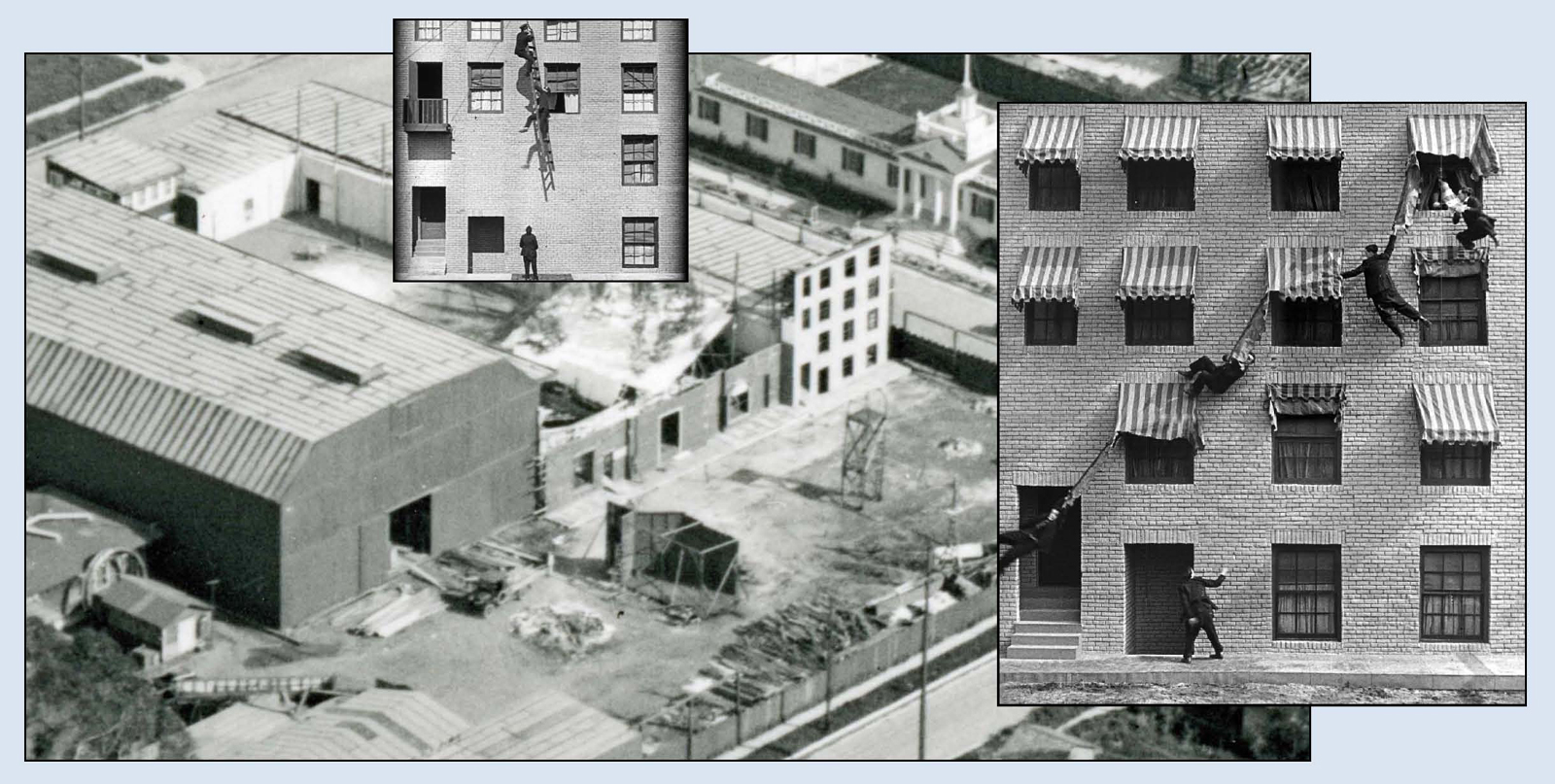
The discovery of Buster’s new stunt also explains the appearance of the unusual Keaton Studio set visible below.

You can easily see the My Wife's Relations stunt set in this aerial view of Buster's studio. Buster used the set later that year for a scene with some police in Day Dreams. These sets appear in other filmed described in my Mr. Keaton's Neighborhood post.

You can easily see the My Wife’s Relations stunt set in this aerial view of Buster’s studio. Buster used the set later that year for a scene with some police in Day Dreams (1922) (inset). These sets appear in other films described in my Mr. Keaton’s Neighborhood post. The open frame tower (standing beneath the stunt set) may have been placed in front of the set to capture Buster’s upper floor antics at eye level. HollywoodPhotographs.com.

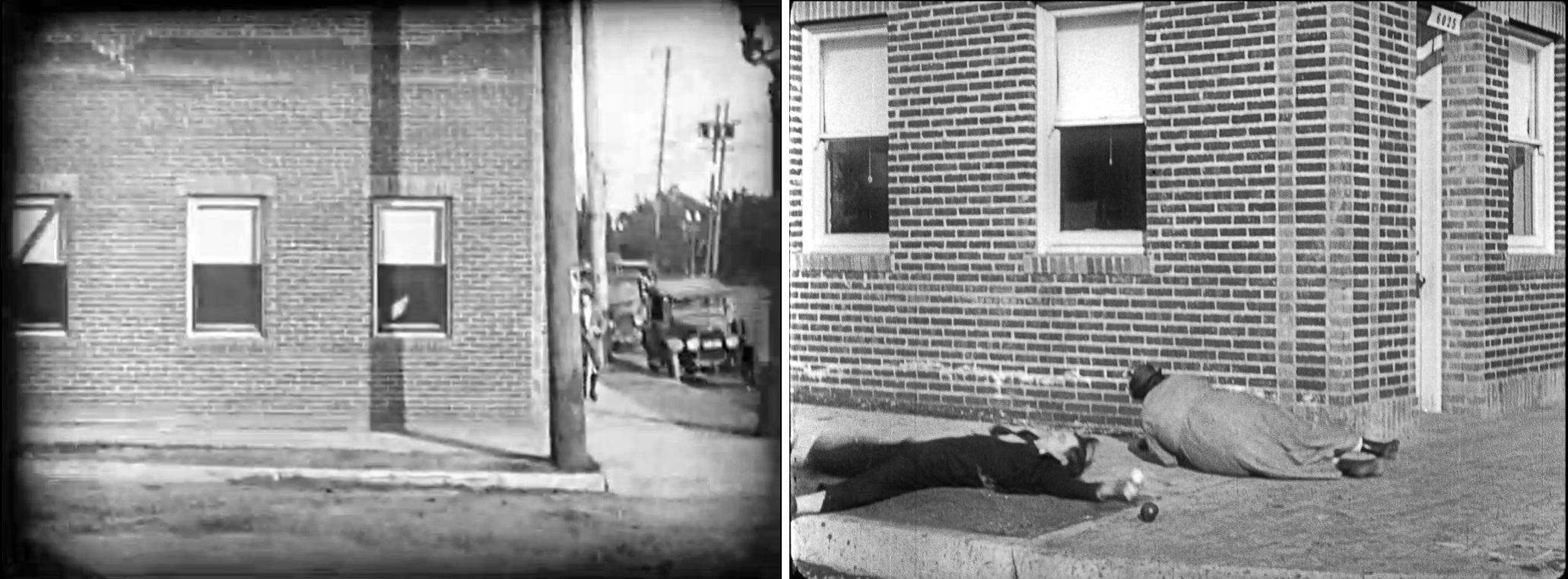
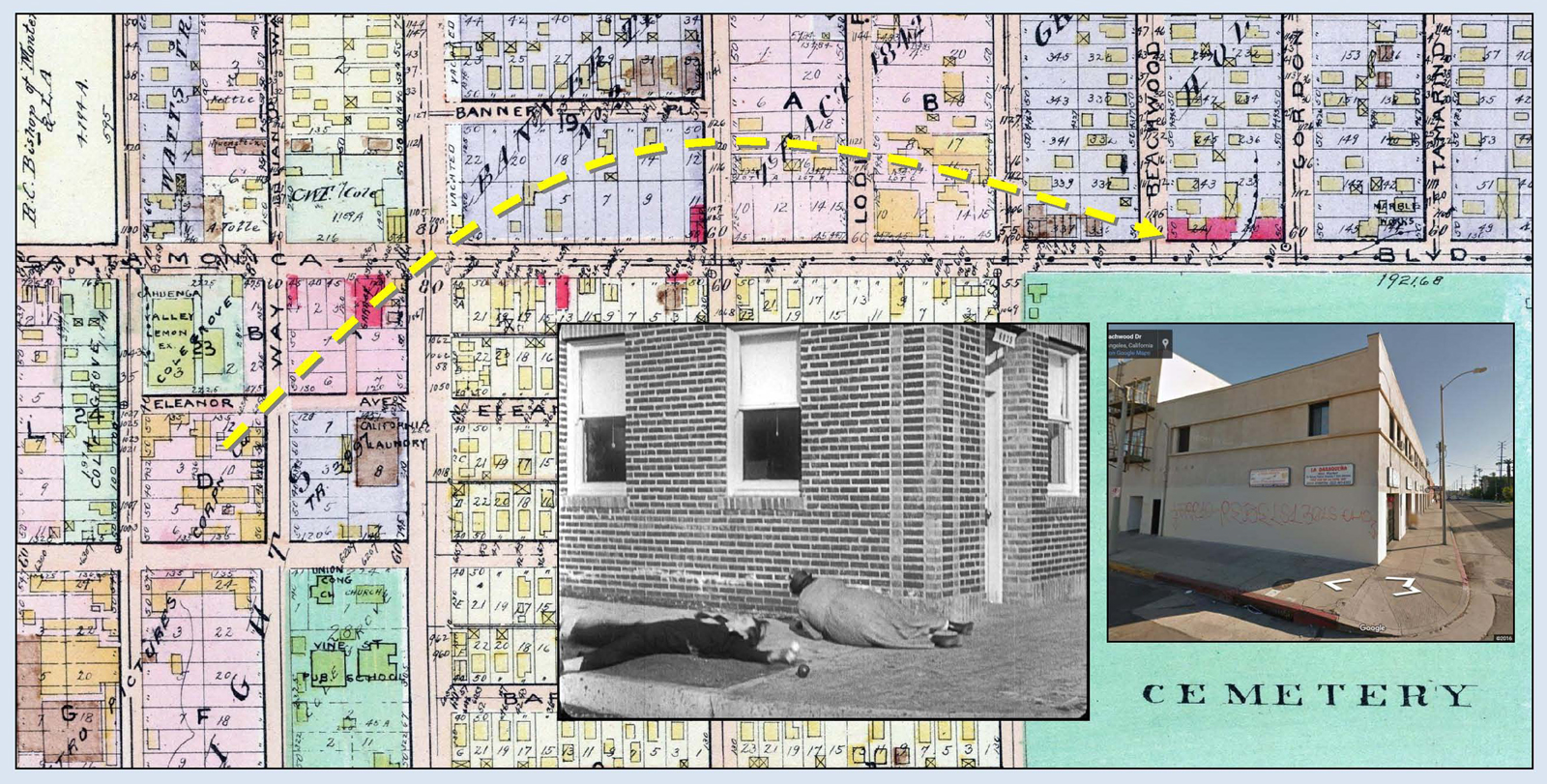
6025 aAs a further bonus, the scene where Buster first runs into his future bride, played by Kate Price, was filmed at the corner of N. Beachwood Drive and Santa Monica 6025 Santa Monica Blvd PanBoulevard, across the street from the Hollywood Forever Cemetery. In the scene at right you can read the 6025 address over the doorway. Although the corner has since been 6025 SM pan 02remodeled, it appears in this 1927 McDougall “Alley Kids” comedy Oh Boy, preserved for online viewing HERE by the National Film Preservation Foundation. As shown on the vintage map below, Keaton staged this scene, as many others, just a few blocks away from his small studio.

Another scene in Keaton's oeuvre filmed just blocks from his small studio.

Another scene from Keaton’s oeuvre filmed just blocks from his small studio on Eleanor and Lillian Way.

Looking north from the cemetery towards Buster and Kate's corner (box) on Santa Monica Blvd. HollywoodPhotographs.com

Looking north from the cemetery towards Buster and Kate’s corner (box) on Santa Monica Blvd. HollywoodPhotographs.com

My Wife’s Relations from Buster Keaton: The Shorts Collection 1917 – 1923 (C) 2016 Kino-Lorber, Lobster Films.

The Alvarado Arms, twice appearing in Keaton’s films.


Posted in Buster Keaton, The Goat | Tagged , , , , , , , , , , , | 24 Comments

Saving the Best for (Safety) Last!

On the roof of 908 S Broadway - crop

logoThere is no better way to experience Harold Lloyd’s Safety Last! than in a giant 1920’s movie palace packed with audience members gasping and shrieking at every turn. The Los Angeles Conservancy screens this classic thrill comedy on Saturday, June 25, at the Orpheum slider_1Theater downtown, as the closing act of its Last Remaining Seats film series. Even if you’ve seen it before, the mass hysterics and contagious laughter will sweep over you, making this an edge-of-your-seat cinematic experience you won’t soon forget.

Safety Last 28 Dec 27 1923I’m honored to have been invited back by the Conservancy to introduce the film. During my introduction I will point out many downtown film locations, explain the risks and challenges Harold faced when shooting, and show how the unique topography of early Los Angeles directly inspired the movie.

Clifton'sI’ll also reveal connections between Safety Last! and certain Hollywood tattoo parlors, the post-WWII era’s most famous Santa Claus, and even the landmark Clifton’s Cafeteria that recently re-opened downtown.

04Walking Tours: Prior to the screening I’ll be leading Conservancy walking tours highlighting downtown filming locations used by Harold, as well as by Charlie Chaplin and Roscoe Arbuckle. You can download a shortened PDF version of the tour here. I’ll also be signing my Harold Lloyd film location book Silent Visions.

Ca

Alfonso Campos and fashion designer Tarina Tarantino reenacting the final scene on the roof of 908 S. Broadway, the same site where the clock sequence pictured at top was filmed, and home now to Tarina’s Sparkle Factory. Guests on the walking tours will be invited to visit this historic rooftop in person.

So do yourself a favor, support a worthy cause, and check out the best possible way to see Safety Last!, with the electric energy of a huge, enthusiastic crowd.

PS – if you need a good laugh, or want to raise your spirits, just listen to noted musician and silent film accompanist Michael Mortilla’s audio-only recording of an audience laughing and squealing with delight while watching Safety Last!  It’s great to play as background music – the swells and squeals of laughter just grow and grow.

Audio file of Michael Mortilla accompanying Safety Last! to shrieks and laughter

HAROLD LLOYD images and the names of Mr. Lloyd’s films are all trademarks and/or service marks of Harold Lloyd Entertainment Inc. Images and movie frame images reproduced courtesy of The Harold Lloyd Trust and Harold Lloyd Entertainment Inc.

Posted in Harold Lloyd, Lloyd Tour, Los Angeles Historic Core, Safety Last! | Tagged , , , , , , , , , , | 7 Comments

Reflections on Keaton’s Cops at the SF Silent Film Festival

The San Francisco Silent Film Festival starts next week, with another wide and varied lineup of classic silent films accompanied with live musical performances. Comedy fans will be especially interested in the Saturday morning program, introduced by Leonard Maltin, where renowned scientist/film collector/Lon Chaney expert/musician (in no particular order) Jon Mirsalis will present and accompany a restored version of Laurel & Hardy’s epic pie fight comedy, The Battle of the Century (1927). For decades this fan favorite was known only in truncated form until Jon’s recent discovery of a complete print.

8. Battle of the Century.AGILE

The program also includes a restoration of Buster Keaton’s most famous short film Cops (1922), the only movie in Keaton’s oeuvre filmed completely outdoors. I’ve written frequently about the alley on Cahunega, steps south from Hollywood Boulevard, where Buster grabs a passing car one-handed in Cops, showing that Charlie Chaplin (The Kid (1921)), Harold Lloyd (Safety Last! (1923)), and even Harry Houdini (The Grim Game (1919)), filmed there as well.

output_mgeP9L COPS GIF

But the clarity of the new Kino – Lobster Films Blu-ray Buster Keaton: The Shorts Collection release of Cops invites further reflection. For one thing, you can witness several people watching the filming.

Ca

Witnesses caught on film – upstairs, a young woman wearing a puff sleeve dress (orange oval) rises from her seat to look down at Buster, while a man watches from across the street (blue oval), and another man inside The Tavern (yellow oval) looks through the glass.

Moreover, 1651 Cahuenga, the reflected building with the diagonally cropped corner entrance standing across the street from the Keaton stunt site (see reversed image below), once a rubber and vulcanizing store belonging to Harley H. Andrews, is now a porn shop. Coincidence? Or simply 90 years of retail evolution?

Harley vulcanizing

Harley H. Andrew’s vulcanizing shop now sells Hollywood porn.

A view of the reflected corner building – spin the view around to see Keaton’s alley.


Posted in Buster Keaton, Cops | Tagged , , , , , , | 7 Comments

Columbo and the Silent Clowns – Chaplin, Keaton, and Lloyd

Peter Falk as Columbo in

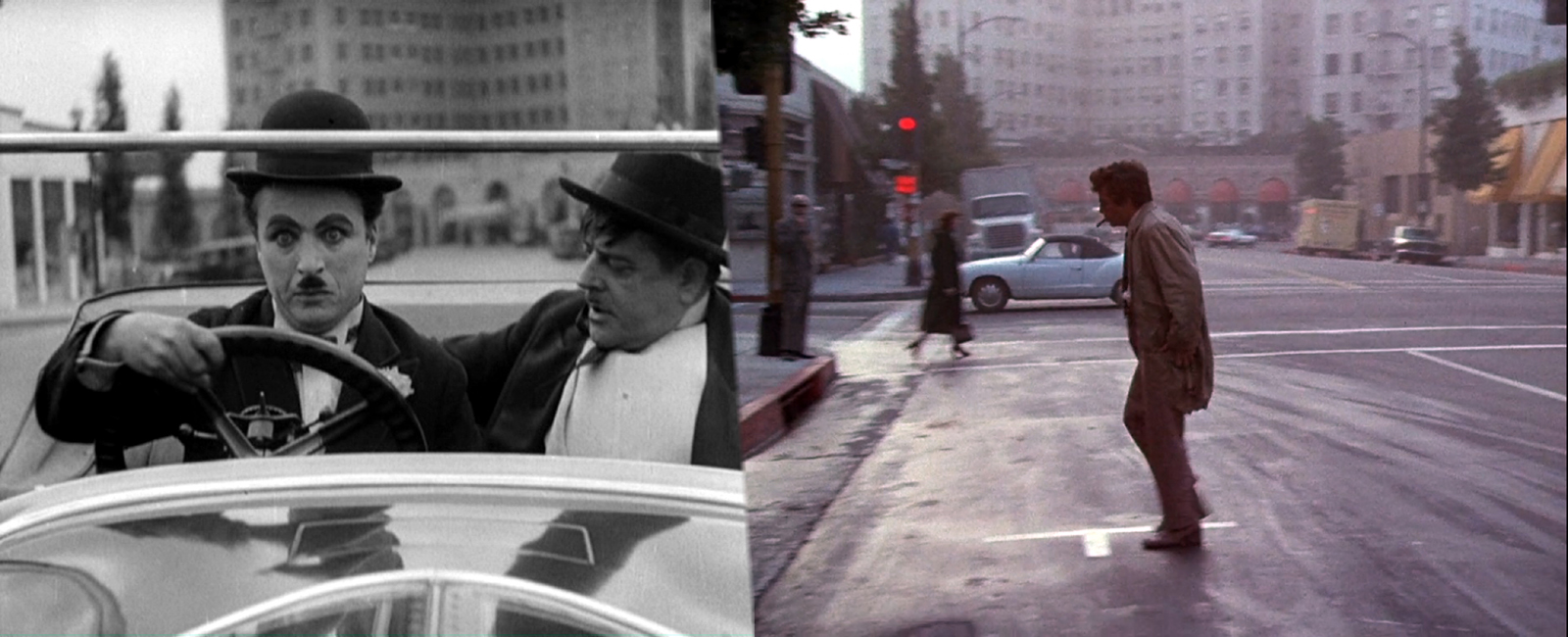
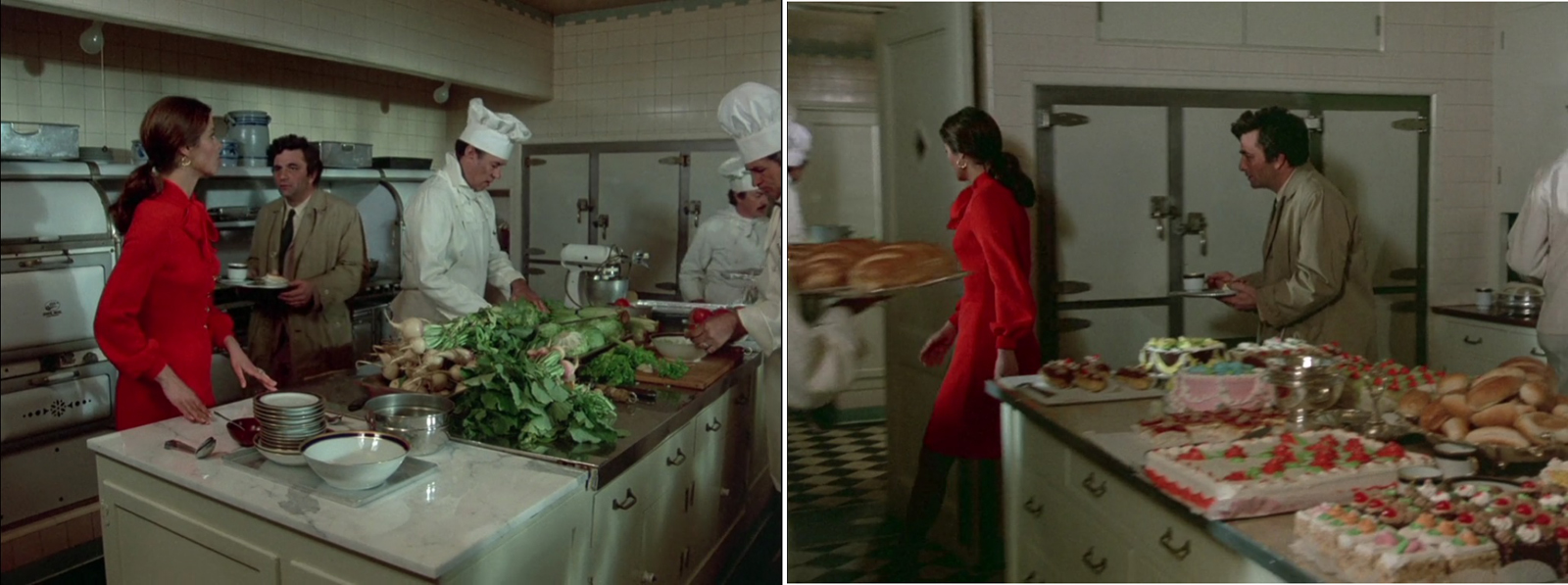
Peter Falk as Columbo in A Friend in Deed (1974) crosses Rodeo Drive with the Beverly Wilshire Hotel at back, compared with Charlie Chaplin in City Lights (1931). This episode is closer in time to Chaplin’s era than to our own.

I’ve been enjoying watching Peter Falk as Columbo on Netflix, and am transfixed by the time travel elements of this now decades-old series. The population of Los Angeles has nearly doubled since the time of filming, and there’s something quaint, and poignant, about seeing a handful of cars easily traverse the nearly empty stretches of the Pacific Coast Highway or Wilshire Boulevard presented in the show, that are today impossibly clogged with traffic.

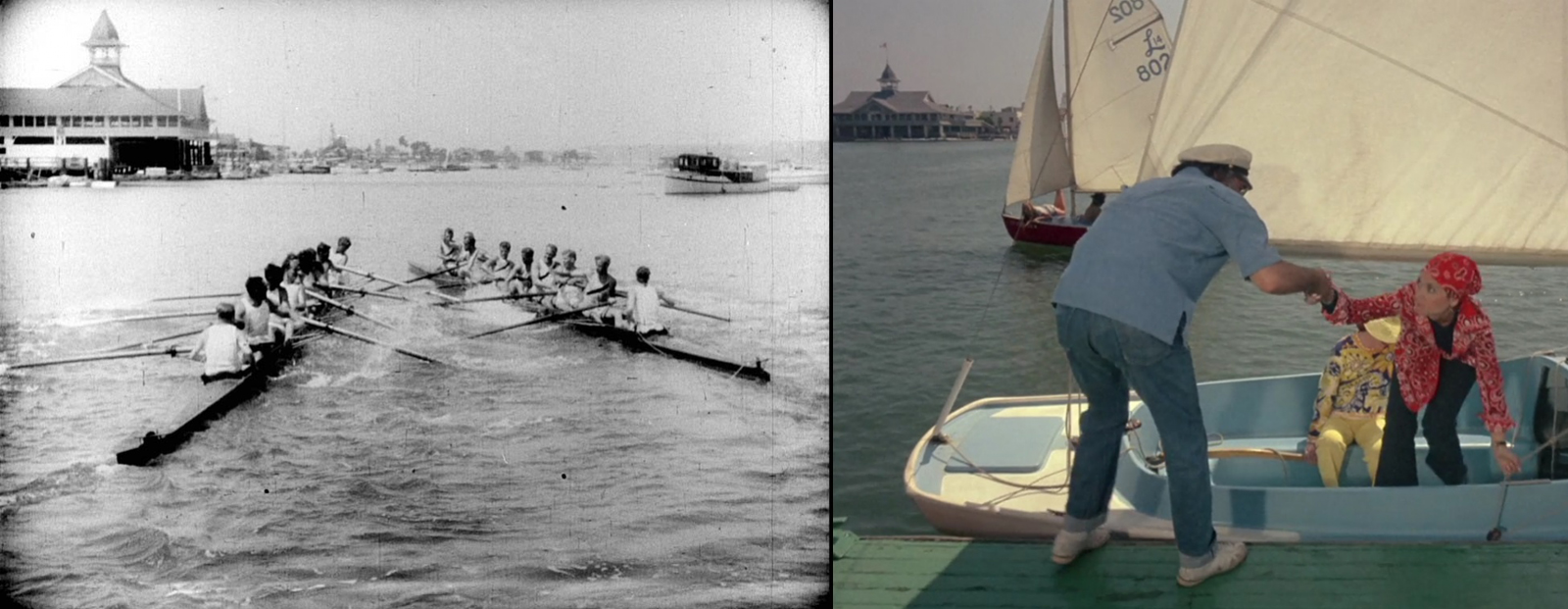
The Newport Beach Pavilion appearing with Buster Keaton in College (1927), and with Suzanne Pleshette in

The Newport Beach Pavilion appearing with Buster Keaton in College (1927), and with Suzanne Pleshette in Dead Weight (1971). This episode is closer in time to Buster’s era than to our own.

Classic-era film stars like Myrna Loy and Vincent Price play lead roles in the Columbo series, as does Leslie Nielsen in his pre-‘Naked Gun’ days. The homes are stylishly decorated with shag carpets and orange wallpaper, and the men all wear sideburns and extra wide jacket lapels.

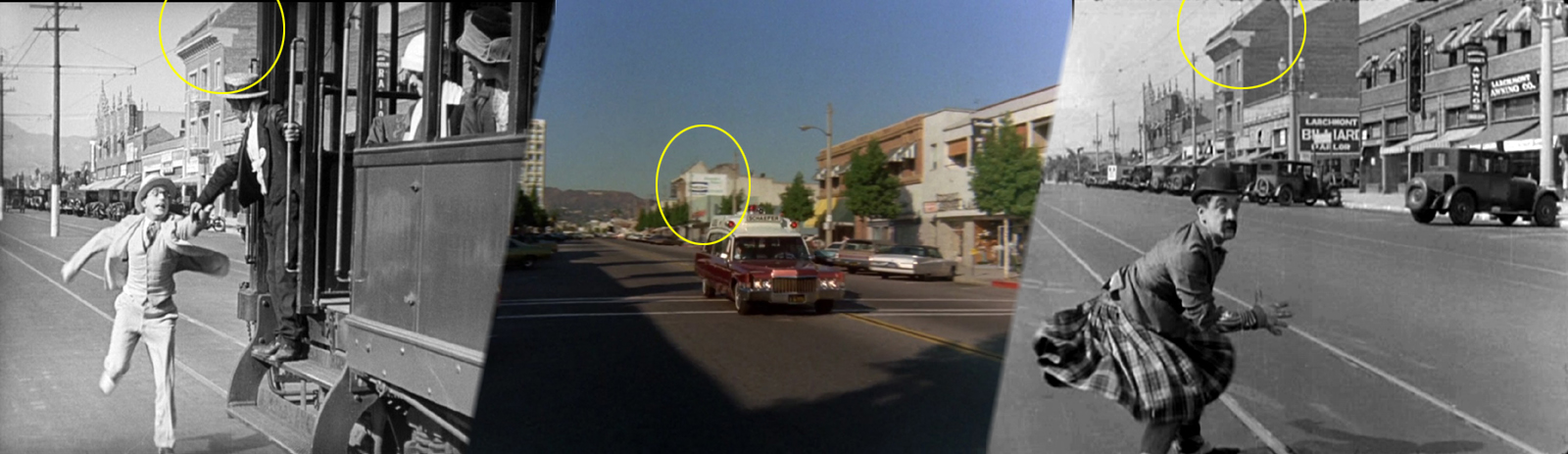
Matching views north up Larchmont looking towards Beverly.

Matching views north up Larchmont looking towards Beverly. At left, Harold Lloyd in For Heaven’s Sake (1926), the opening shot of Columbo episode A Stitch in Crime (1973), and Snub Pollard in The Big Shot (1928).

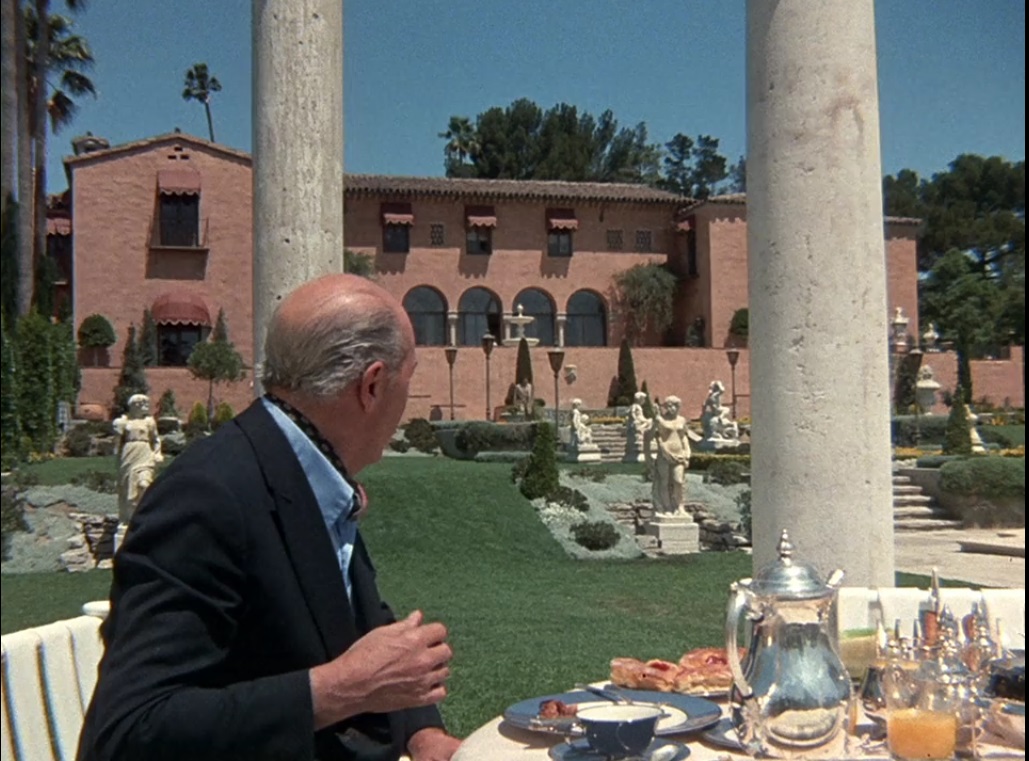
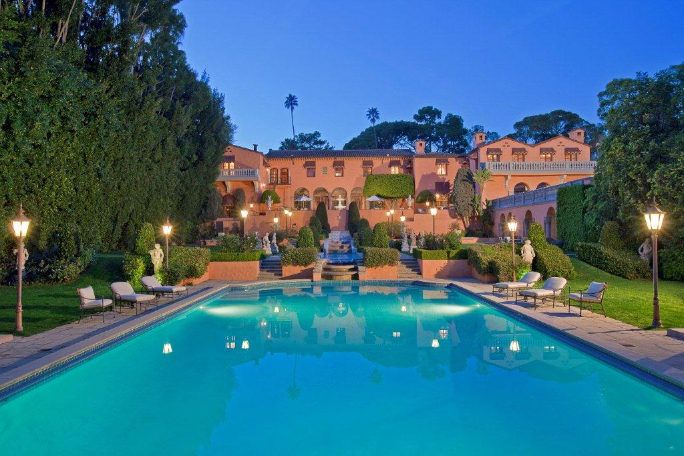
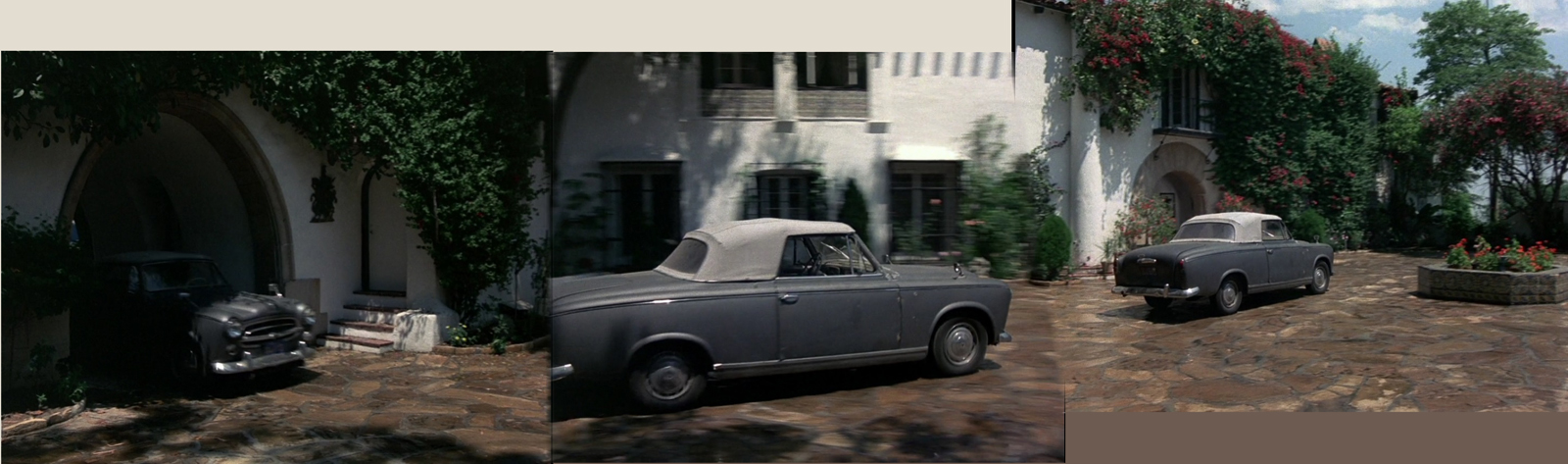
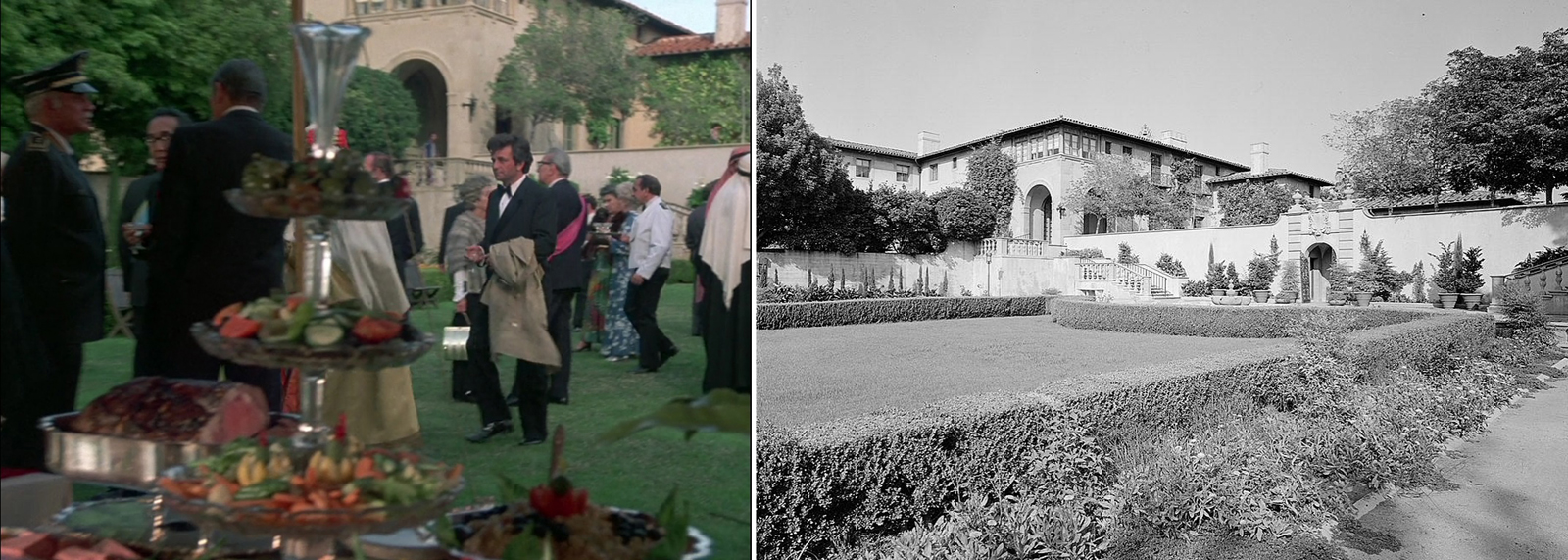
Death Lends a Hand 01Since the Columbo murderers are nearly always entitled millionaires, a remarkable number of classic Los Angeles mansions 10.0appear in the show. The extant Beverly House owned by William Randolph Hearst (1011 N. Beverly Dr., Beverly Hills), that portrayed the ‘horse-head’ house in The Godfather, appears in ‘Death Lends a Hand’ (see left).

A view of The Enchanted Hill in

A view of the lost Marion and Thomson estate ‘The Enchanted Hill’ in Identity Crisis (1975).

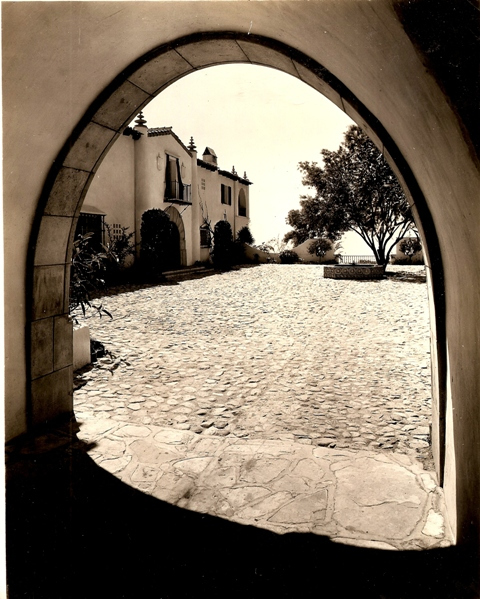
Columbo drove through this arch towards the front door.

Columbo drove through this arch (above) towards the front door.

The former home of silent film screenwriter Frances Marion and her husband Fred Thomson, known as ‘The Enchanted Hill,’ appears prominently both inside and out in the episode ‘Identity Crisis,’ and also in ‘Fade to Murder.’ Tragically, Microsoft billionaire Paul Allen bought the estate and tore it down in 1997, where it remains an empty site to this day. You can read all about The Enchanted Hill at Steve Vaught’s wonderful Paradise Leased blog HERE.

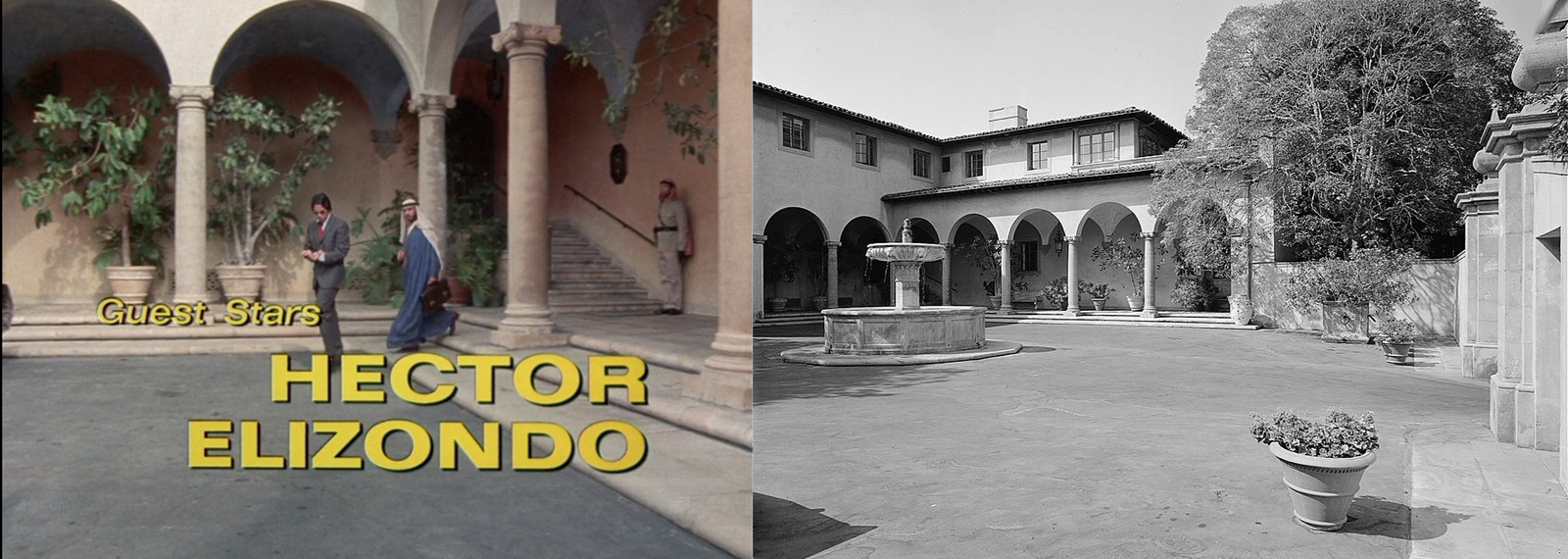
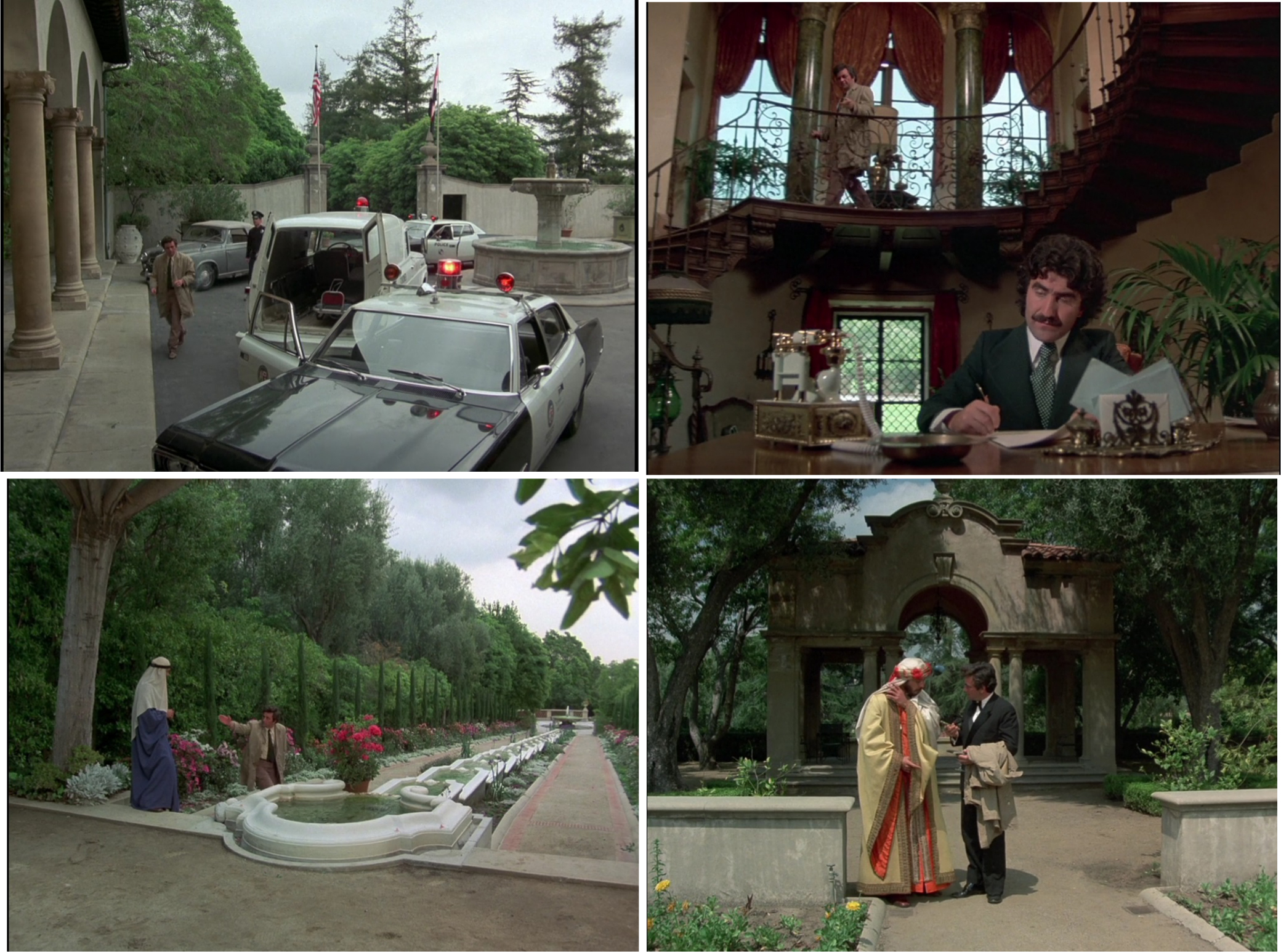
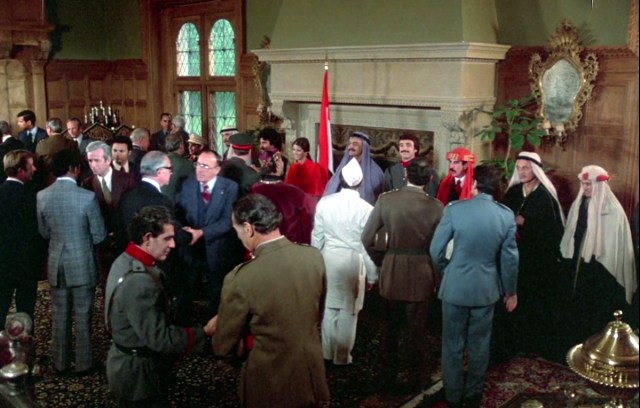
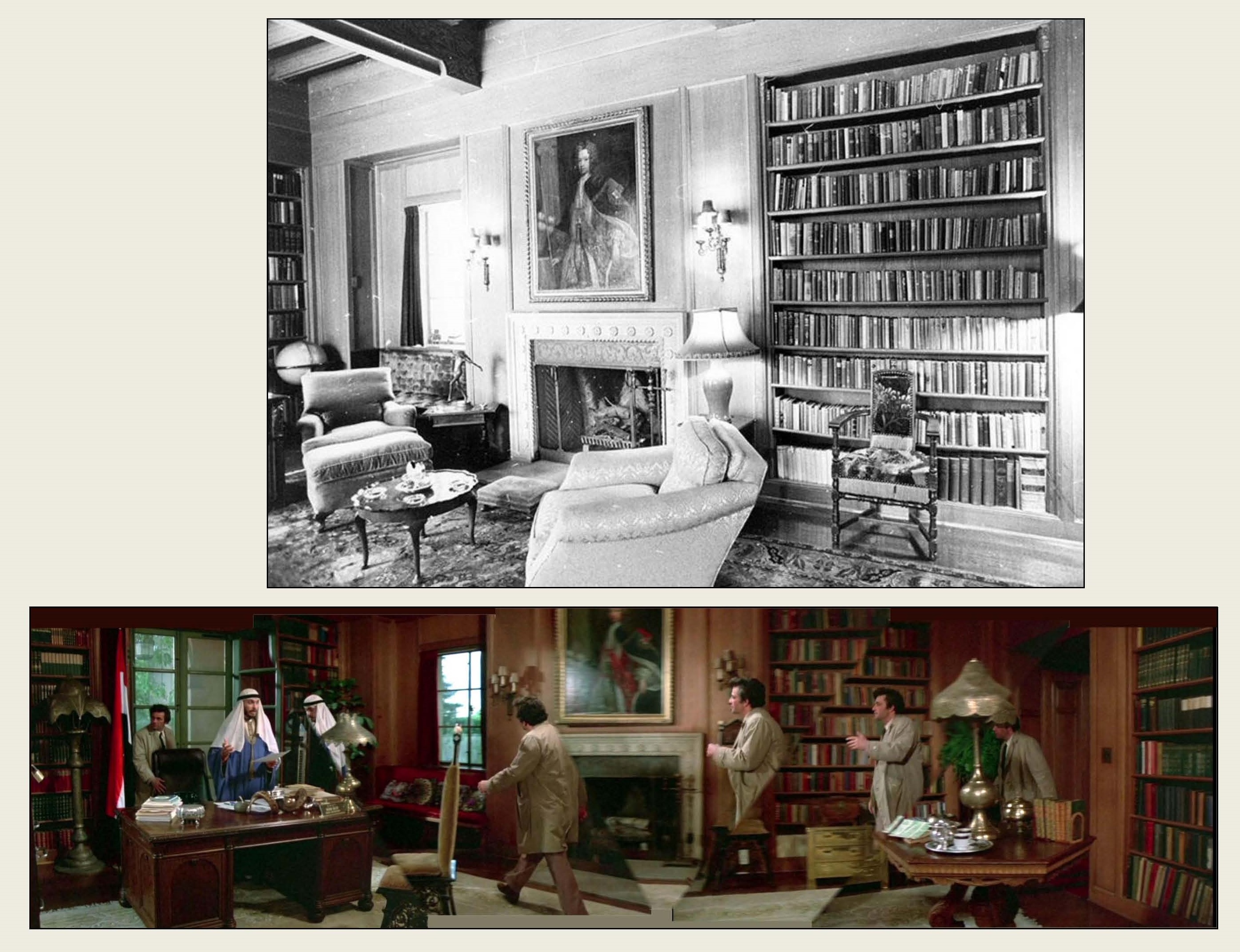
The episode ‘A Case of Immunity’ is a special treat for Harold Lloyd fans, as it was filmed extensively, inside and out, at Lloyd’s ‘Greenacres’ mansion (1740 Green Acres Place Beverly Hills), in 1975, a few years after Lloyd’s death. Here below are a number of frame grabs of the Lloyd estate from this episode. At the time the double room kitchen had the original stoves and giant refrigerators.

Harold Lloyd's Greenacres courtyard entrance - Library of Congress.

Harold Lloyd’s Greenacres courtyard entrance – Library of Congress.

Rear corner of estate - Library of Congress.

Rear corner of estate – Library of Congress.

Views of the entrance courtyard, the interior master staircase, the cascading fountain, and a free-standing pergola.

Click to enlarge – views of the entrance courtyard, the interior master staircase, the cascading fountain, now lost to subdivision, that also appears in the 1973 science fiction thriller Westworld, and a free-standing pergola.

A Case of Immunity 31

The Greenacres living room reached by descending a few steps.

Harold's office - LAPL.

Harold’s library – LAPL.

The two kitchen rooms showing the original ice box that can be opened from either room.

The two adjoining kitchen rooms showing the original refrigerator that can be accessed from either room.

During ‘A Friend in Deed’ Columbo crosses Rodeo Drive to visit the Van Cleef and Arpels jewelry store (at top) – it stands today at the same location as in 1974.

Posted in TV Shows | Tagged , , , , , , , , , , | 11 Comments

How Harold Lloyd Filmed Bumping Into Broadway

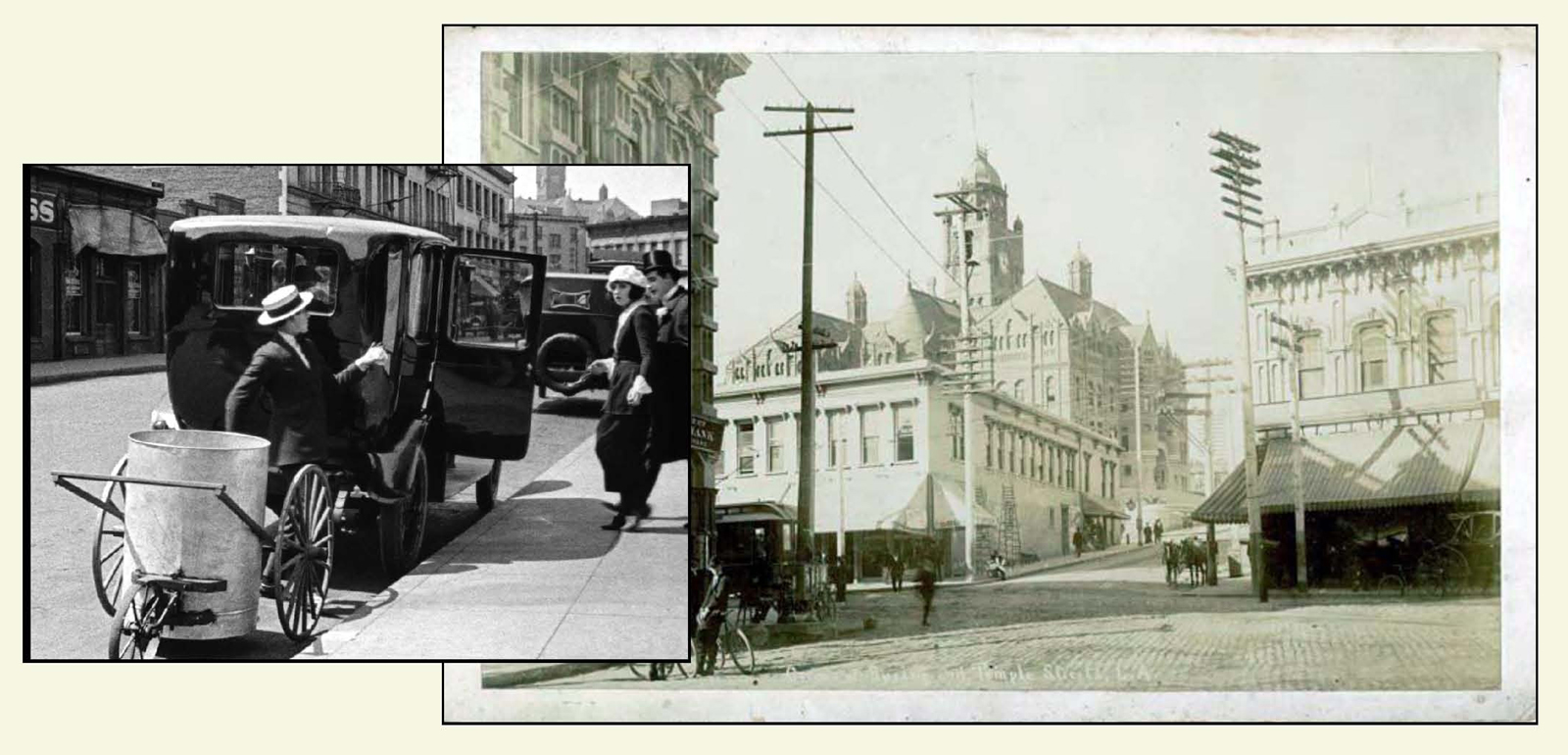
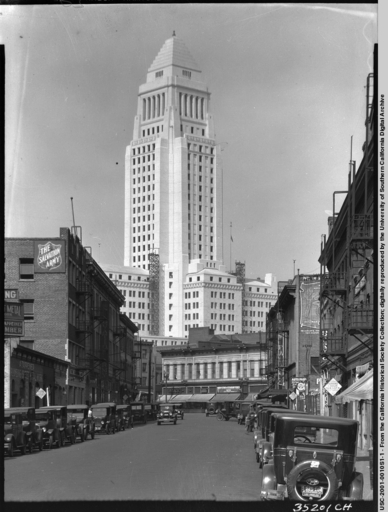
Looking north up Weller Street toward the tower of the former Los Angeles County Courthouse (1891-1935).

Looking north up Weller Street toward the tower of the former Los Angeles County Courthouse (1891-1935).

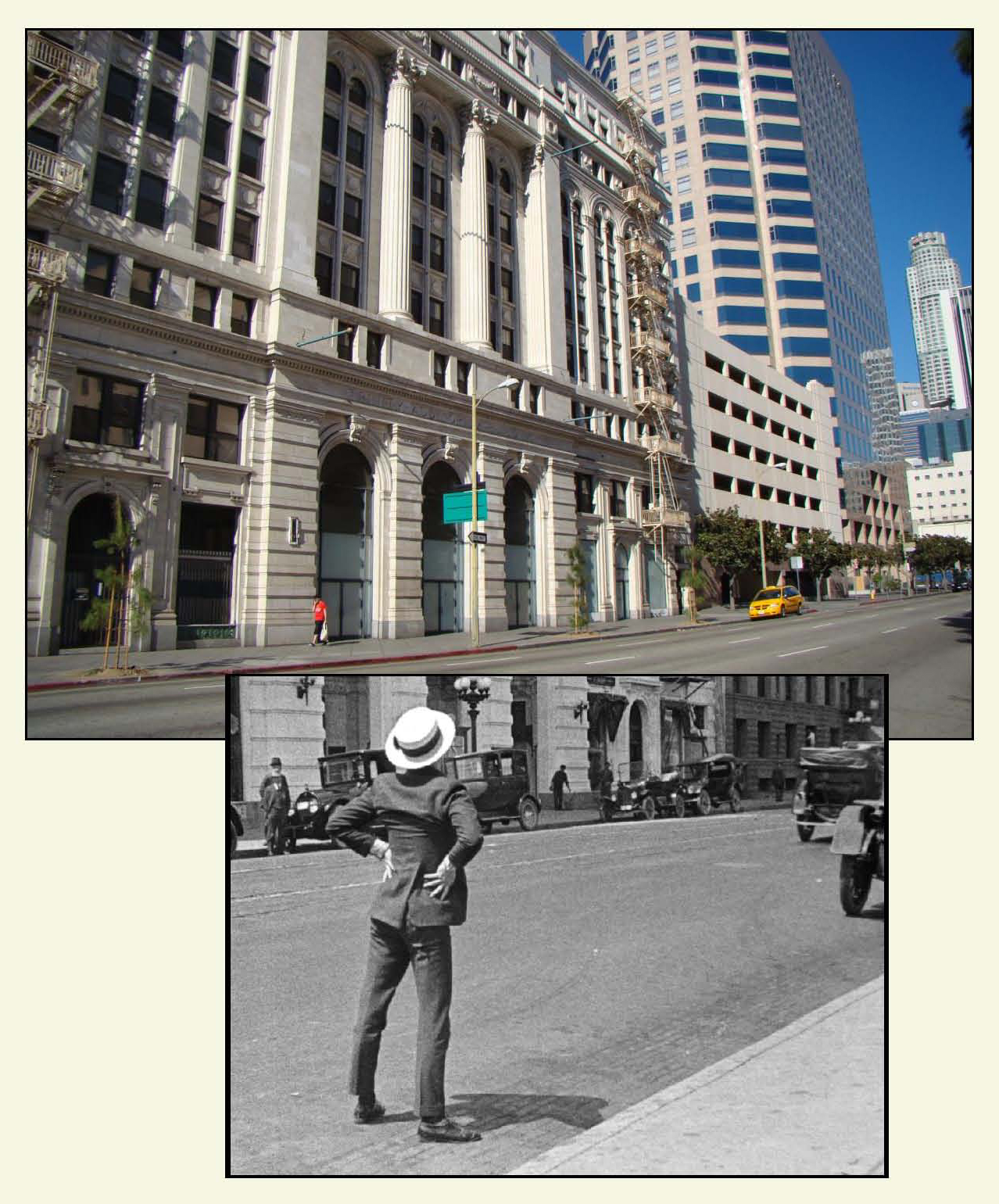
017 - chs 35201 BumpHarold Lloyd’s debut two-reel comedy featuring his ‘Glass Character,’ Bumping Into Broadway (1919), appears in a sparkling restoration as part of the new Criterion Collection Blu-ray release of Speedy (1928). Lloyd filmed many scenes in downtown Los Angeles, including Weller Street (see above), and before the Trinity Auditorium, still standing at 851 S. Grand Avenue (see below), as well as on Bunker Hill (for more details see my book Silent Visions). At right, a matching late 1920s view of Weller Street, showing how the newly completed City Hall blocks the old court house from view. USC Digital Library. Part of Japantown, Weller is renamed today ‘Astronaut E.S. Onizuka Street,’ honoring the first Asian-American to reach space, who was among the crew of the Challenger space shuttle disaster.

Harold on Grand Avenue before the Trinity Auditorium.

Harold on Grand Avenue before the Trinity Auditorium, 851 S. Grand Avenue.

Bumping Into Broadway 03 oil derricksDuring an era before zoning laws were passed, you will often see homes adjacent to shops and even factories in the background of silent films. One scene early in Bumping Into Broadway had long captured my attention, as Harold jumps from a stone wall into the back of a limousine convertible. In the background are many homes, a hill, and even oil derricks (left)! I long suspected this scene was filmed to the NW of downtown, perhaps in the hills leading up to Chavez Ravine. Thanks to the remarkable clarity and resolution of the new Blu-ray release, I was finally able to track this down.

Bumping Broadway Cleveland scene_Page_10At back I noticed a portion of a rooftop sign reading “ITO BROS  … NERY.” I searched for ‘wineries’ in the 1918 online city directory provided by the Los Angeles Public Library, and quickly found the Lotito Bros. at the rear of 815 Cleveland. Checking the Sanborn maps, and some vintage aerial photos, I confirmed this was the correct spot.

Harold's corner stone was adjacent to the former Huntington Digital Library.

Harold’s corner stone wall marked the perimeter of the former Los Angeles Orphans Home at Yale and Alpine. Huntington Digital Library.

00019040Harold’s corner stone wall, at Cleveland and Alpine, was up the street from the former Los Angeles Orphans Home that stood at the corner of Yale and Alpine. By 1913 the former orphanage was used as the headquarters to the Partido Liberal Mexicano (PLM), and was called La Casa del Obero Internacional, or International Workers Home, which offered lodging, community services, and cultural activities. The PLM was formed by brothers Ricardo and Enrique Flores Magón, who played an instrumental role in the Mexican Revolution (1910 – 1920), who settled in Los Angeles in 1910. A closer view of the former orphanage, once standing at 807 Yale Street, appears to the right (LAPL). According to the Los Angeles online building permits, the orphanage was demolished in 1917, and by 1919 was replaced with a one story garage. But its stone perimeter wall remained for Harold to play on.

The school appears at back. LAPL.

Behind Harold, the former Castelar Street School appears at back. LAPL.

Cleveland 1914Harold’s orientation at the corner of Alpine and Cleveland also confirms that the back of the former Castelar Street School, that once stood at 851 Castelar, appears behind him in a different shot (above). Looking north, this 1914 map (left) shows the site of the International Workers Home, fronting Yale Street, and its relation to the Castelar Street School to the upper right. Harold filmed at the back corner of the home. The Castelar Elementary School still exists, but the main buildings now face Yale Street, with open grounds where the former school stood.

Looking west, this 1928 view shows Harold's corner at Cleveland and Alpine in relation to the Castellar school. The words "Yale St" appear over the one story garage that replaced the orphanage in 1919. This stretch of Castelar Street is now called N. Hill Street.

Looking west, this 1932 view shows Harold’s corner at Cleveland and Alpine in relation to the Castelar school. The words “Yale St” appear over the one story garage that replaced the orphanage in 1919. This stretch of Castelar Street is now called N. Hill Street.

Below, this circa 1928 aerial view shows Harold’s corner (oval) at Cleveland (red arrow) and Alpine, in relation to the back of the Castelar Street School.

Ca. LAPL.

Another view, looking north up Cleveland (arrow) from the corner of Alpine (oval). LAPL.

Two surviving buildings likely appear as shown.

Two surviving buildings likely appear as shown.

In 1906 the west side of Cleveland was the site of a brick factory. At some point it shut down, and starting in 1910 several homes were moved from elsewhere to the street, including the 815 Lotito home, now lost, appearing to the far left of the movie frame. Christopher Lotito still owned the home in 1945 when some alteration work was done. The aerial photos and maps show that in 1919 a vacant lot stood between the Lotito home, and the prominent 823-825 duplex, now lost, identified above. Due north of this lost duplex, and thus directly behind it in the movie frame, stands the surviving 827-829 duplex, as likely identified above. The other surviving home, 837, two sites further north of the lost 823-825 duplex, has a peak on the left front of the house, and is also likely identified above.

More Harold news: I am excited to report that I will introducing Safety Last! at the Orpheum Theater on June 25, 2016 as part of the Los Angeles Conservancy’s Last Remaining Seats summer program. I’ve put together a fun program with many new discoveries, including a tie-in between Safety Last! and Clifton’s Cafeteria.

HAROLD LLOYD images and the names of Mr. Lloyd’s films are all trademarks and/or service marks of Harold Lloyd Entertainment Inc. Images and movie frame images reproduced courtesy of The Harold Lloyd Trust and Harold Lloyd Entertainment Inc.

Harold’s corner of Alpine and Cleveland today.


Posted in Harold Lloyd | Tagged , , , , , , , , , , , , | 5 Comments

Buster in Cops Cruising Santa Monica Boulevard

ca

Big Joe Roberts in Cops – suddenly realizing his wallet is missing.

The Grim Game and Cops_Page_18Buster Keaton’s famous short film Cops (1922) remains his only self-produced movie that was filmed completely out of doors, with no interior scenes. Early in the film Buster helps Big Joe Roberts into a taxi in front of the Pantages estate at 590 N. 02a east down Sunset from DetroitVermont (shown HERE), while the scene where Joe leans out of the taxi window to retrieve his wallet from Buster, but not his cash, was filmed miles away at Sunset and Detroit (shown HERE).

Looking east down Santa Monica Boulevard from Gower. LAPL.

Looking east down Santa Monica Boulevard from Gower. LAPL.

The reaction shots of Joe inside the taxi were filmed driving east along Santa Monica Boulevard, past Gower, just a few blocks from the Keaton Studio.

00011236This Los Angeles Public Library view west down Santa Monica from Gower was taken near the time of filming, revealing the Warren Drug Co. that stood at the NW corner. The details match perfectly.

I discovered this scene when I noticed the prominent word “SODA” go by (see below), as a similarly prominent “SODA” sign appeared during a scene from Harold Lloyd’s 1921 comedy short I Do. The corner turned out to be the Warren Drug Co. on Santa Monica and Gower.

Matching words "SODA" appearing in Cops and in Harold Lloyd's I Do.

Matching words “SODA” appearing in Cops and in Harold Lloyd’s I Do.

True to form, Buster staged this scene just a few blocks away from his studio – see below.

Click to enlarge - the Keaton Studio at right, at Eleanor and Lillian Way, just a few blocks west of the corner of Santa Monica and Gower, at left. Marc Wanamaker - Bison Archives.

Click to enlarge – the Keaton Studio at left (see enclosed barn-like shooting stage), at Eleanor and Lillian Way, just a few blocks west of the corner of Santa Monica and Gower, at left. Marc Wanamaker – Bison Archives.

In addition to Lloyd’s comedy I Do, the Warren Drug Co. also appeared during scenes from Larry Semon 1920 short The Suitor, see below. [Note: lacking access to these new photos, I incorrectly reported this corner in my Lloyd book Silent Visions as being one short block further east, at Beachwood, rather than at Gower.]

Lloyd in I Do, Larry Semon's The Suitor, in front of the Warren Drug Co. HollywoodPhotographs.com

Lloyd in I Do, Larry Semon’s The Suitor, in front of the Warren Drug Co. HollywoodPhotographs.com

A 1938 view from the site of the demolished Keaton Studio, left, to Santa Monica and Gower. USC Digital Library.

A 1938 view from the site of the demolished Keaton Studio, left, to Santa Monica and Gower. USC Digital Library.

21I have now identified every location appearing in Cops, including the stock footage of the policeman’s parade filmed in New York, and all but one of the many backlot shots, including the teeter-totter Metro Panfence scene (shown HERE). The single remaining mystery is the studio backlot site for the final scene where Buster locks the gang of police within their own station house (at right). My sense is that it was filmed at the Metro lot due south of the Keaton Studio.

A similar view east in 1929. USC Digital Library.

A similar view west in 1929. USC Digital Library.

You can read more about Cops in my book Silent Echoes, and in my many other posts about the film (see list HERE). A restored print of Cops will be presented this June 4, 2016 in San Francisco, as part of the annual San Francisco Silent Film Festival.

The corner of Santa Monica and Gower today.

Posted in Buster Keaton, Cops | Tagged , , , , , , , , , , , , | 1 Comment