Chaplin – 100 Years Ago on Sunset Boulevard

ca

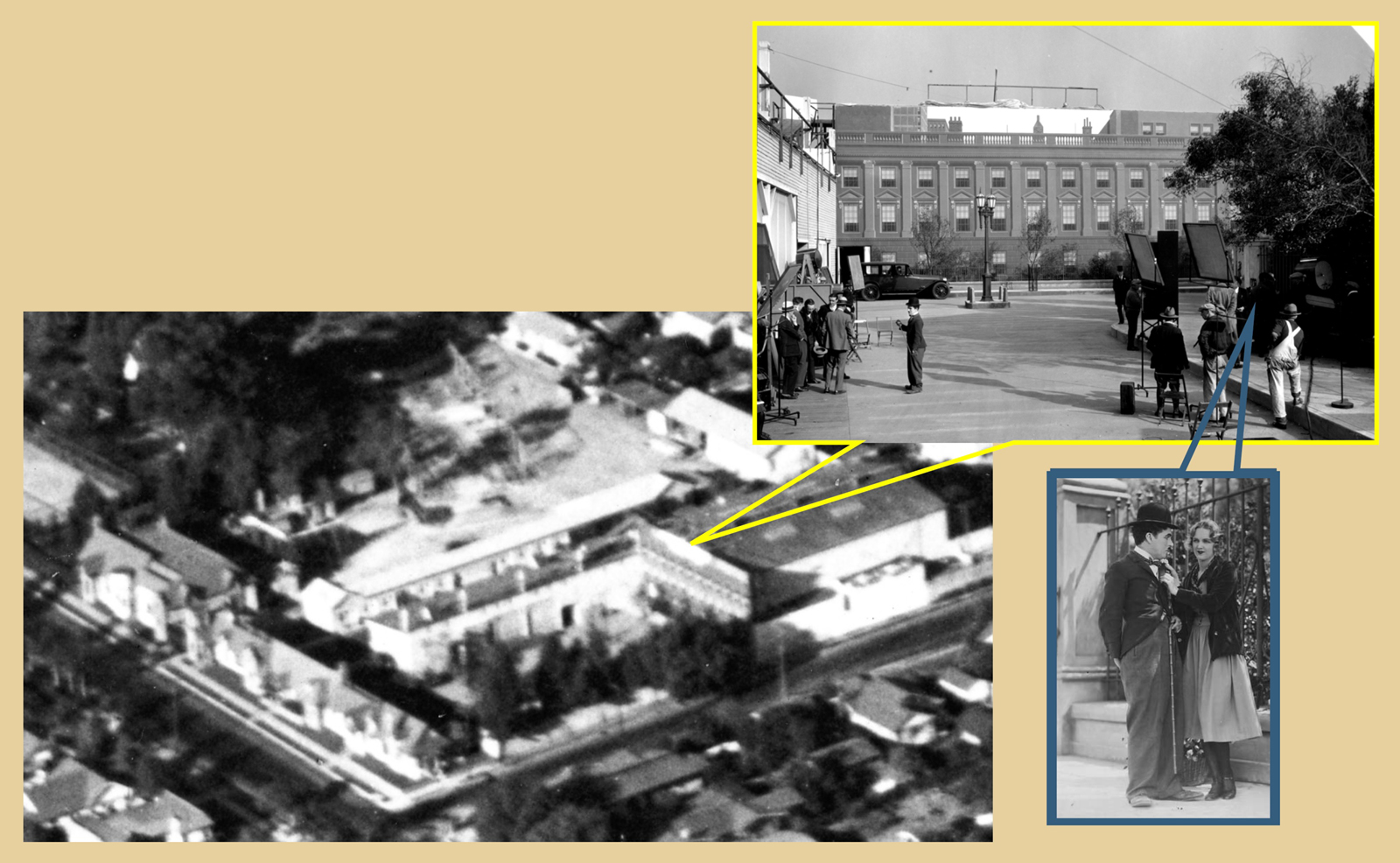
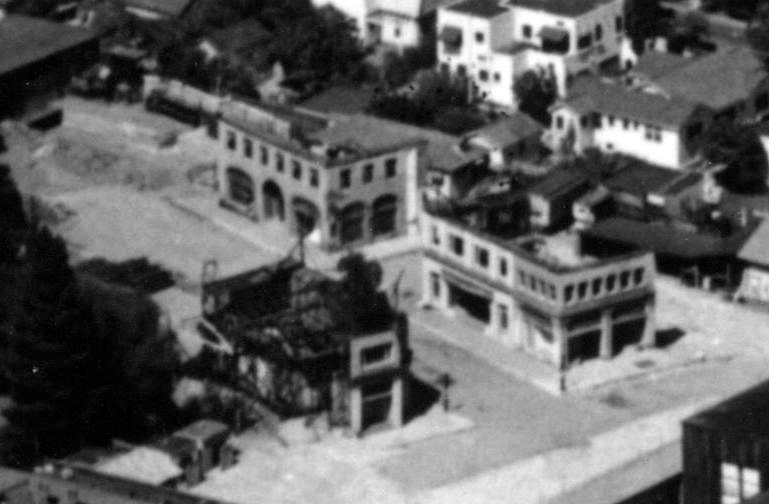
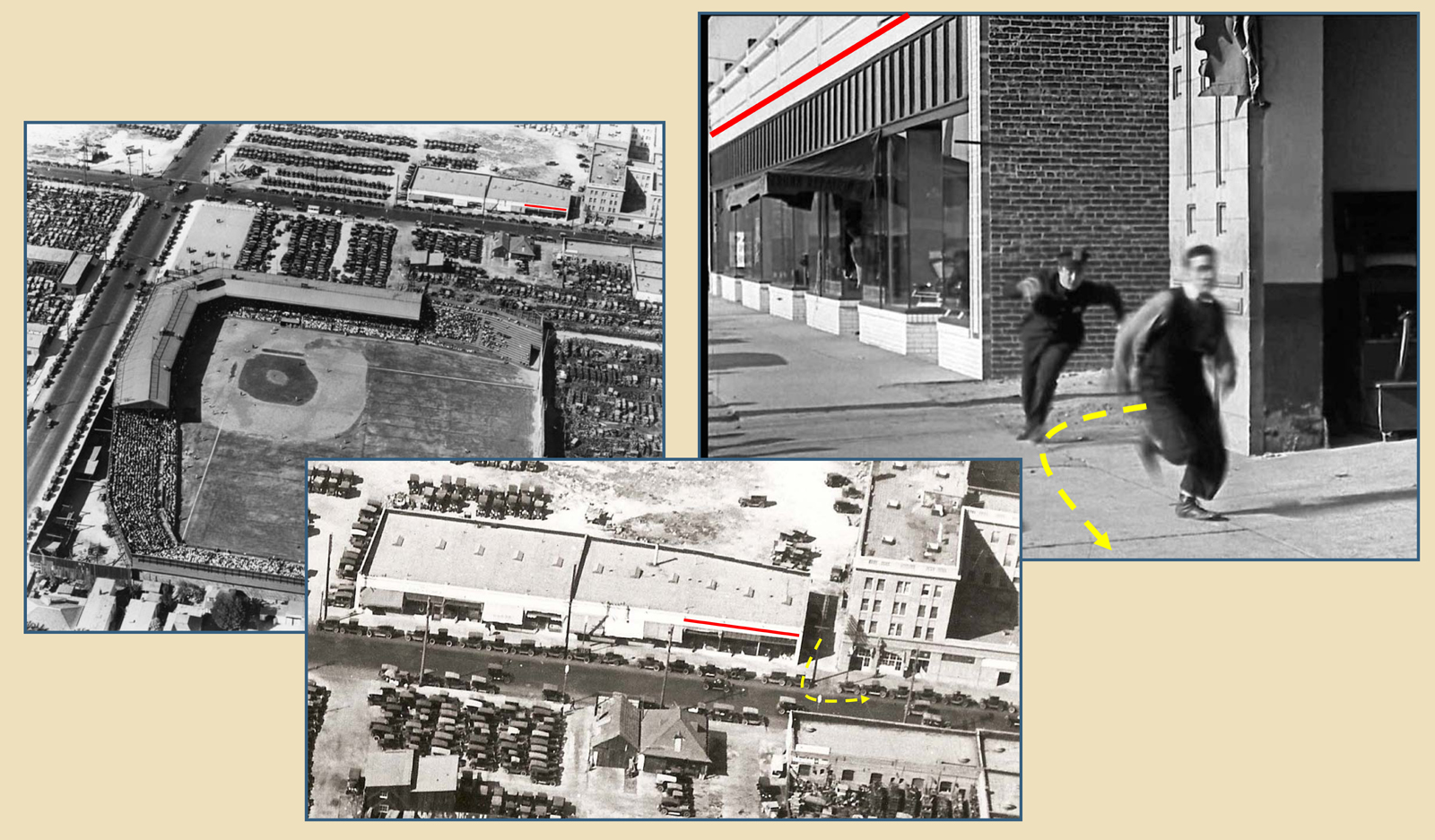
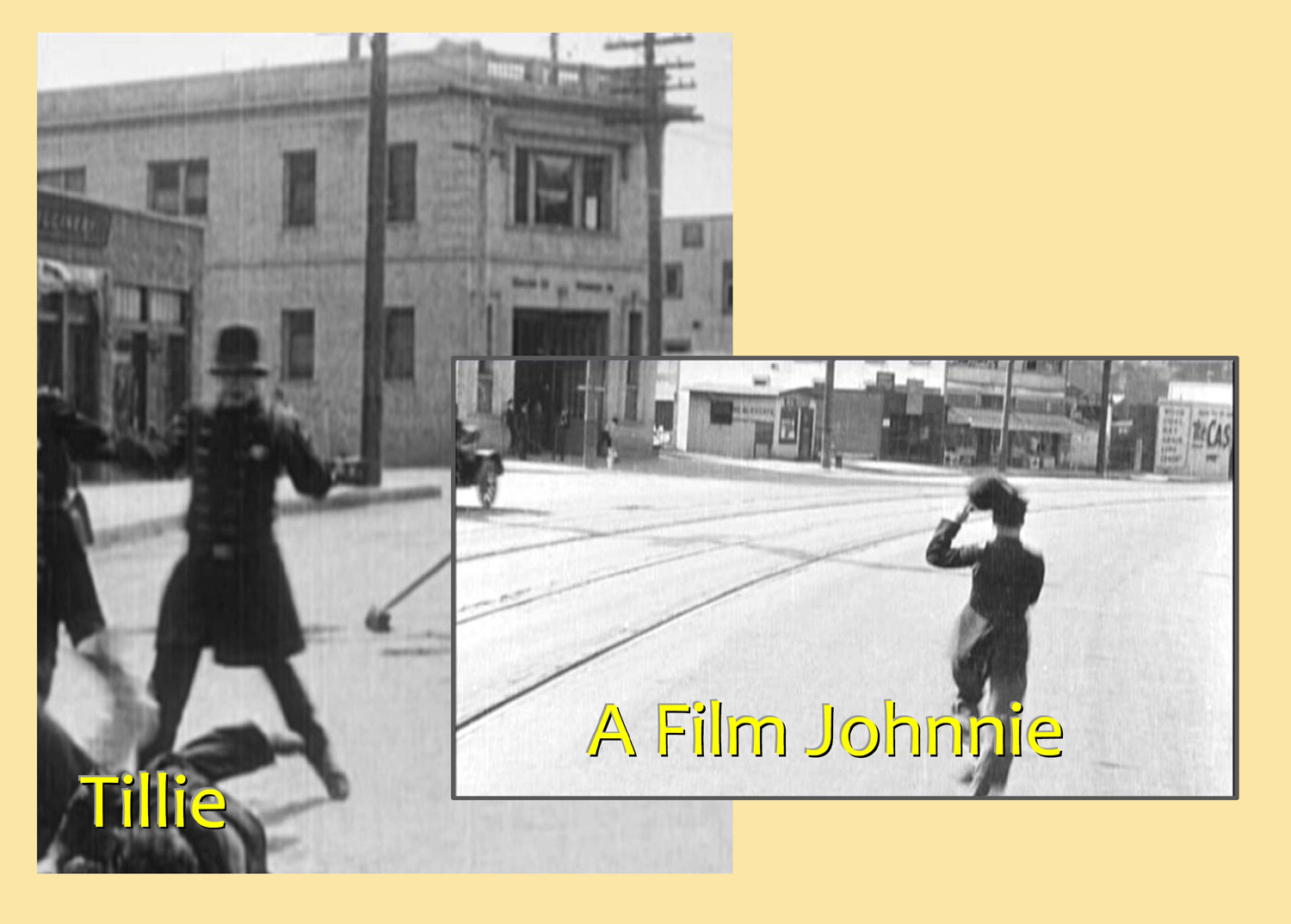
Tillie’s Punctured Romance (1914) looking west towards Engine Co. No. 20 at 2144 Sunset Blvd.  Completed in 1953, a modern structure for Engine Co. No. 20 stands at the same address today.  LAFD Photo Album Collection

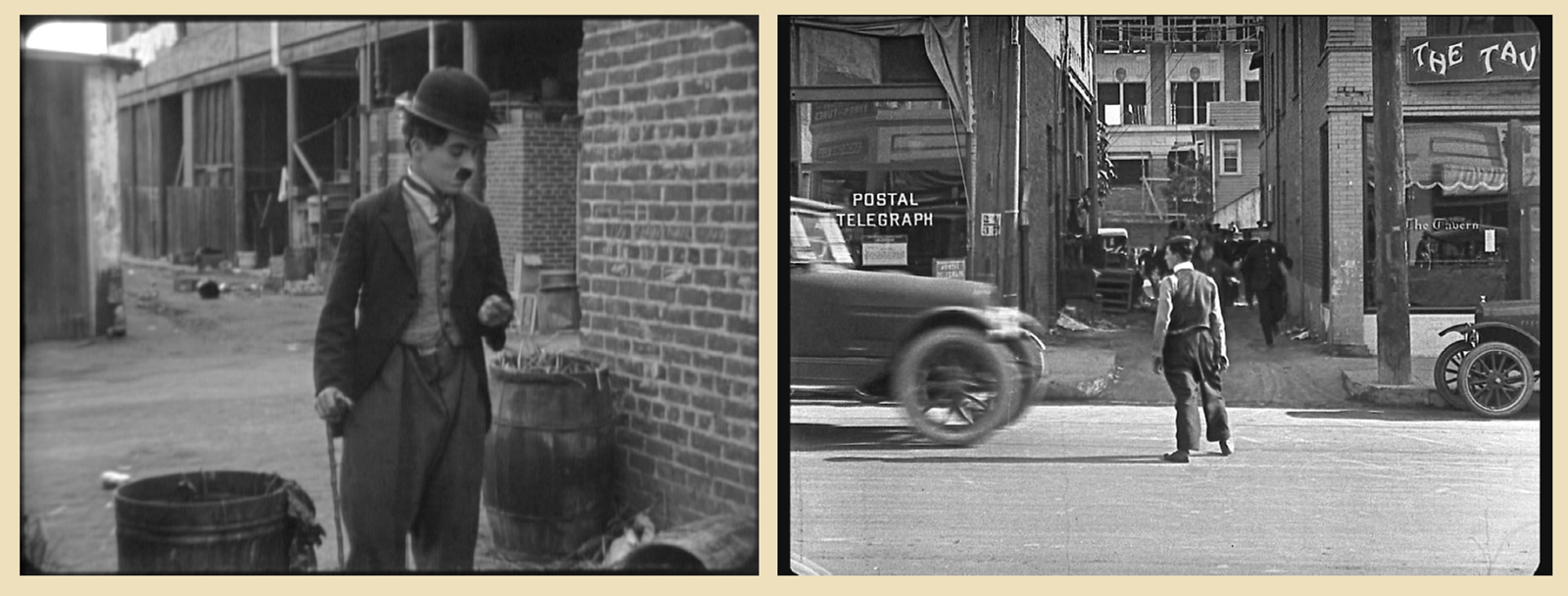
“Sunset Boulevard” – few words evoke the mystique and glamour of Southern California more than the name of this historic street that wends its way west from the heart of downtown Los Angeles to the Pacific Ocean. As discussed here, the busy street passed within a few blocks of the Keystone Film Co. studios where Charlie Chaplin began his movie career in 1914.  The remarkable image quality of the new Chaplin at Keystone collection from Flicker Alley, resulting from seven years of exacting restorations performed by Cineteca di Bologna and the British Film Institute in association with Lobster Films, confirms Chaplin filmed many scenes on Sunset Boulevard more than three decades before the landmark film starring Gloria Swanson and William Holden premiered in 1950.
Ca

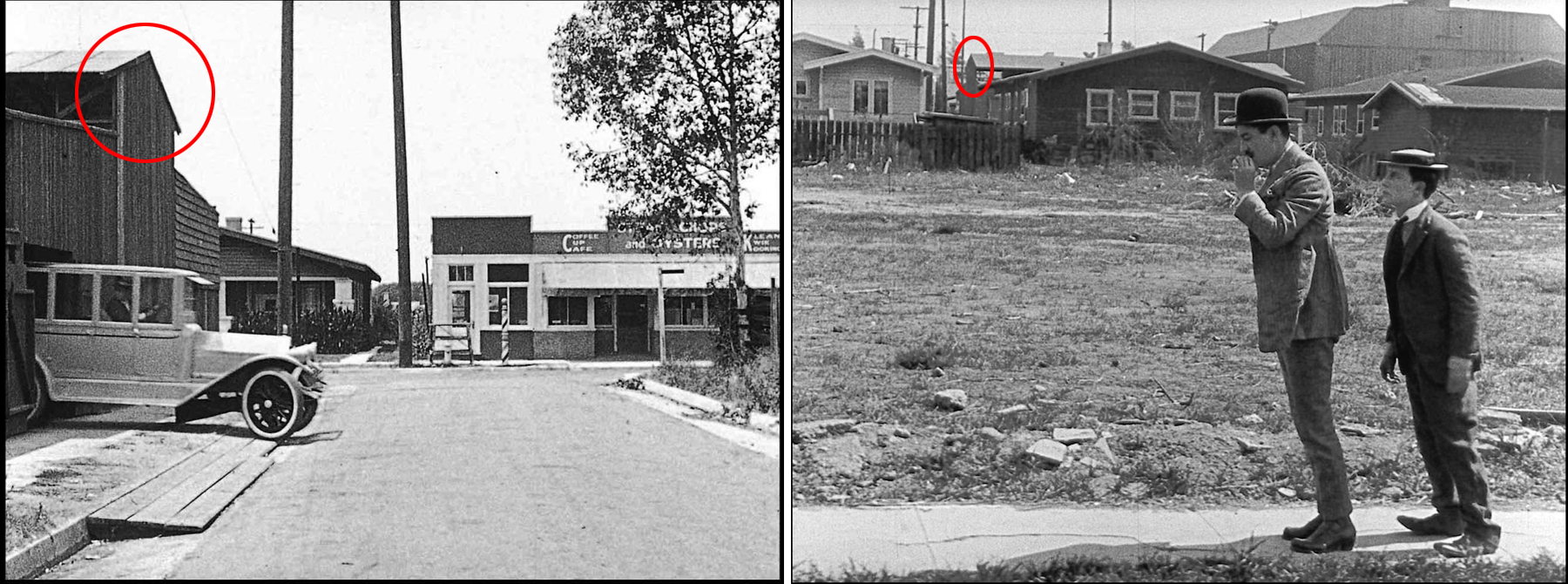
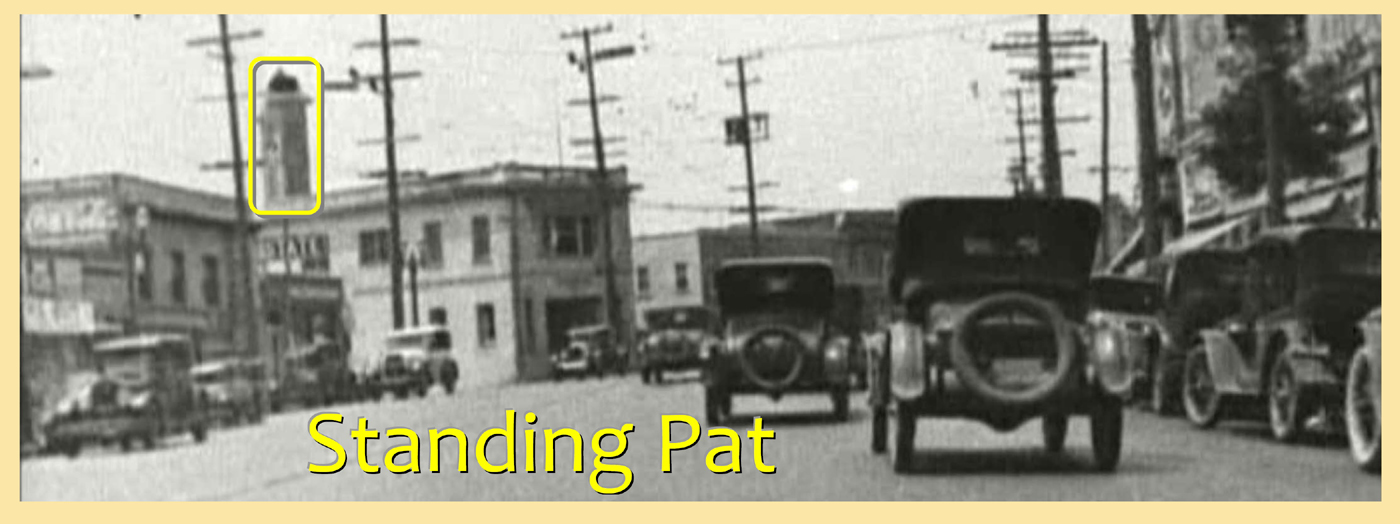
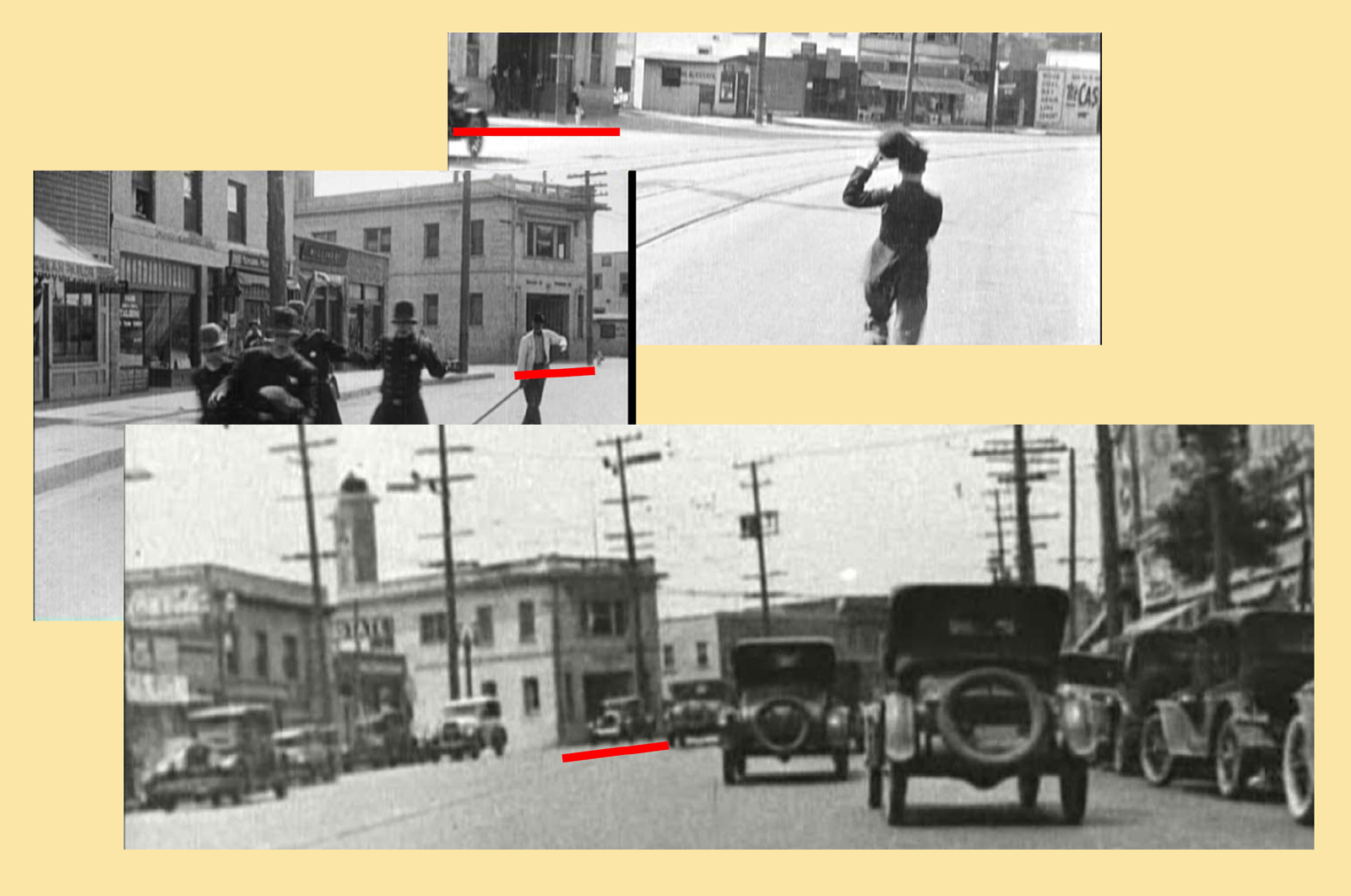
Standing Pat (1928) looking west down Sunset towards Engine Co. No. 20.  The tall narrow tower (box) told me this building was likely a fire station.

At top of this post, a band of Keystone Kops fall over themselves during the chase and gunfight climax of Tillie’s Punctured Romance, starring Charlie Chaplin, Marie Dressler, and Mabel Normand.  I solved the Tillie location when I noticed it was the same street scene (directly above) appearing in Standing Pat, “A Ton of Fun” comedy starring the overweight trio Hilliard Karr, Frank Alexander, and ‘Kewpie’ Ross.  The tall narrow tower (box, above) was a common feature used at fire stations to hang wet hoses to dry, and checking the Los Angeles Fire Department Historical Society confirmed the setting as 2144 Sunset Blvd.
ca

Engine Co. No. 20 appearing both in Tillie’s Punctured Romance and in A Film Johnnie (1914) as the trolley tracks on Sunset curve north at Mohawk Bend.

The “transitive theory of film location confirmation” now starts kicking into high gear.  Standing Pat confirmed the fire station at the SW corner of Sunset and Mohawk Street, which confirmed Tillie, so when I noticed the station also overlaps with a scene from Chaplin’s A Film Johnnie (above), the station confirmed that movie as well.  A leads to B leads to C.
ca

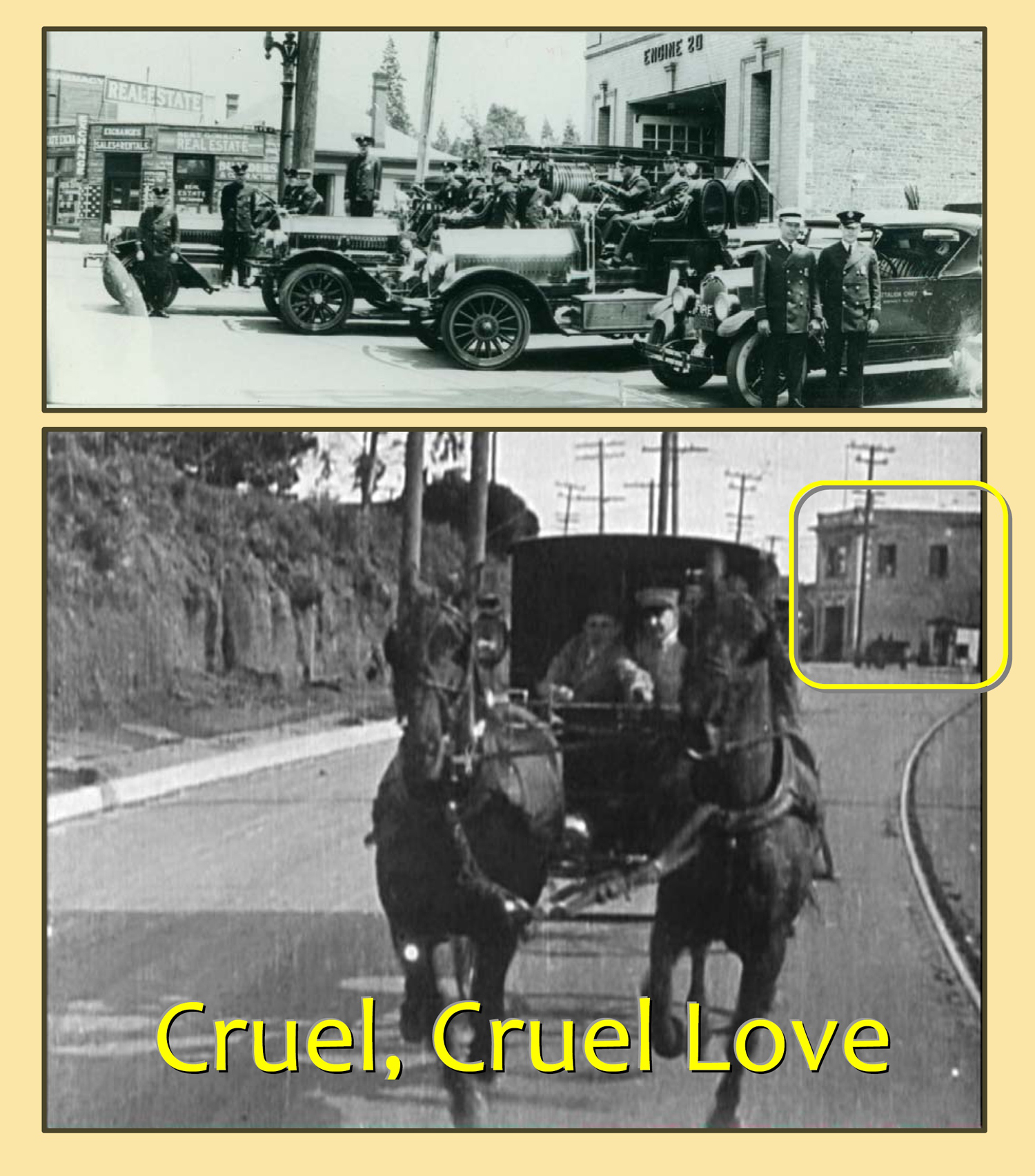
Eastward views towards Engine Co. No. 20 (LAFD Photo Album Collection – courtesy Mrs. George Walker) and in Cruel, Cruel Love (1914).  The ambulance is heading west from Mohawk Bend on Sunset.

Switching perspective, now looking east towards Mohawk Bend on Sunset, the fire station at top confirms the above scene from Chaplin’s Cruel, Cruel Love was also filmed on Sunset.
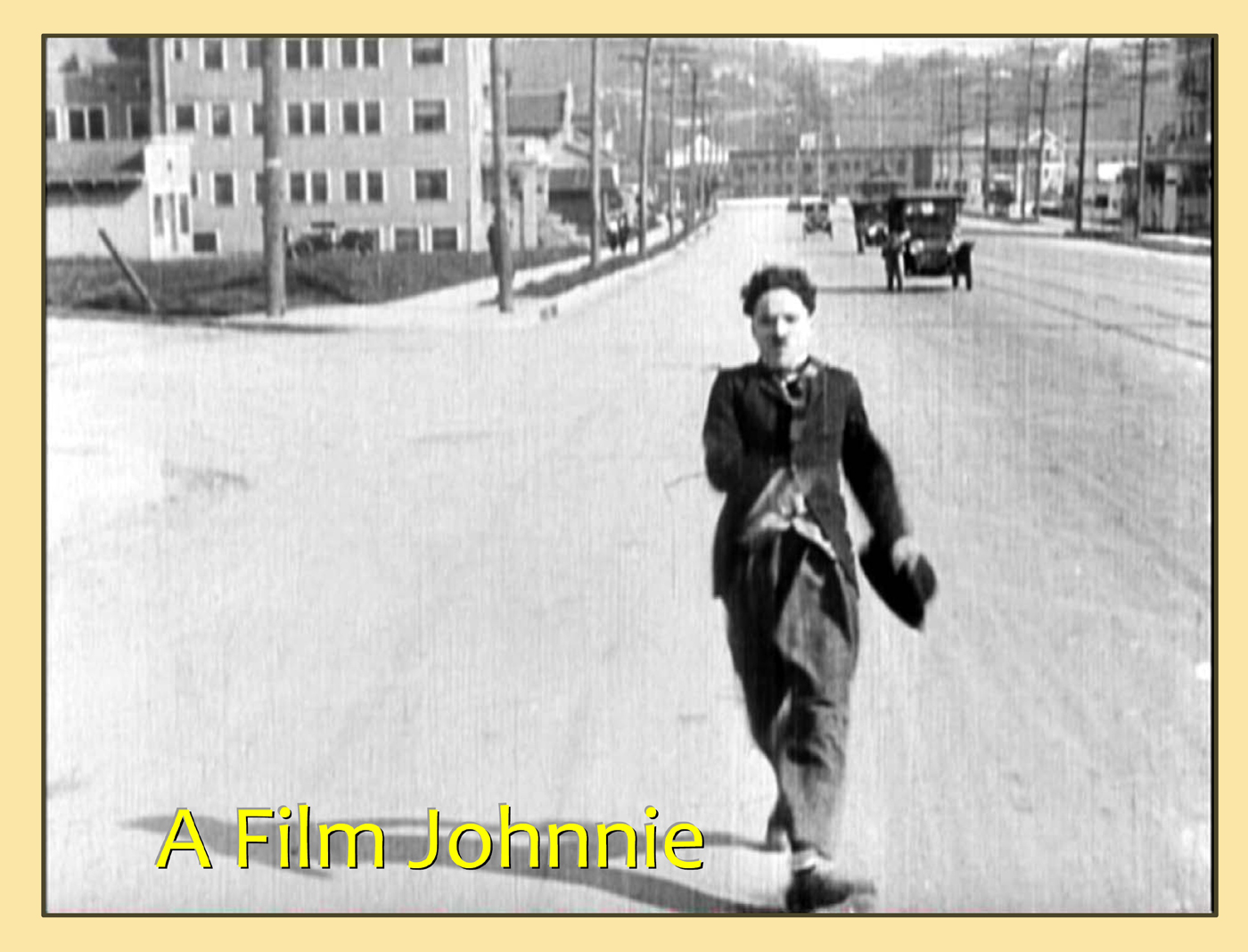
Charlie looking east towards KenmoreKnowing Chaplin filmed one scene for A Film Johnnie looking west beside the trolley lines on Sunset, it seemed likely the scene to the left was also filmed beside the Sunset trolley line, only this time looking east.

ca

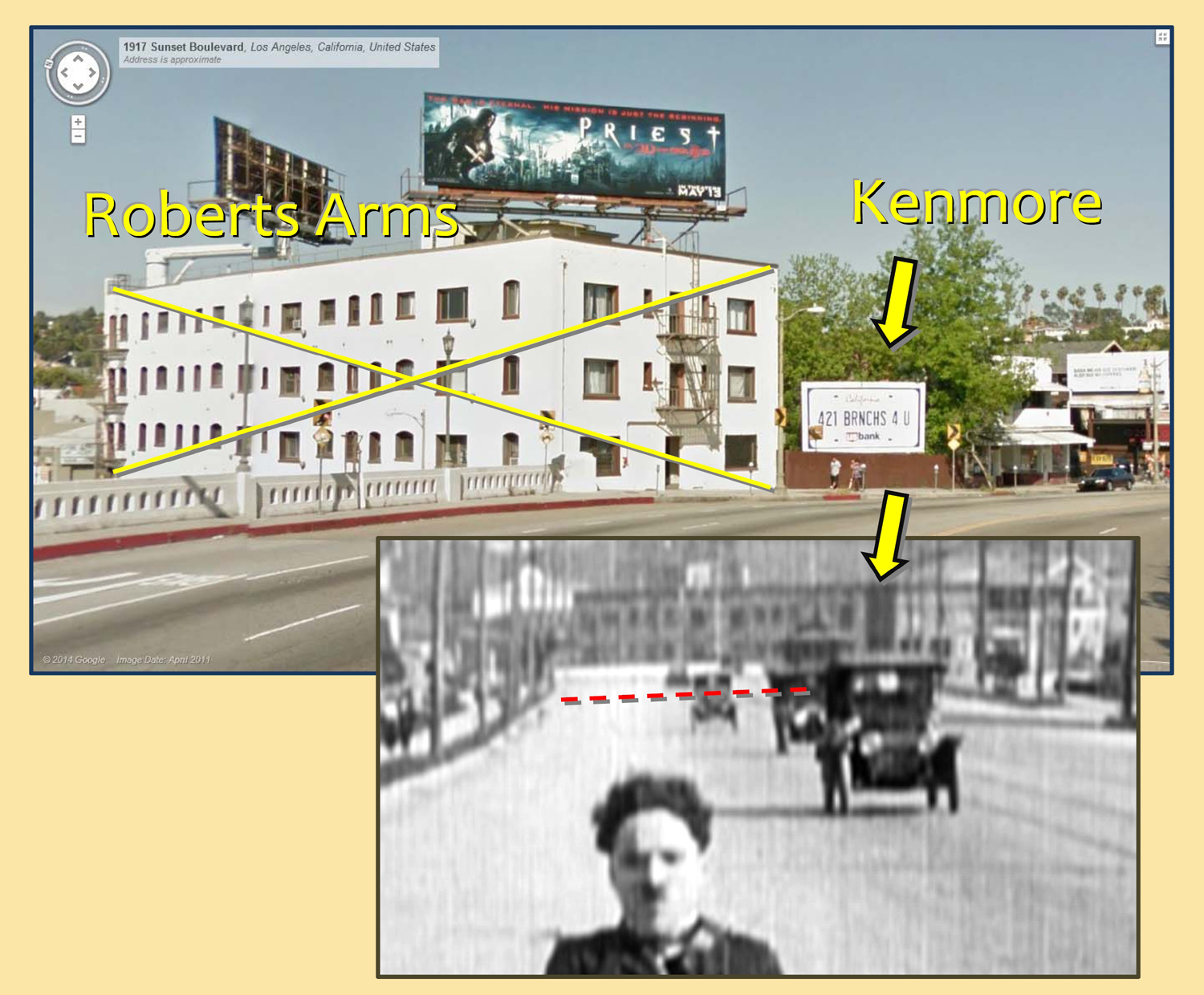
The extant Kenmore Apartment building at back – the dotted red line marks the guard rail where Sunset crosses over Glendale Blvd.

The Kenmore Apartments building (1827 Sunset – originally numbered 1817 Sunset – built in 1912) stands behind Charlie, above, confirming the view east down Sunset towards the Glendale Blvd. overpass railing (dotted red line).

ca

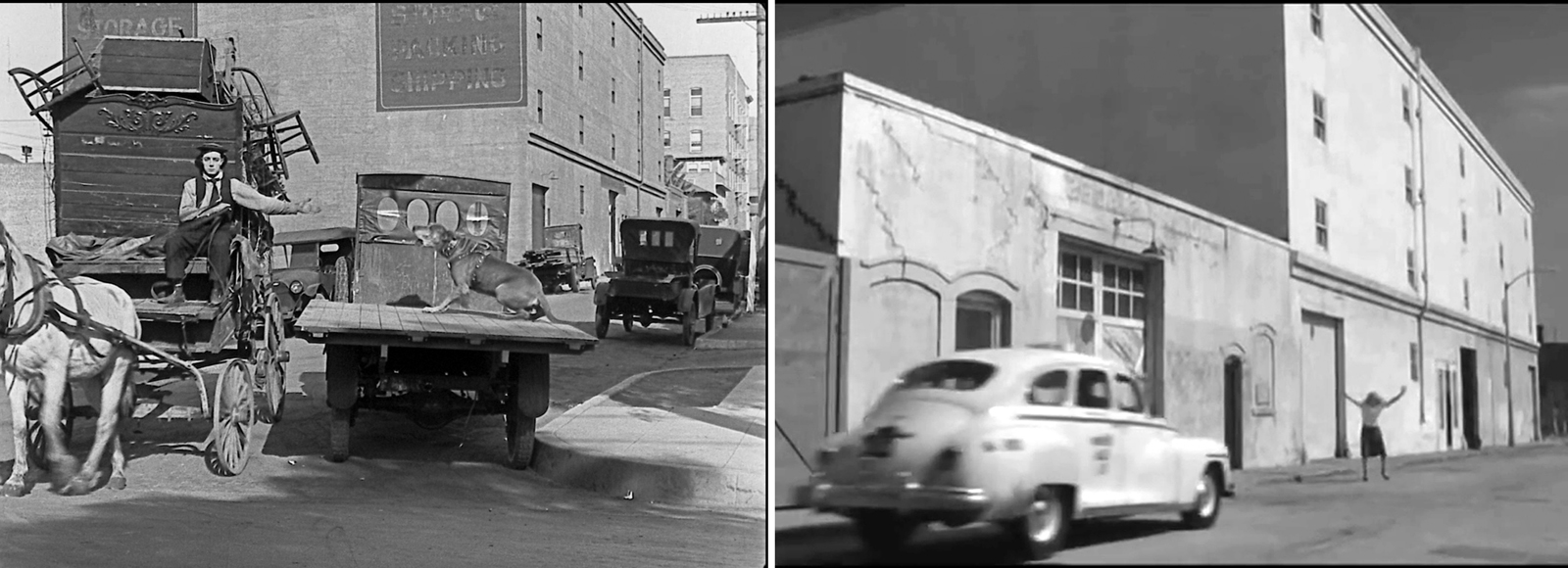
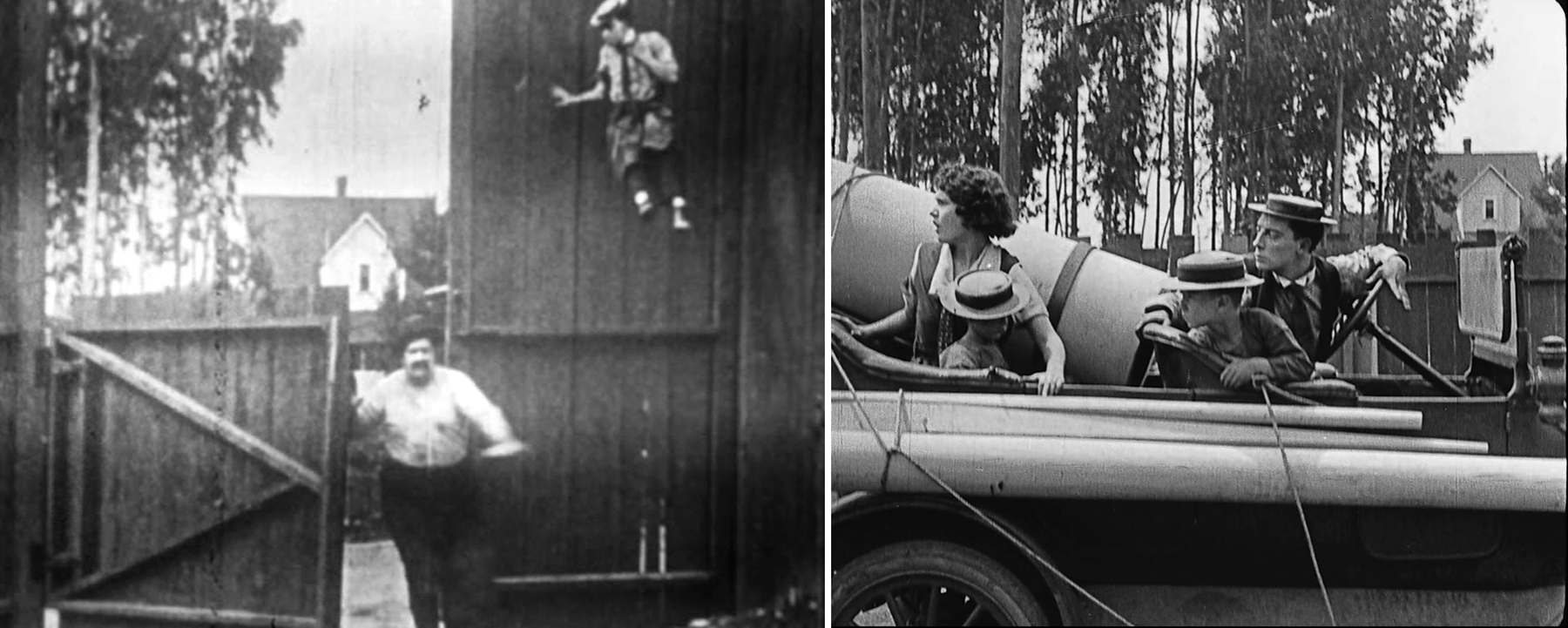
The Kenmore Apartments as it appears during a scene from Cops (1922).  Originally numbered 1817 Sunset, a portion of the apartment sign reading “181*  Kenmor*” appears at back.  The front of the Kenmore was remodeled with streamline moderne elements in 1937 (permit issued 03-25-1937) to accommodate commercial store fronts on the ground floor.

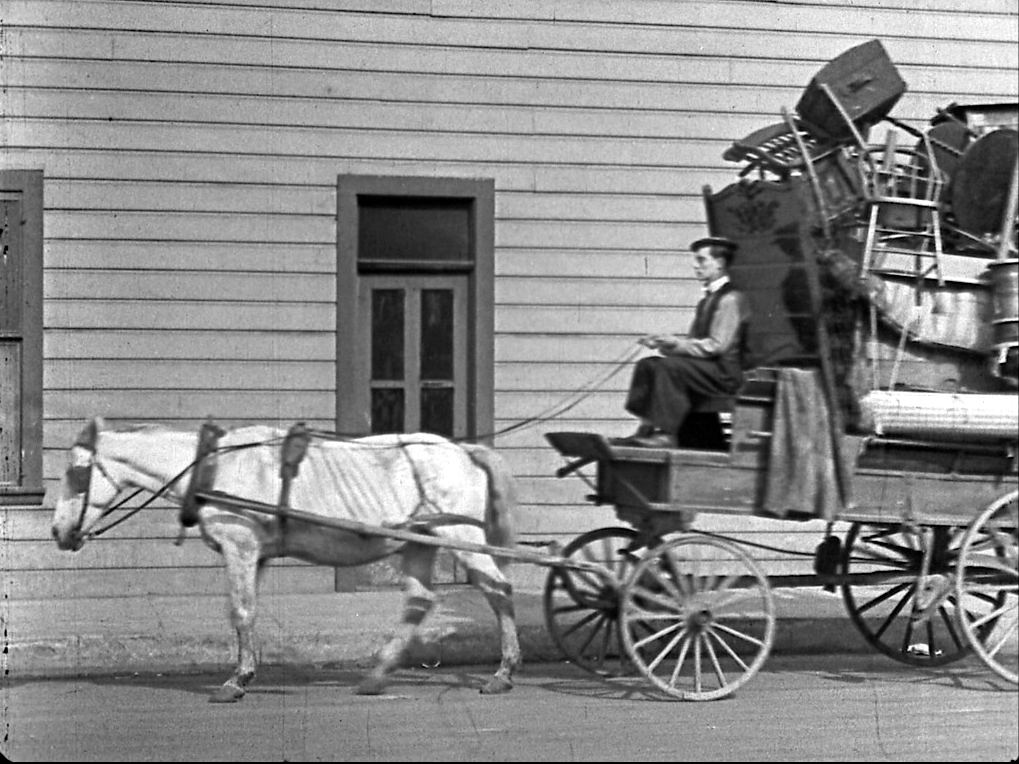
Remarkably, the Kenmore Apartments played a later role in film history, portraying the new home of the family whose wagon-load of furniture is destroyed during Buster Keaton’s classic short film Cops.
ca

A modern close view of the Sunset/Glendale overpass (dotted red line)

Although the Kenmore (built in 1912) is still standing, it’s no longer possible to replicate the view of the Sunset/Glendale overpass from A Film Johnnie as the more “modern” Roberts Arms (built in 1922) today blocks the view.
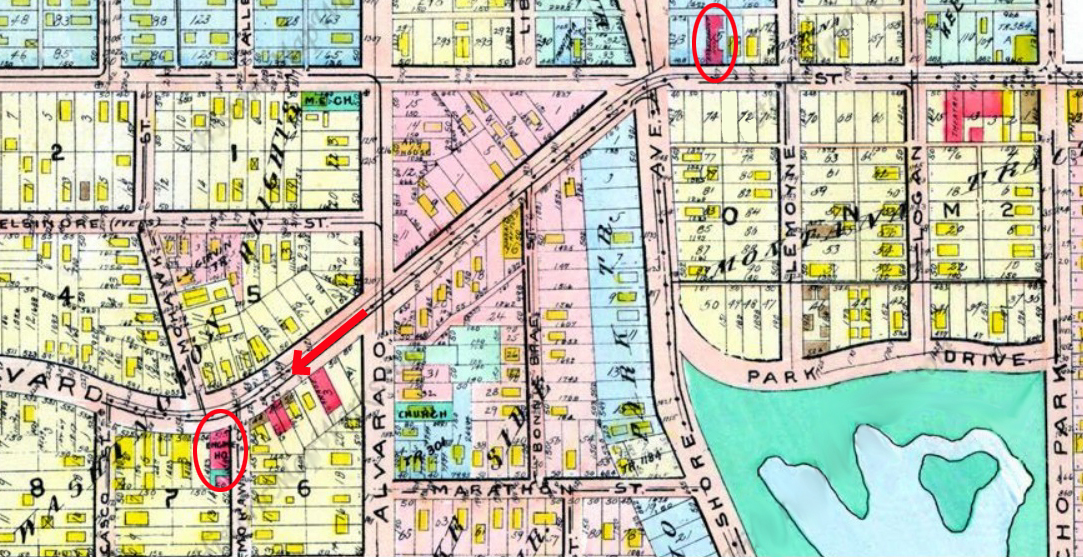
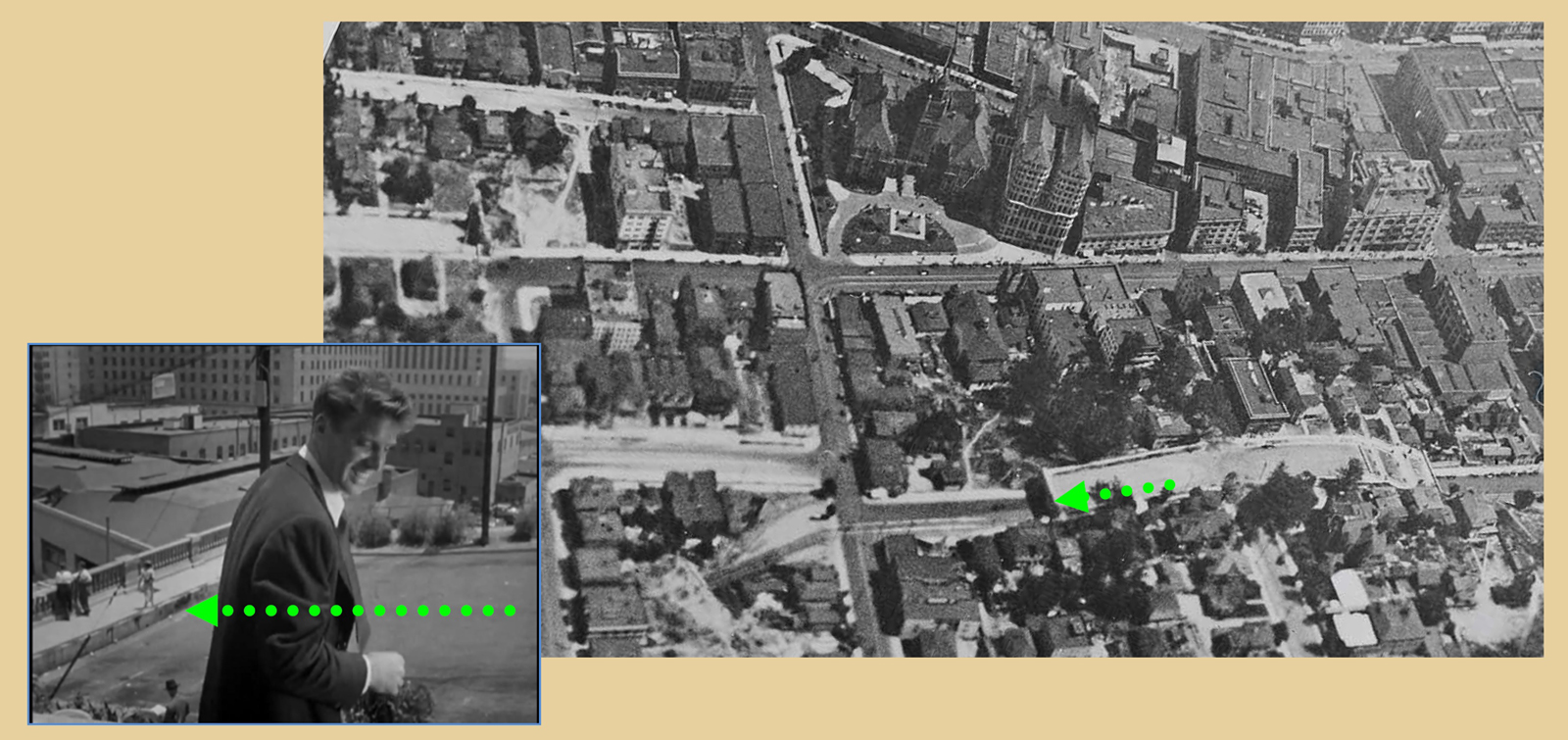
This 1914 map shows Charlie’s path along Sunset from the Kenmore (upper right oval) towards the fire house (lower left oval). Notice the proximity to Echo Park where many Keystone comedies were filmed.
This 1914 map shows Charlie’s path along Sunset from the Kenmore (upper right oval) towards the fire house (lower left oval). Notice the proximity to Echo Park where many Keystone comedies were filmed.

ca

Recapping – Engine Co. No. 20 at Mohawk Bend as it appears in A Film Johnnie, Tillie’s Punctured Romance, and Standing Pat.  A comparable view of the larger, modern fire station on the same corner appears below.

For another fun location from A Film Johnnie, you can read HERE how the beautiful (and still standing) Bryson Apartment building stood in for the Keystone Studios during the film.

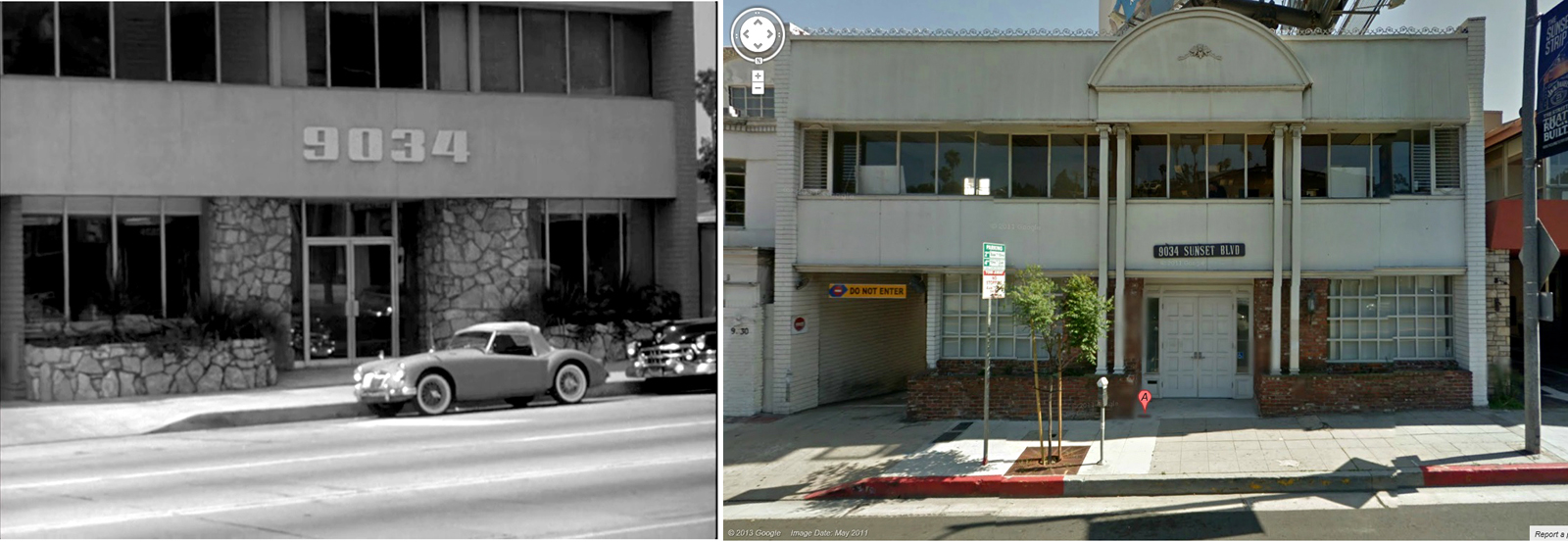
For additional Sunset history connections: (1) as explained in my book Silent Traces, Chaplin filmed his roller skate escape at the conclusion of The Rink (1916) along Sunset Blvd. near Occidental Blvd., and filmed a discarded scene from The Circus (1928) along the Sunset Strip near the former Café La Boheme at 8614 Sunset Blvd., (2) Buster Keaton filmed a scene from Cops at Sunset Blvd. and Detroit, a block from the Chaplin Studio, as shown in my post HERE; and (3) family-man Ward Cleaver’s office in the Leave it to Beaver TV show was located at 9034 Sunset Boulevard, as shown in my post HERE.

Chaplin at Keystone: Copyright (C) 2010 by Lobster Films for the Chaplin Keystone Project.  Cops licensed by Douris UK, Ltd.  Special thanks to Robert Arkus for supplying me with a copy of Standing Pat.

A view towards the remodeled fire house today

This maps shows the Keystone Studio site at 1712 Allesandro relative to Engine Co. No. 20 at Mohawk Bend, and the Kenmore Apartments near the Glendale Blvd. overpass.

Posted in Charlie Chaplin, Cops, Keystone Studio, Tillie's Punctured Romance | Tagged , , , , , , , , , , , , , , , , | 17 Comments

Harold Lloyd’s Why Worry? TCM Hollywood Connection

pan 01

In honor of the 2014 TCM Classic Film Festival screening of Harold Lloyd’s 1923 feature comedy Why Worry? at the Egyptian Theater on Friday, April 11 at 7:15 pm, here are a couple of quick views from the conclusion of the film.  Lloyd’s granddaughter Suzanne will be in attendance, while composer Carl Davis will be on hand to conduct his original orchestral score for the film.

Ca

Looking west down Hollywood Blvd. as actor John Aasen directs traffic at the intersection of Cahuenga.  The extant Toberman Hall (1907 – yellow oval) and Hotel Christie (red box, and below) appear at back.

OLYMPUS DIGITAL CAMERAWhy Worry? concludes with Harold sprinting down Hollywood Boulevard to share with his friend, a gentle giant played by John Aasen, the news that Harold’s character has just become a father (see top).  They celebrate in the intersection of Cahuenga Boulevard, the same spot where Charlie Chaplin and Marie Dressler filmed Tillie’s Punctured Romance (1914), and near where Mary Pickford shot a 1918 Liberty Bond promotional film (see below).  You can read more about Chaplin and Pickford filming at this Hollywood landmark at these posts HERE and HERE.

The same corner appearing in Tillie's

Click to enlarge – the same corner appearing in Tillie’s Punctured Romance and in Mary Pickford 100% American.

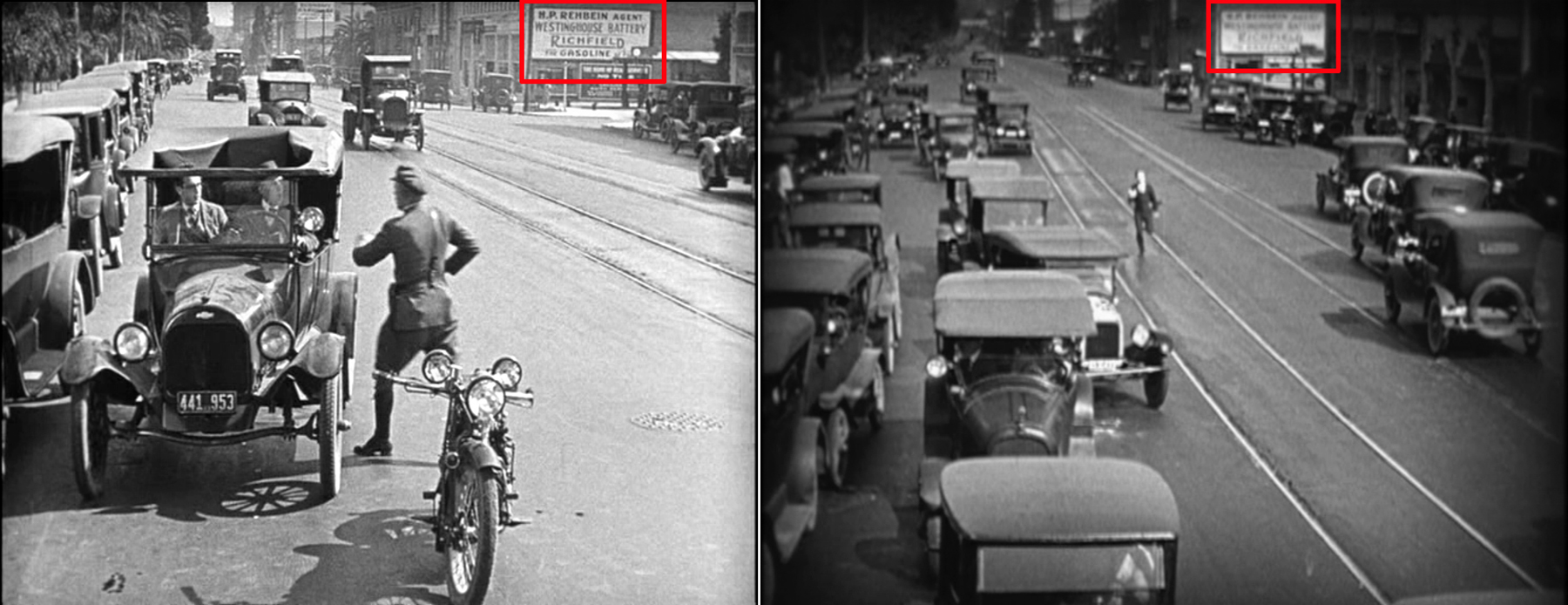
With a bit of movie editing magic, while the giant stands at Cahuenga looking east as Harold runs towards him, the matching shot of Harold running west towards the giant was staged at Hollywood Boulevard beyond Sycamore Avenue, many blocks west from where the giant was standing (see below). You can read more about this setting, and how it appears in Buster Keaton’s Sherlock Jr. (1924) at this post HERE.

The

Looking east down Hollywood Blvd. past the former Richfield gas station on the corner of Sycamore, as appearing in Lloyd’s Girl Shy (1924) left, and in Why Worry? (right).  Harold is supposedly running towards the giant who was actually filmed several blocks behind where Harold is running.

HAROLD LLOYD images and the names of Mr. Lloyd’s films are all trademarks and/or service marks of Harold Lloyd Entertainment Inc. Images and movie frame images reproduced courtesy of The Harold Lloyd Trust and Harold Lloyd Entertainment Inc.

Google Street View today.


Posted in Harold Lloyd, Hollywood Tour | Tagged , , , , , , , , , , , , | 5 Comments

Chaplin Leads the Gang to the Hollywood Police

01

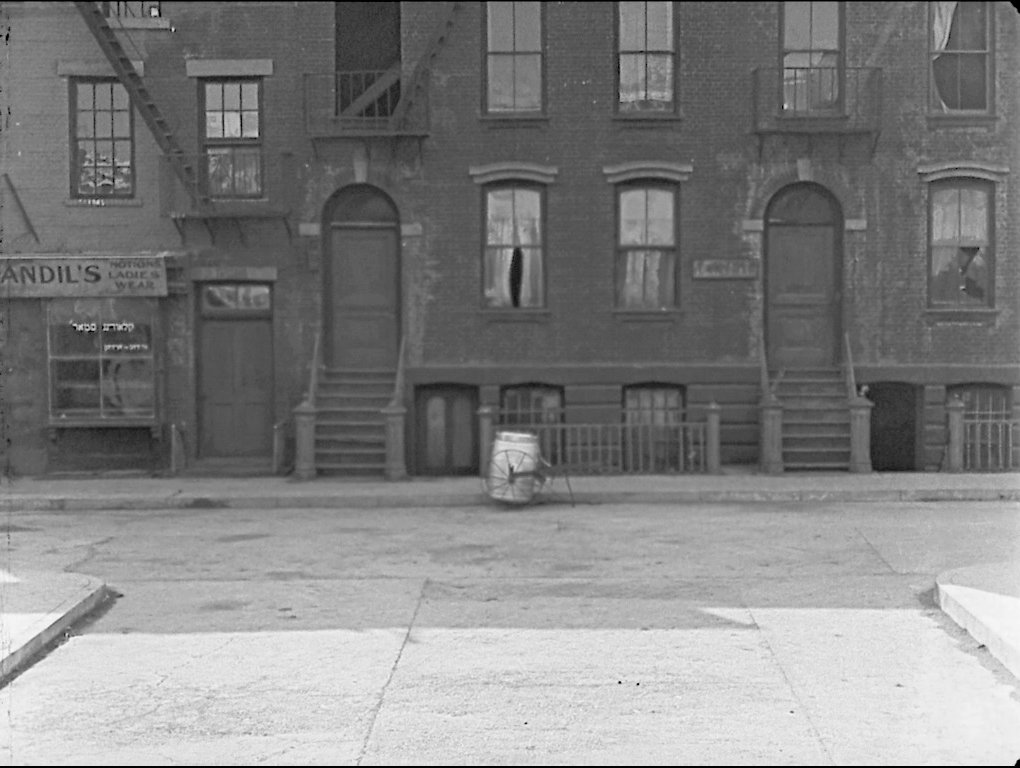
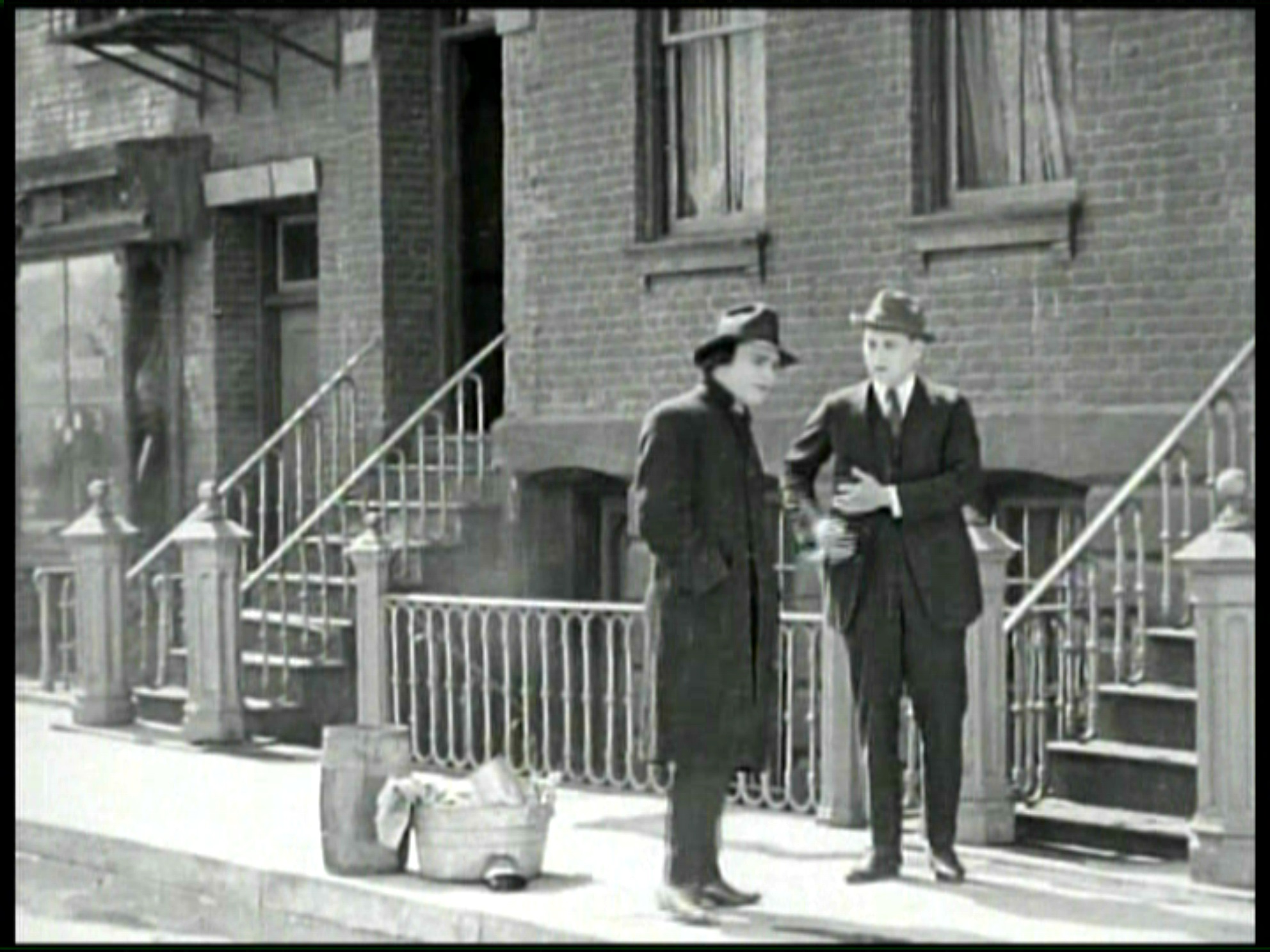
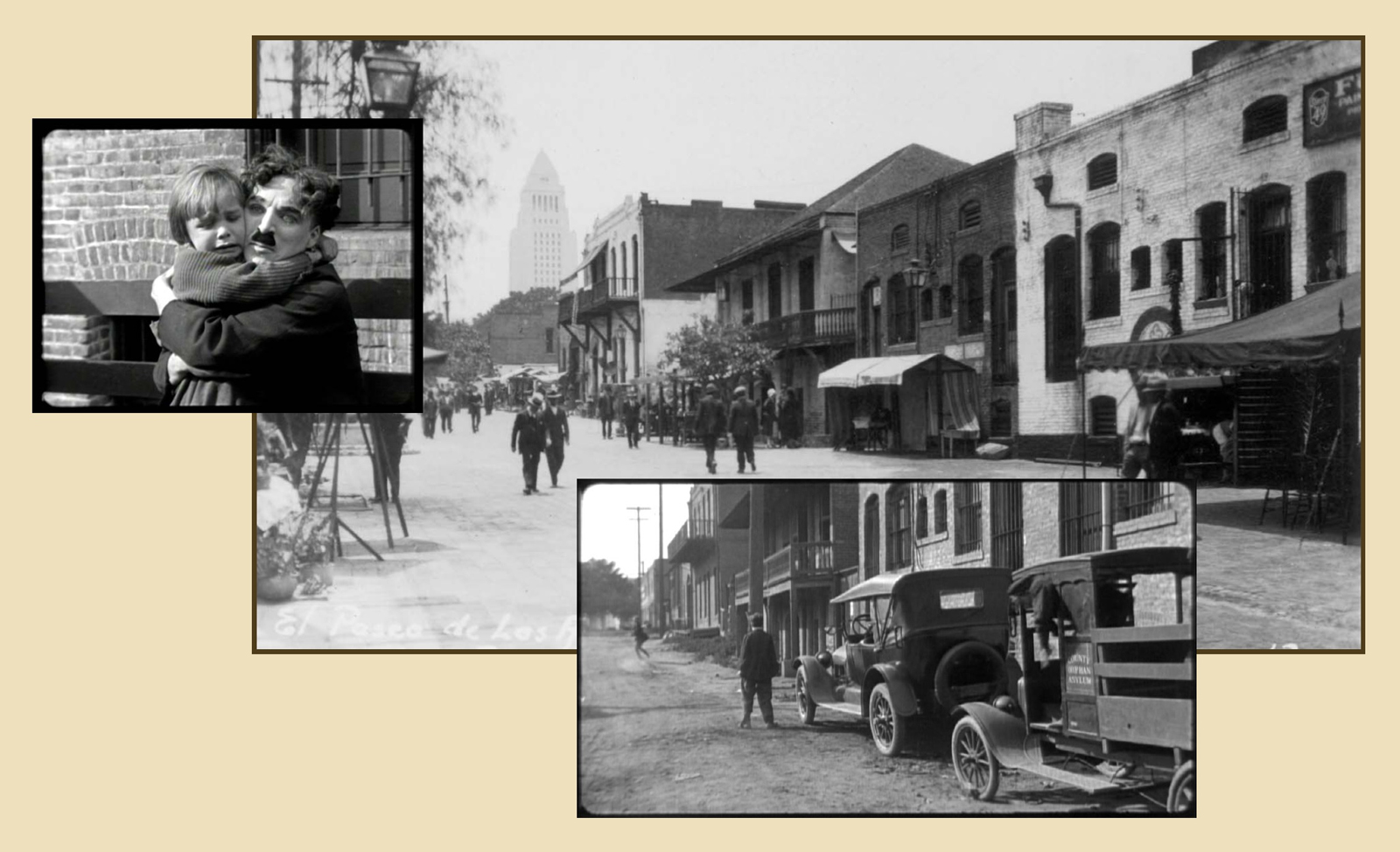
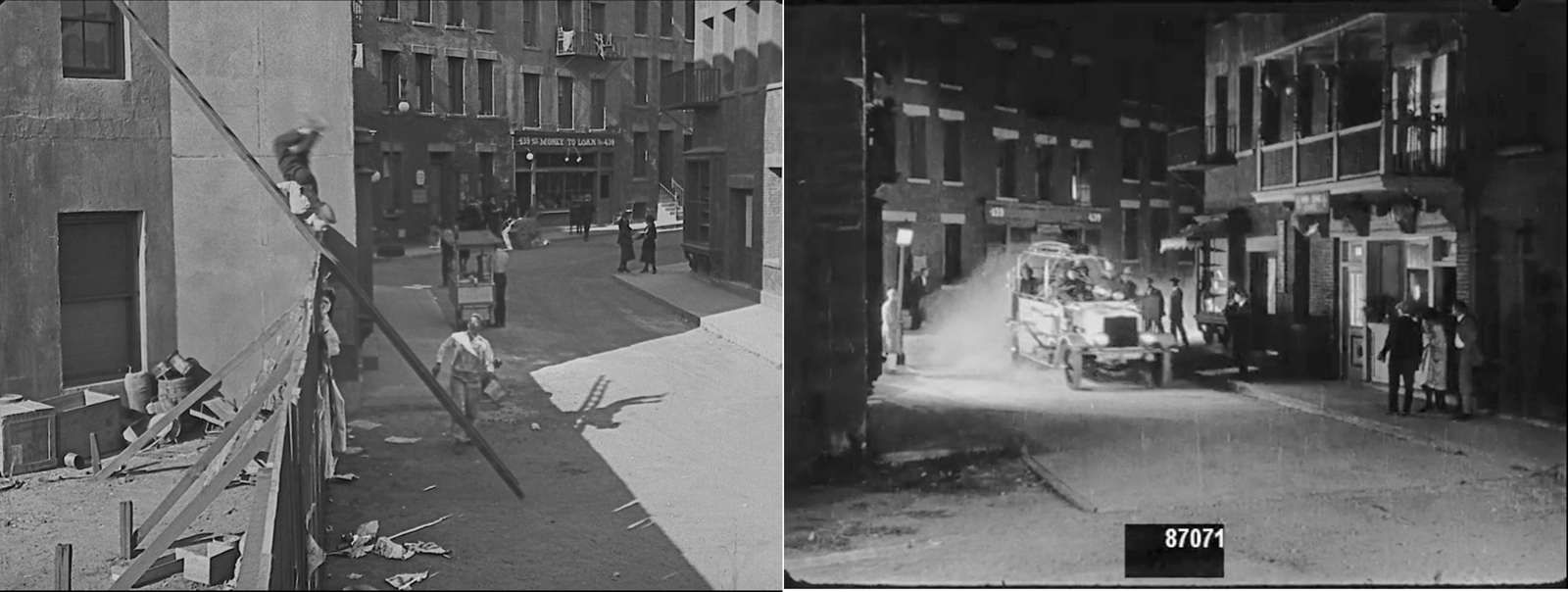
Lisa Easy StreetAs I explain in my book Silent Traces, Charlie Chaplin’s landmark short film Easy Street (1917) contains scenes filmed on extant Olvera Street in downtown Los Angeles (see below), where he would return a few years later to film his re-union with Jackie Coogan in The Kid (1921) (see The Kid post HERE). The Easy Street “T” intersection exterior set (left), was built in Hollywood within the NE corner of Buster NeighborsCahuenga and Romaine at the tiny Lone Star Studio backlot, the same spot where Buster Keaton, after taking over the studio in 1920 for his own productions, would build a similar “T”-shaped tenement set for his short film Neighbors (1920) (right). [Note: Easy Street is now available in high definition Blu-ray, collaboratively restored by Serge Bromberg’s Lobster Films, Cineteca Di Bologna, and David Shepard’s Film Preservation Associates, as part of the Chaplin’s Mutual Comedies collection from Flicker Alley.  The frame grabs on this post were taken from the prior DVD.]

Should I stay or should I go? Charlie at the doorway

Should I stay or should I go? Charlie at the doorway. Postcard Tommy Dangcil

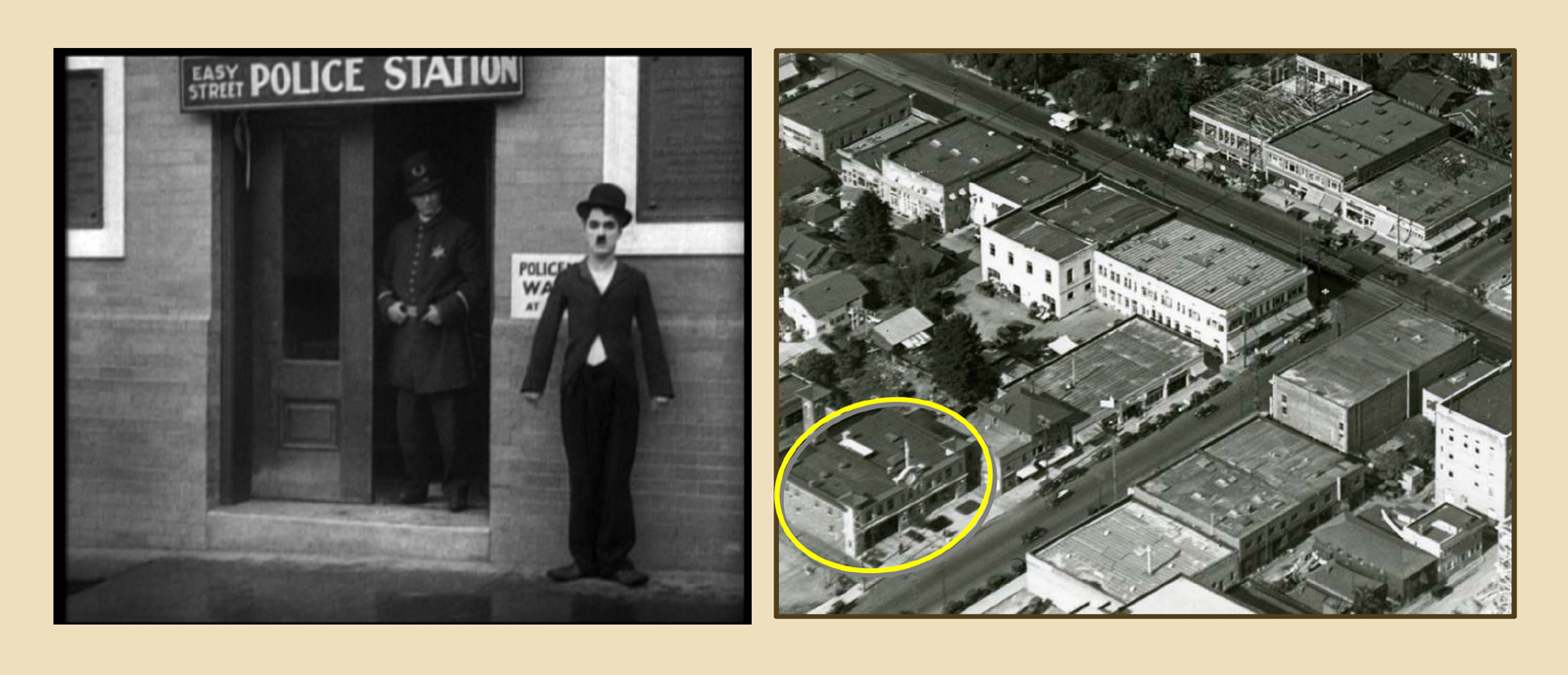
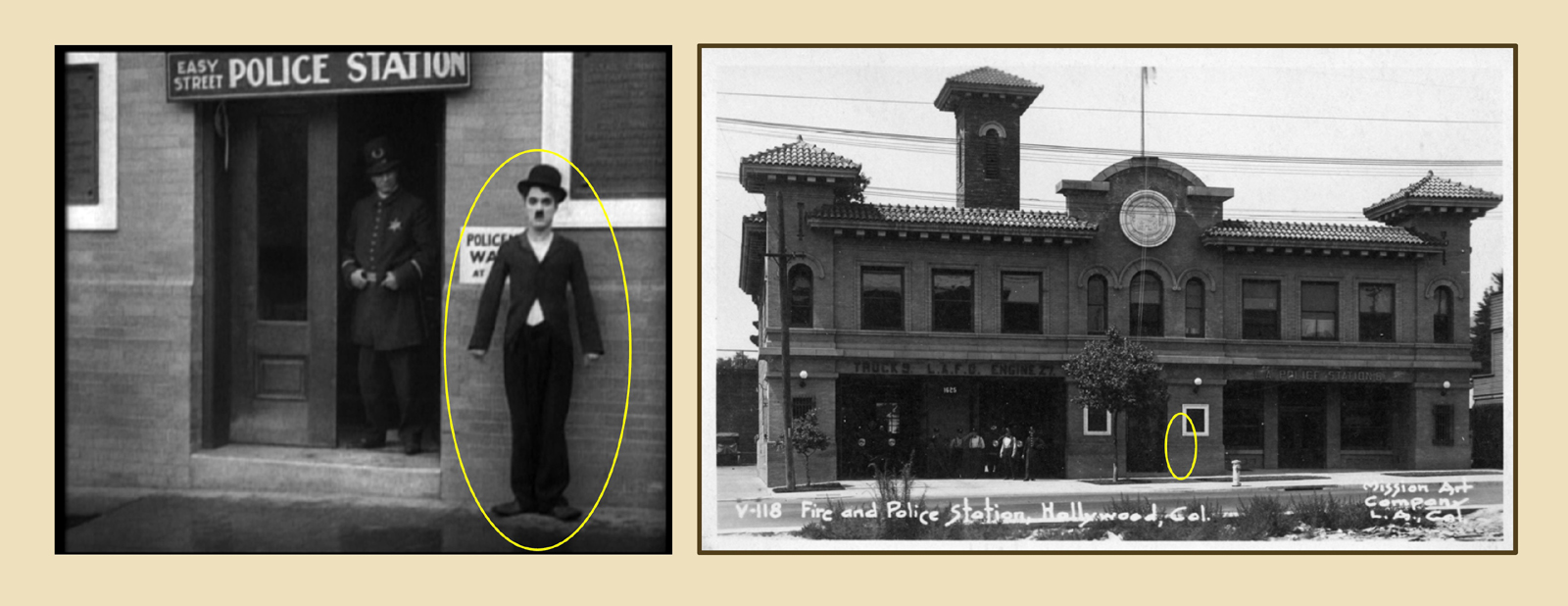
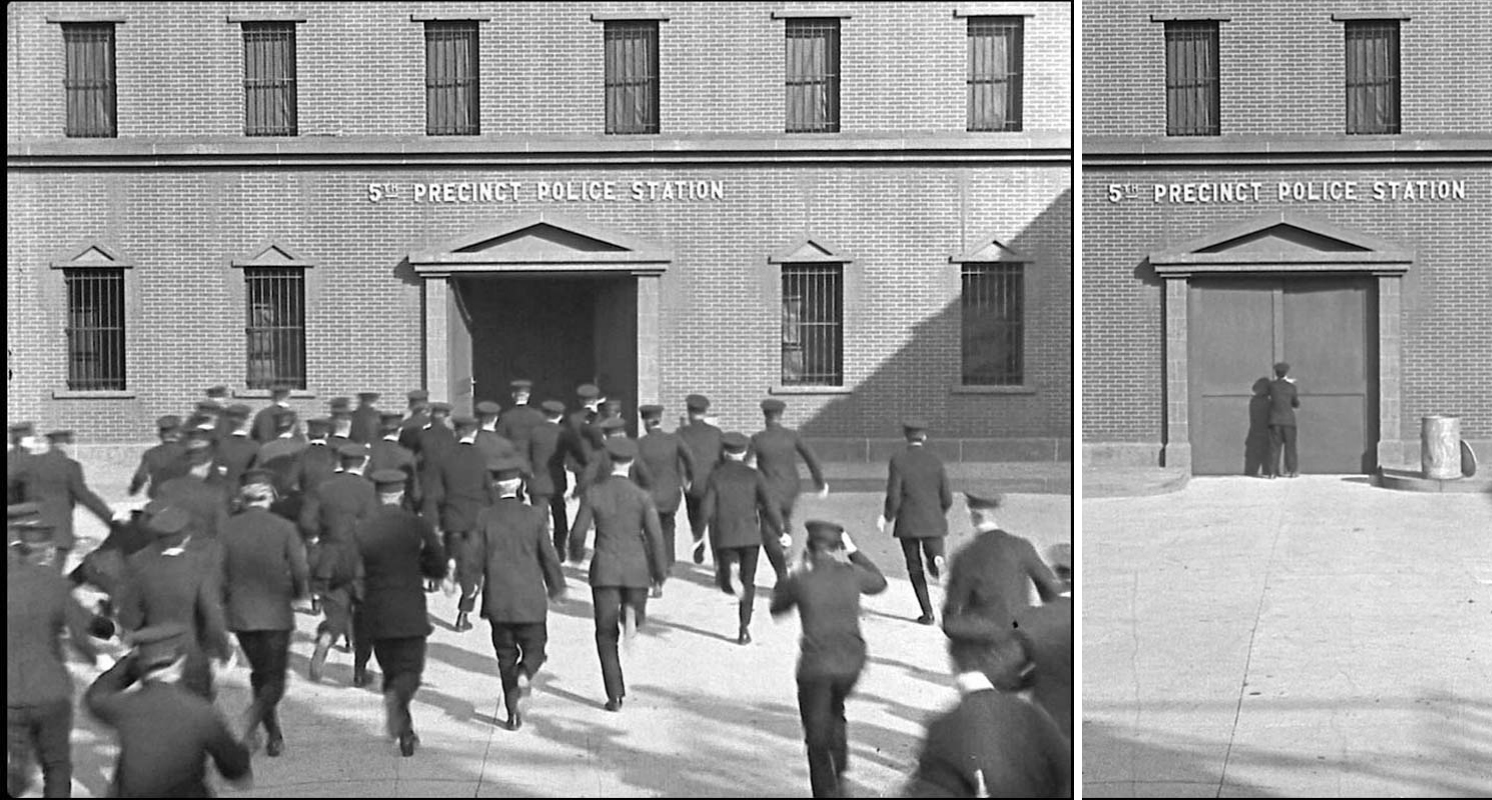
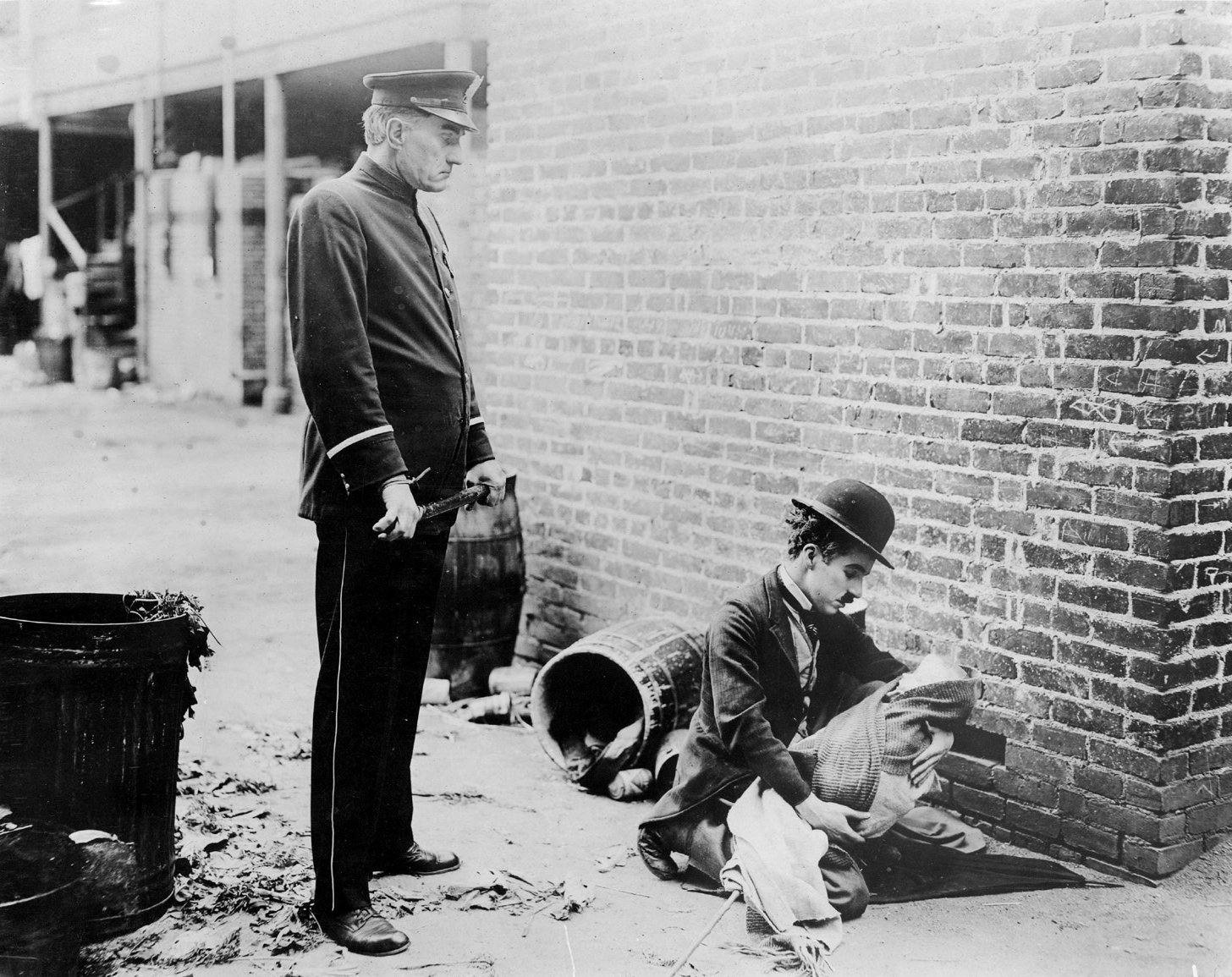
Despite reportedly spending $10,000 building his Easy Street set, Chaplin used a real police station (above) to film the scene where Charlie deliberates whether to join the force. His movements are a tour de force, showing the audience, through his physicality, his inner turmoil as he summons the courage to enter the building in order to enlist, then balks at the threshold, halting mid-step, then regains his nerve, marches towards the door, only to hesitate yet again. The scene was likely filmed in December 1916.

Doug's turn at the station.

Doug’s turn at the station.

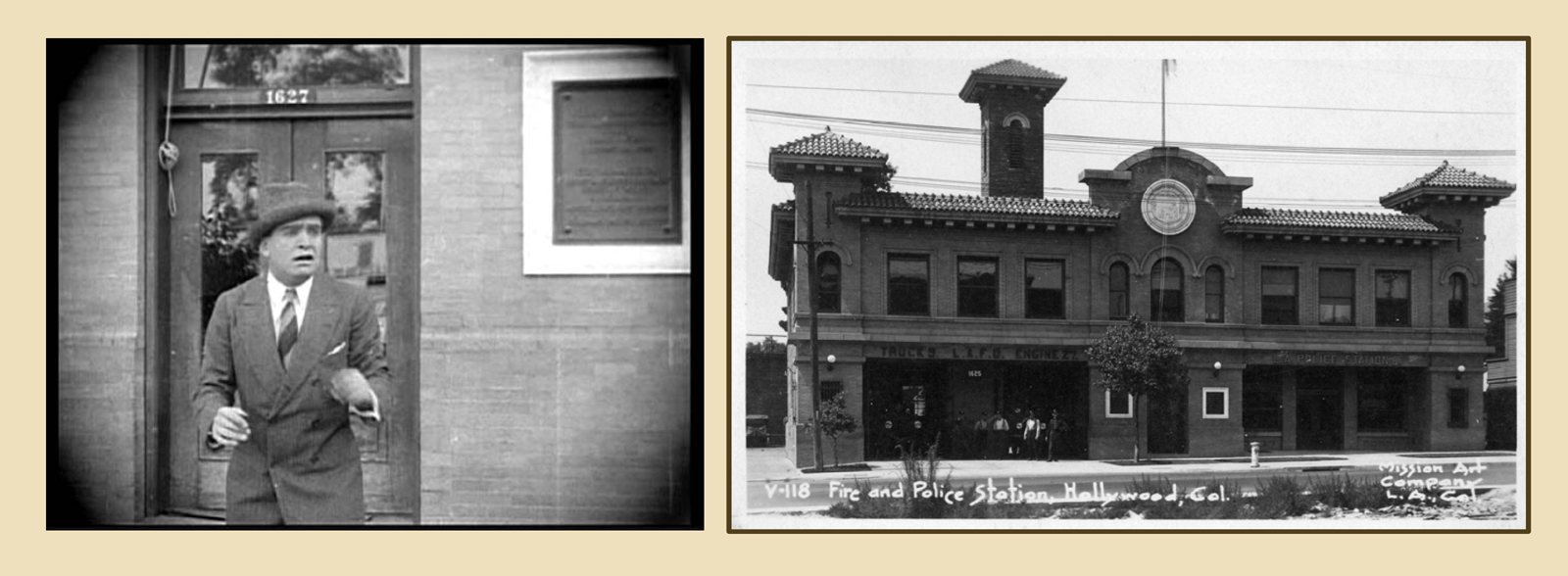
A few months earlier, Charlie’s friend Douglas Fairbanks filmed his comedy Flirting With Fate (1916) at the same police-station doorway (above).

Harry Langdon, left, in Stan Laurel, right, in Just Nuts (1922).

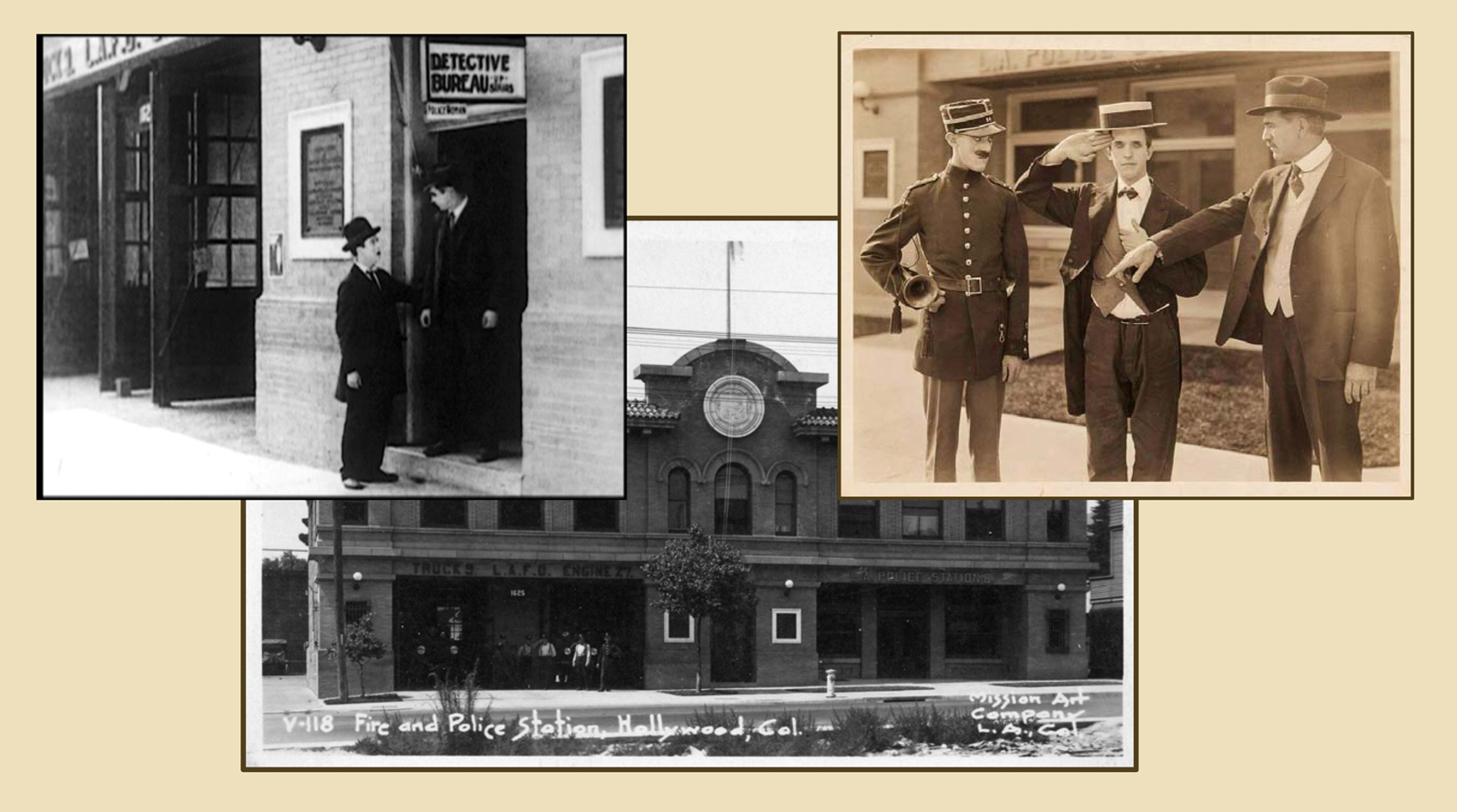
Harry Langdon, left, in Plain Clothes (1925) –  Stan Laurel, right, in Mixed Nuts (1922).

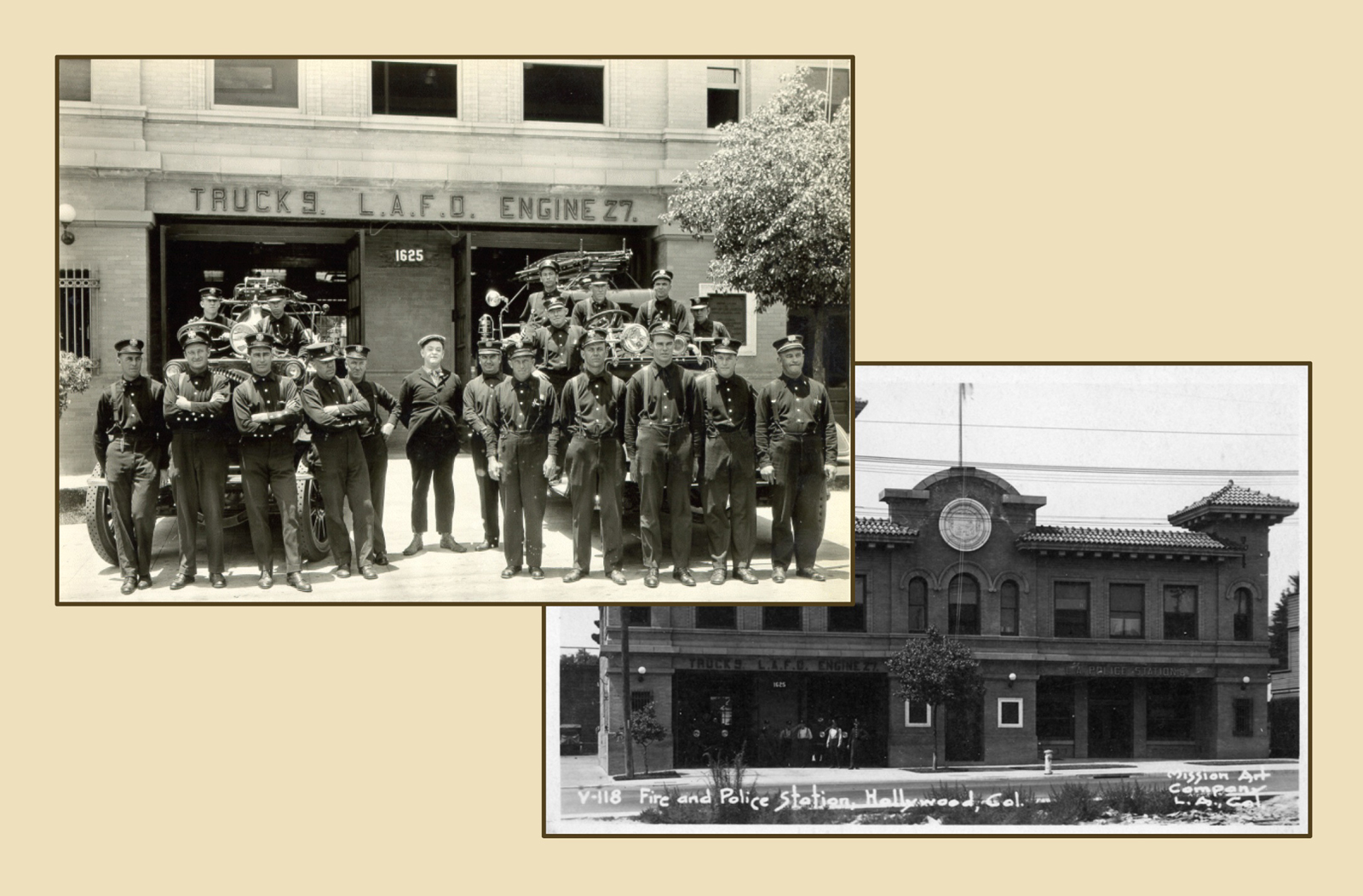
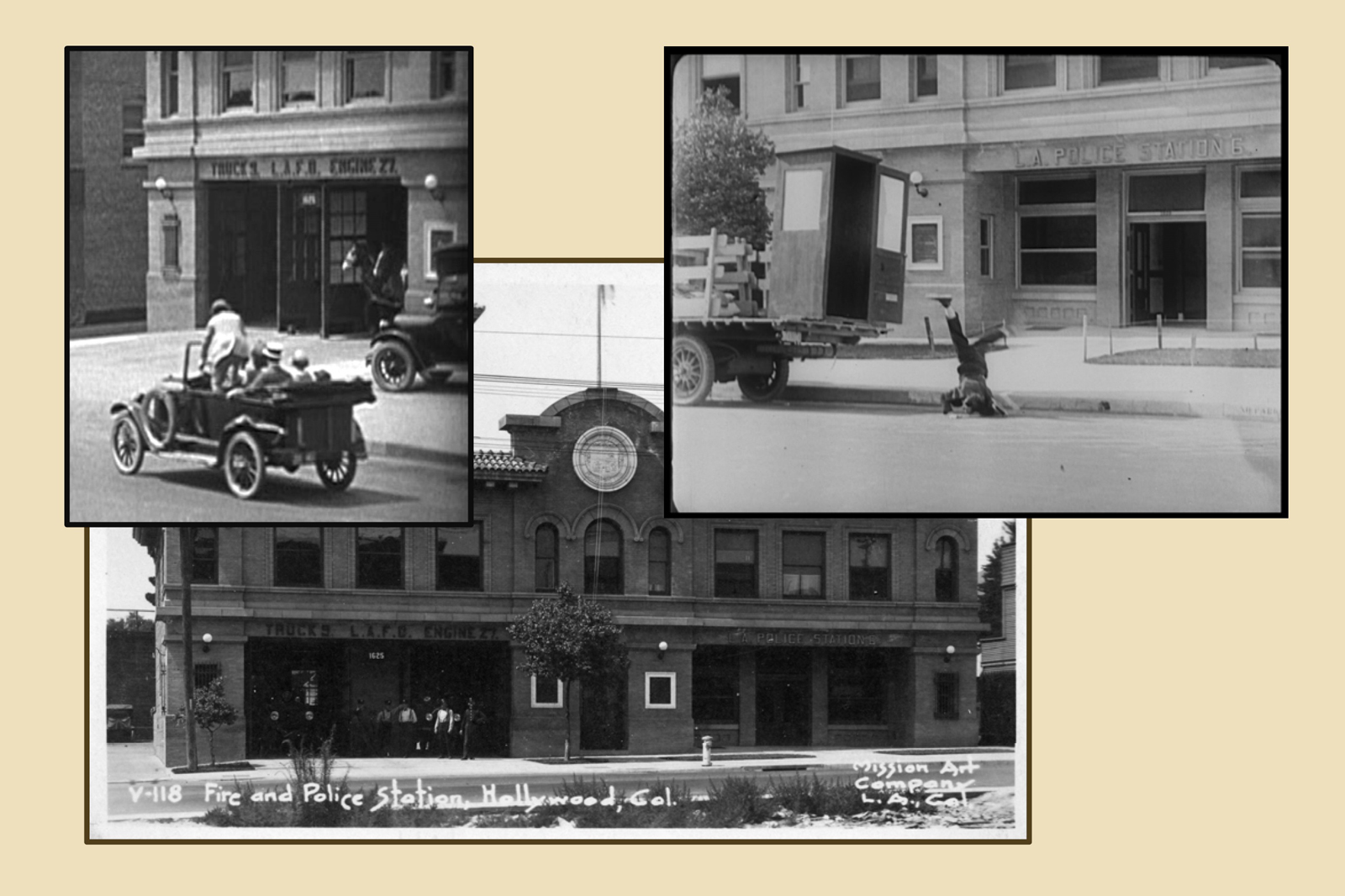
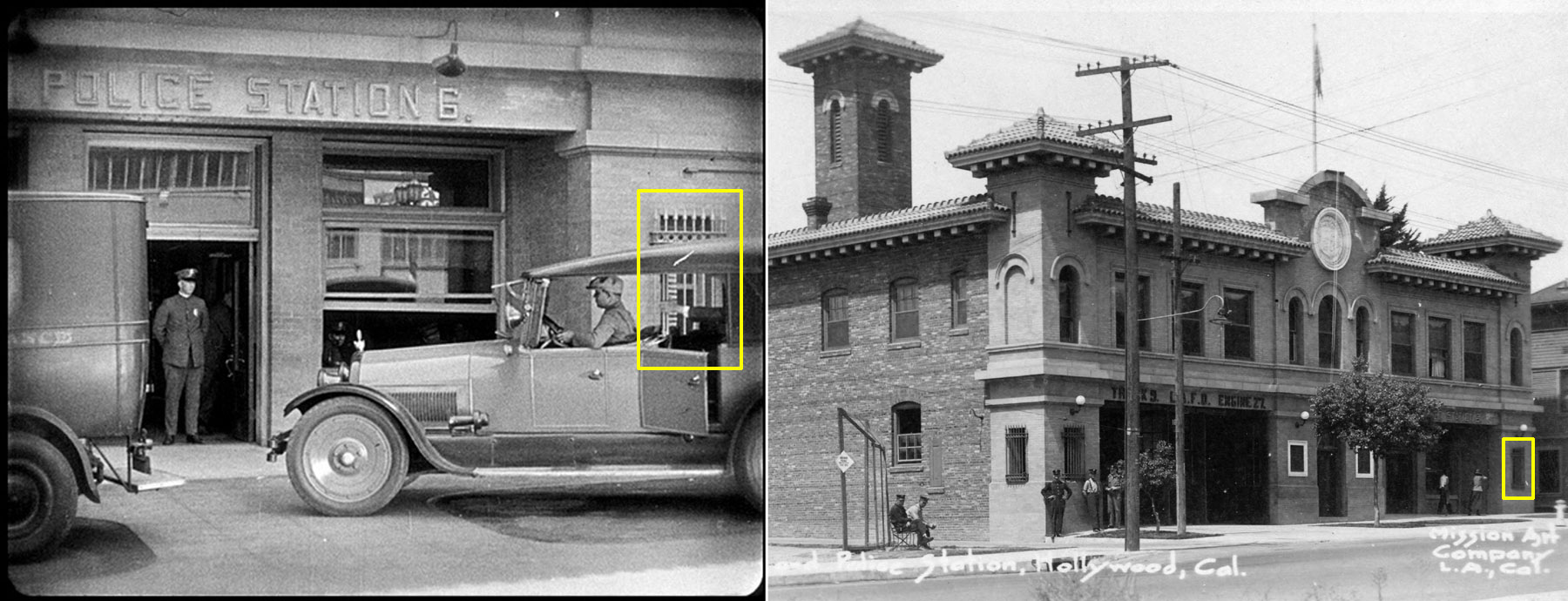
Following Charlie and Doug, the joint fire/police station, once standing at 1625-1627-1629 Cahuenga Boulevard, would become a very popular place to film. This makes perfect sense, as fire houses and police stations are commonly employed in all types of movies, and this was THE station serving most of Hollywood. I write much more about the joint station’s appearances in a prior post HERE.  As shown above and below, Harry Langdon, Stan Laurel, Lloyd Hamilton, Harold Lloyd, and Buster Keaton all filmed in front of the station, and if I had to guess, nearly every other silent comedian likely filmed here as well.

Comedian Lloyd Hamilton's turn - film unknown.

Comedian Lloyd Hamilton’s turn – possibly The Movies (1925, dir. Roscoe Arbuckle), which staged scenes at the station.

Harold Lloyd in Hot Water - Buster Keaton in Three Ages

Harold Lloyd in Hot Water – Buster Keaton in Three Ages

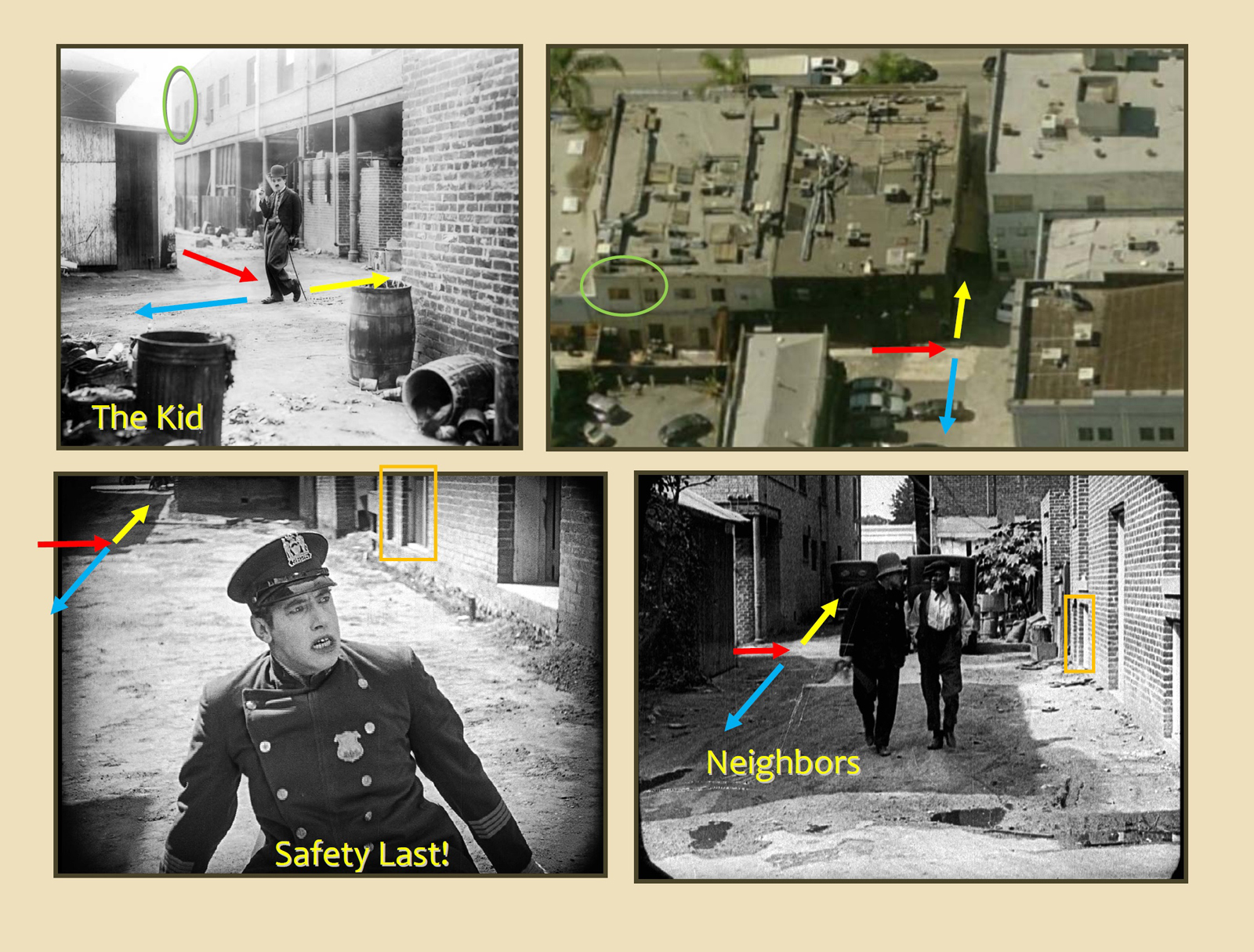
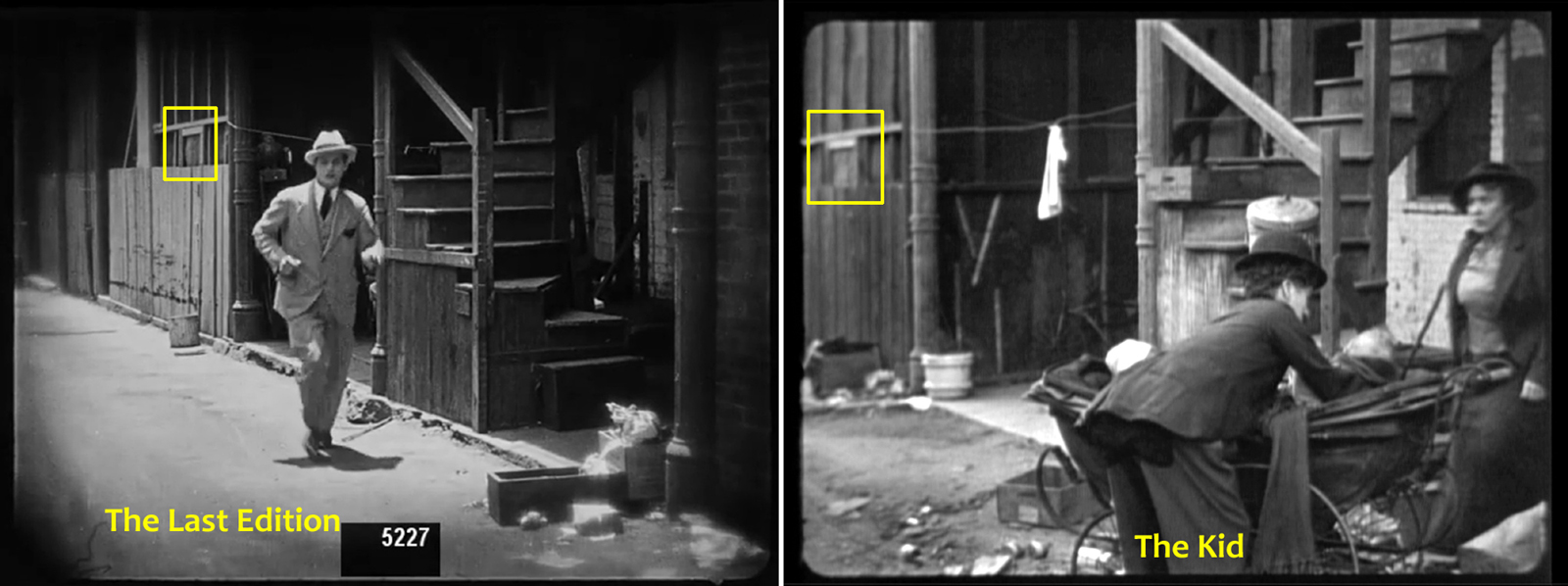
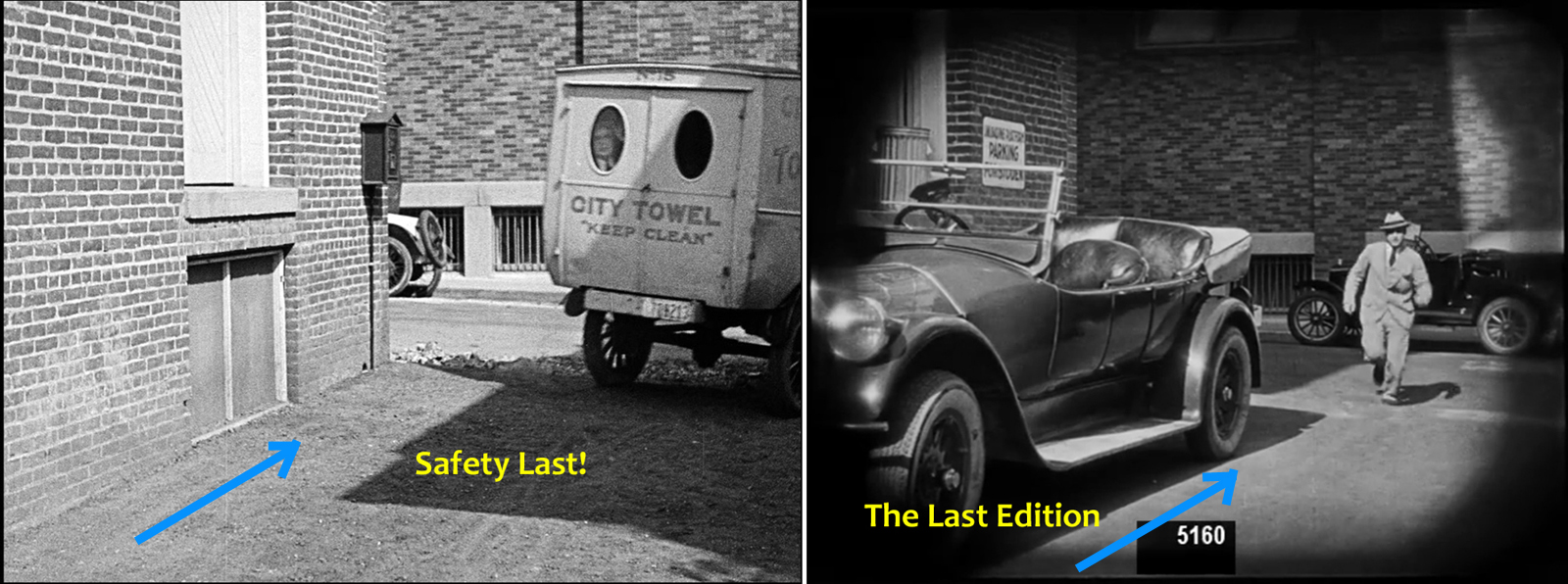
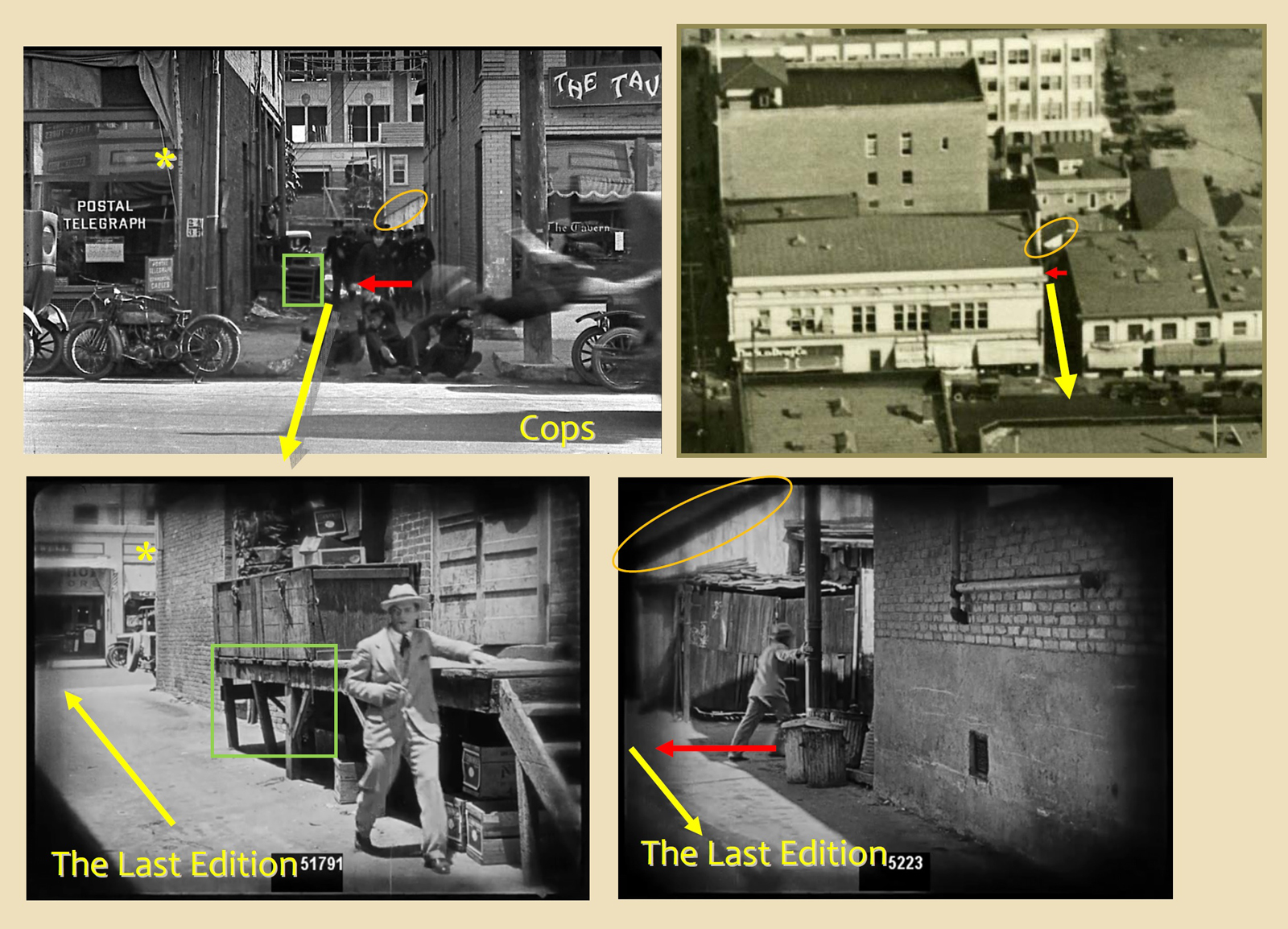
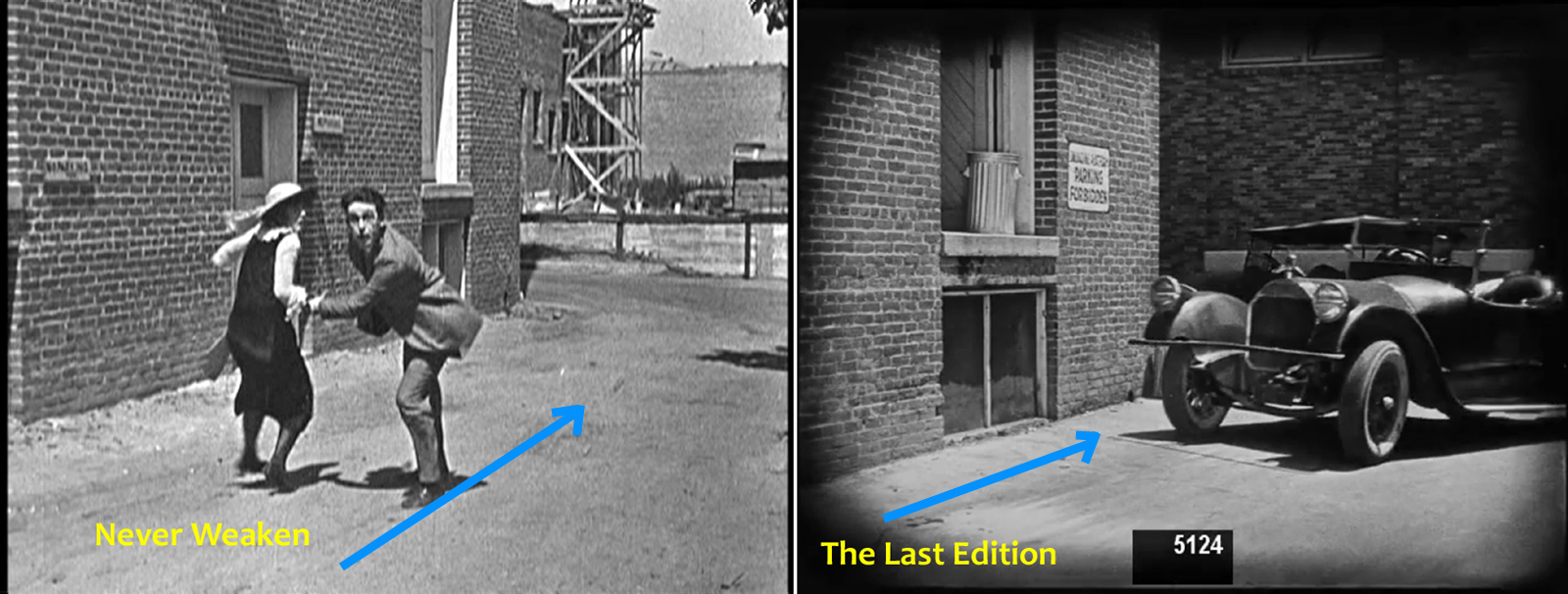
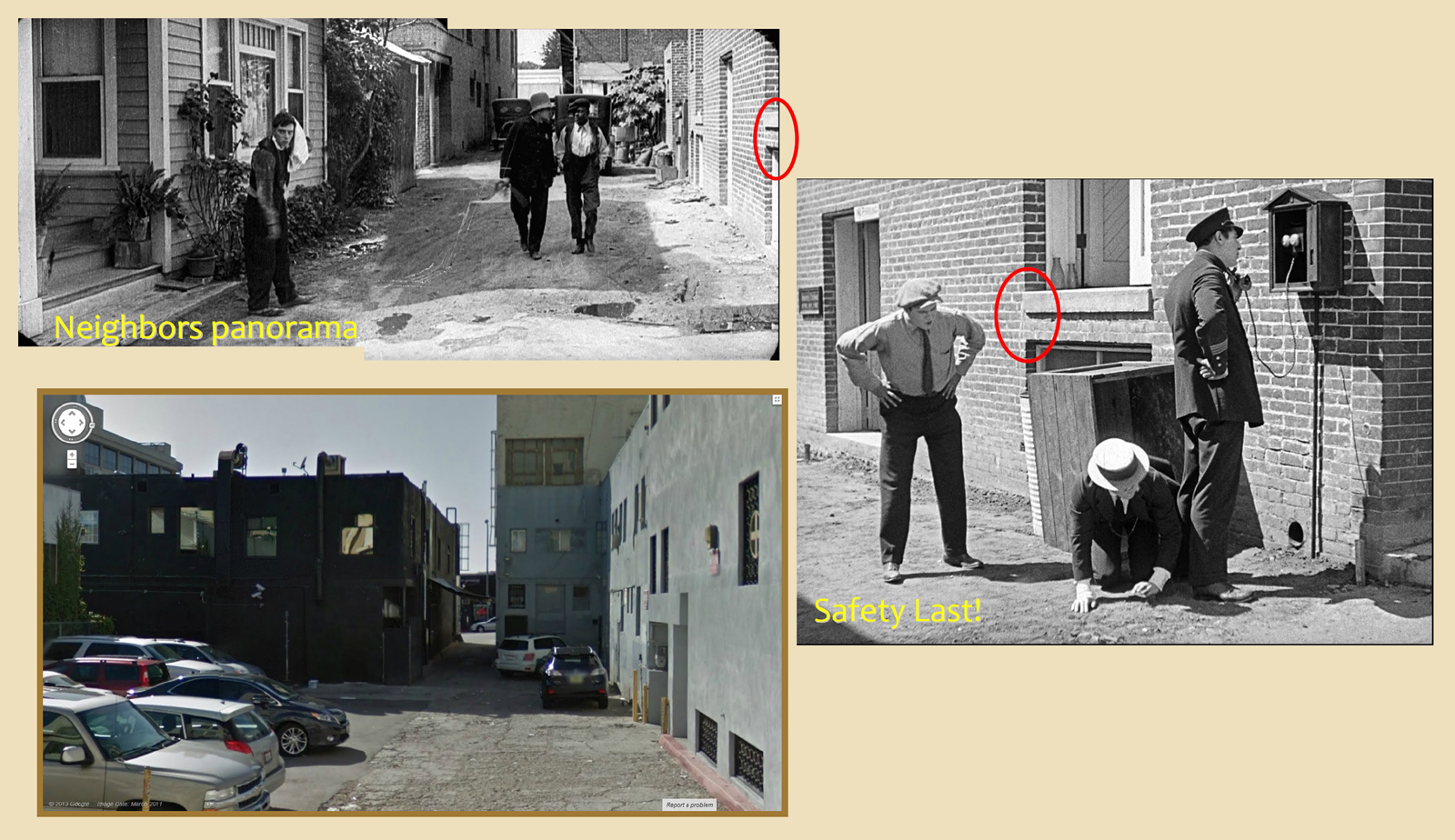
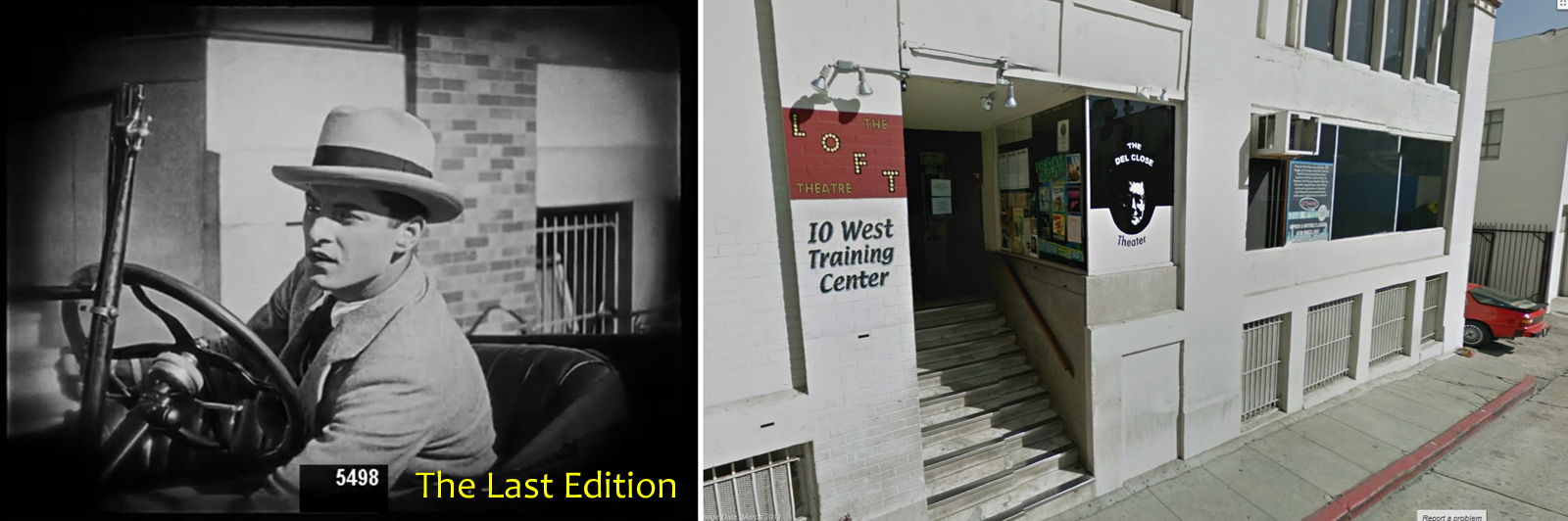
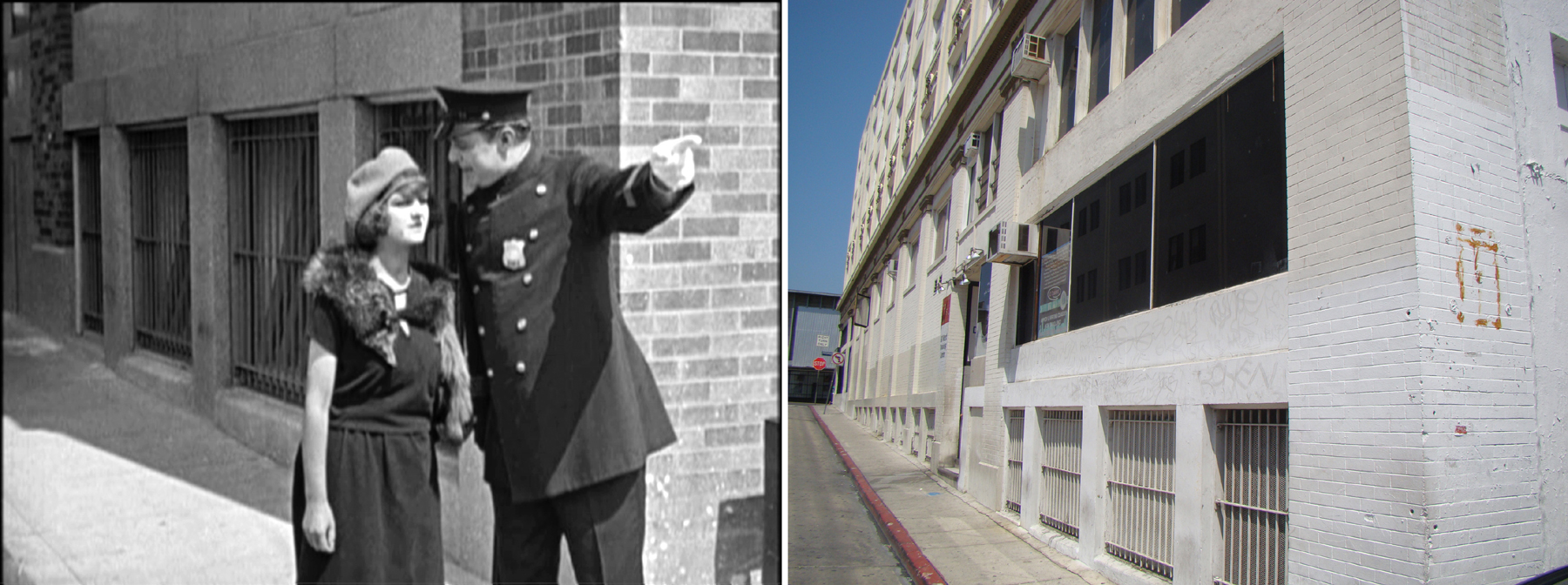
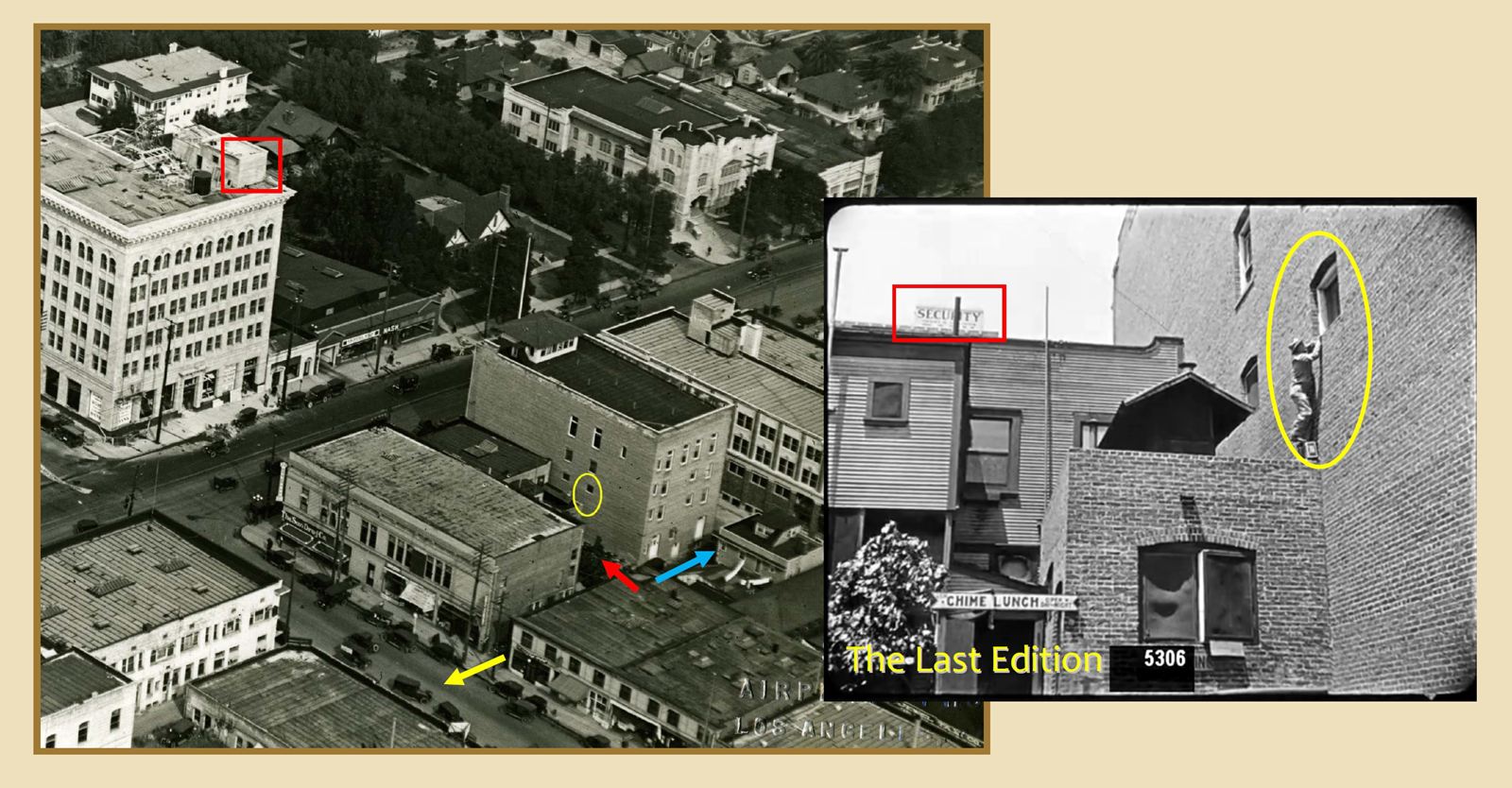
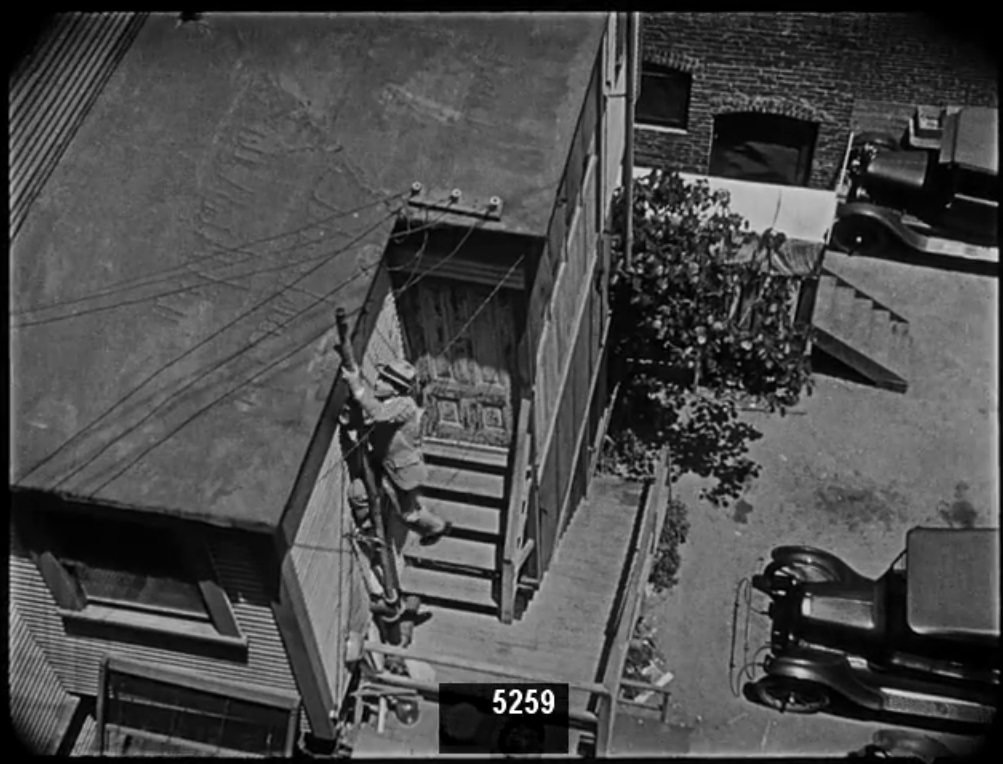
The station appeared in Buster Keaton’s feature films Three Ages (1923) (above, right) and The Cameraman (1928), as well as in Harold Lloyd’s Safety Last! (1923) and Hot Water (1924) (above, left), and the early 1924 Our Gang short comedy High Society.  The station no doubt appears in dozens of other films, including the newspaper drama The Last Edition (1925) (see below) reported HERE.  What’s more, Keaton used the alley along the south side of the station for scenes from three different short films; The Goat (1921), Hard Luck (1921), and Neighbors (1920) (see post HERE).

The joint fire-police station appearing in The Last Edition. Photo Tommy Dangcil.

The joint fire-police station appearing in The Last Edition. Photo Tommy Dangcil.

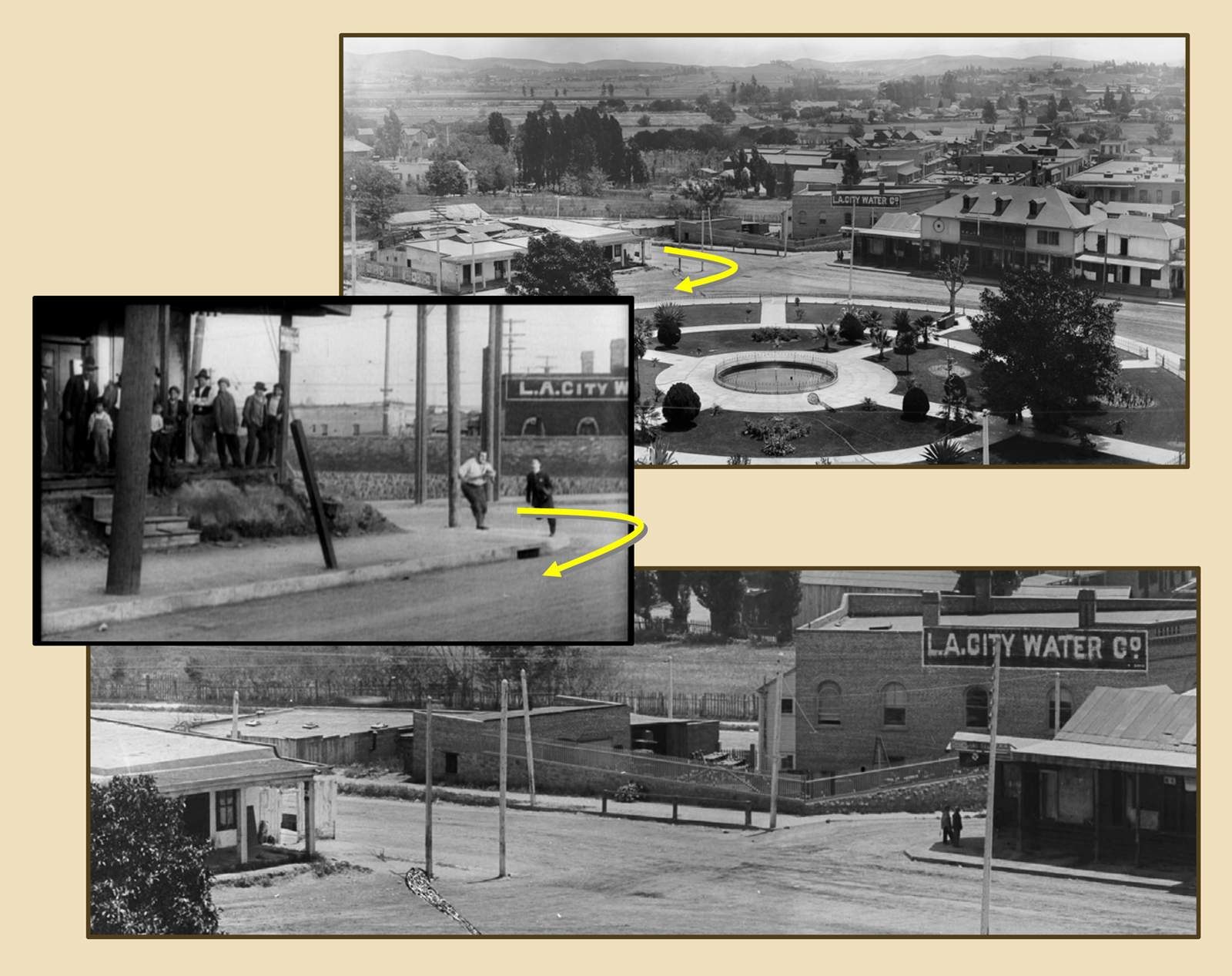
Click to enlarge. Eric Campbell chases Charlie onto the Plaza de Los Angeles in Easy Street

Click to enlarge. Eric Campbell chases Charlie onto the Plaza de Los Angeles in Easy StreetUSC Digital Library

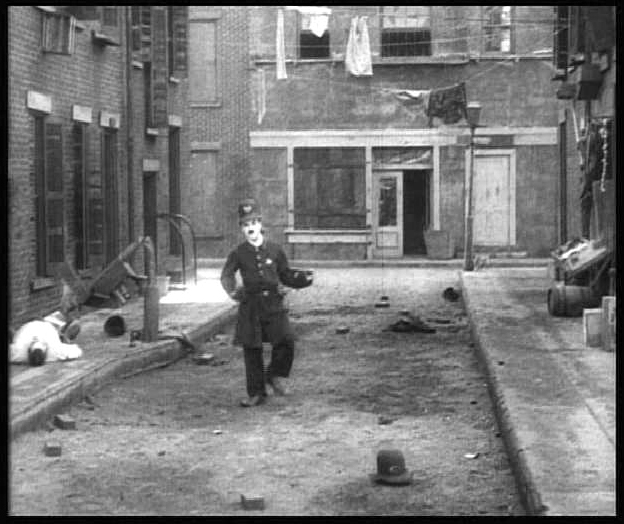
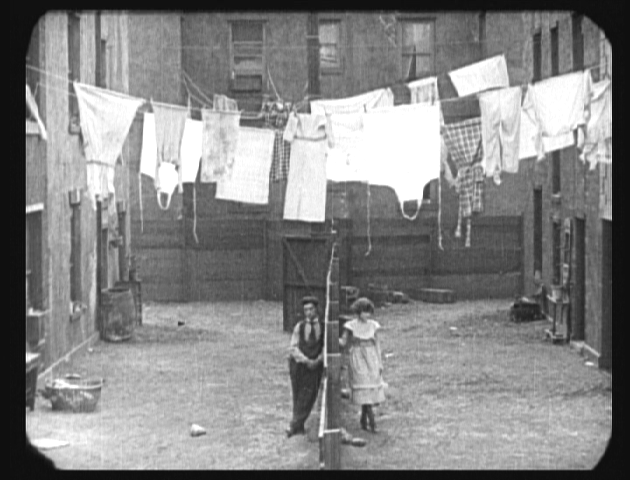
Chaplin fashioned his tenement set for Easy Street after Methley Street, in his boyhood London neighborhood  Lambeth.  To add greater realism, he also filmed at the Plaza de Los Angeles (above), and nearby Olvera Street, a slum alley that is today a popular Mexican market and tourist attraction.

Click to enlarge.

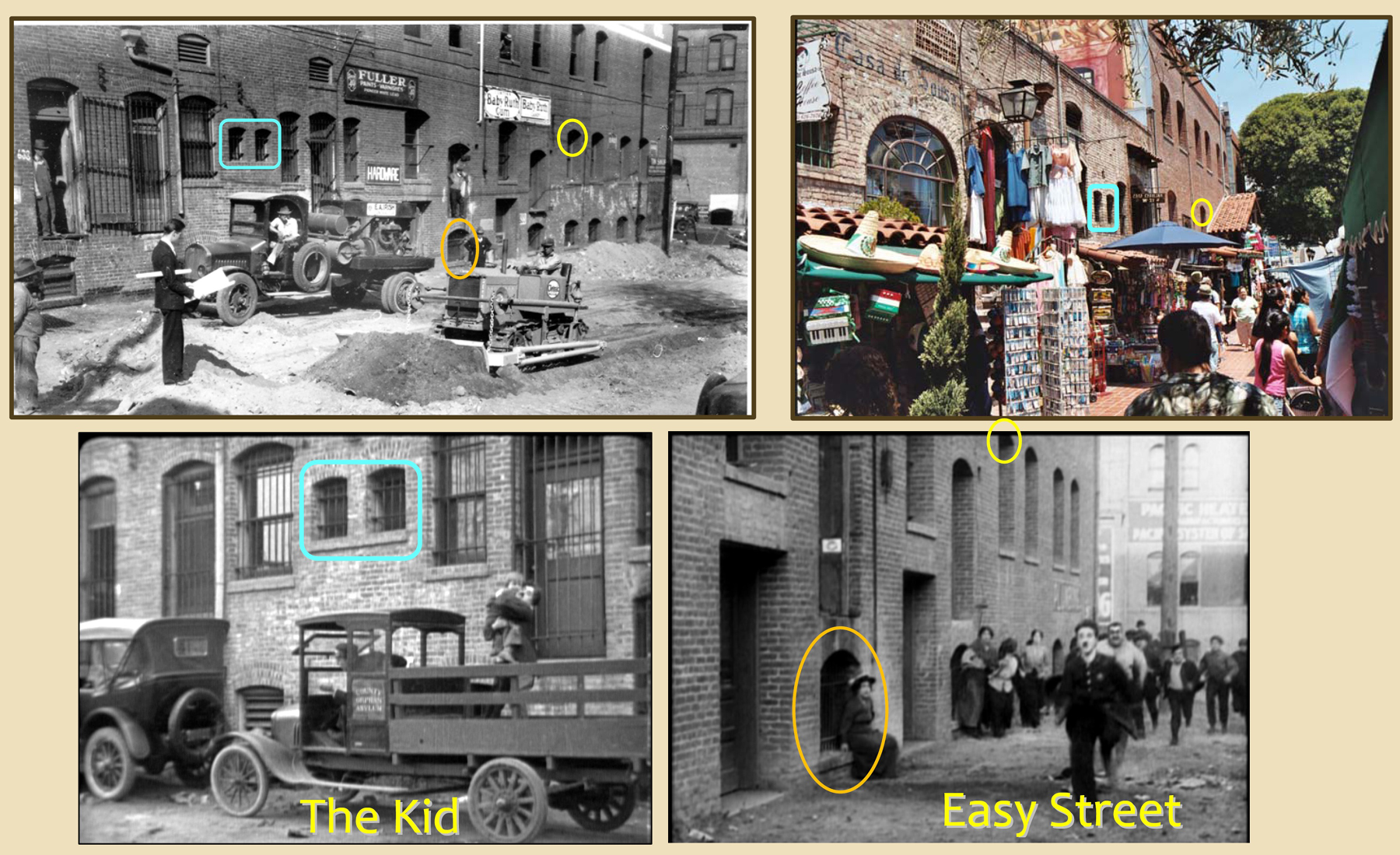
Click to enlarge. Chaplin used the same slum alley for both films.

Above, four views of Olvera Street, a dingy slum alleyway at the time Chaplin filmed The Kid and Easy Street, reminiscent of his boyhood home (see more on The Kid at this post HERE).  Today Olvera Street is one of LA’s most popular tourist spots.

All images from Chaplin films made from 1918 onwards, copyright © Roy Export Company Establishment. CHARLES CHAPLIN, CHAPLIN, and the LITTLE TRAMP, photographs from and the names of Mr. Chaplin’s films are trademarks and/or service marks of Bubbles Incorporated SA and/or Roy Export Company Establishment. Used with permission.  Easy Street special edition (C) 2006 Film Preservation Associates.

Flirting With Fate (1916)—Douglas Fairbanks: A Modern Musketeer Collection (David Shepard, Film Preservation Associates, Jeffrey Masino, Flicker Alley LLC).

Neighbors (1920); Three Ages (1923) licensed by Douris UK, Ltd.

HAROLD LLOYD images and the names of Mr. Lloyd’s films are all trademarks and/or service marks of Harold Lloyd Entertainment Inc. Images and movie frame images reproduced courtesy of The Harold Lloyd Trust and Harold Lloyd Entertainment Inc.

Plain Clothes (C) 2007 All Day Entertainment and Lobster Films.

Site of the former Hollywood joint fire/police station

Posted in Buster Keaton, Chaplin Tour, Charlie Chaplin, Douglas Fairbanks, Harold Lloyd, Harry Langdon, Stan Laurel | Tagged , , , , , , , , , , , , , , , , , , , | 1 Comment

Perry Mason at the Chaplin Studio – The Case of the Homecoming Kid

ca

1966 – Perry Mason and Paul Drake arrive at the Chaplin Studio in The Case of the Final Fade-Out

ca

2005 – a matching view of the entrance. Kermit the Frog, dressed as Chaplin, welcomes guests

One of the most gratifying experiences to come from working on my Charlie Chaplin book Silent Traces was being given a private tour of the Chaplin Studios, at 1416 N. La Brea Avenue in Hollywood, now home to The Jim Henson Company.  My book contains an entire chapter devoted to the studio, annotated with vintage and current photos, aerial views, and maps. 

Jackie 1921 and 1966

Jackie Coogan in 1921 and 1966

The studio has a long history, and while I was aware that it was once used to film the Perry Mason television show, I was pleasantly surprised when Thomas Peters wrote to me advising that the studio exteriors appear prominently in the final episode of the series, The Case of the Final Fade-Out, which first aired May 22, 1966.  You can stream this and other episodes online HERE.  Thomas also writes that studio exteriors appear during Season 5 – Episode 29; The Case of the Promoter’s Pillbox, while at the opening of Season 6 – Episode 8; The Case of the Stand-In Sister, a character in a phone booth gives an address, 1416 N. La Brea “Boulevard,” the studio’s avenue address.
ca

Richard Anderson, as Lt. Steve Drumm

Moreover, one of the guest stars in the final show was Jackie Coogan, the former child superstar who had worked at the same studio 45 years earlier when filming Chaplin’s masterpiece The Kid (1921). What bittersweet memories Jackie must have had revisiting the studio after all those years.  His return must surely have been an on-set topic of conversation while filming the episode, and begs the question whether his casting was merely a coincidence, or an homage of some sorts.*  

ca

Three views of the studio film vault door – Chaplin’s butler (inset) retrieves Charlie’s most valuable possession from the vault, his tramp shoes. The once free-standing vault is now incorporated into the two-story building shown here.
ca

Dick Clark at the gate

Given that this was the concluding episode of the highly successful series, after nine years, and 271 episodes, it must have been a bittersweet moment for everyone involved.  Even the choice of the title, Final Fade-Out, suggests an awareness of the show’s own passing.

Aside from Coogan’s appearance, a young-looking Dick Clark (is that redundant?) plays a major role, as does veteran character actress Estelle Winwood.

ca

Erle Stanley Gardner

Erle Stanley Gardner, the prolific author of the original Perry Mason mystery novels, plays an un-credited cameo role as the last courtroom judge to appear in the series.020

The plot involves a murder that takes place at a movie studio during the filming of a scene.  Afterwards, the police briefly question a number of crew member witnesses, whose demeanor and appearance suggest they are all played by the real grips, camera operators, and other studio crew members from the show. 

The final shot of the series

The final fade-out from The Final Fade-Out; the concluding shot of the entire series

Above, the closing shot of the series, Perry Mason (Raymond Burr), Paul Drake (William Hopper), and Della Street (Barbara Hale) confer about their next big case.

ca

The Chaplin Studio during the Perry Mason years and originally.  When La Brea Avenue was widened in 1929, and the sidewalk was moved several feet east, the protruding architectural details of the buildings north of the entrance gate (yellow line) were trimmed flush to the new sidewalk.  The buildings south of the gate were physically moved east to preserve the details. Vintage Los Angeles

*(Oops, well, Coogan’s sentimental homecoming makes a good story, but it turns out he had appeared on the show twice before; in Season 5 – Episode 5, the Case of the Crying Comedian, and in Season 6 – Episode 28, the Case of the Witless Witness.  Maybe those were nostalgic experiences for him as well.)

There’s a brief period shot of the front of the Chaplin studios in this clip at 6:21:23:00

There’s a brief period shot of the front of the Chaplin studios in this clip at 6:21:23:00.  Thanks Skip!

All images from Chaplin films made from 1918 onwards, copyright © Roy Export Company Establishment. CHARLES CHAPLIN, CHAPLIN, and the LITTLE TRAMP, photographs from and the names of Mr. Chaplin’s films are trademarks and/or service marks of Bubbles Incorporated SA and/or Roy Export Company Establishment. Used with permission.

Perry Mason © MCMLXVI Paisano Productions All Rights Reserved.

Posted in Chaplin Studio, Chaplin Tour, Charlie Chaplin, The Kid | Tagged , , , , , , , , , , , , , , | 27 Comments

Mary Pickford and the Silent Stars Meet at One Hollywood Corner

Tillie

Click to enlarge.  Mary Pickford peers from an alley towards the corner where Mabel Normand waits to confront Charlie Chaplin and Marie Dressler in Tillie’s Punctured Romance (1914).

Little Mary in 100% American

Mary Pickford in 100% American

America’s Sweetheart, Canadian-born Mary Pickford, was a staunch supporter of the World War I Liberty Bond campaign.  Aside from selling millions of dollars of bonds at various rallies across the country, she also encouraged bond sales by starring in a patriotic movie entitled Mary Pickford 100% American (1918).  You can see the movie (HERE).

The movie first caught my eye because early scenes depict the Abbot Kinney amusement park pier in Venice, California.  As shown in my books, the pier had appeared previously in Charlie

ca

Above, Harold Lloyd evades the police in Number Please?, while below Mary listens to a man selling Liberty Bonds in 100% American.  Both views look west down the Abbot Kinney Pier, past the Ship Cafe at the left. Chaplin filmed The Adventurer at the far west end of the pier.

Chaplin’s The Adventurer (1917), and would later appear in Harold Lloyd’s Number Please? (1920) and in Buster Keaton’s The High Sign (filmed in 1920 – released in 1921).  Although the pier burned down late in 1920, it was quickly re-built, and would appear again in such films as Laurel and Hardy’s Sugar Daddies (1927) and in Chaplin’s The Circus (1928).

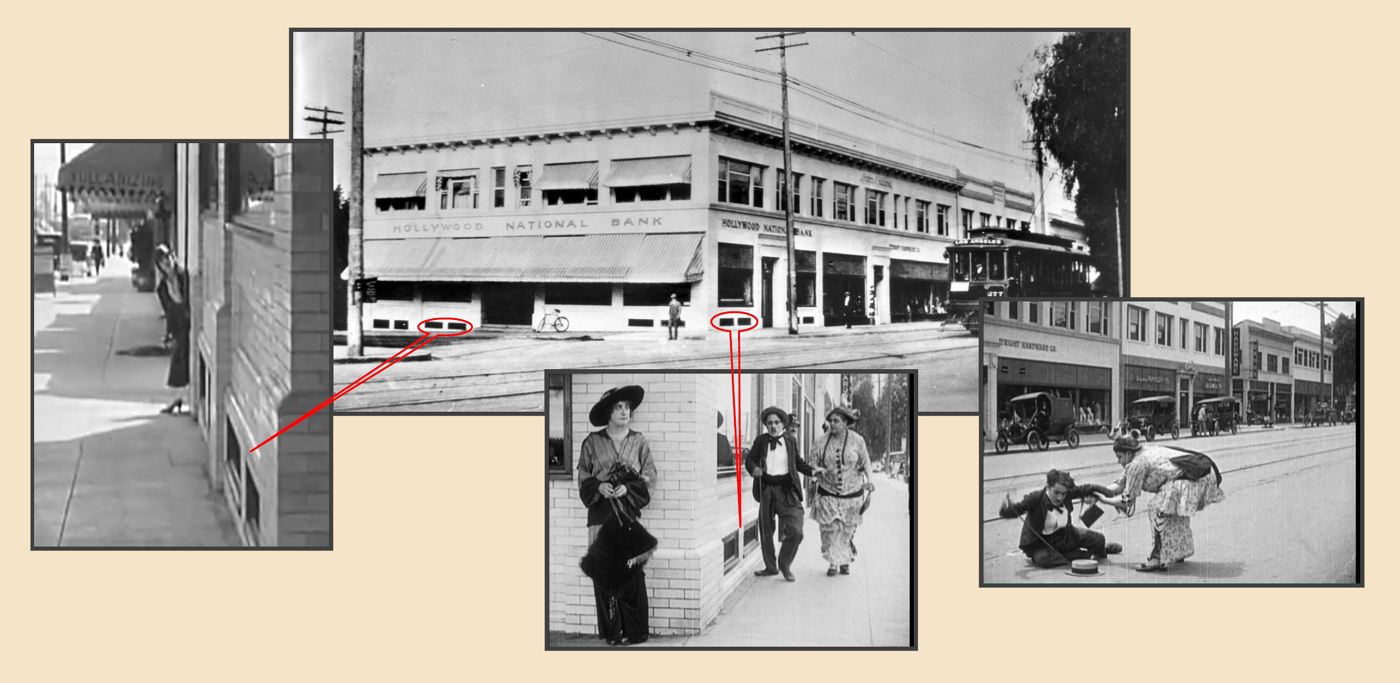
Notice the banking hours in this reverse view: Weekdays 10 - 3, Saturdays 9:45 - 12, and Saturday evenings 5 - 7

Banking Hours Weekdays 10 – 3, Saturdays 9:45 – 12, Saturday Evenings 5 – 7

Throughout the movie Mary forgoes simple expenditures in order to save enough to purchase a bond.  While waiting in line at the bank to make her purchase, Mary momentarily loses her bankroll, and accuses another patron of stealing it from her.  While a bank guard harasses the falsely accused man, Mary recovers the money, makes her purchase, and dashes from the bank, calling out to the guard that it was all a mistake before she embarrassingly flees the bank and runs down the street.

ca

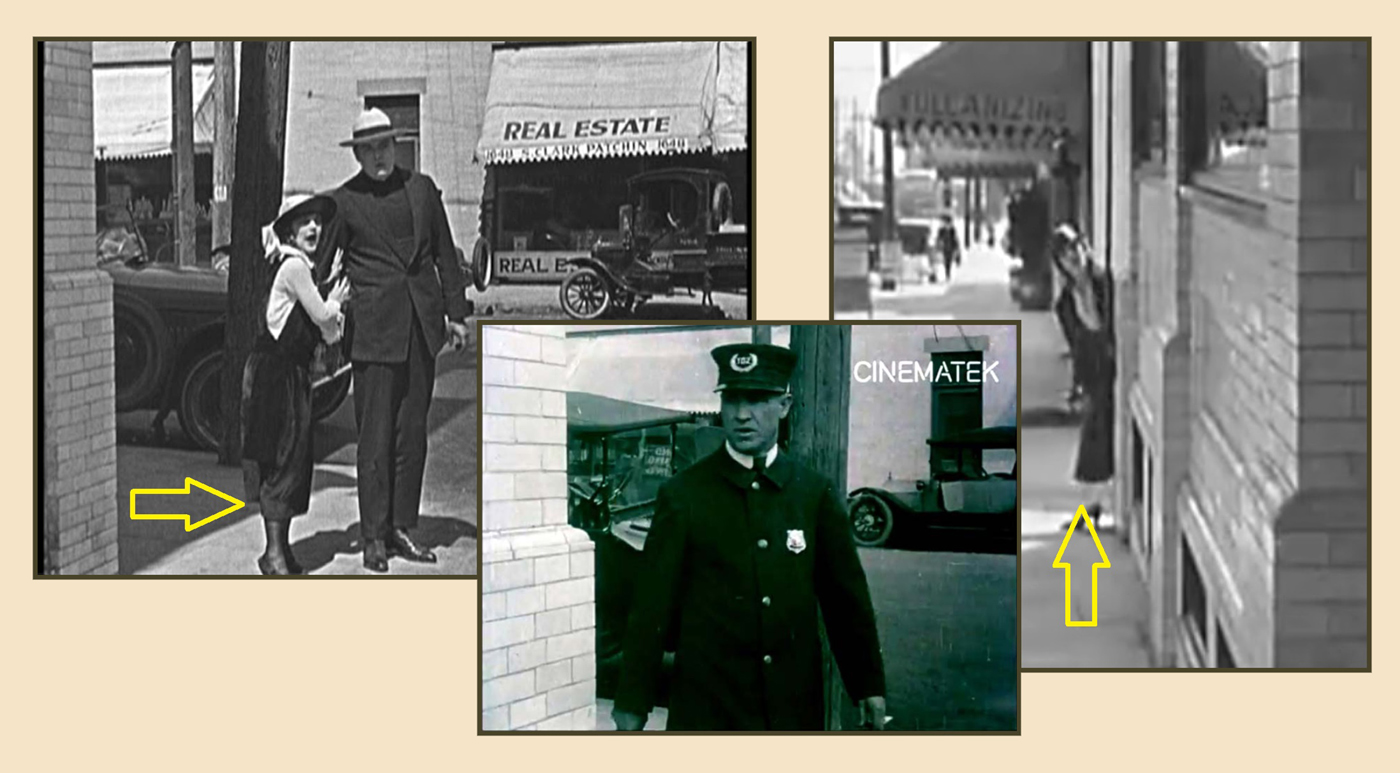
After falsely accusing a man, Mary sheepishly peeks from an alley corner on the west side of Cahuenga.  Down the street behind her is a sign for BARKER’S BAKERY.  The Fremont Hotel (with the ROOMS sign) further down the street appears in a Douglas Fairbanks movie, below.

When I noticed the distinctive BARKER’S BAKERY sign on Cahuenga above Mary’s head, I realized that the bank where Mary purchases her bond once stood at the corner of Hollywood Boulevard and Cahuenga – the intersection where so many other early movies were filmed.  I report in prior posts (HERE) and (HERE) how Chaplin, Keaton, and Lloyd all filmed near this corner, but now we can add Mary Pickford to the mix. 

ca

Harold Lloyd’s future wife Mildred Davis in Never Weaken (1921), a policeman in the Christie comedy Hubby’s Night Out (1917), and Mary are all standing at the same alley corner on the west side of Cahuenga.  As shown further below, the alley Buster Keaton used in Cops (1922) stands on the east side of Cahuenga.

As shown below, Douglas Fairbanks filmed a building-climbing stunt from Flirting With Fate (1916) just a bit down the street from Mary. 

Click to enlarge.

Click to enlarge.  This view shows the west side of Cahuenga – the corner of Hollywood Blvd. at the right.  Douglas Fairbanks climbs up the front of the Fremont Hotel that stood south of the bakery.

Putting the elements together below, this single site represents a spot where many of Hollywood’s biggest stars; namely Charlie Chaplin, Mabel Normand, Marie Dressler, Harold Lloyd, Buster Keaton, Douglas Fairbanks, and Mary Pickford, each filmed a scene.

Click to enlarge.

Click to enlarge. Clockwise from the bottom, Harold Lloyd in Why Worry? (1923); Mabel Normand, Charlie Chaplin, and Marie Dressler in Tillie’s Punctured Romance; Buster Keaton in Cops; Douglas Fairbanks in Flirting With Fate; and Mary Pickford in 100% American.

My thanks to Jonathan Kaplan, at Vintage Venice Tours, for bringing this film to my attention.  Below, Mary’s alley on the west side of Cahuenga.  The bank building to the right was expanded two floors higher, with an Art Deco makeover, in the late 1920s.

Posted in Buster Keaton, Charlie Chaplin, Douglas Fairbanks, Harold Lloyd, Mary Pickford, Venice | Tagged , , , , , , , , , , , , , , , , , , | 13 Comments

Laurel & Hardy Hit The Skids

County Pan

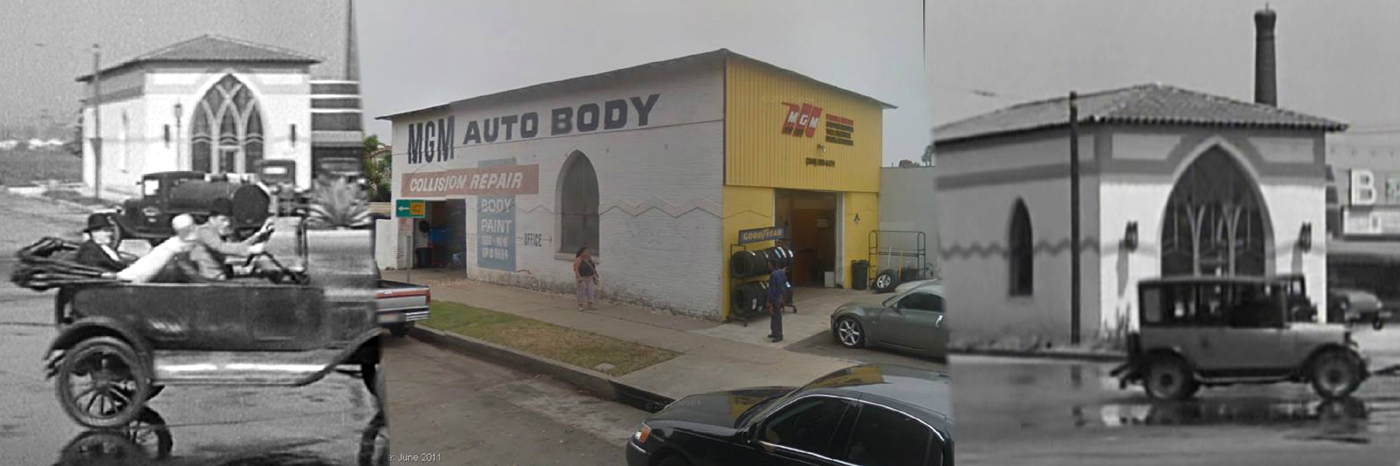
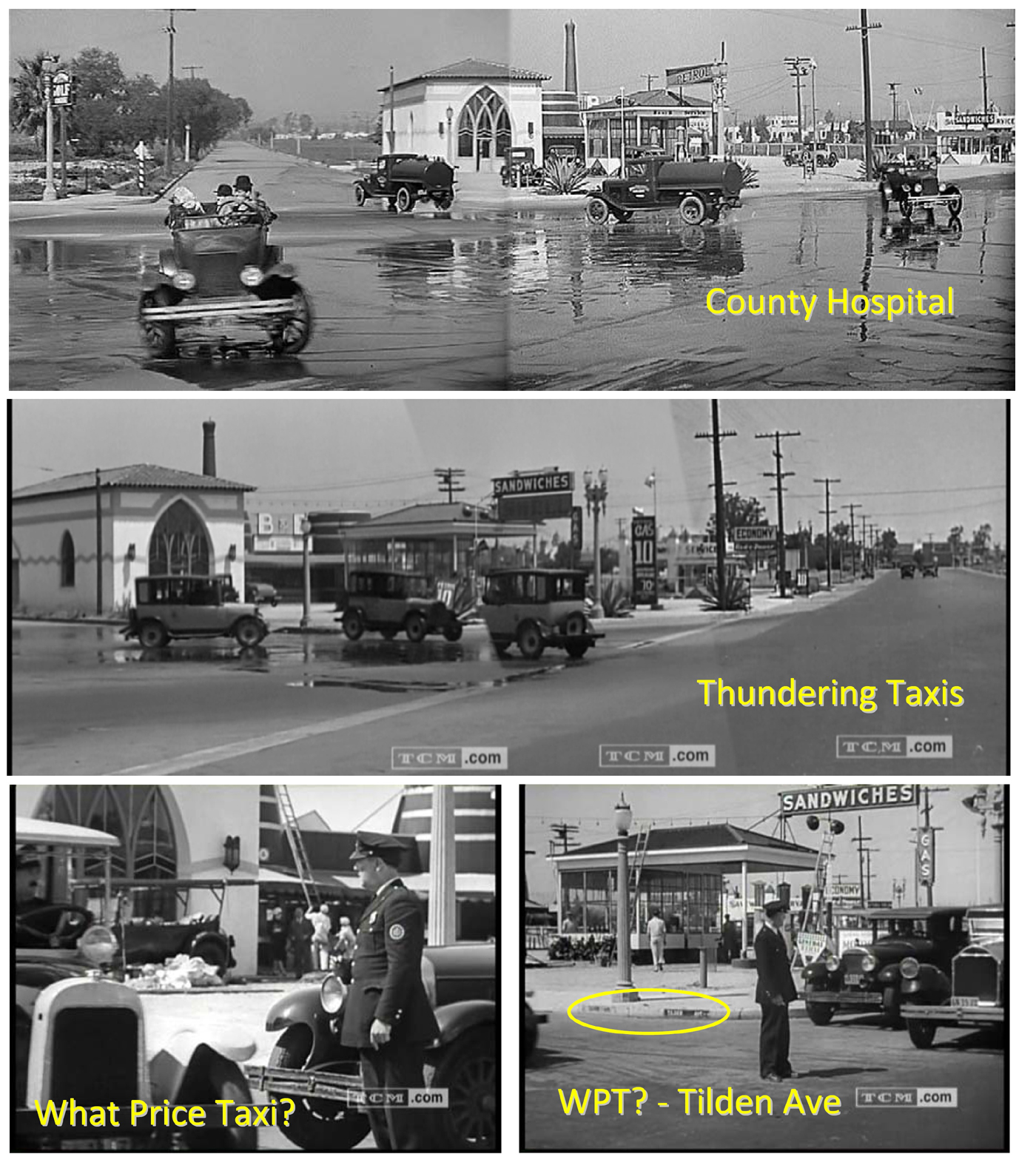
During their ride home from the hospital in County Hospital (1932), Stan Laurel and Oliver Hardy (well, their stunt doubles) skid at a wide intersection beside a Gothic-windowed auto garage.  The zig-zag detailing remains on the garage wall.

County Hospital Slide - Tilden

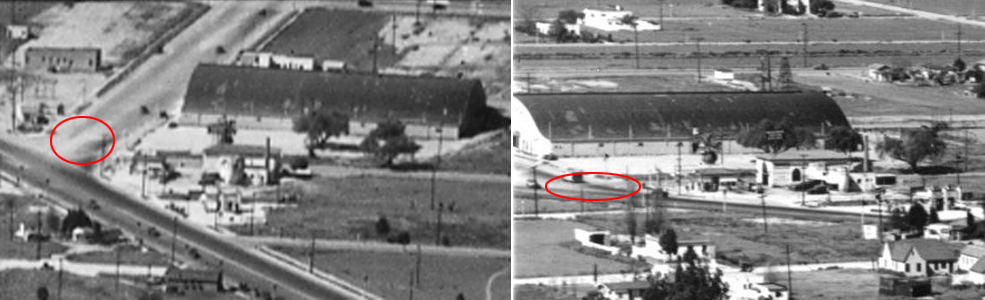
This unusual intersection also appeared in the Hal Roach “Taxi Boys” comedies Thundering Taxis (1932) and What Price Taxi? (1932).  The curb in the latter film says “TILDEN AVE,” identifying the spot as where Washington Place, Tilden Avenue, and Washington Boulevard meet.  The two skid stunts depicted here were likely staged at this spot (red oval below) because the intersection was unusually wide, providing an extra measure of safety.

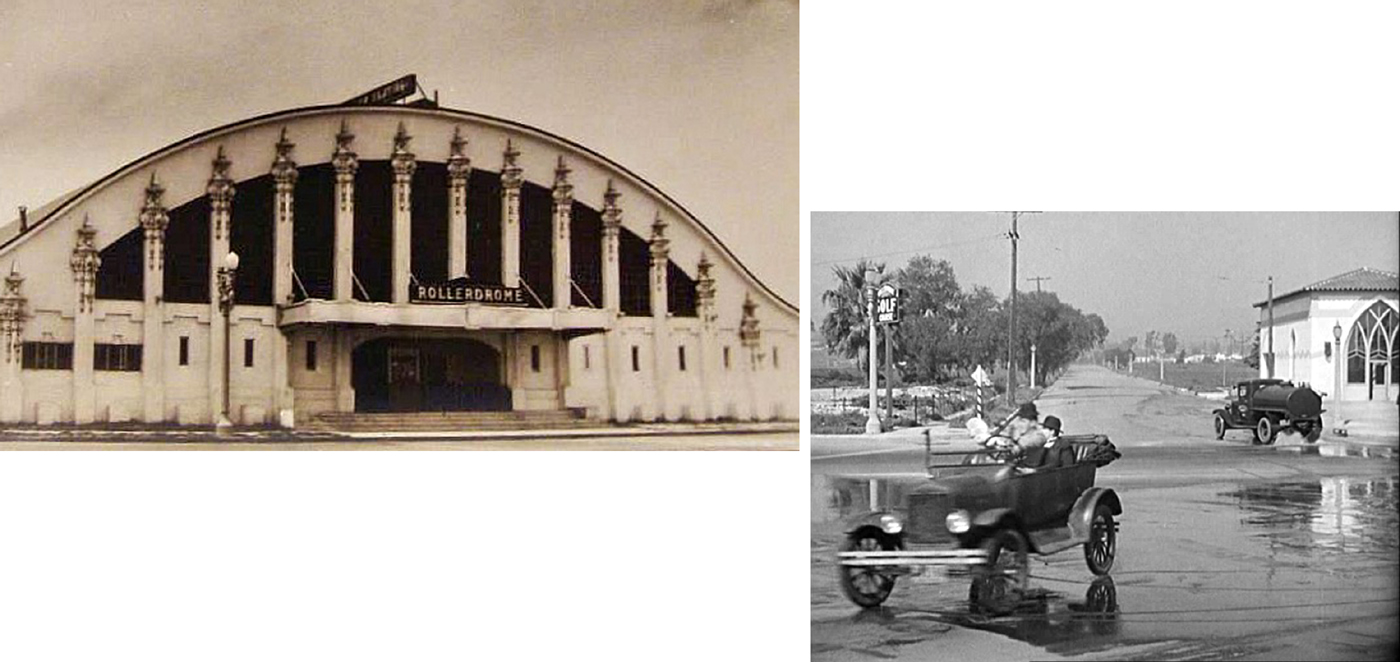
Tilden MapThe Culver City Rollerdrome skating rink (yellow box, left) stood near the wide intersection, and for a time a mini-golf course (green box) stood on the corner.  The Rollerdrome (1929-1970) was a local landmark for decades.  The mini-golf course sign appears in the movie frame below.

The Culver City Rollerdrome and the Miniature Golf sign

The Culver City Rollerdrome stood by the short-lived mini-golf course (notice the Golf sign)

Below, these vintage aerial photo details show the large skating rink beside a flat patch of earth where the mini-golf course stood.  The garage with the Gothic windows stands near the corner – the skid area marked with a red oval.  (I came upon these photos at pages 12 and 144 of MGM:Hollywood’s Greatest Backlot, Steve Bingen’s best-selling illustrated history of the studio’s outdoor sets and stages).

Tellefson Park stands today on the site of the former Rollerdrome and mini-golf course, and the corner garage still services cars.

(C) Hal Roach Studios, Inc.

Posted in Culver City, Laurel and Hardy | Tagged , , , , , , | 4 Comments

Buster Keaton and The Three Stooges – Round 6

ca

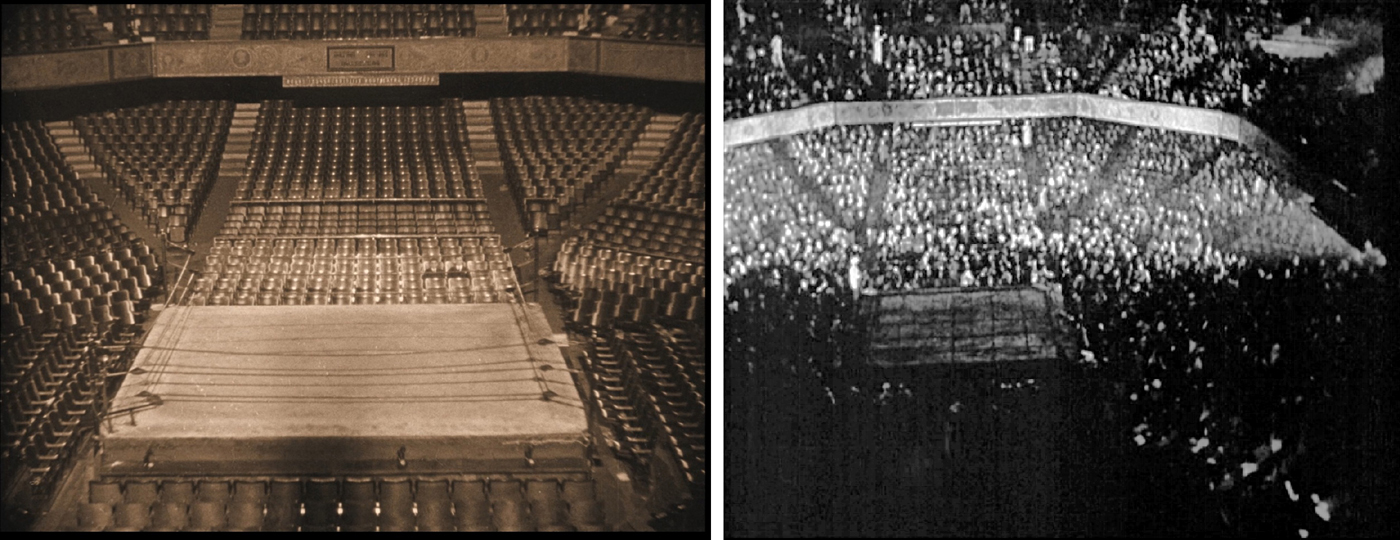
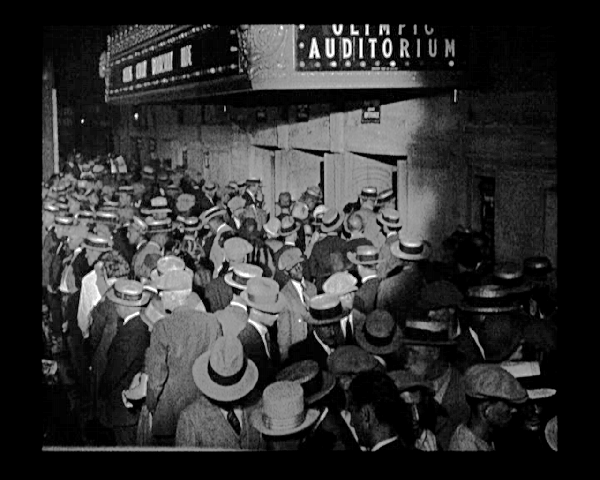
Click to enlarge.  The extant Olympic Auditorium appearing in Keaton’s Battling Butler and in the Three Stooges’ Punch Drunks (1934).  This is my sixth post about filming connections between Buster and the Stooges.

In his 1926 self-directed feature comedy Battling Butler, Buster plays an effete millionaire who seeks to impress a girl by allowing her to mistakenly believe he is a champion boxer sharing the same name.  As might be guessed, the movie ends when amateur Buster, spurred by love and honor, defeats the pro boxer in a fight and wins the girl’s heart.

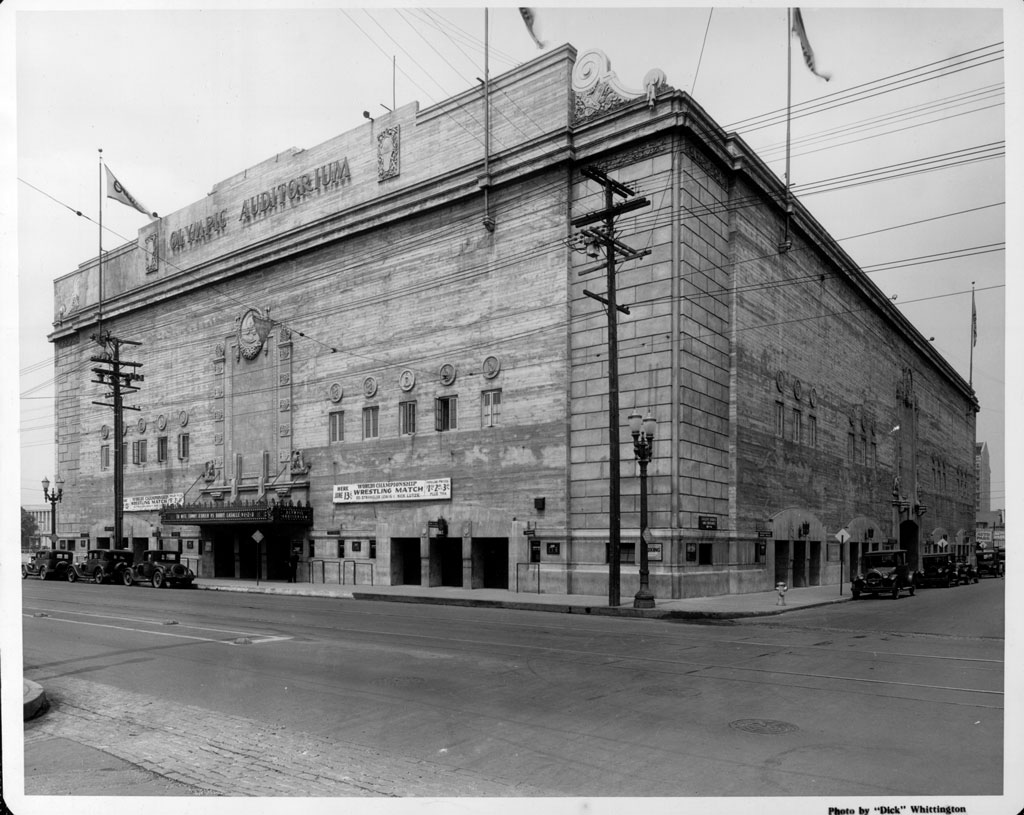
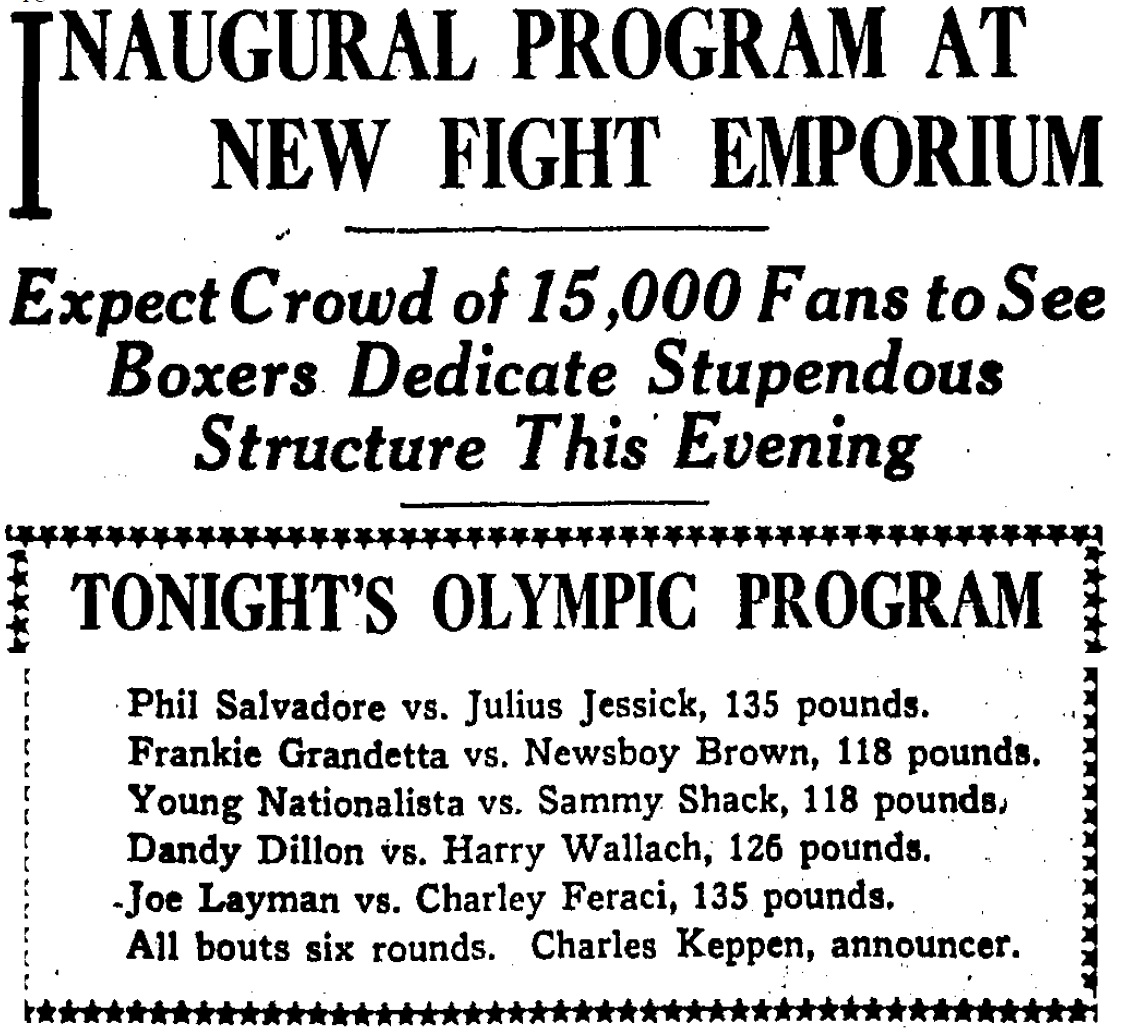
Box 1Key scenes took place in the newly opened Olympic Auditorium, still standing at 18th and Grand in downtown Los Angeles.  Construction began on January 10, 1925, with world champion fighter Jack Dempsey on hand for the ceremonies, breaking ground with a steam shovel.  Dempsey returned when the completed arena opened August 5, 1925, and was presented with a solid gold lifetime ticket, the size of a calling card, good for all future events at the venue.  The so-called “Punch Palace” was built in preparation for the 1932 Los Angeles Olympic Games, and was the largest arena of its kind west of New York City, reportedly seating up to 15,300.  The boxing and wrestling hall could be converted to host other programs, and the California Grand Opera Company performed there during October 1925.

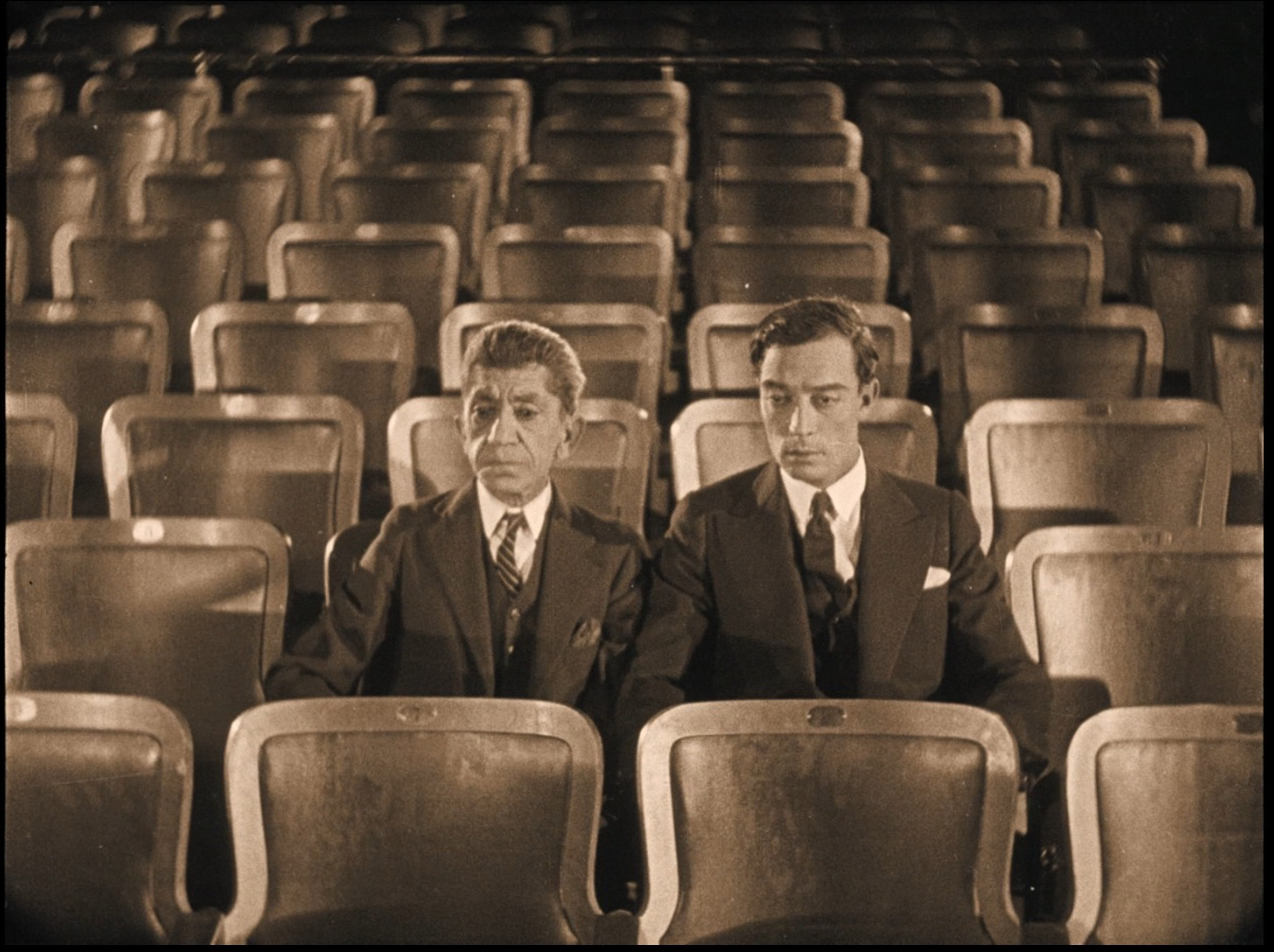
Buster and his valet, played by Snitz Edwards, sit stunned in Olympic Auditorium, after the formerly obscure boxer who shares Keaton’s name has unexpectedly become champion.

Buster and his valet, played by Snitz Edwards, sit stunned after witnessing a formerly obscure boxer who shares Keaton’s name unexpectedly win a championship bout.

The marquee in Punch Drunks

The marquee as it appears in Punch Drunks

Because Buster started working on Battling Butler only months after the arena first opened, its role in the movie could be its debut appearance on film.  Aside from appearing with the Three Stooges in Punch Drunks, the arena has been used as a location for classic films such as Rocky (1976) and Million Dollar Baby (2004).  You can find my five other posts about Buster and the Stooges HERE.

Remarkably, the William Holden film noir drama The Turning Point (1952) has strong connections to all three leading silent comedy stars.  The movie not only makes great use of the arena where Buster filmed (see below), it also shares noir locations on Bunker Hill with Harold Lloyd’s 1924 feature Hot Water, and in the gas tank district with Charlie Chaplin’s 1936 comedy Modern Times.

Four views of the Olympic Auditorium from The Turning Point

Four views of the Olympic Auditorium from The Turning Point

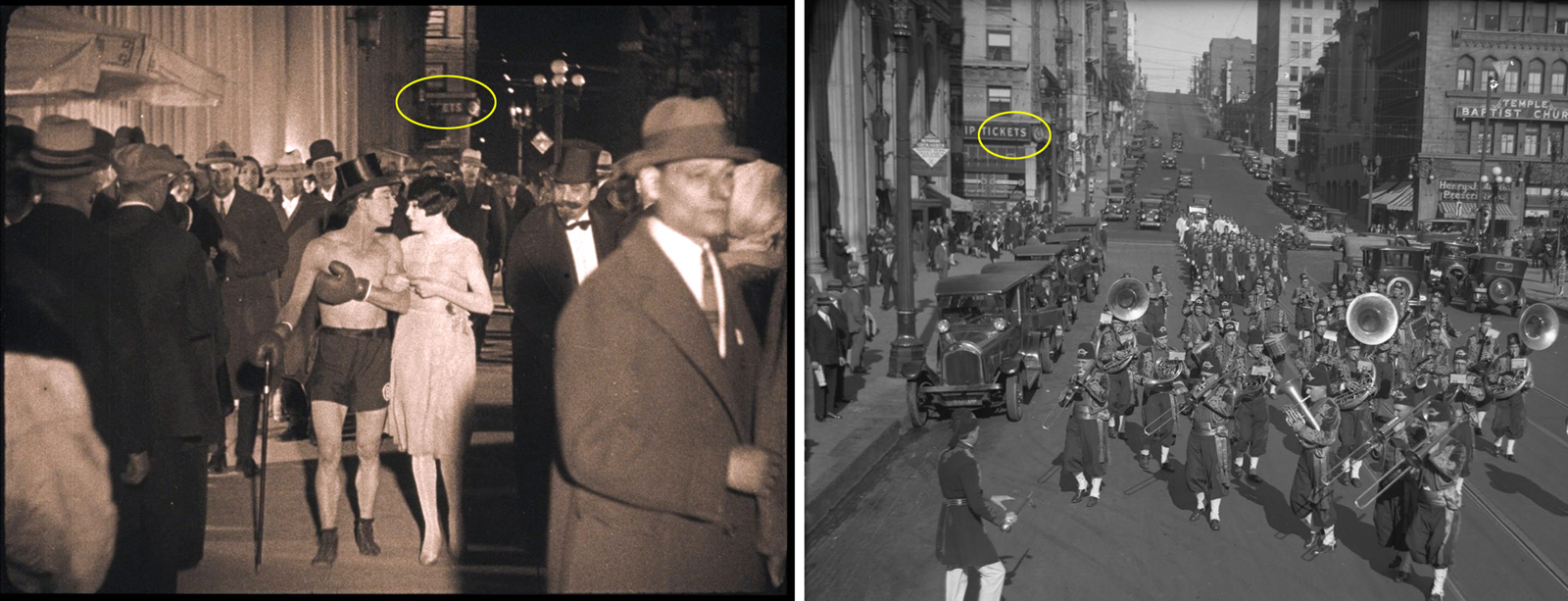
As I reported a while back in my column for The Keaton Chronicle, the film concludes with Buster, decked out in boxing shorts and a silk top hat, strolling down a city boulevard at night with his girl on his arm, oblivious to the curious onlookers surrounding them.

ca

Click to enlarge.  The Biltmore Hotel, designed by Schultze & Weaver in 1922, is located on Olive Street facing Pershing Square.  Keaton strolled from the corner of 5th and Olive, with the San Carlos Hotel across 5th Street, which bears a “STEAMSHIP TICKETS” sign (oval) in each image.  UCLA Libraries – Digital Collection.

Unlike Buster’s contemporary Harold Lloyd, Keaton seldom filmed in the downtown Los Angeles Historic Core, and locating this concluding shot eluded me for years.  But once I determined that Harold had used the Olive Street entrance of the classic Los Angeles Biltmore Hotel for scenes from For Heaven’s Sake, I realized Keaton had filmed here too.  The Biltmore has appeared in dozens of films.

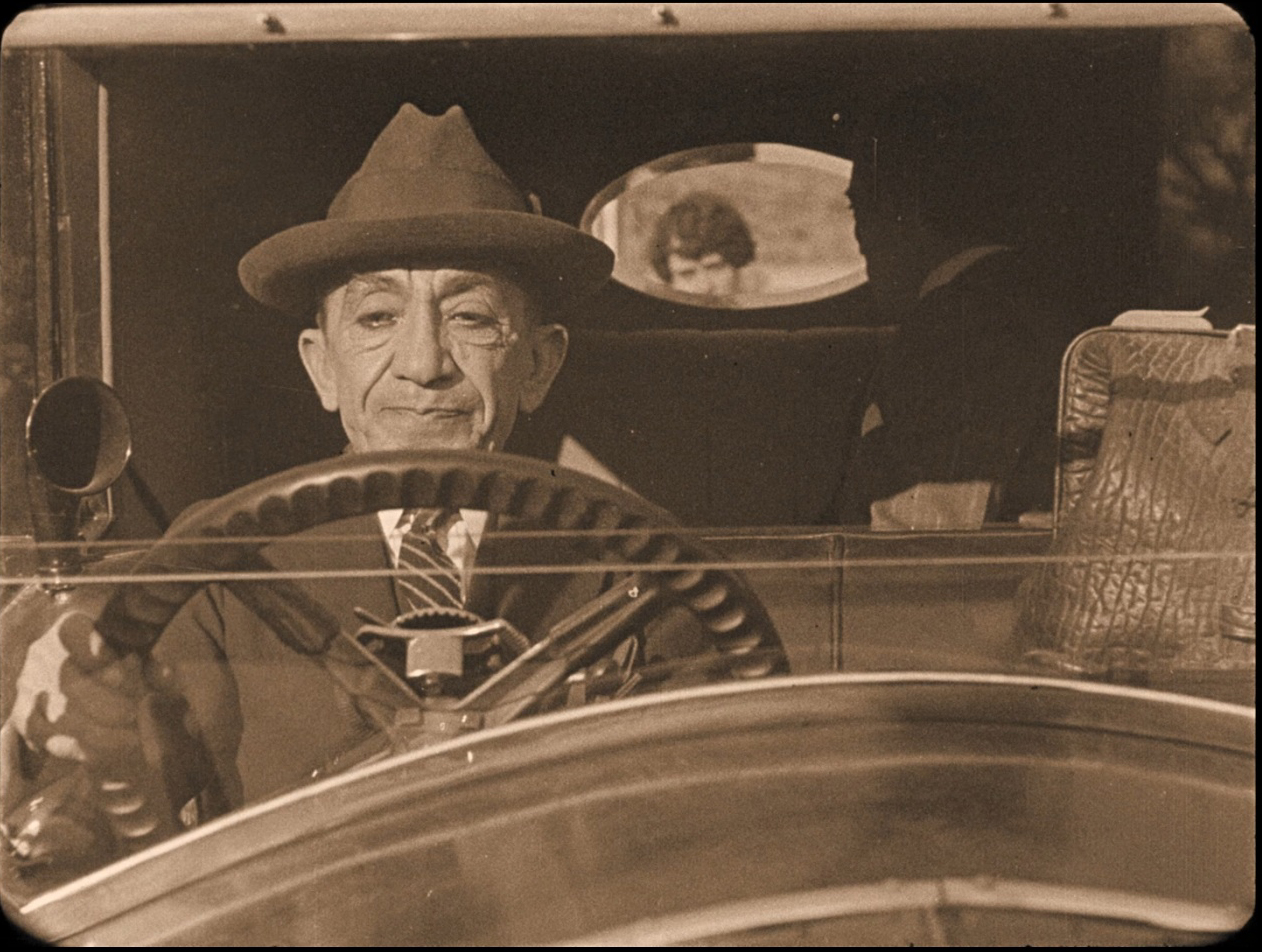
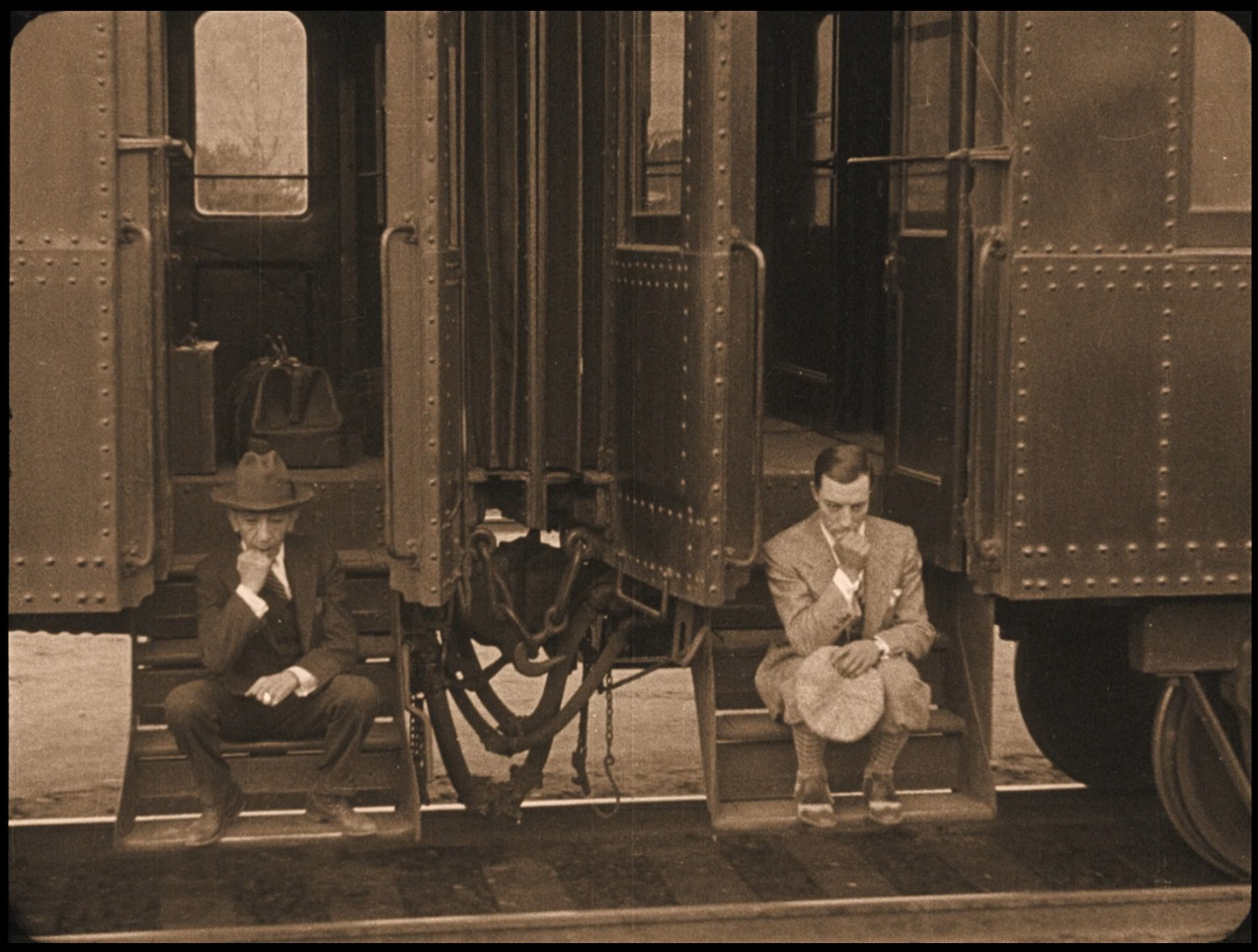
bb 18Although usually ranked among Keaton’s lesser works, I’ve always found Battling Butler to be quite charming.  The film contains many thoughtfully composed scenes, such as Buster’s fiancé framed bb 75through the rear window of his limousine, receding into the distance as Buster drives away, and a tracking shot of Buster and Snitz, lost in thought, sitting on the steps of a moving passenger train.

Some other interesting visual framing devices from Battling Butler

Some other interesting visual framing devices from Battling Butler

bb 31 cIn closing, Battling Butler also contains a clear image of Buster’s injured right index finger during a scene where he registers at a hotel.  Buster trapped his finger in a clothes mangler as a young child, and had to have the tip amputated. bb 09 This shot to the right, of “Buster” holding an engagement ring, was filmed using a hand double.  It is a strange coincidence that both Buster and Harold Lloyd had injured right hands.

Battling Butler (C) 1926 Metro-Goldwyn-Mayer Corporation. (C) renewed 1954 Loew’s, Inc. Punch Drunks copyright Columbia Pictures Industries, Inc.  The Turning Point (C) Paramount Pictures Corporation.

Today the Olympic Auditorium is home to a church.

Posted in Buster Keaton, Film Noir, The Turning Point, Three Stooges | Tagged , , , , , , , , , , , , , | 6 Comments

Harold Lloyd Takes A Chance on Court Hill

ca LAPL 00091449

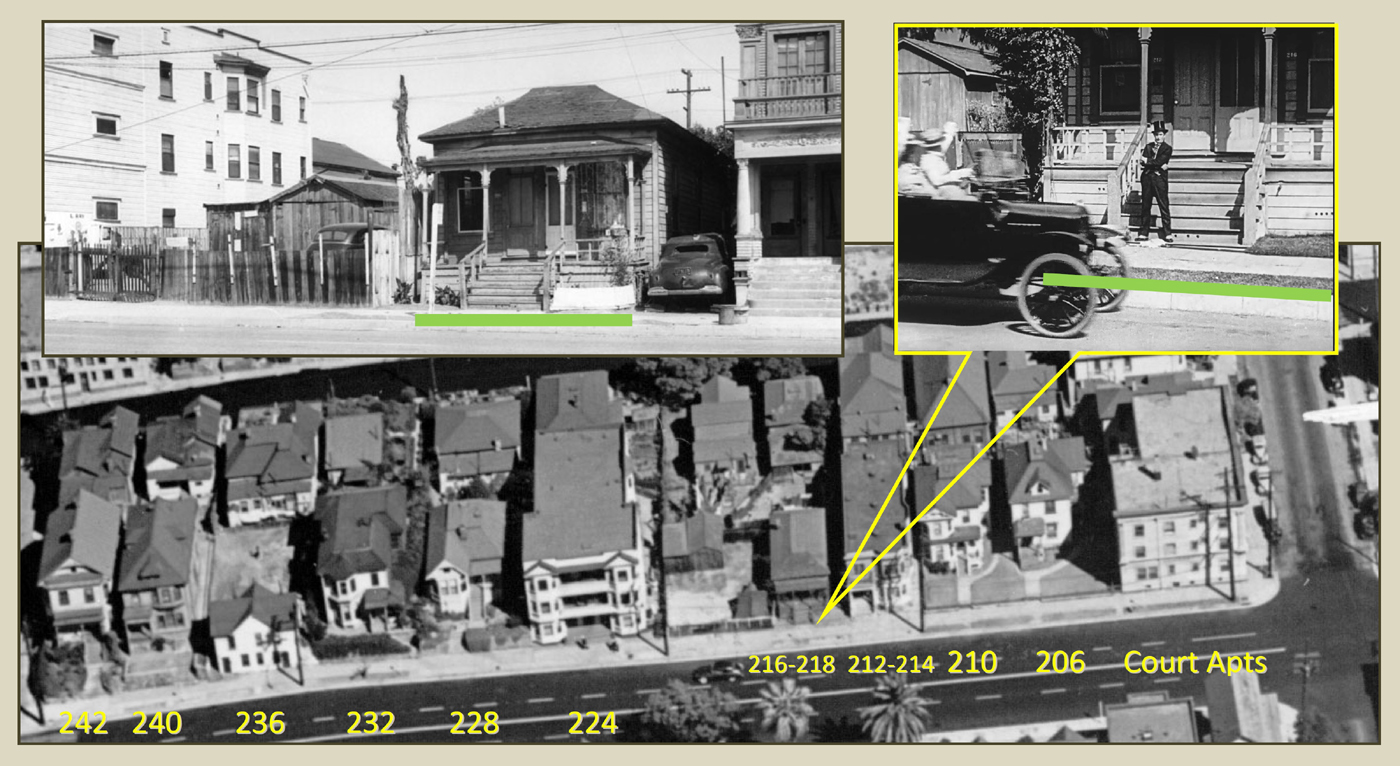
Harold in front of 216 – 218 Hope Street Los Angeles Public Library 00091559

aajThe Criterion Collection Blu-ray release of Safety Last! contains many bonus features, including three razor-sharp early Harold Lloyd short films.  One such film, Take A Chance (1918) featured here (and now available on the Criterion Channel), provides rare views of the long lost Court Hill neighborhood where Lloyd and producer Hal Roach began their careers.

ca LAPL

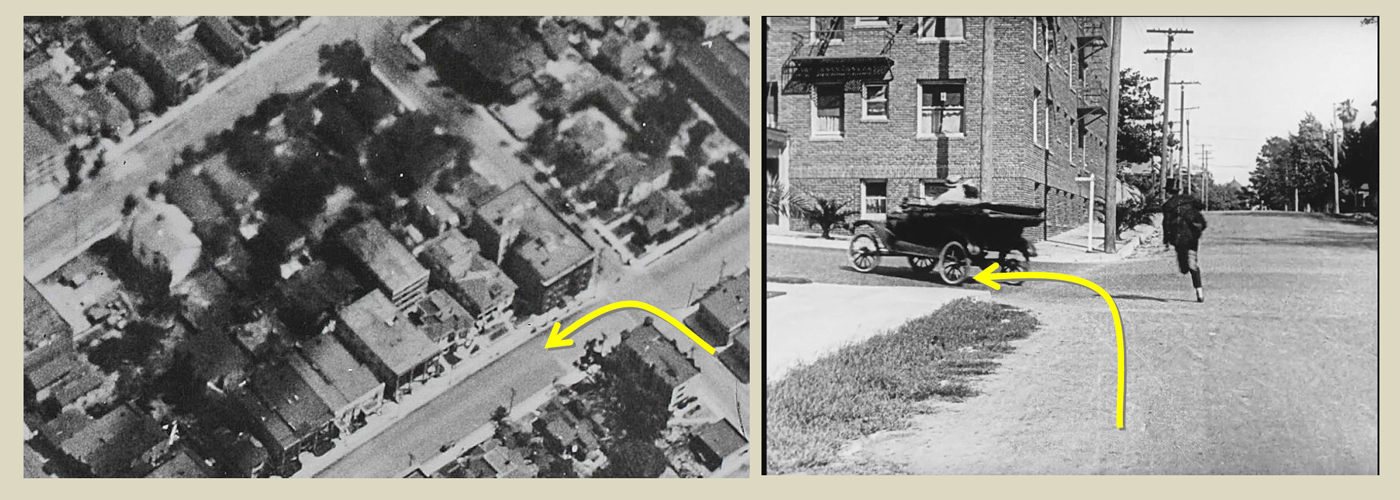
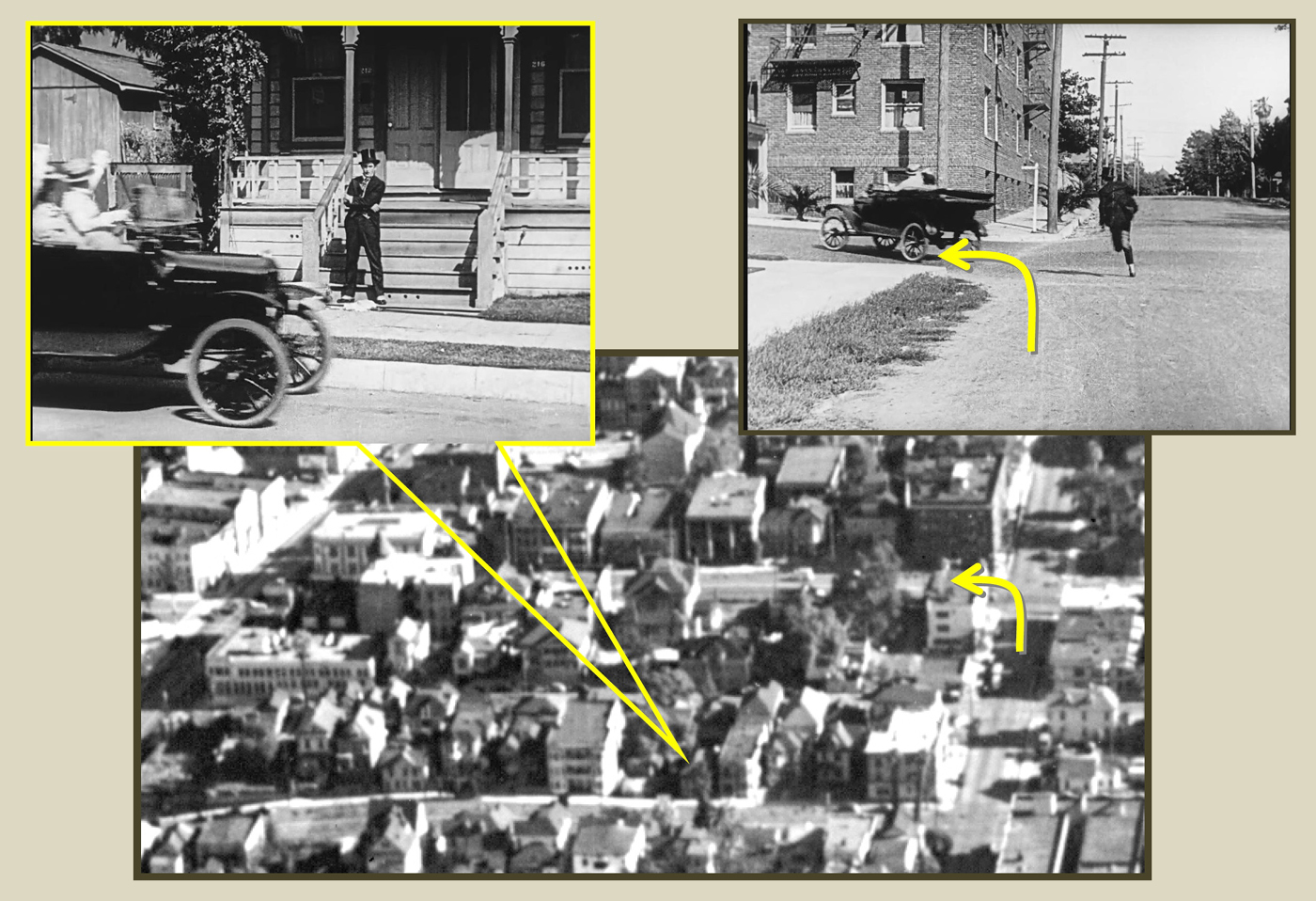
Harold confronts Snub Pollard driving away with Bebe Daniels in front of 216 – 218 Hope Street Los Angeles Public Library 00091449

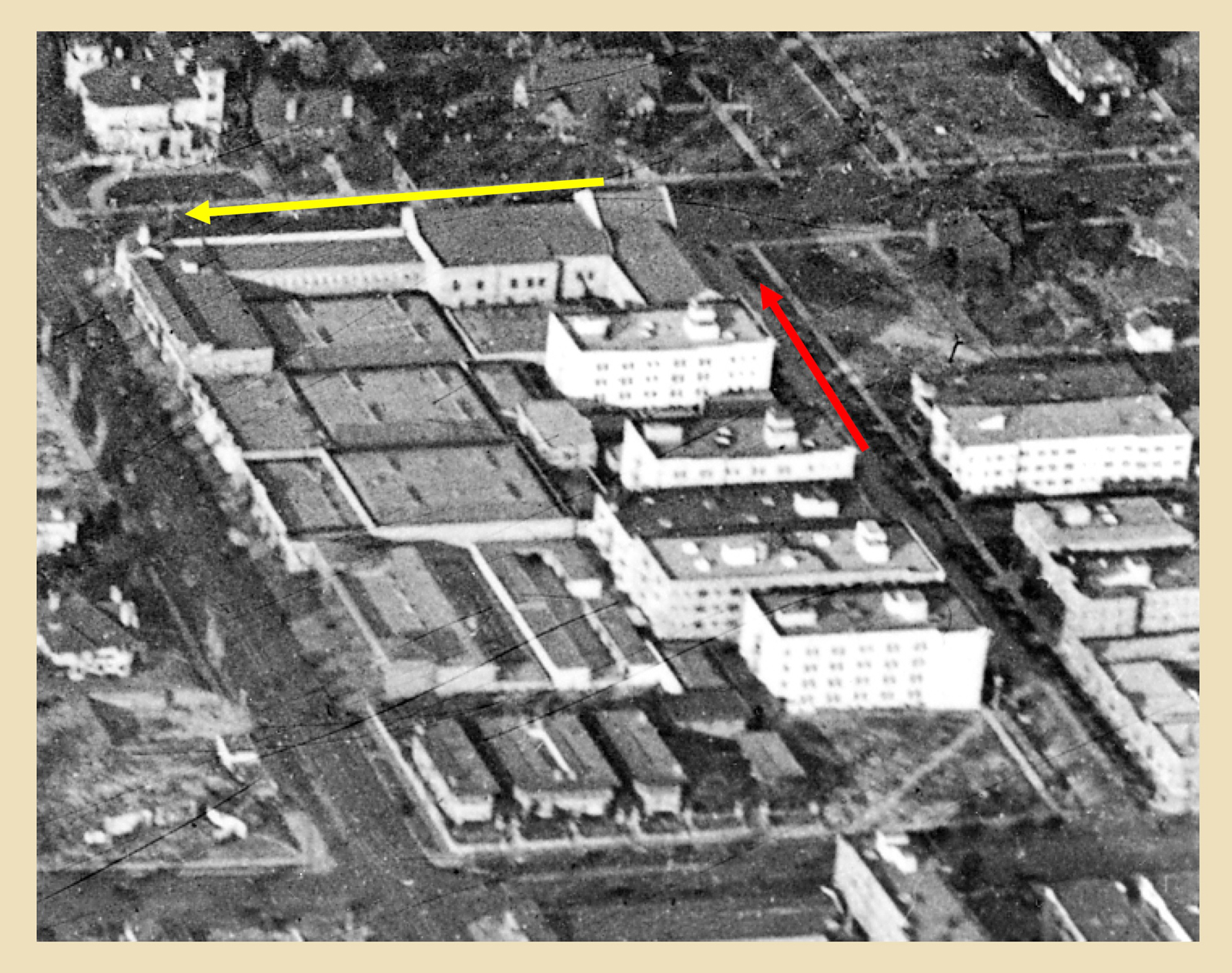
is later aerial view shows the block of Hope Street where Lloyd filmed.  USC Digital Library  EXM-P-S-LOS-ANG-CIT-AIR-VIE-019

Click to enlarge.  This later aerial view shows the block of Hope Street where Lloyd filmed. USC Digital Library EXM-P-S-LOS-ANG-CIT-AIR-VIE-019.  Each building can be viewed up close (see below).

Lloyd filmed along the block of Hope Street (above) between Temple Street to the left, and Court Street to the right.  Each building in the above aerial view can be viewed individually at the Los Angeles Public Library Homes of N. Hope St collection, including to the left of

ca

Court Apartments

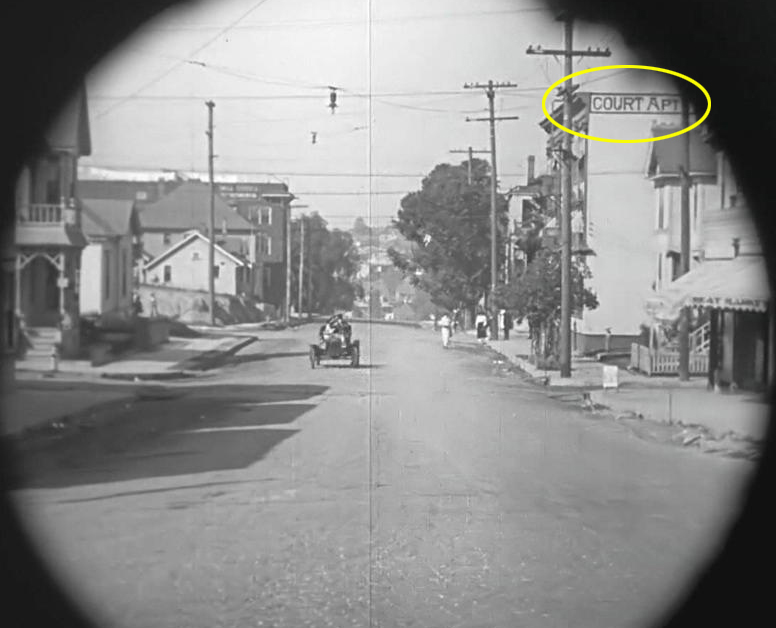
Harold, 242 Hope St, 240 Hope St, 236 Hope St, 232 Hope St, 228 Hope St, and the three story apartment with the front balconies at 224 Hope St, and to the right of Harold, 212 – 214 Hope St, 210 Hope St, 206 Hope St, and on the corner of Hope and Court, the Court Apartments. A reverse view of the corner Court Apartments appears (right) during a scene from Lloyd’s A Gasoline Wedding (1918), filmed looking north up Court St towards Hope.

Watson

Harold turns the corner from Court onto Grand in front of the Chestmere Apartments – Watson Family Photographic Archive

013 - R Lloyd Bradburn Mansion Rolin Film Company 1916 jpg cropLater in Take A Chance Harold chases Snub Pollard and Bebe Daniels past the Chestmere Apartments that stood on Court and Grand, just two short blocks from the Bradbury Mansion that served as the studio home for Lloyd and producer Hal Roach.  The mansion stood on the corner of Hill and Court Streets, with the main entrance facing Hill.

USC Digital Archive  DW-C1-11-6-ISLA

The filming locations on Hope St and Grand St – USC Digital Library DW-C1-11-6-ISLA

Chestmere Apts

Chestmere Apts

The Chestmere Apartments also appears in reverse view behind Harold in this scene (right) from one of his earliest surviving movies, Lonesome Luke Messenger (1917).  The view looks north up Court Street – Lloyd’s Bradbury Mansion studio stands to the left, just out of view.  Lloyd is running down Court St from the corner of Olive St.  The row of homes on Court St across from the mansion, off camera to the right, appear in many early Lloyd comedies.

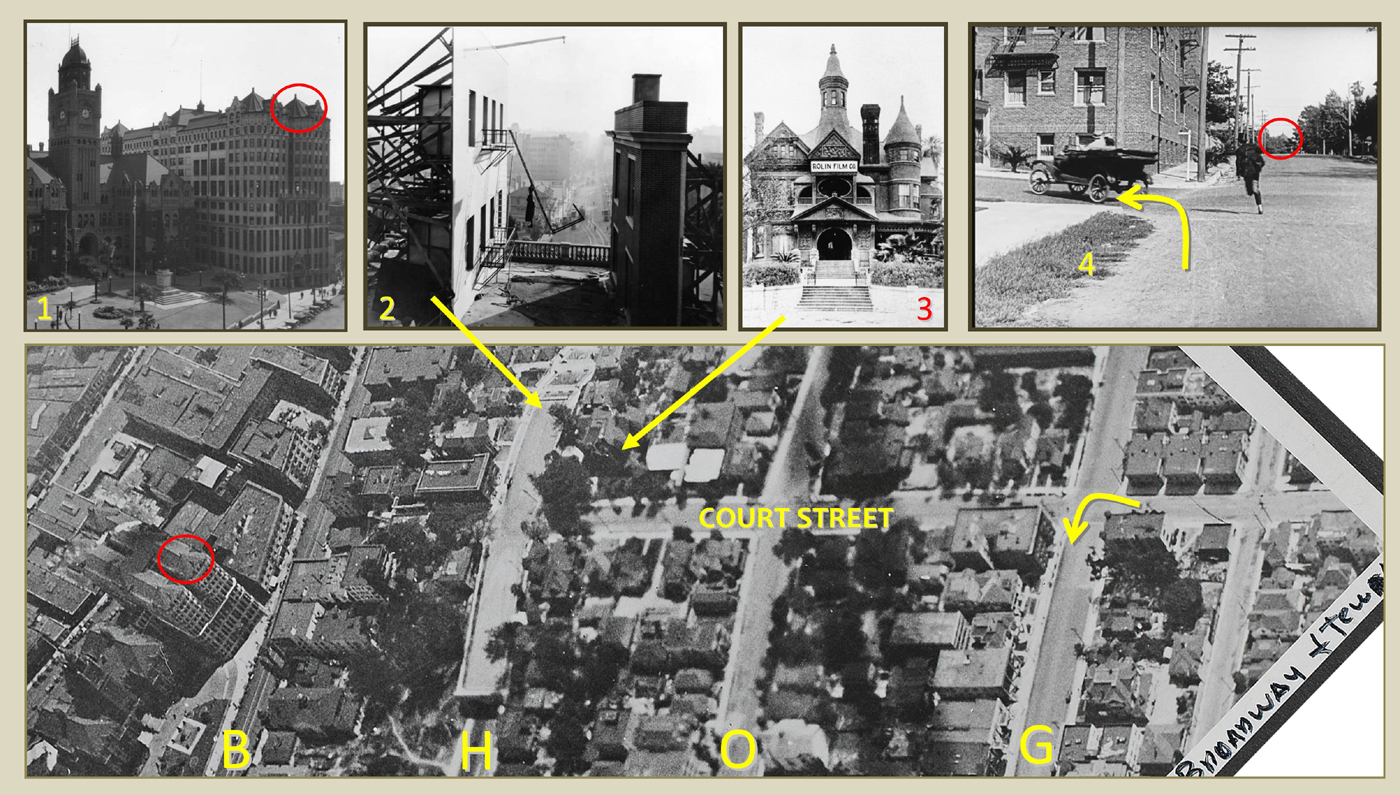
This 1919 aerial view looking south situates the Bradbury Mansion (3 - viewed from Hill St) and the Chestmere Apartments (arrow).  The south overlook of the Hill Street Tunnel (2) is where Lloyd and many other comedians filmed stunt comedies. The movie frame oval shows the tower of the former Hall of Records (1).  Street index - (B) Broadway, (H) Hill Street, (O) Olive Street, (G) Grand Avenue.    Watson Family Photographic Archive

Click to enlarge.  This 1919 aerial view looking south situates the Bradbury Mansion (3 – viewed from Hill St) and the Chestmere Apartments (4). The south overlook of the Hill Street Tunnel (2) is where Lloyd and many other comedians built sets to film stunt comedies. The movie frame oval (4) shows the tower of the former Hall of Records (1) on Broadway, below the base of Court Hill. Street index – (B) Broadway, (H) Hill Street, (O) Olive Street, (G) Grand Avenue. Watson Family Photographic Archive

This 1919 aerial view above shows the Court Hill filming location in relation to local landmarks, such as the Hill Street Tunnel overlook, where many stunt comedies were filmed, and Lloyd’s Bradbury Mansion studio.  You can read a detailed account of this aerial photo, showing how stunt comedies were filmed, in this post LA’s early hills and tunnels preserved in comedies and film noir.

Also from Take A Chance, Harold in front of the Majestic Apartments at 406 W. Temple

Also from Take A Chance, Harold in front of the Majestic Apartments at 406 W. Temple

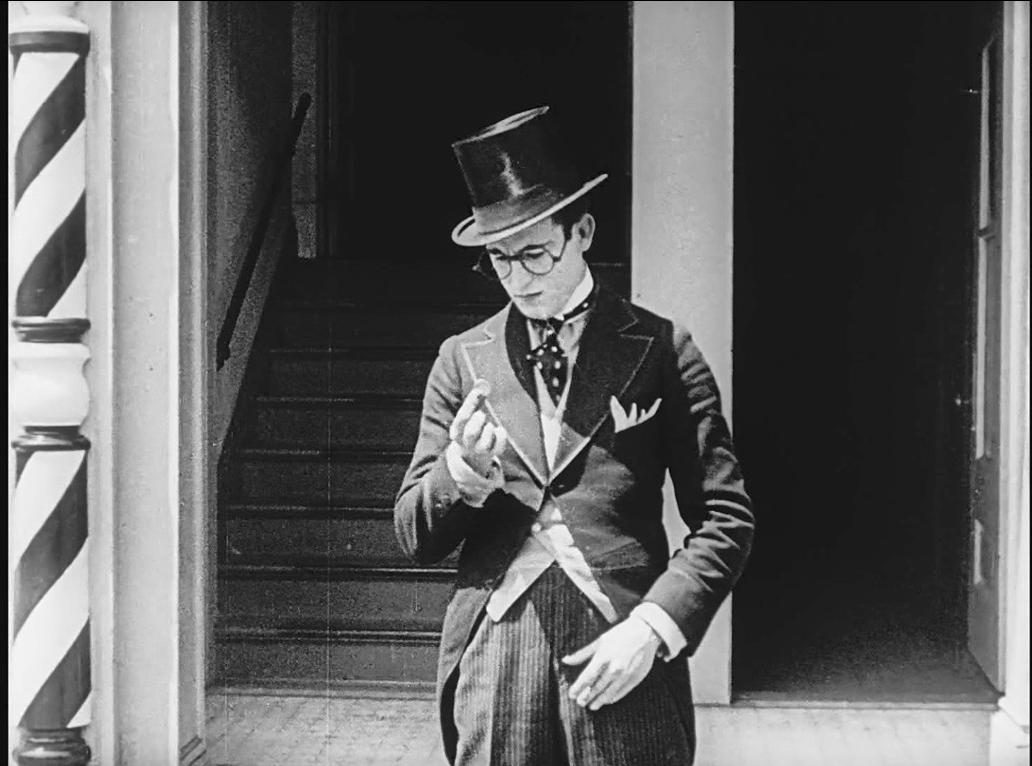
Take A Chance begins with Harold flipping his last dime to decide whether to spend it eating or getting a hair cut.  Instead he loses it down a storm drain.  This scene was filmed in front of the Majestic Apartments on Temple St., also just steps away from the Bradbury Mansion.  In this post I explain how the Majestic and the Hill Street Tunnel appear in the 1949 Burt Lancaster noir classic Criss Cross.  You can see the relation of the Majestic to the other Take A Chance filming locations in the view below.

UCLA and 1 and 2 and 3 and Piet Schreuders

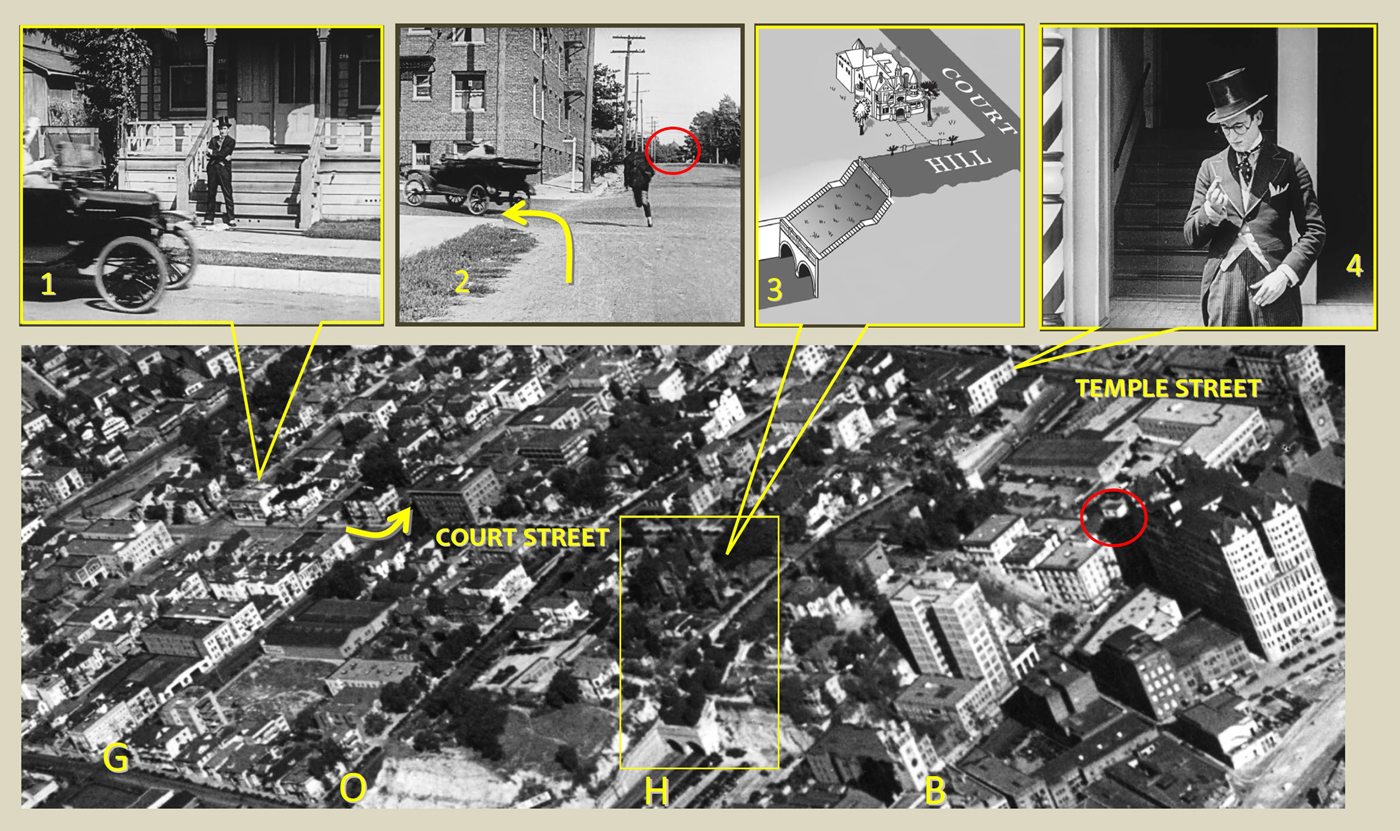
Click to enlarge.  The Take A Chance filming locations; Hope Street (1), the Chestmere Apts on Court St (2), and the Majestic Apts on Temple St (4).  The Bradbury Mansion filming studio, and twin bore Hill St Tunnel, appear in the box and matching Map (3) by Piet Schreuders.  Street index – (G) Grand Avenue, (O) Olive Street, (H) Hill Street, (B) Broadway.  Nothing of this setting, aside from the street names, remains today.

ca

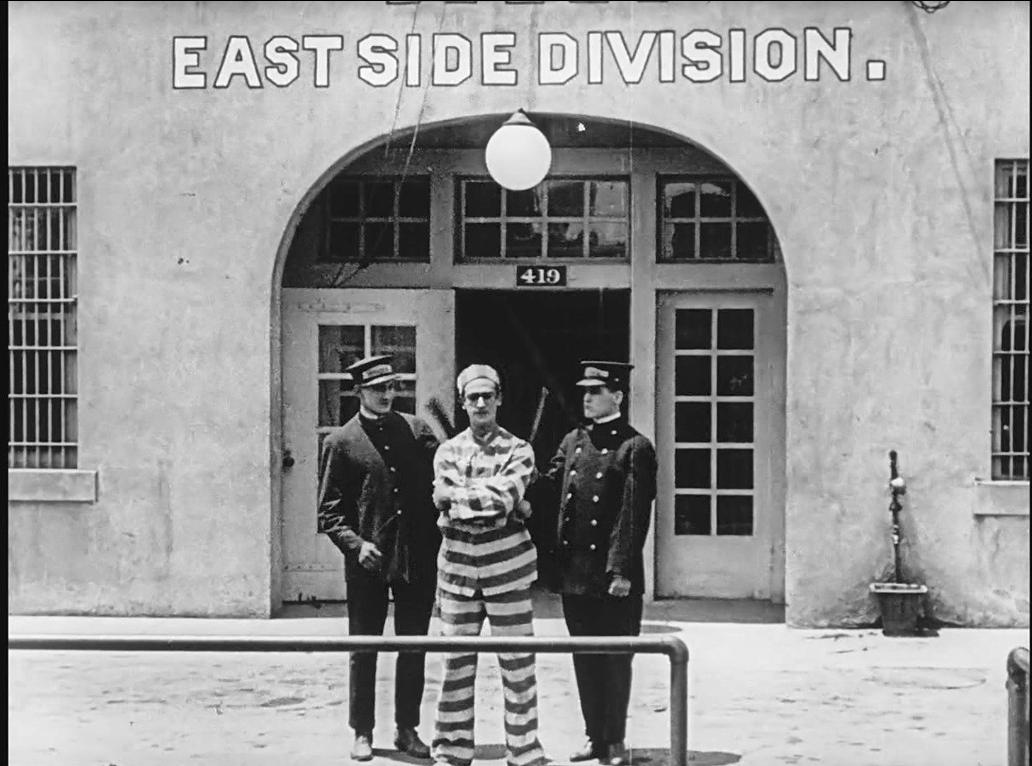
Take A Chance ends at the real life Los Angeles city jail, once located at 419 N. Ave. 19.

Take A Chance concludes with an escaped prisoner knocking Harold unconscious, and swapping their  clothes.  Unaware of his new appearance, Lloyd ignores these two policemen, who drag him off to jail.  The setting was the true Los Angeles city jail, that appears in many early comedies, including Laurel and Hardy’s The Hoose-Gow (1928).  You can read more about the jail in this post Laurel-and-Hardy-Charlie-Chaplin-four-silent-jailbreaks.

HAROLD LLOYD images and the names of Mr. Lloyd’s films are all trademarks and/or service marks of Harold Lloyd Entertainment Inc.  Images and movie frame images reproduced courtesy of The Harold Lloyd Trust and Harold Lloyd Entertainment Inc. 

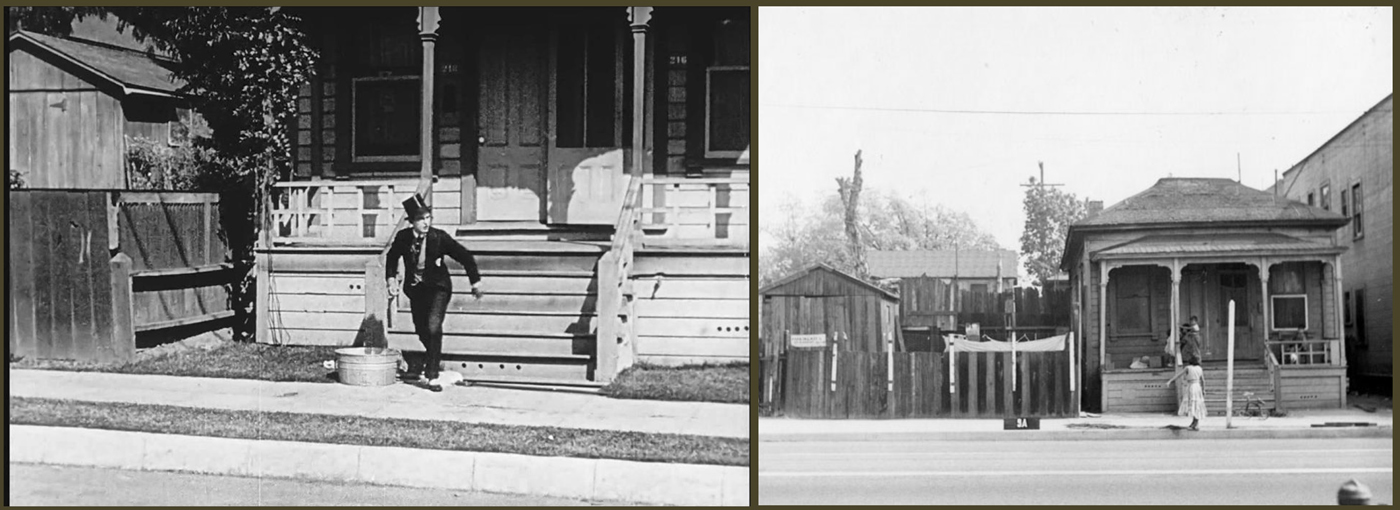
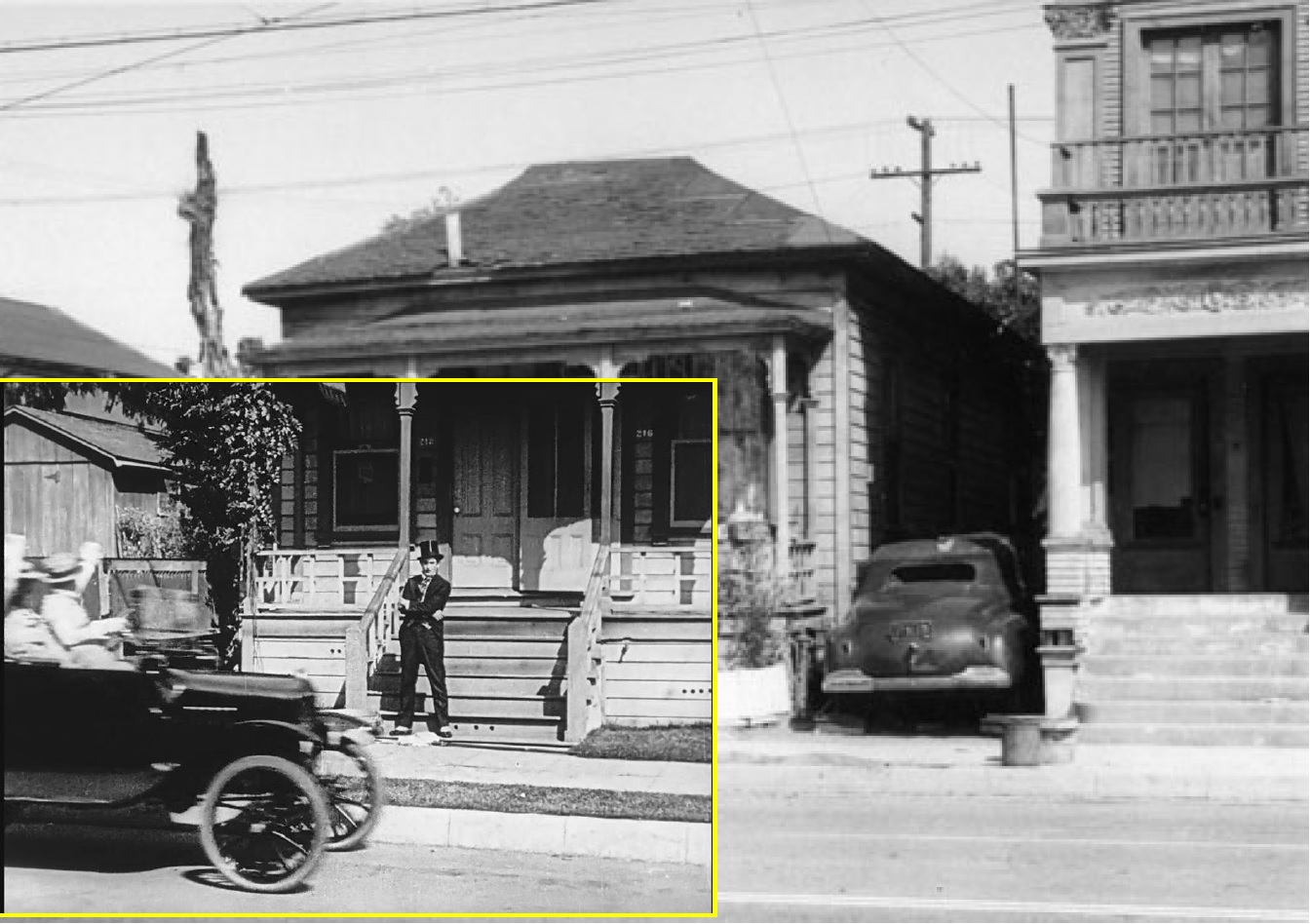
Approximately 216 N. Hope St today – Google Maps

Posted in Court Hill, Hal Roach Studios, Harold Lloyd | Tagged , , , , , , , , , , , | Leave a comment

W.C. Fields in Palm Beach – It’s the Old Army Game

ca

W.C. Fields in Florida beside El Mirasol

7For a complete change of pace, here’s a Florida location highlighting W.C. Fields.  Field’s feature comedy It’s A Gift (1934) is known for many classic sequences, including the sleeping-porch scene where a pushy insurance salesman searching for “Carl La Fong” disrupts Fields’ slumber.  During another scene, Fields and family take a break from their cross-country drive to share a messy picnic on the grounds of a large estate that they mistakenly presume to be a public park.  By the time the estate butler chases them away the grounds are ruined and buried in trash.  

ca

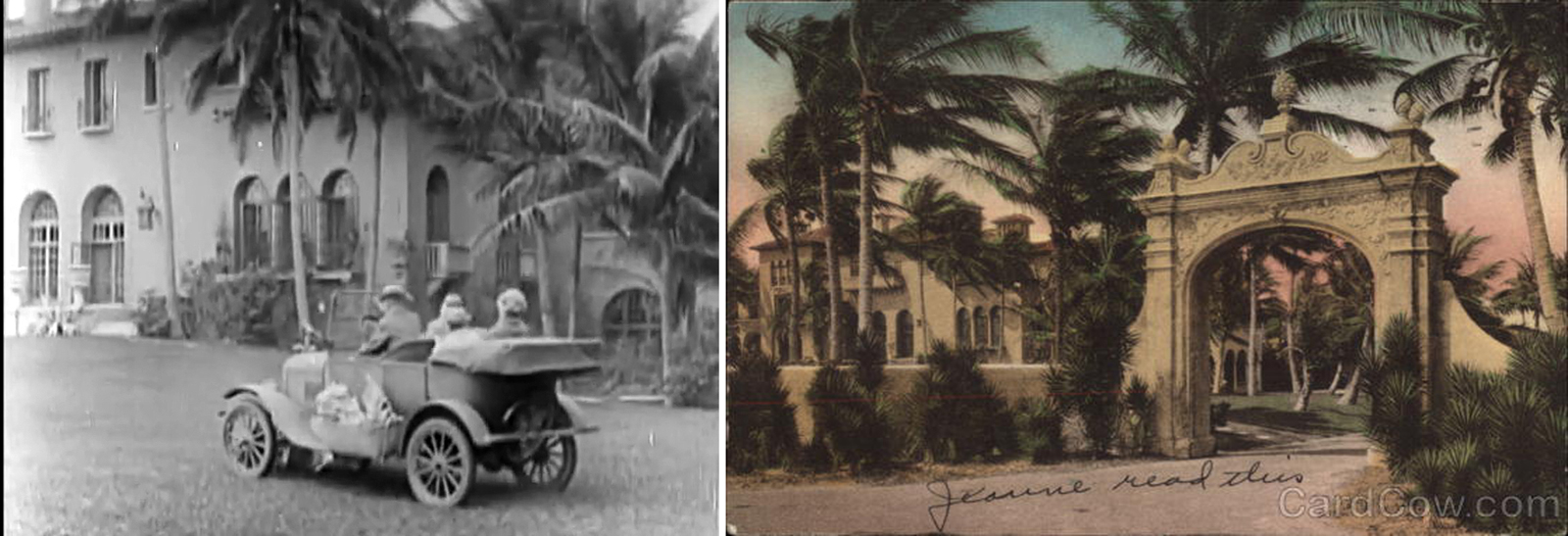
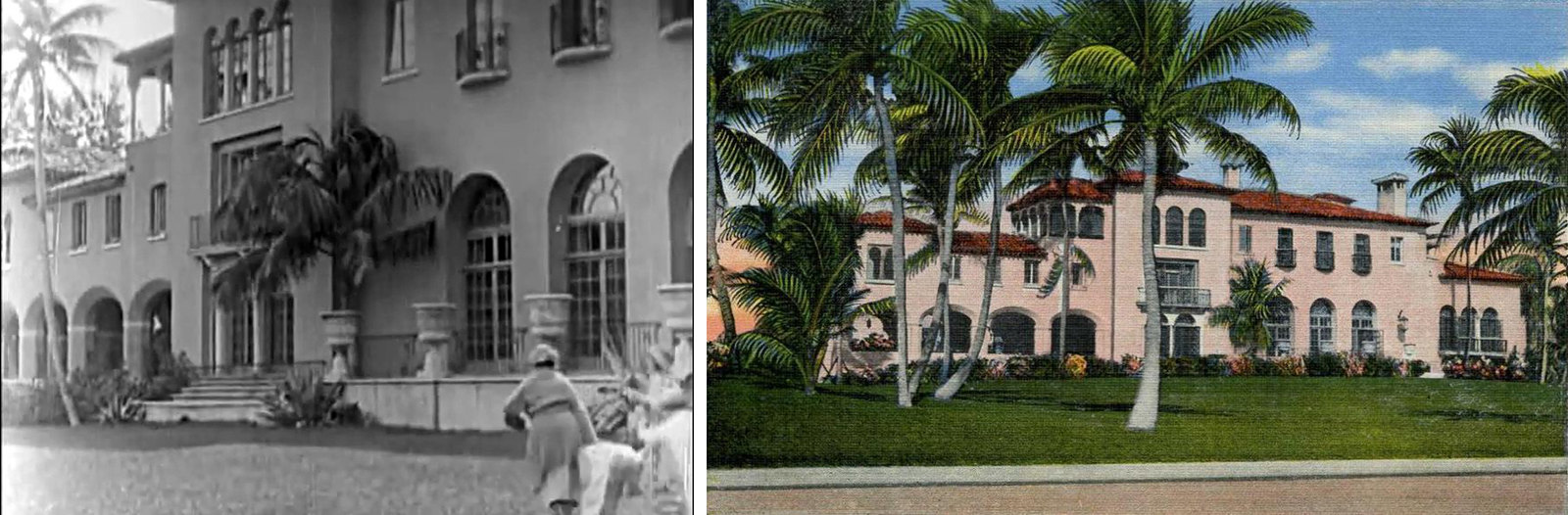
The front gate to the Stotesbury estate in Palm Beach, Florida

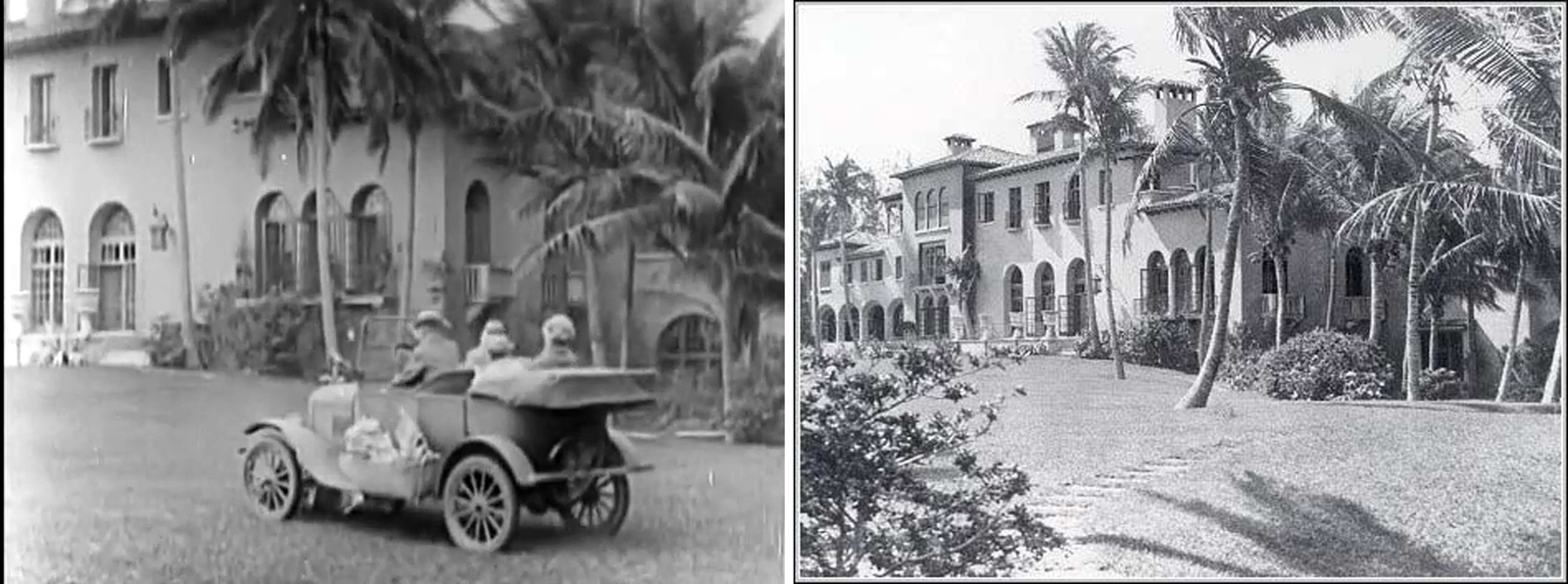
13What I did not realize is that this scene was reworked from one of Fields’ prior silent comedies It’s the Old Army Game (1926) co-starring Louise Brooks, directed by Edward Sutherland, and now available on a wonderful new Kino Lorber Blu-ray release. [Update: this original post was created from an old source – the image quality on the new Blu-ray is stunning. See HERE for more recent posts about them filming in Ocala, Florida and in New York]. As James Curtis reports in W. C. Fields: A Biography (Knopf, 2003), the sequence was filmed in Palm Beach, Florida at El Mirasol, the estate of Edward T. Stotesbury, “a Philadelphia banker who loved hob-nobbing” with Hollywood stars.  Curtis writes that the film crew behaved irresponsibly, and trashed the immaculate front lawn facing the ocean as the servants watched in horror.

ca

Bill and family on the El Mirasol front lawn.

Described as the grandest home ever built in Palm Beach, the 37 room estate was demolished in the 1950s, and the property subdivided.  You can read more about El Mirasol, Stotesbury, and his other mansions, at these links HERE and HERE.

ca

A closer view of the estate from It’s The Old Army Game.


Posted in Florida, It's The Old Army Game, W.C. Fields | Tagged , , , , , , , , , , , | 6 Comments

New City Lights Release – Discoveries and Assumptions

Here’s a new location discovery to celebrate the Criterion Collection Blu-ray release of Charlie Chaplin’s 1931 masterpiece City Lights

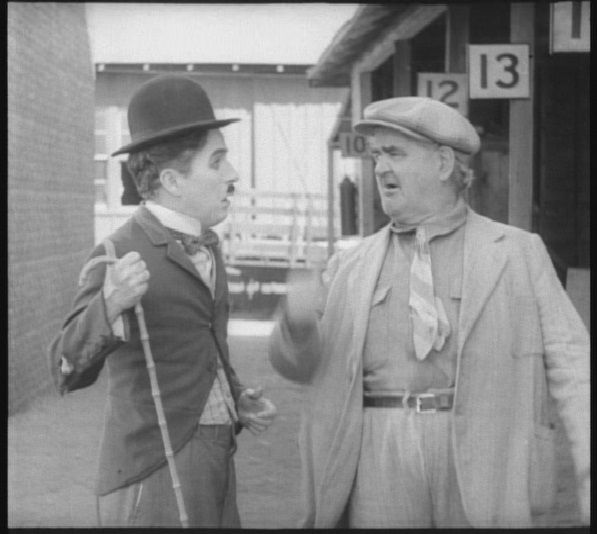
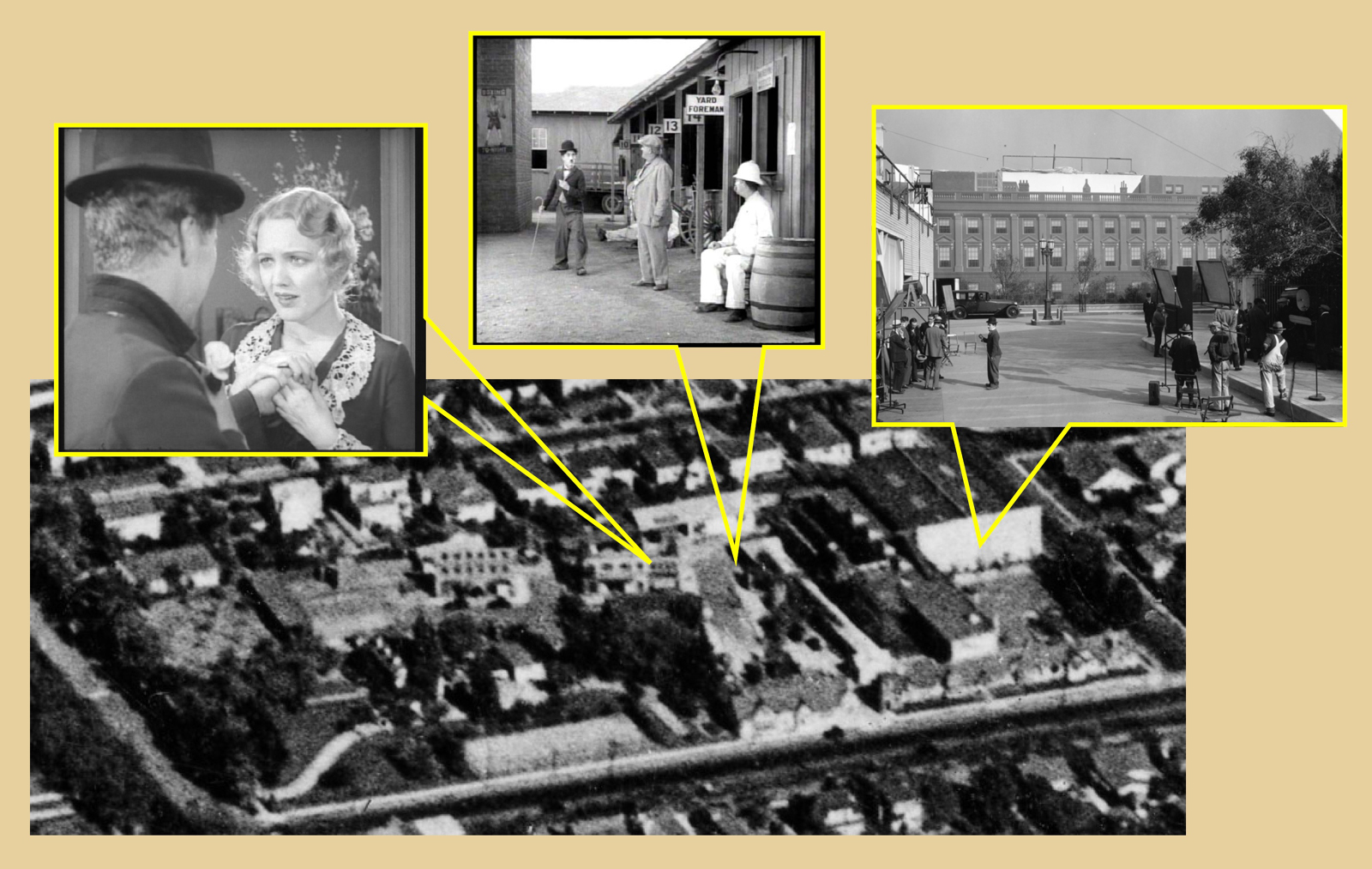
18The scenes where Charlie reports to work as a street sweeper, and where he also learns there is money to be made in the boxing ring, were filmed on the Chaplin Studio backlot beside the open parking stalls of the studio garage.

I knew that these scenes had to have been filmed at the studio, but for years my false assumption that they were filmed looking north prevented the geometry from falling into place to reveal the location.  Once I “thought outside the box” long enough to question whether the scenes might have been filmed looking east instead of north, I immediately solved the puzzle.

Click to enlarge

Click to enlarge – looking west across the Chaplin Studio backlot.  The arrow (pointing east) marks the studio garage, used as the street sweeper work station in City Lights.  The French village set (dotted line) appears in A Woman of Paris.

While there is scant photographic record of the non-glamorous motor-pool corner of Chaplin’s backlot, the studio garage appears to the left in this panoramic image above, taken in 1923, looking west across the lot towards the entrance gate on La Brea, and the French village set constructed for Chaplin’s dramatic feature A Woman of Paris.

Click to enlarge - the arrow points east towards the Chaplin Studio carpentry shop.

Click to enlarge – the arrow points east towards the Chaplin Studio carpenter shop.  The boxing gym is a very simplistic corner set.

As shown above, the Chaplin Studio carpenter shop appears in the background of the scenes from City Lights.  The close-up view of the shop, lower left above, comes from How to Make Movies (1918), the documentary footage Chaplin shot of his studio that he had hoped to submit to his distributor First National as a theatrical release in lieu of an actual comedy.  The carpenter shop still stands in place on the lot today.

Click to enlarge.

Click to enlarge – this circa 1930 view looks east towards several Chaplin Studio landmarks.  Marc Wanamaker – Bison Archives.

The above aerial view, looking east at the Chaplin Studio located at 1416 N. La Brea, shows from left to right (i) the site of the flower shop set on the backlot, where the emotionally charged final scene was filmed, (ii) the location of the studio garage, and (iii) the open air stage where Chaplin filmed the Little Tramp’s first encounter with the blind Flower Girl.

The sweeper set stood behind the statues set

Click to enlarge – the sweeper set stood behind the statues set

An even closer look (above) reveals that the sweeper work station set stood immediately behind the civic park statues set.

ca

The City Light street sets

The above circa 1928 view of the Chaplin Studio, looking to the NE, shows that Chaplin had already painted the large civic backdrop mural that appears during the scene where the Little Tramp meets the Flower Girl.  It is clear from the above photo that by 1928 Chaplin had yet to build the elaborate city street backlot set (right) that appears so frequently during the film.  Chaplin would use this backlot set again extensively in Modern Times (1936) and The Great Dictator (1940).

As mentioned, I would have found the above street sweeper work station scenes from City Lights much sooner if I had not mistakenly assumed the shots were filmed looking north.  But identifying non-obvious movie locations requires making such basic assumptions regarding the position of the camera.  For example, I was able to solve the location of the church from Buster Keaton’s 1925 feature Seven Chances (left) only by first correctly assuming the camera view looked north.  In turn, this meant that the church stood on the SE corner of a “T” intersection, which proved to be the unique key to solving the mystery.

It’s easy to get tripped up identifying spots assuming east is always east and west is always west.  There is no film-makers’ oath requiring cinematic landscapes filmed on location to comport with reality.  Movies frequently match scenes filmed miles apart, or traveling in opposite directions.  So both in life, and in silent movie location identification (you know, the important things) ;-), it always pays not to assume too much and to keep an open mind – you never know what you might find.

City LightsYou can read all about how Chaplin filmed City Lights in my book Silent Traces.  There’s also a fun City Lights post about the Little Tramp finding a cigar butt beside the Beverly Wilshire Hotel HERE.

Seven Chances licensed by Douris UK, Ltd. All images from Chaplin films made from 1918 onwards, copyright © Roy Export Company Establishment. CHARLES CHAPLIN, CHAPLIN, and the LITTLE TRAMP, photographs from and the names of Mr. Chaplin’s films are trademarks and/or service marks of Bubbles Incorporated SA and/or Roy Export Company Establishment. Used with permission.

Posted in Chaplin Studio, Charlie Chaplin, City Lights | Tagged , , , , , , , , | 9 Comments

LA’s Early Hills, Tunnels Preserved in Noir – Silent Comedies

CLICK TO ENLARGE - we'll cover each image one at a time below.  Looking SE at the Civic Center and Court Hill (1919) - Watson Family Photographic Archive

TWO HILLS – THREE TUNNEL PORTALS – ONE PHOTO – CLICK TO ENLARGE – we’ll cover each image one at a time below. Looking SE at the Civic Center and Court Hill (1919) – Watson Family Photographic Archive

Once marked with hills and tunnels, the complicated landscape of early Los Angeles has changed so dramatically that it’s difficult to visualize how all of the pieces once fit together.  Massive landmarks such as Court Hill and the Broadway Tunnel were bulldozed into oblivion.  In fact, not a single hill, tunnel, or even building in the above photo still exists.

Using a remarkable 1919 aerial photo from the Watson Family Photographic Archive, several “stunt” climbing silent comedies for detail, and a noir classic for good measure, this post deconstructs how early filmmakers exploited LA’s unique topography, and how such films provide an invaluable window to the past.

Bobby Dunn

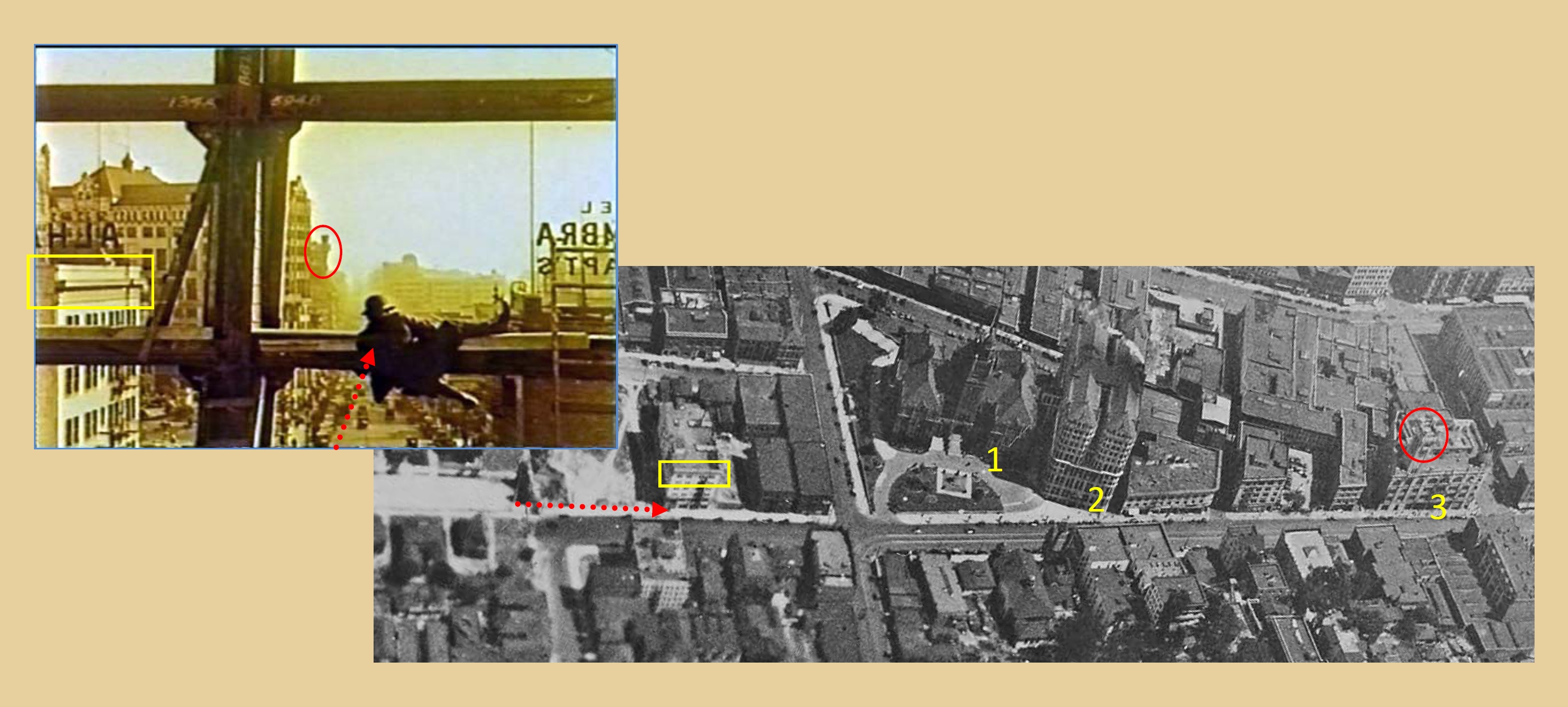
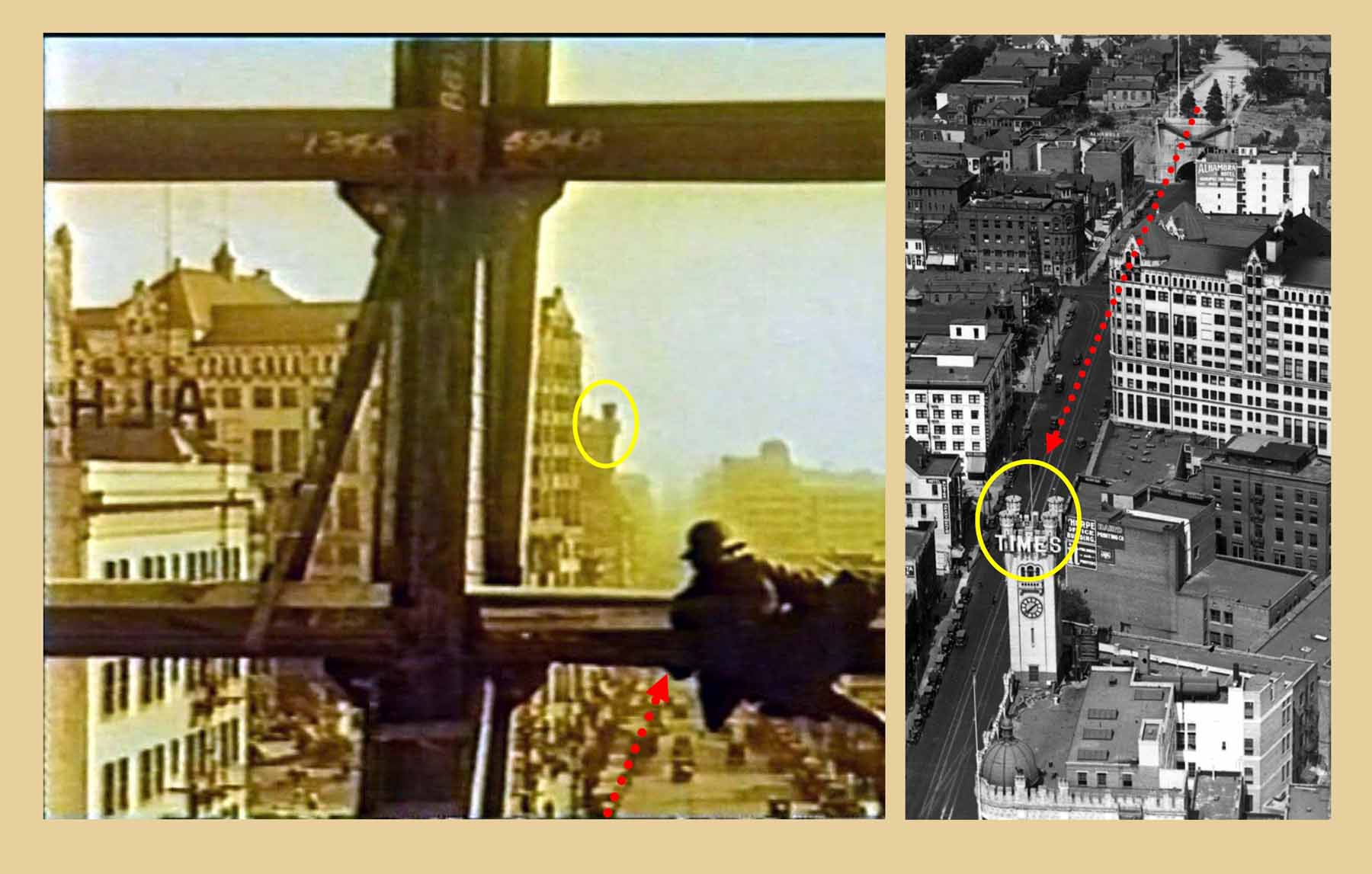
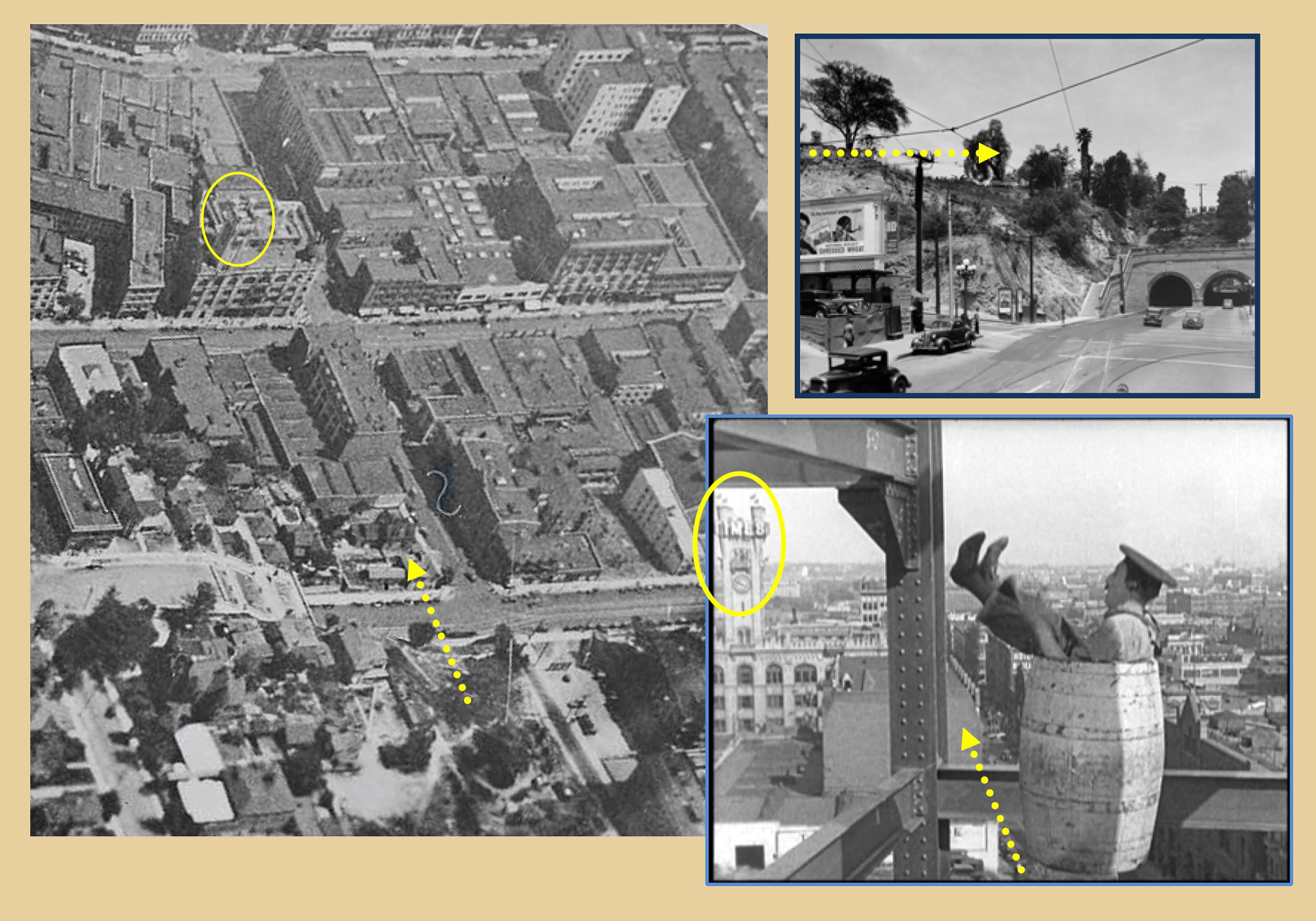
Click to enlarge – Bobby Dunn in No Danger (1923).  The arrow points from above the Broadway Tunnel past the roof line of the Alhambra Hotel (box), past the County Court House (1), the Hall of Records (2), and the crenelated clock tower (oval) of the Los Angeles Time Building at 1st and Broadway (3).

We begin (above) looking south from above the Broadway Tunnel towards the County Court House (1), the Hall of Records (2), and the Los Angeles Times Building (3) as seen in Bobby Dunn’s stunt-climbing short comedy No Danger, posted on YouTube.

ca

The aerial view at right looks north up Broadway from the LA Times Clock Tower (oval) toward the Broadway Tunnel overlook where the movie was filmed.  LAPL.

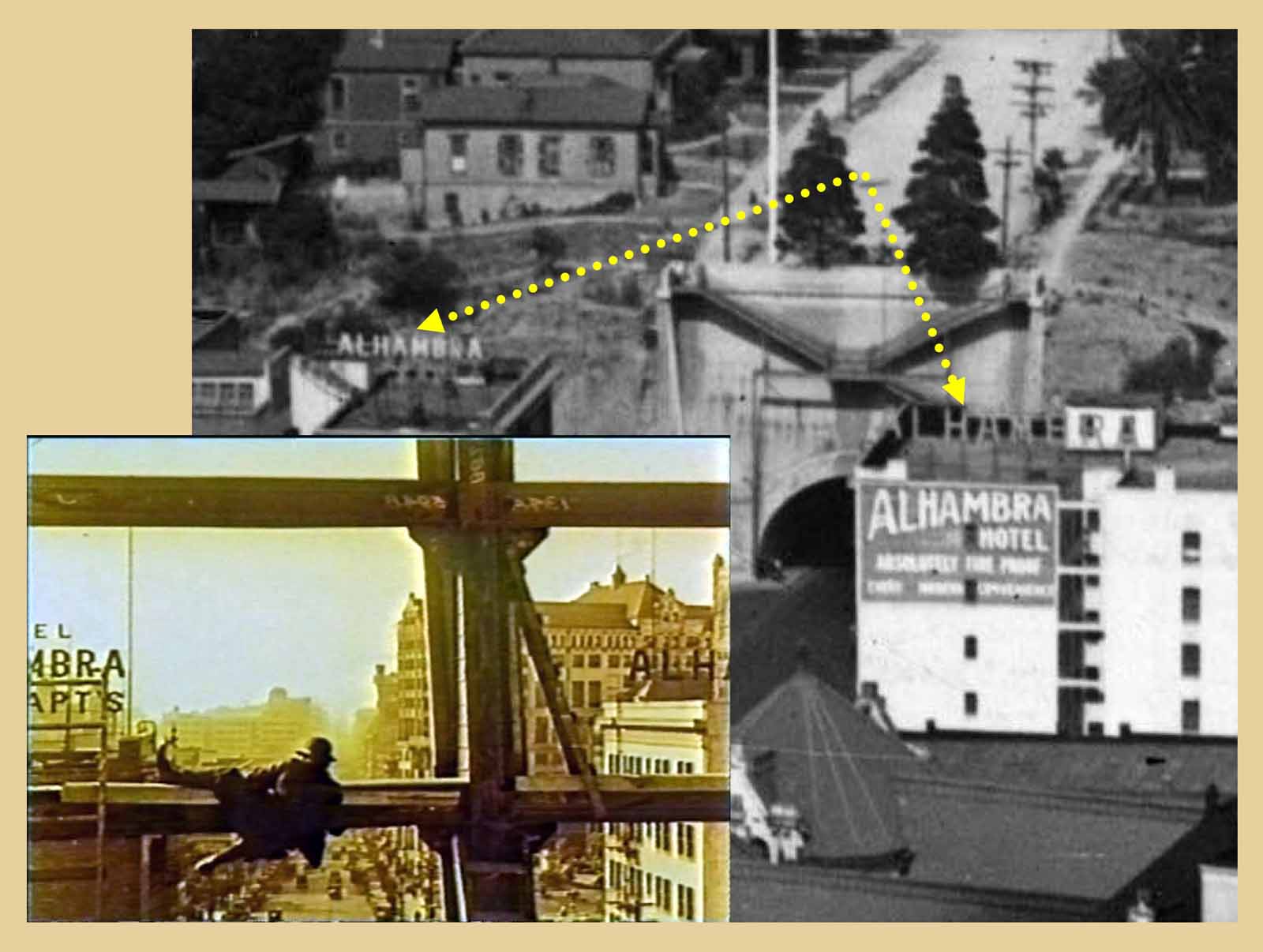
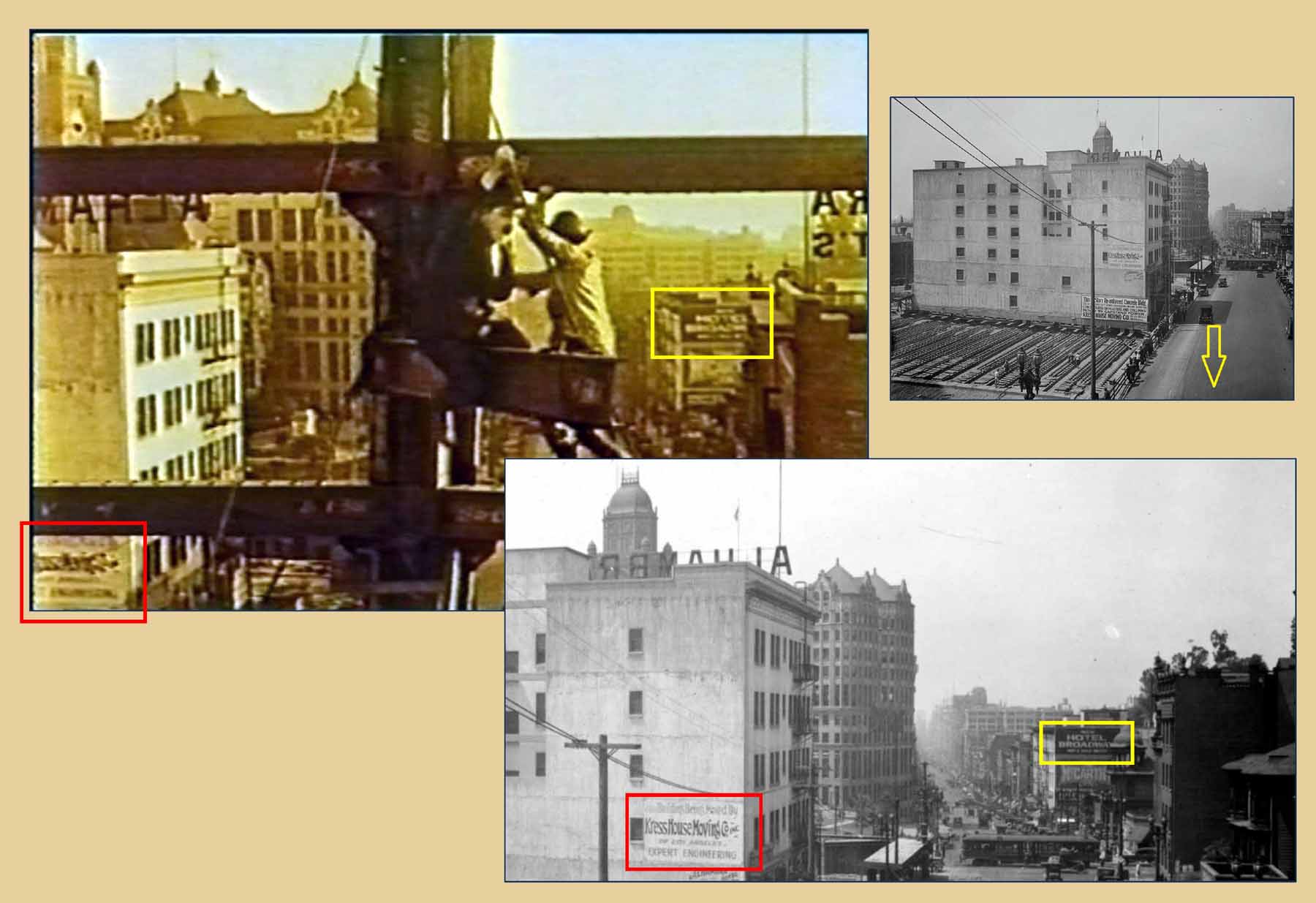
Some prominent landmarks appearing in No Danger include the rooftop signs of the former Alhambra Hotel and Hotel Alhambra Apartments, that stood facing each other on opposite sides of Broadway.

ca

Reversing the No Danger movie frame reveals the rooftop signs marked to the right.

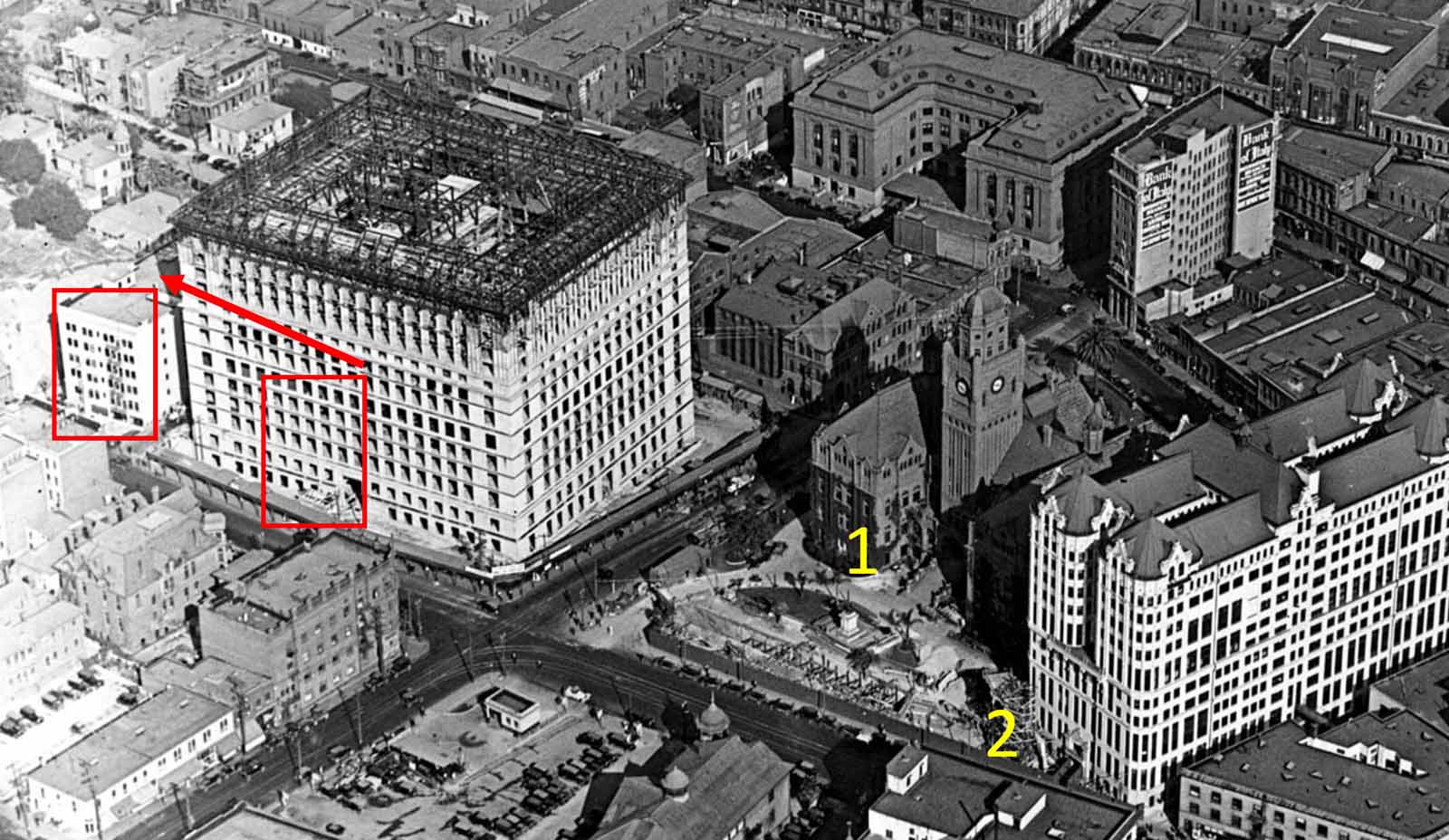
move 1In 1923 the Alhambra Hotel was moved north up Broadway 122 feet towards the face of the Broadway Tunnel to make room for the Hall of Justice, shown here in 1924 under construction, and completed in 1925.  The right box in the photo to the left (LAPL) shows the hotel’s original position, and the left box shows the hotel after the move.  Separated by Temple Street from the County Court House (1) and the Hall of Records (2), the Hall of Justice is the only building appearing in this photo that remains standing.

ca

The Kress House Moving Company (red box) was awarded a $63,770 contract to move the massive Alhambra Hotel 122 feet further north up Broadway from Temple.  It appears No Danger was filmed before the move began.  The upper right photo shows the dozens of parallel train tracks positioned to move the hotel towards the camera.  The yellow box marks the former Broadway Hotel.  USC Digital Library.

A set from The Terror Trail (1921) overlooking the Hill Street Tunnel

A set from The Terror Trail (1921) overlooking the Hill Street Tunnel – Marc Wanamaker – Bison Archives

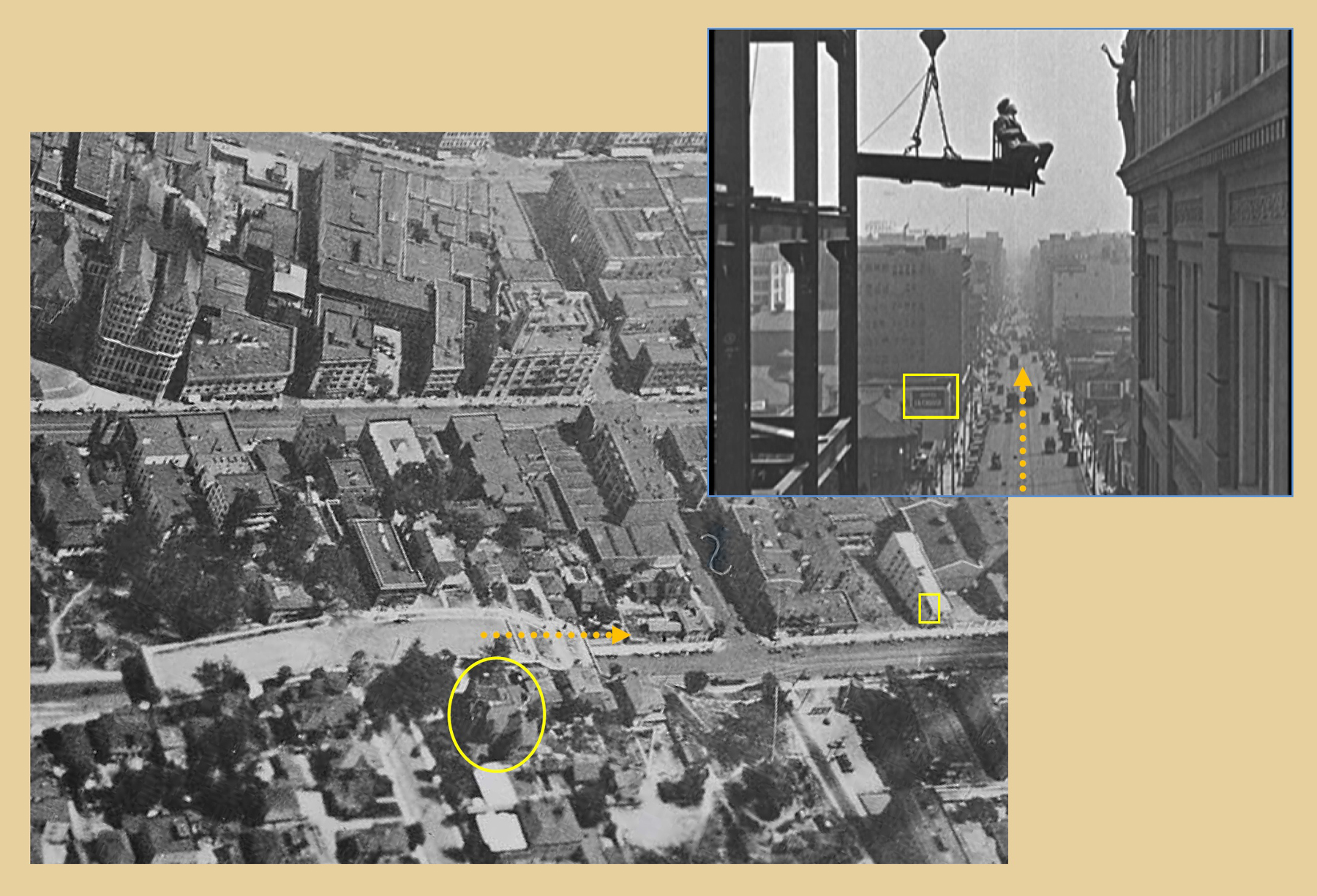
The next image (below) comes from Harold Lloyd’s 1921 thrill comedy Never Weaken, filmed on Court Hill above the Hill Street Tunnel, looking south down Hill Street from a set similar to the one depicted to the left.  The Hotel La Crosse at 122 S. Hill Street (yellow box left and below) is a conspicuous landmark that is readily spotted in nearly all movies filmed above the Hill Street Tunnel.  In the second half of a prior post, fully annotated with photos and maps, I explain all about how Lloyd, Charlie Chaplin, and other comedians filmed at studios within the Bradbury Mansion atop Court Hill, and made use of the Hill Street Tunnel overlook.

ca

Harold Lloyd in Never Weaken.  The arrow points south down Hill Street, from the balustrade overlooking stepped terraces leading to the tunnel portal – the yellow box marks the sign for the Hotel La Crosse.  The oval marks the Bradbury Mansion, an elaborate home at the corner of Court Street and Hill Street, later used as a silent movie studio by Charlie Chaplin, Hal Roach, and Harold Lloyd.

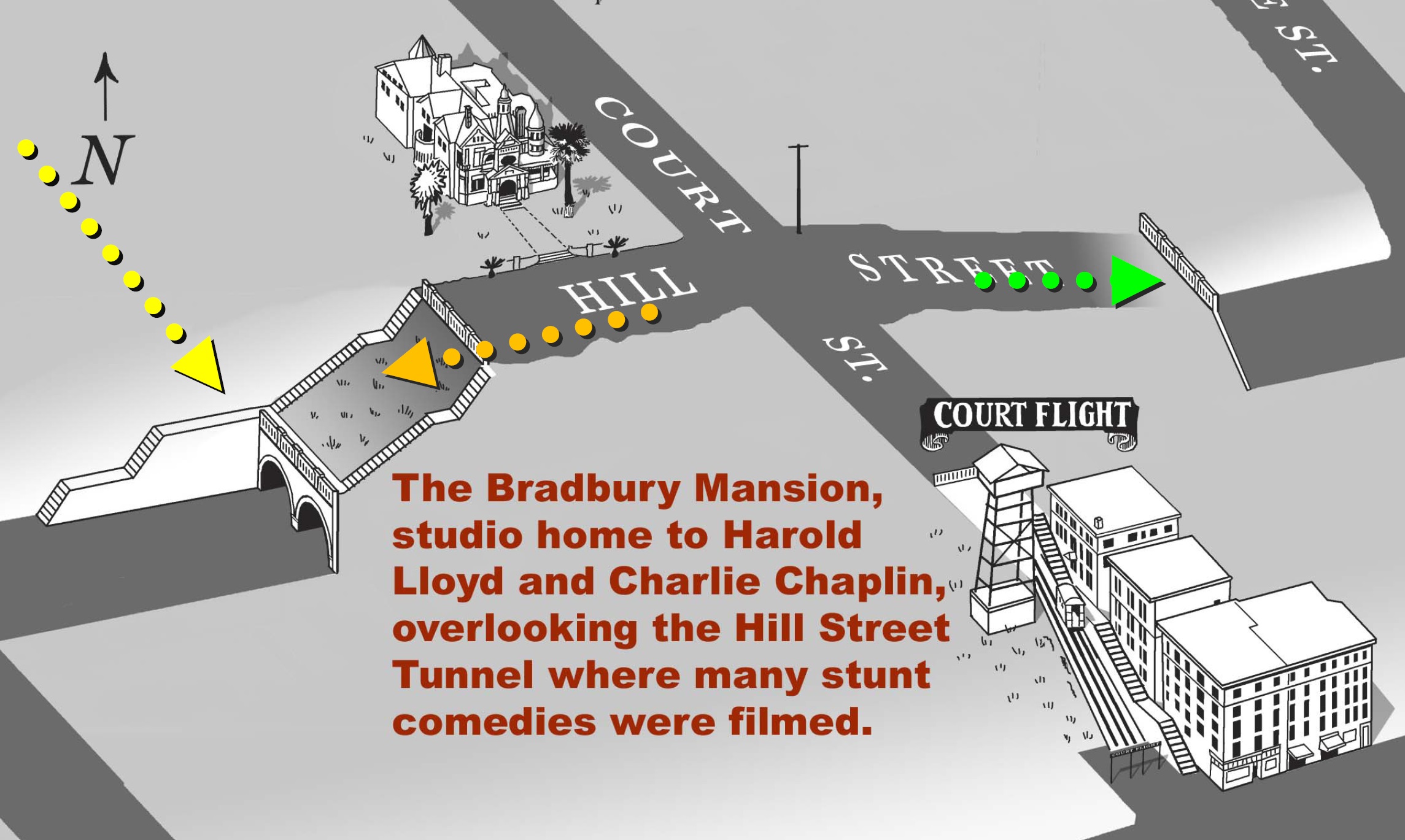
tunnelThis map (left – click to enlarge) by Piet Schreuders looks north towards Court Hill, and shows the short length of the Hill Street Tunnel relative to the Bradbury Mansion and the Court Flight incline railway.  Dozens of movies were filmed overlooking the tunnel (orange arrow), but for variety, a few movies were filmed nearby.  The yellow arrow points south from bare land on the hilltop, from which the next image below was taken.

Should Sailors Marry? (1925)

This stunt scene featuring Clyde Cook in the Hal Roach Studio short film Should Sailors Marry? (1925) was filmed  looking east down 1st Street from Court Hill towards the Los Angeles Times Building clock tower (oval) at 1st and Broadway.

The north end of the Hill Street Tunnel commanded less of a view, and seems to have appeared in far fewer films than did the southern end of the tunnel overlooking downtown.  However, the north end of the tunnel and Court Hill play a major role in the film noir classic Criss Cross (1949) starring Burt Lancaster and Yvonne De Carlo (see below).  For a detailed report of these landmarks as they appear in Criss Cross, check out my post HERE.

Burt Lancaster in Criss Cross

Burt Lancaster in Criss Cross – behind him, the north portal of the Hill Street Tunnel.

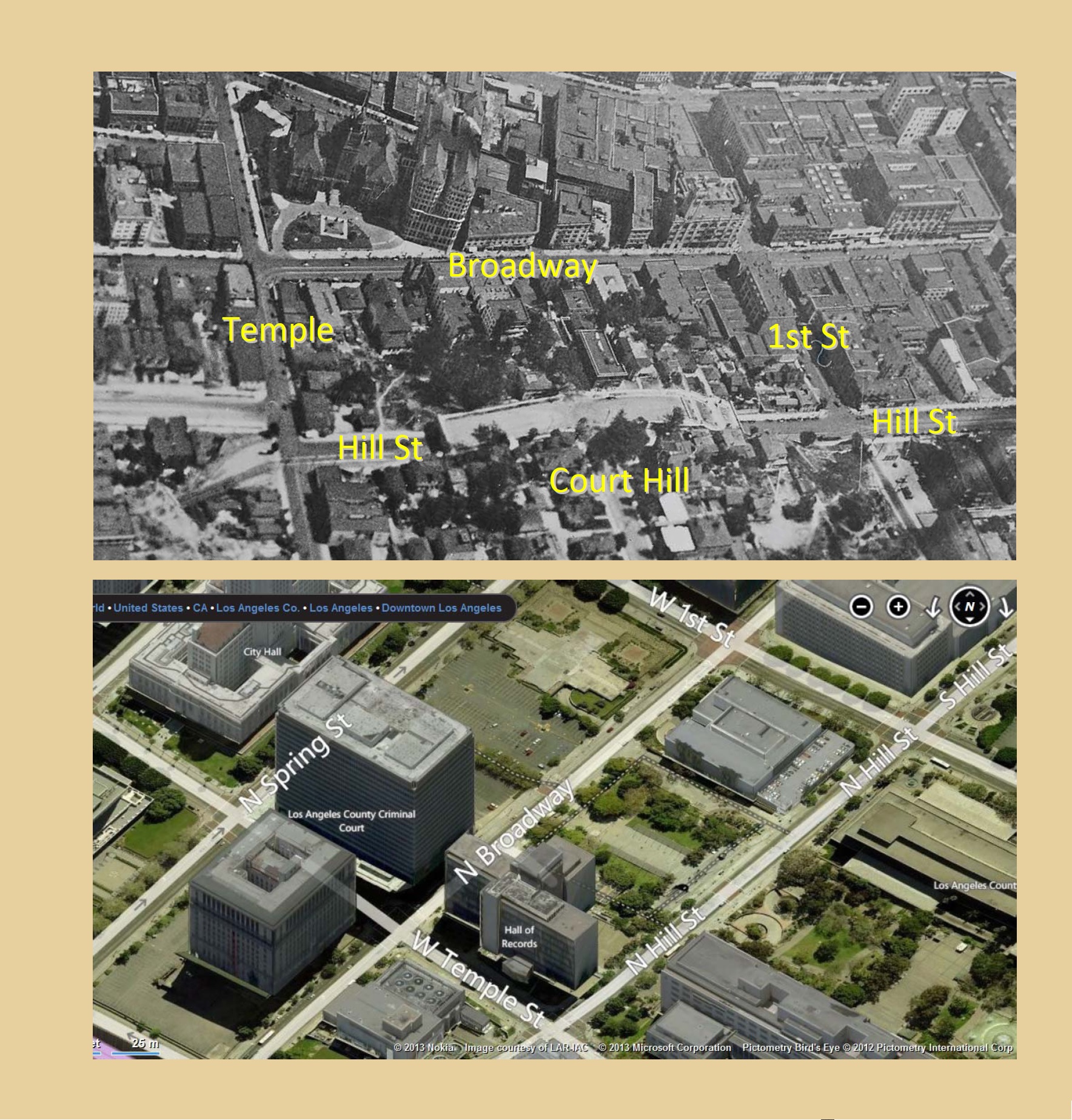
Both images below depict the block bounded by Broadway, 1st Street, Hill Street, and Temple, yet aside from the street layout and names, these two images share NOTHING in common.  The hills, tunnels, buildings, and even certain streets, such as New High and Court Street, are forever gone, preserved only in vintage photos, … and in the movies.

ca

(C) 2013 Nokia Image courtesy of LAR – IAC  (C) 2103 Microsoft Corporation Pictometry Bird’s Eye (C) 2012 Pictometry International Corp.

HAROLD LLOYD images and the names of Mr. Lloyd’s films are all trademarks and/or service marks of Harold Lloyd Entertainment Inc.  Images and movie frame images reproduced courtesy of The Harold Lloyd Trust and Harold Lloyd Entertainment Inc.  Criss Cross (C) 1949 Universal Pictures Company.  Should Sailors Marry? licensed from Lobster Films (C) 2005 Lobster Films.

Posted in Court Hill, Film Noir, Lloyd Thrill Pictures, Los Angeles Historic Core, Los Angeles Tunnels | Tagged , , , , , , , , , , , , , , , , , , , , | 14 Comments

More Discoveries From Keaton’s Cops

Ca

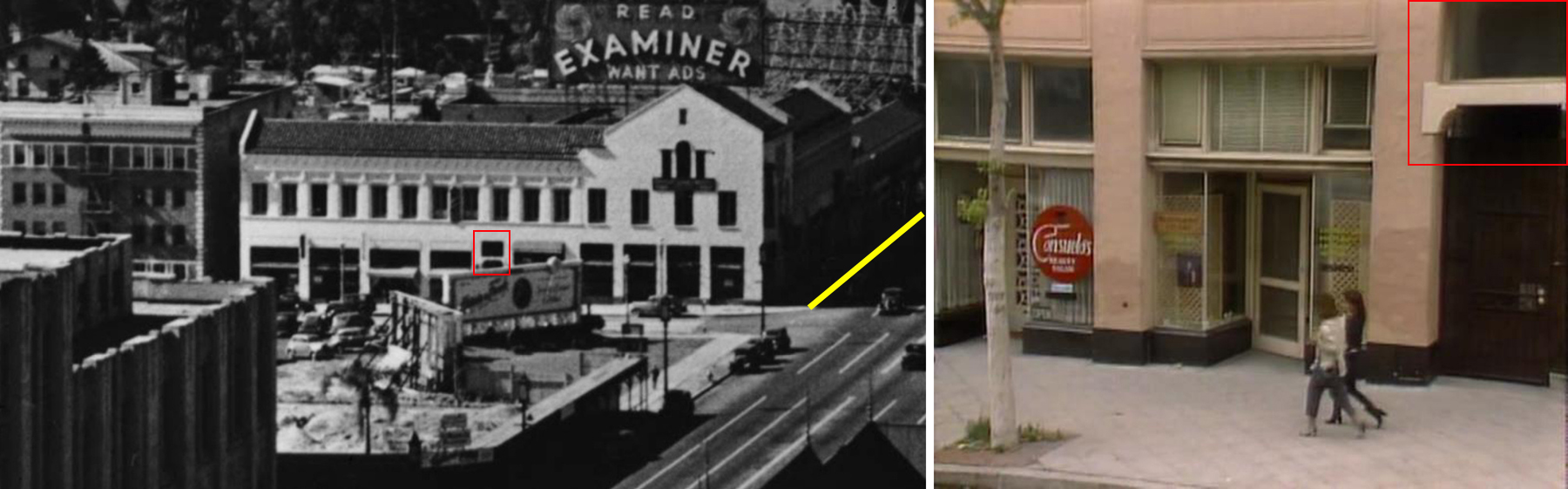
Click to enlarge – Buster flees from the Rutland Apartments (box) at 1839 S Main

Buster Keaton’s best-known short film Cops (1922) has always been one of my favorite movies.  I must have been twelve when I first bought an 8mm print of it, and have since watched it dozens of times.  Now that it is available on Blu-ray, Cops continues to reveal fascinating details about early Los Angeles and Keaton’s working methods.


ca

Riding past Gower

One thing that struck me is that Cops does not contain a single interior scene.  Except for the reaction shots of Joe Roberts discovering his wallet and cash are missing (filmed on location within a taxicab traveling east down Santa Monica past Gower, just blocks from the Keaton Studio), every scene in the movie is filmed out of doors.  I made a mental list, and every other movie Keaton produced at his studio contains at least one interior scene filmed on an indoor stage.

ca

The covered stage

The permit to build the large barn-shaped closed over shooting stage at the Keaton Studio was issued October 20, 1921.  (Note: historic LA building permits may now be accessed online HERE). David Pearson advises that Keaton was away on location in late October/early November 1921 filming The Paleface, and then filmed Cops in December (the only film in Keaton’s oeuvre with no interior shots whatsoever). So coincidentally, or by design, these two films allowed the carpenters free reign at the studio to build the massive stage while Buster was away shooting.  It’s fun to imagine that Cops was deliberately structured without any interior scenes in order to provide the studio carpenters sufficient leeway to complete their work.


ca

The yellow car Los Angeles Railway MONETA AVE line ran south to Manchester

The scene depicted above was filmed far away from downtown, 19 blocks south of the Los Angeles Civic Center, as an angry cop chases Buster from an alley into a busy intersection, where Buster then knocks down a traffic cop to trip the first cop chasing him.  The clue to this discovery is the trolley car approaching in the background during the scene (left) that clearly reads “MONETA AVE.” on the destination sign.  While there is still a Moneta Avenue today much further south from downtown, the Los Angeles street layout was significantly different back when Keaton was filming late in 1921. 


Broadway originally ended near 10th Street (now Olympic) by merging into Main Street, but was later extended a few blocks further south to terminate at Pico.  Main continued southwest until 36th Street, where it split into Moneta Avenue and Main, parallel streets both heading due south.  Today Broadway has been extended much further southwest, hooking up with what was Moneta, and today most of Moneta is re-named Broadway.  Simple, huh?  I knew that Keaton filmed other scenes from Cops south of 11th Street, and found this location simply by using Google Street View.  Although I started on Broadway, I followed the trolley route south onto Main, and somehow was patient enough to continue for several more blocks until I got lucky and recognized the setting. 


fff11Buster knocked the cop down at the intersection of Main and Washington Boulevard, with the camera looking towards the NW corner up Main.  The prominent awning in the background, remarkably still attached considering the earthquake risk, belongs to the Rutland Apartments at 1839 S. Main (see color view at top of post).  Other prominent buildings in the background are still standing as well.


trunk repairing does not match College pose on Larchmont Cahuenga ?After reporting this discovery to “Skip,” the publicity-shy, eagle-eyed sleuth who discovered the “Solved at Last” mystery building from Safety Last!, Skip quickly reported back that the preceding scene with Buster and the alley was filmed on the Washington side of the very same Rutland Apartment building – a rare instance where the cinematic geography for these two scenes comports with reality.  Skip had noticed that the wall details in both scenes matched, and correctly surmised it was the same building.  Although these two scenes could have been filmed at almost any urban intersection, for some reason Keaton chose to film here, roughly 150 blocks away from his studio. 


ca

Looking west down Washington – the oval marks matching details that Skip noticed in the prior shot.

Once I got over the shock that these two 91-year-old locations still existed, remarkably unchanged, it dawned on me that this intersection was just across the street from the former Washington Park baseball field.  The park was the former home to both the Los Angeles Angels and the Vernon/Venice Tigers, from 1911, when the park was built, until the first few games of the 1925 season, when play moved to the recently opened Wrigley Field at Avalon Boulevard and 41st Street.  Demolished in 1926, Washington Park once stood on the former grounds of Chutes Park, an early amusement center where patrons plunged a boat down a steep ramp into a pool. 


ca

Washington Park Los Angeles Public Library as it appeared in Neighbors


ca

A cop beaned by the Babe

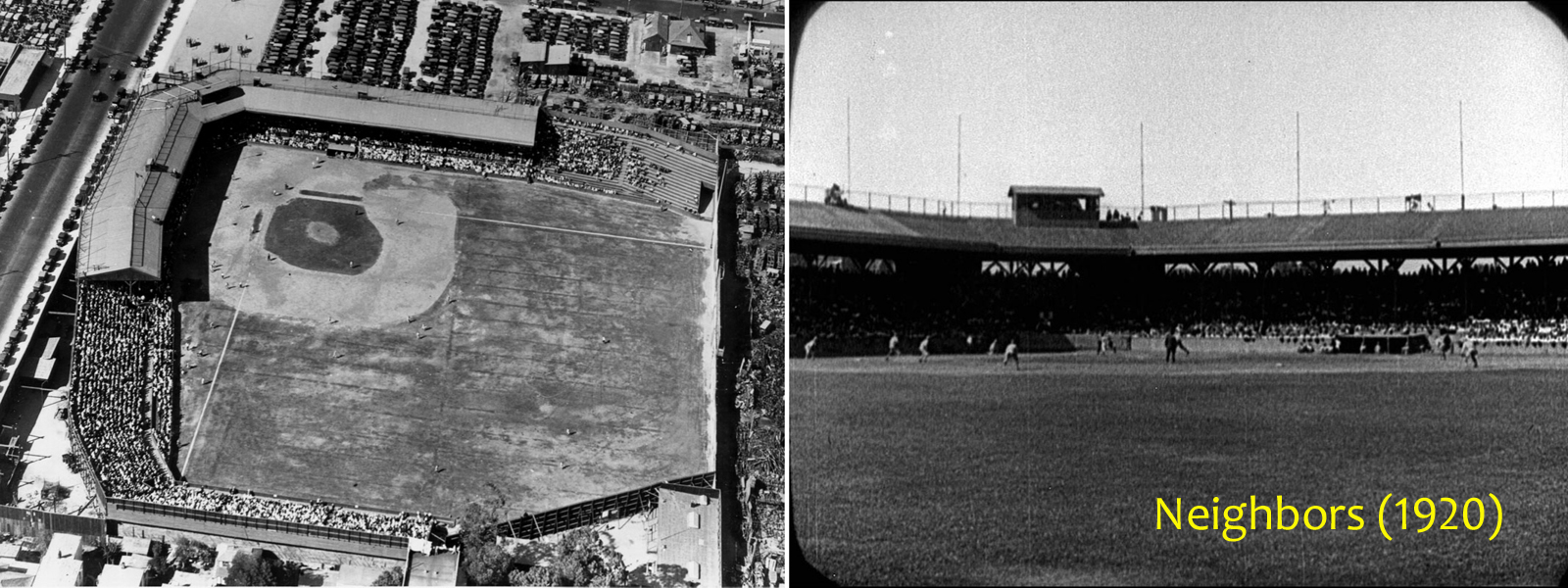
I mention this because it turns out Keaton had been in this neighborhood previously to film ballpark scenes for his 1920 short comedy Neighbors.  The joke in that film, such as it is, is that the cop intending to arrest Buster gets conked on the head by a home run supposedly hit out of the park by Babe Ruth.  So Buster had likely encountered the intersection of Washington and Main before in 1920, but it still does not explain why he returned here to film the above scenes for Cops.


ca

Click to enlarge – the alley on Washington appearing in Cops stood across from the park

Buster hiding in can on Goldwyn backlot

Buster hiding in a can on the Goldwyn backlot

Another intriguing aspect of Cops is that with the additional clues visible in its high definition release, and the ever-increasing availability of vintage photographs and online resources, I have

Lon Chaney matching Goldwyn backlot

Lon Chaney in The Ace of Hearts (1921) at matching Goldwyn backlot

been able to identify every location from the movie.  Further, I have been able to identify which studio backlots were used for all but the final scene.  This means that except for the set depicted below, I can now identify every single scene in the entire movie, including every shot of the policeman’s day parade filmed in New York.  I’ve already posted several new discoveries here, including the scene filmed on the roof of Musso & Frank in Hollywood, and the teeter-totter fence scene filmed at the current-day site of Paramount Studios, but it may take years to cover them all.

ca

??  Based on fewer extras, the set design, and the late day sunlight – this is likely the Metro backlot


In closing, my intimate understanding of Cops only reinforces the tremendous respect I have for Keaton, his crew, and for all of the other hard-working silent comedy filmmakers.  Imagine the advance planning and logistics involved simply in capturing each of the scenes with Buster’s horse-drawn wagon load of furniture.  The horse and moving wagon were transported all over town to film at nine different places; namely, in Hollywood at Cosmo and Selma, Santa Monica and Vine, on the Metro Studio backlot at Lillian Way and Romaine, and at the Brunton Studio backlot at Melrose and Windsor; then in Skid Row, on Arcadia near the Plaza de Los Angeles, and at Ducommun and Alameda; then south of downtown by Santee Alley and Olympic, and by 11th and 3011111111111 2Main; and then finally way out at the Goldwyn Studios backlot in Culver City.  That’s nine widely dispersed locations just for the poor horse!  Add to that the dozens of other individual scenes that comprise Cops, and you can appreciate what a remarkable feat it was creating this historic film.


Cops and Neighbors licensed by Douris UK, Ltd. Color images (C) 2013 Google.


Posted in Bunker Hill, Cops, Los Angeles Historic Core | Tagged , , , , , , , , , , , , , | 14 Comments

Johnny Depp and Buster Keaton at the Cops/Ed Wood alley

Cops and Ed Wood

Cops (1922) looking north and Ed Wood (1994) looking south – the Ed Wood image is reversed for comparison

ca

Cosmo Street 1997

To go with the Hollywood’s Silent Echoes presentation I gave last month at the Cinecon 49 Classic Film Festival at the Egyptian Theater, I prepared a tour of nearly 50 silent-era Hollywood landmarks and film locations you can access HERE.  During the lunch break I lead a group of 40 or so hearty souls a few blocks east from the theater to the 1700 block of Cahuenga, where we braved the extreme heat to explore many places where Chaplin, Keaton, Fairbanks, and Lloyd filmed scenes from their classic movies. 

The Kid

The Kid

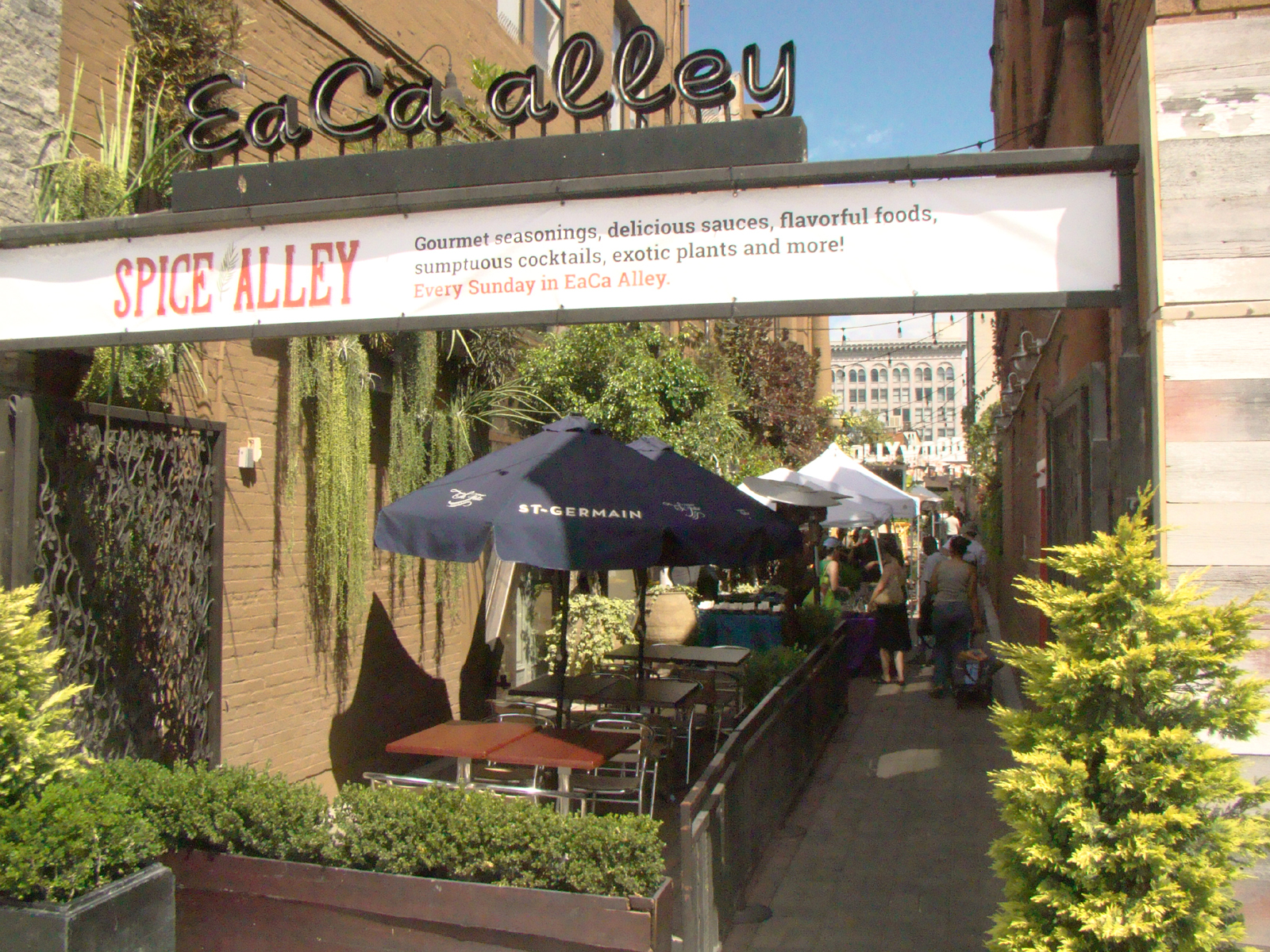
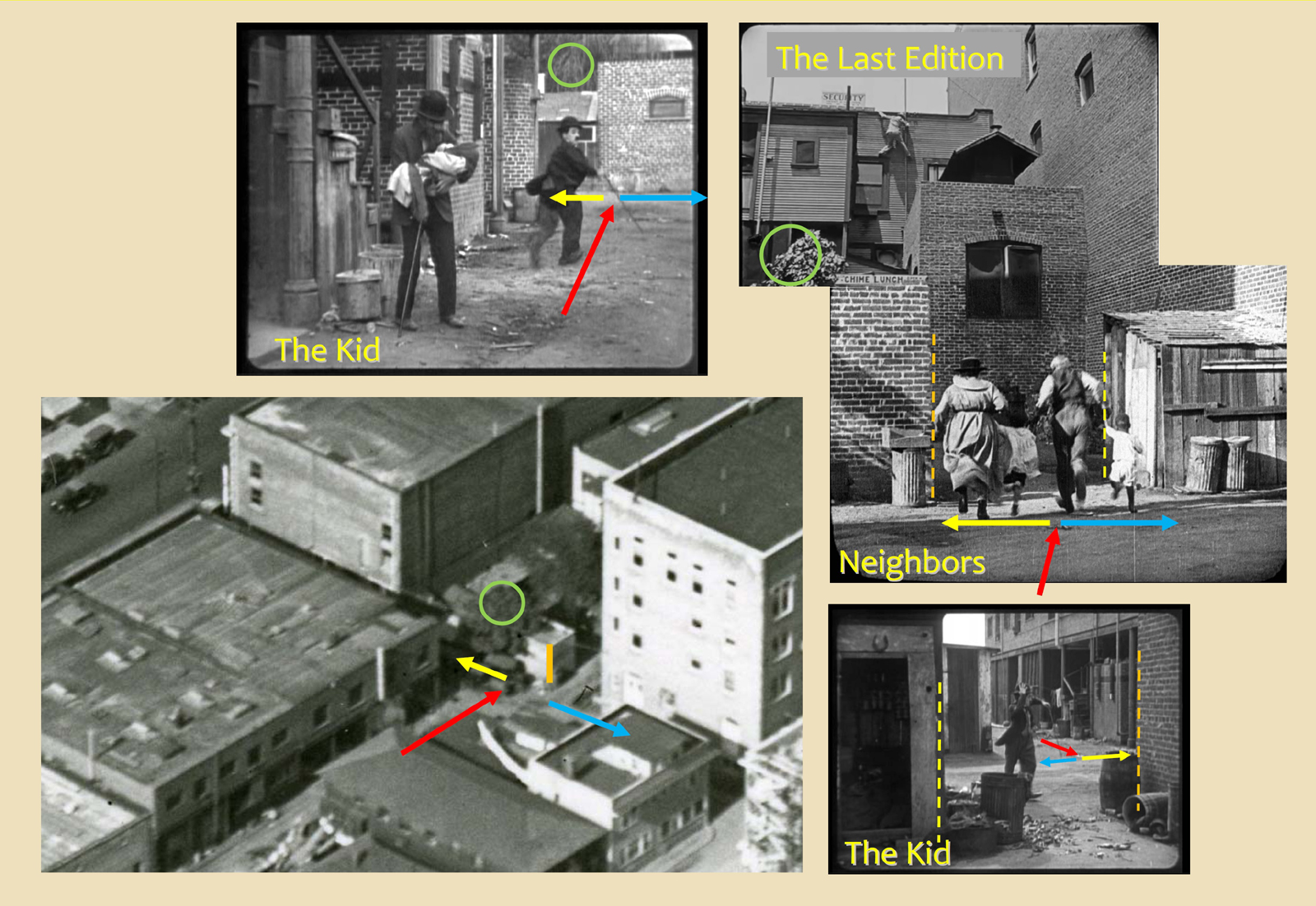
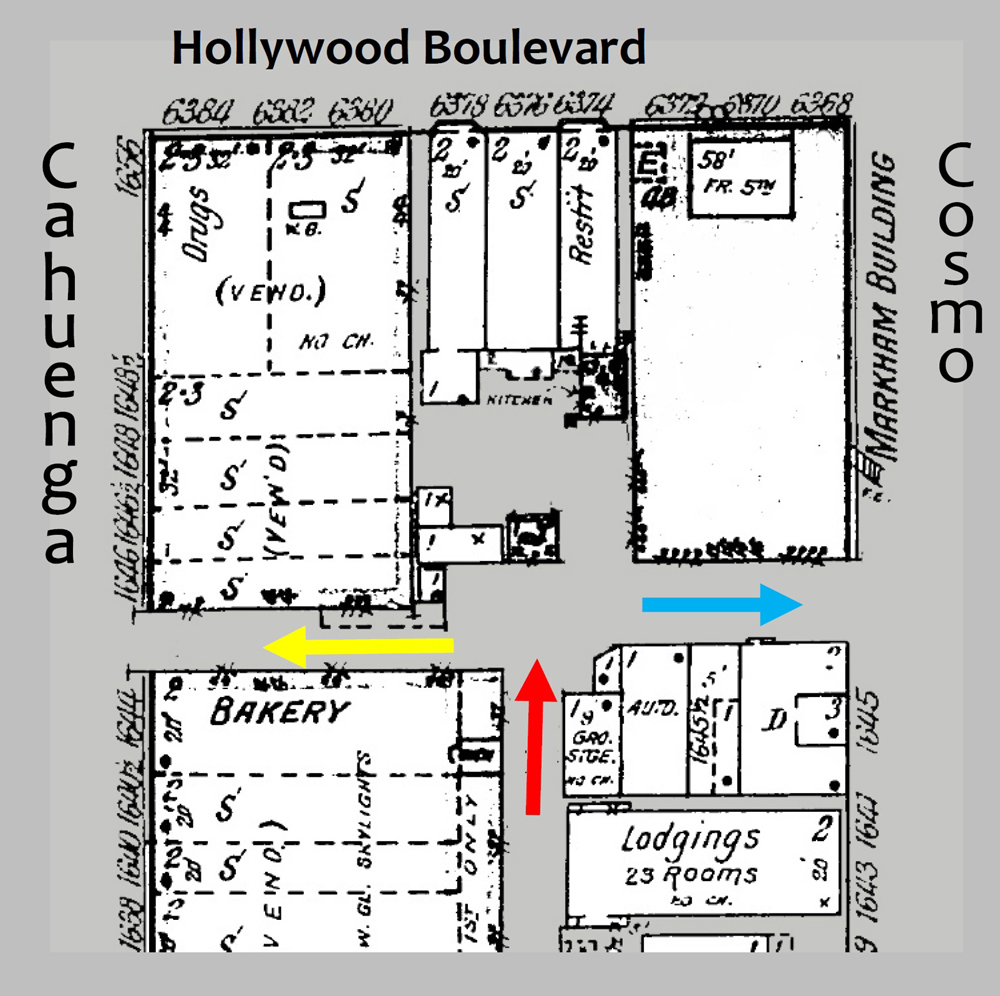
The tour ended at the north end of East Cahuenga Alley (the locals call it “EaCa Alley”), running parallel between Cahuenga and Cosmo, where Charlie Chaplin filmed early scenes from The Kid (1921), Buster Keaton filmed Cops (1922), and Harold Lloyd filmed Safety Last! (1923).  Three kings of silent comedy, and three iconic masterpieces inducted into the National Film Registry, all filmed at the same spot in Hollywood, a 6-in-1 location described in my post HERE.  If any one site in Hollywood deserves a star of recognition, this would be it.

ca

Johnny Depp channels Buster in Benny and Joon

During the tour, someone correctly mentioned that the same alley had appeared in the 1994 Tim Burton/Johnny Depp eponymous biopic Ed Wood.  Depp had won accolades the prior year for playing a free-spirited character, inspired by Keaton and Chaplin, in the 1993 comedy/drama Benny and Joon.  As shown above, Keaton and Depp both filmed exterior scenes at the same Cosmo Street location in Hollywood seventy years apart.  (To aid with the comparison I reversed the Depp scene, which was filmed looking south, to match the Keaton scene filmed looking north.)

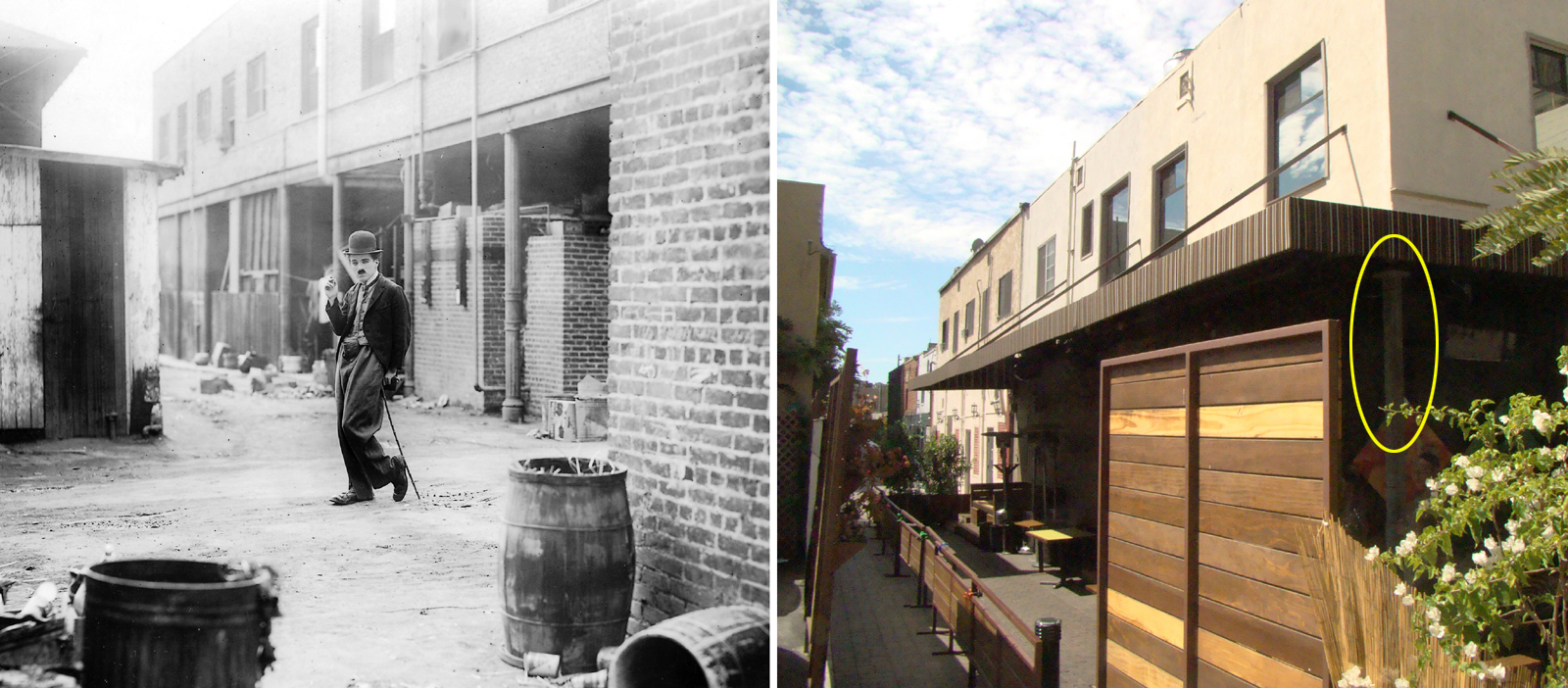
Matching corner post

Looking west or northwest at a matching corner post in Keaton’s Neighbors (1920) and in Ed Wood.

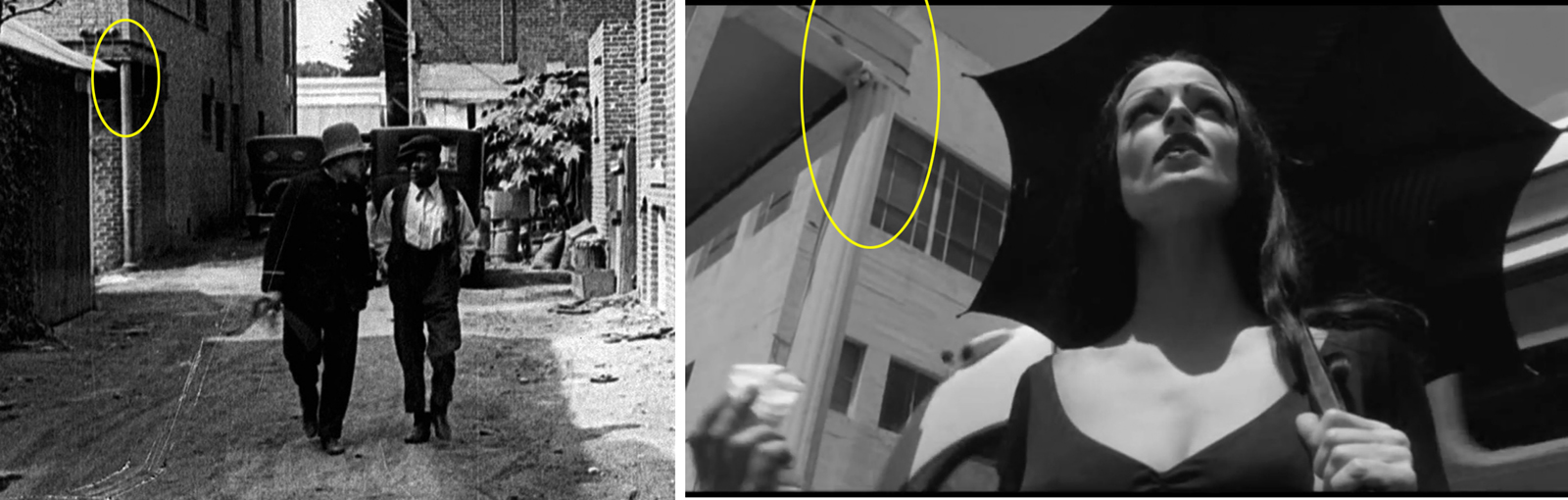
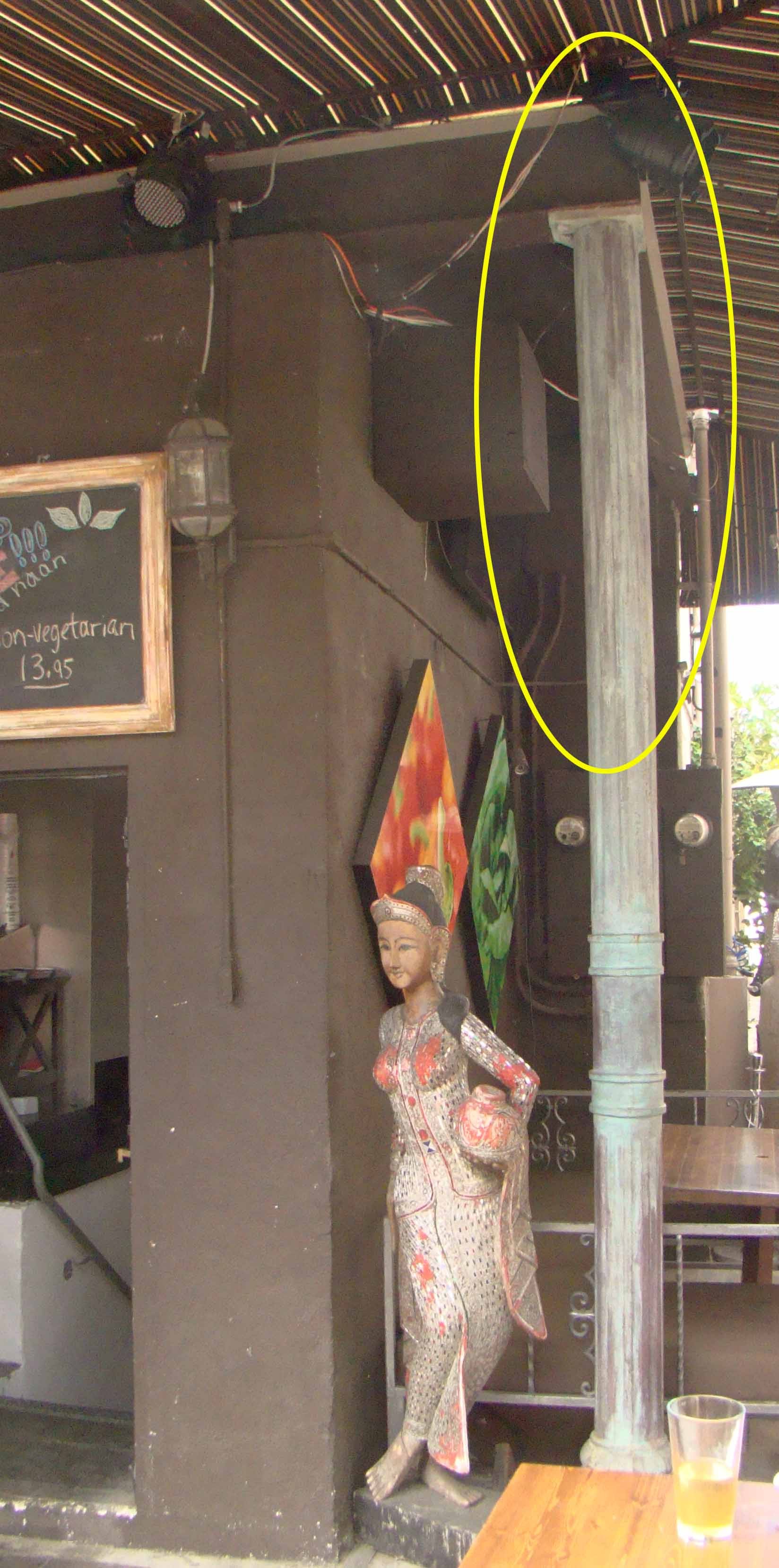
DSC09186 cDuring another scene in Ed Wood frustrated actress Vampira (played by Lisa Marie) exits a bus at the north end of EaCa Alley looking for Mr. Wood’s studio.  Above, the extant iron post and steel beam supporting the back corner of 1644 N. Cahuenga appears both in Buster’s earlier short Neighbors and in Vampira’s close-up.  The corner (left) is now part of the Spice Hollywood Bistro, that features patio dining where the great comedians once filmed.  Below, Chaplin runs north up EaCa Alley towards the same Spice corner – his position is nearly identical to Vampira’s placement in the alley below.

ca

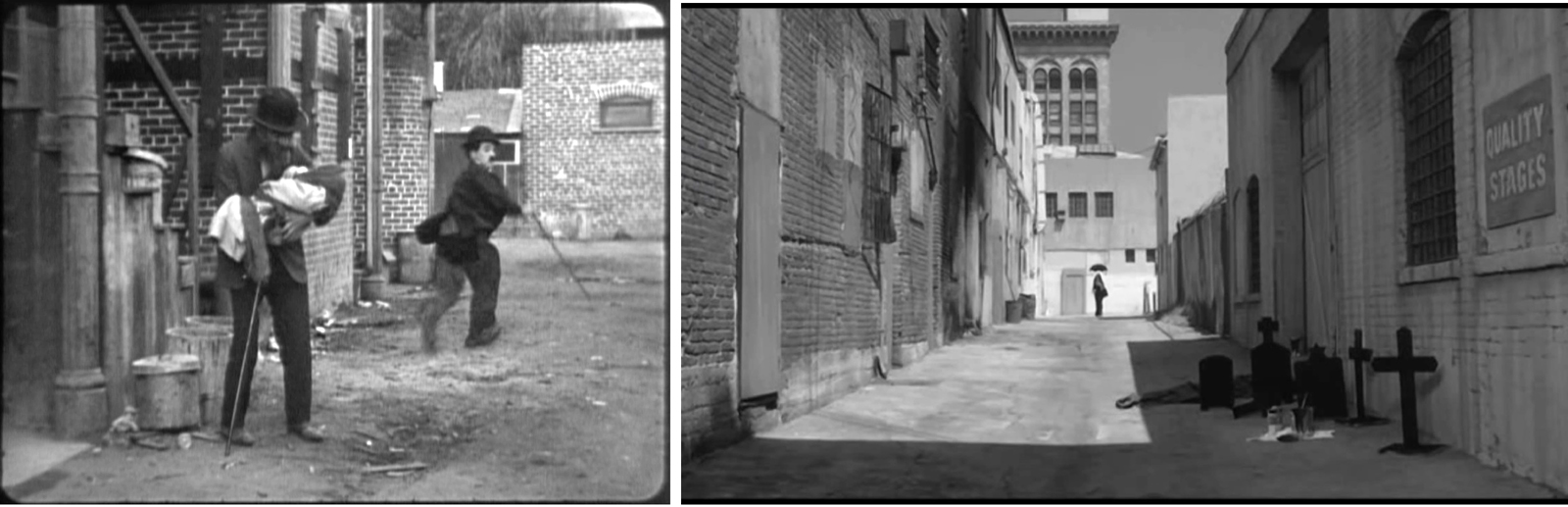
Matching views looking north up EaCa Alley from The Kid and Ed Wood.  Chaplin and Vampira are in essentially the same spot.

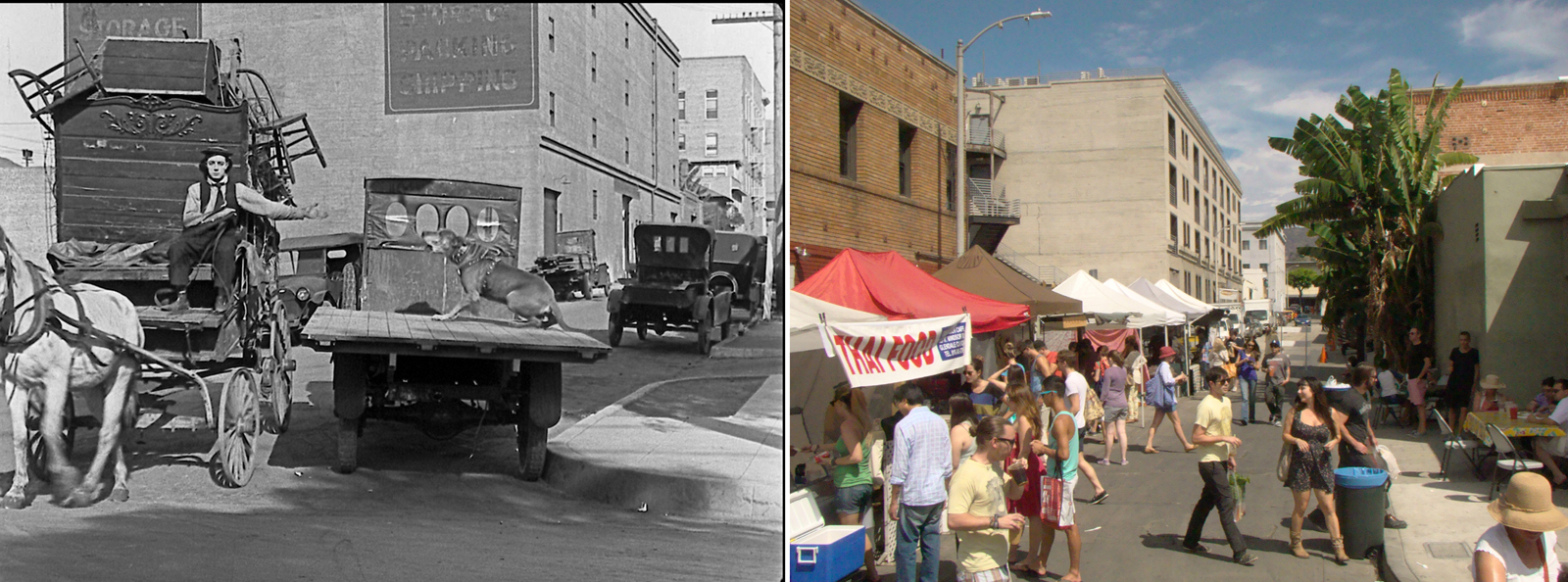
Long ignored, EaCa Alley is now a bustling center of restaurants, clubs, and weekend markets selling spices and fresh produce.  

Looking south from the north end of EaCa Alley

Looking south from the north end of EaCa Alley – the Spice corner post (oval) is blocked in the Chaplin view

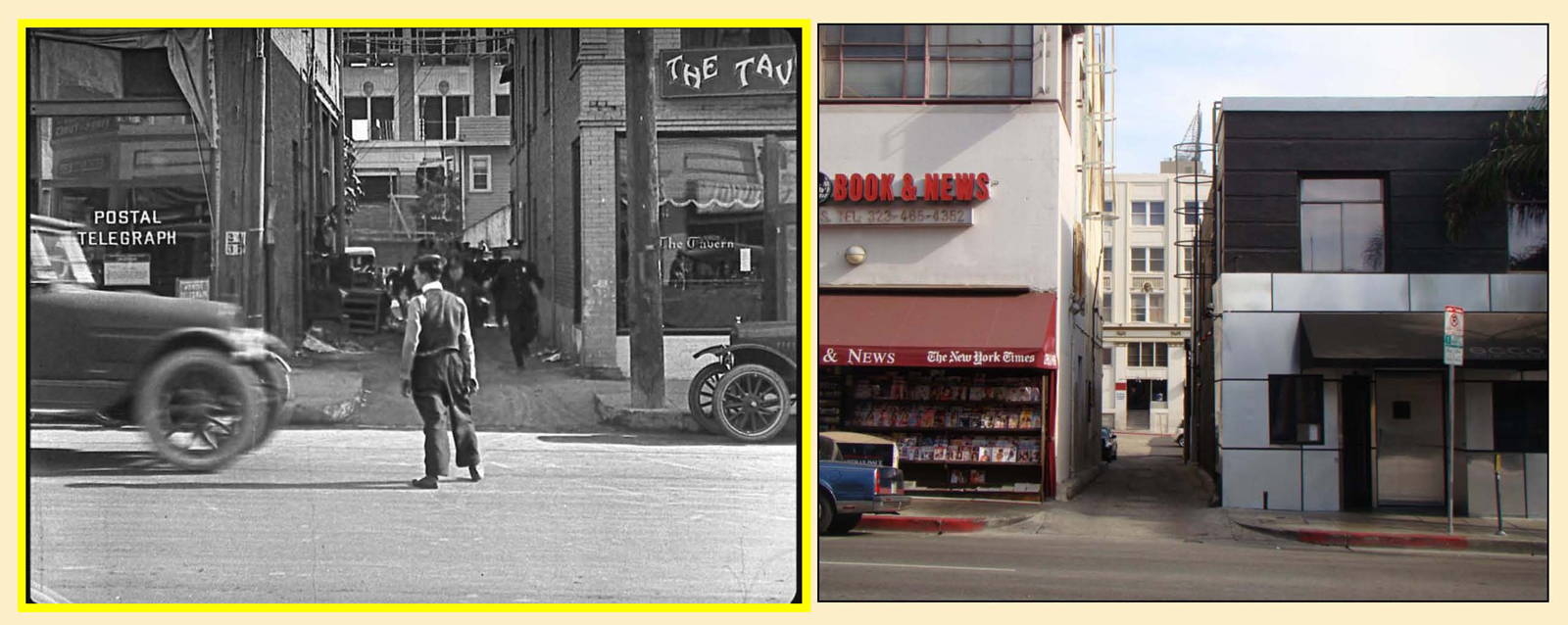
Below, the south entrance to EaCa Alley.

The EaCa Alley south entrance

The EaCa Alley south entrance

The farmer's market at Cosmo Street today

The farmer’s market at Cosmo Street today

Ed Wood contains many Hollywood scenes filmed on location, including shots of the Musso and Frank Grill (6667 Hollywood Blvd.) and Boardners (1652 N. Cherokee Ave.)

You can read how Chaplin, Keaton, and Lloyd each filmed a masterpiece at the north end of EaCa Alley at this post HERE.

Ed Wood Touchstone Pictures.  Cops and Neighbors licensed by Douris UK, Ltd. All images from Chaplin films made from 1918 onwards, copyright © Roy Export Company Establishment. CHARLES CHAPLIN, CHAPLIN, and the LITTLE TRAMP, photographs from and the names of Mr. Chaplin’s films are trademarks and/or service marks of Bubbles Incorporated SA and/or Roy Export Company Establishment. Used with permission.


Posted in Buster Keaton, Charlie Chaplin, Cops, Hollywood Tour, The Kid | Tagged , , , , , , , , , , , , , , , , , | 4 Comments

Harry Langdon – The Strong Man Part 3

ca

Click to enlarge – scenes from Harry Langdon’s The Strong Man filmed along Wilshire Boulevard.

ca

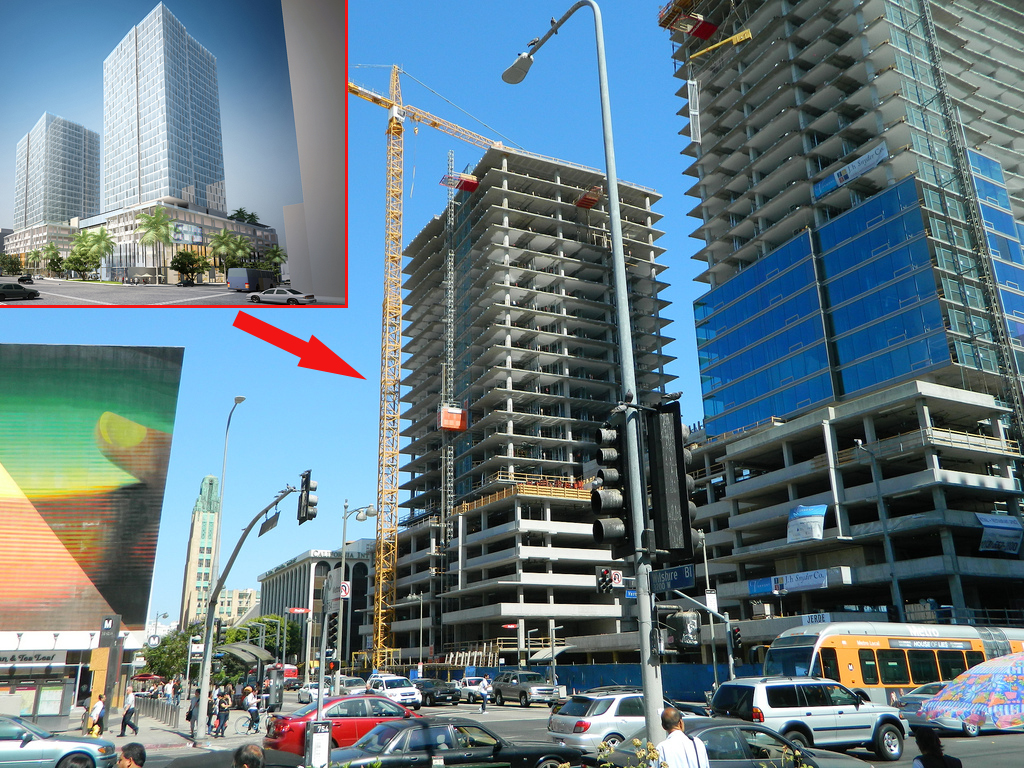
Click to enlarge – the SE corner of Wilshire Boulevard (at left) and Vermont Avenue (at right), in 1928 and partially demolished in 2002.  The remaining corner buildings were demolished in 2007.  A massive twin-tower condominium project is nearing completion on the site today.

Harry Langdon’s 1926 comedy feature The Strong Man contains many exterior scenes filmed in the Korea Town area of Los Angeles near Wilshire and MacArthur Park.  Harry plays a WWI veteran who returns to the States hoping to meet his faithful pen-pal, Mary Brown, whose letters encouraged him during the war.  True to Harry’s infant-like persona, Harry naively asks the doorman at a busy hotel (supposedly in Manhattan) if he knows Mary Brown.  Playing along, the doorman tells Harry “sure I know Mary – she passes by that nearby corner every day.”   Waiting at the corner, Harry soon meets an unscrupulous woman, played by Gertrude Astor, who pretends to be Mary in order to hide a wad of stolen cash in Harry’s coat before she is searched by a suspicious police detective.

ca

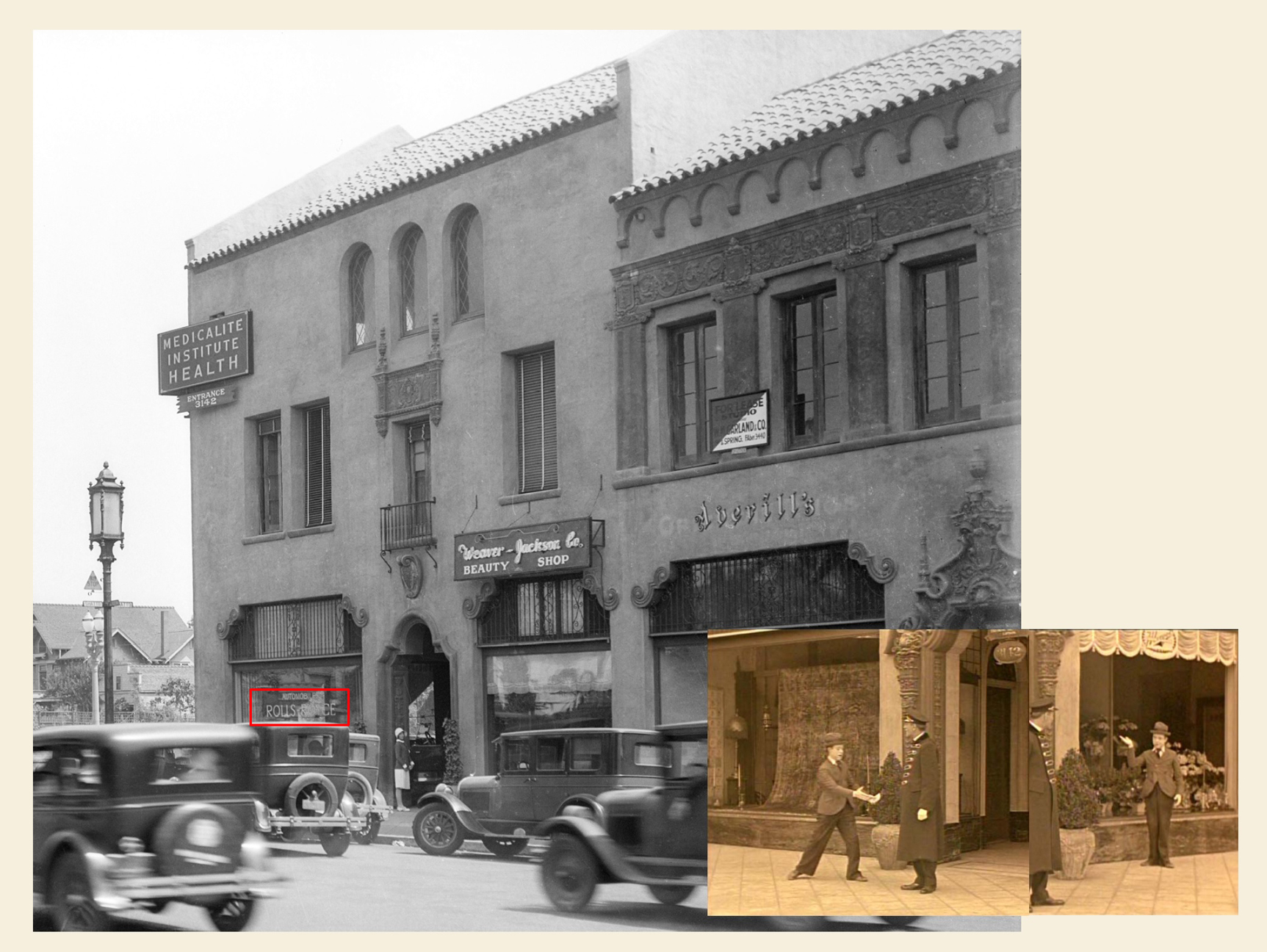
Click to enlarge – Harry meets the doorman by the former entryway to 3142 Wilshire Boulevard, just steps from the corner of Shatto Place.  The red box marks the showroom window of the Rolls Royce auto dealership that once operated at the corner storefront.  USC Digital Library

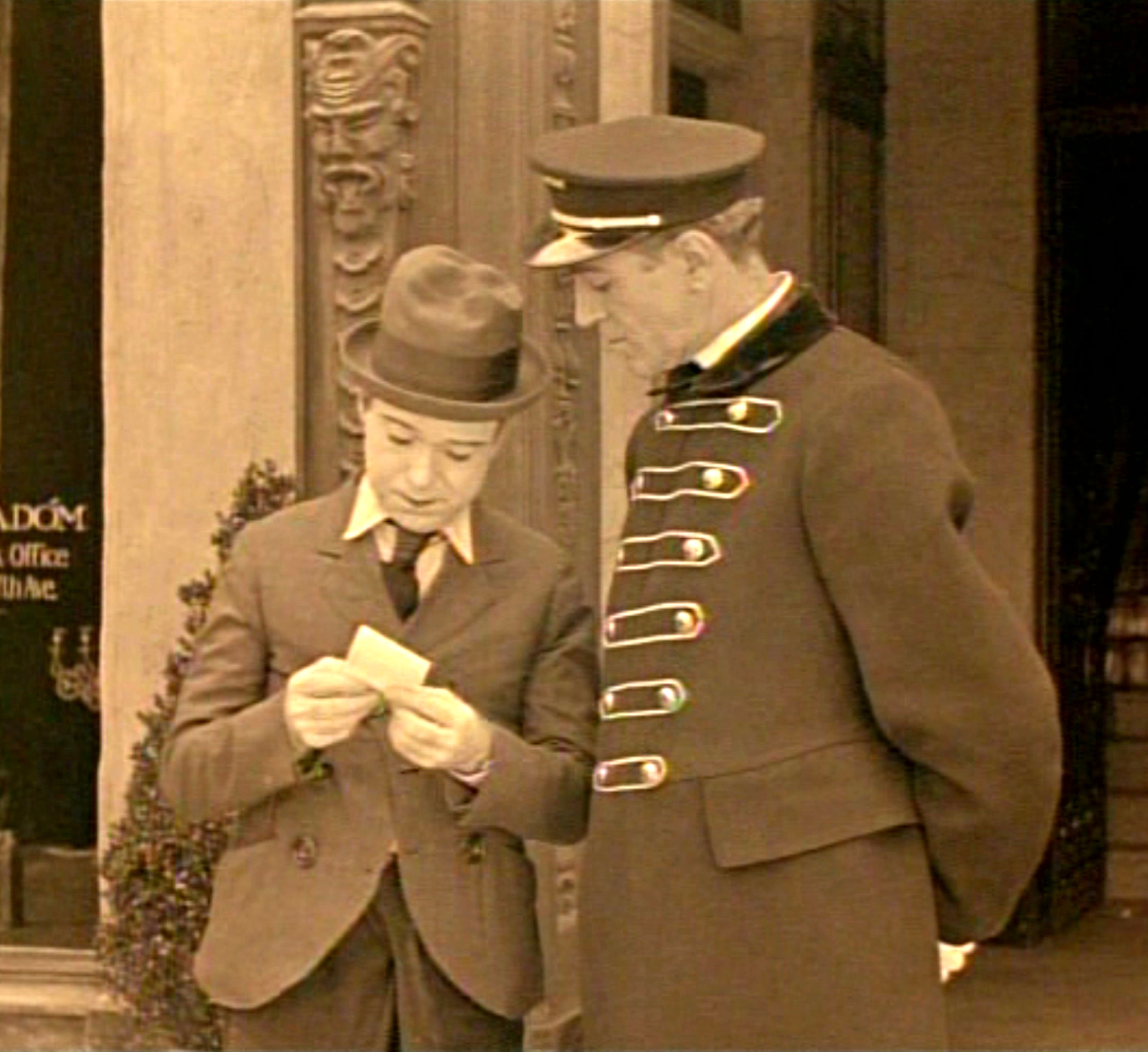
Harry shows the doorman a tiny photo of Mary

Harry shows the doorman Mary’s photo

The scenes with the doorman, “Mary,” and the detective, were all filmed along the commercial building that once stood on the south side of Wilshire Boulevard, between Vermont Avenue to the west, and Shatto Place to the east.  Many of these shots are identified at the top of this post.  As depicted here, the doorman tells Harry to wait for Mary at the corner of Shatto Place, just a few steps to the left from where they are standing at 3142 Wilshire.

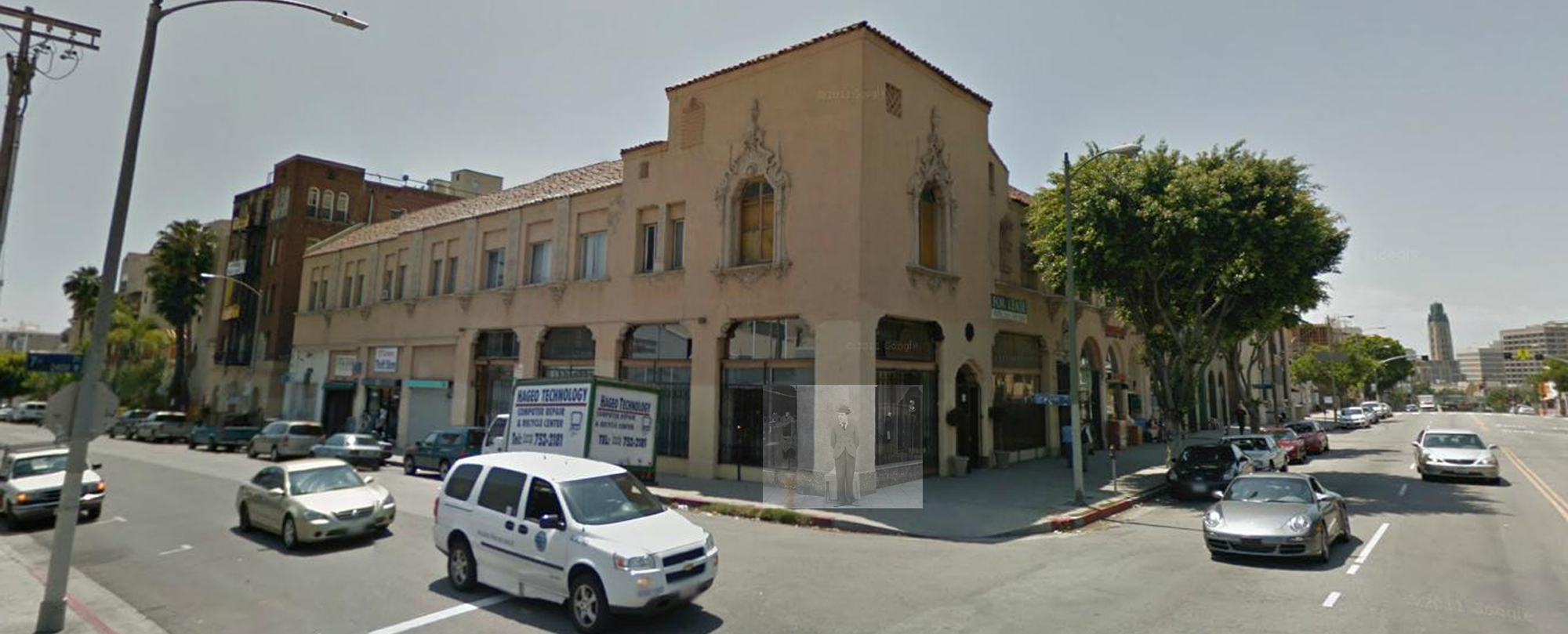
Harry waits for Mary at the SW corner of Carondelet and W 7th (see Part 2 of my post)

Harry waits for Mary at a different corner, the SW corner of Carondelet and W 7th (see Part 2 of my post)

Although the doorman and Harry were filmed just steps away from the corner of Shatto Place, Harry is filmed waiting for Mary at the corner of a similar but different building at Carondelet and W. 7th Street a few blocks away.  Perhaps director Frank Capra thought seeing a Rolls Royce window sign in the background of the Shatto Place corner would be too distracting, and so filmed at a more generic setting instead.  Thankfully the corner where Harry does wait for Mary still survives (directly above) and comprises my second post about The Strong Man.

ca

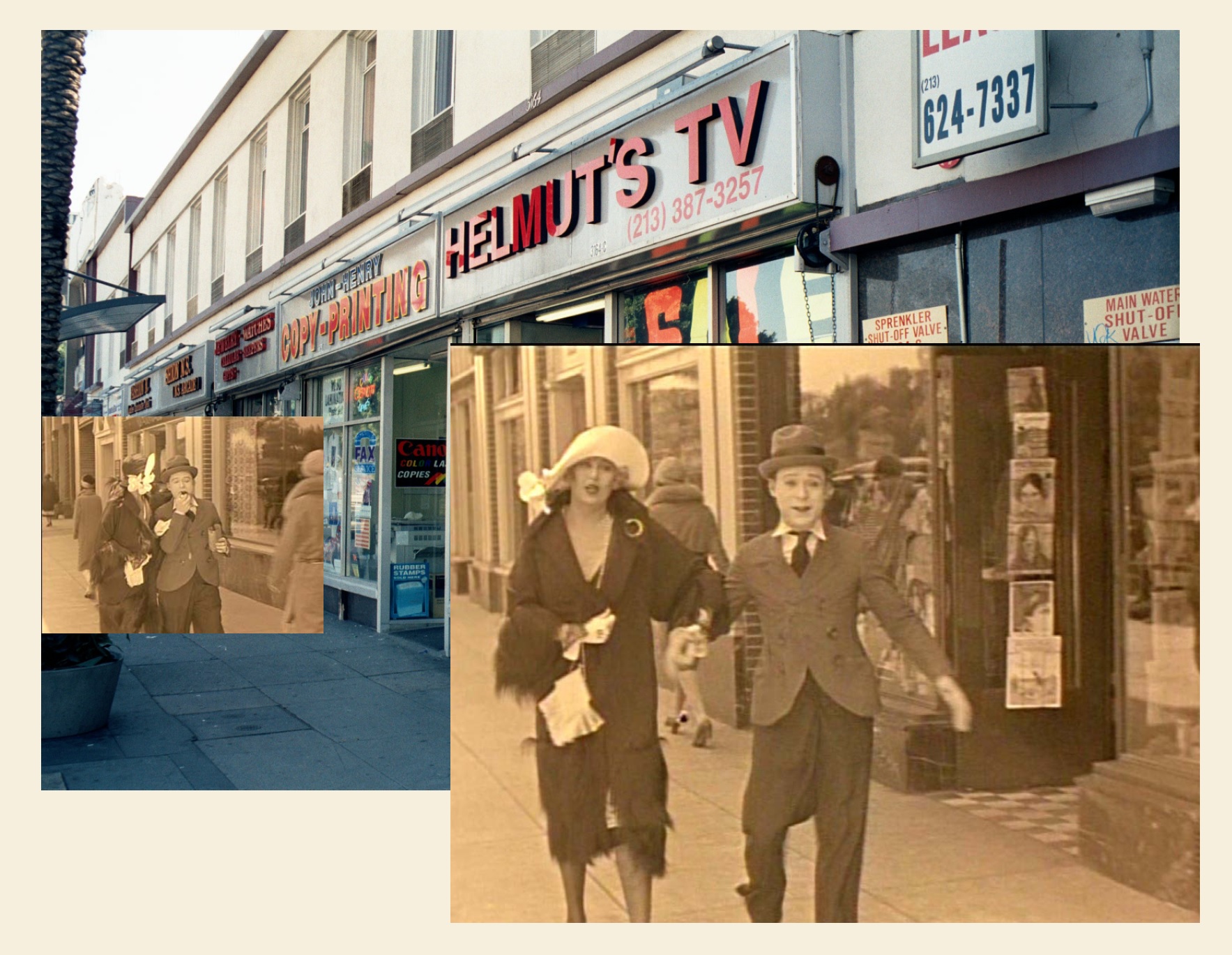
Harry and “Mary” stroll west along Wilshire from Shatto Place towards Vermont – 1926 and 2002.

I also discovered that Harold Lloyd filmed many scenes from For Heaven’s Sake (1926) nearby on Shatto Place, around the corner from Wilshire, the same setting where the opening credits for the Punky Brewster television show were filmed in 1984, as both described in this post HERE.

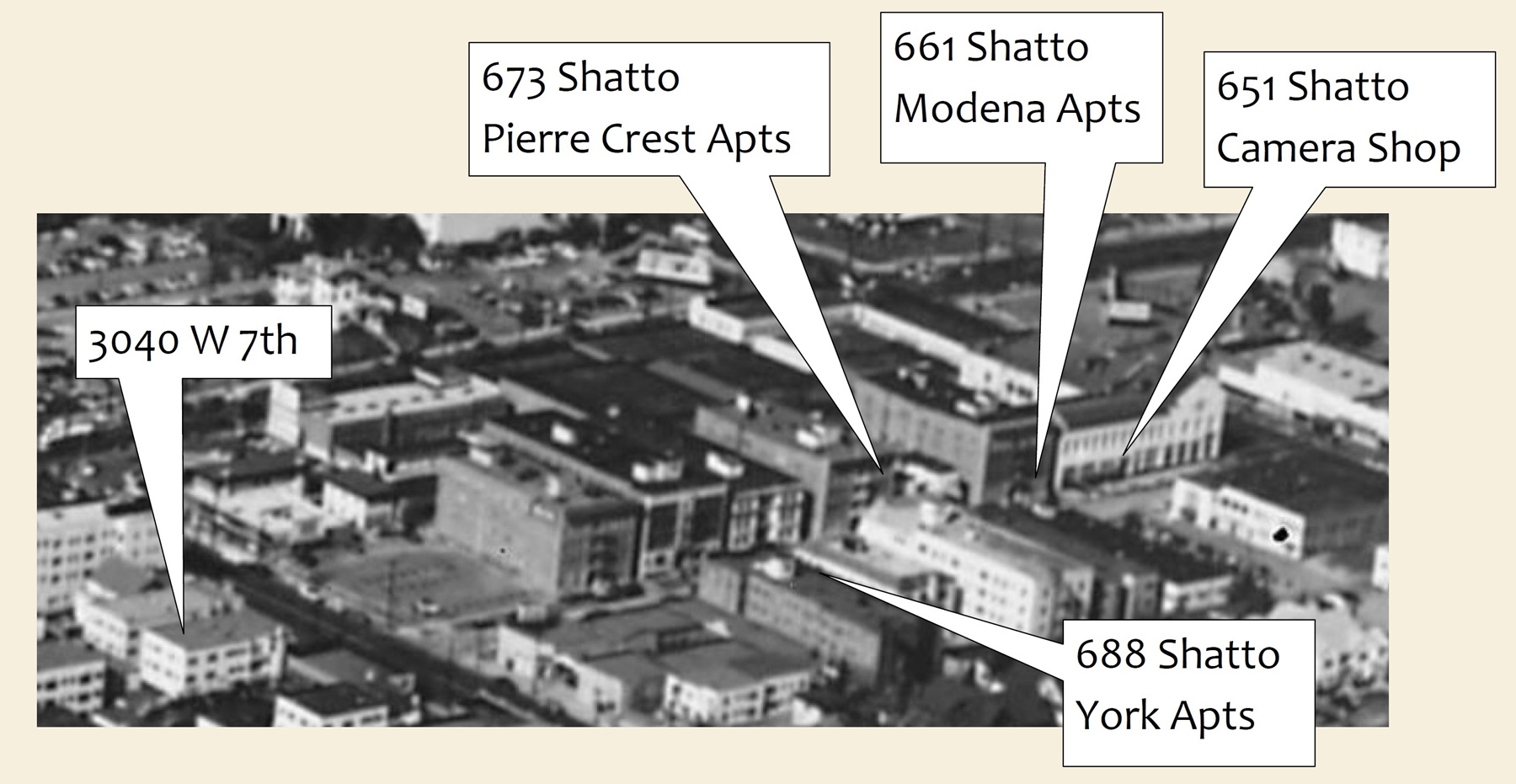
The former Shatto Place storefronts at the corner of Wilshire (now a vacant lot), where Harry filmed along the yellow line for The Strong Man.  The corner was originally a Rolls Royce dealership (see far above).  The red box stands to the right of the camera shop appearing in the opening credits to the Punky Brewster TV show (right).

The former Shatto Place storefronts at Wilshire, now site of a huge condominium project.  Harry filmed on Wilshire along the yellow line.  The corner was originally a Rolls Royce dealership (see far above).  The red box on Shatto stands north of the camera shop appearing in the opening credits to the Punky Brewster TV show (right).

ca

Looking north – Harry filmed walking west along Wilshire (yellow arrow) toward Vermont.  Harold Lloyd filmed For Heaven’s Sake traveling north up Shatto Place (red arrow).  Punky Brewster also filmed on Shatto.

The discoveries reported here are bittersweet, because the once-beautiful building on Wilshire was already half-demolished the first time I visited the site early in 2002, and fully demolished soon thereafter.  I took what photos I could at the time, not knowing how or whether I would ever be able to use them later on.  This comparison shot below is nearly meaningless, as there appear to be no remaining matching elements between the 1926 and 2002 images.

ca

This post only became possible after I discovered some wonderful vintage photos at the USC Digital Library that allowed me to visually match the various shots in the movie.  Once again we see how Los Angeles history is preserved in classic movies of the past.

1928

The SE corner of Wilshire and Vermont in 1928. USC Digital Library

1934

The same corner in 1934 – USC Digital Library

A similar 2013 view of the SE corner of Wilshire and Vermont.  LA.CURBED

A similar 2013 view of the SE corner of Wilshire and Vermont. LA.CURBED

You can read about how “Mary” attempts to lure Harry into her apartment, in order to retrieve her cash, in my original post about The Strong Man, HERE.

As shown on Google Street View below, the demolished lot on Wilshire and Vermont remained vacant well into 2011, but a twin-tower high-rise condominium on the site is rapidly nearing completion.

The Strong Man (C) 1926 First National Pictures, Inc., (C) renewed 1954 Warner Brothers Pictures, Inc.

Posted in Harry Langdon, The Strong Man | Tagged , , , , , , , , | 2 Comments

A new version of Keaton’s The Blacksmith – part 3, Robin Hood’s castle and more surprises

ca

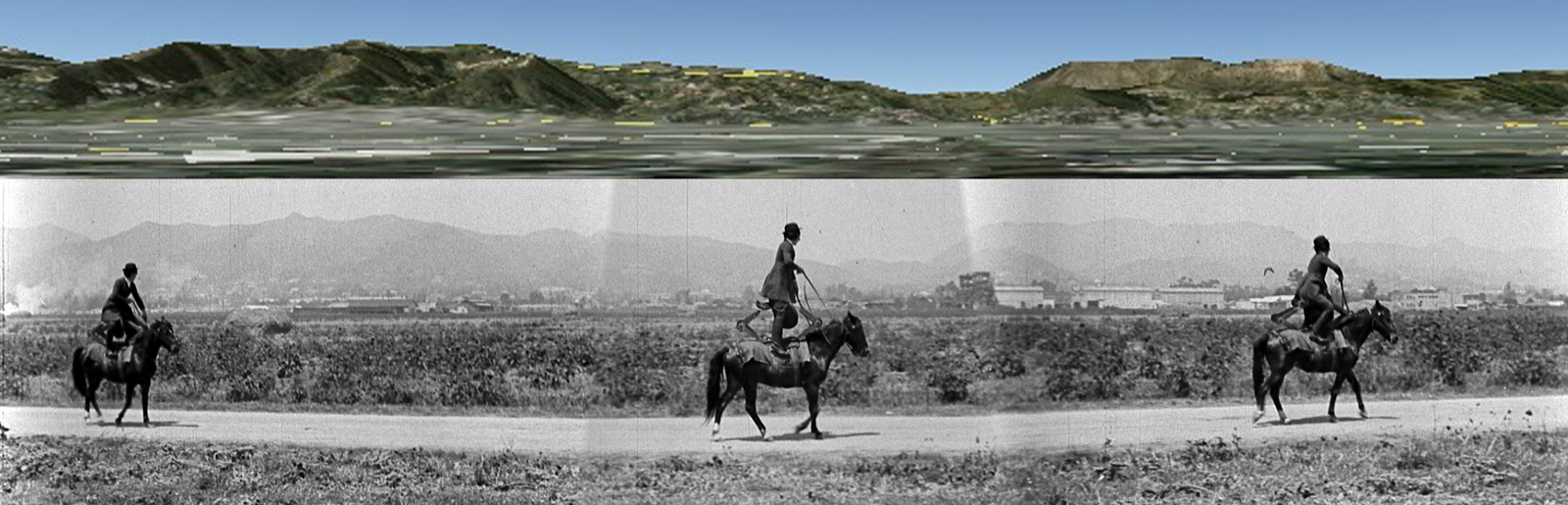
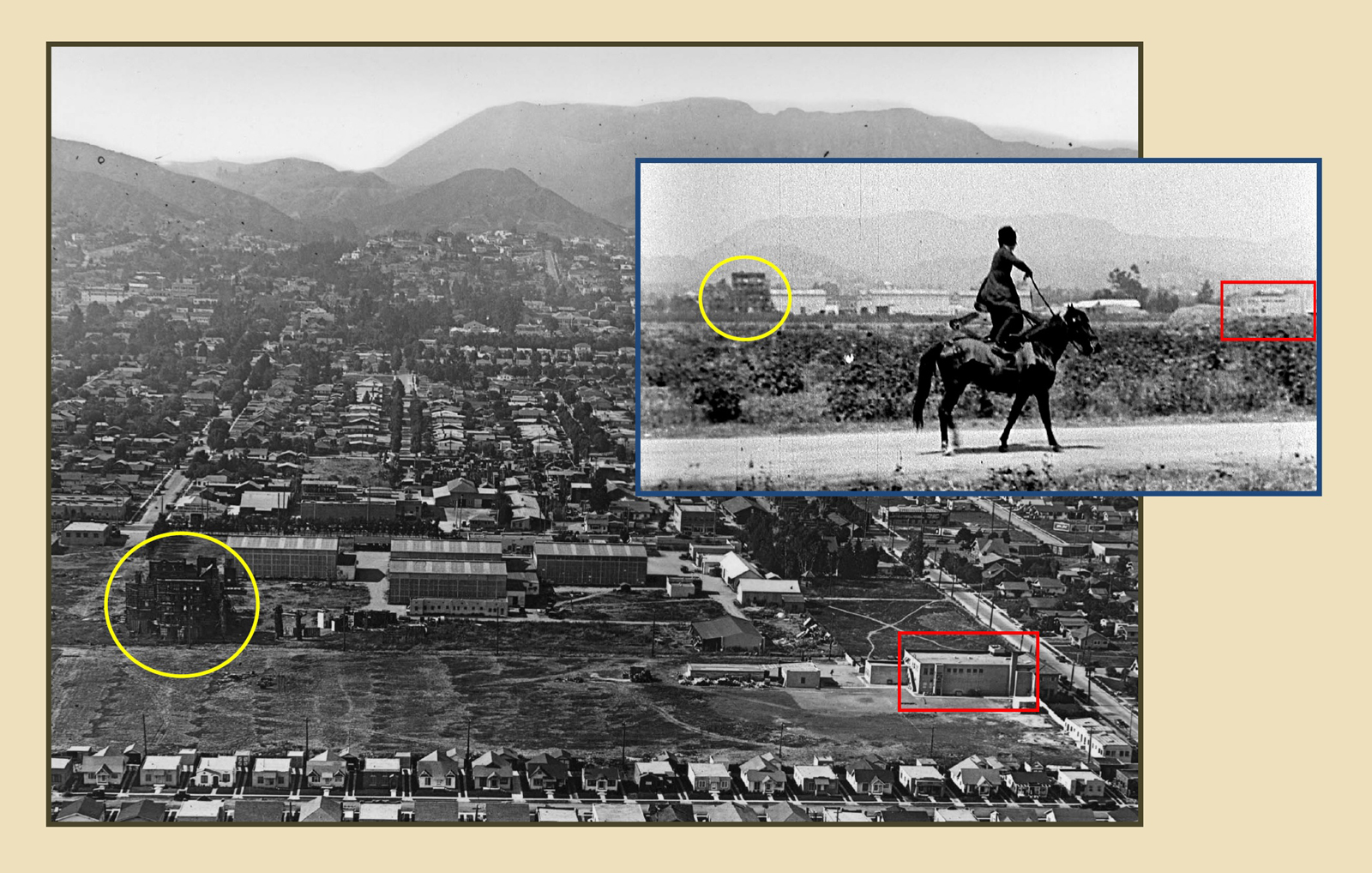
Google Earth and The Blacksmith, looking north towards Hollywood from the once wide open spaces near Melrose and Las Palmas – (C) 2013 Google

As first reported in Variety in July (and again in Variety in October), and in my first and second posts, film historian Fernando Pena has discovered that a completely different version of Buster Keaton’s 1922 short The Blacksmith circulated overseas, containing unique scenes that do not appear in the “traditional” version known to US audiences.  My first post shows how the new footage provides a rare view of Keaton’s own studio, and my second post, based on visual clues, shows Keaton took a break of several months during the film’s production.  [Note: Serge Bromberg will screen the film May 31, 2014 as part of the San Francisco Silent Film Festival.]

ca

An equestrienne equipped with a shock absorber rides east down Melrose past the Hollywood Metropolitan Studios, still a studio site today, located along Santa Monica Boulevard at Las Palmas.  Harold Lloyd operated as an independent producer from this studio beginning in 1924.  This 1921 movie frame appears in the Kino-Lorber version of the film.  hollywoodphotographs.com

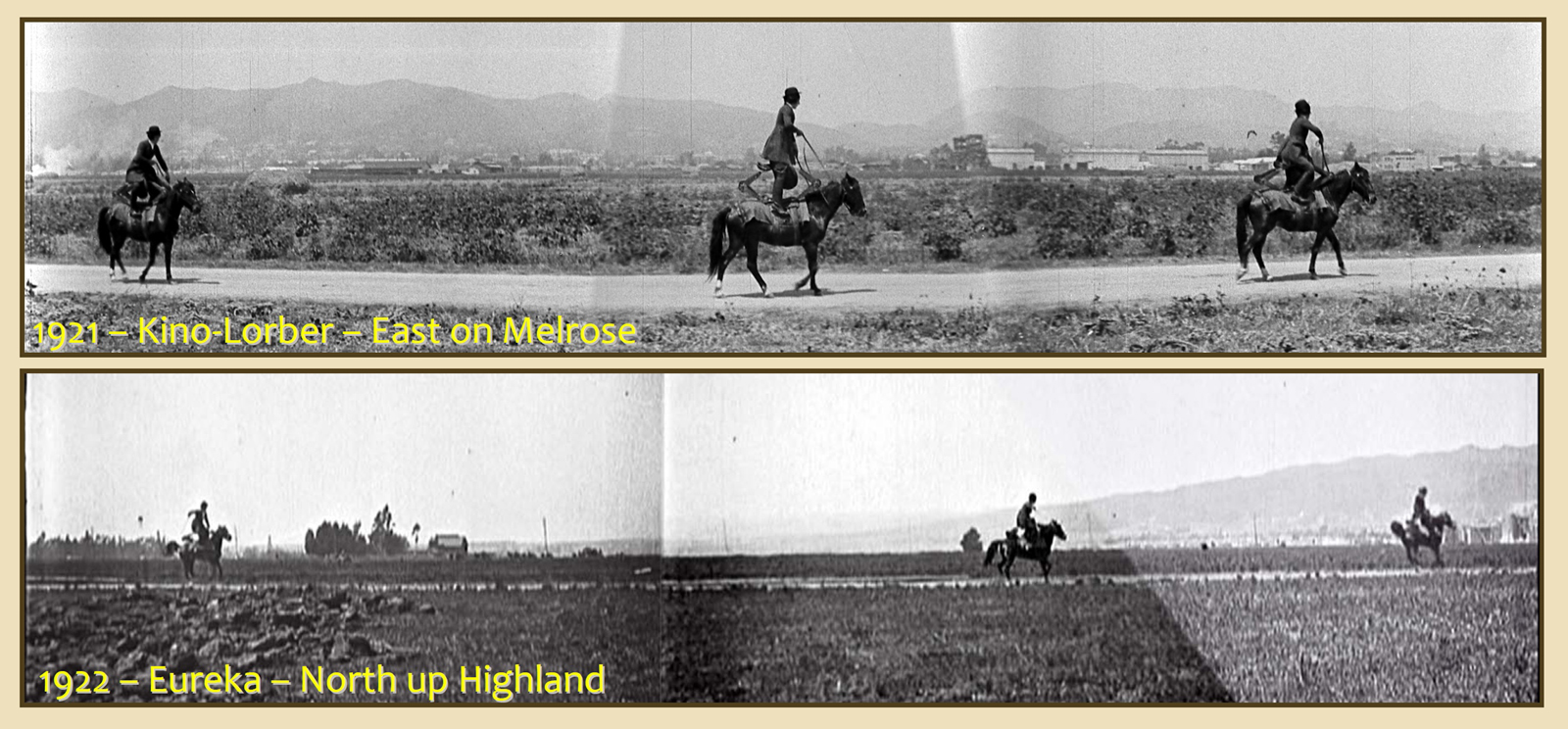
My second post also shows how different versions of the film contain similar scenes filmed from different viewpoints.  During the movie, Buster equips an equestrienne’s saddle with a truck shock absorber.  Later in the film we see a panning shot of her struggling with her ride.  The Kino-Lorber Blu-ray version of this panning shot (above) looks north as she rides east down Melrose near Las Palmas.  Visual clues tell us this panning shot was filmed in 1921.

ca

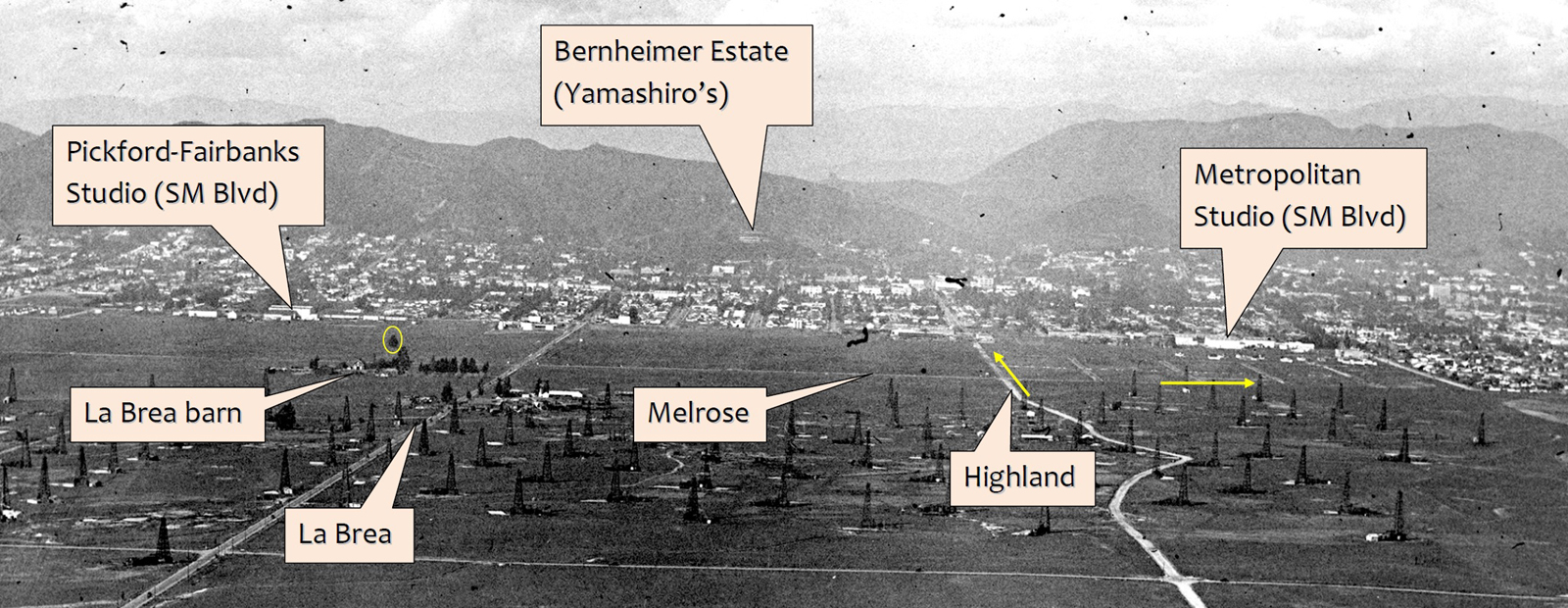
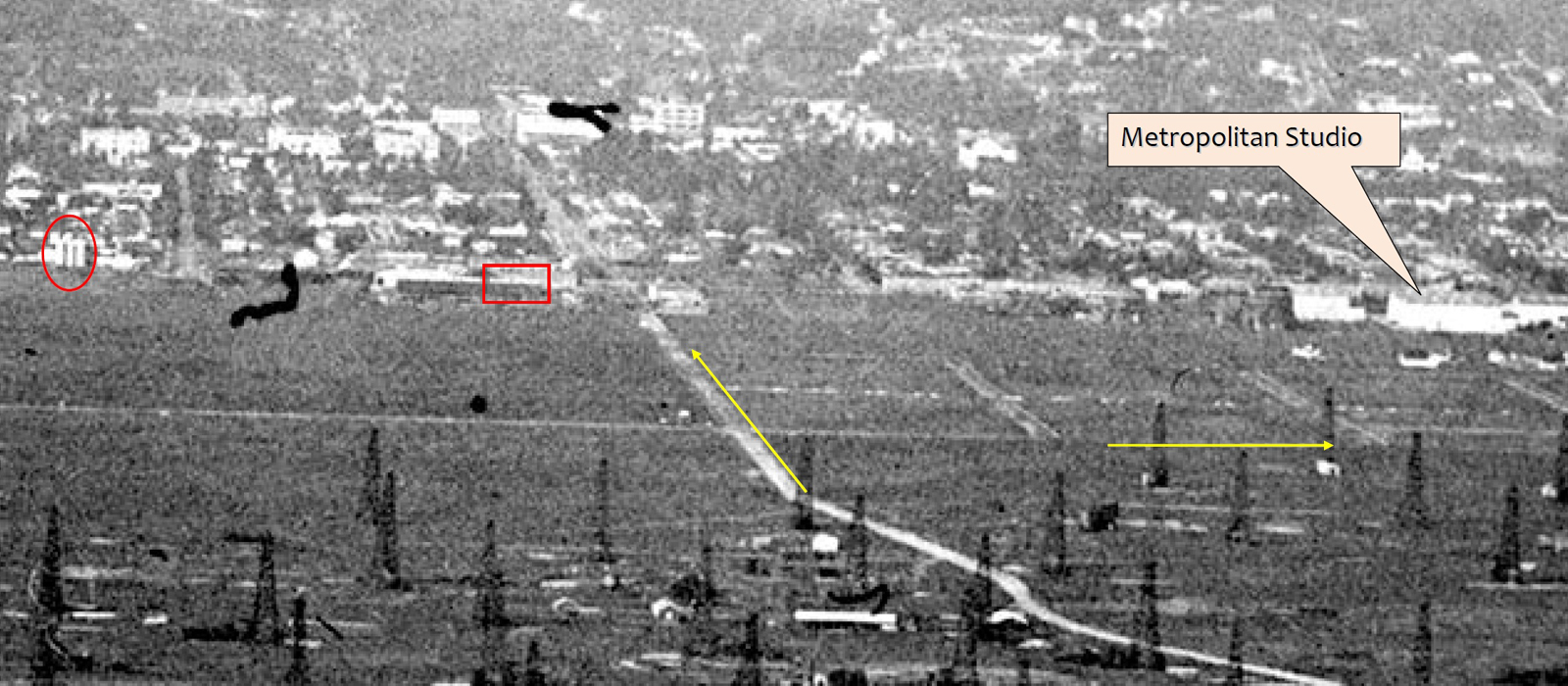
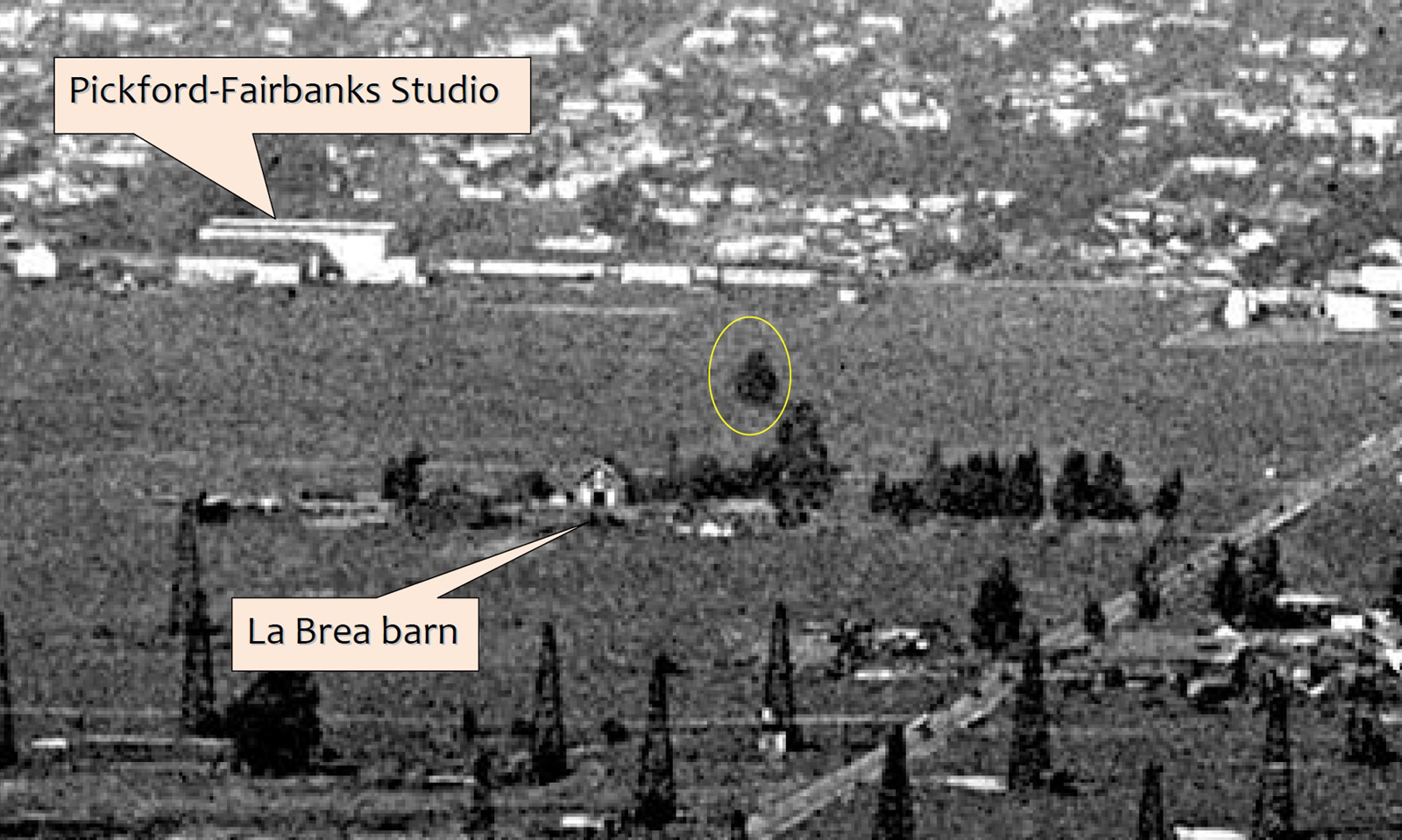
Looking SW from the Hollywood Metropolitan Studio towards the “La Brea” barn that appears in the Eureka Video Masters of Cinema version of The Blacksmith (right).  Marc Wanamaker – Bison Archives

ca

The Kino-Lorber shot

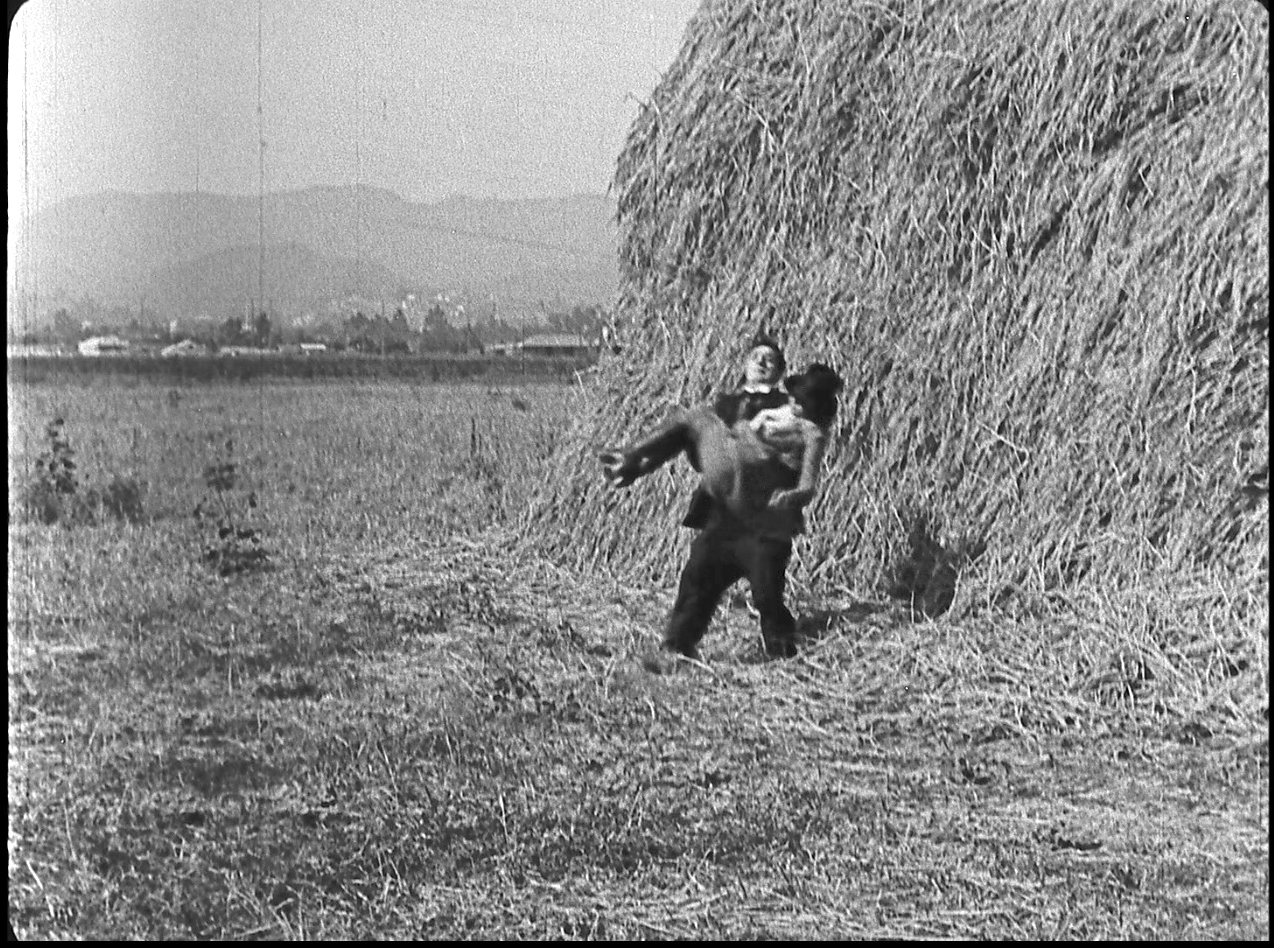
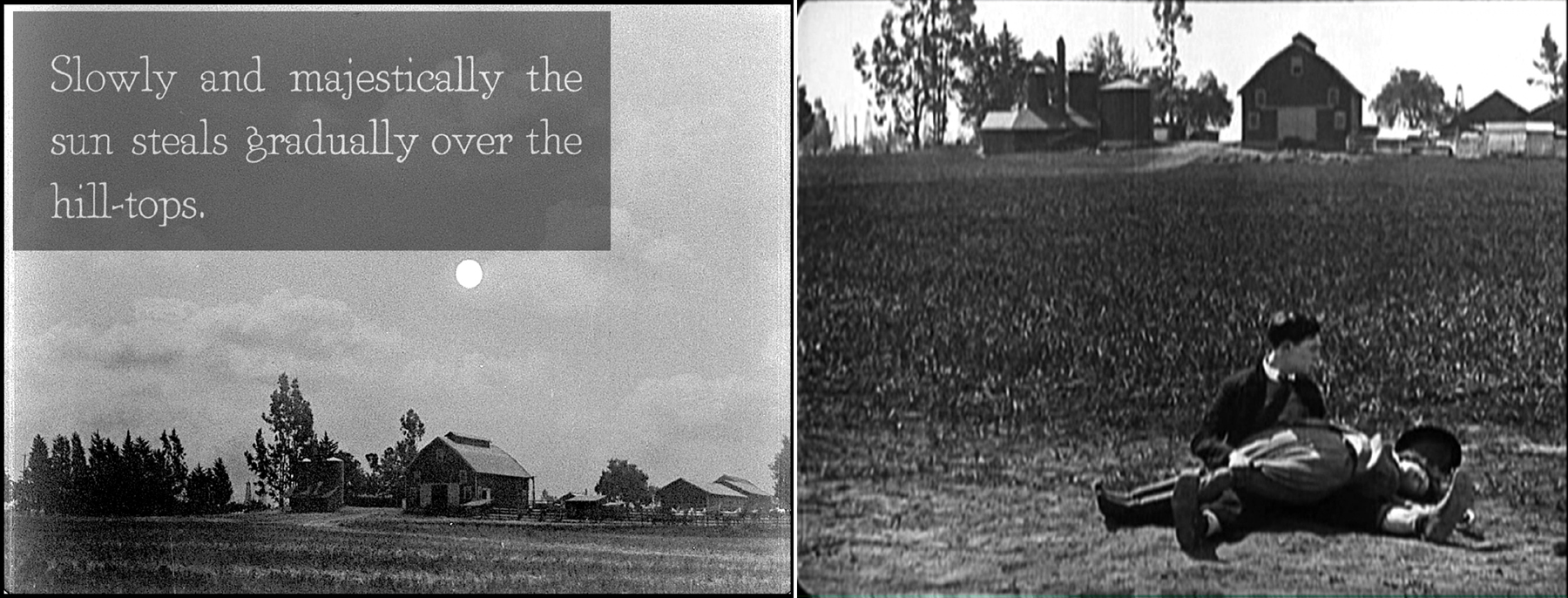
Keaton filmed many outdoor scenes from The Blacksmith near the still undeveloped intersection of Melrose and Highland.  The above photo looks SW from the Hollywood Metropolitan Studio towards what I’ll call the “La Brea barn,” a classically proportioned barn that stood south of the SW corner of Melrose and La Brea.  When Buster rescues Virginia Fox from a runaway horse, the La Brea barn appears behind them as they fall to the ground (above) in the Eureka Video Masters of Cinema version of the film (in the Kino-Lorber version (at left) Buster and Virgina fall into a haystack – confusing isn’t it?)

ca

The La Brea barn also appears in this joke sunrise shot from The Scarecrow (left) as well as in the Eureka version of The Blacksmith right.

Keaton filmed the La Brea barn previously for a cartoonish joke of the rising sun popping up from the horizon introducing his 1920 short The Scarecrow.

At top, riding east in 1921 along Melrose looking north (Kino-Lorber); immediately above, looking west, riding north up Highland in 1922 past the La Brea barn and a landmark tree towards the Robin Hood set (Eureka).

At top, 1921, riding east along Melrose looking north (Kino-Lorber); immediately above, 1922, looking west, riding north up Highland past the La Brea barn and a landmark tree towards the Robin Hood set (Eureka).

The paired images above show two similar and ordinary panning shots of the troubled equestrienne appearing in different versions of the film.  Filmed in 1921, the upper scene above appears in the Kino-Lorber version; the lower scene above, filmed in 1922, appears in the Eureka version. I don’t know why Keaton bothered refilming this unremarkable shot, but he could not have recreated the 1921 shot (riding east along Melrose) in 1922, because by that time so many homes and bungalows had been built between Melrose and the studio that the scene would have looked less “rustic.”

ca

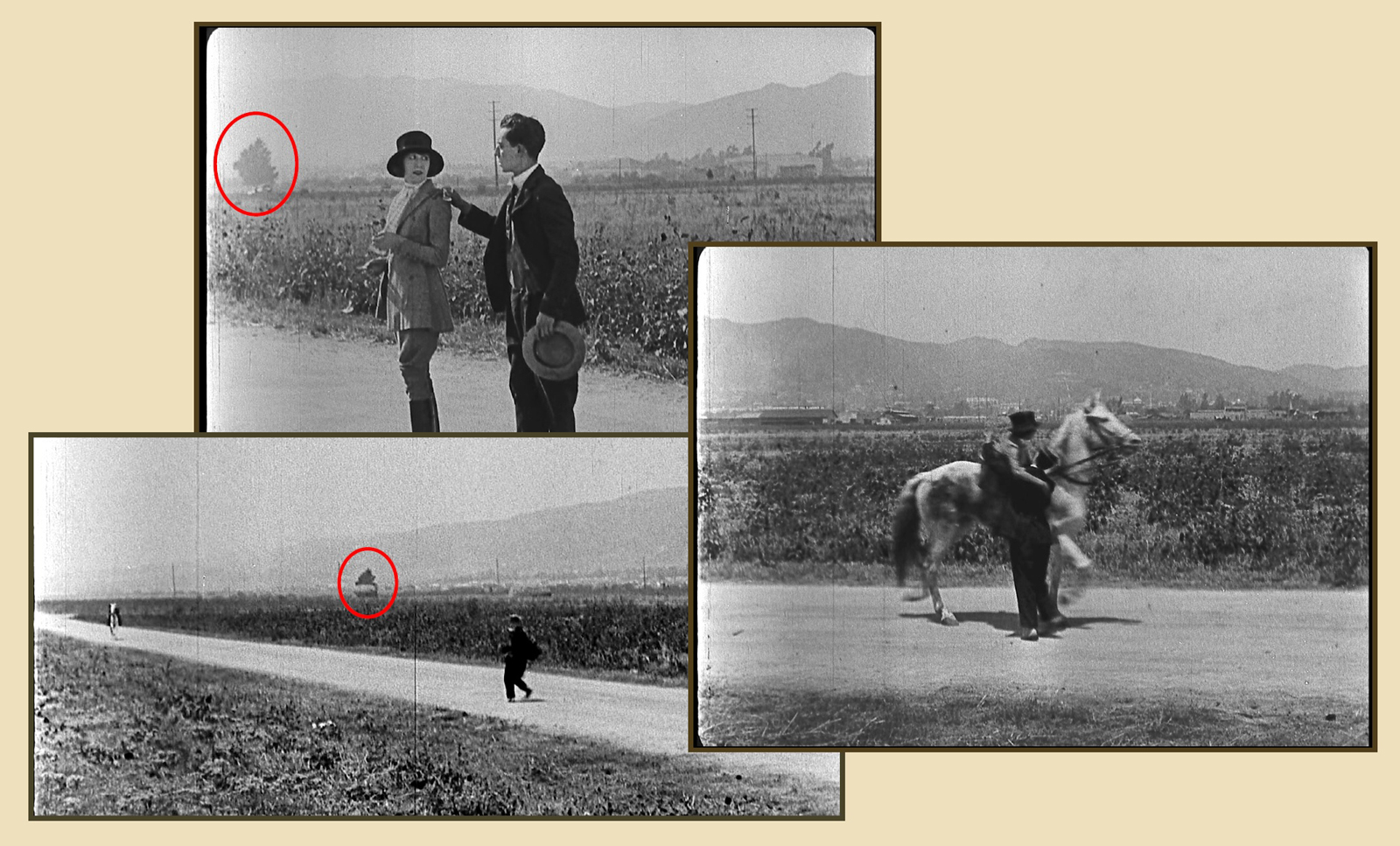
1921 – Buster rescues Virginia from her runaway horse.  In the upper left two-shot image Buster touches Virginia’s shoulder before proposing to her, a scene unique to the Kino-Lorber version.  The oval marks a prominent landmark tree NW of La Brea and Melrose.

The three scenes above were filmed in 1921.  The upper left two-shot, where Buster taps Virginia’s shoulder, is unique to the Kino-Lorber version.

ca

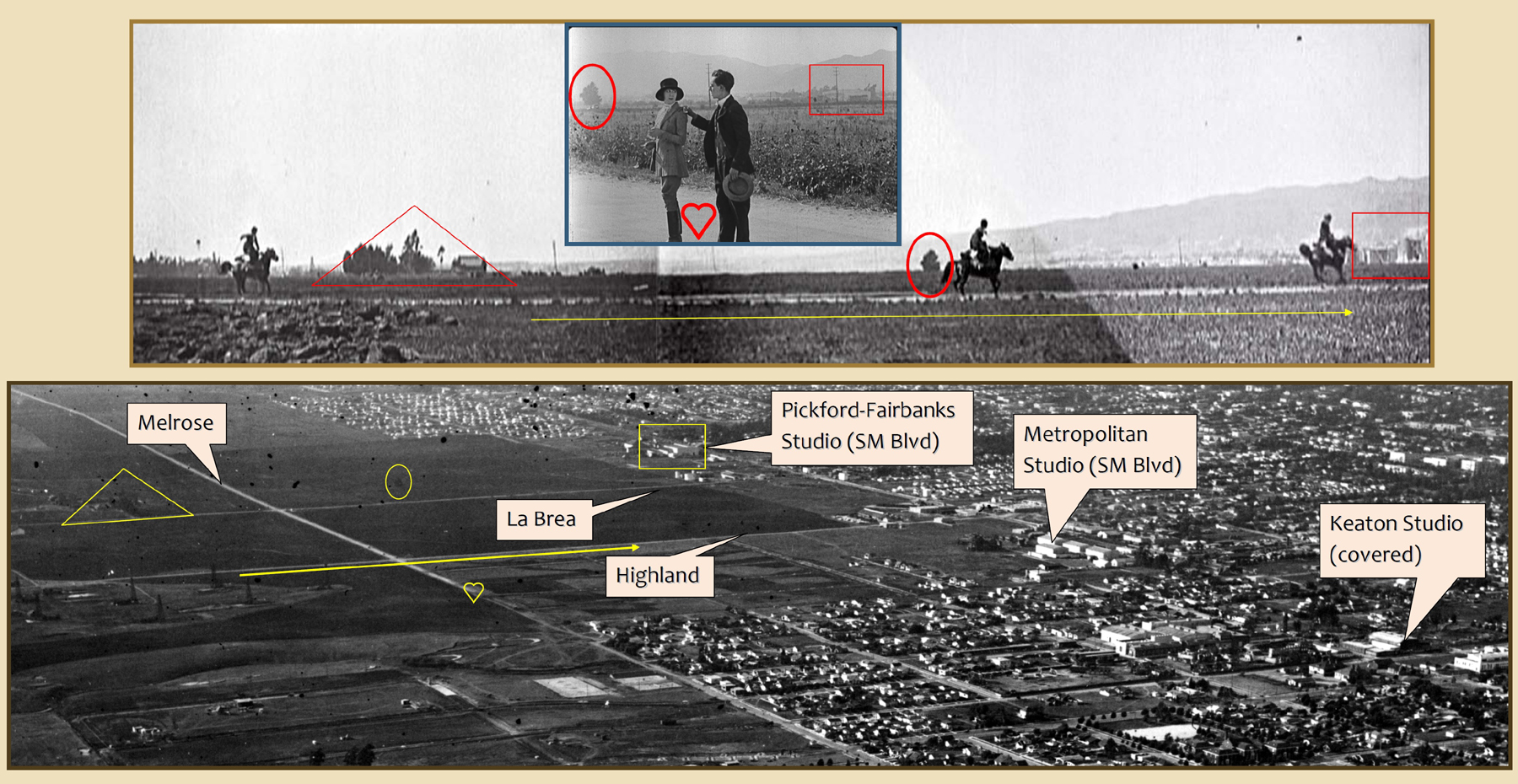
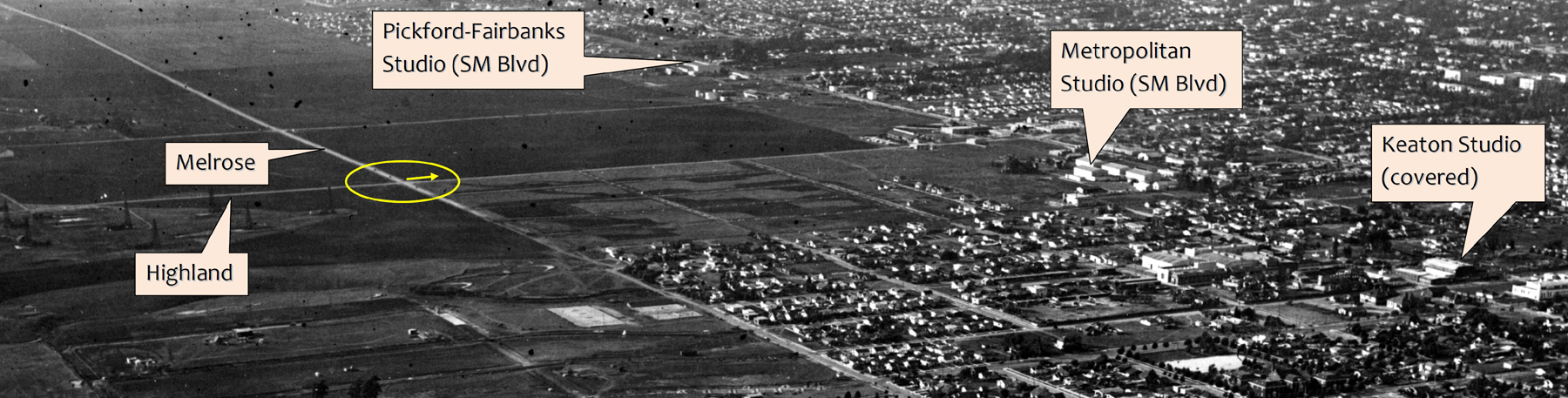
Click to enlarge.  The two-shot of Virginia and Buster was filmed (heart) on Melrose east of Highland, looking west toward the landmark tree (oval).  In the aerial view the once open-air Keaton Studio stage is now covered; the Robin Hood castle set has not yet been built at the Pickford-Fairbanks Studio.  hollywoodphotographs.com

This complicated image above compares the two-shot of Buster and Virginia filmed in 1921, unique to the Kino-Lorber version, and the panning shot of the equestrienne, appearing only in the Eureka version, filmed in 1922, as the rider travels north up Highland (arrow) past the La Brea barn (triangle) and the landmark tree (oval).  The aerial view places the shots relative to the nearby studios.

Robin Hood set

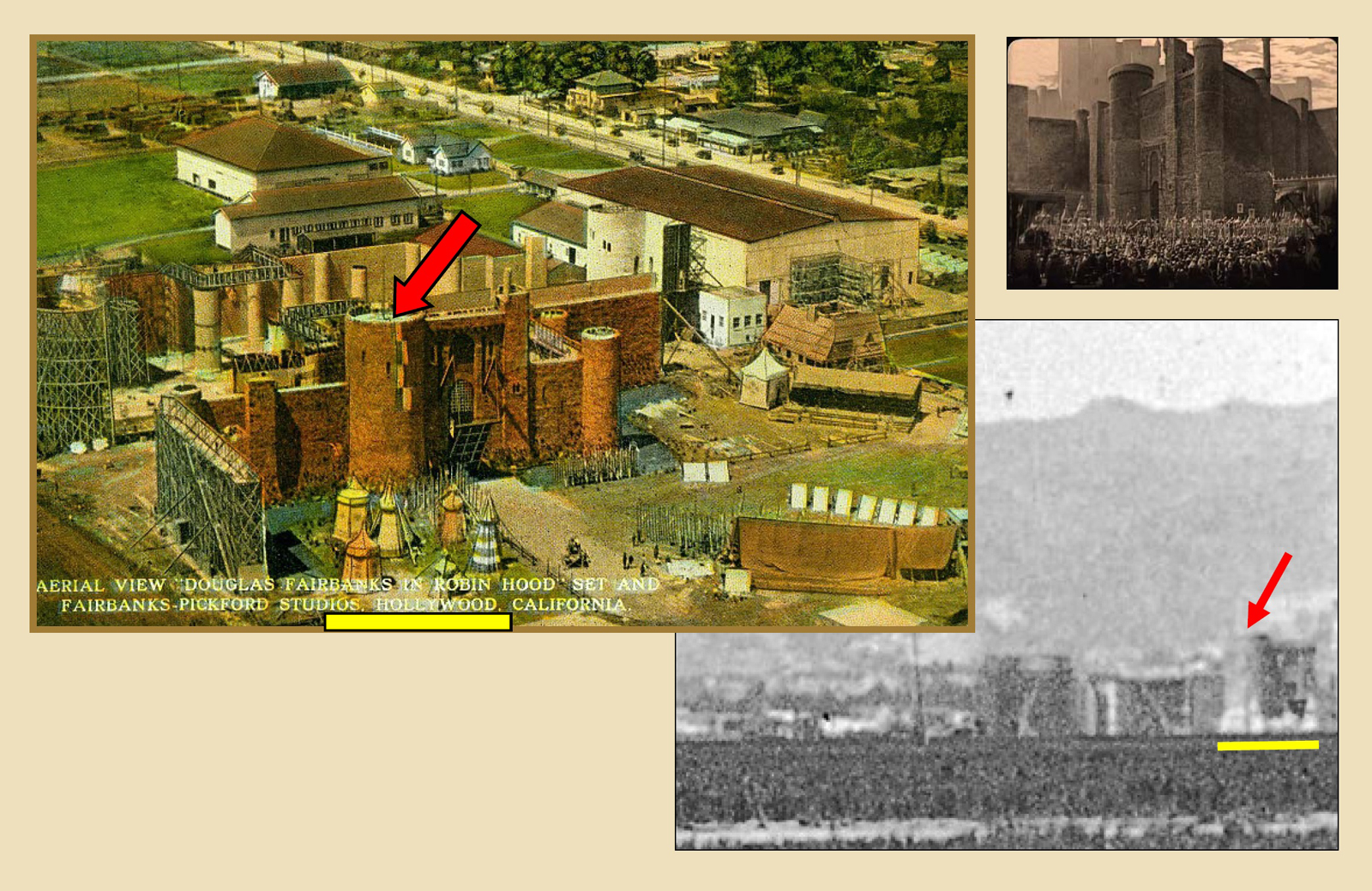
The far right (north) end of the 1922 equestrienne panning shot reveals the massive castle set built on the Pickford-Fairbanks Studio for the 1922 release Robin Hood.  The yellow line above underscores the same group of tall tents.  Upper right, the set, completed with a matte painting, as it appears in Robin Hood.

The far right end of the 1922 panning shot of the equestrienne riding north up Highland (two images above) provides a brief glimpse of the castle set built in 1922 for the Douglas Fairbanks production of Robin Hood.

ca

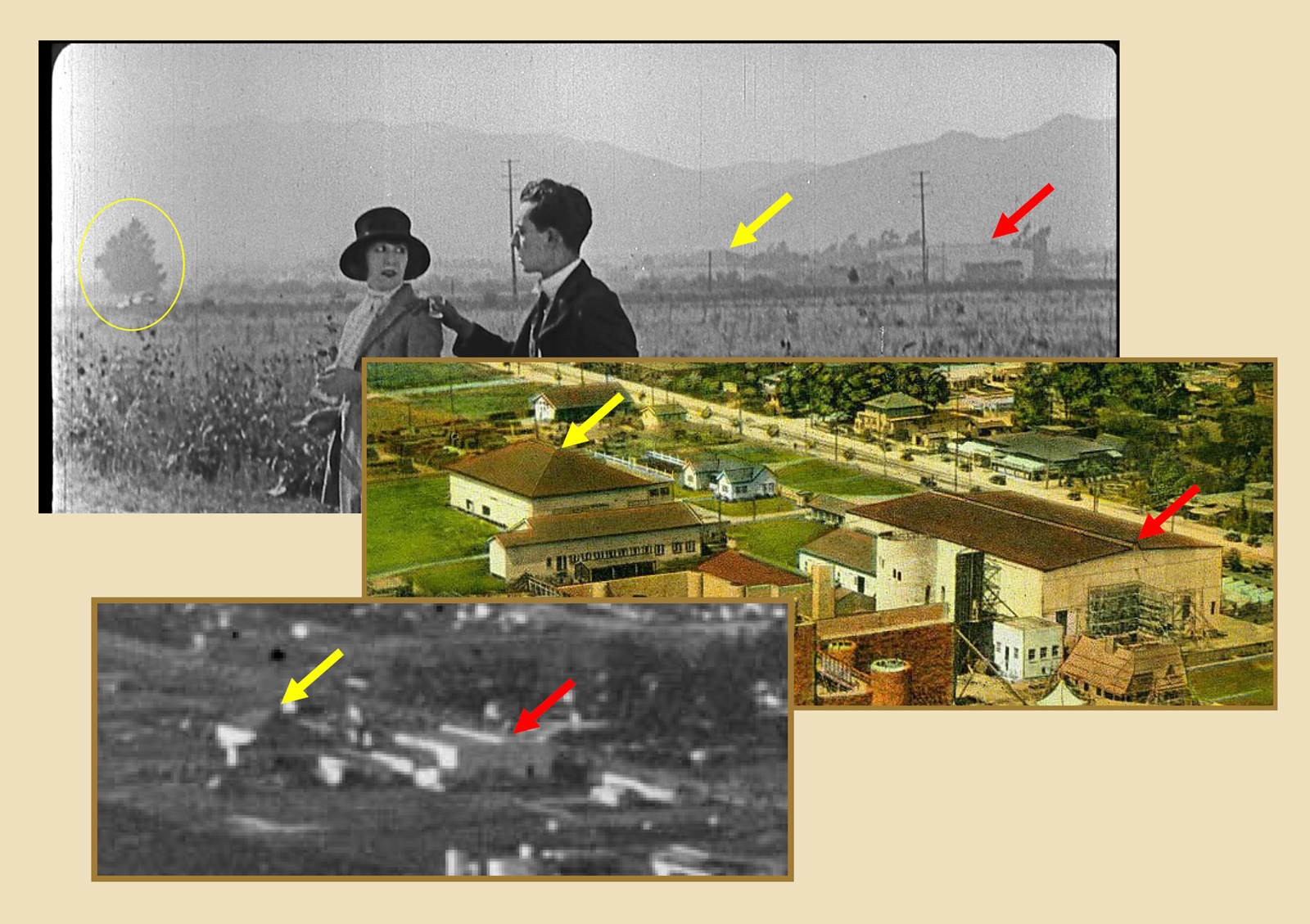
The 1921 two-shot of Virgina and Buster shows the Pickford-Fairbanks Studio stage (red arrow) before the Robin Hood castle set was built in 1922.

The two-shot above appears only in the Kino-Lorber version.  Filmed in 1921, it shows the Pickford-Fairbanks Studio at back before the Robin Hood castle set was built there in 1922.

ca

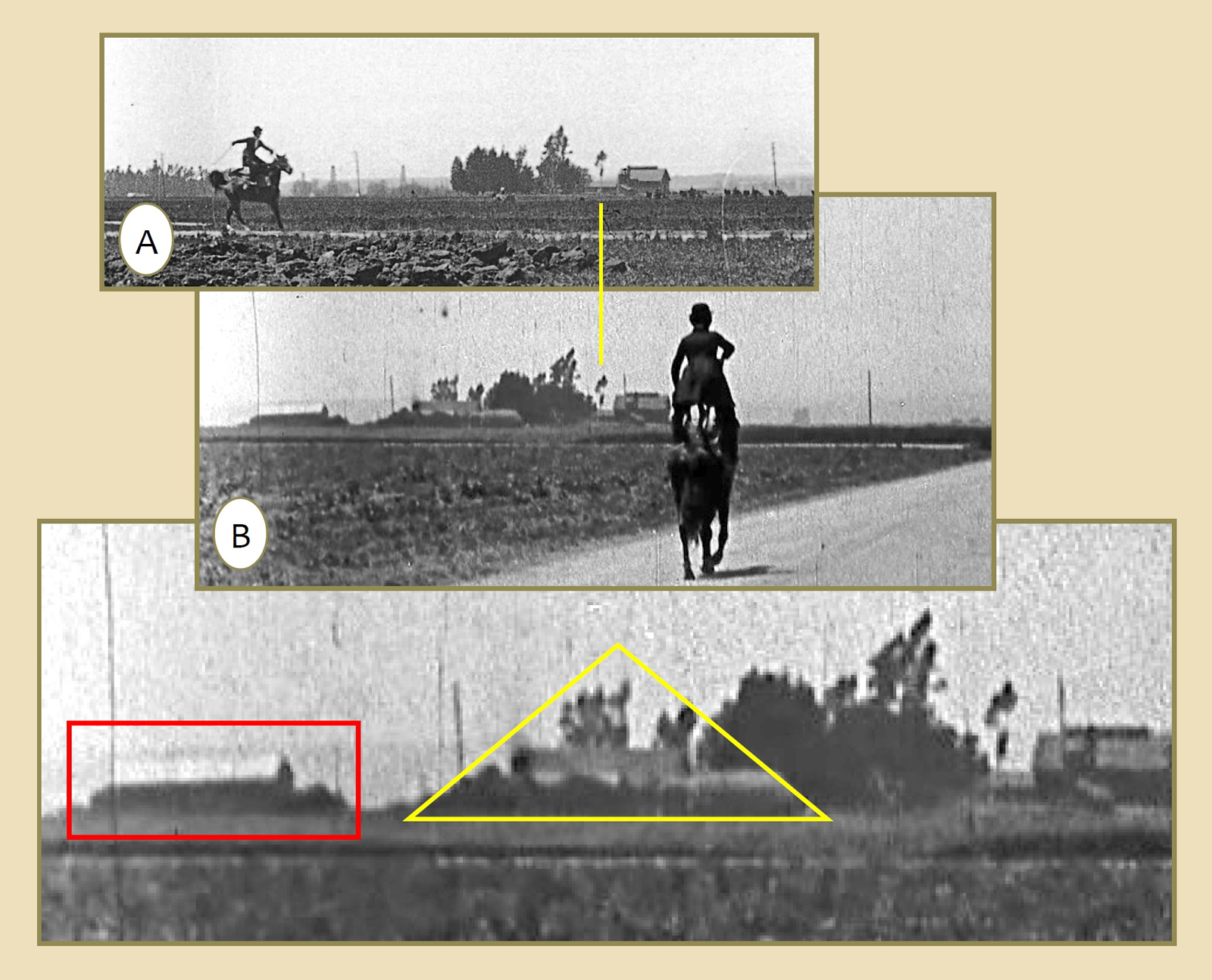
Scene (A) appears on the Eureka version, Scene (B ) appears as a supplement to the Kino-Lorber version.  Both views look west towards the La Brea barn.  The buildings and trees within the box and triangle were demolished during the many months that passed between the two takes.

Above, the equestrienne rides north up Highland in (A) and rides west on Melrose towards Highland in (B) in this pair of shots filmed looking west towards the La Brea barn.  Neither shot appears in the Kino-Lorber version.  Scene (A) was filmed in 1922, as the north end of the panning shot reveals the Robin Hood castle set in the background.  Scene (B) was filmed in 1921, before all of the trees and buildings near the La Brea barn (within the box and triangle above) were demolished.

Looking north towards Hollywood.  The oval marks the landmark tree, the yellow line the La Brea barn.  Los Angeles Public Library

Click to enlarge.  Looking north towards Hollywood. The oval marks the landmark tree, the arrows mark the two panning shots of the equestrienne’s path north up Highland and east along Melrose.  Los Angeles Public Library

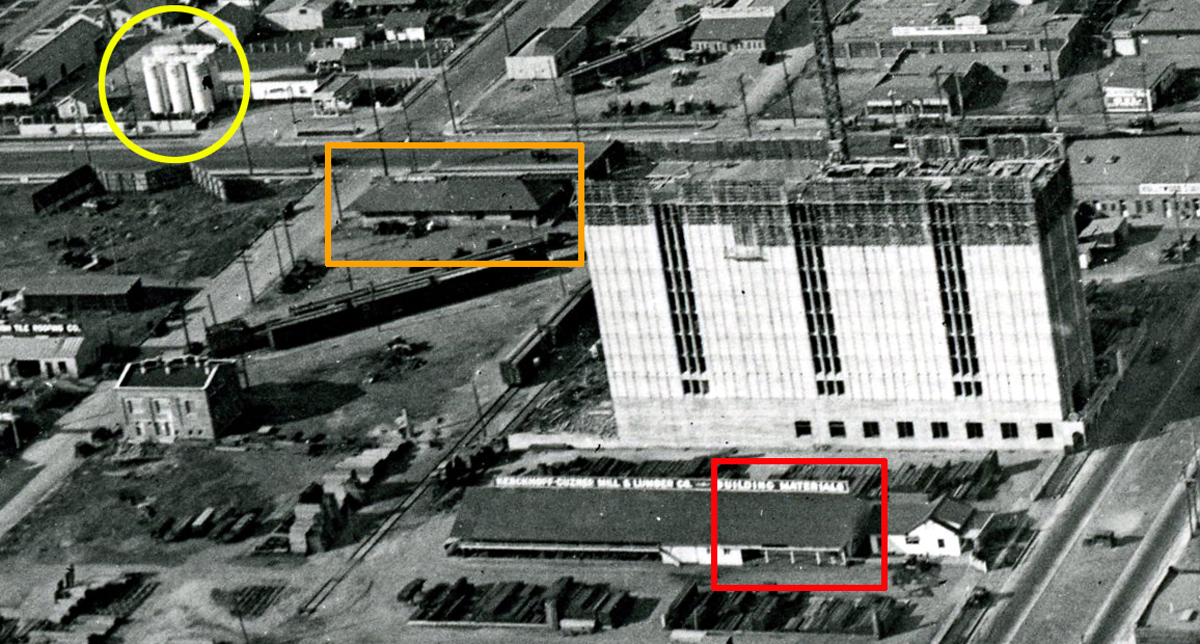
This part 3 post reveals Buster filmed scenes for The Blacksmith both before and after the Robin Hood castle set was built at the Pickford-Fairbanks Studio (Robin Hood began production in March 1922).  My second post shows that a substantial amount of construction also took place near Highland between the time Keaton filmed scenes at the same spot (in the background an oil company expands from two tanks to three, and a lumber company building is extended).  The aerial view above and detail view below show that the oil tank and lumber company construction was completed before the Robin Hood castle set was built.  This means Buster could have filmed exteriors on three occasions; (i) the original early shots, (ii) shots after the Highland construction, but before the castle set was built, and (iii) later shots after the castle set was built.

ca

This view was taken after the oil company added a third tank (oval) and the lumber company expanded (box), but before the Robin Hood castle set was built.

This view north from the same aerial image shows the landmark tree (oval) and the south face of the La Brea barn.  Construction of the Robin Hood castle set has yet to commence.

This detail from the same aerial image shows the landmark tree (oval) and the south face of the La Brea barn.  Construction of the Robin Hood castle set has yet to commence.

While we may not be able to determine precisely when Keaton filmed the various exterior scenes for The Blacksmith, the visual evidence shown here and in my second post establishes that the earliest and latest scenes were filmed perhaps nine months or more apart.

NOTE: The version of The Blacksmith known in America today was discovered by James Mason in Keaton’s private vault (Mason was a subsequent owner of Keaton’s Italian Villa mansion in Beverly Hills).  This “American” version appears to date from mid to late 1921, and does not contain any of the “Pena” scenes filmed in 1922.  Thus, it is plausible Buster’s privately held 1921 vault print was not intended for wide distribution, and that the “Pena” version, containing numerous subsequently filmed gags, was the “official” version widely released in July 1922. 

This article shows WHEN various scenes were filmed.  We are still looking at the clues, but it is LIKELY that the Kino-Lorber version discussed above (i) comes from Keaton’s essentially “intact” vault print filmed in mid to late 1921, and that (ii) a couple of shots filmed much later were inserted in the Kino-Lorber version as part of the restoration, and that therefore (iii) these “later” insert shots do not change when the original Keaton vault print was filmed.

Kino-Lorber movie frames licensed by Douris UK, Ltd.; Eureka movie frame licensed Lobster Films, Paris. 

The NW corner of Melrose and Higland today.

Posted in Buster Keaton, The Blacksmith | Tagged , , , , , , , , , , , , , , , | 7 Comments

Leave it to Santa Monica – Beaver and Harold Lloyd

Skokie Illinois stands in for Mayfield

Skokie Illinois stands in for Mayfield

Although Leave it to Beaver takes place in “Mayfield,” set in an undetermined state, I show in a prior post how Skokie, Illinois stood in for Mayfield during a scene from “Beaver’s Fortune” (Season 3: Episode 10; first broadcast December 5, 1959).  While Beaver owns a surf board late in the series, and the gang makes trips to the beach, the show frequently distinguishes the Cleaver’s home state from California, often referred to as a faraway place.

By the 6th and final season, the producers seem to have gotten tired of playing coy.   When Wally and Ward take a test drive (“Wally Buys a Car; Season 6:, Episode 16, first broadcast January 10, 1963), they drive right down 3rd Street in Santa Monica, past the El Miro Theater to the right.  At left in the back stands the Clock Tower Building on Santa Monica Boulevard at 3rd.  The El Miro facade has been preserved as part of the multiplex theater standing there today.

ca

California cruisin’ – Ward and Wally heading south down 3rd Street in Santa Monica.   Clock Tower – Santa Monica Public Library – El Miro – Water and Power Associates

As the scene along 3rd Street ends, the north side of the Keller Building comes into view.  You can glimpse it to the left (yellow box) in each image below.

Looking north up 3rd Street from Broadway.  Absent in the 1927 view are the Clock Tower (left) built in 1929, and the El Miro tower (right) built in 1933.  The yellow box marks the transition from the historic Keller Building on the corner of Broadway and the two story building north of it.  Closed to street traffic today, the site is now known as the Third Street Promenade.  Santa Monica Public Library

Looking north up 3rd Street from Broadway. Absent in the 1927 view are the Clock Tower (left) built in 1929, and the El Miro tower (right) built in 1933. The yellow box marks the transition from the historic Keller Building on the corner of Broadway and the two-story building north of it. Closed to street traffic today, the site is now known as the Third Street Promenade.  Santa Monica Public Library

In another post, I show how Beaver and Harold Lloyd both filmed scenes at the Long Beach Pike amusement park forty years apart.  As shown below, they nearly crossed paths beside the Keller Building in Santa Monica as well.

ca

During Harold Lloyd’s 1924 feature comedy Hot Water, the family’s inaugural drive in Harold’s new car ends in disaster.  Their trouble begins when the car grid-locks the intersection at 3rd and Broadway in Santa Monica.  The Keller Building at back was built in 1893.  The yellow box matches the trio of images further above.

Thanks to movie editing, moments after Harold pushes the family car out of this intersection in low-lying Santa Monica (above), the car careens down Bunker Hill on Olive Street in downtown Los Angeles, a setting also appearing in the 1952 noir classic The Turning Point, as described in this post HERE.

If the Cleavers live in Santa Monica, then Ward must work in West Hollywood! During the episodes “Beaver on TV” (Season 6: Episode 22; first broadcast February 21, 1963), and “Lumpy’s Scholarship (Season 6: Episode 24; first broadcast, March 7, 1963) this establishing shot of Ward’s office was filmed at 9034 Sunset Boulevard.

ca

Although the flagstone detailing has been replaced with brick, and a shabby portico with columns has been added, the basic box-like design and proportions of Ward’s office remain unchanged.  (C) 2013 Google.

litb_maxim_houseIf you enjoy looking at studio backlots, the wonderful Retroweb site shows how the Cleaver’s home and neighborhood were part of the Colonial Street backlot at Universal Studios.  Beaver and Gilbert even walk past the Munster’s home in one episode!

Leave it to Beaver – (C) 1962, (C) 1963 Revue Studios.  HAROLD LLOYD images and the names of Mr. Lloyd’s films are all trademarks and/or service marks of Harold Lloyd Entertainment Inc. Images and movie frame images reproduced courtesy of The Harold Lloyd Trust and Harold Lloyd Entertainment Inc.

Third Street Promenade, Santa Monica, CA

Posted in Harold Lloyd, Hot Water, Leave It To Beaver, TV Shows | Tagged , , , , , , , , | 33 Comments

The Kid – Cops – Safety Last! Three comic masterpieces filmed at a common Hollywood alley you can still visit today

ca

A moment of destiny – Charlie is about to discover “the Kid,” Buster is poised to grab a passing car.  Behind them – the back and front of the same building, once a bakery, located at 1644 N. Cahuenga, in Hollywood.

The Kid - looking south, between Cosmo and Cahuenga

Charlie first discovers “the Kid”

Charlie Chaplin encountered the abandoned infant who will become his son in The Kid (1921) along an alley running east-west between Cosmo and Cahuenga just south of and parallel to Hollywood Boulevard.  A gang of police would later chase Buster Keaton down the same alley in Cops (1922), and Harold Lloyd and Bill Strother would later knock down policeman Noah Young there in Safety Last! (1923). The alley also appears in such films as Keaton’s 1920 short Neighbors, Lloyd’s 1921 short Never Weaken, and director Emory Johnson’s 1925 newspaper crime-drama The Last EditionNote: the alley is now featured in the new Travel Channel show Time Traveling with Brian Unger (see end of post below).

ca

Click to enlarge.  Looking west, the alley runs from Cosmo (blue) towards Cahuenga (yellow).  The brick box to the right of Chaplin, upper left, was an oven for the building at 1644 Cahuenga, which was originally a bakery, built in 1905. The overhanging second floor is supported by posts.

The Last Edition, a once-lost film restored by the San Francisco Silent Film Festival and EYE Institute Netherlands, was premiered at the 2013 Festival.  Although set in San Francisco, with many identified SF locations, The Last Edition contains several scenes and pick-up shots that were actually filmed in Hollywood – a common practice with “location” movies, even today.

ca

Click to enlarge.  Looking south down what Google Maps calls “East Cahuenga Alley.”  Clarence Walker (left) portrays a crime-busting newspaper reporter.  At right, Charlie attempts to return “the Kid” to a nurse maid whom he believes to have “dropped something.”  The posts support the overhanging second floor.

Aside from the San Francisco exteriors, The Last Edition provides fascinating glimpses of the San Francisco Chronicle newspaper offices and printing plant.  But what really captured my attention at the premiere was a pivotal scene filmed in Hollywood along the alley where Buster Keaton filmed Cops and Harold Lloyd filmed Safety Last!  (I write about Buster and Harold filming at this same alley HERE and HERE.)

Click to enlarge. Upper left, Charlie runs north past a bakery brick oven. The two lower right images show the reverse sides of the same shed.

Click to enlarge. Upper left, Charlie runs north past a bakery brick oven. The two lower right images show the reverse sides of the same shed.

Preservationist and San Francisco Silent Film Festival President Rob Byrne was instrumental in identifying and restoring The Last Edition, a heretofore forgotten film.  After informing Rob that his movie shared some Hollywood real estate in common with Buster and Harold, Rob graciously provided me online access to the film.    

Looking east - Cosmo Street at back.

Looking east – the Palmer Building at back on Cosmo Street, home coincidentally, to The Hollywood Daily Citizen newspaper.  At left, Harold is mistakenly locked in a laundry wagon, and fears being late for work.

I thought some settings in The Last Edition looked familiar, and quickly realized that it provided the missing link in what I jokingly call the transitive property of film locations – that if A is filmed beside B, and B is filmed beside C, then A is filmed beside C.

Click to enlarge. The * marks a detail on the west side of Cahuenga and its reflection in Cops.

Click to enlarge. The * marks a detail on the west side of Cahuenga and its east reflection in Cops.

SanbornAs I write at page 199 of my Chaplin film location book Silent Traces, I knew Charlie filmed his initial discovery of “the Kid” at the same setting where Buster had filmed scenes from Neighbors; the details in the background alleys match up.  However, because both Chaplin and Keaton had filmed other scenes from these movies near Chinatown and Skid Row, I had always assumed the settings pictured here were in downtown Los Angeles as well. By providing unique views of the alley where Buster filmed Cops, and matching views of an alley appearing in Buster’s Neighbors, The Last Edition supplied the connecting link to show Chaplin filmed The Kid at this alley in Hollywood as well.  The 1919 Sanborn fire insurance map depicted here confirms that the back of the second floor of the former bakery at 1644 Cahuenga was supported on posts overhanging the first floor, which covered a brick oven at back (more clearly seen on the 1913 map), exactly matching the movie images from The Kid.

Click to enlarge. In 1921 the Palmer Building on Cosmo was not yet constructed.

Click to enlarge. Two views of the Markham Building, at left.  Harold filmed here in 1921 before the Palmer Building at back on Cosmo was constructed.

Click to enlarge. Looking west from Cosmo down the alley towards Cahuenga. At back you can still see the post supporting the second floor corner. Although now remodeled, the back of the Markham Building, which portrayed the De Vore department store in Safety Last!, stands to the right in each image. (C) 2013 Google.

Click to enlarge. Looking west from Cosmo down the alley towards Cahuenga. At back you can still see the post supporting the second floor corner. Although now remodeled, the back of the Markham Building, which portrayed the De Vore department store in Safety Last!, stands to the right in each image. (C) 2013 Google.

ca

Looking SE down Cosmo at the Palmer Building. (C) 2013 Google.

ca

Looking NE up Cosmo – from Safety Last!

I can think of no Hollywood exterior that plays a greater role in silent movie history than this unique alleyway.  Not only did Chaplin, Keaton, AND Lloyd shoot here, but in each case it was to film a recognized masterpiece that would later be inducted into the National Film Registry.  Amazingly, the rediscovery of a forgotten film brought all of the pieces together.

ca

Click to enlarge.  Clarence Walker perches on tiptoe to eavesdrop on the crooks.

5259 The Last Edition contains a thrilling real-life stunt, as the reporter, played by Clarence Walker climbs up, down, and around the back of the wooden structures formerly standing at 6378-6374 Hollywood Boulevard in order to eavesdrop on the crime syndicate.  As shown above, Clarence perched on an orange crate at the edge of the roof in order to reach up to the window of the room where the crooks were hatching their plan.  The creaky building Walker climbs was replaced with a modern structure in 1936, adding to the documentary value of this rare footage.

In closing, two historic alleys bookend the tale of The Kid; the alley where Charlie first discovers the abandoned infant, and the alley where Charlie and Jackie Coogan are reunited after the authorities try to steal Jackie away into an orphanage.  Remarkably both of these alleys still exist, and may be visited today.  You can read about Charlie and Jackie filming their emotional reunion at Olvera Street at this post here.

ca

Charlie and Jackie Coogan reunite on Olvera Street, today a popular Mexican marketplace and tourist attraction.  The view looks south down Olvera toward the Plaza de Los Angeles.  Chaplin filmed here in 1921, seven years before City Hall was completed in 1928, which towers at back of this circa 1930 photo.  Chaplin filmed chase scenes from Easy Street (1917) at this same spot.

PS – Below, yet another connection between The Last Edition and Buster Keaton’s Cops.  Both contain scenes filmed at the Brunton Studio backlot north of Melrose, the future site to the Paramount lot.

You can read all about Buster filming Cops at the Brunton Studio at this link HERE

Keaton early in 1922 – The Last Edition in 1925 – the wall at back still has a 439 address.  You can read all about Buster filming Cops at the Brunton Studio at this link HERE

I wish to express my sincere thanks to Rob Byrne, the San Francisco Silent Film Festival, and EYE Film Institute Netherlands, for rescuing and restoring The Last Edition, and for their assistance with preparing this post. 

Note: the alley now appears in the new Travel Channel show Time Traveling with Brian Unger. Although they didn’t have time on the show to point out the Keaton and Lloyd connections, it is great to see this long lost historic filming location being recognized by the media.

Leading a tour of the alley during the 2013 Cinecon Classic Film Festival - Brian Unger and guests on the Travel Channel show.

Leading a tour of the alley during the 2013 Cinecon Classic Film Festival – Brian Unger and guests on the Travel Channel show.

All images from Chaplin films made from 1918 onwards, copyright © Roy Export Company Establishment. CHARLES CHAPLIN, CHAPLIN, and the LITTLE TRAMP, photographs from and the names of Mr. Chaplin’s films are trademarks and/or service marks of Bubbles Incorporated SA and/or Roy Export Company Establishment. Used with permission.

The Last Edition EYE Film Institute Netherlands and the San Francisco Silent Film Festival.

Cops and Neighbors licensed by Douris UK, Ltd.

HAROLD LLOYD images and the names of Mr. Lloyd’s films are all trademarks and/or service marks of Harold Lloyd Entertainment Inc. Images and movie frame images reproduced courtesy of The Harold Lloyd Trust and Harold Lloyd Entertainment Inc.

Vintage aerial photographs HollywoodPhotographs.com.  Contemporary aerial view (c) 2013 Microsoft Corporation, Pictometry Bird’s Eye (c) 2010 Pictometry International Corp. 

A March 2011 view west from Cosmo of the common filming site.  Note: time does not stand still.  The alleyway at back was recently closed to vehicles to make room for outdoor dining, and the driveway on Cahuenga leading into the Cops alley is now blocked to traffic by a raised curb and pedestrian sidewalk.  

Posted in Buster Keaton, Chaplin - Keaton - Lloyd Alley, Charlie Chaplin, Cops, Harold Lloyd, Hollywood Tour, Safety Last!, The Kid, The Last Edition | Tagged , , , , , , , , , , , , , , , , , , | 18 Comments

Punky, Harold, and Harry – nine decades of film location history at Shatto Place

ca

A panoramic view of the Modena Apartments, at 661 Shatto Place, formed by images from Harold Lloyd’s For Heaven’s Sake (1926) and the opening credits to the Punky Brewster premiere episode (1984).

ca

Opening credits – Punky Brewster walking past 2520 W 7th Street.

In a prior post I explain how the same setting on Witmer Street appears in a Harold Lloyd silent comedy, a 1950 film noir classic, and in the recent sitcom The OfficeAnother post shows how early Buster Keaton comedies share settings with the popular police procedural television show Bones, while another post matches Charlie Chaplin’s The Great Dictator with Parks and Recreation.  Given that location filming has been taking place in Los Angeles now for over 100 years, it makes sense that certain neighborhoods have layers of cinematic history waiting to be discovered.

ca

Actor George Gaynes portrays a photographer.  In the credits he leaves a real photo shop, the Haines Photo Studio once located at 651 Shatto Place.  You can make out the true 383-1473 phone number against the “555” number added to the window.

This post was prompted by a ping-back from Lindsay Blake’s I Am Not A Stalker.com pop culture locations website, reporting that the Trebor Apartments at 2520 W 7th Street portrayed the apartment home of Punky Brewster in the 1980s NBC sitcom.  Although the show, starring Soleil Moon Frye as Punky, “takes place” in Chicago, the premiere episode opening credits were likely filmed entirely in Los Angeles, despite an unsubtle shot of some Illinois license plates in a parking lot.  Lindsay linked her post to mine because I had previously reported that this same apartment appears in the 1926 Harry Langdon feature comedy The Strong Man.  Below you can see matching images of the Trebor Apartments from 1926 and 1984.

ca

Click to enlarge.  The Trebor Apartments (lettering barely visible above the door, left) appearing in The Strong Man and in the 80’s sitcom Punky Brewster.

During the show’s opening credits, actor George Gaynes locks up his photo shop once located at 651 Shatto Place (see above), and strolls past 1920’s era apartments located on the same block.  The shot at the very top of this post of Punky was also filmed on this block.  [Note: Lindsay recently visited Shatto Place, and has posted some great “today” photos of the following locations.]

ca

The Pierre Crest Apartments at 673 Shatto, appearing in the show’s opening credits, and in For Heaven’s Sake.  The box marks the same fire hose coupling.

Below, George continues his stroll south down Shatto Place past an actor playing a homeless man sitting beside the York Apartments.

ca

The York Apartments, at 688 Shatto Place.  Lindsay Blake made this discovery.  (C) 2013 Google.

The commercial building that once housed George’s photo shop stood at the SW corner of Shatto Place and Wilshire Boulevard.  Below, a wider view of George’s shop from the opening credits, and a vintage view showing the storefronts along Shatto.

ca

Click to enlarge.  The red box marks the same side entryway to the commercial building.  The women are strolling south past George’s shop, once located at 651 Shatto Place.

As I will report in another post, Harry Langdon filmed many scenes from The Strong Man along Wilshire Boulevard between Shatto Place and Vermont, around the corner from where Harold Lloyd filmed.

ca

2002 – the Shatto Place commercial building was demolished a few weeks before I visited the site.  George’s photo shop was located at the far left edge of this photo.  A 20+ story tower nearing completion now stands at this site.

Harold Lloyd filmed an extended scene walking north up Shatto Place for his 1926 comedy For Heaven’s Sake.  In the sequence, Harold’s character discovers a misleading newspaper story has been printed about him, and attempts to purchase and discard all of a newsboy’s copies of the paper.

ca

Harold walks north up Shatto Place beside the commercial building pictured in the show opening credits.  Notice the matching diagonal sidewalk design and black granite detailing.

This view below from For Heaven’s Sake looks south down the street towards the York Apartments mentioned above, and the duplex at 3040 W. 7th Street at the end of the block.

ca

The duplex at 3040 W. 7th Street still stands at the end of the block.

The apartments along Shatto Place were all built in 1922 and 1923, so it was a modern and fashionable neighborhood when Harold filmed there in 1926.  In fact, in 1926 the storefront at the corner of Shatto Place and Wilshire was a Rolls Royce dealership!

ca

Looking SE along Wilshire Boulevard towards the SW corner of Shatto Place.  The filming described here all took place around the corner.  The red box marks the Rolls Royce auto dealership sign.  USC Digital Library.

Robby Cress runs a classic movie location blog, Dear Old Hollywood, that features a couple of location posts about the 1978 Richard Dreyfus comedy-detective thriller The Big Fix.  Robby writes that the former Rolls Royce dealership later portrayed a storefront campaign headquarters in the Dreyfus film.   Below is a frame grab from Robby’s post.

ca

Richard Dreyfus, Susan Anspach, and John Lithgow in The Big Fix.  The red box stands to the right of the camera shop doorway at 651 Shatto Place, matching the images further above.  Dear Old Hollywood

As shown below, Harold filmed his scenes walking north from the Pierre Crest Apartments past the Modena Apartments and storefronts, while the Punky Brewster opening credits were filmed with George Gaynes walking south from the shop at 651 Shatto, past the Pierre Crest and York Apartments, and with Soleil Moon Frye skipping south past the Modena Apartments.

ca

Looking to the NW at the block of Shatto Place between W. 7th (left) and Wilshire (right).

Below a grand view matching images from 1926, 1984, and 2011.

ca

A composite view of 1926, 1984, and 2011.  (C) 2013 Google.

You can learn all about how Harold Lloyd filmed For Heaven’s Sake in my book Silent Visions.  You can watch the opening credits to the Punky Brewster premiere episode below.

HAROLD LLOYD images and the names of Mr. Lloyd’s films are all trademarks and/or service marks of Harold Lloyd Entertainment Inc. Images and movie frame images reproduced courtesy of The Harold Lloyd Trust and Harold Lloyd Entertainment Inc.  The Strong Man (C) 1926 First National Pictures, Inc., (C) renewed 1954 Warner Brothers Pictures, Inc. Punky Brewster (C) 1984 NBC Productions.

Below, the Modena Apartments at 661 Shatto Place.

Posted in For Heaven's Sake, Harold Lloyd, Harry Langdon, TV Shows | Tagged , , , , , , , , , , , , , | 11 Comments

Found – a new version of Keaton’s The Blacksmith – part 2, more surprises

cca

Click to enlarge – looking west along Melrose, south of Hollywood, circa 1921.  HollywoodPhotographs.com

As reported in Variety, and in my prior post, film historian Fernando Pena has topped his discovery of a complete version of the Fritz Lang 1927 epic Metropolis with a 9.5 mm print of Buster Keaton’s 1922 short The Blacksmith that contains unique scenes that do not appear in any other version of the film.  Mr. Pena’s discovery prompted me to review the three different DVD or Blu-ray copies I have of the film, and I was surprised to see they differ in some respects too.  (My third post shows how the Robin Hood castle set appears in The Blacksmith.) [Note: Serge Bromberg will screen the film May 31, 2014 as part of the San Francisco Silent Film Festival.]

My prior post shows that Keaton built a small Chamber of Commerce set across the street from his studio to film a unique sequence in Mr. Pena’s copy of the movie.  But the set also appears briefly in the Masters of Cinema version of the film below.

ca

NEW FOOTAGE left – the same sign (box) appears in both scenes.  Right (C) 2006 Lobster Films, Paris.

During The Blacksmith Big Joe Roberts is hauled off to jail for assaulting a sheriff.  The building portraying the jail in the movie is not the Chamber of Commerce set appearing in Mr. Pena’s new footage.  But later in the Masters of Cinema version, Big Joe knocks down a wall, apparently escaping from “jail,” even though you can see from the sign that it is the same Chamber of Commerce set appearing in Pena’s new footage.  As Mr. Pena comments following this post below, this is one of the continuity problems in the currently available copies of the film.  Mr. Pena explains that during the complete version of the film, Big Joe is actually locked away twice, both in jail, and in the Chamber of Commerce building while Buster tries to propose to Virgina Fox.

NEW FOOTAGE left - (C) 2006 Lobster Films, Paris.

NEW FOOTAGE left, Buster rides a truck.  Right (C) 2006 Lobster Films, Paris.

In Mr. Pena’s version of the film, Buster rides off from a vacant lot while sitting on some lumber extending from the back of a truck.  The vacant lot stood on Cahuenga to the west of the Keaton Studio.  In the background of the new footage stands the house at 1022 Cole Avenue (yellow oval), discussed at length in my prior post, and further back stands the duplex at 1017-1019 Wilcox Avenue (red box).  The same vacant lot and Wilcox duplex (red box) appear during the scene (above, right) from the Masters of Cinema version, as Big Joe begins pushing his way out of the Chamber of Commerce building.

I mentioned in my prior post that Keaton filmed scenes from The Blacksmith several months apart.  I’ll first establish this point, and then discuss its significance.

Click to enlarge -

Click to enlarge – scene A and B were filmed at the same spot several months apart.

In scene A above, Buster is dragged east along Melrose Avenue, while in scene B an equestrian with a shock absorbing saddle bounces north up Highland.  Both scenes were filmed at the NW corner of Melrose and Highland, marked with an oval in the aerial view at the top of this post; the arrow at top marks the equestrian’s path.  Notice how the ridge lines in both scenes are identical, and that both scenes show the Bernheimer Estate (now Yamashiro’s Restaurant, yellow oval) and the top of the former Garden Court Apartments (red box) that once stood on Hollywood Boulevard.

Click to enlarge -

Click to enlarge – the discrepancies prove scenes A and B were filmed months apart.

Although filmed at the same spot, a closer look reveals scene A and B were filmed months apart.  First, the Union Oil Company once located on Santa Monica Boulevard has three tanks (yellow oval, scene B) instead of two (yellow oval, scene A).  Next, the Pacific Electric Railway freight house (orange box in scene B), stands on formerly vacant land (orange line in scene A).  Last, an extension of the Kerckhoff Cuzner lumber building (red box, scene B) stands on formerly vacant land (red line, scene A).

Click to enlarge -

Click to enlarge – sign of the times

Looking closer still, we can see (at left) how the rooftop sign of the lumber company was correspondingly extended to match the length of the building expansion.  The sign that once read “KERCKHOFF CUZNER MILL & LUMBER CO.” in scene A now reads “KERCKHOFF CUZNER MILL & LUMBER CO. – BUILDING MATERIALS” in scene B, and corresponding vintage photo.

Although The Blacksmith was reportedly shot during January – February 1922, it was held back, and released out of order on July 21, 1922, after the June 12, 1922 release of Keaton’s subsequently produced short My Wife’s Relations.  Thus, a gap in filming between January 1922 and July 1922 would have allowed 4 months or so to account for the changes visible between scene A and B.

Photoplay January 1922

Photoplay Magazine, January 1922

While the visual clues determine there was a gap in filming The Blacksmith, it struck me that only 3 – 4 months was insufficient time to account for all of the new construction.  But then Mr. Pena wrote to me explaining that Susan Buhrman had made some amazing discoveries.  According to her research, a September 22, 1921 newspaper account from the Philadelphia Public Evening Ledger (left) reports that the movie originally ceased 09-22-1921-Completion and Premier-EveningPublicLedger-Philadelphia-PAproduction in September 1921, and was forwarded to New York City for preview within a week.  UCSB Professor Charles Wolfe then checked his files, and wrote that the August 18, 1921 Los Angeles Times8-18-1921 LA Times (right) provided an even earlier account of The Blacksmith completing production.  Further, the movie received a negative review in the January 1922 issue of Photoplay Magazine (above).  Thus, a break in filming from between August 1921 and June 1922, as long as 9 months or more, would have provided far more time to account for all of the new construction (see below). 

ca

These three structures identified above were all constructed during the months-long gap in filming.  The prominent building under construction, the landmark Hollywood Storage Co. Building, still standing at 1025 N. Highland, was completed in 1926.  HollywoodPhotographs.com

Initially completed in August 1921, and screened in September 1921, The Blacksmith was not copyrighted until July 1922.  I had first wondered if Mr. Pena’s version was the initial print completed in 1921 – quickly shipped overseas, and somehow never returned to the United States.  But it now appears that the reverse may be true.

The version of The Blacksmith known in America today was discovered by James Mason in Keaton’s private vault (Mason was a subsequent owner of Keaton’s Italian Villa mansion in Beverly Hills).  This “American” version appears to date from mid to late 1921, and does not contain any of the “Pena” scenes filmed in 1922.  Thus, it is plausible Buster’s privately held 1921 vault print was not intended for wide distribution, and that the “Pena” version, containing numerous subsequently filmed gags, was the “official” version widely released in July 1922.  

In my next post I show how Keaton filmed many outdoor scenes from The Blacksmith near the Pickford-Fairbanks Studio, and the Hollywood Metropolitan Studio (see top photo), and some more tantalizing distinctions between the different versions of the film.  

All NEW FOOTAGE scenes provided courtesy of Mr. Fernando Pena, to whom I extend my congratulations and sincere appreciation for sharing his remarkable discovery.  All other Keaton movie frame images licensed by Douris UK, Ltd. 

The NW corner of Melrose and Highland today.

Posted in Buster Keaton, The Blacksmith | Tagged , , , , , , , , , , , , | 15 Comments

Found – a new version of Keaton’s The Blacksmith and the tales it tells

ca

NEW FOOTAGE – Buster lights a stogie – a view perhaps not seen in America for 90 years

NEW

NEW FOOTAGE

As reported in Variety, lightning struck twice for film historian Fernando Pena.  The same gentleman from Argentina who discovered a complete version of the Fritz Lang 1927 epic Metropolis has now unveiled a 9.5 mm print of Buster Keaton’s 1922 short The Blacksmith that contains unique scenes that do not appear in any other version of the film.  For example, this new footage shows Buster behind the wheel of his jalopy, a stogie clenched proudly between his teeth, while above we see him light the cigar by using what appears to an automobile cigarette lighter.  As shown below, this discovery also provides tantalizing new information about Keaton’s small studio, located in Hollywood within the small block bounded by Lillian Way, Eleanor, Cahuenga, and Romaine.  There are more discoveries in my subsequent posts, part 2 and part 3[Note: Serge Bromberg will screen the film May 31, 2014 as part of the San Francisco Silent Film Festival.]

The Keaton Studio barn in The Blacksmith, left, and in Sherlock Jr.

The Keaton Studio barn as it appears in The Blacksmith, left, looking west down Eleanor towards Cahunega, and as it appears looking east from Cole Avenue, in Sherlock Jr.  Click the photo to see the tiny barber shop (left), and at right the back of the barber shop and two bungalows, all discussed later below.

ca

NEW – a special set

The new material runs for over four minutes, and involves novel jokes, characters, and settings that differ from the widely distributed version of the film available from Kino-Lorber.  For example, the Virginia Fox character now has a father who makes an appearance, while Buster and Big Joe Roberts chase each other around a small set, barely more than a shed, designated as the local “Chamber of Commerce.”  Buster also attempts to propose to Virginia, pleading he won’t always be a blacksmith, which makes more plausible their elopement later in the film.  

 circa 1922 view looking SE towards the corner of the studio barn (box) and the Chamber of Commerce shed (oval) built for the novel scenes in The Blacksmith.  HollywoodPhotographs.com

A circa 1922 view looking SE towards the corner of the studio barn (box, see below) and the Chamber of Commerce shed (oval) built for the novel scenes in The Blacksmith. The barber shop (1) and bungalows (2) and (3) are discussed above and below. HollywoodPhotographs.com

Barn Corner

see barn corner above

The Chamber of Commerce shed built for the novel scenes from The Blacksmith stood on a small vacant lot on Cahuenga directly across the street from the Keaton Studio, and appears in a couple of circa 1922 aerial photographs of the site.  The tiny shed’s appearance in these photos had always puzzled me, but thanks to Mr. Pena’s discovery, I now know what the shed was and why it was there.  The shed stood on the same vacant lot where Buster would later build the dormitory set for his 1927 feature College.  

ca

NEW FOOTAGE left – The Boat, right, both looking west from the studio towards the back of 1022 Cole Avenue

1022 Cole in Sherlock Jr.

1022 Cole Avenue

The novel footage from The Blacksmith provides another view from the Keaton Studio towards the house standing to the west on 1022 Cole Avenue.  The house not only appears behind the studio fence during scenes from The Boat (1921) (above) and in Day Dreams (1922), but also portrayed Katherine McGuire’s home (to the right) in Buster’s 1924 feature Sherlock Jr.

ca

Circa 1921.  At left, the ESCAPED poster set from The Goat beside the open air filming stage – at right the back of 1022 Cole Avenue from The Boat.  The empty lot covered by the two movie frames is where the Chamber of Commerce shed would later be built for The Blacksmith.  The Keaton Studio barn stands at the bottom.

The new footage from The Blacksmith also helps to pinpoint the time the Keaton Studio upgraded from an open air filming stage to a more modern closed over stage.  As shown above, the shooting stage remained open to the elements during the filming of Keaton’s The Goat in 1921.  The novel images from The Blacksmith below show that the former open air stage was by then covered over, suggesting the stage construction might have taken place later in 1921.

ca

Click to enlarge.  NEW FOOTAGE at left.  The view looks east from the vacant lot on Cahuenga towards the Keaton Studio across the street.  By now the filming stage is covered over.

NEW

NEW FOOTAGE

During the novel scenes, Buster encounters a prop billboard that looks like an automobile, labelled with a sign that reads “The Senseless ‘Six’,” a pun spoofing the Oakland Sensible Six touring sedan.  The billboard was built on the same vacant lot near the Chamber of Commerce set.  The shot above shows Buster climbing from under the back of the sign.  Although the above image is confusing, if you look closely you will first discern the steering wheel and the outline of the car, then further back the Keaton Studio fence across the street, with its pattern of alternating taller and shorter fence boards, and then beyond the jumble of sheds, doors, and roof edges that comprise the west side of the studio.

ca

The covered stage, at left, in The Balloonatic

I already knew that by 1923 the Keaton filming stage was covered over, when Buster shot The Balloonatic, because you can see the covered stage in the far left background during the balloon launching scene (at right), filmed from a different vacant lot east of the studio. [[New info: the building permit for the covered stage was issued October 20, 1921. Keaton was filming The Paleface at that time, which was filmed nearly entirely outdoors.]] Buster’s famous short film Cops (1922) was filmed during December 1921 – January 1922, immediately preceding The Blacksmith. Interestingly, Cops is the only Keaton movie that has no interior scenes whatsoever. Presumably the large covered stage took several weeks to complete, and thus was finished some time during the production of Cops. Is it possible Cops was deliberately structured with no interior scenes in order to give the studio carpenters free reign to complete their work?

Of further interest, although The Blacksmith was reportedly shot during January – February 1922, it was held back, and released out of order on July 21, 1922, only after the June 12, 1922 release of Keaton’s subsequently produced short My Wife’s Relations.  Moreover, as demonstrated in my next post, visual clues show there was a months-long gap between filming scenes for the movie, as confirmed by newspaper accounts reporting the production was originally completed in August 1921!  But because Mr. Pena’s version contains scenes filmed in 1922, it can not be the initial 1921 version of the film. 

The version of The Blacksmith known in America today was discovered by James Mason in Keaton’s private vault (Mason was a subsequent owner of Keaton’s Italian Villa mansion in Beverly Hills).  This “American” version appears to date from mid to late 1921, and does not contain any of the “Pena” scenes filmed in 1922.  Thus, it is plausible Buster’s privately held 1921 vault print was not intended for wide distribution, and that the “Pena” version, containing numerous subsequently filmed gags, was the “official” version widely released in July 1922.  You can read more about the clues in my second and third posts.

ca

Click to enlarge.  A circa 1920 view of the same vacant lot (center) west of the Keaton Studio.  The bungalows to the right of the lot appear three times below.  A tiny barber shop (discussed below) and cafe would later be built to the right of the bungalows.  The prison guard towers and set from Convict 13 (1920) and the “U”-shaped tenement set from Neighbors (1920) stand in the corner of the Keaton Studio.  Charlie Chaplin built his tenement set for Easy Street (1917) at the same spot.   HollywoodPhotographs.com

Closing this post, above is a circa 1920 view, looking to the NW, of the small vacant lot on Cahuenga, across from Buster’s studio, where the novel Chamber of Commerce shed would later be built.  Below is the back of the shed, with a matching view, looking north, of the twin bungalows across from the studio, as they appear during Keaton’s feature comedy College.  The red ovals below mark a unique feature on the side of the barber shop discussed at the top of this post. 

ca

NEW FOOTAGE left, a scene from Keaton’s College, right, both looking north up Cahuenga and showing the bungalow porches across from the Keaton Studio, and the south side of the barber shop discussed above.

ca

The Cahunega bungalows appearing in The Boat

The same bungalows on Cahuenga shown above also appear across the street (at right) during this scene from The Boat.

In all, Keaton filmed over four dozen scenes and insert shots for his movies at or adjacent to his small studio.  You can read about further studio appearances in Day Dreams and in Sherlock Jr. at this prior post Mr. Keaton’s Neighborhood.

The Keaton Studio, circa 1921, within Eleanor, Cahuenga, Romaine, and Lillian Way - the barn at upper left.

The Keaton Studio, circa 1921, within Lillian Way, Eleanor, Cahuenga, and Romaine – the barn to the upper left, with 1022 Cole Avenue (oval) and the vacant filming lot (brown box) across from the studio.

All NEW FOOTAGE scenes provided courtesy of Mr. Fernando Pena, to whom I extend my congratulations and sincere appreciation for sharing his remarkable discovery.

All other Keaton movie frame images licensed by Douris UK, Ltd.

Posted in Buster Keaton, Keaton Studio, The Blacksmith | Tagged , , , , , , , , , , , , , , | 15 Comments